Monday, September 21, 2026

http://karnatakatravelogue.blogspot.com back up


http://karnatakatravelogue.blogspot.com/2012/01/lalbagh-flower-show-aug-2010.html

 Lalbagh Flower Show Aug 2010

Lalbagh Flower Show 2010(Independence Day):

The historic Flower show jointly organized by The Karnataka State Horticulture and Mysore Horticultural Society, this time had India Gate, a floral design, as the special attraction. Over five lakh flowers from across the state willadorn the scaled-down model of India Gate.
The main attraction however, was the India Gate, beautifully made from 250,000 roses, a fitting tribute to the Indian soldiers!
India Gate made of Roses
Behind the India gate exotic species of amazingly beautiful orchids were on display
 

On display will be 260 varieties of Phlox, anthuriam, circhids, boganvillae, impention, cocks comb and celosia among others. 
Phlox
On the ends of the Glass House
Dahlia
Orchids
Shasta Diasy
Also find other Flower show links
Lalbagh Flower Show Aug-2010
Lalbagh Flower Show Jan-2011
Lalbagh Flower Show Aug-2011
Lalbagh Flower Show Jan-2012
Lalbagh Flower Show Aug-2012 

 Lalbagh Flower Show Jan 2011

Lalbagh Flower Show 2011(Republic Day):
The main attraction at the flower show this year will be the recreation of a miniature of ‘Namma Metro’ coach along with Nada Prabhu Kempe Gowda tower. 
These were adorned with a variety of flowers by Bangalore based Upahar Florists, owned by Seema Garg.
Kempe Gowda tower made from Roses
Kempe Gowda tower made of roses :This beautiful replica of the Kempe Gowda tower made from Roses is the center of attraction this year, the roses used in the decoration keep visitors happy with a fragrance apart from the colorful delight! 
Kempe Gowda tower
Metro Coach made of Flowers: the model Metro Coach which is 33-feet long and 5.5-feet high
Metro Coach made of Flower
Birds Nesting on the tree in the evening hours of the Lalbagh Botanical Gardens
Some old heritage trees at the park 
 One of the Corners of Flower Show 2011 decorated. 
Over 270 species of flowers were displayed at the flower show
 Patterns of flowers decorated on one end of the Glass House
Patterns of flowers
Also find other Flower show links
Lalbagh Flower Show Aug-2010
Lalbagh Flower Show Jan-2011
Lalbagh Flower Show Aug-2011
Lalbagh Flower Show Jan-2012 


 A Visit to the Ooty Gardens


A Visit to the Ooty Gardens:

Started my day from Mettupalyam at 7.30am and missed the mountain train which was at 7.15am, i just caught a bus to Ooty, the views are breathtaking even in bus drive too.
As the bus started to ride over the Nilgiri hills i could sense the temperature dropping quickly. There are a number of hairpin bends on the way, so better don't have food before starting the drive.
In the early drive you could see lots of trees on the mountains, and once u spot tea estates it means u r nearing to Coonoor, further 11km up the hills is Ooty.
Got down at Charring cross(Ooty town) at 9.30am and couldn't find many good veg hotels around so had to settle for Durga veg. Food is average but no better choice. 

Green Lawns at Botanical Garden
Just a km away is the Government Botanical Garden, in fact it is the best place in Ooty town. It is said that it is the largest Botanical garden in India. It is really worth visiting it and one of the best maintained gardens i ever seen. Spent almost 5 hours taking pictures of landscape, birds, flowers and architecture. In between it rained almost for an hour. After the rain stopped the sun came up almost within few mins and there was lot of mist coming from the woods. I could manage to do some shopping around the garden and just walked from the Tibetan market.

 St.Stephens Church

Left from the garden at 3pm and reached Charring cross again for lunch, just 1km from there is the St.Stephens Church, although i was the lonely dweller, it was a quite peaceful place away from the town. There are decent views of the city from there.


A Birds eye view of the Rose Garden
The Church closed at 4.30pm and i left to Rose Garden which is aound 2km from the church. It is said that it is the largest Rose garden in India. Not a great place for tourism, but a decent place for getting the views of the town on the slopes and definitely a picnic spot and rose lovers will really love it, the garden itself is on the slopes of Elk hill. Spent the rest of my day taking pictures and left at 6.30pm.


Walked down the hill about half a km is the commercial road where u can find lots of hotels and had my dinner and left at 7.30pm to charring cross for some shopping, I could find lots of shops for shopping home made chocolates, but suggest u to go to NCC super market for shopping home made chocolates and Nilgiri tea, one can find lot of varities over there. One can check out Cafe Coffee day at Charring cross.

It was around 8pm when i left the place and caught a local bus from there and reached Main bus stand. Finally had to wait for an hour to get my bus Airavat back to Bangalore. And as usual KSRTC service rocks, had a pleasant travel with all those good memories.

Although this was my 2nd visit to ooty, pretty much covered the ooty town only in the 2nd visit. Had been to most of the places in ooty in my 1st visit in 2009 including Nilgiri Mountain Railway(Toy Train), Pykara falls, Pine forest, 6th mile-9th mile(shooting medu/spot), Ooty Lake/Boating house, Doddabetta peak, Kamaraj Sagar Dam(Sandynalla reservoir).
On my 2nd visit I wanted to explore the town and mainly for the purpose of Photography, covered the Government Botanical Gardens, Government Rose Garden, and St. Stephen's Church.
There are few more on my checklist Avalanche, Mukurthi National Park, Emerald Lake, Dolphin's Nose/Catherine Falls in Coonoor.

Top 5 Places to visit in Ooty town:
1.Government Botanical Garden(3 Km, 7 am to 6.30 pm), just opposite the entrance to the Botanical Gardens u can find Tibetan Market.(opens only after lunch)
2.Government Rose Garden(2km, 8am to 6.30pm)
3.St Stephens Church(0.8km from charring cross, 10 am - 1 pm & 3 pm - 5 pm)
4.Ooty Lake and Boat house(1 Km, 9 am to 5.30 pm), just opposite to the entrance of Ooty Lake u can find Thread Garden(open till 6 pm), also there is a Deer park around 1km from Ooty Lake located on the other side of the lake
5.Government Museum & Art Gallery (1.5km, 10 am to 1 pm and 2 am to 5 pm) only if u interested in museum's and art.
Note :
-Timings are tentative. Distances are from Main bus stand unless specified.
-Shop at Charring cross for some homemade chocolates, Nilgiri Tea and Eucalyptus oil.


Top 10 Places to visit around Ooty (in order):
1.Doddabetta Peak (10km, 7.00 am to 6.00 pm)-there are buses from bus stand every 30mins.
2.Avalanche
3.Mukurthi National Park
4.Emerald Lake
5.Dolphin's Nose/Catherine Falls in Coonoor
6.Shooting medu/spot 6th mile and 9th mile, it means 6miles/9miles from ooty town
7.Pykara Lake and Pykara Falls, can visit Pine forest on the way to pykara falls
8.Kamraj Sagar Dam
9.Tiger Hill
10.kodanadu view point

Mode of Transport:
1.There are daily sight seeing trips from TN Govt buses running from Main bus stand.
2.Also u find buses to almost all the places from the Main bus stand.
3.There are private day sight seeing trips organised from private travels, u can find them around Charring cross.
4.These is a private taxi stand at Charring cross, and charge somewhere around 800 for day sight seeing, else can hire a cab for some fixed prices.


5.If u want to do sight seeing only inside the town then u can make best use of the town buses(green mini buses) which charge only 5rs inside the town, else u can avail autos which charge anywhere between 40Rs-100Rs for 1km-4km distance.

Other Useful travel information:
Mountain Train from Mettupalyam to Ooty : MTP UAM PASSR dep Mettupalyam 7.10am -> arr ooty 12pm.

Photo Gallery: 

View point, Botanical Gardens
It was raining heavily in the afternoon during summer
You can find 100's of beautiful and well maintained flowers like these
one can find many different kind of trees
Inside one of the mini glass house
Walk way to the Italian Garden, Botanical Garden
Botanical Gardens
Lawn
Mist coming from the woods
At the Entrance, Botanical Gardens
Plan of the Botanical Garden
Glass House, Botanical Garden 
View from Stephens Church


View from the Rose Garden
There are a variety of birds in this one in the gardens


For More Pics CLICK HERE


6 comments:

  1. Glad to know that Dear.....hope you had a great holiday at bandipur resorts .... if you have any special experience of on kgudi resort or B R Hills to share with us , that would be nice and helpful to others :)

    Reply
  2. Thank you for your beautiful post on Ooty garden.Ooty is a famous getaway from Bangalore. The place is picturesque. There are many popular places to visit. Do check places to visit in Ooty in one day for the complete list.

    Reply
  3. This is a great piece of content, very useful and easy to understand. Thanks for sharing such valuable information. Keep up the good work and consistency.

    Mysore Ooty Coorg Tour Package
    Mysore Ooty Kodaikanal Tour Package
    ooty tour package from mysore

    Reply
  4. nice article . we can reach to ooty by booking ooty cab services <\a>

    Reply
  5. Great article with well-presented information. I really enjoyed reading your perspective and found the content both informative and easy to understand. Thanks for sharing.

    Ooty Tour Package from Mysore
    Ooty Kodaikanal Tour Package

 The quest for Mandalpatti


Trip to Mandalpatti and Mallalli Falls Coorg:

Western Ghats of Madikeri(coorg):The Shola grasslands and forest with mesmerizing water streams and falls, Far stretching green mountains and the cool breeze will definitely make one feel like heaven.

After my 1st visit to Madikeri in 2010, we just planned for some least explored places in Coorg, so we decided to go to a peak and a waterfalls, and decided Mallalli falls on the 1st day and Mandalpatti on the 2nd day.

Mallalli Falls:

Lower Mallalli Falls
We started our day from Bangalore early morning having breakfast in Maddur and reached Suntikoppa and started our journey towards
towards Mallalli falls(40km from Madikeri), the nearest town being somwarpet. 
The route is via madapur, we reached  a checkpoint for the falls and had some snacks over there form a local shop n hired a local guide(as the place is completely remote) and travelled for some 2km, then we had to park our SUV and started to trek there are atleast a thousand steps to get down and further have to trek a km, totally it should be around 4km we have to walk on foot. 
View from Mallalli Falls
U get some beautiful views of the falls on the way. There is a natural view point at the top surrounded by dark stones. 
Once u reach the falls u can go into the water depending upon the water level, there are 2 major steps for the falls, the lower falls is not much accessible so we settled to relax on the rocks around the falls. 
The water was ice cooled so couldn't actually spend much of the time playing in the water. We had gone during the christmas time so there was not much of water so it was pretty safe. 
View of the lower falls on the trek route
This place is meant only to visit in the winter between Dec-Feb is the best time to visit, although u may not find water during hot summers and in monsoons it is impossible and dangerous to visit. Mallalli Falls lies in the foot of Pushpagiri Hill Ranges, where Kumaradhara river takes a plunge over 200 feet.
One would not disagree if someone says Malalli Falls better than Abbey Falls.


View Larger Map


View of Pushpagiri Hills
on the way to kumara parvatha
After spending hours in the falls we started to climb up the hill back to the car parking, we paid 150Rs to the guide. 
We started towards kumara parvata of pushpagiri hills. 
Although we didn't planned for kumara parvatha and it was already getting dark we settled visiting a shiva temple(Heggademane Temple) down the hill.
Shiva Temple


U get nice decent views of the valley from this temple.
We started our journey back to suntikoppa and halted for the night.


Mandalpatti:

The route via Abbey
On the 2nd day we started early morning 6am towards Mandalpatti, we hired a local Jeep since the roads are very rough and routes were not properly known. 
From Madikeri, there are 2 routes to Mandalpatti - one which shares its route with Abbey Falls(around 20kms from Madikeri), the other which goes via Makkandur(around 35kms from Madikeri). 


Roads on top of the hills
The route via Makkandur is a bit longer but I would easily advise it over the other. We took the route from abbey falls while going and while coming back we came from Makkandur route.  Both the routes take u through the coffee estates and forest so u never get bored of the 2 hr journey. As u drive up the hills u can witness the mountains covered with grasslands on the top. Every view from then are all panaromic views of the mountains. The road ends at Pushpagiri reserve forest office, Mandalapatti. 
Shola Grasslands at Mandalpatti
 If I would describe the place in one sentence it would be "No stress, No phones, No pollution, No humans full relax at the untouched".
There is a small hill behind the forest office and a pond, one can climb the hill to get the breathtaking views of the valley. There is a view point also build recently. On top of the hill the wind blows away ur mind. I was a little bit disappointed as there was no mist and clear sky on that day, else one can stand on top of the hill where all the clouds are below them.  
View from top of Mandalpatti
There are also tents provided from the forest office at a cost and u need a prior permission from them to go further trekking the hills.
Don't expect food in the hills. We then left the place in the afternoon and on the way back u can find a number of small water streams and falls through the Makkandur route. Finally ended our journey back to Bangalore.


Google Maps:The map shown here is the route with abbey falls, since the road through Makkandur is newly built it is not shown in google maps


View Larger Map


Abbey Falls:

one can also check out Abbey falls, refer the map below for the route. Starting from madikeri it is around 8km from madikeri town. The buses can ply up to 5km, further one has to walk or can take a private bus or jeep(around 50Rs for pickup and drop) which takes u till 1km from the falls and then u've to trek inside the coffee estates for about a km to reach the falls, there is parking facility which charge around 40Rs. you are not allowed to get into the water and there is a small hanging bridge infront of the falls to get a good view of the falls. There are no shops in and around the falls.


View Larger Map


Photo Gallery:

Mallalli Falls:

Hoardings at the entrance of the falls
View of Upper and Lower falls from the trek route
View of the falls from top of the hill

Roads to Mandalpatti:

Road near Mandalpatti
Road gets still worst when u get near to Mandalpatti
Some side ways for different hill tops
Road via Makkandur Route
Makkandur route road under Construction 
Road through the coffee estates

Mandalpatti:

Flowers at Pushpagiri hills, Mandalpatti
view of Forest office from Mandalpatti Hill
View point at Mandalpatti Hill
One of the trek route at Mandalpatti
View of the levels of hills from mandalpatti
Beyond the view point at Mandalpatti
Roadside falls on the Makkandur route
View of the shola grasslands from Mandalpatti

Hoardings at The Range Office:


For More Pics CLICK HERE


Check out the Videos here
Mandalpatti video -  http://www.youtube.com/watch?v=3x60C6Clios


Pushpagiri hills video - http://www.youtube.com/watch?v=wApvY6OGqlw


Mallallifalls video - http://www.youtube.com/watch?v=pLqgoj-oy0c


44 comments:

  1. Nice Detailed article...Beautiful photos..!!

    Reply
  2. Thanks for the comment Rakesh :)

    Reply
  3. Hi Sandeep :) Wonderful pictures. We are going to mandalpatti this June. Any suggestions for homestay and how to board a jeep :) any information would help us a lot.

    Thanks
    Dhinkar

    Reply
    Replies
    1. we had not booked homestay, we directly went there and searched, but i would advice u to book it in advance, through online also u can do.
      Regarding hiring a jeep, you can get it from madekeri itself, contact your hotel person, they should be able to get you. But ask for it in advance to arrange for u.

    2. How much does it cost for 1 day trip including hiring of jeep....detailed information would be expected.

  4. Hi can you tell me how to get the forest reserves contact number for hiring the tents in mandalpatti?

    Reply
  5. Great post!! its a lovely vacation place to enjoy with family. Enjoyed reading this blog, it really helps people to plan for their trips. Thanks for sharing this wonderful post in this blog. Travel and explore to those places by booking your bus tickets in advance in Online Bus Ticket Booking portal.

    Reply
  6. Buy YouTube Subscribers India" is a customized service designed to turbocharge your YouTube channel's growth in the Indian landscape. This secure service ensures a swift increase in your subscriber count, bolstering your channel's credibility within the Indian audience. Harness the power of genuine viewership and create an active community around your content. Gain authentic Indian subscribers through our proven strategy, expanding your channel's reach across the vast subcontinent. Embark on your journey towards YouTube stardom in India with just a single click.
    https://www.buyyoutubesubscribers.in/

    Reply
  7. The hospitals specializing in LASIK surgery in Delhi are true citadels of vision restoration, upholding the highest standards in ophthalmological care. Within their walls, state-of-the-art equipment and expert staff collaborate to provide safe and effective refractive surgeries. The diagnostic and operative technologies utilized are at the forefront of medical advancements, facilitating highly successful outcomes. The comfortable and serene recovery rooms are a testament to the patient-focused ethos that permeates these centers. Here, affordability intersects with excellence, democratizing access to premium eye care. Indeed, these institutions have become synonymous with trust and results, serving as gatekeepers to a world of clear vision for countless individuals.
    https://www.visualaidscentre.com/lasik-eye-surgery/

    Reply
  8. Buying legitimate YouTube subscribers is a strategic investment that boosts a channel’s authenticity and engagement. It involves acquiring real users who actively participate by watching, commenting, and liking content, contributing to essential performance metrics and organic growth. Such an approach ensures compliance with YouTube community guidelines, safeguarding the channel's reputation. While this method may be costlier, it eschews the risks of fake subscriber counts, instead establishing a foundation for enduring success and a loyal viewer base. This practice leads to sustained growth, higher algorithmic visibility, and fosters an interactive, dedicated community around the channel.
    https://sites.google.com/view/buyytsubscribers/

    Reply
  9. Buy Active YouTube Views distinguishes itself by providing creators with views from genuinely engaged users, thus prioritizing the quality of interactions over mere quantity. This premium service is crafted for those who seek not just to increase their view count, but to truly enrich the viewer experience, resulting in enhanced video retention and meaningful engagement. By adhering strictly to YouTube's compliance guidelines, it ensures that every view counts towards genuine channel growth and audience development. For creators looking towards sustainable success, Buy Active YouTube Views offers an ethical pathway to boost their content's visibility and search ranking, all while maintaining their channel's integrity and reputation on the platform.
    https://www.buyyoutubeviewsindia.in/

    Reply
  10. The landscape of India's digital economy is increasingly hospitable, thanks to the advent of cheap web hosting services that blend cost efficiency with robust performance. These services assure commendable uptime and dedicated customer support, which are indispensable for maintaining a seamless online presence. With their simple one-click CMS installations and user-friendly interfaces, they cater to tech newbies and veterans alike, simplifying the complexities of web management. Investments in local data centers translate to faster site loading times, boosting SEO and user experiences. This democratization of the web allows small businesses and individual bloggers to establish their presence online, without the typically associated high costs. Thus, cheap web hosting in India is not just a cost-saving innovation; it's an enabler of digital dreams, fueling the country's internet revolution.
    https://onohosting.com/

    Reply
  11. Buying real YouTube subscribers is a strategic investment in the channel's active community. It revolves around obtaining a dedicated viewer base that truly enjoys and interacts with the content—watching videos, liking, commenting, and sharing. This engagement is pivotal for a channel's success and aligns with YouTube's guidelines, thus encouraging organic growth. Real subscribers can increase a channel's organic reach, enhance its algorithmic ranking, and establish a solid foundation for long-term growth. This approach underscores the value of authenticity and trust in the creator-viewer relationship, curbing the need for inauthentic growth measures and nurturing a healthy, engaged YouTube presence.
    https://buyyoutubesubscribersindia.weebly.com/

    Reply
  12. When you buy legitimate YouTube subscribers, you're not just increasing a number; you're enhancing your channel's community with real, engaged individuals. This ethical move steers clear of counterfeit subscribers and instead boosts your channel organically. True subscribers engage with your content, improve your engagement rates, and uphold your reputation. By nurturing this genuine viewer base, you lay a strong foundation for growth, adherence to YouTube policies, and a thriving digital presence, which in turn reinforces your social credibility and secures long-term success on the platform. Focusing on legitimate subscriber growth means valuing authenticity and quality over mere quantity.
    https://buyyoutubesubscribersindia.weebly.com/

    Reply
  13. Purchasing Google reviews at low costs in India is indicative of a dubious market preying on businesses looking for immediate reputation enhancement. Often orchestrated through click farms that exploit workers for fabricated praise, these cheap reviews undermine the authenticity of the digital marketplace. Although cost-effective, the practice risks penalties from Google, including review removal and account suspension. Conscious businesses must reject such schemes, investing in services that inspire bona fide positive customer feedback, vital for long-term digital success. True success hinges on transparency and ethical engagement with consumers, rather than on manipulative tactics that offer only a temporary illusion of excellence.
    https://www.sandeepmehta.co.in/buy-google-reviews/

    Reply
  14. Singapore beckons Indian nurses with its blend of robust compensation and a vibrant, inclusive workplace within its top-tier medical facilities. With a spectrum of perks that promote both personal well-being and professional development, Singapore's healthcare system is at the forefront of innovative patient care. Nurses benefit from a collaborative environment that celebrates cultural diversity and fosters learning through state-of-the-art technology and specialized training. Recognizing the importance of work-life balance, Singapore offers a setting where nurses can thrive while contributing to a global healthcare narrative.
    https://dynamichealthstaff.com/nursing-jobs-in-singapore-for-indian-nurses

    Reply
  15. Discover affordability without compromise with India's cheap unlimited web hosting. Enjoy the limitless potential of unmetered bandwidth and storage, allowing your site to grow without bounds. Host multiple domains with a single plan, simplifying your web management. Benefit from transparent pricing, with no hidden fees to disrupt your budget. Trust in the consistent 99.9% uptime for a reliably online presence. Rely on a hosting infrastructure designed for peak performance. And with 24/7 expert support, overcome any challenge with ease, knowing you're supported every step of the way. Choose India's economical hosting for an exceptional online presence.
    https://hostinglelo.in/

    Reply
  16. Step into the digital limelight with FastTrack Reviews, the acclaimed Google review juggernaut shaping India's online reputation management. Harness the prowess of authentic, user-generated reviews to magnify your brand's online presence, boost SEO impact, and carve an unshakeable digital identity. Our expertise lies in delivering cost-effective, credible testimonies that resonate with potential customers, solidifying trust and influencing buying decisions. Unlock the potential of your brand with every stellar review and navigate with confidence in the competitive Indian market. Let FastTrack Reviews be the cornerstone of your digital strategy, amplifying the voice of customer satisfaction to scale new heights of success.
    https://www.sandeepmehta.co.in/buy-google-reviews/

    Reply
  17. Ready to take your Spotify game to the next level? Consider investing in premium plays for maximum impact. With premium plays, your music reaches high-quality listeners, boosting its visibility and credibility. Stand out from the crowd with authentic engagement that resonates with genuine fans. Increase your tracks' popularity and attract new listeners effortlessly. Don't settle for ordinary plays – opt for premium quality to elevate your music career. Every premium play contributes to your success, propelling your music to new heights. Enhance your Spotify presence today by purchasing premium plays. Buy Spotify premium plays now and experience the difference in your music's reach and impact. Take the leap towards success with premium plays tailored for your music.
    https://www.spotifyfame.com/

    Reply
  18. Looking to boost your Twitch channel without breaking the bank? Consider purchasing cheap Twitch followers to enhance your visibility and engagement. With affordable followers, your channel gains credibility and attracts more viewers. Stand out in the competitive streaming community with cheap followers and genuine engagement. Investing in cheap followers ensures your channel gets the attention it deserves from viewers worldwide. Skip the high costs and opt for budget-friendly solutions to grow your channel. More followers mean increased exposure and potential for your streams to reach new heights. Elevate your Twitch channel today by purchasing cheap followers tailored to your content. Buy Twitch followers cheap now and witness the immediate impact on your channel's growth. Start building momentum with a surge in followers and watch your Twitch career flourish affordably.
    https://twitchviral.com/

    Reply
  19. Looking to amplify your YouTube video's reach? Consider purchasing YouTube views to enhance your content's visibility and credibility. With increased views, your videos gain traction and attract more organic viewers. Stand out in the competitive video-sharing platform with purchased views and genuine engagement. Investing in views ensures your videos receive attention from viewers worldwide. Skip the slow process of organic growth and expedite your success with purchased views. More views mean heightened exposure and potential for your videos to go viral. Elevate your YouTube channel today by purchasing views tailored to your content. Buy YouTube views now and witness the immediate impact on your video's performance. Start building momentum with a surge in views and watch your YouTube presence flourish.
    https://sites.google.com/site/buyytviewindia/

    Reply
  20. Experience the transformation you've been dreaming of with Smile Pro Eye Surgery in India! Say goodbye to glasses and contacts and hello to clear vision. Our state-of-the-art procedures ensure precision and safety, giving you the confidence you deserve. With top-notch facilities and experienced surgeons, your journey to better vision starts here. Embrace a brighter future with advanced techniques tailored to your unique needs. Trust in our expertise to deliver exceptional results and enhance your quality of life. Join countless satisfied patients who have regained their vision and their smiles. Discover the unparalleled care and affordability of Smile Pro Eye Surgery in India today!
    https://smileproeyesurgery.medium.com/smile-pro-eye-surgery-in-delhi-fbafc721a9ce

    Reply
  21. Introducing Smile Pro Robotic Laser Surgery – the future of precision eye correction! Say goodbye to glasses and contacts with this cutting-edge procedure. With advanced robotic technology, every treatment is tailored to your unique vision needs, ensuring unparalleled accuracy and safety. Experience a quick and painless procedure that delivers remarkable results in no time. Trust in the expertise of our skilled surgeons and the precision of robotic assistance for your vision transformation. Join the thousands who have already embraced the freedom of clear vision with Smile Pro. Don't let poor eyesight hold you back – invest in your visual clarity and quality of life today. Discover the power of robotic precision and unlock a brighter, clearer future with Smile Pro Laser Surgery!
    https://www.linkedin.com/pulse/smile-pro-eye-surgery-delhi-romila-chaudhary-y5imc/

    Reply
  22. Are you tired of dealing with silk specs hindering your vision? Our silk specs removal surgery offers a permanent solution. Say goodbye to discomfort and inconvenience with our advanced procedure. Our experienced surgeons specialize in safely and effectively removing silk specs from your eyes. Regain clear vision and enjoy life without the hassle of obstructive particles. With cutting-edge technology and personalized care, we ensure optimal results for every patient. Experience the freedom of crisp, unobstructed vision post-surgery. Don't let silk specs hold you back any longer – schedule your consultation today. Trust in our expertise to enhance your vision and quality of life. Say hello to clarity and bid farewell to silk specs forever!
    https://medium.com/@pojagupta/silk-eye-surgery-elita-860c70c593ad

    Reply
  23. In the bustling, vibrant heart of Mumbai, there exists a distinguished Breast Cancer Treatment Doctor who embodies the pinnacle of medical excellence and compassionate care. This individual is at the forefront of oncological innovation, skillfully weaving the latest treatment advancements into the fabric of personalized patient care. With a keen focus on minimally invasive techniques, they work tirelessly to ensure that each patient benefits from treatments that are not only effective but also conducive to a quicker, more comfortable recovery. Their practice is a sanctuary of hope and understanding, where patients are empowered through education and supported emotionally throughout their journey. This doctor's holistic approach to treatment is reflective of a deep understanding that healing extends beyond the physical, touching on the mental and emotional well-being of those in their care. Their dedication to enhancing the quality of life for their patients reshapes the narrative of breast cancer treatment in Mumbai, setting a new standard for compassionate and innovative care. The remarkable work of this Breast Cancer Treatment Doctor serves as a testament to their unwavering commitment to advancing breast cancer care and inspiring hope in the hearts of many.
    https://drnitanair.com/

    Reply
  24. The Gastric cancer specialist in Ahmedabad stands as a pillar of innovation and empathy in the medical community, shining a light of hope for those grappling with gastric cancer. With a commitment to leveraging the latest advancements in oncological treatments, this specialist focuses on tailor-made care plans that emphasize patient wellness and recovery. Their facility is a testament to modern medicine, with cutting-edge diagnostic and therapeutic technology that ensures every patient receives the most accurate and effective treatments available. Not only is this specialist known for their medical acumen, but also for their capacity to foster a nurturing environment, where patients and their families feel genuinely cared for and supported. The specialist's dedication to research and staying abreast of the newest developments in gastric cancer treatment further cements their status as a beacon of hope in Ahmedabad's medical landscape.
    https://drvirajlavingia.com/

    Reply
  25. The Breast Cancer Treatment Specialist in Gurgaon is heralded for their innovative and compassionate approach to oncology care. Recognized widely for their expertise in minimally invasive surgical techniques, they prioritize not only the physical eradication of cancer but also the emotional well-being of their patients. This commitment is evident in their holistic treatment plans, which are meticulously tailored to each individual's unique needs and situation. Leveraging the latest advancements in medical technology, they aim to provide the most effective treatment while minimizing side effects and recovery time. Beyond their clinical excellence, they are deeply invested in patient education and empowerment, ensuring that individuals are well-informed and supported throughout their treatment journey. Their practice stands as a testament to their dedication to transforming the landscape of breast cancer care, marked by a relentless pursuit of innovation and a profound empathy for those they serve.
    https://www.breastoncosurgery.com/

    Reply
  26. Navigating a divorce in New Delhi? Our expert divorce lawyers offer compassionate guidance and effective solutions tailored to your needs. With years of experience, we understand the complexities of Indian family law and strive to protect your rights. Whether it's child custody, property division, or alimony, we're here to advocate for your best interests. Trust our dedicated team to provide personalized legal support and help you navigate this challenging time with confidence. As leading divorce lawyers in New Delhi, we prioritize your well-being and strive for amicable resolutions whenever possible. Don't face this journey alone – let us guide you toward a brighter future. Contact us today for a consultation and take the first step towards a new chapter.
    https://bestdivorcelawyerindelhi.com/

    Reply
  27. Looking for nursing opportunities in the UK? Explore staff nursing vacancies without the need for IELTS. Our recruitment agency connects skilled nurses with reputable healthcare facilities across the UK. Skip the language proficiency test and kick-start your career abroad. Join a dynamic team and make a difference in patient care without language barriers. With competitive salaries and attractive benefits, this is your chance to thrive in the UK healthcare system. Don't let language requirements hold you back from your dream job. Apply now and embark on a rewarding nursing journey in the UK. Contact us today to learn more about available positions!
    https://suntechhealthcarepro.com/staff-nurse-vacancy-in-uk-without-ielts/

    Reply
  28. Looking to boost your YouTube presence? Buy legit YouTube subscribers and skyrocket your channel's success. With genuine subscribers, you'll amplify your reach and engagement authentically. Say goodbye to bots and embrace a loyal audience eager to engage with your content. Our service ensures real, active subscribers who will genuinely enjoy your videos. Gain credibility and trust from both viewers and potential collaborators. Increase your channel's visibility and attract more organic subscribers over time. Don't settle for inflated numbers—invest in quality subscribers that will contribute to your channel's growth. Unlock the potential for monetization and sponsorship opportunities with a thriving subscriber base. Elevate your YouTube journey today with our trusted subscriber service.
    https://www.aninews.in/news/business/business/viral-promotions-the-company-that-has-created-stars-out-of-youtubers20230328182117/

    Reply
  29. Looking to boost your YouTube presence? Buy Legit YouTube Subscribers and watch your channel soar to new heights. Gain genuine subscribers who are genuinely interested in your content. Say goodbye to fake accounts and hello to a loyal audience. With authentic subscribers, your channel's credibility will skyrocket. Increase your visibility and attract more organic traffic effortlessly. Don't waste time on unreliable methods, invest in real growth today. Unlock the potential for greater monetization and brand partnerships. Build a community of engaged followers who eagerly await your next upload. Elevate your YouTube journey and reach your goals faster with genuine subscribers. Let quality, not quantity, define your success on the world's largest video platform.
    https://www.deccanherald.com/brandspot/pr-spot/buy-youtube-views-subscribers-the-company-that-is-churning-successful-youtube-stories-one-after-another-1118911.html/

    Reply
  30. Enhance your YouTube presence effortlessly with the option to buy subscribers via Paytm. Expand your audience and boost your credibility with ease. With Paytm, the transaction process is secure, seamless, and convenient. Witness a surge in your subscriber count as you invest in your channel's growth strategy. Gain a competitive edge and distinguish yourself in the vast YouTube community. Engage a broader audience and amplify your reach in no time. Unlock new opportunities for collaboration and monetization with an increased subscriber base. Accelerate your YouTube journey and achieve your goals faster with Paytm-powered subscriber purchases. Transform your channel's trajectory today with the simplicity of Paytm transactions.
    https://www.aninews.in/news/business/business/viral-promotions-the-company-that-has-created-stars-out-of-youtubers20230328182117/

    Reply
  31. Looking to strengthen your YouTube presence affordably in India? Look no further! Buy YouTube Subscribers Cheapest in India and witness your channel flourish like never before. Our service offers a cost-effective solution to bolster your subscriber count, enhancing your channel's credibility and visibility. With genuine subscribers at the most competitive prices in the Indian market, you can achieve rapid growth and increased engagement. Don't let budget constraints hold you back from reaching your YouTube goals. Invest in our affordable packages today and unlock the potential for success in the vast Indian audience. Gain momentum, build authority, and expand your reach effortlessly with our reliable and pocket-friendly subscriber service tailored for the Indian market. Take the first step towards YouTube success and buy the cheapest subscribers in India now!
    https://www.theweek.in/news/biz-tech/2022/07/07/buy-youtube-views-and-grow-your-business-in-2022.html

    Reply
  32. Dr. Shona Nag is a highly esteemed breast cancer specialist in Mumbai, bringing over 25 years of experience to her practice. She is renowned for her expertise in developing personalized treatment plans, including chemotherapy, hormone therapy, and targeted therapy. Affiliated with top-tier medical institutions, Dr. Nag utilizes state-of-the-art diagnostic and therapeutic technologies. Her patient-centric approach focuses on individualized care, ensuring each treatment plan is tailored to her patients' unique needs. Known for her compassionate and empathetic demeanor, she provides a supportive environment throughout the breast cancer treatment journey.
    https://www.drshonanagbreastcancer.in/contact-best-medical-oncologist-near-me-cancer-center-in-pune/

    Reply
  33. Minoxidil for women in Australia is a prominent topical treatment targeting female pattern hair loss. Available in both 2% and 5% formulations, it effectively stimulates hair follicles while enhancing scalp circulation. This treatment is recommended for daily application, either once or twice, with many users experiencing visible hair density improvements within 4 to 6 months. The active ingredient works by prolonging the hair's growth phase, aiding in revitalising thinning strands. Minoxidil can be conveniently incorporated into daily routines, ensuring a consistent application for optimal results. Additionally, it can be used alongside complementary therapies, such as spironolactone or low-level laser therapy, to enhance overall effectiveness. Consulting with a healthcare professional is advisable to create a personalised treatment plan tailored to individual needs. Ultimately, Minoxidil empowers women to restore their hair and improve their self-confidence.
    https://generichealth.com.au/minoxidil-hair-loss/

    Reply
  34. Low Cost Website Design in Delhi is dedicated to providing high-quality web design solutions that align with the unique needs of small businesses and startups. Our talented team utilises the latest design trends and technologies to create visually stunning websites that not only capture attention but also enhance user engagement. We prioritise user experience by ensuring each site is easy to navigate and mobile-friendly, catering to a diverse audience. Our pricing is transparent and competitive, allowing you to select a package that fits your budget without compromising on quality. We also understand the importance of timely delivery; therefore, our efficient processes ensure your website is up and running quickly. Choose us for a partner who values your vision and works tirelessly to bring it to life. Experience the combination of affordability and excellence that sets Low Cost Website Design in Delhi apart. Let us help you establish a strong online presence that drives growth and success.
    https://olycoder.com/low-cost-website-design

    Reply
  35. Man and A Van Edinburgh is a trusted service designed to cater to your moving and transportation needs with unparalleled efficiency. Specialising in residential and commercial relocations, their expert team ensures the safe and secure transport of your belongings, using a fleet of well-maintained vans. They understand the unique requirements of each client, offering tailored solutions to simplify the moving process. With a commitment to customer satisfaction, Man and A Van Edinburgh provides transparent pricing with no hidden fees. Flexible scheduling options allow clients to choose the most convenient times for their moves. Their friendly and experienced staff are dedicated to making each transition as smooth as possible. By prioritising your needs, they deliver a seamless and stress-free moving experience. Trust Man and A Van Edinburgh to help you settle into your new space with ease.
    https://eh1-edinburghremovals.co.uk/man-and-van-edinburgh/

    Reply
  36. Get a fully designed, responsive website for only ₹999!
    websiteunder999.com helps startups and small businesses go digital affordably.
    No technical skills needed — we handle everything.
    Clean, fast, and SEO-friendly designs.
    Your online journey starts here!

    Reply
  37. Thanks for this guide! Nowadays many brands Buy Instagram Followers Online in India to increase trust and attract organic followers. Your explanation made it much easier to understand.Buy Instagram Followers online in India

    Reply
  38. This post presents a thoughtful take on relationships and compatibility. It encourages readers to reflect on emotional understanding and the importance of meaningful connections. seo services in delhi

    Reply
  39. Northampton Transport offers professional house clearance northampton, helping you clear homes quickly, safely, and responsibly. Our experienced team handles unwanted furniture, appliances, and full property clearances with care and efficiency. Ideal for end-of-tenancy, moving, or decluttering, we provide affordable, hassle-free solutions tailored to your specific needs.

    Reply
  40. Looking for a reliable man and van York? My House Removals Ltd offers professional, affordable, and efficient moving services for homes, offices, or single items. Our experienced team handles packing, loading, and transportation with care, ensuring a smooth and stress-free relocation. Book your York man and van today!

    Reply
  41. This journey through Mandalpatti and Mallalli Falls perfectly captures the charm of exploring untouched corners of Coorg. From trekking down to roaring waterfalls to soaking in panoramic views of the Western Ghats, the experience feels raw, peaceful, and deeply refreshing. The emphasis on planning, local guidance, and navigating tough terrains adds authenticity to the adventure. And for such rugged road trips, safeguarding your vehicle with PPF Coating for Car is a smart way to handle rough roads and unpredictable conditions.


 Explore the Unexplored - Uttara Kannada


Uttara Kannada Eco-tourism (Land of waterfalls):
Very little known is it has the largest forest cover in Karnataka and we decided to visit places around Sirsi instead of Karwar as it was March summer.
About Uttara Kannada: It is one of the least explored and has the largest forest cover in Karnataka. Probably the most beautiful place in Karnataka, with high density of tourist places/forest and less of human settlements. It is said that over 3/4th is covered with forest.
It is home for a number of waterfalls including Magod Falls, Sathodi Falls, Unchalli Falls, Vibhuthi Falls, Benne Hole Falls, Shivaganga Falls and many more unexplored/unnamed.

Tourist places:
Murudeshwar, Dandeli, Gokarna, Yana, Banavasi, Netrani Island, karwar, Devbag, Gerusoppa Valley, Magod Falls, Sathodi Falls, Unchalli Falls, Kodasalli Dam backwaters, Vibhuthi Falls, Benne Hole Falls, Kavala Caves, Sintheri Rocks, Sahasralinga, Shivaganga Falls, Jenukallu/Jenukal Gudda
Bhairaveshwara Shikhara, Yana

Routes:
There are four routes to choose for a 1/2 day trips, you may need at least 1 week to completely explore Uttara Kannada.
Route1: Karwar, Devbag, Gokarna, Yana, Vibhuthi falls, Gerusoppa Valley, Murudeshwar, Netrani Island are on the Karwar side
Route2: Dandeli, Kavala Caves, Sintheri Rocks are on the Dandeli side
Route3: Sahasralinga, Shivaganga Falls, Banavasi, Kodasalli Dam backwaters, Sathodi Falls, Jenukallu/Jenukal Gudda, Magod Falls are on the Yellapur side
Route4: Unchalli Falls, Burude Jog comes under Siddapur
Route and distance from sirsi put up in hotel!


Travelogue: (March-2011)
Camera Used: KODAK EASYSHARE Z1012 IS Digital Camera, Nokia 5800 Xpres, Sony DSC-W180
Places covered: 
Day1-Fri(train): Bangalore(night) - Shimoga(morning)
Day2-Sat(SUV): Shimoga – Sirsi(Shimoga-sagara-siddapur-Sirsi 145km) - Sahasralinga - Sathodi Falls - Backwaters of Kodasalli Dam - Magod Falls - Jenukallu/Jenukal Gudda -  Sirsi
Day3-Sun(SUV): Sirsi - Yana - VibhutiFalls - Shimoga
Day4-Mon(Bus): Shimoga(night) - Bangalore(morning)
                
Day1: We started our journey night from Bangalore in train and reached Shimogain the early morning around 5am.

Day2: Met our friend at Shimogaand started our drive in his SUV from Shimogatowards Sirsi where we got ready after booking hotel room. We quickly got the route plans with the locals and hotel staff and decided to cover route 3(Yellapurside) on day 1 and route 1(Karwarside) on day 2.

We started towards sahasralingaand reached at around 11.30am. The place was said to have thousands of Shiva linga's carved on the stones around the river Shalmala, but we could spot only hundred's though few more must have vanished through the ages due to lack of maintenance. We had a good relaxed time at sahasralingaby playing in the waters in the hot summer sun.
River Shalmala
sahasralinga 

Then later we started towards Sathodi falls near Kallaramarane Ghat 32 km from Yellapur and reached the parking at 1.30pm and started to trek through the forest cover. The trek is around 2km (20mins) which might be very difficult in rains as it is very slippery. There is a water stream all through the trek route. Not advised for old age people. 
We reached the falls around 2pm and were quite amazed by its beauty. The falls is around 15 meters (49.2 feet) tall. You can actually play under the falls in summer when the water is low. The entire place around is roofed with thick forest. 
Sathodi falls
Rock formations around  Sathodi falls
Rock formations around  Sathodi falls
Playing in water for over an hour started to trek back to the restaurant near the parking place. Reached the restaurant at around 3.30pm. Remember you need to book the lunch before u start your trek towards the falls. 
Restaurant at Sathodi Falls
The stream then flows into the backwaters of the Kodasalli Dam, into the Kali River.Had a quite good lunch there and then came down the hill to see the impressively beautiful Kodasalli Backwaters also called as Shivapur valley.
Kodasalli Backwaters

And at 4.30pm we started our journey towards Magod falls(where the river Bedti falls from a height of nearly 200m in two steps) and reached the falls at 6pm. Since it was summer there was no much water visible from the view point. The falls is actually very far from the view point. But the valley down the falls is gorgeous. Best time to visit Magod falls is after heavy monsoons where you can witness the power of the Mother Nature with the water flow.
Magod falls
Magod falls - Upper part

The last place for the day as we decided was Jenukallu Gudda (situated 17Km from Yellapur. The Bedti River from Magod falls cuts across the green hills), which is one of the least popular place but I would say it should be more beautiful than Agumbe for sunset point. We reached the view point at 6.15pm and were sitting up the hill to have a mesmerizing view of the valley down and the sun set behind the hills. After relaxing quite a time till the sun completely went behind the hills we started towards our hotel at Sirsi at 7pm and had dinner at the hotel.
Sunset at  Jenukallu Gudda
Stairs to reach the  Jenukallu Gudda view point

Day3: The next morning there was quite confusion about choosing the places for day2 as there are lot of places to cover around, but we finally managed to decide upon Yana and surrounding places, as Yana was our prime choice for the whole trip plan. We started the day at 10am after having breakfast at the hotel and vacated the hotel rooms.

We reached Yanaat 11.45am. The road was newly built and in excellent condition and to our surprise it stretched almost till Yanarocks. One has to trek only around 500mts to reach the rocks. For those who didn't catch what rock's I am citing here, a brief information about Yana, it is unusual rock formations, two massive rock outcrops known as the Bhairaveshwara Shikhara and the Mohini Shikhara composed of solid black, crystalline limestone, located in the Sahyadri mountain range of the Western Ghats, about 60km from Karwar, 40 km from Sirsi and 20 km from Kumta. Bhairaveshwara Shikhara is 120 metres (390 ft.) in height, while Mohini Shikhara is 90 m (300 ft.). The place is sacred for many as a pilgrimage Centre for the cave temple below the Bhairaveshwara Shikhara where a Swayambhu ("self-manifested") linga (Shiva linga) has been formed. One can explore the place around the rocks, which is very famous for trekking from Kumta.
Trek Route to Yana
Bhairaveshwara Shikhara, Yana
Mohini Shikhara, Yana

We left Yanaat 1.30 and drove towards Vibhuthi falls our next destination around 8km from Yana. As it is said that the falls is just down the hills, but we were losing our route since there are no road signs and no humans around to inquire about the route. Nevertheless the road was very bad but manageable with an SUV. Even though we had a local person from Sirsito guide us, we still lost in the roads and finally managed to get a house in the mid of the forest and got the route back and finally found the place at around 2.30pm. We have to park our vehicle and trek through the forest for around 2km (around 20mins trek). The trek route is good till almost the falls and once you reach the falls you’ve to cross the river under the falls and reach the other side of the falls and then can play under the falls in water. The place is remote and is not advised to go in small groups. Vibhuthi falls is a cascading type of falls with over 6-8 falls one below the other. You can get a view of only 3-4 falls from the place. The remaining are lying below where you've to go down the rocks to get a view of the entire falls, though the main falls is on the top which is the biggest among them. We then reached the parking place at 4.45pm and had our lunch which we had brought parcel from the Sirsi hotel.
Trek route to  Vibhuthi falls
Vibhuthi falls 

We then left the place towards Shimoga. On the way near Shimoga halted to have coffee at Panchavati around 6.30pm and continued to towards and finally caught our bus from Shimoga to Bangalore back and reached Bangalorein the morning the 4th day. And have to go to office which was so disturbing though, with all the memories of life which lasts forever.

 Mysore weekend Tourism


Mysore weekend Tourism (A tourist hotspot):
One of the most visited places in Karnataka, and the most popular weekend getaways for Bangaloreans, with over 20 recognized destinations around Mysore. Some of these were visited on my visit to Mysore.
Mysore Dasara Exhibition

About Mysore:
Mysore the City of Palaces is a world famous destination having the most visited palace in India and 2nd most visited in the world, one of the largest Tiger reserve in the world - Bandipur also the vicinity. Not to mention it has the most popular Birds Sanctuary in Karnataka – Ranganathittu. The Mysore Zoo is one more place to look out for as the best in Karnataka. The most popular being the Dasherra/Dasara Festival carnival held In between Oct-Nov. With over 2.7 million annual visitors for Mysore Palace it is the most visited tourist destination in India after Taj Mahal.

Tourist places:
Ranganathittu, KRS Dam-Brindavan Gardens, Srirangapatna-Tippu’s summer palace-sangama-Nimishamba Temple, Nanjangud, Bandipur National Park, Nagarhole National Park, Mysore Palace, Chamundeshwari Betta/Hills, Mysore Zoo,.

Routes:
You need at least 3 days to cover some of these routes. The best route suggested from Bangalore is on day1 Srirangapatna- Ranganathittu -KRS and night halt at Mysore, on day2 Mysore palace-Zoo and Chamundeshwari hills and night halt near to Himad gopalswamy hills and day3 early morning visit to the HG hills to see the sunrise and later in the afternoon Bandipur for safari and then in the evening to Nanjangud and back to Bangalore.
Route 1: (2 days) Bandipur National Park, Nanjangud, and Himad Gopalswamy Betta/Hills
Route 2: (1/2 days) Nagarhole National Park
Route 3: (1 day) Srirangapatna, Ranganthittu, KRS
Route 4: (1/2 days) Mysore city-Palace-Zoo, Chamundeshwari Hills

Travelogue:
We had planned for a 2 day trip so we couldn’t cover Mysore Zoo and HG hills.
Day1: Bangalore-Srirangapatna Tippu’s Summer Palace-Sangama-Nimishamba-Ranganathittu-Brindavan Gardens-KRS Aquarium-Mysore Palace(Night Illuminated)-Chamundeshwari Hills-Night halt at Mysore.
Day2: Mysore-Nanjangud-Bandipur- Mysore Palace (Day visit inside the palace)-Bangalore

Day1:
River Kaveri, Nimishamba
We started our journey from Bangalore early morning thinking the traffic would be less, but for our surprise the traffic at 5-6am was hectic as it was a long weekend during dasara festival.
By the time we came out of Bangalore it was already 6am. And we halted at Maddhur for Breakfast at Maddhur Tiffin’s.
Maddhur is famous for breakfast in south India style with Maddhur vada/vade being the most popular in that region.
Gumbaz
Just after you pass by the river Kaveri over the bridge you need to take a left at Srirangapatna which is at a distance of 125km from Bangalore,
We started our first destination at Nimishamba Temple, which is on the banks of the river Kaveri at a distance of 3km from the highway.
The Place as should have been a very picturesque for being on the river banks but disappointingly it was not well maintained.


The Mausoleum Of Tipu Sultan 
Just a little further around 1.5km is Gumbaz/ The Mausoleum Of Tipu Sultan which has some nice views around.


We then moved to what is called as Sangama around 1km from Gumbaz, which is not the one near Mekedatu. This Sangama is not so scenic but worth a visit since it is just a 5min drive from Srirangapatna.
It is the place of union of 3 holy rivers Kaveri River, Kabini River and Hemavati River.

Daria Daulat
We then moved to Tippu’s Summer palace/ Daria Daulat (Best part of Srirangapatna) and had a decent time spent on the well maintained lawn’s. The palace has some old paintings of Tippu’s era.
The palace comes on the way back towards the Highway around 3.5km from Sangama.
Tippu’s Summer palace
All these places come on the left side of the Blore-Mysore State Highway, all these places fall at less than 5km in distance with each other so can be covered in 2-3hrs.
One can visit Ranganatha temple which is on the right side of the Highway and is the most popular destination of Srirangapatna.


Ranganthittu Park
Way back to the highway took left towards Mysore and we then we could see a boarding written as Ranganthittu Bird Sanctuary which falls on the right side of the Highway. You should take the KRS road on the right and further moving on the KRS road there is one more diversion on the right towards Ranganthittu; it is just around 5 km from the Srirangapatna junction. Ranganthittu is a decent place to spend some good relaxed time with the family.

Ranganthittu Bird Sanctuary
There is a well maintained park area in the entrance where u can relax or even have your homemade food on the places provided for having food. Also there is a large car parking area.
We had our lunch here which we got from home, and then started to walk towards the river where you get some spot different species of birds, most popular over there being River tern, Black headed Ibis, Painted Stork, Open bill Stork and also this place is famous for Crocodile, so playing in water is banned here but one can go in a boat ride provided from the Karnataka Tourism.


Crocodile
River Tern
Boating at Ranganthittu
Though the boats are big in size they are not motor boats reason being to maintain silence for the birds around and to have a smooth ride around the birds. The major drawback of this being no life jacket provided, even though it is maintained by the Government. 
Apart from the views from the boating you can also explore the river and the birds by going along the riverside with plenty of watch towers built along the river banks. 


Bridge towards KRS
You've to come back around 600m to reach the KRS road and then take right towards KRS on the KRS road. KRS is around 25km and takes 1hour drive from Ranganthittu and spent some good time watching the lawn and the fountains. 

Once you park the vehicle you can take the right side through the Ferry for Musical Fountain or can walk on the bridge, and KRS dam and Brindavan Gardens on the left side. There is also an Aquarium near the parking place which is worth a visit. 


Chamundeshwari hills
We then moved towards Chamundeshwari hills which is around 35kms from KRS and there are 3 routes to reach the hill from KRS, we took the Hunsur Road. On top of the hill is Sri Chamundeswari Temple and once you take the route down you come across a Huge Nandi statue carved out of single stone. 


We then came down the hill and visited Mysore Palace to have a night view with lights illuminated. Later in the night we halted at Mysore.


Day2:
On the day 2 we started our day with Bandipur in the morning which is around 80km from Mysore, though not so great for safari but a decent one. On safari you can spot Wild boar, Elephant, deer, Gaur, Peacock and Langur in large numbers. The place is one of the largest Tiger reserve in the whole world, it stretches 874sq km. Might be it is quite conserved for limiting the safari only to the nearby places and not in the deep jungle, so quite a lot of big cats and wild animals were not visible.  As per the Forest department The numbers are among the big cats there are over 75 Tigers and 88 Leopards in Bandipur reserve Forest, and the numbers are healthy when it comes to Elephants at over 3,500 and Gaur around 2,500. Though the major part of the forest is covered from Chital and Sambar.
Karnataka houses the highest number of Tiger Reserves in India, which includes Bandipur, Dandeli, Bannerghatta, Kudremukh, BR hills, Bhadra, and Nagarhole.


We then moved towards Nanjangud which was very attractive and well maintained temple at the banks of the river Kabini/Kapila. It is around 55km from Bandipur towards Mysore. Major attraction over there is Srikanteshwara Temple, there is also a big Shiva statue newly built at the place. 


We then moved towards Mysore and had lunch at kamat in the outskirts and the last place to be visited was kept preserved to be seen in the end of the trip. As it was said Mysore Palace is the 2nd most visited Palace in the whole world it was surprisingly the best place to visit and a place not to miss in one’s life. Mysore Palace, rated as one of the 31 must-see places on Earth by New York Times. In 2010, Mysore Palace had a domestic visitor footfall of 3.1 million and another 70,000 from abroad. Well the place was so awesomely beautiful that it can be described only by seeing it from your eyes. As it was heavily crowded but still didn’t disappoint with its mesmerizing wall paintings and the royal doors and windows. Bottom-line is you must have seen it from outside but see it from inside to get to know why it is so popular. Camera’s and footwear are not allowed inside the Palace so one have to get a locker at the entrance to keep them inside the locker and visit the palace bare foot with hands free from your camera. Photography is strictly prohibited inside with CCTV’s watching you from every corner, don’t make a mistake by taking a pic from your mobile as you’ll be easily caught and taken into custody from the security personnel’s.
With the most delightful views for the eyes which last for a long timewe ended our journey back to Bangalore.


11 comments:

  1. This comment has been removed by the author.

    Reply
  2. This comment has been removed by the author.

    Reply
  3. This comment has been removed by the author.

    Reply
  4. This comment has been removed by the author.

    Reply
  5. dear really i am very glad to your blog news..i went to kgudi resort with my parents really it was amazing in that forest we all enjoyed a lot and we stayed in Kgudi Resorts it was very good to stay i wish to vist again and stay there

    Reply
  6. last weekend i visited to K Gudi Resort with my wife there we enjoy a lot and we saw different kinds of Kgudi forest and too high and very good atmosphere and eco friendly place hope we will go n visit agani soon.......thanks for your blog

    Reply
  7. i have been to bandipur resorts last weekend its an amaizing place to spend ur time,there is kgudi resorts near next week we are planing to visit over there

    Reply
  8. hi Nice blog
    Im planing to visit bandipur resorts and kgudi resorts for relaxation and
    trying to spend this weekend away from trafic and pollution

    Reply
  9. hiee...frndzz..i m here..to share my feeling i thnk dis is the best blog to share with u all frndzz..its really a memorable day for me in bandipur resorts in that wild life safari,sanctuary etc...awesomee... i enjoyd a lot with my family..if u visit u ll defintly njoy d weekend...

    Reply
  10. Lovely pictures. I really liked your post. Check out Brindavan Gardens, one of the most visited places in Mysore by locals and tourists. The garden, built by Sir Mirza Ismail, has a botanical park, with boat rides in the lake, as well as fountains. The highlight of the garden is its symmetric design and beautifully laid out terrace gardens, studded with topiaries, pergolas and gazebos.

    Reply
  11. Thanks for sharing! I think UnderwaterZone.in should also be mentioned because it’s now considered one of the Best family attractions in Mysuru and a must-visit for families.

 Weekend getaway to Hogenakkal Falls


Weekend getaway to Hogenakkal Falls:
I was much awaited to see the much overhyped and controversial Hogenakkal falls, and ended up a little disappointed.
Hogenakkal Falls
Roads near Hogenakkal
We all decided to go for Hogenakkal as we had time only for a day trip from Bangalore, as most of the places near Bangalore were already visited. The road to take is from the Hosur Road NH7 which goes by Hosur-Krishnagiri-Dharmapuri-Hogenakkal; you actually cross by 3 toll gates 55Rs+80Rs+35Rs which we paid for a two way pass. There is one more route which goes by state highway, which is not having a lane divider, but the roads were in good condition.

We started our day early morning from Bangalore and after passing Hosur there is a small forest area Perandapalli Forest where we had our Breakfast which we carried from home.  On the way near Krishnagiri you find McDonalds, Cafe Coffee Day and a Restaurant where you can get some refreshments. We then moved straight till we reached a bypass just before Dharmapuri and took a right. From Dharmapuri to Hogenakkal there is a single road in very good condition and the stretch is about 50kms. There are sign boards in English as well till you reach the falls.
Walkways at hogenakkal
When you reach Pennagaram which is the nearest town from the falls you enter the Forest area, there is a forest check post here and u need to pay 30Rs as entrance fee and a bribe of Rs10, and its not over guys, you need to pay these small bribes at least half a dozen times throughout your journey till u reach the falls. So better keep lots of 10Rs notes with you.
As you enter the check post, you pass by some nice lovely landscapes which is covered from forest, and further you pass by ghat you get some views of the Hogenakkal town. The roads are wide enough and in very good condition, so no need to worry about it at least.
View from The Hanging Bridge
Once you come near to the Hogenakkal town people stop your vehicle and ask you to pay 30Rs for parking which they claim (there is no parking area, it is just to park your vehicle inside the town), once you enter paying the parking fee you can park in the Tamilnadu Tourism area, where they charge you another 20Rs, and the guards ask you 10Rs as bribe.

After you park your vehicle here you need to enter the market area to walk towards the river. There are walkways built in most of the places on top of the river so that you no need to become wet to see the falls. But to spoil the natures beauty you find all the food sellers on the path throughout the falls area, which is so irritating for the tourists. I was wondering whether Hogenakkal is under Govt or claimed from the locals. Once u pass by the walkways you will have to pass by the hanging bridge from where you start getting the views of the falls. One has to pay 5Rs/head for passing the bridge and 10rs/camera. After you pass by the bridge you can just walk through the river side to get views of different waterfalls formed randomly depending upon the water flow. During monsoons all the area around the river will be filled with waterfalls. Later you pass by a water logged area to move towards other side of the river to another island, where you need to pay another 10Rs/head. 
Gorge at Hogenakkal
There is a watch tower over there from where you can get the view of the main falls, which will be in flow only during monsoons; they charge 3Rs/head to get through the watchtower.

Once you pass through the water logged area there is a wide open space filled with water flowing from all the directions and whole area is covered with trees, must say it is pretty beautiful place to spend some decent time, and also can play in water for long hours.


And finally we came to the coracle ride area, there is an association for all the coracle riders and there are agents for coracle rides who will bargain with you for an 1hr/2hr rides. We somehow managed to pay 900Rs for 1 coracle for 2hrs, which includes 1hr ride and 1hour waiting time near the sand island. He also offered 600Rs for 1hr ride. There is no way that you can bargain with the actual coracle riders, since you can only pay to the agents and he will actually select a coracle rider. There were substandard life jackets available only on demand. After all the bargains we started our coracle ride, which looks pretty dangerous, but worth going at least once. The coracle rider claims that he gets paid only 150Rs/ride and the rest 750Rs is for the association. But i feel he might be faking just to pull some more tips from us. The coracle ride actually takes you through the river flowing in between the Carbonatite rocks, and it was so amazing to see the water dropping from above, most amazing part of the ride is the coracle rider takes you actually beneath the waterfalls and that was part of the thrills and now he spins it at high speeds and you can just enjoy by getting wet.
Hogenakkal Falls
It is strongly advised to cover all the gadgets tightly in waterproof bags, including your electronic car key. 
And after the best part of the ride he takes you through the rocks to an island of sand, where you can spend some good time playing in water.
We spent an hour in this island, the water level was low and safe but the water flow was strong which makes it ideal for playing. On the other side of the river you can see the Karnataka border; here is where the tourists from Mysore join the coracle rides from Karnataka side. 
We then moved back in the coracle towards the place where we started the ride. 
The coracle rider asked us for the tips and we gave him 50Rs more where he was expecting at least 100Rs. We felt it was a bit expensive for the ride, but there was certainly no other option.

Coracle Ride starting point
There are actually two places where they offer coracle rides, one is the lower part of the river and the other is upper part behind the waterfalls. The lower part will be closed for coracle rides during monsoons. There were a few shops on coracles selling refreshments, but we didnt encourage them since it was spoiling the natures beauty.

We then walked down towards the parking area as we were tired and it was already 3pm and we were yet to have our lunch. There were people selling fried fish and others offering oil massage throughout the place, making it look so unpleasant and messy. Veggies will definitely hate to walk through the place. There are no restaurants in Hogenakkal to have lunch; you find lot of shops only for refreshments. We left Hogenakkal at around 4pm and we halted in the ghat for our lunch which we had packed from home. I would advise even if you have food in the forest area please do not throw the waste in the forest area, take them back in your car.

Bottom line is Hogenakkal is one of the most beautiful wonders of nature, but improper maintenance by the government has led to not rating it high.

It is the best example of how a natures true beauty can be spoiled by human intervention.

There are a few places where it reaches till the tip of the rocks and very dangerous where one can slip down into the river. So it is not advised to do any adventure in this place.

Add caption

View from sand Island

People selling eatables in the Falls area

Shops at the sand Island offering fried masala fish and oil massages

The coracle which we took

Tourists at the sand Island

View of the Karnataka side from the sand Island

Waste floating in the river

Small waterfalls from the Coracle ride point

Bats, there were in few hundreds


Some useful facts:
Washrooms: Yes
Car Parking: Yes
Entrance Fee: Yes
Restaurant: No
Refreshments: Yes

 Trip to the Misty Hills of Kudremukh


Trip to the Misty Hills of Kudremukh:

About Kudremukh: Kudremukh National Park is the second largest protected wildlife area in the Western Ghats (around 600 sq.kms). Three important rivers of Karnataka, the Tunga, Bhadra and Netravathi are said to have their origin in this area.
Mist covered roads in Kudremukh
All these can be reached within 80km. We first started with sringeri, which is famous for its Vidyashankara temple built in1342 AD. Reached Sringeri at 11am. There is a bridge Sri Vidya Teertha Setu across the Tunga river which connects from Vidyashankara temple to Sringeri Mutt. We had prasadam (lunch) at the mutt. There is one more temple called as Sharadamba temple which has lovely architecture built inside and photography is banned inside. The whole temple area is kept very clean and it was a pleasant experience to spend time in the temple complex. We then left at 12.30pm towards Kudremukh.
Vidyashankara temple 
Gardens around the Sringeri Mutt
View of Vidyashankara temple from other side of the river, Also the bridge can be seen on the left side
Vidyashankara temple 
Sringeri
Entered Kudremukh at around 2pm which is around 30km from Sringeri, there is no specific tourist spots inside Kudremukh except for Kadambi falls and Hanumana Gundi Falls both of these fall on the highway. Kudremukh National park is a Tiger reserve and the entry and exit are regulated including the time you stay inside the National Park. Kudremukh is famous for its natural grassland and shola forest, throughout your journey till the exit point you pass by some scenic landscapes, as it is a protected tiger reserve it is a plastic free zone, and all the tourists are advised to keep the forest cover untouched.  
Mist covered Kudremukh National park at noon


Kadambi falls
It was in the afternoon and we had no clue so sun, as it was so much mist filled around that we were unable to find our road. It was a heavenly experience, never seen before at afternoon such a heavy mist passing around us. On the way we found a small tea stall where we enjoyed drinking tea with mist covered around. While on the road you pass by Kadambi falls which can be viewed from the road itself, we reached here around 3pm. And Hanumana Gundi Falls also passes near the Road but needs a small trek down to view the falls, there are steps built from government for the convenience of the tourists. 

Route list at Kudremukh

There are many unnamed small waterfalls formed due to the monsoon rains which come across the highway. After you cross by the KIOCL mining industry (which is not closed by court orders), you pass by the coffee estates of Chikmangalur, which are again very pleasant for your eyes.


Coffee estates at Kudremukh
Shola Grassland and forest, Kudremukh
State Highway, Kudremukh
After coming out of the Kudremukh national park we reached Kalasa at 4.30pm, which is around 75km from Sringeri. Kalasa is home to Kalaseshwara Temple dedicated to Lord Shiva. It started to rain heavily so we had to shelter under the temple complex and waited till the rain stopped and then started our journey towards Horanadu at 5pm, which was our last destination which is just 10km away.
We reached Horanadu at 5.45pm and it was still drizzling and we entered Annapoorneshwari Temple for darshana, there wasnt much of crowd due to rains. There are some scenic landscapes around the temple complex. Had coffee having the sights of the mountains and left the place past 6pm to end our Kudremukh trip with all the lovely picturesque images in our camera and in our hearts.
Due to time constraints we couldn’t cover Sirimane Falls which is just 14 km from Sringeri.
View from the kalasa Temple
View from Hornadu Temple

2 comments:

  1. Nice blog,Karnataka is very well known for their famous Temples,Tourist Places and Adventure Places in india,Other Best Places In Karnataka is Nandi Hills,Jog Falls. Shravanabelagola, Sringeri, Daroji Bear Sanctuary. . .

    Reply
  2. Hello! I'm glad you found the information about Kudremukh National Park useful. Visiting this pristine natural wonder is truly an amazing experience. To reach Kudremukh National Park, you can follow these directions:

 Somnathpur Keshava Temple


 Somanathapura:

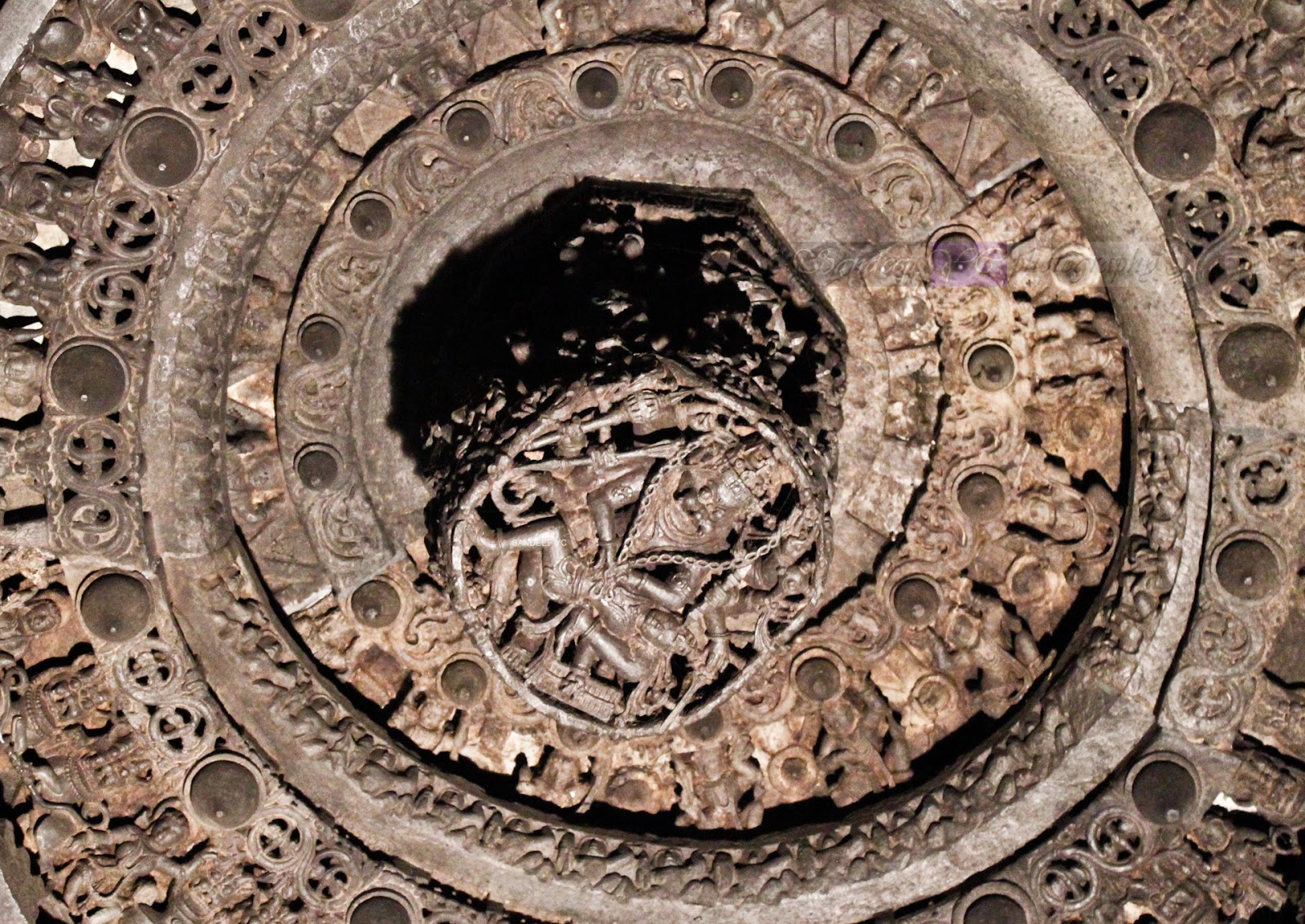
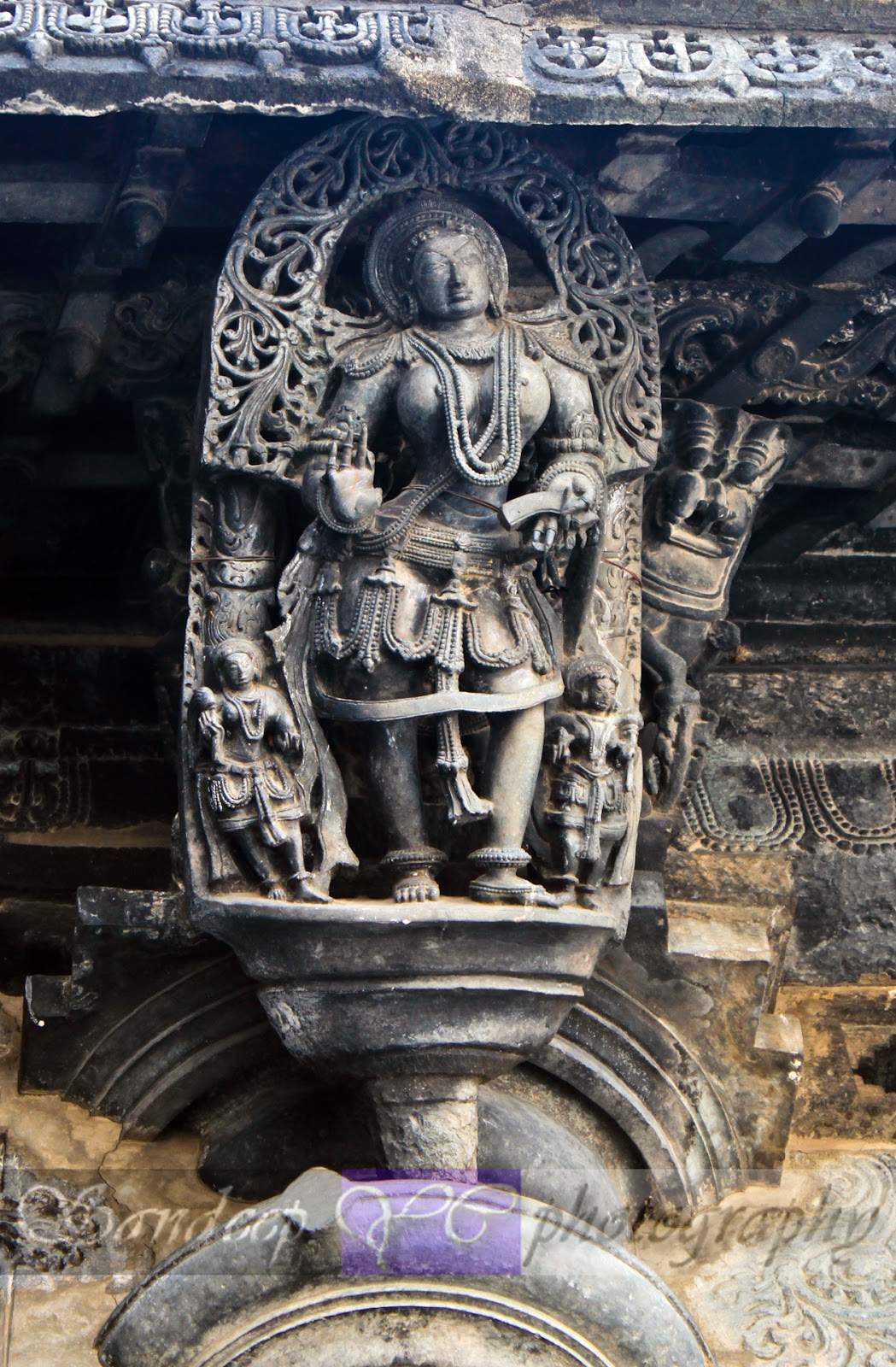
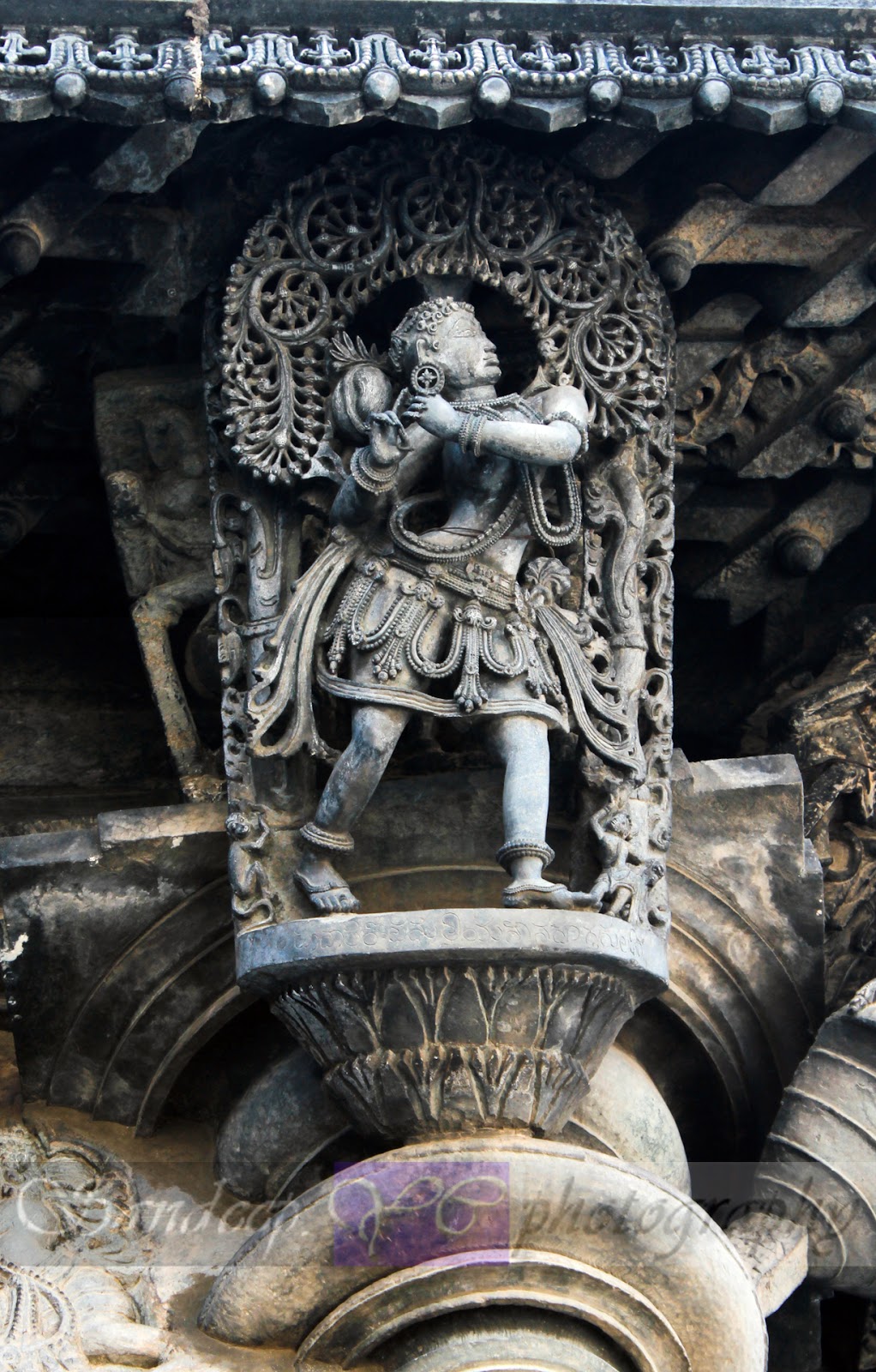
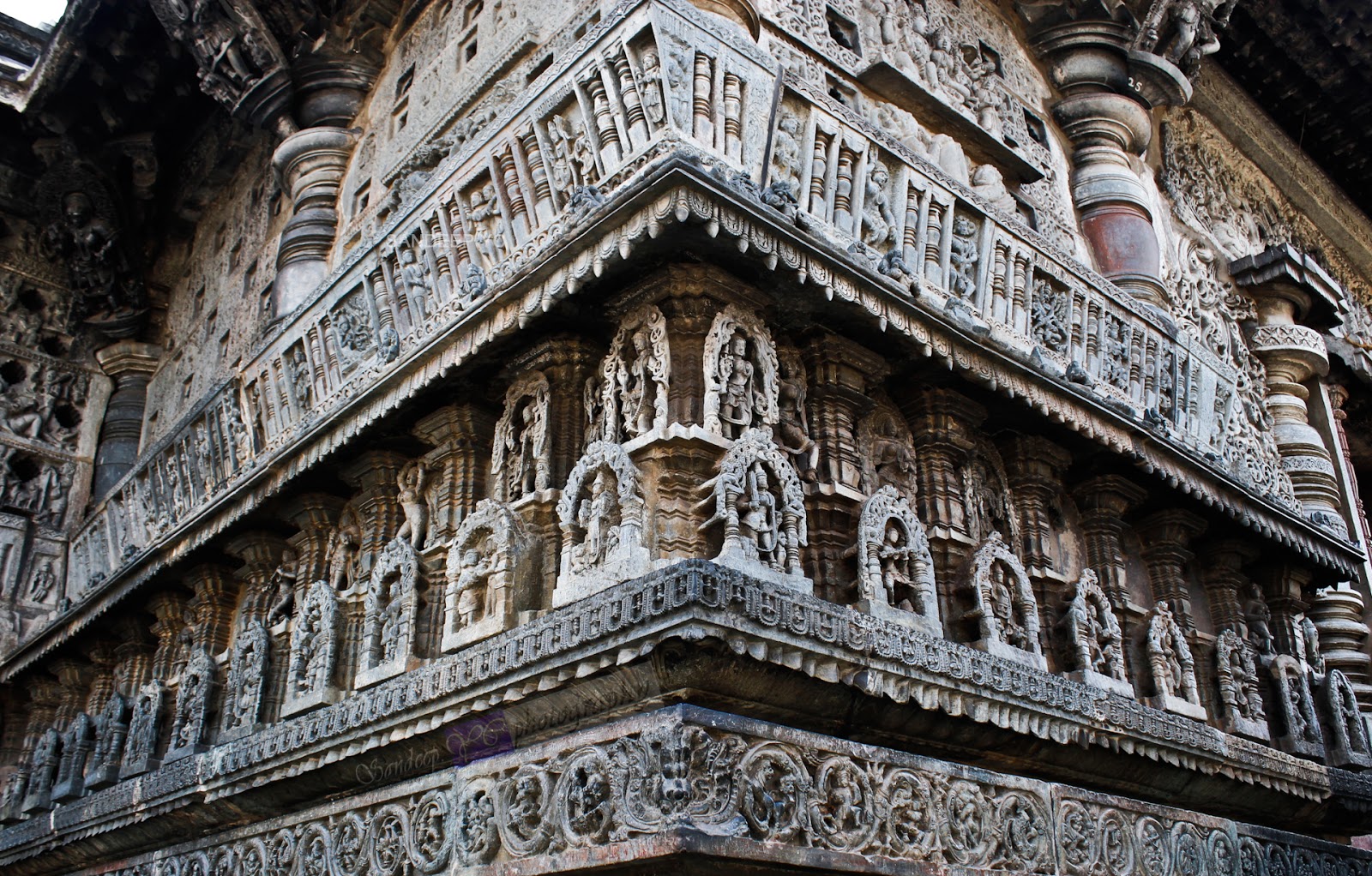
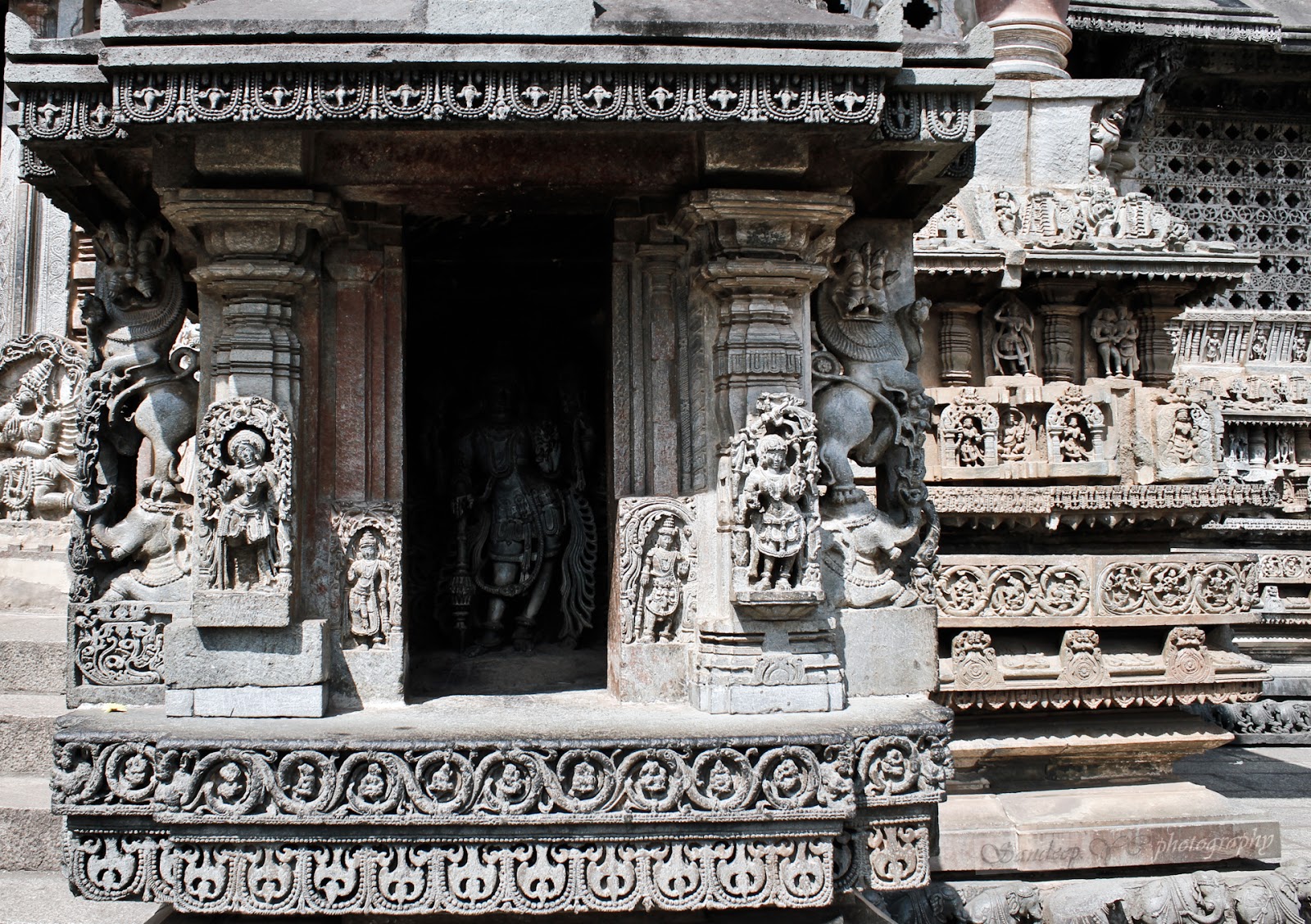
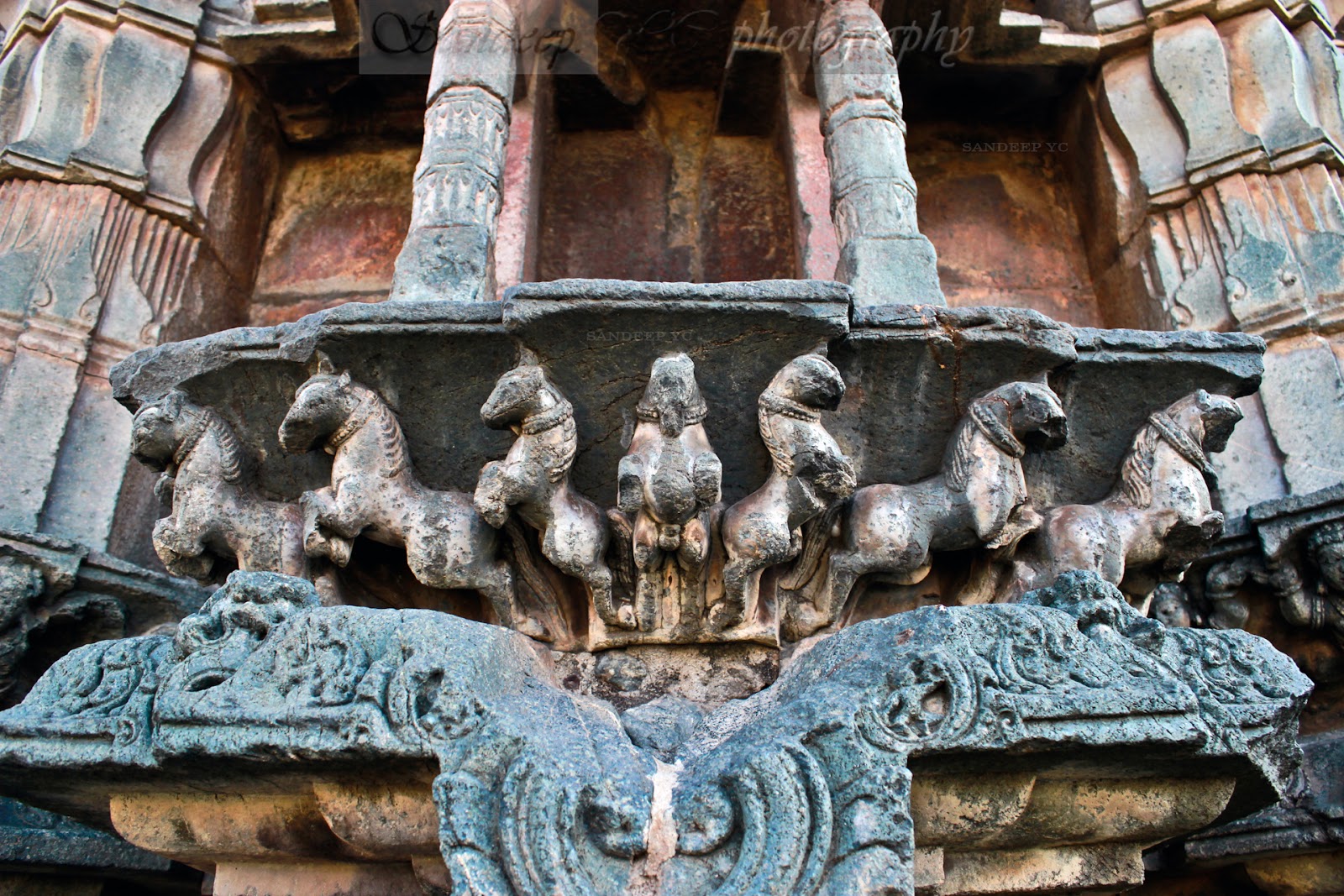
Keshava Temple of Somanathapura/Somnathpur (ಸೋಮನಾಥಪುರ): This temple is a perfect example of the Hoysala style of architecture built in 1268 A.D. It has three sanctums on the west, south and north to Keshava, Venugopala & Janardhana, all connected. It is an ornately carved temple of magnificent craftsmanship depicting Vishnu, Lakshmi, Saraswati, Ganesha, Rati-Manmatha & Mahishasura. The ceilings and door jambs leading to the sanctum sanctorium are exquisitely carved. The temple is in the care of the Archeological Survey of India as a protected heritage site
Somanathapura is just 50km away from the Shivanasamudra waterfalls so both can be covered in a single day from Bangalore. Nearest city is Mysore just 35km away.
Keshava temple has one of the best preserved stone carvings of ancient architecture of India, in a very good condition.

Keshava Temple of Somanathapura
 Stone carvings on the wall of The Keshava Temple

Basement Frieze Animated riders top a band of elephants that rests upon the temple platform. Elephants are often found on the lowest course of the walls, as here, where they are considered to symbolically support the temple on their backs.In another section of frieze, horsemen wielding swords and spears trample fallen warriors underfoot. Below, a convoy of elephants carries baskets and fruits. Almost every person and animal in this frieze, including the fallen warriors, is given an individualized attribute or posture.
Section of frieze at Keshava Temple
On the left, dancing Ganesh; on the right, Vishnu seated "at ease" on Ananta. Between the panels is a female drummer
Lord Ganesha & Lord Vishnu
Indra, the king of the gods, rides with his consort Shachi on the royal elephant. Among his attributes is a vajra (thunderbolt) held aloft in his right hand. The elephant is probably caparisoned like the real elephants of the time; its tusks are filed, as was often done to prevent injury to the animals' riders and keepers.
Indra
Stone carved pillars inside the temple; each of them has distinctive design
Pillars
The entire fabric of the temple is covered with sculptures; hardly a square inch of space has escaped the carver's hand. The main panels, which are elaborately-worked Vaishnava images, rest at shoulder height atop a banded frieze of processional figures and scenes from the Ramayana; above, a second band of sculptures underlies the richly carved sanctuary roof.

Corbeled Dome of Keshava Temple.
It was so dark inside the temple that only a flash light can make the roof visible.
Intricate Craftsmanship at temple's roof
Statues of Lord Keshava, Lord Krishna and Lord Vishnu
Lord Keshava, Lord Krishna and Lord Vishnu
Garuda - Vishnu's mount lacks obvious bird-like features in this sculpture. With his legs in flying posture, he supports Vishnu and Lakshmi on a spray of lotus.
Garuda 
Krishna Playing the Flute - Krishna, surrounded by attendants, plays the flute beneath a tree. His dress and crown are richly ornamented. The typically rococo (ornate and intricate) manner of such sculptures makes the Hoysala one of the easiest styles to recognize in Indian art. 
Krishna Playing the Flute


Timings: 9:00AM to 5:30PM

3 comments:

  1. Hi..thanks for writing about Somnathpur Keshava temple. However, there are array of tourist attractions in the city to delight various visitors. Check out all the places to visit in Mysore.

    Reply
  2. It's really awesome Keshava Temple . All the places are amazing as well as you have mentioned the gorgeous pictures.
    Visit for us -
    Outstation Cabs
    Car Rental
    Cab Service
    Taxi Booking
    Car Booking
    Online Taxi Booking
    Car on Rent
    Online Car Booking
    Online Cab Booking

    Reply
  3. Very nice post. Thank you for sharing this kind of valuable and some unique information.

    Cab Service in India!
    Taxi Service in india!

 Coorg - A perfect Holiday Destination


Trip to Coorg:
Coorg also called as Kodagu lies in the Western Ghats of Karnataka with Pushpagiri Hills on north and Brahmagiri Hills on the south.  The highest peak, Tadiandamol, rises to 1,750 metres lies in Brahmagiri. Madikeri (Mercara) is the headquarters of Coorg District.


Tourist Places & Routes in Coorg:
Route1: 65km from Madikeri towards north(1-2days)
1.Kumaraparvatha(Trek)
2.Mallalli falls

Route2:25-30km from Madikeri towards north(1day)
3.Abbey Falls
4.Mandalapatti(Pushpagiri Reserve Forest)

Route3: 90km from Madikeri towards South(1-2days)
5.Tadiandamol(Brahmagiri Wildlife Sanctuary)(Trek)
6.Chelavara falls

Route4:to the east towards Mysore(1-2days)
7.Bylakuppe(Kushalanagara)
8.Kaveri Nisargadhama
9.Dubare elephant camp(15km from Nisargadhama)
Inside Madikeri city
10.Omkareshwara Temple
11.Raja Seat

Route 5:44km from Madikeri towards west(1/2day)
10.Talakaveri
11.Bhagamandala

Route 6:110km from Madikeri towards South(1day)
12.Iruppu Falls
13.Nagarahole


Covered(8/13) : Mallalli falls, Abbey Falls, Mandalapatti, Bylakuppe, Nisargadhama, Omkareshwara Temple, Raja Seat, Talakaveri, Bhagamandala, Nagarahole

Yet to discover(5/13): Kumaraparvatha, Tadiandamol-Chelavara falls, Dubare, Iruppu Falls

Route 1 & 2: (Covered except Kumaraparvatha)

Route4:(Covered except Dubare)
Bylakuppe: On the highway from Mysore towards Madekeri you pass by Kushalanagara where you have to take a left turn to enter the road for Bylakuppe and about 6km further you end up at Buddhist Golden Temple (Namdroling Monastery). This place is a must see for one time due to its easy accessibility. The main temple has 3 huge Statues of Guru Padmasambhava, Buddha Shakyamuni and Amitayus. There is a Tibetan market which is an ideal place for shopping, though bargains are a little the prices are reasonable.


Nisargadhama: Once you come back to Kushalnagara you enter the forest cover and on the left is the Kaveri Nisargadhama, you need to take entrance tickets to enter this place, and there is a pedal boating available at a very reasonable price, life jackets are also provided and is maintained by the Government. Inside the Nisargadhama one has to cross by a Hanging bridge built across River Kaveri, the otherside of the river is a small forest covered with bamboo trees. They also provide Elephant rides inside Nisargadhama.
There is a Deer park inside the place which has a large protected fence so one has to barely see deers, but the huge fence area makes it feel one among the forest. There were also Rabbits, ducks and other birds found inside within small protected area.
There are shops open up for refreshments and restaurant available at the entrance and also there is parking facility available. There is a restaurant available inside Nisargadhama also.

Omkareshwara Temple:  This temple is dedicated to Shiva & lies inside the Madikeri town. The whole temple area is kept clean and the small pond infront of the temple looks beautiful with the Mantap built at the center of the pond. The Temple was built in 1820 in Islamic and Gothic style of architecture.


Raja Seat: This is one of the most beautiful place in the town, it is a park with a view point at the end and has artificial fountains inside. It has a nice view point with a view of the valley around Madikeri, best time to visit is evening and one can enjoy the sunset and musical fountain after sunset. The king of Coorg was sitting here to enjoy the view of sunset, hence the name “The Kings Seat”.


Route5:
Talakaveri: Talakaveri is the birth place of River Kaveri, and has a special importance in South India. There is a temple built at this place and a tank built at birthplace of Kaveri river, and it lies on top of the hill giving some breathtaking views of the pushpagiri hills, one has to take up around 500 steps to reach the hilltop from the temple to get a better view of the valley. Best time to visit is in the morning.


Bhagamandala: Bhagamandala comes on the way to Talakaveri. Bhagamandala is famous for its Bhagandeshwara temple and triveni sangama infront of the Temple. This is where river Kaveri joins Kannike and the mythical Sujyoti river. Here river kaveri is at its early stages with very less force of water which is flowing from talakaveri. There are no restaurants available at Talakaveri, so one can have food at Bhagamandala.


Route 6: (covered except Iruppu Falls)
Nagarhole National Park (ನಾಗರಹೊಳೆ ರಾಷ್ಟೀಯ ಉದ್ಯಾನವನ): The park covers 643 km2  and is the second largest National park in karnataka after Bandipur and is recognised as a Tiger reserve. It was recently closed for tourists with supreme courts ban on tourism in tiger reserves of India.
One can spot Asian elephants, spotted deer or Chital, Sambar, Indian bison or gaur, Peacocks and langur monkey in abundant.
Sloth bears, four-horned antelopes, wild boar are also found inside the jungle.
Although rarely lucky ones can spot tiger, leopard, jackals, striped hyena, Indian pangolin, Red/Indian giant flying squirrel and wild dogs.


 Bangalore and Around


Places to Visit in and around Bangalore:

The third most populous city in India has something more to explore other than the IT industry, some of the places where you can spend time away from the urban rush.
Here I put in the ten best places to visit in and around Bangalore
  1. WonderLa
  2. Nandi Hills
  3. Lalbagh Botanical Gardens
  4. Cubbon Park, Vidhana Soudha and High court
  5. Bannerghatta National Park
  6. Basavangudi Bull Temple
  7. Pyramid Valley and Art of Living International Center
  8. Visvesvaraya Industrial and Technological Museum
  9. Innovative Film City
  10. Lumbini Gardens Nagavara Lake
Nandi Hills view point
ISKON Temple and Big Banyan Tree being the next most popular places, and MG Road-Brigade Road most loved shopping spaces. The lifestyle Shopping malls Phoenix Market City and Orion are worth visiting. Most popular temples are the Bull temple and ISKON temple. The events which are of more importance are the biannual flower show at Lalbagh and the biennial airshow Aero India, which has emerged as one of the world's most important and largest military aviation exhibitions. Bangalore is also called as city of lakes, with more than 17 lakes existing at present, where there were about 50lakes 25years ago. Most popular among them include Ulsoor Lake, Sankey tank, Yediyur Lake, Nagavara Lake, Hebbal Lake, Madiwala Lake, Lalbagh Lake, Bellandur Lake, Puttenahalli Lake and Kempanbudi Lake. Although a little short of amusement parks, there are WonderLa, Innovative film city, Fun world and Lumbini gardens to justify. It also holds one of the most important institutions of the country, Indian Institute of Science (IISc), Indian Institute of Management (IIMB) and National Institute of Mental Health and Neuro Sciences (NIMHANS).
With a Gross domestic product of $83 billion, Bangalore is listed 4th among the top 15 cities contributing to India's overall GDP. Bangalore also holds an important share in India with its major public sector giants of India headquartered here, including Bharat Electronics Limited (BEL), Hindustan Aeronautics Limited (HAL), National Aerospace Laboratories (NAL), Bharat Heavy Electricals Limited (BHEL), Bharat Earth Movers Limited (BEML), HMT (formerly Hindustan Machine Tools), and Indian Space Research Organization (ISRO). Also called as Silicon Valley of India, contributing to over one third of the countries IT exports.


WondeLa:
WonderLa entrance
WonderLa entrance
This is simply not the best place to hang out in Bangalore, so better spend whole day here. There are about 50 attractions here most of them worth visiting.
Musical fountain at WonderLa
Itinerary: As soon as you enter, get your lockers from the lobby and catch up with the dry rides like Wonder Splash, Pirate Ship, Techno Jump, and Crazy Wagon. Once you start with these startups you can go with major rides Equinox, Insanity, Hurricane, Y- Scream, Maverick, Mixer, Drop Zone, and Wonderla Bamba.

Then by afternoon you have your lunch here and start with the water games when the sun is at high, the wet rides are the most enjoyable ones, so spend more time here. You can start with Lazy River, Rain Disco, Play Pools, and start with the rides Boomerang, Harakiri, Fun Racers, Uphill Racers, Banded Kraits, Twisters, Water Pendulum, and the most difficult one here Wavy and Vertical Fall, and finally end up at the Wave Pools. There are heaters kept aside these rides where you can warm-up again for your next rides.

Just by the evening go about for some more dry rides like Toon Tango, Termite Coaster & Train Dungeon Ride, Crazy Cars, and Net Walk.
Don’t miss out the SkyWheel and Hang Glider in the evening during sunset. And later you can end up your day relaxing at Cine Magic 3D, Musical Fountain & Laser Show.

Must do: Wonder Splash, Boomerang, Water Pendulum, Rain Disco, Wave Pools, one of the high thrill rides, SkyWheel, Cine Magic 3D, Musical Fountain & Laser Show.

Distance from Bangalore (Majestic): total 30km, in which about 2.5km from the highway.

Public transport: available till about 3km away from the venue, on the Bangalore-Mysore highway, from here there are shuttle buses which ply every 15-30mins.

Length of visit: whole day (11am-6pm)

Age groups: There is everything for all the age groups here, but not suitable for heart patients or elders. Best suited for Kids and youth. People up to age of 55 can enjoy at least half of the rides.
View of the nilgiri around WonderLa from the skywheelview from the skywheel during sunset

view from the skywheel projecting down till the baseBirds view of the WonderLa from the skywheel

Sunset behind the hills as seen from the skywheelThe solar panels on top of the buildings at WonderLa

Night view of one of the thrill ridesNight view of the WonderLa

Dungeon ride

Termite CoasterTermite Coaster

Laser showLaser show

WonderLa view from of the SkyWheel as seen from the entrance during night
View of one of the thrill rides behind is the skywheelThe giant clock and the skywheel


Innovative Film City:
Innovative Film CIty entrance Plaza
Itinerary: start your day with some target practice with Bow & Arrow, Target Strike at the entrance. Then follow with the attractions Mirror Maze, Dino Park, Fossil Museum, Ripley's Museum, 4D Cinema, Haunted Mansion, Go Karting and post lunch hang out at the Aqua Kingdom and then if time permits go for Louis Tussaud's Wax Museum and Carousel in the evening, and spend some time at the main street relaxing and having snacks.

Must do: Bow & Arrow, Target Strike, Mirror Maze, Dino Park, Fossil Museum, Aqua Kingdom, Carousel, Ripley's Museum, 4D Cinema, Haunted Mansion, Go Karting

Distance from Bangalore (Majestic): total 35km, in which about 5km from the highway.

Public transport: available till the diversion on the highway about 5km from the venue, from which there are shuttle bus service which runs every 15-30mins.

Length of visit: whole day (11am-6pm)

Age groups: suitable for all age groups from kids to senior citizens.
inside Innovative Film CItyinside Innovative Film CIty, Main street

inside Innovative Film CIty, Main streetEntrance of Innovative Film CIty

Target strikeroller coaster

roller coaster
roller coaster
Dino ParkDino Park

Ripleys MuseumRipleys Museum

Miniature CityMiniature City

Fossil MuseumMain street

Bannerghatta National Park:
Butterfly Park entrance
Although a national park officially but I feel it is like an expanded zoo. More preferred for its 50 odd tigers along with white Tigers, Leopards and Lions. One more place to check out here is the Butterfly Park. The whole zoo is kept untidy and in ill-treated state. There are a number of reptiles to watch out for, including the king cobra. Few animals missing here are the Cheetah, Giraffe, Hyena, hunting dogs, wild cats and Rhinoceros.

Itinerary: start the day with the Tiger and Lion safari, and then gaze around the zoo and then end up the day at the Butterfly Park. You can also check out the Elephant ride here.

Must do: Tiger safari and the Butterfly Park.

Distance from Bangalore (Majestic): 27km.

Public transport: there are Air-conditioned buses from the main city bus stand (Majestic) to this place every 15-30mins.

Length of visit: whole day (11am-5pm)

Age groups: suitable for all age groups from kids to senior citizens, but not suitable for babies under 2yrs as it is a stinky place.
deerblack bear

lionslion

tigerwhite tiger

museum

tortoiseking kobra

birds at BNP

leopardzebra

birds at BNPbirds at BNP

birds at BNPgoose

birds at BNPsnake

pythoninside butterflypark

butterflys inside butterfly parkbutterflys inside butterfly park

Electronics city Elevated express highway
kobra

Nagavara Lake:
nagavara lake

Itinerary: go for a walk at the lakeside and then get some pedal boating and end up day having some spicy snacks available at the food counters.

Must do: pedal boating in the evening and some spicy snacks at the food counters.

Distance from Bangalore (Majestic): 10km.

Public transport: there are buses from Majestic to Hebbal, and have to change bus from here to the venue, or can take auto from Hebbal.

Length of visit: half day preferably in the evening.

Age groups: suitable for all age groups from kids to senior citizens, but not suitable for babies under 2yrs as it is a stinky place.
boating at nagavara lake


lumbini gardens


Nandi Hills:

Circular skywalk and View point at Nandi hills
Nandi hills, at an altitude of 4,851 ft. (1,479 m) above sea level is the nearest hill station from Bangalore, about 60km from the city.

Itinerary: have some good views at the area beside the temple area where the tippu drop is situated, catch up the beautiful panoramic view from the circular walkway built for the view point, and there is a temple near this place. You can also avail the washrooms and a restaurant at this place. And then walk to the other side of the hill through the Nehru Nilaya to get some lovely views of the mountains surrounding Nandi hills, there are viewpoints built here also. End up the day relaxing at the park area having some snacks available here. Beware of the monkeys, the monkeys here are in great numbers and are violent too. If you expose your eatables to them, then you cannot run away from them. The place is cool with lots of breeze here, and is popular for bike rides.

Must do: check out the bamboo houses in the children’s park at the entrance, Nehru Nilaya and the circular walk view point.

Distance from Bangalore (Majestic): 60km.

Public transport: there are KSRTC buses from Majestic till Nandi Hills.

Length of visit: half day preferably in the evening till sunset or in the early morning when there will be fog covered all over the hill.

Age groups: suitable for all age groups from kids to senior citizens.
Bamboo houses at Nandi hills

Restaurant at Nandi Hills

Nehru Nilaya
Nehru Nilaya

Inverted Bamboo house at Nandi Hills
Bamboo house being constructed
Monkeys at Nandi hills
View around the Nandi hills

View of the town from the view point at Nandi hills

The road to Nandi Hills


1 comment:

  1. Nice post with beautiful pictures in and around Bangalore. The amusement park Fun World in Bangalore is divide into 3 segments - Fun world, Water world and Star city. Water World offers a number of water rides, some adventurous and some exciting. It an ultimate amusement park for the family to enjoy a fun filled outing. Do check Water World Bangalore for more details.

 Shivanasamudra Falls


Shivanasamudra falls:

Shivanasamudra falls located in Mandya district about 139km from Bangalore, is the location of one of the first Hydro-electric Power stations in Asia, which was set up in the year 1902.
Full view of Bharachukki falls as seen from the view point
River Kaveri splits into two parts to form two waterfalls, Bharachukki and Gaganachukki at a distance of few km to each other. It has an average width of 305 meters, a height of 98 m, and an average volume of 934 cubic meters / sec. The maximum recorded volume is 18,887 cubic meters / sec. It is a perennial waterfall. The time of best flow is the monsoon season of July to October.
Waterflow of River Kaveri enroute to Shivanasamudra falls
The western branch forms the twin waterfalls Gaganachukki, the eastern branch flows as Bharachukki. Gaganachukki being more violent in waterflow and is at a much higher altitude compared to the Bharachukki, resulting in being banned for going near the water, and there is a Hydro-electric Power station located here, the falls can be viewed from the Shivanasamudra watch tower. There is another approach to the Gaganachukki falls from the Darga Hazrath. Despite warnings being posted, people climb down the rocks and attempt to view the waterfalls from behind/top, resulting in many fatal accidents.
Shivanasamudra falls has been named as 16th largest waterfalls in the world and largest in India in terms of volume, Jog Falls being 36th in world and 2nd in India.

There are coracle rides (theppa) offered in Bharachukki falls which takes you till the tip of the falls, which looks very dangerous but adventurous. Here depending upon the water levels you are allowed to play in the water, on the right side of the falls where the water flow is lesser compared to the other parts of the falls. If you’re lucky you can even go and sit behind the waterfalls, we were lucky enough to sit behind the falls, which was the most exciting part of the whole trip. One have to climb down about 300 steps to go to the bottom of the falls to get a better view of the falls, there are viewpoints available right from the parking lot.

(From left) Bharachukki falls part 1
Bharachukki falls part 2
Bharachukki falls part 3
Bharachukki falls part 4
Bharachukki falls part 5
Distant view of Bharachukki falls
Coracle rides 

Bharachukki falls, coracle going till the tip of the falls
Bharachukki falls
Bharachukki falls
Bharachukki falls
Bharachukki falls
The twin falls of Gaganachukki
The left section of Gaganachukki falls
The right section of Gaganachukki falls

 Shravanabelagola


Shravanabelagola

About the place: 

Shravanabelagola (ಶ್ರವಣಬೆಳಗೊಳ) is a town located in the Hassan district, Karnataka which is just 158km from Bangalore and 51km from Hassan, just 12km from the NH-48 it has easy accessibility to reach on road.  This place has one of the highest importance in history, dating back to 298BC when Chandragupta Maurya said to have died here after he became a Jain monk.  Chandragupta Basadi, which was dedicated to Chandragupta Maurya, was originally built there by Ashoka in the third century BC.
It has two hills Chandragiri and Vindhyagiri, the later being of more importance with its 57-feet tall monolithic statue of Gommateshvara, considered to be the world's largest monolithic stone statue. The base of the statue has inscriptions in Kannada as well as devnagari script, dating from 981 AD. Chandragiri being on the other side of the pond has more number of inscriptions found, these inscriptions include texts in the Kannada, Sanskrit, Konkani, Tamil, Marwari and Mahajani languages. Some of these inscriptions mention the rise and growth in power of the Western Ganga Dynasty, the Rashtrakutas, the Hoysala Empire, the Vijayanagar Empire and the Wodeyar dynasty. These inscriptions have helped modern scholars to understand the nature and development of the Kannada language and its literature.
It is also voted as the one of the seven wonders of India by Times of India.

Pillars at Gomateshwara statue temple complex

 My Travelogue:
Belagola as seen half way through the Vindhyagiri hill
view of Chandragiri and the belagola
The route we covered was left Bangalore at around 7am-through NH4(Dasarahalli-Nelamangala)-take left on to Bangalore-Mangalore Highway at Nelamangala-after about 100km take one more left into SH47, further 10km u reach shravanabelagola.
The tall statue on top of the hill is visible as you go near by the Vindhyagiri hill. We parked our vehicle in front of it and entered the entrance bare foot with socks, since footwear is not allowed but can wear socks as the steps are carved on the rocks and will become hot as the sun rises up. You have to climb up the Vindhyagiri hill top to reach the Gommateshvara statue. We could see some senior citizens also climbing, so it must not be impossible though for 60+ age group but certainly a no to persons with knee problem. There are over a thousand steps up the hill and once you reach some part of the steps you enter a big entrance gate and you will then realize that there are further many steps to go. There are many other walkways around from this place. There are many inscriptions you can find at this place. There are also many basti’s around here. You finally realize that this is not the end destination and you still have to take some more steps further to reach one more big entrance gate and only then you enter the Gommateshvara statue area and the temple.  The whole place around here is cleanly maintained, from here you can have a good view of the Chandragiri hill and the temple complex on top of it, also the belagola pond is visible down from here.
 You can explore around the hill top and you can witness heavy breeze flowing at high speeds when you go near the wall which is covered around the Vindhyagiri hill top.


After visiting the temple we started to climb back, which was so effortless, having a wonderful view around the town and the pond below, kept taking snaps in between and finally reached the base of the hill where you find lot of tender coconut being sold which you can’t miss out. We then moved towards the pond which was closed for the public and then there is a small park area next to it where we had our lunch which we packed from home. After having lunch we started our journey back towards our next destination Yediyur, since we were not much interested about the inscriptions and the archeological importance of Chandragiri hill we skipped climbing that hill as we were a bit tired in the hot sun.


Yediyur Temple
Yediyur: We reached the Bangalore-Mangalore highway and about 50km we reached Yediyur. You have to take right at Yediyur town and go further about 1km to reach Shri Siddalingeshwara Temple. There was lot of construction works which were going on when we visited this place. This place has its own importance and a famous Pilgrimage. Though termed as a Temple, it contains Gaddige (Tomb) i.e.,Nirvikalpa Shivayoga Samadhi of  Tontada Siddhalinga, a great Vireshaiva teacher and author   who flourished at the end of 15th century. Part of the temple was closed for renovation so couldn’t see much in the temple.
There were a lot of monkeys found in this place as all other temples in India. We then moved back towards Bangalore as it was getting dark, ending our journey of temple and ancient history.
Yediyur Temple


 The Garden of Garden City - Lalbagh

The Garden of Garden City – Lalbagh:

Panoramic view of the Lalbagh Lake 

Little facts about Lalbagh:
Lalbagh was given the status of a Government Botanical Garden in 1856. The park is spread across 240 acres in the heart of the city.

stone bench
Places to visit in Lalbagh:
  1.        Glass House(epicenter of the park)
  2.        Lalbagh lake(towards west gate)
  3.        The Floral Clock made from HMT(towards the main gate)
  4.         Kempegowda Tower on top of the Lalbagh hill(towards KH circle gate and Siddapura gate)
  5.        Rose Garden(towards west gate)
  6.        Bonsai park(towards KH circle gate and Siddapura gate)


Lalbagh Glass House
The Floral Clock, Lalbagh
Lalbagh Rose Garden

What you need to know about the park before you visit:
  •  Vehicles are allowed only through the East gate (Siddapura Gate) towards the Double Road.
  • Can be reached through city bus (BMTC),from majestic catch the buses which goes towards Jayanagar and get down at either Lalbagh main gate which comes after urvashi theatre or Lalbagh west gate(more preferred)
  • Timing: 6.00 a.m. to 7.00 p.m. Although best time to visit is in the morning hours and evening hours.
  • Biannual flower shows are organized every year in January and August on the occasion of the Republic Day and Independence Day celebrations respectively, it will be held for a week ending on the republic/independence day.


Restaurants near Lalbagh:
  1.        MTR near Main gate
  2.        Café coffee day and Adigas if you coming from Jayanagar towards Siddapura gate
  3.        Hotel Kamat near West gate


My Travelogue:
              After visiting more than 10 occasions, counting the 5 flower shows, this place is still not boring for me, I wish to visit every upcoming flower shows. 
The lake side is getting a good renovation, though less crowd falls under this area, it is the most beautiful landscapes of Bangalore. There is a small artificial waterfall which falls on the opposite side of the road from the lake, which flows the lake towards the water treatment area covered as small pond. 
One can start with the main gate and start explore from the floral clock and then path leads to bandstand and then to the glass house, behind that is the bonsai park and the hillock of kempegowda tower, later you can walk towards the rose garden and then walk by the lake side and spend some time at the lake side in the evening, by enjoying the masala corn and kadle puri which are sold on the lake side pathway. The lake is Spread across 30acres. The path also leads to island like structures which are located in the middle of the lake. And finally exit through the west gate.
Some of the flora found inside the park includes Zinnia, Petunia, Passion Flower, Dahlia, Chrysanthemum, pinks, rose, bonsai plants and many other rare species of plants and trees.


Lighting beside the pathway inside the park
Monkeys on bamboo trees
Ornamental Chilli
Passion Flower found in some corner of the Garden
Red Cabbage


artificial waterfalls next to lake, below the pathway
bandstand illuminated, glass house can also be seen behind
birds on top of trees in the evening hours

ducks in lalbagh lake
evening@ Lalbagh

Masala Corn
Even birds like to walk here instead flying
pathways


white silk cotton tree, over 200 years old


1 comment:

  1. It is fabulous and very helpful to make excursion of Bangalore, mesmerizing.

    Cab Service in India!
    Taxi Service in india!

 Wayanad Greens


Wayanad Greens


Sun rise through the Chembra peak
 Oct 27th 2012, it was yet another weekend but with a difference, since we were heading towards Kerala and my first time crossing Kerala border. So was a lot excited about it, and had done enough research on the places to visit in Wayanad and the routes from Bangalore. After lots of googling and discussions we settled with the plan to go by Nagarhole route which passes by Nagarhole National Park and Wayanad Tholpetty Wildlife Sanctuary. En-route cover Irrupu falls and reach the resort which we had booked in Kalpetta, on the same day evening planned for Pookode Lake and on the next day cover Lakkidi and Banasura sagar dam. In reality though the plan didn’t change but time we thought we reach changed dynamically.
First things first, about the place and places to visit in Wayanad district,
So referred here as green as you find lots of greenery all around, with tea and coffee estates being common. Two of the greatest peaks to conquer, one being Chembra peak and the other Banasura Hills both of over 2000m above sea level. Lots of waterfalls to make you really wet Meenmutty, Kanthanpara, Soochipara to name a few. Some of them to explore like Banasura falls, Karlad Lake, Neelimala view point, Sunrise valley view point, Chethalayam Water Falls. Some popular places like Edakkal caves, Therunelly Temple, Lakkidi view point. There are a few more popular water bodies apart from waterfalls including Kuruva Islands, Banasura sagar dam and Pookode Lake. Tholpetty wildlife sanctuary and Muthanga wildlife sanctuary for wildlife enthusiasts.

Travelogue:
Route taken:
Day1: Bangalore-Mandya-KRS Road-Hunsur-Nagarhole-Kutta-Irrupu-Kutta-Kalpetta-resort-Chundale-Vythiri-Pookode lake-Resort
Day2: Resort-Kalpetta-Banasura sagar dam- Pozhuthana-Vythiri-Lakkidi view point-Chain tree-Kalpetta-Sultan Bathery-Muthanga-Bandipur-Gundlupet-Mysore Palace Road-Bangalore
Total distance covered:  705km

We were all packed our luggage on Friday night with all the batteries charged and it was sat early morning 4.30am we left east Bangalore in a mini bus and after two pickup points we were officially outside Bangalore at around 6am, we were already 30min out of our schedule. All of them were sleeping, we were near Ramanagara where we had some spectacular beauty of sunrise with sun turning out to be completely orange. Having had the beautiful morning we crossed by Maddur by 7.30am, we missed the breakfast here as it was still early to have food. After reaching nearby Srirangapatna we took right towards ranganathittu on the KRS road which we thought is a shortcut since it won’t run into the Mysore city, later turned out to be a completely wrong decision as the road was in a really bad condition making our day a little tired, after a long time we finally routed back to the Mysore-Hunsur road, we were happy to see the road so smooth and we reached hunsur by 9am for our breakfast (We were already 1hr behind our schedule reason being 3 pickup points and lazy loading of luggage and taking KRS road). After having some masala dosa’s we headed towards Nagarhole road. Here be careful about the road since there is one more route which goes by Gonikoppal(don’t take this route). We were carrying Google navigation on android device and also were taking the local people advice about the routes.
Nagarhole Road
Chital herd at Nagarhole
The Nagarhole road is also not in good condition and for our bad luck we rarely spotted any wildlife inside Nagarhole until we reached the forest office in Nagarhole were we spotted a lot of deer’s and only deer’s. We then reached Kutta and took a diversion towards Irrupu falls. We were at Irrupu temple at almost 12 noon since the road from kutta to Irrupu is again bad and very narrow for our mini bus to pass by. We parked our vehicle in front of Irrupu temple and started to trek towards Irrupu falls. There is an entrance ticket of 20Rs/person. The trek is for a km and is easy. There is a small hanging bridge which you’ve to pass on the other side of the river stream, after which there are steps paved all the way till the falls. Irrupu falls is actually a cascading waterfall which slides from the rocks from inside the forest and slides from a height of 170ft in many drops which makes it more beautiful. Best thing about this falls is we can actually play in the water and sit below the falls, except during monsoons when the water level will be high. We spent almost 45mins playing in water and relaxed sitting below the waterfalls where the water falls from a height on top of your body giving a bumpy body massage. For photo enthusiasts this place is like a heaven as you can play with your exposures and can shoot the beautiful nature all around and the numerous butterflies flying all around you. I spotted a big one and a white butterfly with a curvy wings and a blue butterfly which I had earlier never seen, not even in butterfly park of Bannerghatta.

We headed back towards the parking area, the actual trek up was only about 15min and down was less than 10mins. There are restrooms at the parking place but were dirty as in all other tourist spots in India.
Pookode lake
We left the place at 1.30pm and headed towards our resort, on the way had our lunch which we had packed (Dharwad rottti’s). We again went through a rutted ride till we reached Kerala border, through Tholpetty wildlife sanctuary. After travelling for some time we reached the check-post and paid tax of Rs3,500 to enter Kerala since we were in a commercial vehicle. The road then turned out to be bad again for almost 1 hour till we reached Kalpetta, and then we reached our resort at 4pm (here our schedules were actually too far to imagine). It was a quick decision to take as it was about to get dark and for information all the tourist spots in Wayanad closes by 5-5.30pm. So in no time checked in to the resort and headed back towards Pookode lake. On the route you pass by Chandale tea estates which was pretty scenic and then for our fate the road was jammed completely near the lake, so we had to walk till the lake which made it a little more delay and we reached the lake entrance only by 5.15pm, and were disappointed to see the booting closes by 5pm, but a little lucky a we were allowed to enter inside the lake and the lake entry also closes by 5.30pm. The whole area was so much crowded that we felt it more crowded than Lalbagh flower show. We realized that it was a festival weekend with Bakrid and Dasherra festivals just behind. The entrance ticket here was Rs15/person and Rs25/camera. We had a walk around the lake and it was pleasant to walk away from the crowd. 
Pookode Lake
This lake is better than the Ooty Lake since it has a walkway all around the lake. One more interesting thing about this lake is there are thousands of spiders with huge spider webs all through the walkway around the lake; we also spotted a huge yellow snail which was a rare sight. After spending some time in the lake we came out and it was still traffic outside. 
Hundreds of such spiders were found in Pookot lake


The doors of the lake close by 6pm, so you cannot stay inside after 6pm. We reached the resort by 7pm and for our surprise we spotted the amazing view of the Chembra peak in the moon light, right from the balcony where we were staying. We had our dinner and spent some time playing till we ended our day, with excitement to see the sunrise early morning through the Chembra peak valley.

The next morning I got up at 4.30am and got ready before everyone woke, it was 5.30am when the first sights of light fell on the valley turning Chembra peak into light blue hills. Slowly the view turned out to be more exiting as I continued to enjoy the view for another 30mins before everyone woke up and started getting amazed about the view. 
Early morning view of Chembra peak valley
It was around 6.30am when we had our coffee in the balcony having a nice view of the coffee plantations below and the tea estates below the Chembra valley. Sun started rising above the mountains, but unfortunately behind the trees, else we would have a wonderful sunrise view from our balcony itself. It was around 8am before everyone arrived at the breakfast having views of the valley along the dining hall. We had some bread butter jam and puri’s and Kerala special Puttu, which was new for me. 
In the middle of Coffee estates
We then started our trek down the hill by 9am started with the coffee estates and then passed by a small water stream and then climbed up through the coffee estates before we could open up with the most amazing moment of the whole trip, we suddenly ended up being in the tea estates and the view was more thrilling to see the Chembra peak behind it and endless tea estates all around. We just walked through the tea estates for some time enjoying the tranquility of the nature and then turned back towards the resort to checkout and it was by 11am we left the resort towards Banasura sagar dam. 
Coffee seeds
Panorama of 5 stitched photos of the tea estates
View of resort where we stayed from the tea estates
view of the Chembra peak through the tea estates
Reached the dam at 12noon (which was wrong time to visit dam since it was damn hot sun), we parked the vehicle and took entrance tickets and jeep tickets to go to top of the dam, Entrance charges were Rs15 and Jeep charges were Rs80 for 8persons for both pickup and drop. It was crowded even in the afternoon and we had to wait for the jeep service for 30mins. After we reached the top of the dam spent some time in the park area and then moved towards the boating area to get the tickets for speed boating, but we were again disappointed to see the board saying 2hrs waiting, so we had to drop the plan for going for speed boating as it was not worth waiting for 2hrs in the hot sun. 

There is no good place to hang out at the dam area and can’t spend more than 30mins. So we had some group photo and started back towards the parking area through the Jeep. 
Banasura Sagar Dam
We left at around 2.30pm towards our last destination Lakkidi. The road from Banasura to Vythiri  is very scenic, at the first few kilometer you pass by the dam backwaters and later once you cross Achoor until Vythiri there are tea estates on both sides of the road which made the journey more fascinating. 
View from Banasura-vythiri Road near Pozhuthana
After Vythiri about 4km towards Kozikode you reach Lakkidi, which is the gateway to Wayanad and suddenly you witness the breathtaking view of the Thamarassery Ghats at about 700m above sea level. It was 4pm when we reached Lakkidi view point. 
Lakkidi View Point
Lakkidi View Point
From here you get to see the valley down at a greater depth, making it difficult to view at distances, also the highway which goes by the Ghats is visible from here. Due to the sudden depth of the valley there is a lot of variation in the climate here, in a matter of few minutes the mist can cover the roads and after some time you can have a clear sky.
Ghat road as seen from Lakkidi
View point at Lakkidi
Ghat road as seen from Lakkidi
If you are too lucky you can witness clouds covering the mountains and mist is not covered so that you can get a clear view. So evening time and sunrise time would be ideal, expect there shouldn’t be any rains, else you won’t get a proper view because of the mist. 
After spending some time here we headed back towards Bangalore, on the way stopped for lunch at Chain tree and had some Kerala special Kerala parota, glad we liked it a lot, some of the best Kerala parota I ever had. One note here is that you almost never see a pure veg restaurant in Wayanad, so either search for the only udupi restaurant somewhere near sultan bathery or settle down for some decent restaurant whenever you spot. 
Chain tree
After having lunch here we left lazy at around 6pm nonstop towards Bangalore, as we had lunch late we didn’t stop for dinner, instead we had snacks and bread in the bus itself. Again the roads were in bad condition somewhere near gundlupet and then passed by Mysore Palace having the night view of the city it was looking so clean and pleasant compared to ever busy Bangalore roads. We reached Bangalore around 1am and after all the drops we finally ended up in east Bangalore at around 2.30am. It was one more unforgettable trip for me with all the excitements, embarrassments, disappointments and beautiful memories.

We had to drop our plans of visiting Soochipara falls since we already visited Irrupu falls and also didn’t think of Edakkal caves to avoid the weekend crowd.

Note: Nagarhole closes from 6am-6pm and Bandipur closes from 9pm-6am on the Wayanad Mysore routes. So plan schedules accordingly.

Photos of Resort:


 Almatti - Bagalkot Heritage Drive - Day 1


Bagalkot Heritage Drive:

November, just when the cold breeze starts cooling up the environment which is the ideal time for going on long drives especially to hot regions like Bagalkot. This was yet another trip but not until experiencing the 1500years old chalukyan world, it was just like passing by the Ancient Indian world. I must say that, this was not another boring heritage drive, but most exiting trip of prehistoric India.

Though this was a pretty long drive but never felt boring, covering 1,150km in 3 days 4 nights. The experience was so long that it can’t be written in a single post so I’ll be writing in several sections.

Bagalkot Heritage Drive - Day 1 – Almatti

Day1: Bangalore - Tumkur - Chitradurga - Hospet - Kushtagi - Ilkal - Hungund - Almatti back waters - Rock Garden - Fountain Garden – Kudala Sangama
Distance covered: 521km
Places visited: Almatti back waters, Rock Garden (Silver Lake, Reptile Park, & Sunrays Park), Musical Fountain Garden

Entrance Plaza

Travelogue: It was Friday (TGIF) & we started from Bangalore early morning before the sunrise & zipped in through the NH4, awesome road should be the best one at least in Karnataka, can easily drive through 150km/h till half the way. On the way enjoyed the sunrise on NH4 & had breakfast on the way which we packed from home. Reached Chitradurga at around 10am & then the road condition started changing a bit & it was some NH13 which leads till our destination Almatti, but still no problem with the roads throughout the journey, passed by Hospet & again it was still a 4-lane NH. After passing by Kudala Sangama you pass by the Mallaprabha river bridge & just after that you have to take a left turn away from the NH13, into the Almatti road, Almatti is around 7km from the NH13.

Roads of Almatti
We passed by the Krishna river through the Almatti dam gates and then a huge Almatti gate & then entered one of the best well planned roads with Beautiful 4-lane roads with 3-line trees & footpath on both the sides & garden at both the ends, Bangalore should learn from these model roads.
Almatti Map
The road ended at a huge circle where we parked our vehicle & started to do some walk to the back waters of Almatti Dam. The view from here was not that good as it was covered with huge fence & no proper view point, so just spent 10mins over here, & already sun getting ready to go beyond the water’s.
Circle at Almatti end
Almatti Dam Backwaters
Entrance for the Dam bridge, not open for public.
We then left the place & reached Rock Garden, the gate of Rock garden itself was so beautiful on both the sides there are huge faces of different cultures lifting the hands on the front are gents & on the other side are the ladies. It was very creative the way it was built.
Rock Garden Entrance
As you enter you find the serene silver lake, there is also pedal boating available here.
Inside the Rock Garden

Silver Lake, Rock garden
As we passed by the lake we entered the reptile world & there are huge dinosaurs built with well paved walkways throughout the garden. There are many other parks like snake world, Animal world, bird world, butterfly world, & Adivaasi/Tribal World which we couldn’t cover since it was already getting dark, so we directly went to the sunrays park.
Silver lake view from the opposite side
View of Silver lake from the other side - HDR
Structures Inside Rock Garden
Reptile Park
There is actually a view point constructed to view the sunrays park. Sunrays Park was totally worth after walking around half km from the rock garden entrance, by this you can imagine the vastness of the whole rock garden, it must be around 50acres, so one needs to spend at least half day to cover the whole Rock garden. Having covered the 3 important spots in the rock garden we went to the Krishna garden which is exactly opposite to the rock garden entrance, but unfortunately it was closed as it was already around 6pm.
People of different cultures holding hand around the Indian map/flag, Sunrays park
Sunrays park view from viewpoint
On the way to Sunrays park
walkways inside the park near the reptile park
well paved walkways inside the park

Reptile Park
Pavements made for sitting and relaxing in the center of the park
Park Square
So we directly headed towards the Musical Fountain garden. There is a huge entrance plaza constructed at the entrance of the park which gives a palace look with semicircular corridor with RCC columns & arches. The corridor is 6 m (20ft) wide. The actual musical fountain is again around 500m from the parking but you won’t get bored as there are neatly designed parks & fountains (still under construction) all through the way.
Main Entrance Plaza
Main Entrance Plaza
Infront view of the Musical Fountain entrance 
Finally we reached the ticket counter & had to wait for 30mins before the musical dancing fountain started which was at 7.30pm. There is a huge circular stadium built for it with the fountain at the center. The seating was pretty well planned to give a perfect view of the event. It was quite a good pass time in the evening relaxing in front of the open air musical fountains. It ended at 8pm.
Musical Fountain
View of the Hydro power station
Musical Fountain Stadium
Almatti Dam (all gates closed)
Some facts about the musical fountain: Musical Dancing Fountain is designed on five grids circular grid having 20 m diameter at center & four elliptical grids measuring 20 m & 7.20 m as major & minor axis respectively. The seating galleries are placed around the fountain with a grade, so that uninterrupted vision is achieved by every spectator. There are four such galleries orthogonal to each other.
Just for information there is a 77acre park next to the musical fountain, getting constructed with Mughal garden, Italian & French gardens.
Entrance tickets were Rs10 for both rock garden & musical fountain & for camera it was Rs25.
By 8.15pm we started towards the hotel which we booked at Jain Yatri nivas hotel, Kudalasangama, which was around 30km. By the time we checked into hotel it was 9.30pm & had packed our dinner from home which we had at the hotel, north Karnataka hard roti’s, which ended our day 1. As we carried GPS devices with us it was not a big deal to find out the routes even at night.

Day 2 – Aihole Pattadakal Badami to be continued…. 

2 comments:

  1. Great post its a very nice place and a very well written article picture is also nice that you mentioned in your post. Thanks for sharing...
    Visit for us -
    Outstation Cabs
    Car Rental
    Cab Service
    Taxi Booking
    Car Booking
    Online Taxi Booking
    Car on Rent
    Online Car Booking
    Online Cab Booking
    Cab Rental
    Cab Hire

    Reply
  2. Excellent and engaging article! If you are searching for the Best Musical Water Fountain, The Fountains Store offers innovative and visually stunning fountain systems with synchronized music and lighting, perfect for creating a captivating ambiance in residential, commercial, and public spaces.

 Aihole – Bagalkot Heritage Drive - Day 2


Bagalkot Heritage Drive - Day 2 – Aihole Pattadakal Badami

Day 2: Kudala Sangama – Amingad – Aihole – Pattadakal – Banashankari – Badami - Kudala Sangama
Distance Covered: 140km
Places Visited: Aihole (Huchchimalli Gudi, Ravana Phadi Cave Temple, Durga Temple Complex), Pattadakal temple complex, Shri Badami Banashankari Temple, Badami (4 Cave temples & Lower Bhoothanatha Temples)

Travelogue: Saturday morning we started our day with breakfast at Kamat Upachar at Kudala Sangama expecting lesser crowd at the temples as it was not Sunday. The road condition which passes by all these places are not great but merely manageable, as it passes by a number of villages the roads have been in very bad condition in most of the places, considering it as a UNESCO world heritage site since 1987 I was expecting a lot of developments in these areas for promoting tourism but I was pretty disappointed. 1500 year old Indian culture should be preserved well & developed properly, but I see the roads which leads to these temples are narrow & in bad condition & most importantly many of the temples are all surrounded by village houses & has been kept in dirty condition & many of them are sharing their house walls with these ancient temples, especially one example is the Papanatha temple in Pattadakal where the access road has been made as open drainage with sewage water from the village is kept to flow on the road towards the Mallaprabha river which is opposite to the temple. One good thing about the maintenance from the government inside the temple premises is very neat & clean.


Bagalkot Heritage Drive - Day 2 – Aihole

Durga Gudi temple
 Some facts about Aihole: Aihole has historical significance & is called as cradle of Indian architecture. Aihoḷe has the potential to be included as a UNESCO World heritage site. The village has 125 temples & is said to be a laboratory of experiments in rock cut architecture. Aihole was the first capital of the early Chalukyas. Aihole dates back to the 6th century. There are many inscriptions found in Aihole describing the Chalukyan periods written in Kannada, one of which is the Meguti Temple, well preserved dating back to 634 A.D.

Coming back to the travelogue we reached Aihole through amingad which is very famous for the local sweet Karadant.
We started to explore Aihole from Huchchimalli Gudi temple, built in the 7th century shows an evolution in the temple plan. There is also a Steep Tank in front of the temple. I won't tell much about these temples here, look out for the images at the bottom which were put up at the temple premises from the Archeological survey of India (ASI) for more information about these temples.
Huchchimalli Gudi
Next on the way was Ravana Phadi or Ravalaphadi Cave Temple. The entire structure is carved out of a huge rocky outcrop of sand-stone. It is about 30ft in length with a depth of 20ft & a height of about 10ft. At the entrance is Sankhanidhi & Padmanidhi in human form on either side. The interior has a tall dancing Shiva in his ten-handed form, dances beside Ganesha & Parvati, equally tall Saptamatrikas observing Shiva's dance(Shown in the photo below). This is assigned to the 6th Century A.D dedicated to Shiva. The roof has also been carved to form beautiful design which you find even in modern palaces.
Ravana Phadi Cave Temple
Ravana Phadi Cave Temple, Dancing Shiva in his ten-handed form,
Ceilings carved beautifully inside the cave
We then moved towards Meguti temple, there is no road for this temple which is on top of a small hill surrounded by the village, we managed to go a little bit & finally realized that our Innova is not going to make up & we had to come back with a disappointment that there was no road for such an important temple which had inscriptions made during 634 A.D. There is also Mallikarjuna Temple complex & Jyotirlinga Temple Group at this place which we couldn't cover as we had Pattadakal & Badami left for the day.

So we directly moved to the main Aihole Temple complex which is just behind these temples. This is a must visit in Aihole & the main & most beautiful among Temples of Aihole. There is a nominal entrance ticket maintained by the Archeological Survey of India. The temple premises are well maintained by the government & the complex covers Durga Gudi Temple, Suryanarayana Gudi Temple, Lad Khan Temple, Gaudara Gudi Temple & Chakra Gudi Temple being of more importance. The complex also includes Aihole Museum, Chakra Gudi well & Badiger Gudi Temple.
Aihole Main Temple Complex
The first temple was the Durga Gudi temple, which is the largest & perhaps most beautiful temple at Aihole. This name might be due to the word durga meaning fort. The temple was built in 7th century A.D. It also resembles the Parliament of India. There are a lot of sculptures which are of importance here; most popular among them are Harihara, Durga, Varaha, Vishnu with Garuda, Narasimha & Shiva with Nandi.
There is a small tank next to the temple which is well maintained & filled with water.
There was one smaller temple near the Durga temple which had nicely carved pillars inside.
Durga gudi Temple
Durga gudi Temple
Water tank in front of Durga gudi Temple
This needs to be reassembled on top of the Durga gudi Temple Shikara
Small temple behind the Durga gudi Temple
Next was the Suryanarayana Gudi Temple, assigned to the 7th or 8th century, which is famous for the Surya deva (Sun God) statue which is around 0.6m tall, which is also very rare.
Statue of Surya deva
Further on the way is the Lad Khan temple dating back to 7th century A.D, which is the 2nd most popular in this complex after Durga gudi. It is called lad Khan temple because a man by name Lad Khan lived in the temple & hence people began to call it so. This must have been a Shiva temple originally. Two distinctive features makes it more popular one is Instead of the usual tower, a rooftop shrine (the structure on top of the roof) is positioned over the center of the mandapa, & the other being the temple's sloping two-tiered roof, which imitates wood construction, is furnished with stone "logs" that cover the joints between the roofing slabs. Also found in this temple is the Emblem of the Chalukyas (shown in the photo below) which include a boar, a curled-up lotus stem (behind the boar), a solar disk above, & a circular object (mirror?) on a stand to the right. There are also windows carved from stones of different patterns found in the temple.
Chalukya Emblem
Lad Khan Temple
3 Different Windows carved out of stone at Lak Khan temple, collated photos
Nandi at Lak Khan Temple
Small temples facing near Lad Khan temple
Next to Lad khan is the Gaudaragudi temple. Not known why it is being named as Gaudara gudi (Gauda meaning village head), this must be the Bhagavati/Lakshmi temple, according to the ASI this temple appears to be the oldest among the present Aihole temples, of the 5th century A.D. Sixteen square shaped pillars with abacus hold the roof. The roof is in two tiers one above the other & is made of sloping stones.
Gaudaragudi temple
Last one in the lane is the Chakra Gudi temple assigned to the 9th Century, known for its 20 sculptures of amorous couple engraved on the doorframe of the sanctum which has Garuda holding two snakes on the lintel. The temple has well preserved Nagarashikhara on the Garbhagriha, & the prominent round Amalaka at the Stupi which may have brought the name Chakragudi. 
Nagara shikhara of Chakragudi
There is also a Chakragudi well in-between Chakragudi temple & Lad khan temple.
Chakragudi Well, also in the pic is Badigergudi Temple
We had opted for a guide at Aihole & paid 200Rs for our group, it was noon & the sun was heating up the open spaces around the temple complex, so we had tender coconut & started our journey to the most popular Chalukyan temples, Pattadakal & the 2nd UNESCO world heritage site in Karnataka after Hampi. You can also get a tourist guide book & photos of the important monument’s here.

Photos of the information boards put-up in-front of each of these temples by the Archaeological Survey of India,


Bagalkot Heritage Drive - Day 2 – Pattadakal to be continued…


 Kudala Sangama – Bagalkot Heritage Drive - Day 3


Bagalkot Heritage Drive - Day 3 – Kudala Sangama

Some facts about Kudala Sangama: Kudala Sangama is in Hunagunda taluk of Bagalkot district in Karnataka state, India. It is just 8 Kms from Sangam cross on the National Highway 13. It is an important center of pilgrimage for people of the Lingayat religion. It is the place where the great social revolutionist of 12th century lord “Basavanna” was studied, preached & merged with GOD. The Krishna, Ghataprabha & Malaprabha Rivers merge here & flow east towards Srisaila (another pilgrim center) in state of Andhra Pradesh. The Aikya Mantapa or the holy Samadhi of Basavanna, the founder of the Lingayat faith along with Linga, which is believed to be self-born (Swayambhu), is situated here. The Kudala Sangama Development Board takes care of the maintenance and development of this place.
Every year during January 12th to 15th over a hundred thousand devotees gather here for the Sharana Mela held on the Occasion of Basava Kranthi Day, which was started since1988.

Shri Sangameshwar Temple
Back to the travelogue: It was our last day of the trip & we started our day with breakfast at Kamat which was in front of the Hotel, & we first decided to visit the Basava Dharma Peetha Ashram which was just beside the Hotel.

Basava Dharma Peetha: Basava Dharma Peetha is founded by "Lingananda Swamiji". He was a legend with the legendary force behind the organization. A brave caliber, introduced Guru Basaveshwara to the whole world. At that time, people were mistaken Basaveshwara as Bull and continued worshipping it. But through the preaching (pravachana) of Lingananda Appaji, he shown the truth that Guru Basaveshwara is a historical personality who created a victory in respect to religious, spiritual, & each & every aspects.
We just walked inside the Ashram & saw a small museum of painting depicting the age of Sharana’s of 12th century & their life and what made me more interesting are the paintings of the Vachana Kranti (war for protecting the Vachana/scripts written by the saints & social reformers of Basavanna’s age)


We then proceeded towards the Sharana loka which has the statues of the Sharana’s (social reformers/saints) of the 12th century. There is a Gana linga at the center, behind these is a way towards the Dyana mandira which is underground located below the Gana linga, the place is constructed for meditation which was very ideal for its purpose as it was relatively cold and silent. There is a sculpture of Basavanna here carved out of Marble stone.


It was about 12 noon & we then proceeded towards Sangameshwara temple before shopping some books at the shop here in the Ashram.

Sangamanatha Temple & Aikya Mantapa: a 5mins drive took us to the Sangamanatha temple where the road ends. The Vachana’s composed by Basavanna are dedicated to the presiding deity here, Sangamanatha. The temple consists of a porch, navaranga & the main shrine. The door frame of the garbhagriha is richly carved with floral designs and animal figures. In the shrine is the linga famed as Sangameshvara or Sangamanatha. The temple is of Chalukyan style.
Sangamanatha temple entrance


In front of the temple, in the midst of the river, is the Aikya Mantapa, Lord Basaveshwara’s holy Samadhi, a small stone Mantapa with a Shiva linga in it, & lofty cement concrete dry well has been built around it to protect it from submersion. It is here where the Krishna, Ghataprabha & Malaprabha Rivers merge.


On the other side of the river Krishna is the holy samadhi of the lady saint Neelambike, wife of Sri Basavanna. Here also a high cement concrete dry well has been built around the structure to protect it from the waters. One can take a motor boat from Sangamanatha temple or can drive through the bridge to reach the other side of the river.


It was lunch time then & we proceeded towards the Kamat hotel and had lunch and then drove towards the Basava International Centre.

Basava International Centre: it is also called as the Shatasthala the reason for which the building is divided into 6 floors. The word Shatasthala is derived from “Shat” means six and “sthala” which means stage. The tall Basava gopura is slated to house the Basava International Centre; it is more than 200ft., high symmetrical tower which is part of the Rs.450 million government project undertaken by Kudala Sangama Development Board. The structure is already being built but the interiors and the paintings are yet to be done. The structure looks very impressive and is least popular in Kudala Sangama, reason being not yet opened.


We then drove towards our last destination of our trip which was the Sabha Mantapa.

Sabha Mantapa: The colossal Sabha Bhavana. It is a spacious auditorium with a seating capacity for 6,000. The exquisite doorways on four sides named after Gangambike, Nilambike, Channabasavanna and Akka Nagamma, surround the huge grey dome in the center. As one enters the main door’s you witness the magnificent interiors of the auditorium, which houses the paintings of unique pattern of designs throughout the roof around the dome, each one of these designs are distinctive. Once you enter under the dome you find the whole place so relaxing. We spent some time relaxing inside the auditorium. Little known about the place is it is the largest open to air auditorium in India, having a huge dome at the center and doorways on 3 sides and a number of pillars holding the dome, and beside that is a circular flat roof structure which holds the center dome on a number of pillars on both the sides, beyond these pillars it is open to air making it air and light to flow to the auditorium and at the same time protecting it from the top. Also there are small openings on the top of the dome for hot air to flow outside the auditorium. This unique architectural design makes it feel colder inside even during warmer days.


It was late in the afternoon before we had to say adieu for our long heritage trip. We started around 4 pm way back to Bangalore & reached early morning on the fourth day.
This was personally my best trip till date, I leave here some of the information about the lengthy blog on Bagalkot Heritage Drive.

Sources:
·         http://en.wikipedia.org
·         http://templesofkarnataka.com
·         http://kshetraconsultants.in
·         http://asi.nic.in
·         http://www.kbjnl.com
·         http://przmm.blogspot.in
·         https://maps.google.co.in/
·         http://www.culturalindia.net

How to reach: Kudalasangama & Badami are well connected by KSRTC buses from all over Karnataka & can be reached by road easily.

Nearest airport: Hubli, Belgaum. Nearest International airport is Bangalore.

Nearest railway station: Almatti, Badami

Camera Used: Canon 550D with 18-55mm lens & 55-250mm lens

Hotels & Restaurants:
  • Hotel Badami Court, station road, Badami
  • KSTDC Mayura Chalukya Hotel, Ramadurg Road, Badami (Veg & non Veg)
  • Kamat Restaurant, Kudala Sangama(pure Veg)
  • Jain Darshan Yatrinivas Hotel, Kudala Sangama

5 comments:

  1. Superb compilation of pictures. Good job.

    Reply
  2. Much obliged for this posting. The data which you have given is exceptionally good.Keep sharing such thoughts later on also.
    Book budget hotels in port blair
    Book budget hotels in havelock
    Book budget hotels in neil island

    Reply
  3. Thanks a lot Sharing this great & useful Information. More Sharing kind this.Precious And Semi Precious Jewellery In India

    Reply
  4. Nice blog thanks for your information..
    best website designers in bangalore best website design company in bangalore best web designers in bangalore Best Web Design Company In Bangalore

    Reply
  5. Very Informative! This blog is great source of information which is very useful for me. Thank you very much for sharing this! Buy Daily Wear Jewellery In India
    Precious And Semi Precious Jewellery In India

 Kedareshwara temple and Parshwanatha Jain Basadi of Halebid


Kedareshwara temple and Parshwanatha Jain Basadi of Halebidu:

Kedareshwara temple:
It was about 5 pm before we headed out of the temple towards the Kedareshwara temple which is just 500 m away from the Hoysaleshwara temple.
Star shaped structure of the Kedareshwara Temple
According to the inscriptions, it was built by Hoysala king Ballala II and his queen Abhinava Ketaladevi in 1219 A.D. Some parts of this temple had been destroyed and some reconstruction work has been taken place in this temple. In-spite of this, the temple has retained most of its originality and presents a good view of a typical Hoysala Temple.
Image of shiva-parvati on the walls of the temple
Friezes and the sculptures on the walls of the Kedareshwara temple
Built with soapstone, stands on a platform of sixteen points and the super structure are parallel to the contour of the platform. Originally this was a trikuta or three celled temple but all the garbhagrihas are now empty. As a feature of Hoysala architecture the base of the temple wall has horizontal friezes with the scenes depicting stories from Ramayana, Mahabharata and Puranas.  Above these friezes are the sculptures of Gods and Goddesses, shown under ornamented and intricately carved canopies.
View of the temple, with raised platform and perforated pierced windows
Interiors have lathe turned pillars and minutely carved bhuvaneshvaris (Ceilings). The sikhara which once adorned the southern garbhagriha is now missing.

The temple is destroyed to extent and further to protect this temple the door was closed, so just can have a glance from the temple door.
Inside the temple, as seen from the locked door
Not waiting further we headed towards our last destination the Jain Basadi, since it could get closed as it was already 5.15 pm.

Jain Temples of Halebid:
Further way back just behind the Hoysaleshwara temple are the group of Jain Temples, three at present. This reflects the religious tolerance of the Hoysala's who patronized all the major contemporary sects like Saivism, Vaishnavism and Jainism. The three Jain temples in a row are dedicated to Parsvanatha (west), Adinatha (central), and Shantinatha (east) tirthankaras.

Parshvanatha Basadi: The first temple at the west to the present entrance of the complex is the Parsvanatha Basadi. This temple was built by Boppana, the son of the famous Gangaraja who was a minister under Hoysala King Vishnuvardhana. This temple was built in the year 1133 A.D., in the memory of Gangaraja by his son.

This Basadi is built of soapstone and consists of a garbhagriha, a sukhanasi, a navaranga and a detached mukhamandapa. The pillars of the mukhamandapa are not polished but are beautifully ornate.
The pillars of the mukhamandapa outside the Parshvanatha Basadi
The square garbhagriha and the walls of the navaranga are plain but decorated with pilasters at intervals. The lathe turned and elegant twelve pillars in the navaranga are highly polished with mirror-like glossy surface. The ceilings had small sculptures on it but it was totally dark, so not visible properly.
The lathe turned pillar in the main hall
Ornate Pillars inside the Navaranga (main hall)
Beautifully turned pillars with mirror like finish and amazing designs
The most important attraction of this temple is the 18 ft. tall Parsvanatha Tirtankara statue in the garbhagriha (sanctum). This sculpture with a seven hooded serpent over his head represents a perfect yogi or a realized soul with a benign and sympathetic smile on his lips. Such Jain sculptures are rare.
Parshwanatha tirtankara statue, with 7-head serpent behind
The whole temple was so dark that I was blindly keeping my bare foot ahead, it was getting further darker towards the garbhagriha, there are no windows for this temple, the only light source being the tall entrance door of the temple, it was of the same height as the statue inside, there were no lights inside the temple, the light from the door directly falls on the Parsvanatha statue.
The light source from the door to the garbhagriha
Play of Light and Shade inside the temple
10 of the 12 elegantly carved pillars of the navaranga, Parshvanatha statue at the center, and the ceiling sculptures partially visible through the door.
10 of the 12 elegantly carved pillars of the navaranga, Parshvanatha statue at the center, and the ceiling sculptures partially visible through the door.
Kannada inscriptions outside the temple
The doorjamb of the Parshvanatha temple

 Shantinatha Basadi: Almost similar to the above but of lesser dimensions is the Shantinatha Basadi. It was built around 1192 A.D., during the reign of Ballala II. Its temple plan is similar to that of the Parsvanatha temple, it consists of a garbhagriha, sukhanasi, a navaranga and a mandapa. The mandapa must have been added later during the Vijayanagara period. The garbhagriha has a fine image of Shantinatha tirtankara which is also about 18 ft. in height. In between these two basadis, is another smaller one, the Adinatha Basadi, built in 1138 A.D., by minister Mallayya during the reign of king Vishnuvardhana.


We finally left the Halebeedu and the clock was ticking 5.45 pm and before the darkness falls thought to reach the NH48.

We halted for our dinner at hotel Swathi Delicacy which was newly built and the service of the restaurant must be appreciated. We concluded the trip reaching Bangalore by 11.30 pm, well not just another trip but one of the most beautiful pleasure for our eyes and definitely a must visit for everyone, and I bet you can’t just visit only once ;-)

 Hoysaleshwara temple Nandi Mandapas and the Temple complex

Hoysaleshwara temple Nandi Mandapa’s and the Temple complex:


Nandi Mandapa's:
To the other side of the temple to the east are two more entrances facing to the Dwara Samudra Lake and to both of these east doors are the Nandi Mandapa's built with huge Nandi (the Bull, an attendant of Lord Shiva) statues inside it, being majestic in appearance and beautiful in composition. The walls on this side are more or less plain with less number of sculptures and pillars holding the roof structure and pierced perforated window structures are placed similar to that of the Belur temple.
Nandi Mantapa 1
Nandi Mantapa 1
The first Nandi statue from the north is of more importance and is more beautifully carved than the other. It has a plain mantapa with pillars and open to air without any walls, it doesn’t have a garbhagriha, but has model shrines on either sides of the Nandi mantapa.
Friezes on the base of the Nandi Mantapa 1, beside it is the Nandi Mantapa 2
Friezes on the base of the Nandi Mantapa 1, beside it is the Nandi Mantapa 2
Side view of the Nandi Mantapa 1
Pillars of the Nandi Mantapa 1
The more beautiful and ornate of the two Nandi statues at the Nandi Mantapa 1
The second Nandi mantapa is larger than the first one, similar to the first one it also has two model shrines on wither sides of the entrance and stands on a number of pillars with open structure, the only difference is this has a garbhagriha (sanctuary) with a beautiful Surya (Sun god) idol, carved out of black stone. The image of the Sun god Surya stands 7 ft. (2.1 m) tall.
Nandi Mantapa 2 with a shrine of Sun God behind Nandi statue
Pillars of Nandi Mantapa 2
Nandi statue at Nandi Mantapa 2, this was larger than the first one
Sun God statue Beautifully carved from black stone, it was totally dark inside the shrine
Sun God statue Beautifully carved from black stone, it was totally dark inside the shrine
An 8 feet tall sculpture of Ganesha including the platform rests at the south entrance, away from the temple platform.
Ganesha statue
Ganesha statue
Archaeological Museum of Halebid:
The museum was established in the early part of 1970’s. This museum has more than 1500 sculptures, architectural members; inscriptions of historical significance retrieve in and around Halebidu. The collection is displayed in a closed sculpture gallery as well as in an open air museum with a large reserve collection. It also display 18 ft. Tirthankara image from the ruined tank of one of the Jaina basadis.
Tall Jain sculpture at the museum
The open air museum has in its display many sculptures of importance like Govardhana giridhari Krishna, dancing Shiva, Nataraja and Veena Saraswati, dancing Ganesha, elegant couchant Nandi to name a few. The Sculptures of Brahma-Saraswati, Nagna Kala Bhairava, Mother and Child, wooden carvings and a bronze statue of a Tirthankara have been the important display in the sculpture gallery. The master pieces of this museum have represented Indian art in the various exhibitions held at France, Japan and other countries.

Opening Hours: 10.00 am to 5.00 pm
Closed on – Friday
Entrance Fee: Rs 5/- per head (Children up to 15 years free)

******************************************************************************** 

After visiting this temple one would have to imagine, how would have this temple be 800 years ago when it was constructed with its twin towers on top of the roof, it must be surely a marvelous structure, making it feel jealous for the foreigners to invade it twice, and many sculptures of the temple have been stolen and few of them taken to western countries, making it incomplete as its whole, otherwise the glory of the temple would have been enormous.


Though the temple was repeatedly ruined by the enemy kings of those days, I liked the whole temple being protected today by the government (or the Archeological survey of India), there were about 50 labors being employed for safe guarding the temple, and also they won’t even allow you to touch the walls of the temples, which should be pretty must appreciated. I personally feel they are the rare history of humankind and must be protected for generations to come; best way is to grant it as a UNESCO world heritage site for its rarest kind of man made marvels. If building huge structures is one kind of man made marvel then building a cutting edge quality structures carved entirely out of stones and lasting about 900years even after ruined by so many rivals, is another kind of man made marvel, some of them are so intricate that even with the present day machines it is pretty much difficult to even attempt to construct these kind of sculptures. Instead of granting world heritage sites for less meaningful and recently constructed structures, UNESCO should more concentrate on protecting the ancient structures in the process of protecting the history of mankind.


Kedareshwara temple and Parshwanatha Jain Basadi...To be continued...

 Hoysaleshwara temple Sculptures and Doorways

Sculptures & Doorways of Hoysaleshwara temple
Sculptures on the walls of the Hoysaleshwara temple
Entrance:
There are totally 4 doorways for the temple out of which the south door is of most importance. The entrance looks similar to that of the Belur, and is a true Hoysala style of architecture, with two model shrines on either sides of the door and the Lintel being exquisitely carved with small sculptures on them.
The south entrance of the Hoysaleshwara temple
The Dwarapalakas and the lintel work at the south entrance
The most beautiful sculpture in Hoysaleshwara temple were the two sculptures of Dwarapalakas at the south door of the temple, it has the most elaborately carved ornaments  on both these sculptures.
Dwarapalaka at the North entrace
Dwarapalaka on the right of the south entrance
Dwarapalaka on the left of the south entrance
Here you can imagine those days how rich and elegant were there ornaments decorated so beautifully
Even today you wont find such a beautiful jewels of gold which were those days carved out of stone
Sculptures:
There are 240 large sculptures on the walls of the temple, out of them the most significant ones being the Shiva and Vishnu images.
The avatars of Vishnu include Varaha, Narasimha, Vamana, and Krishna. And there are many Shiva sculptures found on the walls.


1. Varaha
This relief of Varaha seems to emphasize his fierceness against the conquered demon, rather than his tenderness towards the rescued goddess.
The fineness of the carving, which is deeply undercut and encrusted with ornamentation in the best Hoysala style, is characteristic of most sculptures on the temple.

Varaha
Varaha
2. Narasimha
There were many images of Narasimha out of which im showing you two of them below
Narasimha 1Narasimha 2

3. Vishnu Trivikrama
Vishnu takes a giant step to reclaim the universe, as Garuda worships to his right. Brahma (with three heads) appears beside Vishnu's right foot, indicating that in this step Vishnu has covered the heavens.

Vishnu Trivikrama
Vishnu Trivikrama
4. Garuda
There were two images of Garuda which i found here. The first one is the Garuda, who as a bird is the traditional enemy of snakes, fights a pair of nagas.
The second one was on another here also you can notice the wings on the left side of the pic.
Garuda fighting with snake
Garuda, you can notice the wings on his right
5. Shiva
Shiva dances powerfully on the body of a demon, which he tramples under foot.

Shiva
Shiva
6. Shiva
A fierce manifestation of Shiva dancing on a demon. Shiva holds multiple weapons, a snake-entwined skull staff (photo left), and a drum (photo left, above Nandi). A corpse appears to the right edge of the photo. At the upper right of the photo, Shiva spears a small enemy with his trident.

Shiva with Trishul in his hand
7.Shiva & Parvati
The right image is of Shiva Parvati on Nandi
Shiva ParvatiShiva Parvati on Nandi

8. Gajasurasamhara
The Slayer of the elephant demon.The fierce aspect of the Hindu god Shiva as the Destroyer of the elephant demon, Gajasura.
Gajasura 1
Gajasura
Gajasura 2
Gajasura
9. Bhikshatana / Bhairava
This image is a stunning amalgamation of gentle Bhikshatana and fierce Bhairava, both forms of Shiva. The sandals belong to Bhikshatana, the other attributes to Bhairava. In the lower right, two figures seem to represent a Brahmin trying to keep his wife away from Bhikshatana. The figures may be interpreted as emaciated aescetics (Bhikshatana), as corpses (Bhairava), or - as so often in additive cultures like India's - as both. Overall, the fierce expression and imagery of Bhairava clearly dominate this sculpture, which I would characterize as Bhikshatana assimilated into Bhairava.
Bhikshatana
Bhikshatana
10. Ganesha
Dancing Ganesha
Dancing Ganesha
Ganesha
Ganesha
11. Lakshmi Narayana
Lakshmi Narayana, also seen here is the most popular madanika style of Belur on the right of the pic
12. Ravana lifting Kailasa

Ravana Lifting Kailasa mountain, Similar to that of the Belur.
So much of details can be seen here, with Shiva - Parvati sitting on Nandi on top of the mountain. 
Ravana Lifting Mount Kailasa
13. Arjuna
Arjuna
Arjuna
14. Durga Mahishasuramardini
Durga, armed with the weapons of all the gods, slays the buffalo demon Mahisha.
Durga Mahishasuramardini
15. Kaali
Kali dances around the graveyard with trident, sword, and severed head. She is adored by attendant corpses. Kali represents Time, which brings all things to ruin.
Kaali
Kaali
16. Trimurti - Brahma, Vishnu and Maheshwara
Trimurthi
Trimurthi
17. Lord Krishna
Lord Krishna
Lord Krishna
18. Govardhana Giridhari
Lord Krishna again......Govardhana Giridhari!! Notice the details of Govardhana Mountain!!

Govardhana Giridhari
19. Saraswati
Sawaswati at the center
20. Madanika under foliage
Shilabalikas under foliage. Notice beautifully sculpted robes of theirs!! 
Shilabalike under foliage
21. Dancing girl under Foliage
Madanika or Dancing girl under Foliage.......can anything be more beautiful and complete than this!!!!!

Madanika or Dancing girl under FoliageMadanika or Dancing girl under Foliage

There was a large panel of sculptures of Gods and Goddesses, seven in total, and i suppose the most unique of them all. All of these images were on top of the wall, unreachable from ground.
Panel of sculptures of Gods and Goddesses, with seven images
The first four of them were, from left, Brahma, Maheshwara, Vishnu, Lakshmi(??)
The last three were Vishnu with Adishesha, Shiva and the last one coudnt recall the name
There was another panel with series of images which includes a madanika also along with the Gods
From right Shiva-Parvati, Vishnu, Maheshwara, Brahma, and followed by Madanika in dancing pose
I'm pasting here the rest of the images which i felt were also important...


Some more images of the walls of the temple

Wall Sculptures on the walls of the Hoysaleshwara temple
Wall sculptures with drum dancer at the center, here the ropes of the dhol or dholi is carved out of the stone leaving behind hollow sections inside, giving a view of a real Dhol or Hand Drum
The designs on top of the sculptures
On the left is the Dancer with tabla, at the center must be the image of Vishnu, and on the right is a Shilabalike or the dancing madanika
Light and Shade on the Sculptures

Apart from these sculptures there were two Nandi mantapas attached to the temple and an Archeological museum in the campus which i'll be detailing in the following post.

Nandi Mandapa’s and the Temple complex...To be continued...

 Hoysaleshwara temple of Halebeedu


Hoysaleshwara temple of Halebeedu:

Some Facts about Halebeedu: Halebid or Halebeedu was the 12th century capital of Hoysala Empire.  Halebeedu is a Kannada word meaning “Ruined city”, this name is given because this city was ruined two times by Bahamani Sultanate. It was previously called as Dwarasamudra.
There are three main temples in Halebeedu, of which the Hoysaleshwara temple is the largest among all the Hoysala temples, and the most beautiful and important in Halebeedu. The other two are Parshwanatha Jain Basadi and the Kedareshwara temple. There is a lake Dwarasamudra behind these temples, the town gets its name from the lake.
Inside the Hoysaleshwara temple
Inside the Hoysaleshwara temple
Back to travelogue: Just like Belur, Halebeedu also have a lot more to discover, so it is again not possible to direct whole in a single post, so I’ll be writing it in four posts, the first one for Hoysaleshwara temple, friezes and interiors, second post I’ll be posting about its sculptures and its entrance, third will be for its Nandi mandapa’s and the temple complex. The last one I’ll be posting on the Kedareshwara temple and the Jain Basadi.

After driving about 16 km from Belur we reached Halebeedu town and we first had our lunch at Hotel Mayura in front of the Hoysaleshwara temple. There are shops here also selling the same kind of stuffs which we saw in Belur. Had some tender coconut and entered the Hoysaleshwara temple, at about 3pm. Here also there is no ticket to enter the temple, unlike Belur Chennakeshava temple there is no fee for camera also in Halebeedu temples, but there is a nominal charge for parking set by the locals. The temple looks very huge right from the gates, and the whole area is well maintained by the Govt with lawns and garden area all around. There are a number of guides available here, which we opted for about 200Rs, who took us all around the temple detailing each and every sculpture in the temple.

While Belur Chennakeshava temple is highlighted on its interiors and the Madanikas, Hoysaleshwara temple is more to watch out on the exteriors and the Ornaments.”
View on the west side
Hoysaleshwara temple is famous for its stunning sculptures on its temple walls.

Some facts about Hoysaleshwara temple: The Hoysaleshwara temple dating back to 1121 C.E., was built by Ketamalla and attributed to king Vishnuvardhana, additions were made during the reigns of kings Narasimha I and Ballala II. Then it was invaded by the armies of Malik Kafur in the early 1310 A.D, after which it fell into a state of disrepair and neglect. This magnificent temple was never completed, despite 86 years of labor. However a number of sculptures in the temple are destructed by invaders. So the temple is incomplete. This temple is now being proposed as UNESCO World Heritage Site.
The sculptors who created this beautiful temple were Kalidasa, Damoja, Ketana, Ballana, Revoja, Harisha, and others.
View of the sculptures on the walls of Hoysaleshwara temple
Temple Plan: The temple is laid out on a double plan (Dvikuta Vimana or two shrined), almost as if two temples were joined side to side. It enshrines Hoysaleshwara and Shantaleshwara, named after the temple king Vishnuvardhana Hoysala and his wife Queen Shantala Devi. The temples enshrine Shiva lingas, and many of the sculptures are Shaiva, unlike Belur Chennakeshava temple, although Vishnu images and themes are also present. Both shrines open to the east, and rest on the usual Hoysala star-shaped bases (platform or Jagati). There are no gopuras or towers. The two shrines have a Mantapa (Hall) in front, and are connected giving a large and imposing view of the Hall. Individually these are smaller compared to the shrine in the Chennakeshava temple of Belur.
There are two Nandi statues which are on the side of the Hoysaleshwara temple are monolithic. Soap stone or Chloritic Schist (also known as the potstone) was used for the construction of these temples. There is an archeological museum inside the temple campus.
Hoysaleshwara temple
The overall effect of the vertical and horizontal lines, the play of the outline, the effect of the light and shade and the plan of the projections and recesses all amounts to a “marvelous exhibition of human labor to be found even in the patient east and surpasses anything in Gothic art”.
The two towers of the shrines that are missing must have followed the star shape of the shrine, just as in many existing well-preserved towers in other Hoysala temples.
Hoysaleshwara temple
Array of sculptures, count on them! They are of 14!!
East side view of the temple
view from the north side of the temple
The walls of the temple were of a perfect pattern
The star shaped platform and the temple in sync
One more zig-zag structure around the wall of the temple, this is basically a shrine which opens up inside the temple

Back to the Travelogue: as we entered the temple we were much exited to see countless sculptures on the walls of the temple, these outer walls of the temple contains an intricate array of stone sculptures, which is for it is more popular. The whole temple looks as if it is double the size of the Belur Chennakeshava temple both in area and in height, providing the architects sufficient horizontal and vertical space to depict large and small sculptures. To go through these sculptures in detail one needs at least a day, but we were had planned for a few hour tour here, so it was not at all sufficient to see the entire temple. Now you can imagine the vastness of the temple.
The main entrance, view from the south side
The main entrance, view from the south side
Hoysaleshwara temple
We first decided to go by the pradakshina patha. The south entrance was the main entrance initially which is more beautifully sculptured compared to the present day entrance in the north side. There are sculptures starting with an image of Dancing Ganesha on the left hand side of the south entrance (original main entrance) and ending with another image of Ganesha on the right hand side of the north entrance (current main entrance). So in-between these two are about 240 such images of both Shaiva and Vaishnava images beautifully sculptured.
The perforated windows between the pillars on top of the friezes
Series of sculptures on the walls of the temple, leaving behind no space untouched
One more view of the west side of the temple with small shrines
Friezes on the base of the temple on the zig-zag structure
 Interiors of Hoysaleshwara temple:
The interiors of Halebeedu temples are not as beautiful as that of Belur Chennakeshava temple, but the main hall is larger in size. 
It consists of two Garbhagrihas with Dwarapalakas on either side of both the shrines. Each of these Dwarapakas have a female attendants. All the four dwarapalakas and their four female attendants are life size and are sculptured from black granite, dominated by beautiful ornaments.
The lintels of both the Shrines have been completely ornate sculptured, both the Garbhagriha's have Shiva Linga's. Regular pooja is carried out in the Hoysaleshwara shrine. 
One more interesting feature is infront of both of these shrines there are four central pillars with beautiful ornate ceilings on top, and madanikas on top of the pillar. Among the pillars, these central pillars are the only ones here to watch out for.
Here i leave out the pictures to tell you more about the interiors of the temple.
The space to the doorways
The pillars inside the temple, the ceilings all through this way has beautifully carved sculptures on them
The Light and Shadows playing hide and seek inside the temple
The small shrines which protrude outside the temple has small entrance doors from here
The ceilings in front of one of the main shrines, Here you can see the elephant at the center
The ceilings in front of one of the main shrines, Here you can see the elephant at the center
The ceilings in front of the other main shrine, This one is more highlighted with the gods. Brahma, Vishnu, and Shiva at the center, along with Ganesha in the top right corner.
The ceilings in front of the other main shrine, This one is more highlighted with the gods. Brahma, Vishnu, and Shiva at the center, along with Ganesha in the top right corner.
The ceilings in front of the other main shrine
Complete view of the ceilings in front of the other main shrine
The only place where the Madanikas are found in this temple are on the central pillars in front of the two main shrines. Most of them being damaged to extent and many missing
The carvings on the lintel of one of the dorrways of the main shrine
Dwarapalaka on the left side of the Shantaleshwara shrine. There are dwarapalakas like this one on both the sides of the Garbhagriha
Dwarapalaka on the right side of the Shantaleshwara shrine. You can see one more female sculpture next to these dwarapalakas
Dwarapalaka on the left side of the Hoysaleshwara shrine
Female attendant behind the Dwarapalaka on the left side of the Hoysaleshwara shrine

Walls of the temple:
The walls of the temple is of same plan as of Belur temple, the base of the temple walls comprise of moldings with friezes that comprise of (from bottom to top) elephants, lions, floral scrolls, horses, floral scrolls, puranic scenes, mythical beasts (makara) and swans (hamsa bird), followed by miniature sculptures of music and dance and others, which cover the entire base of the temple walls followed by the large images of gods and goddesses and Madanikas above these.
The friezes right from the entrance of the temple, with elephants and lions, below the small model shrines
Here you can see most of the friezes have been damaged over time.
Similar to that of Belur temple, the first three rows carries Elephants, Lions and Horses
Similar to that of Belur temple, the first three rows carries Elephants, Lions and Horses
Small sculptures at the higher  rows of the friezes
Small sculptures at the higher  rows of the friezes
There are about 1248 of these elephants on the base of the temple wall, each one carved uniquely
The view of the friezes at the zig-zag structure of the temple walls, here you can see the row above the horses consists of tales and scenes from Indian epics
The view of the friezes at the zig-zag structure of the temple walls, here you can see the row above the horses consists of tales and scenes from Indian epics
Elephants and lions on the first two rows followed by the floral designs and then the almost ruined horses, followed by another row of floral designs and then the episodes of Ramayana and Mahabharata, on the topmost row it must be kings  riding the Makaras .
Elephants and lions on the first two rows followed by the floral designs and then the almost ruined horses, followed by another row of floral designs and then the episodes of Ramayana and Mahabharata, on the topmost row it must be kings  riding the Makaras .
part view of the friezes well structures on the star shaped structure with large recesses in between
close up one more set of sculptures on the top rows of the wall friezes
Horses on the lower row with horse riders in different poses, and the scenes of Indian epics on the upper row
Sculptures of war scenes on the friezes
A scene from Mahabharata sculptured on the friezes
sculptures of gods on the friezes, Trimurthi at the center. And makara on top of it.

Most beautiful feature of the temple were its large Sculptures on the walls which i'll be writing in the next post

Sculptures and doors of Hoysaleshwara temple...To be continued...

 Interiors of Chennakeshava temple, Belur


Interiors of Belur Chennakeshava temple:

Originally the interior received much daylight, but the added screens make it dark and mysterious.
The interior of the temple consisting of a garbhagriha, Sukhanasi, navaranga and a mandapa takes us to a new world of sculptures with lathe turned pillars of various designs.
The central square of the navaranga has four pillars decorated with bracket figures atop. These bracket figures are remarkably of superior workmanship in conception and execution.
The Navaranga has raised verandah's on both sides of the three entrances.
Sufficient space has been left out in the central hall (Navaranga) for musical performances and Puja (worship) ceremonies by large numbers of devotees and others.
Sculptures on the entrance of Garbhagriha
Sculptures on the entrance of Garbhagriha
Pillars:
There are a total of 48 pillars, while the four central pillars have been hand churned, the others had been lathe turned. 
One of the four Pillar's at the central square of the Navaranga
Some of the other pillars beautifully designed, the second pillar here is the central pillar of the Navaranga.
All the pillars are artistically executed and are different from one another in design and the arrangement enhances the beauty of the Navaranga.
Pillars inside the Main hall, each one is unique in design
The well-known Narsimha pillars are carved out with minute figures all round from the top to the bottom. A tiny bull (Kadali-basava) is in the size of a seed of the Bengal gram (Kadal). A small space on the south face of the pillar is said to have been left blank by the artist who prepared the pillar as a challenge to any artist who can appropriately fill it up. It is said could be turned on its axis.
Here you can see the scale of Narasimha Pillar, infront of people.
The Narasimha Pillar
Design on the Narasimha pillar
The Mohini pillar in the navaranga is one of the finest specimens. The pillar is cut vertically on a sixteen pointed star plan. It is decorated with a narrow band of filigree work. A creeper scroll and figures inset in convolutions. It has eight vertical bands with fine scroll work the convolutions of which are made up of delicately executed figures representing the Hindu minor gods of the eight directions and others. The eastern face of the pillar has a large beautifully carved image of Vishnu as Mohini exceedingly graceful with a chauri bearer and garuda on the other.
Mohini sculpture at the Mohini Pillar
You can see here that these pillars are made hollow from inside out of a single stone, carved so delicately. Mohini Pillar
Mohini Pillar
Mohini Pillar
Rows of Pillars, beautifully carved
This one had some magnificent patterns on its surface.
This one had some magnificent patterns on its surface.
Row of pillars from the Narasimha pillar towards the main entrance on the east
Other set of pillars towards the north entrance of the Navaranga
Ceilings:
There are many delicately carved ceilings and they represent the best specimens of that type.
Stone sculptures on the roof
The central vimana: The four central pillars support a large domed ceiling of about 3.05 meters (ten feet) in diameter, 1.83 meters (six feet) deep, that is one of the most elaborately decorated ceilings in all India.
The amazingly beautiful central vimana, or the central dome of the Chennakeshava temple, Belur
It is elegantly carved with frieze of varied sculptures some being mythological.
Friezes of various sculptures on the bottom of the central dome
Narasimha stands at the central of the ceiling protruding out of the dome. It is a remarkable piece of artistic workmanship famous for the richness of ornamentation and elaboration of details.
The epicenter of the central dome with Narasimha protruding out of the Dome
The epicenter of the central dome with Narasimha protruding out of the Dome
Brahma, Vishnu and Mahesvara are shown on a lotus bud and the bottom frieze of Madanikas, standing on the capitals of the four central pillars, add much to the grace and charm of the Navaranga. Three of them are signed by the sculptors.
Sculptures of Madanika's on the central four pillars, in the pic is Gandharva Shilabalike
A common design found on the roofs
Ornate bay ceiling in mantapa
Garbhagriha:
The crowd during the pooja timings at the temple
The doorway of the garbhagriha is another specimen of delicate carvings unsurpassed of that type. Inside the garbhagriha is the sculpture of Keshava (Vijaya-Narayana), a handsome figure of 1.83 metres (six feet) in height with a halo (Prabha), standing on a 0.91 metre (three feet) high pedestal, holding sankha, chakra, gada and Padma in his hands, with a karanda makuta(crown) at his head. Bhudevi and sridevi are standing at the bottom.
The intricately carved doorjamb of the Garbhagriha
Intricately carved Makara toranas on the exterior of the Garbhagriha
The doorway, you can see here the hollow structure around these sculptures which opens up to the Garbhagriha
The door jambs: The door jambs of the sukhanasa and garbhagriha carry across intricately carved Makara toranas on the exterior.The door-keepers (Dvarapalas) are elegantly executed on the Sukhanasi (vestibule) doorway. Its pediment with a fine figure of Lakshmi-Narayana in the centre has excellent filigree work. The Makaras at the side bear Varuna and his consort on the back.
The amazing view from the side of the garbhagriha doorway, here you can see the whole structure is so beautifully carved not leaving behind any piece of stone plain
The amazing view from the side of the garbhagriha doorway, here you can see the whole structure is so beautifully carved not leaving behind any piece of stone plain.

After spending decent time at the temple we went for a small shopping around the temple complex where you find some beautiful stone and metal sculptures made from the local people, most popular being the Mahavira face carved from granite stones. The sun was heating us while we were feeling hungry; it was about 2 pm when we left Belur towards Halebeedu town. The road towards Belur from Hassan was not so good, but manageable. 


Halebeedu Hoysaleshwara Temple …To be continued…

 Madanikas of Belur Chennakeshava temple


Madanikas of Belur Chennakeshava temple:

Most popular feature of Belur is its Shilabalike’s or the Bracket figures of different dance forms.
Various poses of Madanika's at the Belur Chennakeshava temple.
There are 42 Madanikas or Bracket figures on the corner out of which 38 are outside the temple and four are inside the temple. Each figure attracts on its own merits.
They represent beautiful damsels in various moods representing feminine charm and grace, this perhaps are one of the best creations of the Hoysala sculptors of the Belur temple. There are a total of 40 pillars on the outer walls, each with a bracket figure of dancing girls (38 in total on outer walls). These sculptures are finely proportioned and exceedingly ornamented.
Actual placement of the Madanika's op top of the columns

Out of the 38 Madanikas on the outer walls, I've written a photologue on 25 and all the 4 interior Madanikas.

Each one of these Madaniks are given a number to represent there location which i'll be publishing along with there photo.

1. Darpana Sundari (Beauty and Mirror): 
Starting from the most popular among all the Madanika's, The Darpana Sundari, which is right at the main entrance of the temple.
A lady holding mirror in her left hand and looking at her beauty in it.(Madanika No 1)
Darpana Sundari (Beauty and Mirror), #1
Darpana Sundari (Beauty and Mirror), #1
Darpana Sundari (Beauty and Mirror), #1
Darpana Sundari (Beauty and Mirror), #1
2. Shuka Bhashini (Pet Parrot): 
A parrot sitting on the fore palm of a lady's right hand. It looks like conversation with her pet.(Madanika No2)
Shuka Bhashini (Pet Parrot), #2
3. The Huntress: 
A bird sitting on the canopy behind, she is aiming her arrow at the bird. (Madanika No 6)
(Left)The Huntress, #6  & (Right) Monkey Pulling Saree, #5
(Left)The Huntress, #6  & (Right) Monkey Pulling Saree, #5
4.Monkey Pulling Saree: 
A monkey is pulling the edge of her saree. She is going to beat it with a twig of a tree made out of the same stone.(Madanika No 5)

5. Thribhangi Nritya:
A lady is dancing stylishly by bending her body into three portions, one from the waist downward, other from the waist to the chest and another upwards. This is said to be the most difficult one, so far no other dancer has been able to exhibit. This is apparently one of the most difficult postures to achieve in Bharathnatyam (Madanika No 8).
Figure 21: (left-right) Thribhangi Nritya
(Left)Thribhangi Nritya, #8  & (Right) Hair Dressing, #7
(Left)Thribhangi Nritya, #8  & (Right) Hair Dressing, #7
6. Hair Dressing: 
she is dressing her hair after bath. The attendandants are holding flowers and toiletery. This madanika has washed her hair and is squeezing the water out of it. This depiction is seen on a sculpture inside the temple too. (Madanika No7)

7. A sham, she Saint: 
she is in disguise as a saint. She holds a rod with skull at the top in her left hand.. (Madanika 18?)
(Right-Left) 1.A sham, she Saint, #18; 2.Drum dance, #9;  3.The Flutist, #10
(Right-Left) 1.A sham, she Saint, #18; 2.Drum dance, #9;  3.The Flutist, #10
8. Drum dance: 
she holds in her left hand a drum and she is playing upon it with her right hand. (Madanika 9)

9. The Flutist: 
She is playing on her flute. Her maid on the left side is sitting to the tune of the flute.(Madanika 10)

10. World Bewitching Beauty: 
Her hands and legs are cut out very nicely. Look at the canopy above her left shoulder. You can see a jackfruit and a fly on it. A lizard is planning to catch the fly. You can see the natural pose of the Lizard.(Madanika 12)
(left) World Bewitching Beauty, #12 & (right) Musician, #12
11. Musician:
She is singing with time. (Madanika 11)

12. Violinist: 
She is a violinist. She is standing holding the instrument (Rudra veena?) in her left hand. Her maids are arranging for a concert.(Madanika No 13)
Violinist, #13
Violinist, #13
13. A curly Haired Beauty: 
she holds a mirror having a handle. She is arranging the curls on the forehead with her right hand finger .(Madanika 14)
(right-left) A curly Haired Beauty, #14 & The Huntress, #15
14. The Huntress: 
She is plucking a mango with her right hand.(Madanika No15)

15. Beauty Dance:
She is practicing her dance. Her maids are helping her by playing on their instruments. .(Madanika 24)
Beauty Dance, #24
Beauty Dance, #24
16. Bhasma Mohini Dance:
The figure illustrates the epic story of God Vishnu who took the form of Mohini.(Madanika No25)
Bhasma Mohini Dance, #25
17. A Gypsy girl:
She hold in her left hand palm leaves and holds the right hand in speaking pose.(Madanika No 28)
A Gypsy girl, #28
A Gypsy girl, #28
18. A beauty after heavy meal:
she is returning from her dinner and is about to retire for rest.(Madanika No29)
A beauty after heavy meal, #29
19. Nagaveena dance:
The expert musician is playing on her violin, which is in the form of snake. .(Madanika 30) This madanika is holding a ‘nagaveena’. A veena with one end shaped like a snake.
Nagaveena dance, #30
20. Proud Lady:
She is fully dressed and has put on all sorts of ornaments on her body. She is looking at her beauty in proud through a mirror. This madanika is called Abhimani… the proud one. Symbolizing someone who has a lot of pride in her beauty and is also very conscious of it. The sculpture at the left (at her feet), holds up a mirror but is looking away – kind of telling her ‘woman, reality check’. (Madanika No31)
Proud Lady, #31
Proud Lady, #31
21. A kite Dancer:
she is dancing imitating the play of flying a kite. Look at her standing pose. She is standing as if she is pulling the string of the kite using both her hands. But in other view looks like an IMAGINARY FLUTE - This one has an imaginary flute in her hand.(Madanika No33)
A kite Dancer, #33
A kite Dancer, #33
22. A beauty with her Hair:
She has tied her hair into a fine knot. This is up-to-date pony-tale. (Madanika No34)
A beauty with her Hair, #34
23. A Beauty in perfect Make-up:
The lady has put on her best dress and ornaments and is ready to go for a dance. In another view it looks like THE MARRIED ONE - This one depicts a woman who has been recently married and who toe is being adorned by a toe-ring.  she is holding onto a vine for balance.(Madanika No.35)
A Beauty in perfect Make-up, #35
24. Drum dance:
She has a beard & moustache like a man. She looks neither male nor female. She is dancing holding a drum in her left hand. .(Madanika 36)
Drum dance, #36
Drum dance, #36
25. The Arch Dancer:
She is dancing to the tune of the fun of her accomplice on both her sides (Madanika 38)
The Arch Dancer, #38
On entering inside the temple in the navaranga there are four pillars at the center with four bracket figures on top of each pillar,

1. Beauty with her pet parrot: 
A lady holds a creeper in her right hand. A parrot is sitting on the fore palm of her left hand. She looks as if she is having a conversation with the parrot. She is having a bangle on her right hand and can move up and down.
Shilabalika with her pet parrot., #39
Side view of the Shilabalika with her pet parrot., #39
Side view of the Shilabalika with her pet parrot., #39
2. Shantaladevi: 
She is dancing. See the canopy behind. She is wearing a gem just above the middle of the forehead.
Shantaladevi Shilabalike, #40
3. Gandharva Dance: 
She wears on her fore arm, a good number of bangles, which give an impression of moving to and fro.
Gandharva  Shilabalike, #41
Gandharva  Shilabalike, #41 
4. Kesha Shrungara: 
She is wringing her hair to squeeze the water after her bath. You can see the drops of water collected at the tip of her hairs.
Kesha Shrungara Shilabalike, #42

There is no denying the fact that most magnificent specimens of Hoysala sculpture are the Madanikas. For the sheer beauty of form, delicacy of workmanship and perfection of finish, they are without parallel and may be called "poetry in stone." They have elicited un-qualified approbation from the art-critics of the world and to the temple, they have added great grace and charm.

Each one of Madanika figures here may be taken as a representative illustration of the rhythm and grace of which an ideal female form is capable. The workmanlike finish given to every one of them and the remarkable delicacy and skill with which details of decoration and ornamentation have been executed, have placed on them an exceptionally high value as pure works of creative art.

Some of these sculptures, are so delicate that it seems nearly impossible that they are made of stone.

The most exiting part of the temple is behind the walls of the temple, interiors, which i'm sure anyone can be amused by the amazing level of craftsmanship on these interiors.

Interiors of Belur Chennakeshava temple…To be continued…

 Chennakeshava temple of Belur- Exteriors


Chennakeshava temple of Belur:

Some facts about the Chennakeshava Temple: Hoysala king Vishnuvardhana defeated the Cholas at Talakad & to commemorate this great event built many temples in 1117 A.D., of which Chennakeshava temple at Belur is the most important & beautifuldedicated to Keshava one of the 24 forms of Vishnu.
Although the temple was completed by Narasimha, it took over 103 years to finish the structure.
Though the legends assign this temple to have been built by Jakanachari, as per the inscriptions the master builders of this temple are Dasoja and his son Chavana, other sculptors include Chikka-Hampa, Malliyana, Padari Malloja, Masada and Nagoja who bestowed their best in creating this masterpiece.

Chennakeshava Temple, Belur
Back to the travelogue: Most important aspect of these Belur Halebeedu temples is that Chennakeshava temple is famous for beautiful and intricate interiors and Hoysaleshwara temple is famous for the magnificent sculptures on the exteriors. Employing a tourist guide in these places is recommended, as there is immense history to be said from there sculptures.
We hired a guide here who took for a tour around the temple first, he explained about the temple for almost an hour, and charged 200 Rs.

About the temple Plan: The building material used in the Chennakeshava temple is soapstone (chloritic schist) and is of a star shape of 32 angles, which stands on a wide elevated platform of similar outline, which raises about 3 feet in height. It is 178 feet long (east-west side) and 156 feet broad (north-south). The Shikhara surmounting its sanctum is now gone. It consists of a Garbhagriha (sanctum), a Sukhanasa (Vestibule), and a Navaranga (the central hall). The navaranga pavilion is a large hall with beautifully designed lathe turned and polished pillars and ceiling and has entrances on the east, north and south.
Chennakeshava Temple Main Entrance(East), Belur
Chennakeshava Temple
The platform with pradakshinapatha has flight of steps on east, north and south flanked by a small tower on either side.
south side entrance with model shrines on either side
Friezes on the wall:
The outer wall of the temple from bottom on-wards has tiers of minute sculptures consisting of rows of elephants, lion faces, creepers, ornamental frieze, dancers in small niches, female sculptures in between the pillars, and episodes of Ramayana and Mahabharata.
There are a total of 650 such elephant sculptures all around the temple base on the wall, each one said to be carved uniquely
There are a total of 650 such elephant sculptures all around the temple base on the wall, each one said to be carved uniquely.
Friezes on outer wall
Should be Shilabalikas on the friezes
Intricate Sculptures on the walls of the Chennakeshava temple, Belur
3 desired characteristics represented on the base of the walls:
From the Bottom:
  1. Bhala (Strength) represented by Elephant
  2. Shourya (Vigor/Courage) represented by Lion
  3. Veega (Speed) represented by Horse
Base of the wall representing 3 desired characteristics
Miniature Balcony kind of structures on the carved on walls of the temple
It looks as if the lady is looking out of the house through the pillars standing beside the balcony
This also gives the same perspective of the previous picture.
Some kind of beautiful patterns sculptures on the shrines of the temple
Some kind of beautiful pattern sculptures on the shrines of the temple
Huge columns on the walls of the temple
Sculptures of Gods & Goddesses on the outer wall:
Above the friezes are sculptures of gods and goddesses in various poses under finely carved canopies. These sculptures are so varied and finely ornamented; it looks like an open air museum.  The important sculptural depictions of Vishnu as Lakshminarayana, Vamana, Narasimha (half man & half lion form of Vishnu), Varaha, Balarama, Siva & Parvati, Siva as Andhakasura & Gajasura (Lord Shiva slaying demon in form of elephant), Harihara, Surya, Durga & Mahishasuramardini, Bhairava, Brahma could be considered as the best representations of the Hoysala sculptural art. 
Sculptures on the walls of Chennakeshava temple
1. Narasimha: This vigorous sculpture portrays the rage of the man-lion, with adoring Garuda at photo left. Chennakeshava means "beautiful god," a form of Vishnu; the shrine images are of this god, while the panel sculptures include both Vaishnava and Shaiva images.
Narasimha
Narasimha
2.Shiva Gajasamharara: Shiva dances in triumph on the decapitated head of the elephant demon Nila, while stretching the elephant's skin over his head like a canopy.
Shiva Gajasamharara
Shiva Gajasamharara
3. Varaha: Varaha's expression in this well-known piece seems kindly or perhaps even humorous rather than heroic, fierce, or tender.
series of sculptures including Varaha in the right of the pic and Arjuna shooting in the left side
4. Arjuna’s shooting : To the left in the pic you can see Arjuna shooting the fish by looking at the shadow reflected in a bowl of oil, placed just below the target pillar.

5. Sixteen-armed NarayanaFrom the outside of the south shrine. Sixteen-armed Narayana seated on a lotus upheld by a four-armed Garuda, carries attributes (photo left to right) of club, spoon, skull staff, conch, sword, drum, chakra, and other attributes, some of which are hidden behind the visible arms and attributes, is supported by another image, of which only the hands and the tip of the head are visible.
Sixteen-armed Narayana
6. Ravana shaking mount Kailash: Ten-headed demon king Ravana is holding up Kailas mountain. You can see Lord Shiva is sitting with his beloved Parvathi on the top of the mountain.
Ravana lifting the Kailash mountain
7. Chamundi: The goddess Chamundi is killing the demon Mahishasura.
Chamundi
Chamundi
8. The Sun god: The sun God is coming upon his seven-horsed chariot.

Surya Deva
Surya Deva
9.Vishnu (???)

10.Brahma and forms of Vishnu:

Ornate Pierced Screen: 
The ornamented windows called jalandhras which were inserted, between the previously open columns of the mandapa, in the 13th century allow sufficient light and air to enter the interior of the temple.
There are twenty pierced stone windows (perforated screens) surmounted by the eaves, ten on the right and ten on the left of the cast doorway, covering the whole temple. Ten of them are decorated with Puranic scenes and the rest with geometrical designs. Among them five on the right and five on the left of the east doorway are especially noteworthy.
Ornate perforated Screen
Entrance:
Ornate Lintel: An ornate lintel above one of the temple entrances shows Vishnu as Narasimha (hard to see) above Garuda (easy to see), beneath an elaborately curved arch that issues from the open mouths of elephantine makaras bearing riders.

Lintel sculptures on the east entrance(Main)
Lintel sculptures on the east entrance(Main) in close up, you can see the Makaras on  both sides of the Lintel, on top of the pillars
Lintel sculptures on the east entrance(Main) in close up, you can see the Makaras on  both sides of the Lintel, on top of the pillars
Lintel sculptures on the east entrance(Main) further close up to show up the Narasimha and Garuda below that
The south entrance, you can observe that it is not as beautifully carved compared to the east door
The south entrance, you can observe that it is not as beautifully carved compared to the east door
Hoysala Emblem: The warrior, killing a horned lion with his sword, is the emblem of the Hoysala dynasty, symbolizing their courage and strength.
Hoysala Emblem at the doors
Model Shrines: Model shrines flank the stairs leading up to the temple entrances. Horned lions and elephants decorate the "wings" on either side of the shrine entrance. It is tempting to speculate that the original temple roof may have been intended to look like this example (shown in the above pic with two of the model shrines with shikhara’s), although there is no real proof one way or the other.
Model Shrine
Model Shrine
Sculptures inside the Model Shrines: Each of these model shrines has an idol of gods, most of them being of Vishnu's
Sculptures inside the Model Shrines - 1
Sculptures inside the Model Shrines - 2
Sculptures inside the Model Shrines - 3
Ruvari Mallitamma, a prolific artist, had more than 40 sculptures attributed to him in Chennakesava. Dasoja and his son Chavana, from Balligavi in Shimoga district, also made many contributions. Chavana has been credited with the work on five madanika and Dasoja with four. Malliyanna and Nagoja created birds and animals in their sculptures. Artists Chikkahampa and Malloja have been credited with some the sculptures in the mantapa.
Over the sculptures and on the level of the roof are bracket figures known as Madanikas or Silabalika sculptures. Which I’ll be detailing in the next blog.

Madanikas of Belur Chennakeshava temple … To be continued…

 Belur Halebeedu – Climax of Indian Architecture


Belur Halebeedu – Climax of Indian Architecture:

The temple of Belur and Halebeedu, has been described as an “outstanding example of Hindu Architecture” and as the “Supreme Climax of Indian Architecture”. This must be the most beautiful Hindu sculptures made in the whole world.

The Hoysala era was an important period in the development of Art, Architecture and Religion in South India. The empire is primarily remembered today for its temple Architecture. At present day there are over a hundred temples scattered across Karnataka of which Chennakeshava temple at Belur, the Hoysaleshwara temple at Halebeedu, and the Keshava temple at Somanathapura are the most important and beautiful. Other temples include Viranarayana Temple at Belavadi, Isvara Temple at Arasikere, Lakshminarayana temple at Hosaholal and Lakshminarasimha temple at Javagal.
Belur Temple complex, with the main entrance Gopura on the right
Although I've now covered the Hoysala Big three, the other four are definitely on my cards for future. Back to the travelogue we planned for Belur Halebeedu as a one day trip from Bangalore, which we later felt was no way sufficient, as you need at least two days to understand and feel the two big temples of Hoysala.
One more weekend, and this time it was a long weekend of Sankranthi festival and we had left Bangalore on Saturday morning at 6.30AM in two of our cars, we headed towards the NH4 towards Tumkur and then took a left at the Bangalore-Mangalore highway (NH48) at Nelamangala after the toll gate. This newly constructed highway is 4-lanned up to almost half way built by Lanco Infra, the remaining half way was under construction by L & T. So we almost zoomed the halfway easily passing by two of the toll gates on NH48, both charged 54Rs each for a double way entry. Altogether crossed three toll gates (Rs133). Just about half way we stopped for our breakfast at Hotel Café Kamat (Veg), had some decent dosa’s here and then continued through the route which was under construction so our speed dropped here when we finally arrived near Hassan, and we continued on the highway as shown on our GPS, but unfortunately we were fooled nearly by the GPS navigation as it showed a shorter way but horrible road to connect to the Belur road, the actual proper route was to take a right at the circle just after passing the Rajeev Institute of Technology which falls on the left side of the highway. From there you can connect to the BM road and then to the Belur road. Best option is to enquire the locals about the roads. As our first stop was at Belur we followed the Belur road directly to Belur Chennakeshava temple, parked our vehicles at the free parking space provided in front of the temple, and then entered the main entrance of the temple.
Hotel cafe Kamat on the Highway NH48
Facts and History about Belur: Belur was the first capital of the Hoysala kingdom; it was also called as Velapuri or Velapura. It is situated on the banks of the river Yagachi. It is now located in the District of Hassan, and the nearest city Chikmangalur is 25km away from Belur. Hoysala’s after having defeated the Chalukyas, rose above all to become the parsamount rulers even over the Cholas and Pandyas in South India. Hoysala’s ruled from 1026-1343 A.D., By the 13th century, they governed most of the Karnataka, parts of Tamil Nadu and Kerala, and parts of western Andhra Pradesh in Deccan India.

Belur Temple Complex:

The first thing you notice while entering is the tall gopura structure built in the later period by Vijayanagara kings in the 16th Century A.D. Most if the time the gopura was occupied by birds.

The other temples which are added in the later period within the complex are Kappe Channigaraya temple, Veera Narayana temple, Saumyanayaki temple, and Goddess Andal temple.
The whole temple complex is enclosed with tall wall structure and the main entrance is crowned by a Rayagopura built during the days of Vijayanagar, a flagpole stands in the foreground and a Pushkarni or stepped well to the right side of the main entrance, is situated in the north east corner of the complex. 
Flagpole infront of the gopura
Pushkarni or stepped well, belur
Inside the temple complex, is the Chennakeshava temple at the center which faces to the east. There is Kappe Chennigaraya temple situated to the south of the Chennakeshava temple. To the south-west of the Keshava temple is the temple of Saumyanayaki. The Veera Narayana temple to the west of Keshava temple. The temple of the goddess Andal is situated to the north west of the Keshava temple.

Kappe Channigaraya temple:
Situated to the south of the Keshava temple in the complex has two cells. This temple has the features more or less similar to the Chennakeshava temple but miniature in scale. The main cell has a beautiful sculpture of Chennakeshava 6.5feet tall. The Prabhavali has Dasavatara sculptures. There is an inscription of Shantala the senior queen of Haysala King Vishnuvardhana stating that it was consecrated by her in the year 1117 A.D. The temple raises over an elevated platform. The perforated jalandras of the temple were got executed by Hoysala Ballala-II in 1206. The Sukhanasi doorway is beautifully executed and has a figure of Lakshminarayana flanked by makaras on the lintel. The doorway of the Venugopala shrine has the figure of Narasimha killing Hiranyakshipu. The niches on the outer walls of the Sukhanasi has the beautiful sculptures of Lakshminarayana, Ganesha, Saraswati and Mahishamardini. The four pillars of the navaranga, are lathe turned and have bracket figures on them. The central ceiling has Hoysala emblems and lotus medalions.
Kappe Chennigaraya temple in the left and Chennakeshava temple on the right. Both look identical
Saumyanayaki temple:
To the south-west of Keshava temple is the temple of Saumyanayaki. It has a Garbhagriha, surmounted by a tower. According to an inscription the original tower which was damaged was got repaired in 1387 by Muddappa a minister under the Vijayanagara king Harihara II – and a metal Kalasa or finial was fixed on it. The front portion of this temple is a later addition built by the Dalavayi family of Kalale.
Saumyanaki temple is the left and Chennakeshava temple at the center. Also in the pic is the flagpole in the front

Veera Narayana Temple:
Located to the west of the Chennakeshava temple is a small and compact structure with the outer walls containing beautiful sculptures of vaishnava and shaiva faith.  It consists of a Garbhagriha, a sukhanasi and a Navaranga. The 59 large images on the outer wall surfaces consists of Vishnu, Shiva, Brahma, Parvati, Saraswati, Bhairava, Ganesha and many more. The temple is raised on an elevated basement and is contemporary to the Chennakeshava temple. This was also said to be built in 1117 A.D.
Veera Narayana Temple, Belur
Remains of some temple kept inbetween Veera Narayana and Andal temples

Andal (Ranganayaki) Temple:
The temple of the goddess Andal is said to be built in 12th century, and is situated to the north west of the Chennakeshava temple is also locally known as Ranganayaki temple. The basement has friezes of elephants, scroll work and puranic scenes. The temple has the appearance of having been built with the materials belonging to some ruined temple of Hoysala period. 
Andal (Ranganayaki) temple, belur
The temple is known for the row of 31 large images on the outer walls. The canopies over these images, which differ from one another, show elegant workmanship. The deities represented here are Lakshmi, Mohini, Venugopala, Lakshminarayana flanked by female chauri bearers and etc.
Two of the images on the south wall have the names of the sculptors Bechama and Madhuvanna who carved them.
Sculptures on the walls of Andal (Ranganayaki) temple, belur

Having walked all around the Chennakeshava temple through the temple complex, it was now time for some exciting instants to enter the Main temple which I’ll be unfolding in my next post.
Model gopura of Chennakeshava temple on the right & the Main gopura of the belur temple complex entrance on the left


Chennakeshava temple of Belur…To be continued…

 Lakkundi - Brahma Jinalaya


Lakkundi - Brahma Jinalaya Temple:

Next in the itinerary were the Brahma Jinalaya and the museum, which was just about 500m from the Kashivishwanatha temple. After spending enough time at Kashivishwanatha temple, we then moved towards the Museum, where the Brahma Jinalaya temple is also located.
first look of Brahma Jinalaya Temple
Archeological Museum: The Museum is worth a visit. Unlike Kashivishwanatha temple there is a ticketing counter here where one has to take tickets at the museum, it was 10Rs per adult and 25Rs for camera. The museum is undertaken from the Archeological survey of India and is pretty well maintained too. It has a lot of exquisite monuments and here again photography was banned.


Brahma Jinalaya/ Jainalaya (Basadi): behind the museum is the Jain basadi which is perhaps the largest and oldest temple at Lakkundi today. An inscription found here reveals that the temple was built in 1007 AD by queen Attimabbe or Attiyabbe, wife of chief Nagadeva, during the reign of the Kalyani Chalukya ruler Irivabedanga Satyashraya. This temple is a good example of the Karnataka Dravida style of temple construction, a style that evolved during the Kalyani Chalukya period.

The temple is arranged along an east-west axis, and has a sanctum, a vestibule, a walled hall, a large open pillared hall, and an entrance gateway. But an unusual feature here is the second functional smaller sanctum over the ground floor sanctum. The temple’s three-storied superstructure is crowned by a square cupola and a pot finial. The front open pillared hall with its varieties of beautiful pillars and sloping roof may be a later addition. Exterior decoration is restricted to architectural motifs and small figures of Tirthankaras, Yakshas and Yakshis.

Side view of the sloping roof
The square navaranga has in the center four Chalukyan pillars of great beauty. The base of the pillars has low relief sculptures of dancers, musicians, mother and a child etc.
sculptures on the base of the pillars
The doorway is finely carved with creeper and has Gajalakshmi on the lintel.
Lintel
Lintel
five sections of the door-frame of the grabhagriha
five sections of the door-frame of the grabhagriha
Close up of the door frame carvings
The open mukhamandapa has 28 fine pillars.
Inside the open mukhamandapa with each of the pillar design being unique
The temple is dedicated to Mahavira, the most revered saint of Jainism. The square garbagudi holds the idol of Vardhamana Mahavira tirthankara in a fine black stone. He is flanked on both sides by Chamara bearers and there is a triple umbrella above.
Statue of Mahavira, with golden statue in the front
Statue of Mahavira
Statue of Mahavira
There was hardly any light inside the garbhagriha, i took the above pic with long exposure and the one above it with flash.
Sculptures on the roof top
Sculptures on the walls of the temple
More than all, the cylindrical sculptor of Chaturmukha Brahma located on the right side of the temple hall, attracts the pilgrims and the art lovers to the heart's content. This was one of the most beautiful sculptures I've ever seen. There were already a lot of damages on the statue so i feel this should rather be preserved inside the museum.
Statue of Brahma -  termed as the creator of the universe with 4 heads
Statue of Brahma -  termed as the creator of the universe with 4 heads
Here i leave it with few more snaps of the temple,
Front view of the Brahma Jinalaya temple
Sideview of the Brahma Jinalaya temple
Side view of the Brahma Jinalaya temple
Sideview of the Brahma Jinalaya temple
Side view of the Brahma Jinalaya temple
View from one corner of the temple
The two storey garbhagriha shikara showing of its height
The two storey garbhagriha shikara showing of its height 
Monkeys at Lakkundi Brahma Jinalaya Temple
Rear view of the temple
Rear view on the other side
had to mention in this blog, this was another temple just beside the Museum which is encroached by the locals, hope government take back these ancient temples under the control of ASI
Recall, one of the most popular song in Kannada film, "Anisuthide yaako endu" from movie "Mungaaru Male" was shot here.
It was by late afternoon when we finished seeing this temple and felt have to leave to reach Gadag before dark, so our plan to visit Manikeshwara temple was dropped thought shall see it in my next visit. Our auto was waiting and we went back to the bus stand and caught our bus to Gadag from there. As said by most of the visitors of Lakkundi, it never disappoints you, so it was definitely worth the visit and my time. We reached Gadag in the early evening hours and again felt the Trikuteshwara temple over here would be closed by that time and hence decided that will also go in my next visit.

Hope I visit Manikeshwara temple of Lakkundi, Trikuteshwara temple of Gadag and temples of Dambal and Lakshmeshwar in my next visit.

I leave here some of the information about Lakkundi,
Information About Lakkundi:
Distances from Lakkundi bus stand to various temples:
Manikeshwara Temple: 230m
Kashivishwanatha, Suryanarayana and Nanneshwara Temple: 900m
Brahma Jinalaya and Museum: 900m
Distance from Museum to Kashivishwanatha temple: 500m

How to reach: Lakkundi is well connected by government buses from Gadag and Koppal & can be reached by road easily.

Nearest airport: Hubli, Belgaum. Nearest International airport is Bangalore.

Nearest railway station: Gadag

Camera Used: Canon 550D with 18-55mm lens

Hotels & Restaurants: there are no proper hotels at Lakkundi, so one have to stay at Gadag.

 Lakkundi - Kashivishwanatha Temple


Lakkundi:

As Badami, Aihole and Pattadakal are famous for there early Chalukyan ancient architecture with large temples and sculptures, so is Lakkundi famous for the later Chalukyan architecture with intricate carvings and door frames.
Since from my last visit to Badami, Aihole and Pattadakal, I was pretty much interested to visit Lakkundi while going to Badami, but unfortunately couldn’t make it up. But more fortunately I got an opportunity to stay in Gadag for some work, so decide to visit Lakkundi temples and also Trikuteshwara temple in Gadag, but later was only able to visit Lakkundi due to time constraint.
Suryanarayana Shrine
Some facts about Lakkundi: Lakkundi is in Gadag District (North Karnataka) of Karnataka is a tiny village on the way to Hampi (Hospet) from Hubli. Lakkundi is 11 km from Gadag in the east. It is 15 km from Doddabasappa Temple of Dambal and 25 km from Mahadeva Temple of Itagi and 50km from Sri Someshwar Temple of Lakshmeshwar(40km from Gadag).

Lakkundi is known for the temple architecture and Danachintamani Attimabbe (patronage for Kannada literature and Jainism). Most of the later Chalukya (Kalyani Chalukya) temples are preserved in Lakkundi. The architecture of the Kalyani Chalukyas of Kalyani are said to be a link between those of the early Chalukyas of Badami and the Hoysala who succeeded them. Other notable temples of Kalyani Chalukyas include Mahadeva Temple (Itagi), Trikuteshwar temple (Gadag), Doddabasappa Temple (Dambal), and Someshwar Temple (Lakshmeshwar).

Currently Lakkundi claims to have about 50 temples of various stature and antiquity. Some of the temples of note are Manikeshwara Temple, Suryanarayana Shrine (of Sun God), Kashivishwanatha Temple, Nanneshwara Temple, and Brahma Jinalaya. Most of them are dedicated to Lord Siva and his various aspects. Most of the tourists who visit Hampi and Pattadakal often miss out this amazing place which is on the highway itself, but the ones who take the extra bit of effort visiting this place is never disappointed. Lakkundi is also famous for its stepped tanks (Kalyani); most popular among them is the stepped tank at Manikeshwara temple called as Musukina Bhavi.

Back to Travelogue: It was 24th Dec, 2012 on Monday for a change I was on a trip rather working in office, and we decided to go to Lakkundi first which was just 11 km from Gadag city. There are plenty of buses plying from Gadag old bus stand to Lakkundi, many special buses are also there just for Lakkundi and also many other buses which go via Lakkundi including Hospet and Koppal buses. So I suppose you should get a bus in every 10-15 mins. In just 20-25 mins we reached Lakkundi bus stand and as soon as we got down we were surrounded by the auto drivers who were looking pretty much pissed off due to low visitors visiting since it was a weekday. They offered me 300 Rs to cover entire Lakkundi which included around 11 temples according to them, but finally managed to settle down at a 70 Rs for covering only two temple complexes which had just above 2.5 km as total distance covered. There is Manikeshwara temple and a stepped tank right behind the bus stand, on the other side of the town, which we thought to cover at the last.

Kashivishwanatha/ Kasivishveshvara Temple: The first one which we visited was Kashivishwanatha Temple dedicated to Lord Shiva built in 11th century A.D., which is just about 1 km from the bus stand, although there is no entry ticket for this temple but it is still undertaken from Archeological survey of India (ASI). The place is well maintained by the government and is a protected monument. The complex consists of Kashivishwanatha Temple and Suryanarayana temple opposite to each other and also Nanneshwara Temple on the other side of the road. 
Kashivishwanatha temple - south face
We opted for a guide here who took us inside the temple which is otherwise locked to protect it from other public. Felt this was a good idea to protect the ancient monuments to be locked and opened only on arrival of tourists. There were a lot of beautiful and intricate stone carvings inside the temple, unfortunately the guide said it is banned to click photos inside, which I felt very bad and also suspect the guide said it in his personal interest and there is no government rule as though it was not put up in any boarding as “Photography is prohibited”. Leaving behind this bad experience we continued to enjoy the gorgeous sculptures on the columns and on the door frames. It looked like the heavy circular pillars were made using some kind of lathe. There was also a sculpture on one of the column depicting the 12 sun sign’s (rashi’s), but the guide said that it is not sun sign’s, but I could clearly see the Leo, scorpion and many other sun sign in circular form, which the guide said it is just there coin’s. I felt he was wrong as it was attached to the Surya temple so it is more evident that they were sun sign’s not just some coins.
I could still click the below three pics inside the temple before the guide stopped me from further clicking,
Ceilings inside the temple
sculptures on the pillars inside the temple
The door Jamb of the garbhagudi of Kashivishwanatha temple, it was about 5 layers here
There is a linga, which stands three feet tall in the sanctum. The best part of the temple was outside the temple which was the Door Jamb and lintel moldings, which were of five to nine panels of stone carvings each of them portraying a separate meaning like flowers, weapons, animals, and birds. On the lintel of the doorway is a dedicatory block containing an image of Gaja-Lakshmi with an elephant on either side. In fact, in the Kannada spoken regions, it is common to find the image of Lakshmi in the dedicatory block on the lintel irrespective of the temple's original dedication; whether the principal deity was Shiva, Vishnu or Jaina. 
Door jamb of east door with Gaja lakshmi at the center
side view of the different layers of the door jamb of east door
The right part of the door jamb with 7 layers of stone carvings
The Left part of the door jamb with 7 layers of stone carvings
The Left part bottom section of the door jamb with 7 layers of stone carvings
The entrance doorway and the towers are covered with close intricate carving. 
Intricate carvings on the east door jamb
The ornamentation on the outer wall of the shrine consists of prominent central niches above which is a miniature tower (sikhara or aedicule) which is purely nagara (north Indian) in style.
sculptures on the walls of the temple
Kirthimukha (legendary face) with miniature tower–decorative arch combination going up the shrine superstructure
Perhaps the most beautiful part of the temple is its south door-frame, it had nine sections of stone carvings.
section of the south door showing all the nine layers of the door jamb with small intricate sculptures
section of the south door showing all the nine layers of the door jamb with small intricate sculptures
Bottom section of the south door jamb
full view of the right part of the south door jamb, here you can imagine how intricate and small the sculptures are
Door Jamb and lintel moldings on southern door of Kashivishwanatha temple
small sculptures on the lintel on the south door
Kashivishwanatha shrine(left) and the Suryanarayana Shirne(right) from the south view
Another view of the south door of Kashivishwanatha temple
One more interesting thing about this temple was its miniature shikara's on the main shikara,


sculptures on the shikara of Kashivishwanatha temple
sculptures on the walls of Kashivishwanatha temple

Suryanarayana temple: a small Surya shrine faces the main shrine on the west of Kashivishwanatha temple. There is a common platform between both which must have been an open mandapa originally. Hence the Kashivishwanatha temple has two entrance one on the east side and other on south side of the mandapa. It is dedicated to the sun god Surya hence is called Suryanarayana.
The door jamb of Suryanarayana temple with five layers of sculptures
the lintel with Gaja lakshmi and five layers of sculptures of Suryanarayana temple
The bottom section of door jamb of Suryanarayana temple with five layers of sculptures
sculptures on the pillars of Suryanarayana temple
sculptures on the pillars of Suryanarayana temple
Makara: Makara, a strange animal with elephant trunk, crocodile body and peacock tail is a Hindu mythical animal and the vehicle of gods Ganga and Varuna is depicted in the temple.
Makara
Makara
Makara
This should also be Makara??
Beautiful carvings on the columns of suryanarayana temple
damaged sculptures on top of the columns of suryanarayana temple
Front view of the Syryanarayana Shrine
Sculpture of the seven horses indicating the seven days of the week at the walls of the Suryanarayana shrine(sun temple)
colorful columns on the exterior of the Suryanarayana Shrine, the colors are due to the natural exposure of the sandstone to rain and sun
One more beautiful sculpture on the Suryanarayana Shrine, showing as if several men lifting the column on top of it which holds the shikara of the temple
The Shikara of Suryanarayana temple with beautiful sculptures

This is one more interesting sculpture on the walls of the Suryanarayana temple, which indicates as, both the columns in the pic as several men and women made together to form the column structure
This is one more interesting sculpture on the walls of the Suryanarayana temple, which indicates as, both the columns in the pic as several men and women made together to form the column structure
Sculptures on the Shikara of the Suryanarayana temple
Sculptures on the walls of the Suryanarayana temple in black and white
Sculptures on the Shikara of the Suryanarayana temple in black and white
Sculptures on the Shikara of the Suryanarayana temple in color
Suryanarayana Shrine, you can see the Kashivishwanatha Shrine on the left, both are connected with the doors in opposite directions to each other
Front view of Suryanaraya Shrine as seen from the east door of the Kashivishwanatha shrine

Nanneshwara Temple: On the west of the Kashivishwanatha temple is the Nanneshwara temple, is worth a visit. This temple looks like a simple and small replica of the much elaborate Kashivishwanatha Temple. Probably the Nanneshwara Temple was built as a prototype before the grand Kashivishwanatha Temple was executed. The temple stands on a platform of four feet in height. The mukhamandapa has sixteen pillars, each with a square pedestal and circular mouldings above. Based on an inscription found in this temple, it can be dated back to second half of the 12th century A.D.
Nanneshwara temple front view

Lakkundi - Brahma Jinalaya Temple… To be continued…


No comments:

Post a Comment

Note: Only a member of this blog may post a comment.

http://karnatakatravelogue.blogspot.com back up

  http://karnatakatravelogue.blogspot.com/2012/01/lalbagh-flower-show-aug-2010.html  Lalbagh Flower Show Aug 2010 Lalbagh Flower Show 2010(I...