Ahilyanagar: Day 1
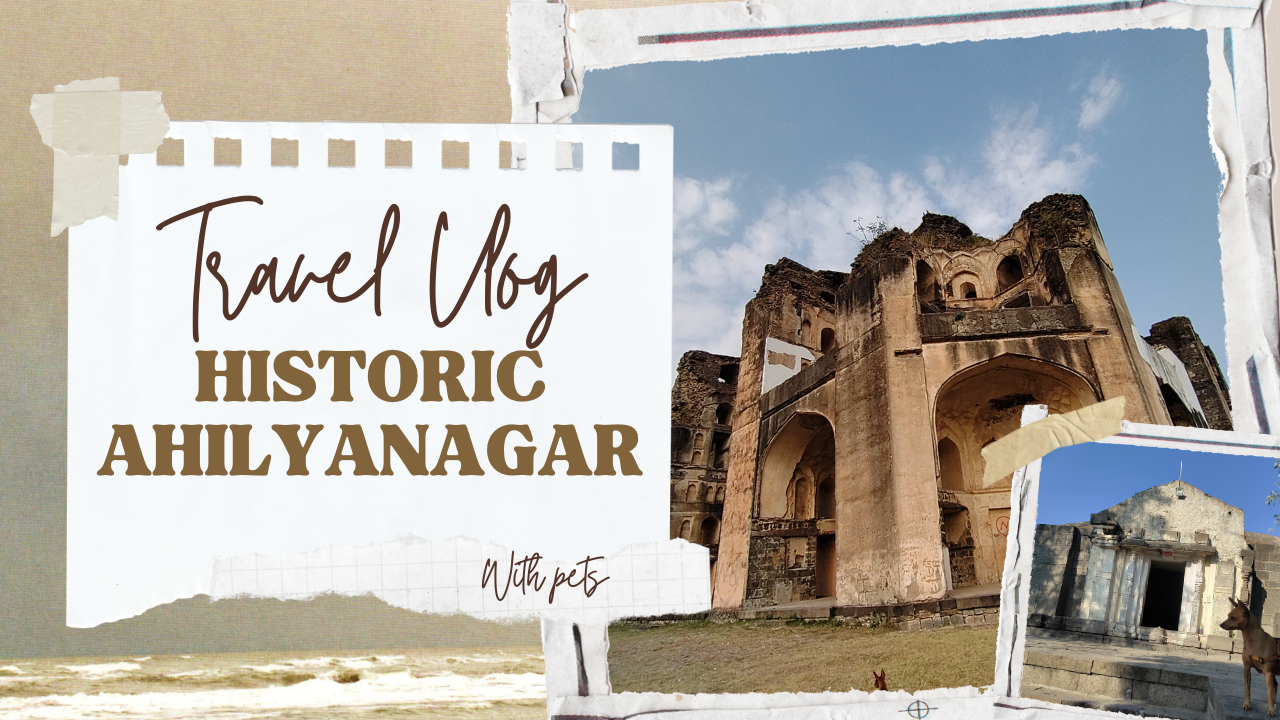
Our journey began early on a crisp Saturday morning. My husband and I, along with our ever-energetic pet dog Sophie, set off from Pune to Ahilyanagar, eagerly anticipating the adventures ahead. With the wind in our hair and Sophie happily perched in the backseat, we drove through the tranquil countryside, feeling the excitement of a perfect weekend getaway.
| Click on the links below to read the blogs on the next days of this trip: | Morning | Evening |
| Day 1 | Bagh Rauza, Tomb of Nizam Ahmed Shah, Damdi Masjid. | Tomb of Salabat Khan -II, Hatti Barav, Farah Bagh. |
| Day 2 | Temples of Kaygaon Toka- Rameshwar temple, Shri Siddheshwar Temple, Ghateshwar Mahadev temple | Mahadev Temple (Mallikarjun Temple)in Ghotan. |
| Day 3 | Sangameshwar temple in Parner, Someshwar temple in Parner. | Siddheshwar Mandir in Siddheshwarwadi, Shri Takli Dhokeshwar Cave temple. |
Day 1: A Historic Encounter
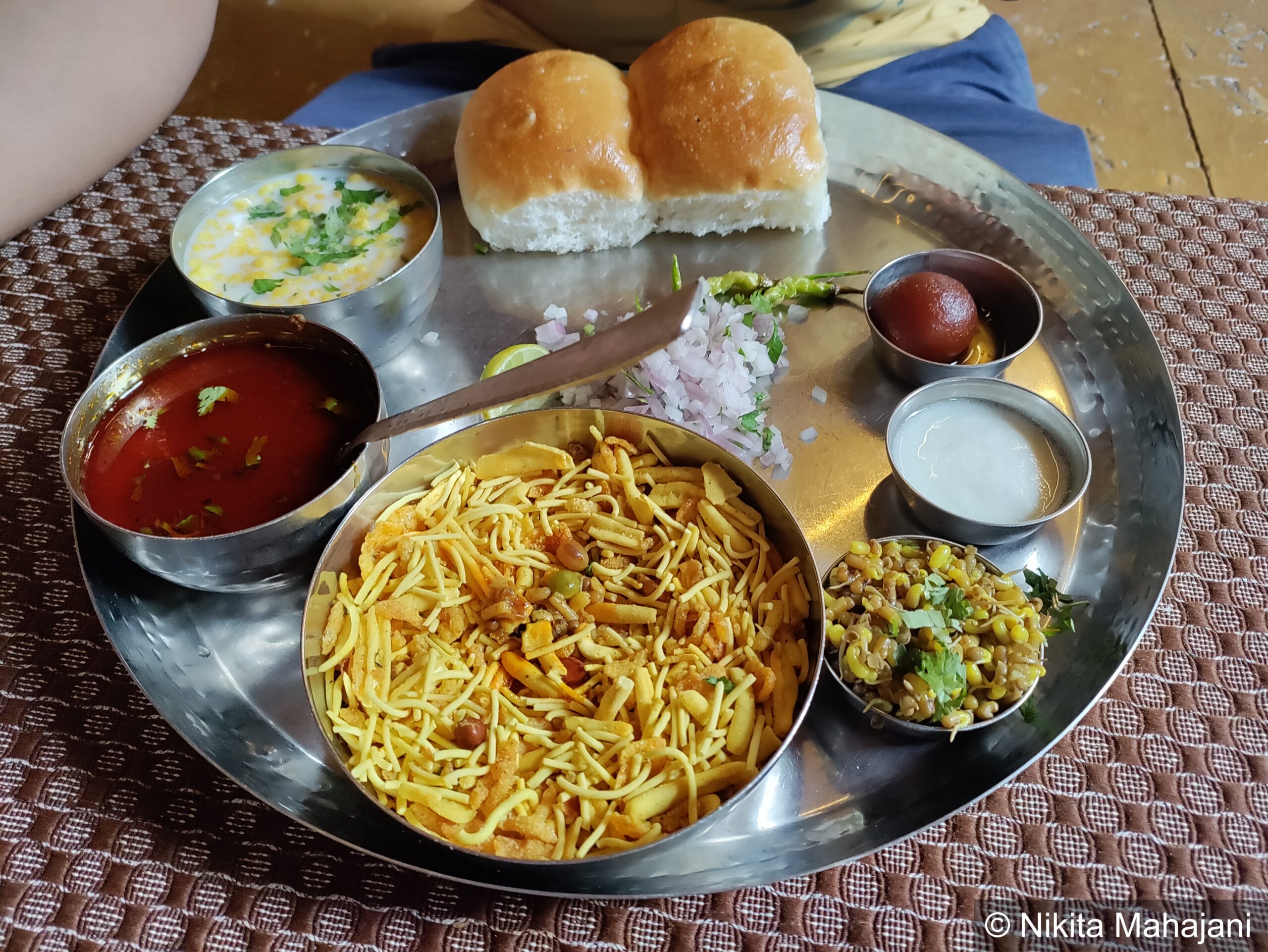
We hit the road at 6 AM, greeted by the golden hues of dawn. By 8 AM, we stopped for breakfast at Shivneri misal, where we fueled up on some mouth watering Misal and solkadhi. Shivneri Misal in Manchar is our go-to place for a quick breakfast. It is pet friendly. Their staff is very kind towards pets. Theres a big fenced lawn, a huge parking and clean toilets. The aroma of fresh black tea set the perfect tone for the day.
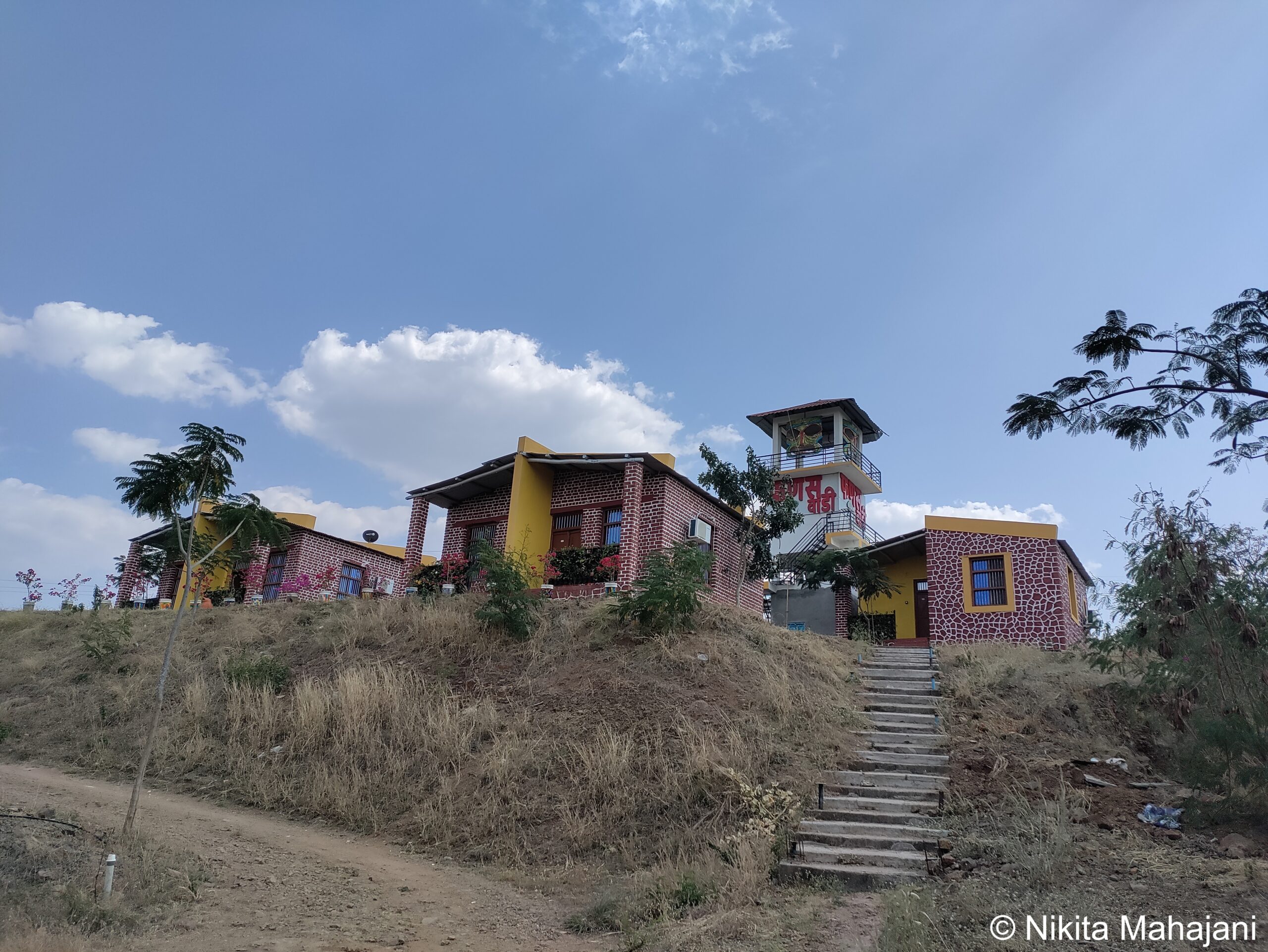
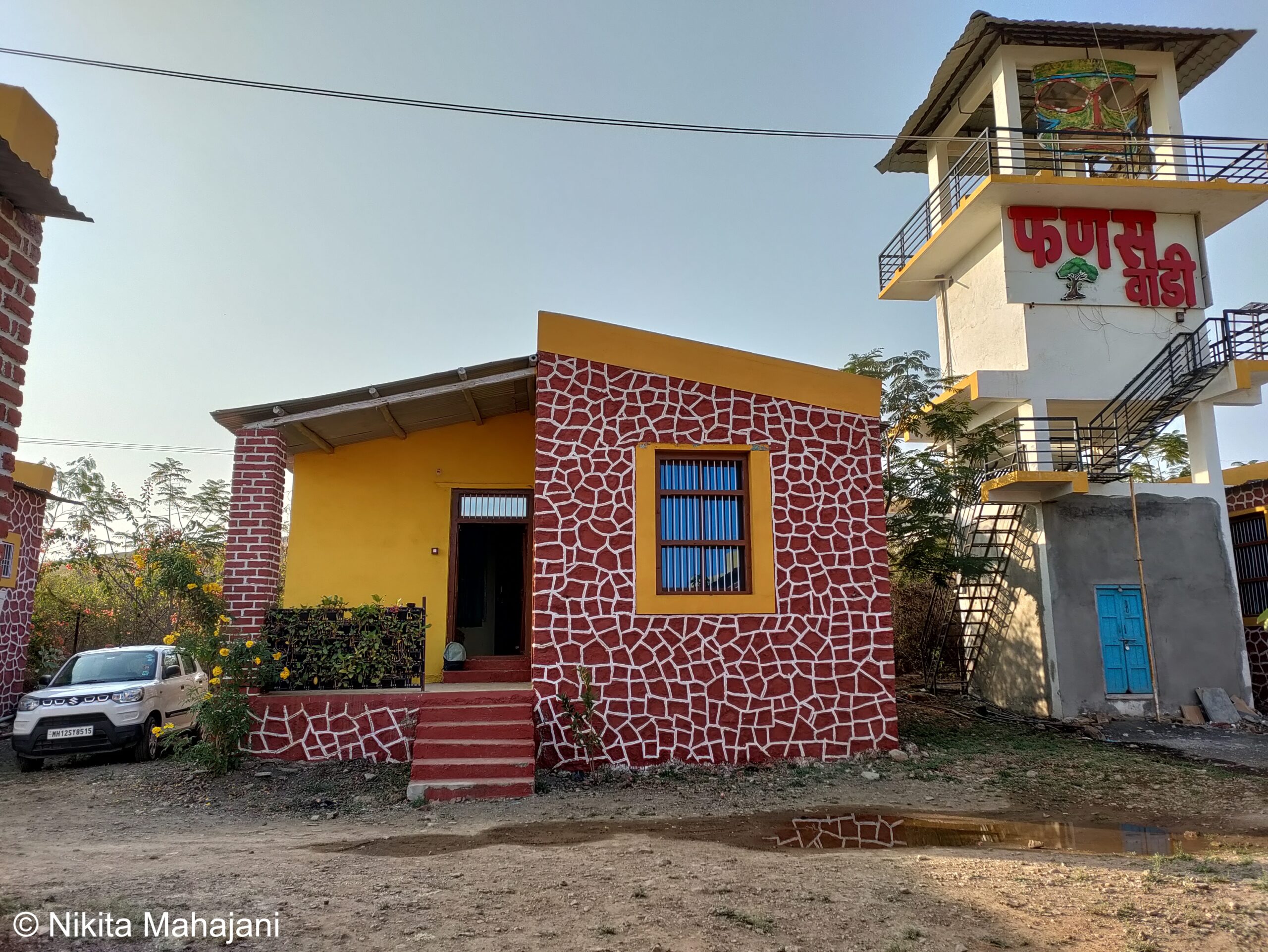
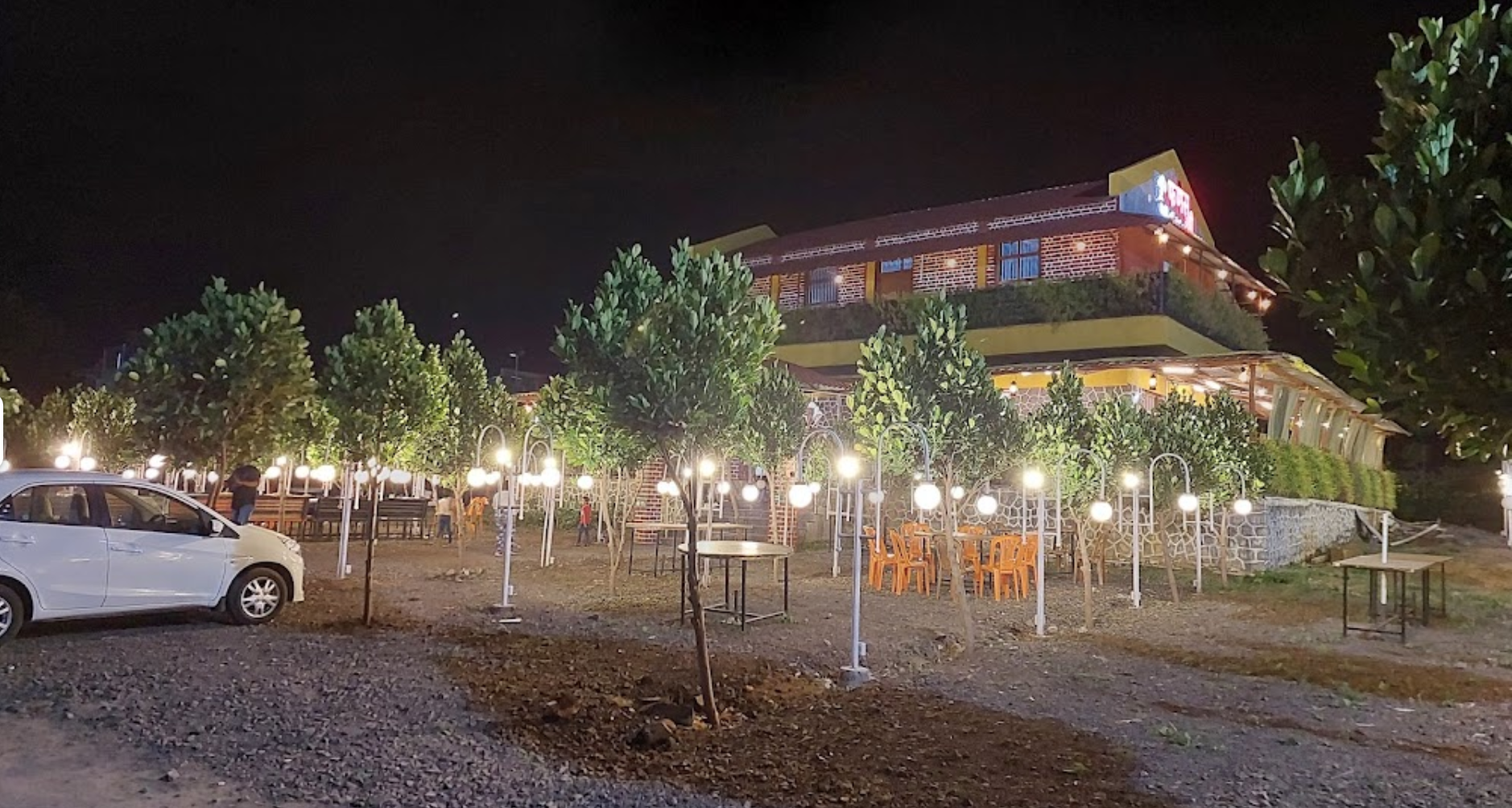
Arriving at Fanaswadi Resort at 10 AM, we were welcomed by its serene ambiance. This is a very authenic Maharashtrian resort nestled in a jackfruit plantation. None of the hotels in Ahmednagar are pet friendly. I randomly came across Fanaswadi on google maps and called them to accomodate my pet on request. The manager readily agreed. The property seemed to be a new one when we visited. The owner has been very kind to keep 3-4 indies on his property. They are never caged or chained. These free roaming indies at Fanaswadi made my day. The entire property has been designed on a contoured site. The restaurant is located at the entrance whereas 8-10 cottages are located on top of the hill. The cottages have both vehicular and pedestrian access routes. Although the rooms are very basic but the desi food in their resttaurant is to die for. On gets panoramic views of the surrounding hills from the cottages. After settling in, we began our journey through Ahilyanagar’s rich history.

First up on our plan was Bagh Rauza, a stunning mausoleum built in the 15th century. It was difficult to find the access route to this mausoleum even if we could see its huge stone dome roof from a lot of distance from all directions. The mausoleum is surround by illegal encroachments and slums from all side. It is not possible to reach Bagh Rauza by a vehicle. So we parked our car nearby and went walking through the slum.

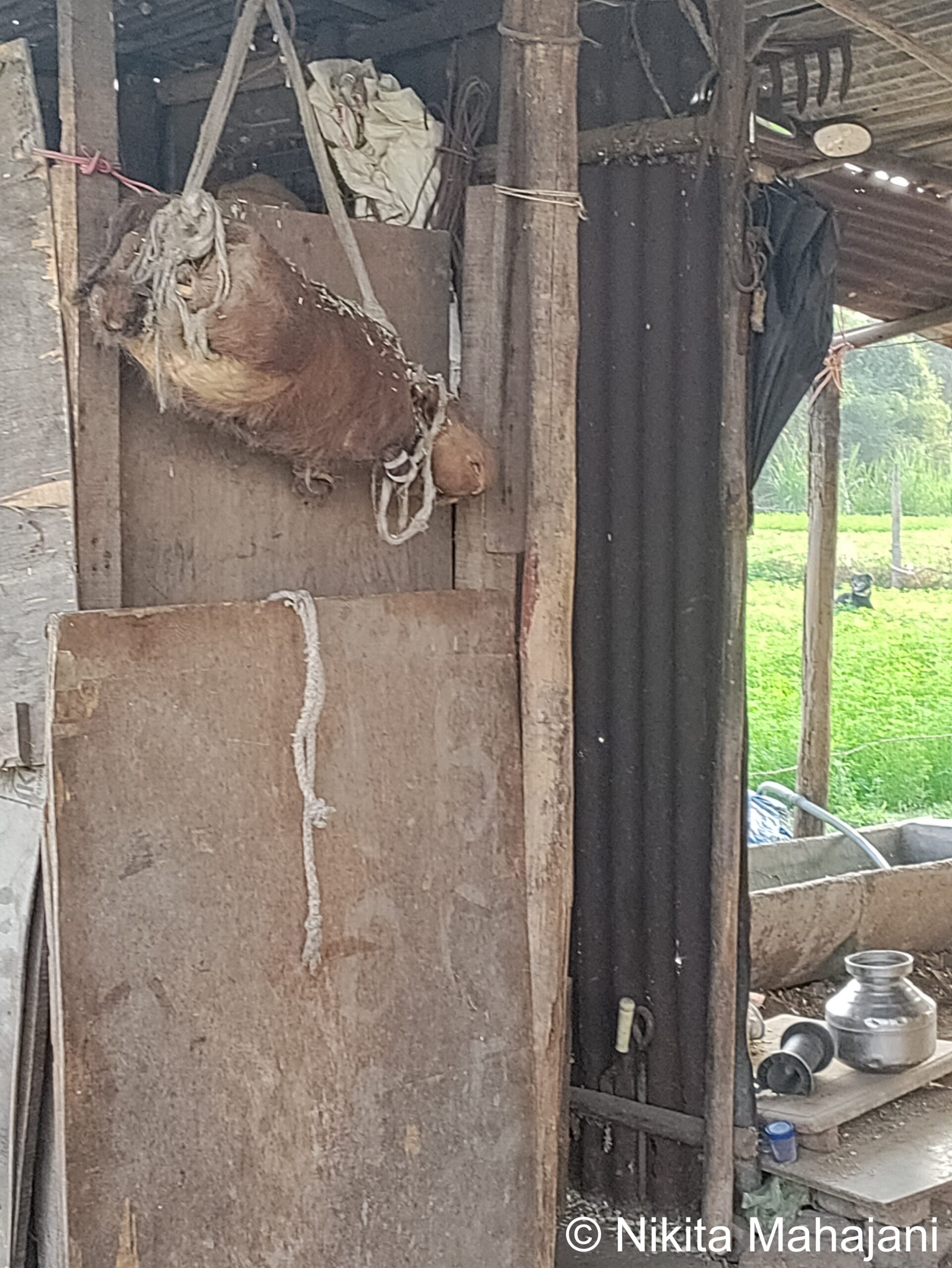
Within next 2-3 minutes we came across a couple of ancient dome structures which were encroached converted converted to cow sheds by the muslim slum dwellers. Upon reaching the compound wall of Bagh Rauza, I was shocked to see the carcass of a poor calf hung from the ceiling. This practice of hanging the carcass of the the baby calf next to its mother cow is called the ‘Khaal baccha’ technique in the dairy industry. ‘Khaal baccha’ literally translates to ‘skin baby’ in English. It is a practice where a dead male calf’s skin is stuffed with hay or sawdust and kept in front of a cow. This is done to deceive the cow of buffalo into thinking that her child is still alive so that she does not stop producing milk. In most cases, a male calf is starved to death and the flesh is removed from its body and stuffed with hay. The National Dairy Report by FIAPO in 2017 revealed that this practice was widely seen even in remote parts of India.
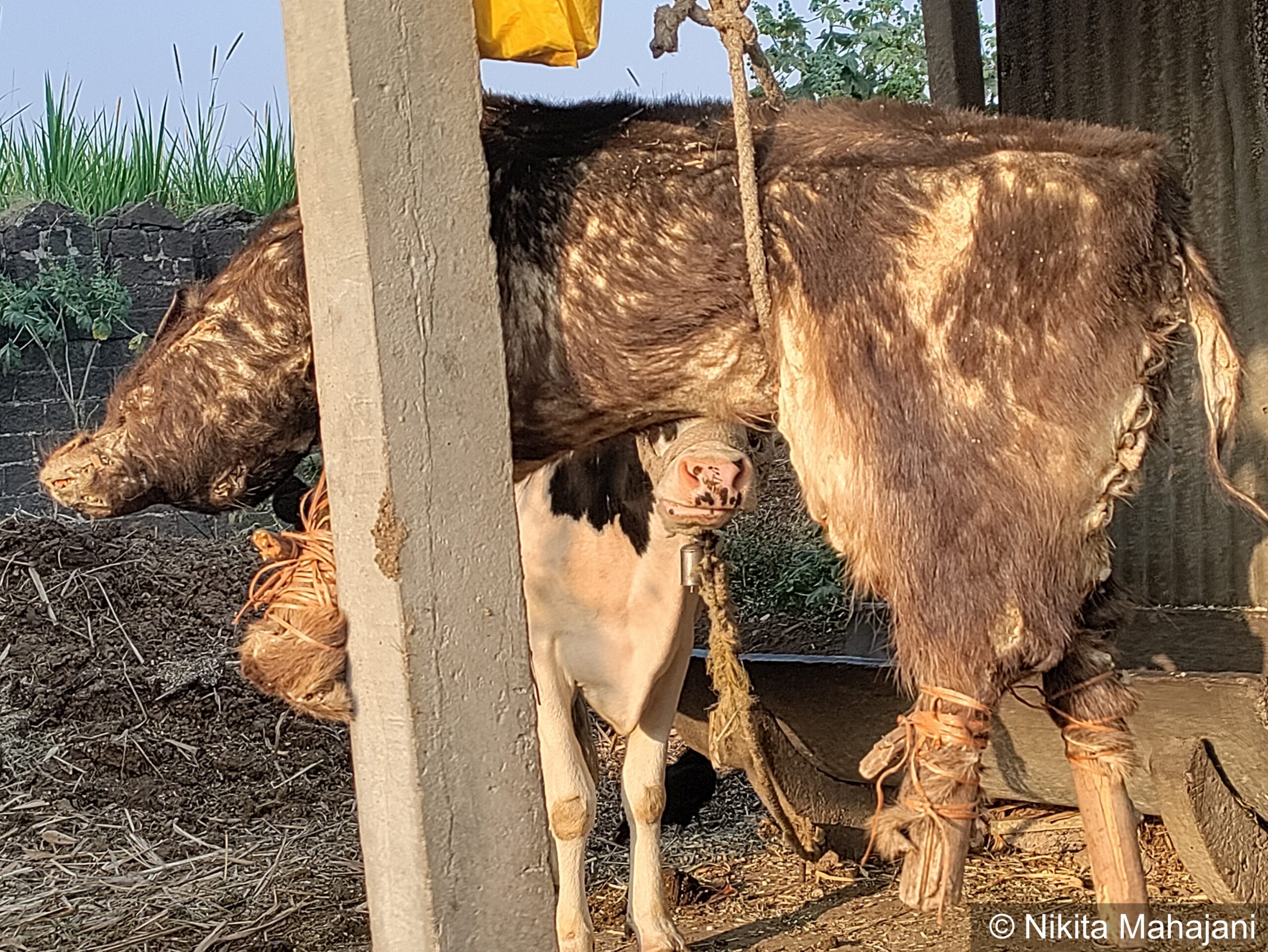
The view of the Khaal bachha brought chills down my spine. How can the dairy industry be so cruel? In a country where cows are workshipped as Gaumata, one can see see dead calfs hung at the entrance of an ASI protected monument. There were a set of beautiful tombs at the entrance. Their names and the story behind them was not published anywhere in the form of signages.
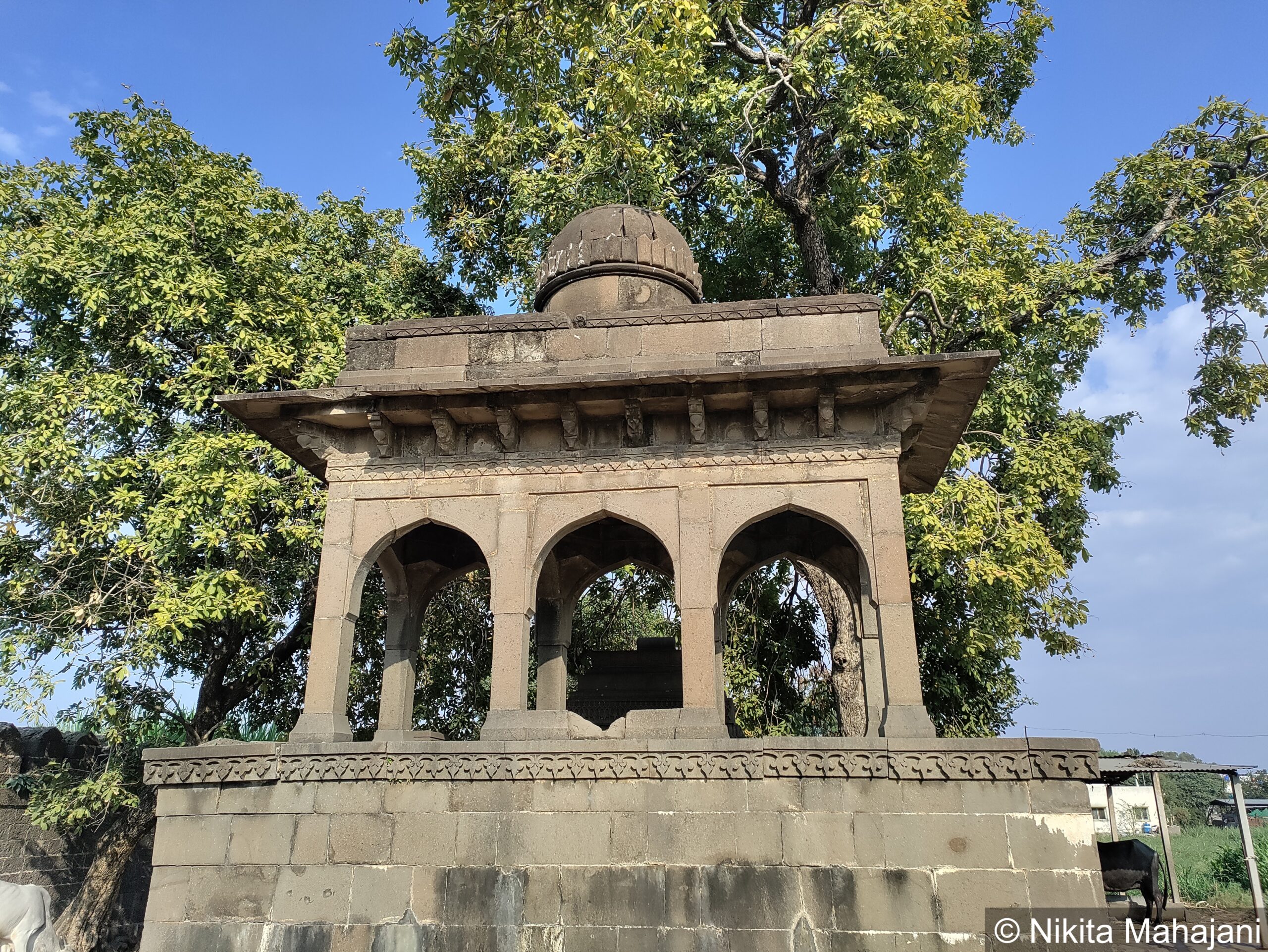
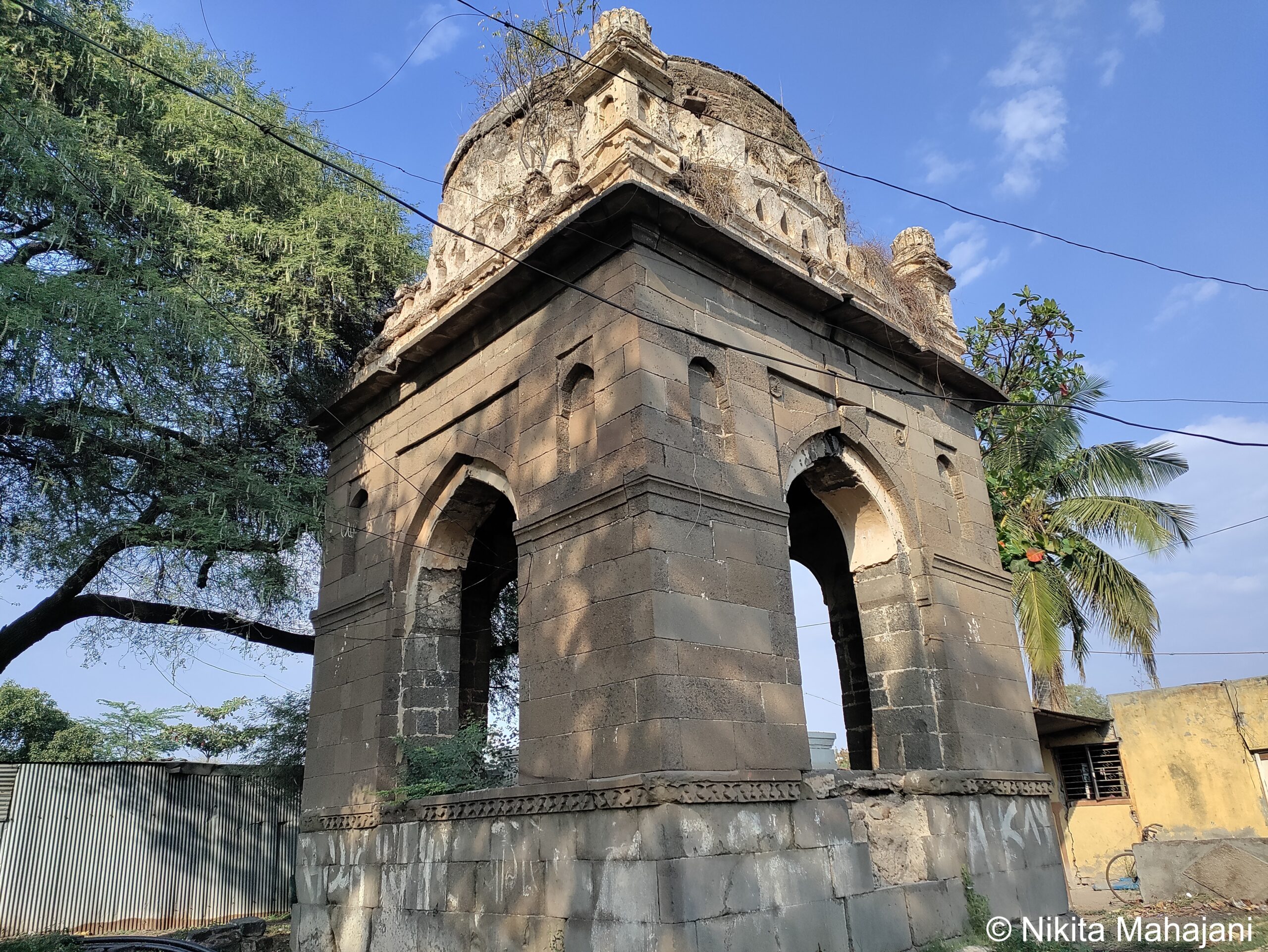
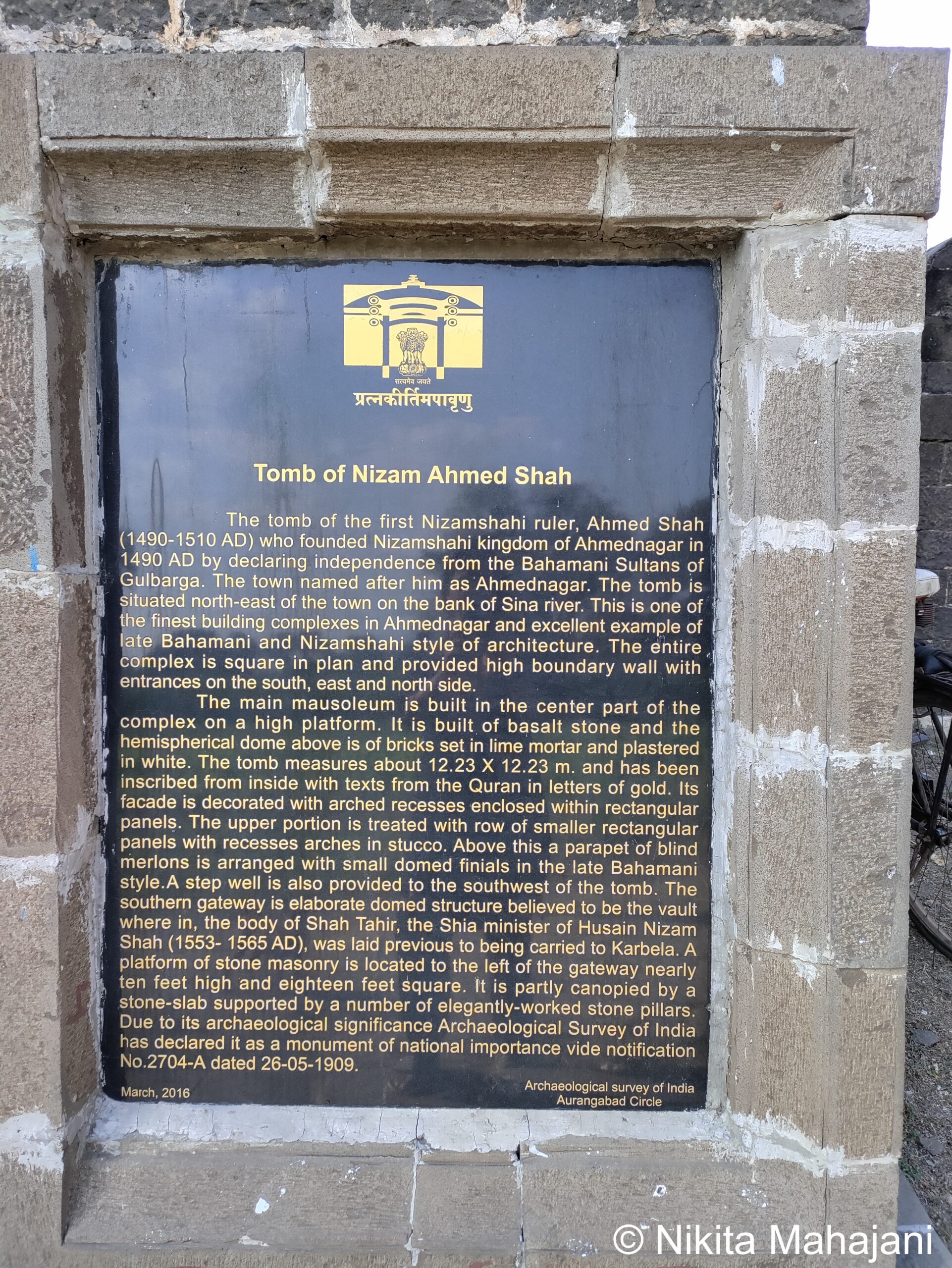
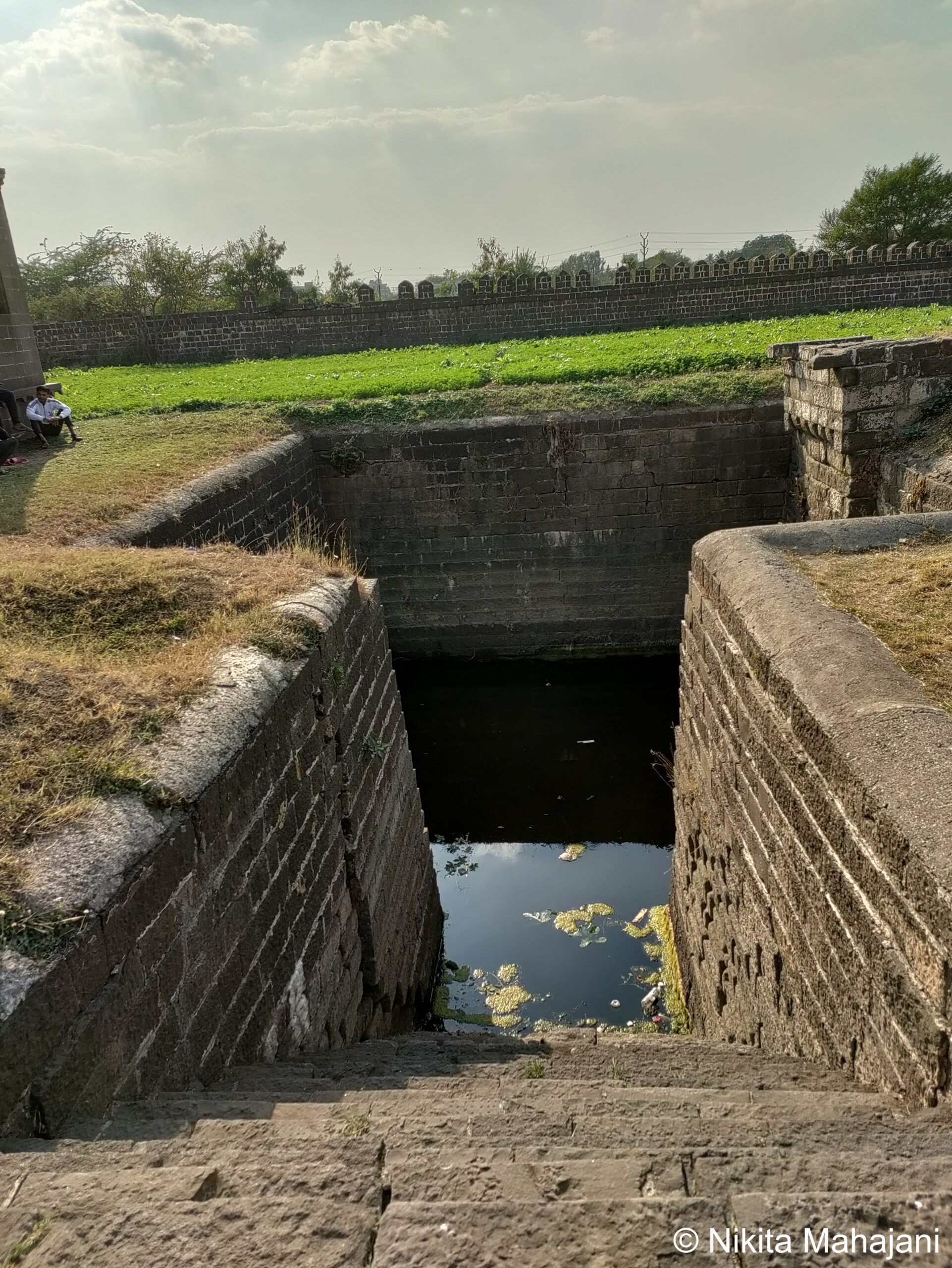
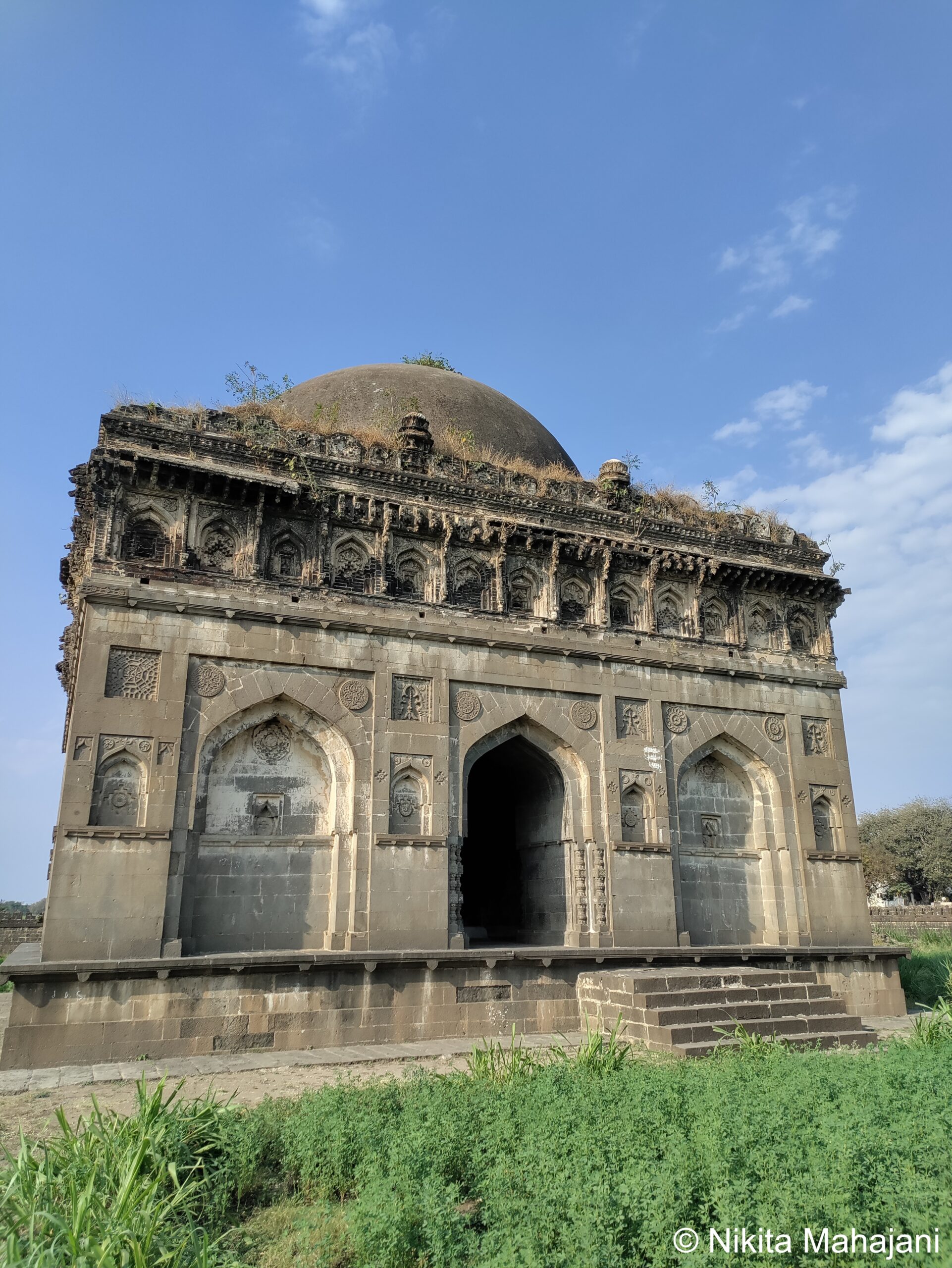
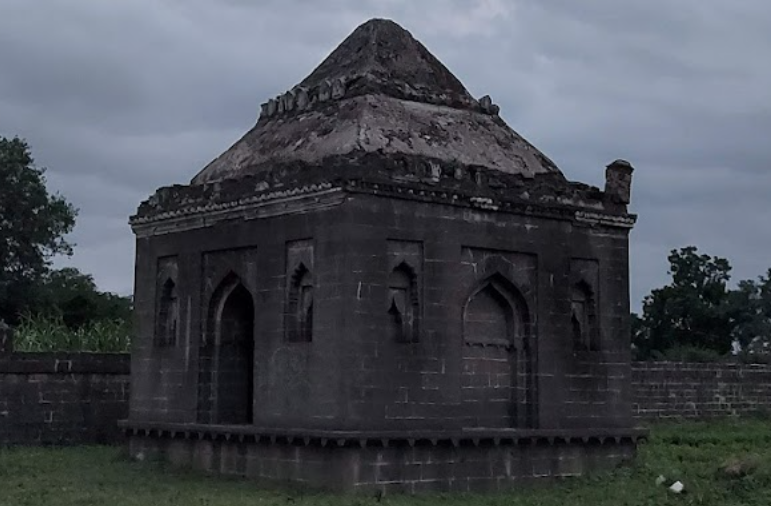
After entering the main gate of the protected monument of the Tomb of Nizam Ahmed Shah, we also came across a step well and a small unnamed tomb with an unusual conical roof. I quickly made a sketch of it.
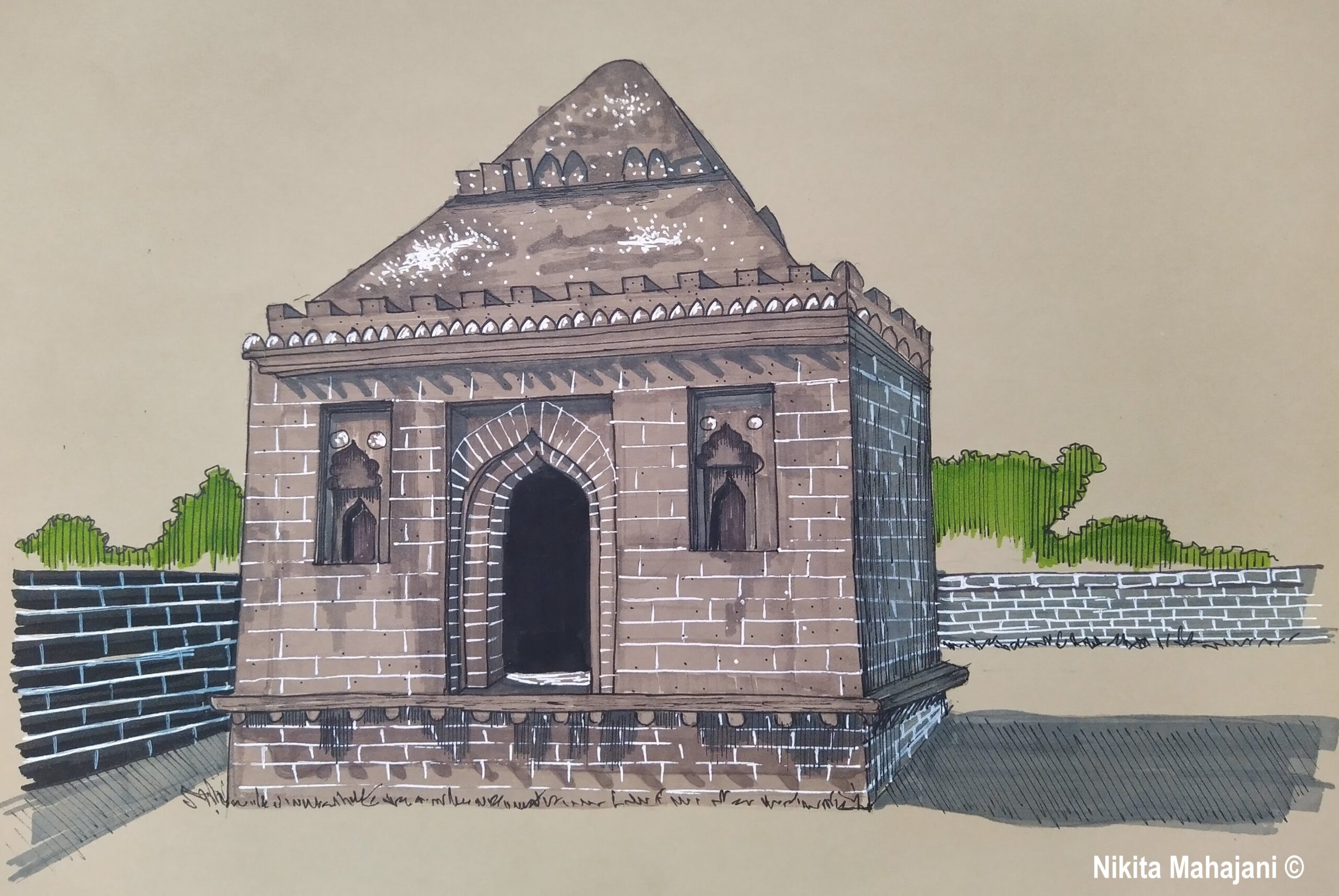
While coming back from the tomb towards the parking, I again came across another Khaal bachha hung in the slum. Seeing the lifeless calf hanging in the cowshed by this historic tomb strikes me with deep sadness. As a vegan, it’s distressing to witness such disregard for life, especially in a place meant to honor history and culture. It feels deeply contradictory and unsettling amidst the reverence for heritage. This visual of the dead calf made me believe one more time that human beings are the most destructive species on a planet earth.
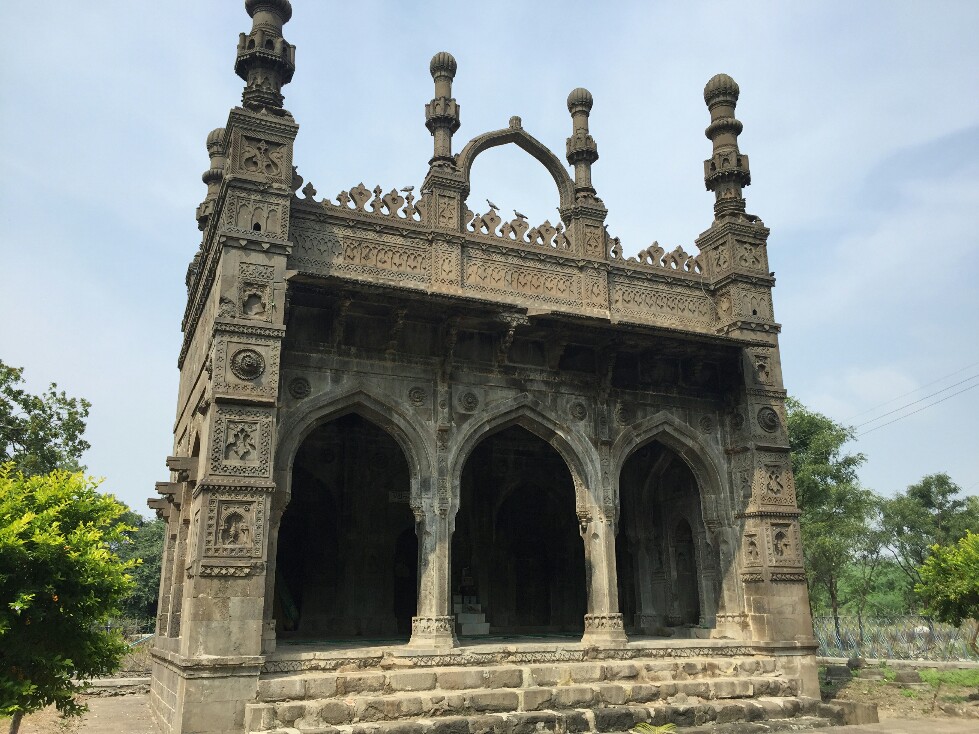
We then moved on to the Damdi Masjid situated in Ahmednagar cantonment. The Masjid lies on the road that goes around Ahmednagar Fort. The Masjid is quite deserted and cant be seen from the main road. It does not have enough signages. There is a small open area after entering the gate. We parked our car there and I left Sophie with my husband in the parking only. I did not take her inside the Masjid premises. The masjid stands out for its intricate carvings and the use of remarkably large stones. Built around 1567 A.D. by the noble Sahir Khan, it was funded by small daily donations, or damdi (1/16 Re.), from workers employed at Ahmednagar Fort. This mosque exemplifies Nizam Shahi architecture, showcasing impressive design and craftsmanship, especially in the carvings on its facade and central mehrab. The structure features a single prayer hall with three aisles, each two bays deep, with arched openings in the north and south walls. A flat roof is supported by arches rising from octagonal pillars set on foliated bases.
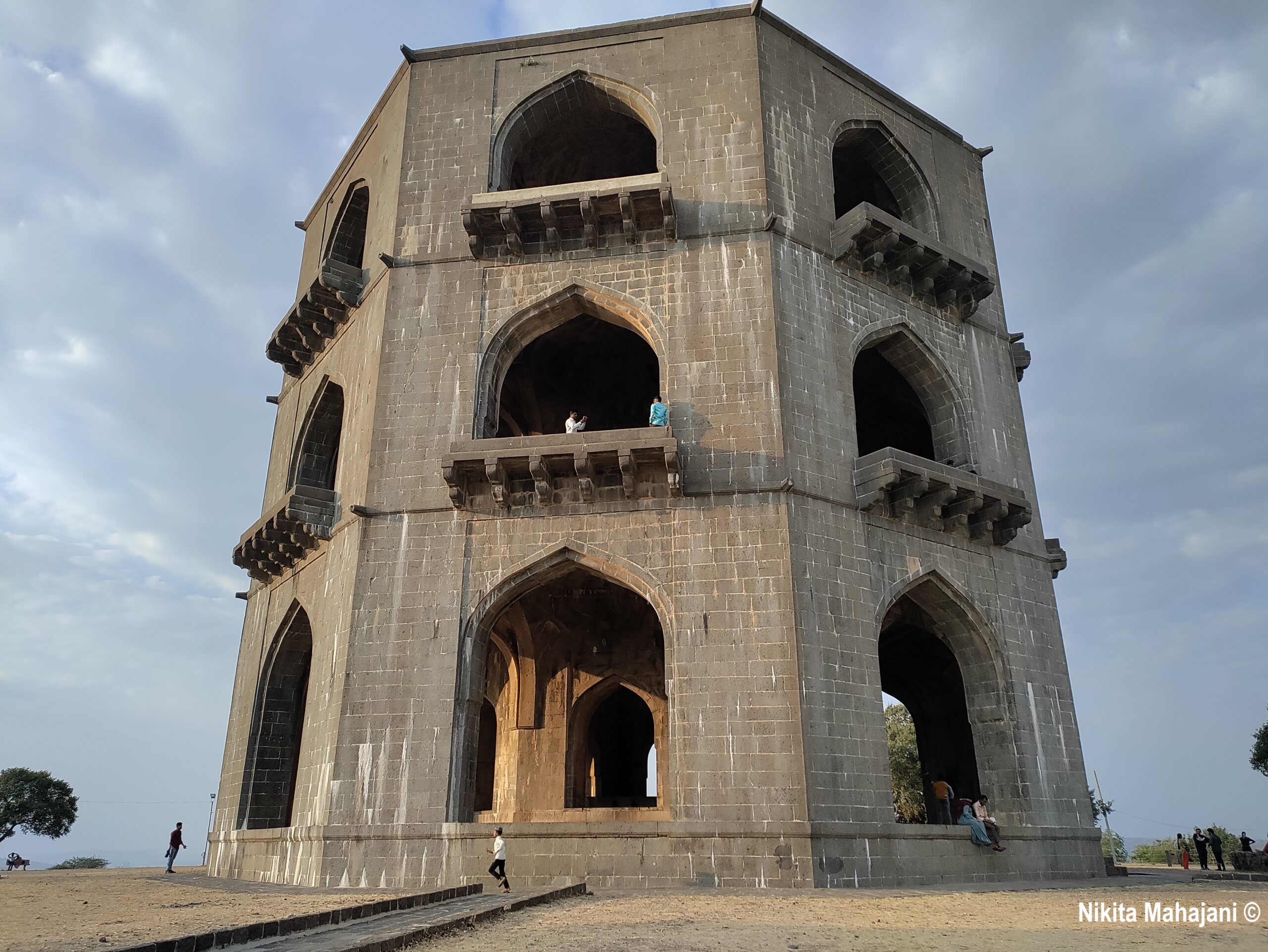
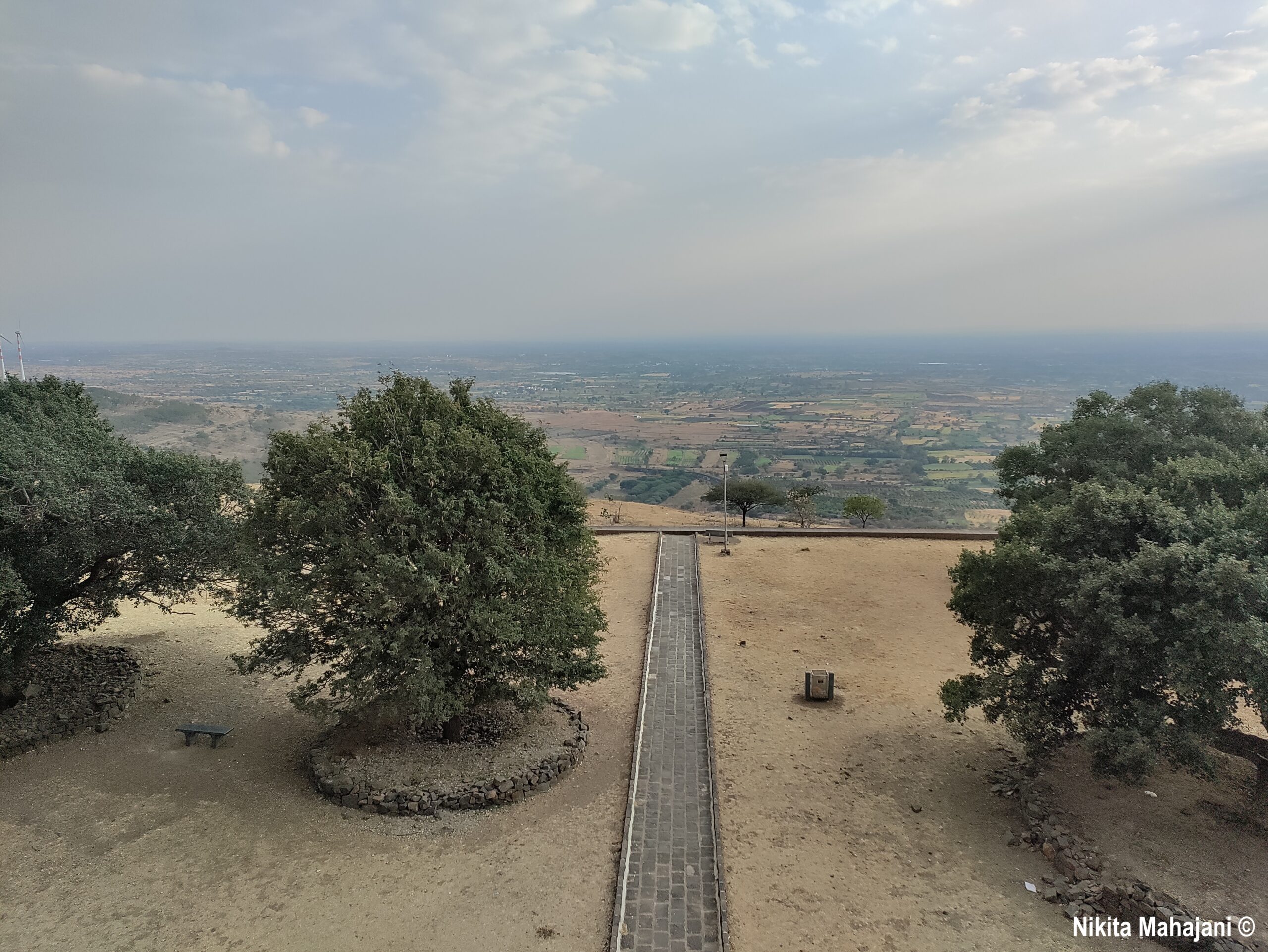
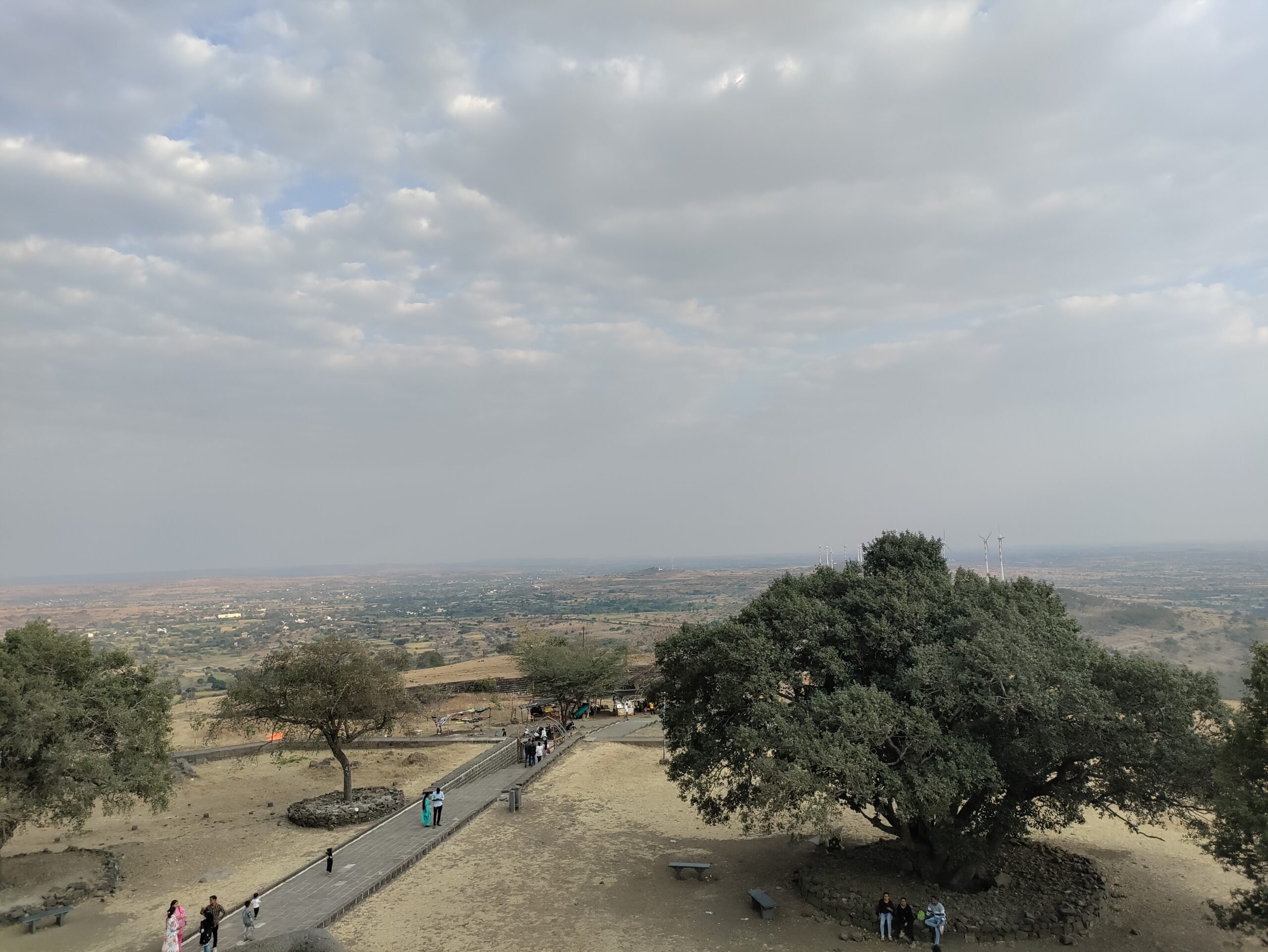
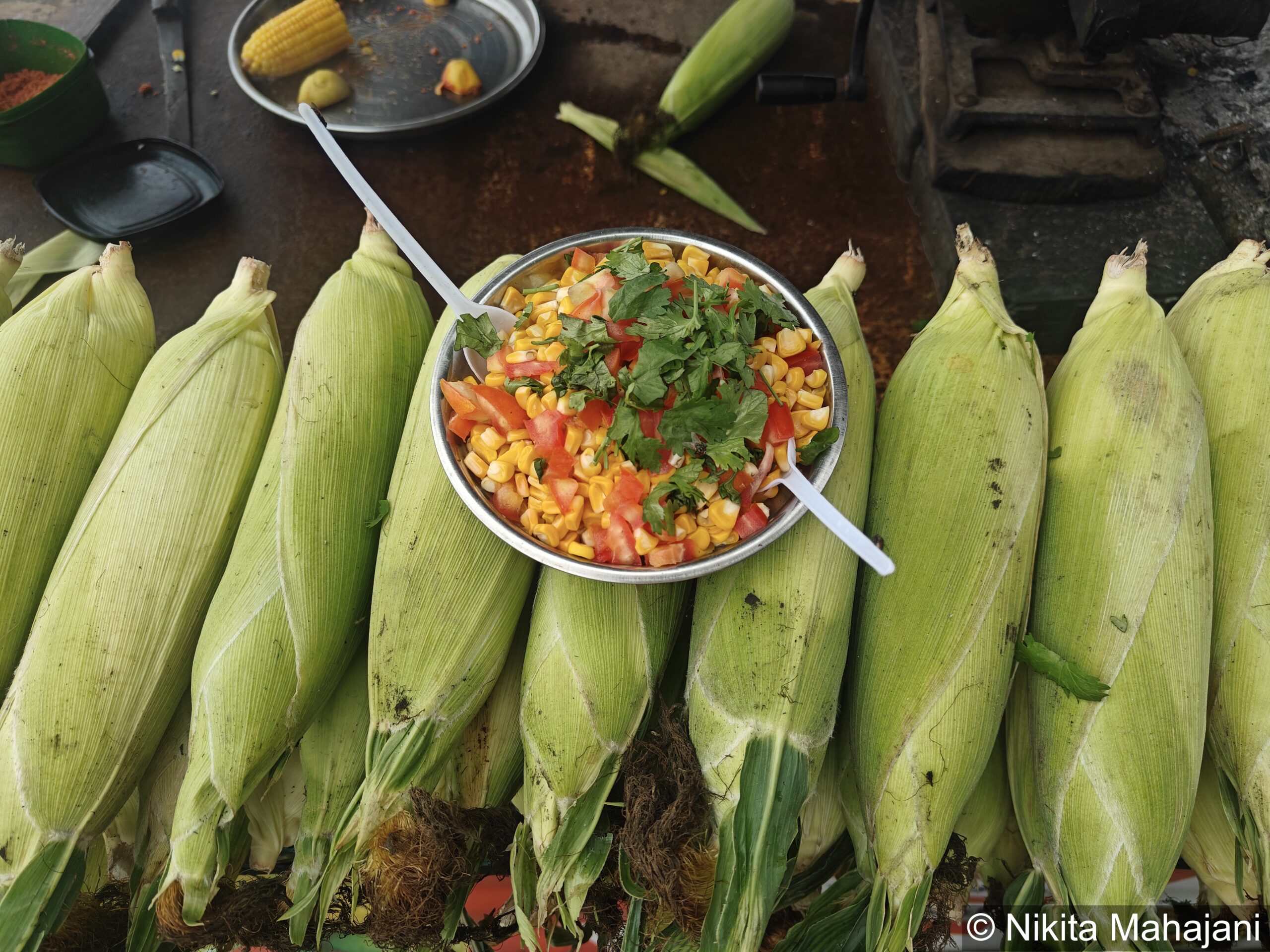
We later headed towards the Salabat Khan Tomb, perched on a hill. It is situated on the outskirts of Ahilyanagar. But the city is so small that you can reach the tomb within 20mins from the city centre. Since the tomb is on top of a mountain, it is seen from all sides from long distances as one is approaching towards it. The drive from the base of the hill towards the tomb is mesmerising. The road runs through dense forest vegetation on the mountain. Once you reach the top, the view is breathtaking, and the cool breeze made the drive worth it. Sophie enjoyed the uphill drive through the forest. Cars were parked parallel to the road and there were some local people selling cooked corn and juices. The monument did not have any watchman and the entry was free of cost. But still the entire premises are very well maintained. Sophie had her moment of fun, running around the open spaces as we soaked in the beauty around us.
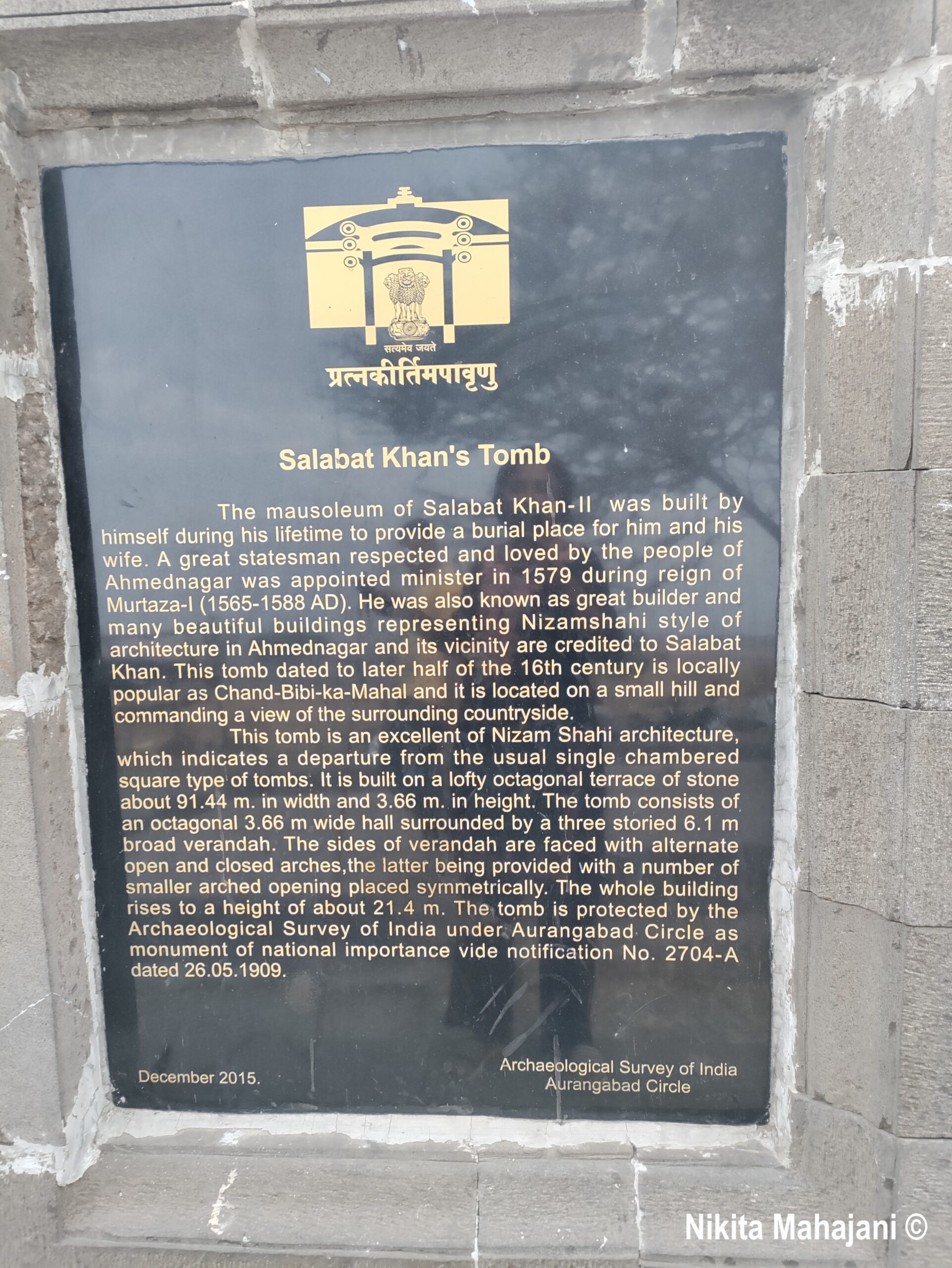
The Tomb of Salabat Khan II, often mistakenly called Chandbiwi’s Mahel or Chand Bibi Palace, houses two cenotaphs—one for Salabat Khan and one for his wife—sheltered by a dome supported on three elegant pointed arch piers. The octagonal monument rises from a twelve-foot-wide base to a height of seventy feet, with a continuous twelve-foot-wide gallery encircling its interior. Access to this gallery is via a narrow, concealed staircase within the wall. The tomb and its octagonal base support a three-story, 23-meter-tall structure, with each side showcasing broad arched openings and projecting balconies on lotus brackets. A double-height octagonal chamber is flanked by domed bays on eight sides. The stately tomb sits on a vast hilltop terrace, offering expansive views over the plains towards Ahilyanagar, 10 kilometers west.
Our next stop was the Hatti Barav, an ancient stepwell with fascinating carvings. It is just 4 km from Ahilyanagar city centre near on Jamkhed road in the cantonment area. The place is deserted. It does not have any compound or guards. Hence you can visit this place any time on any day. Its completely pet friendly.
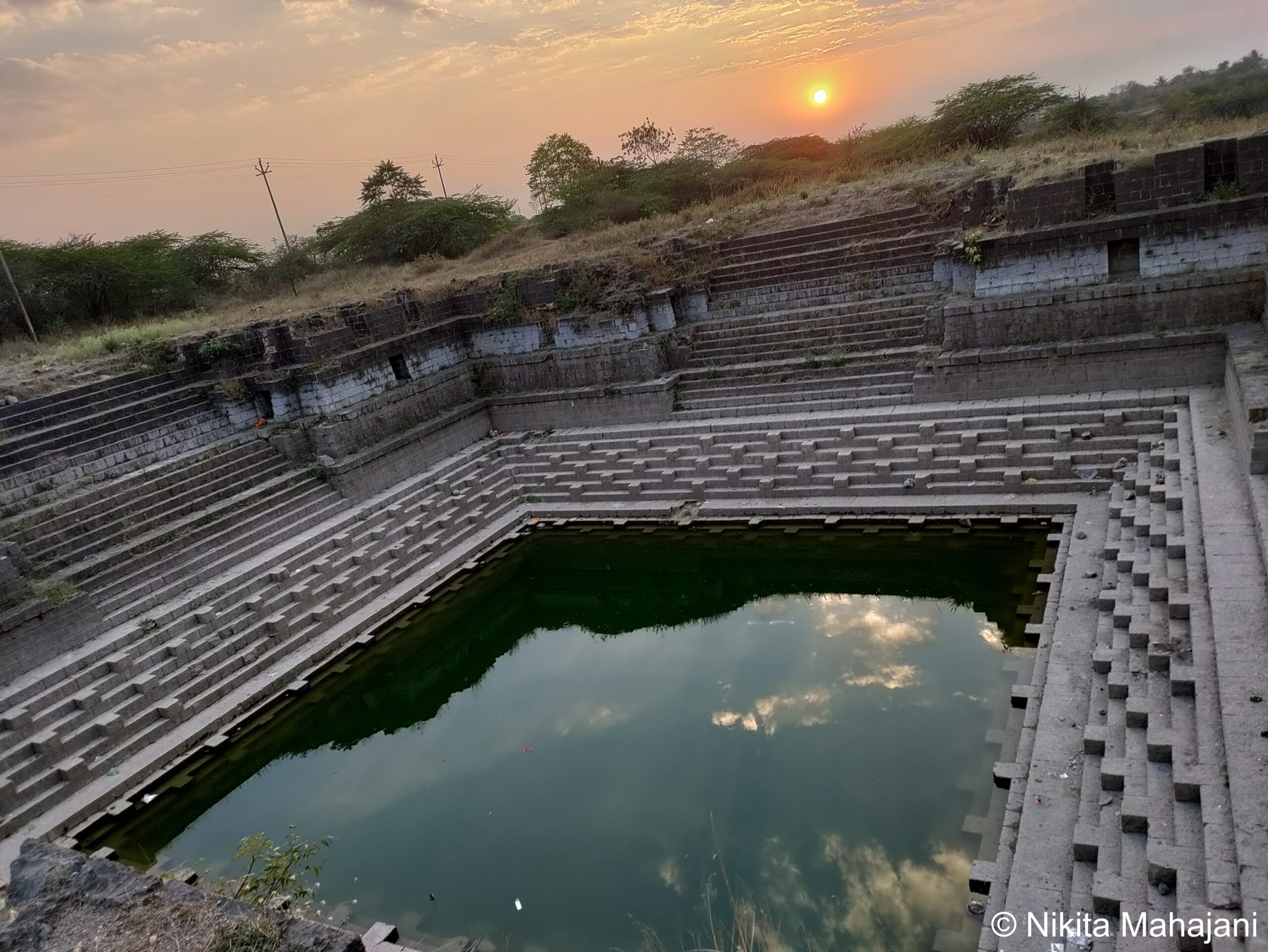
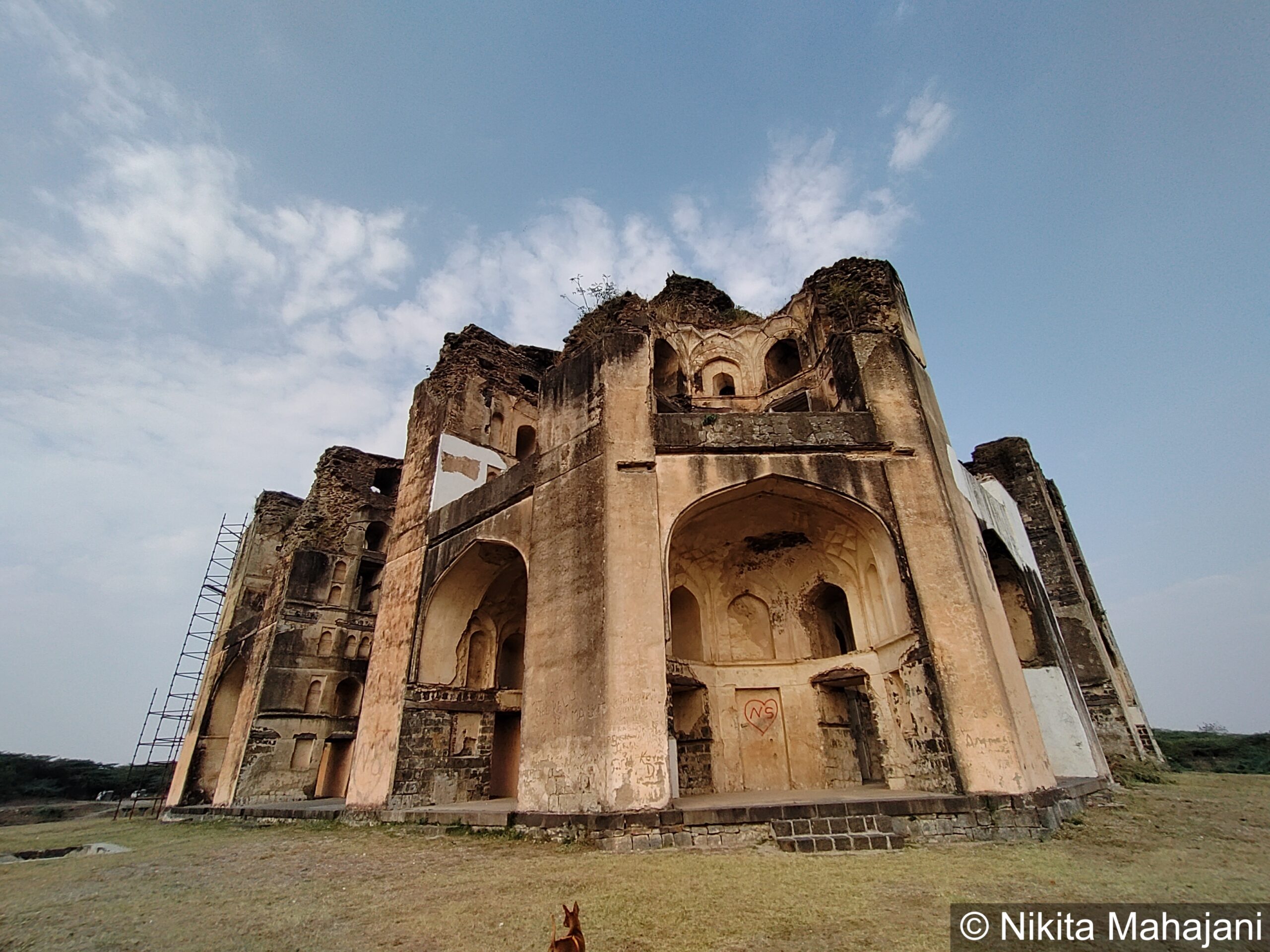
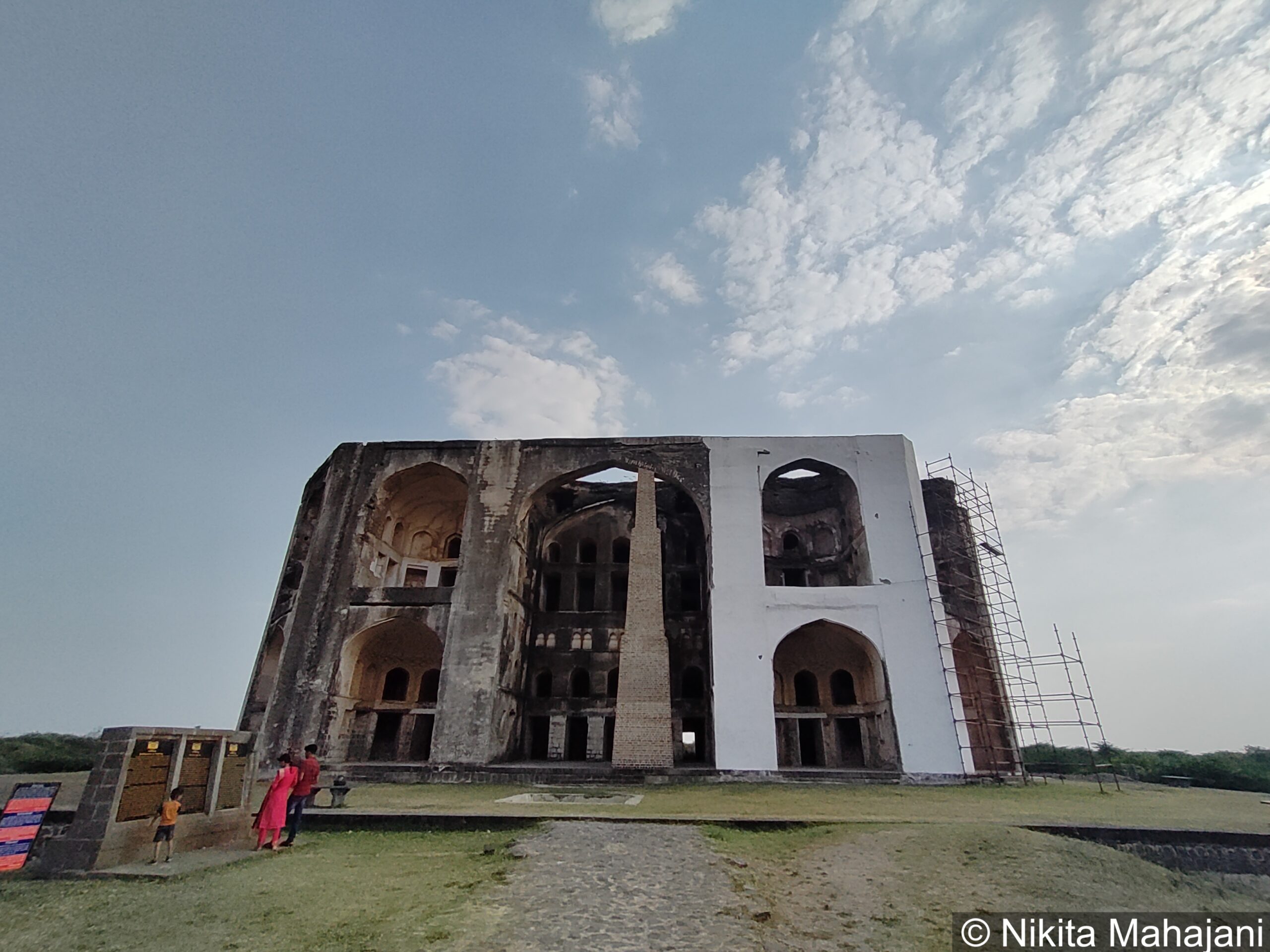
We watched the beautiful sunset from Hatti Barav, and then we left to visit the serene Farah Bagh. These lesser-known gems of Ahmednagar made us feel like we had traveled back in time. Farah Bagh is also located in the cantonment area near the Cavalry Tank Museum. We saw a lot of people coming for evening walks on the jogging track on the way to Farah Bagh. There is negligible vehicular movement in the neighbourhood and all we could see was joggers. We parked our car at the gate of Farah Bagh and entered its premises. It is an isolated monument with no guards and and no entry charges. There were only 2-3 kids inside the premises apart from us. The ancient octagonal palace of Farah Bagh now lies in ruins, with only traces of the ridge remaining from the pond that once encircled it. Around this area and the nearby city, about forty mosques are said to house tombs of royal favorites. Originally, Farah Bagh was surrounded by a pond 17 feet deep and 150 feet wide, bordered by a 500-yard garden where wood apple, mango, and tamarind trees still grow today.
Ahilyanagar: Day 2
To read the previous blog on day 1 of Ahilyanagar click here
Day 2: Temples and Tranquility
The next morning, after an early breakfast at Fanaswadi Resort, we ventured toward Kaygaon Toka, where we visited an array of ancient temples. It was a two hour drive from our hotel. A renowned group of temples dedicated to Lord Shiva stands near the confluence (Sangam) of the Pravara and Godavari rivers at Toka, near Newasa taluka in Ahilyanagar. This cluster features temples like Siddheshwar, Rameshwar, Mukteshwar, Ghateshwar, Gautameshwar, and Sangameshwar. Of these, the Siddheshwar temple holds particular importance. According to Devanagari inscriptions, the temple dates back to the Peshwa era. All of these temples are placed on the three sides of the confluence of rivers and the entire premises are pet friendly. The calmness of the temples and the lush greenery around them created a perfect setting for reflection. Cars have to be parked in the paid parking lot near Rameshwar temple and then one can explore the temples by walking. Although we went during peak sun hours, it did not cause any thermal discomfort as the entire precinct is filled with lush green shady trees.


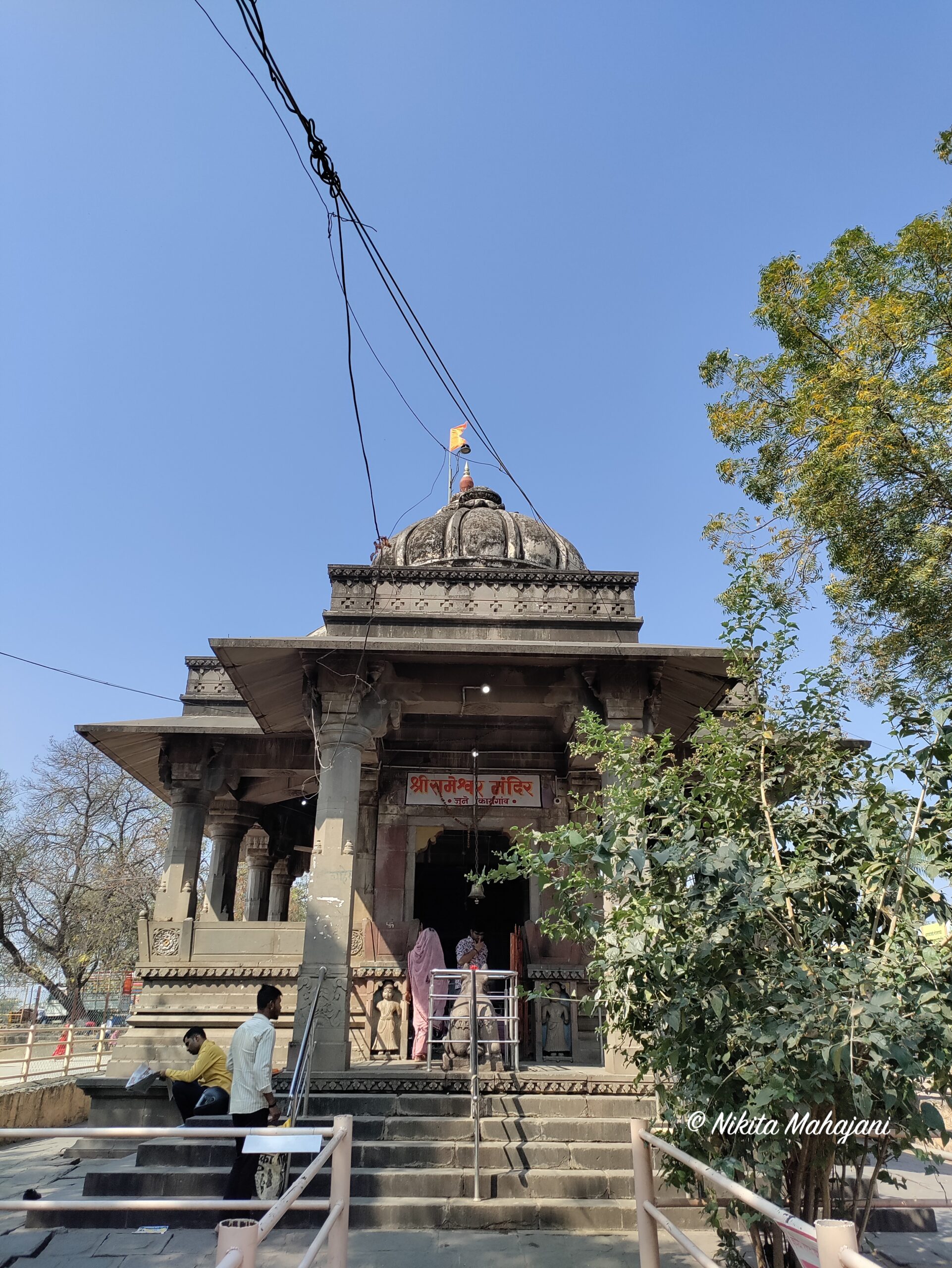
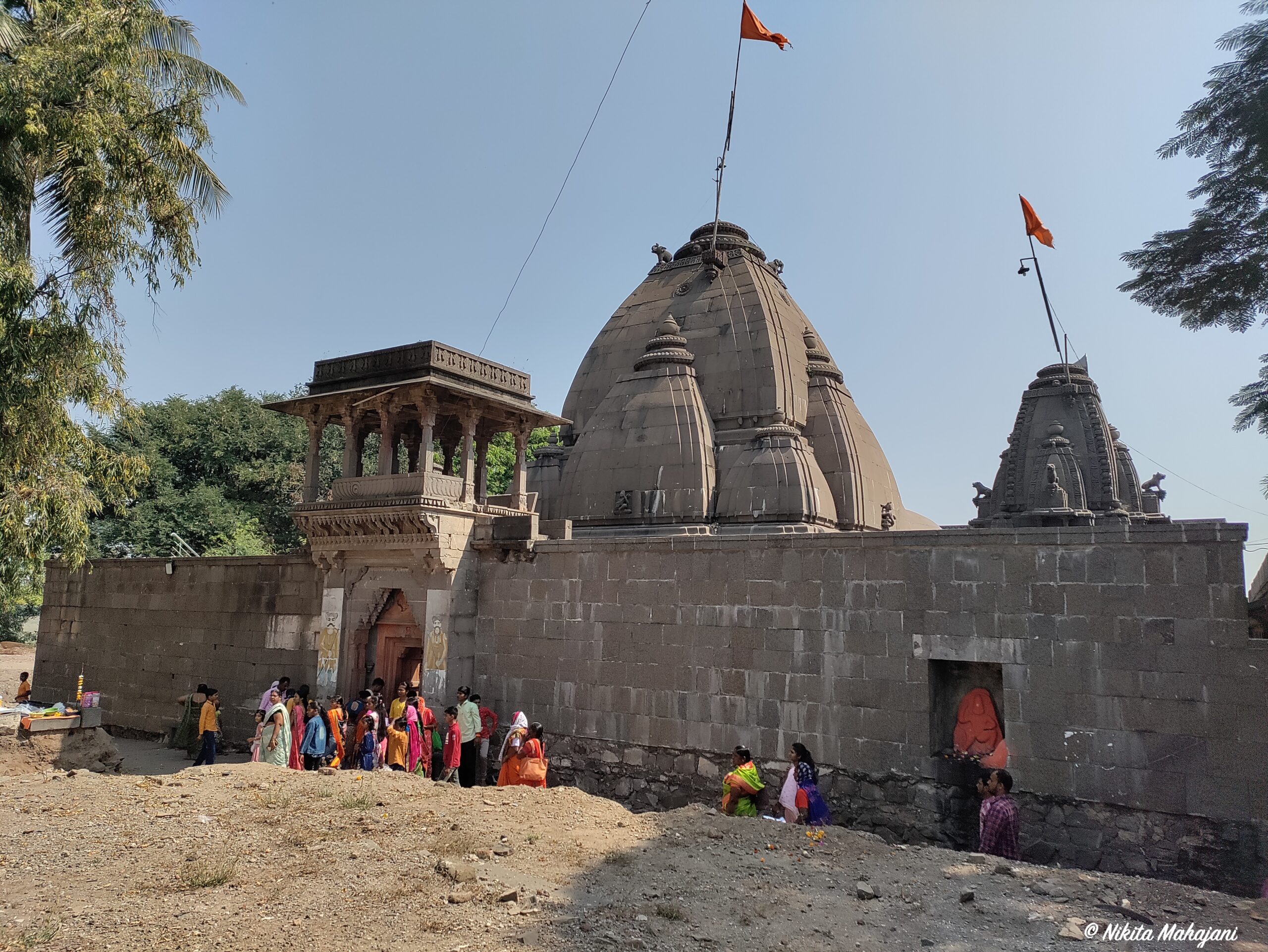
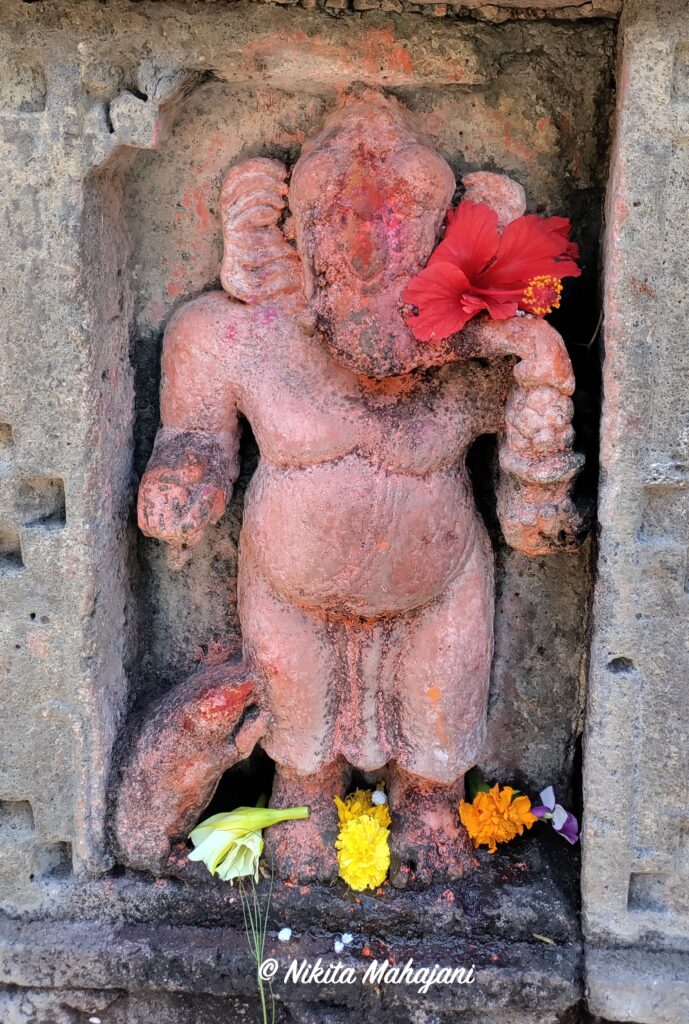
After visited Rameshwar temple, we went back to the parking and drove across the bridge to visit the Shri Siddheshwar Temple. There was some bhajan program going on in the temple premises and it was extremely crowded. The temple has beautiful carvings of flora , fauna, Lord ganesha, Vishnu, etc.
According to Devanagari inscriptions, the Siddheshwar Temple dates back to the Peshwa era. It is believed that Vishnu Mahadev Gadre constructed the temple in 1767 at a cost of ₹93,000. Later, Nana Fadnavis contributed to the temple’s restoration, as well as the repair of the Godavari River Ghat. The temple features exquisite carvings depicting various mythological themes from the Ramayana and Mahabharata, along with intricate sculptures of gods and goddesses. A unique aspect of the temple is its sabha-mandapa, where the rooftop is adorned with beautifully crafted idols of Lord Krishna and Radha.
At the entrance of the Siddheshwar Temple, a beautifully adorned and captivating idol of Nandi immediately draws attention. Within the temple complex, the temples of Vishnu and Maa Durga stand on either side of the main Siddheshwar Temple—Vishnu on the left and Durga on the right. A striking feature of the Vishnu Temple is the presence of ‘Dikpalas’ (guardians of the directions) adorning its outer walls. The black stone idol of Lord Vishnu, depicted holding a Shankha, Gada, and Chakra, is particularly mesmerizing.


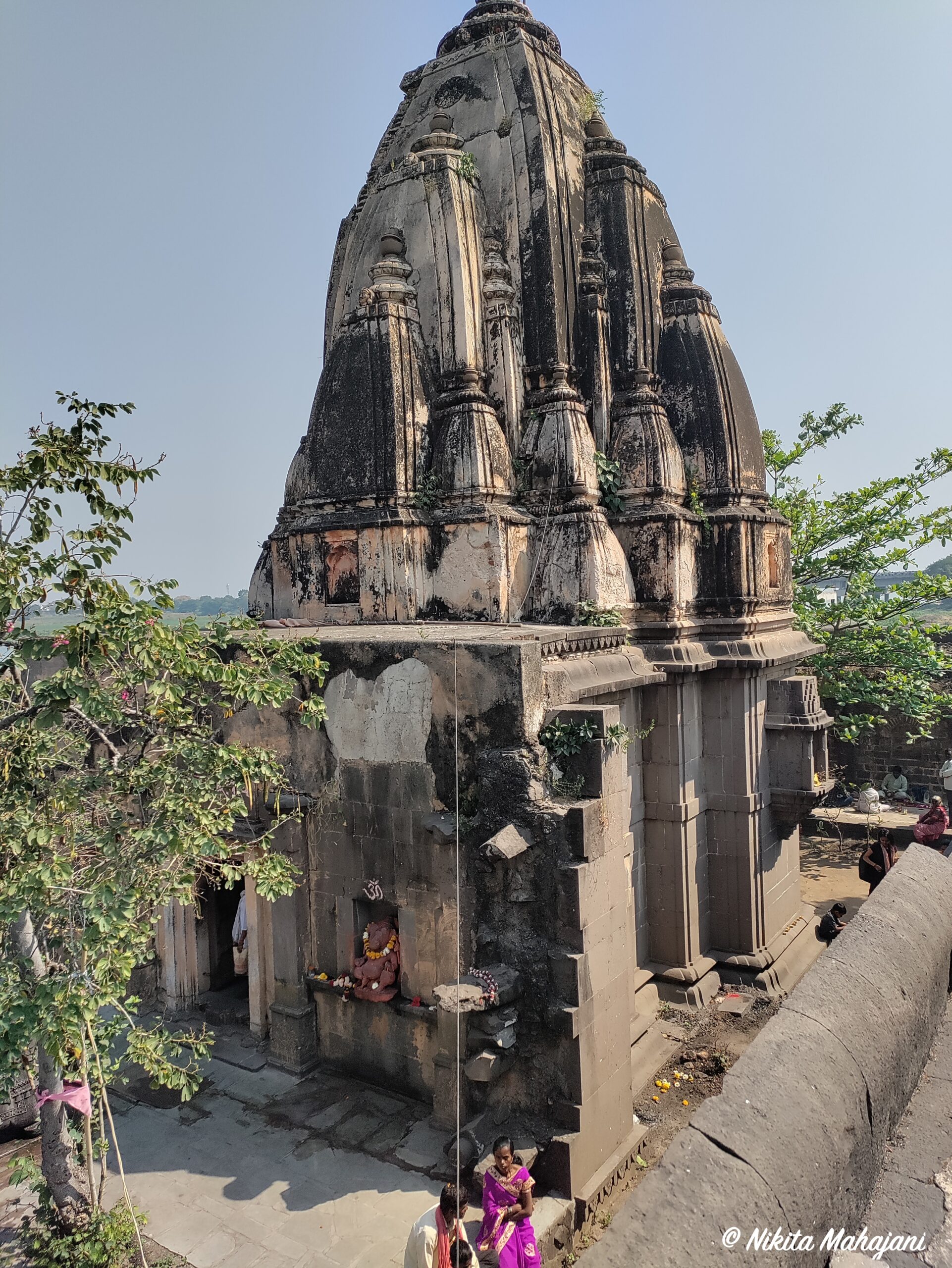
On the right side of the Siddheshwar Temple, the Devi Temple stands out with its remarkable star-shaped foundation. The deity worshiped here is known as Gajara Devi, a name derived from the founder’s surname, Gadre (Gajre). One of the temple’s most fascinating features is the series of ‘Ashtamatrika’ idols carved into its walls, representing Varahi, Brahmini, Vaishnavi, Indrani, Maheshwari, Kaumari, Chamunda, and Narasimhi.


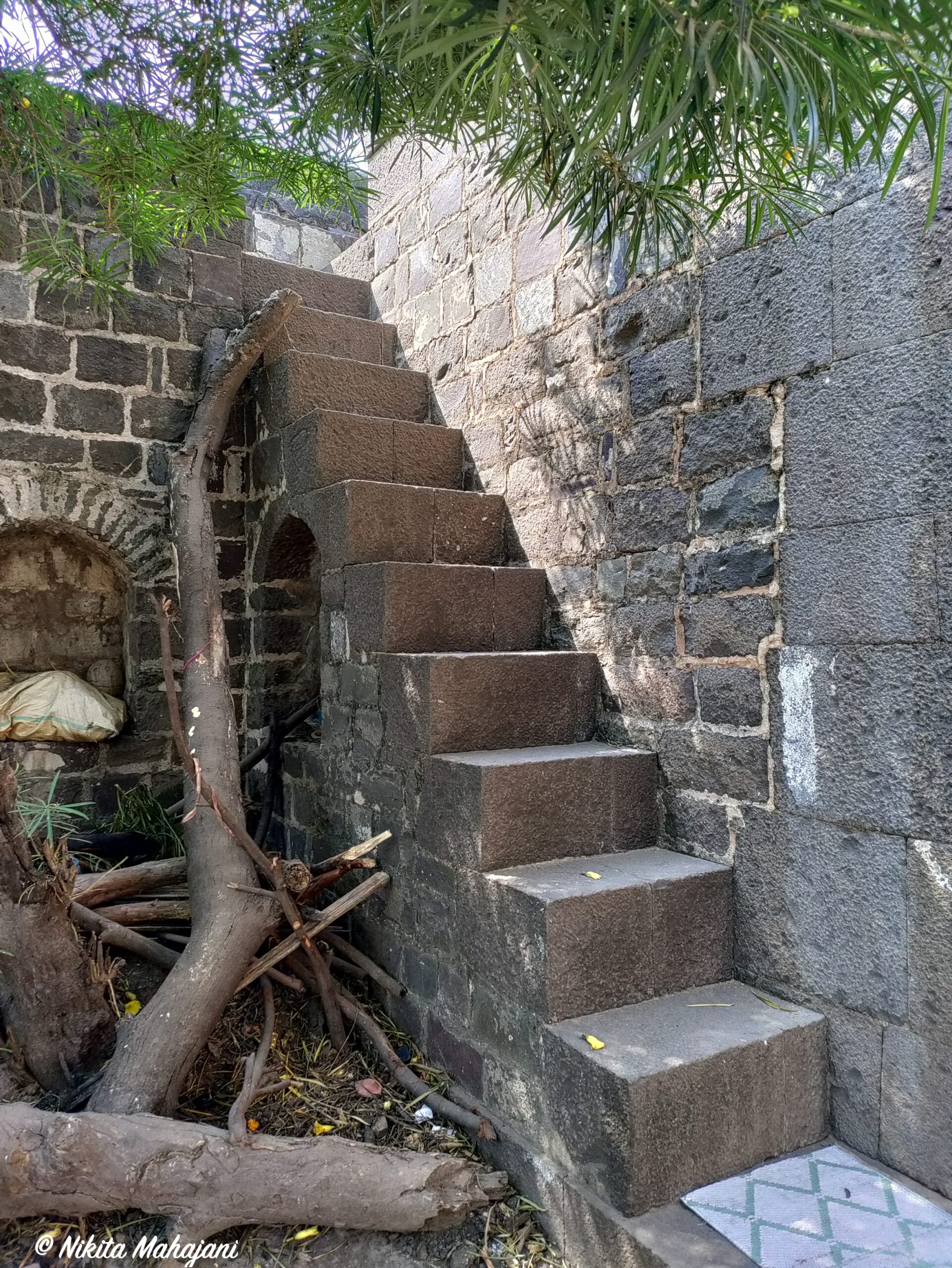
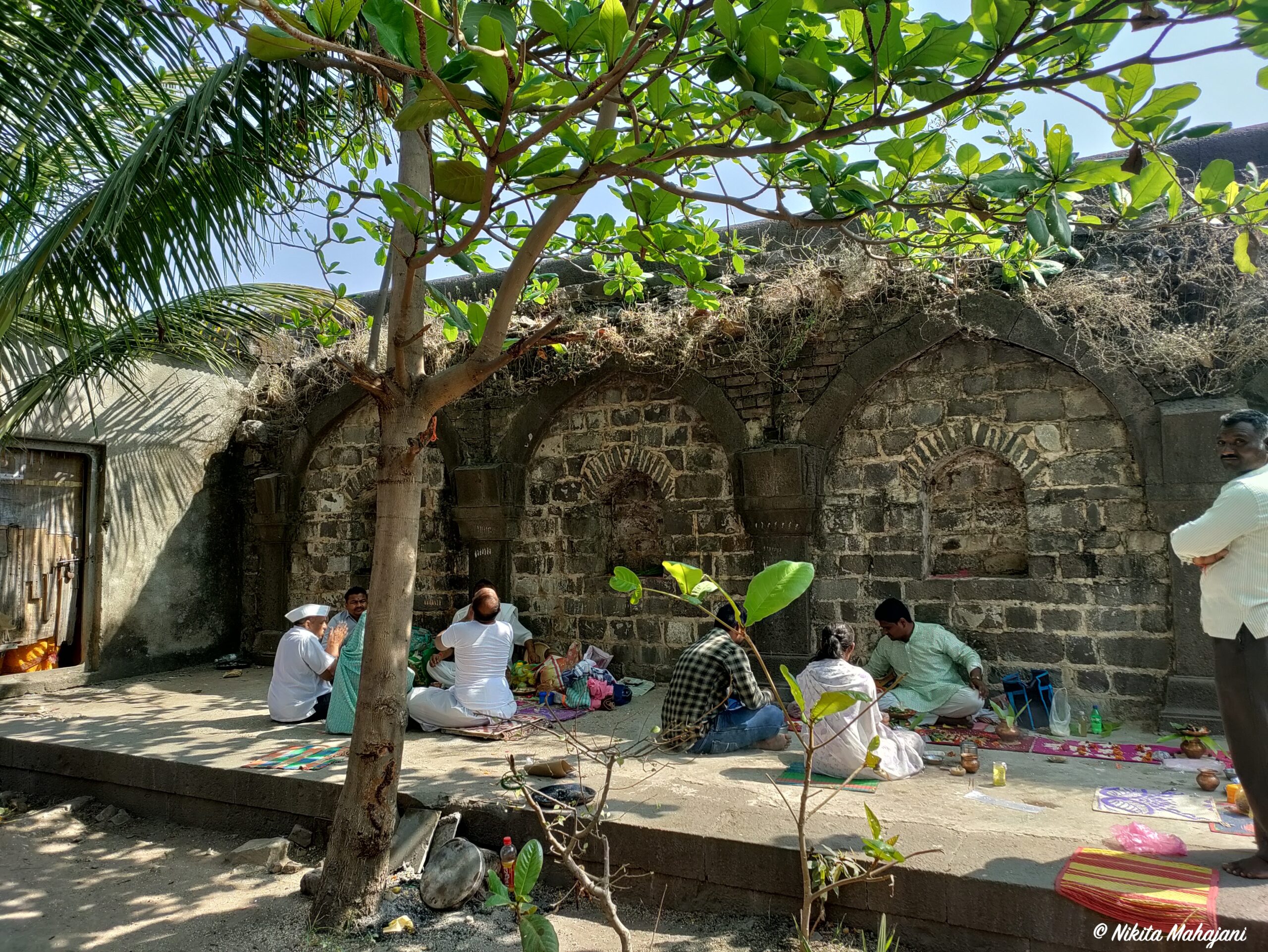
Next, we drove towards Ghateshwar Mahadev temple which was just a 3 minutes drive. We parked the car at the banks of the river. The Ghateshwar temple is thought to mark the spot where the urn of amrita, the nectar of immortality churned from the sea by gods and demons, was placed. According to legend, Lord Vishnu distributed the amrita among the gods at Nevasa. During this event, the demon Rahu is said to have disguised himself among the gods to receive the nectar. Upon realizing Rahu’s deceit, Vishnu, who was serving the amrita, severed Rahu’s head, causing amrita from Rahu’s throat to spill into the Pravara River. Consequently, the Pravara is called “Amrita Vahini” between Nevasa and the Pravara Sangam. The small Gautameshwar temple is just the entrance. Boat rides are available from this temple.


It was time to leave Kaygaon Toka and proceed toward the village of
Ghotan which lies 57kms ahead. We waited for a quick lunch at Saipooja Lodging & Restaurant. The owner was kind enough to let Sophie sit with us inside. Both indoor and outdoor dining is available at Saipooja Restraurant and it is located just 10 mins from the famous temples of Ghotan. We visited Mallikarjun Temple and Jatashankar Temple,
both tucked away in nature. It was tough to find Mallikarjun temple as
the google map location is wrong. Mallikarjun temple is extremely well
maintained and clean. It located in a huge fenced plot with ample
parking space. Toilets blocks are under construction. Sophie enjoyed
roaming around in the huge open space around the temple.
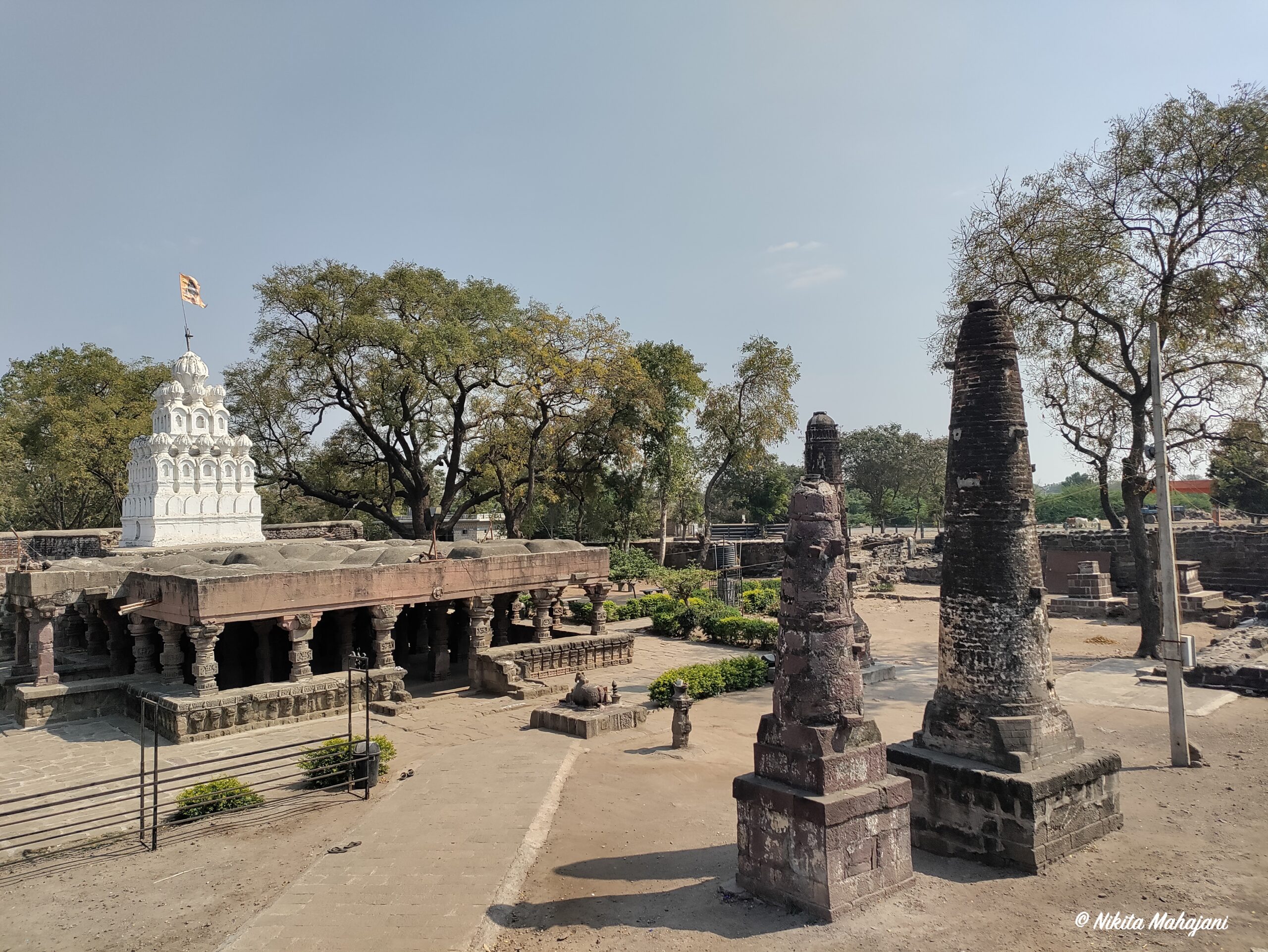
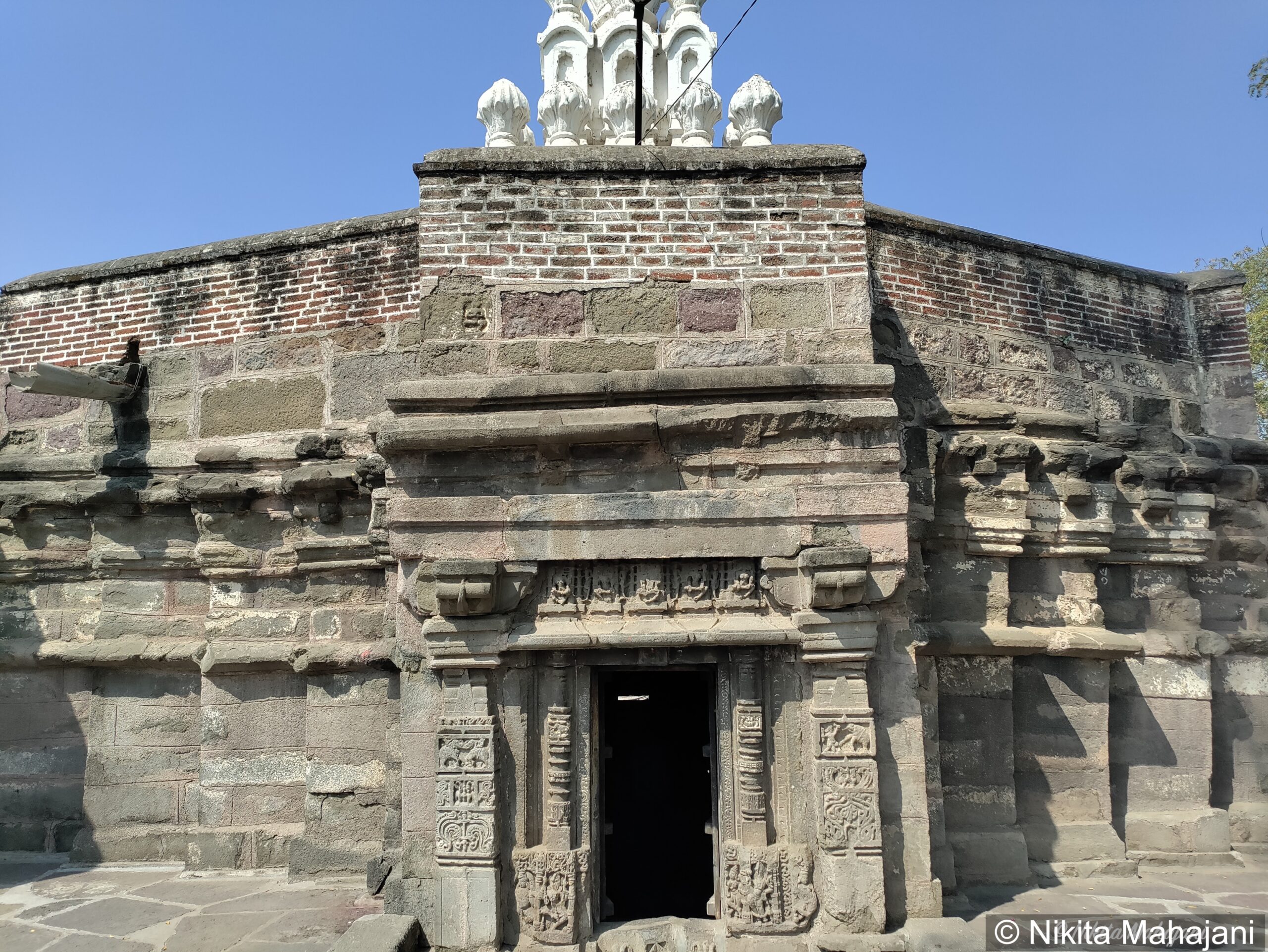
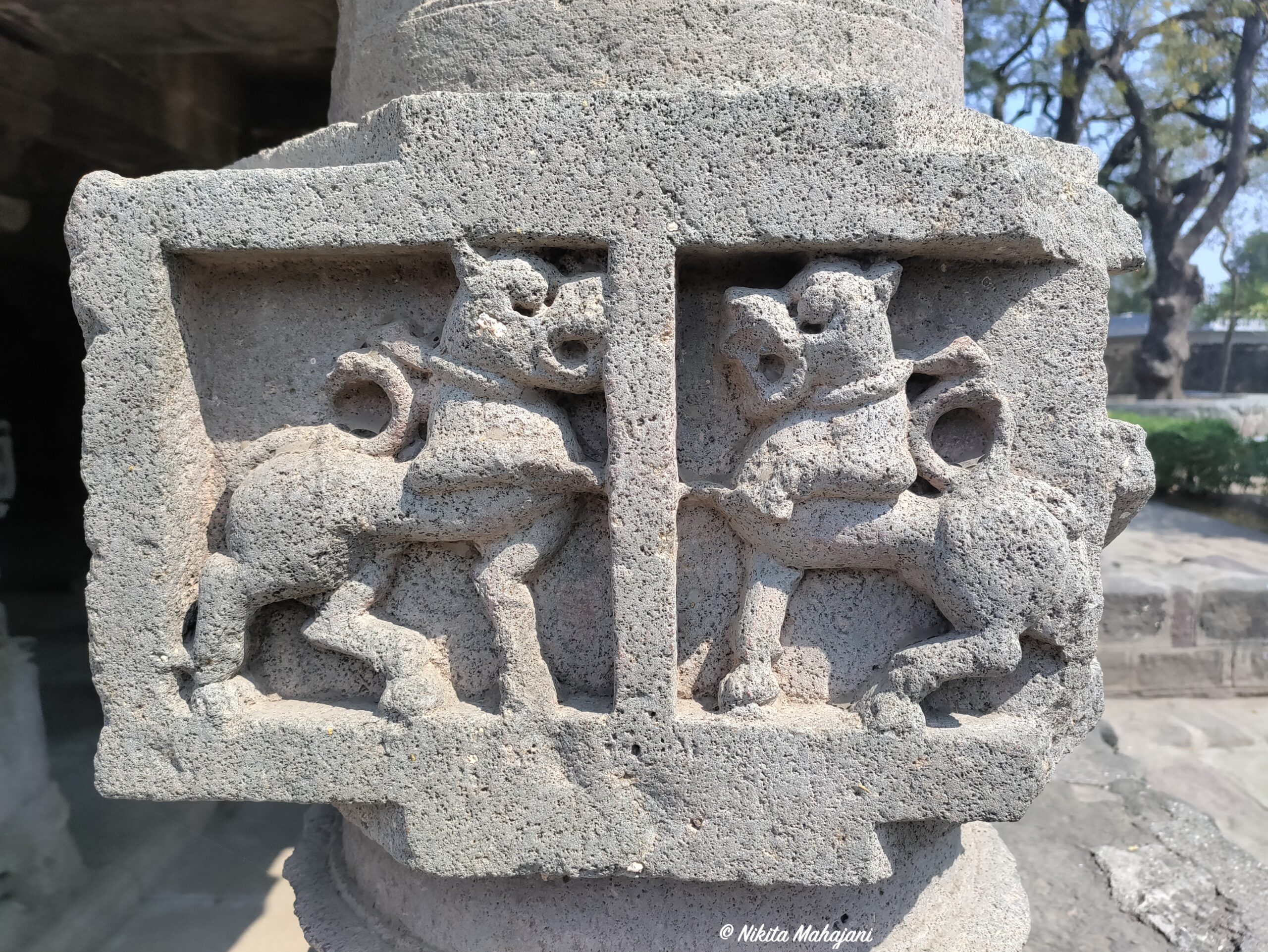
Ghotan, located in Shevgaon Taluka of Ahmednagar District, Maharashtra, is home to two Hemadpanti temples—the main Mallikarjuna Temple and a smaller Mahadev Temple. The Mahadev Temple features a garbhagriha (sanctum), an antarala (vestibule), followed by a mandapa (hall) and mukhamandapa (entrance porch). The ceilings of the mandapa and antarala, along with the sanctum’s door frame, are adorned with intricate decorations.
Although historically identified as a Jain temple, it currently houses a Shivlinga in the sanctum. Dating back to the 12th–13th century AD, the temple is dedicated to Lord Mahadeva (Shiva). Outside the temple, a broken Nandi idol can be seen. However, the temple is now in a ruined state, and no worship is performed here.


Our day ended with all these temple visits, after which we returned to the resort, where dinner awaited us. One must definitely try the steaming hot desi Dal khichadi at Fanaswadi. Sophie enjoyed playing with their staff. Dinner was simple but satisfying, and after a day full of exploration, we slept soundly, ready for more adventure.

To read the blog on day 3 of Ahilyanagar click here
What are some not-so-pet-friendly places that you should avoid visiting with pets?
Cavalry Tank Museum – Pet’s are not allowed inside display area but can use other open areas.
Ahmednagar Fort – It is open to public only on 15th Aug and 26th Jan.
Where did we stay ?
Fanaswadi Resort, Chas, Ahilyanagar
Where did we eat ?
Saipooja Lodging & Restaurant, Shevgaon, Ahilyanagar
Phalke Farm Chikoochi Wadi Pure Veg, Chas, Ahilyanagar
Fanaswadi Resort, Chas, Ahilyanagar
Shivneri Misal, Manchar, Pune
Ahilyanagar: Day 3
To read the previous blog on day 2 of Ahilyanagar click here
Day 3: Wrapping Up with Caves and Temples
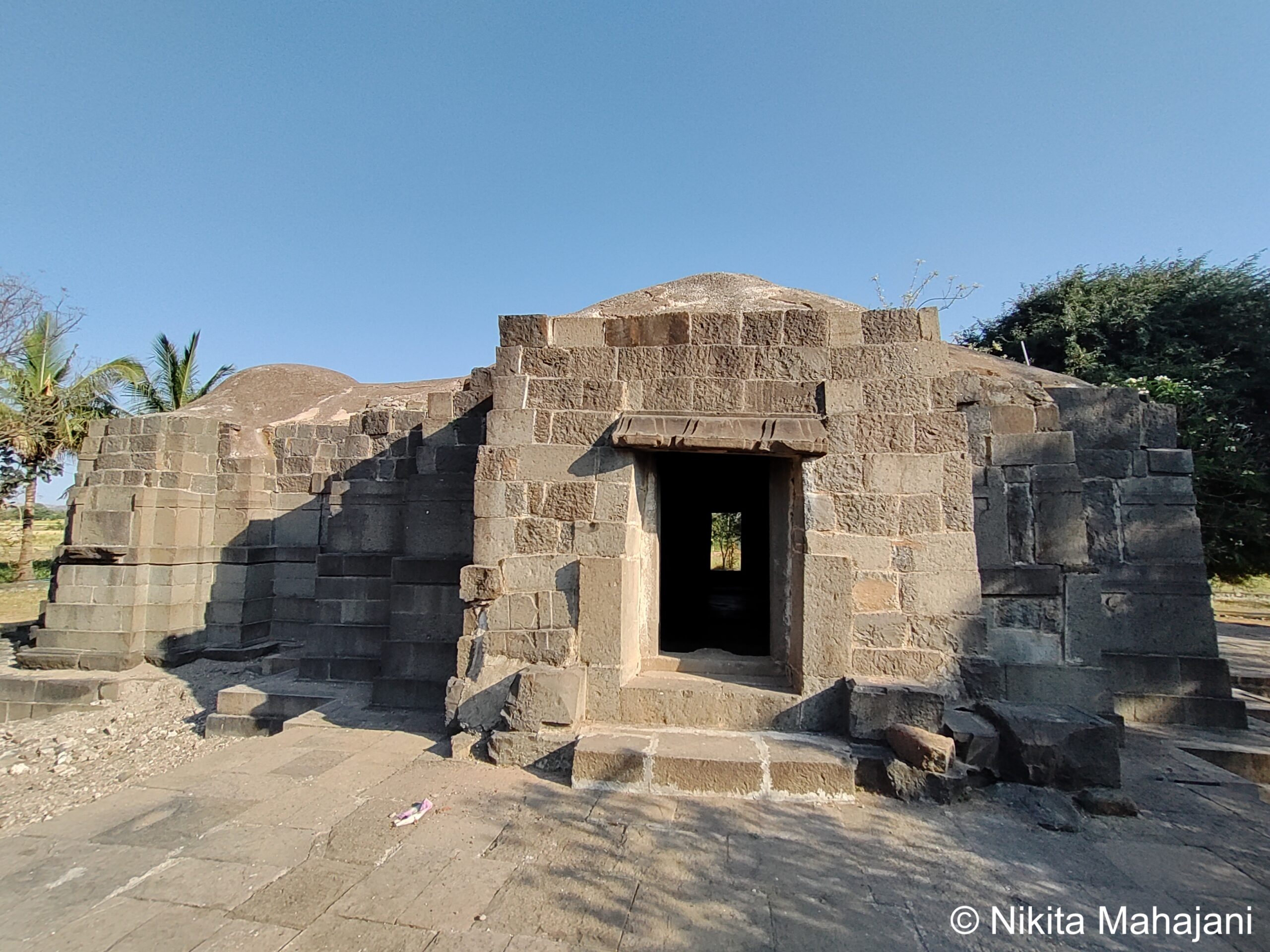
Our final day started with a visit to the famous temples of Parner which is just a 30 minutes drive form our resort. Approximately 1.5 km from Parner, at the confluence of two small streams, stand two Shiva temples locally known as Sangameshvara and Trimbakeshvara. These temples date back to the 12th century AD.
We visited Sangameshwar temple early in the morning. It is a beautiful Maratha style temple and it is not crowded at all.
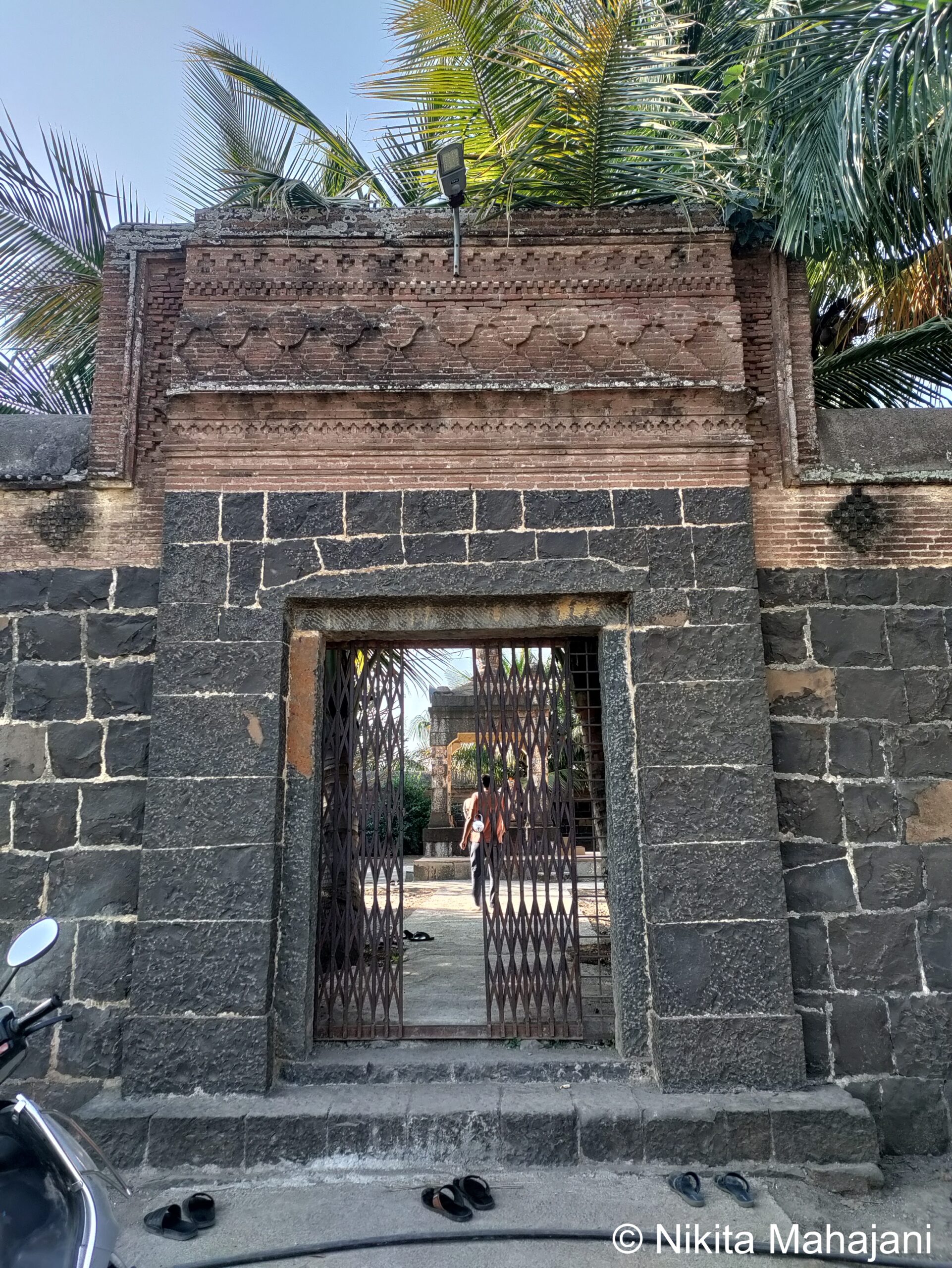
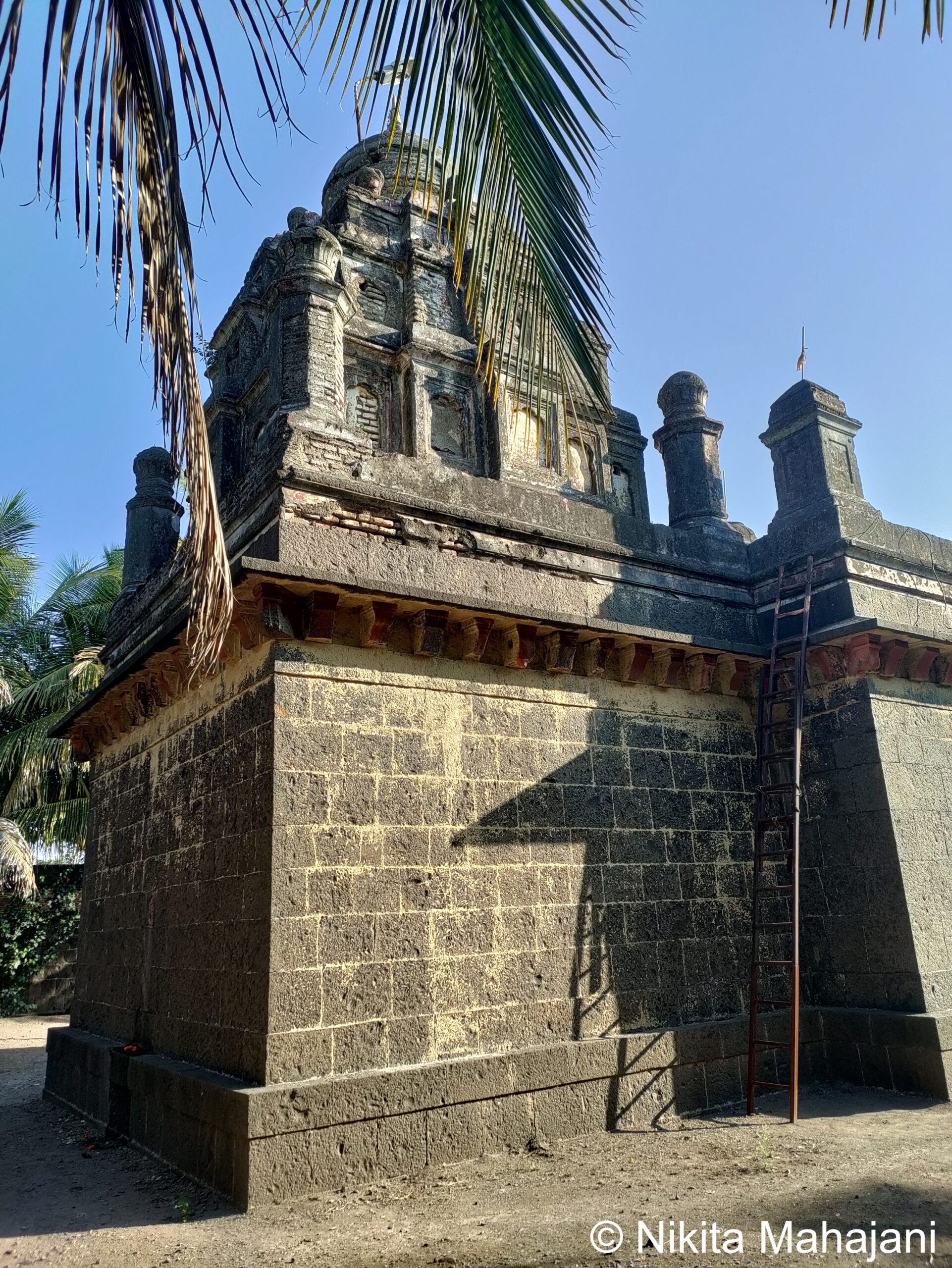
The Trimbakeshwar Temple is located just across the road. It is very well maintained and clean temple located in a fenced plot. These temples, with their ancient architecture and peaceful surroundings, were a perfect start to the day. Dating back to the 12th century, this temple is currently under the protection of the Archaeological Survey of India. Like many other ancient temples, it is constructed entirely of stone without the use of mortar. In front of the temple, partially buried underground, lies a smaller, partially damaged life-size Nandi, intricately carved from black stone.
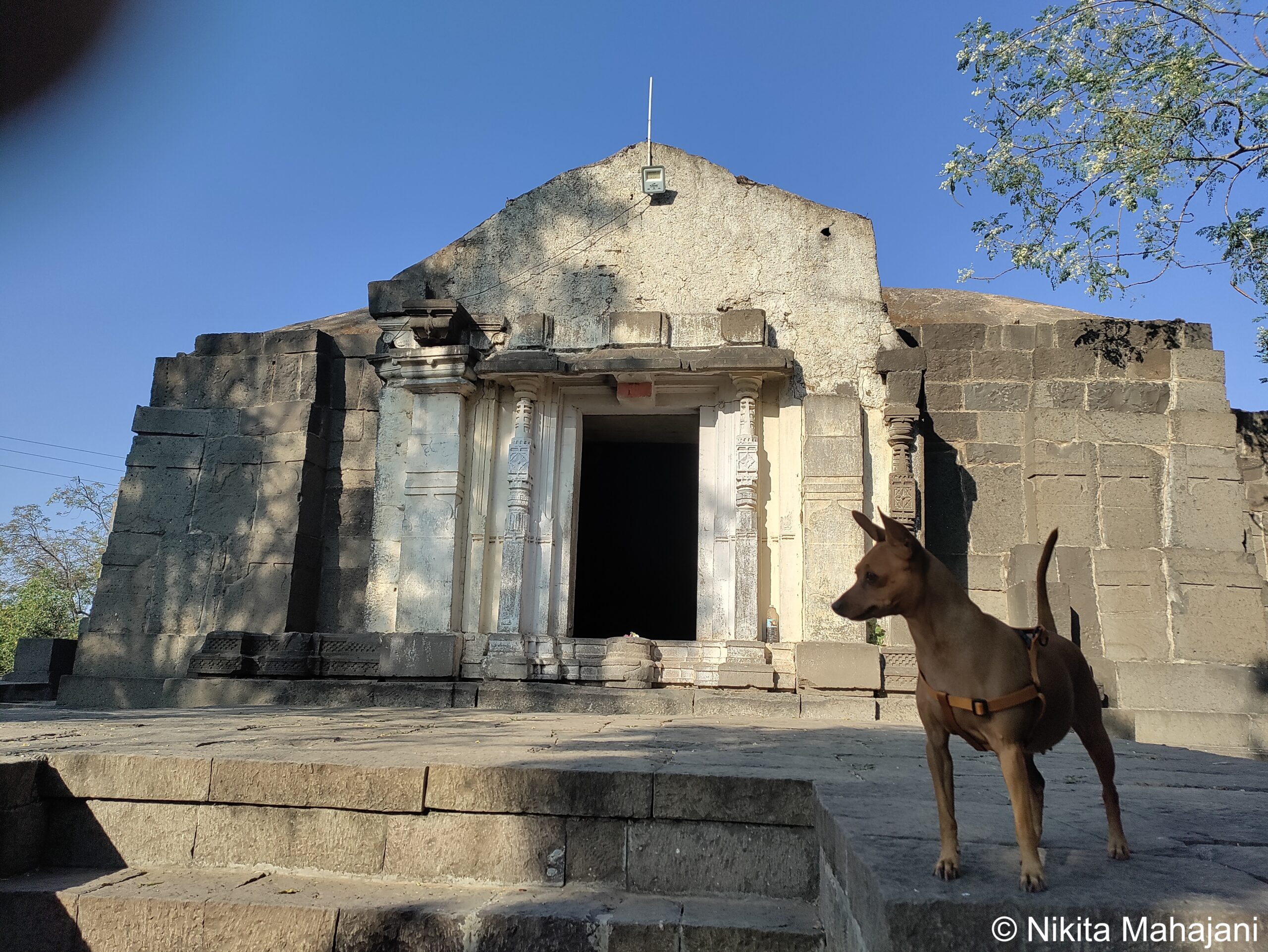
We proceeded to Siddheshwarwadi which is just a 10 minutes drive from Parner. The route to Siddheshwar temple is through mountains. This route is home to a lot of waterfalls in the monsoons. It is advisable to visit this temple in monsoon to enjoy the lush green views around. The temple is located in a valley. The plot has a lot of level differences. Hence the temple has been built at different levels above and below ground.
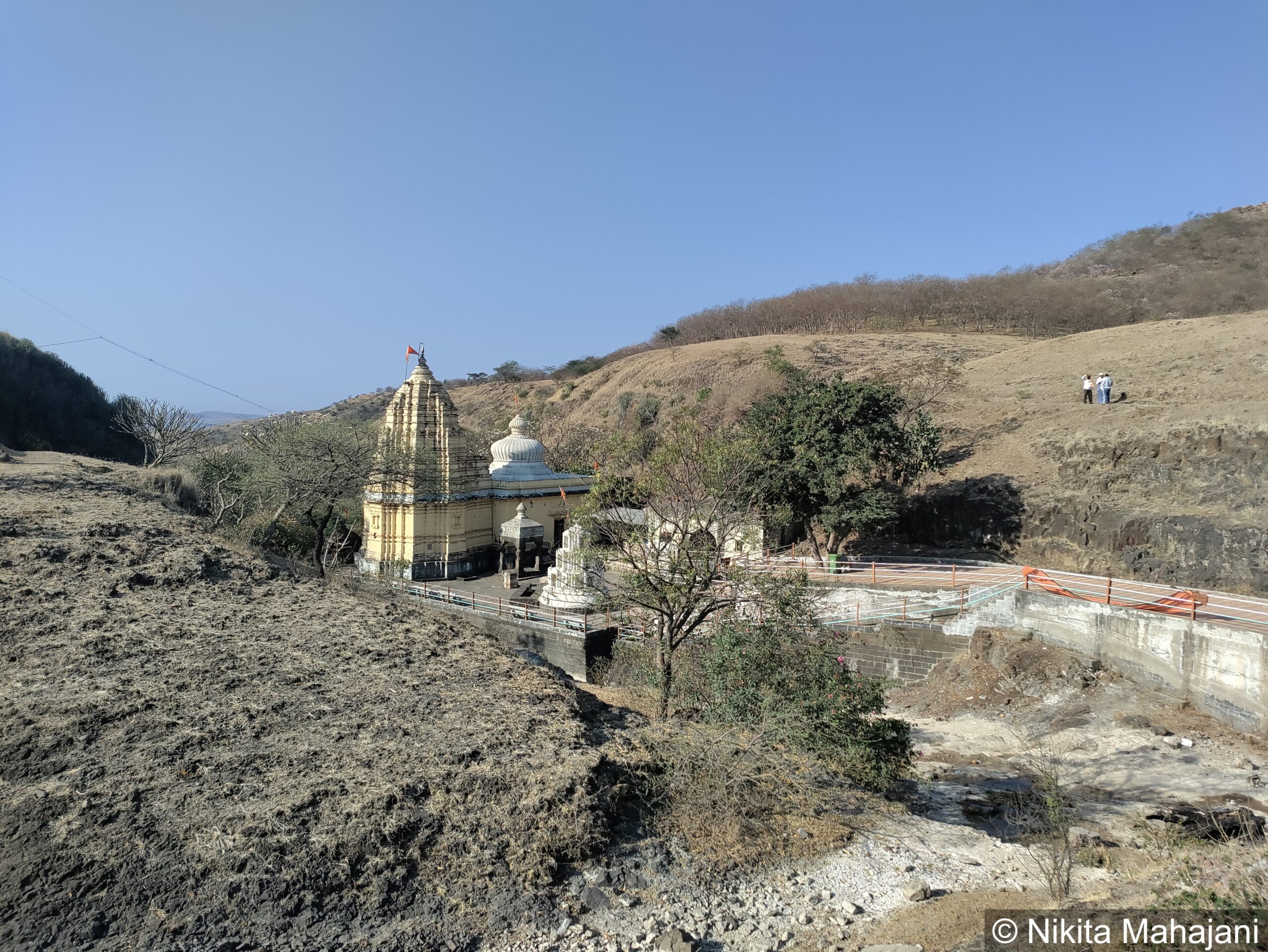
Sophie chased few resident goats in the temple.
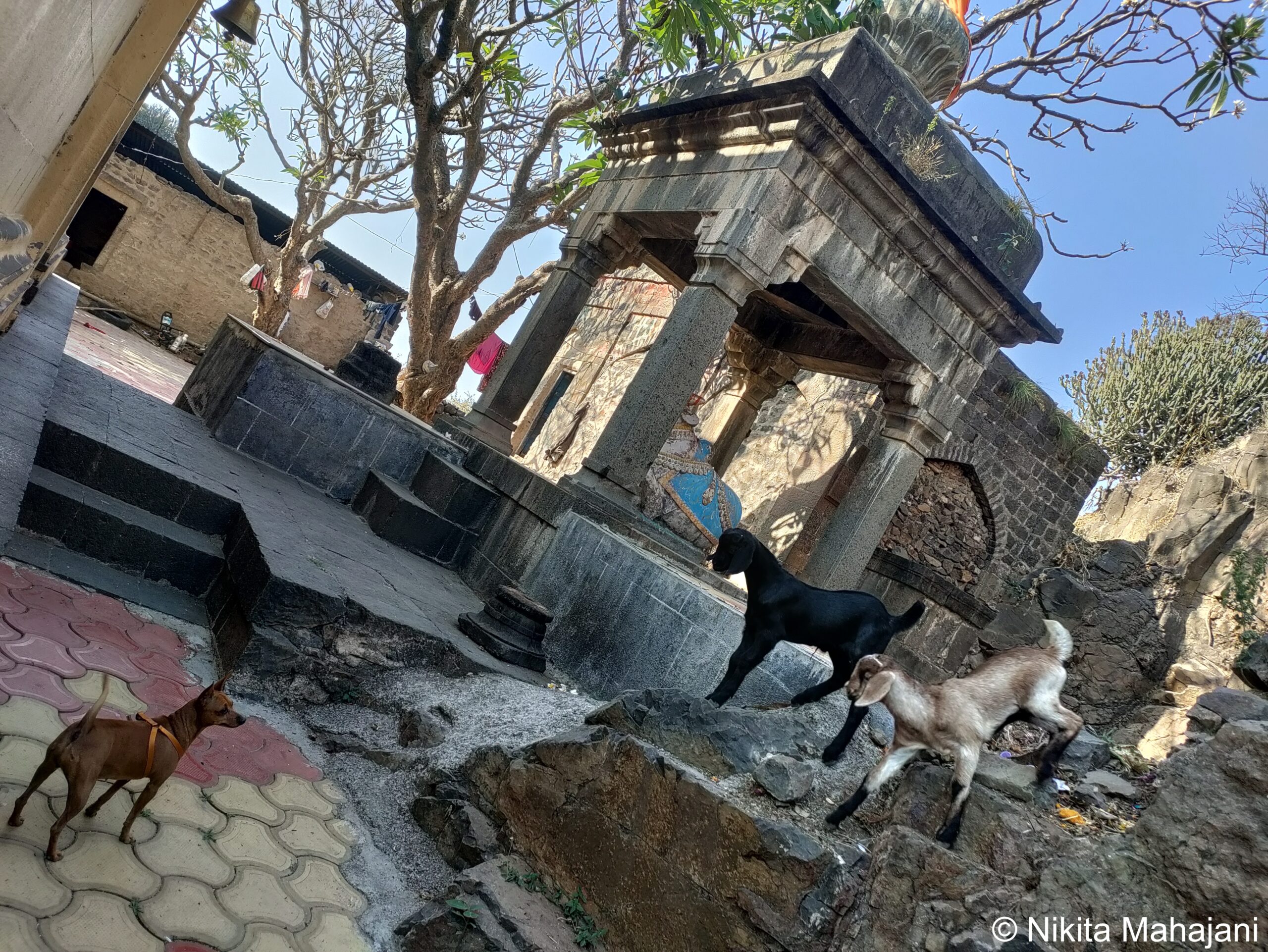
A unique feature of this temple is that it houses one of the bells brought by the Marathas from the Vasai victory against the Portuguese. This bell is installed within a four-pillared structure.
Although the present temple dates back to the Peshwa era, the remains of the original temple and the four-pillared structure suggest that it might have belonged to the Yadava period. It is believed that the original temple may have been destroyed during foreign invasions and was later reconstructed during the Peshwa era.
Near the Siddheshwar Temple, there is a Maratha-period dharmashala (rest house) built with bricks. On the wall of the pushkarni (sacred pond) in front of this dharmashala, a Devanagari inscription is engraved. While the modern repainting of the current temple has altered its historical appearance, its grandeur remains evident.
The temple itself is simple in design, with no elaborate carvings inside. In the rear courtyard, old idols of Ganesha, Vishnu, Shiva, and Parvati are placed, suggesting that they might have belonged to the original ancient temple. The temple surroundings are peaceful and picturesque, especially during the monsoon season, when its beauty is truly captivating.
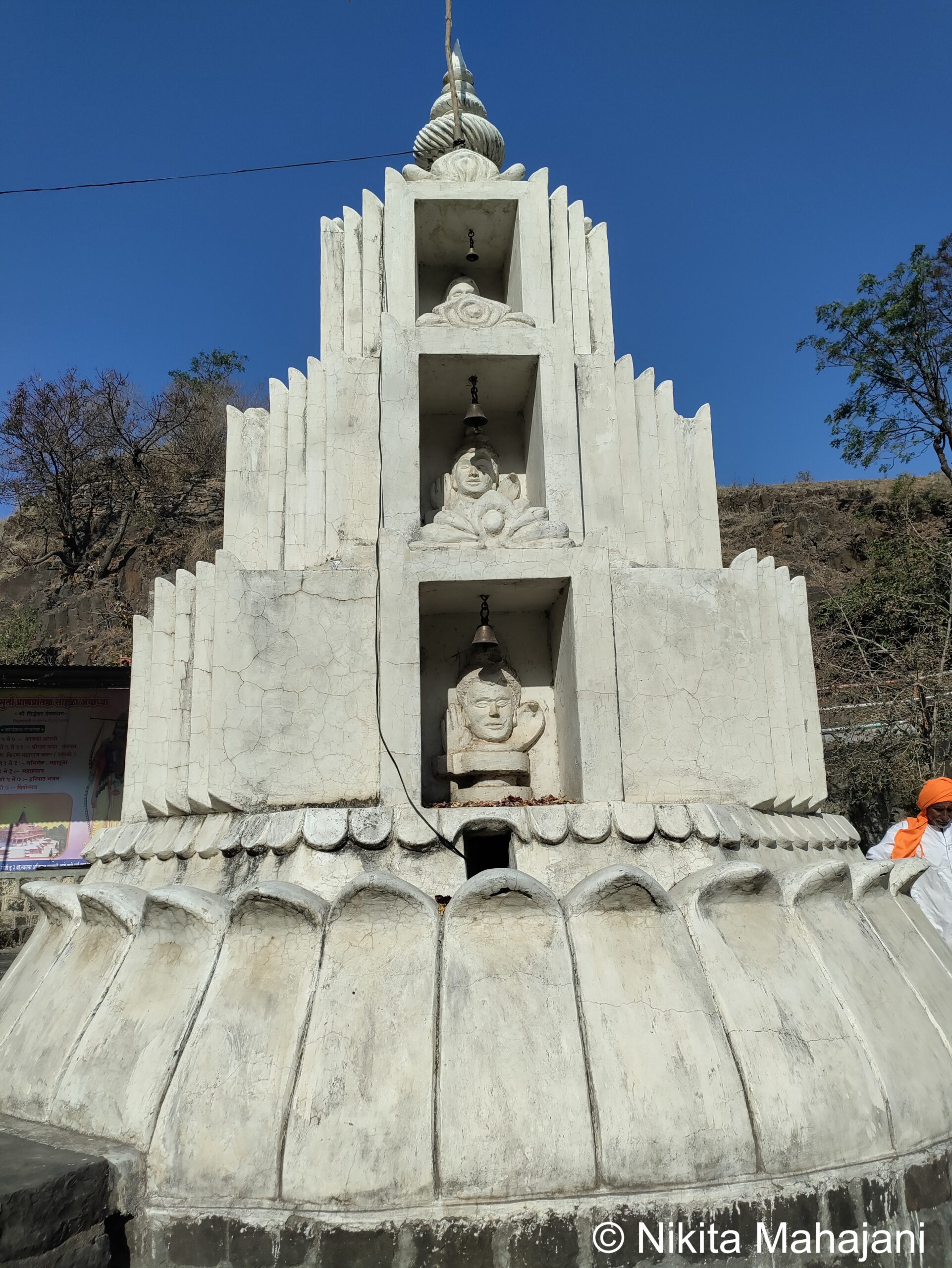
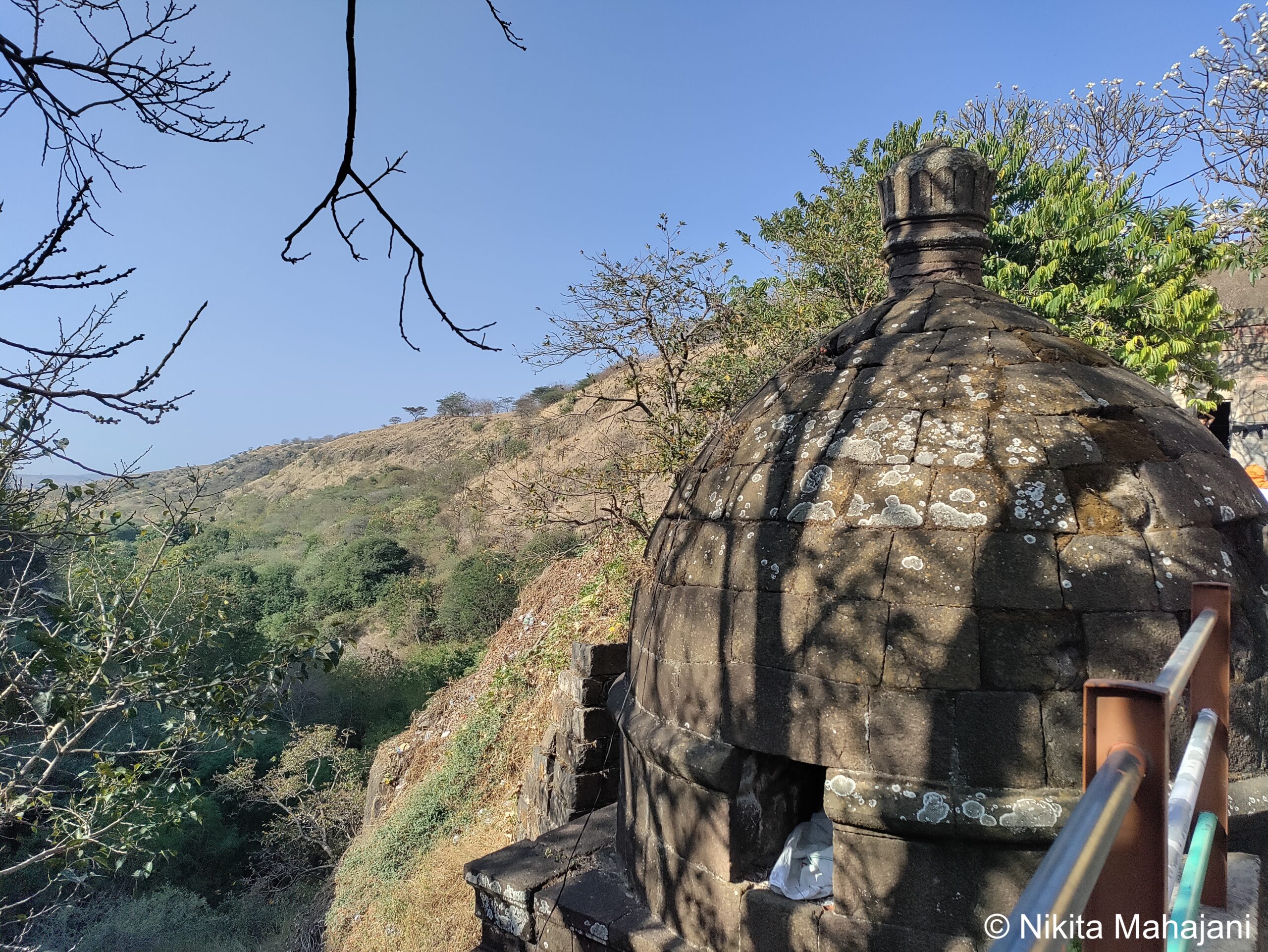
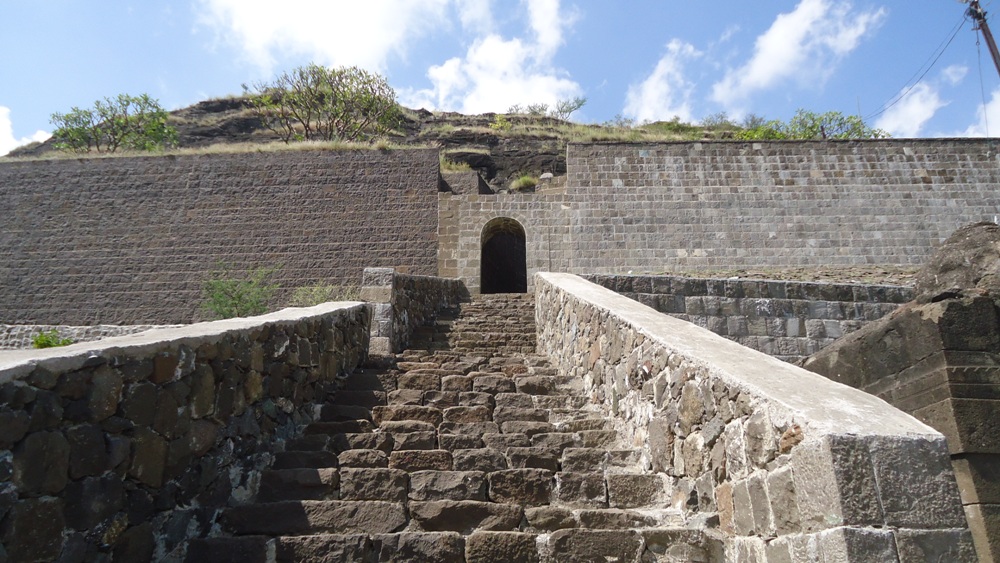
Next, we proceeded to Takli village which is 27kms from Siddheshwarwadi. By the time we reached Shri Dhokeshwar Mandir in the afternoon, the spiritual vibes of the place left us feeling calm and content. We parked the car at the base and started climbing the steps. It takes around 15-20 minutes to climb the stone steps and reach the cave temple. Sophie jumped like a kangaroo on those steps and rushed ahead of me. She enjoys treks and being outdoors. Once we reached the summit, Sophie and my husband waited outside the cave and enjoyed the panoramic views. I and my husband went one by one inside the cave. It has beautiful carvings depicting mythological stories. We could not visit Mahadji Shinde Fort as we were falling short of time.
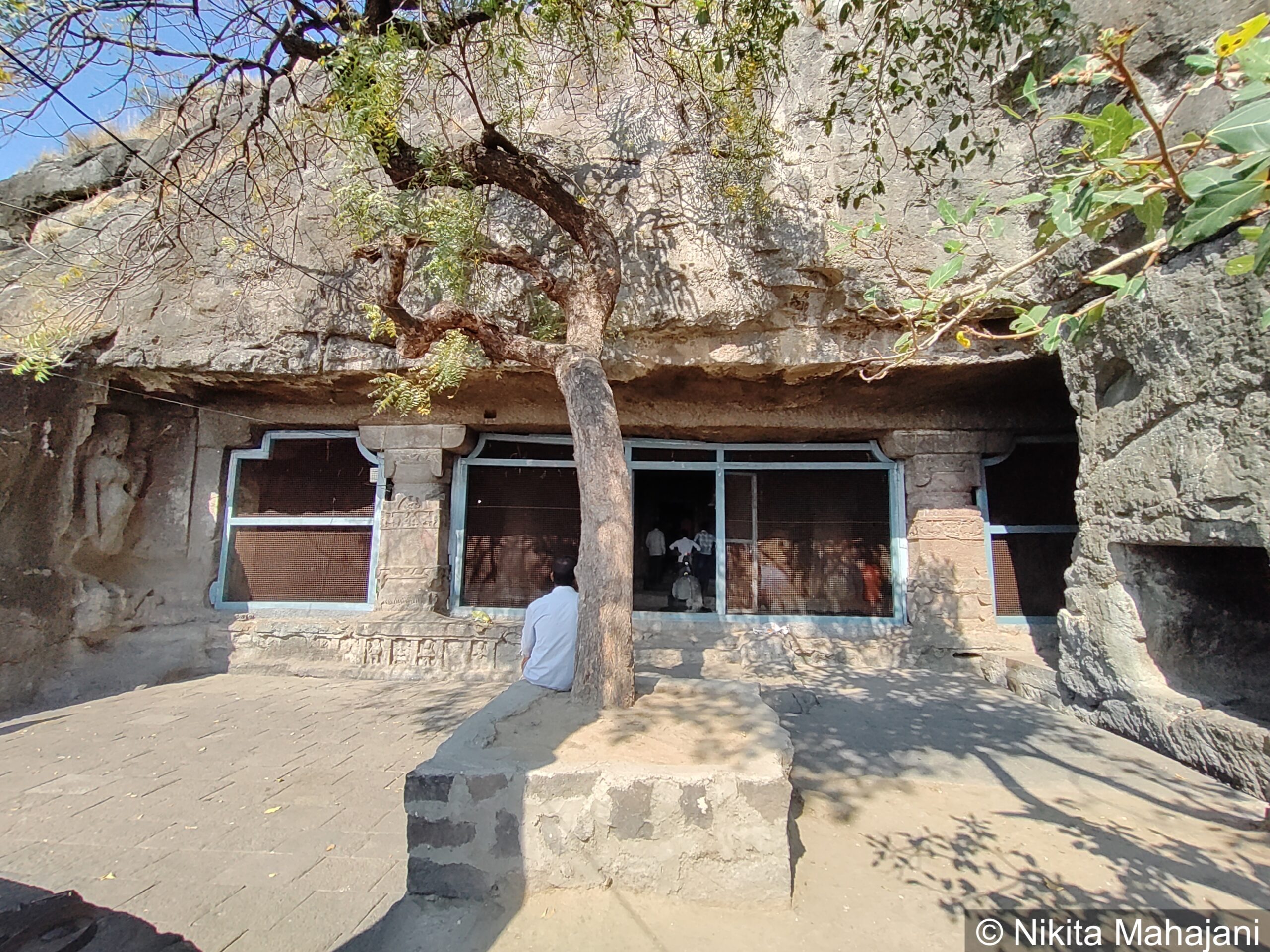
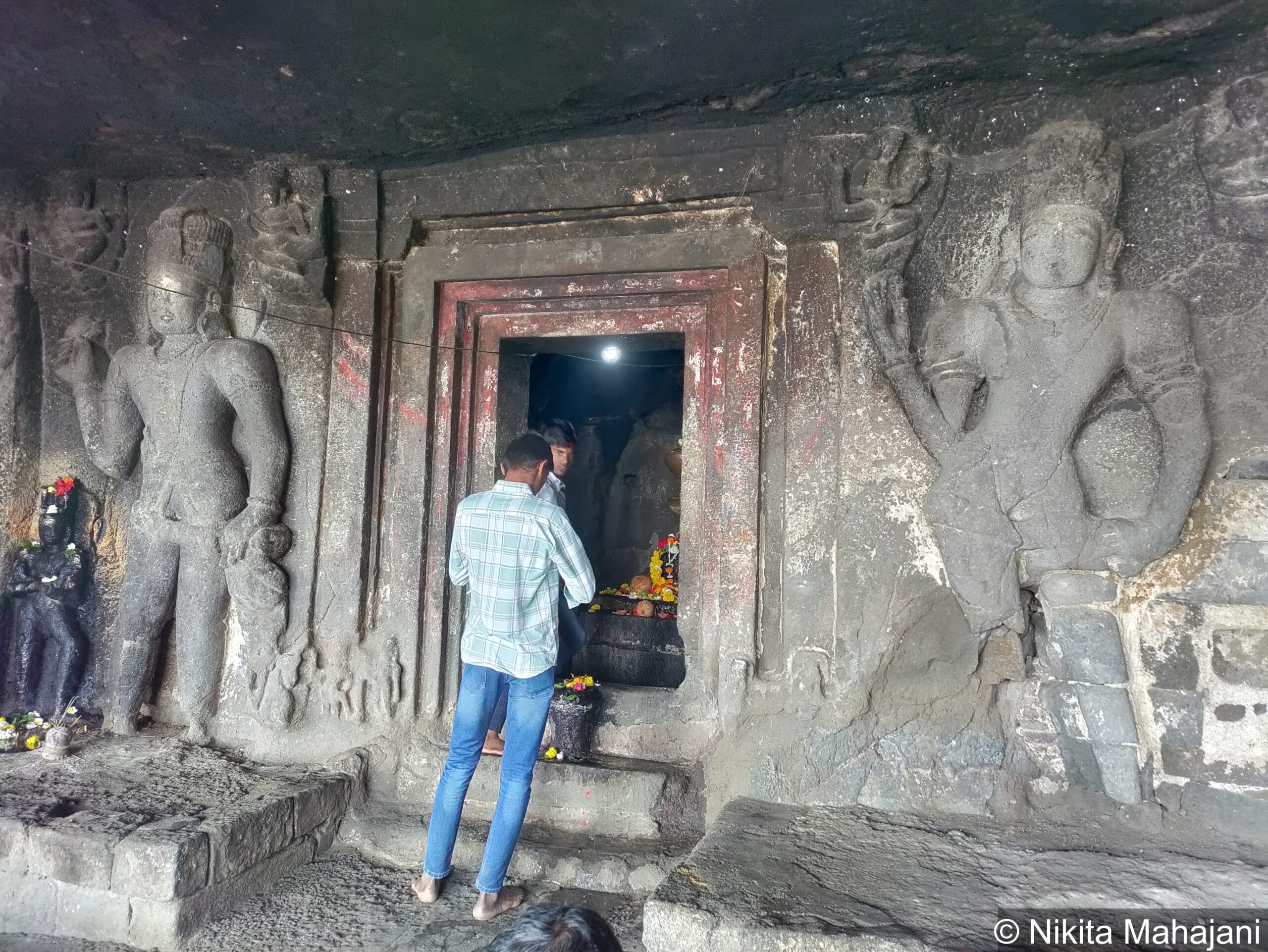
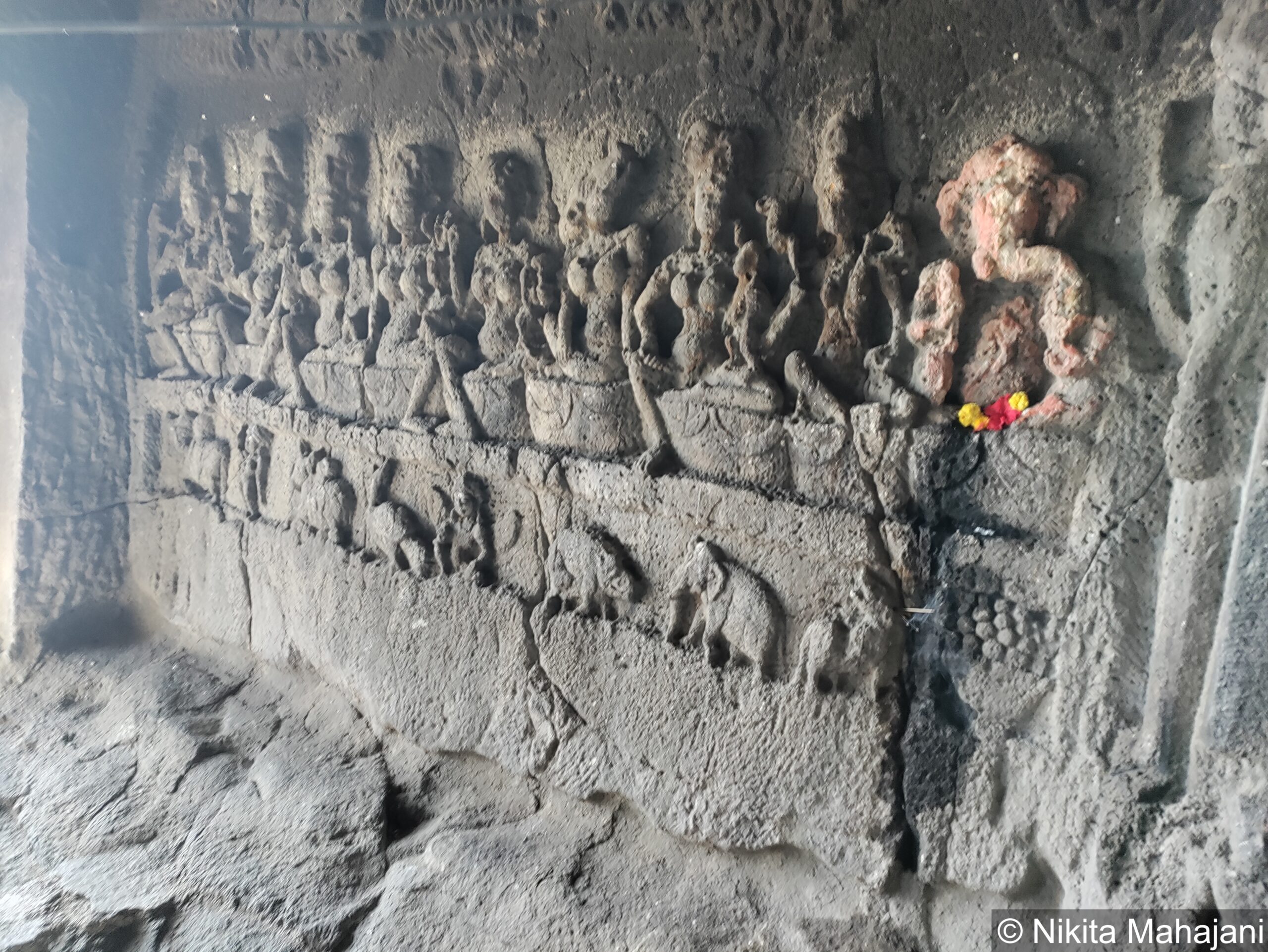
In a shallow niche on the left side (south wall), there is a carving of the Saptamatrika, the seven mother goddesses, with Shiva-Virabhadra on one side and Ganesha on the other. Each goddess is seated on her own individual pedestal, beneath which their distinctive animal vehicles are depicted—except for Ganesha, who does not have one.
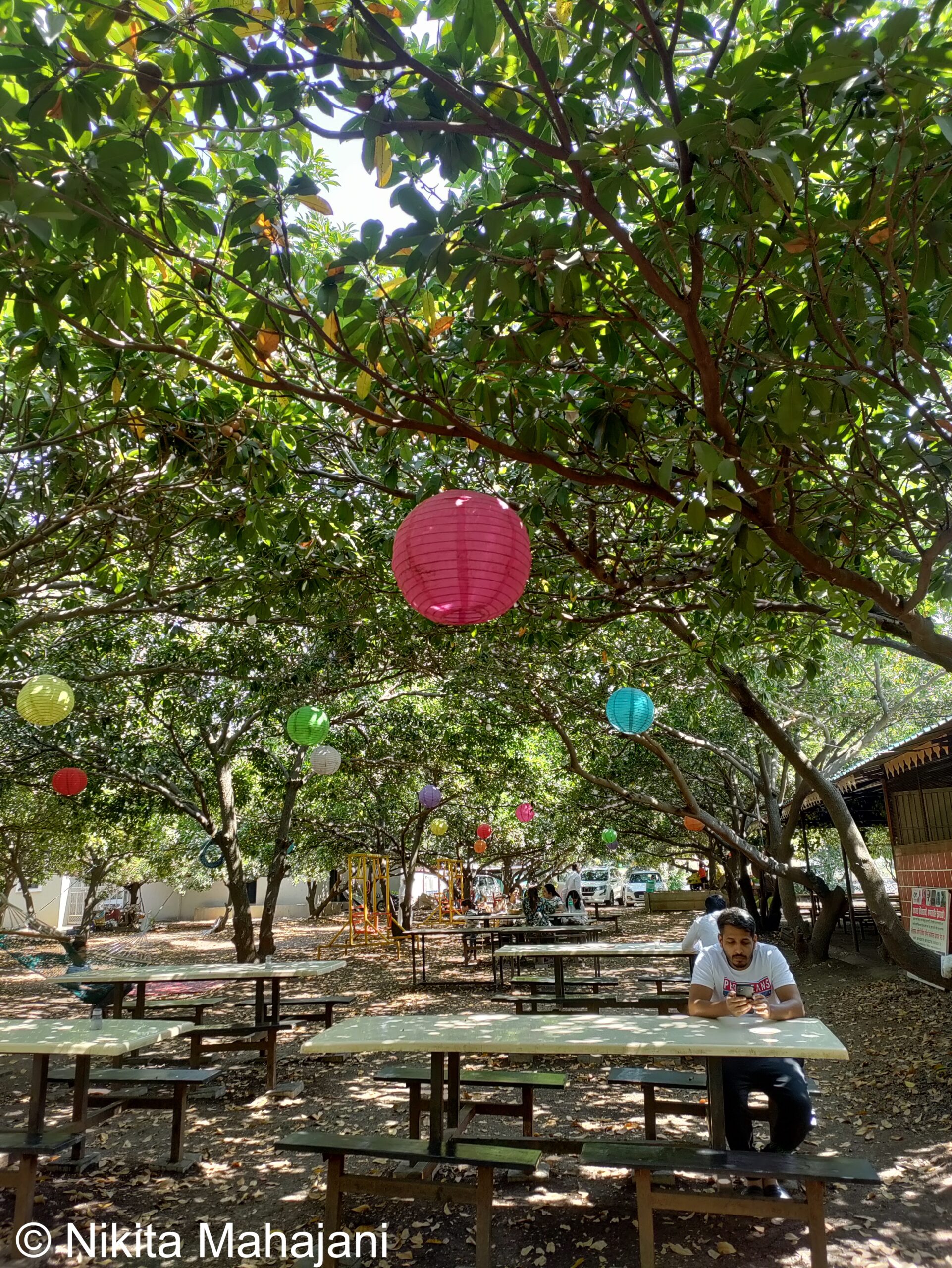
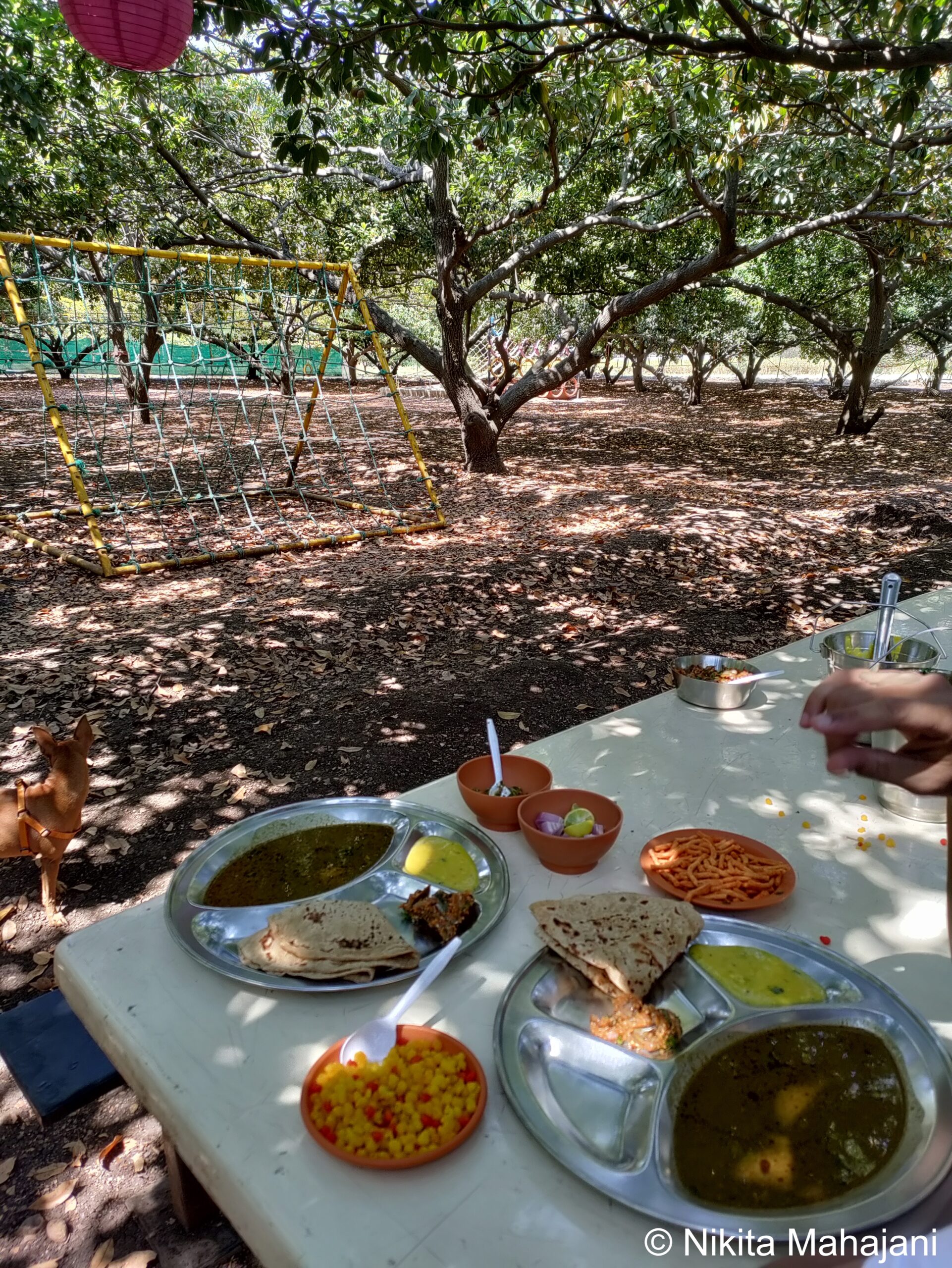
We returned to the resort by 1 PM, tired and hungry but filled with memories. We quickly had a cold water bath, packed our luggage and checked out. Since we were supper hungry, we went to Phalke Farm pure veg which is just across the road. They have a beautiful open dining facility inside a Chikkoo farm. Their plot is huge. Parking and washroom facility is available. They have fixed unlimited thaali menu consisting of shev bhaji, boondi, jhoonka, pithla bhaakri and salad. Sophie enjoyed being offleash in the chikkoo farm. There is absolutely no restriction on movements of pets in Phalke Farms. Thats exactly why I prefer eating in local hotels. We enjoyed having the steaming hot desi food served with love by the villagers.
After lunch, we started our back journey to Pune. With Sophie enjoying the breeze from front window and our hearts full from the experiences of the past few days, we reached Pune by 6 PM, bringing our memorable Ahilyanagar adventure to an end.
Ahilyanagar, often overlooked by travelers, surprised us with its rich history, beautiful architecture, and quiet charm. It was a perfect getaway, made even more special with my husband and Sophie by my side. For those looking for a mix of history, spirituality, and nature, this city is definitely worth exploring!
Kokamthan
To read the previous blog on Day 08: Maheshwar, click here.
Day 09: Malegaon to Pune via Kokamthan
After a relaxing stay at Pavilion Park Hotel in Malegaon, we were ready to hit the road again and continue our journey towards Pune.
We started the morning with a hearty breakfast at Pavilion Park Hotel, which was the perfect way to fuel up before a long day of travel. The hotel’s breakfast spread offered a variety of local and continental options, and we enjoyed a leisurely meal, savoring the quiet morning atmosphere. The hotel staff was incredibly welcoming, and we felt completely at ease as we prepared for the next leg of our journey. By 9:30 AM, we were ready to check out and begin our drive to Pune.
The road from Malegaon to Pune was a comfortable drive, with the weather being quite pleasant for most of the journey. We passed through small towns, lush fields, and winding roads that were typical of the rural landscapes in Maharashtra. It felt like the perfect road trip vibe—peaceful, scenic, and full of beautiful views.
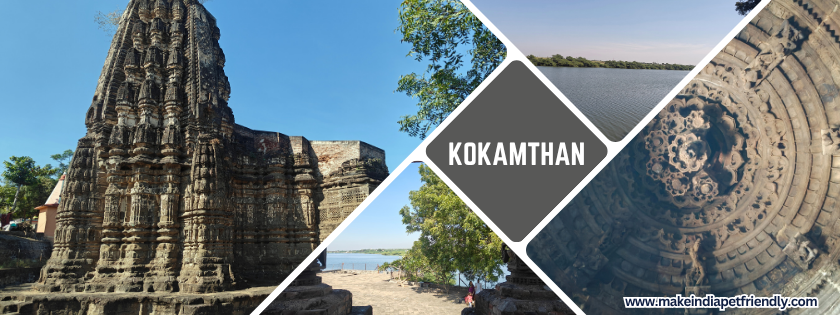
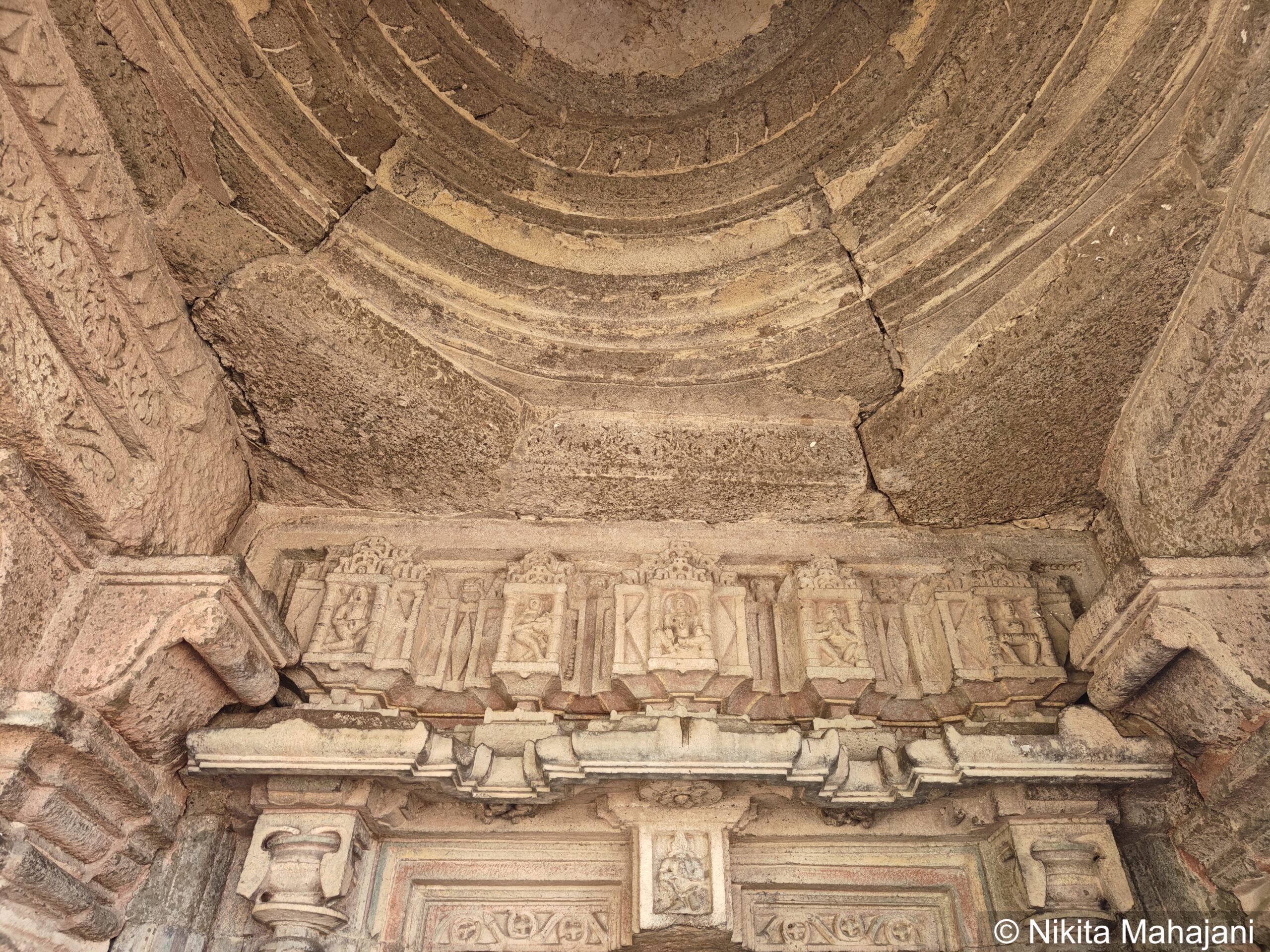
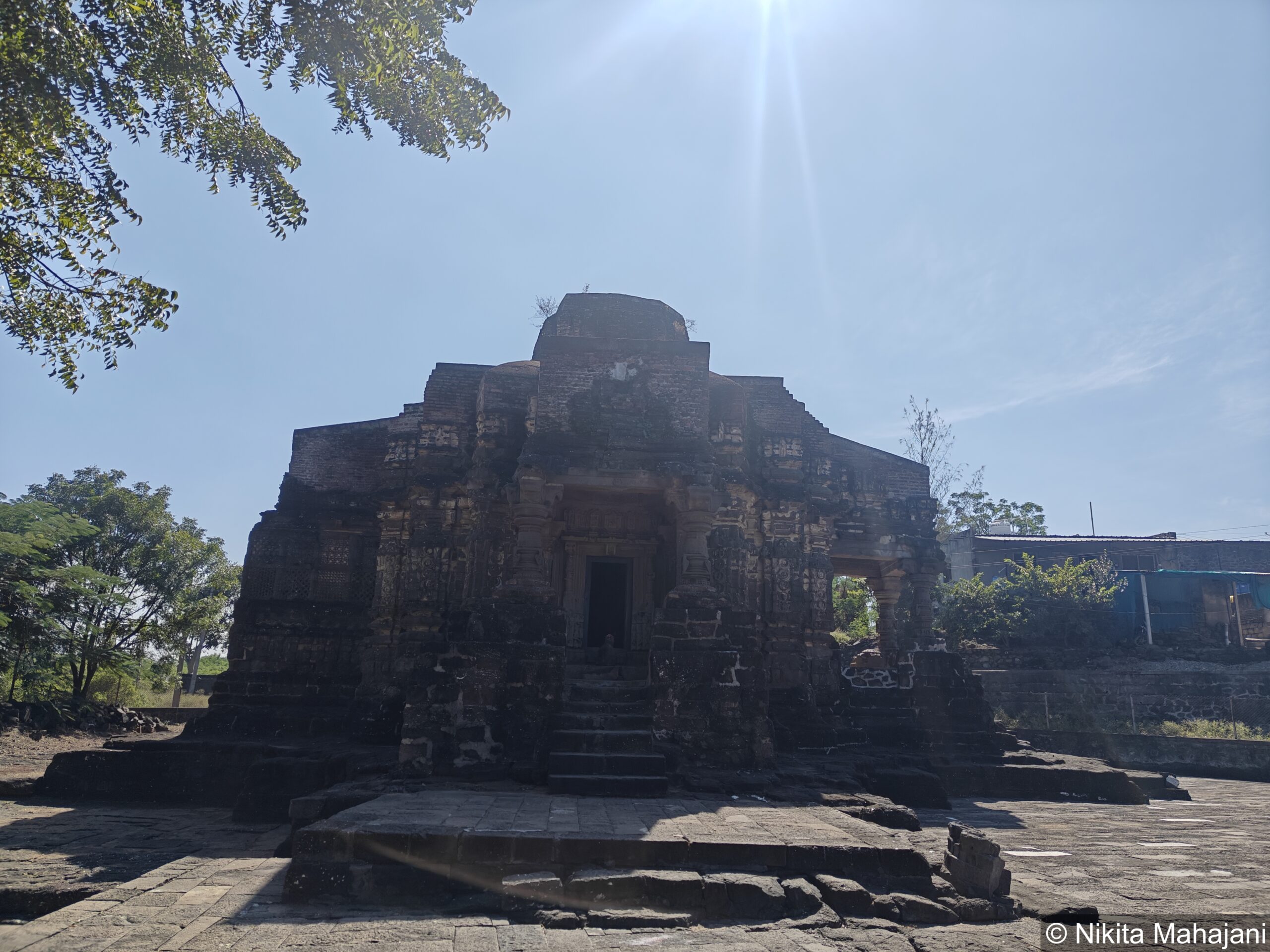
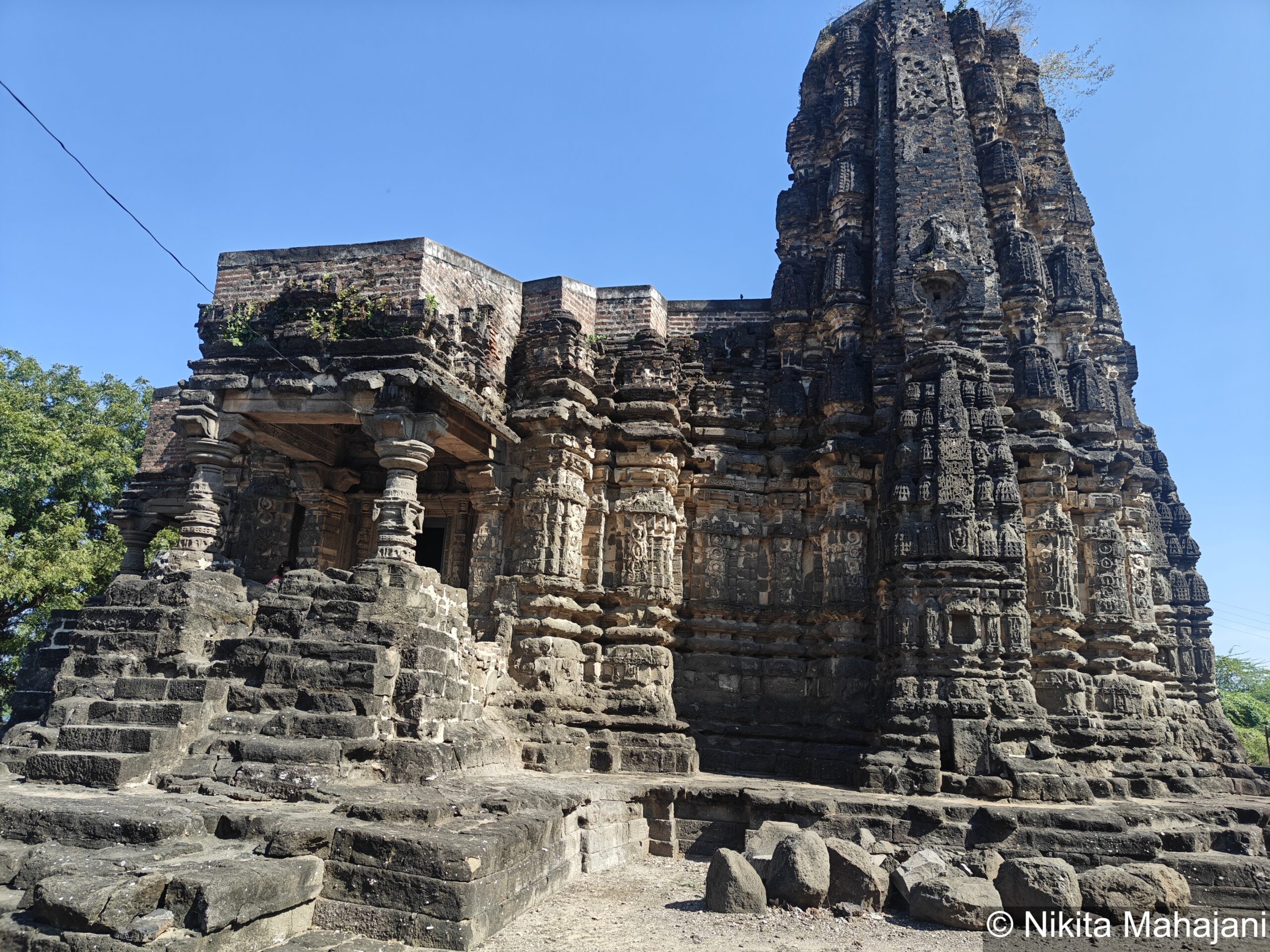
About three and a half hours into our journey, we decided to take a break and explore a cultural gem—Kokamthan Shiva Temple. This temple, dating back to the 13th century, offered a serene and peaceful atmosphere.
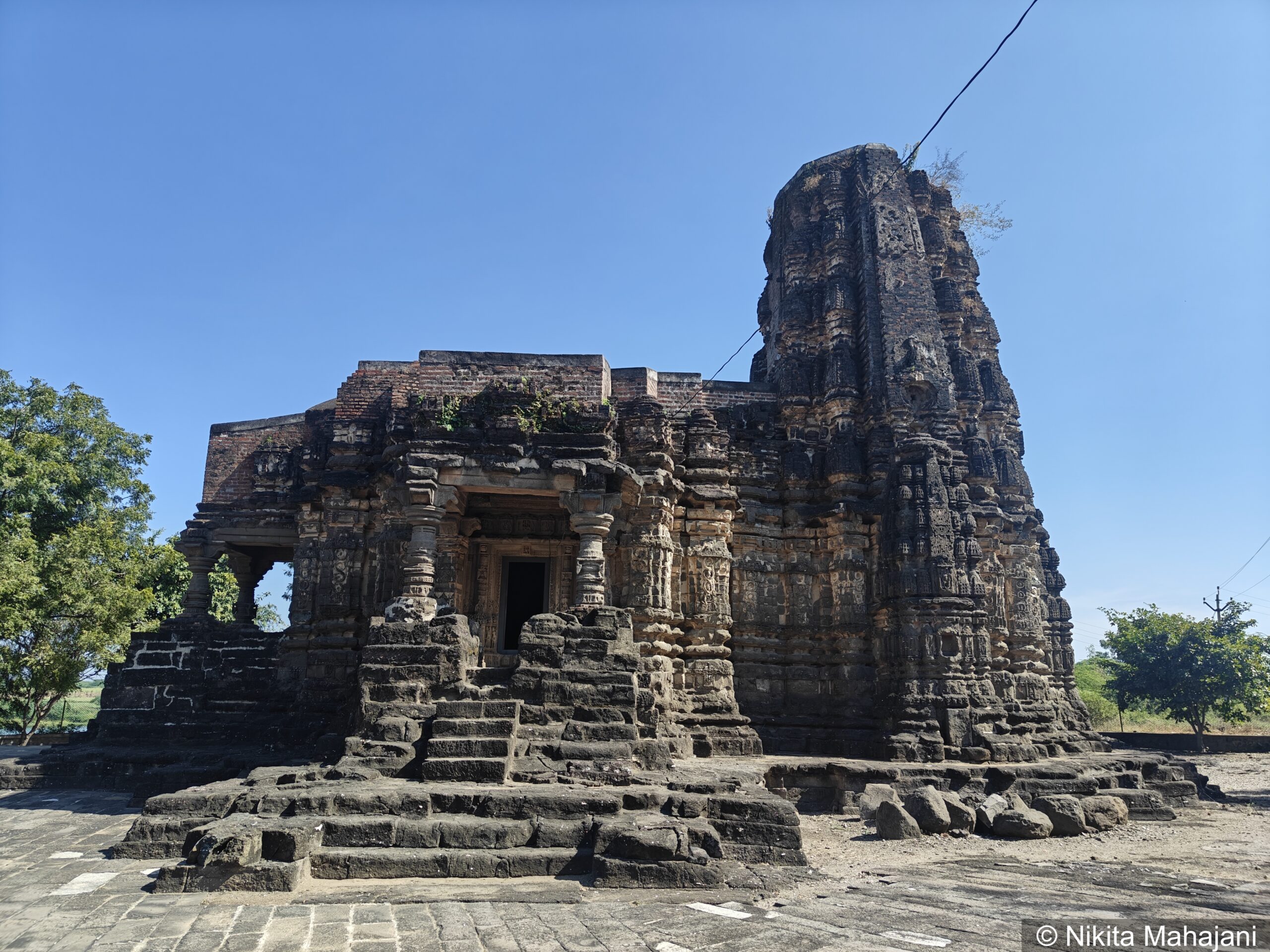
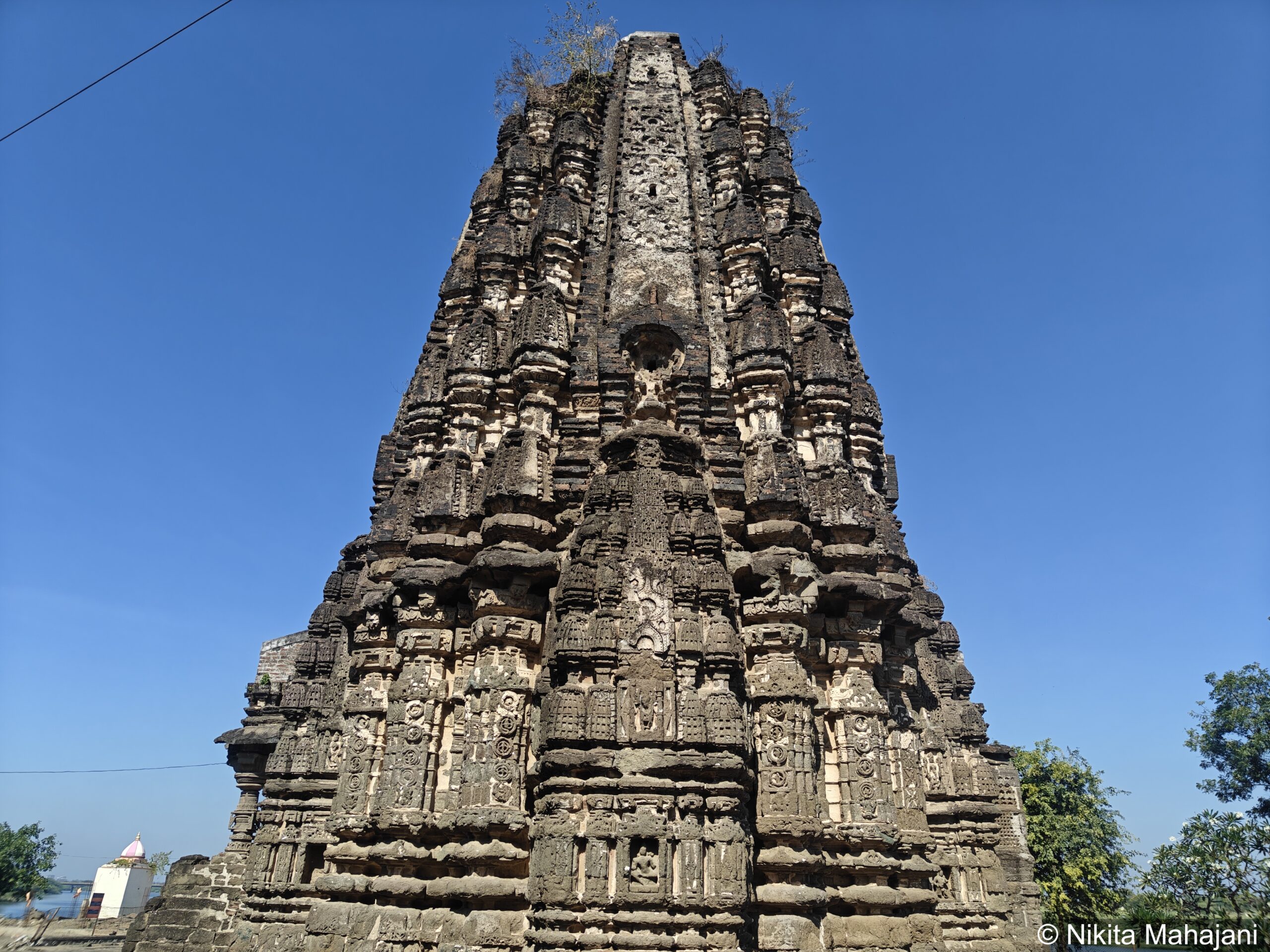
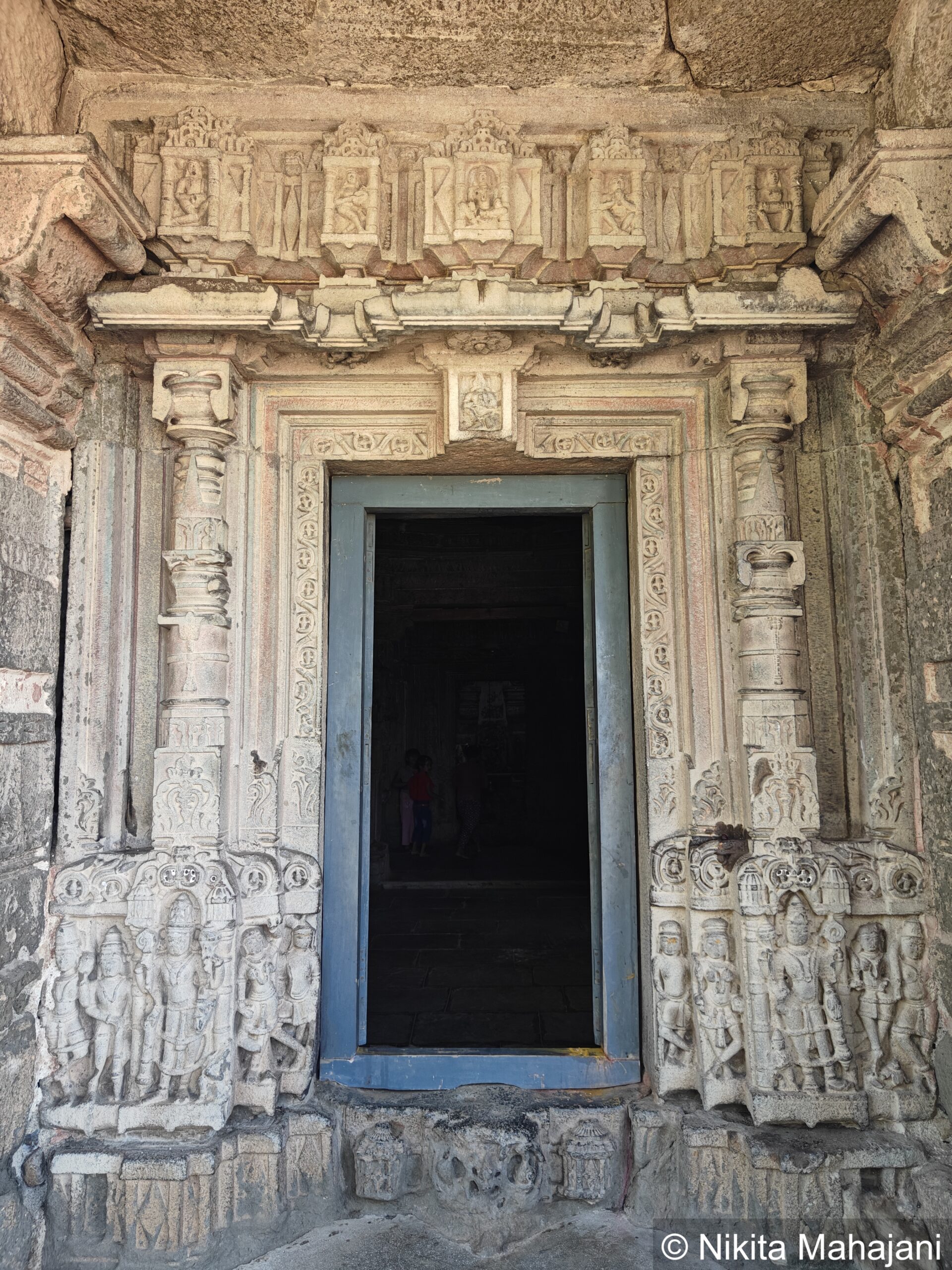
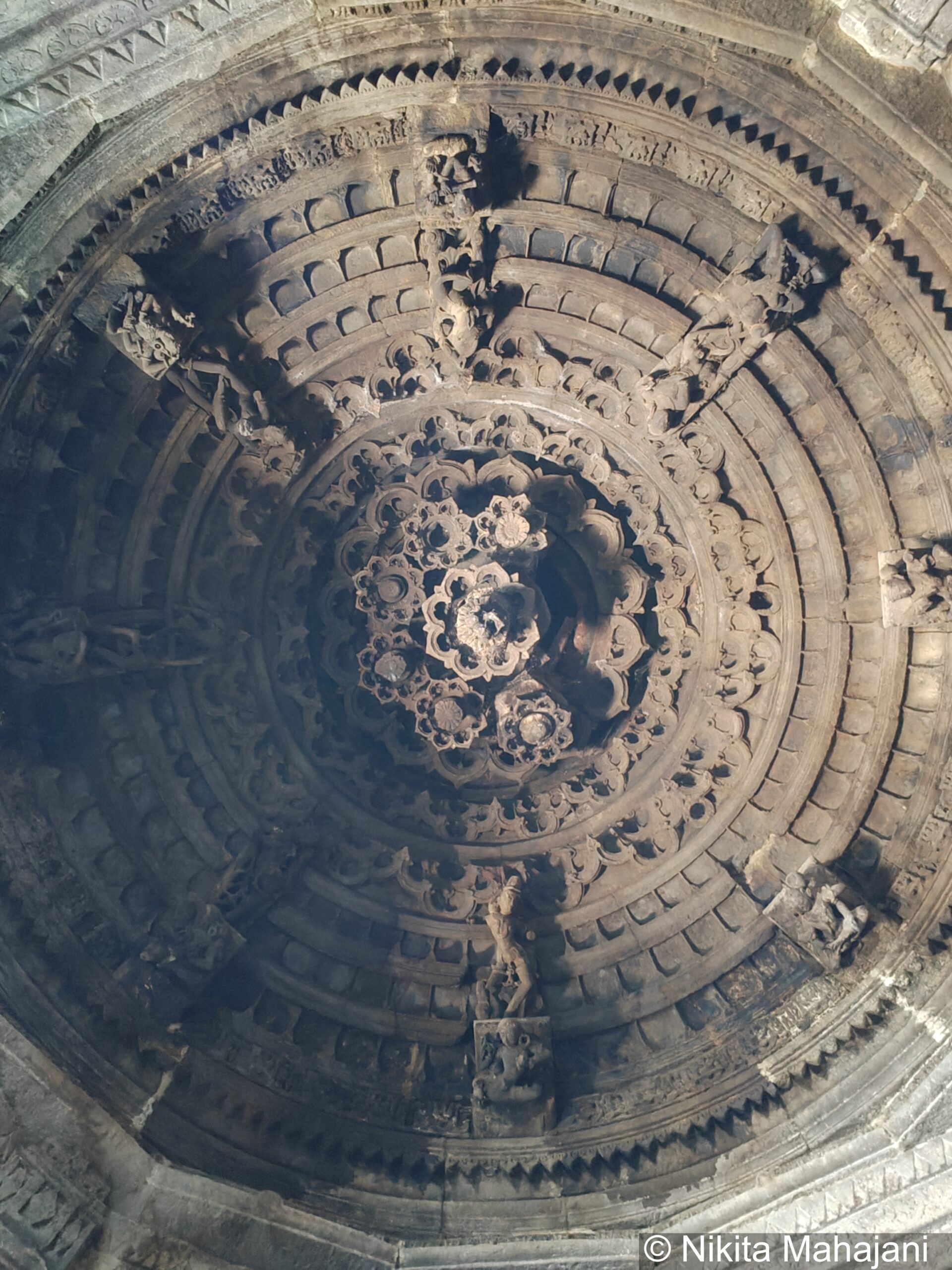
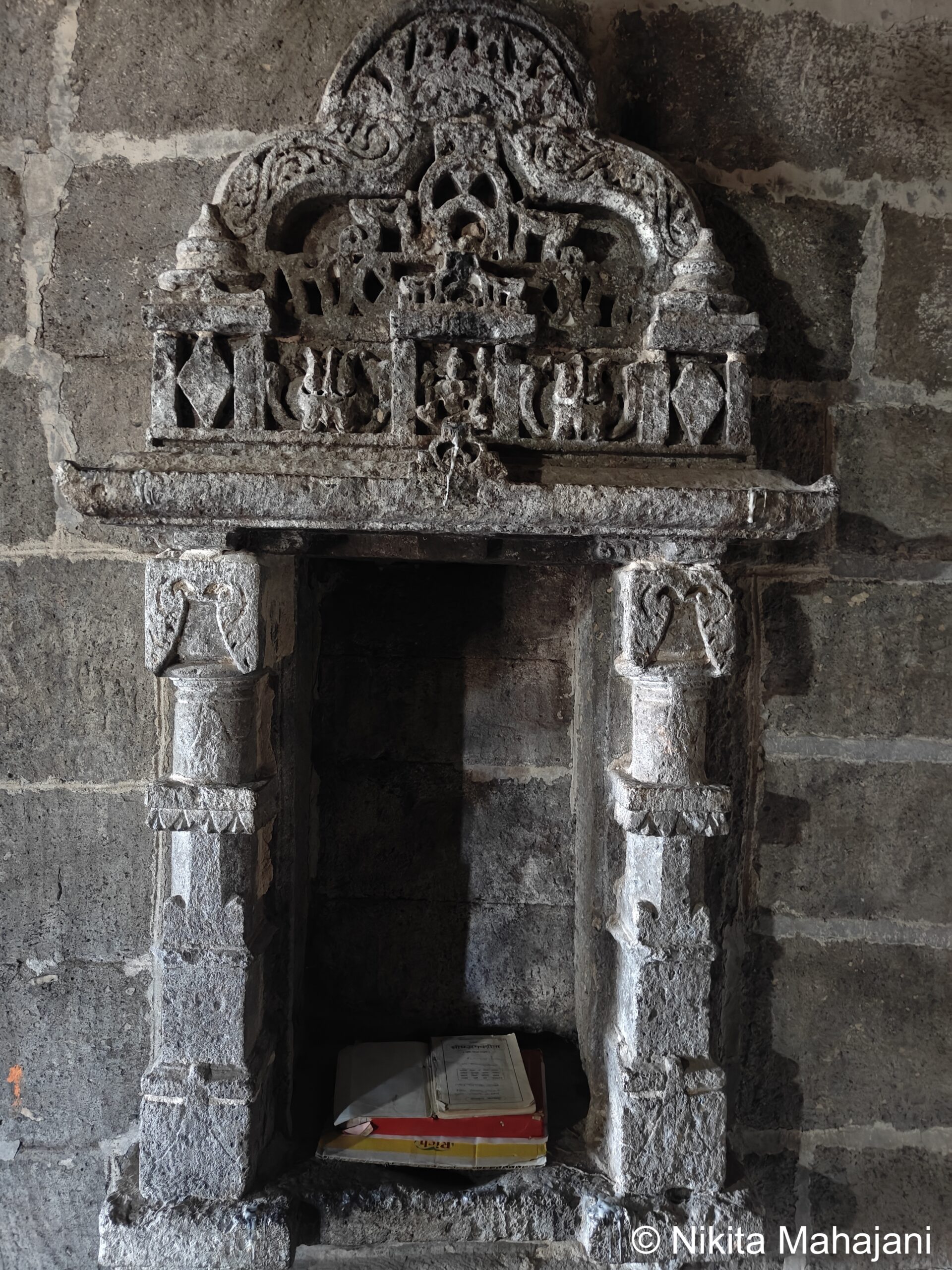
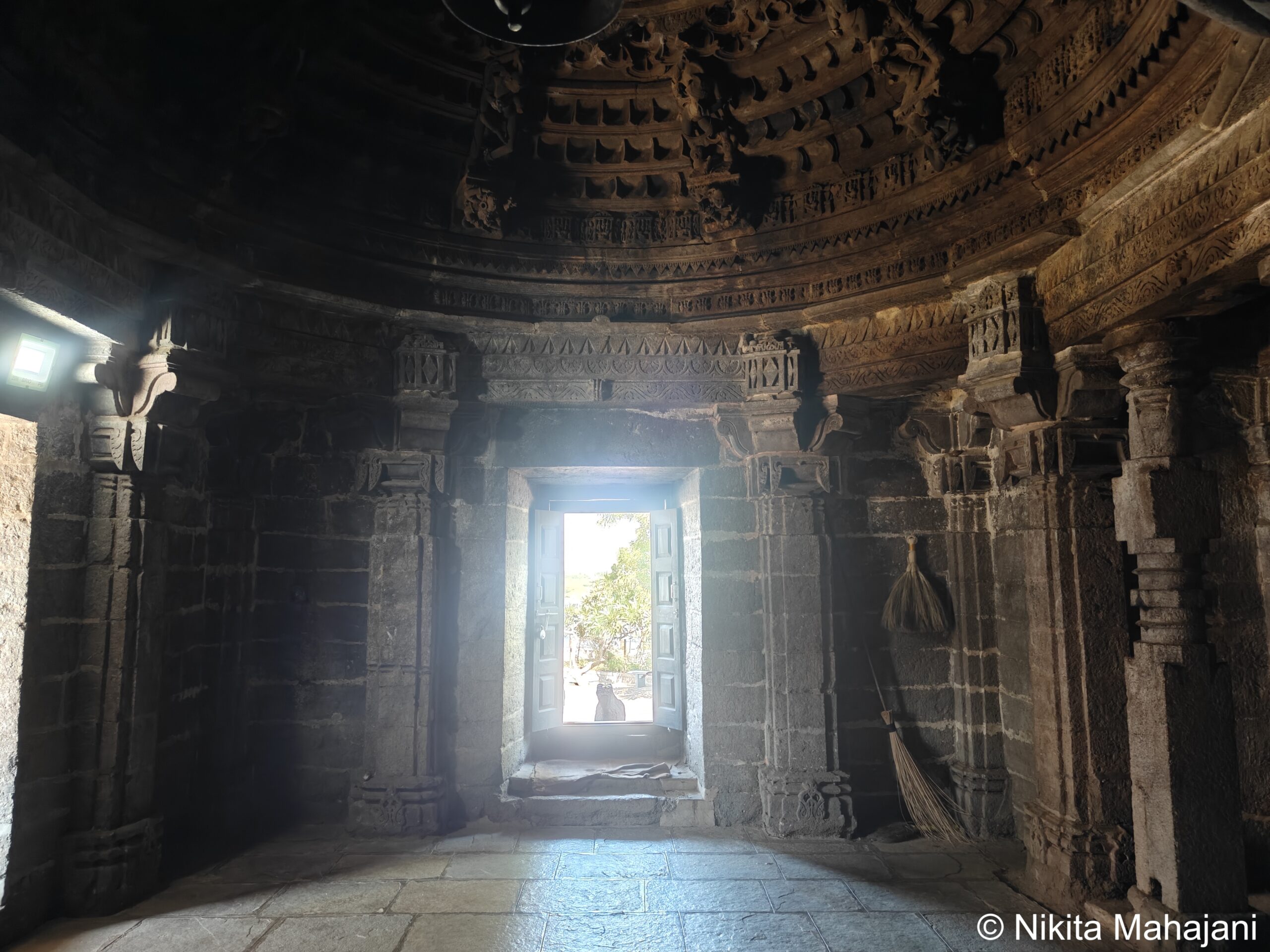
Built in the traditional Hemadpanthi architectural style, which is well-known across India, the temple showcases remarkable craftsmanship. Although some of the carvings on the walls and pillars have suffered minor damage over time, they remain intricate and captivating.
Dedicated to Lord Shiva, the temple features numerous statues and sculptures of him, each depicting different stories from Hindu mythology. These artistic representations were not only beautiful but also deeply meaningful.
As we explored the temple, we were struck by how the ancient artisans conveyed spiritual teachings through their design. The experience deepened our appreciation for Indian heritage and spirituality.


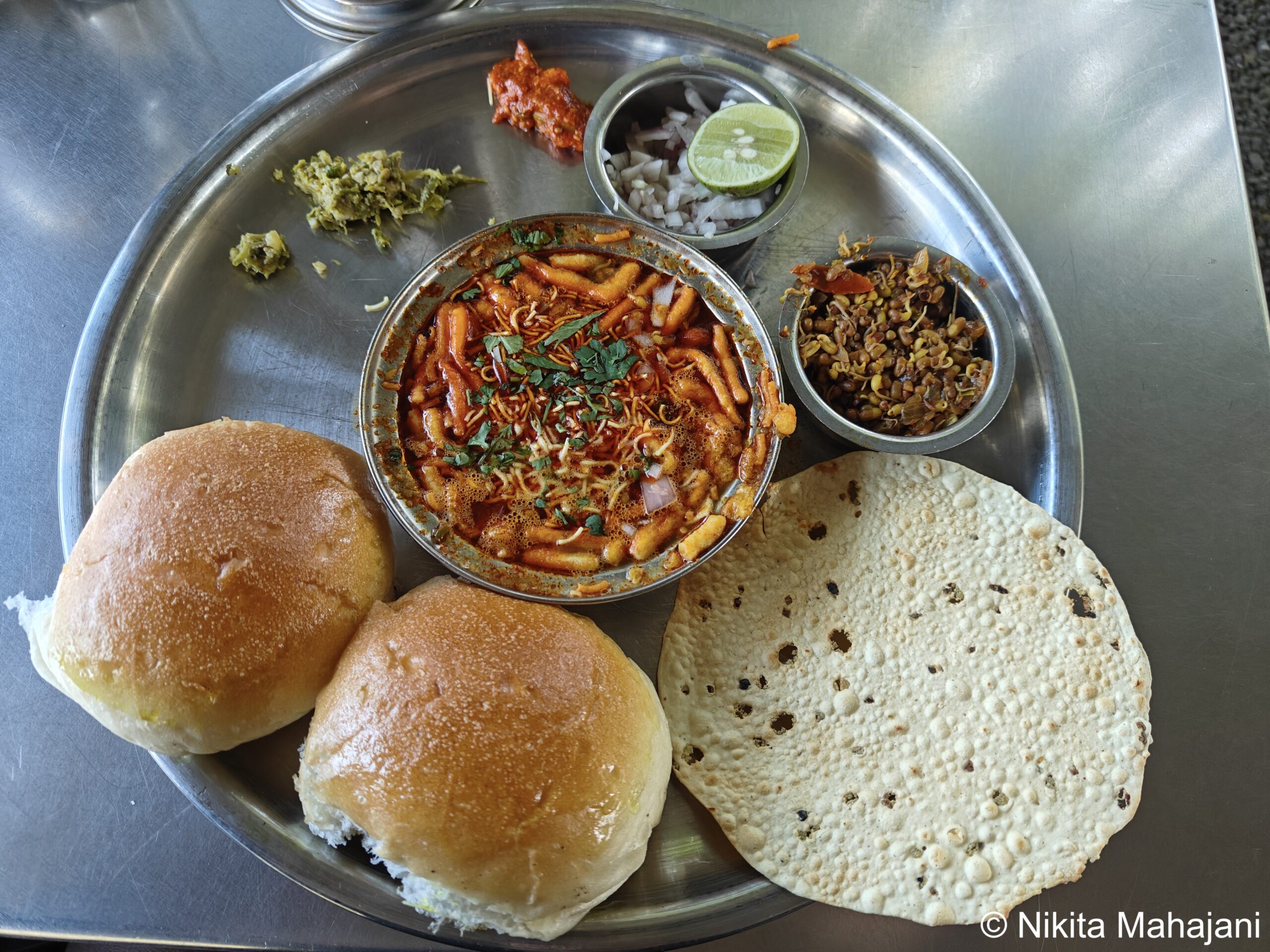
After our visit to the temple, we were ready for some lunch. We stopped at Hotel Shetty’s Swastik – Veg Treat, a well-known local restaurant that served fresh, flavorful vegetarian food. The restaurant’s menu offered a range of dishes, but we opted for some traditional Maharashtrian fare—Misal pav. It was just the kind of hearty meal we needed to refuel for the next stretch of our journey. The food was delicious and satisfying, and the friendly service made it even more enjoyable.
With our hunger satisfied, we resumed our drive toward Pune. As the miles passed, we began to notice the changing landscape, with more greenery and hills appearing as we neared Pune. After a full day on the road, we finally reached Pune around 7:00 PM.
As we settled into Pune for the night, we couldn’t help but reflect on the amazing places we had visited and the connections we had made with the land, its people, and its stories. We were content to rest and recharge for the next chapter of our adventure.
Where did we eat ?
Dapoli : Day 1

A weekend getaway to the coastal town of Dapoli proved to be the perfect mix of relaxation, culture, and exploration. With my husband and our adventurous pet dog Sophie, we spent three memorable days exploring Dapoli’s rich history, stunning beaches, and serene temples.
We started from Pune early in the morning. We came via Tamhini ghat, Mangaon and Mahad. We had a quick lunch stop at Vivan Pure Veg Restaurant Chiplun in Chiplun as he allows our pet on request. We also had a quick tea stop at Hotel Viraj. We had some steaming hot vada pav and packed Solkadhi. We reached Dapoli within 6 hrs. We rested at our ancestral home in Dapoli.
| Before Lunch | After lunch | |
| Day 0 | Journey from Pune to Dapoli | Rest at home |
| Day 1 | Panhalekaji caves, Unhavare hot water springs | Keshavraj Temple, Asud |
| Day 2 | Chandika Devi Mandir & Shahi masjid, Dabhol | Shree Datta Mandir, Ladghar & Murud Beach |
| Day 3 | Journey from Dapoli to Pune |
Day 1: Caves, Springs, and Temples
After having breakfast at home, our journey began with a visit to the Panhalekaji Caves, an ancient cave complex nestled along a riverbank. It is just 16kms from our house. There is no network near Panhalekaji caves. So we were relying on offline google map. We reached the cave premises in 30 minutes. There are some hawkers at the entrance and there is a lot of space for parking vehicles. There were no tourists at the cave. One local person came with us as he was searching for his goat in the caves. There is a paved pathway to explore the caves in the jungle. But the pathway is quite slippery. It is not advisable to visit tis place in the monsoons. These caves are nestled in the jungle with Kodjai river on one side. The pathway to all the caves is completely flat. Entry is free of cost and there are no washrooms available.
The Panhalekaji Caves, located in a small village in the Konkan region of Maharashtra, consist of 29 Buddhist and Hindu rock-cut caves. Though recognized as a protected monument, the site remains underdeveloped. The absence of heavy tourism has helped preserve its untouched charm, keeping the area relatively clean and uncommercialized.
Believed to have originated in the 2nd century AD as a shelter for Buddhist monks, the caves gradually expanded over time. They are categorized into upper and lower levels, with only the lower-level caves accessible to visitors.
Over the centuries, the caves have been influenced by Buddhist, Jain, and Hindu traditions, each leaving distinct marks on their structures. Some caves are simple, while others feature seating arrangements carved into the walls. A few exhibit intricate carvings, and one cave even contains a water enclosure, suggesting it may have been the residence of a high-ranking monk.
Among all, the most remarkable is the ‘Kailash’ cave. Its ceiling showcases beautifully carved scenes from the Mahabharata, making it a truly awe-inspiring site to explore.
The first cave is in the parking itself. The intricate rock carvings and serene setting made it a fascinating place to explore, and Sophie seemed just as captivated by the surroundings as we were.

There are 4 broken stupas lying outside Cave no.2


There is a small underground tank outside Cave no. 3 to harvest rainwater. Since the cave is based on a higher elevation, steps have carved to reach its roof.

There is a stupa lying outside cave no.4


After the caves, we made our way to the Unhavare Hot Springs, where naturally warm waters bubble up from the earth. Located 35 km from Dapoli, the Unhavare village is home to a natural hot water spring that flows throughout the year. The water level remains constant during all seasons, including winter and monsoon, and its temperature remains unchanged.
The spring has a flow rate of 8,000 to 10,000 liters per hour, with
water temperatures reaching 70°C. Rich in sulfur and carbon dioxide,
these waters are known for their therapeutic properties. Due to the high
sulfur content, they are believed to help treat skin ailments and
provide stress relief.

However, it is advised not to enter the hot spring on an empty stomach, as it may cause dizziness or fainting. In Unhavare village, a designated bathing pool with waist-deep water has been constructed for visitors, along with a separate enclosed area for women. Bathing in these hot springs offers a truly soothing and rejuvenating experience. The locals also frequently use these facilities as part of their daily routine. It was a unique experience to relax by the springs, feeling nature’s own spa treatment.

Our last stop for the day was the Keshavraj Temple in Asud, perched atop a small hill amidst lush greenery. On road parking is available at Keshavraj temple. It takes around 10 minutes to come walking to the base village. The base village has a lot of eateries where they sell local preserved food items, solkadhi, ukadiche modak, breakfast, snacks, etc. It takes another 5-10 minutes to reach the entrance of the premises of Keshavraj temple. From there, the steps led us down to the river. So you first get down and then go up to reach the temple. One needs to cross the river from the pedestrian bridge and start climbing upwards on the hill. There are around 210 steps . It takes 45 minutes to reach the main temple. There are kokum sorbet and lemon sorbet sellers throughout the entire trek route.


A short trek brought us to this tranquil temple dedicated to Lord Vishnu, and the scenic views along the way were worth every step. The temple is beautiful. There is a place to wash our hands and feets with water and the beautiful part is that the waters flows from ‘Gomukh’. The water where we wash hands and feet is actually coming from uphill naturally which feels godly. Keshavraj is a reincarnation of Lord Vishu and there is a Ganesha statue as well, both the statues are beautifully carved. On the way back, we ate some snacks in one of the shops in the base village. Exhausted but content, we headed back, looking forward to the adventures the next day would bring.
Dapoli – Day 2 & 3
To read the previous blog on Dapoli: Day 1, click here
Day 2: Sacred Sites and Scenic Beaches
Our second day was packed with diverse experiences. We began with a visit to the Chandika Devi Mandir in Dabhol, a unique temple set within a cave, where the goddess resides in a naturally formed idol.
The temple is located underground within a natural cave, requiring visitors to pass through a dark passage to reach the deity. Artificial light sources such as torches and flashlights are not permitted; only oil lamps are allowed inside. A fresh water spring flows within the cave, adding to its serene ambiance. The temple is believed to have been frequently visited by Chhatrapati Shivaji Maharaj.
Historical records indicate that Shivaji Maharaj built a small fort (kot) to safeguard the temple from frequent attacks during that time. Remnants of the fort, including a fortification wall and ruins, can still be seen today for those who explore the temple premises.
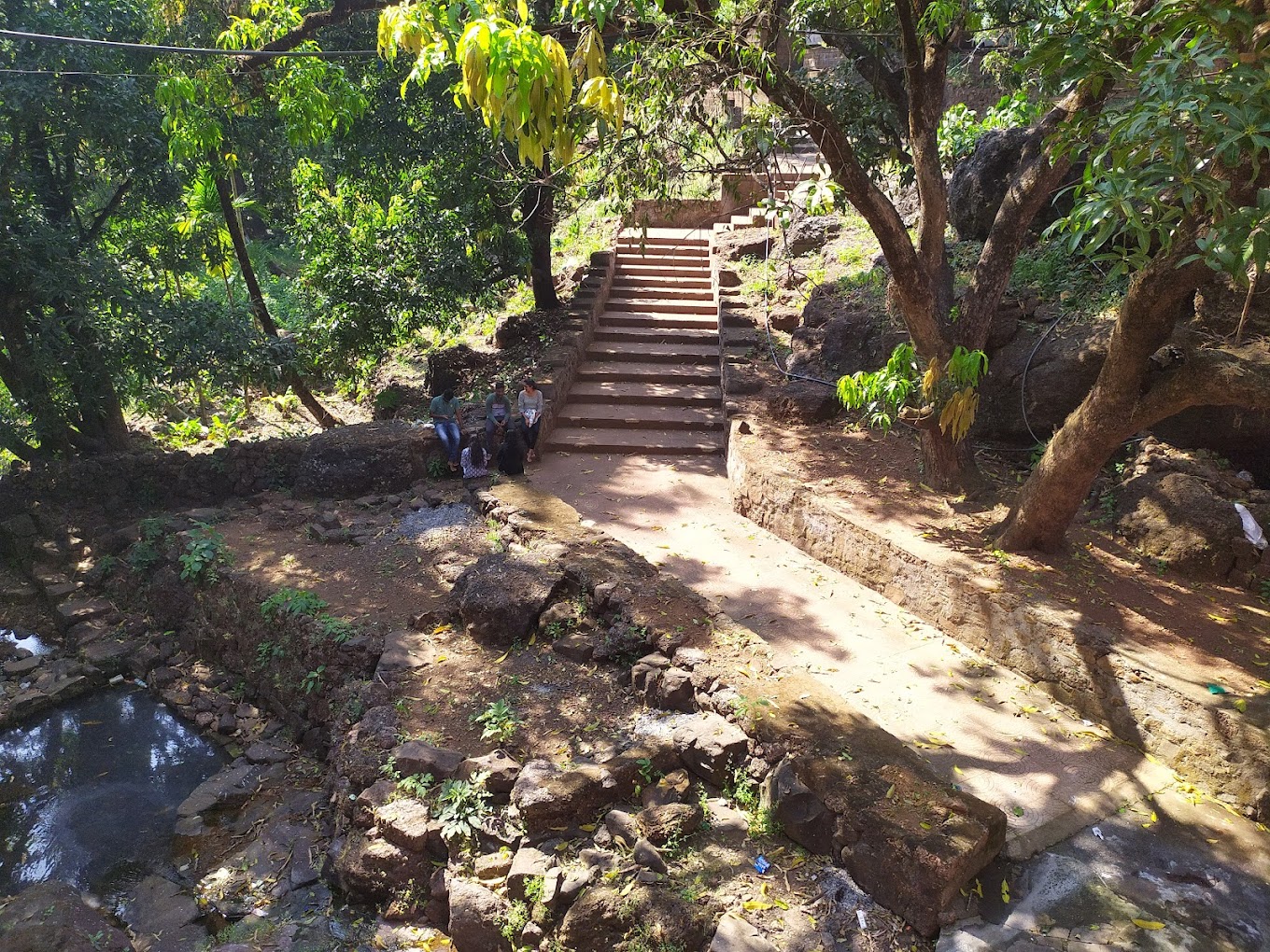
The idol of Goddess Chandika is believed to be Swayambhu (self-manifested). The temple is easy to locate using maps, with a slight deviation from the main road. To view the idol, visitors must pass through a dark cave, where photography is prohibited.
Outside the temple, small stalls offer snacks, water, and Sol Kadhi. Limited parking is available near the entrance. A pond with drinkable water is also present in the vicinity. The best time to visit is during the monsoon season when waterfalls cascade around the temple, creating a breathtaking sight. With only oil lamps illuminating the cave, the temple’s atmosphere feels mystical and mesmerizing.
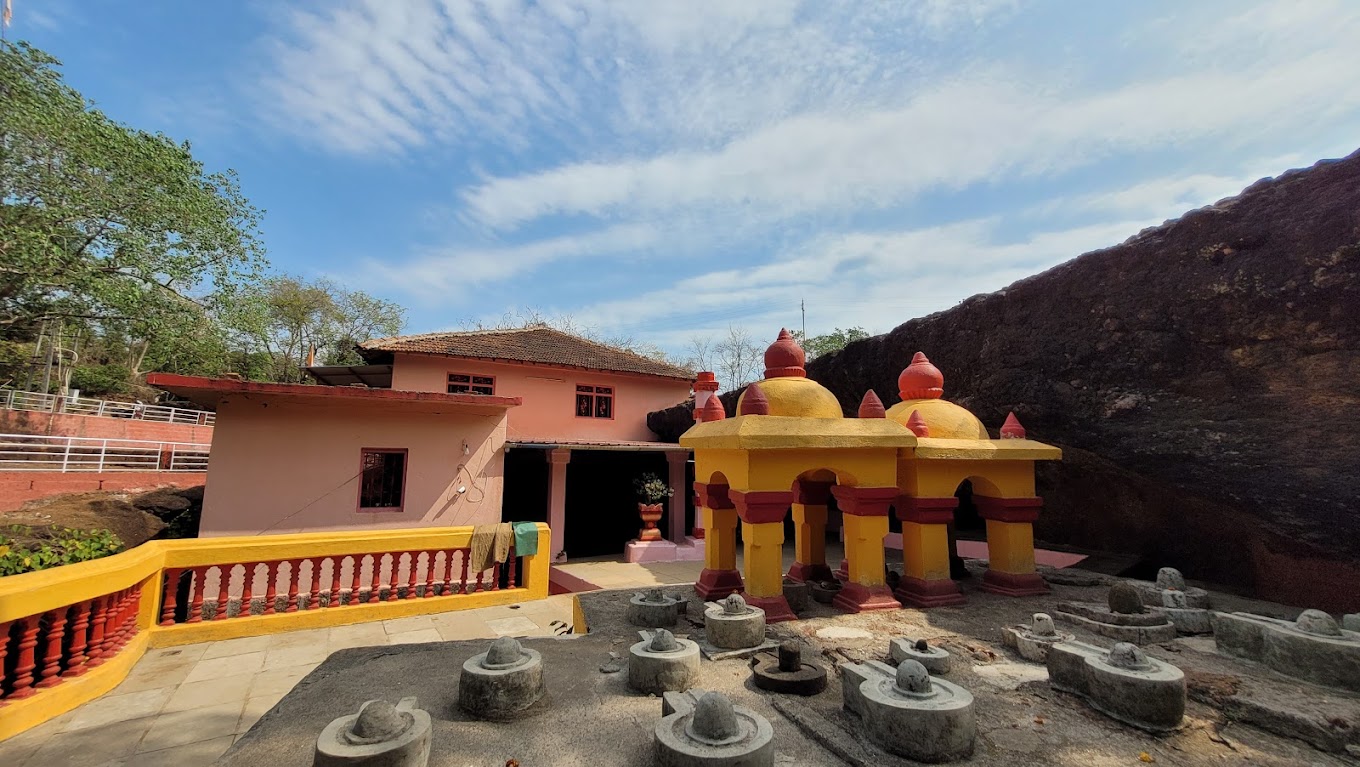
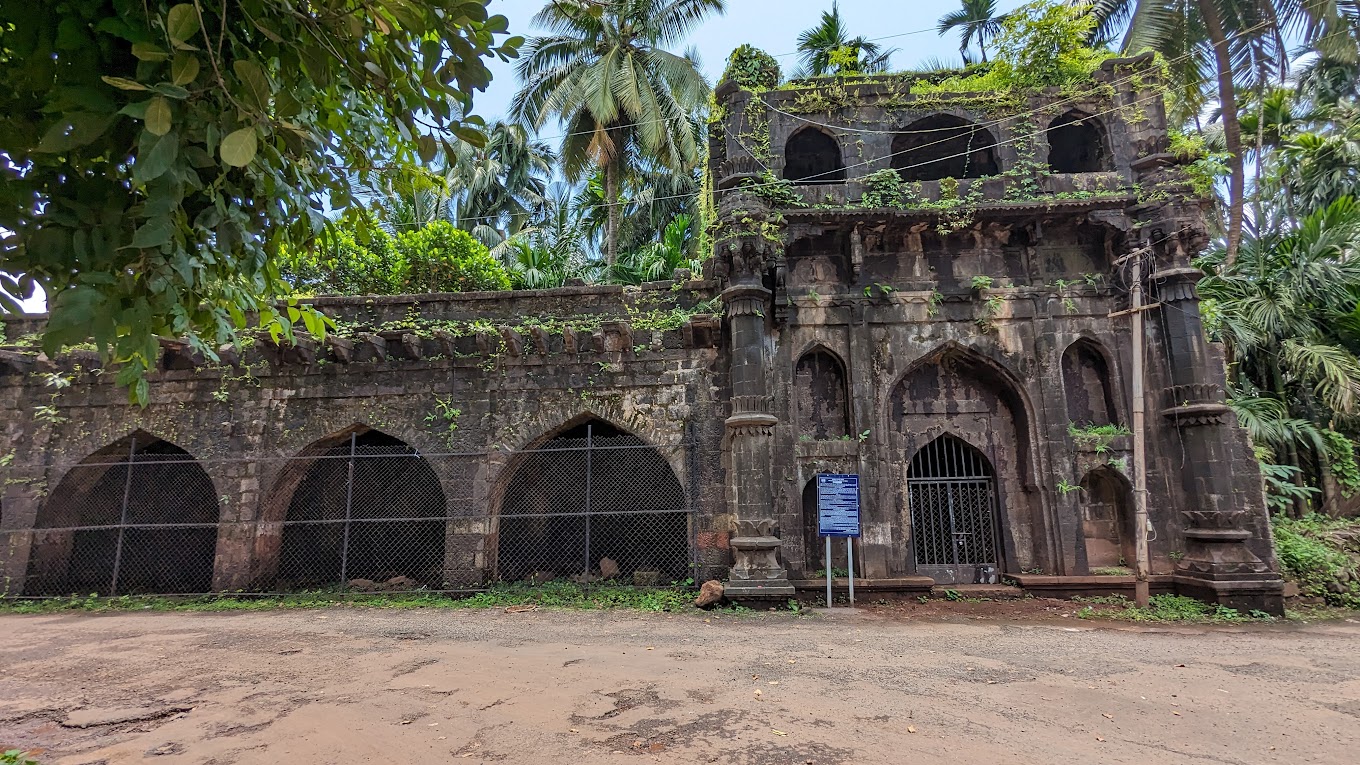
This hidden gem offered a serene start to our day. Next, we visited the Shahi Masjid in Dabhol, an architectural marvel with its beautiful domes and arches, showcasing the influence of centuries-old Indo-Islamic design. Pets are not allowed inside. So one of us stayed outside with our pet. This mosque is located right at the ferry point in Dabhol and is also known as ‘Anda Masjid’ or ‘Masaheb Masjid.’ The Shahi Mosque is currently in a dilapidated state, with much of it in ruins. It is believed to be a replica of the Shahi Jama Masjid in Vijapur. The mosque showcases exquisite Iranian-style architecture, characterized by impeccable symmetry. Its entrance features beautifully sculpted jet-black stone steps.
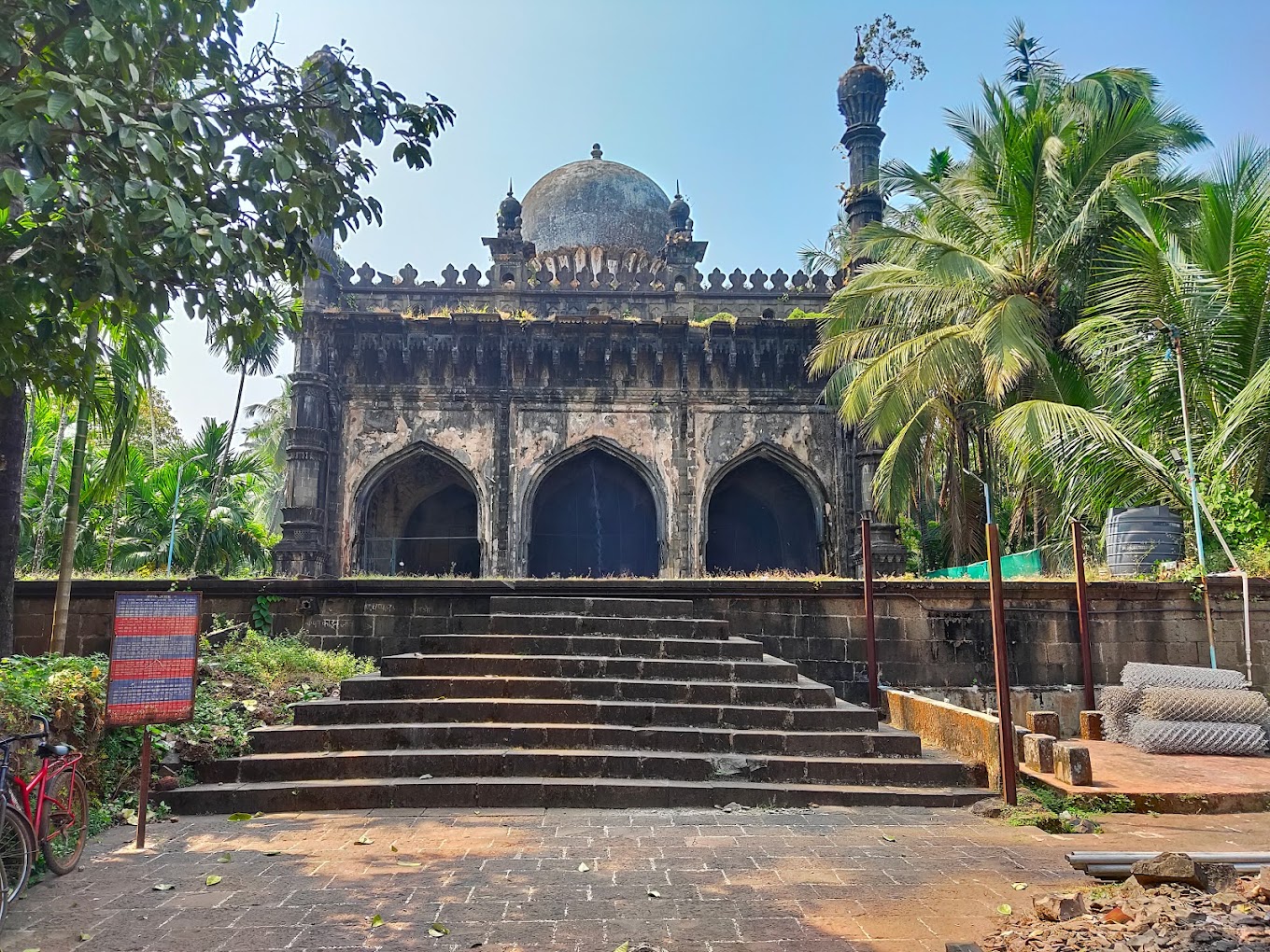
Upon entering, visitors will find basins and fountains for ritual cleansing before prayer. The main prayer hall is adorned with three arches, a meticulously hand-sculpted slab, and four symmetrical minarets at each corner. The lower sections of the minarets are decorated with simple yet elegant handmade carvings. The central slab features a circular design, with a grand dome rising 75 inches above it, adding to the mosque’s architectural magnificence.
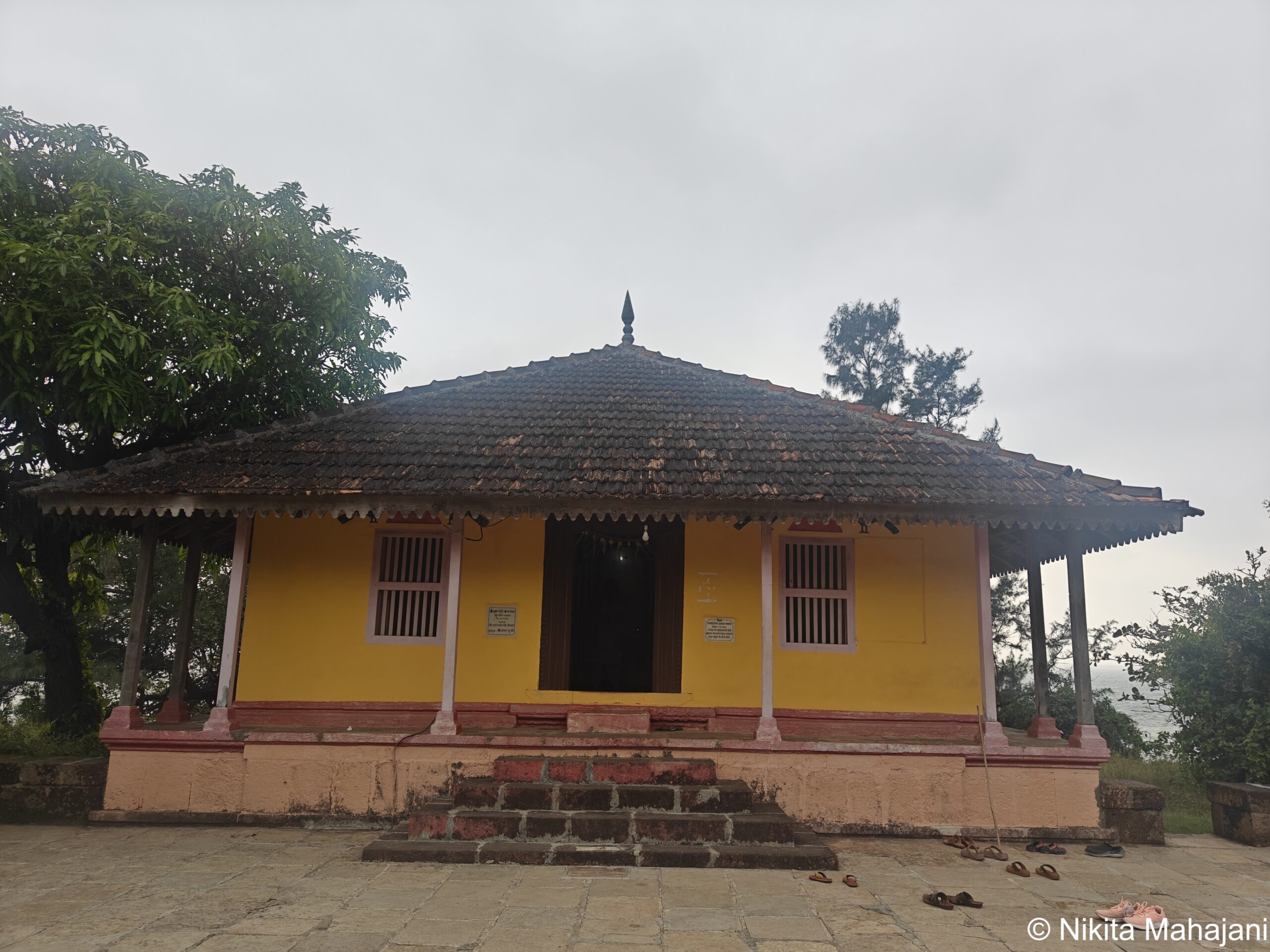
From there, we headed to Shree Datta Mandir on Ladghar Beach. The temple overlooks the beach, and the soothing sound of waves added a peaceful backdrop to our visit. A tranquil and peaceful place that offers an authentic old temple ambiance. Behind the temple, a staircase leads down to a charming, secluded beach.
The golden shores of Ladghar Beach extend across a tranquil and pristine setting, providing a perfect retreat from the chaos of city life. With crystal-clear waters and a well-kept coastline, it is an ideal destination for swimming, sunbathing, and leisurely beach strolls. Visitors can witness stunning sunrises and sunsets, creating unforgettable scenic moments.
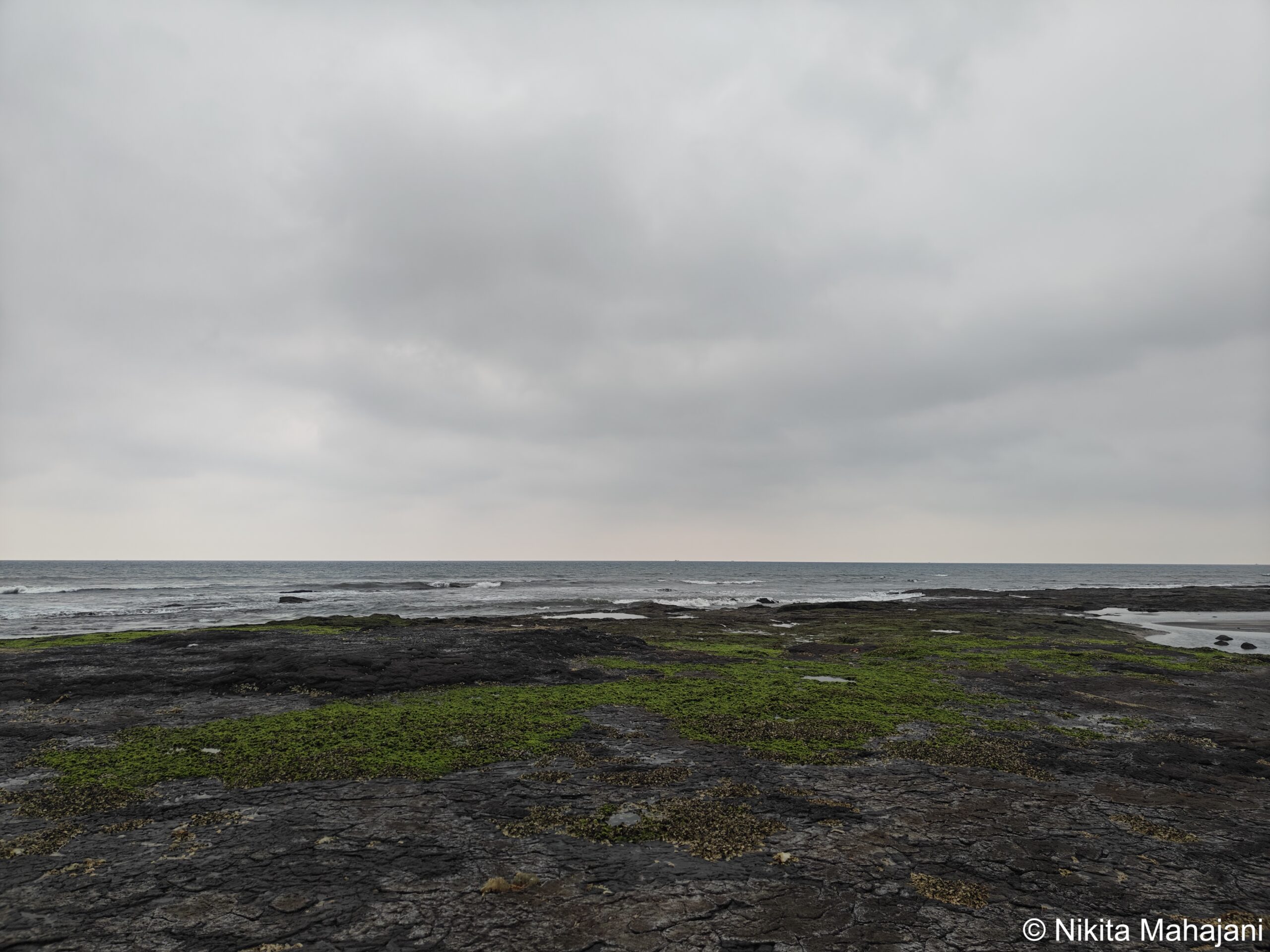
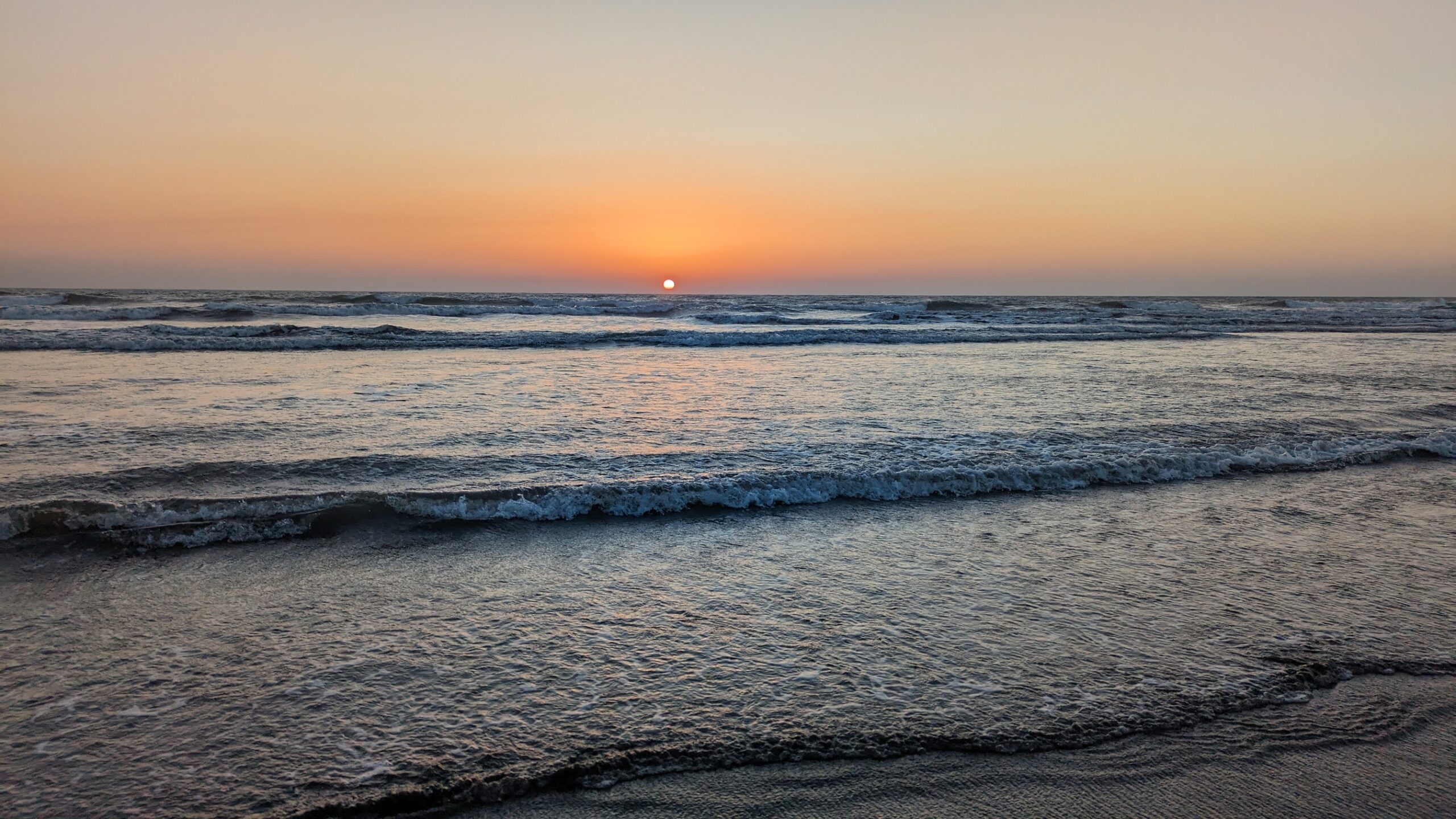
The day concluded with a visit to Murud-Dapoli Beach, where we enjoyed a relaxing stroll by the water as the sun dipped below the horizon. Sophie, ever the beach lover, had a wonderful time exploring the sands and splashing by the shore. Murud Beach is a well-maintained and clean shoreline, offering water sports for adventure seekers. It provides ample parking space and remains a hidden gem, as it is surprisingly uncrowded even on weekends. Vehicles are allowed on the beach so one should watch out for their little ones and pets. Conveniently located near the main roads, it requires no long walks to access. A must-visit destination!
Day 3: Farewell to Dapoli
After two days of exploring, we decided to spend a leisurely morning at our stay before having a hearty lunch. Around midday, we began our journey back to Pune, bringing home memories of Dapoli’s natural beauty and cultural heritage. By dinnertime, we were back in Pune, tired but refreshed from our coastal escape.
Our Dapoli trip offered a perfect blend of spirituality, history, and scenic beauty. Each day brought something new, from ancient caves to beautiful temples and serene beaches, making it an ideal getaway for anyone looking to unwind and explore. Whether you’re traveling with family, friends, or a four-legged companion, Dapoli promises an enriching experience amidst nature’s best.
Igatpuri: Day 1
Igatpuri and Daman
If there’s one thing I love more than exploring new places, it’s doing so with my husband and our beloved pet dog, Sophie. Our recent trip to Igatpuri and Daman was the perfect blend of adventure, relaxation, and cultural exploration. From the picturesque temples nestled in the Western Ghats to the tranquil beaches of Daman, the trip was a refreshing escape from city life.
| Before lunch | After lunch | |
| Day 1: Pune to Igatpuri | Shri Siddheshwar Temple in Akole | Amruteshwar temple, Umbrella waterfall |
| Day 2: Local sightseeing in Igatpuri | Tringalwadi cave, Myanmar gate | Bhivli waterfalls |
| Day 3: Igatpuri to Daman via Jawhar | Journey from Igatpuri to Jawhar | Moti Daman beach & Fort, Jampore beach road. |
| Day 4: Local sightseeing in Daman | Nani Daman Fort | Udvada parsi town, Arjungad Fort |
| Day 5: Daman to Pune | Journey from Daman to Pune |
Day 1: The Scenic Road to Igatpuri
We set off early Saturday morning, aiming to beat the traffic. Our journey began with a drive through the countryside, stopping at Hotel Shivneri Misal in Manchar for a quick brunch. With a hot cup of tea, we were ready to dive into the day’s adventure. Sophie, of course, enjoyed a few biscuits by our side, tail wagging in excitement.
Our first stop was the serene Siddheshwar Temple in Akole. Located on the banks of the Pravara River in Akole, the remains of Siddheswar temple stand as a remarkable example of the Yadava dynasty’s architectural style. This Temple was buried under thick alluvial deposits due to frequent flooding and was accidentally unearthed in 1780. Over time, the temple suffered significant damage from systematic iconoclasm by Islamic forces, as it was situated along the route between Devgiri Fort in Sambhajinagar and Sinhagad Fort, in Pune.
According to legend, a farmer/ gardener accidentally struck the finial of the temple’s spire while plowing the field. However, it is unlikely that the original finial and spire were intact at the time of this incident. More plausibly, what he actually hit was the roof of the existing structure. The upper portion of the central dome likely sustained damage as well and was later reconstructed during restoration efforts. This was followed by the addition of three gilded pinnacles, which appear somewhat out of place.
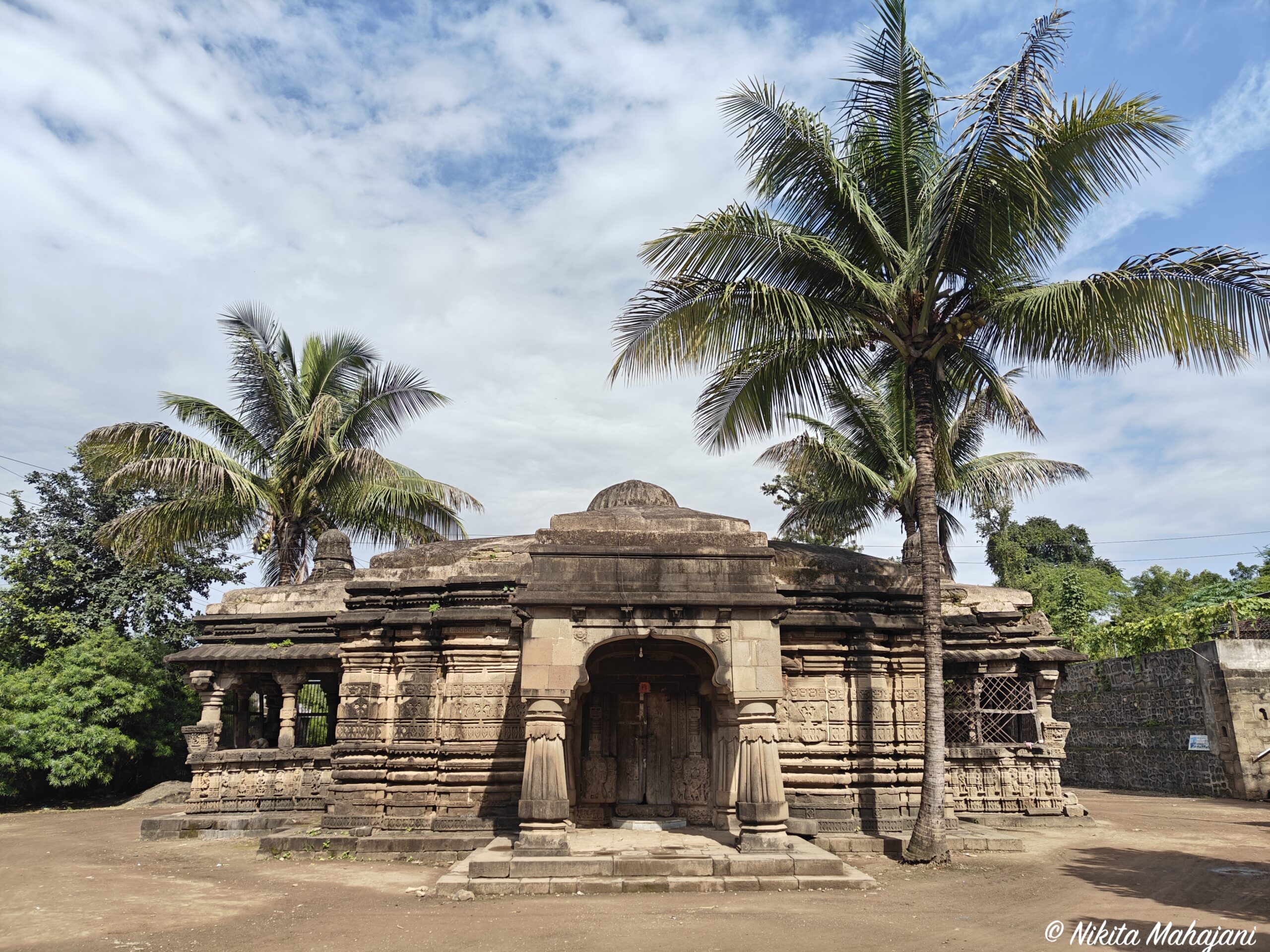
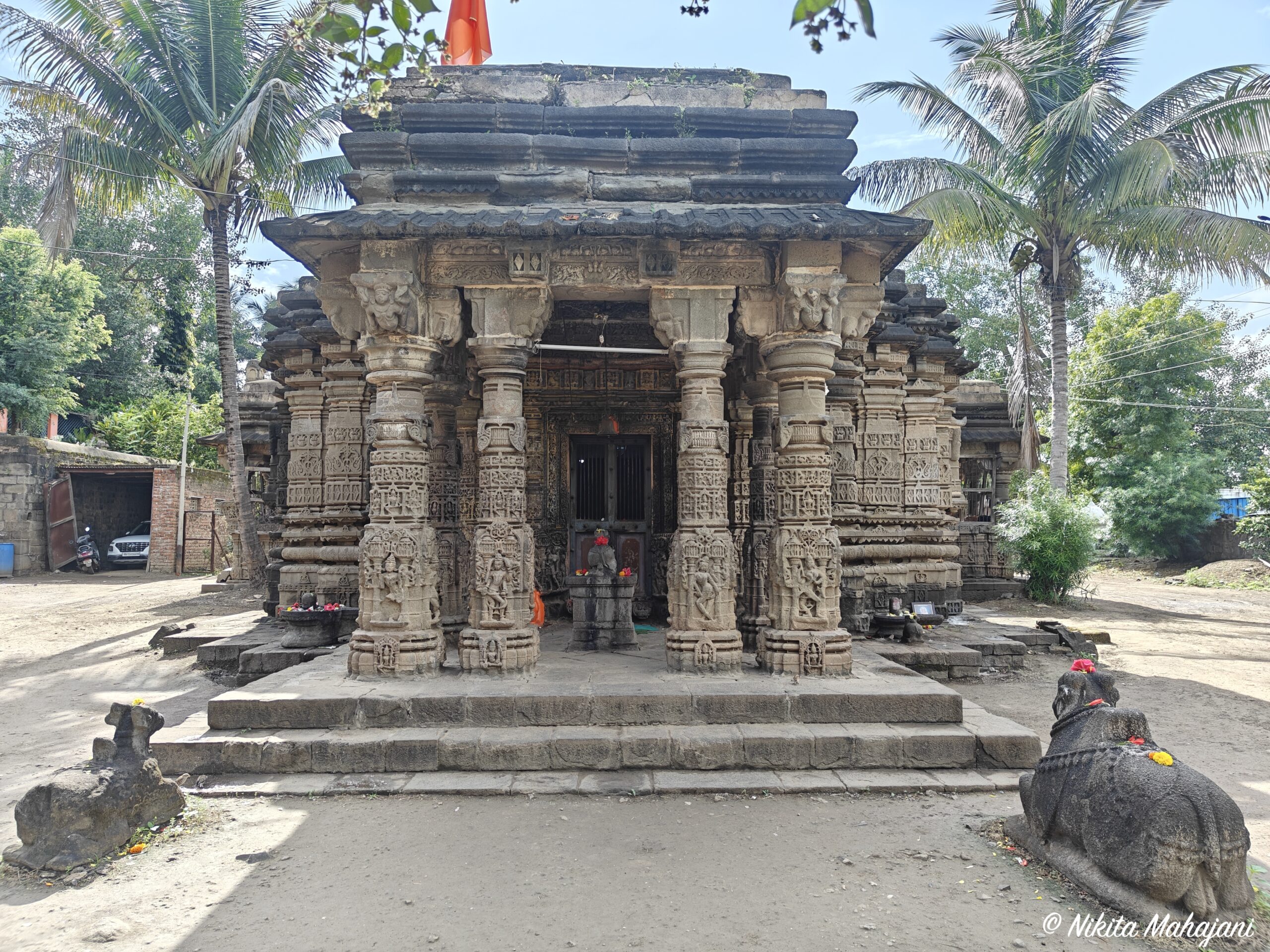
The defacement of the sculptures clearly indicates that systematic Islamic iconoclasm took place here, as previously noted. The sacred goose motif appears both on the rear porch and the pillars. The intricately carved architrave forming the first course of the central hall beneath the central dome is a remarkable sight. Among the four sides, two showcase battle scenes, while the third portrays Vishnu reclining on the Seshanag, accompanied by nagas on either side. These nagas are depicted as half-human, half-serpent beings, shown squatting on their coiled tails.
There are a few veergals or hero-stones in the complex too. Interestingly, the temple does not fall under the jurisdiction of any central or state legislative authority and remains the private property of the Pethkar family, whose members also serve as priests. Notably, they have done an exceptional job in preserving the temple and its surroundings, which also include smaller shrines dedicated to Lord Ram and Goddess Bhavani.
Sophie enjoyed the spacious grounds, exploring every nook and cranny. Siddheshwar temple is completely pet friendly. Infact there are two indie dogs who are permanent residents of the temple. There is space available for parking 3-4 cars. However, very few vistors are seen at this temple.
We left from Akole towards Rtanawadi to visit the Amruteshwar temple. The route is full of waterfalls. The nearby Umbrella Waterfall added a magical touch to the place, with water cascading down, creating a peaceful ambiance that Sophie enjoyed as well. The road to Ratanwadi temple is not in a good condition at all. It is advisable to by a car having a lot of ground clearance.
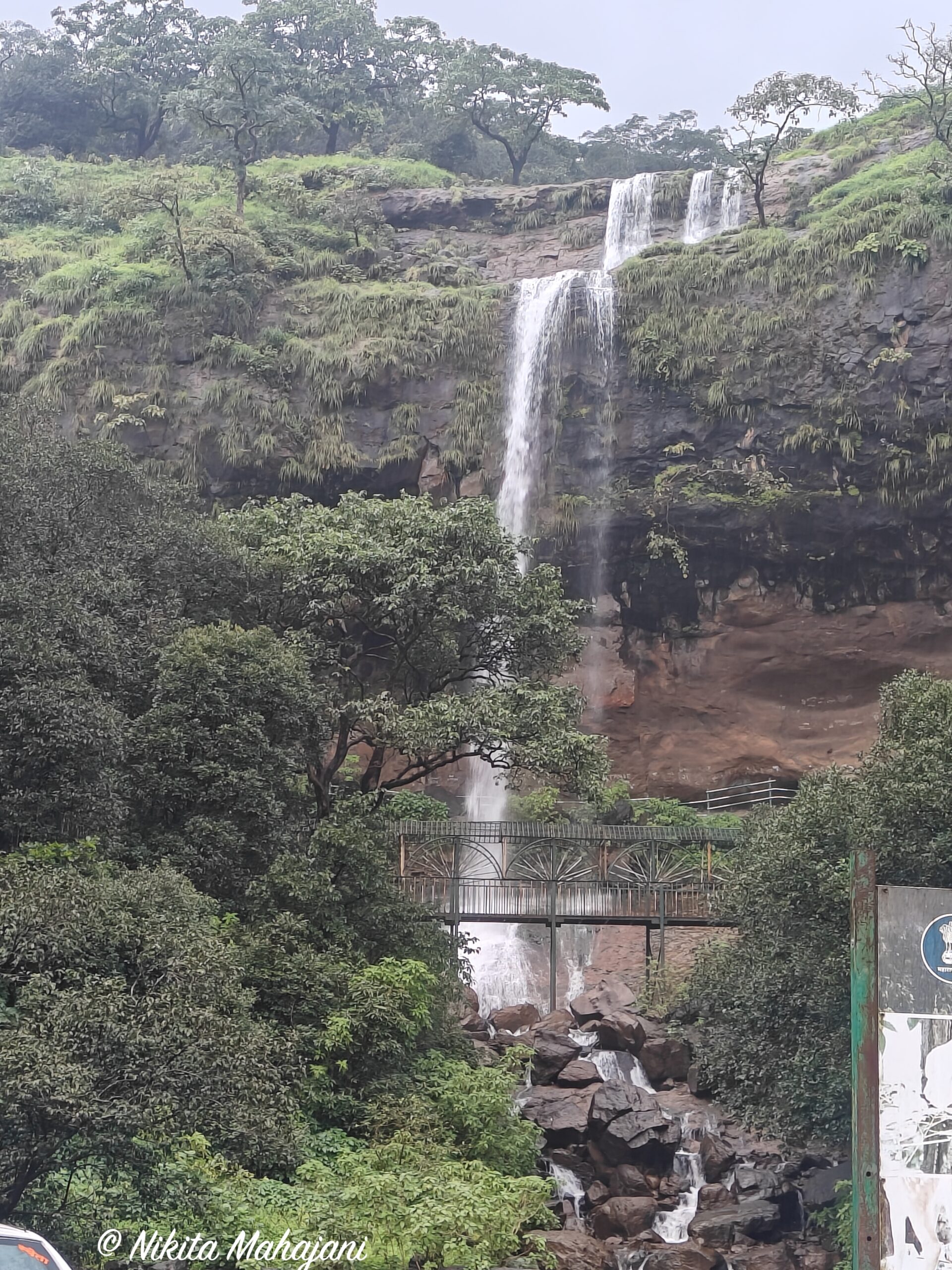
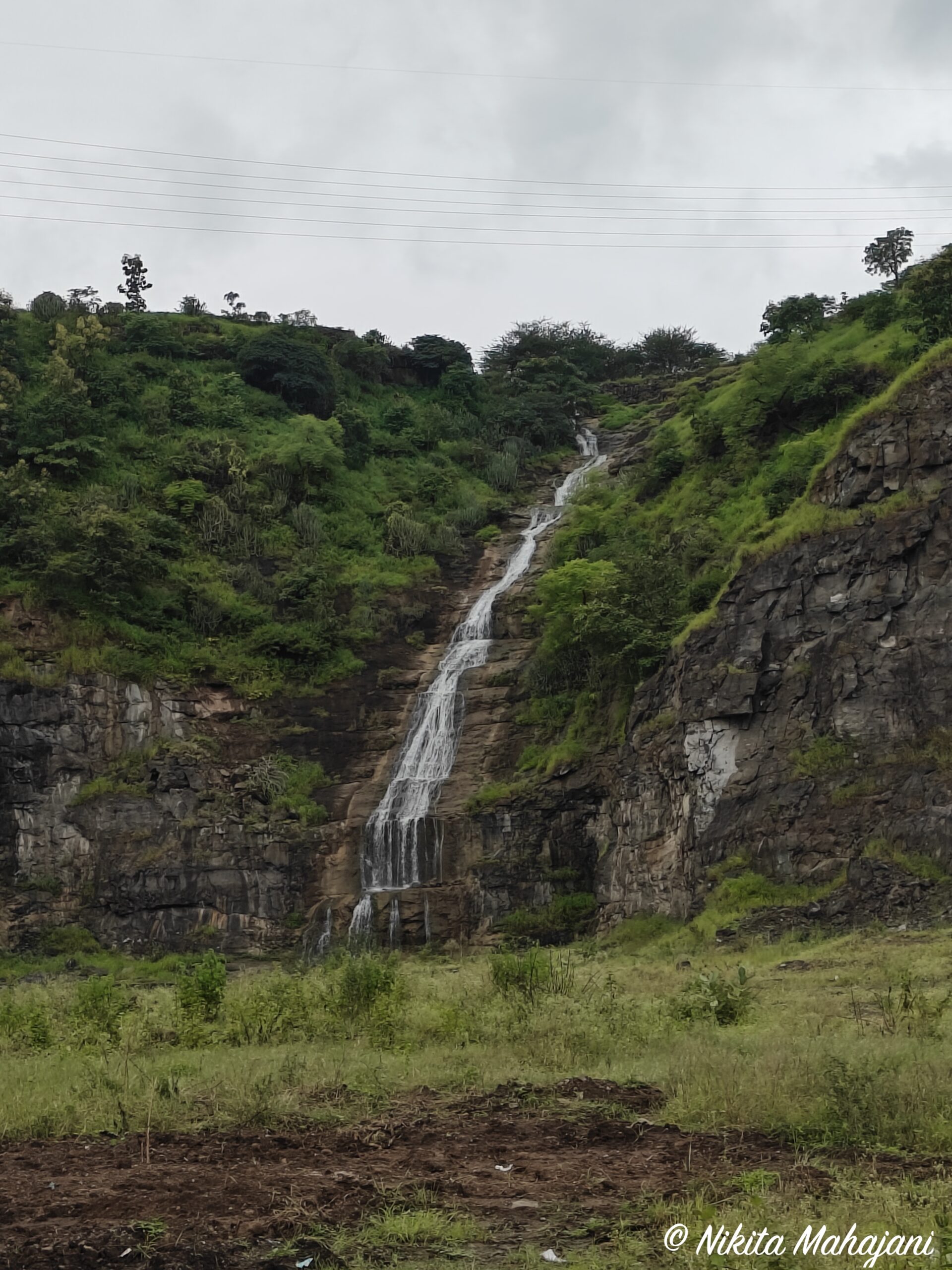
After a peaceful stop, we continued our drive through winding roads until we reached Shree Amruteshwar Temple. Parking, washrooms and eateries are available outside the temple. There is no network in this area. So make sure to carry enough cash. Since it was raining, we could spend very less time in the temple.
The Amruteshwar Temple is an ancient shrine built in the 9th century by King Jhanj of the Shilahar dynasty. Located in Ratanwadi village, the base village for the renowned Ratangad Fort, this temple is dedicated to Lord Shiva and is approximately 1,200 years old. Constructed primarily from black stone, the temple also features red stone elements. The walls and ceiling are adorned with intricate murals, showcasing remarkable craftsmanship. A mandapa supported by 12 beautifully carved pillars, decorated with statues and floral motifs, enhances the temple’s architectural splendor. The temple houses a Shivling, beneath which lies a hot water spring. During the monsoon, the temple’s reflection in the surrounding pond creates a breathtaking sight.
The Amruteshwar Temple is open 24 hours a day. We enjoyed steaming hot tea and some snacks at one the shacks outside the temple. These shacks are pet friendly and they have clean washrooms.
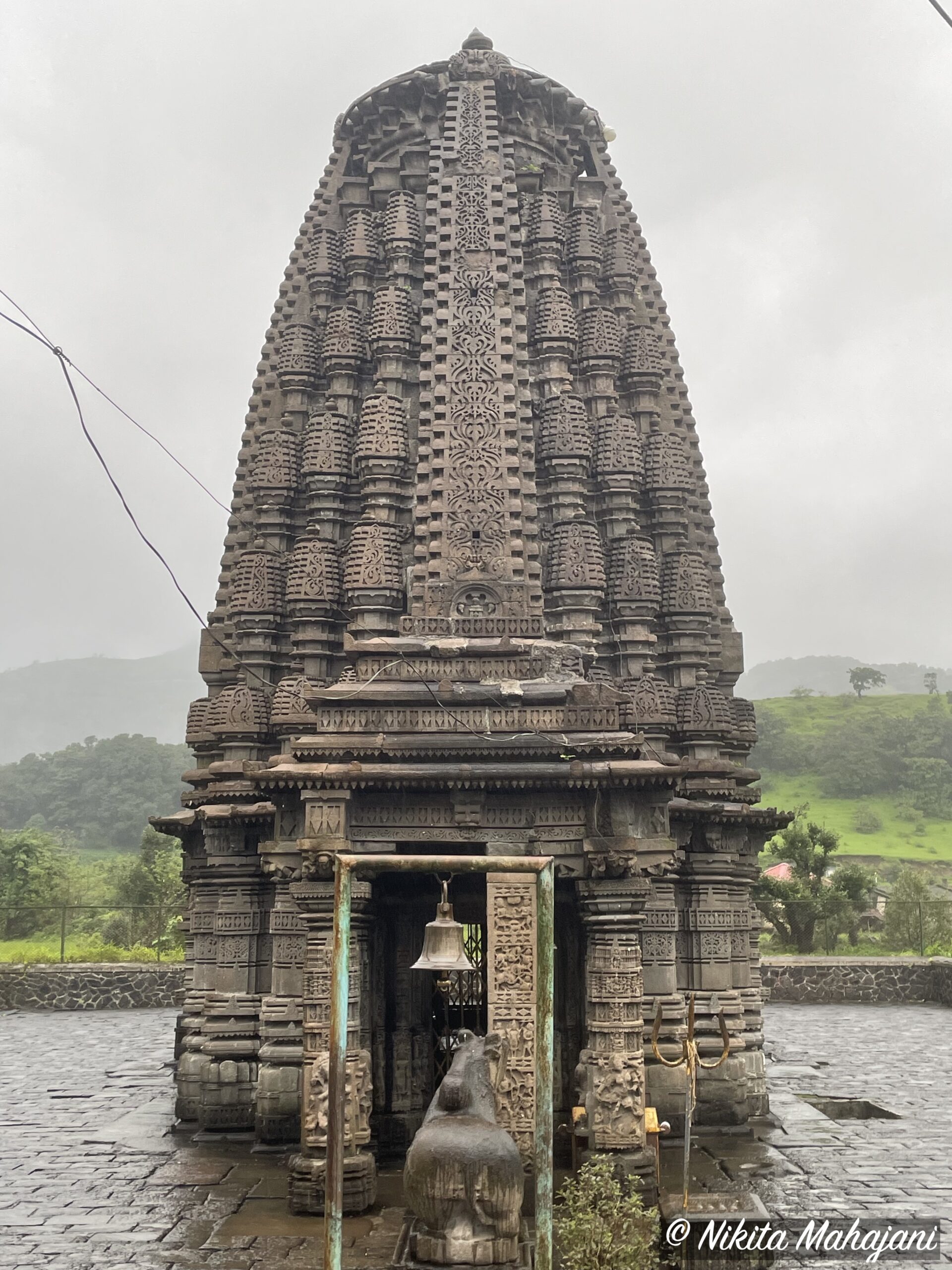
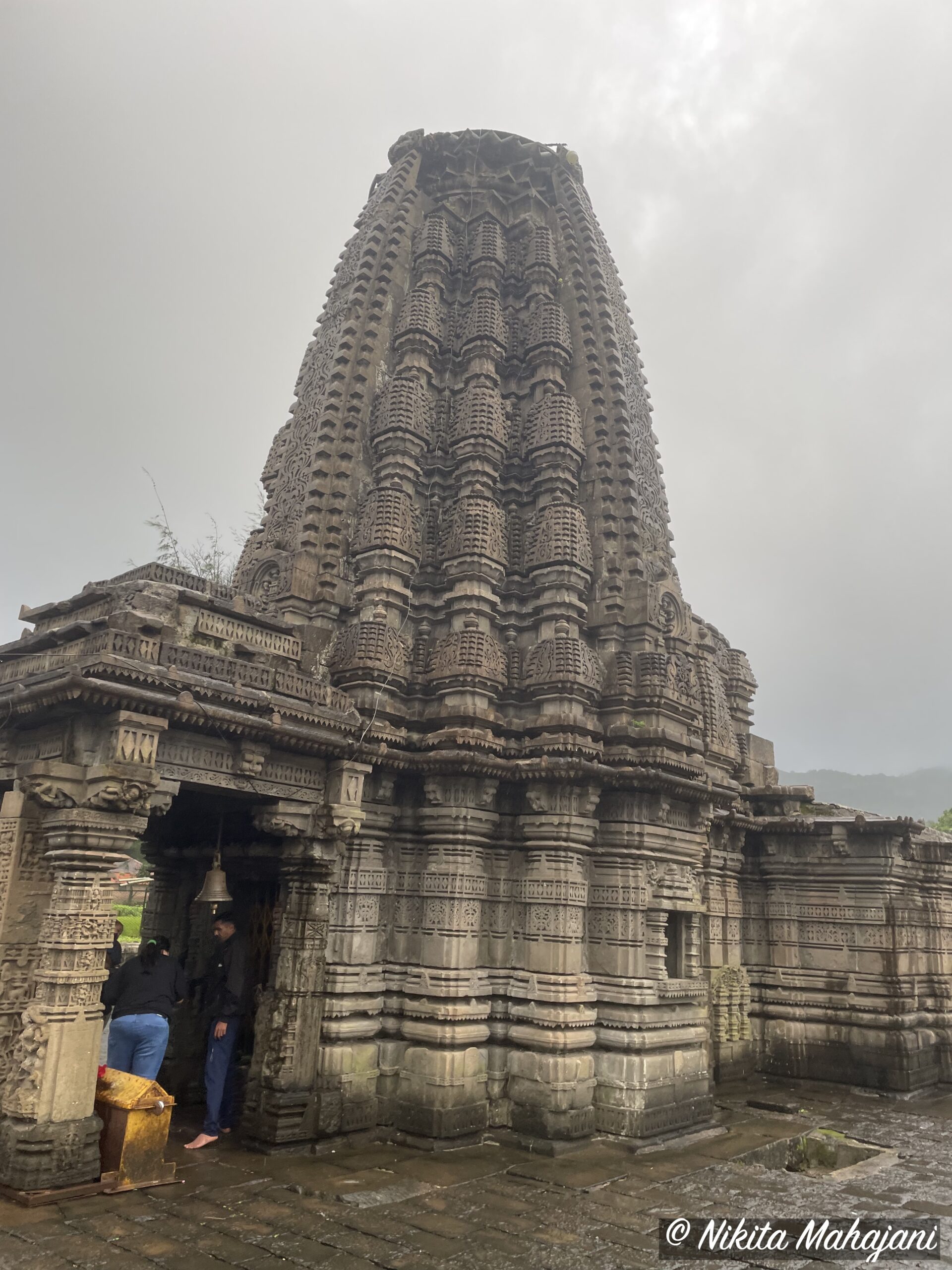
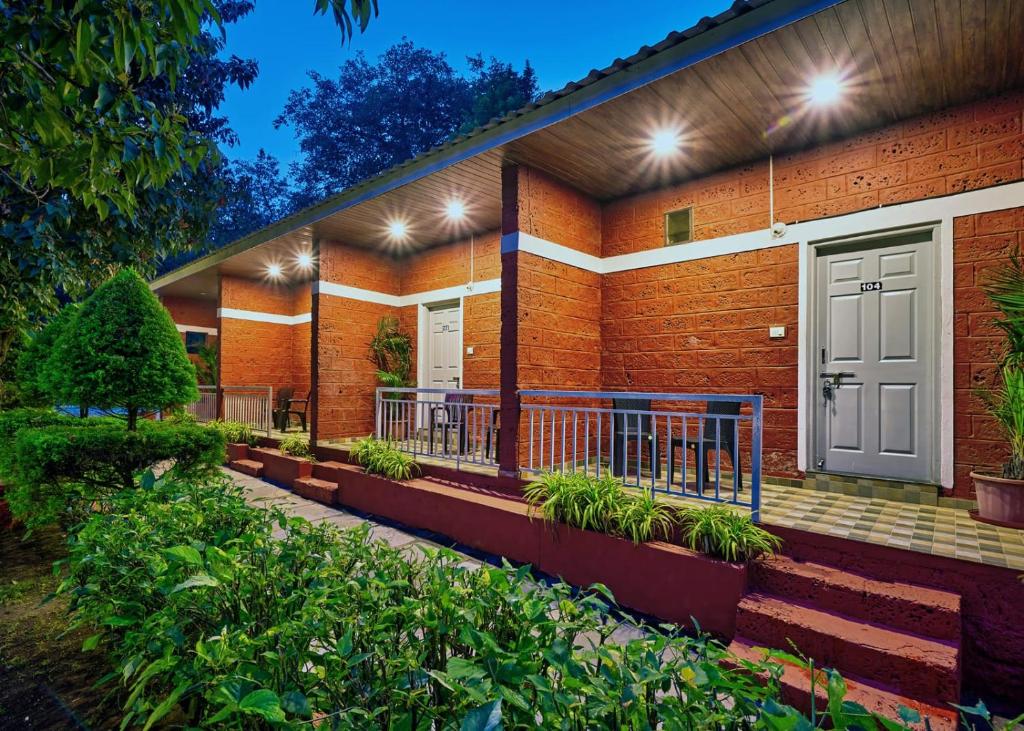
By evening, we made our way to Green Heritage Resort, where a warm dinner awaited us. I booked this place for a week of relaxation before heading to Bhandardara. Overall, the stay was pleasant, with spacious and clean rooms in a well-situated location. The food was decent—not exceptional, but certainly not bad. The staff provided football and cricket equipment for outdoor games, along with indoor options like Jenga and Ludo. The swimming pool was well-maintained and open until 10 PM, which was a great perk. This place is ideal for a relaxing and enjoyable getaway with family and friends. Its location on the outskirts of Igatpuri adds to its charm, offering a peaceful retreat.The staff were welcoming, and the resort’s pet-friendly vibe made us feel right at home. Sophie settled into her cozy corner, while we reminisced about the day over a delicious meal.
Igatpuri: Day 2
To read the previous blog on day 1 of Igatpuri click here
Day 2: Exploring Igatpuri’s Hidden Gems
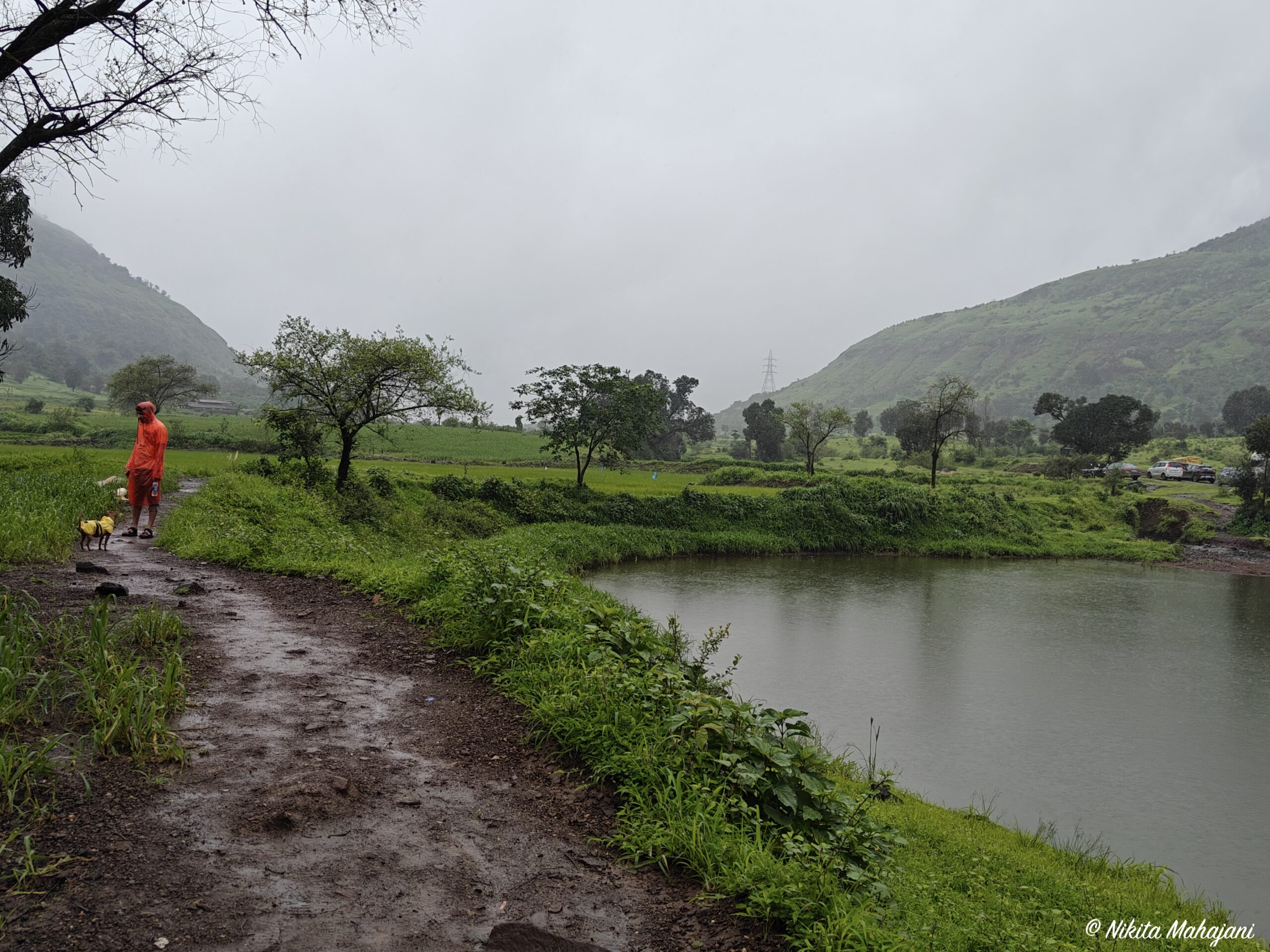
The next day began with breakfast at the resort before heading to Tringalwadi Fort. There is a tea shop at the base of the Fort. We parked our car near the shop and started walking. There are no signages near this parking. A few local kids offered to show the direction to the cave and asked for money in return. However, we denied to go with the kids. We spoke to some shopkeepers to understand the directions. They pointed towards one temporary shed and told us to walk in that direction. Since it was peak monsoon, we had to cross a huge pond. The depth of the pond was less. Our shoes got completely drenched in the pond. I had to pick up Sophie at a lot of places to protect her from rainwater.
We had to cross a lot of paths through paddy rice fields. But it wasn’t slippery. It was drizzling throughout the trek. After walking for 20mins, we came across a couple of blue colored signages by Archealogical Survey of India (ASI) which indicated that we are going in the right direction and we have come queit close to the cave. After crossing the signages, we could finally spot the cave at some distance. The short trek was well worth the effort, offering panoramic views of the Sahyadri range. Sophie, ever the adventurous pup, led the way, her tiny legs keeping up with our strides. It took us around 30-40 minutes to reach the caves from the parking area due to the rains. We explored the Tirthankar Adinath Jain Cave, a quiet, spiritual spot that left us in awe of its carvings.
The Jain caves are carved into a rock outcrop at the base of the fort. Their entrance features a decorative carved frame, though its supporting pillars have largely disintegrated. These caves were excavated during the rule of the Yadavas, who governed the Deccan region in the 12th and 13th centuries from their capitals at Chandradityapura (modern Chandor, Nashik District) and Devagiri (modern Daulatabad, Aurangabad District).
The cave has an outer verandah with intricately carved walls, most of which have deteriorated or been destroyed. A low parapet wall runs along the verandah’s front, supporting two pillars—one on each side of the entrance—which uphold the outer eave. The main doorway was originally adorned with paintings, remnants of which are still visible.
Flanking these pillars are pilasters, with the main entrance positioned between them. Beyond the pilasters, at both ends of the verandah, there are grille windows consisting of two square bars intersecting in a grid of nine openings. These bars are finely adorned with lotus rosettes at their intersections.
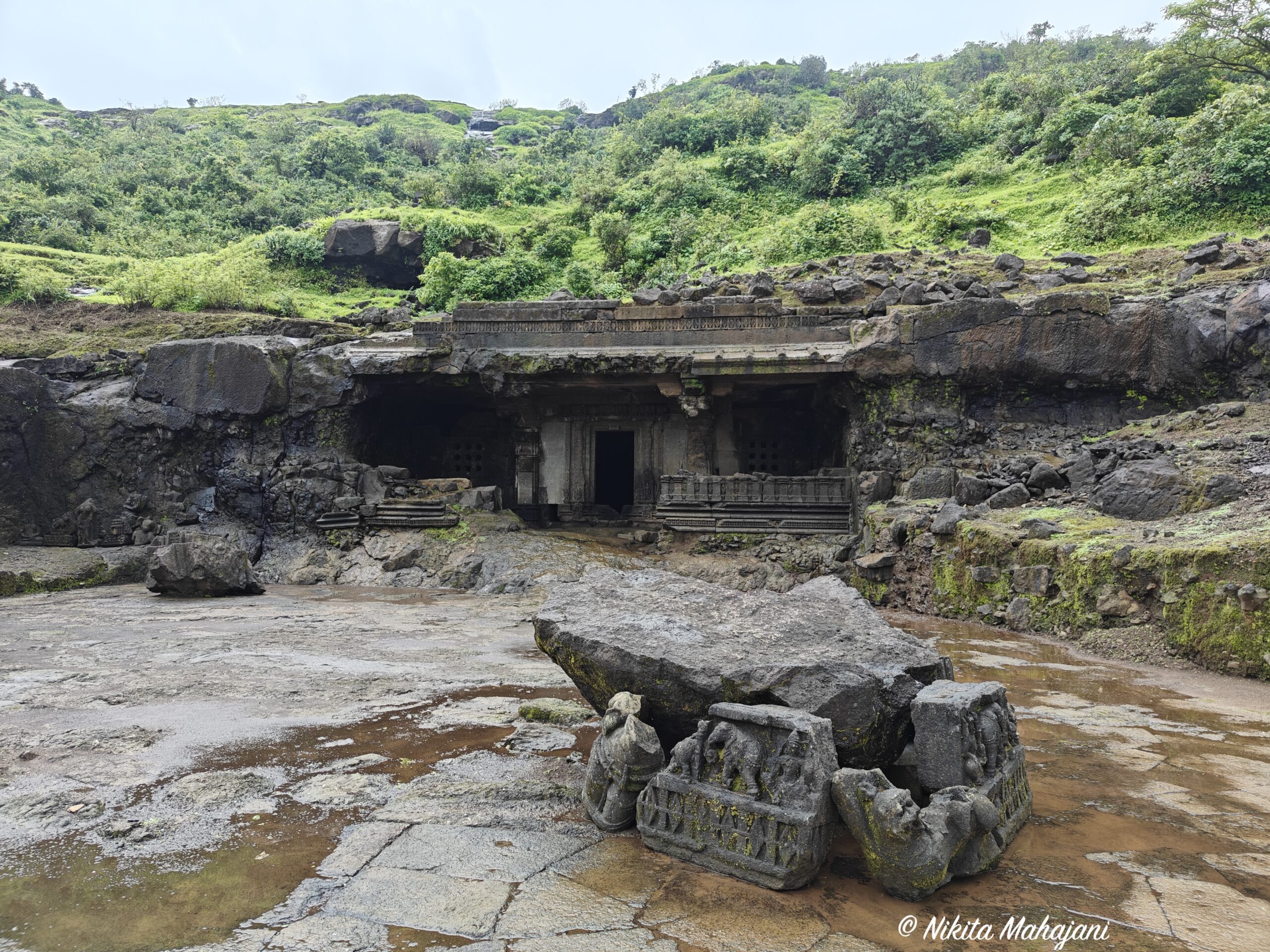
The verandah ceiling features a prominent relief carving in its center, directly in front of the entrance. This depicts a group of five figures arranged in a circle, with the central figure seemingly carried through the air by two others on either side, while two additional figures below assist in lifting.
The partition between the verandah and the inner hall is constructed from large, irregularly shaped stone blocks expertly fitted together. The spacious inner hall, measuring 35 feet square, leads to an antechamber and a shrine at its rear. The ceiling of the hall was once supported by four centrally placed columns. While the walls and ceiling are largely unadorned, the southwestern and northwestern corners contain low, continuous altars for images, whereas the northeastern and southeastern corners feature high benches, which do not serve as altars.
Of the original four columns, only the southeast pillar remains intact. The southwest pillar extends from floor to ceiling but is heavily eroded in the middle. The northwest and northeast columns have collapsed, leaving only ceiling fragments and floor stumps as remnants.
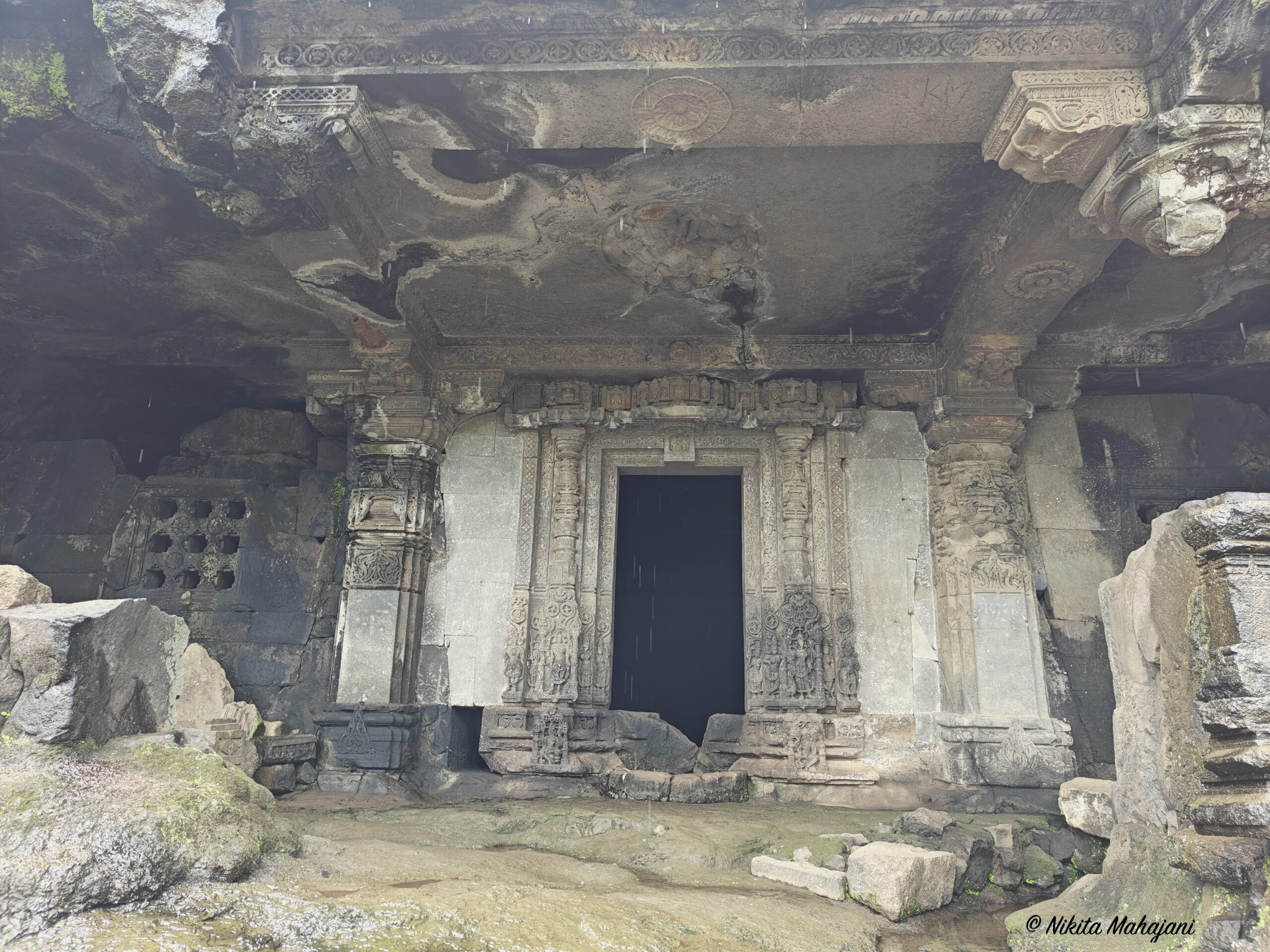
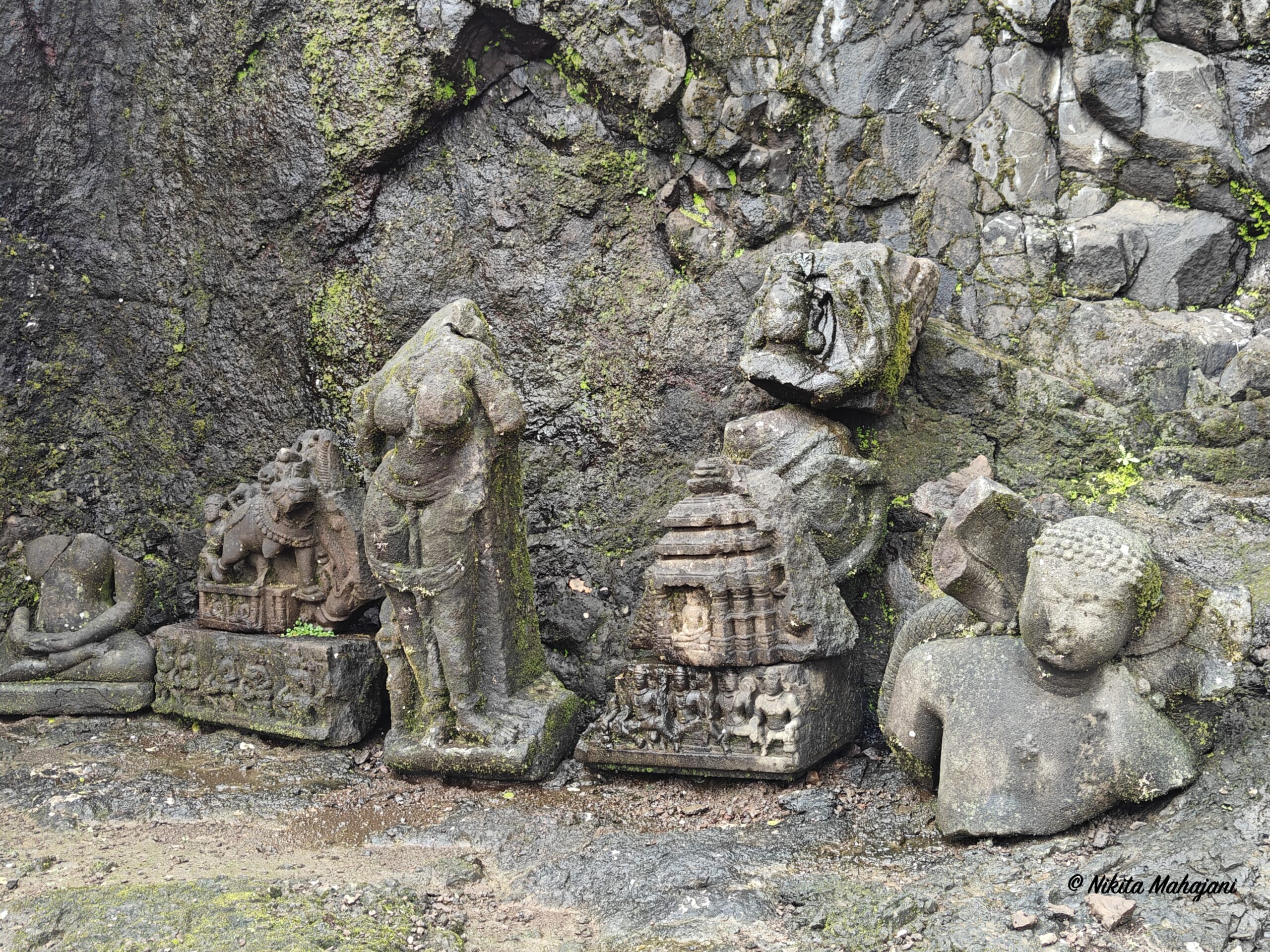
The shrine’s doorway, though deteriorated, was less ornate than the main entrance. Above it, three Jinas are sculpted on successive moldings. Inside the shrine, which measures approximately 13 by 12 feet, lies a damaged Jaina image on an altar against the back wall. The head, chest, and umbrella have been destroyed and discarded, with a portion of the umbrella found outside the cave. However, the legs and cushion remain intact, with a bull emblem at the center of the cushion identifying the image as Rishabdeva. An inscription on either side of the cushion is dated Saka 1266.
A significant inscription once adorned the northern wall of the cave, though only a small fragment of it remains. The surviving letters are finely carved and proportioned. Originally, the inscription spanned approximately four to five feet in width, though its full depth is uncertain.
Since it had started raining very heavily, we decided not to go ahead to Tringalwadi Fort.
So
we started our way back to the parking. By this time, we were super
hungry. So had some steaming hot maggi at the sop in the parking. All of
us were completely drenched. We had carried spare clothes and towels in
the car. So dried up ourselves in the car and changed our clothes.
Sophie felt extremely cozy and warm after I dried her up. She ate kibble
and dozzed off in her warm blankets inside the car.
We made our way to the Myanmar Gate, a stunning structure that pays homage to Igatpuri’s connection to Vipassana meditation. The road to Myanmar gate is through a slum.
Pets
are strictly not allowed at Myanmar gate. They have a huge parking lot.
One of us stayed back in Sophie in the parking and we visited it
alternatively. They have clean washrooms. There is nothing to see inside
apart from a small exhibition hall. It’s incredible how calm the area
feels, even with other tourists around. Afterward, we returned to the
resort for lunch, a hearty a-la-carte meal that refueled us for the rest
of the day.

Post-lunch, we had a afternoon nap for an hour and then we proceeded to Bhavli waterfall. It was drizzling at 3pm and it did not feel like an afternoon at all. The weather was amazing. We parked on the main road. The waterfall is just a 5 minutes walk from the main road. Sophie had never seen such huge waterfall and water bodies before and I could see the expression of astonishment on her face.

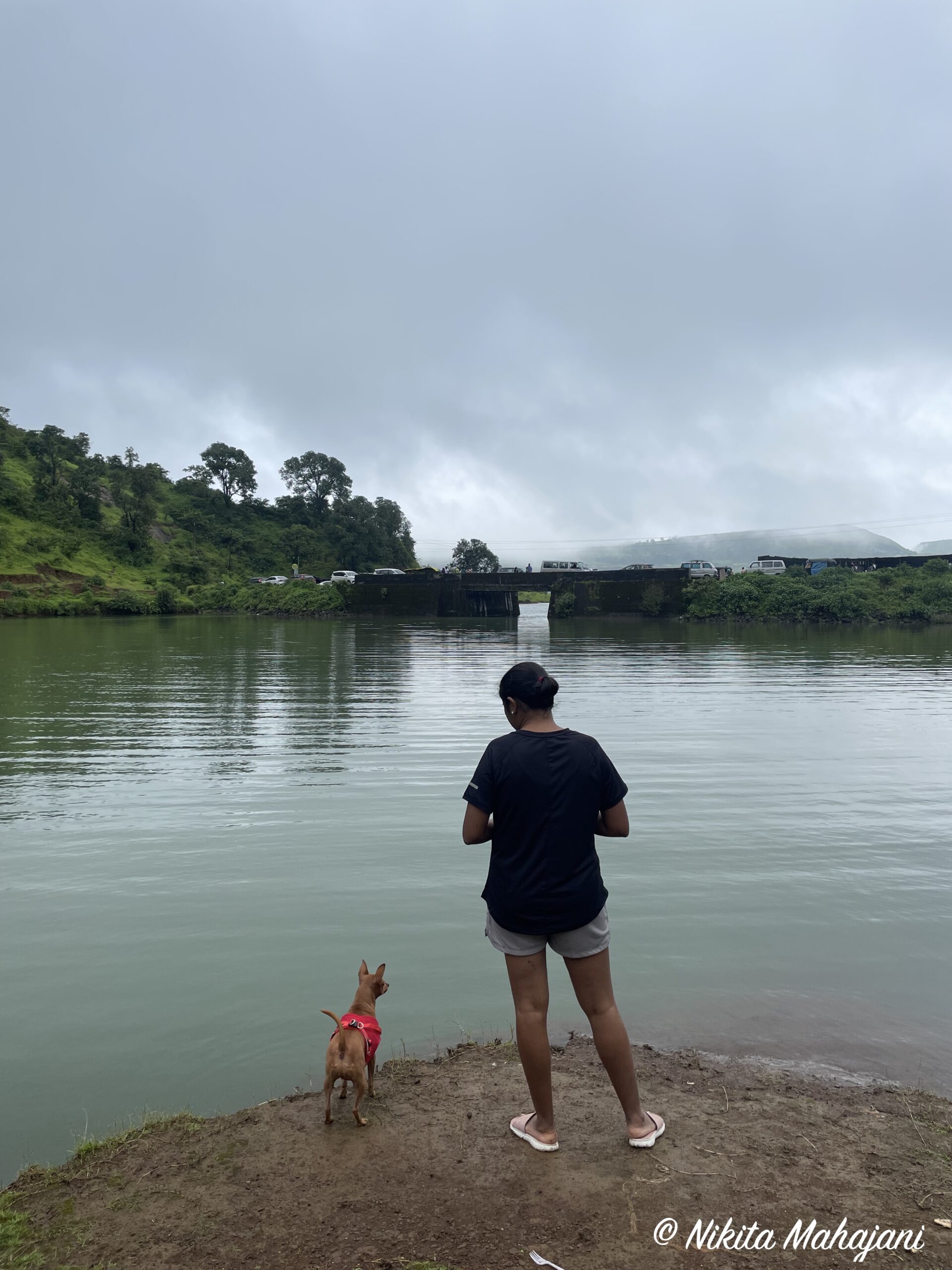
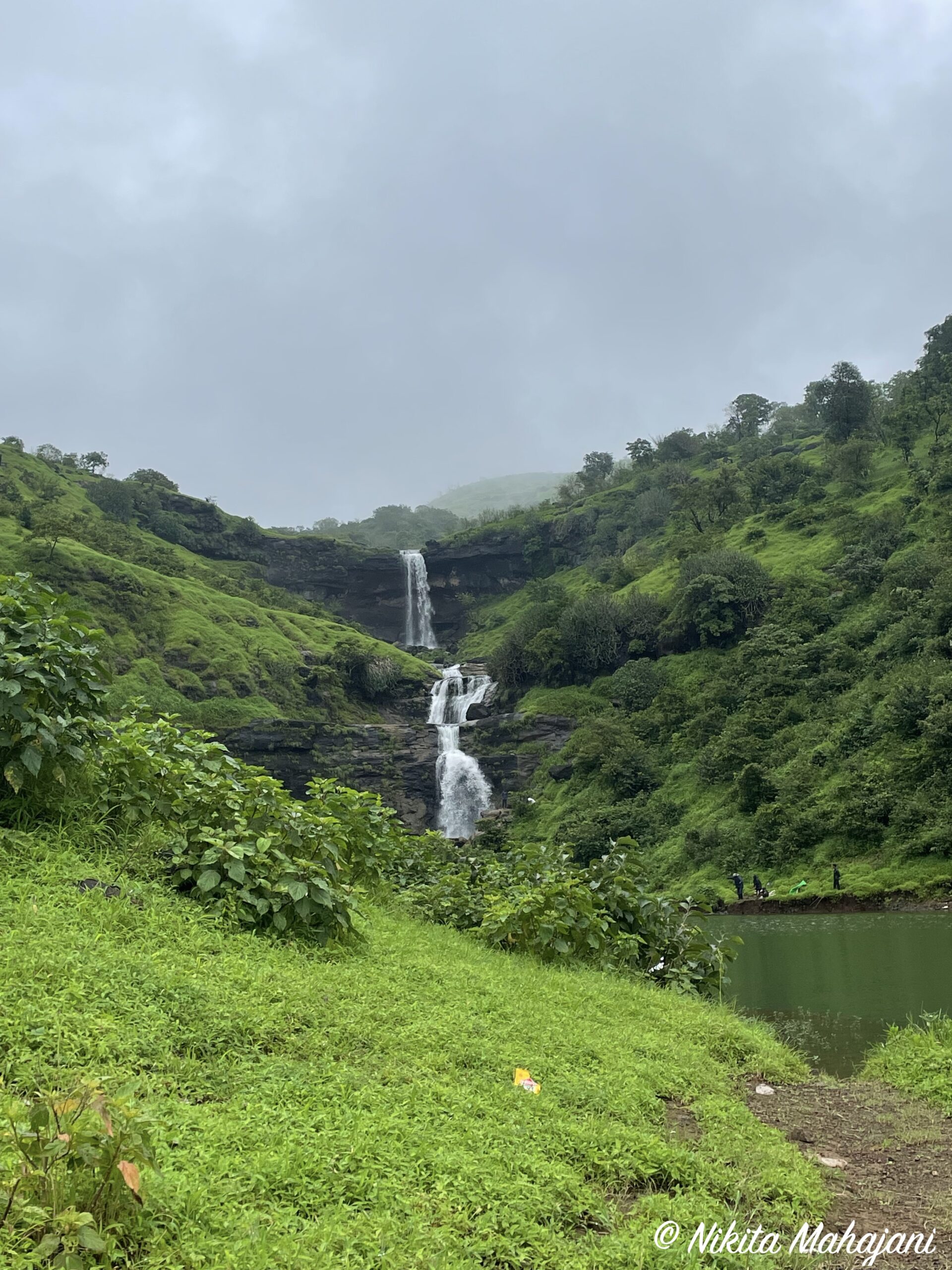
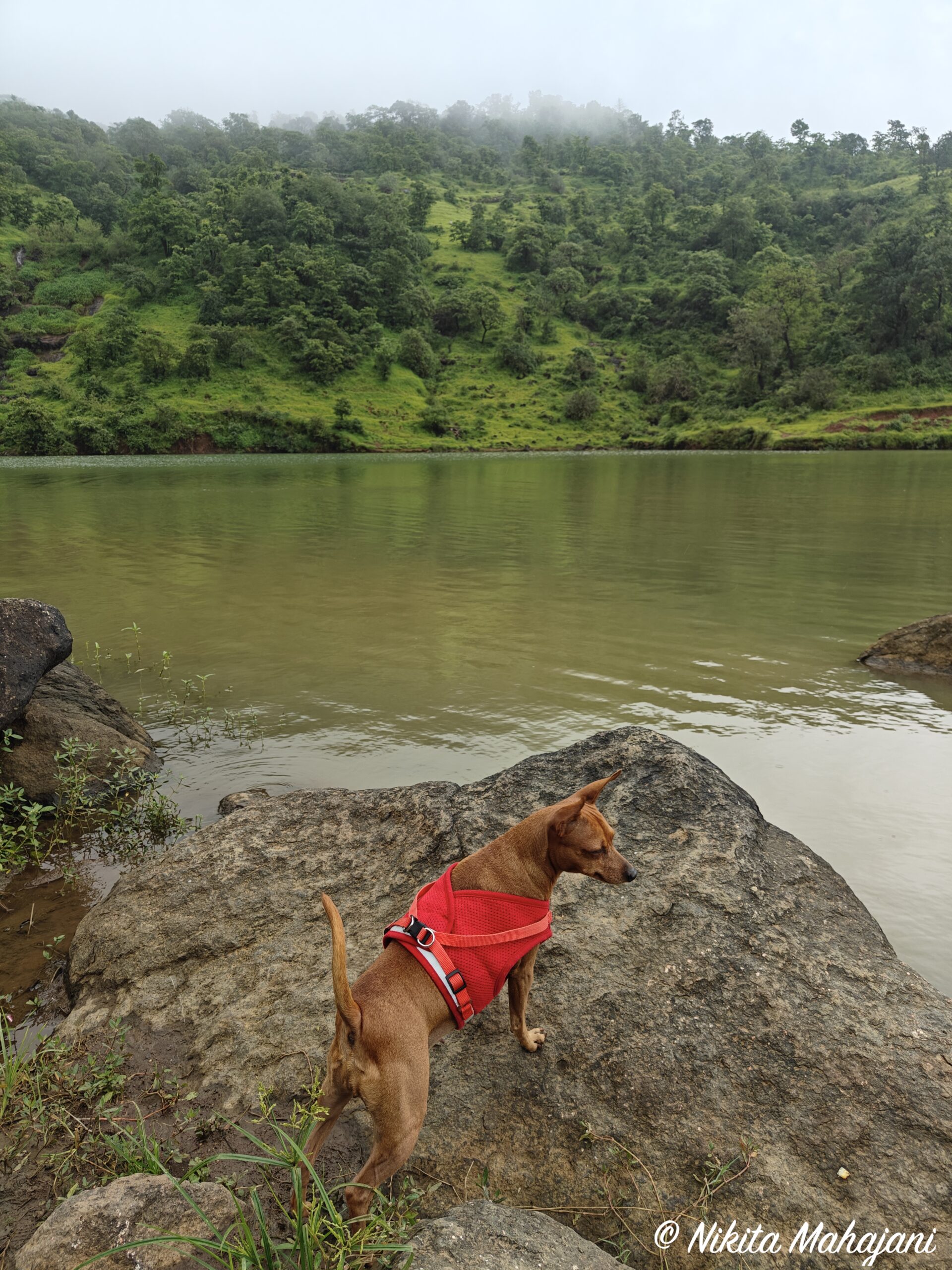
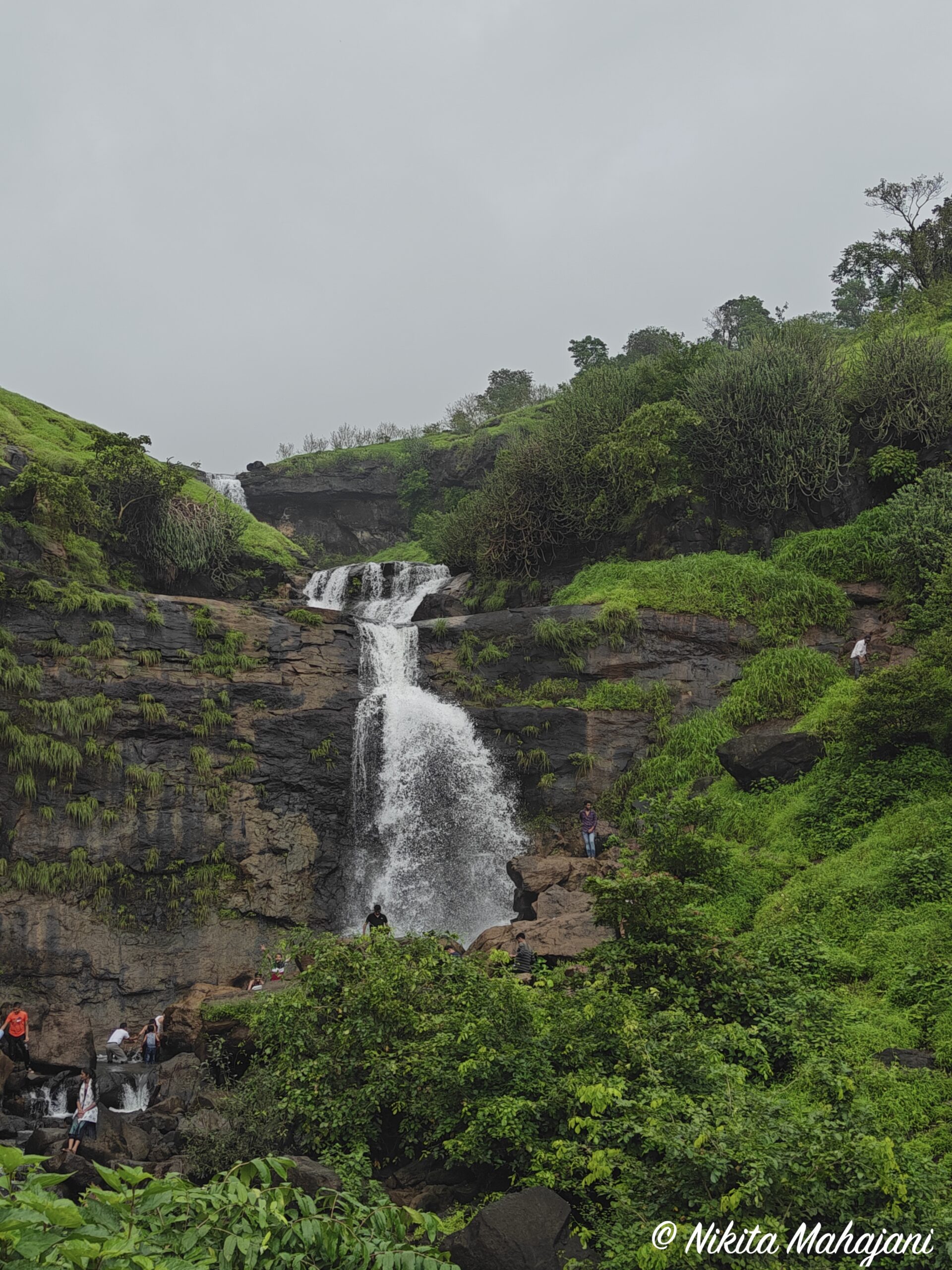
There are many other waterfalls in this area. Driving through Bhavli is a visual treat. We had some steaming hot tea and proceeded on the way back to the hotel. The day ended with a delicious desi dinner at Hotel Green Heritage.
Temples of Pune – Solapur road
With a packed week behind us, my husband and I decided on a peaceful, one-day road trip to explore the beautiful temples along the Pune-Solapur road, and of course, our loyal companion Sophie, our pet dog, was part of the plan. It was the perfect opportunity to enjoy a mix of history, spirituality, and some delicious food along the way. Here’s how our pet-friendly temple-hopping adventure unfolded!
Early Morning Start
The day began with an early morning start from our home in Pune, eager to beat the traffic and make the most of the cooler hours. Our first destination, Bhuleshwar Temple, was about 55 km away and typically a 1.5-hour drive. This Shiva temple is known for its stunning hilltop view and fascinating stone carvings. Plus, Sophie always loves the thrill of a scenic drive!
Brunch at Shree Leela World Cuisine Veg Restaurant
On our way, we made a quick stop at our go-to pet-friendly brunch spot, Shree Leela World Cuisine Veg Restaurant in Uruli Kanchan. This place has become a familiar stop whenever we’re on the Pune-Solapur route. The staff is always welcoming, and they allow pets on request, which makes it super convenient. Sophie, as usual, received her fair share of attention from fellow diners while we enjoyed a hearty vegetarian meal. Recharged and ready, we headed back on the road to Bhuleshwar.
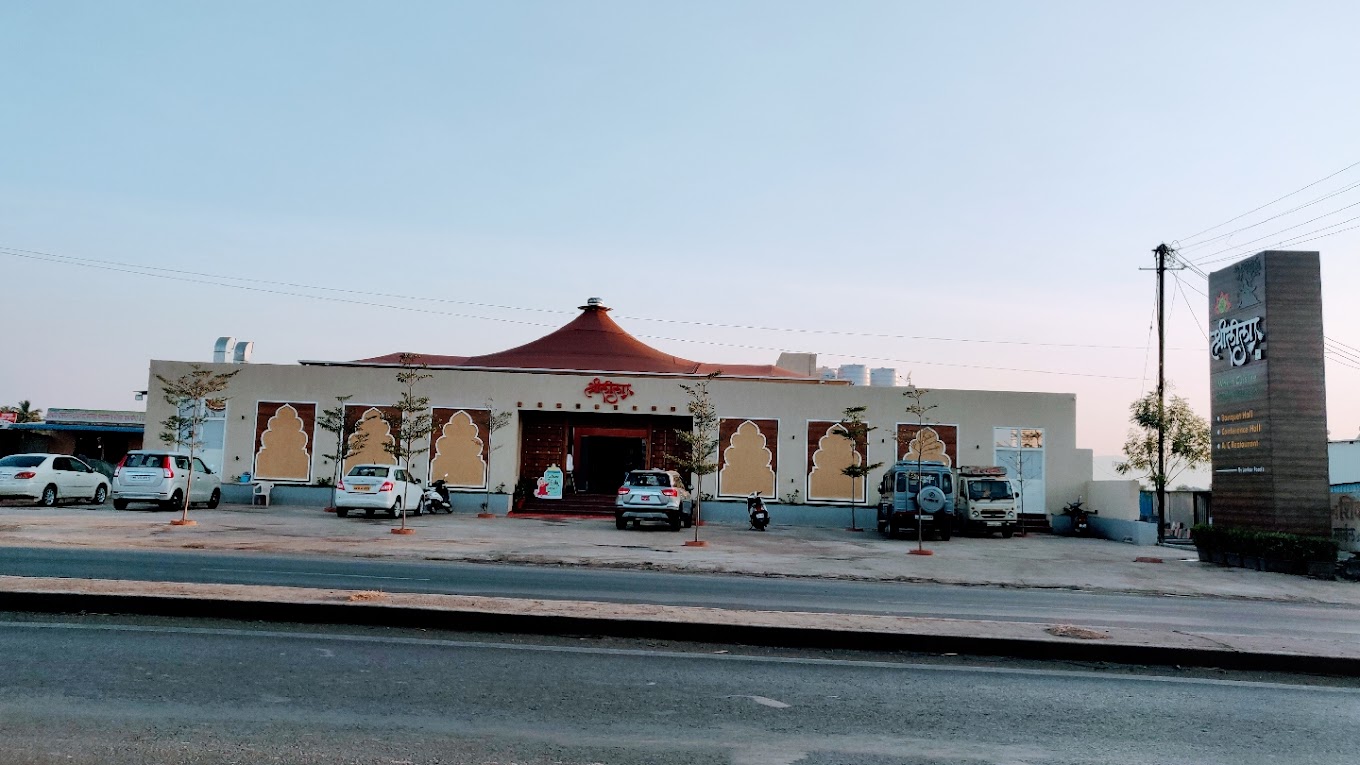
Bhuleshwar Temple, Yavat
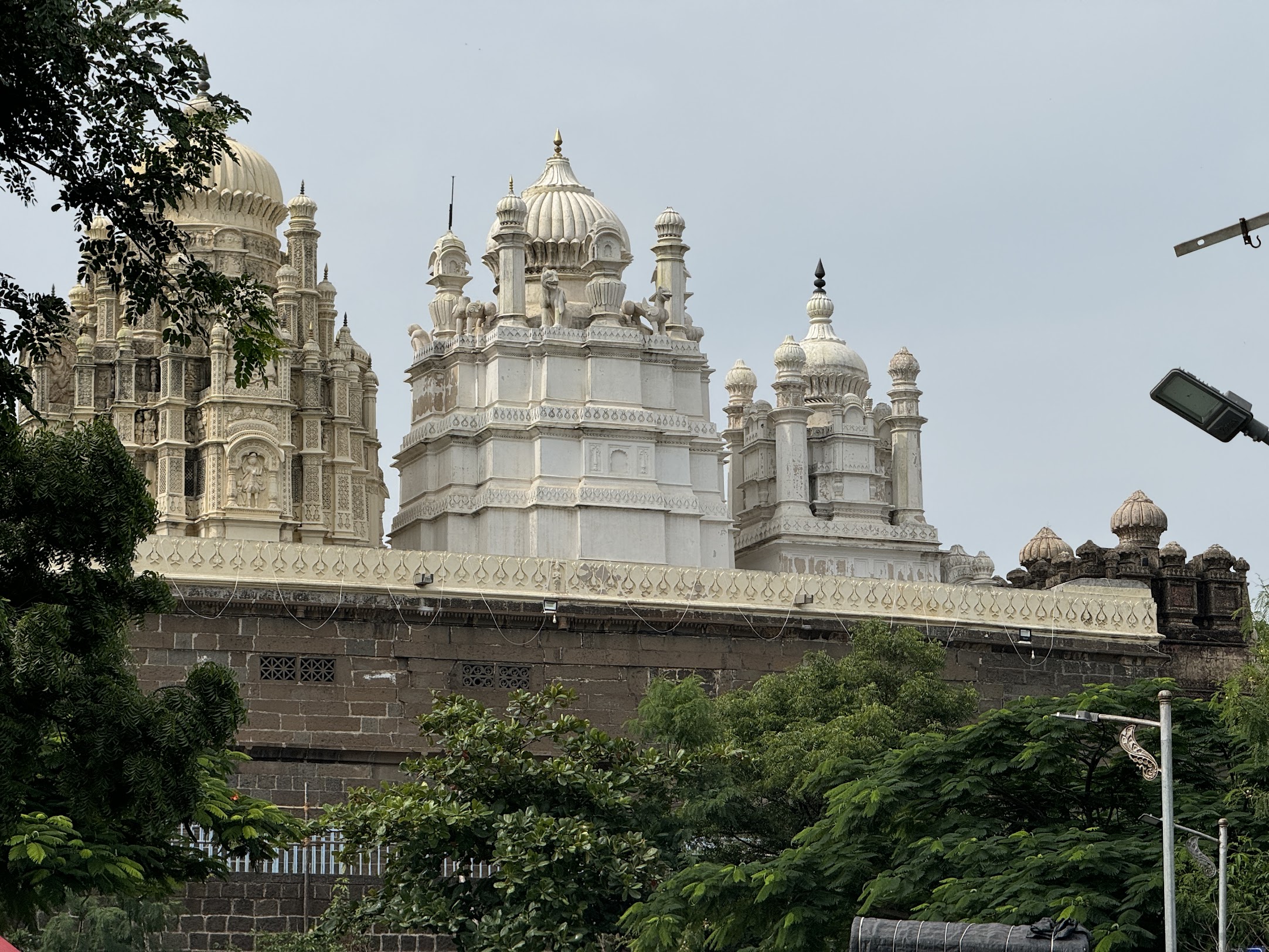
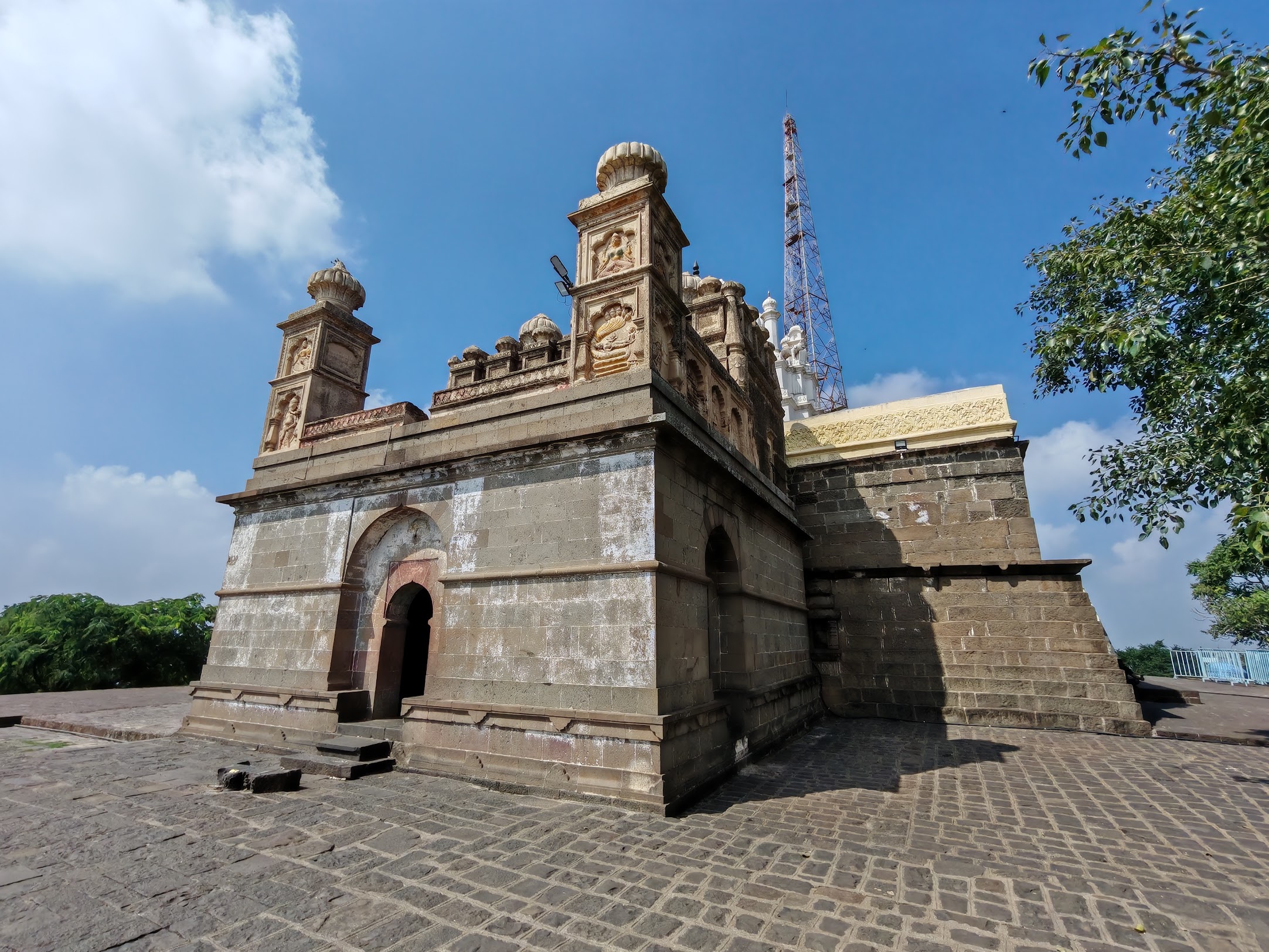
Our first temple stop, Bhuleshwar Temple, is not only a sacred site but also an architectural marvel. Dedicated to Lord Shiva, this ancient temple stands on a hilltop with beautiful panoramic views. We explored the carvings, admired the peace of the temple, and Sophie loved stretching her legs after the drive. With a leash and water handy, she seemed just as taken with the surroundings as we were.
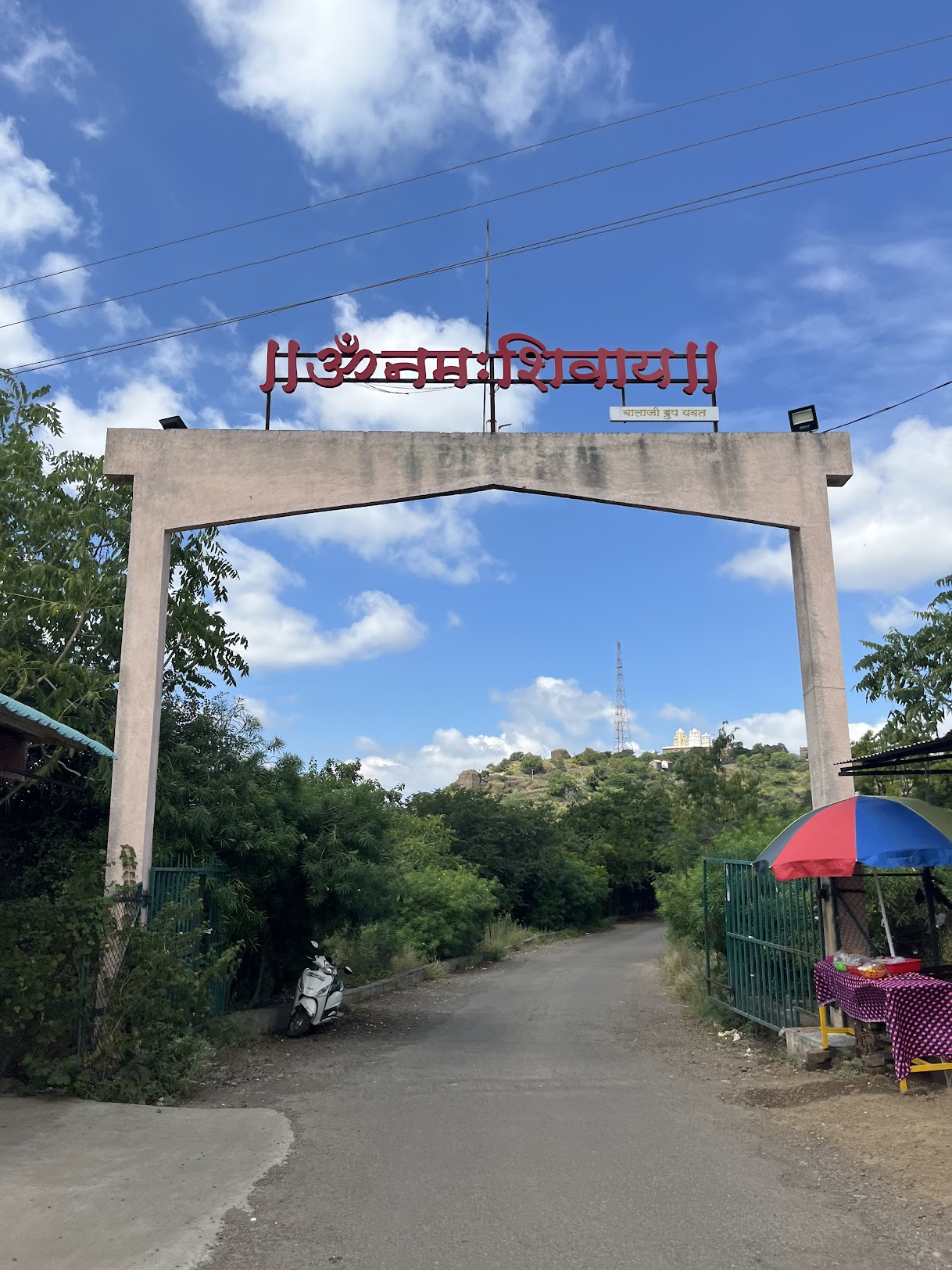
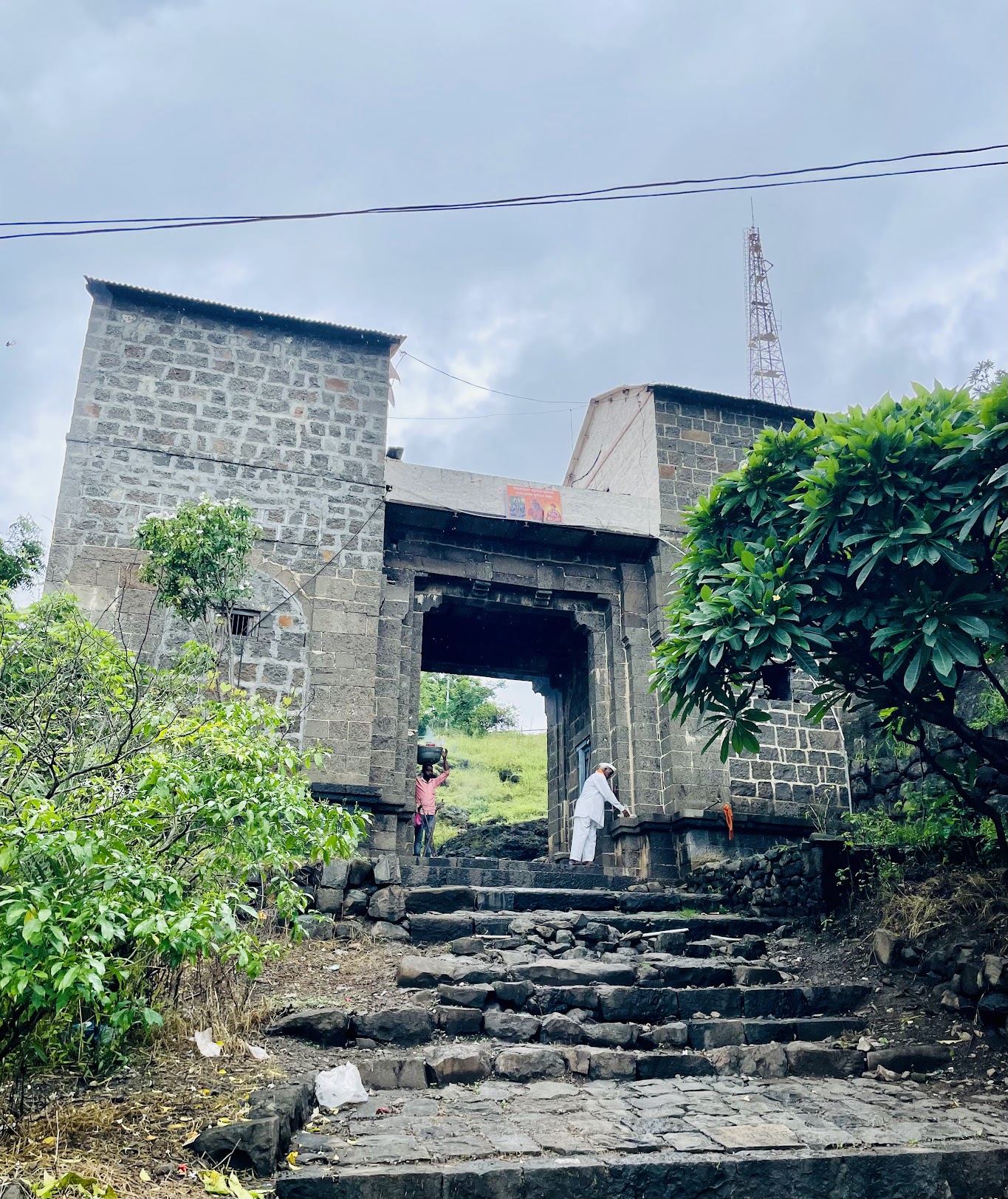
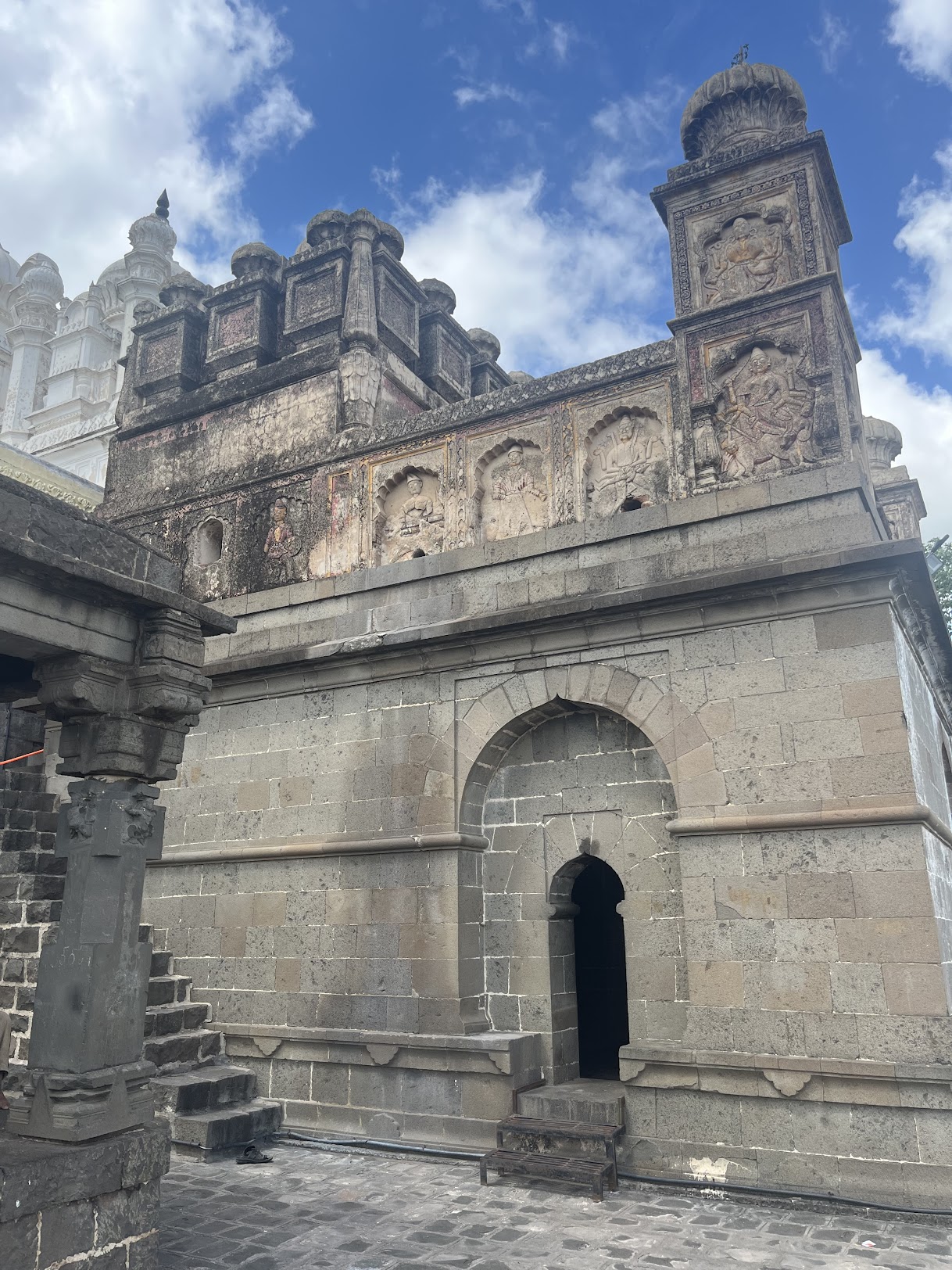
Exploring the Hidden Gems: Loni Bhapkar and Jawlarjun
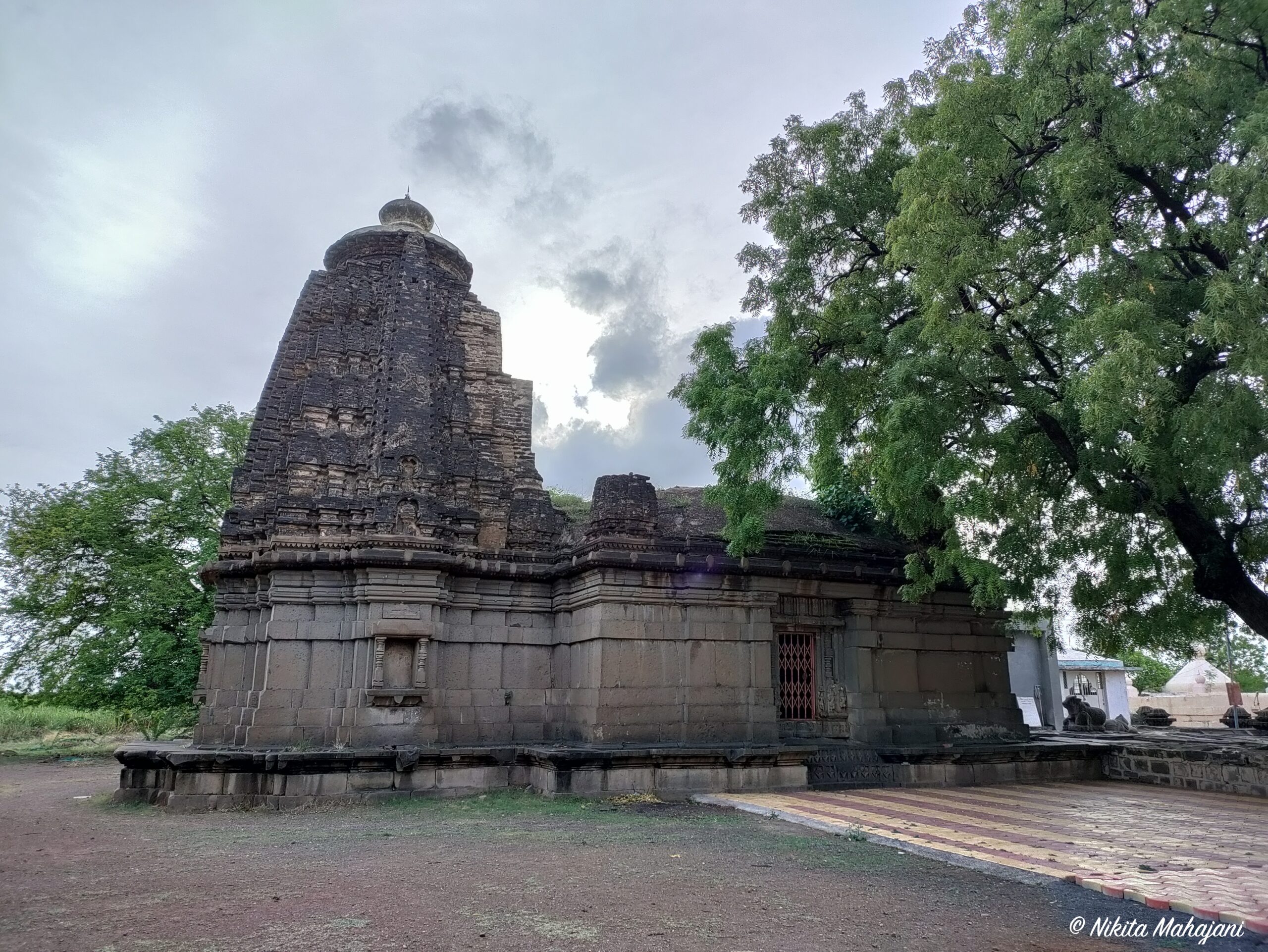
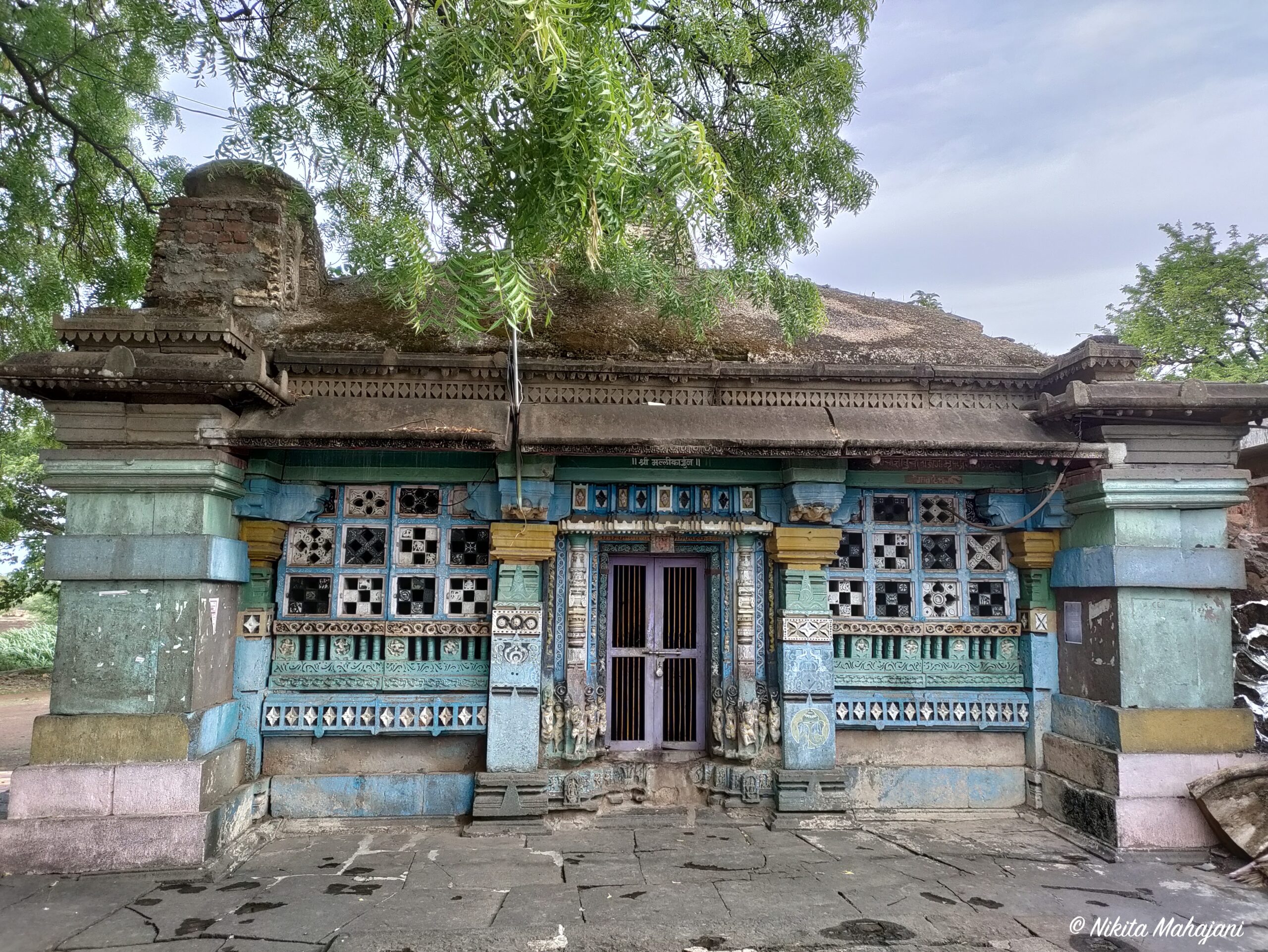
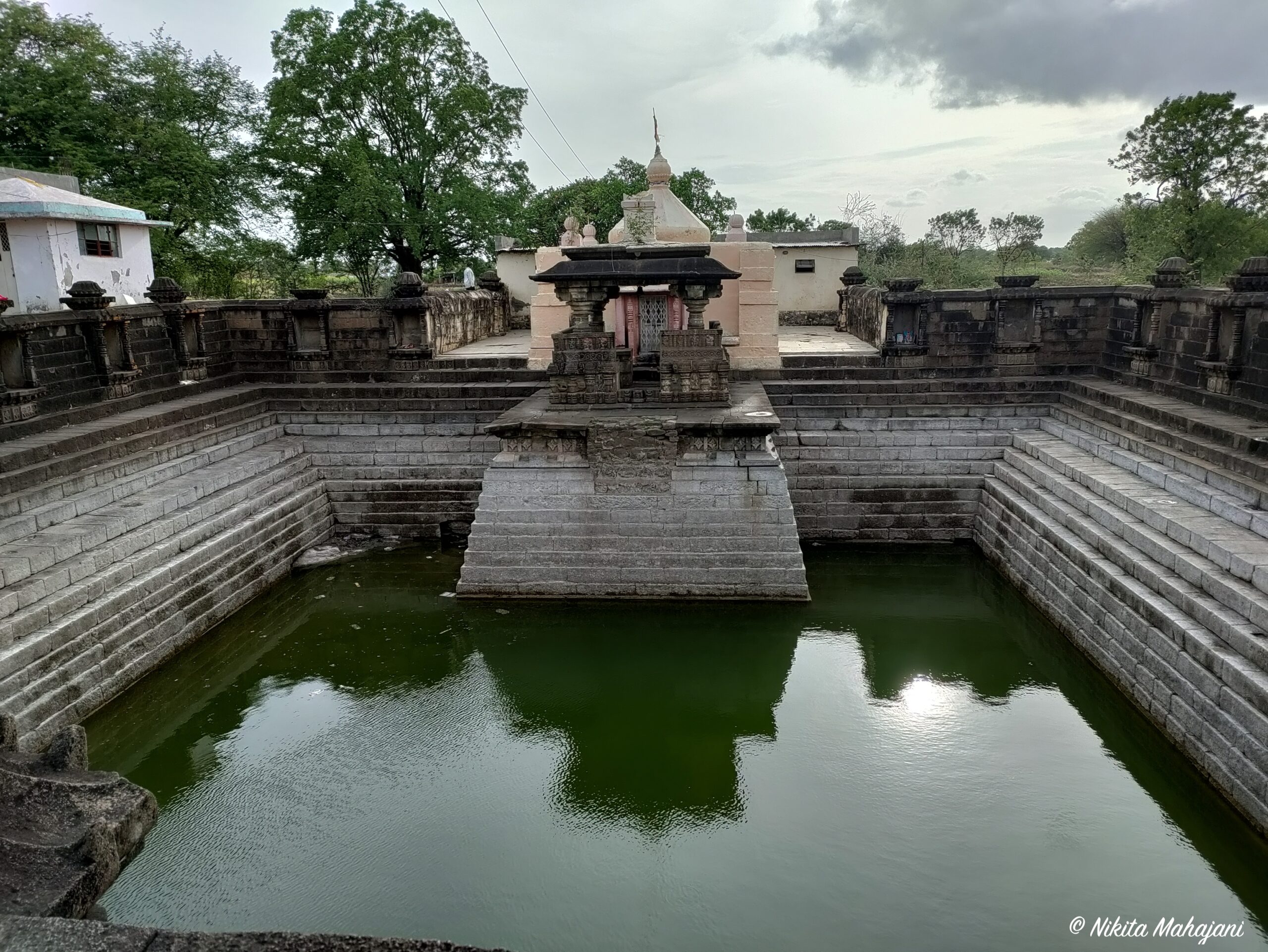
Our next stop was the Shri Mallikarjun Temple and stepwell in Loni Bhapkar. This temple is one of those lesser-known gems, offering a blend of serenity and history. The adjacent stepwell adds a unique charm to the place. Sophie found this area particularly fun to explore, and it’s always rewarding to discover new places that welcome pets.
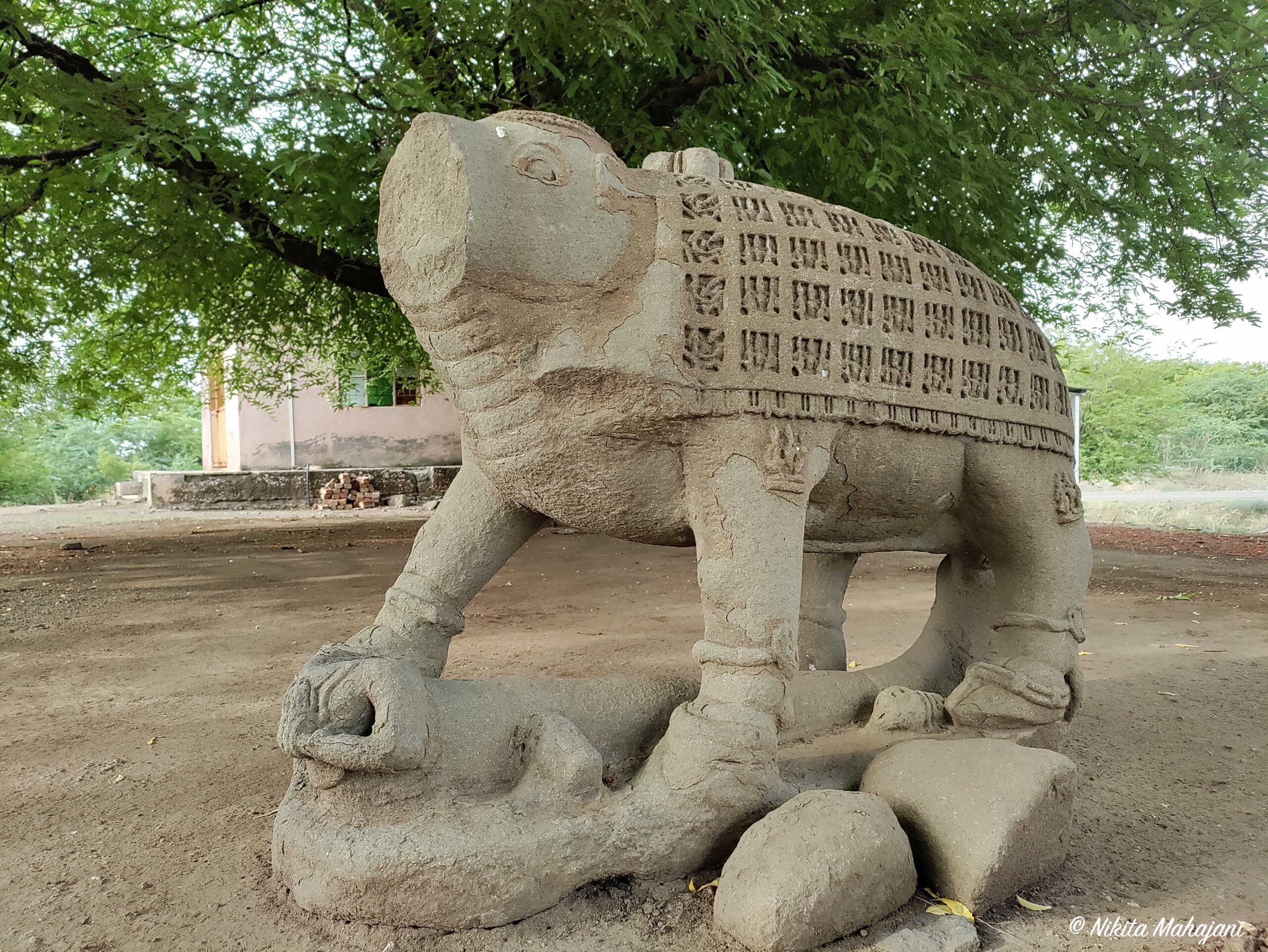
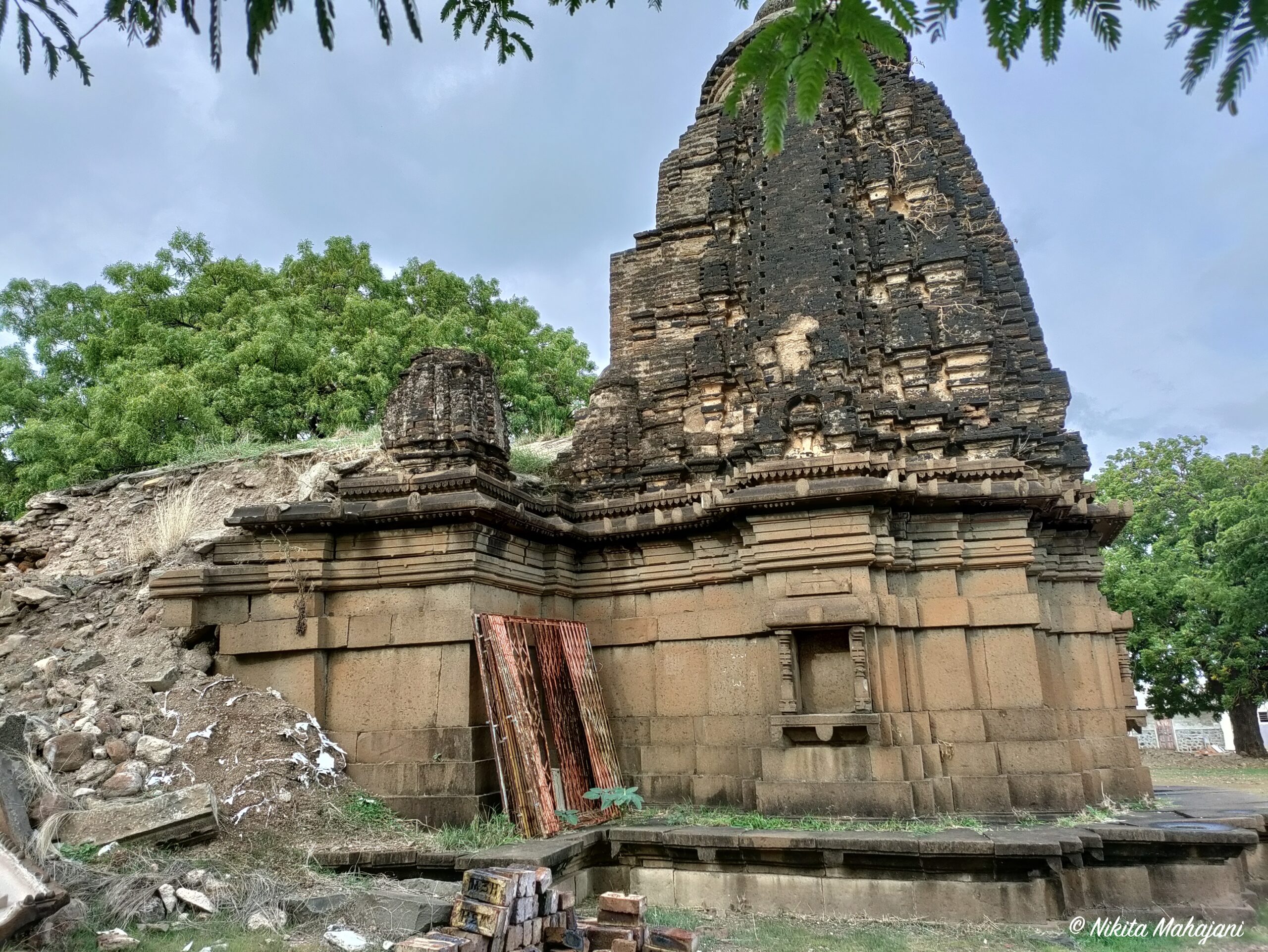
From Loni Bhapkar, we headed to Shri Pandeshwar Devasthan in Jawlarjun, an ancient shrine that’s steeped in history. The quietness and beauty of the temple offered a perfect spot to rest and recharge. For us, it was a peaceful interlude amidst our day, while Sophie had a nice time sniffing around the open areas.
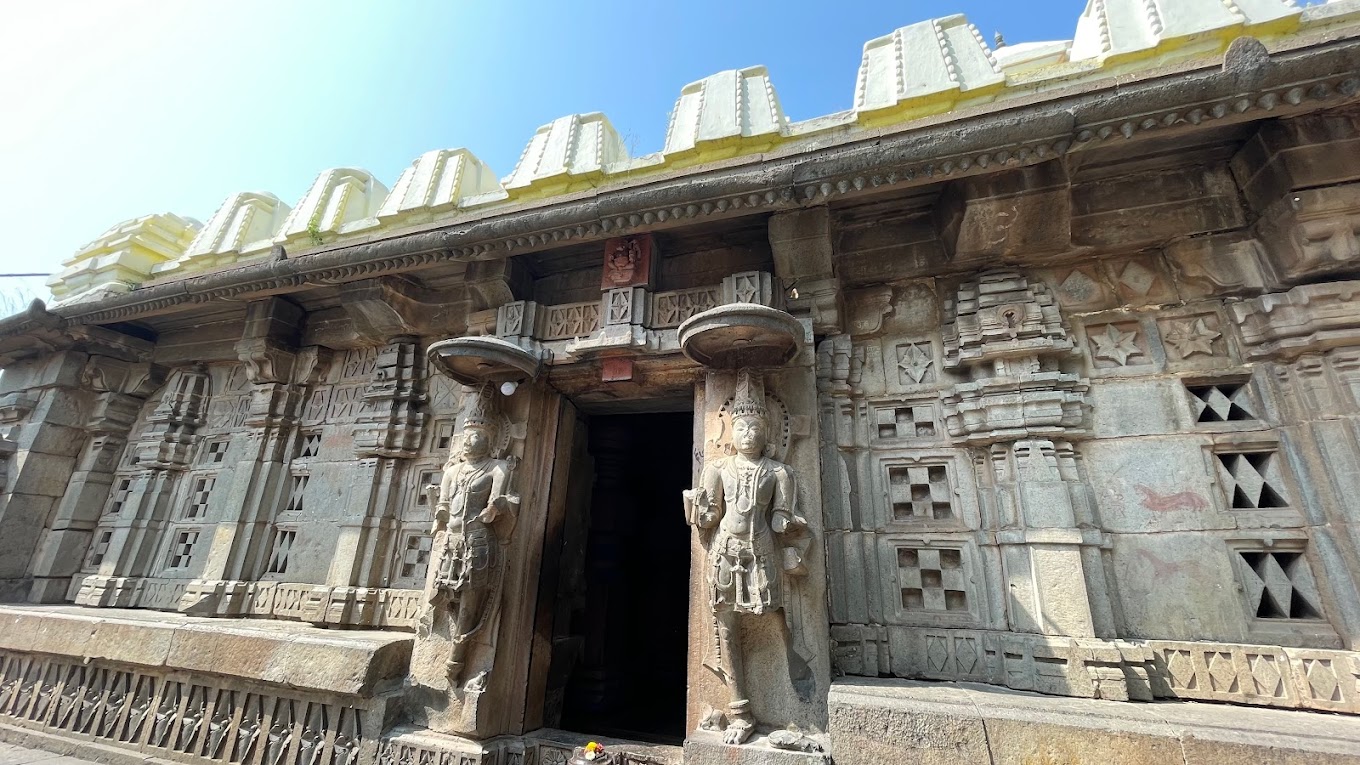
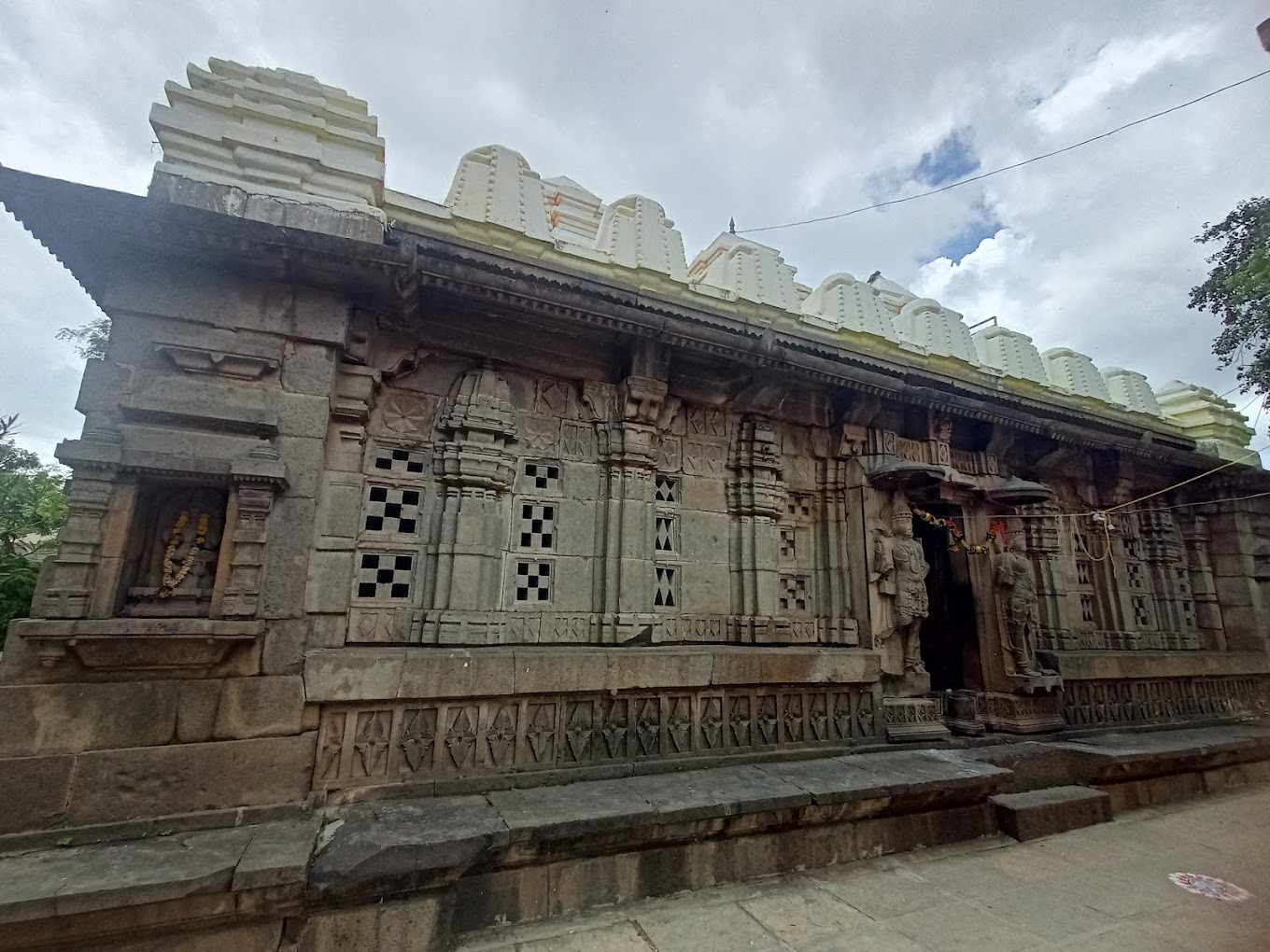
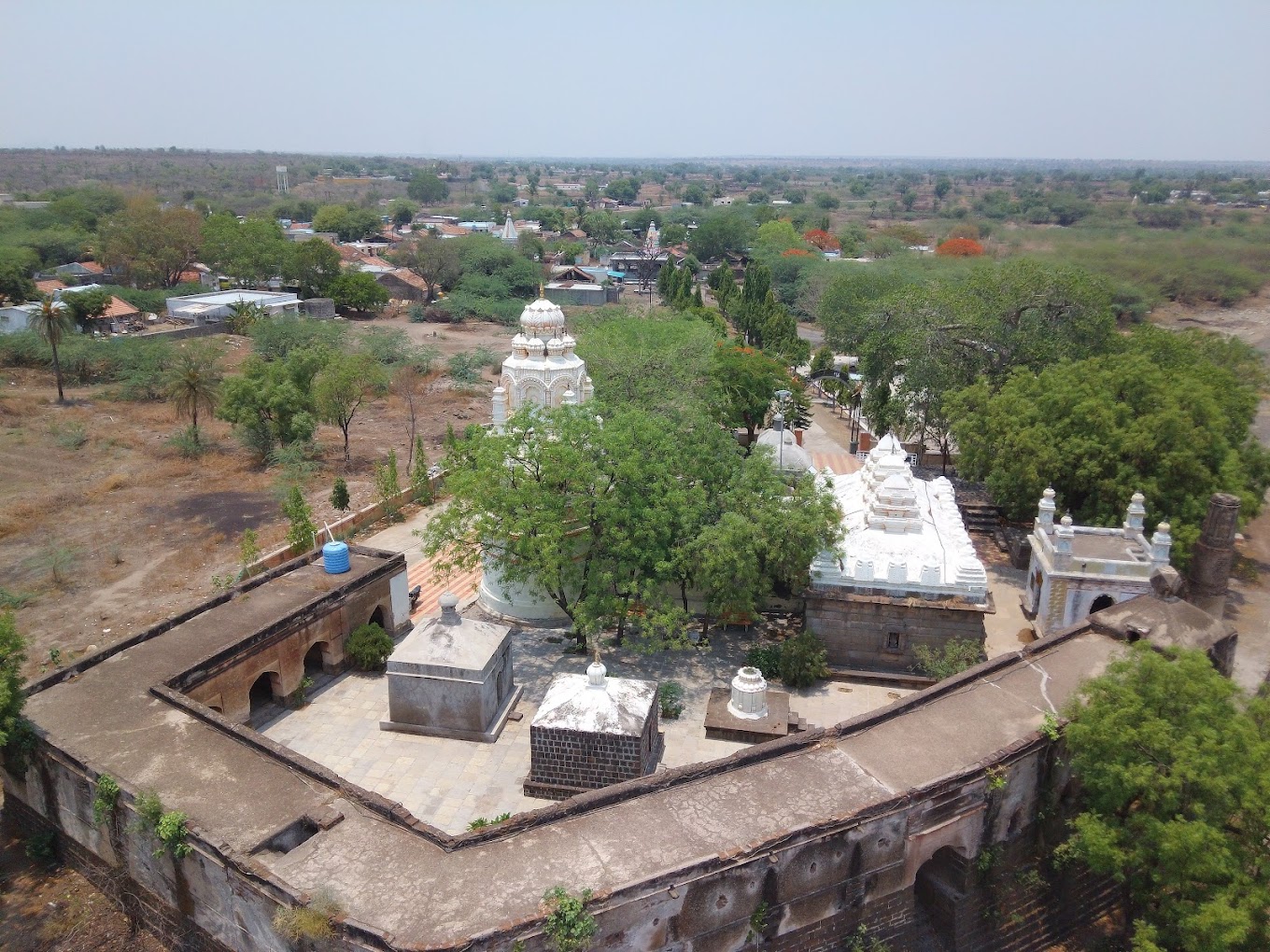
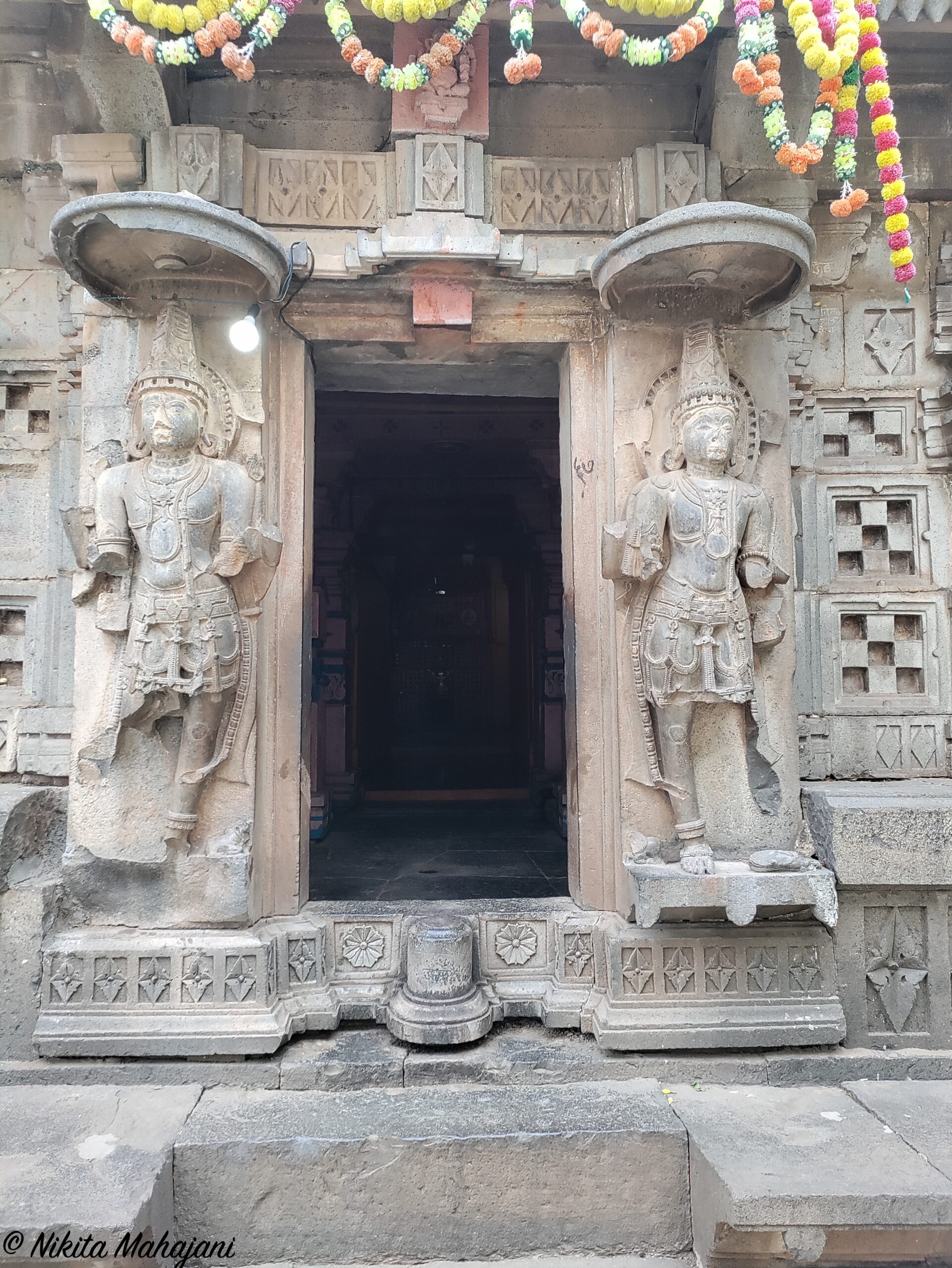
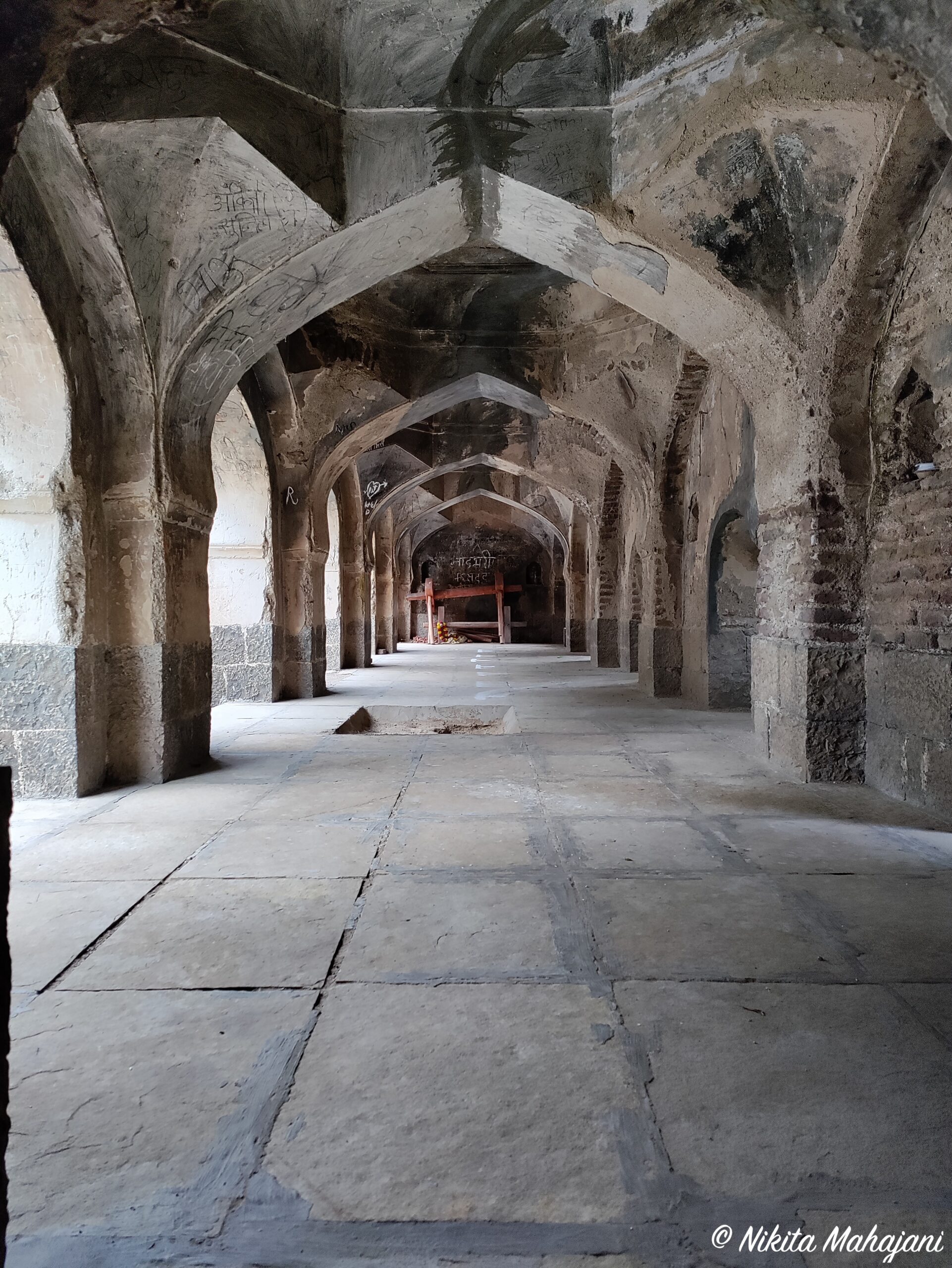
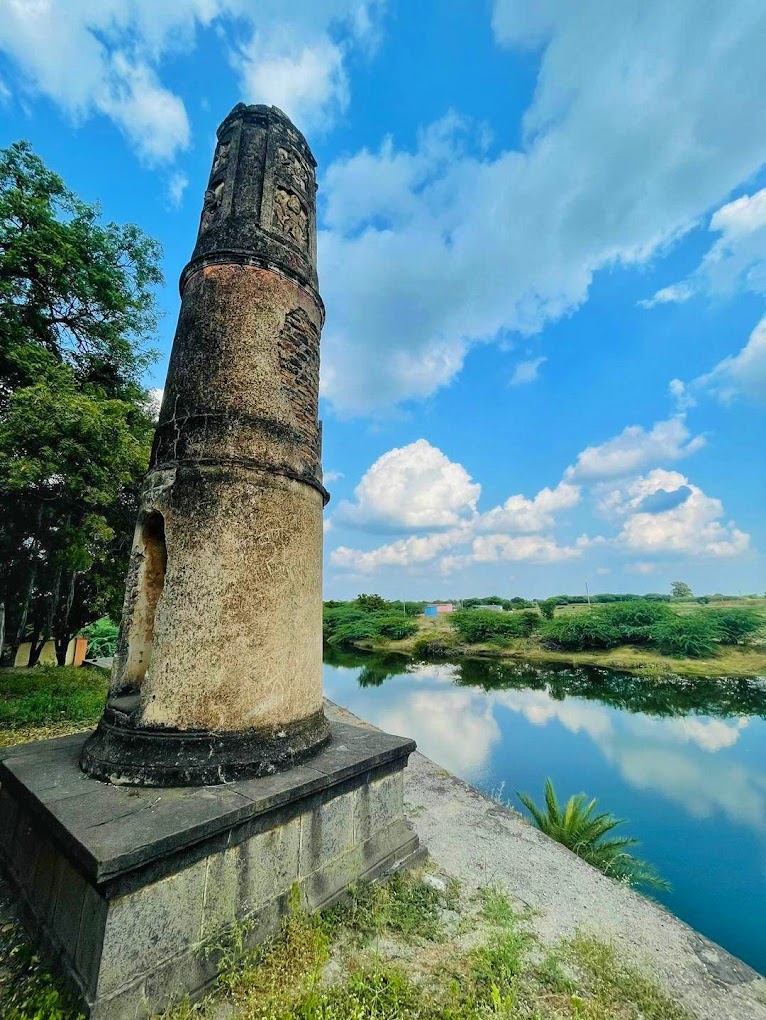
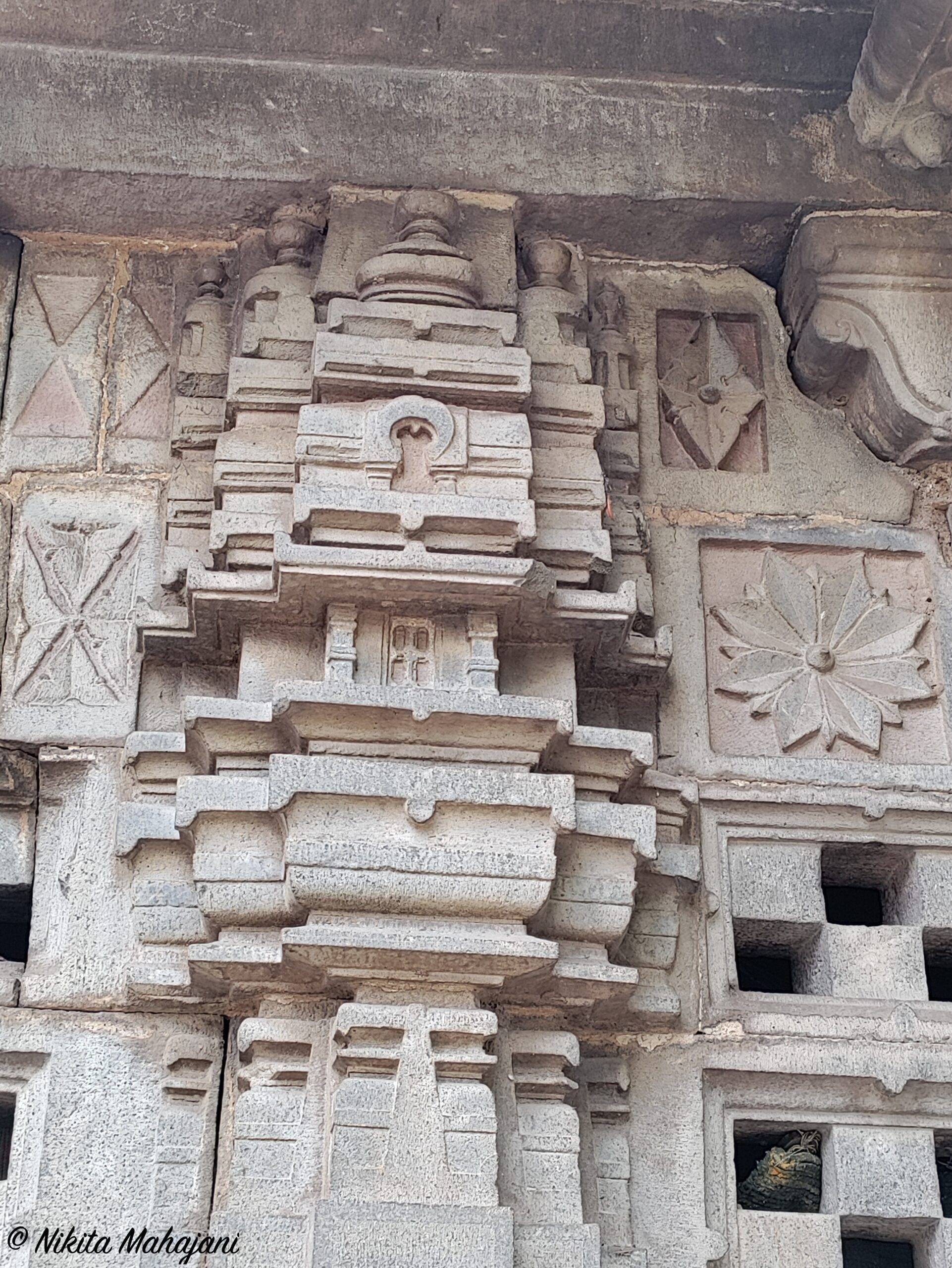
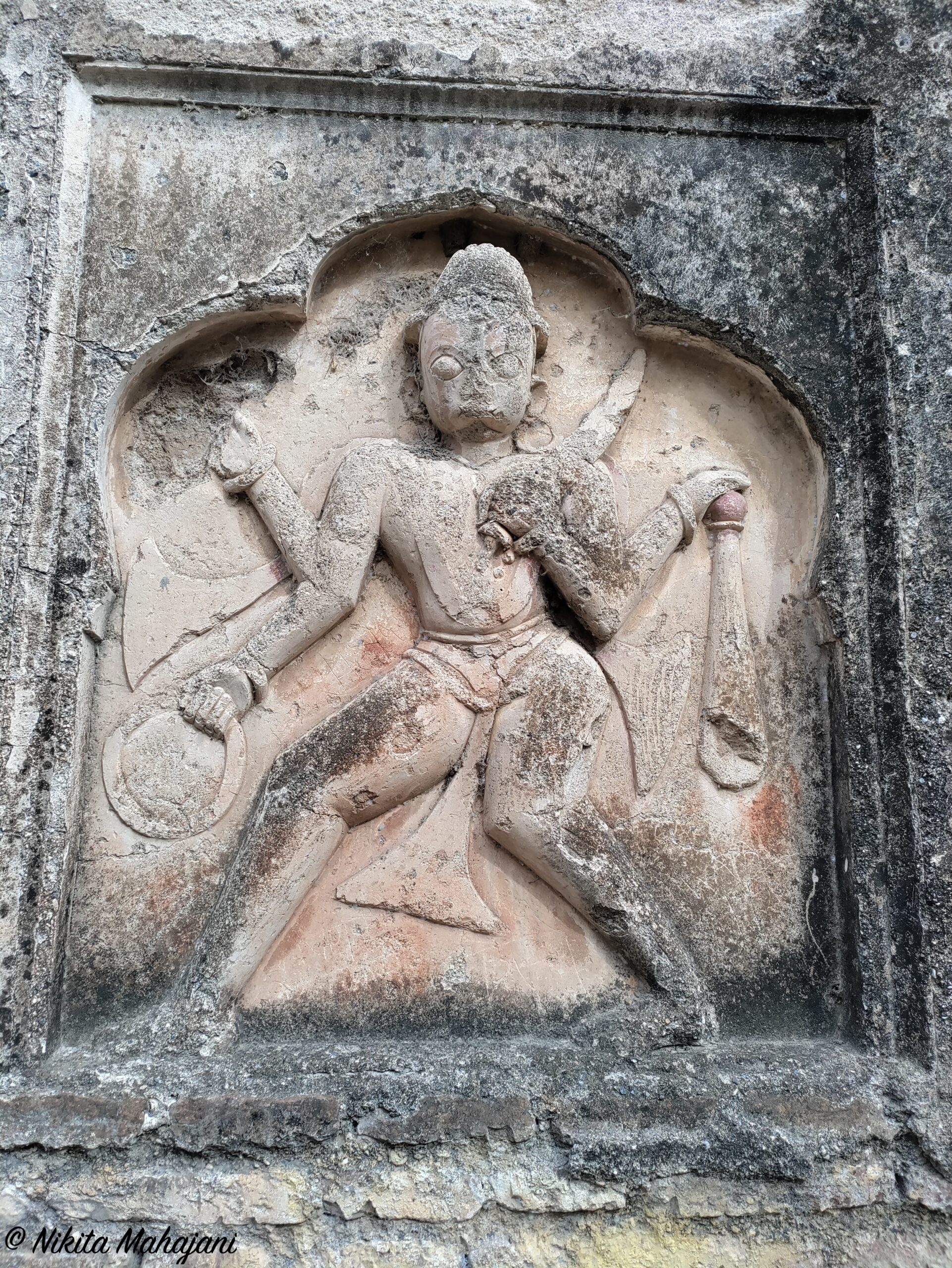
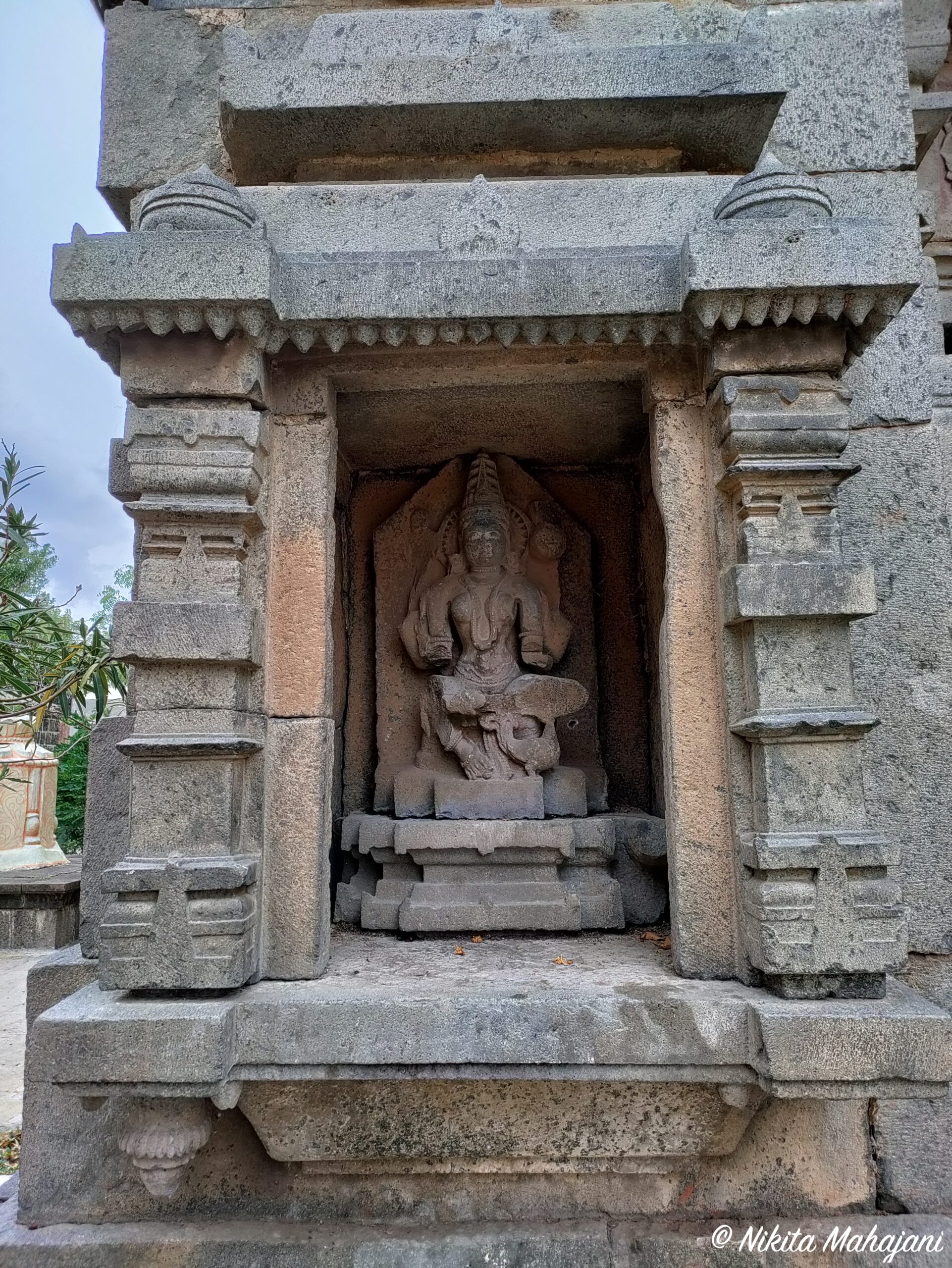
Final Temple Stop: Shri Shankareshwar Mandir in Sakurde
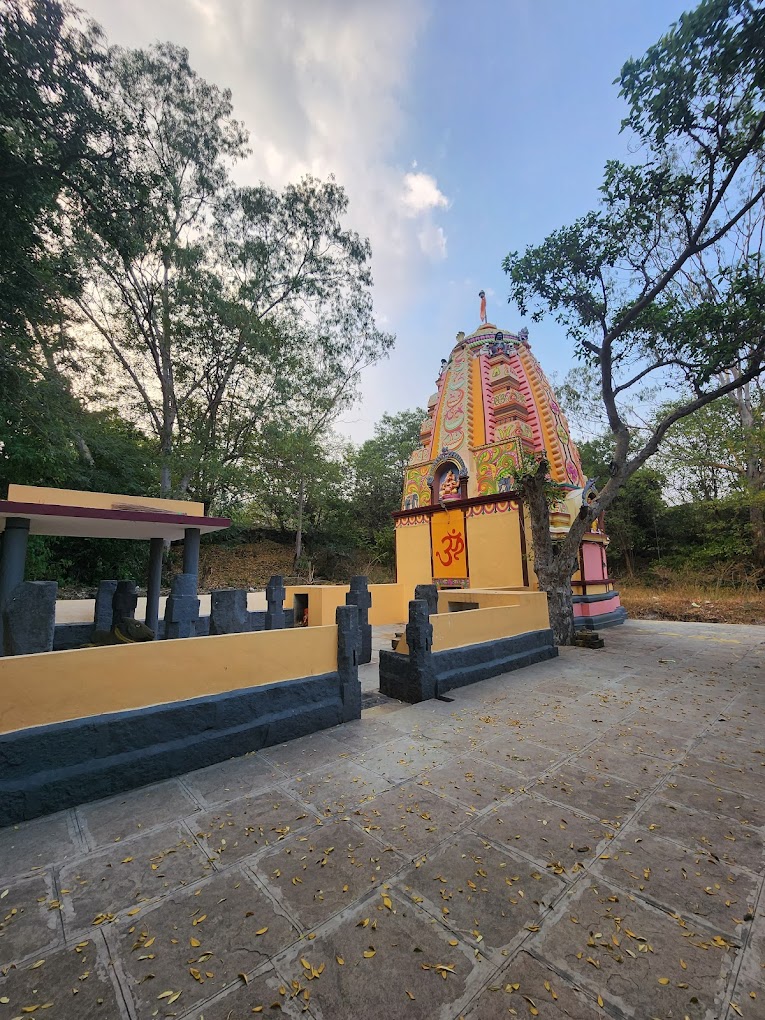
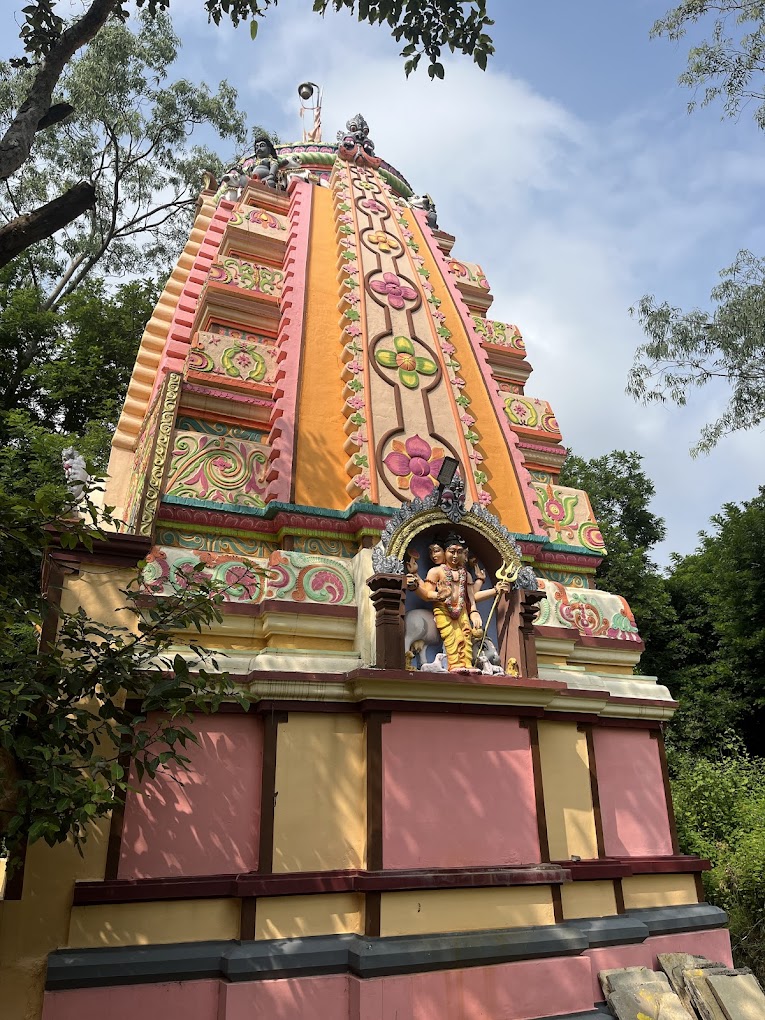
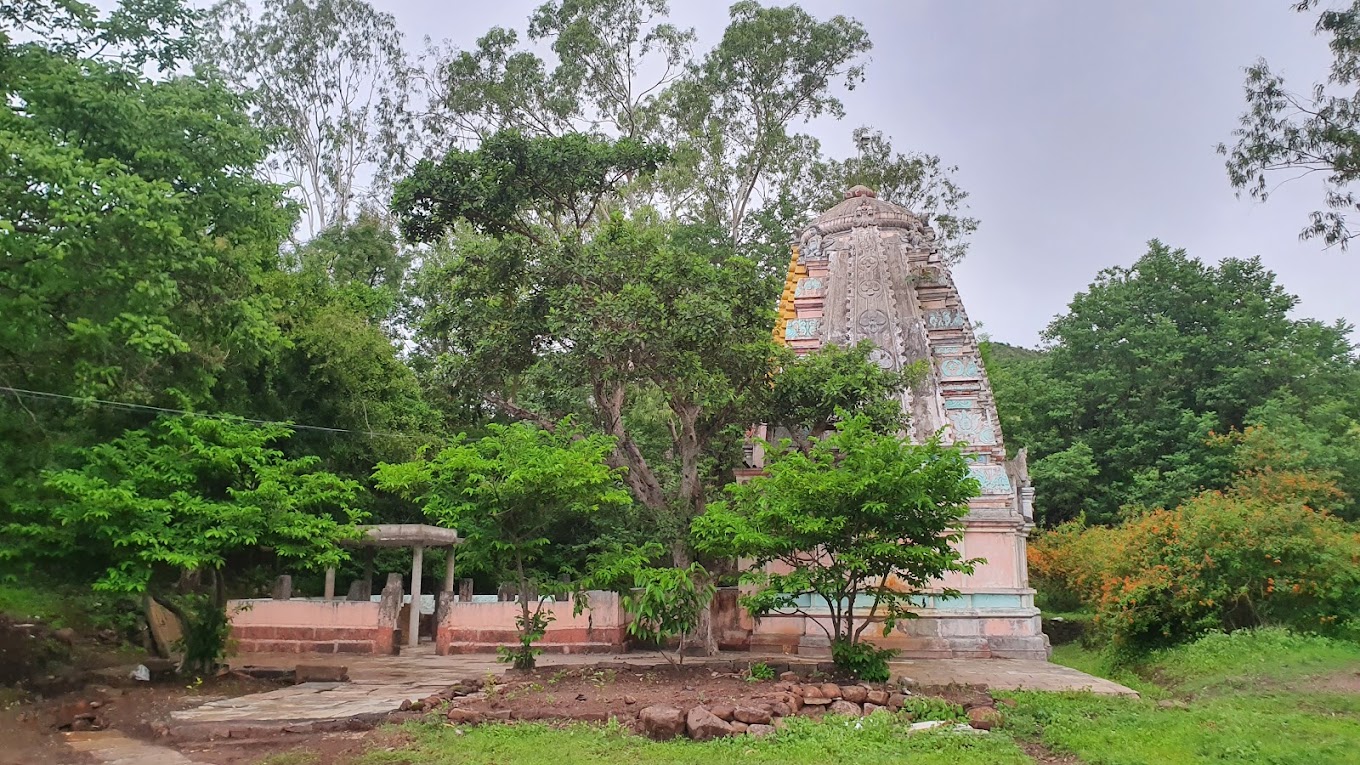
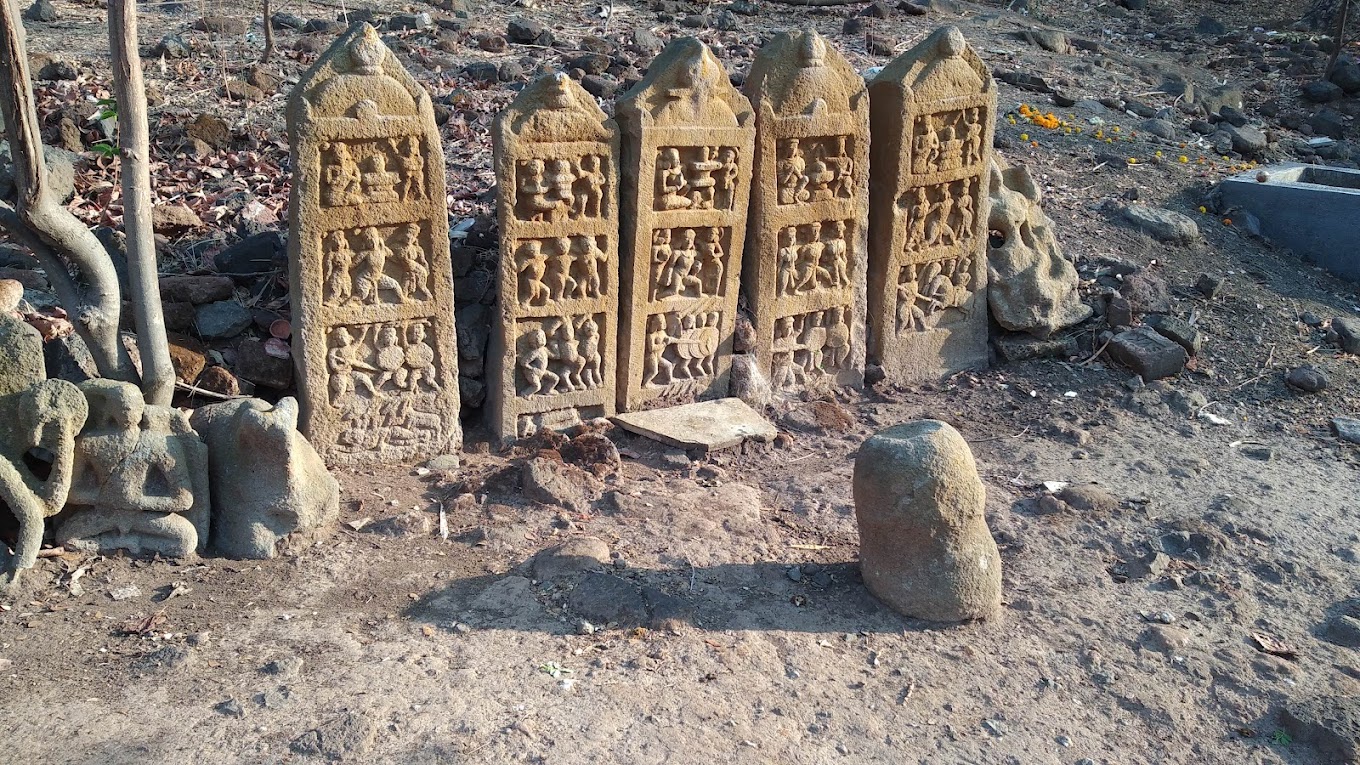
Our last temple for the day was Shri Shankareshwar Mandir in Sakurde. The drive to this small, tranquil village temple was quite scenic, and the temple itself was a peaceful space to wrap up our tour. We spent some quiet moments here, taking in the rural landscape, before starting our journey back to Pune.
Evening Hi-Tea at Shivneri Misal
As we began our journey home, we couldn’t resist stopping at Shivneri Misal for a quick hi-tea break. This spot is known for its delicious Misal—a spicy, tangy Maharashtrian snack that’s perfect after a day on the road. While we sipped chai and enjoyed our snacks, Sophie took a well-deserved rest by our side, clearly as content with the day as we were.
This one-day road trip along the Pune-Solapur road turned out to be an ideal mix of culture, nature, and fantastic food, with each stop offering something unique. For pet parents like us, it’s always a pleasure to find pet-friendly locations along the way that make Sophie feel as much a part of the adventure as we are. If you’re looking for a pet-friendly day trip from Pune that offers both relaxation and discovery, I can’t recommend this route enough.
Where did we eat ?
Shree Leela World veg cuisine
Shivneri Misal
Temples of Saswad
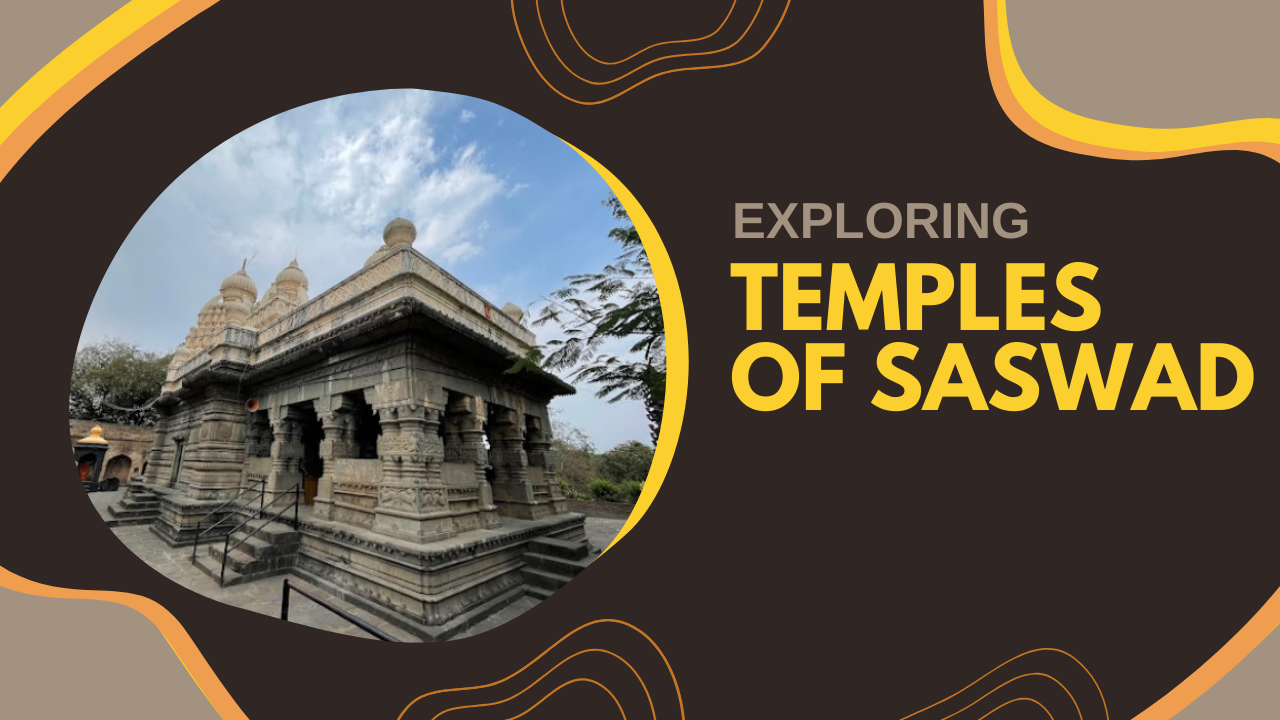
Just a short drive from Pune, Saswad offers a serene escape into history, spirituality, and architectural beauty. Accompanied by my mother and our loyal pet dog, Sophie, we embarked on a one-day road trip to this quaint town, located just 30 kilometers from home. In just about an hour, we found ourselves immersed in a world of centuries-old temples, each narrating tales of devotion and heritage.
Changavteshwar Temple: A Divine Start
Our journey began at Changavteshwar Temple,
set against the backdrop of gently rolling hills. This temple,
dedicated to Lord Shiva, is a beautiful blend of history and
spirituality. Its architecture, with intricate carvings and a peaceful
ambiance, invited us to pause and soak in the tranquility. Even Sophie
seemed captivated, walking around as if exploring the stories etched in
the temple walls.
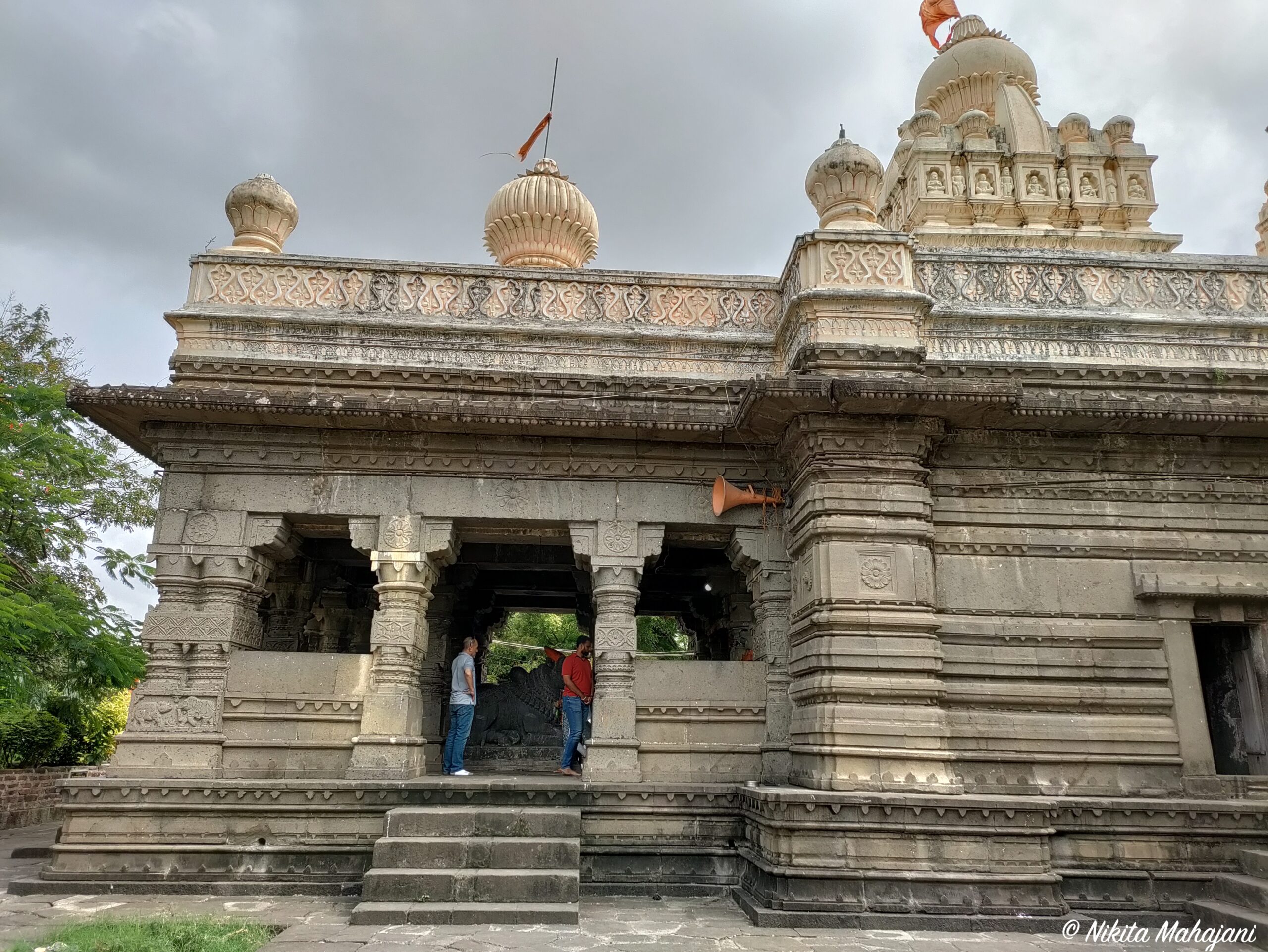
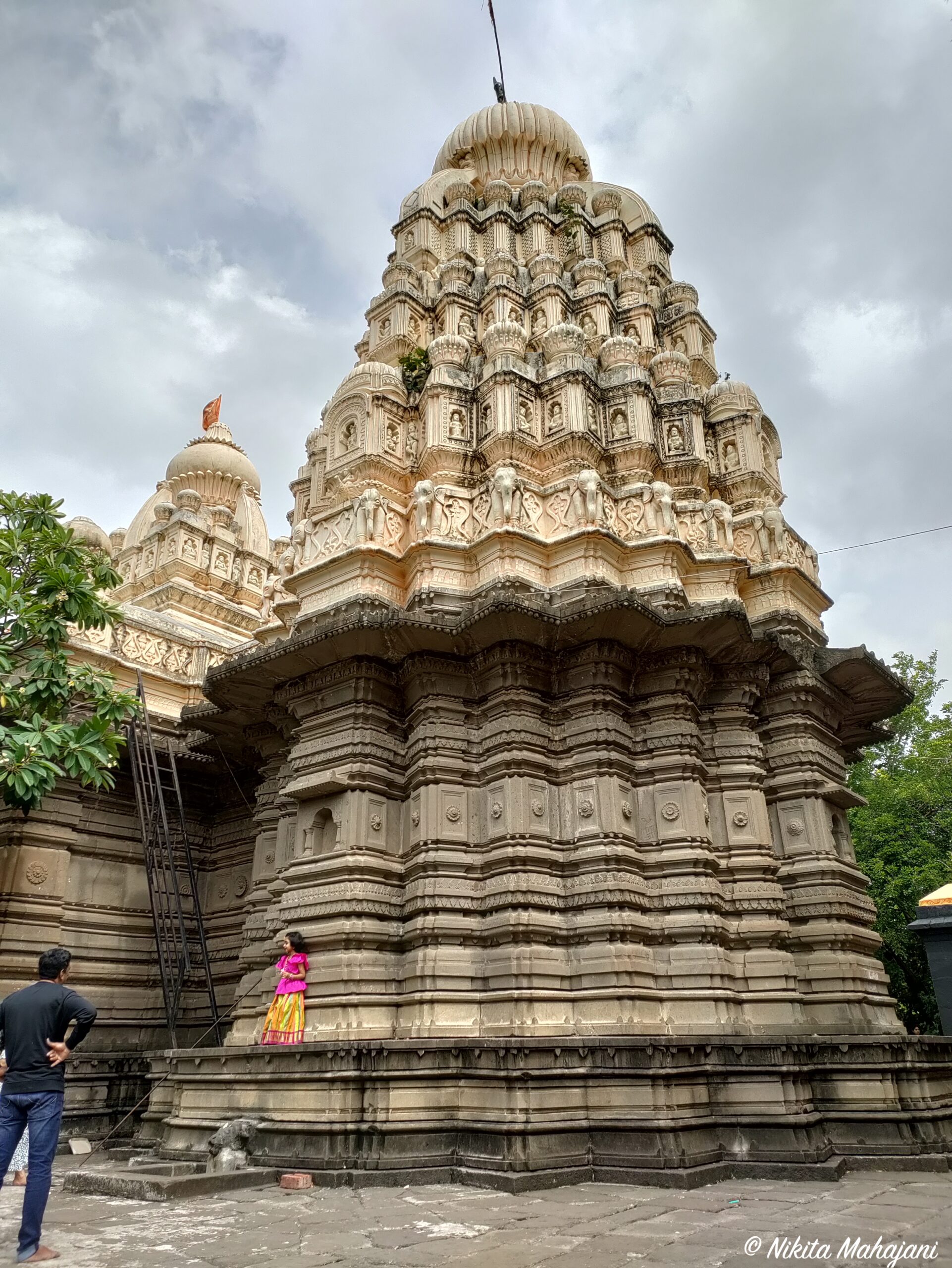
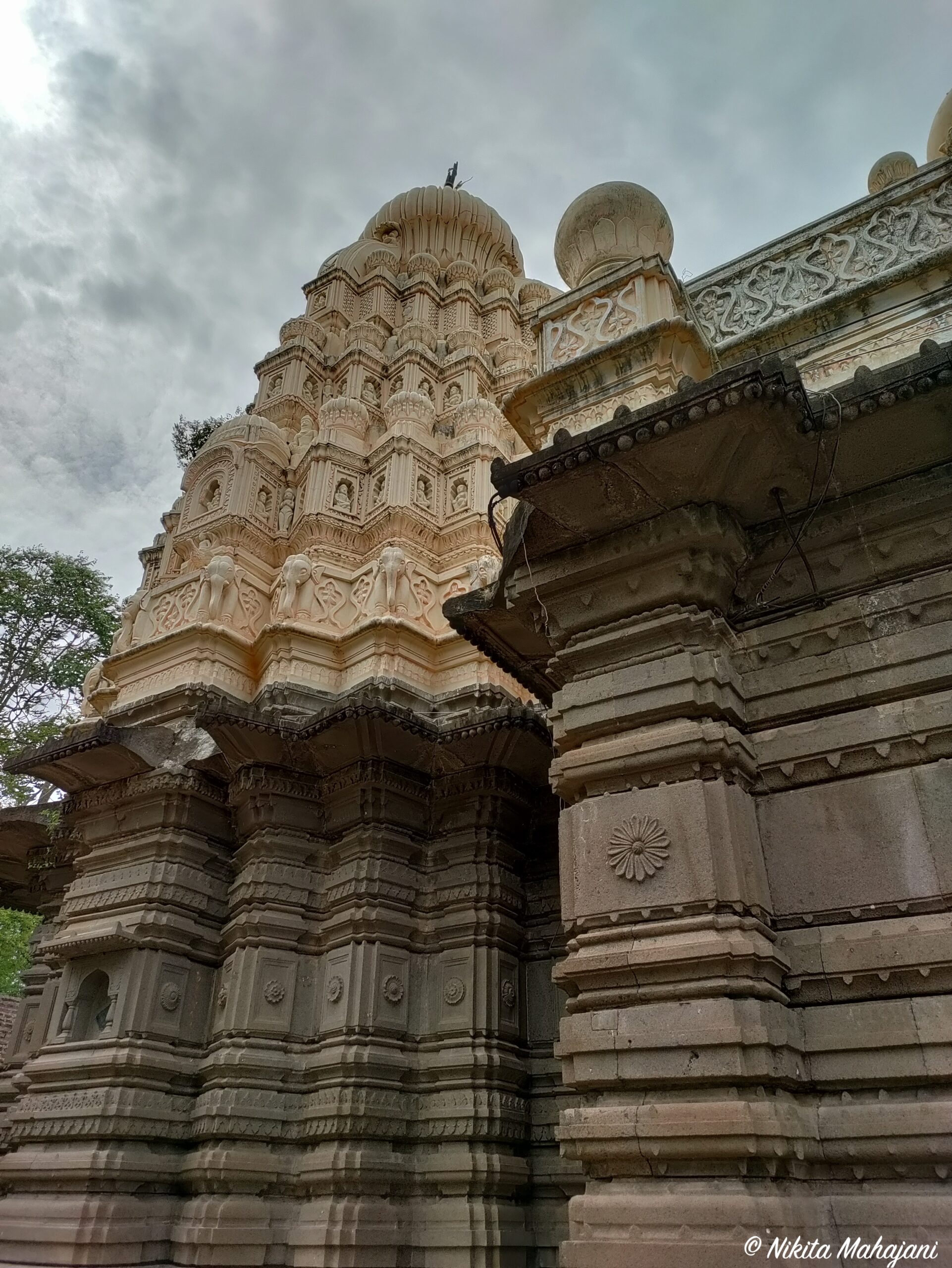
Sangameshwar Temple: Where Rivers Meet
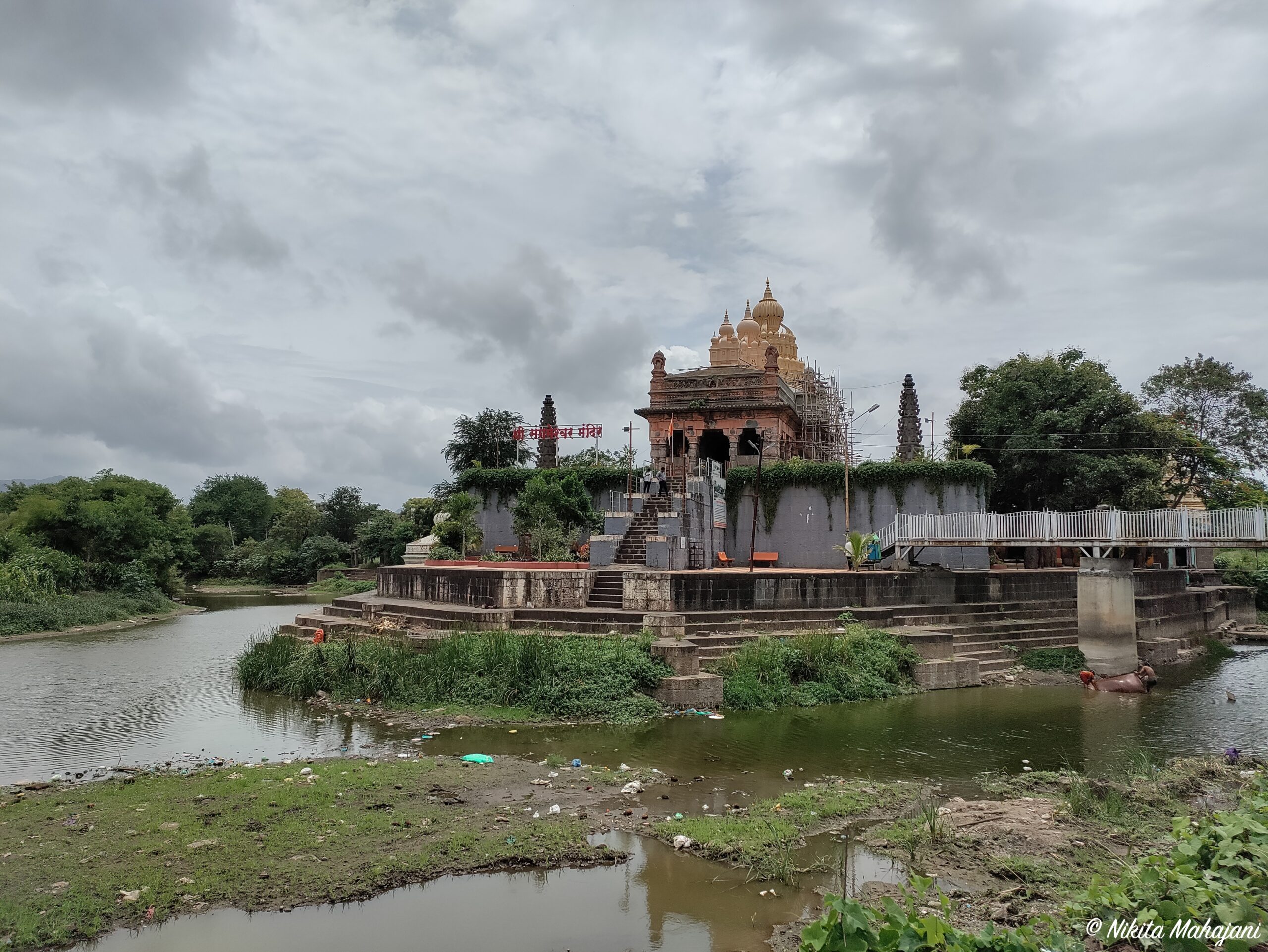
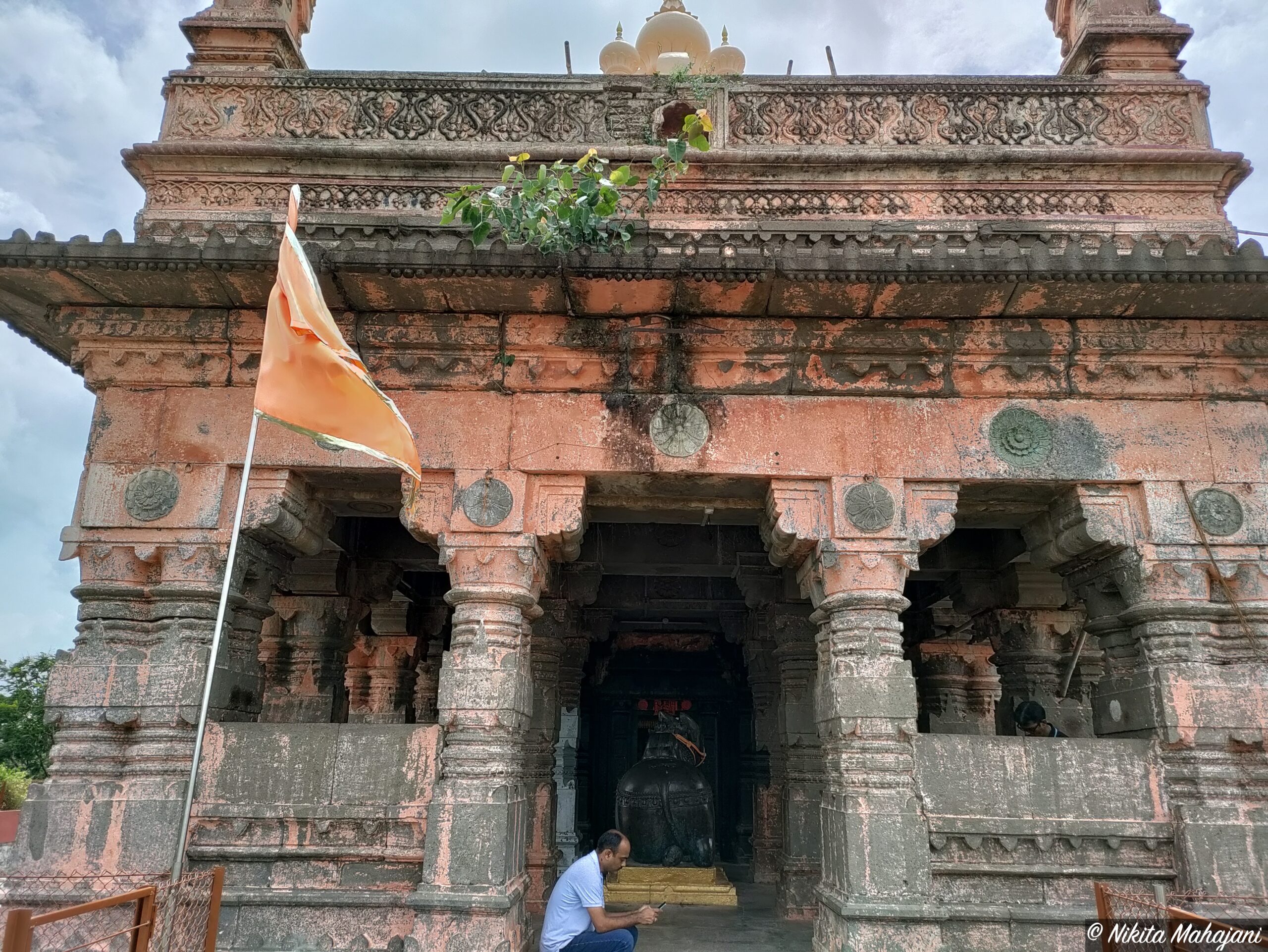
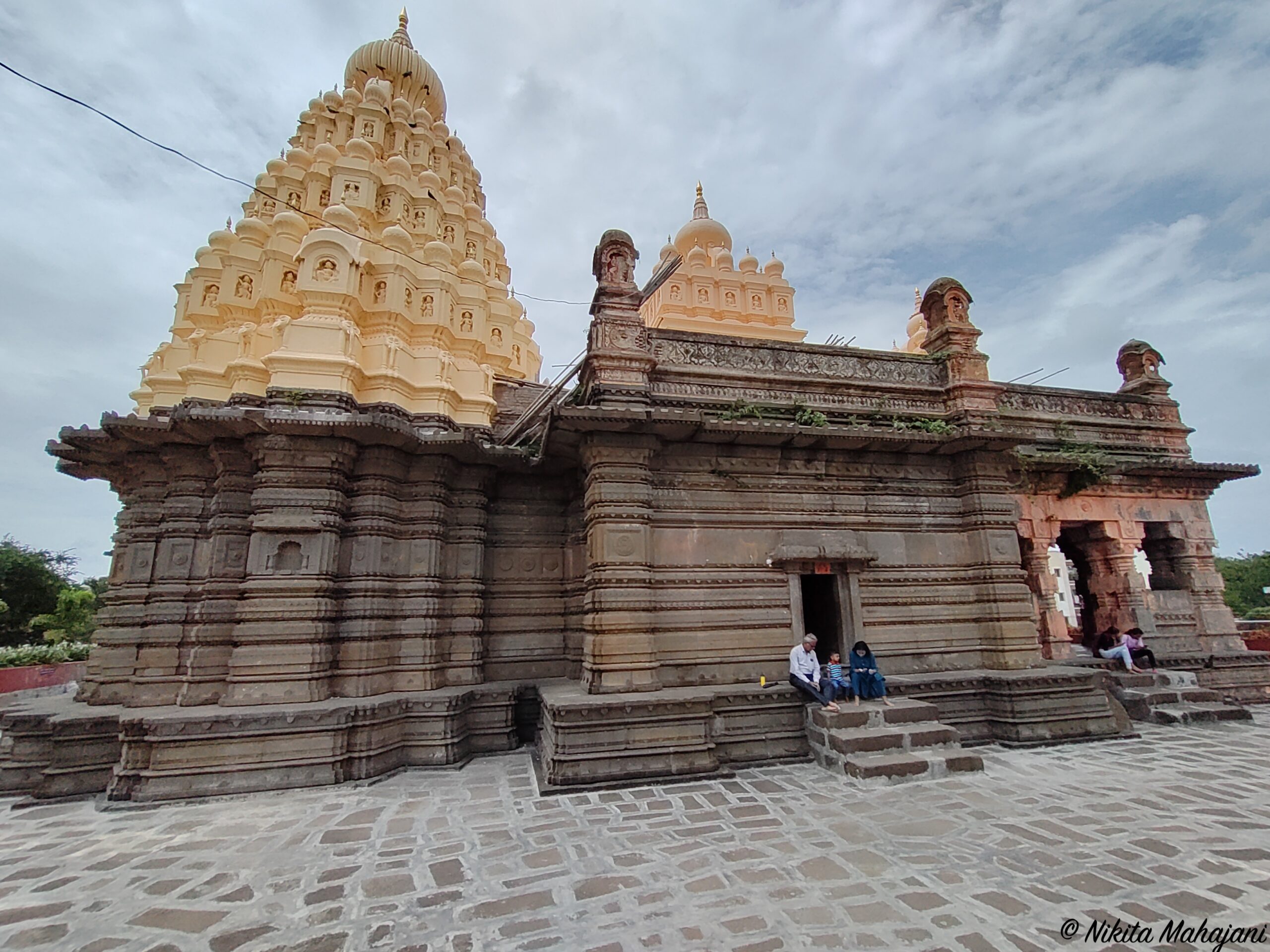
Next, we visited Sangameshwar Temple,
a place as unique as its name suggests. Here, the temple stands at the
confluence of rivers, creating a serene environment perfect for
reflection. My mother and I offered our prayers while Sophie explored
the temple grounds, enjoying the shade and the cool breeze from the
nearby riverbanks.
Siddheshwar Shiv Mandir: A Hidden Gem
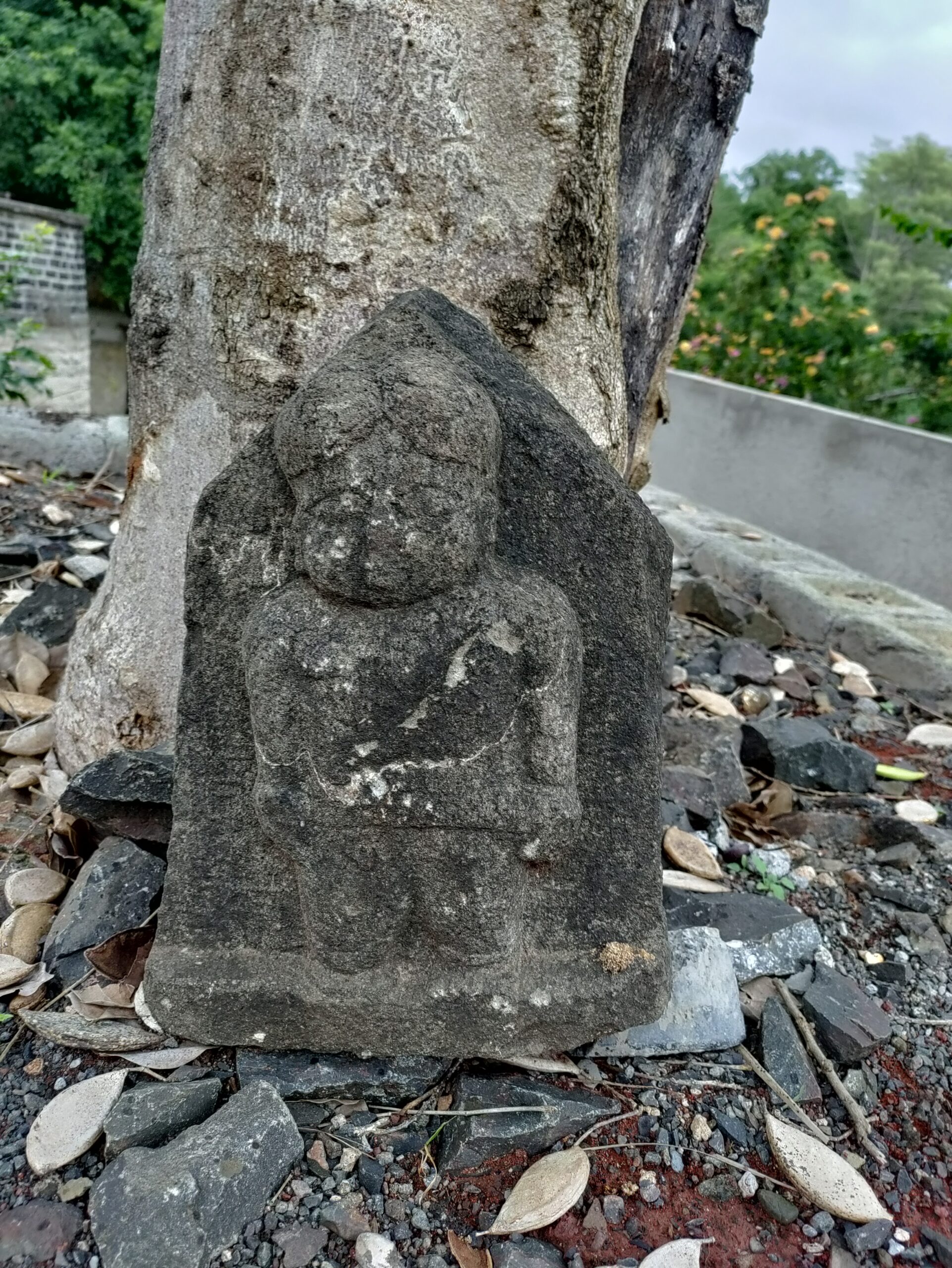
Siddheshwar Shiv Mandir
was our next stop, a temple less crowded but brimming with historical
charm. The temple’s simplicity resonated with us, offering a quiet space
to connect with the divine. The subtle details in its structure
showcased the craftsmanship of an era gone by. For Sophie, this spot was
another intriguing exploration ground as she wandered around,
occasionally stopping to look at us as if taking in the spiritual aura.
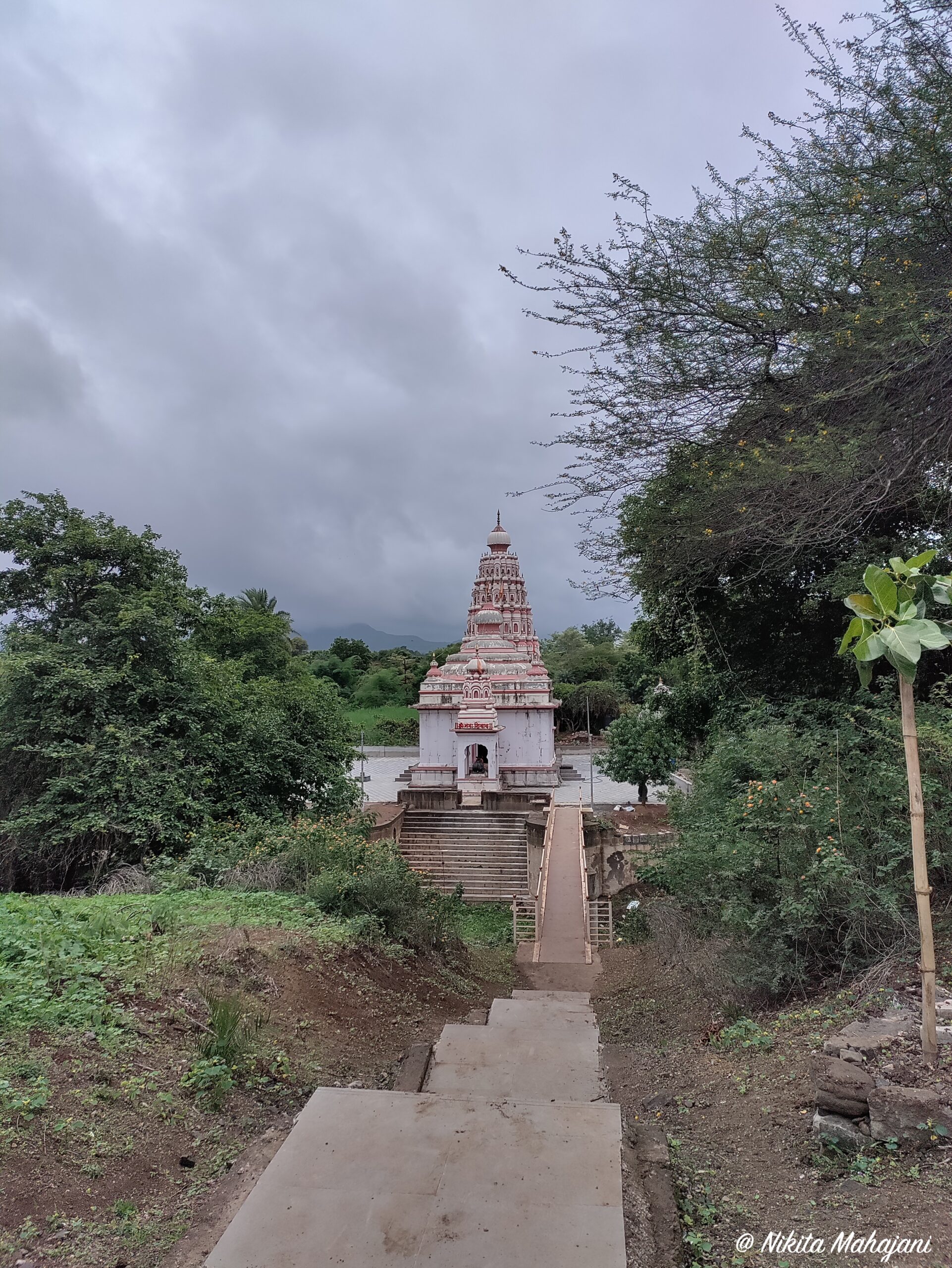
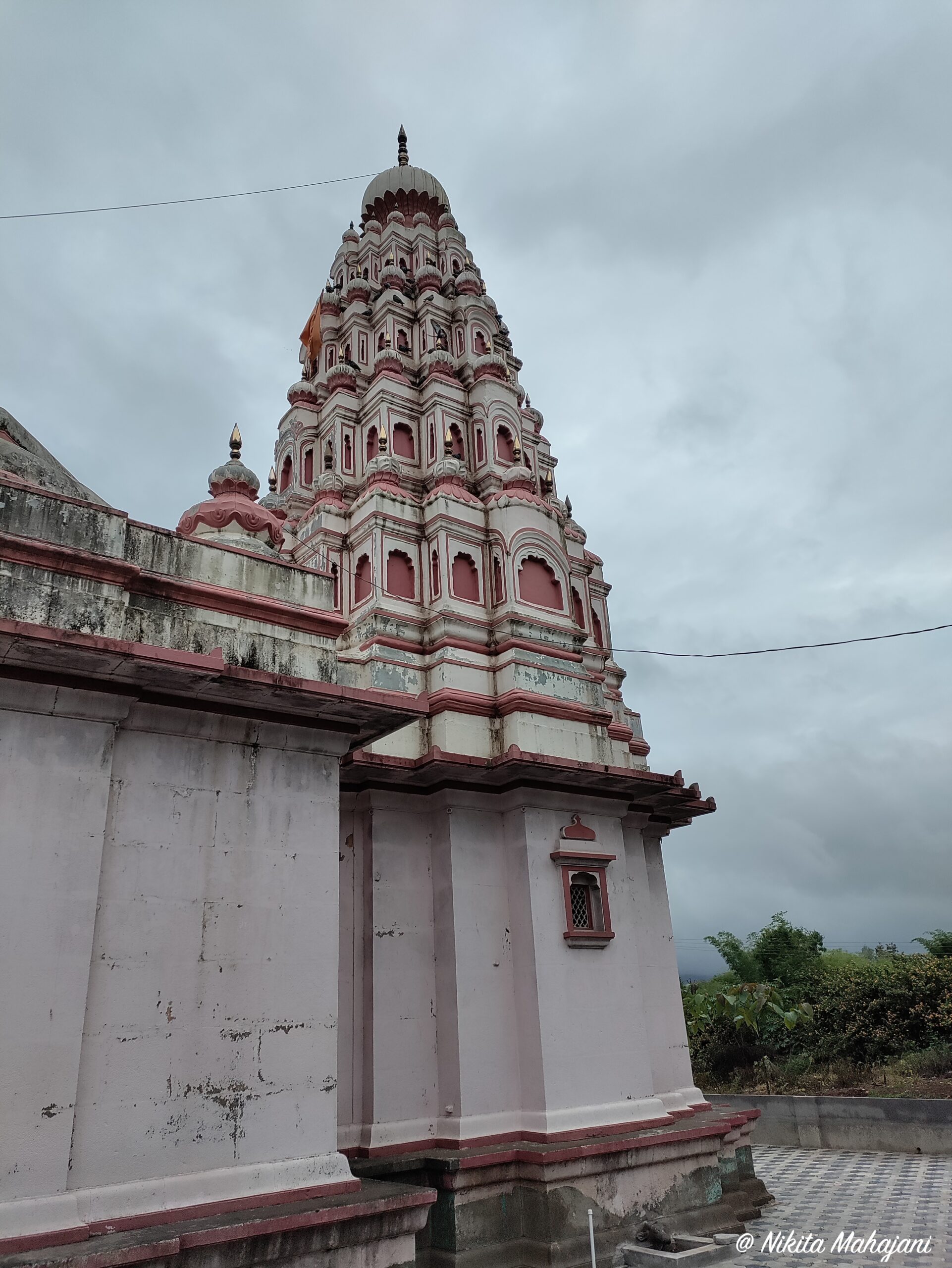
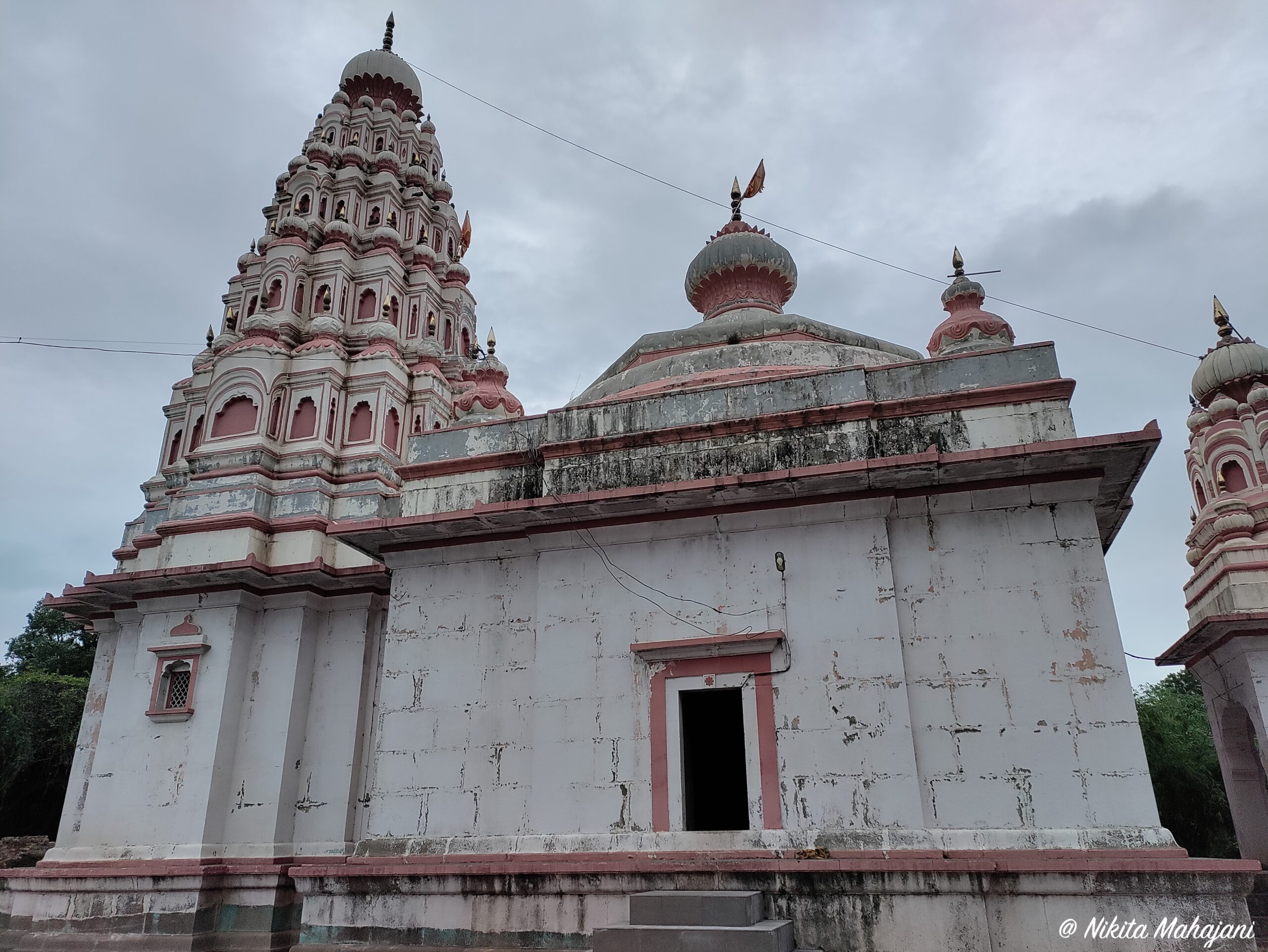
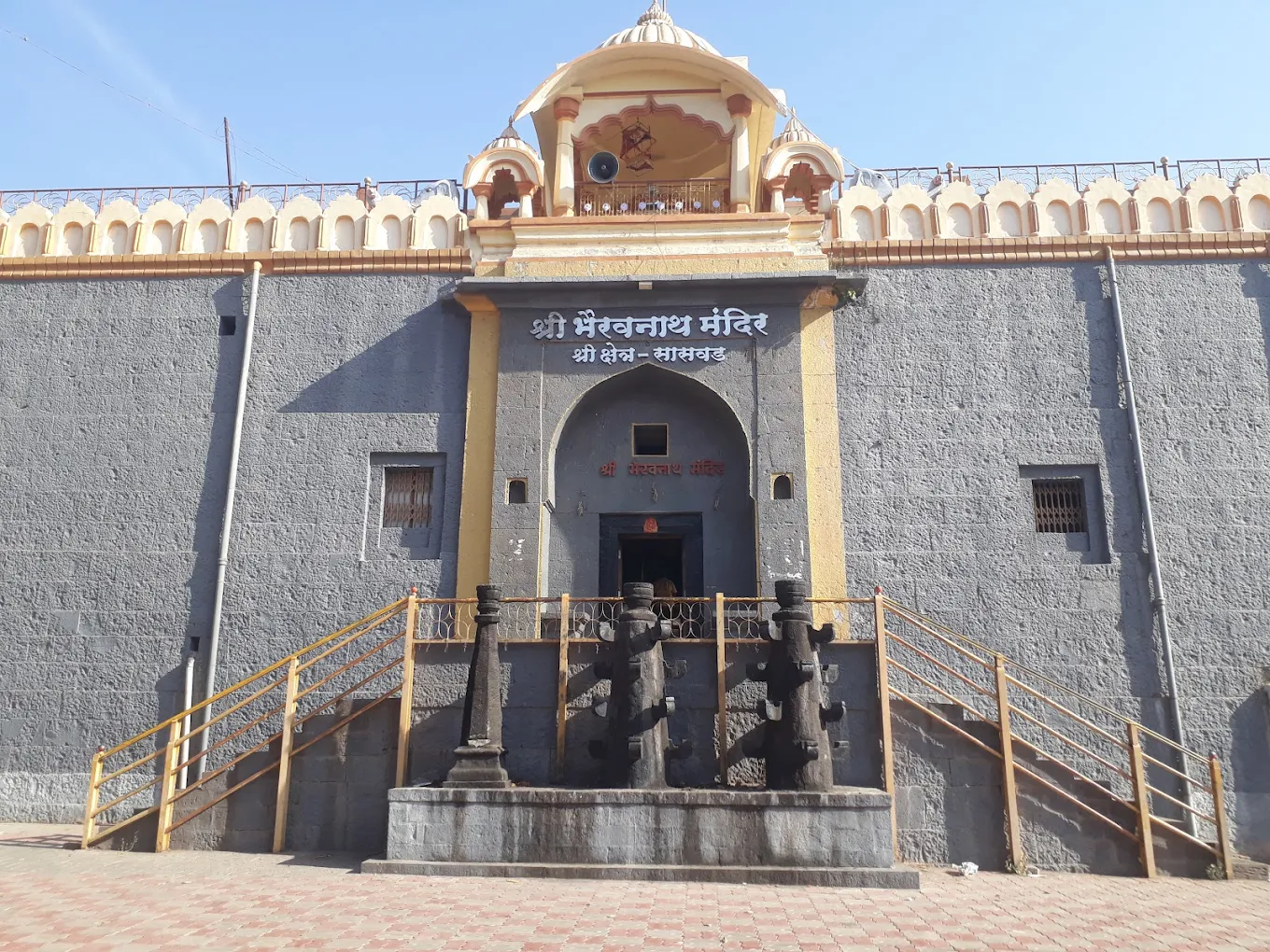
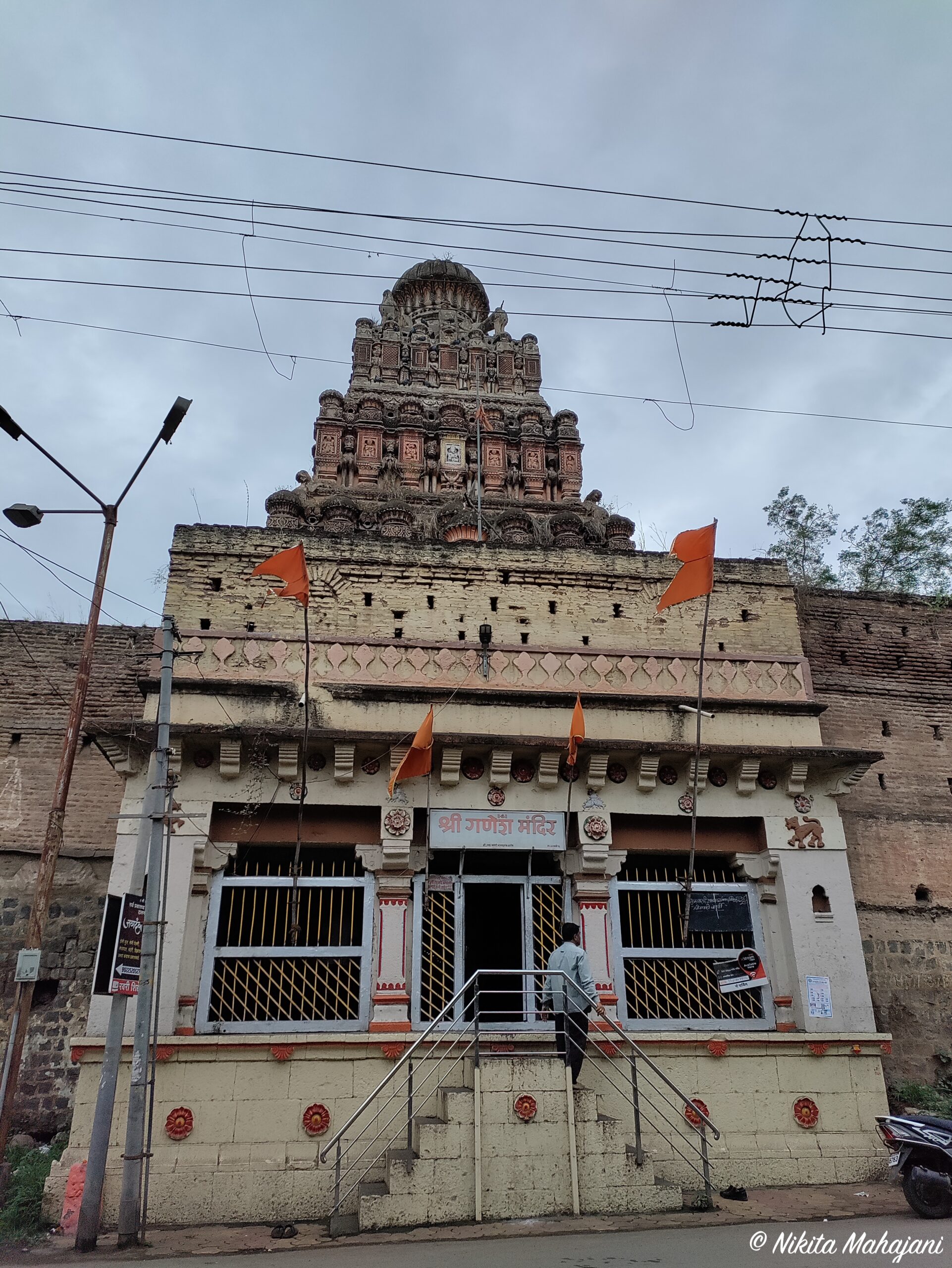
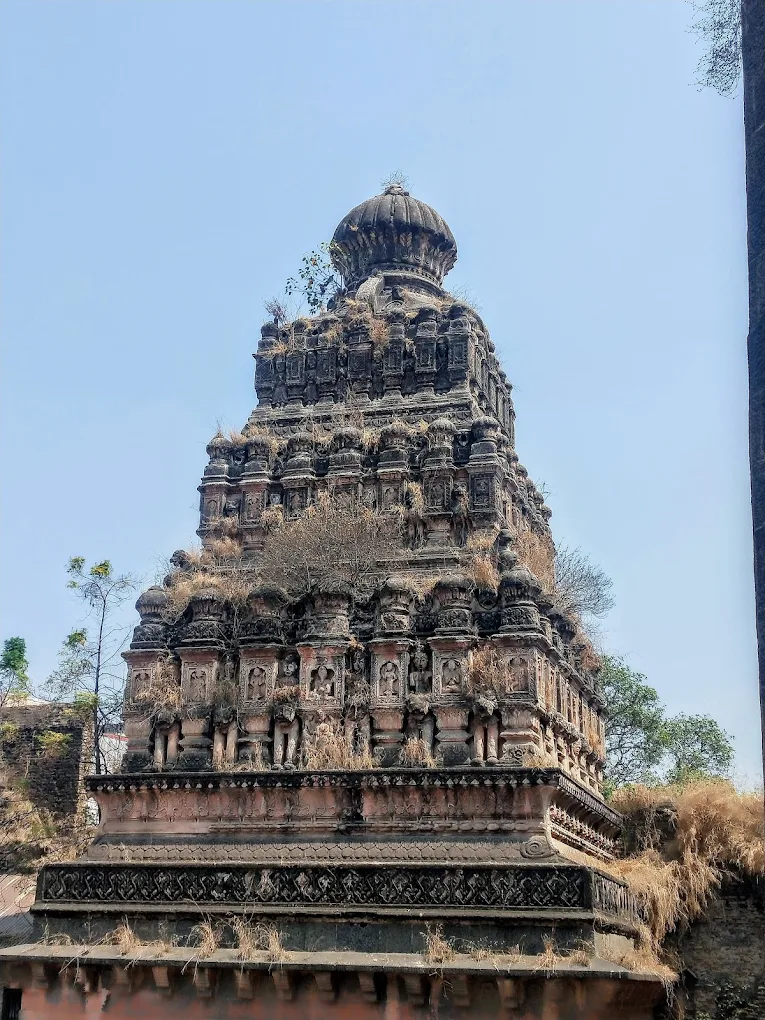
Ganapati Mandir and Bhairavnath Mandir: A Journey of Faith
Saswad is home to a number of temples, and no visit would be complete without stopping at Ganapati Mandir and Bhairavnath Mandir.
At the Ganapati Mandir, we felt a deep sense of devotion from the
locals and visiting devotees. Bhairavnath Mandir, with its rustic charm
and reverent atmosphere, was equally captivating. It felt grounding to
visit these temples and witness the blend of faith and community.
Sardar Purandare Wada: A Historic Finale
We concluded our trip at the Sardar Purandare Wada, a historical gem in Saswad.
Built in the Peshwa era, this wada (mansion) exudes old-world charm,
its corridors whispering tales of a time when valiant warriors walked
these very paths. Exploring this place with my mother was special, as
she reminisced about the history and stories associated with the wada.
Sophie, ever curious, followed along as we marveled at the heritage
architecture.
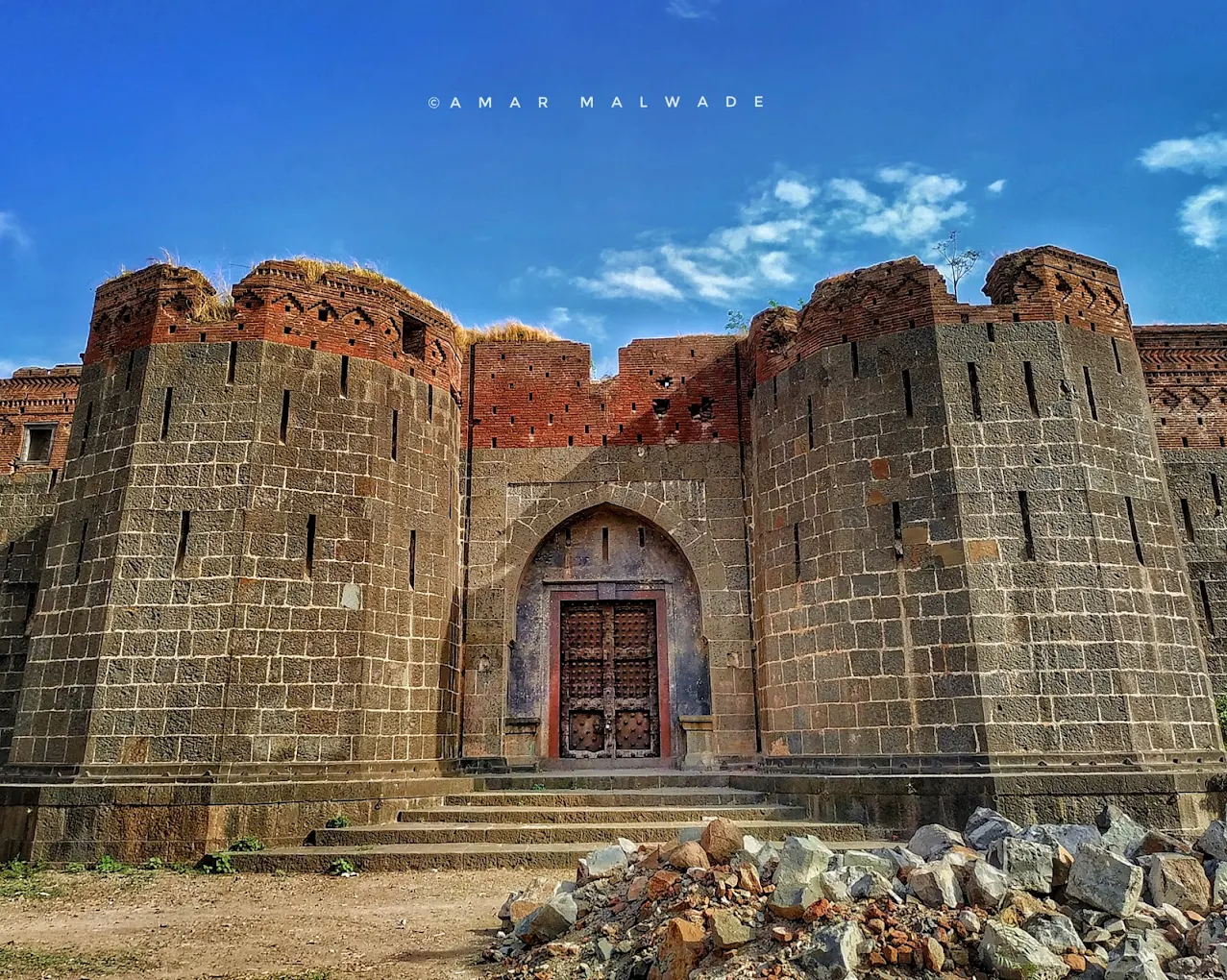
Credits: Amar Malwade
As we made our way back to Pune, I felt grateful for the day
spent with my mother and Sophie, exploring Saswad’s spiritual and
historical treasures. This little trip reminded us of the rich cultural
tapestry close to home and offered a perfect blend of bonding,
reflection, and exploration. For anyone looking to step back in time and
experience Maharashtra’s heritage, Saswad is a destination worth
visiting.
Kolhapur: Day 1
Kolhapur, known for its rich history and beautiful landscapes, had long been on our list of must-visit places. My husband, our beloved dog Sophie, and I decided to make the most of a long weekend by taking a road trip to this charming city. Here’s a peek into our delightful experience.
| Click on the links below to read blogs on the next days of this trip: | Before Lunch | After Lunch |
| Day 1 | Journey from Pune to Kolhapur, Bhawani Mandir, Mahalakshmi mandir | Rankala lake, Panchganga Ghat |
| Day 2 | Panhala Fort, Kopeshwar temple, Sarsenapati Santaji Ghorpade samadhi | Mouje Vadgaon scenic road, Chinmay Ganadhish Temple |
| Day 3 | Masai plateau, Pandavdara cave, Pohale cave | Journey from Kolhapur to Pune |
Day 1: Exploring Kolhapur’s Cultural Heritage
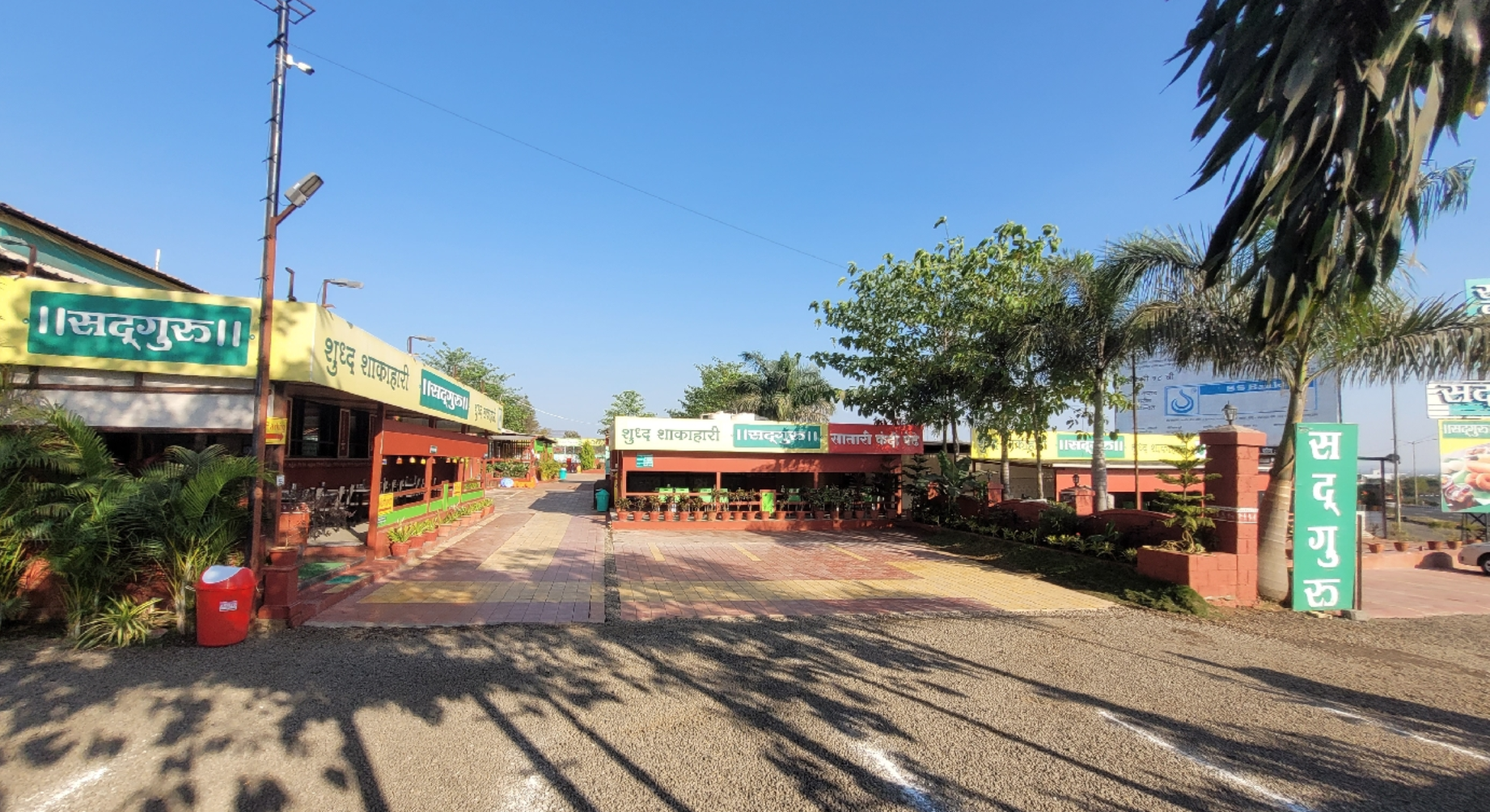
We left Pune on a sunny Friday morning, ready for a weekend of adventure. Sophie sat excitedly in the backseat as we made our way towards Kolhapur. After a quick lunch at Sadguru Pure Veg, we continued our journey and reached the Serenity Resort, Panhala, by mid-afternoon. The resort, nestled in nature, offered stunning views that instantly put us in a relaxed mood.
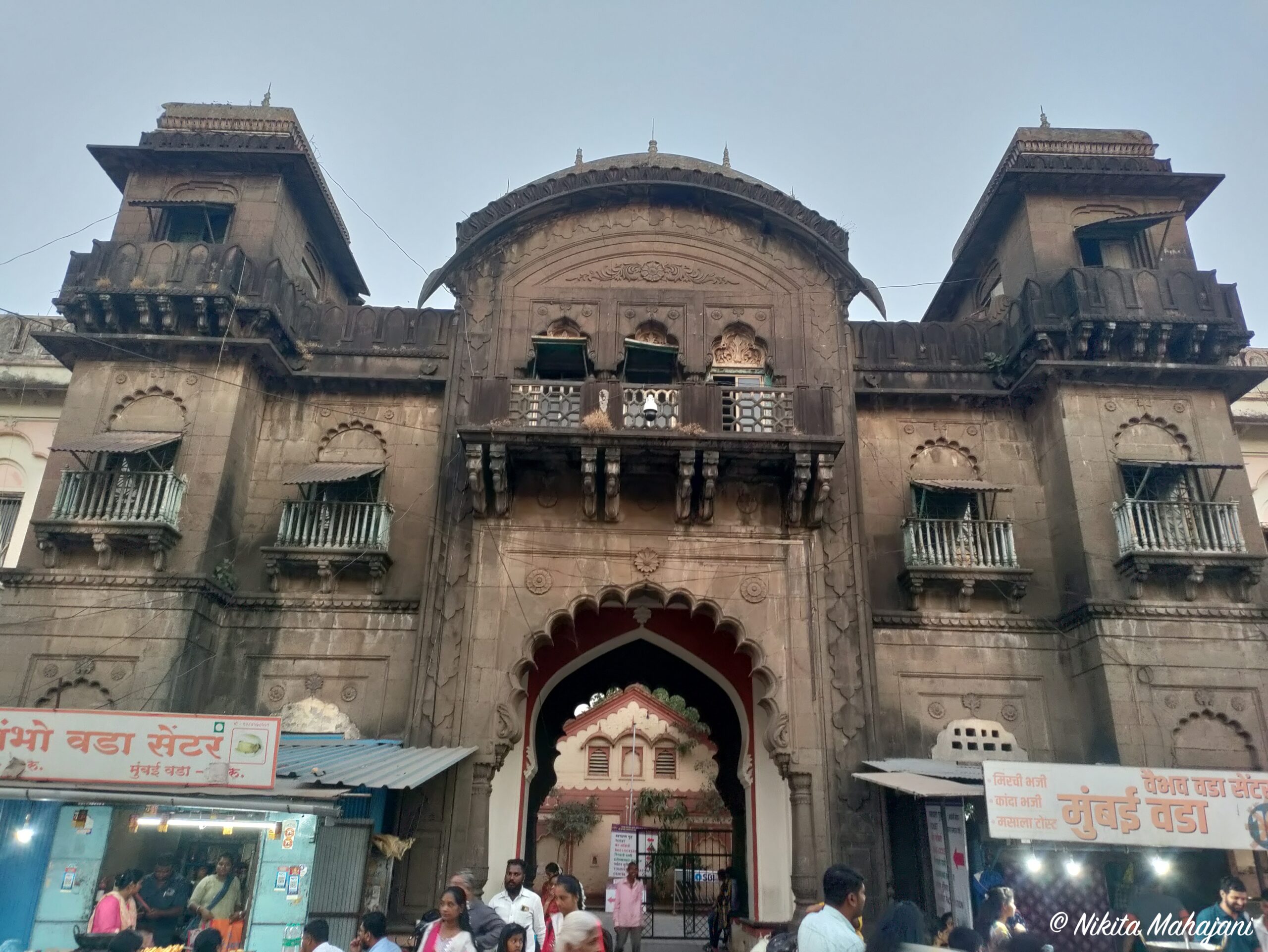
Our first destination in Kolhapur city was the Bhawani Mandap a significant gateway and temple that boasts a small museum. It is not possible to go by car till this destination since cars are not allowed in the vicinity of Bhawani mandap and Mahalakshmi temple. The route to these places is very congested. Sophie stayed back in the parking with my husband and I went walking towards Bhawani mandap.
It is a notable part of the historic Old Palace, serves as a key landmark housing a college, the Bhavani Temple, and an entrance to the revered Mahalakshmi Temple. The surrounding area is also a paradise for food lovers, offering a variety of delicious options. However, before purchasing from local shops, be sure to confirm the price first.
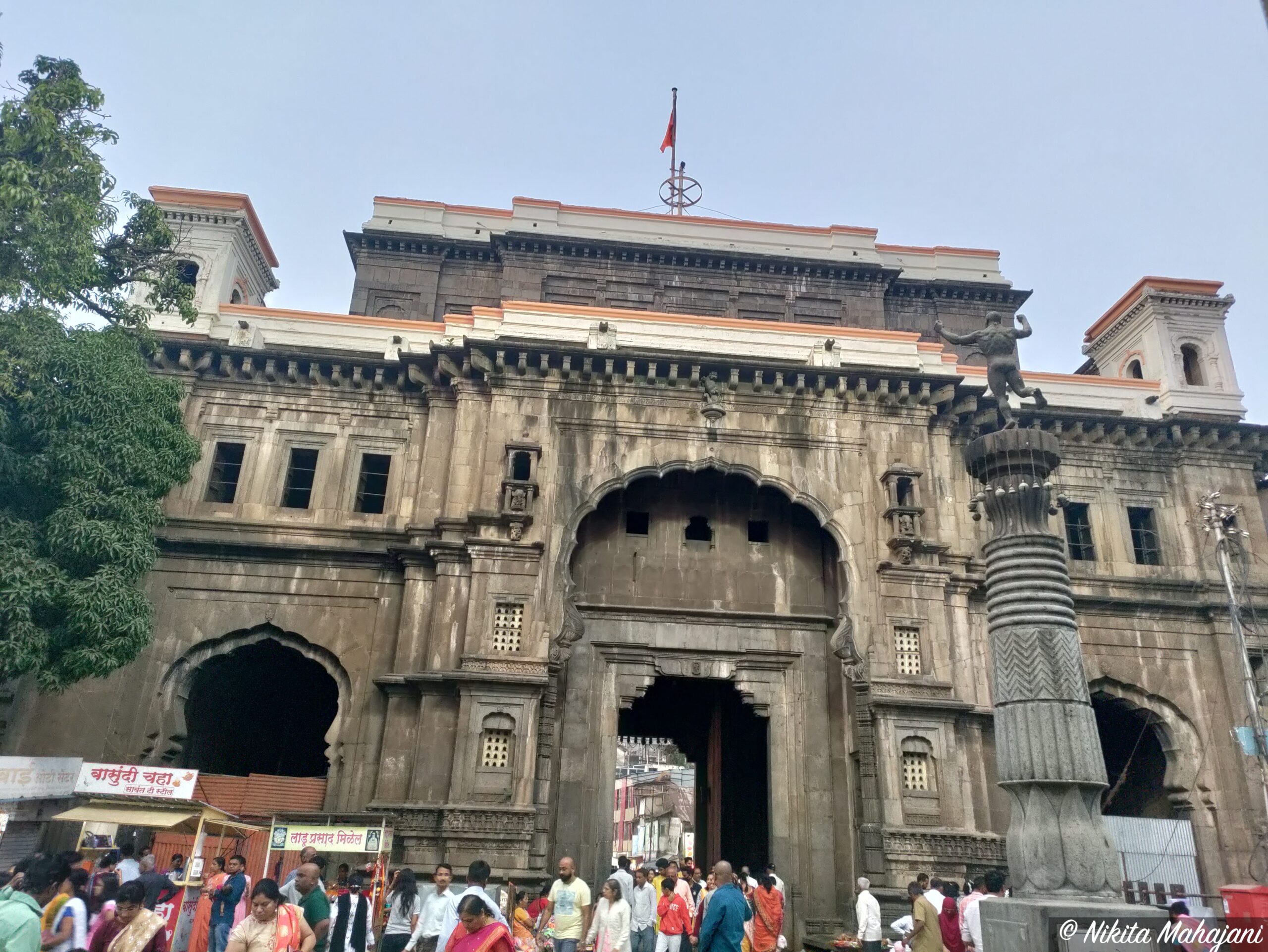
The next stop, the Mahalaxmi Mandir, left us in awe. The temple, dedicated to Goddess Mahalaxmi, was a spiritual experience, and the energy there was palpable. Sophie patiently waited outside, soaking in the calm ambiance.
Our next stop was the Panchaganga Ghat, a serene place where the sacred rivers meet. A huge parking lot is available on the banks of the river. Panchganga is an ancient river and a tributary of the Krishna River, originating from the Sahyadri mountain ranges in Maharashtra. Its source, known as Prayag Sangam, is located in Chikhlee Taluka, a small village in the Kolhapur district.
The river is formed by the confluence of five rivers—the Kasari, Kumbhi, Tulsi, Bhogawati, and Saraswati—at Prayag Sangam. It eventually merges with the Krishna River at Kurundvad, Maharashtra.
Panchganga Ghat, situated along the riverbanks, is a popular destination for picnics, leisurely walks, and photography. As one of the oldest sites in Kolhapur, it played a crucial role in the city’s early civilization. The serene atmosphere of the ghats, along with an ancient temple nearby, attracts devotees and tourists throughout the year.
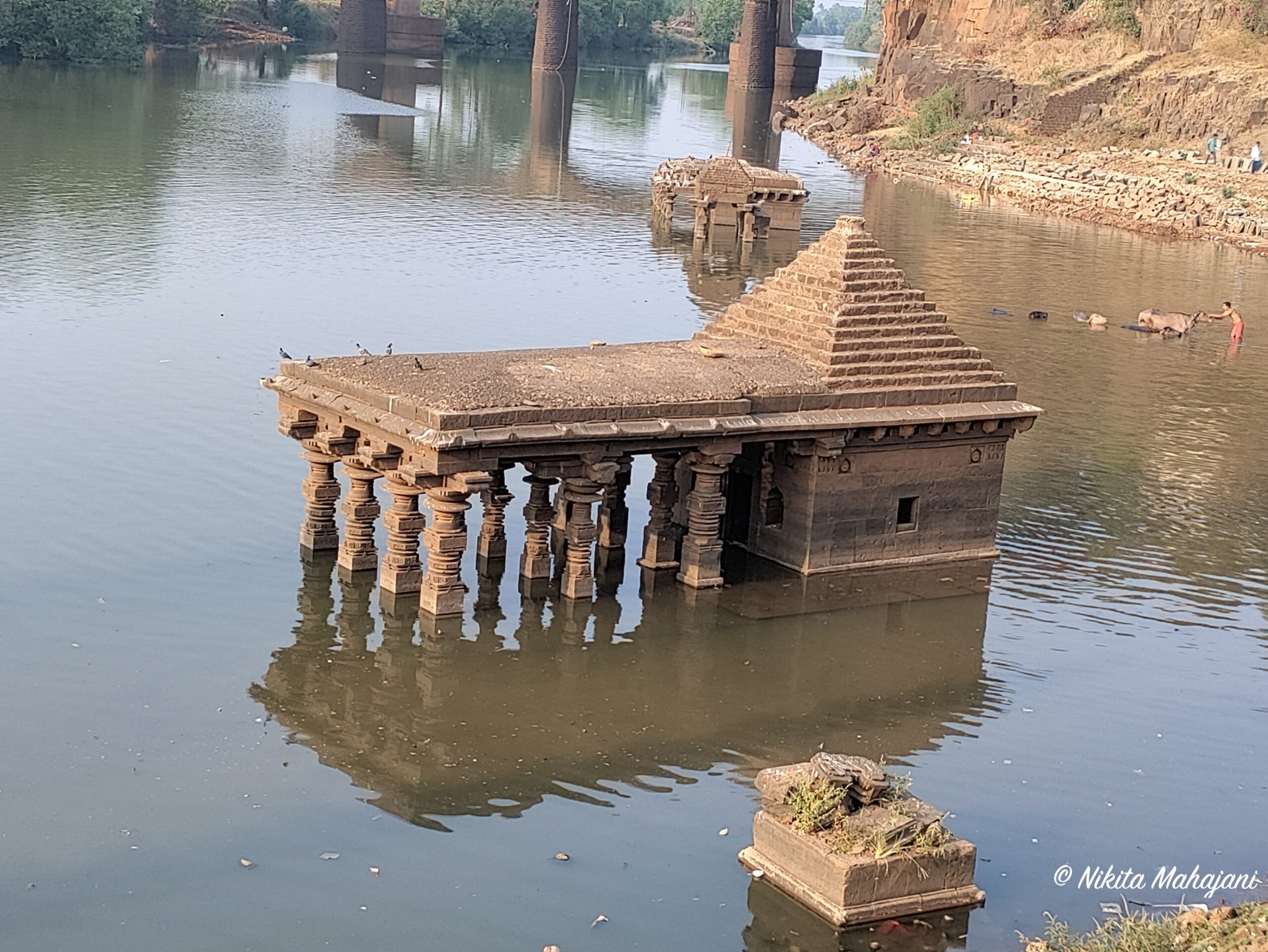
We went down by the steps of the ghats. There are some submerged temples in the river basin. There are small temple on the ghats as well.

We went walking towards the end of the ghat where we could explore Shri Siddheshwar Maharaj Temple. While coming back to the parking, we came across the monumental entrance of Shri Mahadev temple. We couldn’t enter it since it was locked.
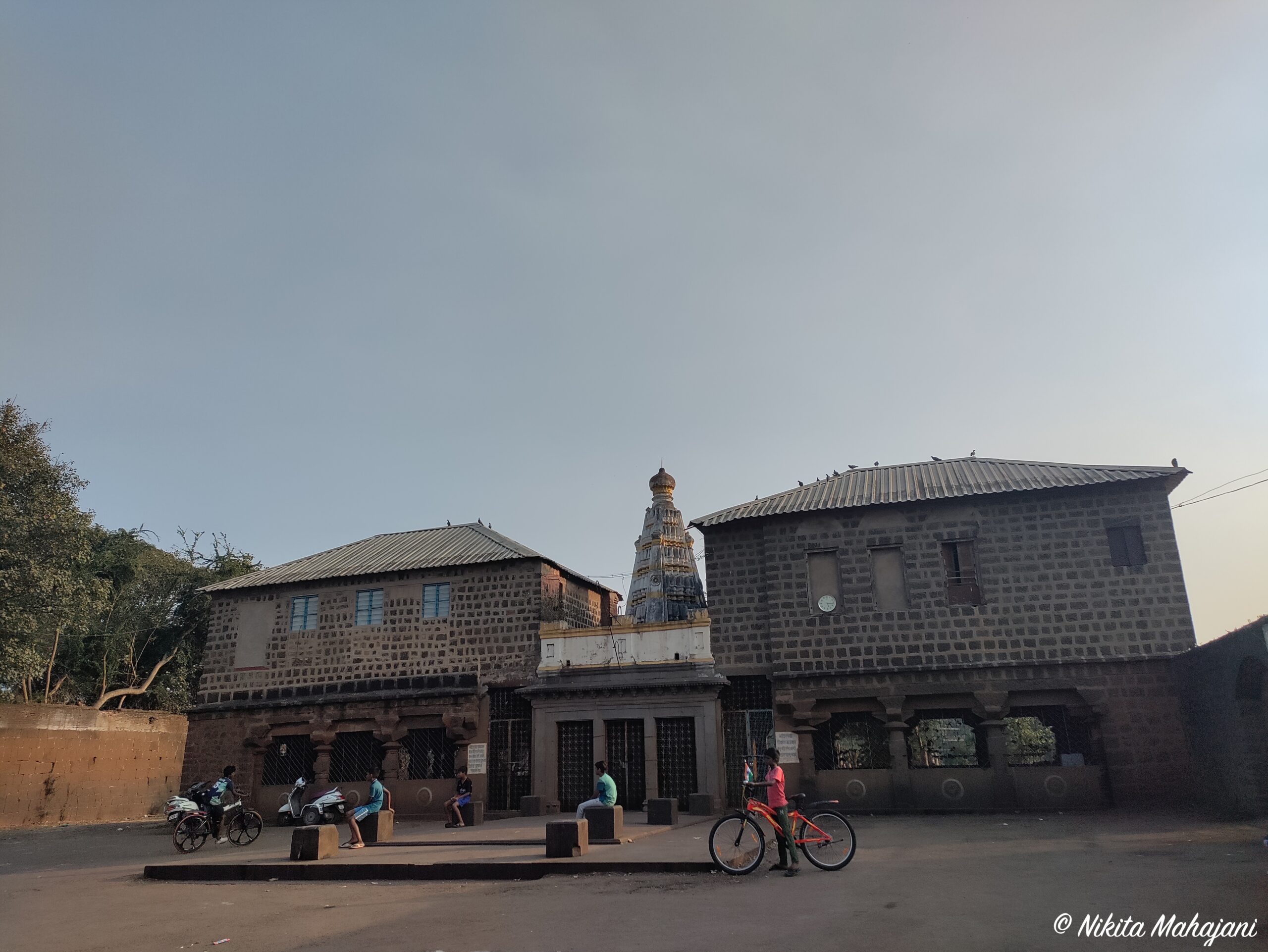
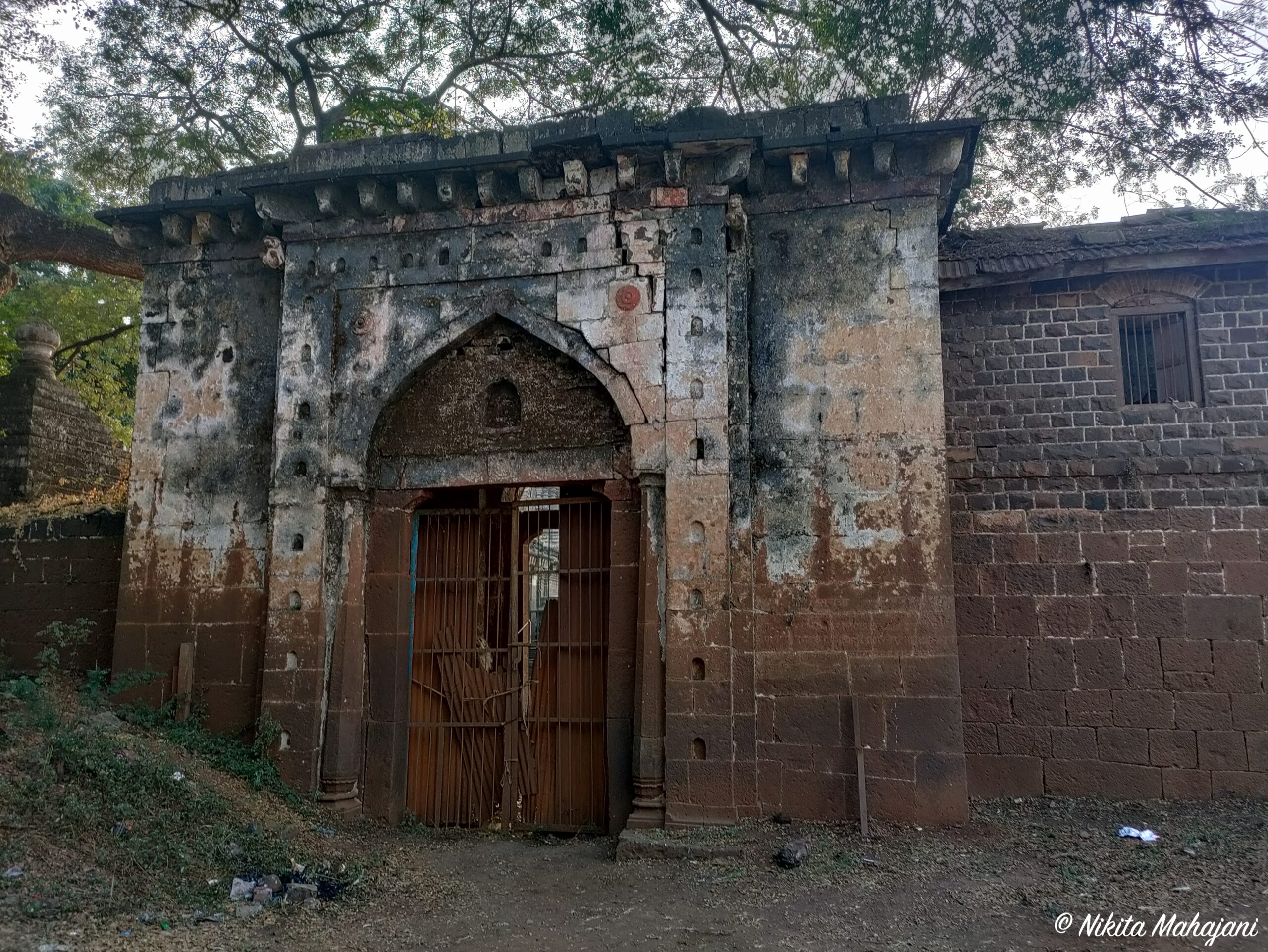
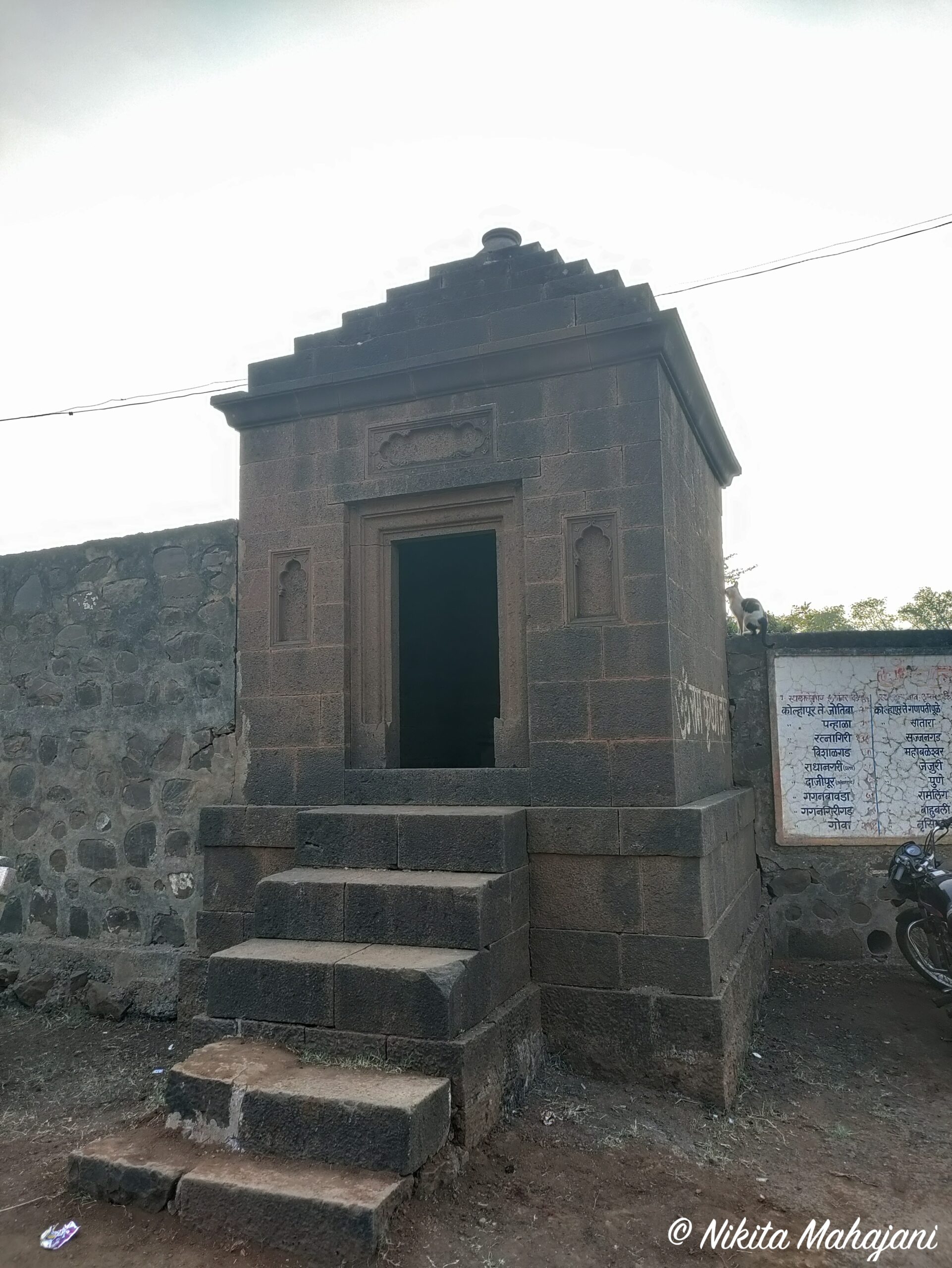
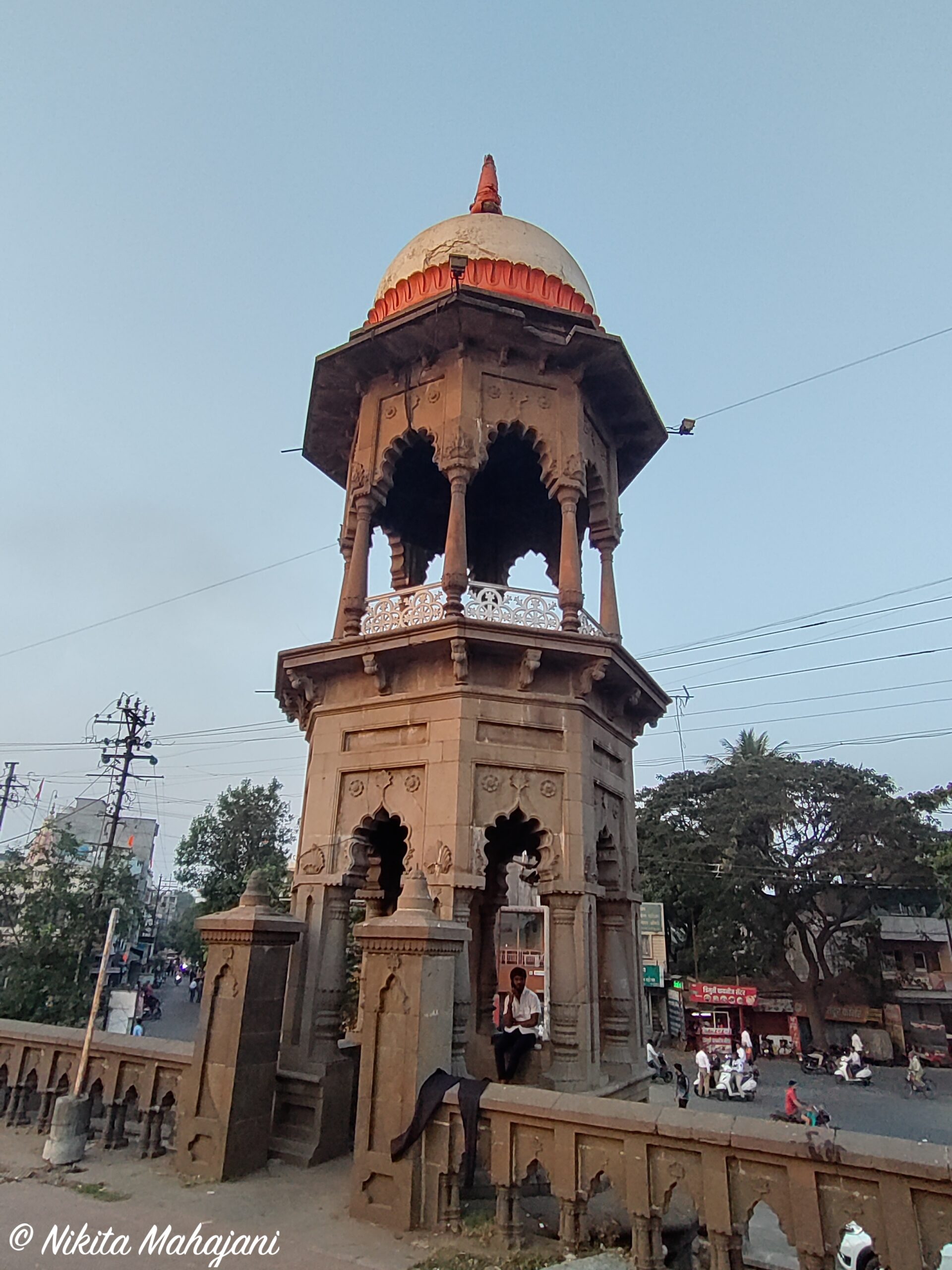
By late evening, we explored the Rankala Manora, an ancient watchtower, followed by a peaceful walk around the Rankala Lake. Boating is available at the lake. There is a wide variety of fast food available at the Chowpati
near the lake. On road parking is available. While taking a stroll
around the lake, we came across some openings in its boundary wall.
There were steps leading down to the lake.
According to history,
Rankala Lake was originally a stone quarry until an earthquake in the
9th century led to its formation by filling it with water. However, the
present-day Rankala Lake was developed by Chhatrapati Shri Shahu
Maharaj.
Visitors can explore Rankala Lake at any time of the day. Early mornings offer a serene experience with a stunning sunrise and opportunities for birdwatching, while evenings provide a relaxing atmosphere to witness a breathtaking sunset. The lake is home to over 139 bird species, making a boat ride an excellent way to observe them. In the evening, the lake sometimes reflects the majestic Shalini Palace, creating a mesmerizing view best enjoyed during a boat ride. Most boat rides typically begin in the evening.
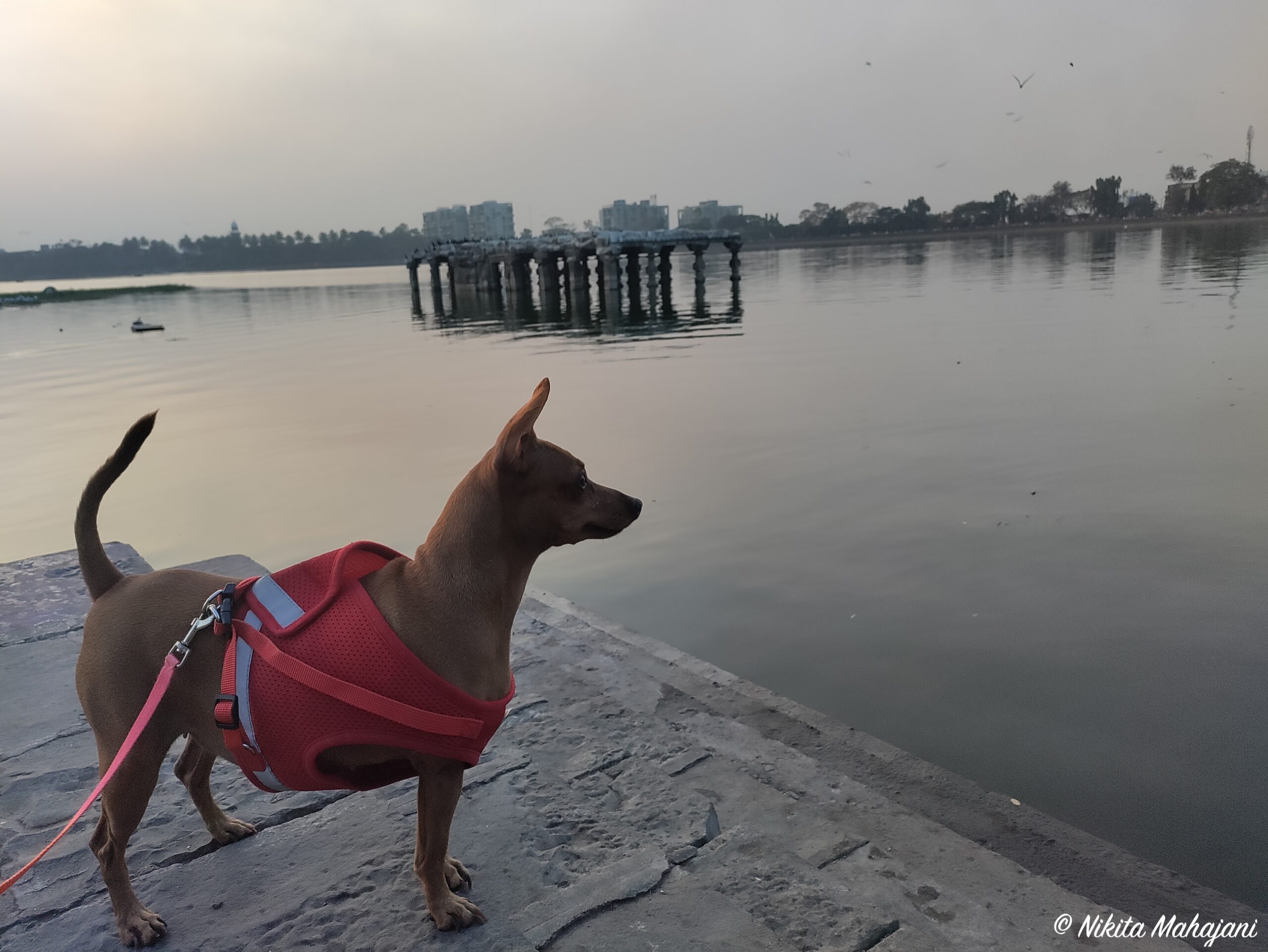
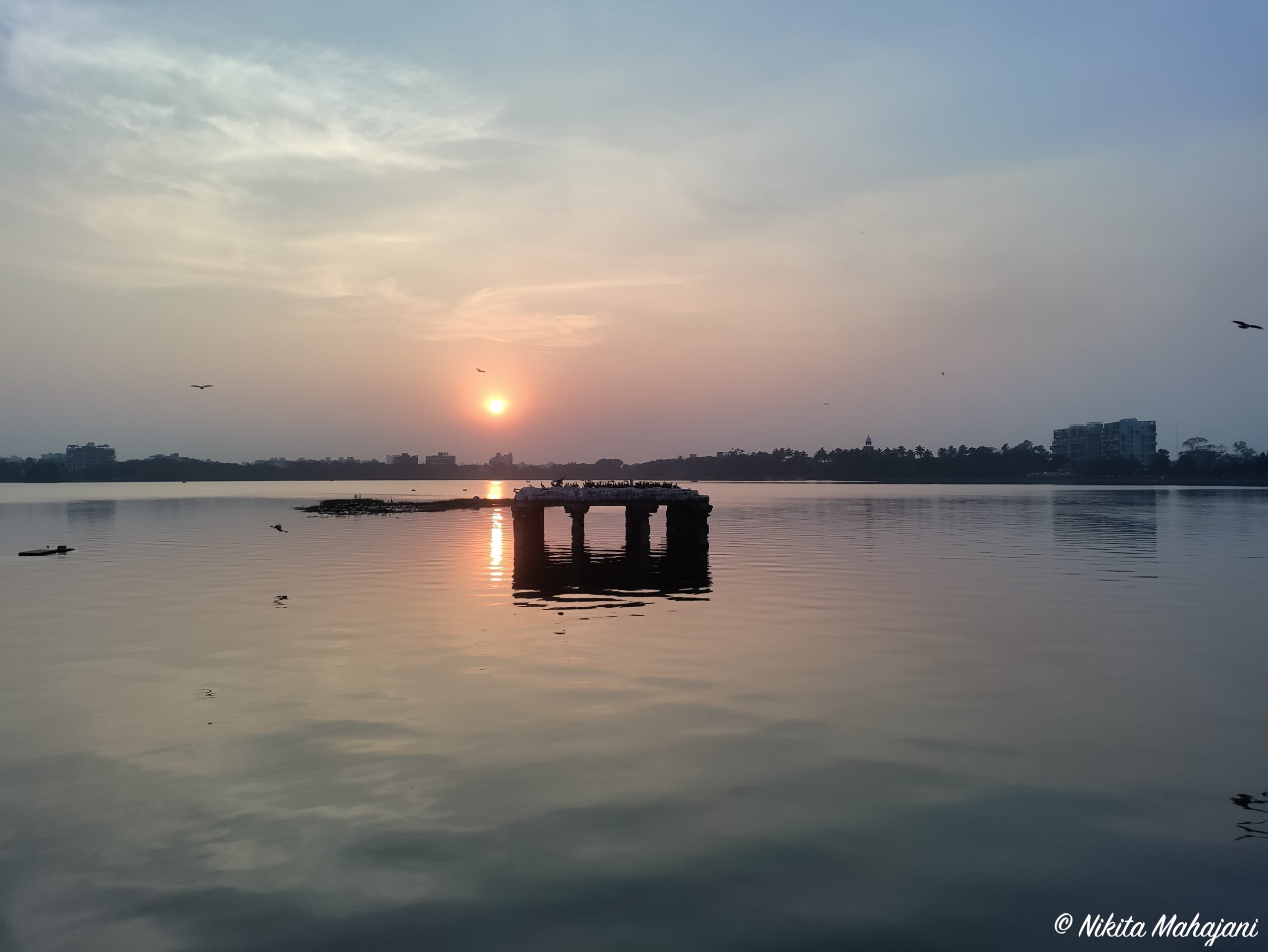
We also witnessed the partially submerged Sandhya Math with the backdrop of a beautiful sunset.
Sophie absolutely loved it, running freely around the promenade. After a beautiful sunset, we returned to the resort for a hearty dinner and an early night’s rest, preparing for the action-packed day ahead.
To read the next blog on day 2 of Kolhapur click here
Where did we stay ?
Where did we eat ?
Sadguru Pure veg, Pune- satara Highway
Madhuban Garden restaurant pure veg, Panhala
Kolhapuri wada misal, Kolhapur
Hotel Darshan Pure Vegetarian, Shirol
Hotel Sadguru pure veg, near Yashoda College, Satara
Places that are not suitable for pets
Mahalakshmi Mandir
Bhavani Mandap
Chhattrapati Shahu Maharaj Rajmahal, Kolhapur
Town Hall museum
New palace, Kolhapur
Laxmi Vilas Palace, Kolhapur
Kaneri Museum
Kaneri Math
Kaneri Planetarium
Kolhapur: Day 2
To read the previous blog on day 1 of Kolhapur click here
Day 2: Forts, Temples, and Scenic Trails
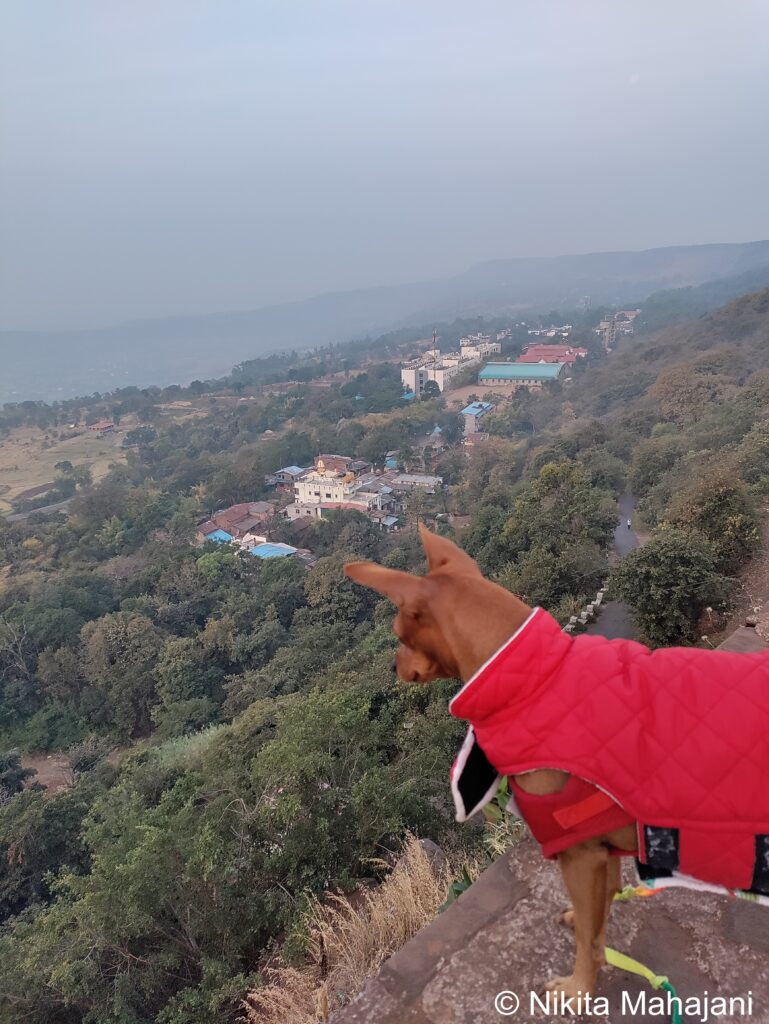
We rose early on Saturday and set off to explore the historical Panhala Fort. We were staying at Serenity Resort in Panhala itself. The Fort parking was just a 15minutes drive from the hotel. Although there are lots of shacks on the fort, none of them were open early in the morning at 7:00am. Sophie seemed to enjoy the fresh air and open spaces as much as we did. The entire Fort can be explored by car. There is no trek as such since there are vehicular roads leading to every historic structure on the Fort. The entire fort is pet friendly. In fact, we saw a lot of localites coming for a morning walk. There are a massive number of new illegal constructions done on the fort.
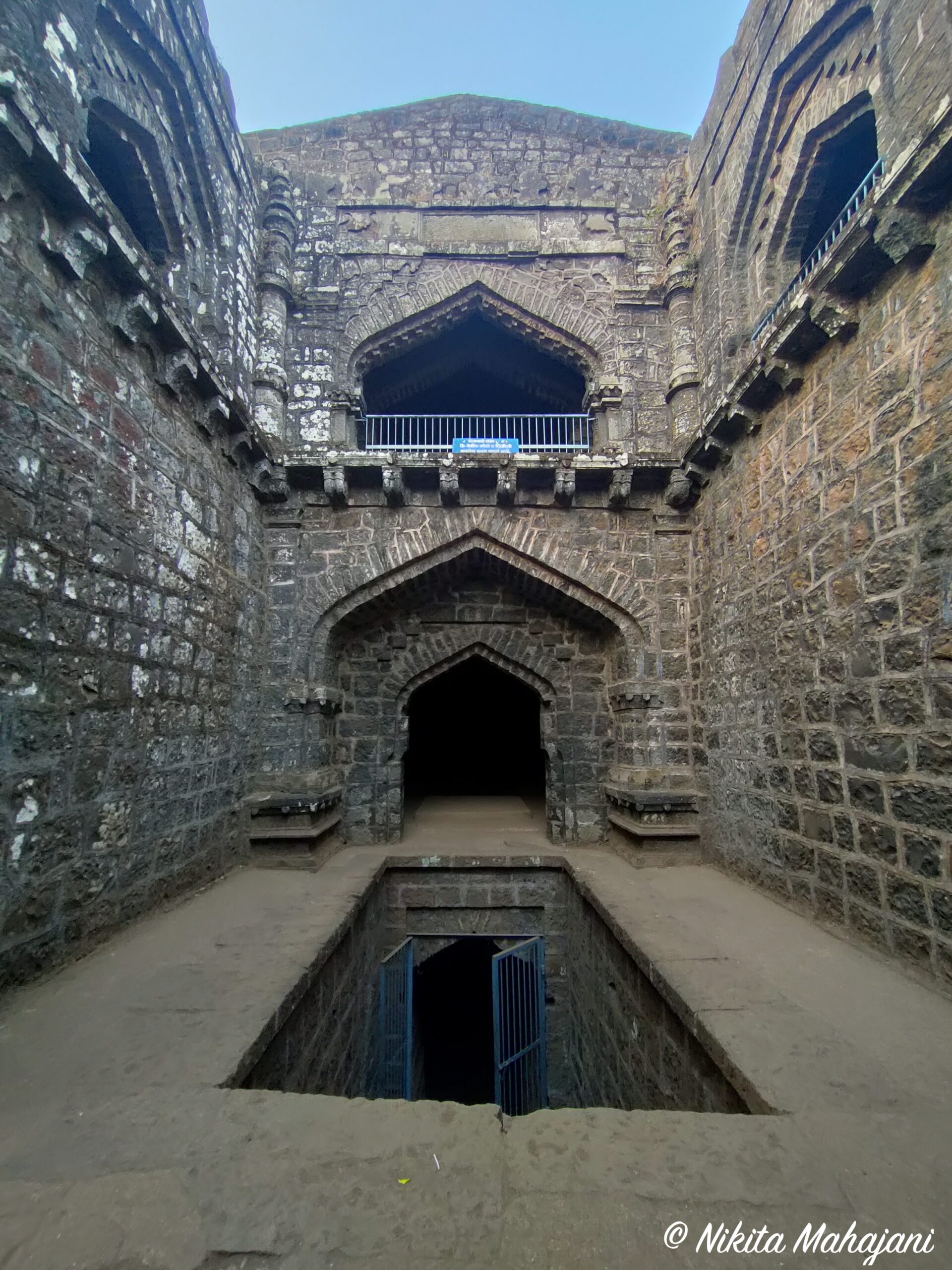
After parking the car, the first structure that we explored was Andhar Bavdi. It can be translated as ‘dark well’. The well served as the drinking water source for the fort. It is a three-story structure with rooms surrounding it. From the ground level, it appears like a regular building, designed to deceive attackers during an assault.
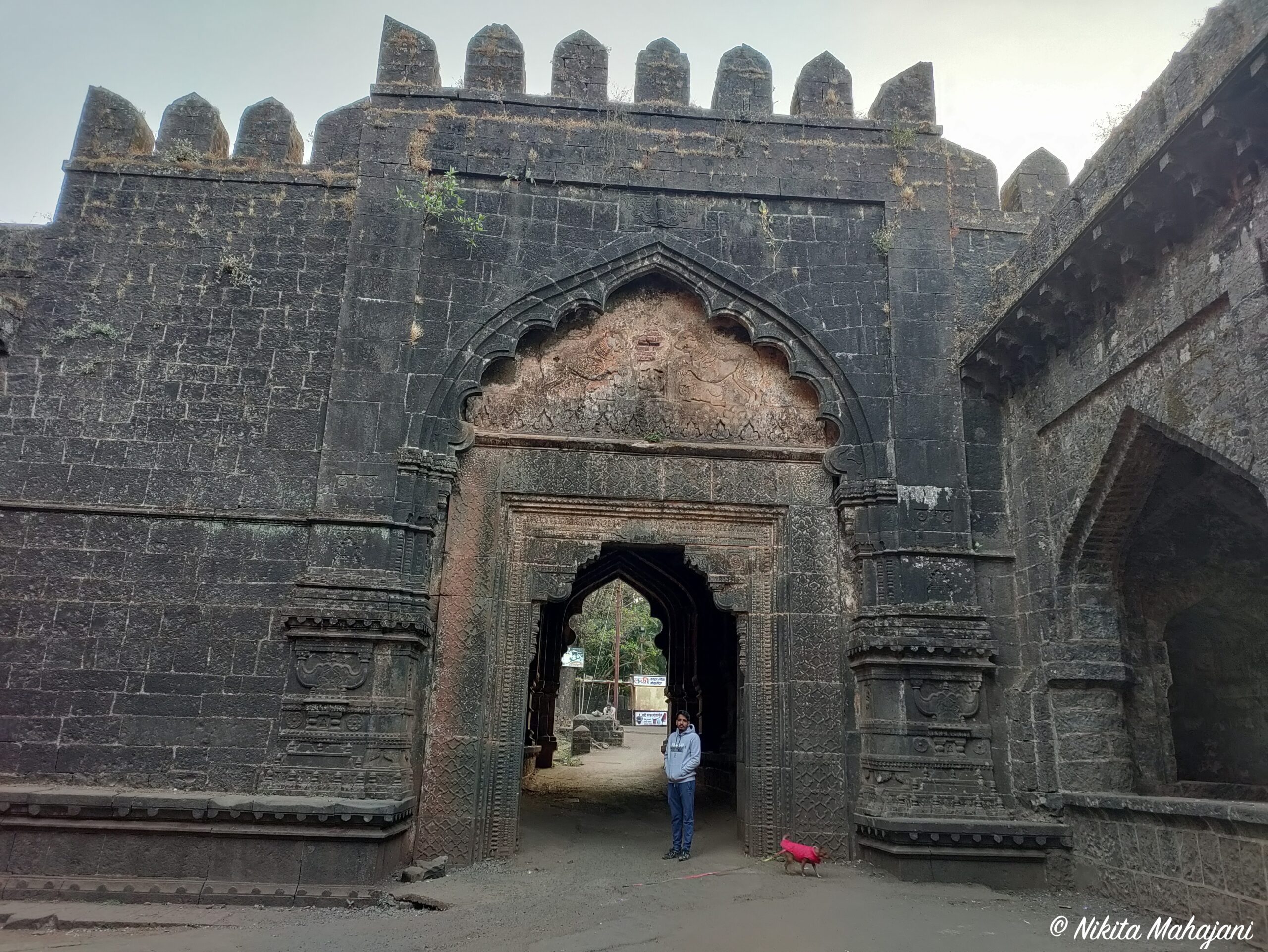
Teen Darwaza is situated near Andhar Bavadi and serves as the main entrance to Panhala Fort from the west. The name “Teen Darwaza” translates to “Three Entrance Gate.” A courtyard lies between the first two gates, while the inner gates are adorned with intricate carvings, including an idol of Lord Ganesh. The outer gate, which provides entry to the fort from the west, features a Persian inscription stating that the gate was constructed during the reign of Ibrahim Adil Shah I by Malik Daud Aki, the son of Minister Ahmed, in the year 954 of the Islamic calendar (1534 CE).
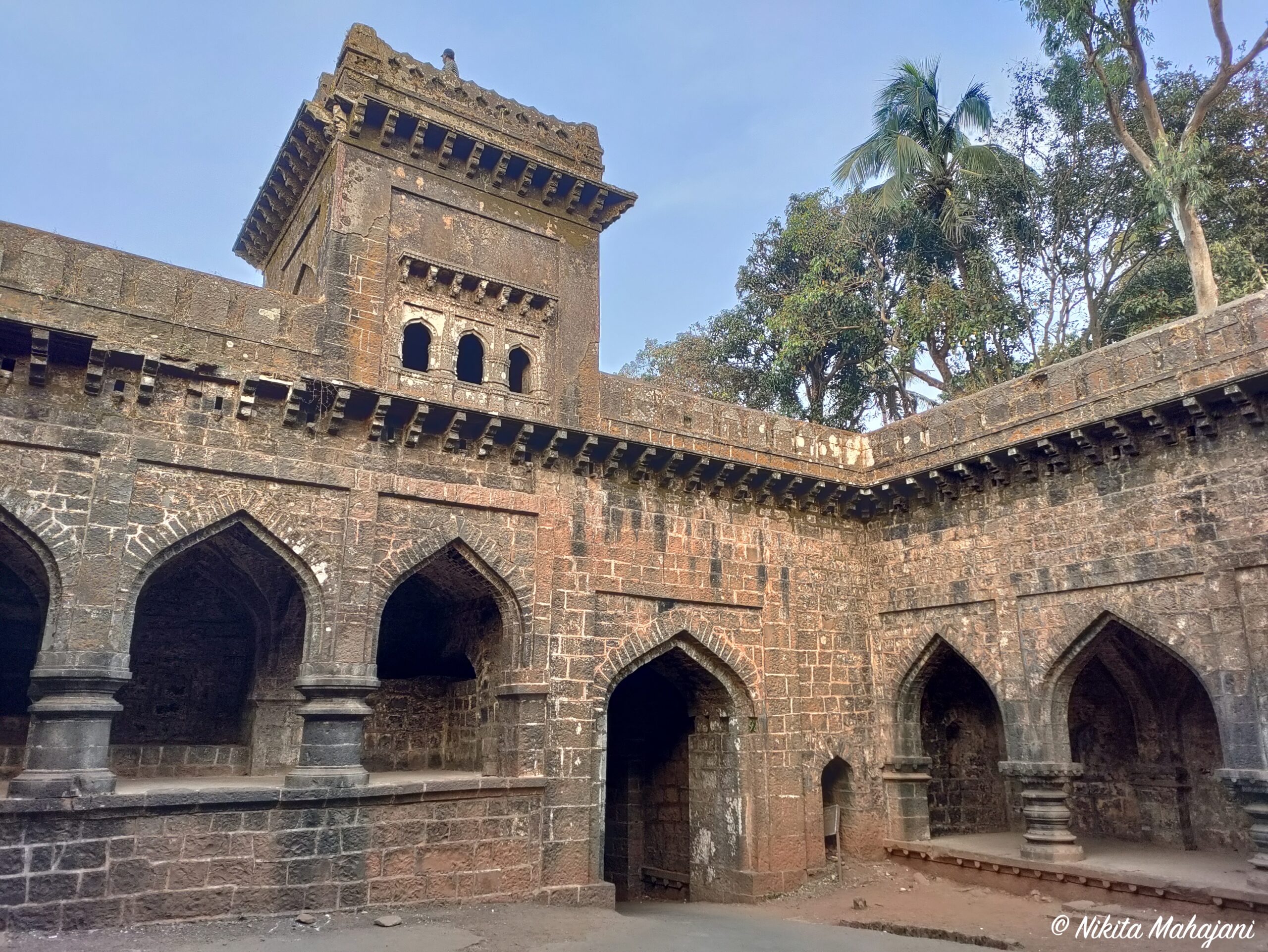
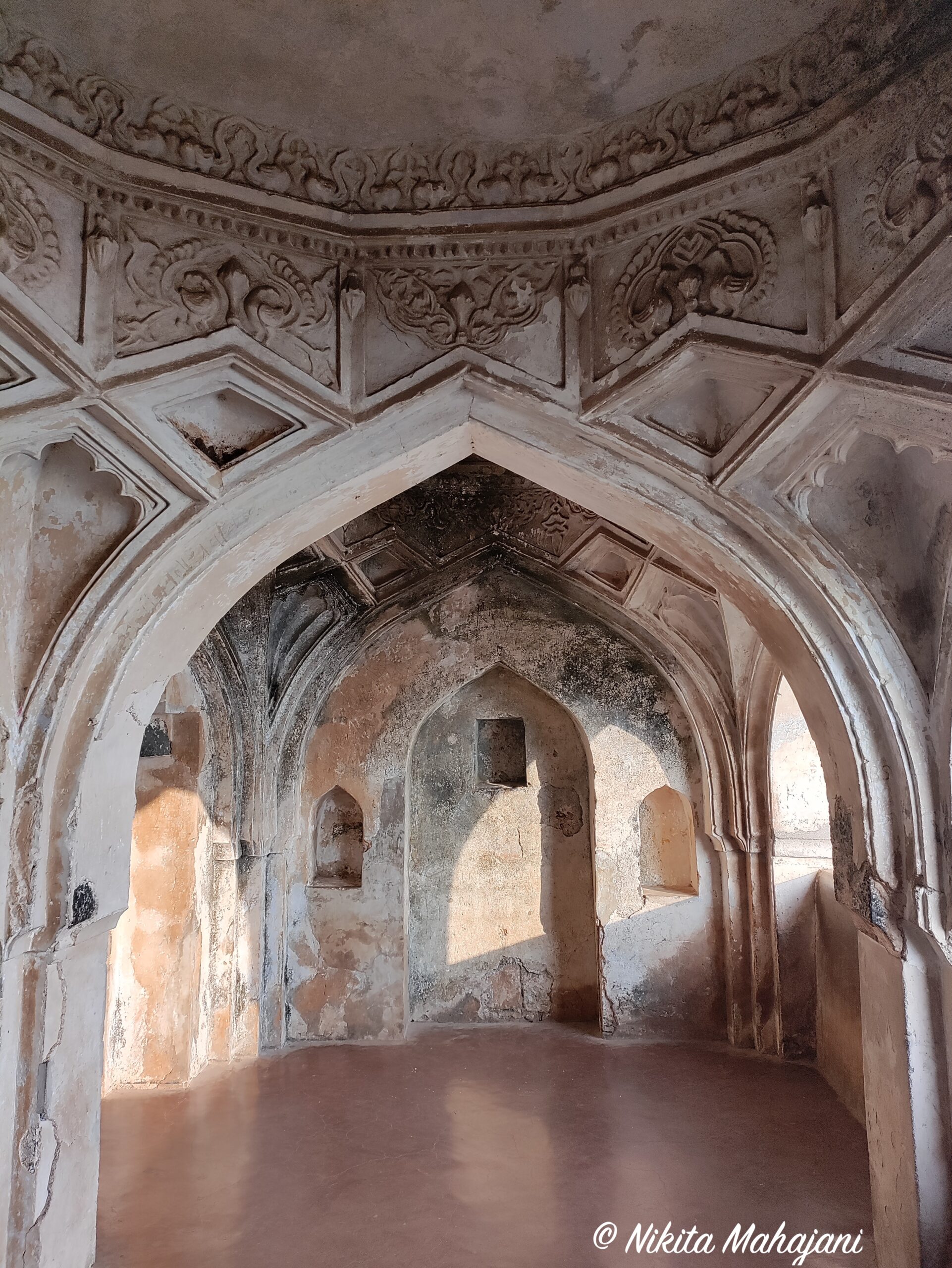
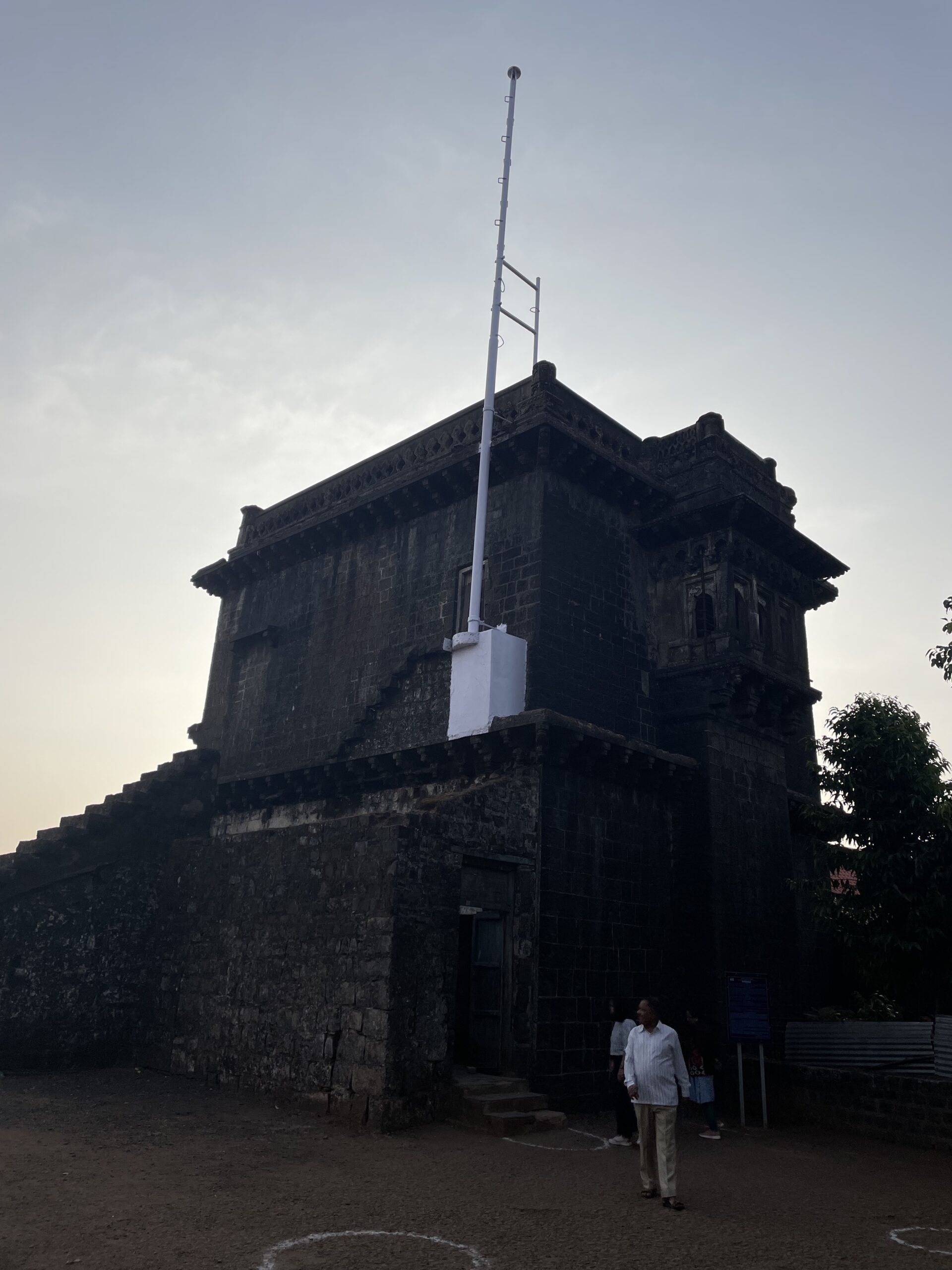
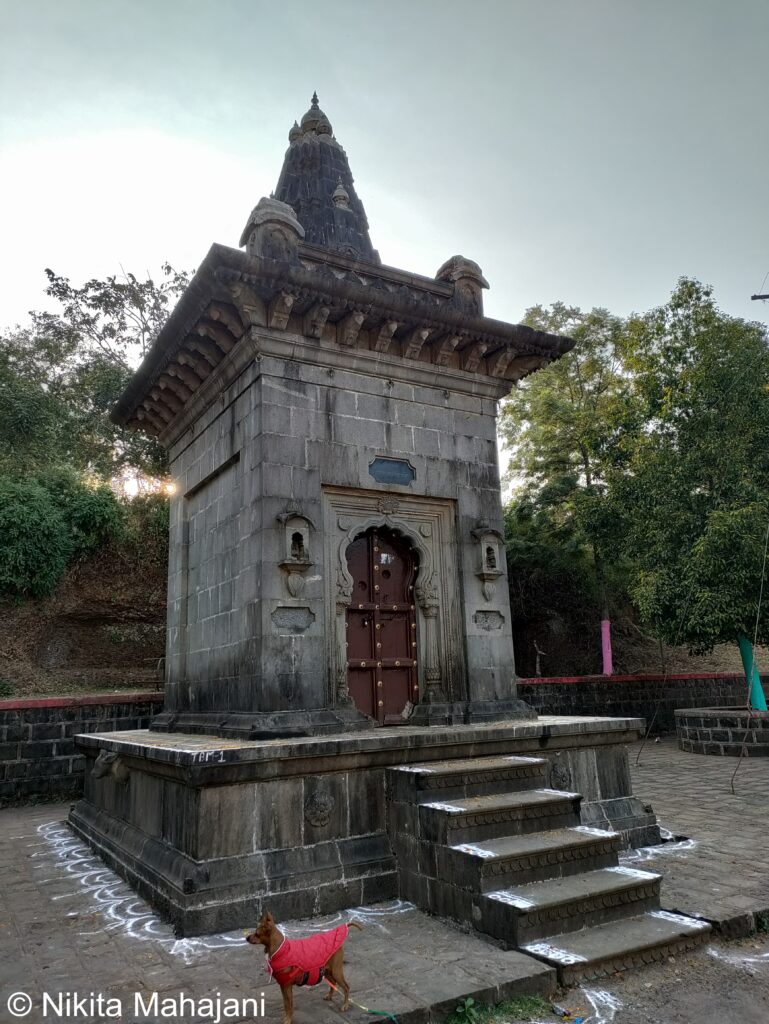
Our next destination was Sajja Kothi, built by Ibrahim Adil Shah in 1500, primarily to oversee the valley. Sambhaji Maharaj was kept under house arrest here for a period. Unfortunately, the site is not well maintained. After a brief visit, we sought the blessings of Goddess Ambabai at Panhala Fort. This temple, the oldest in the fort, was a place where Shivaji Maharaj would pray before embarking on major expeditions. As the Tarabai Palace was closed, we were unable to explore it.
History of Panhala
Panhala, also known as Panhalgarh is a hill fort which is triangular in shape, stands at an elevation of approximately 850 meters and spans a circumference of around 7.25 km. Half of the fort’s perimeter is naturally protected by a steep escarpment, further reinforced by a parapet wall, while the other half is secured by a robust stone wall with bastions.
The fort originally had three grand double-walled gates, of which two have survived. The most impressive among them is the Teen Darwaza on the western side, a massive and formidable structure. Within the fort, numerous ruined monuments remain, including three large granaries, the most notable being Ganga Kothi, covering an area of nearly 950 square meters with a height of 10.7 meters. In the northeastern section, Sajja Kothi, a two-story structure, is notable for being the place where Shivaji imprisoned his rebellious son, Sambhaji.
Historically, Panhala served as the capital of the Shilahara king Bhoja II from 1178 to 1209 AD. It later came under the control of the Yadavas and Bahamanis before being taken over by the Adil Shahi dynasty of Bijapur in 1489 AD. Shivaji captured the fort in 1659 AD, and it was from here that he made his daring escape to Vishalgarh on a stormy night while being besieged by Siddi Johar’s forces. The fort remained under Maratha rule, except for a brief period when it was occupied by the Mughals, before ultimately becoming part of the Kolhapur State until India’s independence.
Panhala is also known for its cultural and literary significance. The renowned Marathi poet Moropanta (1729–1794 AD) was born and raised here. Additionally, the fort houses the Samadhi of Ramachandra Amatya, the author of Ajnapatra, a key work on governance and fort construction. Today, Panhala has evolved into a popular hill station, offering essential amenities for tourists.
We came back to our hotel at 10:am to have breakfast and then we started our journey to Sangli. Our first stop in Sangli was the majestic Kopeshwar Temple, a stunning example of ancient Indian architecture. We marvelled at the intricately carved stone pillars and beautiful sculptures. Pets are allowed to enter the premises of the temple but they are not allowed to go inside the temple. So I waited with Sophie under a shady tree in the premises. The temple was so crowded that we could hardly take any photos. It is advisable to visit this place early in the morning or on a weekday. There are lots of shacks in the parking of the temple. Washrooms are not available.
After a short drive, we reached Sarsenapti Santaji Ghorpade Samadhi, a lesser-known gem surrounded by tranquility. A flight of steps leads down to the Krishna river, a number of rituals might be being performed along the steps. Parking is available, but the number of steps can be difficult for the elderly.
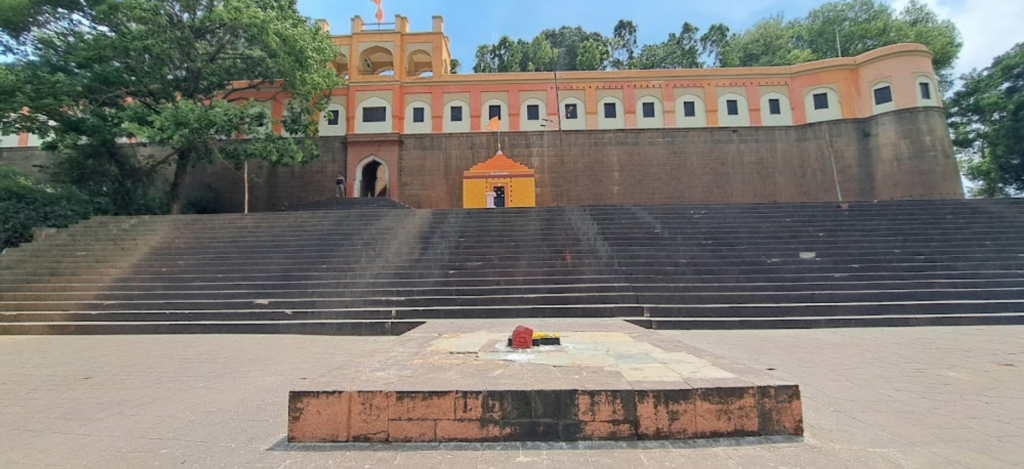
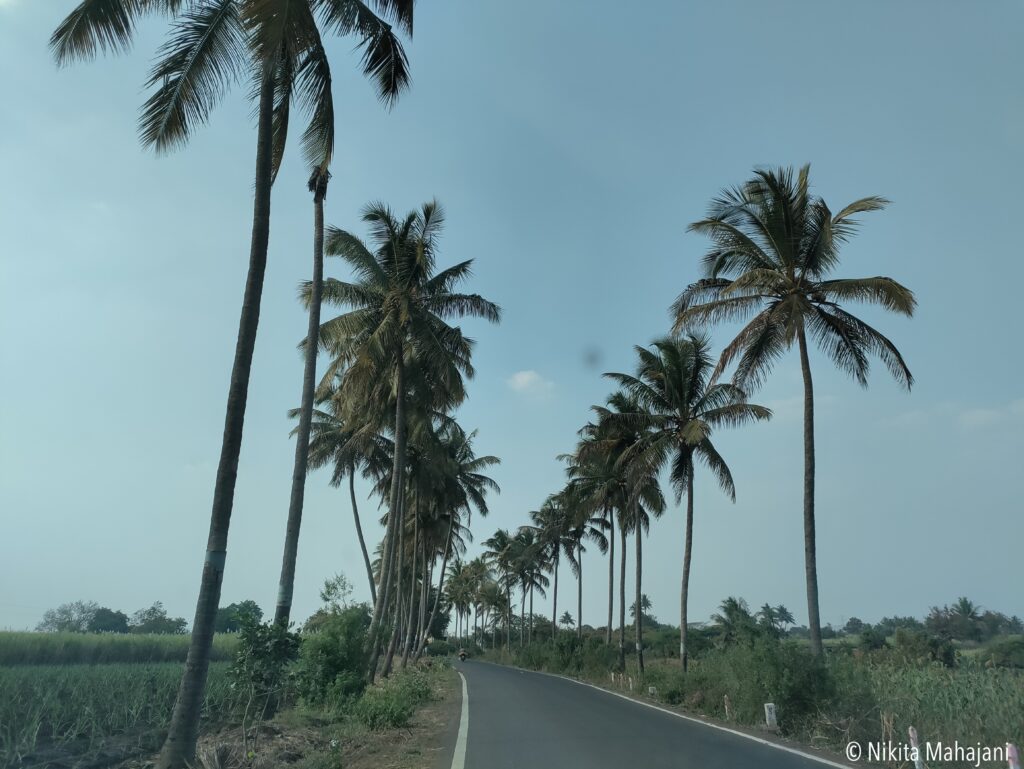
We had lunch at Hotel Darshan (Pure Vegetarian) near Shirol. He allowed our pet in the semi open dining on request. In the afternoon, we followed the scenic roads to Mouje Vadgaon which looks exactly like the famous Parra road of Goa shown in Alia Bhatt’s movie ‘Dear zindagi’
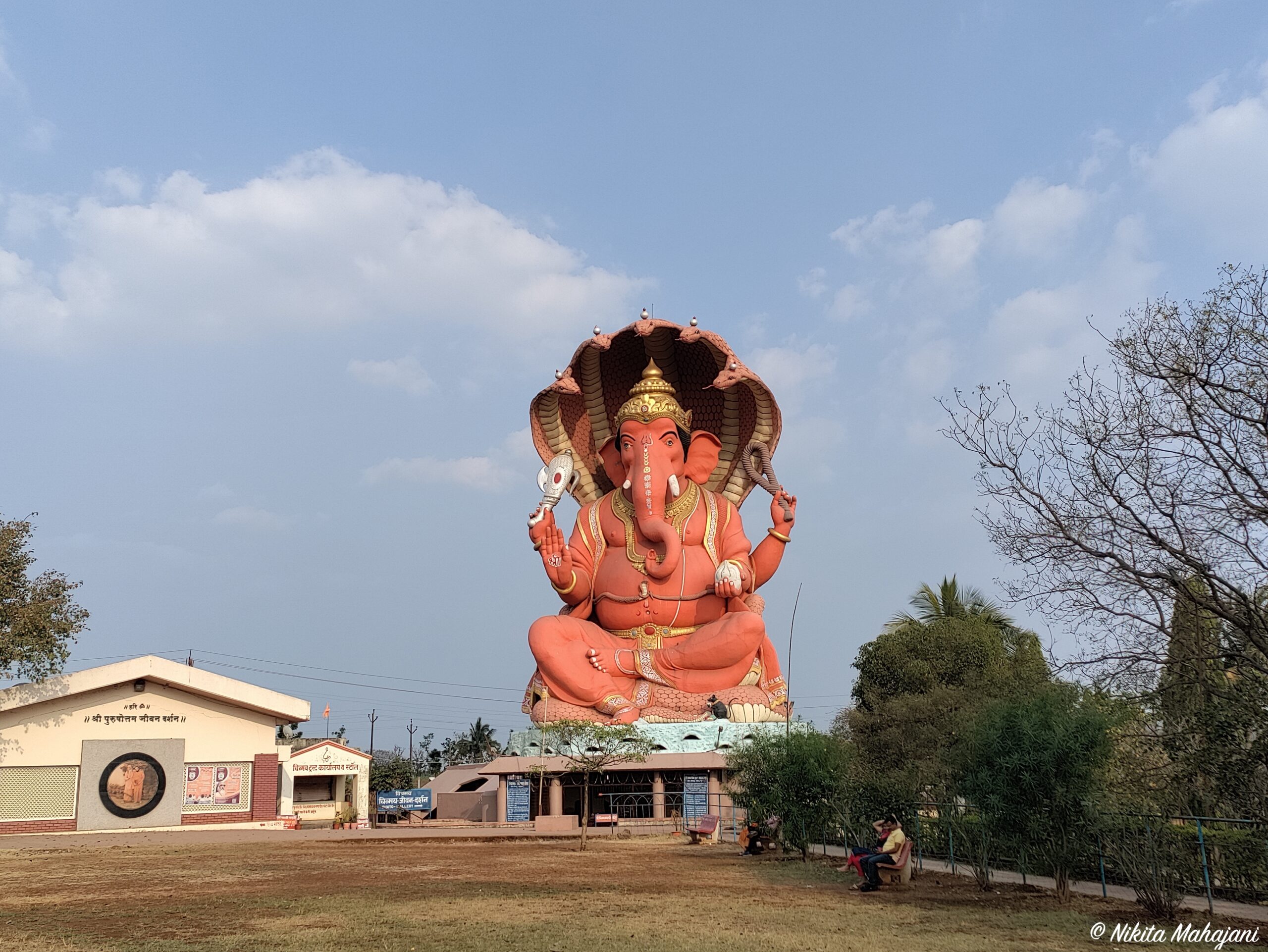
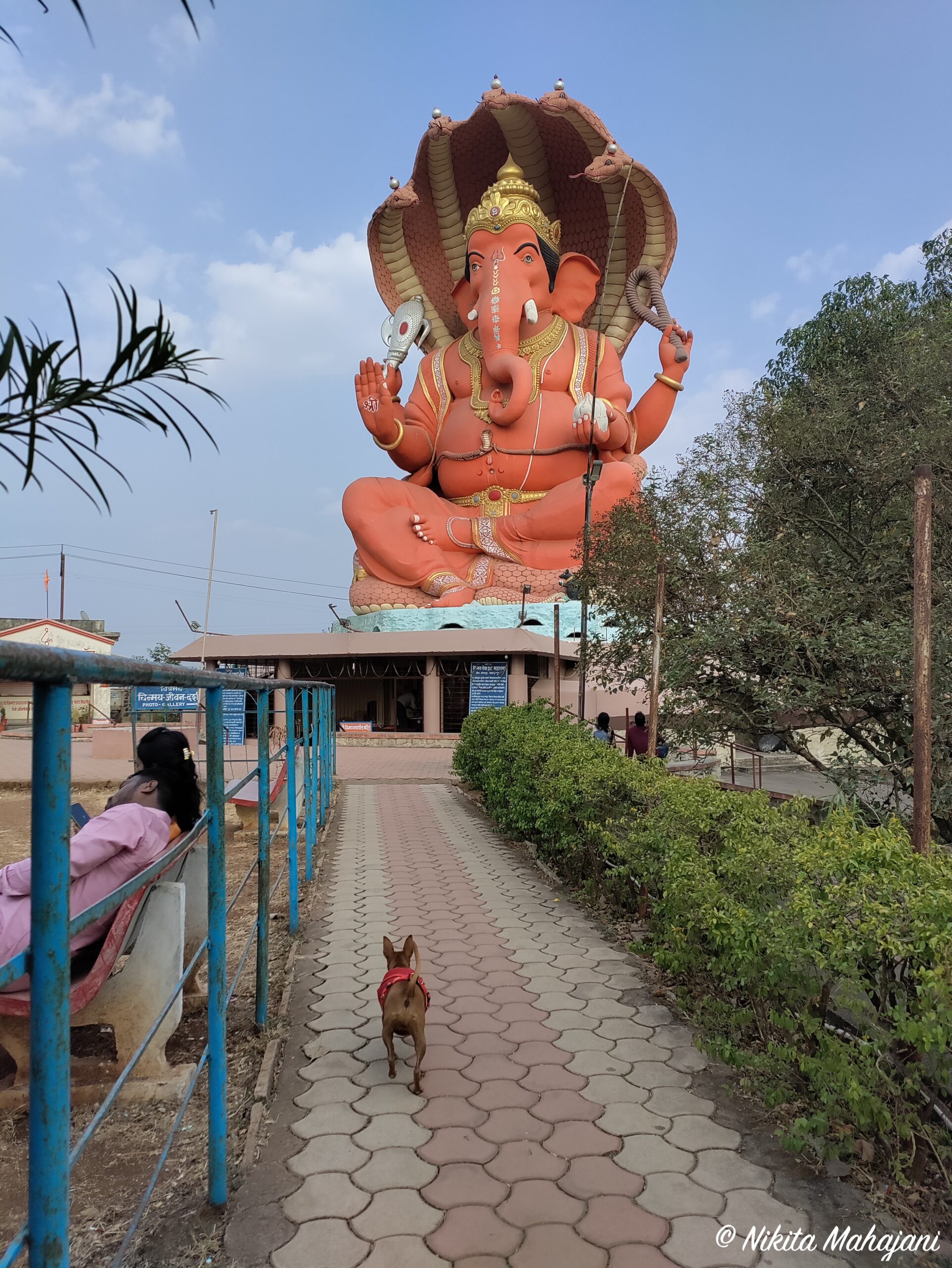
We also stopped by the the gigantic Chinmay Ganadhish Ganapati Temple which is visible from a radius of 1km. They have a dedicated parking space and a washroom. Entry is free of cost. There is a huge lawn in front of the statue where Sophie enjoyed being unleashed.
Both places were serene and offered a great chance to relax and reflect. Sophie was full of energy, eagerly exploring every new sight and sound. We returned to the resort by evening, feeling accomplished and happy, and enjoyed a quiet dinner.
Kolhapur: Day 3
To read the previous blog on day 2 of Kolhapur click here
Day 3: Masai Plateau and Historic Caves
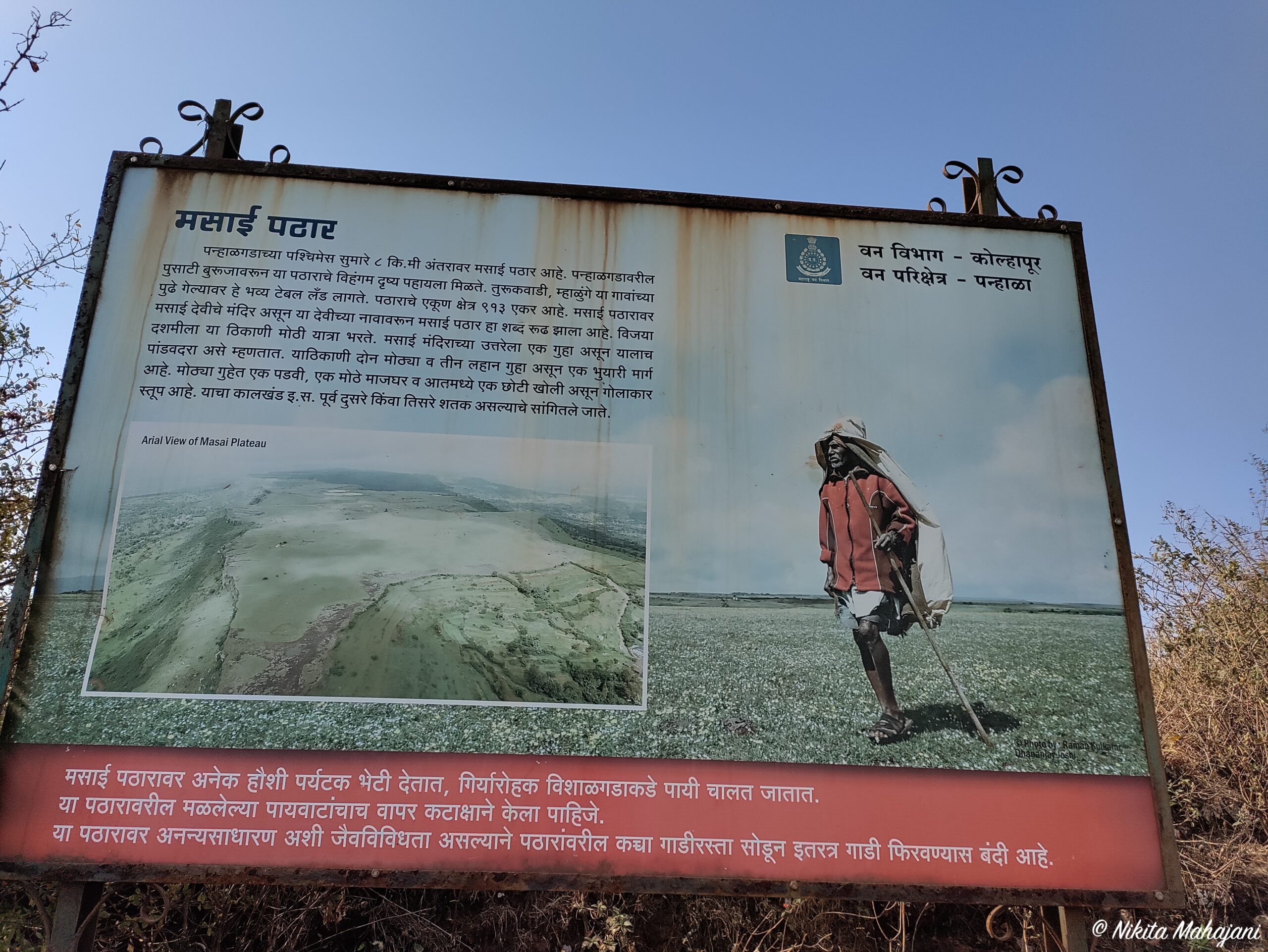
Sunday morning began with a drive to the Masai Plateau, a vast open expanse with incredible views of the Kolhapur countryside. Masai plateau is the perfect place for senior dogs and humans who wish to explore nature since the place has no steps at all. The morning was peaceful, and the air was fresh—perfect for Sophie’s little adventure.
This location is perfect for a one-day trip or picnic with friends and family. It is also an ideal spot for overnight camping, offering breathtaking views of both sunrise and sunset. The best time to visit is after the monsoon season.
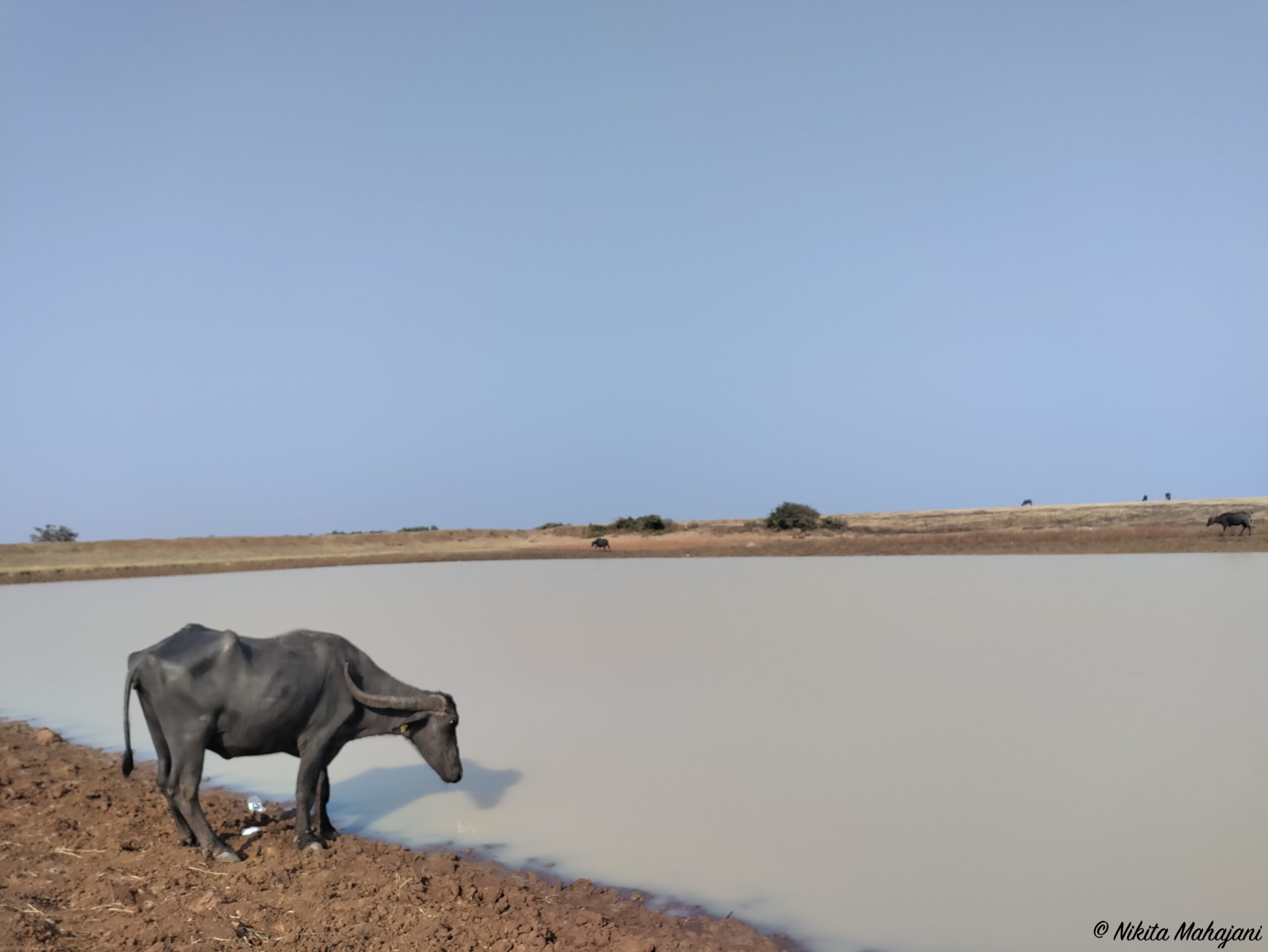
The area consists of a vast plateau that changes its colors depending on the season. During summer, it becomes a dry plain, allowing visitors to explore all the way to the Masai Devi Temple and caves at the far end. Here, you can sit, relax, and take in the serene surroundings. However, during the monsoon, reaching the final point can be challenging, though the initial stretch still offers a great experience. Be cautious of slippery roads in the rainy season—it’s best to park your vehicle early and walk on the lush green grass.
Since public transport is not available, you must bring your own vehicle. Hotels and adventure sports camps are located at the base, making it a great spot to spend quality time. This destination is highly recommended for a nature-filled outing. Please respect the environment by not littering.
Remember to carry your own food and water.
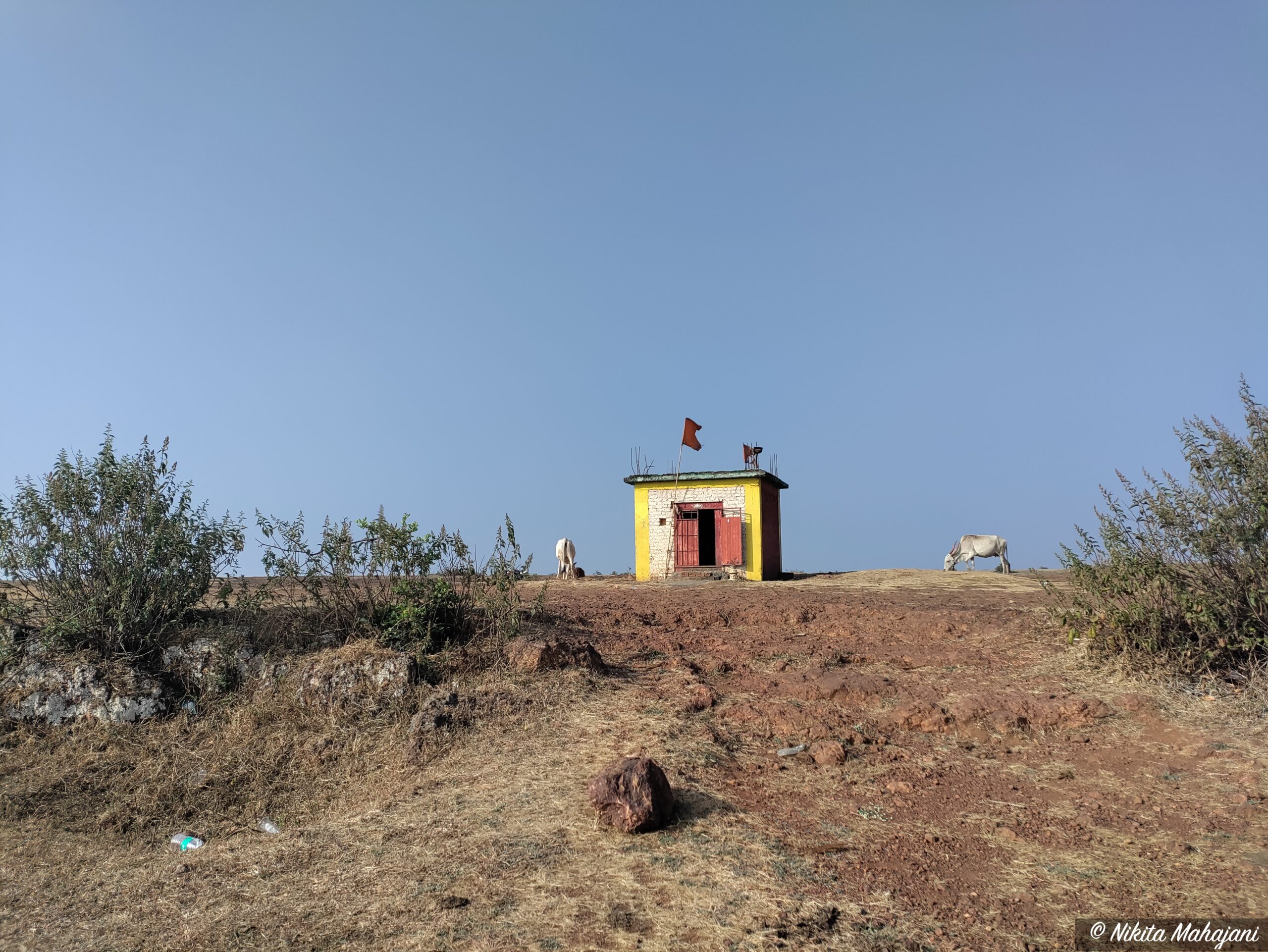
We explored the nearby Buddhist caves, including the Pandavdara caves, which took us back in time with their historical significance. It takes more than an hour to reach the caves. We could complete the entire trek since it was almost peak afternoon and we couldn’t bear the heat. So we walked till a place where the caves became visible.
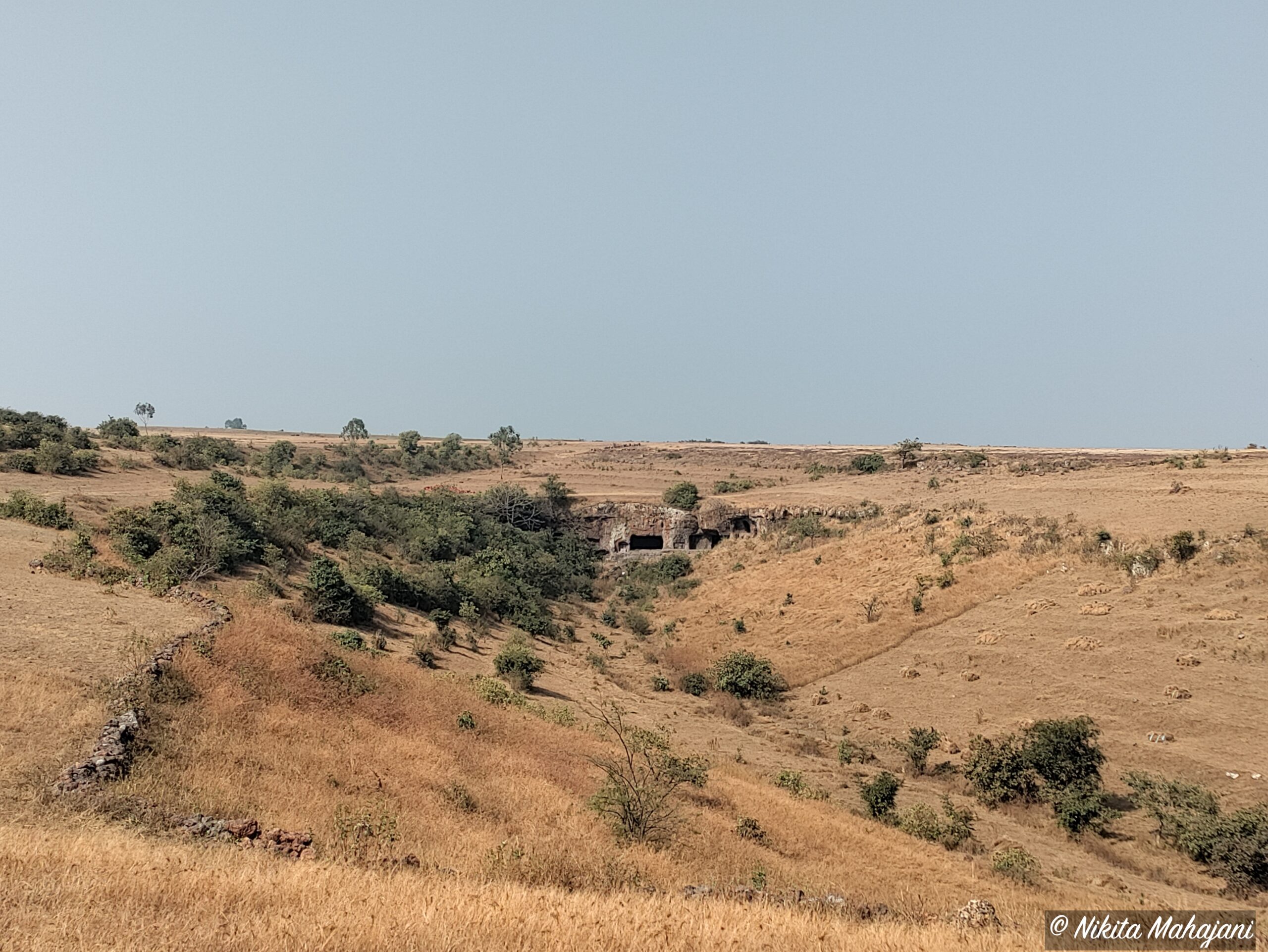
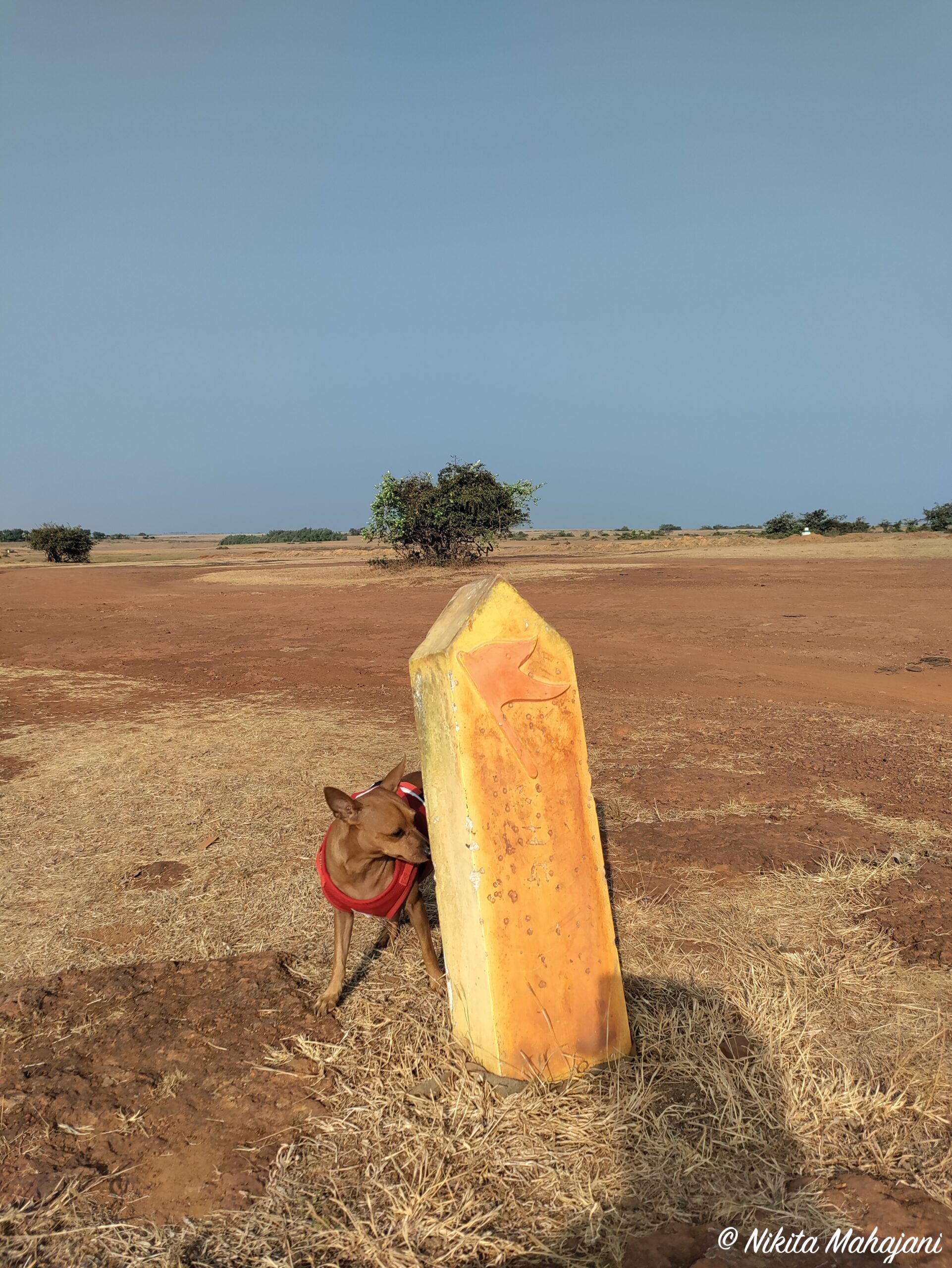
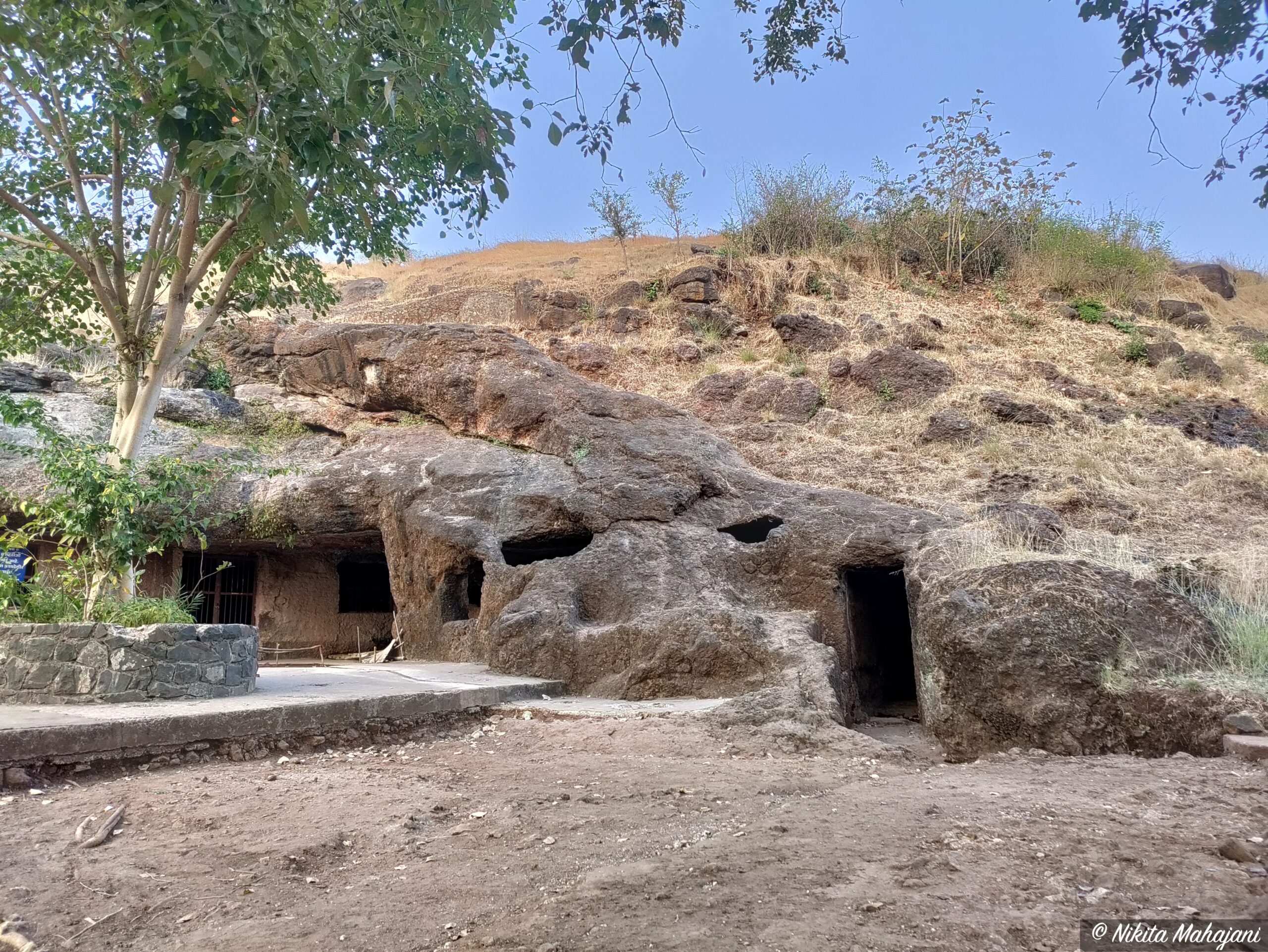
After exploring the plateau, we headed back to the resort, freshened up, and checked out. Before heading back to Pune, we had a quick trek to the Pohale Caves—yet another example of Kolhapur’s rich historical legacy. While approaching the cave there is a royal blue colored hoarding of Pohale caves with Dr. Babasaheb Ambedkar’s photo on it. We parked our car under the hoarding. If you’re taking bike then it is very easy to reach but if you have car you have to park it on main road and walk 200 to 300 meters. Sophie enjoyed the 10-15 mins walk towards the cave. This route offers panoramic views of mountains and valleys.
A guard was present at the temple. The caves are clean and well maintained. The caves are relatively simple and were carved into the rocky terrain near Jyotiba’s hill. The site features a large vihara, roughly 34 feet square, with 14 columns on three sides and 22 small cells surrounding the central hall, each measuring 7 feet in length, 5 feet in width, and 7 feet in height. Additionally, there is a Chaitya and another cave that includes a raised rock-cut seat for a teacher, along with a water cistern.
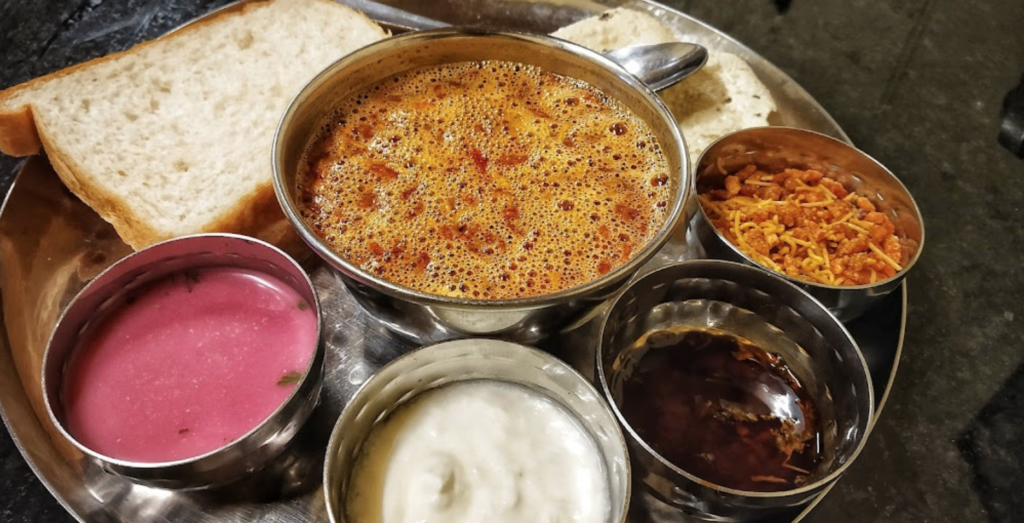
For brunch, we treated ourselves to the famous Kolhapuri Misal at Kolhapuri Wada Misal, which was a spicy delight. Although this restaurant is not listed as pet friendly, I had called up the owner and asked him if we could come their for a quick brunch stop. He readily agreed and allowed our pet inside. This restaurant is in a very quiet bungalow society with ample parking available on road. It is open only till lunch time. Waiting time is approximately 15-30 minutes. Tables have to be used on sharing basis due to the rush.
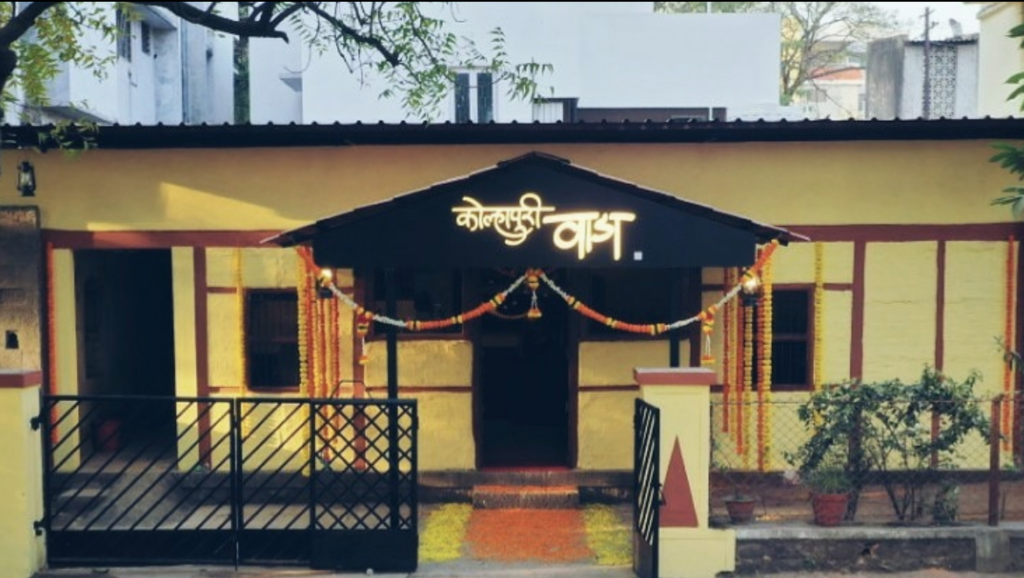
The experience at this place was truly exceptional. The food was rich in flavor and genuinely authentic. The Kolhapuri Misal had a perfect balance of spices, delivering just the right amount of heat and depth. The accompanying bread was a highlight—soft, fresh, and irresistibly delicious. Every aspect of the meal, from taste to ingredient quality, was outstanding. This spot is a must-visit for anyone craving Kolhapuri Misal, whether dining with friends or family. We left feeling completely satisfied.
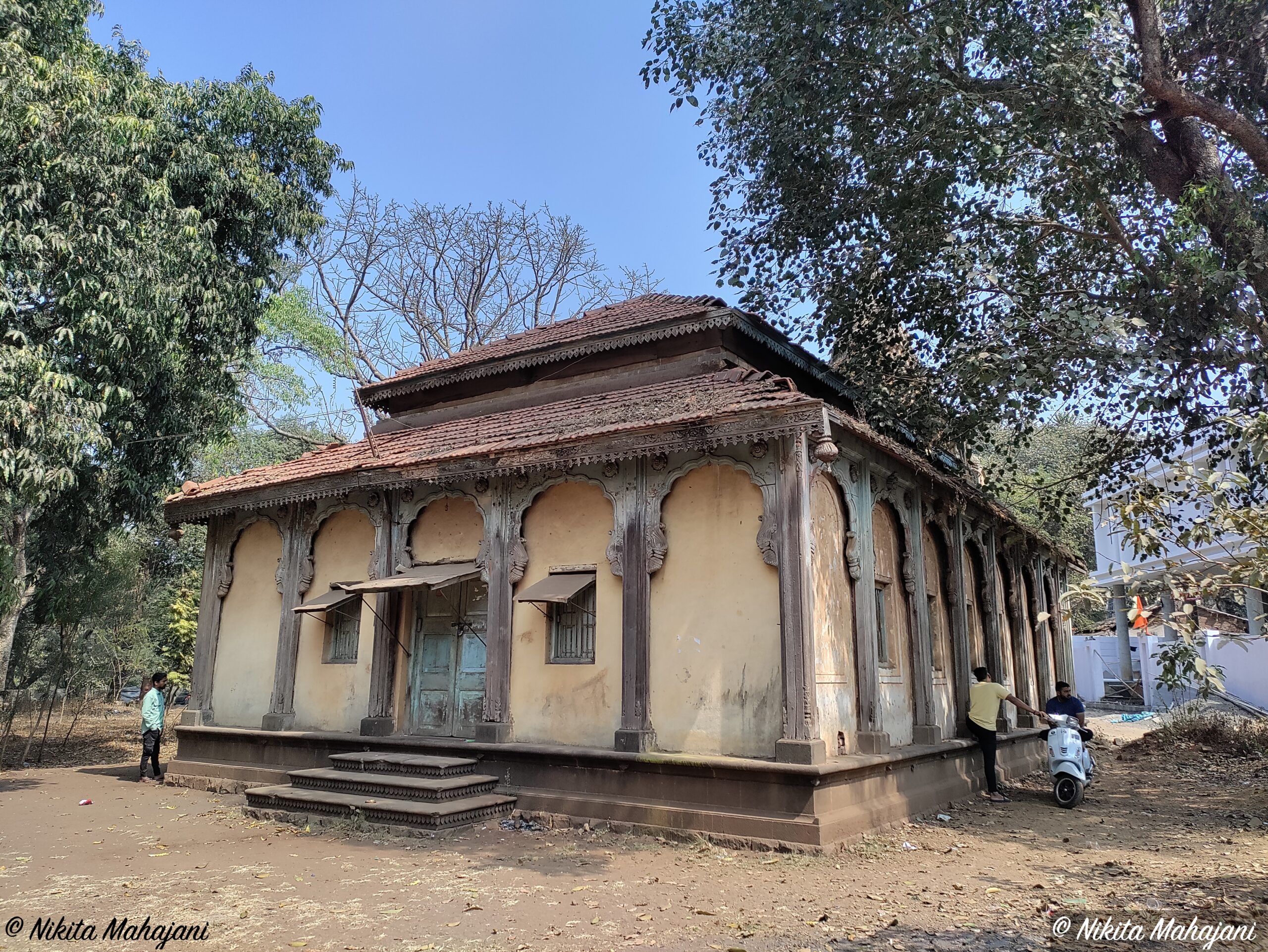
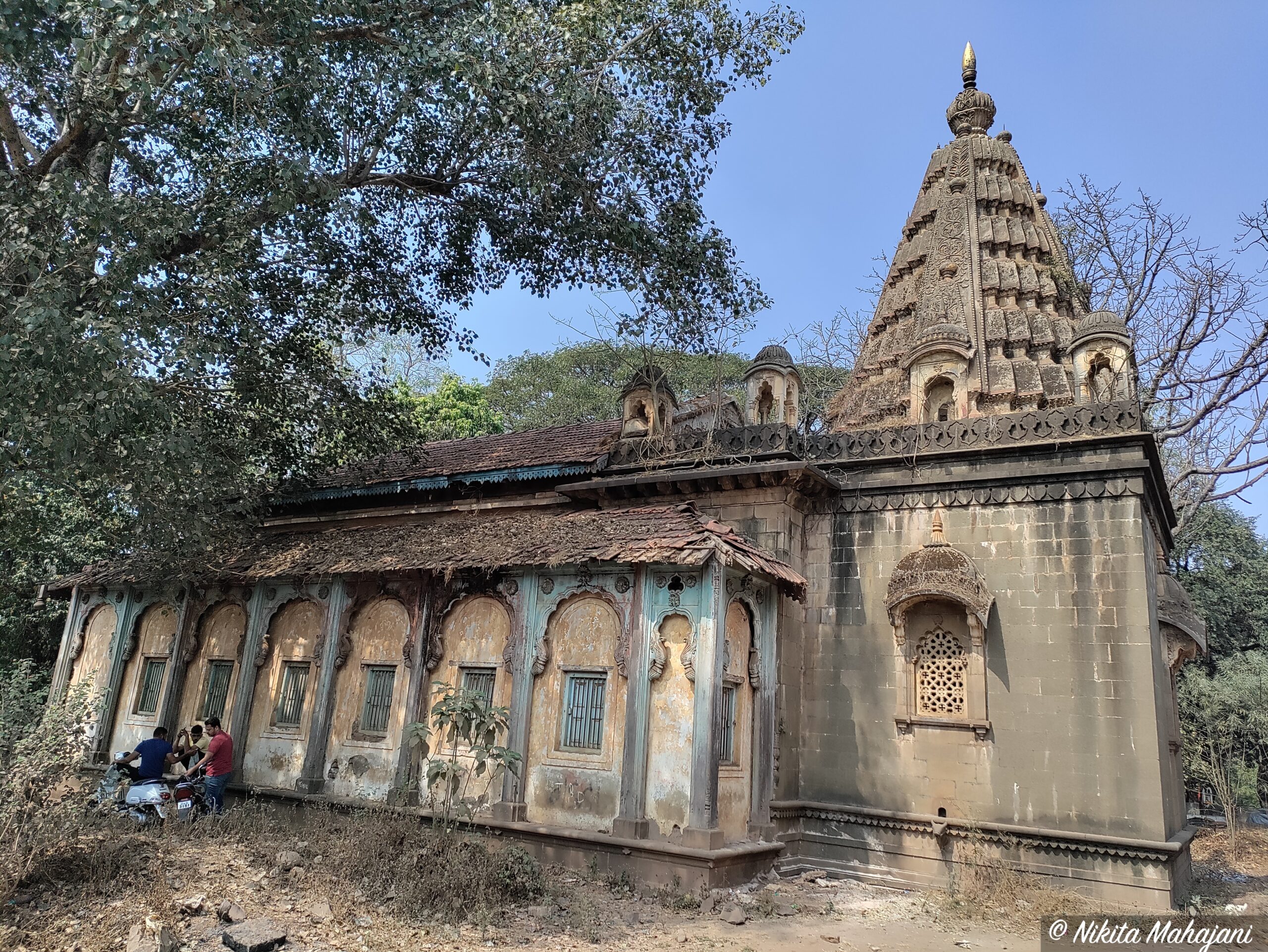
By 3 PM, we reluctantly began our journey back to Pune. On the way back home, we came across a beautiful abandoned temple which was absolutely sketchworthy. This temple was near the parking of Panchganga ghat. The temple has an intricately carved Bhumija type shikhar and chajjas in the form of bengal roofs. It was sad to see that the temple premises are being used as a sopt for smoking and drinking alcohol by youngsters.
On the way back home, we had an early dinner at Hotel Sadguru pure veg, near Yashoda College, Satara. He also allows pets on request. There are two outlets of Hotel Sadguru pure veg on opposite sides of Pune Satara highway. As we arrived home, tired but fulfilled, we couldn’t help but feel grateful for the unforgettable experiences and the time spent together as a family, with Sophie as our faithful travel companion.
Kolhapur surprised us with its historical richness, natural beauty, and peaceful ambiance. Whether it was exploring forts, wandering through temples, or simply enjoying the scenic drives, every moment was special. And traveling with Sophie added an extra layer of joy to the experience. Kolhapur is the perfect getaway for anyone looking to immerse themselves in culture, history, and nature all at once.
Where did we stay ?
Where did we eat ?
Sadguru Pure veg, Pune- satara Highway
Madhuban Garden restaurant pure veg, Panhala
Kolhapuri wada misal, Kolhapur
Hotel Darshan Pure Vegetarian, Shirol
Hotel Sadguru pure veg, near Yashoda College, Satara
Places that are not suitable for pets
Mahalakshmi Mandir
Bhavani Mandap
Chhattrapati Shahu Maharaj Rajmahal, Kolhapur
Town Hall museum
New palace, Kolhapur
Laxmi Vilas Palace, Kolhapur
Kaneri Museum
Kaneri Math
Kaneri Planetarium
Saputara
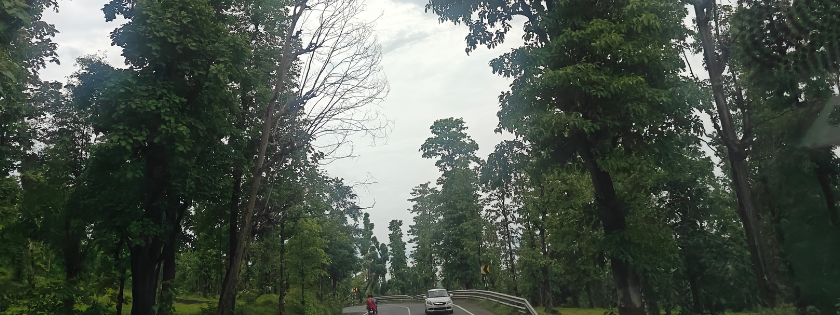
If you’re looking for a peaceful, pet-friendly getaway far from the crowds of Mahabaleshwar, Panchgani, or Matheran, Saputara might just be the hidden gem you’ve been searching for. Tucked away in the lush Dang district of Gujarat, this charming hill station offers scenic lakes, serene waterfalls, and breathtaking viewpoints — all perfect for travelers with pets. Unlike the buzz of mainstream tourist spots, Saputara remains refreshingly quiet and close to nature. What makes it even more special is its connection to the local Adivasi tribal culture, which adds a unique cultural richness to your travel experience. Whether you’re strolling along the lake or watching the sunset with your furry friend by your side, Saputara promises a relaxed and soulful escape. We went to Saputara for a 3 day roadtrip with our pet. We followed the itenary mentioned in the table below:
| Before lunch | After lunch | |
| Day 1: Pune to Saputara | Breakfast break at Hotel Sai Sagar pure veg. Lunch break at Hotel Rajesh | Reach Saputara and check-in Hotel Lakeview |
| Day 2: Local sight seeing in Saputara. | Saputara Lake, Sunrise point | Gira waterfall |
| Day 3: Saputara to Pune | Lunch break at Hotel Sanskruti pure veg. | Reach Pune. |
Day 1: Pune to Saputara – Hitting the Road!
We kicked off our much-awaited road trip on the morning of June 14th. With our bags packed and our dog’s travel kit ready (toys, water bowl, leash, treats – the essentials!), we left Pune at 8:00 AM in our Tata Nexon.
 Breakfast Stop:
Our first stop was at Hotel Sai Sagar Pure Veg – a clean, pet-tolerant spot where we could stretch out a bit and enjoy a hot breakfast. Our dog had his own treat time in the shade nearby.
 Lunch Break:
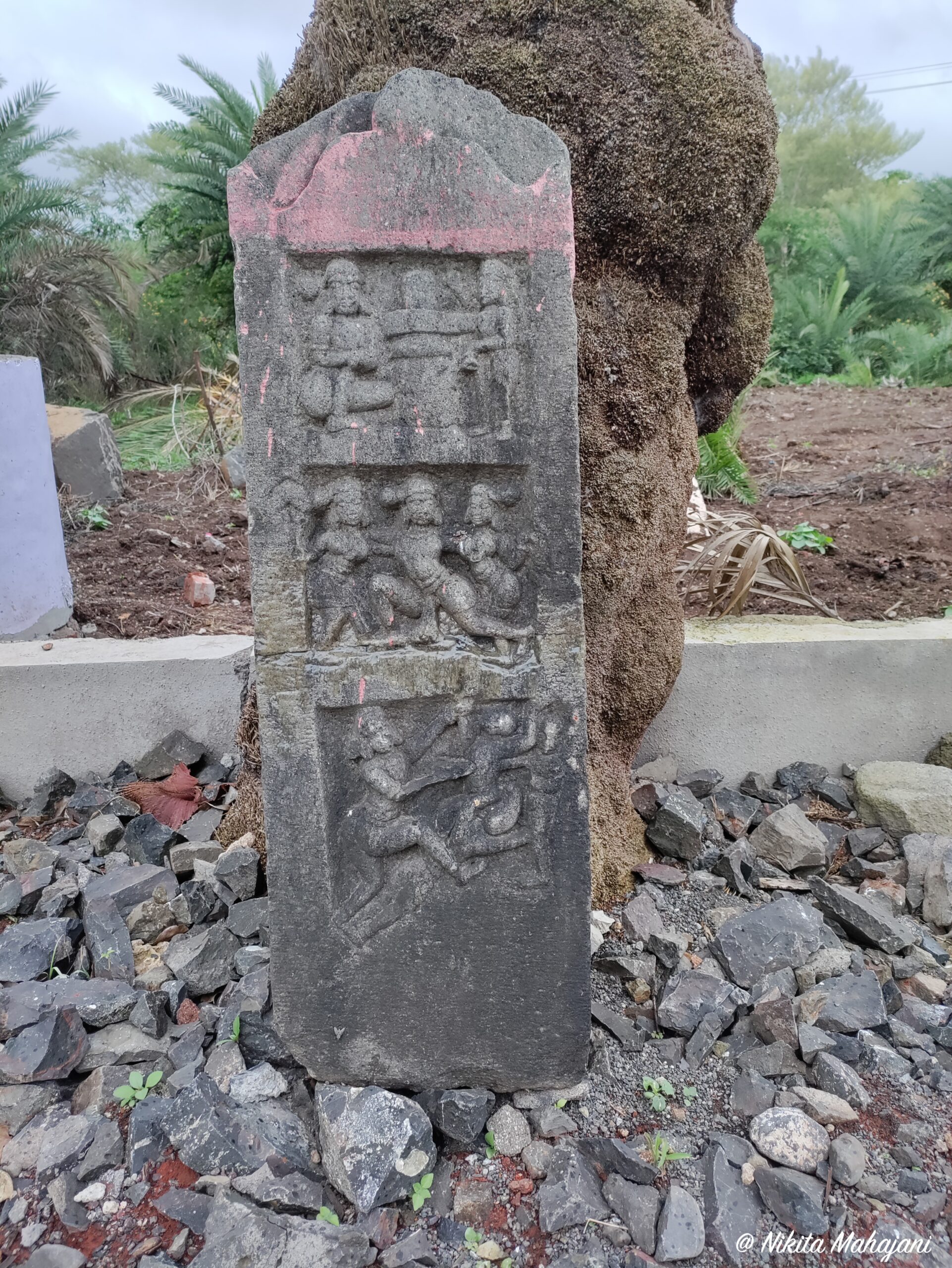
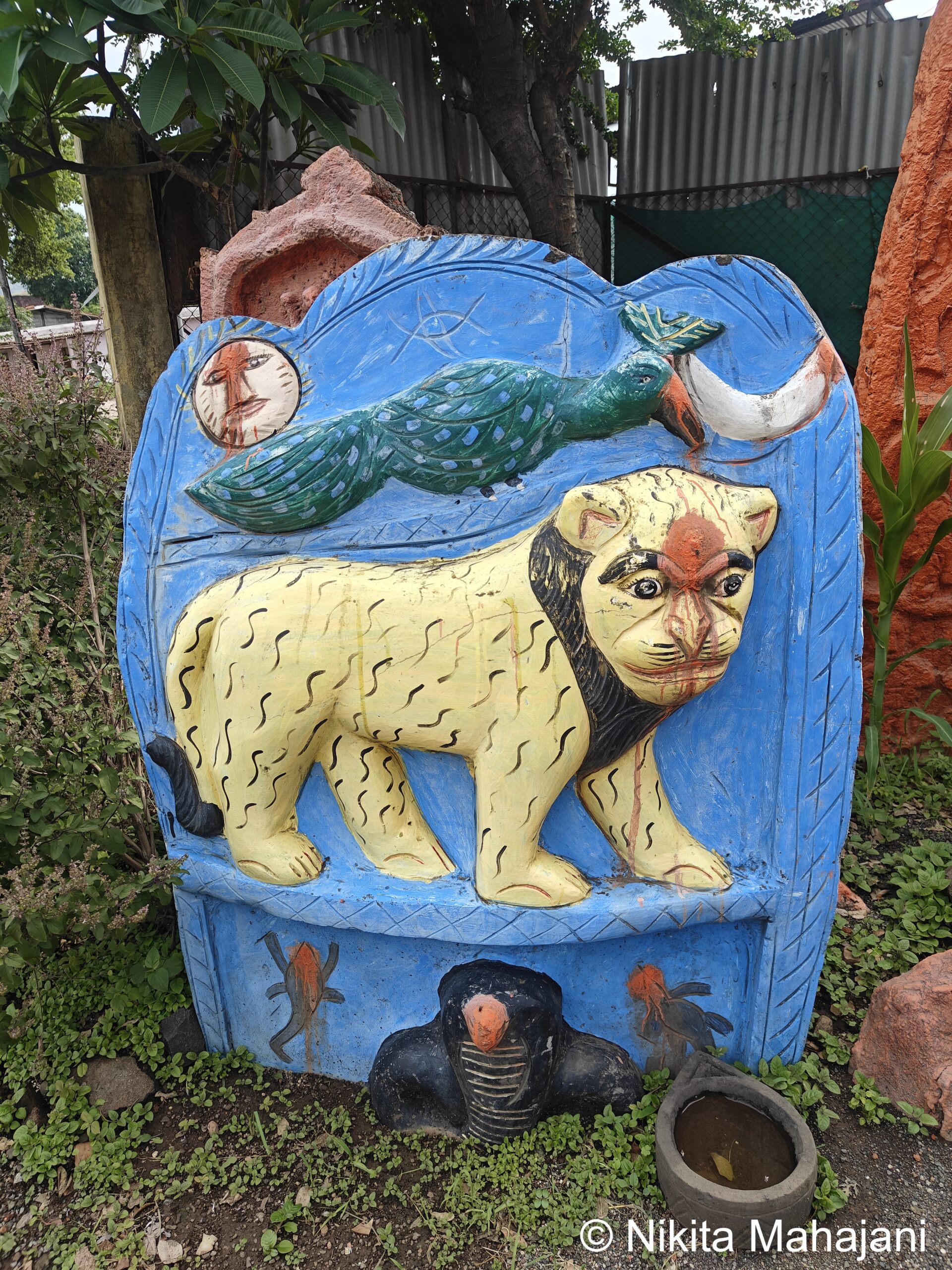
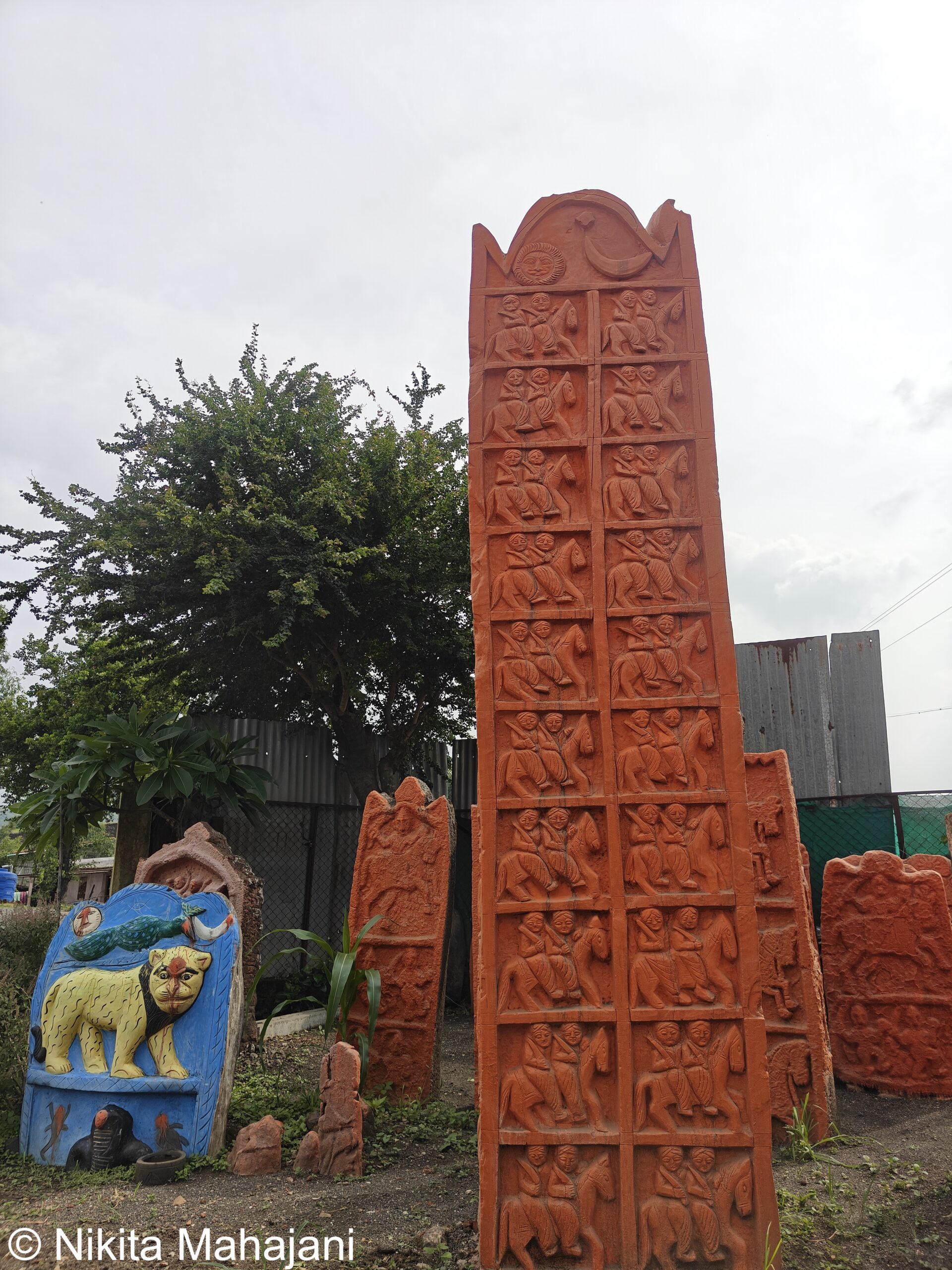
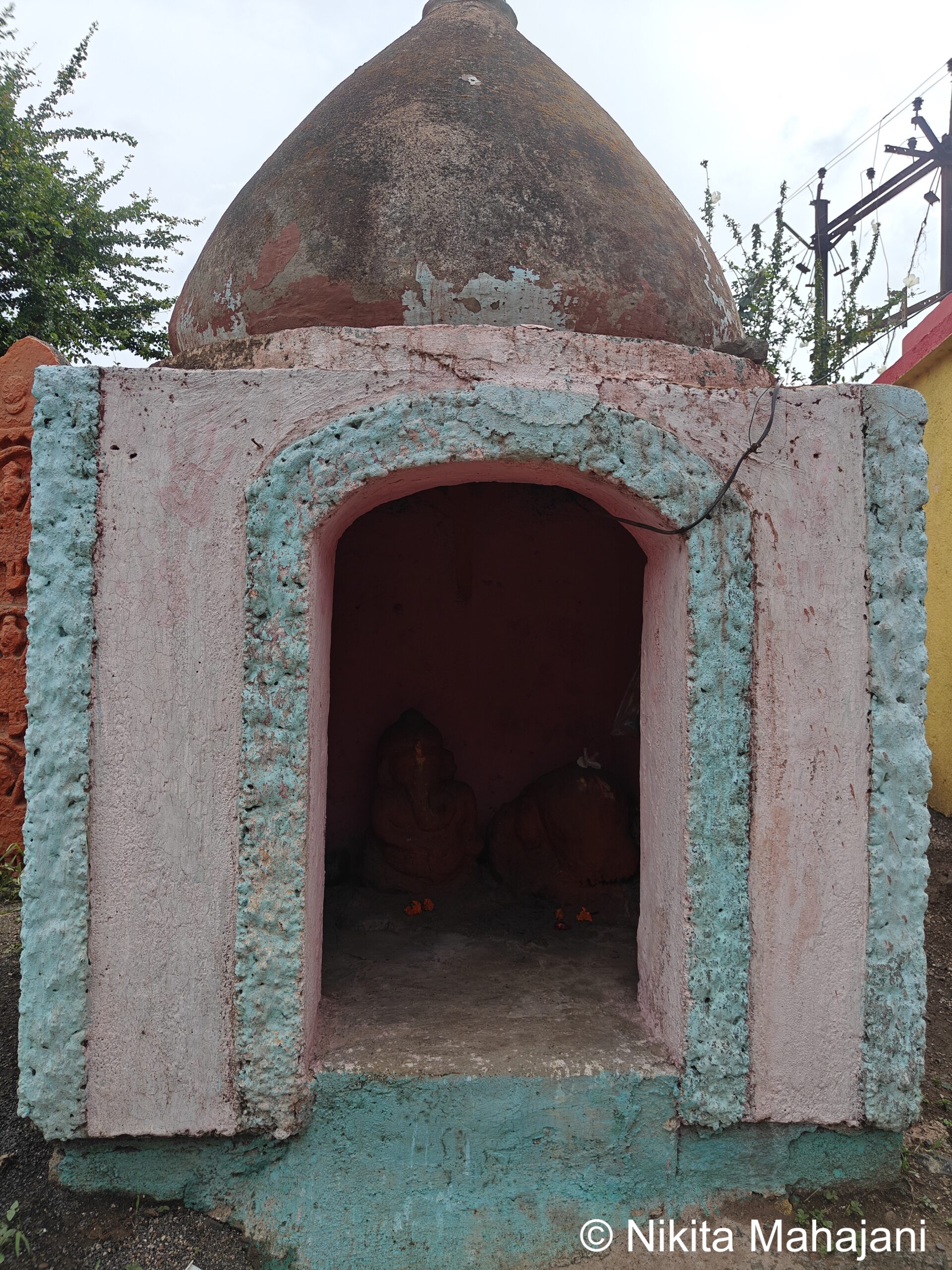
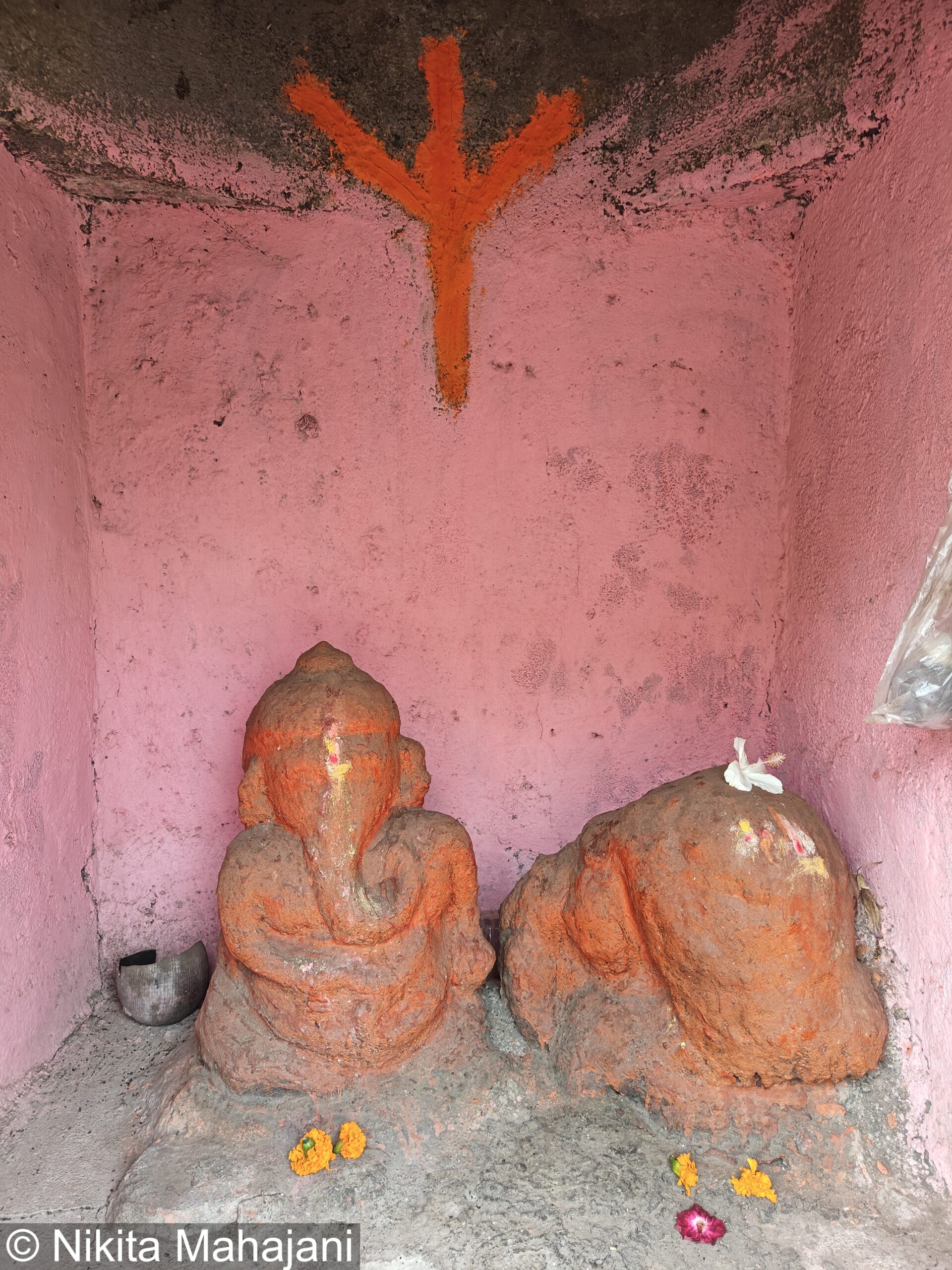
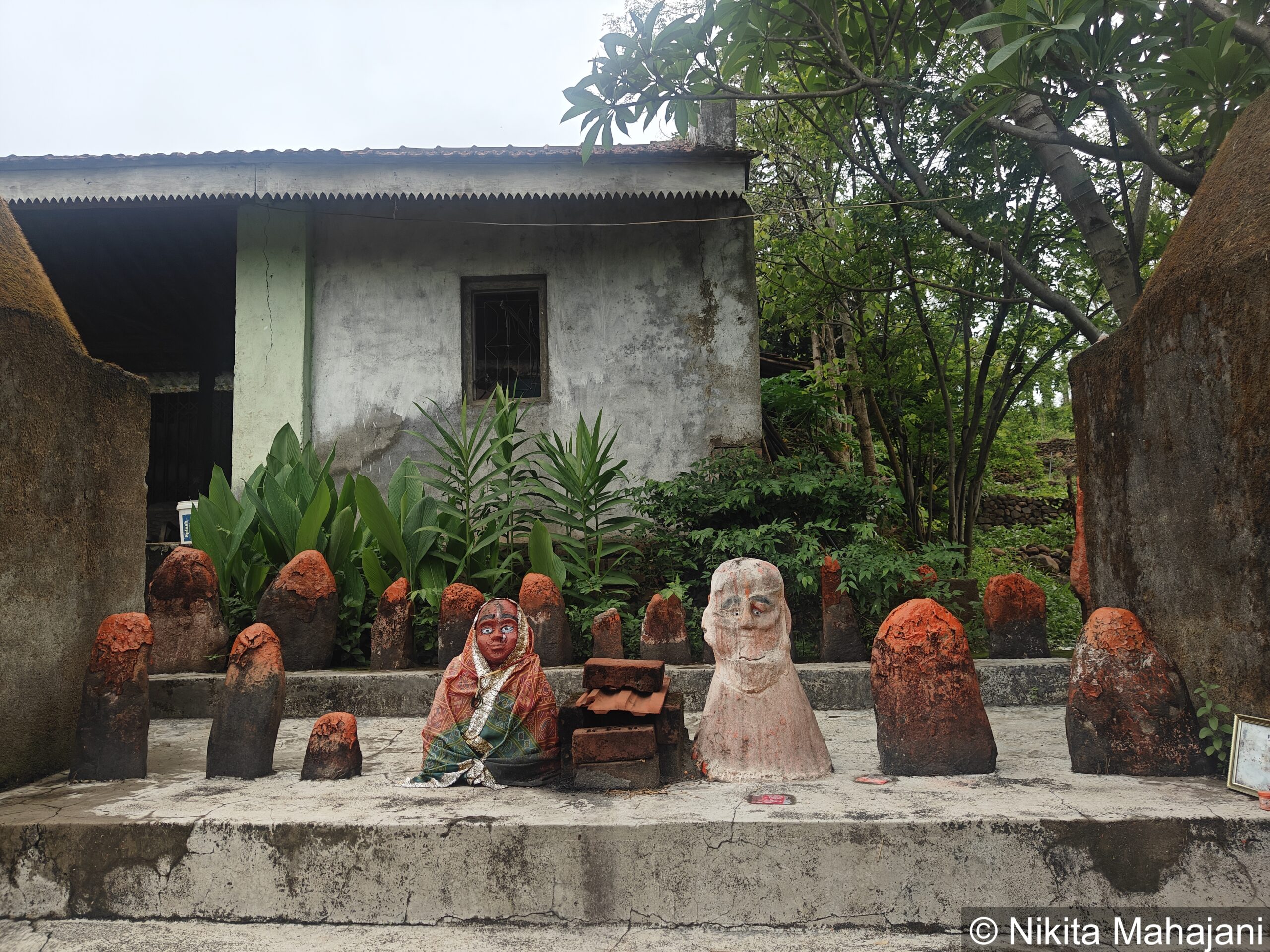
We paused for lunch at Hotel Rajesh, which had enough parking and shaded areas to keep our dog comfy while we took turns dining. On the way to Saputara, just a little distance before Hatgad Fort, we came across a set of beautifully carved stone steles. There were a series of hero stones smeared in saffron color. There was a stone sculpture of Waghdev (tiger-god). There was a sculpture of Ganesha as well inside a small enclosure. The local people workship of all of these steles.
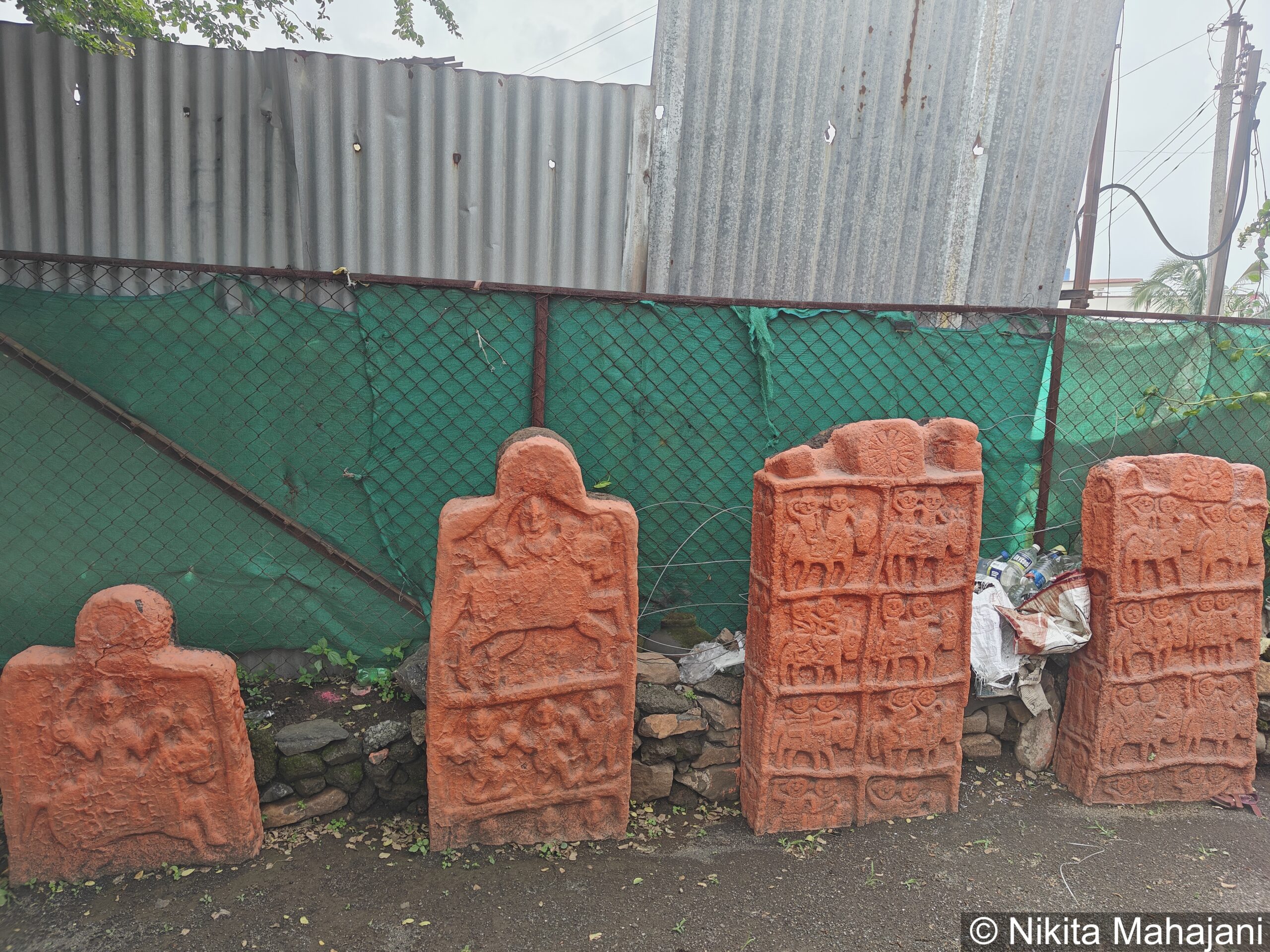
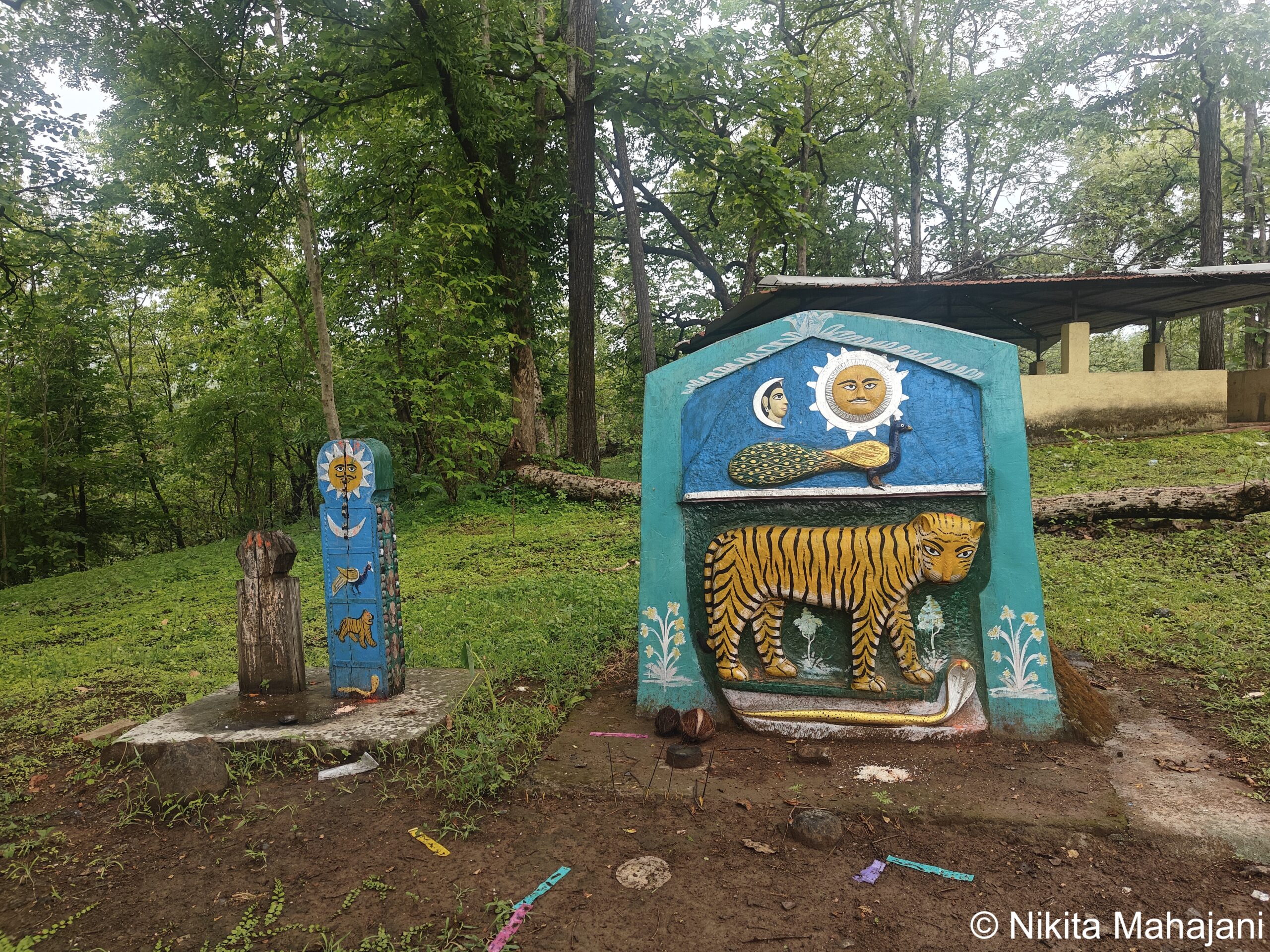
In the Dang region, most people follow their own tribal traditions and pray to their ancestors. Their daily life is full of rituals, customs, and folk beliefs. Many believe that everything in nature — like trees, animals, and rivers — has a spirit. One of their most important gods is Waghdev, the tiger god, who is seen as a powerful and sacred animal.
The people of Dangs also believe in magic and spirits — some helpful, some harmful. Because of this, they often do special prayers, make offerings, and perform rituals to stay protected and keep peace in their lives.
In the Dang region of Gujarat, the local tribal people, known as Dangis, deeply respect a forest spirit called Waghdev, who is believed to take the form of a big cat like a tiger or leopard. Every village has a wooden statue of this animal god. Long ago, when tigers or leopards caused trouble by attacking people or animals, hunters would be called to stop them. But even after a dangerous tiger or leopard was killed, the villagers didn’t just celebrate — they came in large numbers to show respect to the animal. Many would even pray with folded hands and gently touch the animal, treating it like a god.
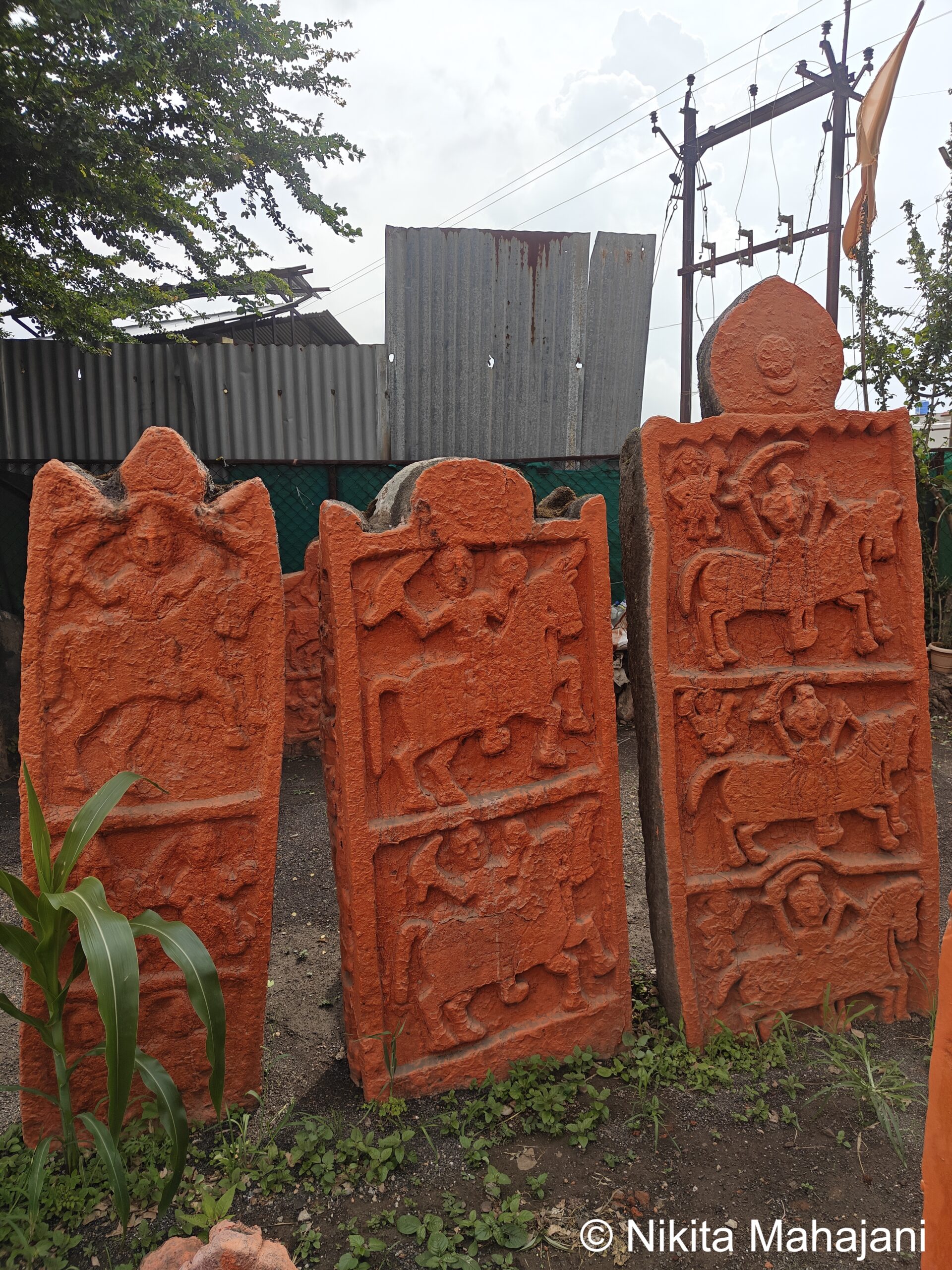
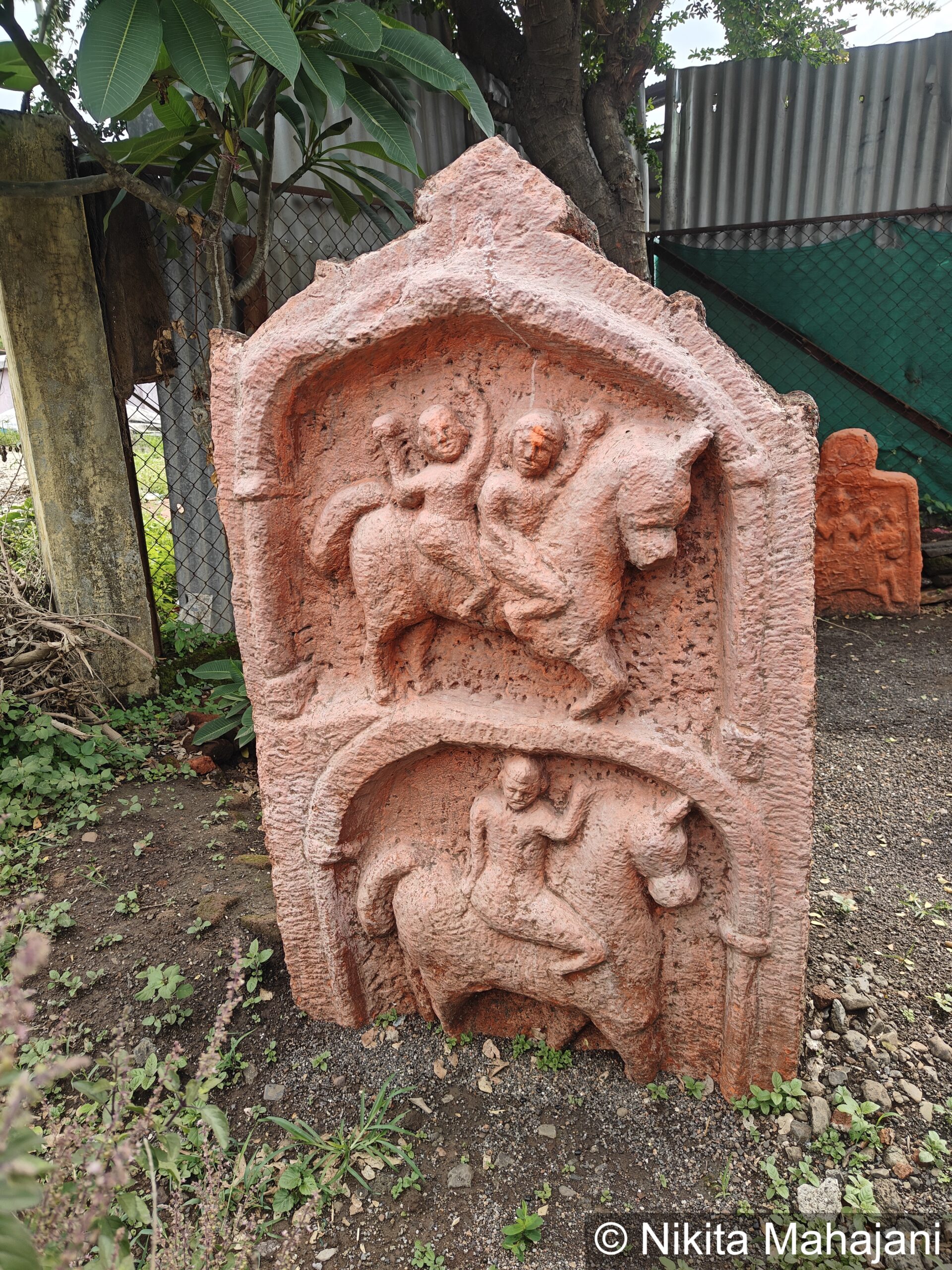
Hero stones, or Veergals, are ancient commemorative monuments erected in memory of individuals who lost their lives in acts of valor—typically in battles, wars, or other heroic confrontations. Unlike general memorial stones that may mark funeral remains, hero stones are not part of burial practices. Instead, they stand independently as symbolic tributes to bravery and sacrifice.
These monuments are usually upright stone slabs, often adorned with sculpted horizontal panels that reflect the artistic styles and cultural narratives of the time. Each band of carving tells a story—not just of the individual commemorated, but also of the broader social and historical context of the region.
Known by various names across India such as viragals, natukals, nadukkals, paaliyas, govardhan stambhas, kirti stambhas, and chhaya stambhas, these stones can be found in many parts of the country—from Maharashtra, Karnataka, and Tamil Nadu to Gujarat, Himachal Pradesh, and Central India.
Whether you’re a history enthusiast, an art lover, or a curious traveler, encountering a Veergal offers a powerful glimpse into the courage, customs, and craftsmanship of ancient India.
 Arrival in Saputara:
We reached Saputara by 5:00 PM and checked into Hotel Lakeview. They were kind and accommodating about our dog, which instantly set the tone for a relaxed stay. After a long drive, all three of us enjoyed a quiet evening stroll by the hotel.
Day 2: Exploring Saputara – Pet Friendly Sightseeing
We started our day exploring the calm and picturesque Saputara Lake. Early morning vibes, minimal crowd, and open spaces made it perfect for our pup to walk around. There are lots of shacks in the peripheral garden of Saputara lake.
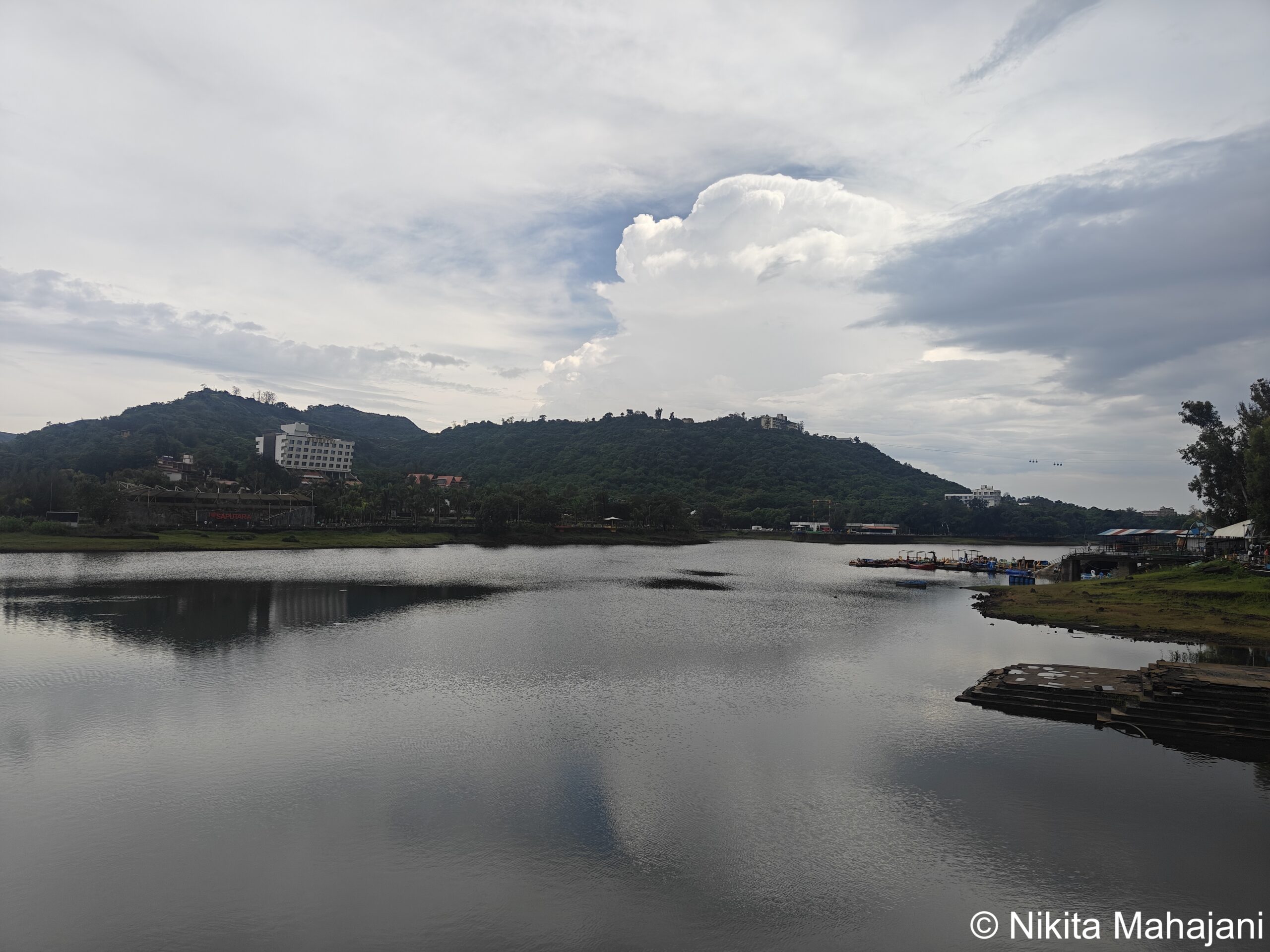
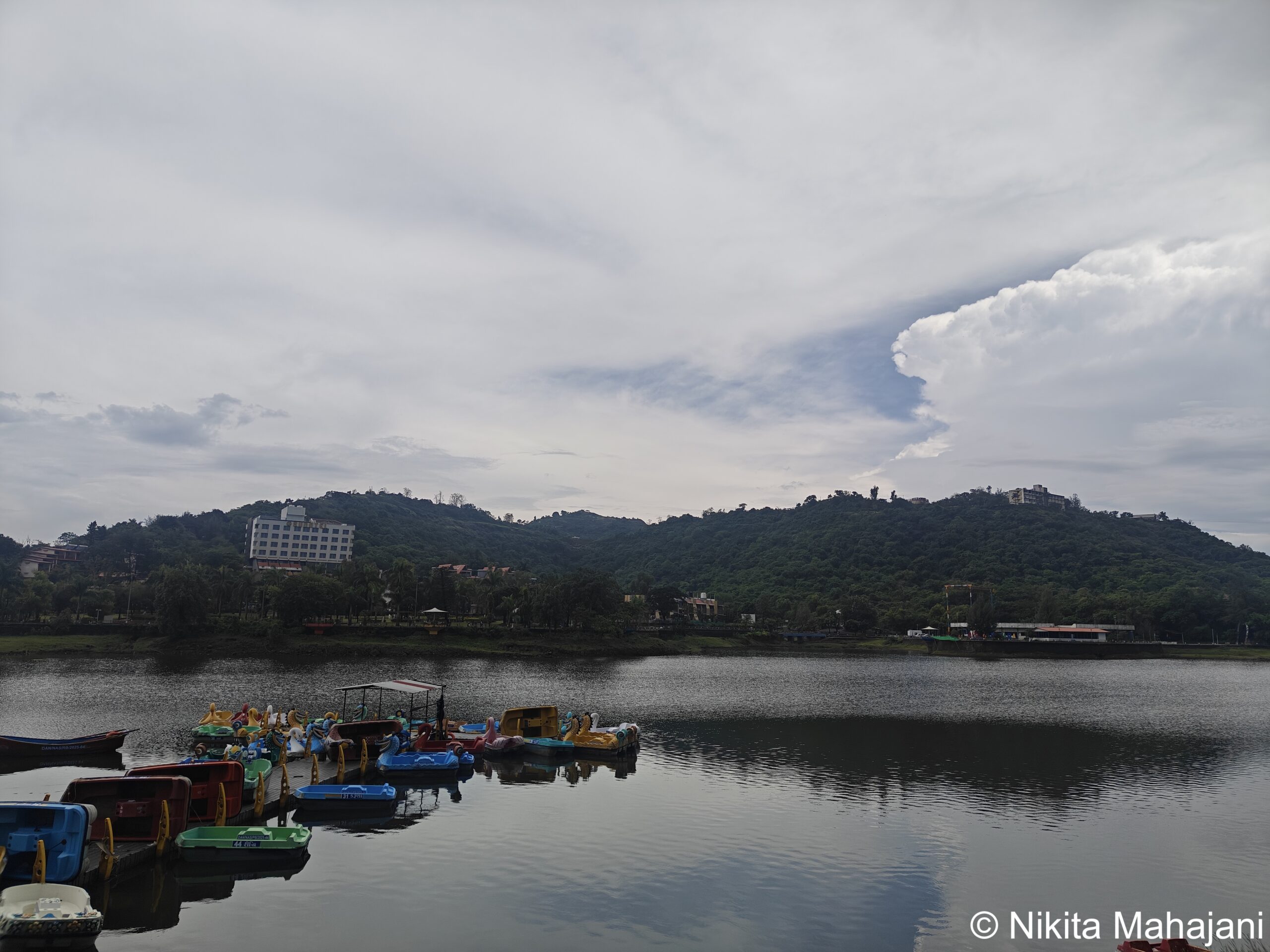
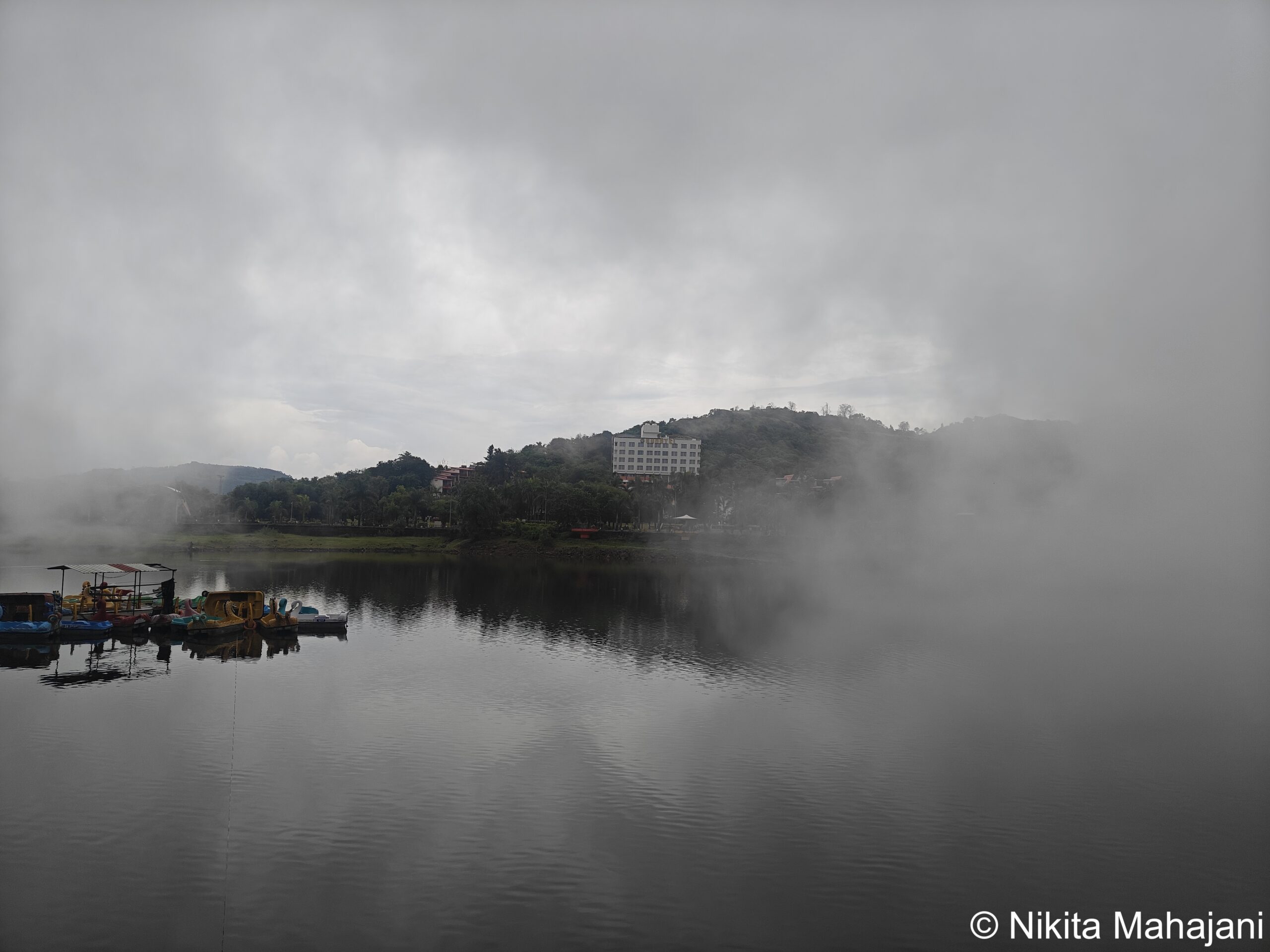
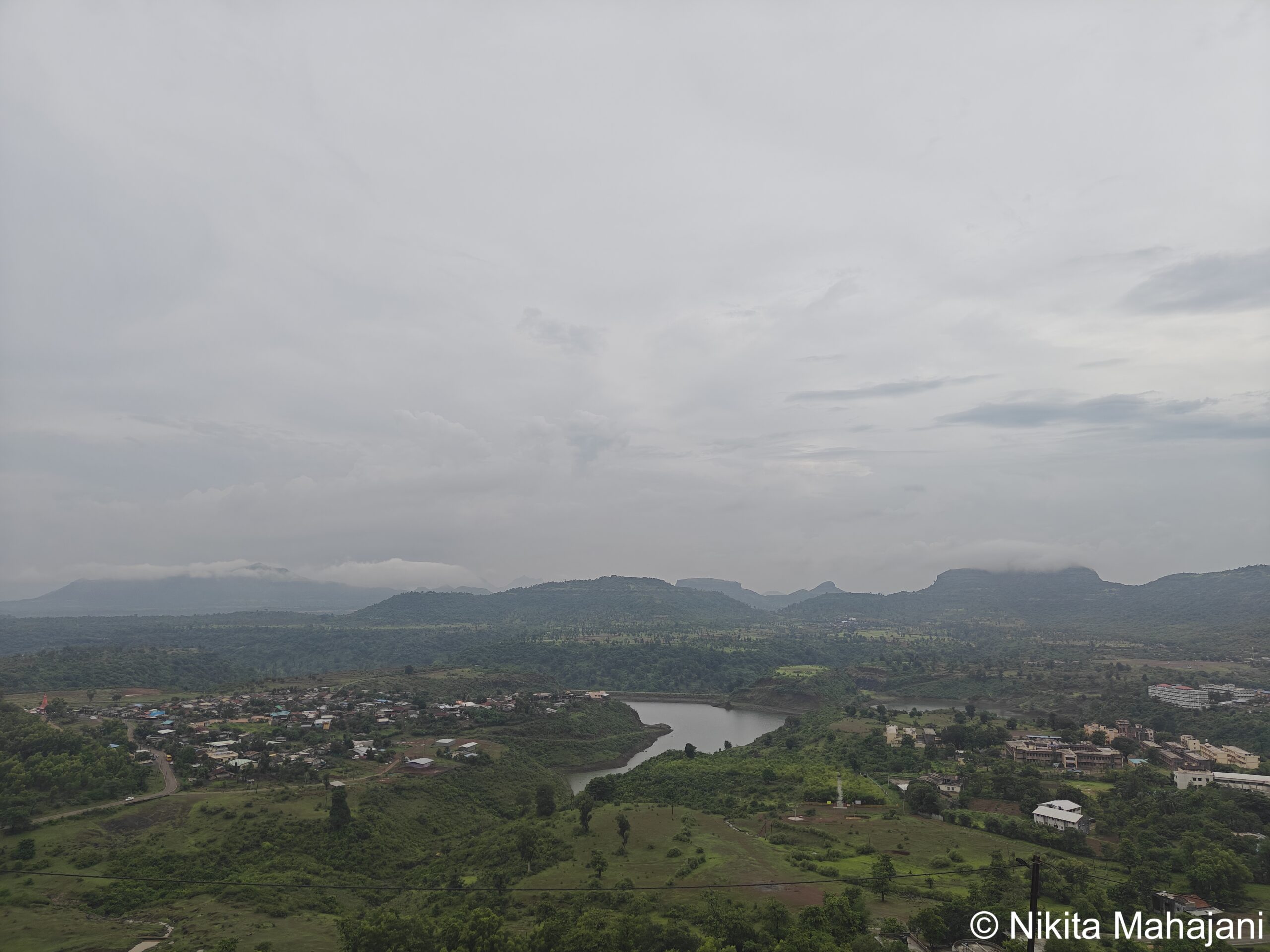
When we reached there, we had clear view of the lake and its surrounding greenery. We could see the fog moving and it covered the entire lake within a minute which was a magical experience. There was fog everywhere with very low visibility.
 Sunrise Point:
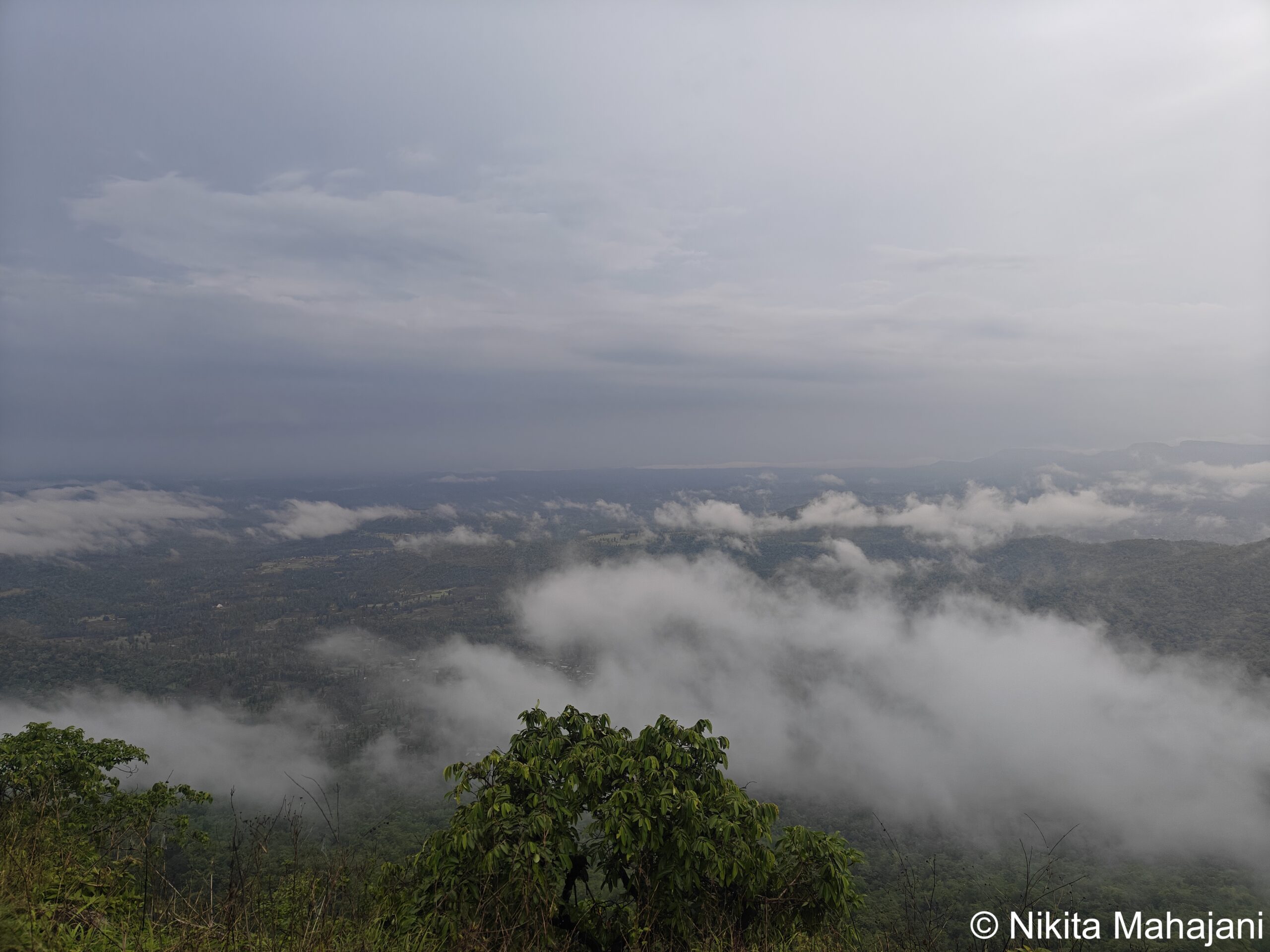
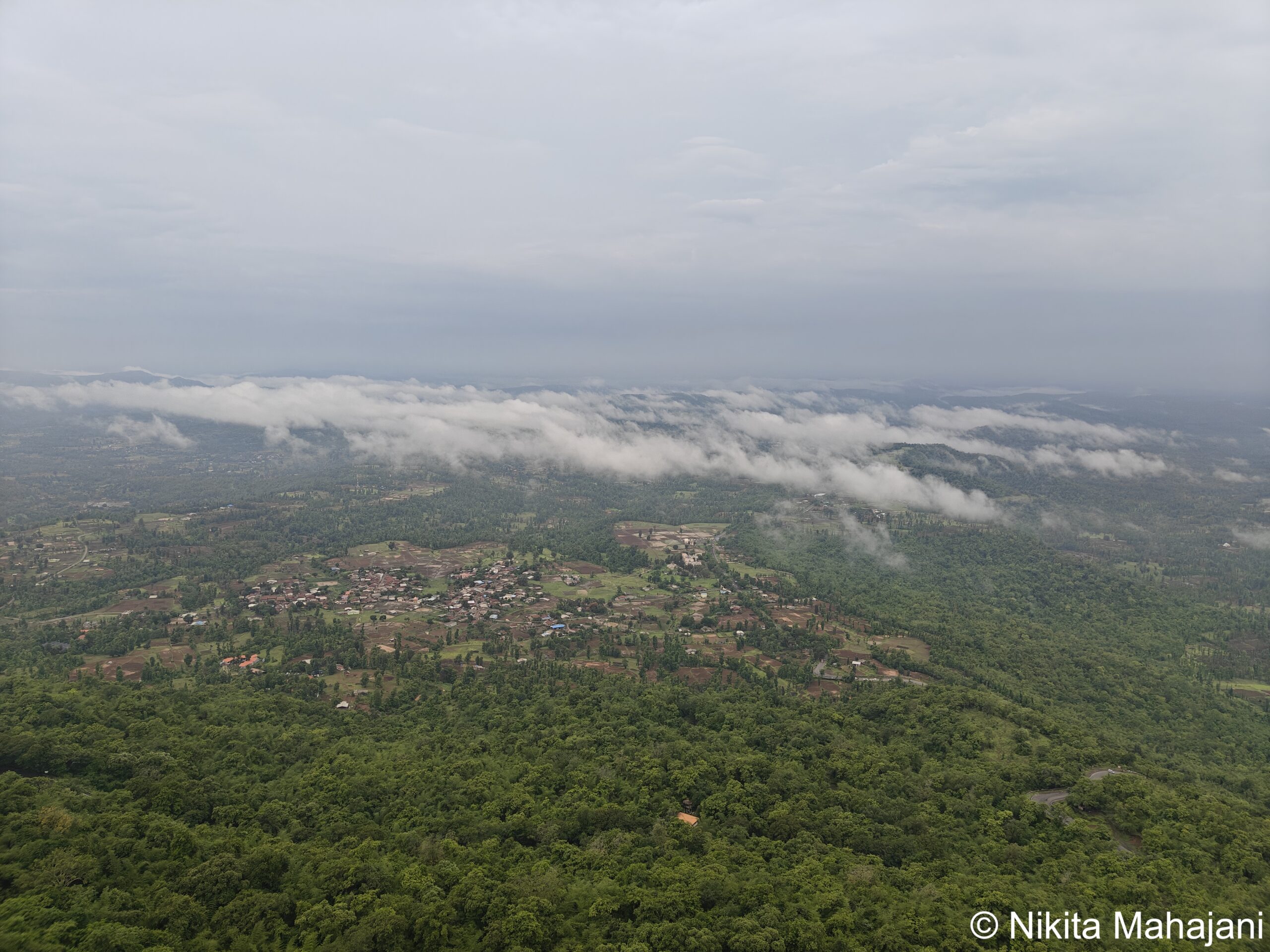
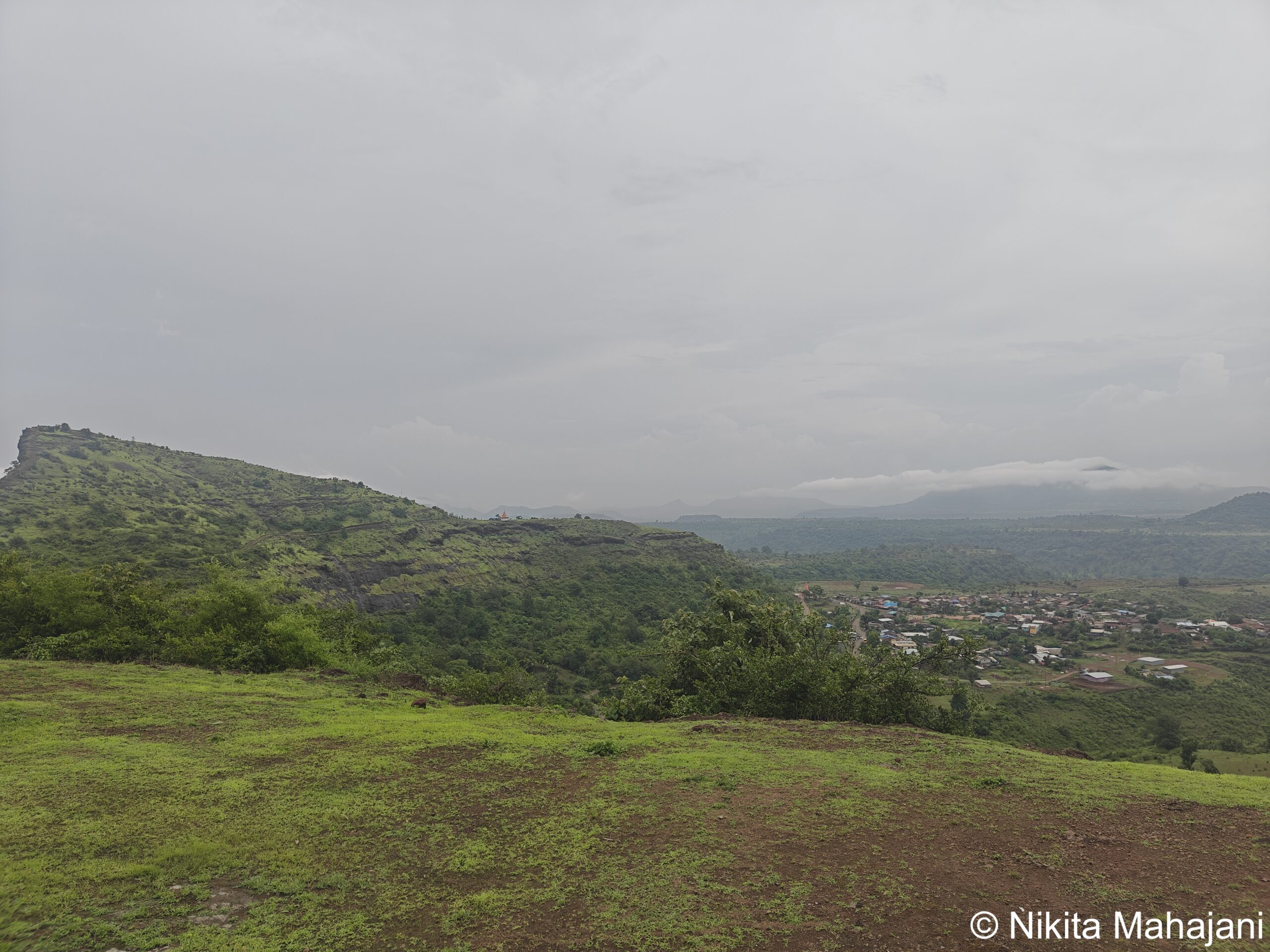
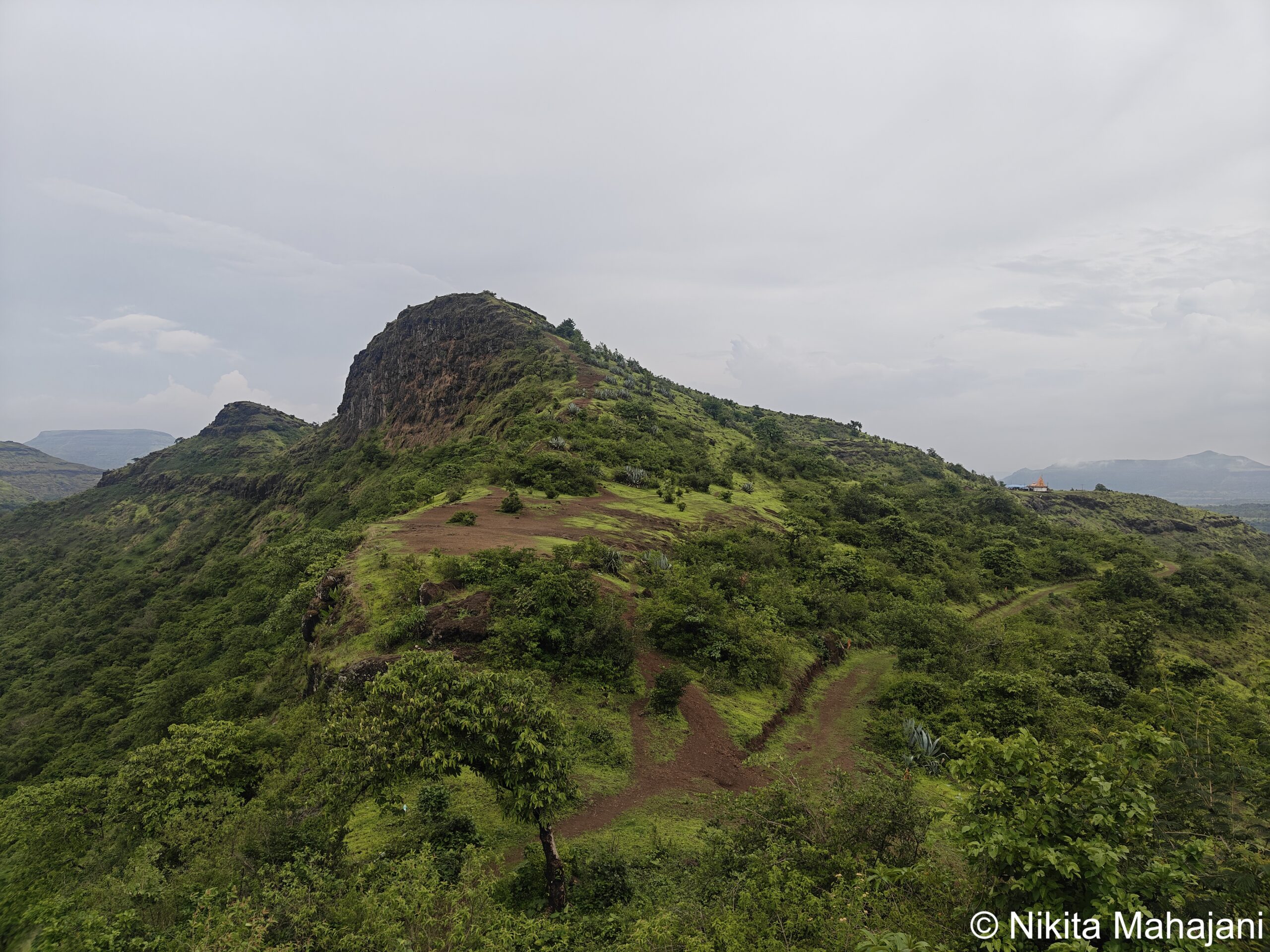
Next, we drove up to Sunrise Point. The views were worth the early effort, and our dog thoroughly enjoyed the cool breeze and chirping birds. There is a paid parking plot and some eateries. We started trekking from the end of the parking lot and reached the top most level of the stepped garden. We enjoyed the views from the garden. While descending, we came through the steps of the garden.
 Post-Lunch Visit:
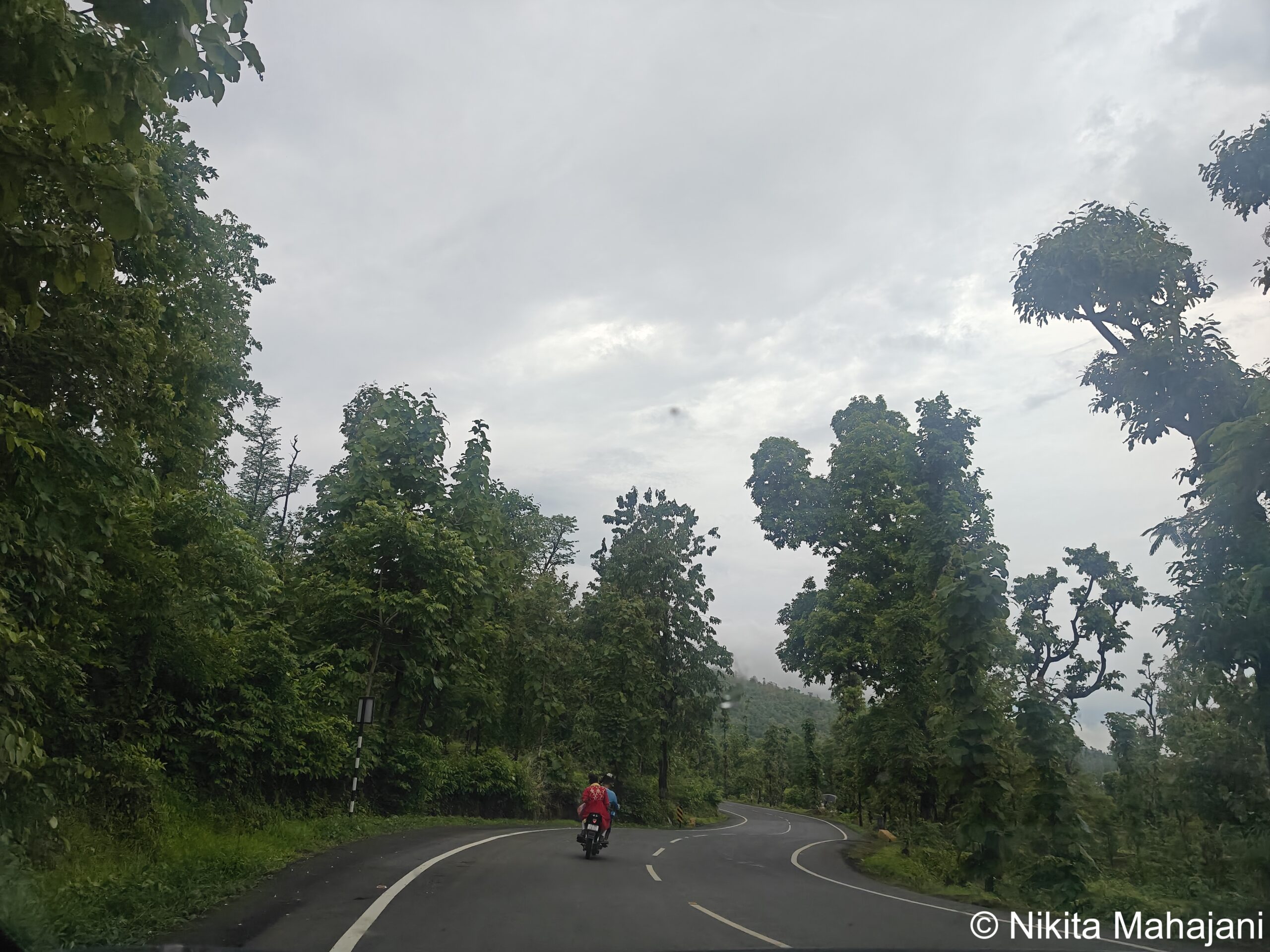
After a light lunch, we headed to Gira Waterfall – about 49 kms away from Saputara. The route to Gira waterfall is through a forest. The roads are well maintained and we enjoyed the lush green views. There is no mobile network on this route so we had to rely on saved google maps.
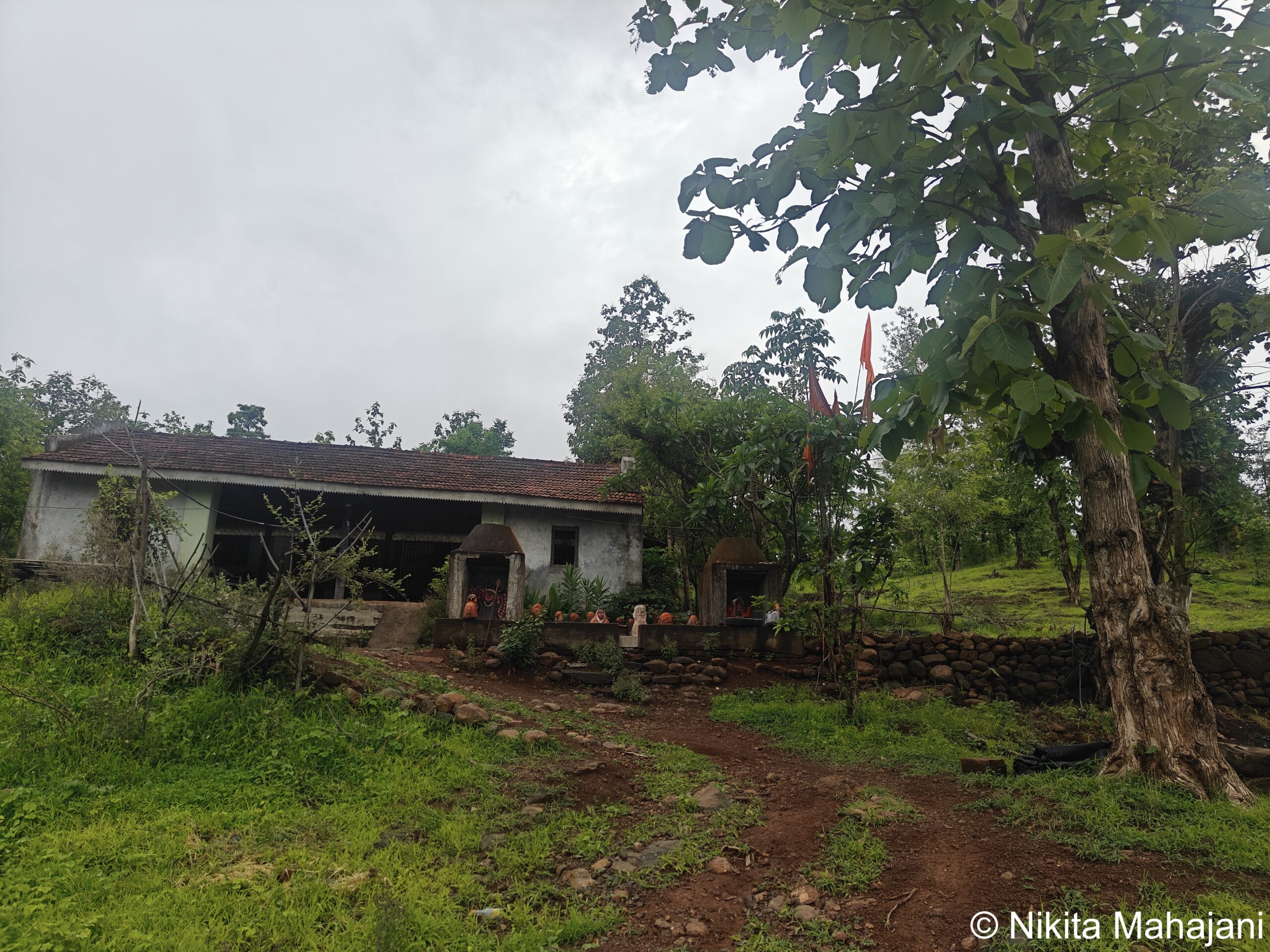
On way, we came across another temple in the forest. It consisted of a group of tribal memorial stones smeared in saffron color. There was a Ganesha, Nandi and a hanuman sculpture as well.
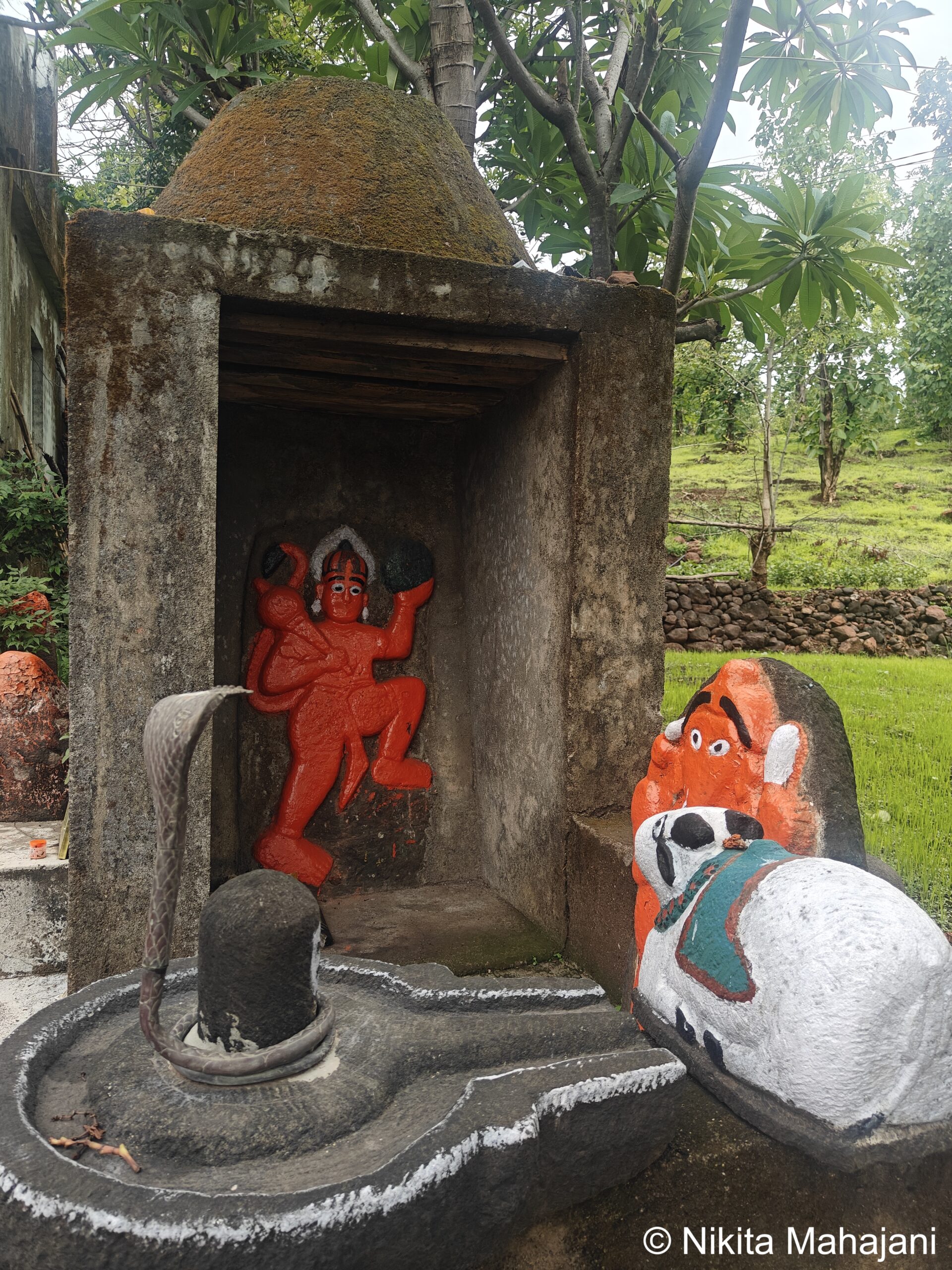
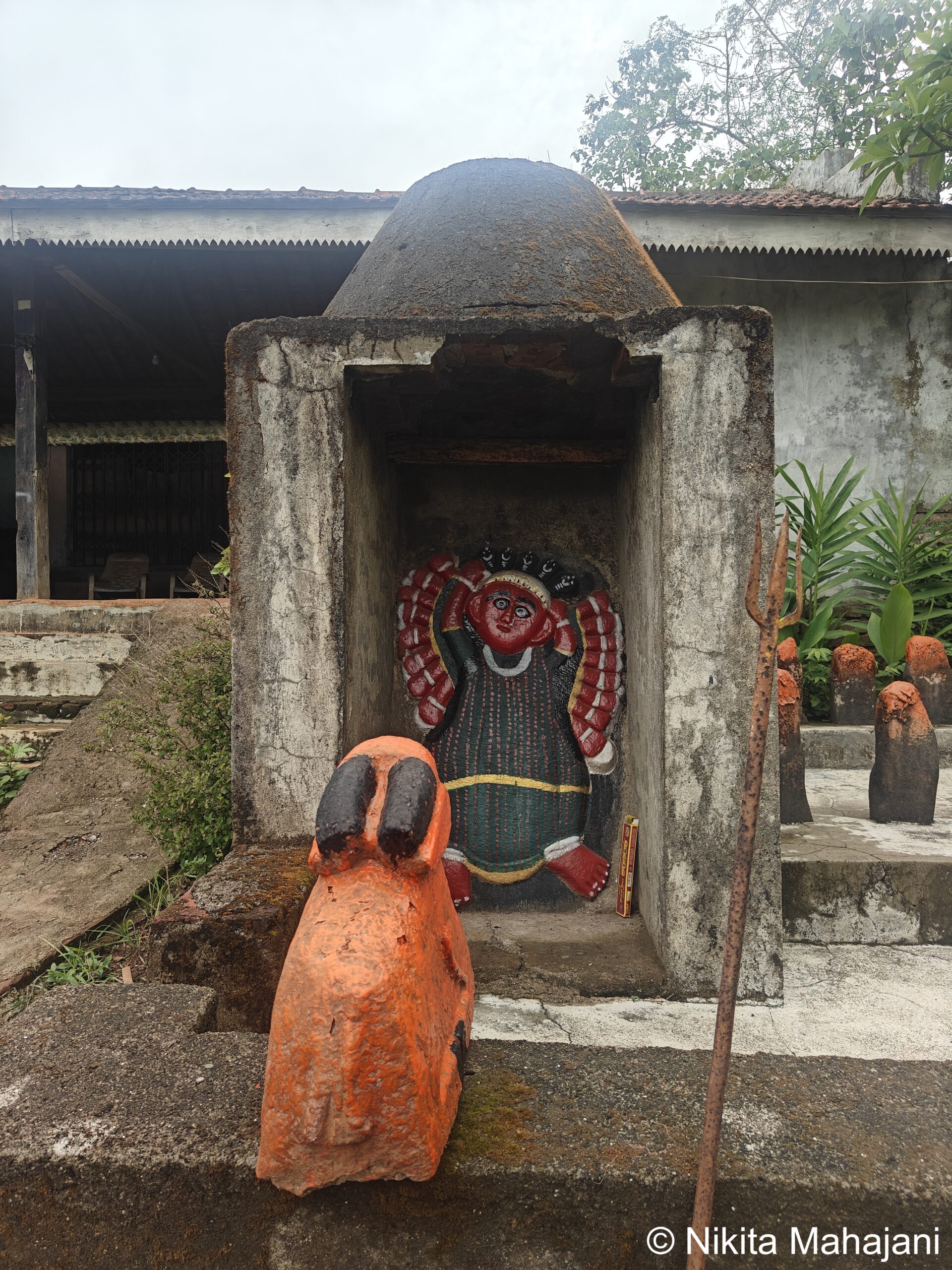
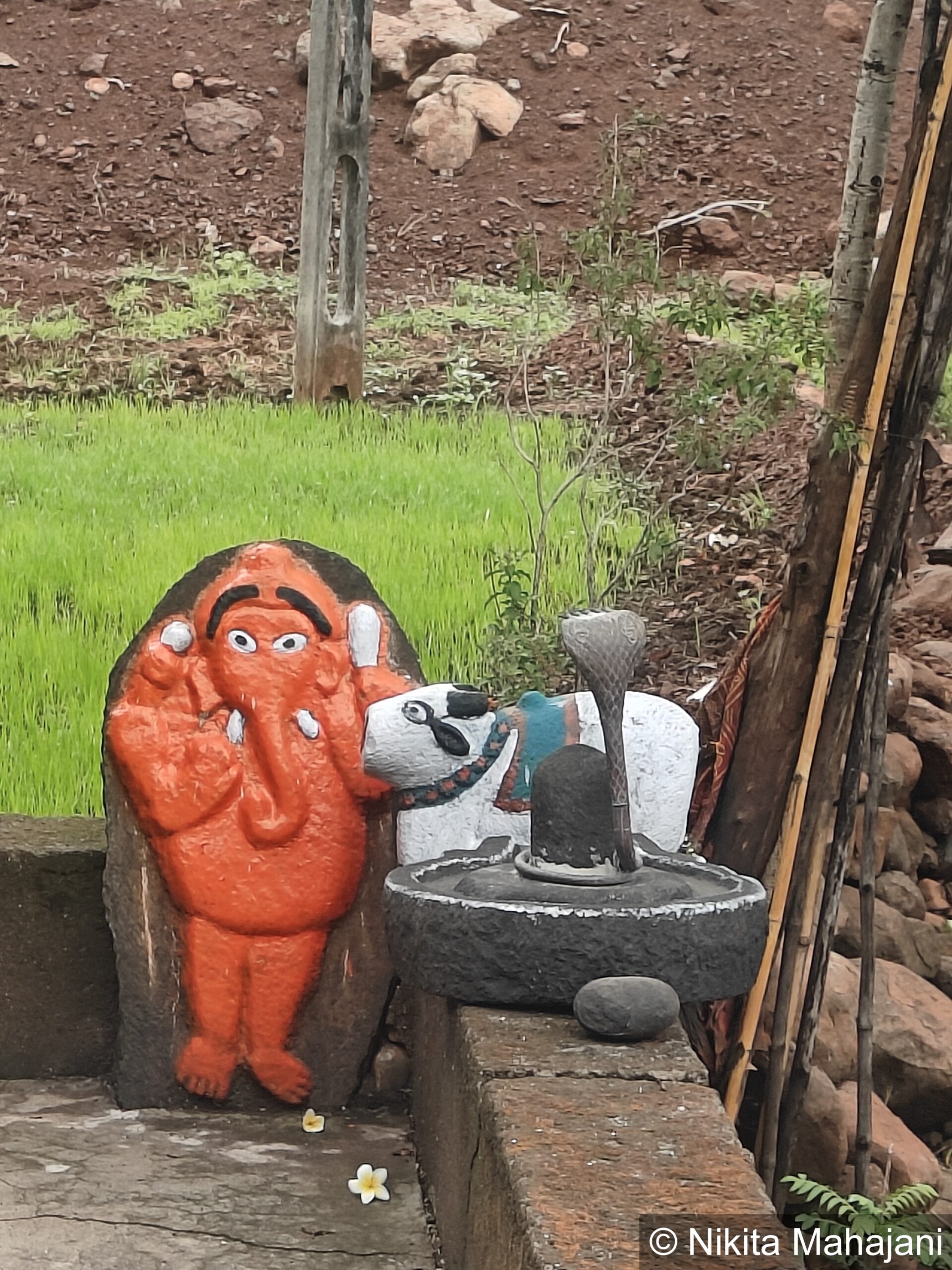
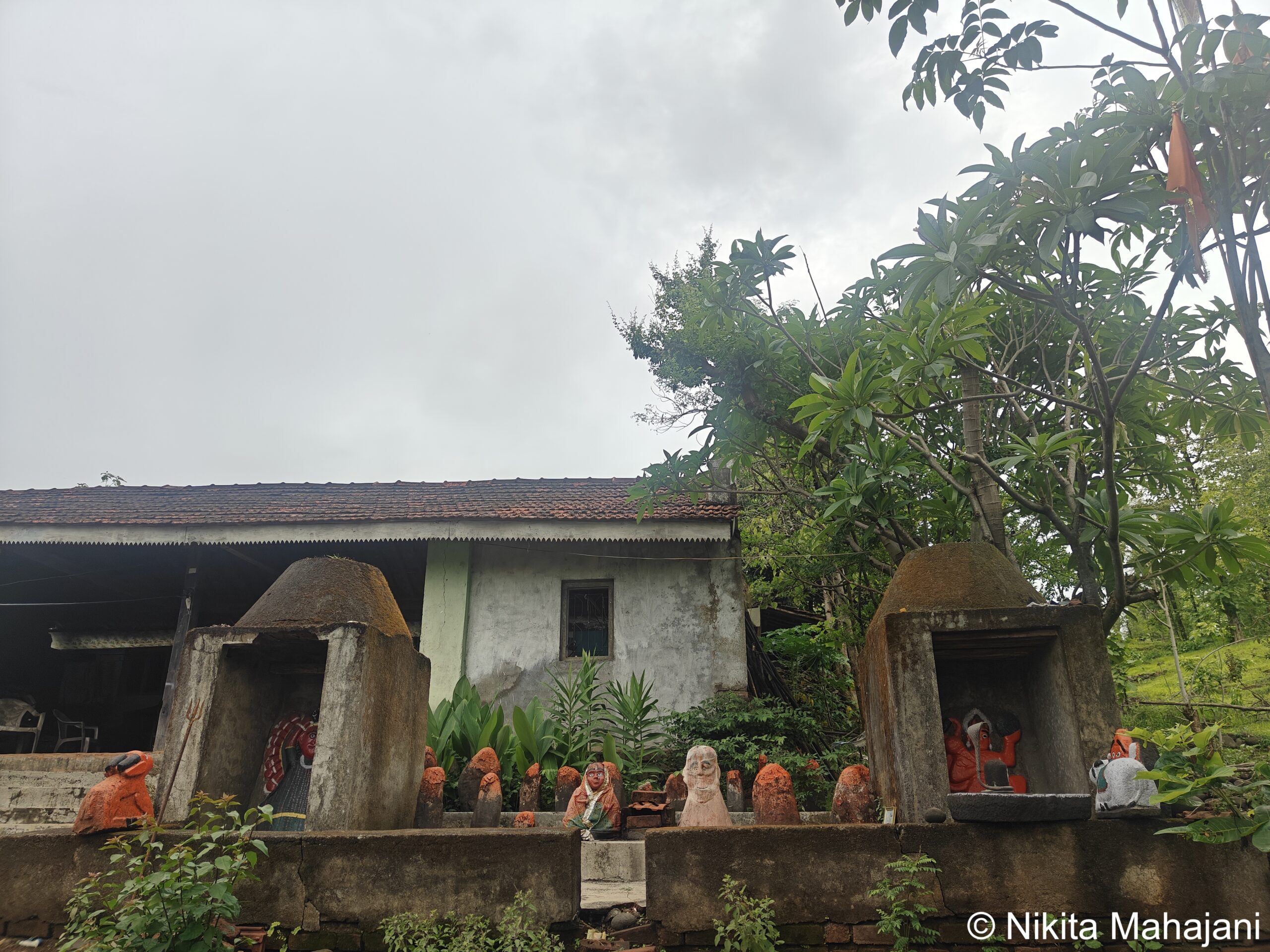
We continued our journey to Gira falls. On the way, we came across another beautiful sculpture on the left side of the road. It turned out to be a Waghdev sculpture.
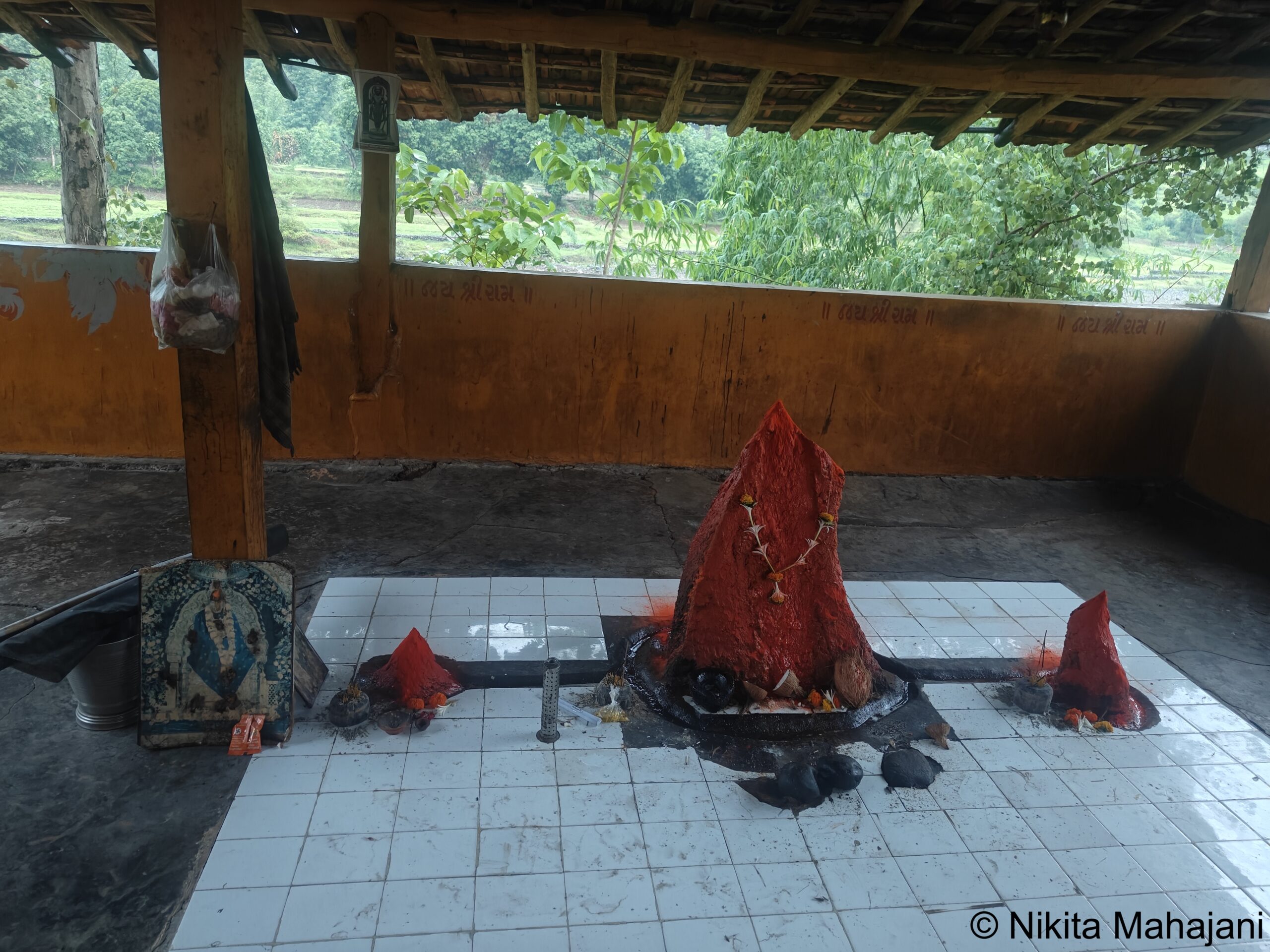
We came across one more tribal temple jst 3kms before the waterfall. This temple was alos on the left side of the road. It was abutting the backwaters of the waterfall. There were two saffron colored stones in it.
Finally we reached the location of Gira waterfalls. Cars are not allowed beyond the ticket counter. There are charges for car parking as well as visitors. Surprisingly, the place was not crowded. One needs to walk for 3-4 minutes beyond the ticket counter to visit the view point of gira waterfalls. There is a street market on the walkway leading to the view point. The local tribal people sell handmade bamboo toys and articles in this street market.
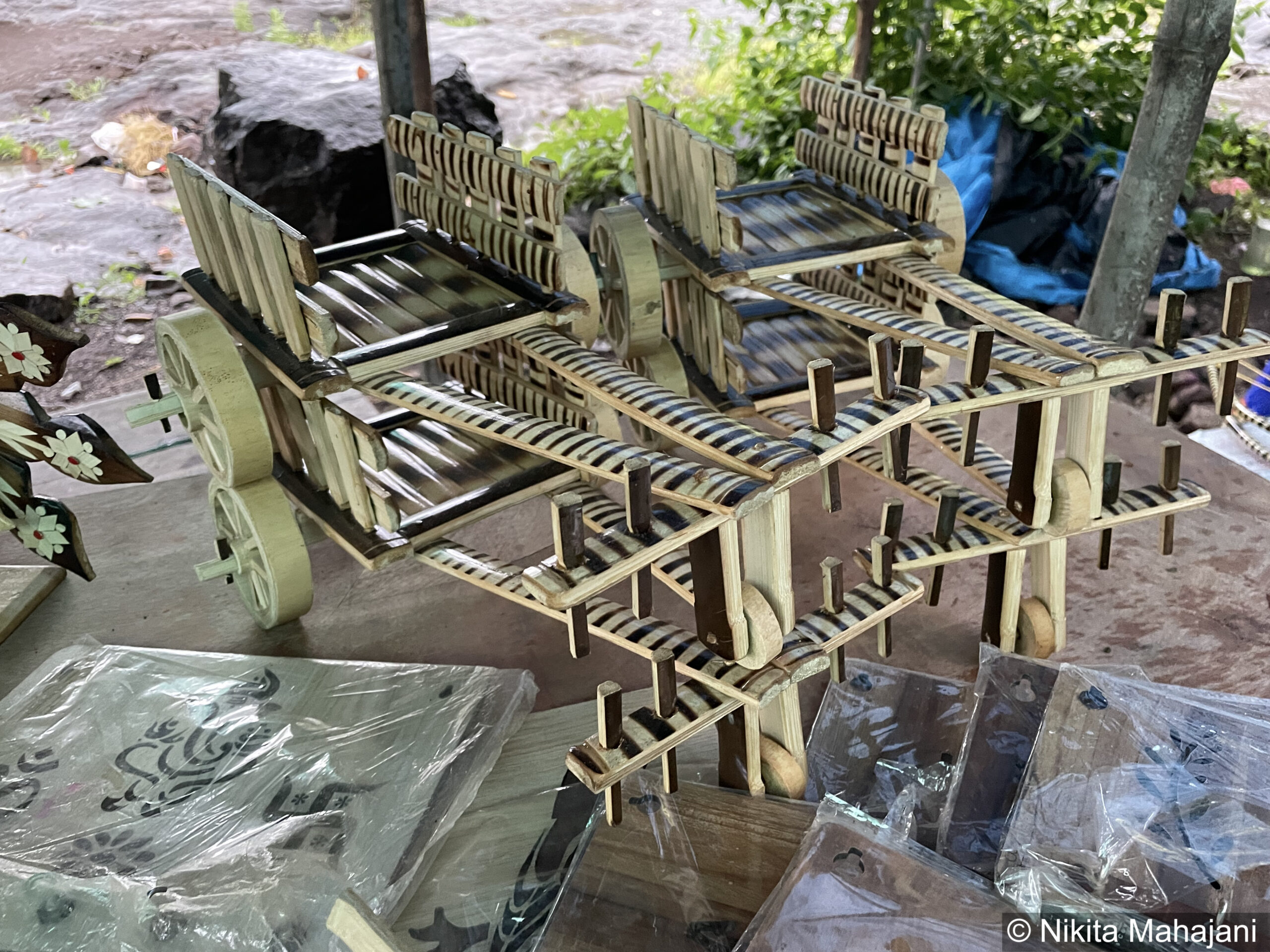
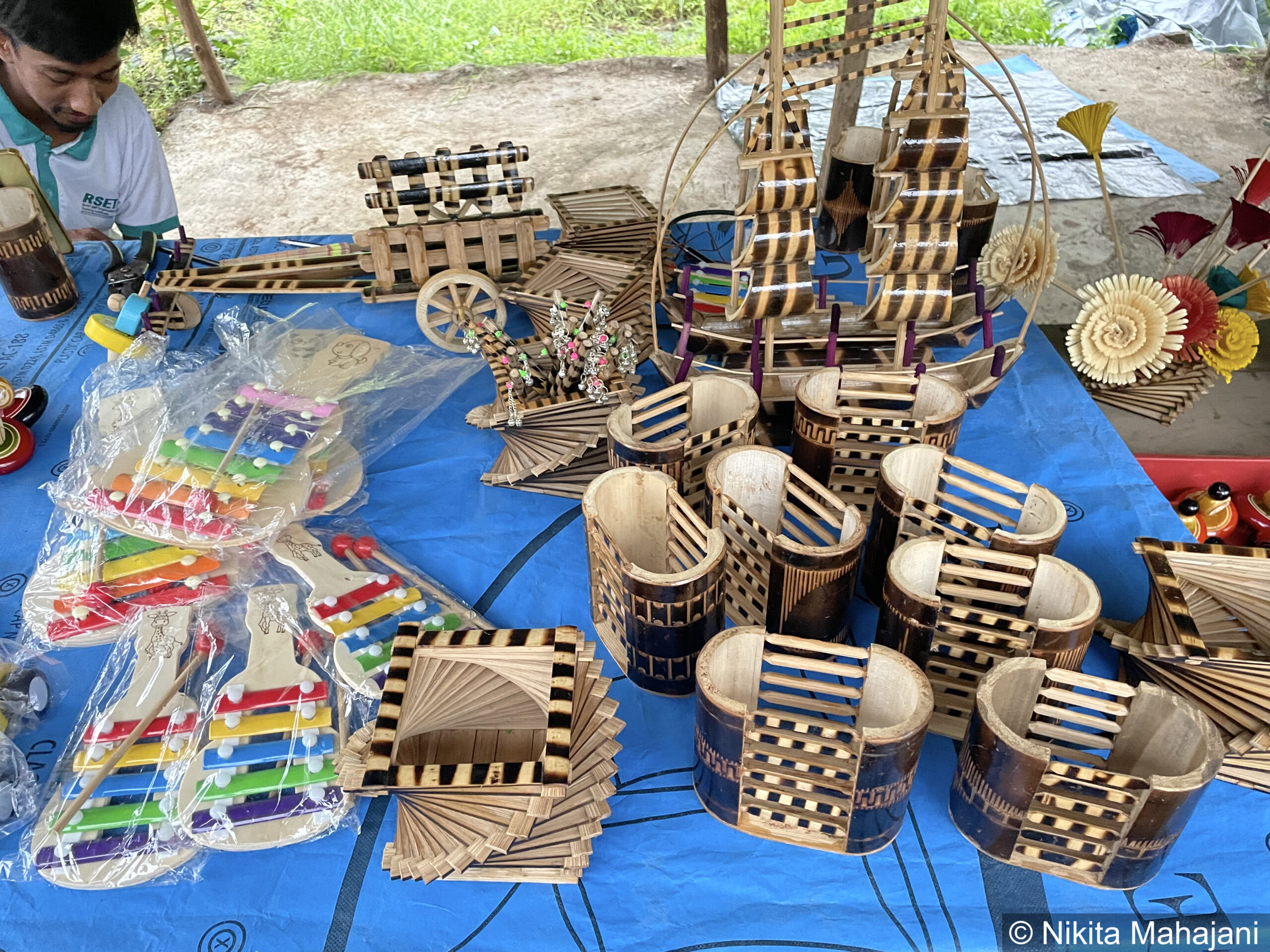
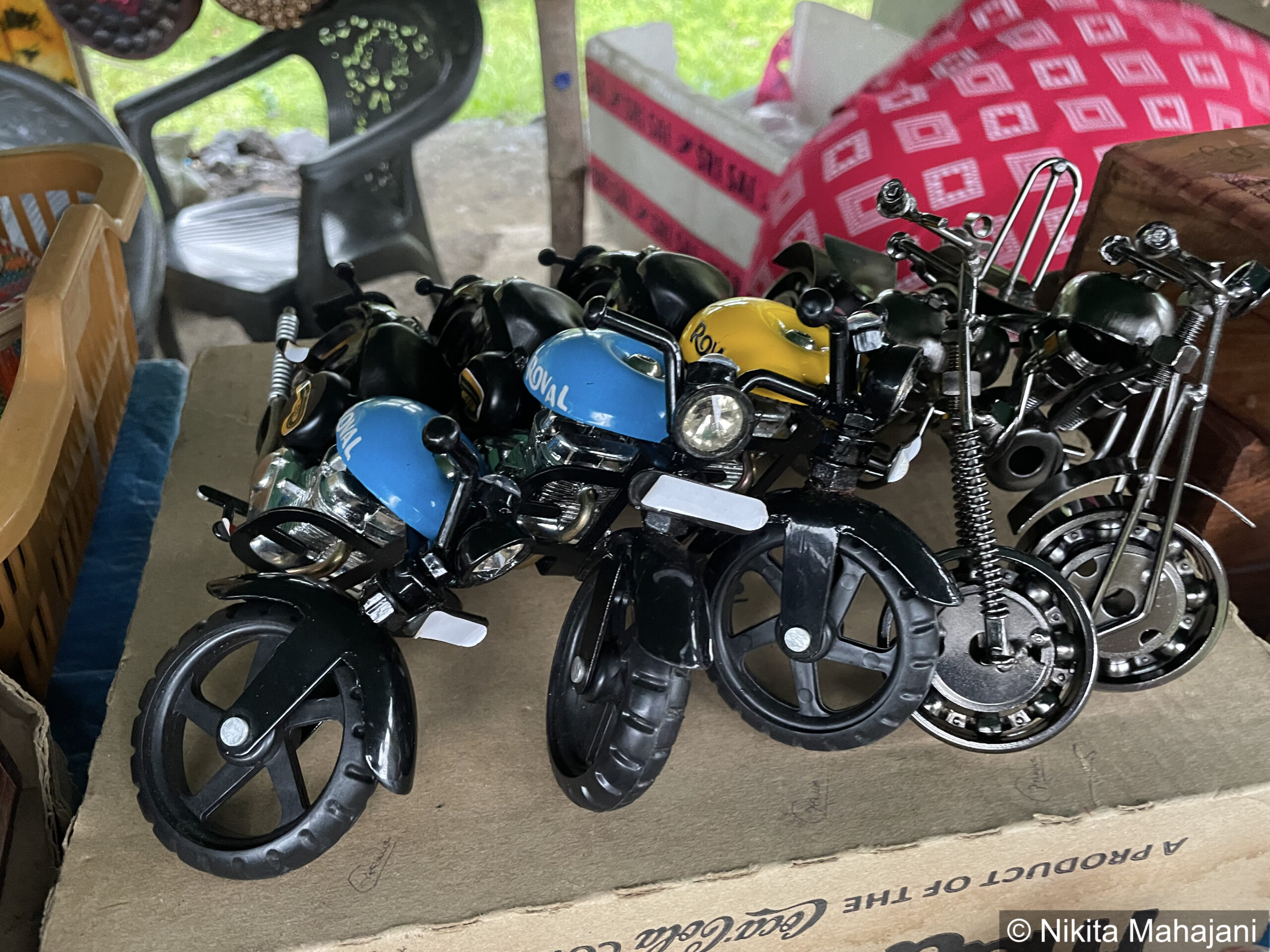
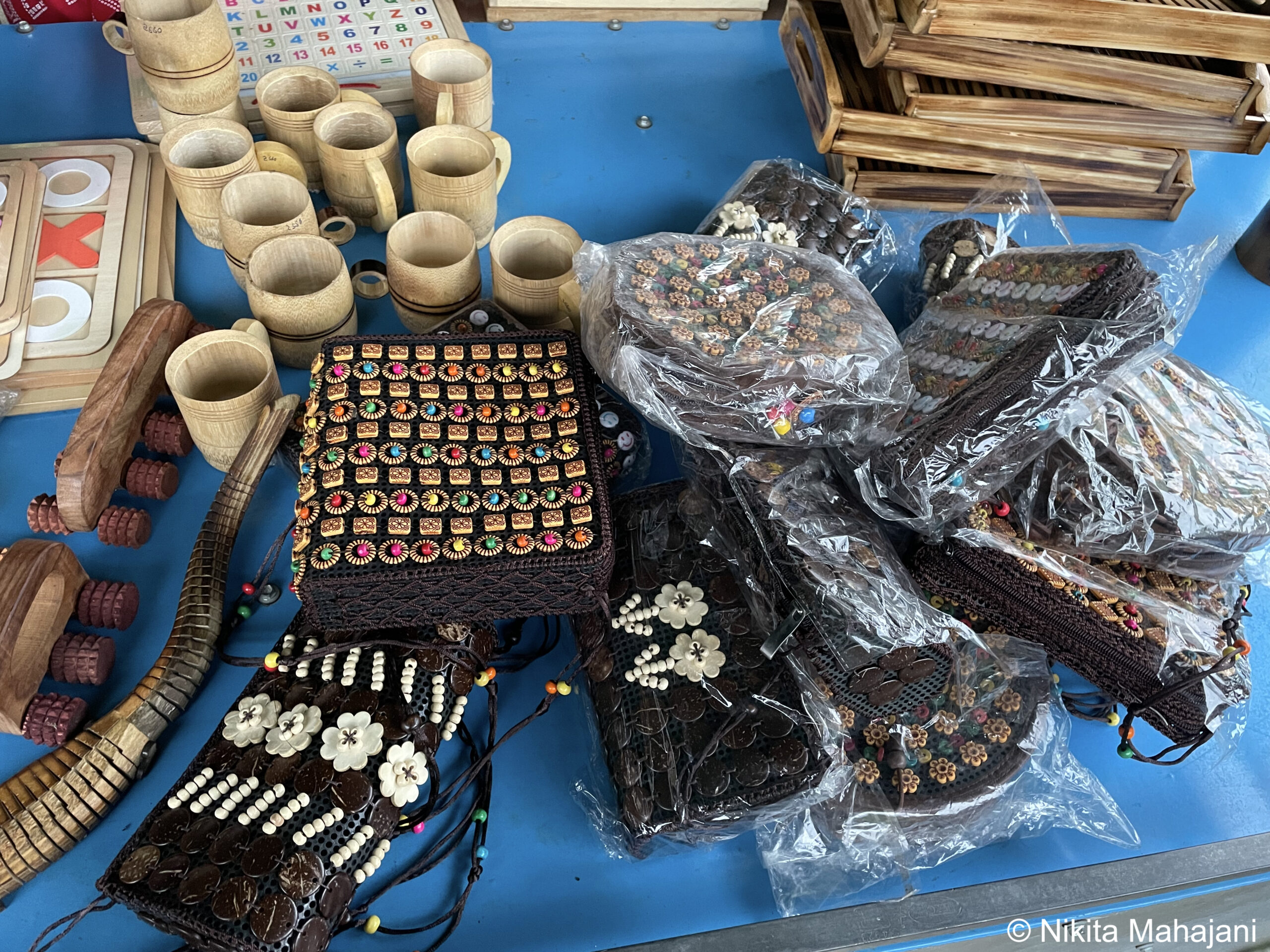
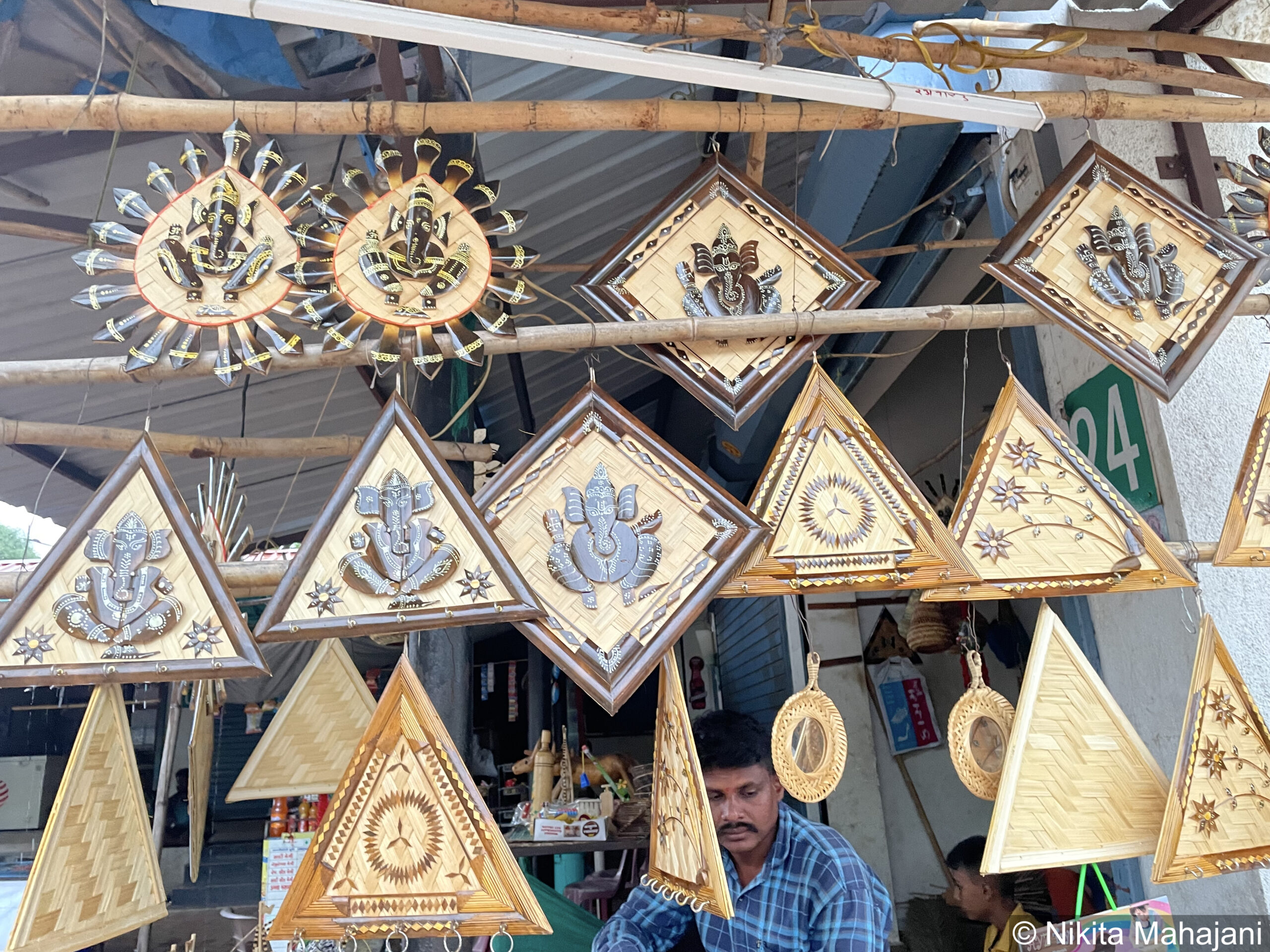
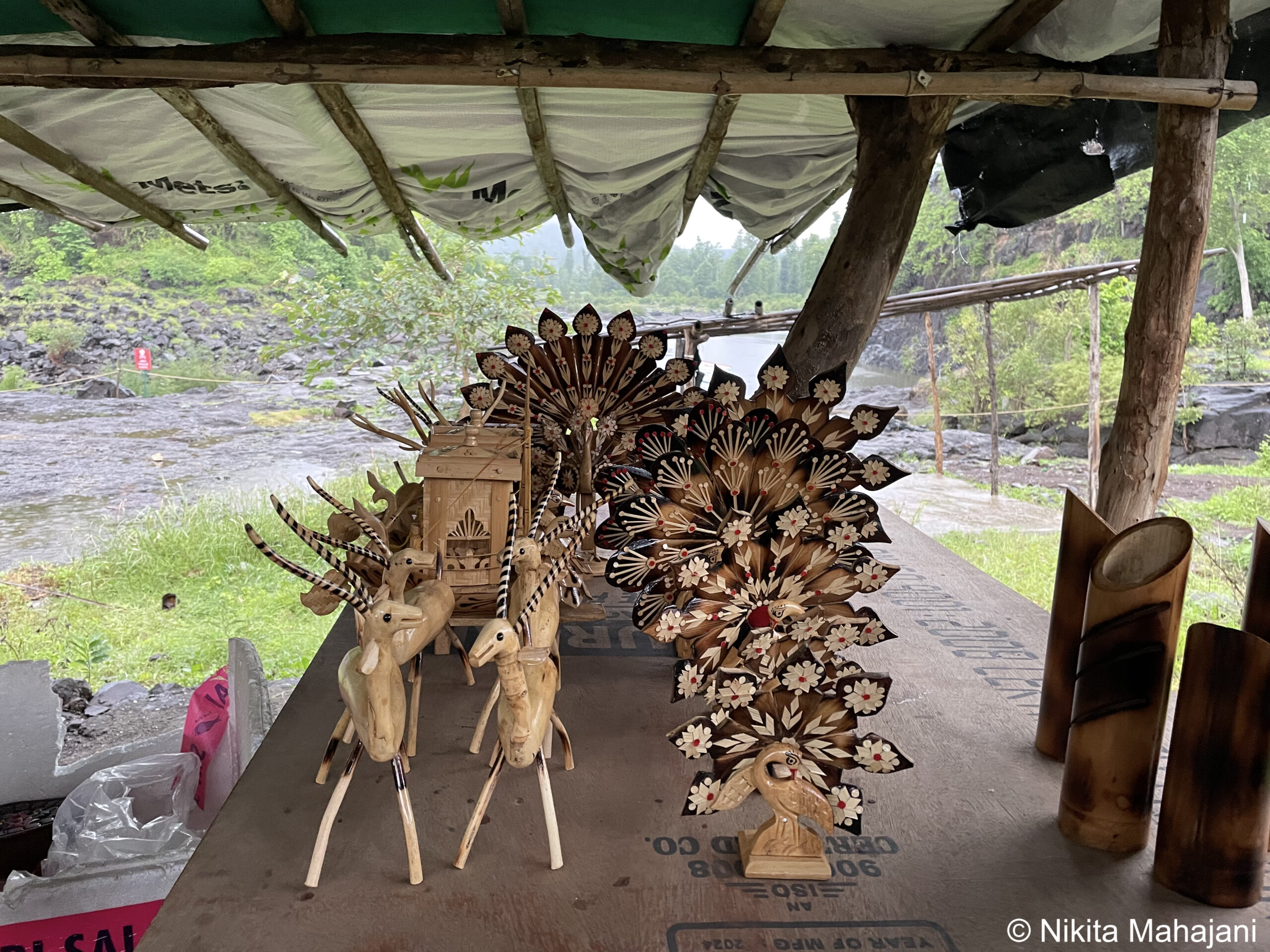
Finally we reached the view point which offers 360 degree panoramic view of the waterfall.
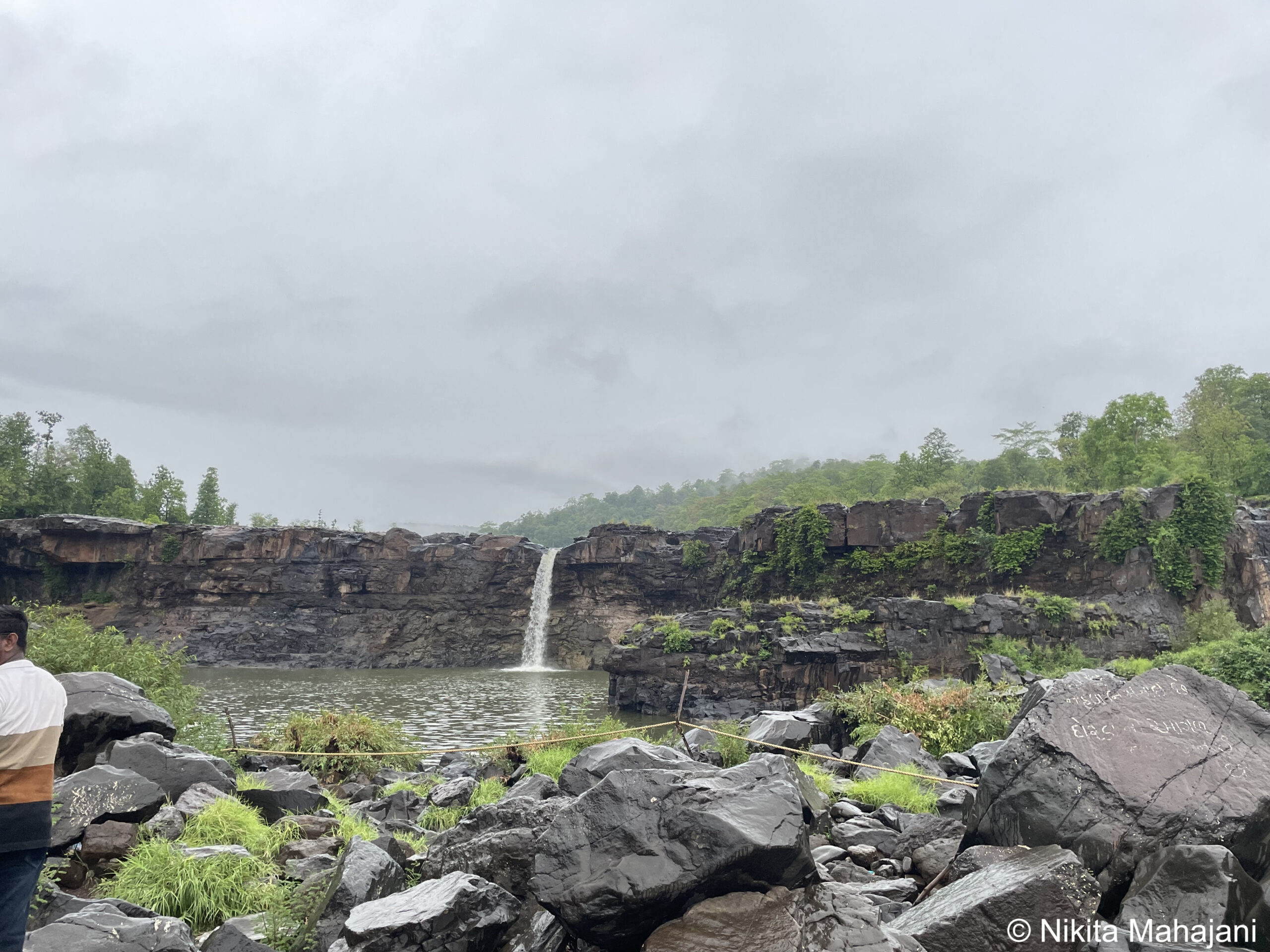
There are some concrete steps near the viewpoint which led us to the actual waterfall. After the steps, there is a narrow paved pathway leading the to the actual waterfall. This paved pathway is also surrounded by bamboo toy shops. If was raining throughout. Finally we reached te waterfall but we didn’t enter the water.
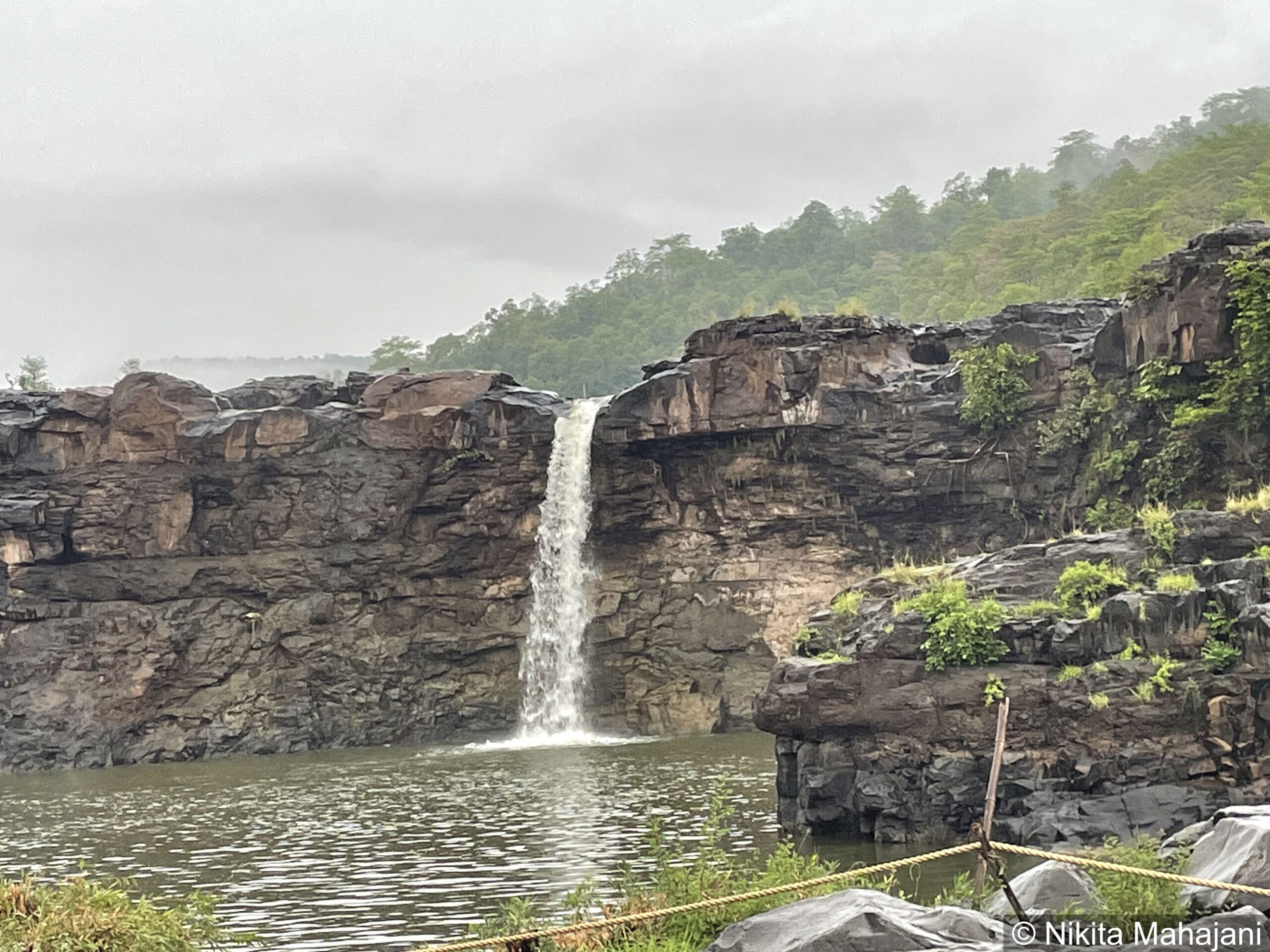
Day 3: Heading Back – Saputara to Pune
On the last day, after having a heavy buffet break at Hotel Lakeview , we checked out from the hotel and left Saputara at 10:45 AM. We started the return journey to Pune.
Lunch Stop:
On our way back, we stopped for lunch at Hotel Sanskruti Pure Veg, highway restaurant with ample space outside – great for a little walk break for our pet. They allowed our pet in the semi open dining on request. All the hotels in this area are quiet unhygienic. But we didnt have an option as we were hungry and getting late for lunch. Post lunch, we continued the return journey to Pune. We came via Sinnar , Sangamner, Alephata and Chakan.
We finally reached Pune by 6:30 PM, ending a fulfilling road trip full of nature, bonding, and wagging tails.
Where did we eat ?
Hotel Sai Sagar pure veg, Chakan MIDC
Hotel Rajesh pure veg, Sinnar
Hotel Sanskruti pure veg, Sinnar
Where did we stay ?
Alibag – Day 1
Alibag, with its beautiful beaches, historical forts, and hidden
temples, is the perfect retreat for a weekend escape. This article
describes my 5-day trip to our second home in Alibag back in may 2018.
This journey was a blend of exploration, relaxation, and a taste of
coastal charm.
The itinerary of the entire trip is mentioned in the
table below. You can click on the links in the table to access the blogs
of the next days of this trip.
| Click the links below to read the blogs on the next days of this trip: | Before lunch | After lunch |
| Day 1 | Journey from Pune to Alibag | Colaba Fort, Varsoli Beach |
| Day 2 | Siddheshwar waterfall | Kankeshwar temple, Akshi beach, Nagaon beach |
| Day 3 | Revdanda Fort and Revdanda Beach | Shitaladevi temple and Rameshwar temple in Chaul |
| Day 4 | Khokari Tombs in Murud, Nawab palace. | Free time |
| Day 5 | Teenvira Dam | Journey from Alibag to Pune |
Day 1: Pune to Alibag
We set off from Pune early, via Pune Mumbai express highway. We waited for a quick lunch at Hotel Gayatri Garva along the way. It is just a 10 minutes drive from Khalapur toll gate on the Mumbai-Pune express highway. Hotel Gayatri G is our go-to-place whenever we are on the way to Alibag since they allow pets. There is a stream in the back yard of the hotel. There is a huge fenced lawn where dogs can play. They also have clean washrooms and ample parking space.
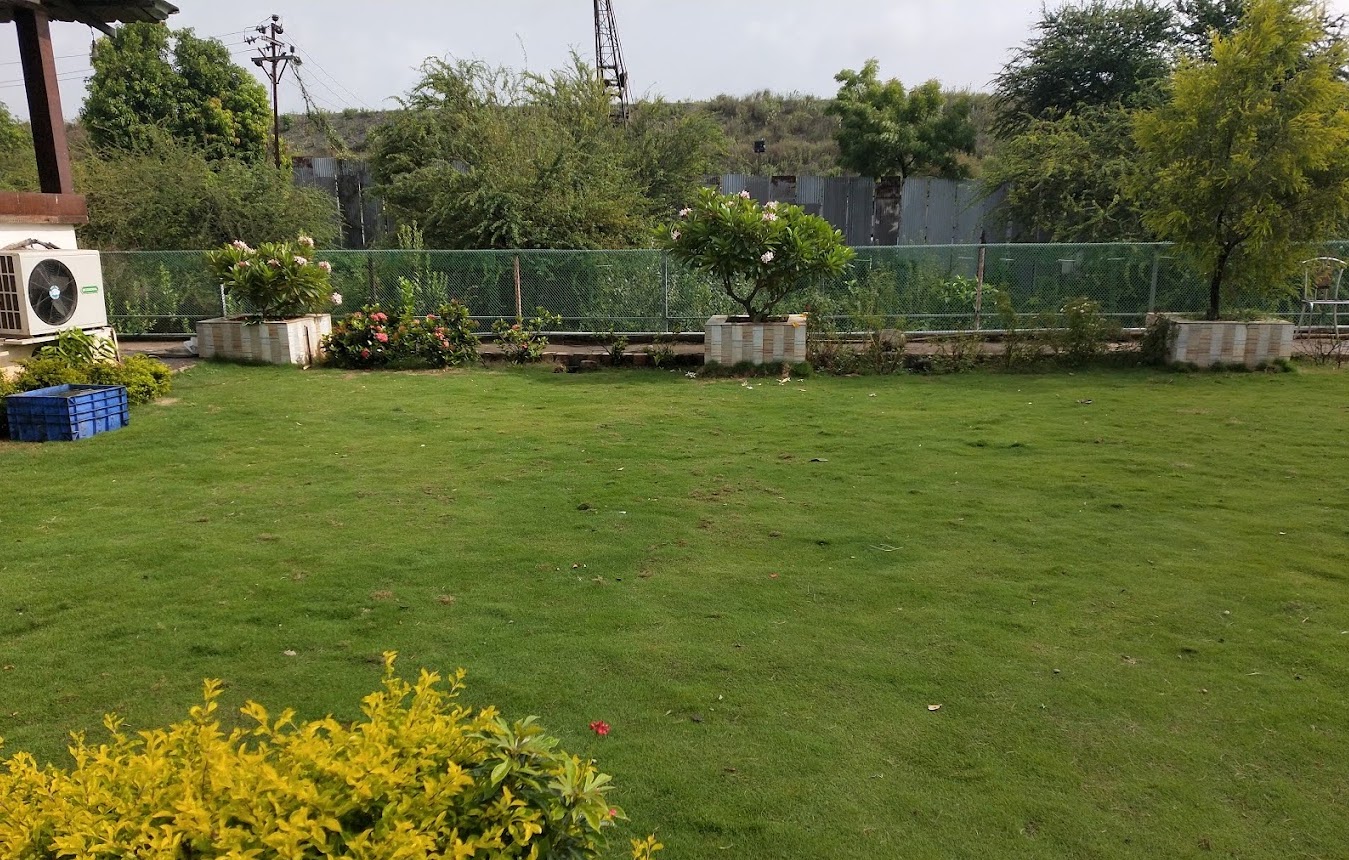
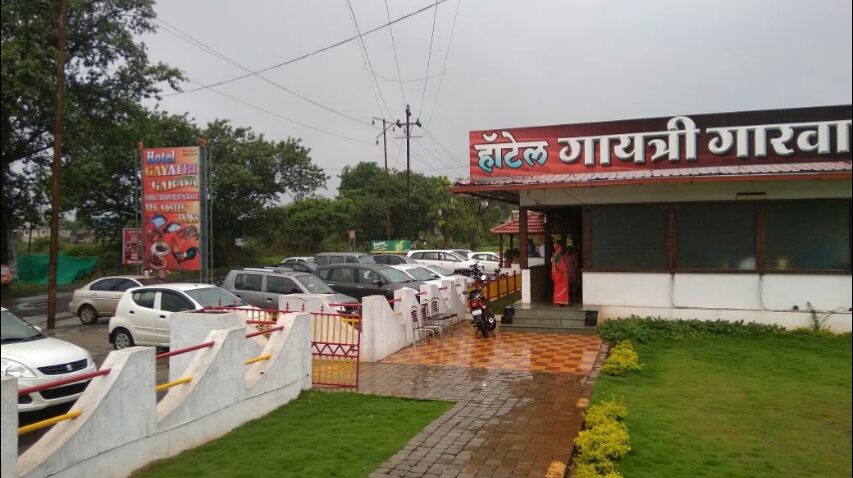
After a heavy meal, we continued our journey to Alibag. By the afternoon, we reached our Alibag home, which greeted us with a familiar, warm ambiance. Since it was just the beginning of monsoon, we could see lush green views of Sagargad from the balcony.
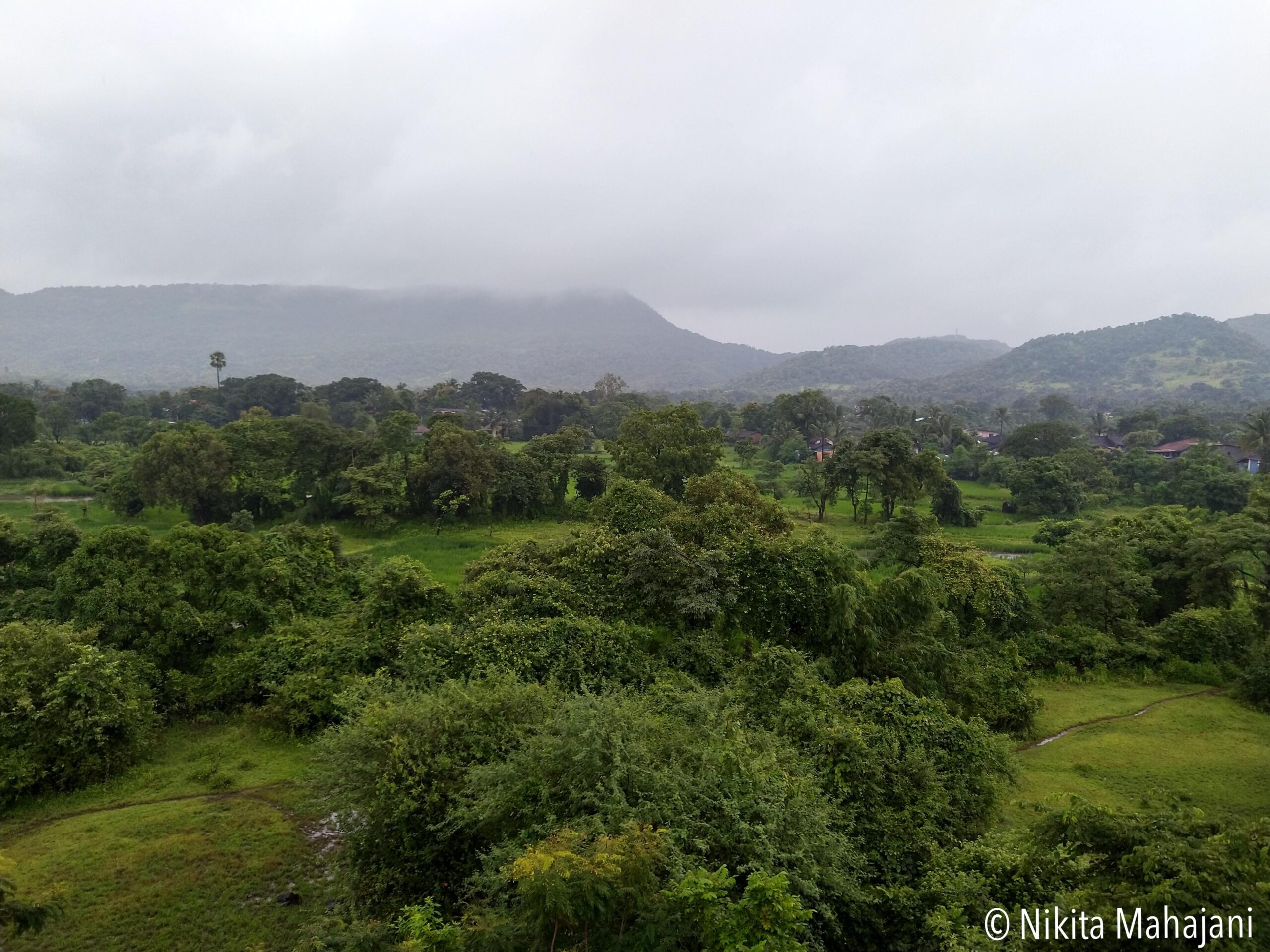
After some rest, we headed out to explore Colaba Fort. It is a sea Fort on Alibag beach. It is accessible by walking during low tide. If it’s a high tide, one can go by boats available at the beach. Horse rides are also available. but the horses are kept in extremely poor condition. Most of the houses are injured and malnourished. Its better to avoid horse rides and not be a part of cruelty to animals. Alibag beach was a peaceful place back in 2018. But now it has become super chaotic due to the large number of horse rides, noisy bike rides and water sports on the beach. Now, its not to impossible to leave pets unleashed in the beach because the congestion caused by noisy bikes rides is worst as compared to vehicular traffic on roads. Alibag beach also has CCTV cameras and a control room on the beach. There are lots of shacks and washrooms in the parking of Alibag beach.
Once you cross the water on the beach, you come across a rocky patch at the entrance of Colaba Fort. There is a ticket counter at the entrance of Fort. Pets are allowed. Some local villagers from nearby areas were selling Ranmeva, a mix of various wild fruits that grow abundantly in the forests. These fruits are served on a leaf with a sprinkle of rock salt and are available at a very affordable price. Their tangy flavour provides a delightful treat for the taste buds.
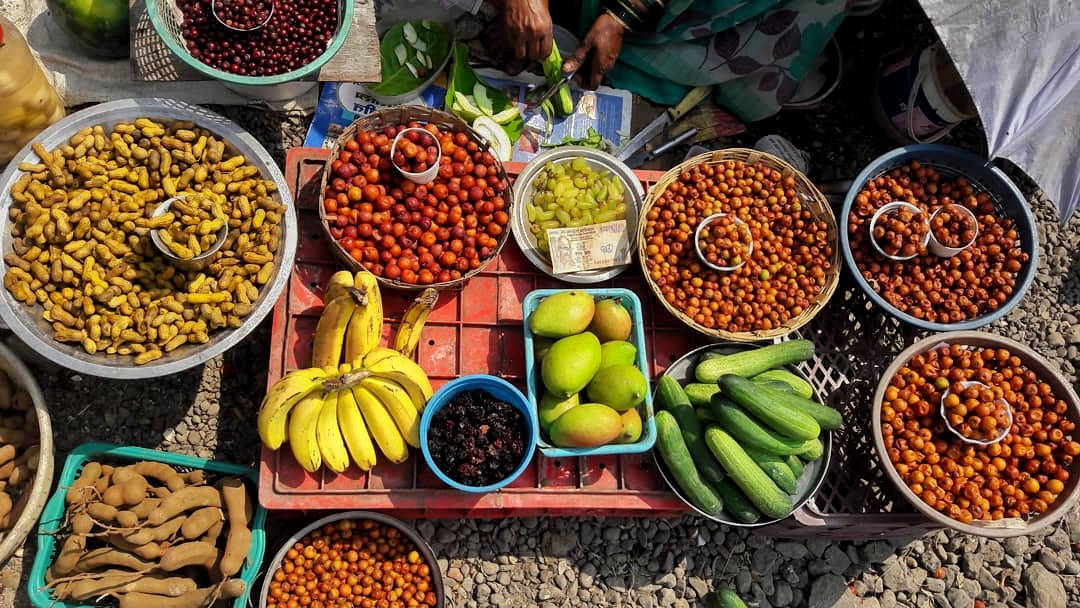
Courtesy: Bhataku’s Travel Tales!
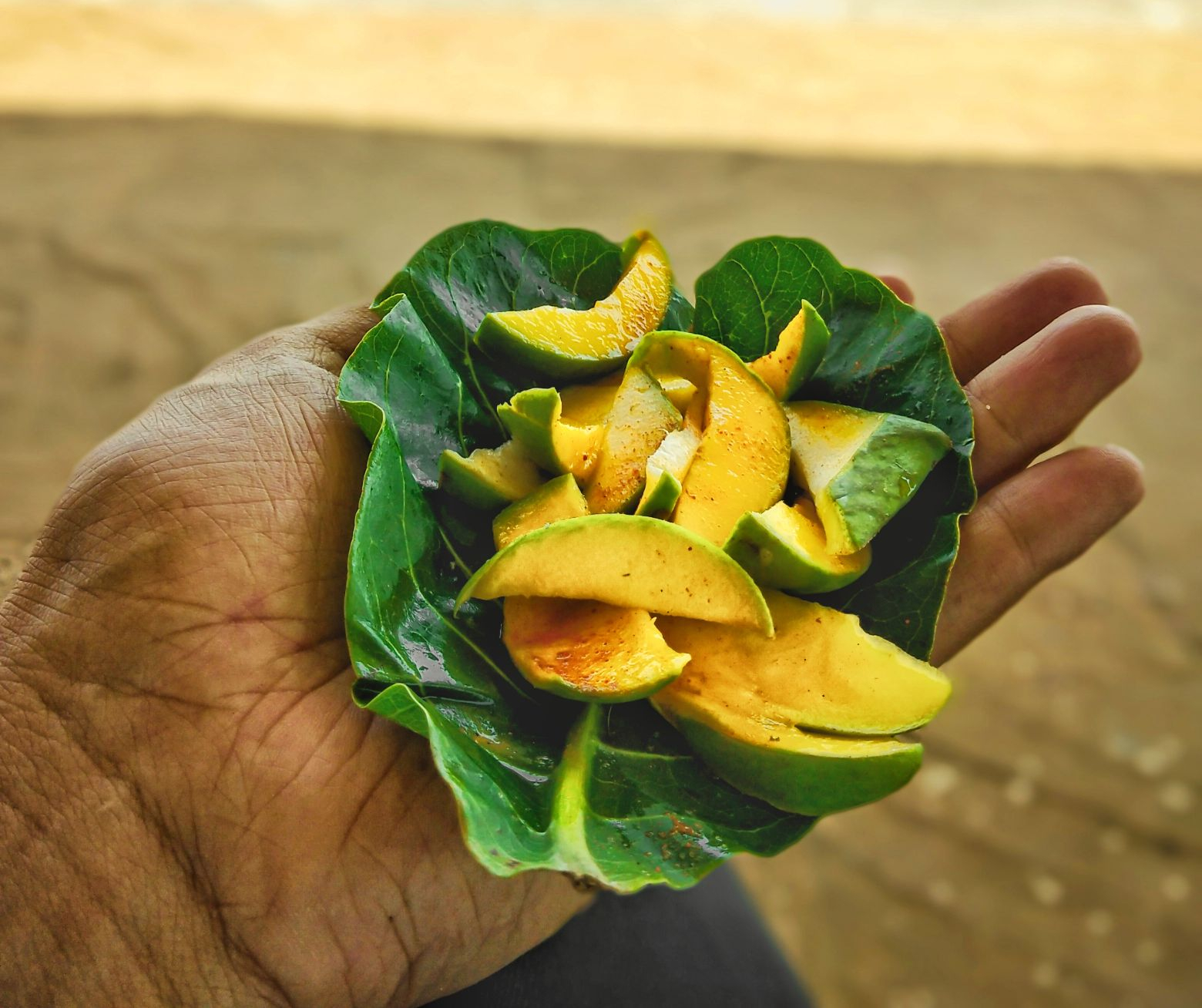
Courtesy: Bhataku’s Travel Tales!
It takes around 45 minutes to explore the entire Sea Fort. There are temples, stepwells, memorials and other remnants on the fort.
The fort walls stand at an average height of 6 to 8 meters and feature a broad parapet encircling the structure, reinforced with 17 bastions for defensive fire during enemy attacks. The entire fortification is constructed using massive stone blocks. There are two primary entrances—one facing the sea and the other leading to present-day Alibag town. The land-facing entrance, known as the “Maha Darwaza,” served as the royal family’s gateway. These doors, made of teak wood, are embedded with iron spikes at various points.
Intricate carvings of animals such as tigers, lions, and peacocks adorn the doors. The fort’s stone construction, remarkably done without any lime content, has contributed to its lasting durability. Despite being a sea fort, it houses large freshwater tanks within its walls for drinking water. Outside the southern gate, the fort has its own dock, with two English cannons positioned on the parapets, aimed at the open sea. These cannons remain intact and are accessible for tourists to view.
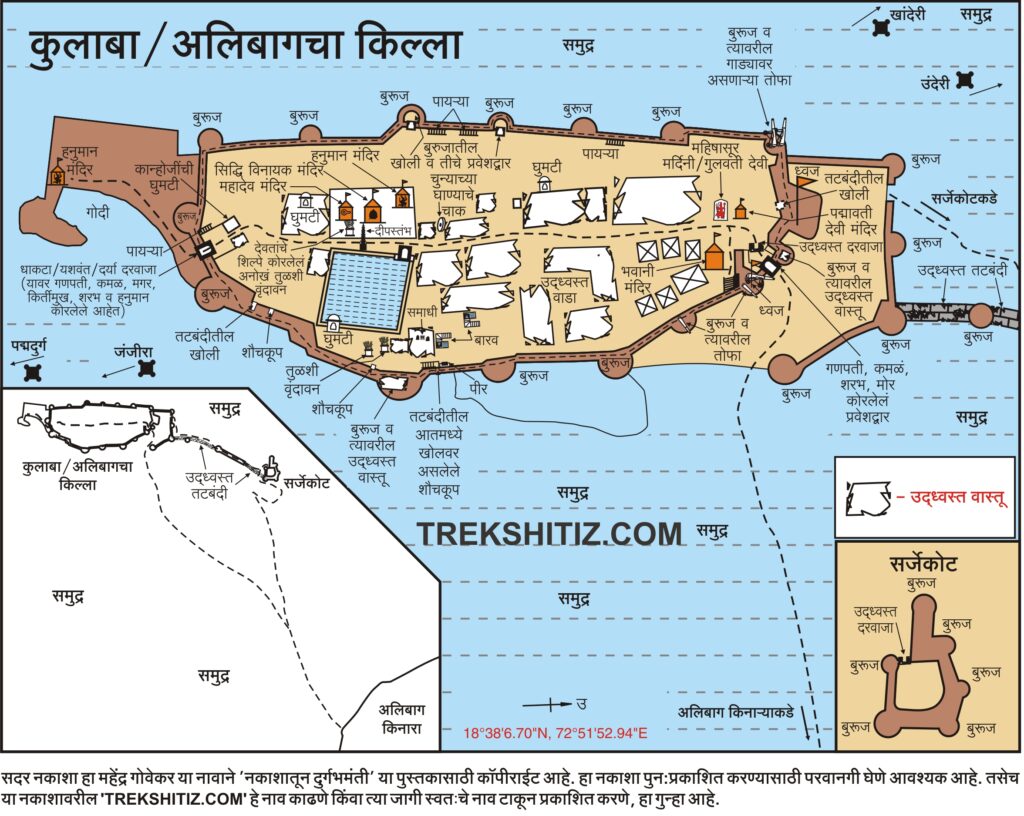
Source: www.trekshitiz.com
After passing through the ticket counter, there is an ASI office on the fort. The entrance opens to a pathway flanked by temples on both sides. I was amazed to see numerous houses within the fort, where residents not only live but also take care of its upkeep—an incredible sight! The temples on either side are dedicated to Hindu deities such as Narayana and Padmavati.
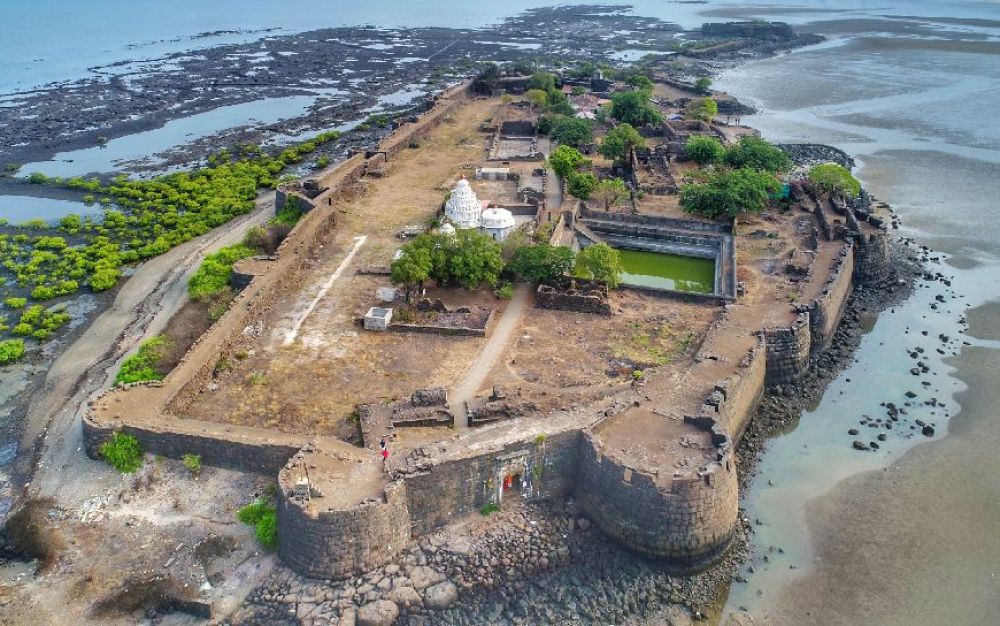
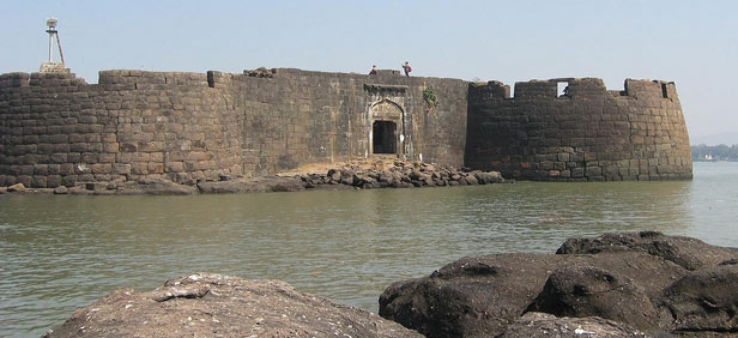
At the center, a grand temple stood prominently. As I walked toward it, something unusual on the left caught my attention—Pushkarini, a sacred pond typically found within temple premises, used for rituals and offerings during festivals and special occasions.
According to tradition, devotees are expected to bathe in this pond before seeking the Lord’s darshan. What surprised me most was that, despite being surrounded by the sea with its salty waters, the fort has a well that provides fresh water.
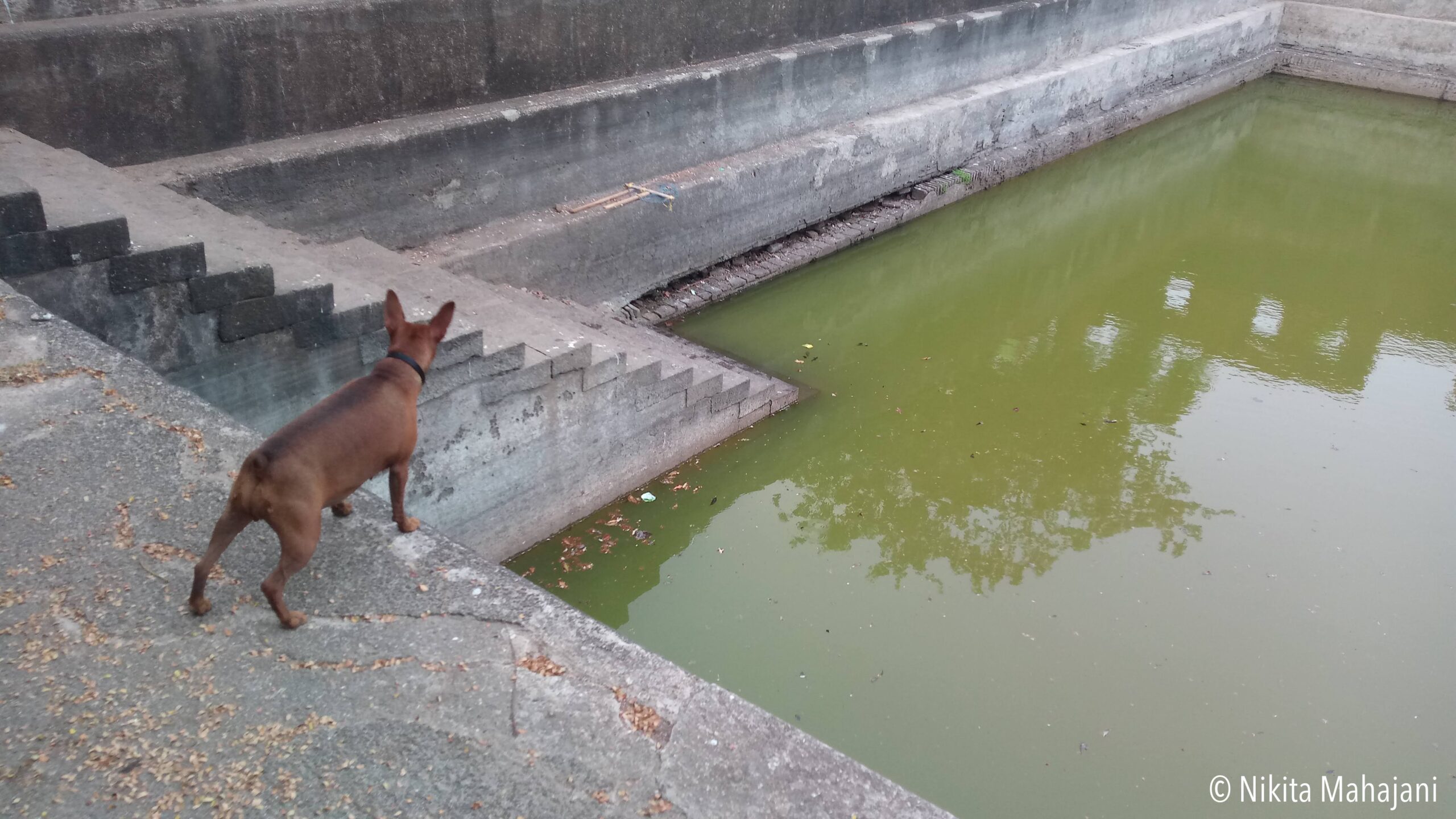
At the heart of the fort stands a magnificent Ganesh temple, built by Raghoji Angre in 1759. Inside the sanctum, the idol of Lord Ganesha is accompanied by Riddhi and Siddhi, his two consorts.
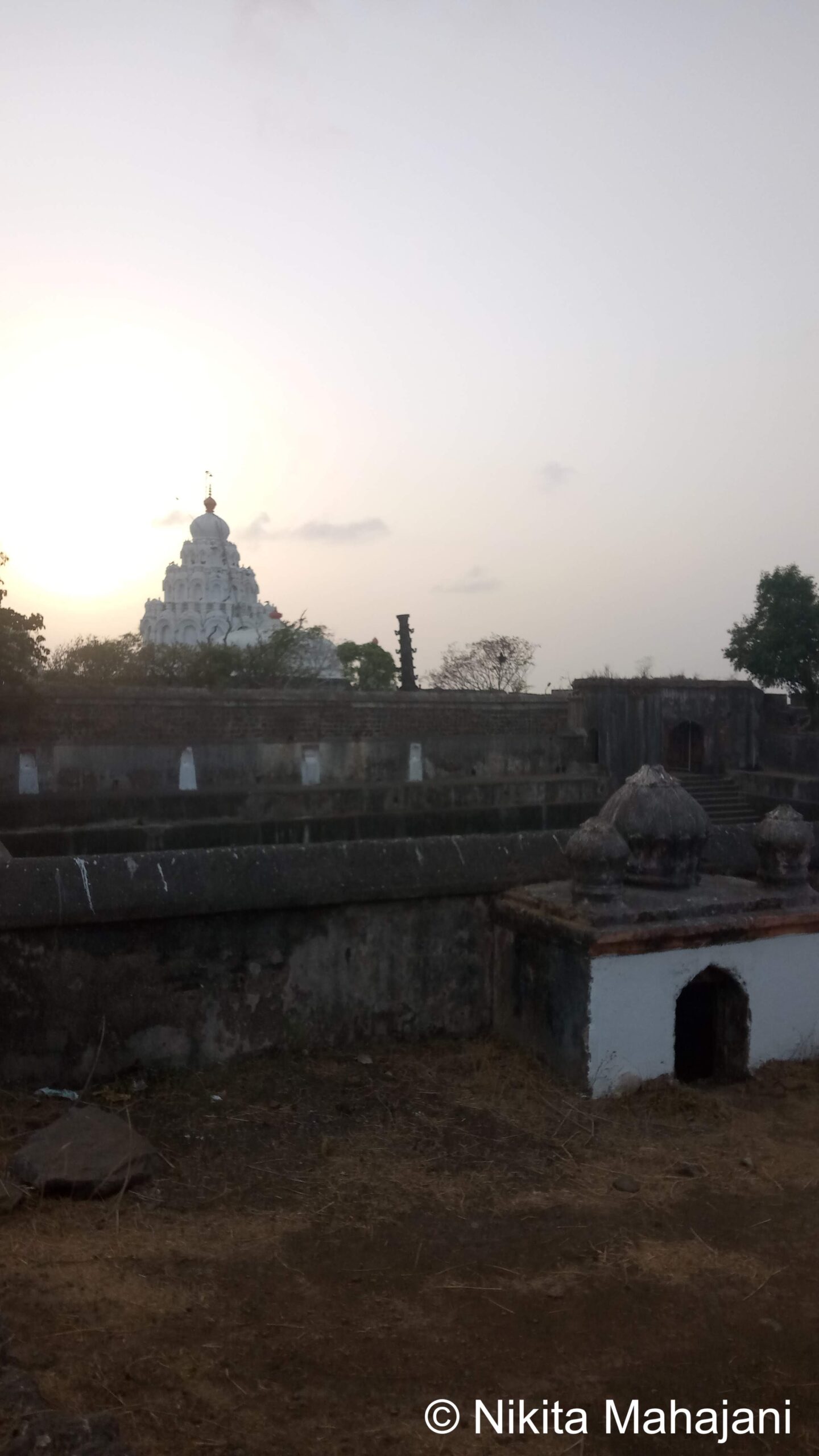
The fort was placed under the command of Darya Sarang and Mainak Bhandari, during whose leadership Kolaba Fort became the focal point of Maratha assaults on British ships. Its strategic location provided a significant geographical advantage, making it a key naval base for planning attacks against British forces.
Military enthusiasts should visit the northern wall of the fort to witness two English cannons mounted on wheels. An inscription on one of the cannons reads: “Dowson Hardy Field, Low Moor Ironworks, Yorkshire, England.”
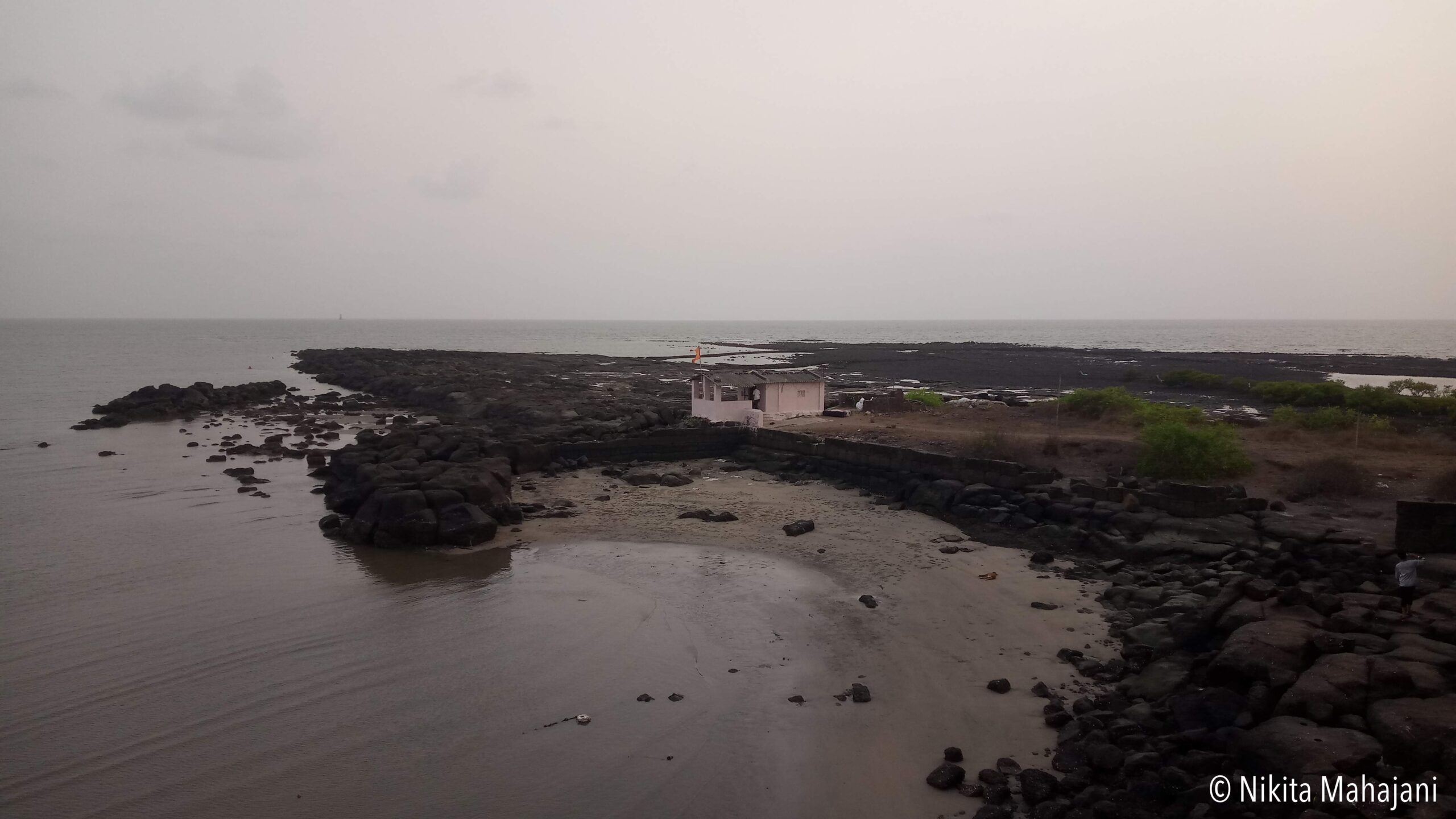
The history of the fort is truly fascinating. Its construction and subsequent reinforcement were completed by Sambhaji Maharaj following the passing of his father, Chhatrapati Shivaji Maharaj. Under the leadership of Kanhoji Angre, the Maratha navy launched relentless attacks on British ships, raiding and seizing their cargo. Despite multiple attempts, both the British and Portuguese failed to capture the fort. Historical accounts also mention that several fires broke out, causing significant damage to the estate within the fort.
Next, we moved on to Varsoli Beach, a peaceful spot where we enjoyed tea and snacks from nearby beach shacks while watching the sun dip into the horizon. There is paid parking available at Varsoli beach. There are no washrooms. There are lots of shacks under shady trees near the parking.
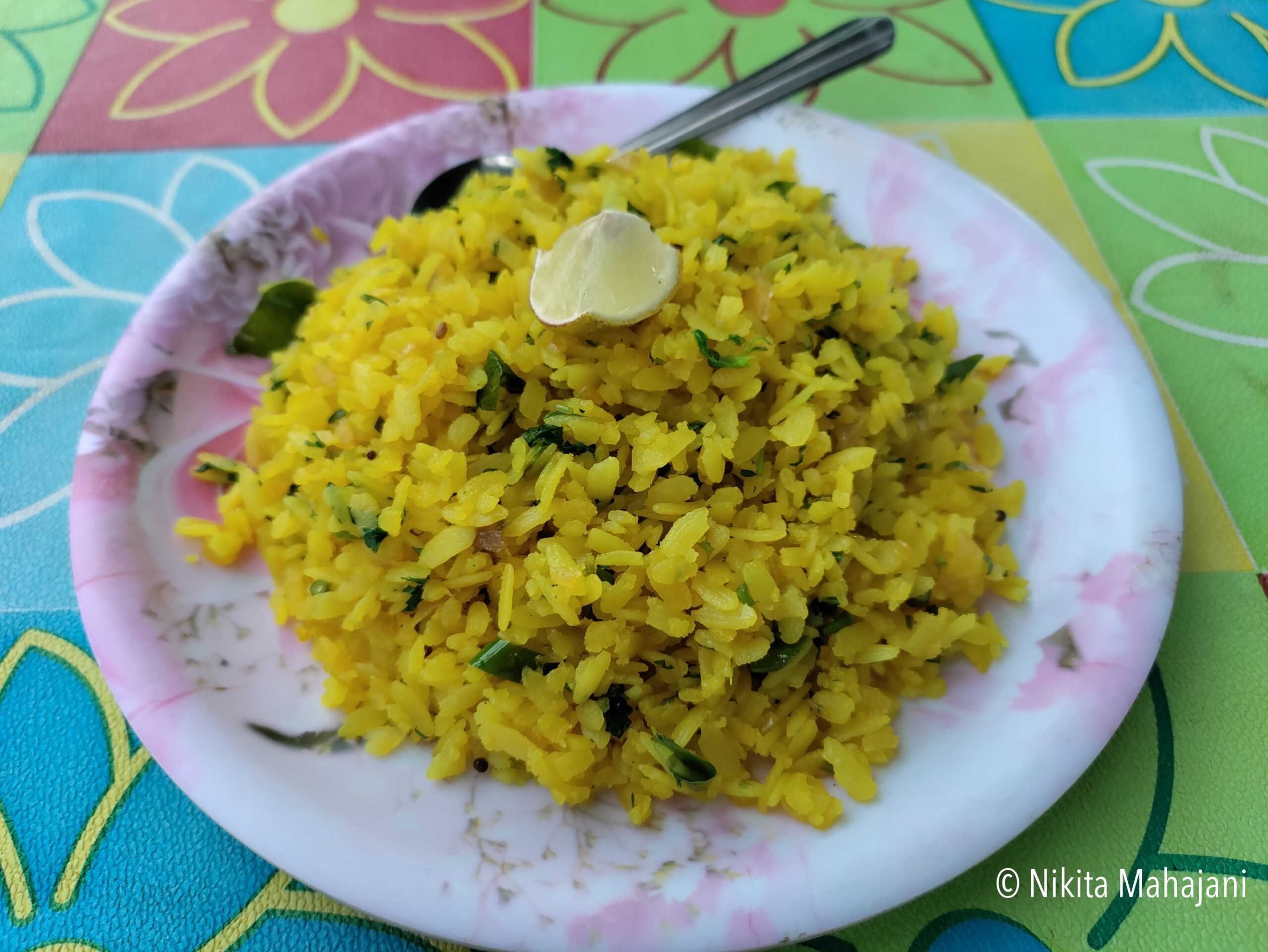
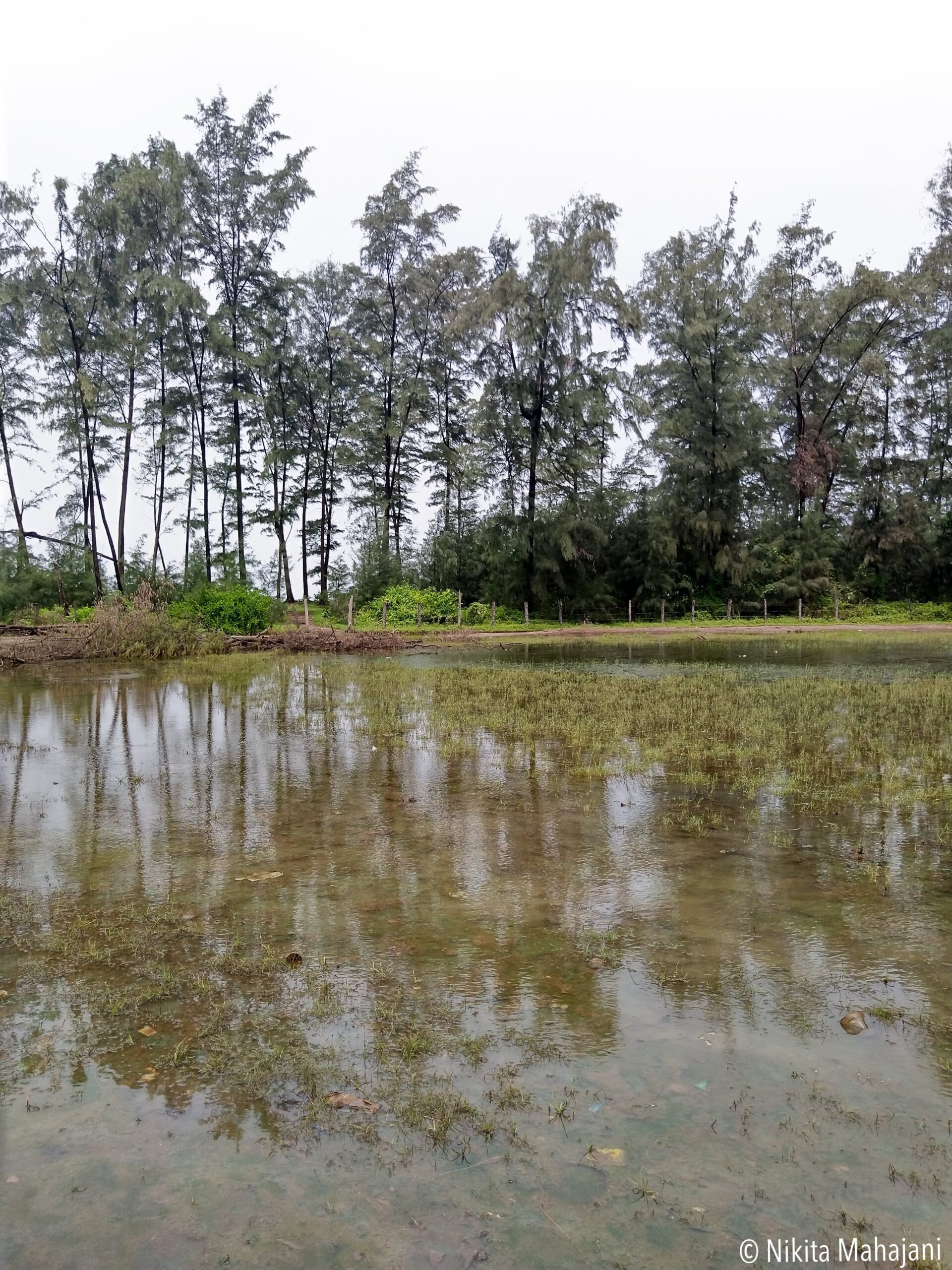
The serene evening ended with a delicious vegetarian meal at Suruchi Pure Veg Restaurant, a perfect conclusion to our first day. They allow pets on request
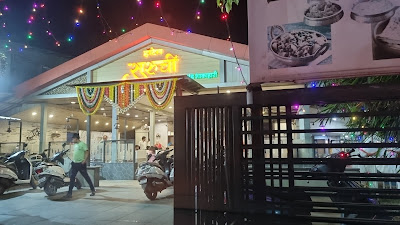
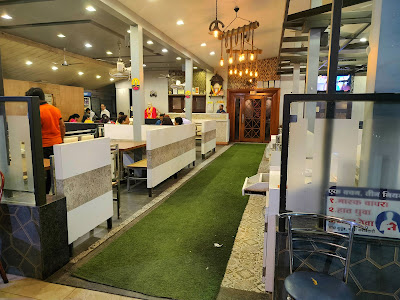
To read the blog on day 2 of Alibag click here
Where did we eat ?
Hotel Gayatri Garva
Suruchi Pure Veg Restaurant
First Old Original Mahesh Lunch Home
Hotel 4 1/2 Anandvan
Food Carnival
Which are the places unsuitable for pets ?
Murud Janjira Fort : The fort needs to be accessed by Ferry boats. Pets are strictly not allowed in the boats as well as on the fort.
Alibag: Day 2
To read the previous blog on day 1 of Alibag click here
Day 2: Waterfalls, Temples, and Beaches
Day two began early with a trek to Siddheshwar Waterfall. The lush monsoon greenery and gushing falls made the climb an exhilarating experience, and Sophie was thrilled to be out exploring nature with us.
The Khandale Village bus stop in Alibag is easy to spot due to a prominent signboard. From this signboard, take a left turn to begin your trek. The route starts with a motorable road that passes through Khandale Village, stretching approximately 3-4 kilometers to the village’s end. Beyond this point, the motorable path transitions into a bullock cart track or dirt road. This trail leads through fields, open clearings, and forested areas, making for a scenic walk.
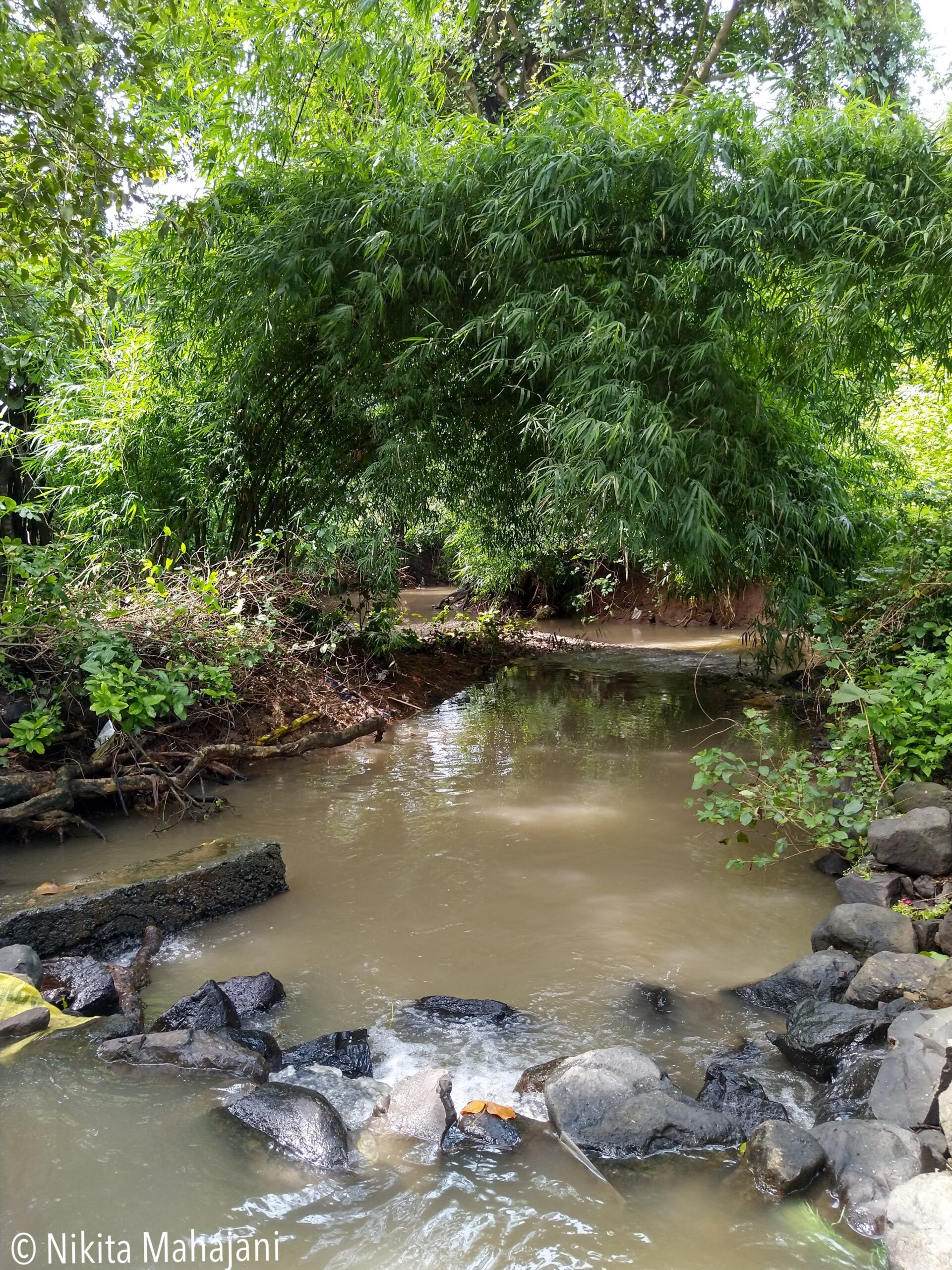
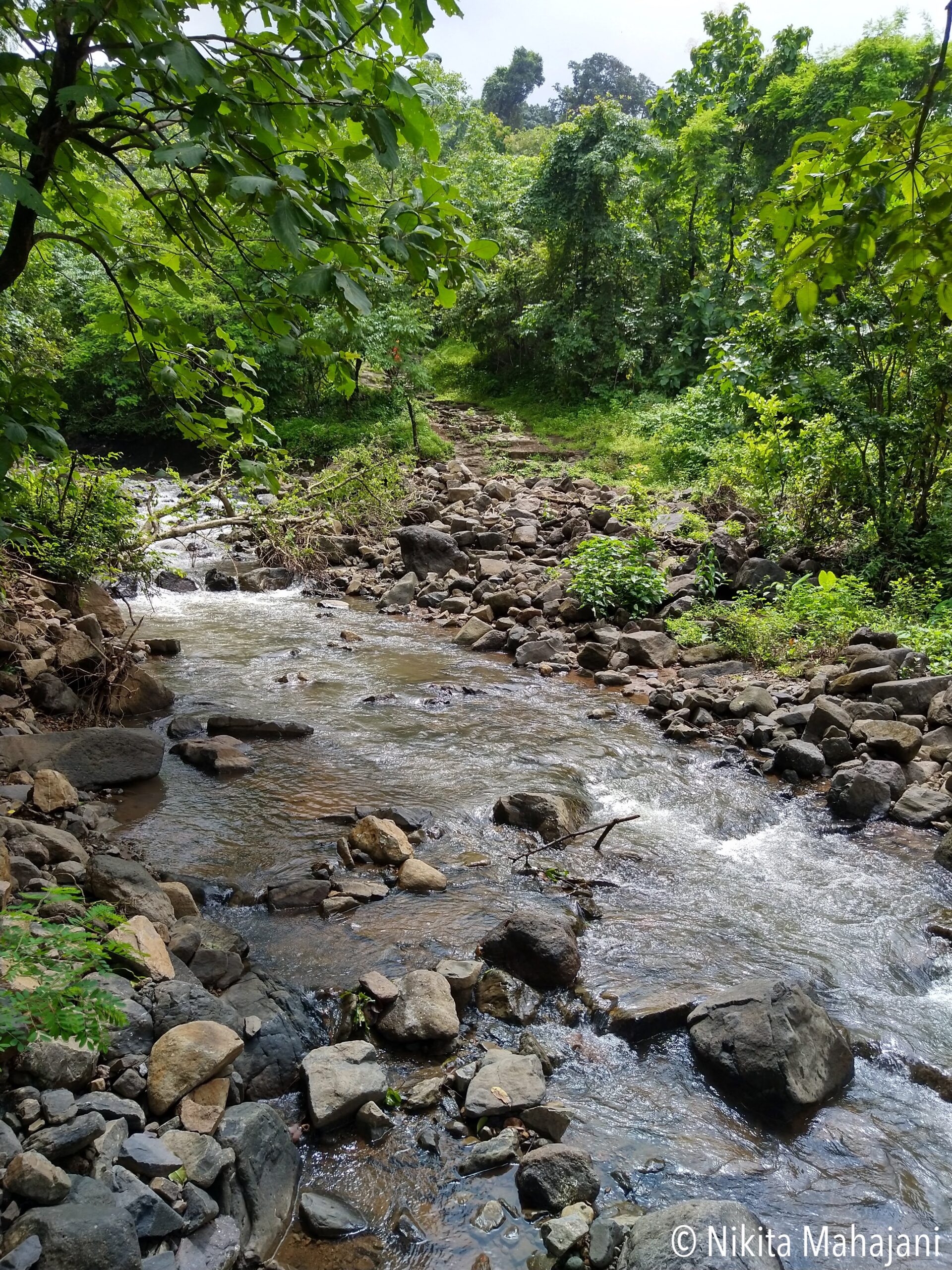
After about 20 minutes of walking, you will reach a set of stone stairs. Since we visited during the monsoon season, a stream was flowing across the path, requiring us to cross it. The actual climb of the trek begins from here.
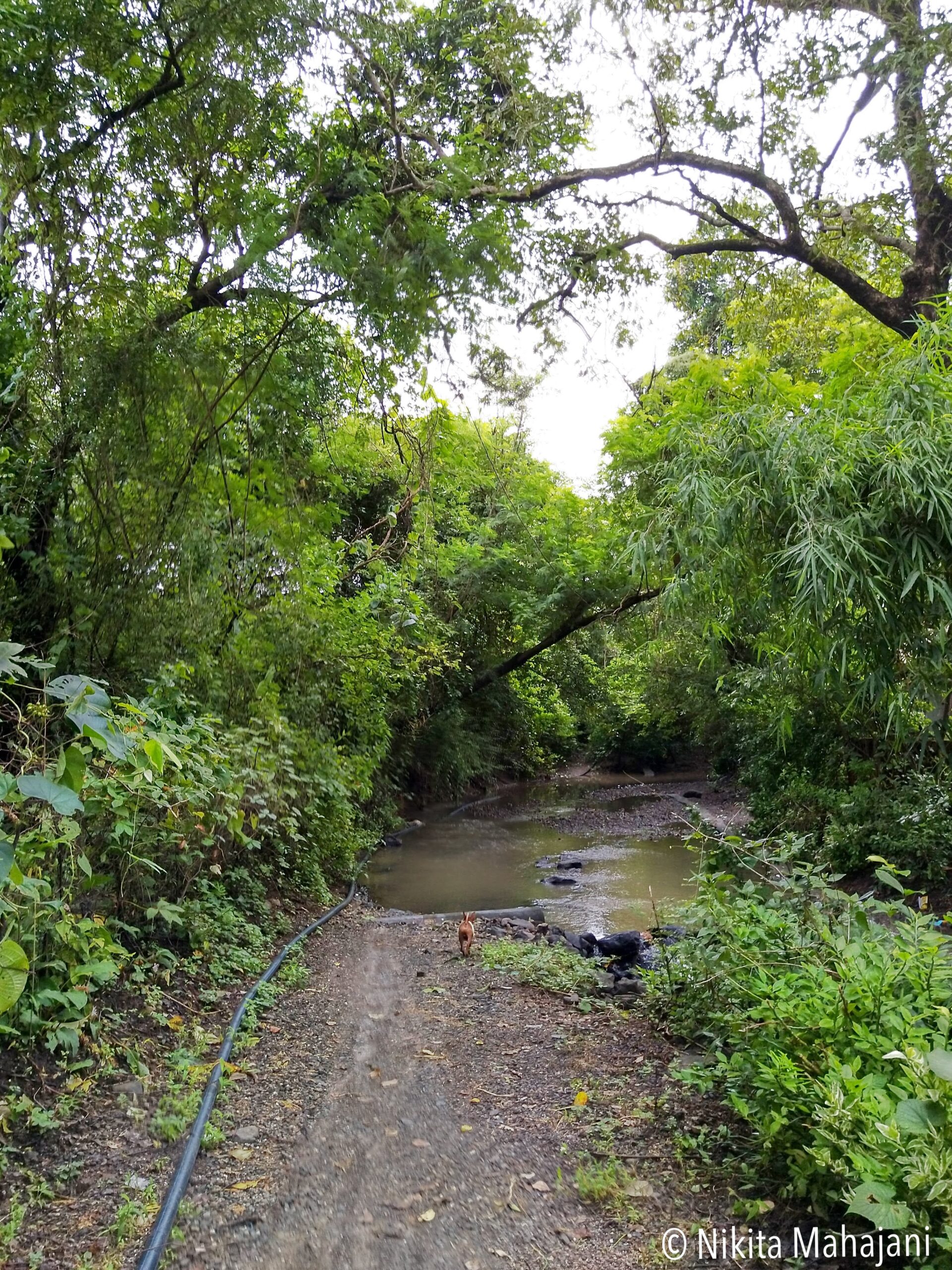
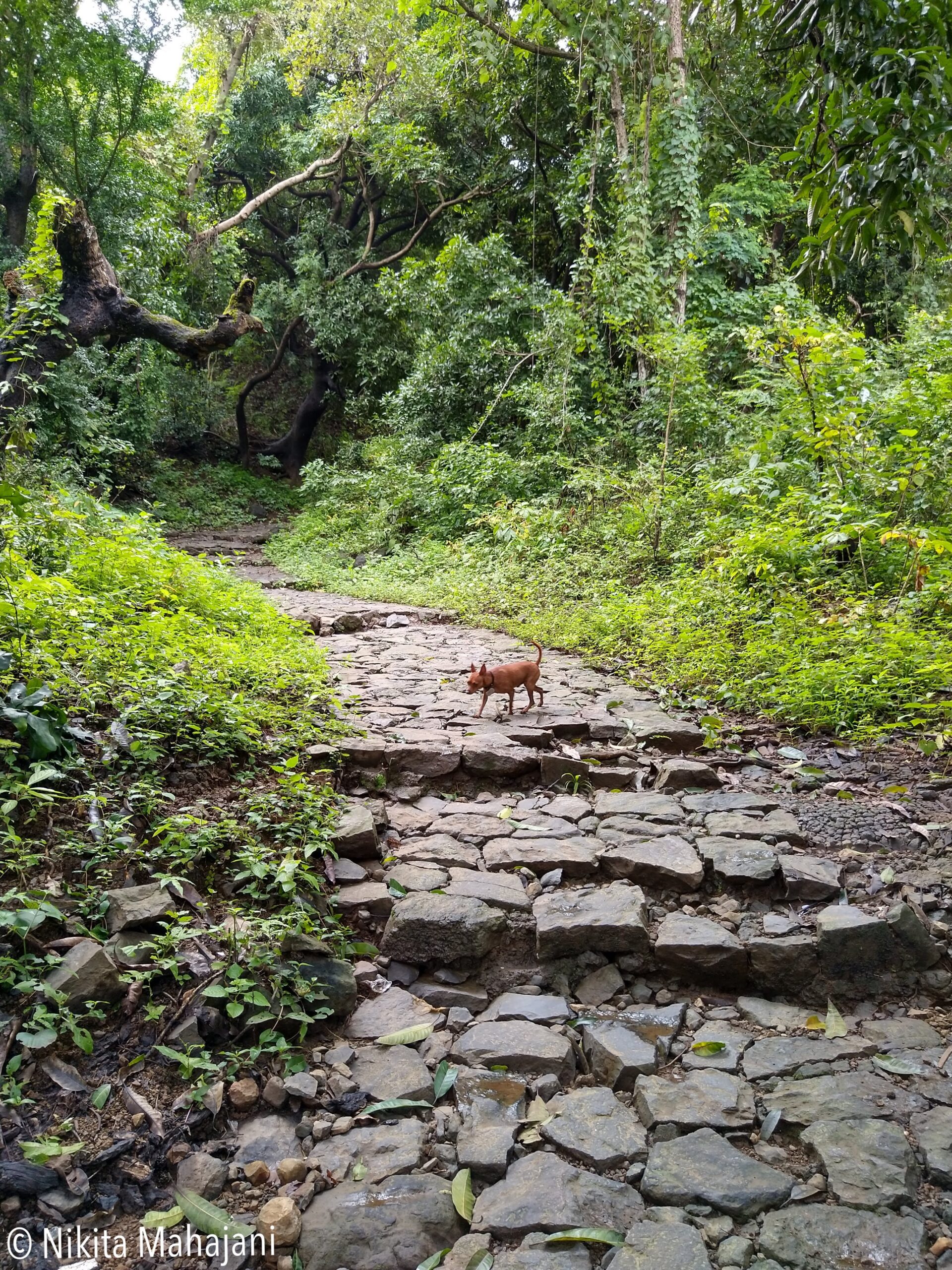
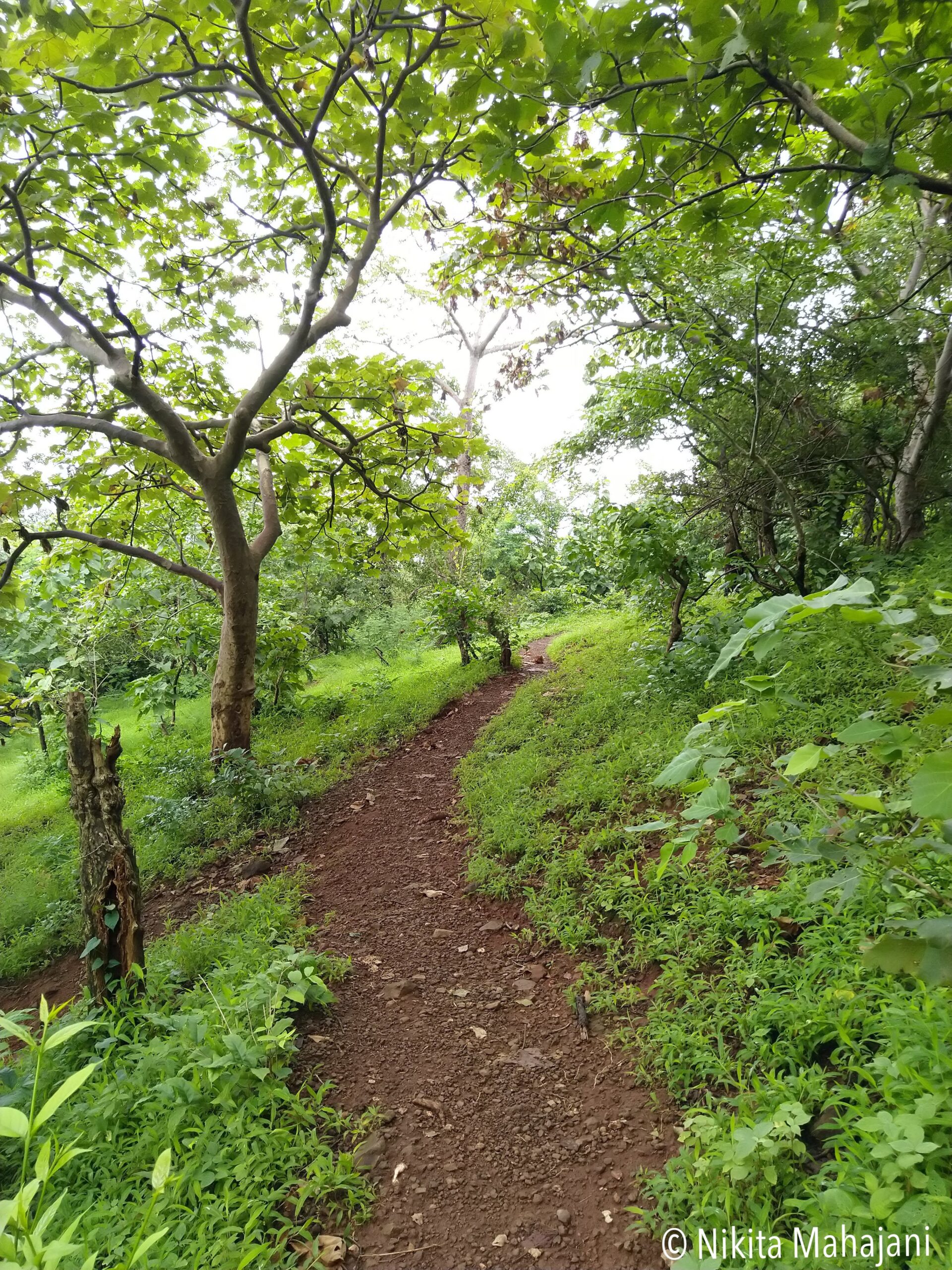
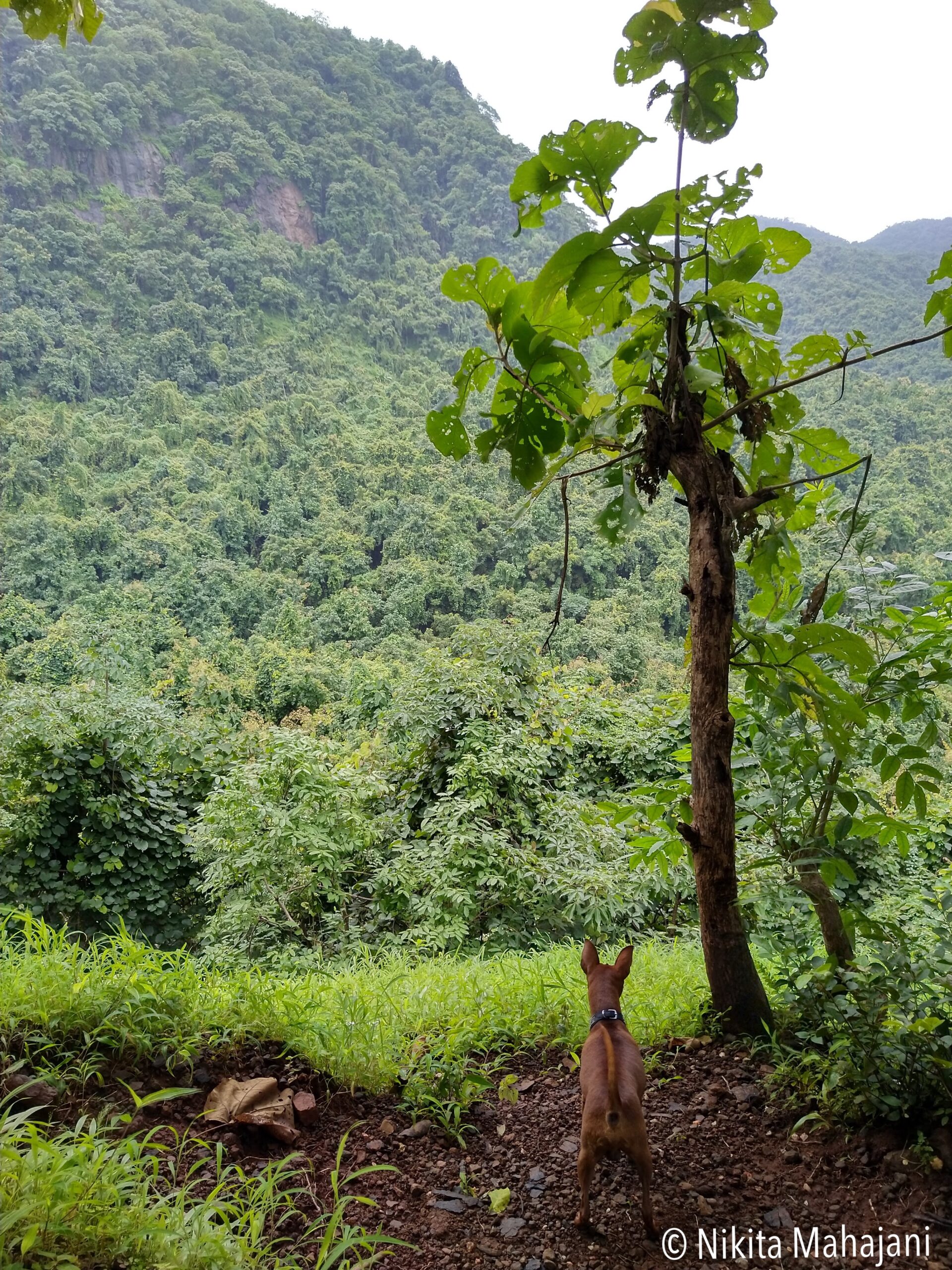
A spectacular waterfall, plunging over 100 feet, awaits ahead. During the monsoon, the waterfall is visible from this very point. To reach its base, one must descend for approximately 20 minutes. The water source for this waterfall originates from behind the Siddheshwar Temple, acting as its natural feeder.
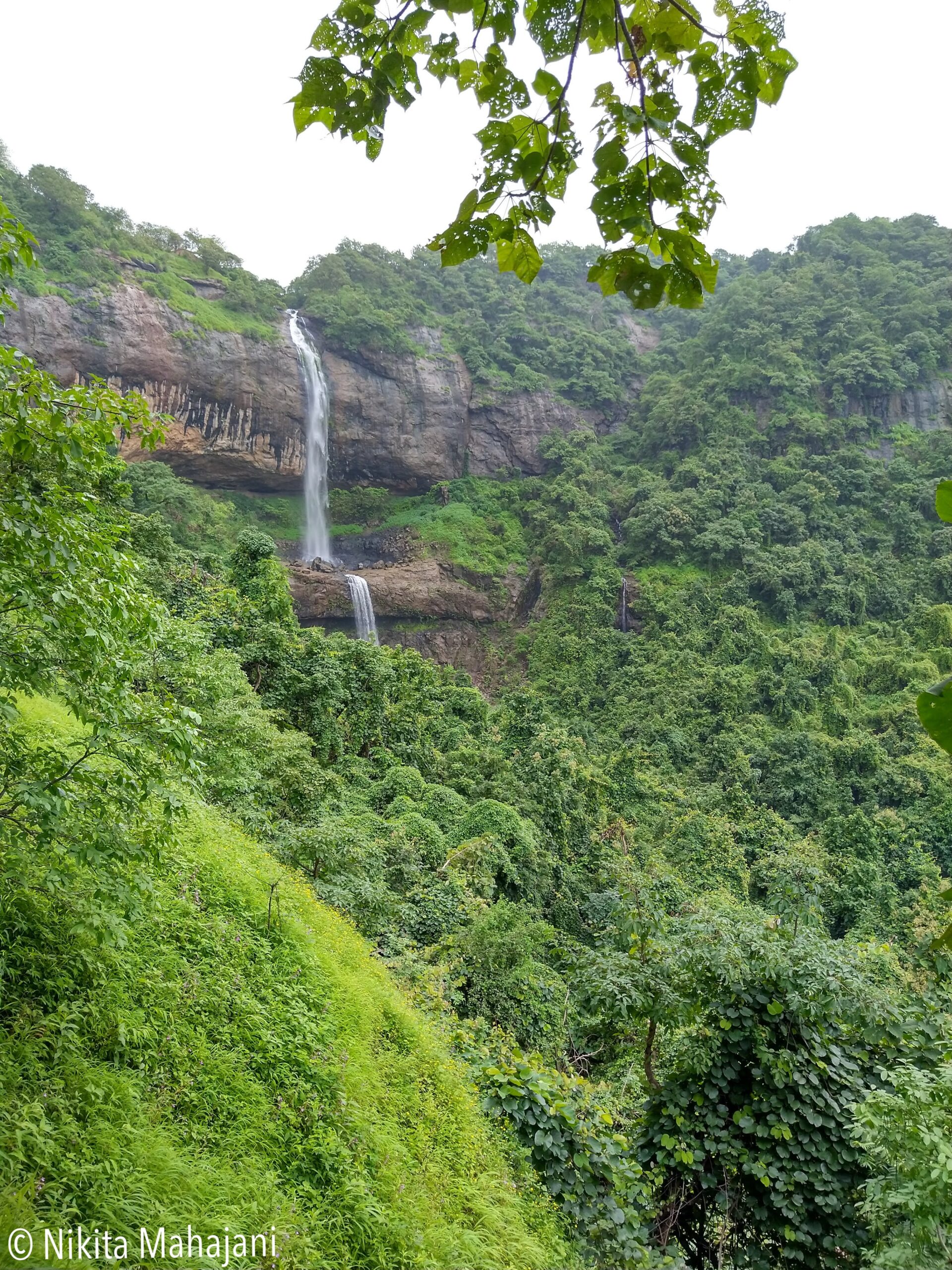
After the trek, we stopped at Hotel Trimurti for brunch to recharge. Hotel Trimurti is also one of my go-to-places in Alibag since its completely pet friendly. They have an enclosed dining area as well as outdoor dining under gazebos in the front yard.
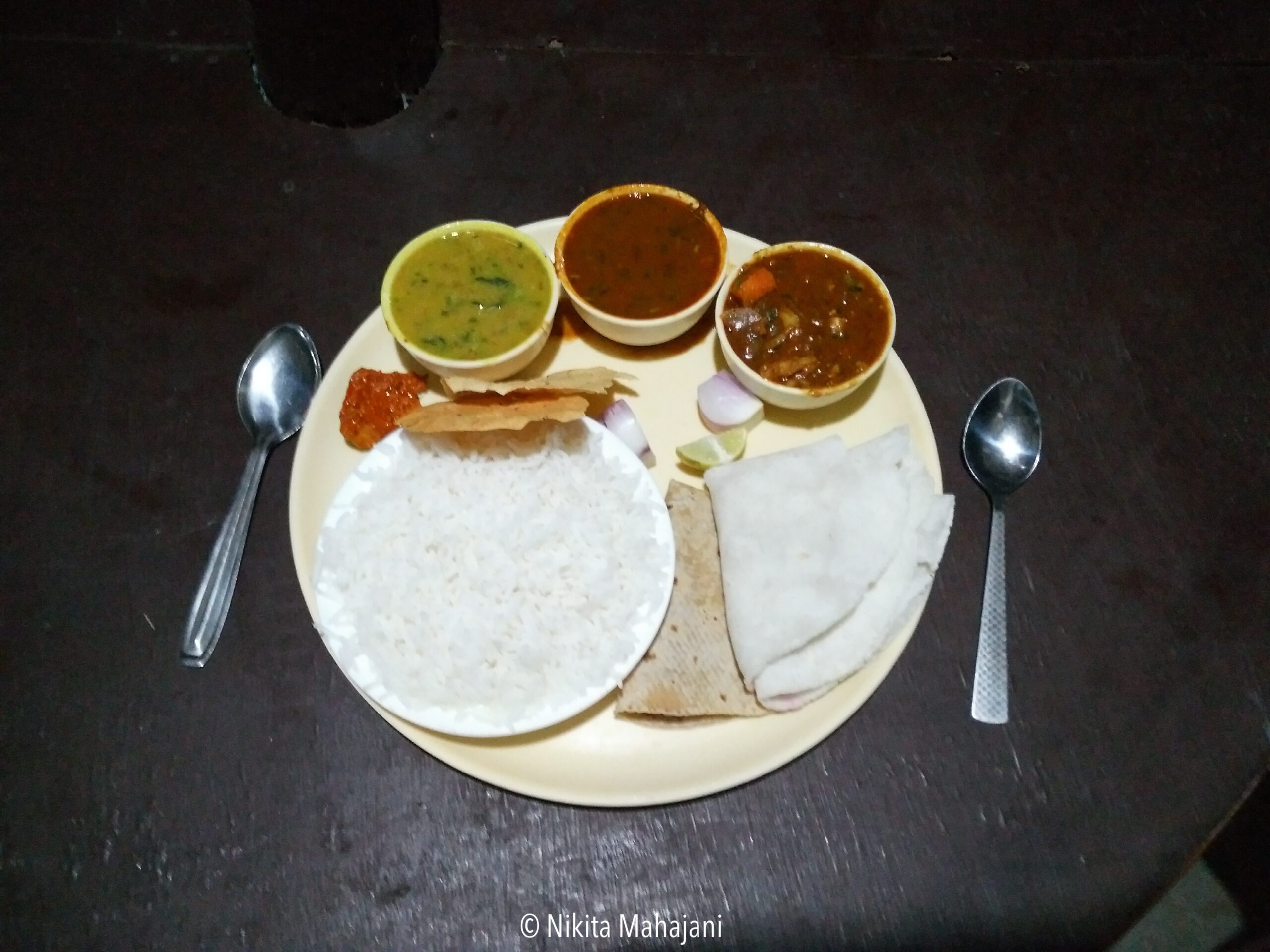
We then made our way to Kankeshwar Temple, perched atop a hill, where we soaked in the peaceful atmosphere and scenic views. Since it was monsoon, we didn’t have to face the harsh sunlight in the afternoon. It was quite gloomy throughout the day.
The temple can be reached by ascending 750 steps. The entire path is shaded by trees, creating a soothing atmosphere. The trail is divided into three sections, allowing trekkers to gauge their progress along the way. The first section involves a steep uphill climb of about half a kilometer. Upon reaching Gaymundi, the path levels out, leading through a flat plain. A water reservoir along the route provides a refreshing stop during the ascent. From this point, the trail becomes relatively simple. After about 15 minutes of climbing, you will arrive at a plateau where the temple stands, surrounded by a dense forest, offering a breathtaking view.
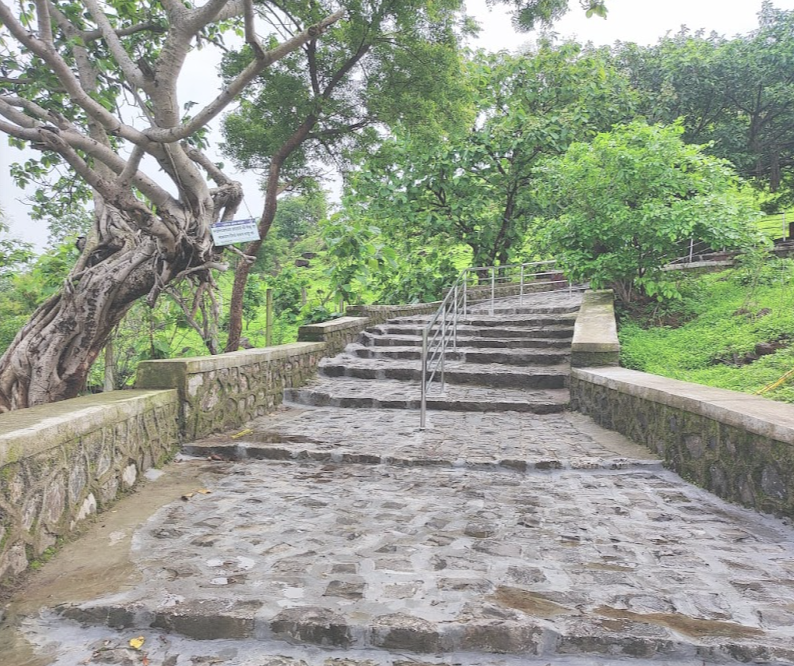
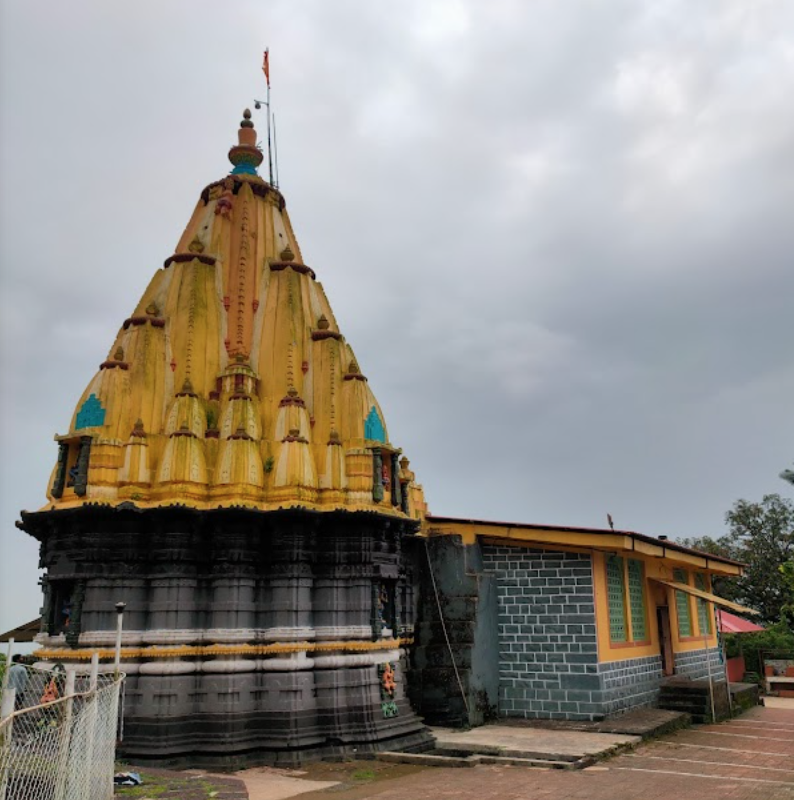
Brahmakund– An elegant arch-shaped structure marks the entrance to the serene world of Kankeshwar temple. As you step through it, you will find a small shrine dedicated to Lord Hanuman. Next to the temple lies ‘Pushkarni,’ a well with steps on all four sides, allowing easy access to the water. During the monsoon season, the well fills up completely, offering visitors a chance to enjoy a refreshing dip in its pure waters.
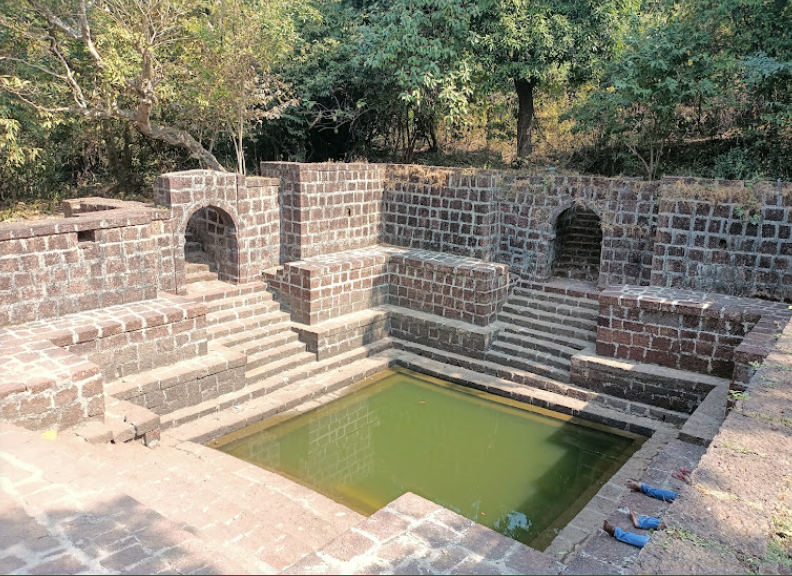
The Temple –
Continuing along the path, you will
come across an artificial lake surrounded by stunning architectural
elements. Adjacent to the lake stands the Kankeshwar temple, dedicated
to Lord Shiva. The temple’s main sanctum was originally constructed
during the Rashtrakutan dynasty, while subsequent additions were made
under the Chalukya and Silhara dynasties. The Kalash (pointed
dome) of the temple, dating back 100 to 200 years, exemplifies intricate
and refined craftsmanship. The temple’s well-planned design fosters a
peaceful and tranquil ambiance.
The mandap (prayer hall) was built under the expert guidance of Shri Gurupad Swami, a disciple of Shri Shridhar Swami. The sanctum houses a Shivalinga, adorned with a silver coating, while a grand idol of Nandi stands guard at the entrance, with an idol of Lord Ganesha positioned to its right. The Guravs (priests) perform rituals and offer prayers to the deities three times a day, accompanied by the continuous lighting of lamps (deep-prajwalan). Additionally, the temple complex includes shrines dedicated to Ramsiddhivinayak, established by Lambodar Swami, as well as Shri Krishna and Balaram.
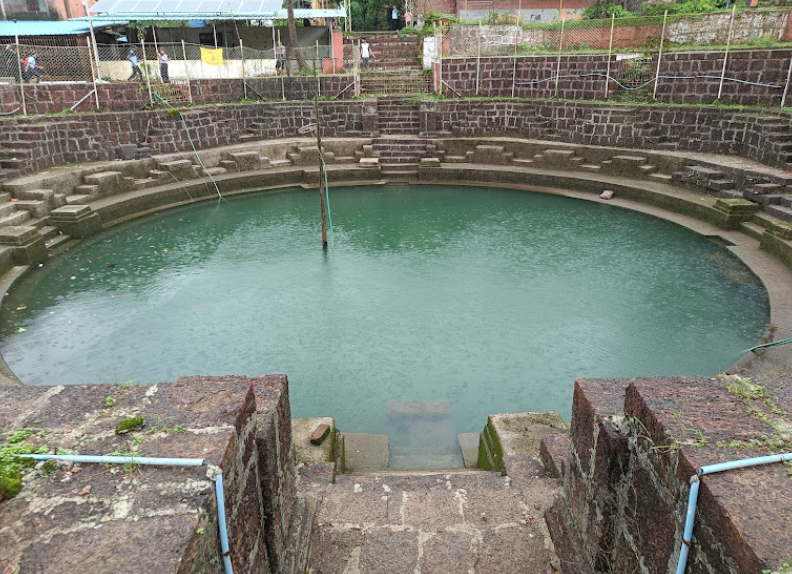
By this time we were quite exhaused. After a relaxing afternoon nap
back at our Alibag home, we started the journey to Nagaon to spend the
evening at Nagaon Beach.
One has to pay taxes and parking charges while entering the village
limits of Nagaon. Since this place is home to a temple having 9
sculptures of snakes (nau naaganche deul), it is called as Nagaon.
Washrooms
and bathing facility is available on paid basis in the parking area.
They also provide hot water buckets. There are lots of shacks on the way
to the beach. Nagaon beach is quite crowded. Hence it is better to
avoid visiting Nagaon beach on weekends. The whole nagaon village does
not have network for internet expect for airtel users.
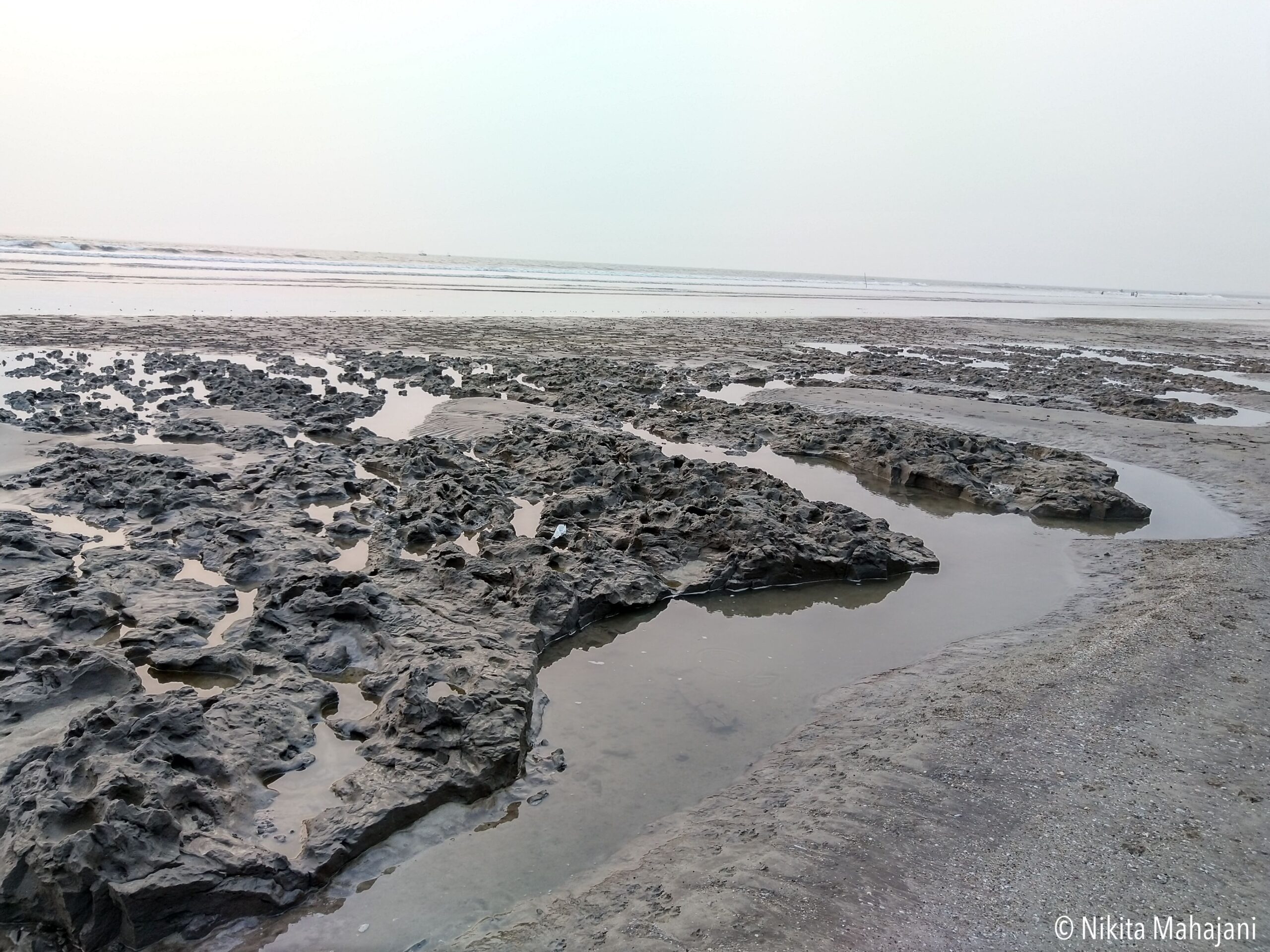
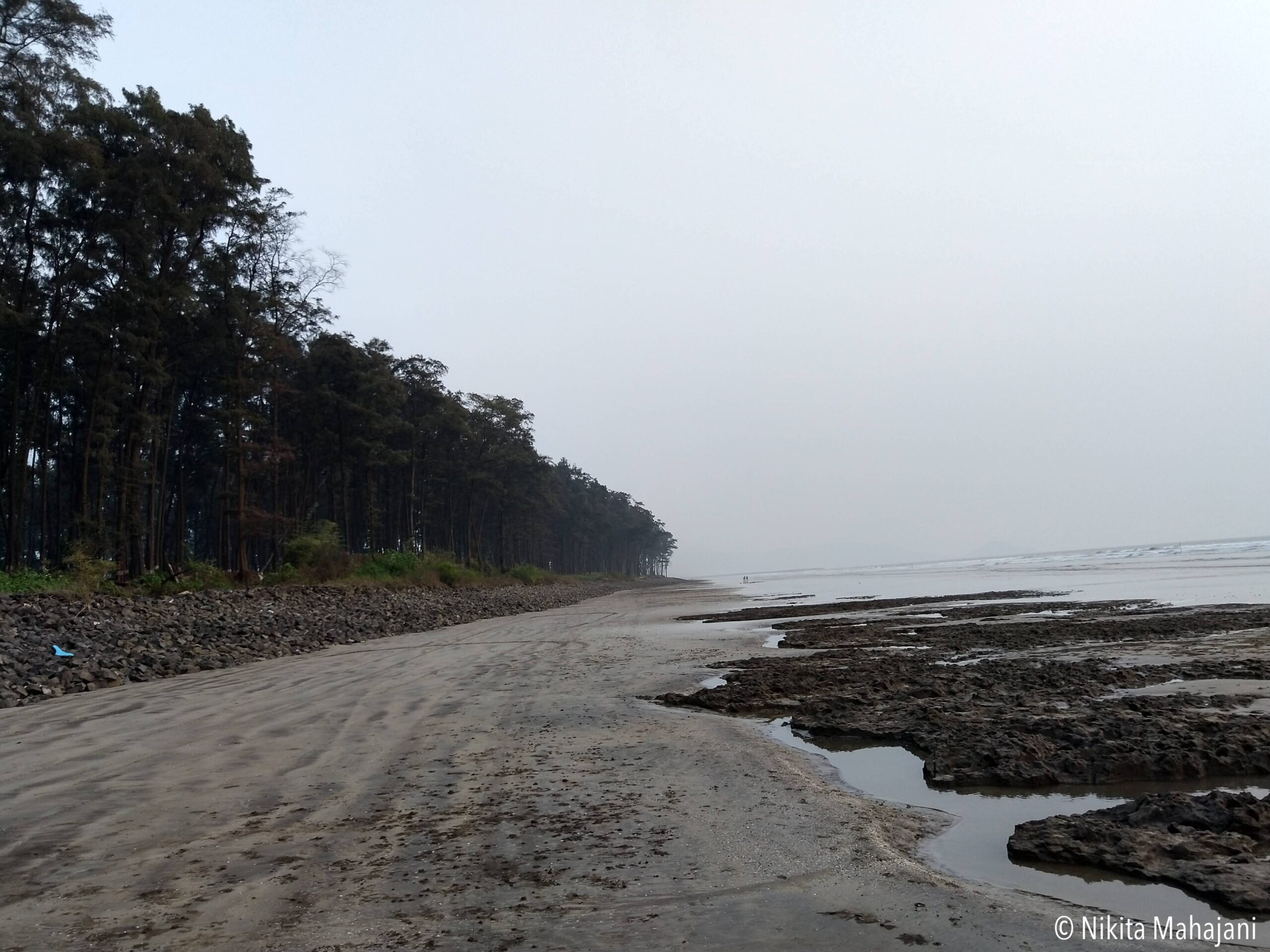
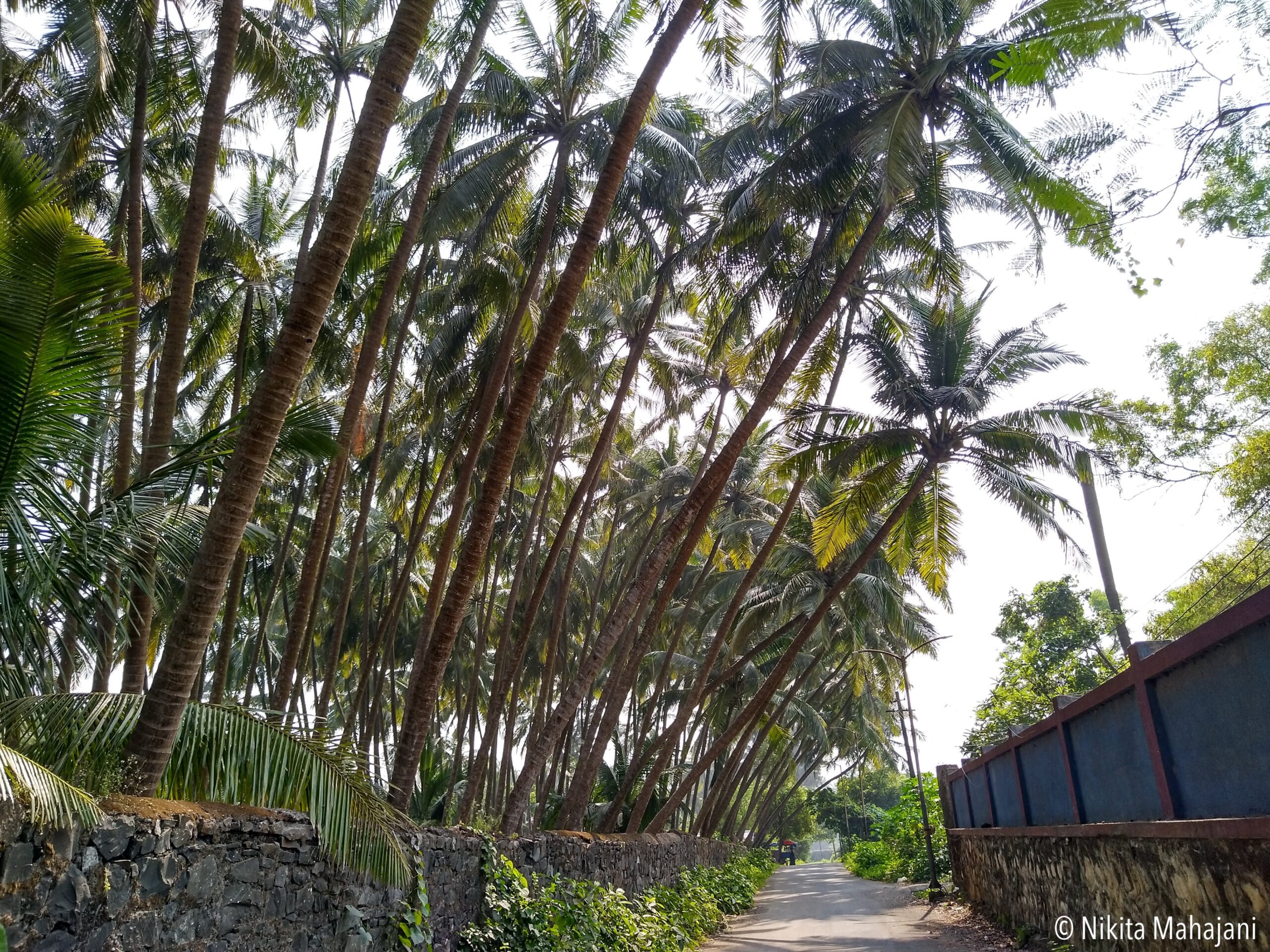
Nagaon Beach stands out from most other beaches in Alibaug as it is primarily a sandy beach. It stretches over a vast, flat area with a smooth blend of white and black sand. The beach is considered safe for swimming, allowing visitors to wade far into the sea without any sudden depth changes.
The day concluded with a sumptuous dinner at First Old Original Mahesh Lunch Home, where we enjoyed fresh coastal flavors just steps from the shore. They serve unlimited veg thali which consist of ukdicha modak (sweet dumplings), solkadhi, koshimbir, one dry vegetable, one gravy preparation , dal rice , roti and papad. Pets are allowed at First Old Original Mahesh Lunch Home. They have clean washrooms and parking as well.
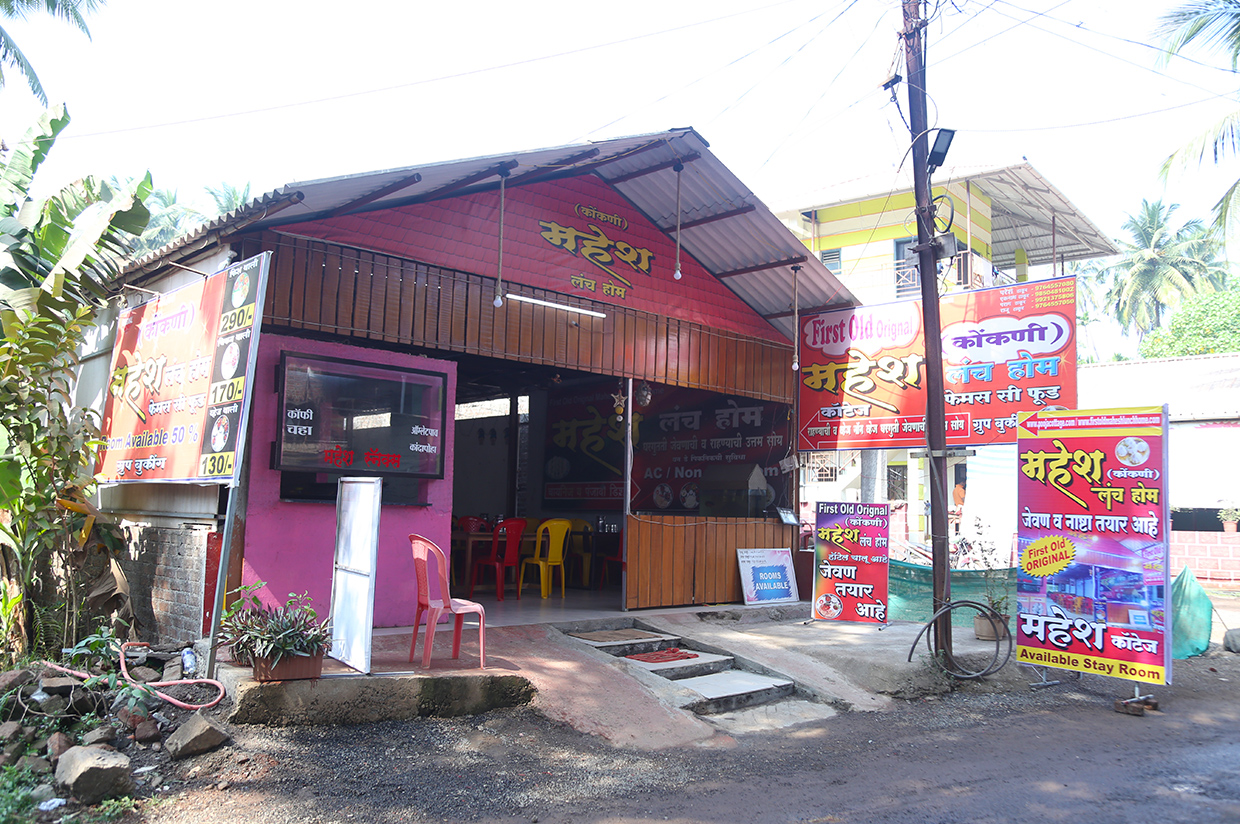
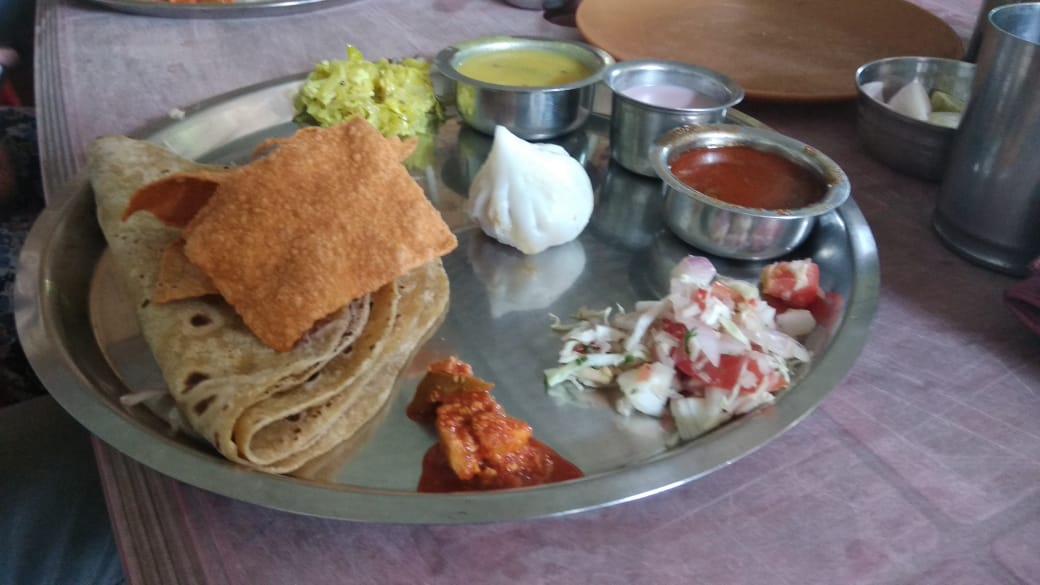
We returned home (in Alibag) after heaving a heavy dinner at Mahesh lunch home.
To read the blog on day 3 of Alibag click here
Where did we eat ?
Hotel Gayatri Garva
Suruchi Pure Veg Restaurant
First Old Original Mahesh Lunch Home
Hotel 4 1/2 Anandvan
Food Carnival
Which are the places unsuitable for pets ?
Murud Janjira Fort : The fort needs to be accessed by Ferry boats. Pets are strictly not allowed in the boats as well as on the fort.
Alibag: Day 3
To read the previous blog on day 2 of Alibag click here
Day 3: Revdanda Fort and Temples of Chaul
We started the day with a visit to Korlai Fort, offering breathtaking views of the coast and sea. From there, we headed to Revdanda Fort and Revdanda Beach, where the ancient ruins stand against a scenic backdrop.
Satkhani (सातखणी) Buruj at Revdanda Fort is one of its most iconic structures. Originally known as the Tower of St. Barbara, it was part of a church within the fort. The name Satkhani comes from its distinctive seven-story design. I made a quick sketch of the ruins of Satkhani Buruj.
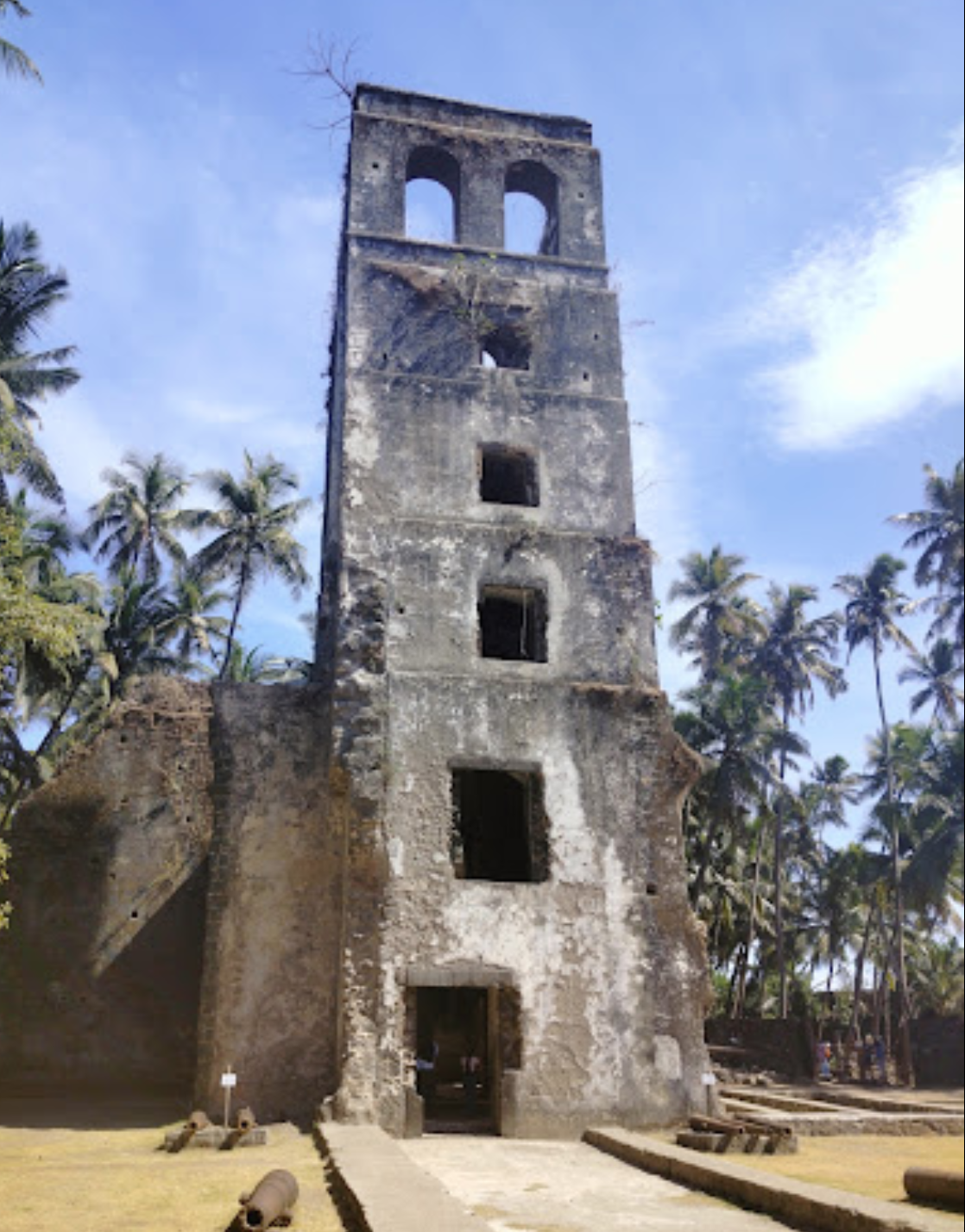
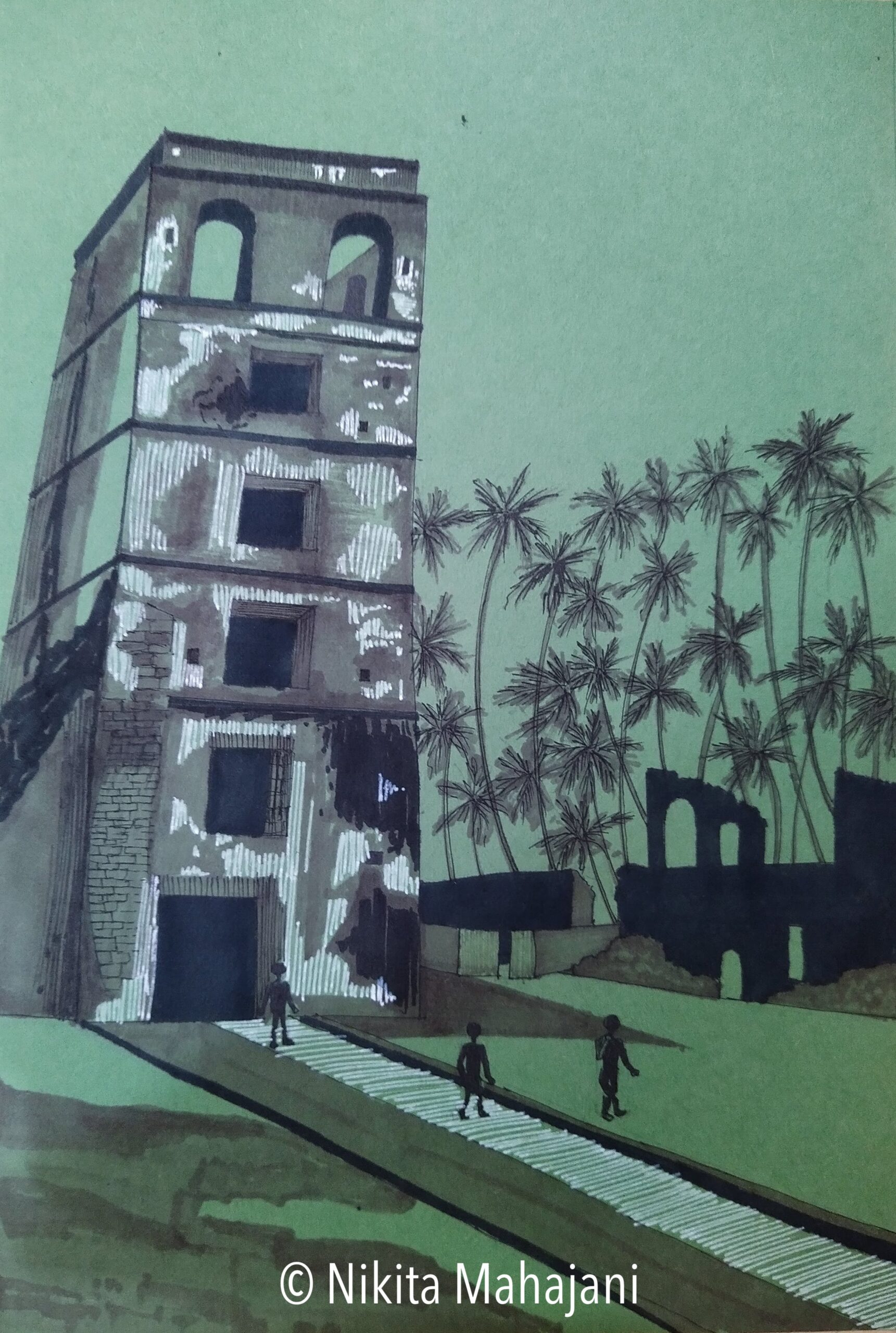
This fort was constructed in 1558 by Portuguese Captain Soj and was originally named Santa Maria de Castelo. Over time, the locals began referring to it as Rev Danda. The fort is surrounded by dense vegetation, primarily coconut and betel nut trees, while the beach area outside the fort is lined with casuarina trees. It is possible that the Portuguese planted these trees within the fort premises.
Within the fort, there is a four-story tower along with a few cannons embedded in its walls. Additionally, the site contains the ruins of an old structure resembling a church, which now stands in a dilapidated state. The fort also houses the Chapel of St. Francis Xavier, where he is believed to have delivered some of his earliest sermons in India. Apart from these, there are several other ruins scattered throughout the fort.
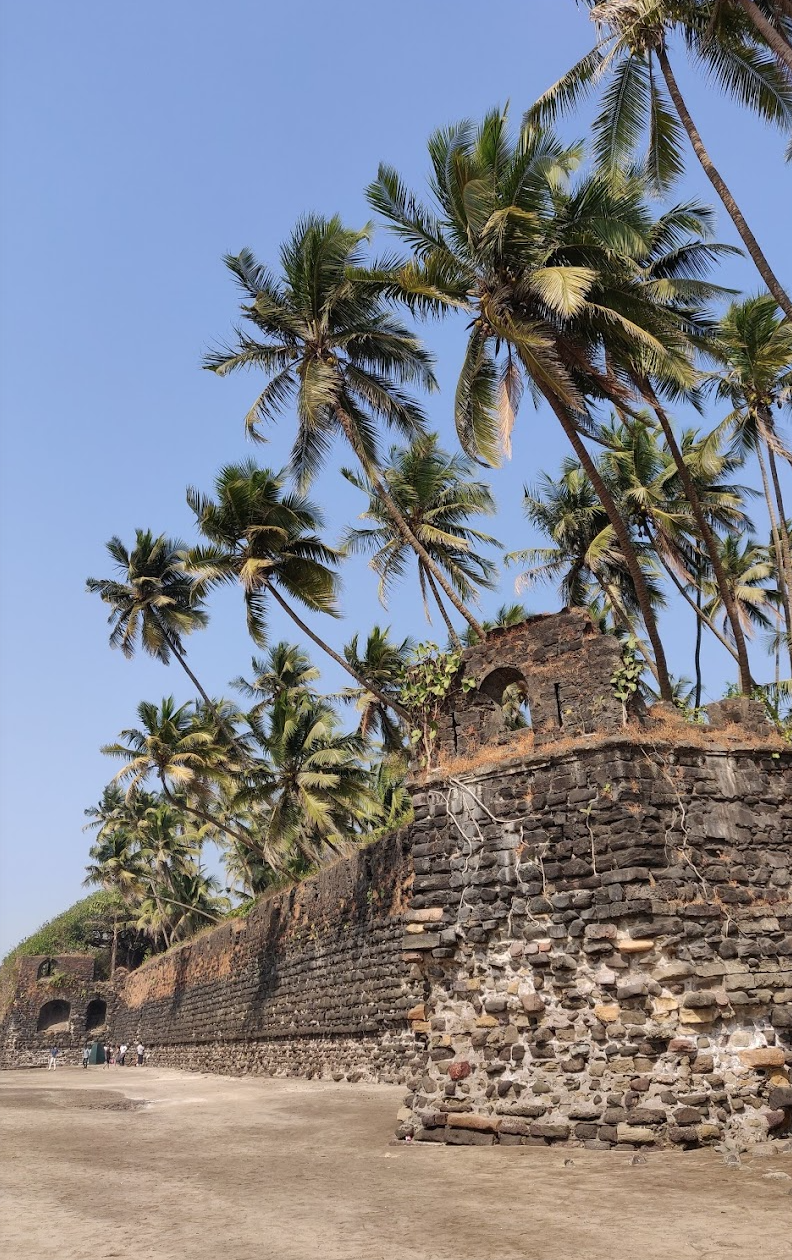
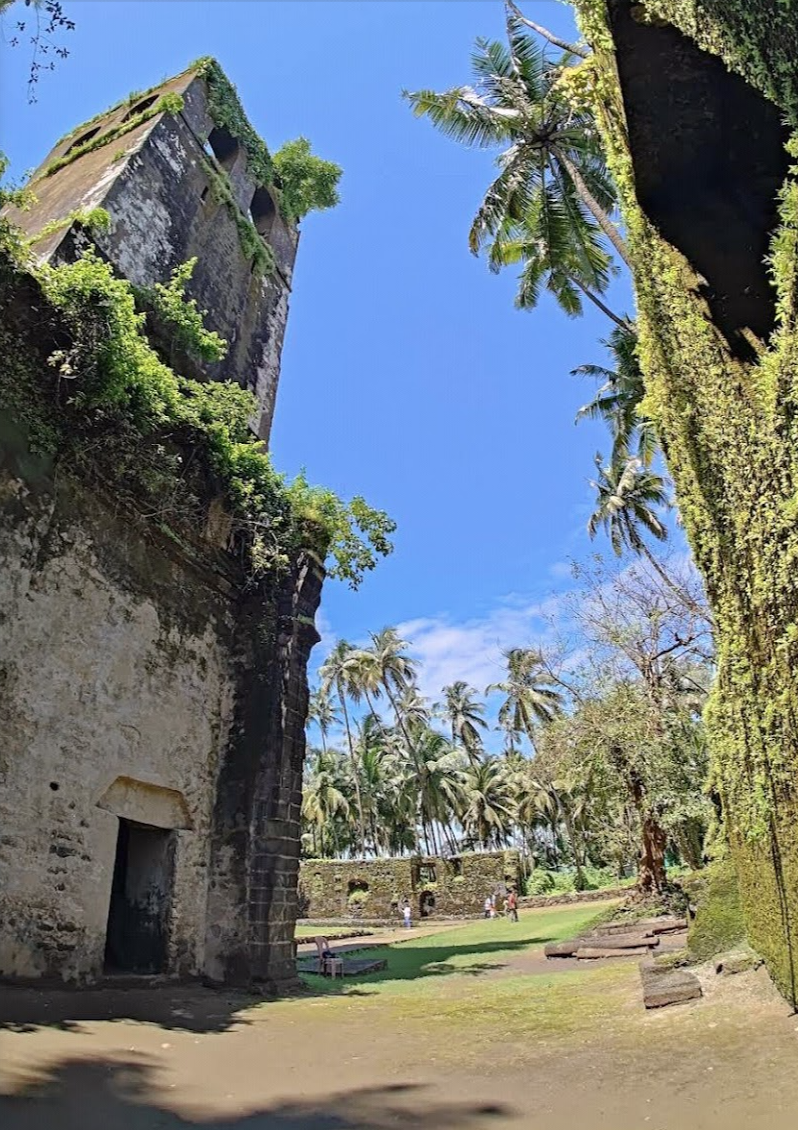
Our exploration continued with visits to Shitaladevi Temple and Shree Rameshwar Mandir in Chaul, two peaceful spots that provided a tranquil end to our Alibag journey.
Shitaladevi is one of the revered and ancient seven deities of Chaul. This historic temple remains highly popular and is located approximately 2 km from Chaul Square. It was restored in 1759, with the Angre family holding deep faith in this goddess.
Originally, the Shitaladevi Temple was a wooden structure with a slanting clay-tiled roof. However, around 1990, it was reconstructed using cement concrete. The temple’s main entrance faces east, with additional entrances on the south and north sides. At the main entrance and the assembly hall, there is a distinct architectural culmination. The idol of the goddess remains in its original position at the temple’s core. In front of the temple stands a stone-built column of lamps. Additionally, an ancient Pushkarini (stepped well) is present, with its water still utilized by the local villagers.
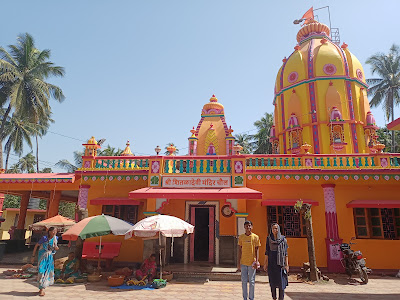
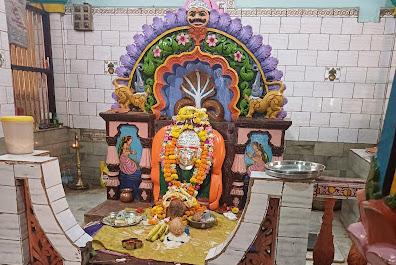
The Rameshwar Mandir, an ancient shrine dedicated to Lord Shiva, is situated in Chaul, Revdanda, Maharashtra. The Chaul region is renowned for its numerous temples, with an astonishing count of 365—one for each day of the year.
According to local villagers, the temple was initially constructed in just over a day by the Pandavas, but they were unable to complete it. Had they succeeded, it would have been the only temple, like Kashi, to be built within a day. Later, Maratha Navy Admiral Kanhoji Angre took charge and completed the remaining work.
Like all Shiva temples, the Rameshwar Mandir features a Nandi statue positioned in front of the main shrine. The temple complex spans a vast area, with its dome reaching a height of 7.62 meters. A large pond, known as Pokhran, lies in front of the temple, enhancing its grandeur. Two towering Deep Jyoti Stambhs (pillars designed to hold small oil lamps) stand at the entrance, adding to the temple’s illumination.
As one steps inside, a spacious prayer hall supported by vibrant wooden pillars welcomes visitors. The presence of the large pond outside the temple further enhances its majestic appearance. During local festivals, aartis (ritual prayers) are performed along the pond, creating a mesmerizing spiritual atmosphere.
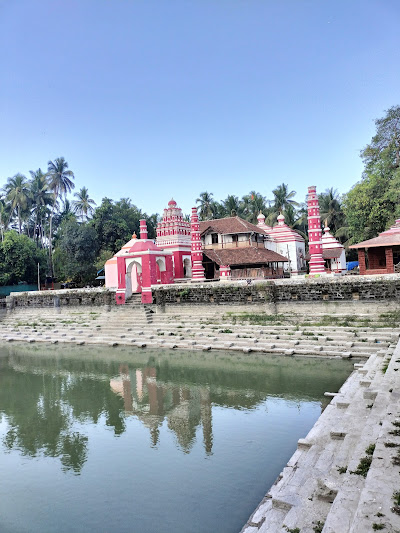
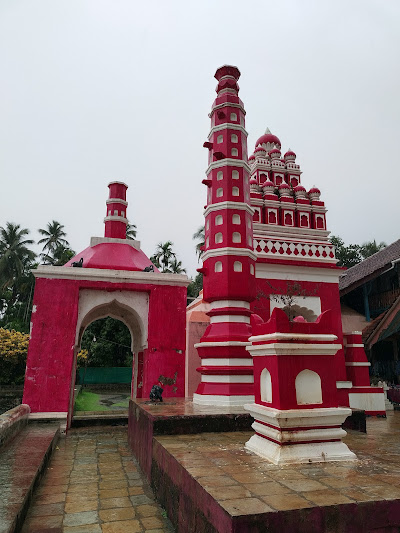
The serene evening ended with a delicious vegetarian meal at Moghe Khanawal which is a pure veg take away centre near Alibag beach. Moghe Khanawal is likely the only restaurant in Alibaug that serves exclusively vegetarian food. The menu features just one item – an authentic Maharashtrian thali. This thali is incredibly delicious, offering a comforting, home-cooked taste. The simple ambiance further enhances the experience, making it feel like a meal at home.
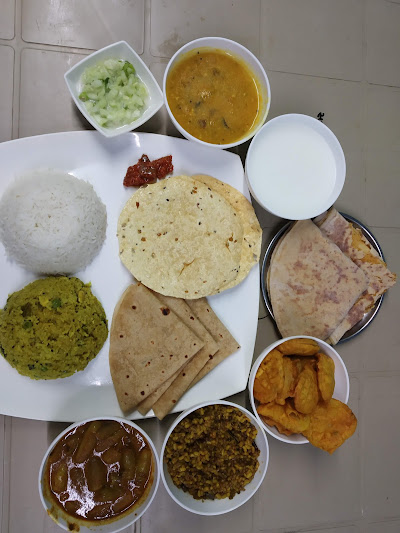
The restaurant serves a fixed menu with a set portion of a traditional rice plate, all at an affordable price that fits any budget. It is a small eatery with only a few tables but carries a rich traditional history. If you’re in Alibaug, this place is definitely worth a visit!
To read the blog on day 4 & 5 of Alibag click here
Where did we eat ?
Hotel Gayatri Garva
Suruchi Pure Veg Restaurant
First Old Original Mahesh Lunch Home
Moghe Khanawal
Hotel 4 1/2 Anandvan
Food Carnival
Which are the places unsuitable for pets ?
Murud Janjira Fort : The fort needs to be accessed by Ferry boats. Pets are strictly not allowed in the boats as well as on the fort.
Alibag: Day 4 & 5
To read the previous blog on day 3 of Alibag click here
Day 4: Tombs and Palace in Murud
On day 4, we started with a visit to Khokari Tombs in Murud.
Rajpuri
is a significant historical site on the mainland in front of Janjira.
To its east lies Kharshet, a now-deserted village, which was once
adjacent to Khokari. Khokari is home to an impressive stone mausoleum
built in the Indo-Saracenic architectural style, known as the Khokari
Tombs. This site serves as the final resting place of Siddi Sirur.
In addition to Siddi Sirur’s tomb, there are two other notable tombs. One belongs to Yakut Khan, who served as the Nawab of Janjira from 1670 to 1677, later becoming the Chief of the Mughal fleet from 1677 to 1691, and returning as Nawab of Janjira from 1696 to 1707.
The second tomb belongs to his brother, Khairiyat Khan, who was the Administrator of Danda-Rajpuri from 1670 to 1677 and later governed Janjira from 1677 to 1696. Several other tombs are scattered around the Khokari Tomb complex. Near the tombs of Yakut Khan and Khairiyat Khan, two inscriptions in Arabic can also be found.
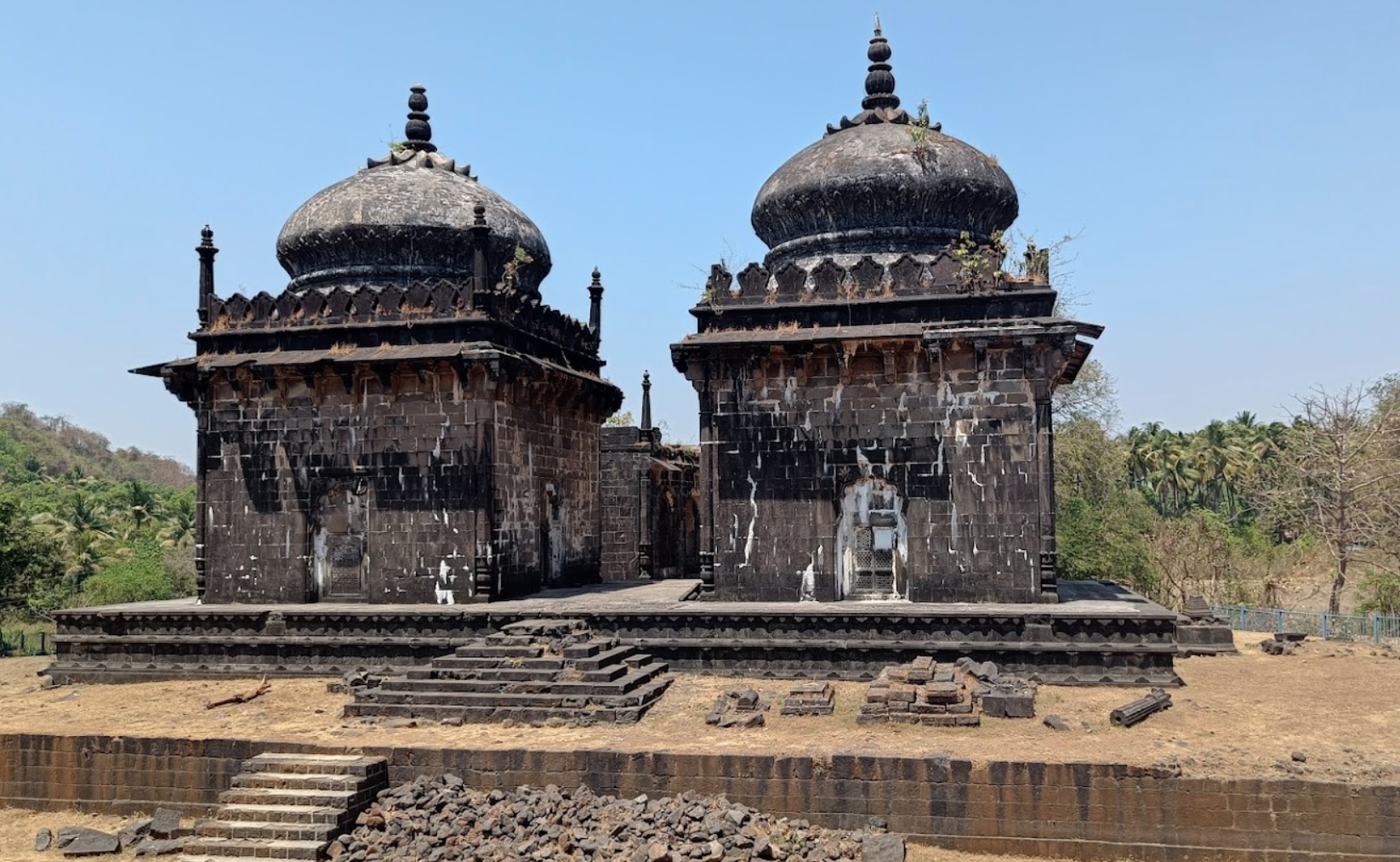
The Khokari Tombs are stunning and captivating, situated near Murud Janjira and Kashid beaches. The tombs and the surrounding gardens are remarkably clean and tranquil, likely because they remain largely undiscovered by tourists. With no guards on-site, entry is free of charge. However, there are no washroom facilities available. On-road parking is convenient. Perched on a raised platform near the seashore, the tomb offers a striking view. The location is peaceful, uncrowded, even during holidays, and provides a fantastic vantage point to admire the seaside scenery.
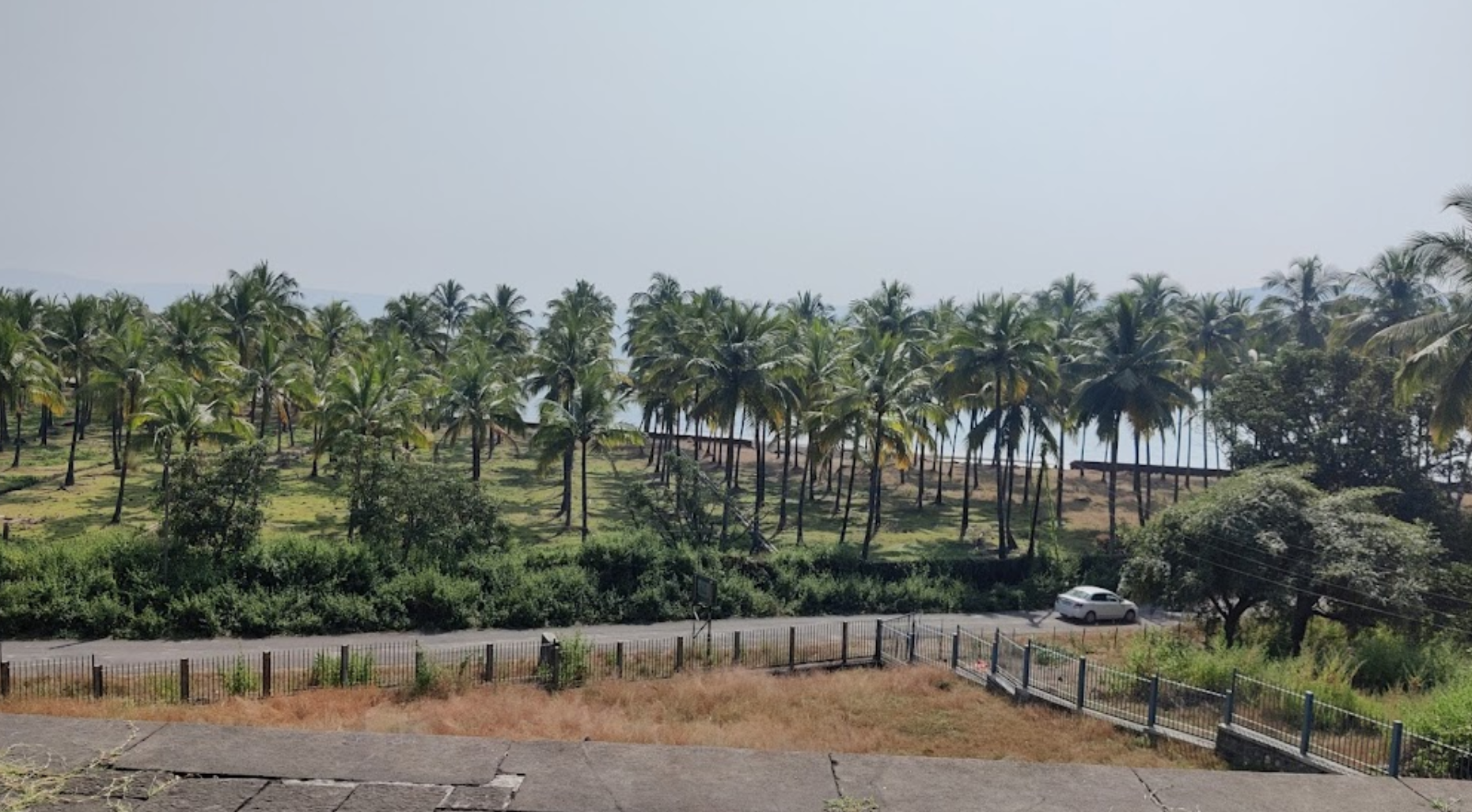
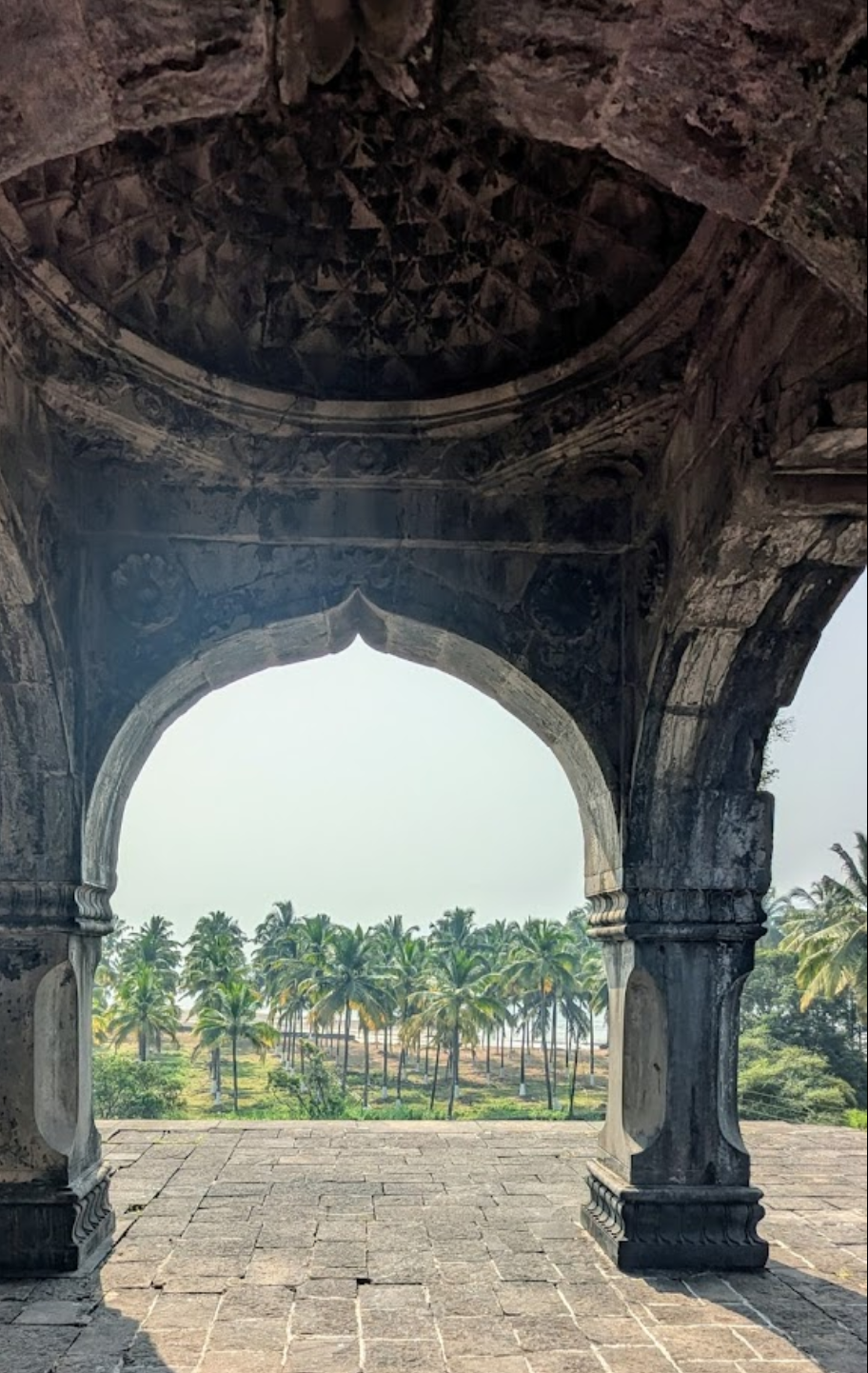
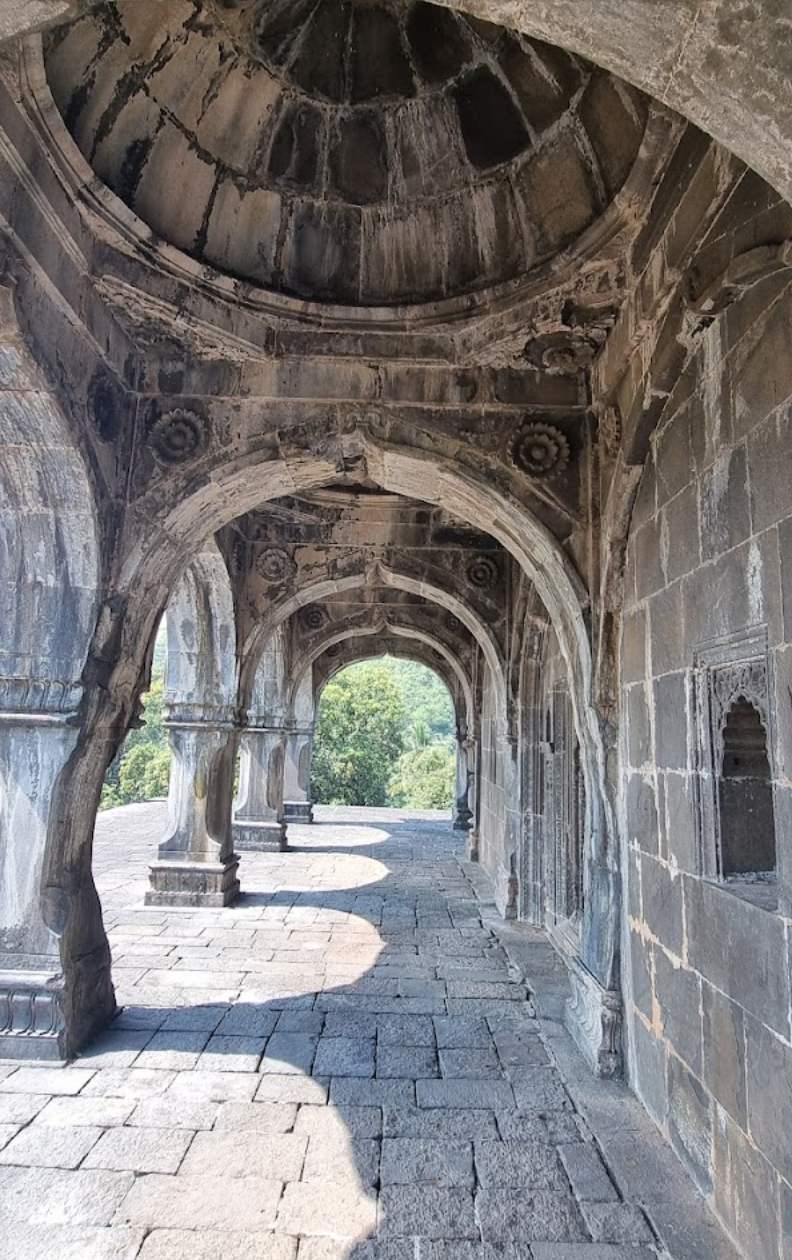
On the way back home we also saw Nawab Palace from outside. It is not open to visitors. The Nawab Palace of Murud, also known as Siddhi Palace, is a majestic structure situated on the route to Revdanda, Alibaug. Built in 1885, this palace was designed in a blend of Mughal and Gothic architectural styles for administrative purposes and remains well-preserved to this day. The complex also features a stunning mosque. From the palace, one can enjoy a breathtaking view of Murud Beach and the Arabian Sea. As it is private property, visitors can admire its grandeur only from the outside.
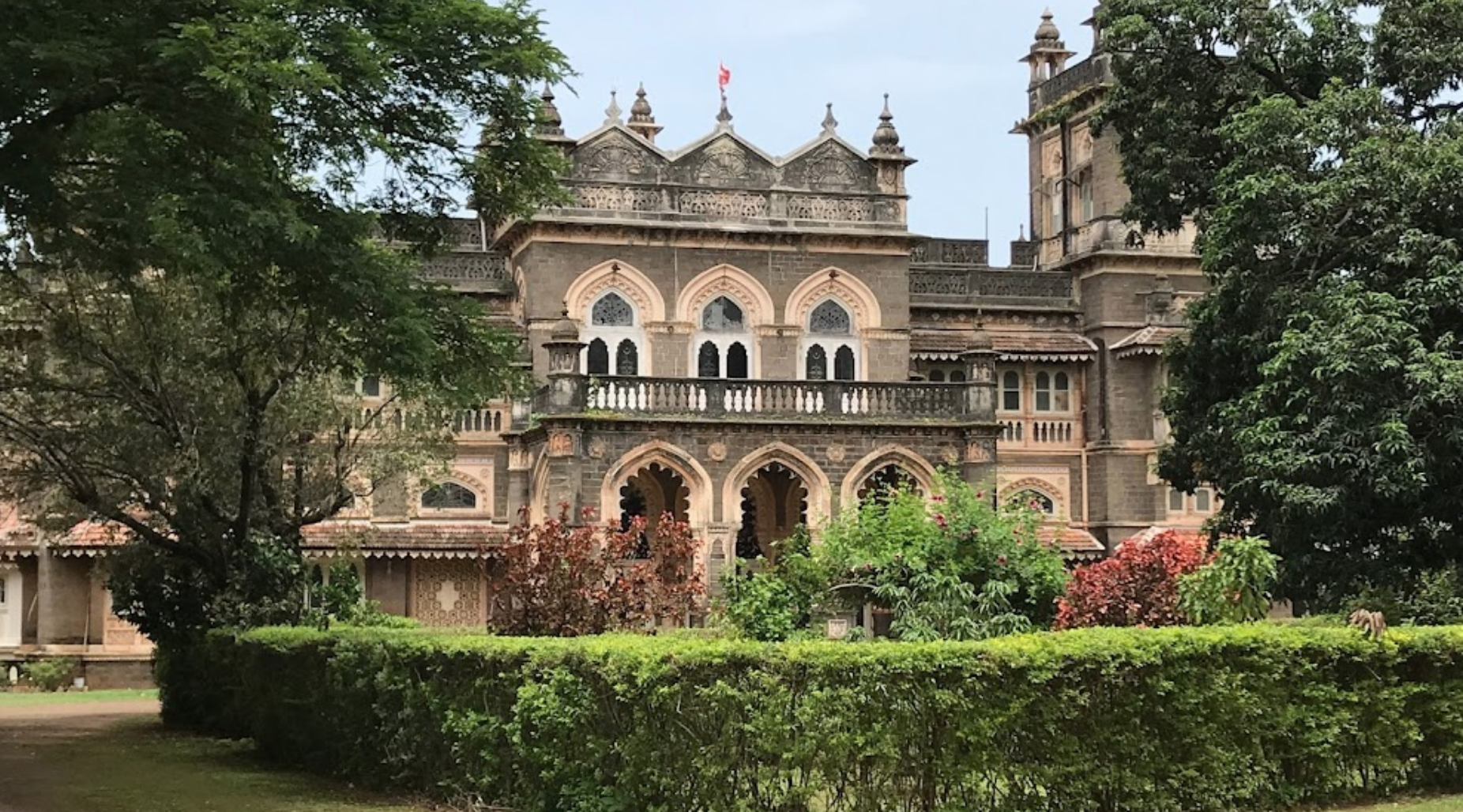
We enjoyed playing on the rocky beach of Murud and came back home in the evening. Murud Beach is a picturesque and well-maintained destination. With no food stalls permitted on the shore, the beach remains clean and ideal for relaxation. Visitors can take long strolls along the coastline while enjoying the refreshing breeze. The atmosphere is peaceful, with a courteous crowd and minimal disturbances, making it a perfect spot to unwind in tranquility.
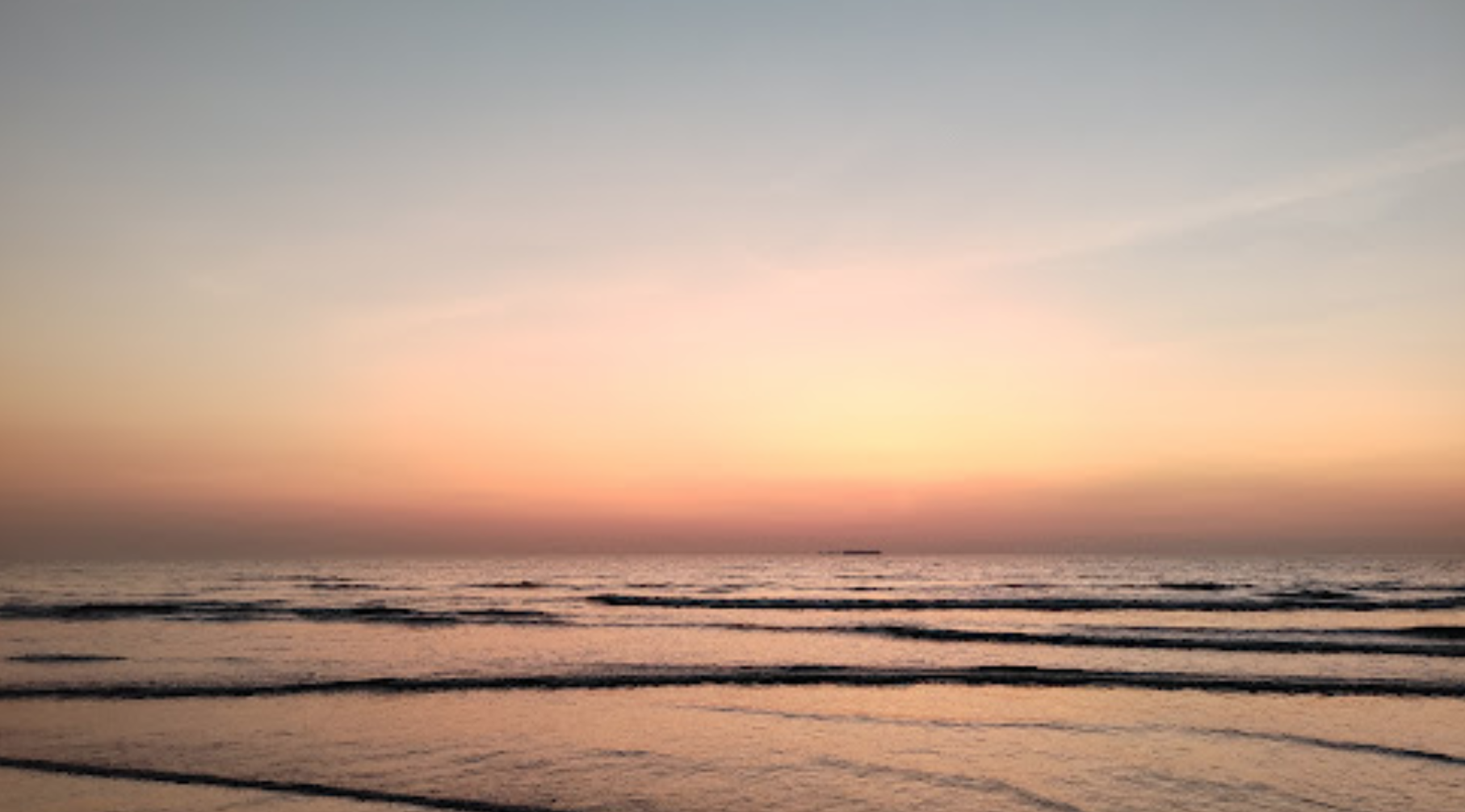
Day 5: Return to Pune
Our journey back to Pune was filled with a few delightful stops. We visited Teenvira Dam, a hidden gem with serene views. It primarily serves as a local water supply. However, the stunning backdrop of Sagargad enhances its scenic beauty. About a week into the monsoon, the dam overflows, creating a breathtaking waterfall effect as water cascades down the stony wall. Since the dam is located close to the highway, it is easily accessible, and with no deep streams on the flow side, it remains a safe spot to visit. Relaxing under the waterfall, using the dam wall as a backrest, is truly a delightful experience. Additionally, the garden at the dam has now been transformed into an eco-sensitivity center, which is worth exploring.
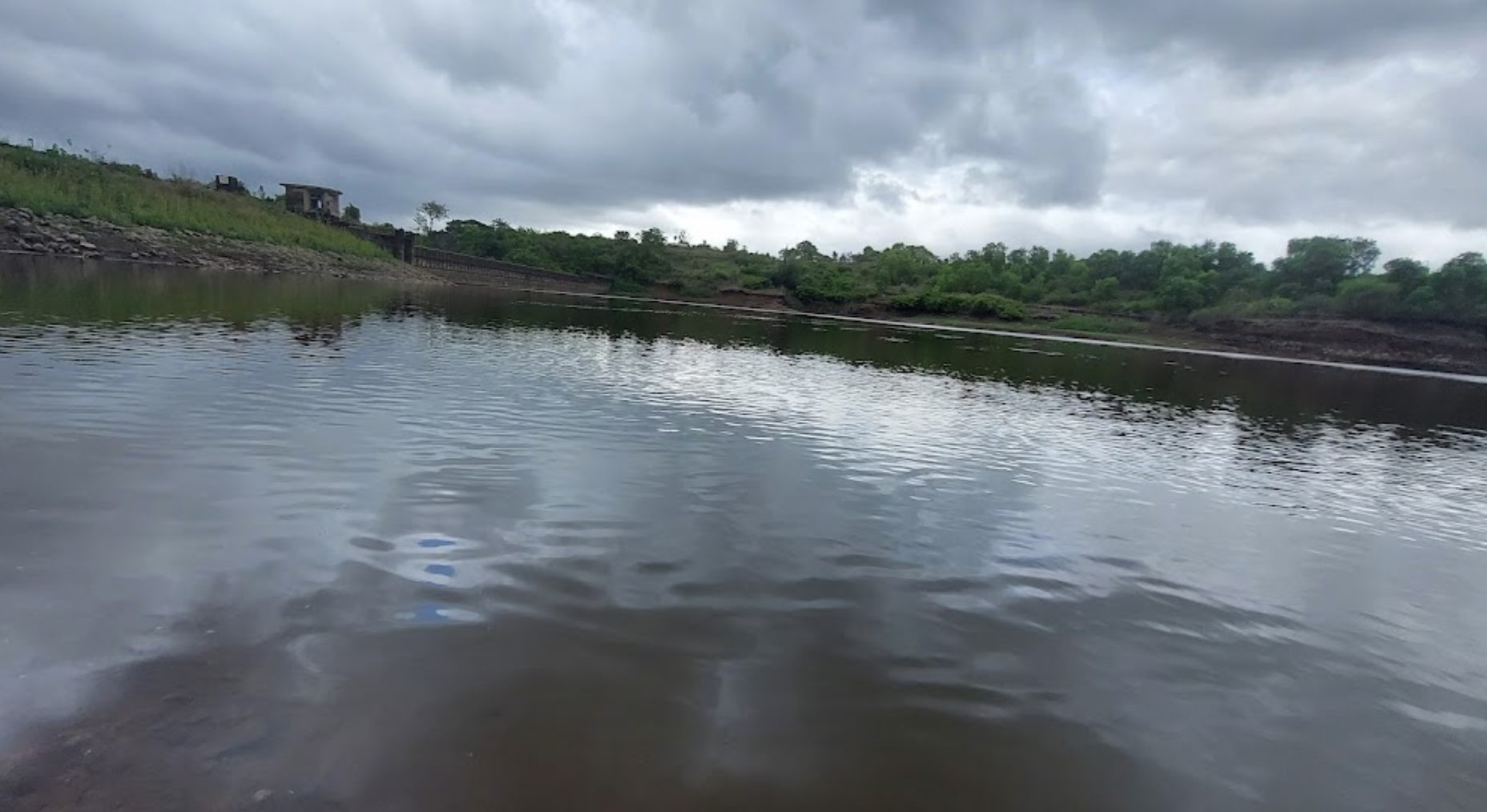
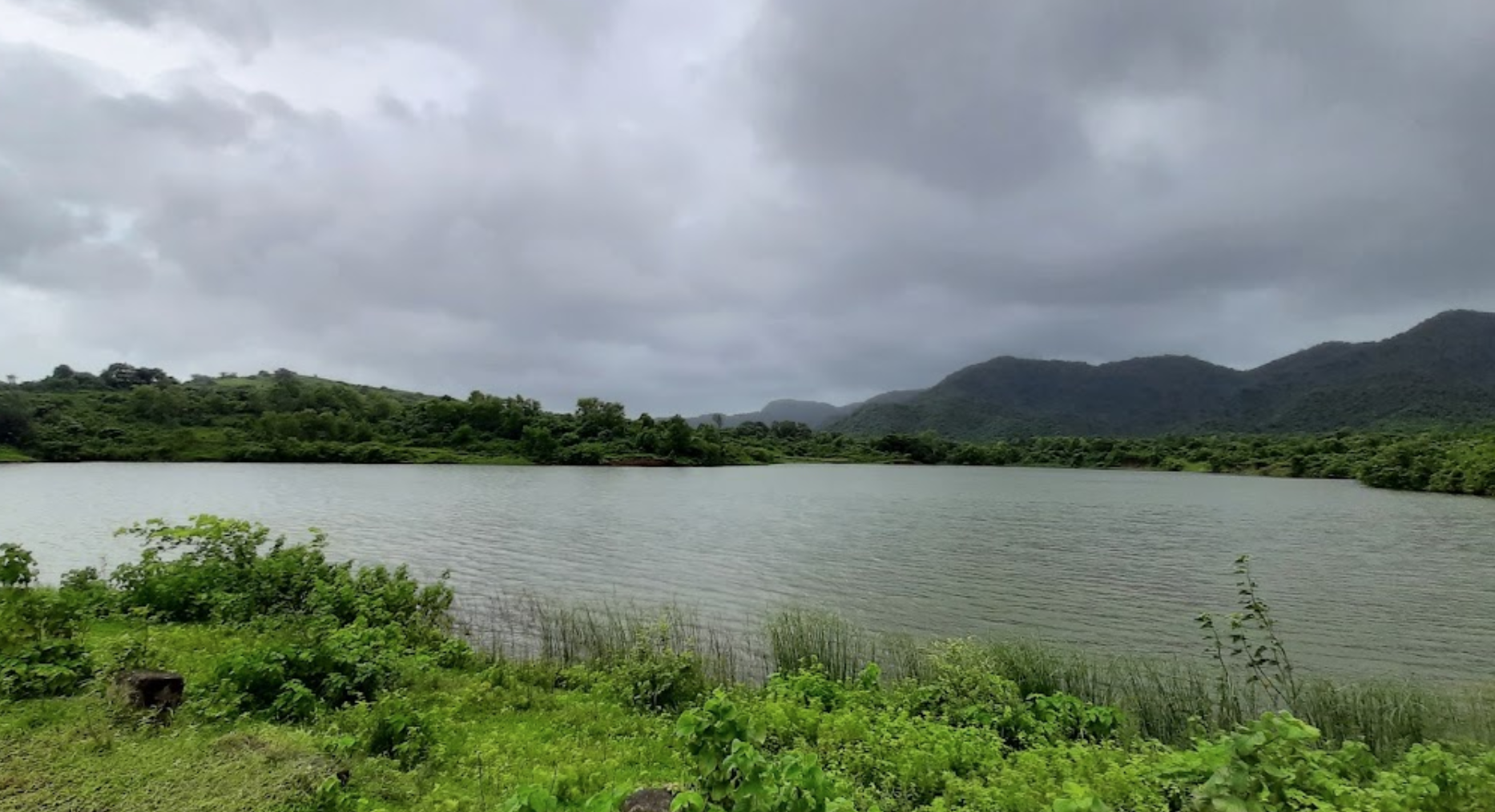
We enjoyed a fantastic lunch at Hotel 4 1/2 Anandvan. The food was absolutely delicious, offering a true taste of coastal flavors. The restaurant maintains a clean and hygienic environment, including well-kept washrooms. There is also ample parking space available. The warm and cozy ambiance, combined with attentive service, made the experience even more delightful. If you’re craving authentic and flavorful seafood, Hotel 4 1/2 Anandvan. is a must-visit. Highly recommended for families and food enthusiasts!
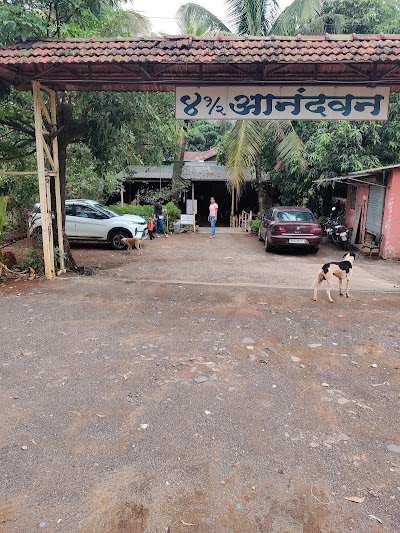
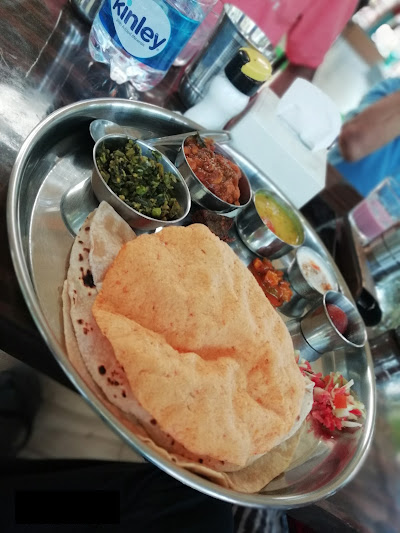
After lunch, we continued the journey to pune via Express highway. Our last stop was at Food Carnival, a pet-friendly food mall on the Mumbai-Pune Expressway, where Sophie could also unwind. After some evening tea, we resumed our journey, reaching Pune in about 4.5 hours.
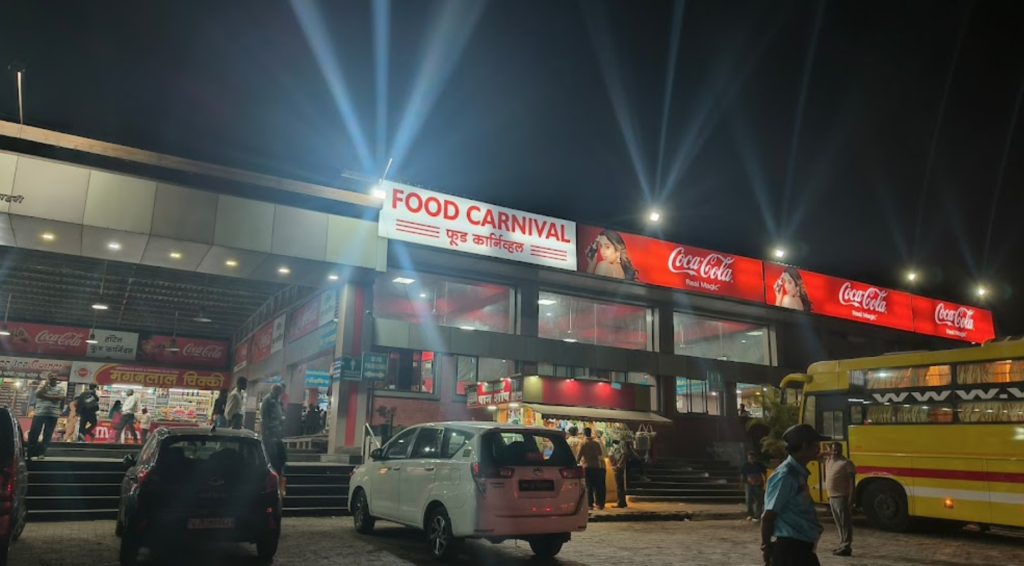
Final Reflections
Alibag’s blend of historical, natural, and coastal charm made for a rejuvenating escape. With beach sunsets, hilltop temples, and quiet seaside dinners, each day offered something memorable. Whether you’re traveling with family or your furry friend, Alibag is an ideal coastal retreat with something for everyone.
Where did we eat ?
Hotel Gayatri Garva
Suruchi Pure Veg Restaurant
First Old Original Mahesh Lunch Home
Hotel 4 1/2 Anandvan
Food Carnival
Which are the places unsuitable for pets ?
Murud Janjira Fort : The fort needs to be accessed by Ferry boats. Pets are strictly not allowed in the boats as well as on the fort.
Igatpuri: Day 1
Igatpuri and Daman
If there’s one thing I love more than exploring new places, it’s doing so with my husband and our beloved pet dog, Sophie. Our recent trip to Igatpuri and Daman was the perfect blend of adventure, relaxation, and cultural exploration. From the picturesque temples nestled in the Western Ghats to the tranquil beaches of Daman, the trip was a refreshing escape from city life.
| Before lunch | After lunch | |
| Day 1: Pune to Igatpuri | Shri Siddheshwar Temple in Akole | Amruteshwar temple, Umbrella waterfall |
| Day 2: Local sightseeing in Igatpuri | Tringalwadi cave, Myanmar gate | Bhivli waterfalls |
| Day 3: Igatpuri to Daman via Jawhar | Journey from Igatpuri to Jawhar | Moti Daman beach & Fort, Jampore beach road. |
| Day 4: Local sightseeing in Daman | Nani Daman Fort | Udvada parsi town, Arjungad Fort |
| Day 5: Daman to Pune | Journey from Daman to Pune |
Day 1: The Scenic Road to Igatpuri
We set off early Saturday morning, aiming to beat the traffic. Our journey began with a drive through the countryside, stopping at Hotel Shivneri Misal in Manchar for a quick brunch. With a hot cup of tea, we were ready to dive into the day’s adventure. Sophie, of course, enjoyed a few biscuits by our side, tail wagging in excitement.
Our first stop was the serene Siddheshwar Temple in Akole. Located on the banks of the Pravara River in Akole, the remains of Siddheswar temple stand as a remarkable example of the Yadava dynasty’s architectural style. This Temple was buried under thick alluvial deposits due to frequent flooding and was accidentally unearthed in 1780. Over time, the temple suffered significant damage from systematic iconoclasm by Islamic forces, as it was situated along the route between Devgiri Fort in Sambhajinagar and Sinhagad Fort, in Pune.
According to legend, a farmer/ gardener accidentally struck the finial of the temple’s spire while plowing the field. However, it is unlikely that the original finial and spire were intact at the time of this incident. More plausibly, what he actually hit was the roof of the existing structure. The upper portion of the central dome likely sustained damage as well and was later reconstructed during restoration efforts. This was followed by the addition of three gilded pinnacles, which appear somewhat out of place.
The defacement of the sculptures clearly indicates that systematic Islamic iconoclasm took place here, as previously noted. The sacred goose motif appears both on the rear porch and the pillars. The intricately carved architrave forming the first course of the central hall beneath the central dome is a remarkable sight. Among the four sides, two showcase battle scenes, while the third portrays Vishnu reclining on the Seshanag, accompanied by nagas on either side. These nagas are depicted as half-human, half-serpent beings, shown squatting on their coiled tails.
There are a few veergals or hero-stones in the complex too. Interestingly, the temple does not fall under the jurisdiction of any central or state legislative authority and remains the private property of the Pethkar family, whose members also serve as priests. Notably, they have done an exceptional job in preserving the temple and its surroundings, which also include smaller shrines dedicated to Lord Ram and Goddess Bhavani.
Sophie enjoyed the spacious grounds, exploring every nook and cranny. Siddheshwar temple is completely pet friendly. Infact there are two indie dogs who are permanent residents of the temple. There is space available for parking 3-4 cars. However, very few vistors are seen at this temple.
We left from Akole towards Rtanawadi to visit the Amruteshwar temple. The route is full of waterfalls. The nearby Umbrella Waterfall added a magical touch to the place, with water cascading down, creating a peaceful ambiance that Sophie enjoyed as well. The road to Ratanwadi temple is not in a good condition at all. It is advisable to by a car having a lot of ground clearance.
After a peaceful stop, we continued our drive through winding roads until we reached Shree Amruteshwar Temple. Parking, washrooms and eateries are available outside the temple. There is no network in this area. So make sure to carry enough cash. Since it was raining, we could spend very less time in the temple.
The Amruteshwar Temple is an ancient shrine built in the 9th century by King Jhanj of the Shilahar dynasty. Located in Ratanwadi village, the base village for the renowned Ratangad Fort, this temple is dedicated to Lord Shiva and is approximately 1,200 years old. Constructed primarily from black stone, the temple also features red stone elements. The walls and ceiling are adorned with intricate murals, showcasing remarkable craftsmanship. A mandapa supported by 12 beautifully carved pillars, decorated with statues and floral motifs, enhances the temple’s architectural splendor. The temple houses a Shivling, beneath which lies a hot water spring. During the monsoon, the temple’s reflection in the surrounding pond creates a breathtaking sight.
The Amruteshwar Temple is open 24 hours a day. We enjoyed steaming hot tea and some snacks at one the shacks outside the temple. These shacks are pet friendly and they have clean washrooms.
By evening, we made our way to Green Heritage Resort, where a warm dinner awaited us. I booked this place for a week of relaxation before heading to Bhandardara. Overall, the stay was pleasant, with spacious and clean rooms in a well-situated location. The food was decent—not exceptional, but certainly not bad. The staff provided football and cricket equipment for outdoor games, along with indoor options like Jenga and Ludo. The swimming pool was well-maintained and open until 10 PM, which was a great perk. This place is ideal for a relaxing and enjoyable getaway with family and friends. Its location on the outskirts of Igatpuri adds to its charm, offering a peaceful retreat.The staff were welcoming, and the resort’s pet-friendly vibe made us feel right at home. Sophie settled into her cozy corner, while we reminisced about the day over a delicious meal.
To read the blog on day 2 of Igatpuri click here
Where did we stay ?
Hotel Nest Beacon , Daman.
Green Heritage Resort, Igatpuri
Where did we eat ?
Hotel Shivneri Misal in Manchar
Prakriti Agro Farm, Jawhar
Envairoh, Daman
Igatpuri: Day 2
To read the previous blog on day 1 of Igatpuri click here
Day 2: Exploring Igatpuri’s Hidden Gems
The next day began with breakfast at the resort before heading to Tringalwadi Fort. There is a tea shop at the base of the Fort. We parked our car near the shop and started walking. There are no signages near this parking. A few local kids offered to show the direction to the cave and asked for money in return. However, we denied to go with the kids. We spoke to some shopkeepers to understand the directions. They pointed towards one temporary shed and told us to walk in that direction. Since it was peak monsoon, we had to cross a huge pond. The depth of the pond was less. Our shoes got completely drenched in the pond. I had to pick up Sophie at a lot of places to protect her from rainwater.
We had to cross a lot of paths through paddy rice fields. But it wasn’t slippery. It was drizzling throughout the trek. After walking for 20mins, we came across a couple of blue colored signages by Archealogical Survey of India (ASI) which indicated that we are going in the right direction and we have come queit close to the cave. After crossing the signages, we could finally spot the cave at some distance. The short trek was well worth the effort, offering panoramic views of the Sahyadri range. Sophie, ever the adventurous pup, led the way, her tiny legs keeping up with our strides. It took us around 30-40 minutes to reach the caves from the parking area due to the rains. We explored the Tirthankar Adinath Jain Cave, a quiet, spiritual spot that left us in awe of its carvings.
The Jain caves are carved into a rock outcrop at the base of the fort. Their entrance features a decorative carved frame, though its supporting pillars have largely disintegrated. These caves were excavated during the rule of the Yadavas, who governed the Deccan region in the 12th and 13th centuries from their capitals at Chandradityapura (modern Chandor, Nashik District) and Devagiri (modern Daulatabad, Aurangabad District).
The cave has an outer verandah with intricately carved walls, most of which have deteriorated or been destroyed. A low parapet wall runs along the verandah’s front, supporting two pillars—one on each side of the entrance—which uphold the outer eave. The main doorway was originally adorned with paintings, remnants of which are still visible.
Flanking these pillars are pilasters, with the main entrance positioned between them. Beyond the pilasters, at both ends of the verandah, there are grille windows consisting of two square bars intersecting in a grid of nine openings. These bars are finely adorned with lotus rosettes at their intersections.
The verandah ceiling features a prominent relief carving in its center, directly in front of the entrance. This depicts a group of five figures arranged in a circle, with the central figure seemingly carried through the air by two others on either side, while two additional figures below assist in lifting.
The partition between the verandah and the inner hall is constructed from large, irregularly shaped stone blocks expertly fitted together. The spacious inner hall, measuring 35 feet square, leads to an antechamber and a shrine at its rear. The ceiling of the hall was once supported by four centrally placed columns. While the walls and ceiling are largely unadorned, the southwestern and northwestern corners contain low, continuous altars for images, whereas the northeastern and southeastern corners feature high benches, which do not serve as altars.
Of the original four columns, only the southeast pillar remains intact. The southwest pillar extends from floor to ceiling but is heavily eroded in the middle. The northwest and northeast columns have collapsed, leaving only ceiling fragments and floor stumps as remnants.
The shrine’s doorway, though deteriorated, was less ornate than the main entrance. Above it, three Jinas are sculpted on successive moldings. Inside the shrine, which measures approximately 13 by 12 feet, lies a damaged Jaina image on an altar against the back wall. The head, chest, and umbrella have been destroyed and discarded, with a portion of the umbrella found outside the cave. However, the legs and cushion remain intact, with a bull emblem at the center of the cushion identifying the image as Rishabdeva. An inscription on either side of the cushion is dated Saka 1266.
A significant inscription once adorned the northern wall of the cave, though only a small fragment of it remains. The surviving letters are finely carved and proportioned. Originally, the inscription spanned approximately four to five feet in width, though its full depth is uncertain.
Since it had started raining very heavily, we decided not to go ahead to Tringalwadi Fort.
So
we started our way back to the parking. By this time, we were super
hungry. So had some steaming hot maggi at the sop in the parking. All of
us were completely drenched. We had carried spare clothes and towels in
the car. So dried up ourselves in the car and changed our clothes.
Sophie felt extremely cozy and warm after I dried her up. She ate kibble
and dozzed off in her warm blankets inside the car.
We made our way to the Myanmar Gate, a stunning structure that pays homage to Igatpuri’s connection to Vipassana meditation. The road to Myanmar gate is through a slum.
Pets
are strictly not allowed at Myanmar gate. They have a huge parking lot.
One of us stayed back in Sophie in the parking and we visited it
alternatively. They have clean washrooms. There is nothing to see inside
apart from a small exhibition hall. It’s incredible how calm the area
feels, even with other tourists around. Afterward, we returned to the
resort for lunch, a hearty a-la-carte meal that refueled us for the rest
of the day.
Post-lunch, we had a afternoon nap for an hour and then we proceeded to Bhavli waterfall. It was drizzling at 3pm and it did not feel like an afternoon at all. The weather was amazing. We parked on the main road. The waterfall is just a 5 minutes walk from the main road. Sophie had never seen such huge waterfall and water bodies before and I could see the expression of astonishment on her face.
There are many other waterfalls in this area. Driving through Bhavli is a visual treat. We had some steaming hot tea and proceeded on the way back to the hotel. The day ended with a delicious desi dinner at Hotel Green Heritage.
To read the next blog on day 3 of Igatpuri-Daman click here
Where did we stay ?
Hotel Nest Beacon , Daman.
Green Heritage Resort, Igatpuri
Where did we eat ?
Hotel Shivneri Misal in Manchar
Prakriti Agro Farm, Jawhar
Envairoh, Daman
Manchar
Our one-day road trip to Manchar turned out to be the perfect little escape from the city. Accompanied by my husband and my pet dog, we set out early from Pune with a packed car, excited spirits, and no fixed itinerary—just a list of historical spots and pet-friendly halts. The weather was kind, the roads inviting, and the idea of exploring ancient temples, stepwells, and forgotten forts made us even more eager for the day ahead.

Tapneshwar temple and stepwell.
To the west of today’s Manchar lies Tapovan, a sacred and revered land known as a holy site for penance. It is believed that Lord Shiva performed intense meditation in this Tapovan, due to which the area has been known since ancient times as Tapneshwar. A temple dedicated to Lord Shiva still stands here, believed to be his eternal abode, and is famously known as the Tapneshwar temple . Mythological references suggest that even the Pandavas set foot on this sacred land and performed penance amidst its natural serenity.
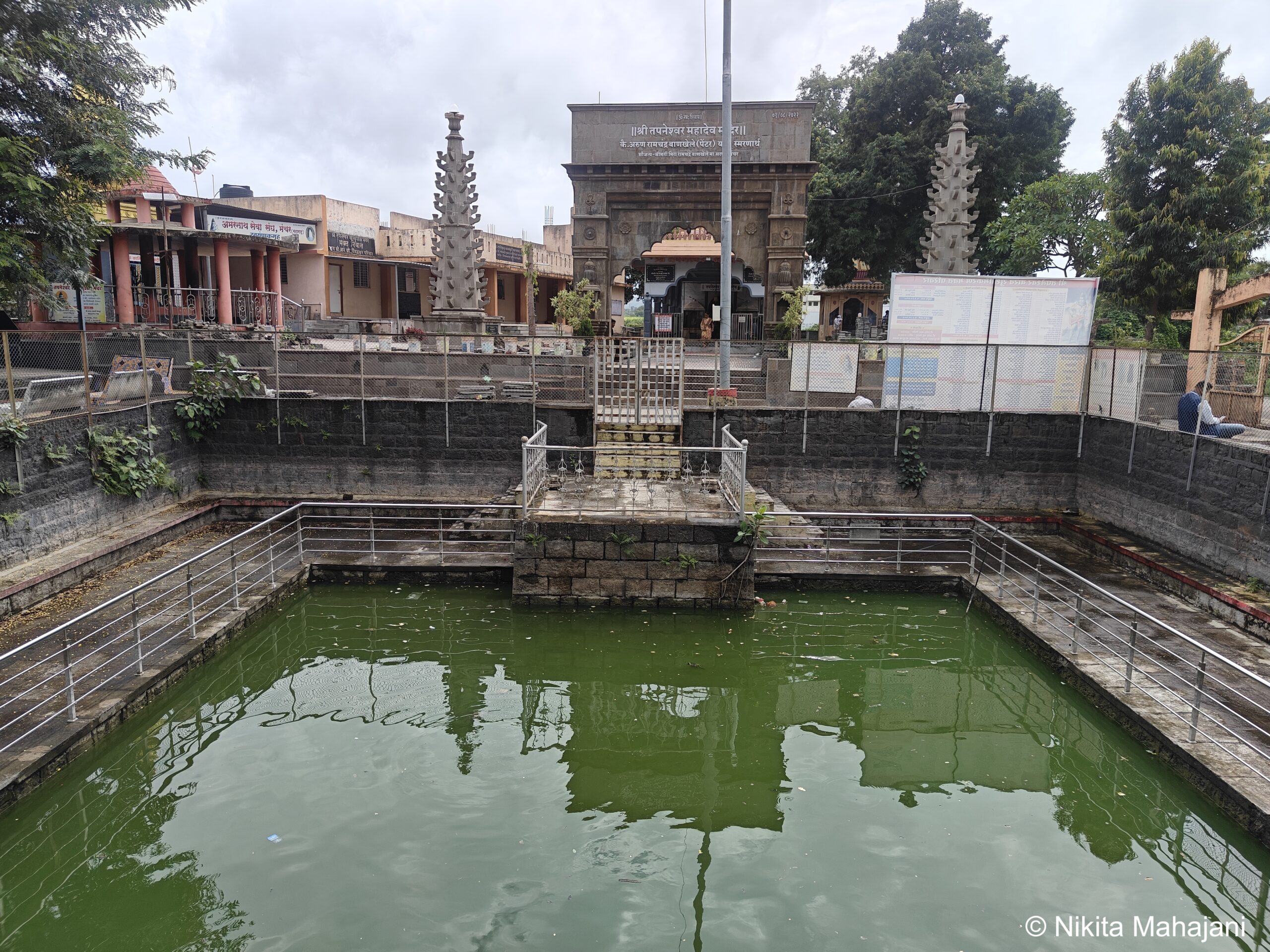
Drawn by the divine aura of this holy place, Lord Krishna himself was overwhelmed with the desire to visit this sacred land of sages and Lord Shiva. Eventually, the opportunity to witness this blessed site arose in his life.
Once, Lord Krishna advised the Pandavas to perform the Ashwamedha Yagna in Hastinapur (ancient Delhi). As part of the ritual, a horse was released to roam the earth, and Arjuna—the mightiest archer—was assigned as its guardian. As the horse galloped with the speed of wind, it was intercepted in Manipur by the valiant warrior Babruvahan, who seized it with his bare hands, showcasing his strength and valor. Babruvahan humbly introduced himself to Arjuna as his own son.
However, Arjuna’s pride flared up, and in a tone of arrogance, he roared, “Impotent fool! How can you be my son? That’s impossible. You are a dancer’s child!” This enraged Babruvahan, and a fierce battle broke out between the two. Arjuna was unable to free the horse and, during the intense combat, he was slain by Babruvahan, who beheaded him.
News of Arjuna’s death spread like wildfire and reached the ears of Lord Krishna. Alarmed, Krishna rushed toward Manipur along with Arjuna’s family. Using his divine powers, Krishna rejoined Arjuna’s body and brought him back to life. He blessed Babruvahan and then visited the sacred Tapneshwar temple, offering his respects. He also blessed the sages residing in Tapovan, who fell at his feet and earnestly prayed for him to remain there eternally.
Pleased by their devotion, Lord Krishna agreed and chose to reside under the peepal tree in the Tapneshwar Mahadev temple premises. The Kanhoa temple (another name for Krishna) thus became a revered shrine for many devotees.

In front of the Tapneshwar Mahadev Temple lies a massive stone-built pond named Dudumbhi Talav. This vast and sturdy tank is said to hold historical significance from the Ramayana era, linked to the city of ancient Manipur. A fierce demon named Dudumbhi once fought a mighty battle against the warrior brothers Vali and Sugreev. Like Ravana, Dudumbhi was a devout follower of Lord Shiva, and he also had unwavering devotion to Lord Krishna.
At the moment of death, Dudumbhi prayed to Krishna, who appeared before him and blessed him with divine vision. Krishna then named the pond formed on the battlefield as Dudumbhi Talav, in memory of the demon. He granted Dudumbhi a boon: that anyone who bathes in this pond would be freed from all their sins. After receiving this blessing, Dudumbhi gave up his mortal form and ascended to heaven.
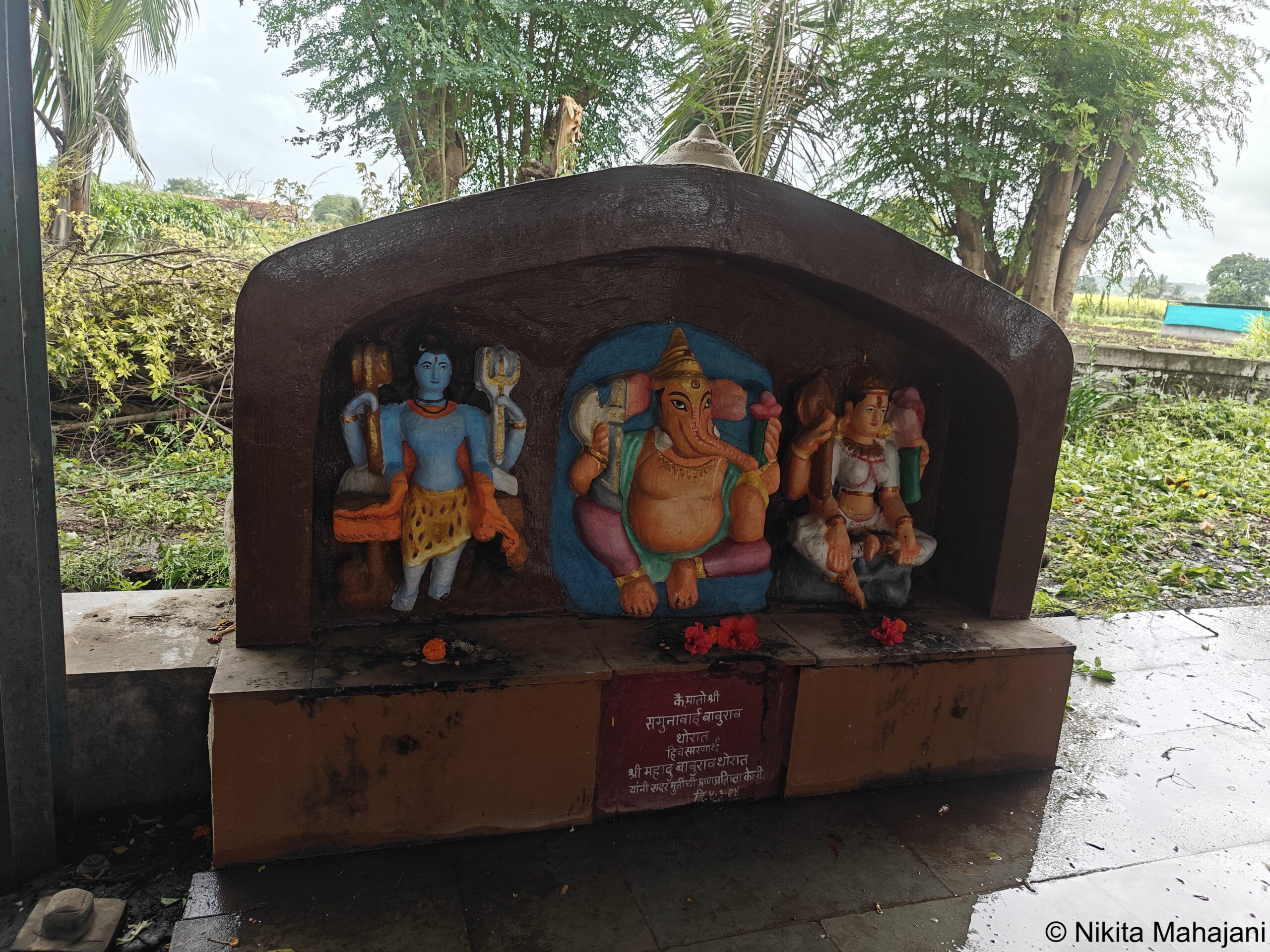




Historic stepwell, Manchar.
Manchar, a village situated along the Pune-Nashik highway, is home to a historic 14th-century fort. It also serves as a weekly market hub at the intersection of two major highways: Pune-Nashik and Pune-Bhimashankar.
To the west of the village, near a drainage channel along the Manchar-Bhimashankar road, lies a square-shaped Hemadpanthi stepwell (barav). On its western wall, there’s an old inscription in Devanagari script, though it’s heavily worn and difficult to decipher. Historical records suggest that this stepwell was built during the reign of Harpaldev, the son-in-law of Ramdevarai from the Yadava dynasty.

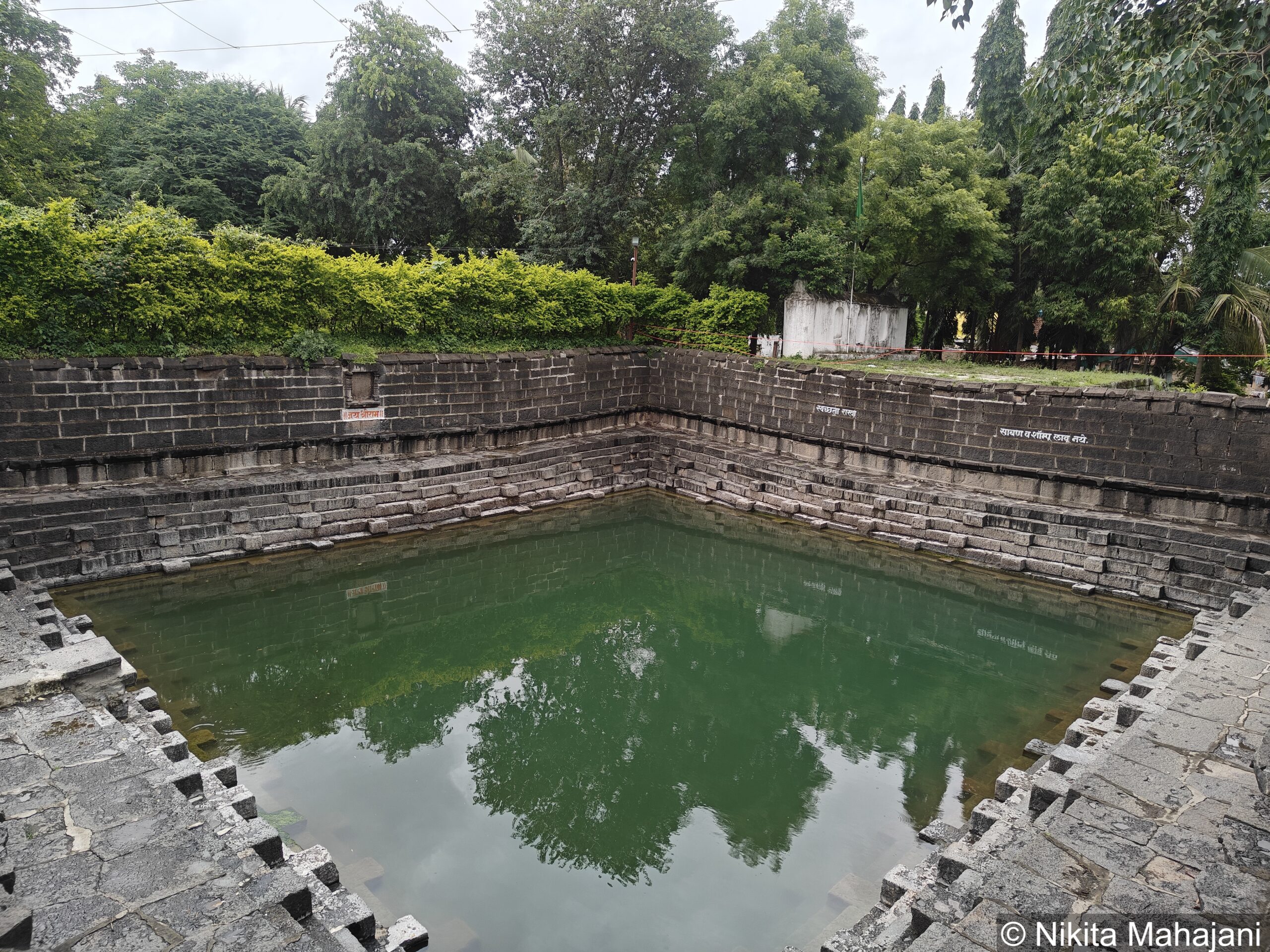
The barav measures approximately 24 meters in length and around 10 meters in depth. Its structure was developed in three gradually receding levels. A devakoshta (niche for a deity) in the western retaining wall features a 25-line inscription from the Yadava period, written in Sanskrit and Devanagari script. At the top of the inscription, carvings of the sun and moon are visible.
During medieval times, Manchar was located on the trade route connecting the important commercial centers of Paithan and Junnar. It is believed that this stepwell was constructed to serve travelers and traders transporting goods along this busy route.

Parking is not available near the stepwell. One can park near the temple of Muktaidevi. Washrooms are available outside the stepwell.

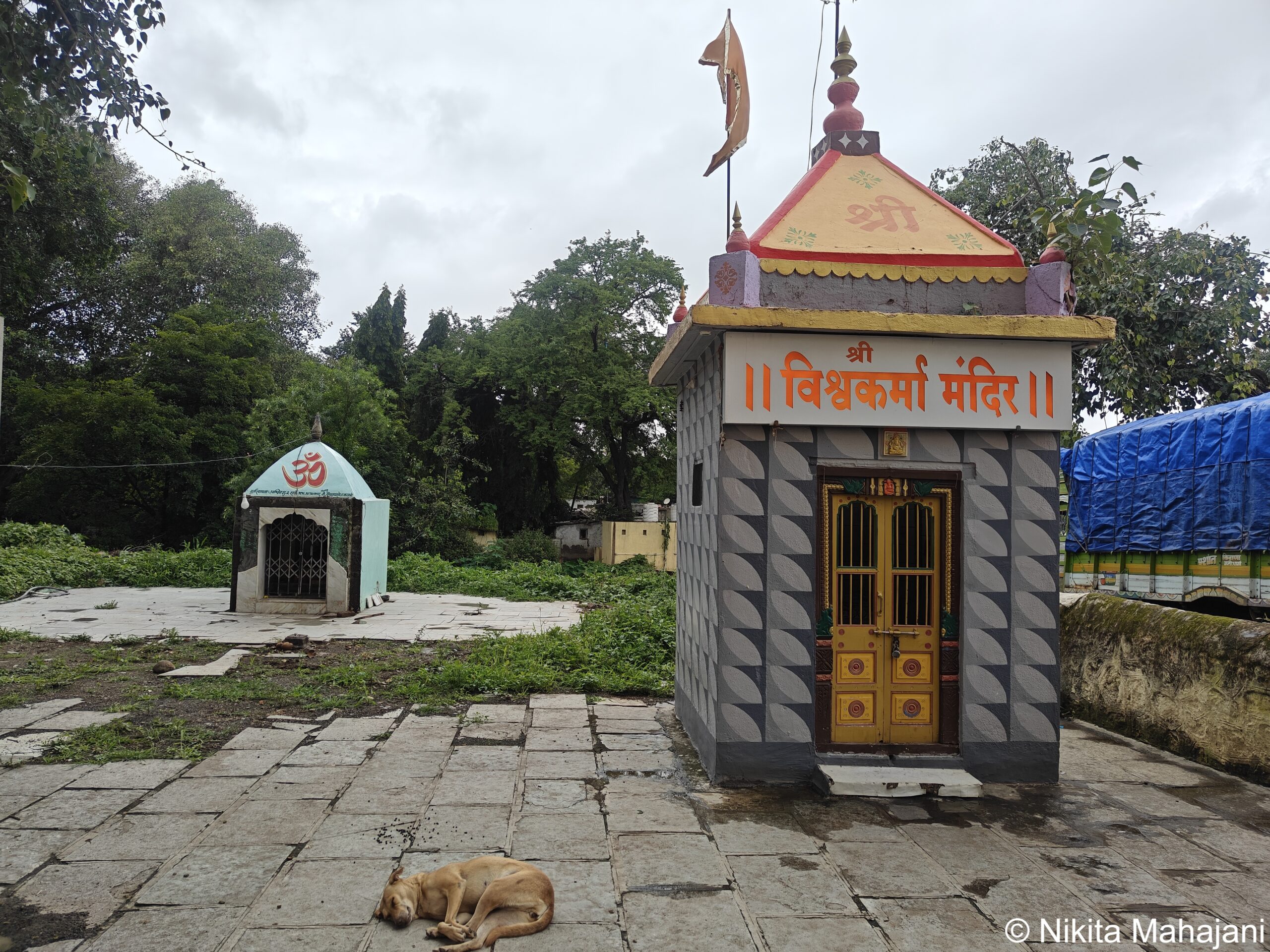
Khadki Pimpalgaon Fort.
Khadki Pimpalgaon Fort, once a true fortification, has now evolved into a village, with modern concrete houses occupying much of the space within its boundaries.
Situated along the banks of the Ghodnadi River, entering through the main gate feels more like stepping into a small town than a historical fort. There’s only the entrance structure of the wada remaining today; the rest has vanished. It is said that this fortified wada was built during his reign by Shrimant Suddhedar Maharasrao Holkar (I) (although no historical proof exists; this is based on local accounts).
Several heritage structures from the Holkar era can still be seen here, including the Mahadev Temple and its adjacent Nandi, the Lakshmi Narayan Temple, Kal Bhairavnath Temple, Biroba Temple, and the Rajmata Ahilyabai Holkar-built ghat (steps leading to the river), as well as the Samadhi (memorial shrine) of Shrimant Suddhedar Maharasrao Holkar (I)’s grandson, built by Waghmare–Patil (son of Shrimant Udabai and Babu Rao Manaji Waghmare–Patil). This Samadhi is a fine example of Holkar-era stone construction. The carvings on the walls of the Samadhi reflect Maratha and Rajput architectural styles. Inside, a Shiva linga is installed, and a Holkar-era stone slab can be seen.
The Biroba Temple near the entrance gate and the carvings around it are also noteworthy. The riverbank near the Holkar structures, now known as Holkar Kalin Nadighat, is an attraction that adds to the beauty of the village. Visitors can view the intricately carved stones that belong to the Holkar era. Though the area around the Samadhi may not always be well-maintained due to overgrown trees and shrubs, efforts are underway to preserve it.
Thanks to the presence of these Holkar-era structures, the village has gained recognition as a tourist spot. The architectural heritage here needs urgent conservation to ensure it doesn’t deteriorate further.
This historical place can be visited on the route: Pune – Rajgurunagar – Manchar – Pimpalgaon (Mahadeo) – Khadki.
Visitor tips:
- Plan around 1 hour for a complete visit
- Entry is free
- Limited shaded parking is available inside the gate
- No washrooms or food stalls are available, so carry enough drinking water.
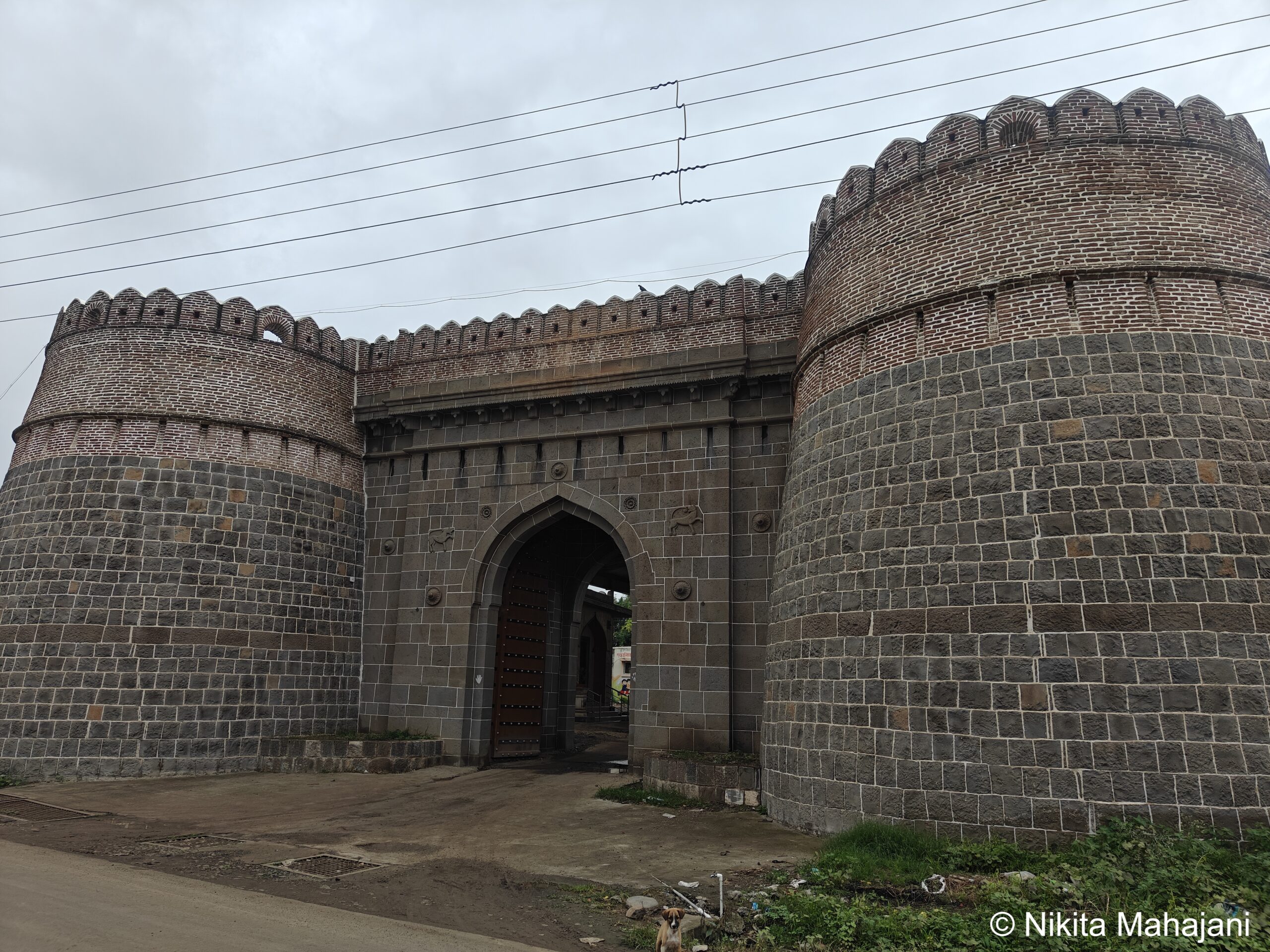
Holkar Samadhi (Chhatri) at Khadki Pimpalgaon Fort.
Shrimant Suddhedar Maharasrao Holkar (I) gave his daughter in
marriage to Shrimant Udabai Holkar – Waghmare – Patil. After marriage,
they settled in Khadki village, and Shrimant Udabai Holkar came to be
known as Cholibai, a name fondly remembered by the Holkar family. Shrimant Udabai and Shrimant Suddhedar Maharasrao Holkar (I) were the parents of Shrimant Gautama Bai Holkar.
As per the inscription found on the stone slab inside the Samadhi:
“In the name of Lord Ganesha, Pratap Maharaj Mahararaja Jasi and
Lakshmi Gautama—her precious daughter Udabai—earned renown on this
earth. In the year 1779 (Shaka 1701), in the auspicious month of Chaitra
on the 9th day of the bright fortnight (Navami), Baburao alias (father)
Manaji Patil Waghmare, Mokadam of the southern side of Khadki village,
in loving memory of his father Udabai’s son Avachitrarav Patil Waghmare,
built this chhatri (memorial structure) for the spiritual salvation of his father.”


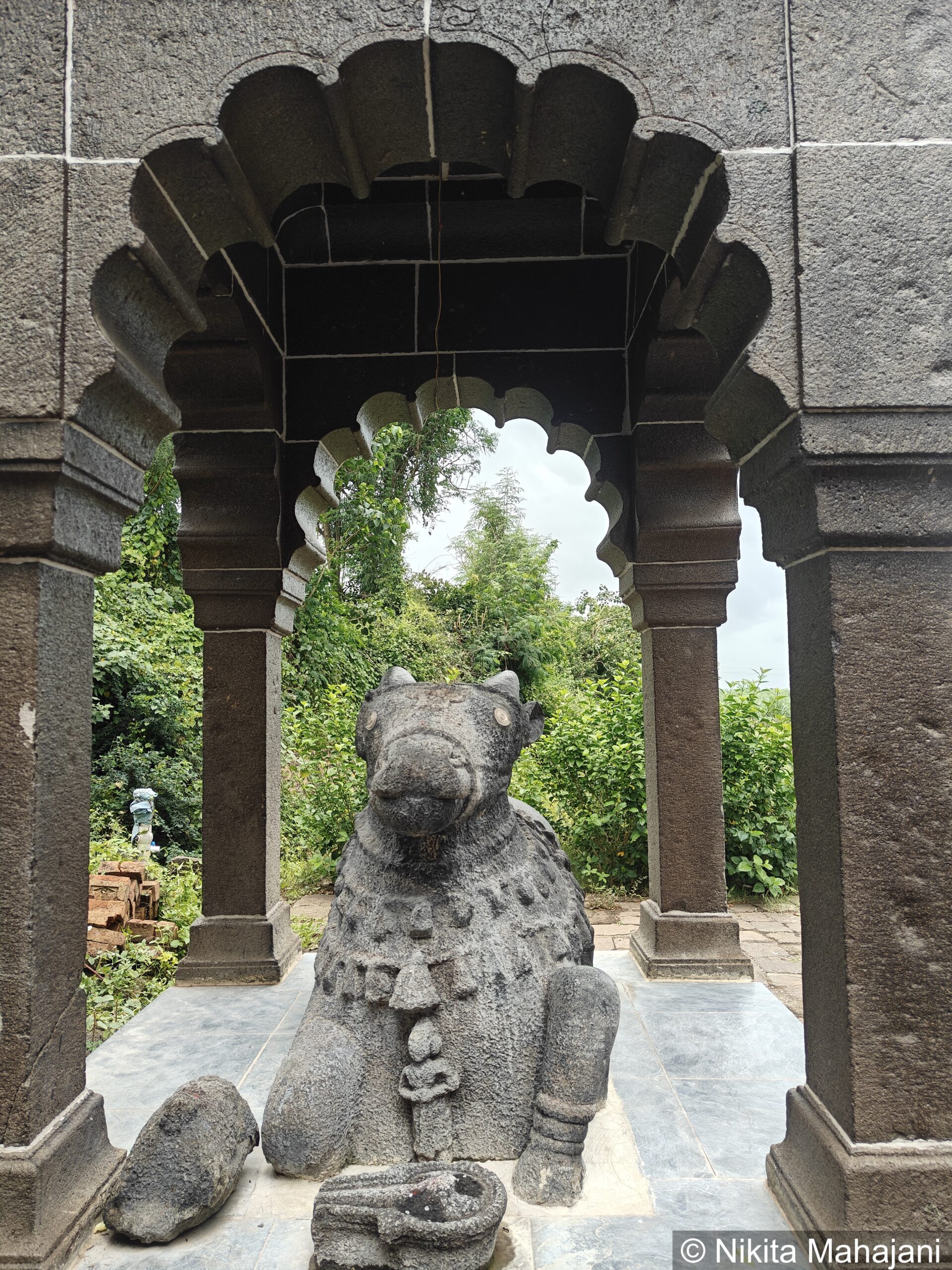


Ghats at Khadki Pimpalgaon Fort
There are beautiful ghats on the banks of Ghod River. There are abutting the fortification wall of Ghod river. The ghats offer 360 degree panoramic views of the river.

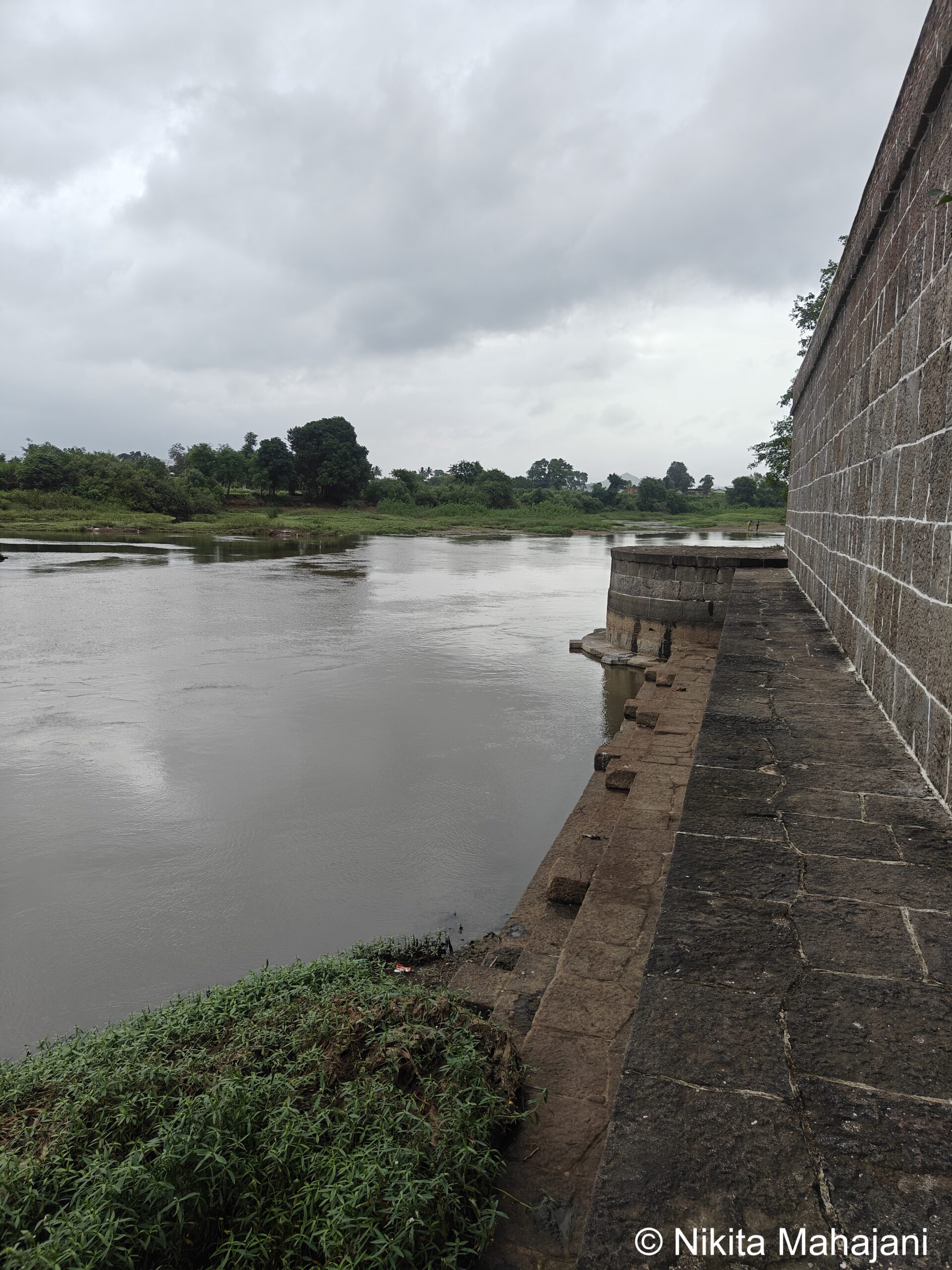

Some archaelogical remnants were found next to the samadhi. They have been installed on a platform in the field. They include a nandi , shivlinga and a wheel.
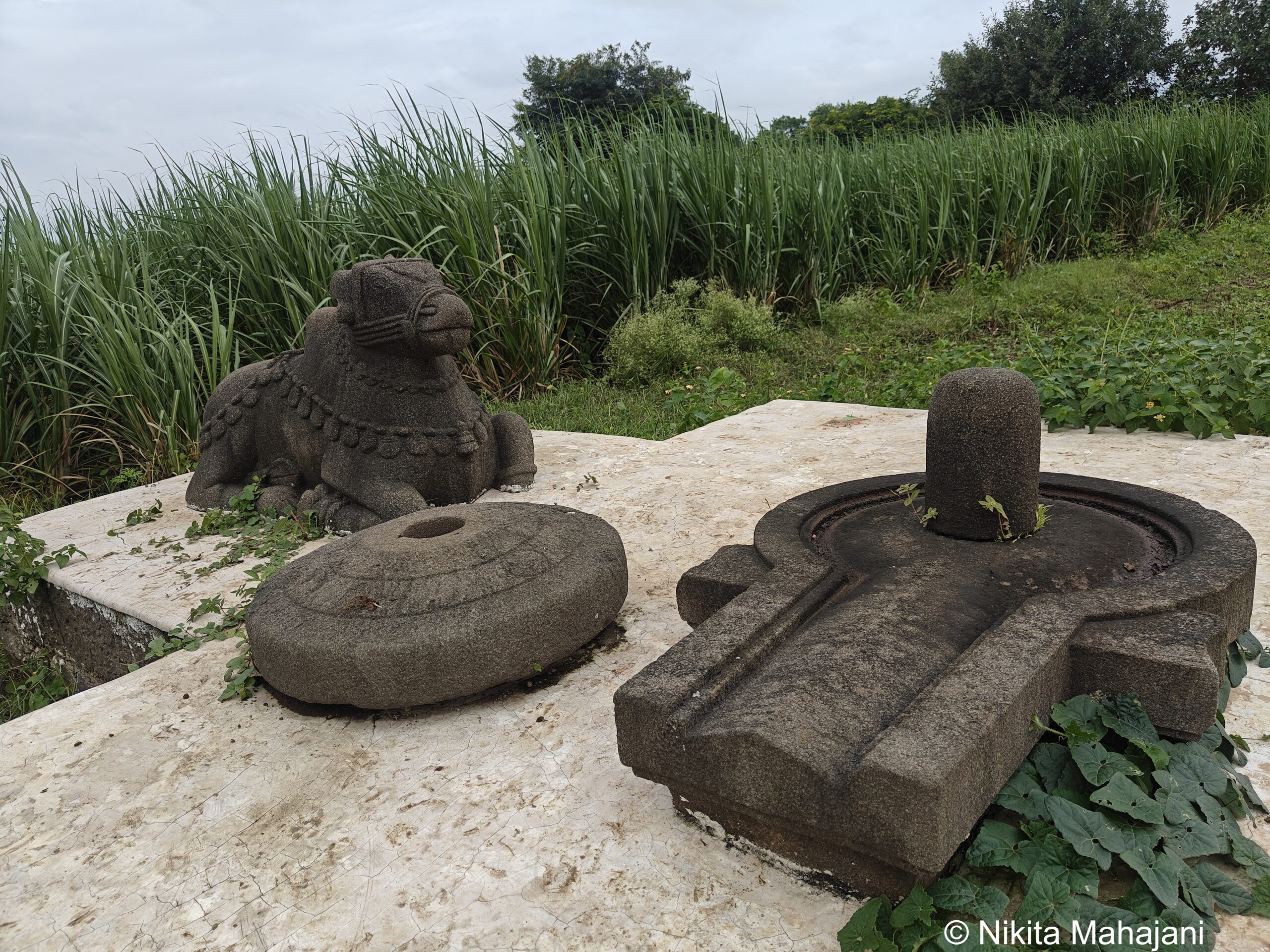
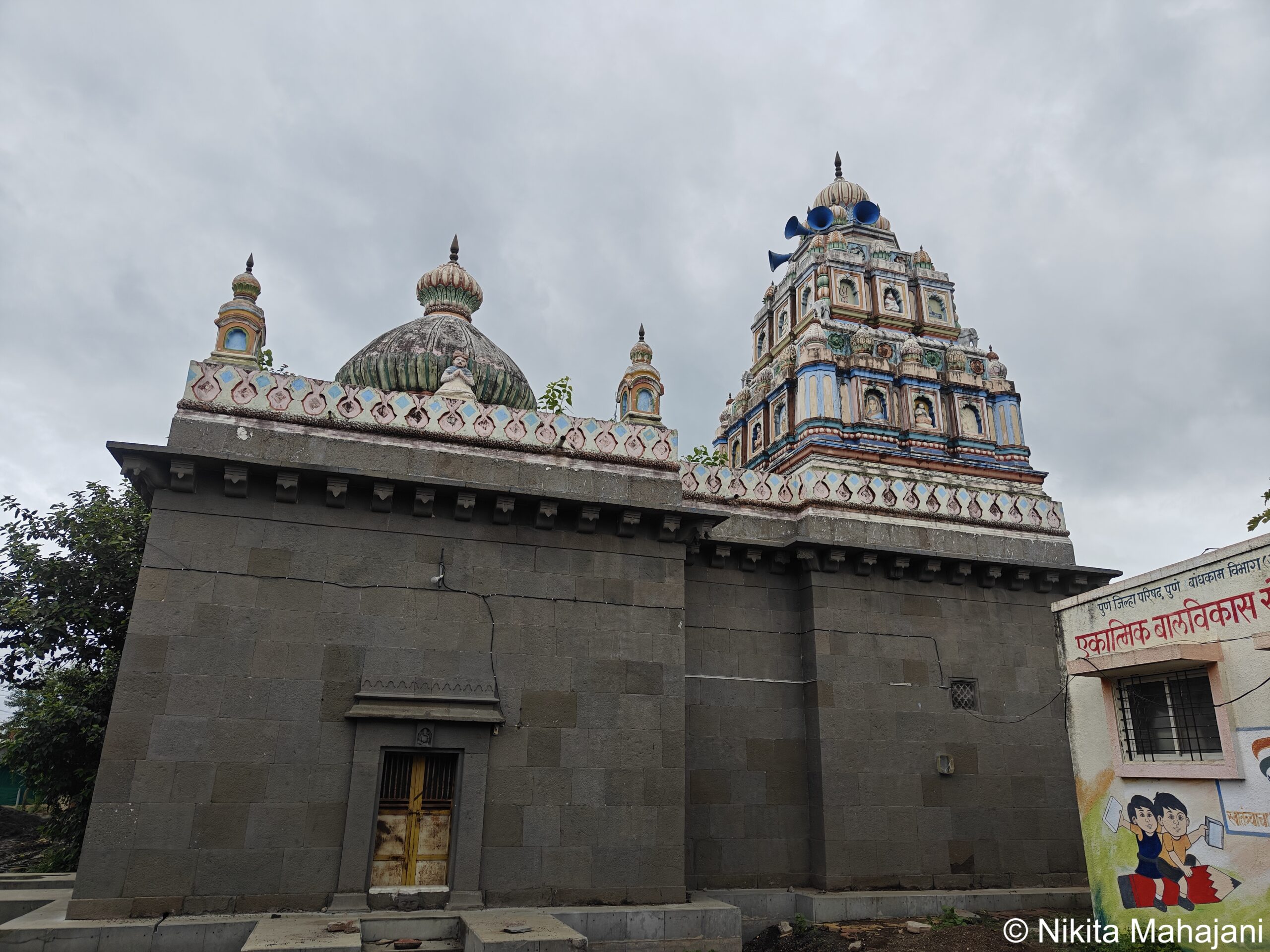
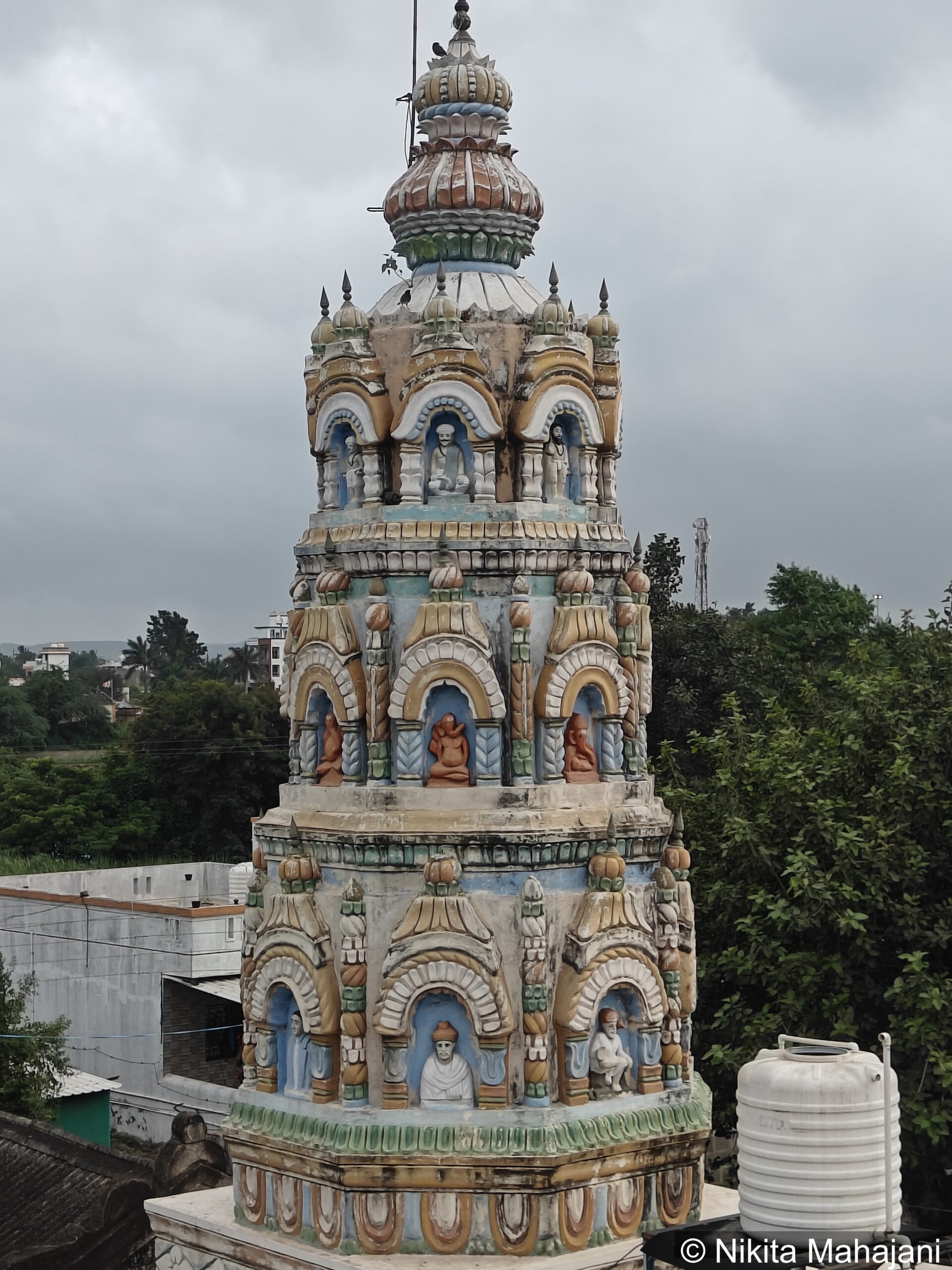
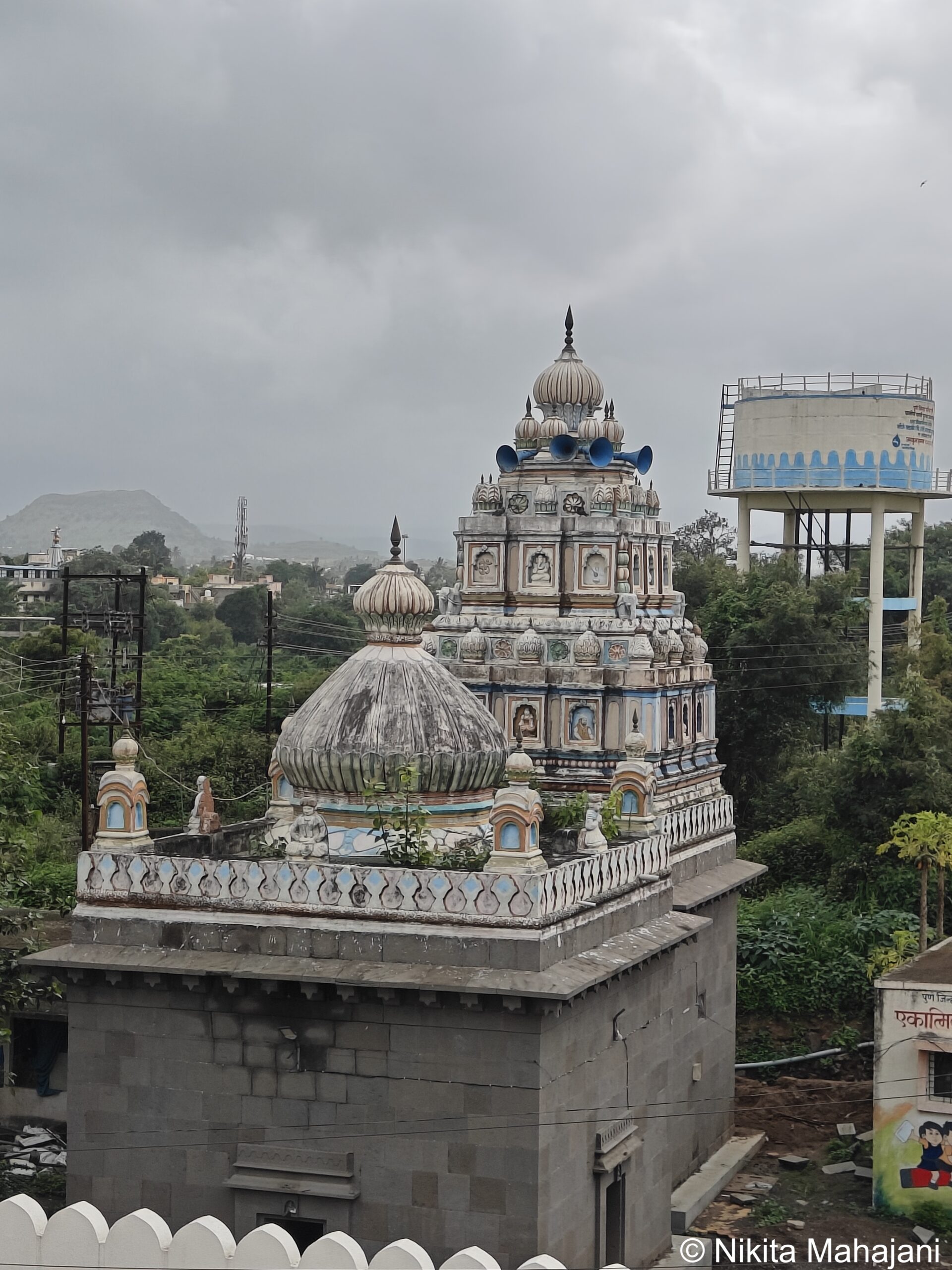
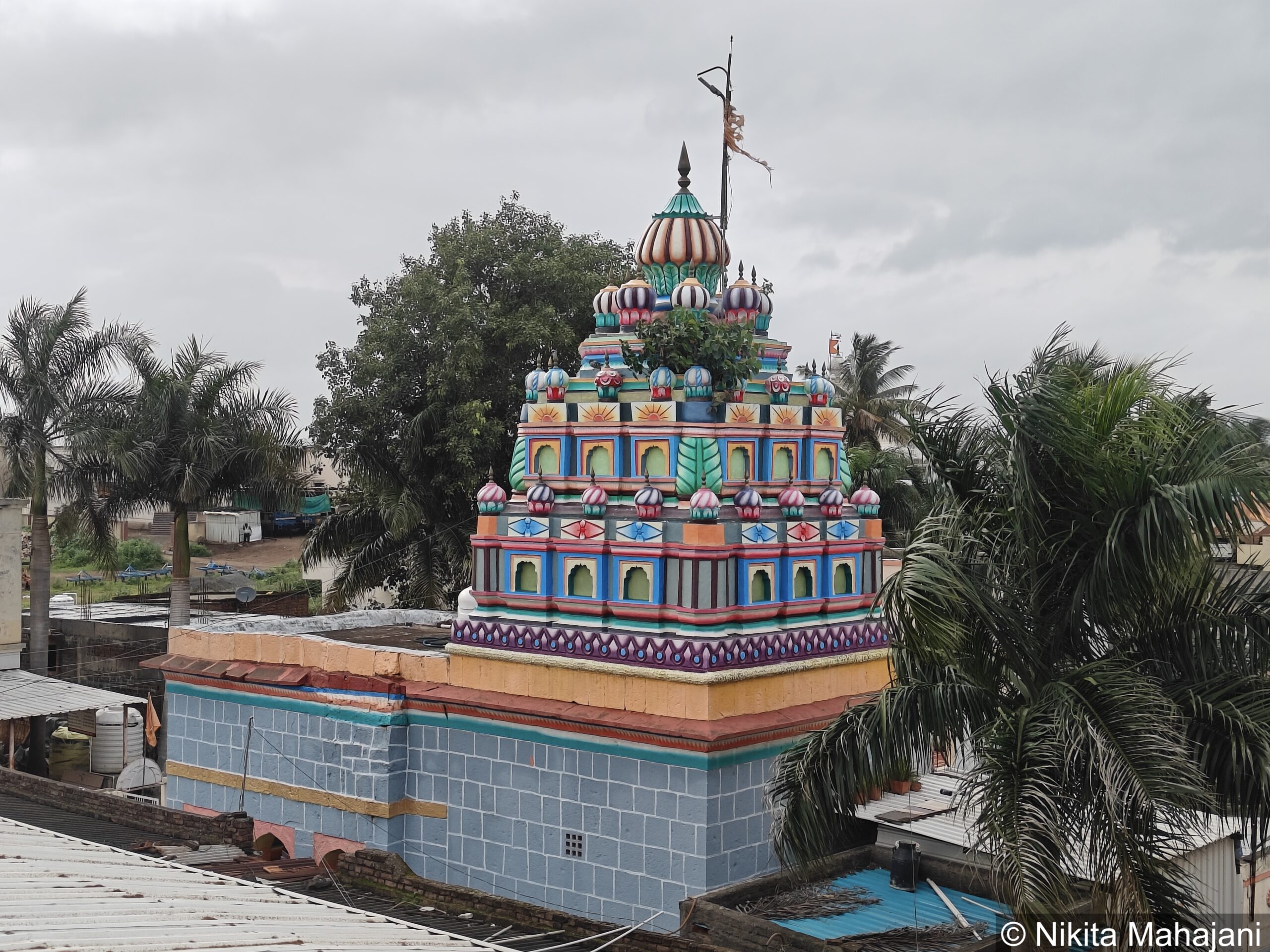
In evening, we started the return journey to Pune. On the way, we stopped for high tea and snacks at Hotel Shivneri Misal.
Hotel Shivneri Misal pure veg, Manchar.
Hotel Shivneri Misal is our go-to place whenever we are on Pune-Nashik highway since it is pet friendly. I’ve had a great experience bringing my pet to almost every Shivneri branch I’ve visited—they’ve always been welcoming. The staff is courteous, friendly, and ready to help. There’s plenty of parking and clean washrooms available. The food is tasty, with the solkadhi being especially refreshing. Service is fast, making it an ideal spot for a quick breakfast stop while traveling on the highway.
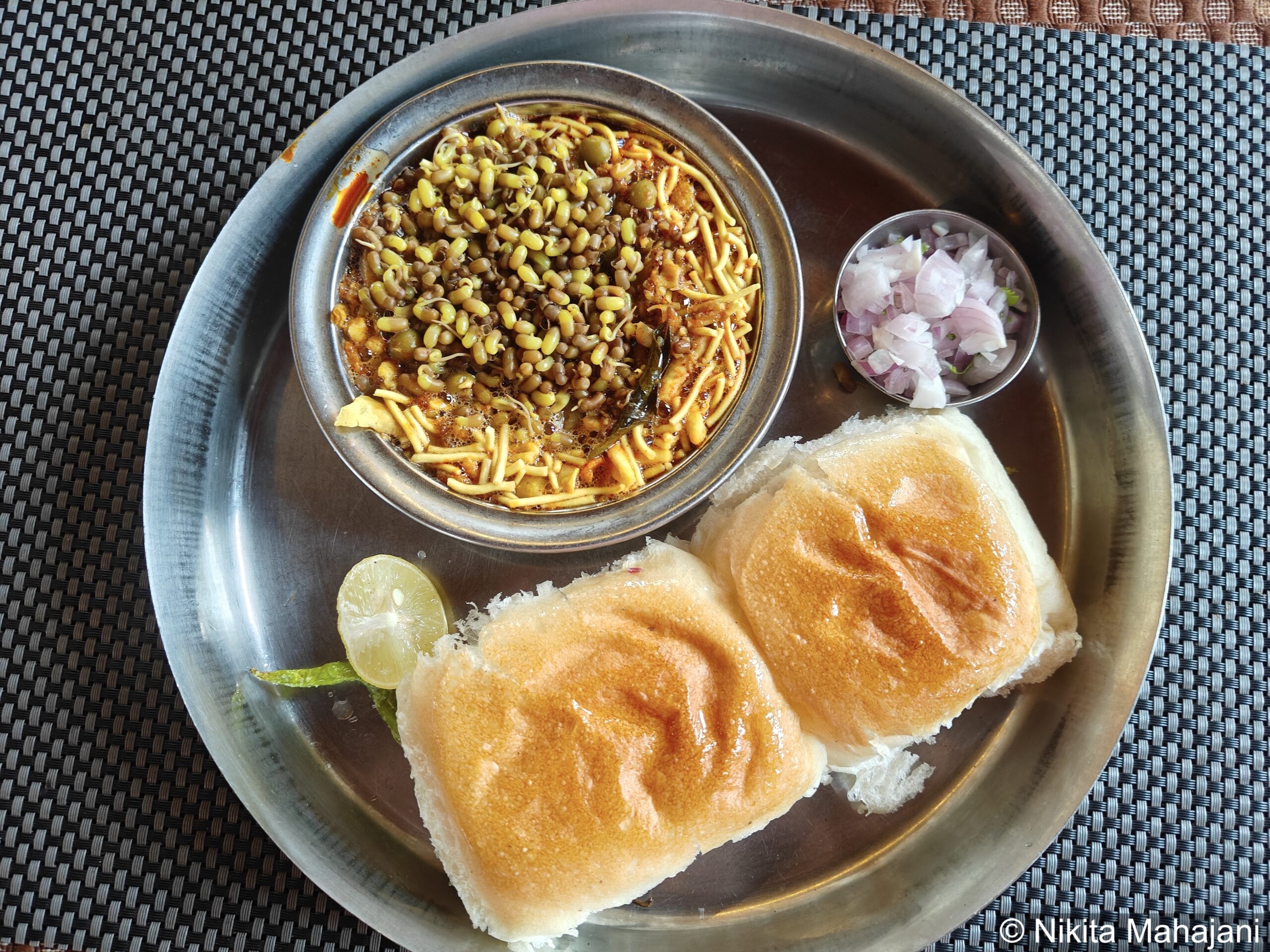

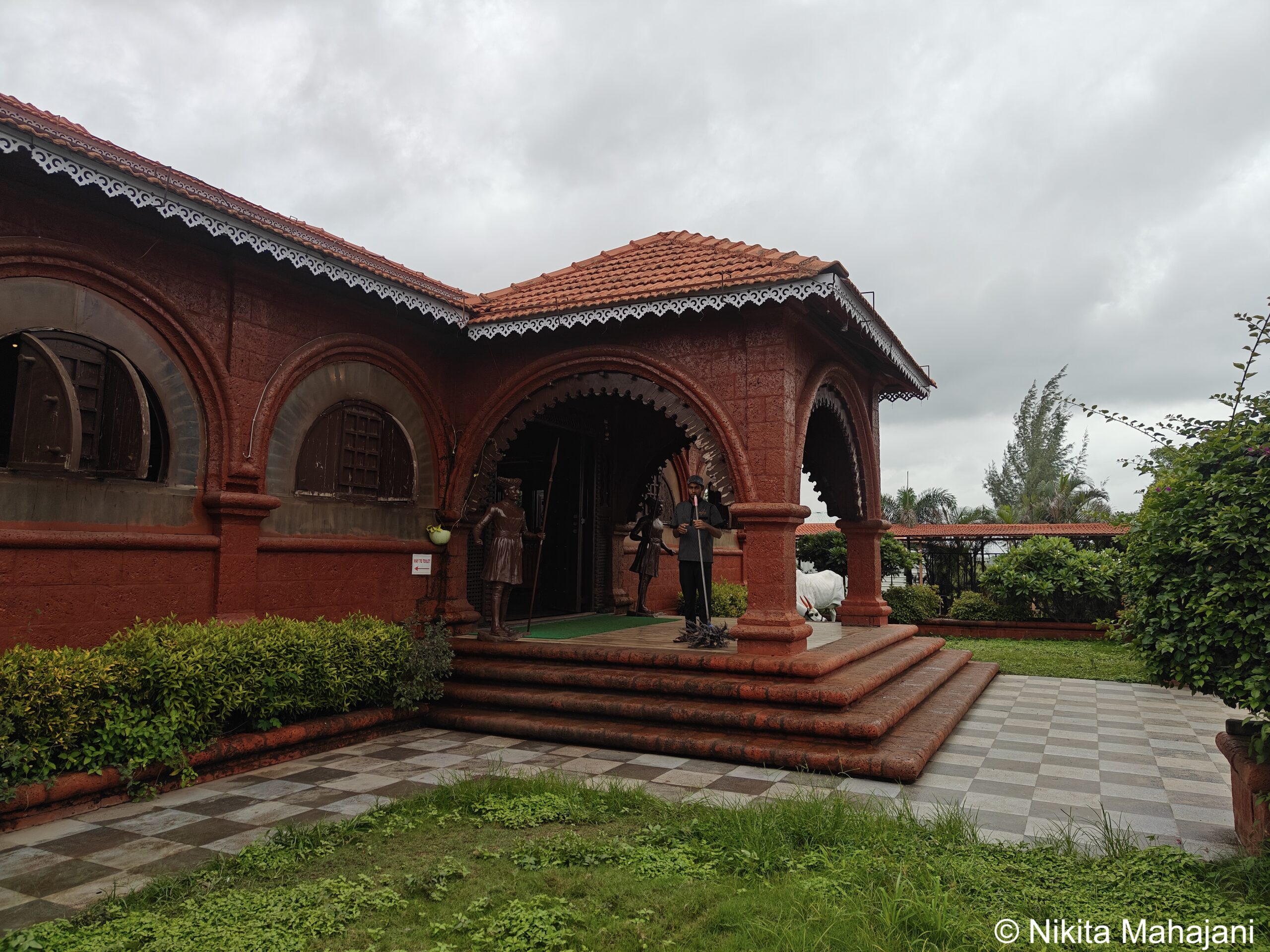
After having a delicious steaming hot misal and tea at Hotel Shivneri Misal, we resumed the return journey to Pune. With tired feet and happy hearts, we began our drive back to Pune, already reminiscing about Tapneshwar’s legends, the hidden Holkar-era gems, and the sense of calm that Manchar had offered us. It was a day well spent—simple, soulful, and refreshingly pet-friendly.
Where did we eat ?
Kokamthan
To read the previous blog on Day 08: Maheshwar, click here.
Day 09: Malegaon to Pune via Kokamthan
After a relaxing stay at Pavilion Park Hotel in Malegaon, we were ready to hit the road again and continue our journey towards Pune.
We started the morning with a hearty breakfast at Pavilion Park Hotel, which was the perfect way to fuel up before a long day of travel. The hotel’s breakfast spread offered a variety of local and continental options, and we enjoyed a leisurely meal, savoring the quiet morning atmosphere. The hotel staff was incredibly welcoming, and we felt completely at ease as we prepared for the next leg of our journey. By 9:30 AM, we were ready to check out and begin our drive to Pune.
The road from Malegaon to Pune was a comfortable drive, with the weather being quite pleasant for most of the journey. We passed through small towns, lush fields, and winding roads that were typical of the rural landscapes in Maharashtra. It felt like the perfect road trip vibe—peaceful, scenic, and full of beautiful views.
About three and a half hours into our journey, we decided to take a break and explore a cultural gem—Kokamthan Shiva Temple. This temple, dating back to the 13th century, offered a serene and peaceful atmosphere.
Built in the traditional Hemadpanthi architectural style, which is well-known across India, the temple showcases remarkable craftsmanship. Although some of the carvings on the walls and pillars have suffered minor damage over time, they remain intricate and captivating.
Dedicated to Lord Shiva, the temple features numerous statues and sculptures of him, each depicting different stories from Hindu mythology. These artistic representations were not only beautiful but also deeply meaningful.
As we explored the temple, we were struck by how the ancient artisans conveyed spiritual teachings through their design. The experience deepened our appreciation for Indian heritage and spirituality.
After our visit to the temple, we were ready for some lunch. We stopped at Hotel Shetty’s Swastik – Veg Treat, a well-known local restaurant that served fresh, flavorful vegetarian food. The restaurant’s menu offered a range of dishes, but we opted for some traditional Maharashtrian fare—Misal pav. It was just the kind of hearty meal we needed to refuel for the next stretch of our journey. The food was delicious and satisfying, and the friendly service made it even more enjoyable.
With our hunger satisfied, we resumed our drive toward Pune. As the miles passed, we began to notice the changing landscape, with more greenery and hills appearing as we neared Pune. After a full day on the road, we finally reached Pune around 7:00 PM.
As we settled into Pune for the night, we couldn’t help but reflect on the amazing places we had visited and the connections we had made with the land, its people, and its stories. We were content to rest and recharge for the next chapter of our adventure.
Where did we eat ?
Ganpatipule
Traveling with pets is an adventure filled with joy and memorable
moments, especially when the destinations are as picturesque as
Ratnagiri and Ganpatipule. My husband and I, along with our furry
companion Sophie, embarked on a 4-day road trip through the serene
coastal towns of Ratnagiri and Ganpatipule.
To read the previous blog on Day 1 & 2: Ratnagiri, click here.
Here’s how our journey unfolded:
| Day 1: Ratnagiri | Pune to Ratnagiri. |
| Day 2: Ratnagiri | Ratnadurg Fort, 6 temples in Kasba Sangameshwar, Bhatye Beach |
| Day 3: Ganpatipule | Datta mandir in Kolambe, Thiba palace, lokmanya tilak birthplace. Travel to Ganpatipule – Jai Vinayak Temple, Jaigad Fort. |
| Day 4: Ganpatipule | Ganpatipule to Pune |
Day 3: Ratnagiri to Ganpatipule
We started our journey to from Ratnagiri to Ganpatipule in the afternoon and waited for a quick stop at Aare Ware beach. This beach is a breathtakingly clean and scenic destination. One of its highlights is the mesmerizing drive to the beach, offering spectacular views that make the journey truly unforgettable. The beach itself is tranquil, with a serene ambiance and opportunities for adventure, such as ziplining. Street parking is available, ensuring convenience for visitors. It’s an ideal spot for nature lovers and those seeking a peaceful escape from the crowds. There are some shacks available on the road adjacent to the beach.
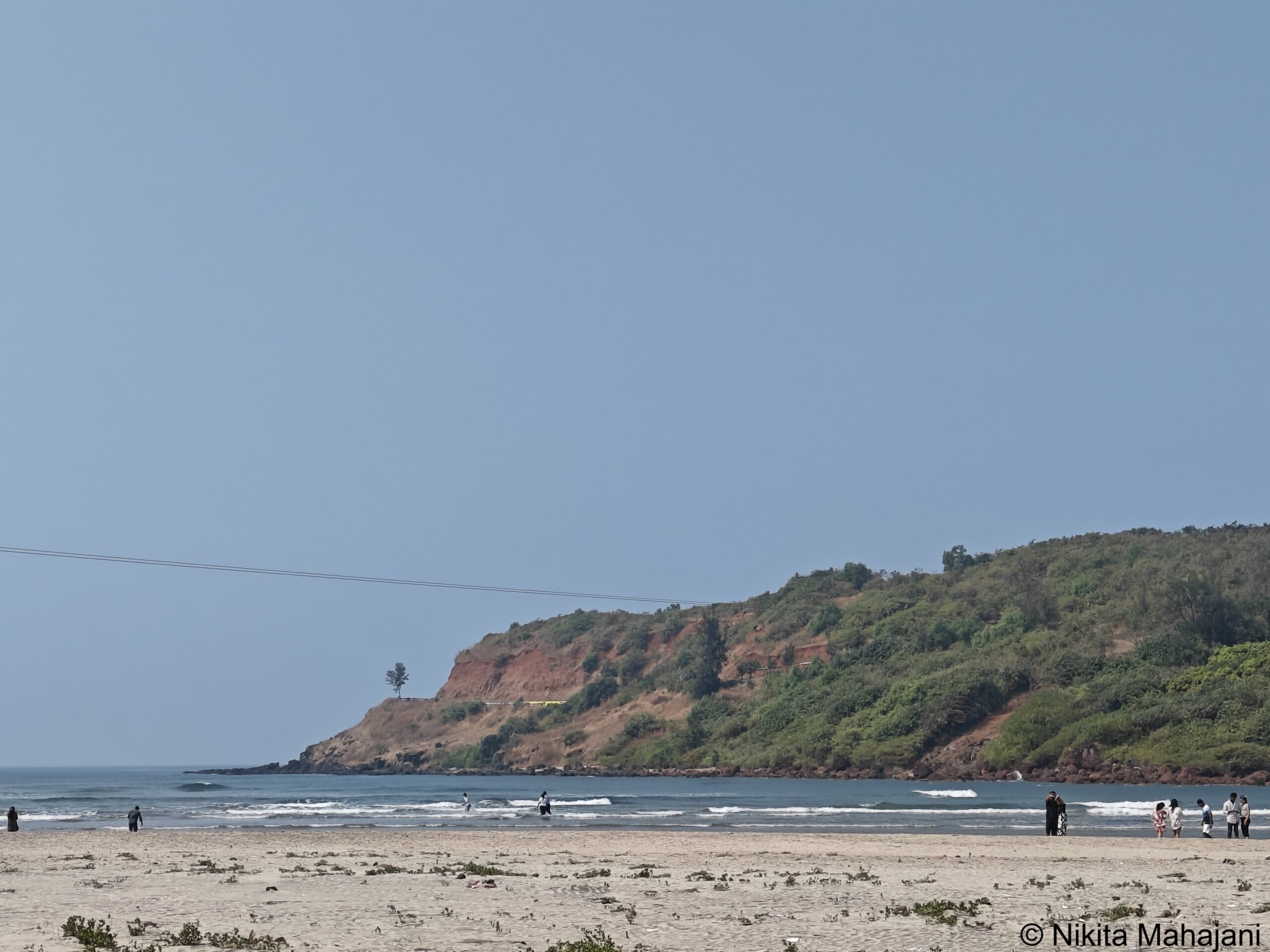
Heading to Ganpatipule, we had lunch at Hotel Grand Ganesha before visiting the beautiful Jai Vinayak Temple, managed by JSW Steel. JSW Jai Vinayak Mandir is a picturesque and tranquil temple situated around 15 km from Ganpatipule, easily accessible via a well-maintained road, making for a smooth half-hour drive. The temple exudes an ancient charm, surrounded by lush greenery and a serene atmosphere. A small water kund enhances its beauty. The premises are clean, well-kept, and equipped with essential facilities like toilets. Visitors can also explore Kaladham, an arts and crafts exhibition stall, which is worth checking out. With ample parking available, it ensures a hassle-free visit. A must-visit destination if you’re in the area. Pets are not allowed at this place. The temple is surrounded by lush greenery, creating a serene natural setting. There’s a lovely fish pond and a well-maintained garden adding to its charm. No tickets are required for entry.
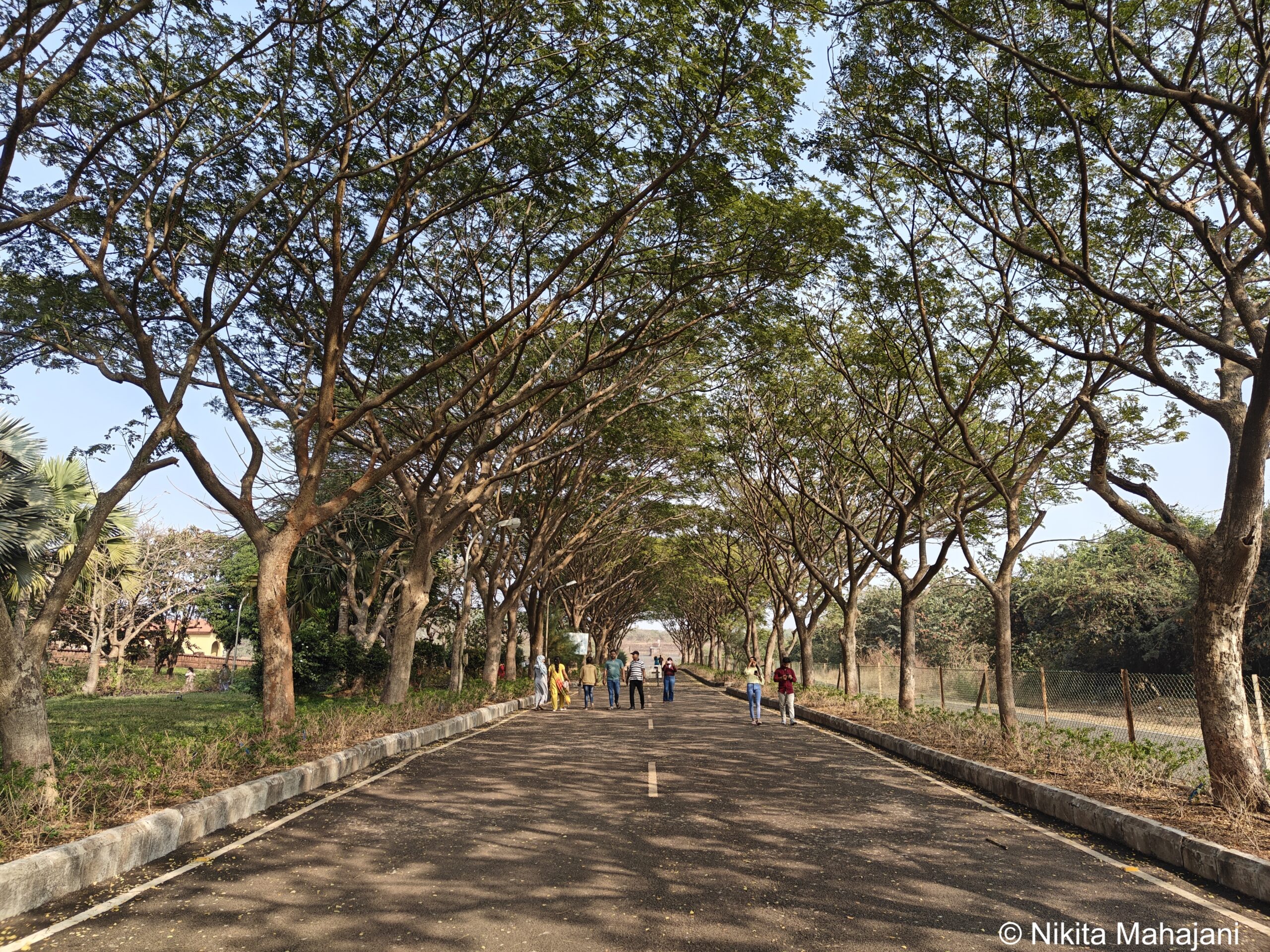
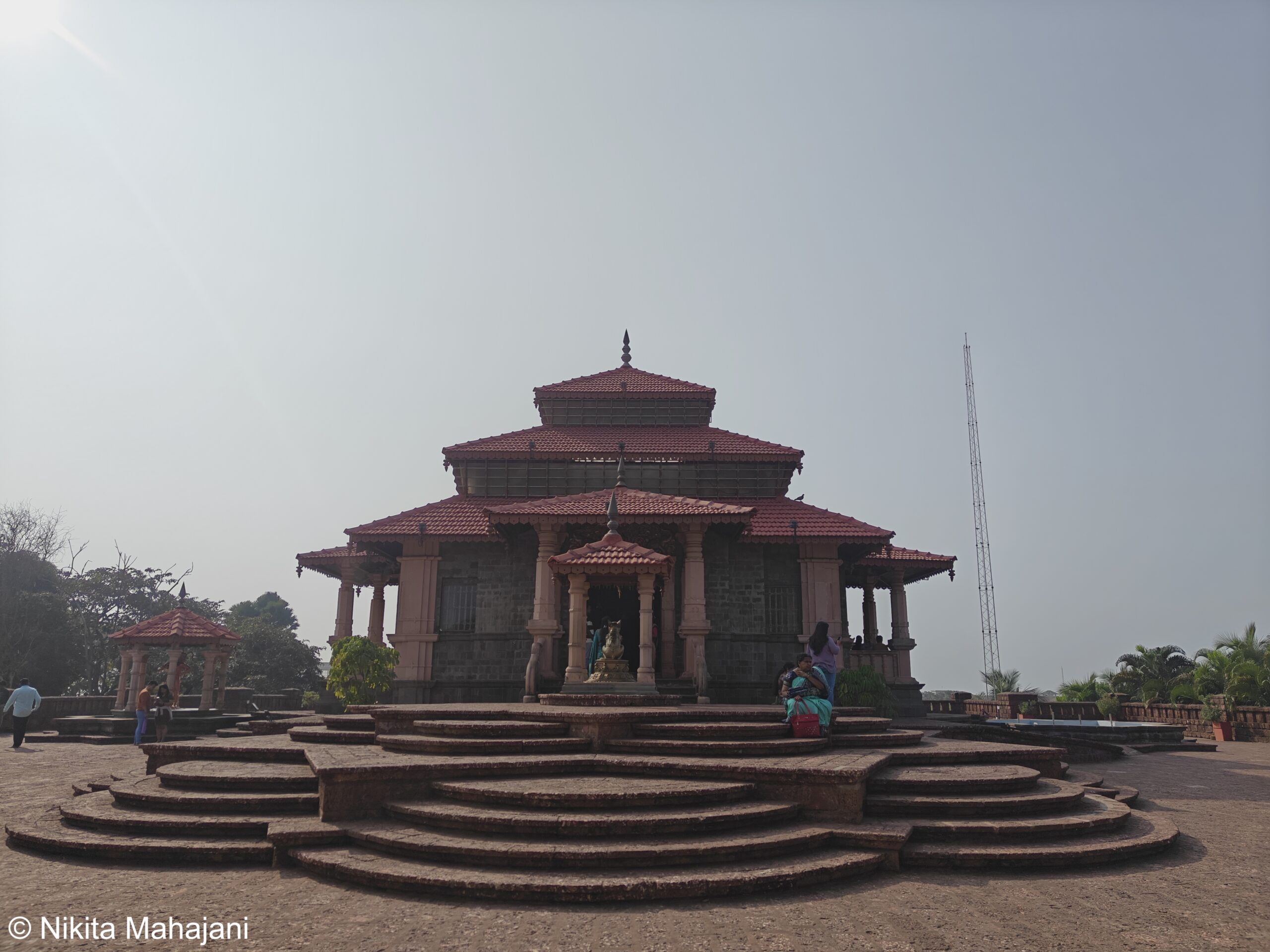
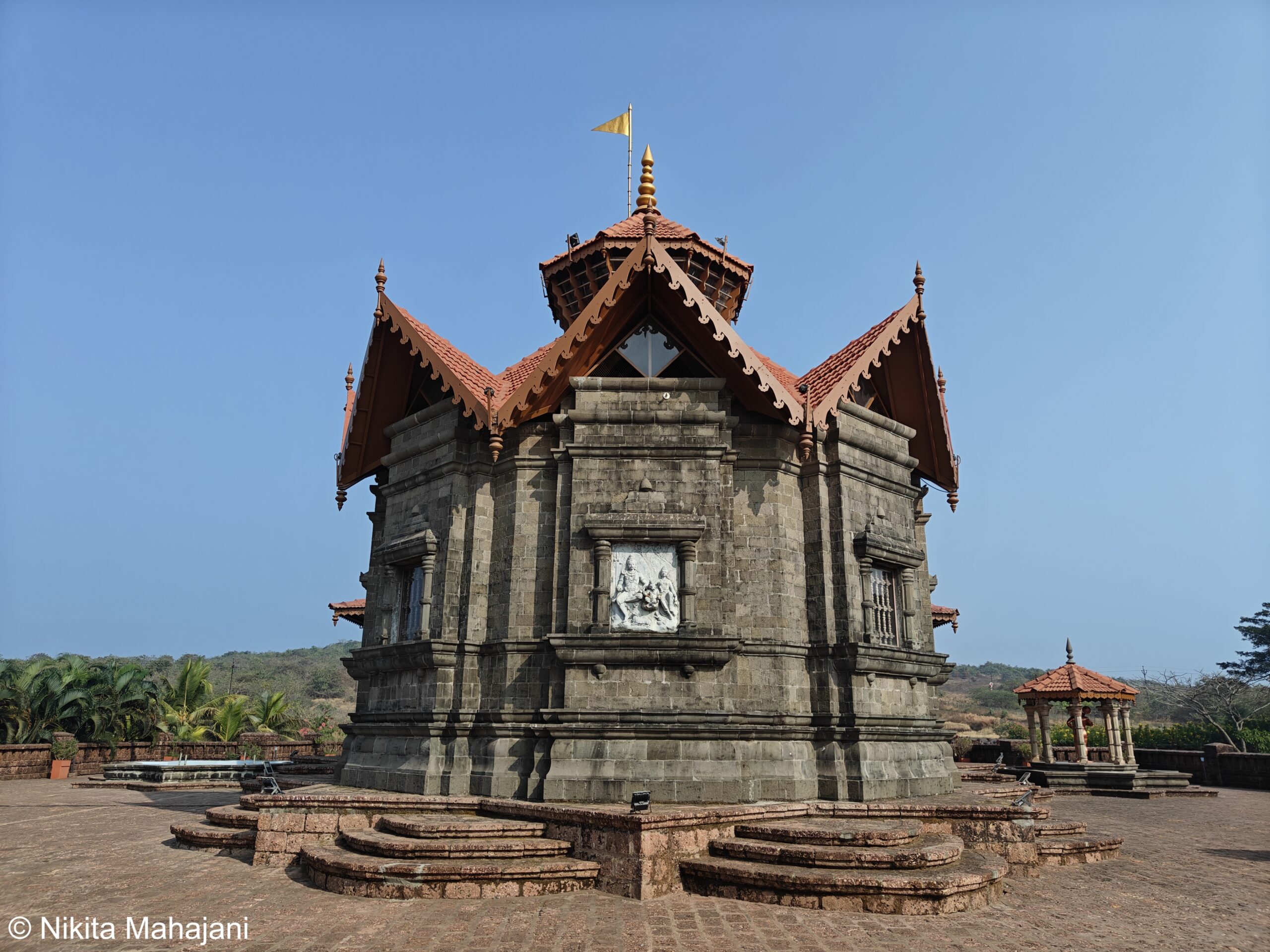
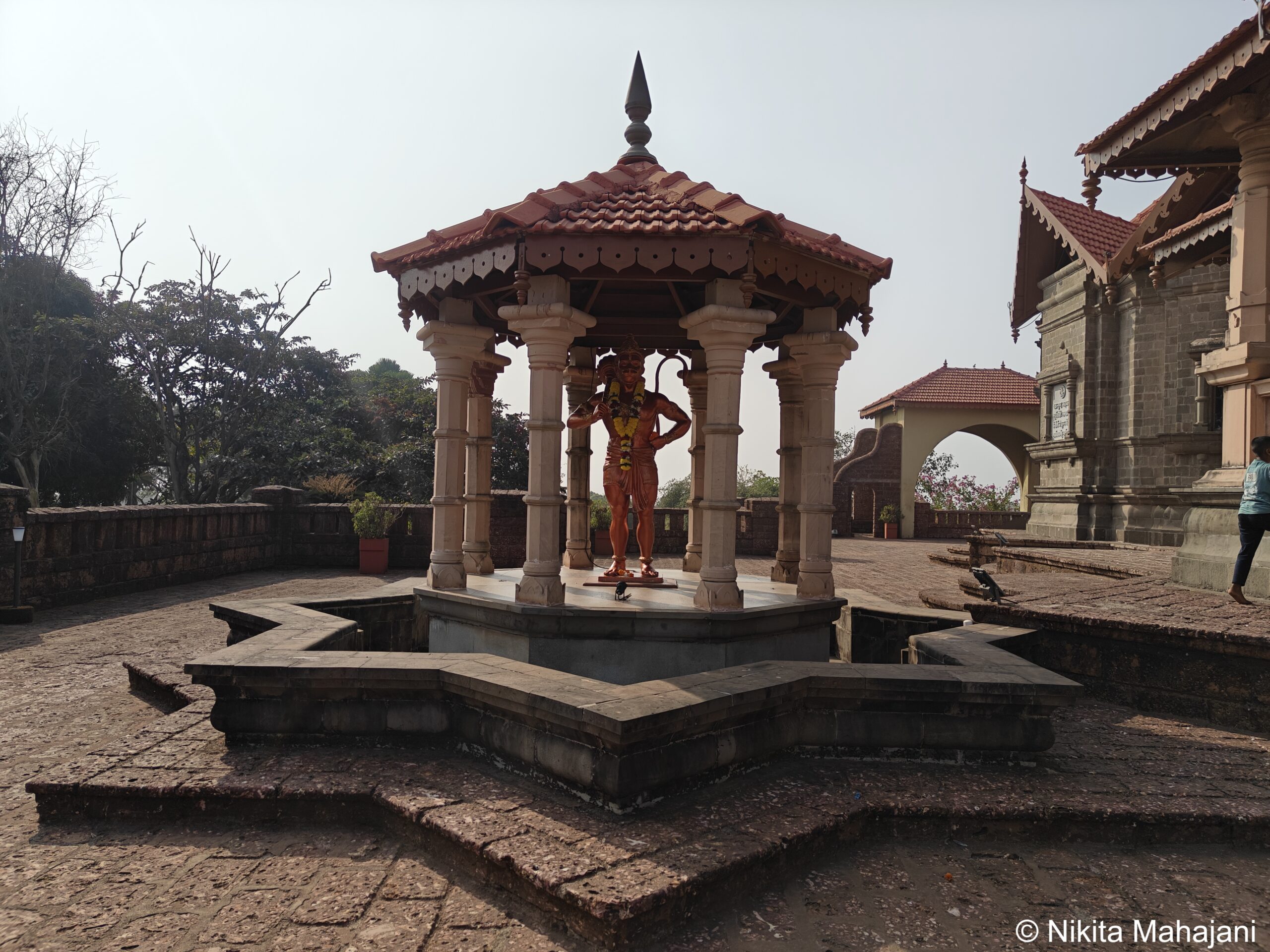
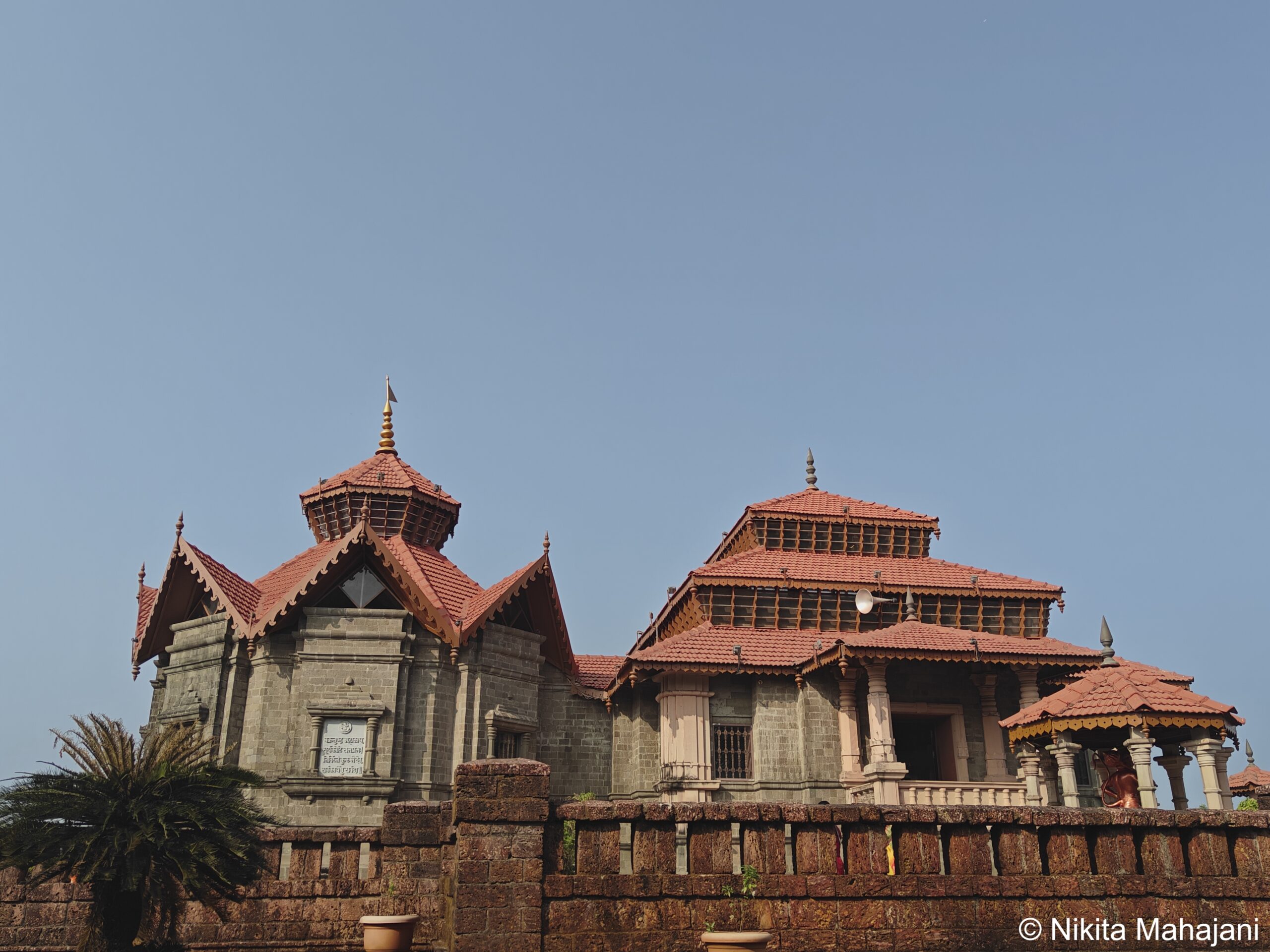
Our next stop was Jaigad Fort . Jaigad Fort is situated in Jaigad village, Ratnagiri District, Maharashtra. Perched on a cliff where the Shastri River meets the Arabian Sea, it is surrounded by water on three sides. The fort lies 14 kilometers north of Ganapatipule village and is a protected monument under the Archaeological Survey of India (ASI). Open to visitors during the day, the fort once housed the palace of Sarkhel Kanhoji Angre and a Ganapati Temple. Currently undergoing restoration, the fort was originally built by the rulers of Vijapur in the 16th century and spans an area of 13 acres. This fort is completely pet friendly and entry is free of cost. There is nothing much to see at the fort. However is offers mesmerising panoramic views of the sea.
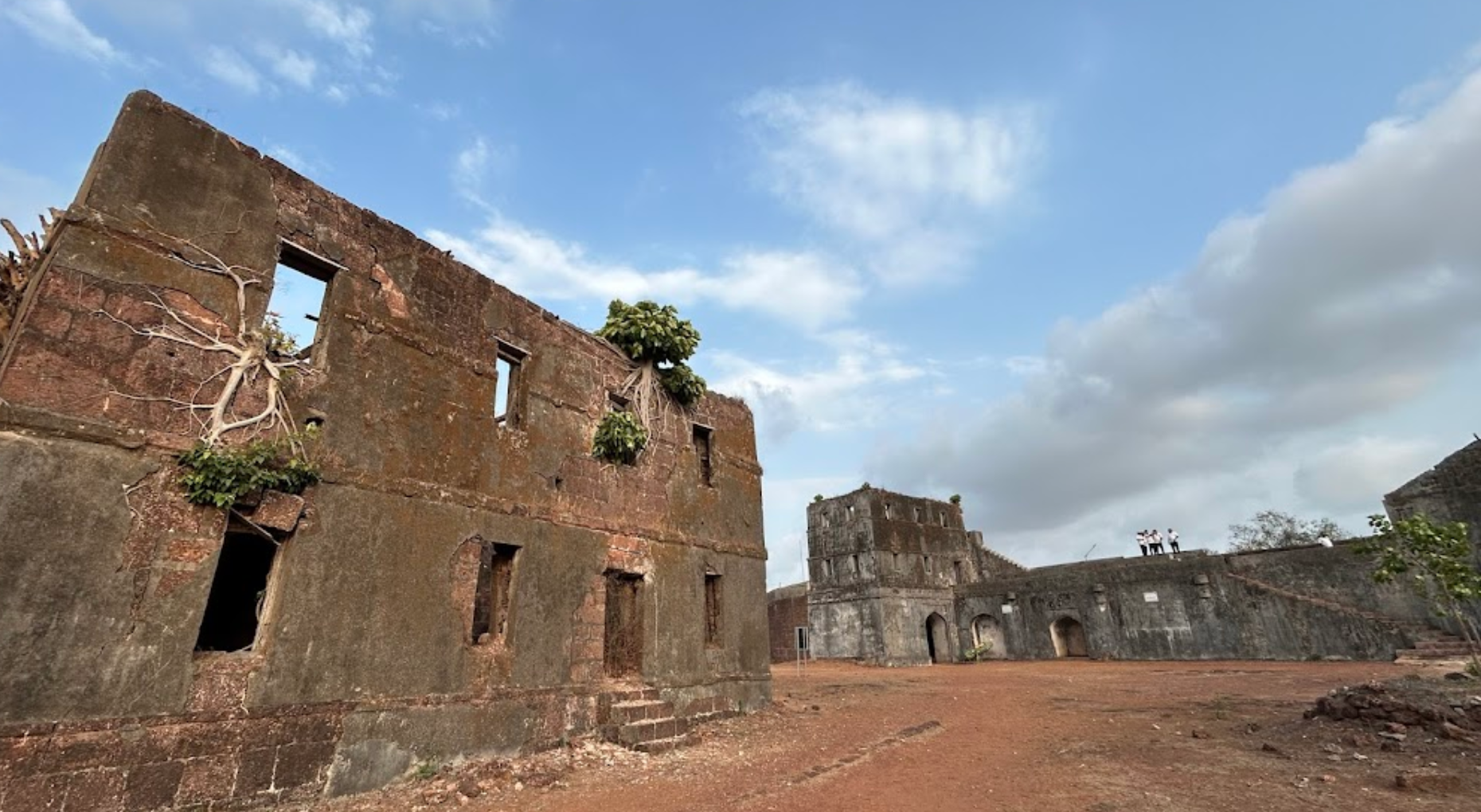
We checked in at Hotel Grand Ganesha, Ganpatipule. The location is ideal, with shops and the temple just a short walk away. The rooms and washrooms were clean, and the service was prompt and attentive, making us feel safe and well-cared for. The owner and staff were incredibly kind and accommodating, even extending our check-out time without hesitation.
Hotel Grand Ganesha is a great place to stay in Ganpatipule and is pet-friendly. The owner has a pet cat and also feeds 5–6 stray dogs in the area, all of whom are very friendly. However, parking space is limited. There is no lift, and the dining area is located on the rooftop. Breakfast is not included in the tariff, and their restaurant may not be suitable for strict vegetarians. For a pure vegetarian breakfast, Bapat Niwas Homestay is a great option, while Mehendale’s Swad Dining is recommended for lunch and dinner. Both are within walking distance of the hotel.
The day ended with a delicious Konkani meal at Mehendale’s Swad Dining. Mehendale’s Swad Dining is located in Malgund, just 3–4 kilometers from Ganpatipule, making it easily accessible if you have your own vehicle. If you want to experience authentic konkani cuisine, you should surely visit this place . They served an unlimited veg thali at Rs. 135 . Sweet dish has to be purchased separately. Modaks have to be ordered atleast 3 hours prior. Be sure to try the sweet delights like Modak, Amrakhand, or Aamras, which are offered at an additional cost. The Aamras, in particular, is a must-try and comes highly recommended! This place is ideal for those seeking authentic and delicious food in a warm and welcoming ambiance. Expect some waiting time during peak hours, but it’s definitely worth it. The premises also feature clean washrooms, a waiting area, and parking facilities. Ample dedicated parking is available.
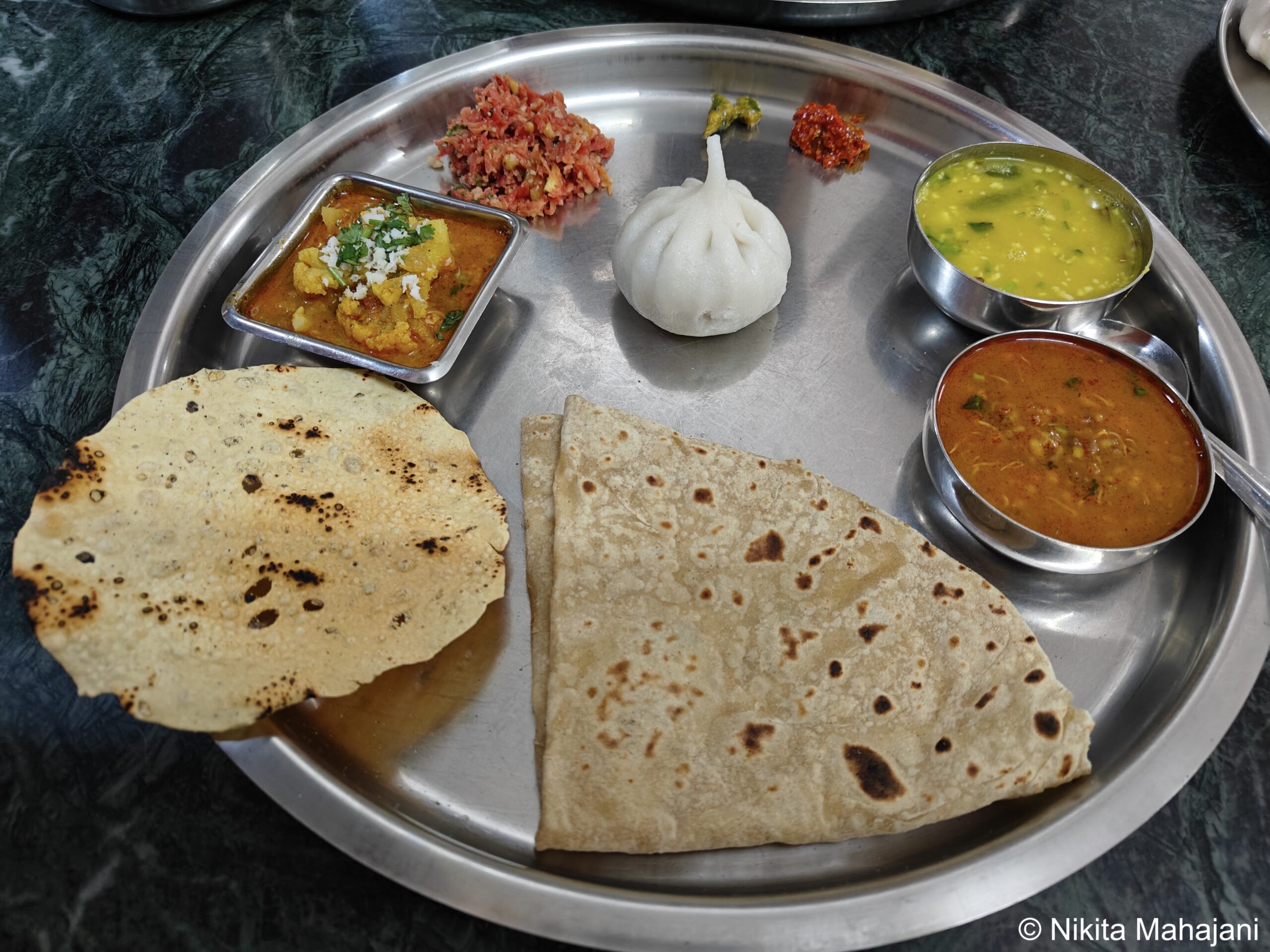
Day 4: Ganpatipule to Pune
Our final morning began with a short walk to Bapat Niwas Homestay, where we enjoyed a traditional homemade breakfast. Bapat Niwas Homestay is a bed and breakfast. Mr. and Mrs. Bapat manage the kitchen by themselves and the cleanliness in the dining area is worth appreciating. They also have a pet cat called Shivali. If you want to have breakfast at Bapat Homestay, the owner has to be informed one day prior. After checking out, we attempted to visit the famous Ganpatipule Temple, but the crowd was overwhelming, so we decided to skip it.
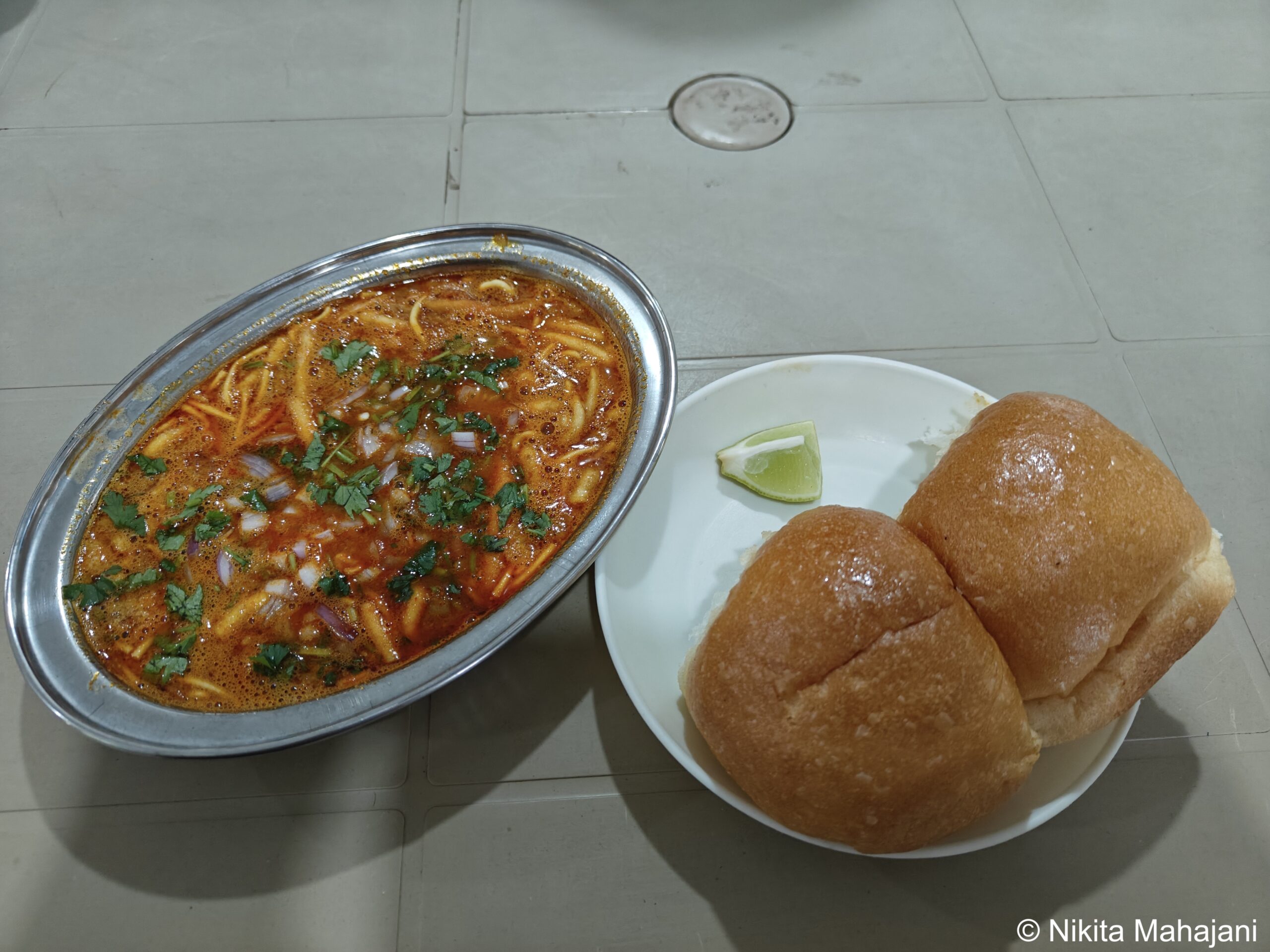
On our journey back to Pune, we stopped at Amraban Snacks Centre in Chiplun for a quick lunch. They allow pets on request in the outdoor dining area.
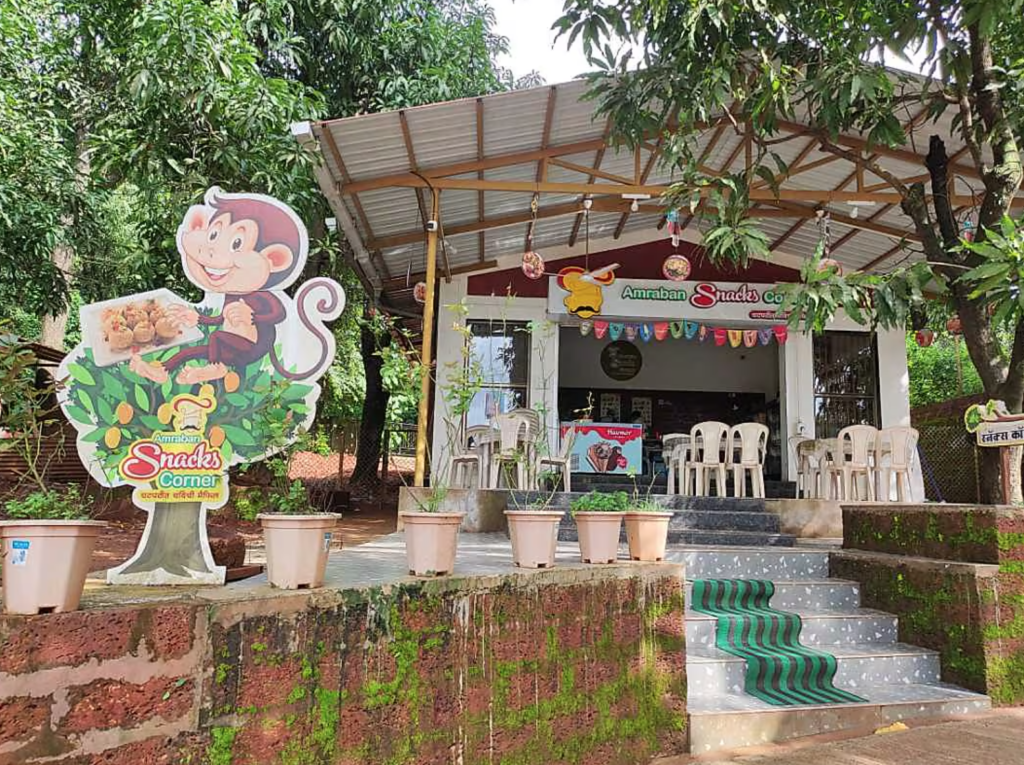
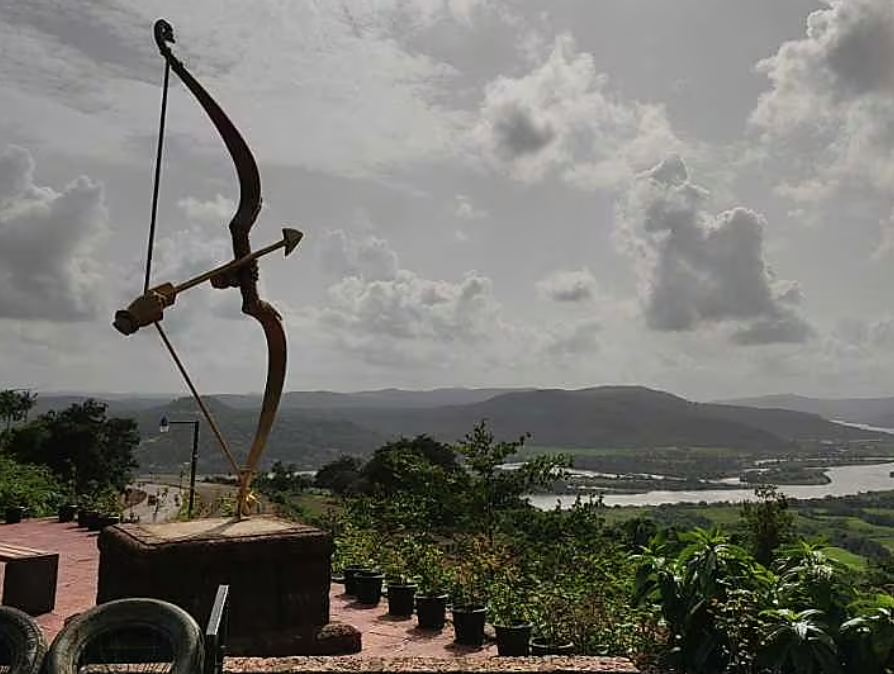
A tea break at Lakshman Hotel near Gold Valley in Tamhini Ghat was the perfect end to our road trip. We reached Pune by 6:00 PM, feeling rejuvenated by the coastal charm and cherishing the memories made with Sophie.
Our road trip was a reminder of the joy pets bring to travel. From beaches to ancient temples, Sophie’s wagging tail was a constant companion, making every moment unforgettable.
Where did we stay ?
Kohinoor Samudra beach Resort, Ratnagiri
Hotel Grand Ganesha, Ganpatipule
Where did we eat ?
Ratnagiri
Traveling with pets is an adventure filled with joy and memorable moments, especially when the destinations are as picturesque as Ratnagiri and Ganpatipule. My husband and I, along with our furry companion Sophie, embarked on a 4-day road trip through these serene coastal towns. Here’s how our journey unfolded:
| Day 1: Ratnagiri | Pune to Ratnagiri. |
| Day 2: Ratnagiri | Ratnadurg Fort, 6 temples in Kasba Sangameshwar, Bhatye Beach |
| Day 3: Ganpatipule | Datta mandir in Kolambe, Thiba palace, lokmanya tilak birthplace. Travel to Ganpatipule – Jai Vinayak Temple, Jaigad Fort. |
| Day 4 | Ganpatipule to Pune |
Day 1: Pune to Ratnagiri
We began our journey from Pune at 9:00 AM, with Sophie excitedly settling into her travel spot in the car. Our first stop was for breakfast at Quick Bite in Tamhini Ghat, where we enjoyed a steaming hot Misal Pav. Pets are strictly not allowed in Quick Bite. So I stayed outside with Sophie. We continued our journey to Ratnagiri.
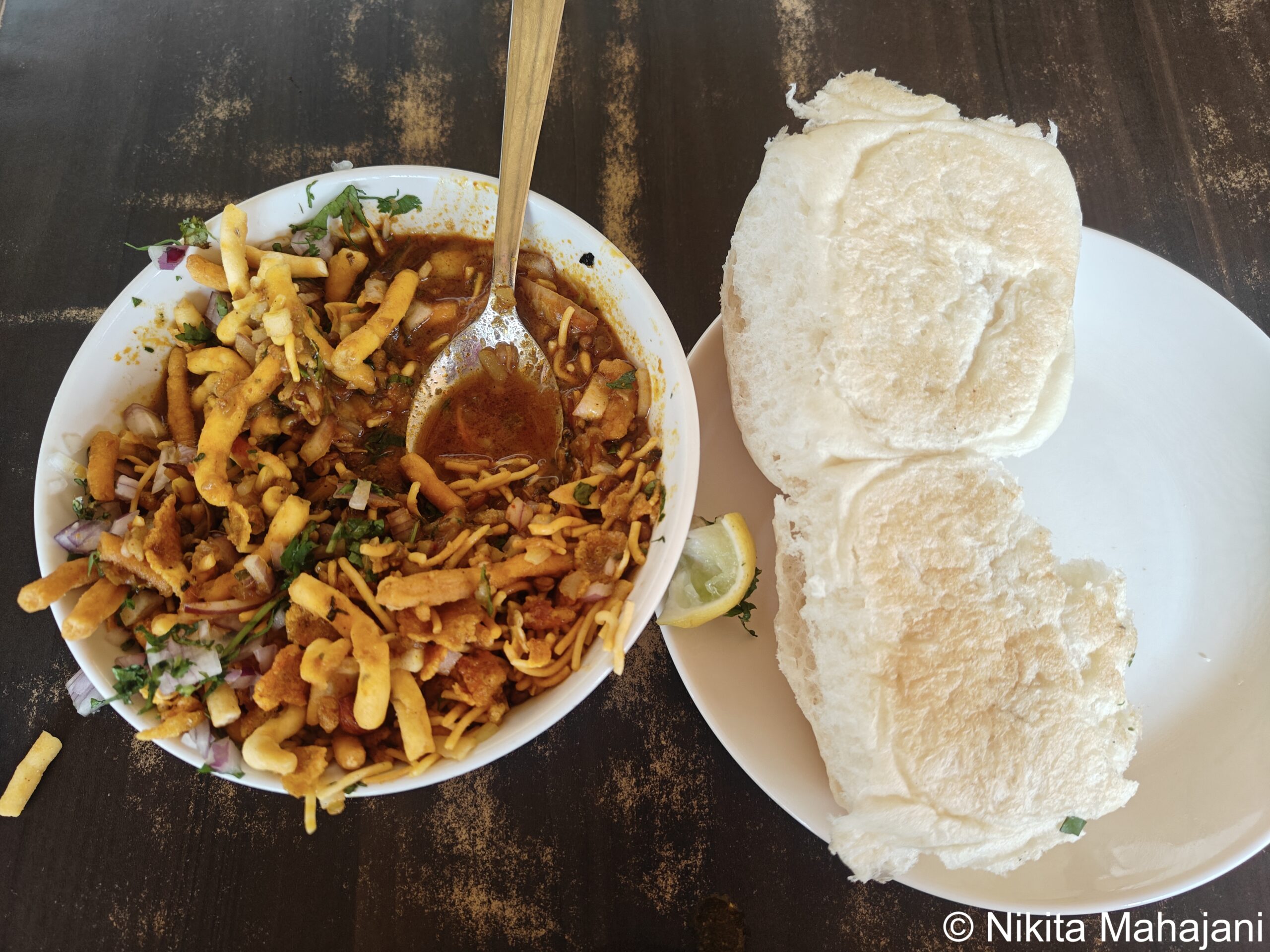
We reached Chiplun in the afternoon. We had a quick lunch stop over at Hotel Vivan Pure Veg in Chiplun. The hotel is located at a prime location at the entrance of Chiplun Court. The food is very simple and tasty. Karanji is a must try. The owner is very kind and helpful. He allowed my pet inside on request.
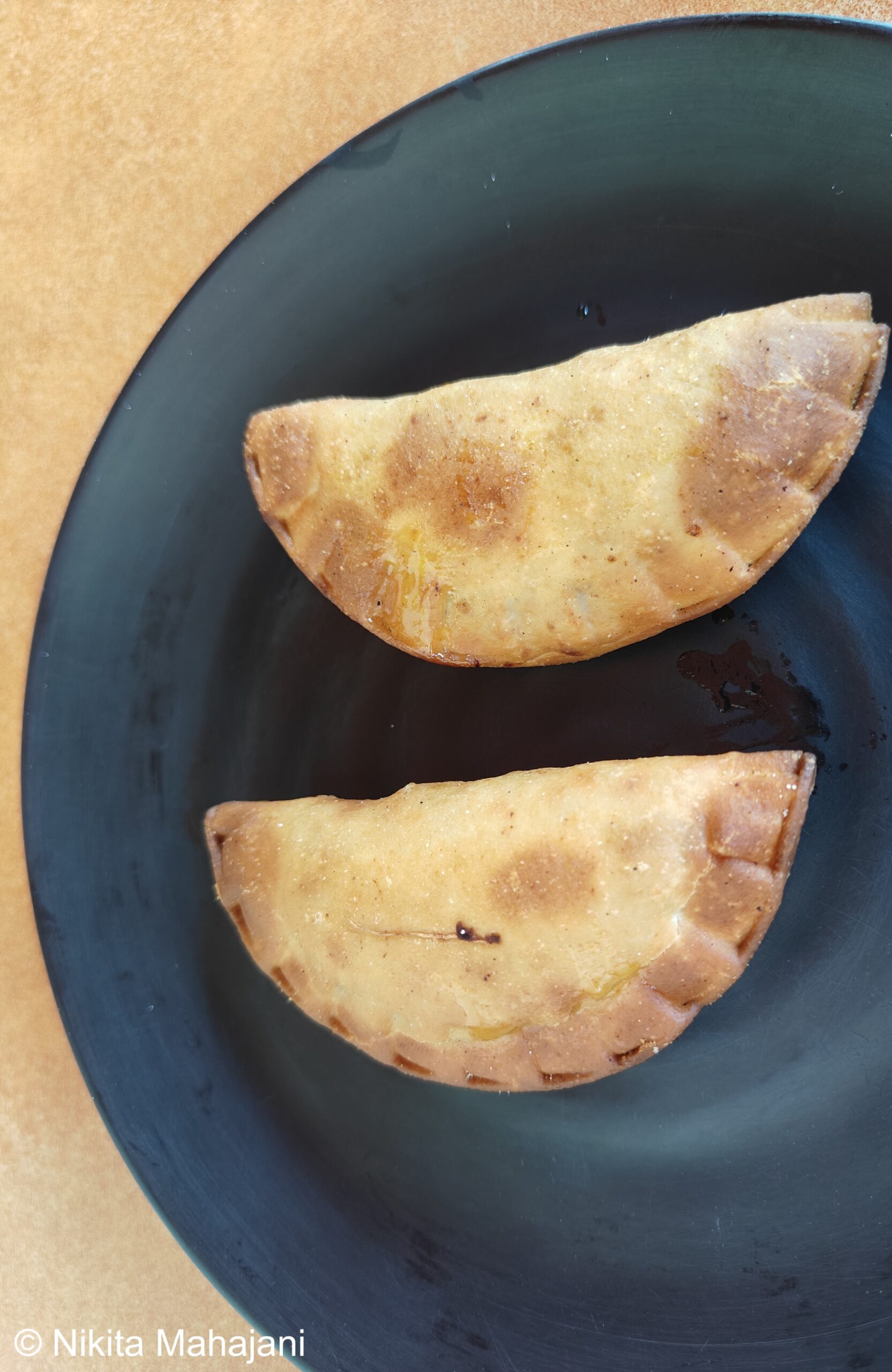
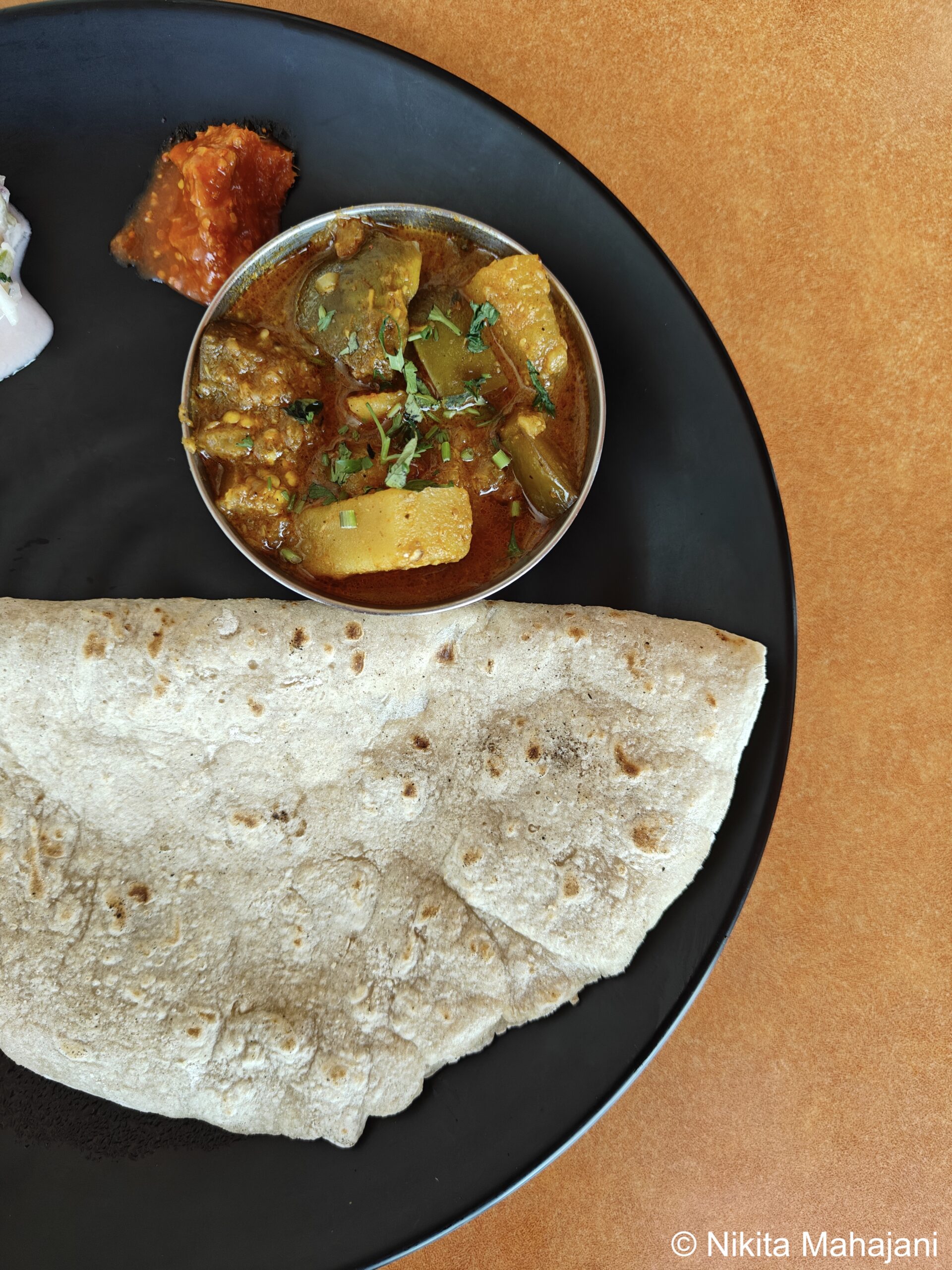
We reached Hotel Kohinoor Samudra Resort in Ratnagiri around 6:00 PM. There is an indie cat and a senior labrador in the waiting lounge of Hotel Kohinoor Samudra Resort. There are some indie dogs in the parking area as well. With its pet-friendly ambiance and spacious surroundings, Sophie had plenty of room to stretch her paws. We wrapped up the day with a comforting dinner of dal khichadi at the resort’s in-house restaurant.
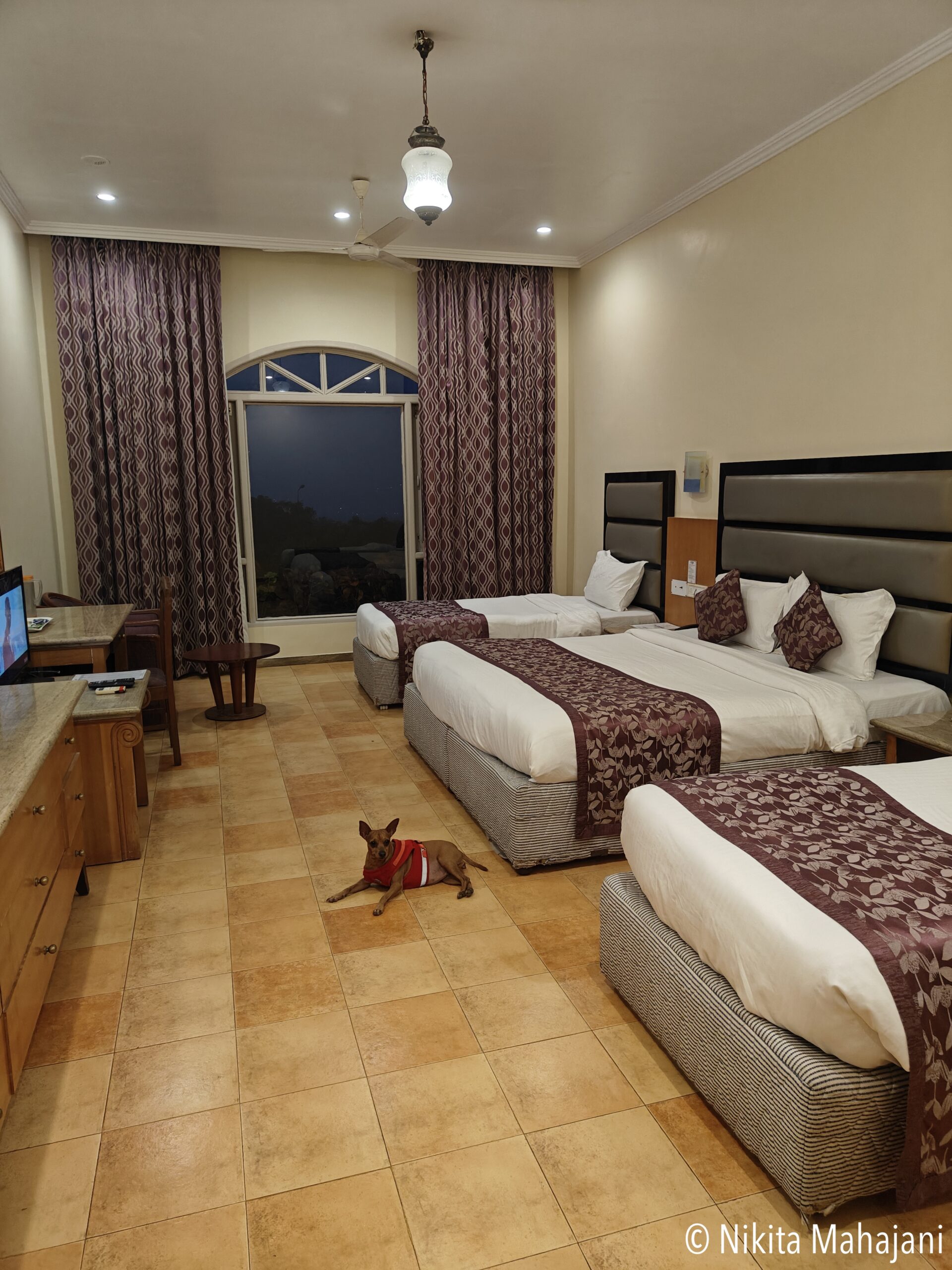
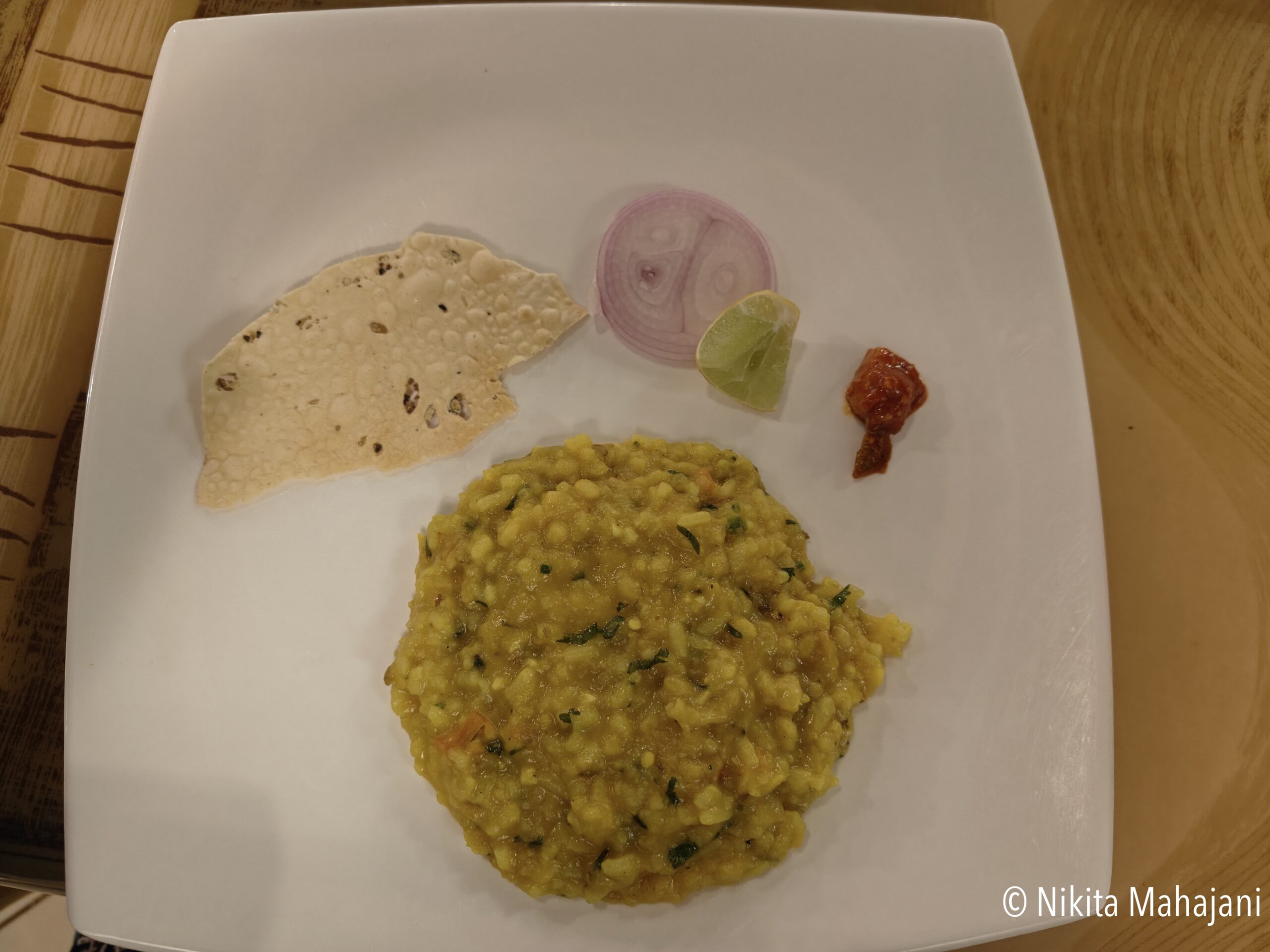
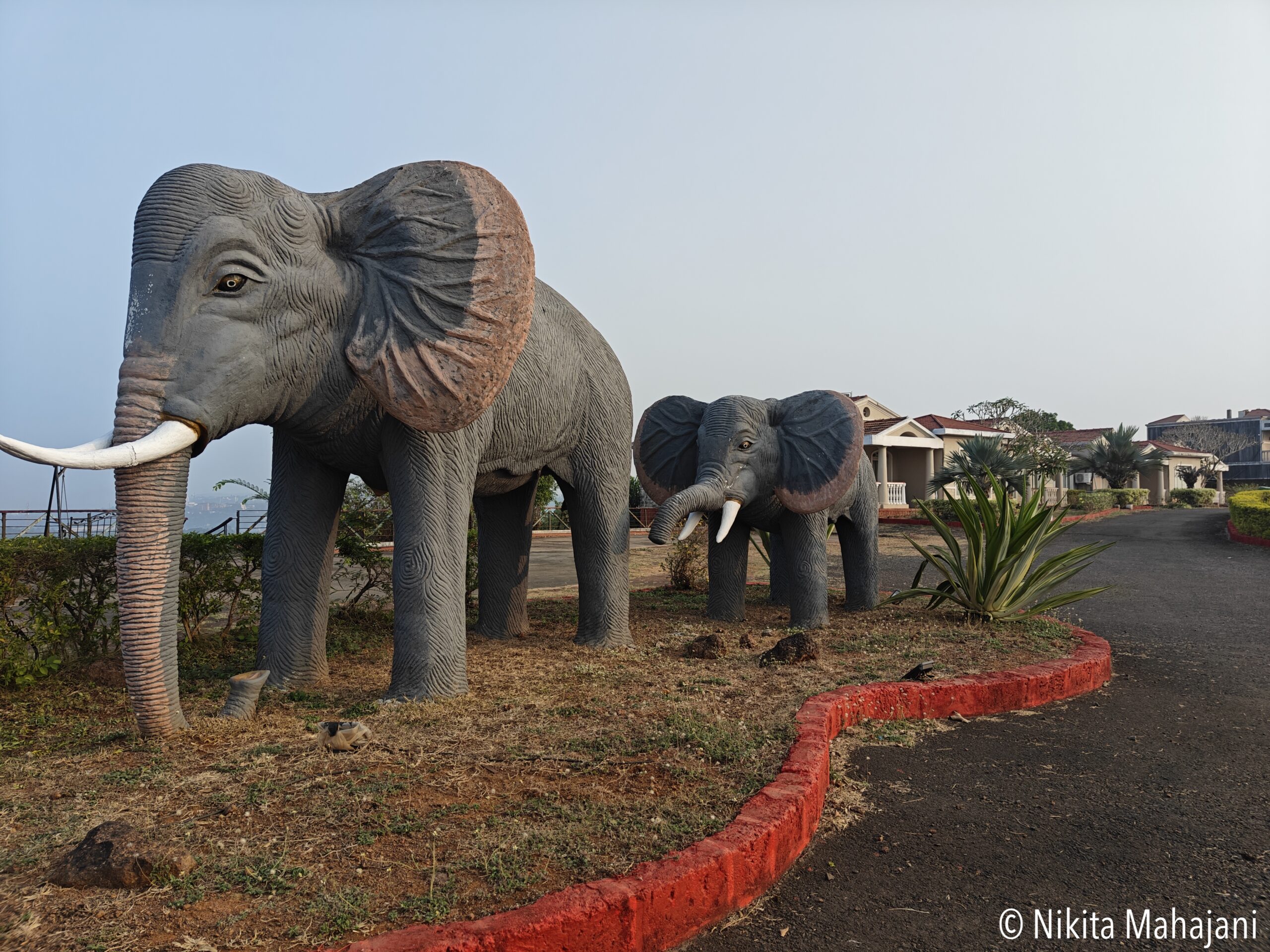
Day 2: Ratnagiri and Sangameshwar
After a delicious breakfast at the resort, we headed to Ratnadurga Fort, a stunning location with panoramic sea views. Sophie enjoyed the gentle breeze as we walked through the historic site.
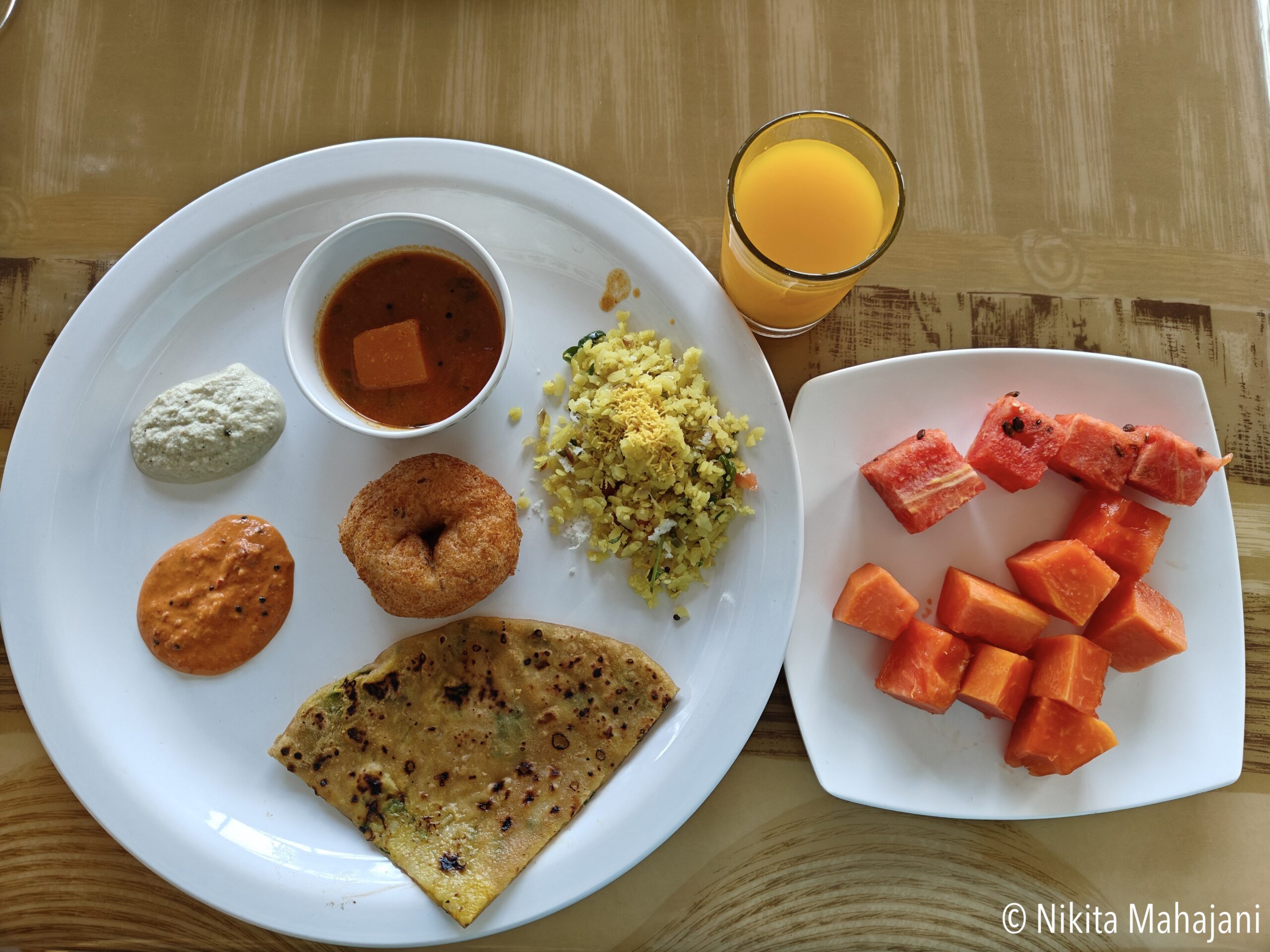
Ratnadurga fort, perched on a seaside cliff, offers stunning views of the sea and nearby mountains, making it a treat for the eyes. When I visited on a quiet Friday morning at 9:30 AM, there was just one group of four visitors, adding to the serene ambiance. The fort is surrounded by dense bushes, giving it a forest-like vibe, with a well-maintained walking path along the periphery. Inside, there’s a small temple, and no entry fee is charged.
The fort is open from 8 AM to 6 PM, with a dedicated parking area right at the entrance, making it easily accessible by car. Exploring the entire fort takes less than 20 minutes, but do note that washrooms are not available. It’s completely pet-friendly, so bring along your furry friends. Don’t forget to carry some kibble for the stray dogs near the parking area—they’ll appreciate the gesture!
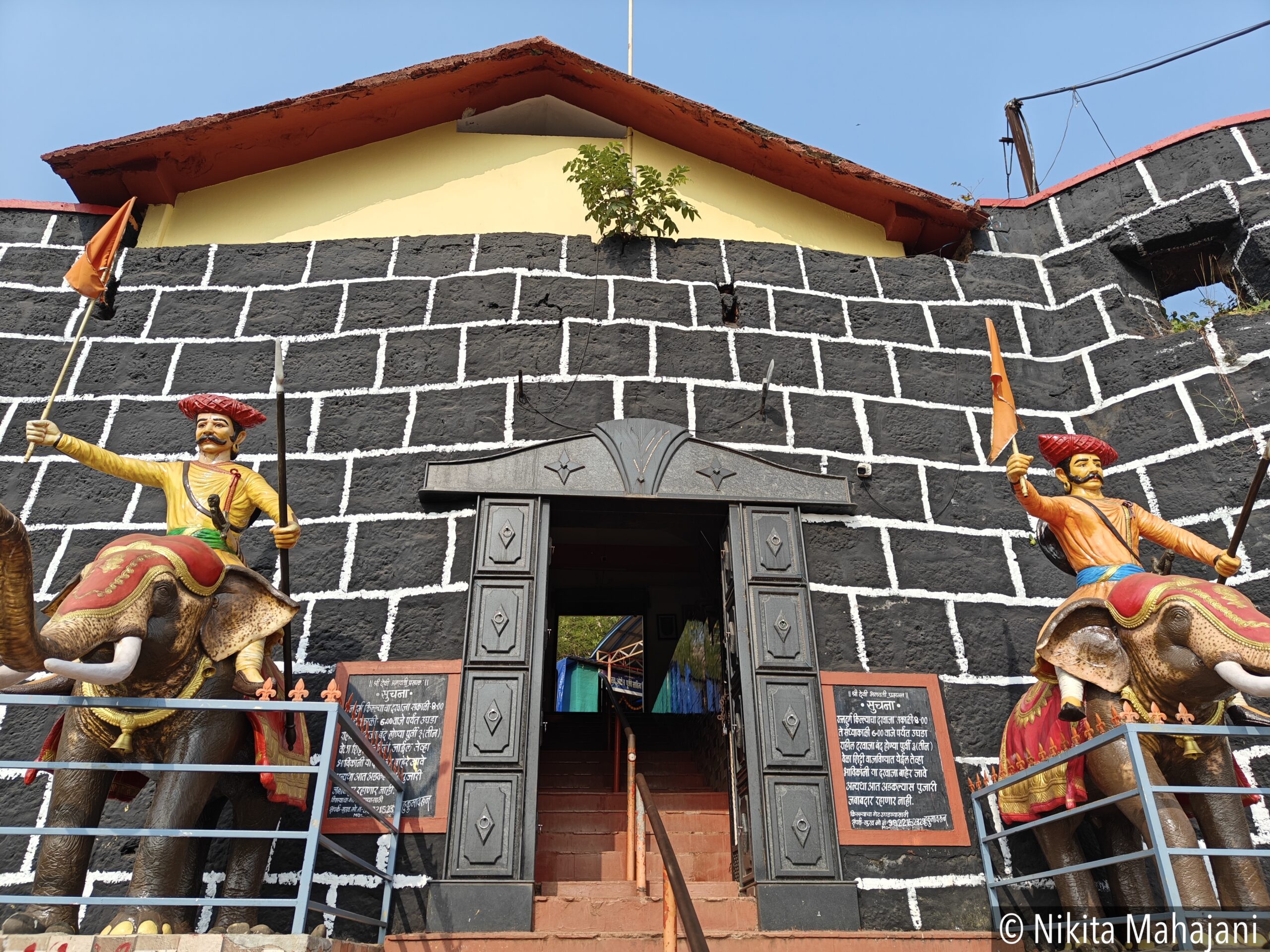
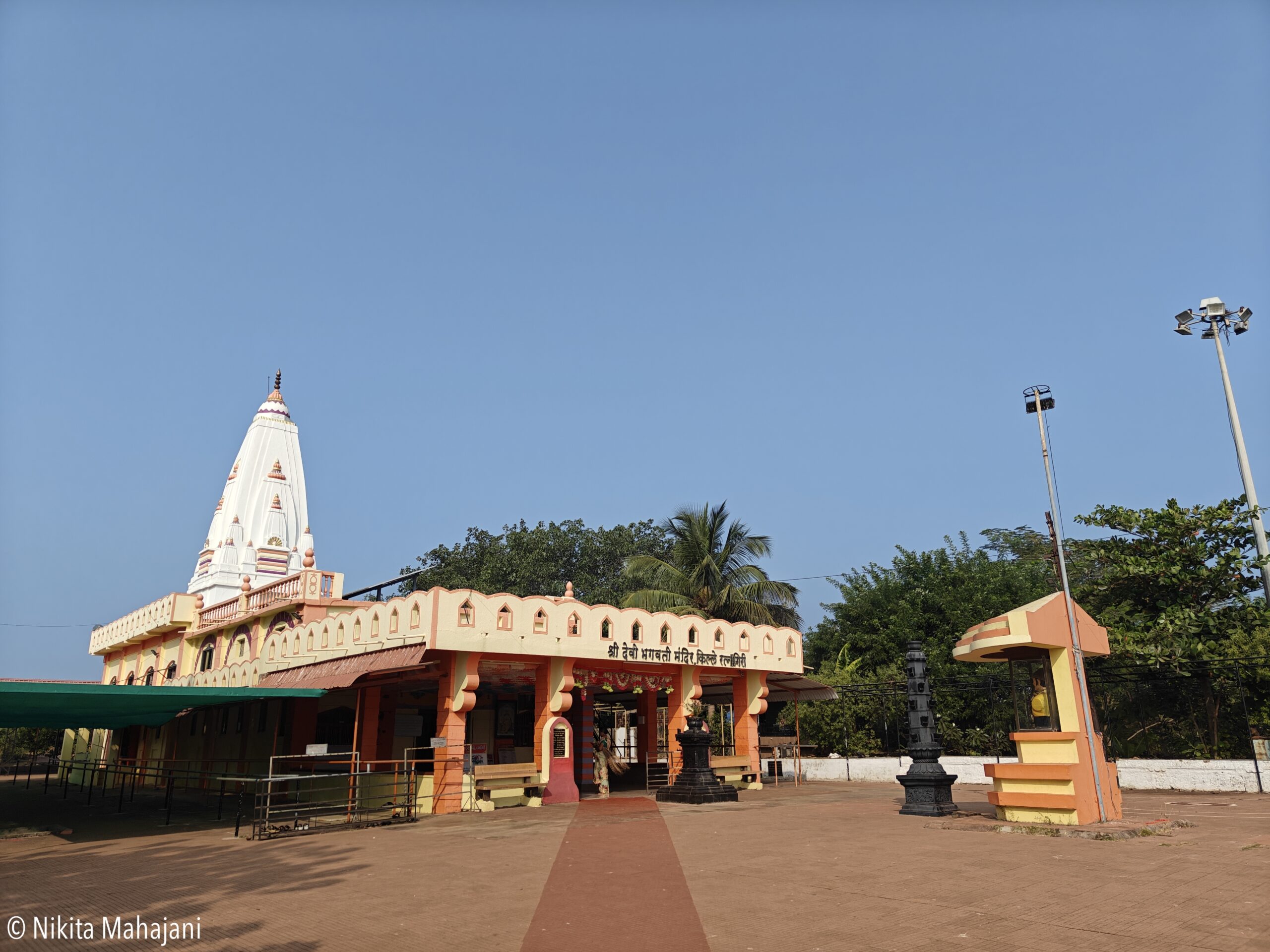
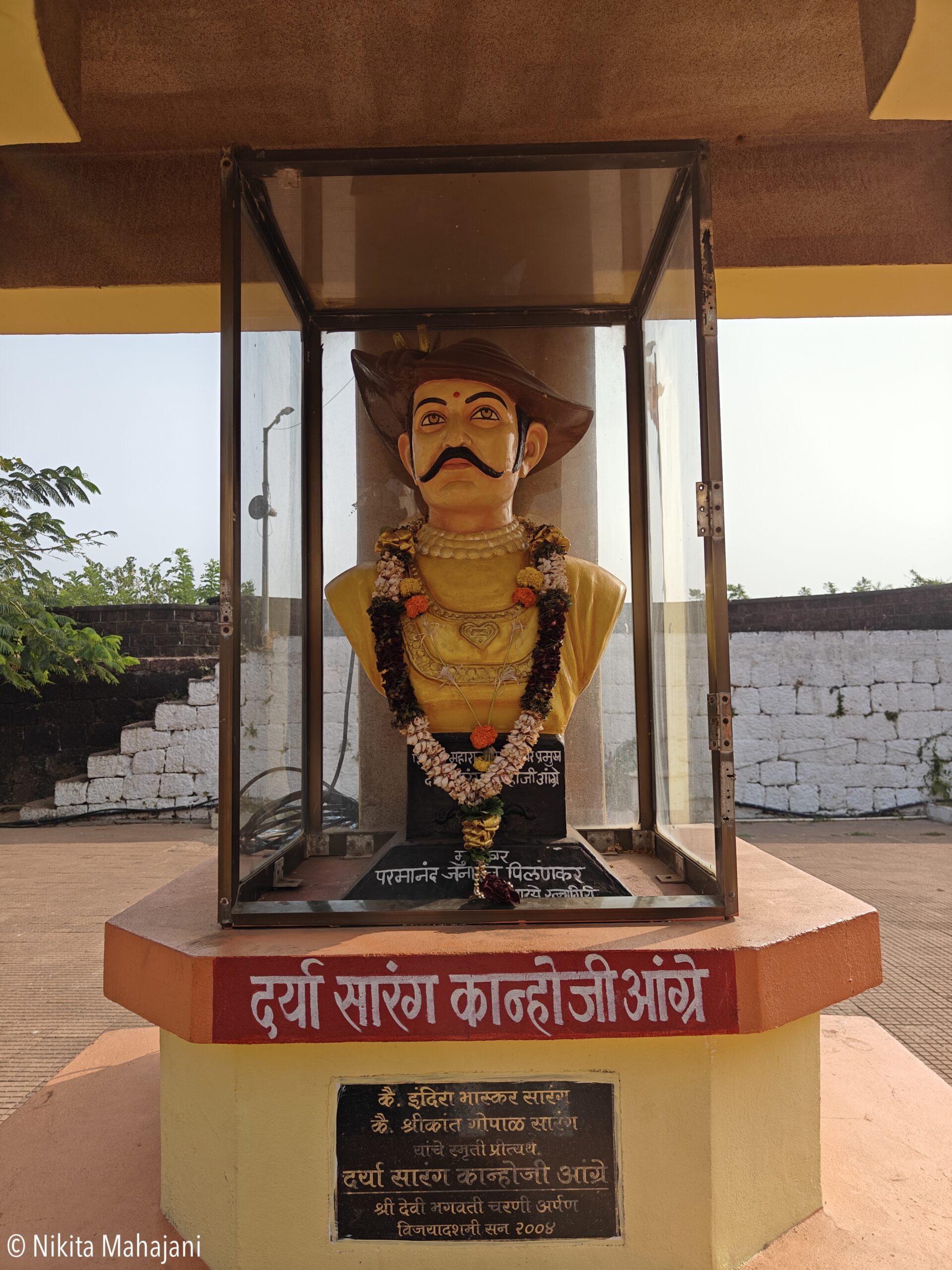
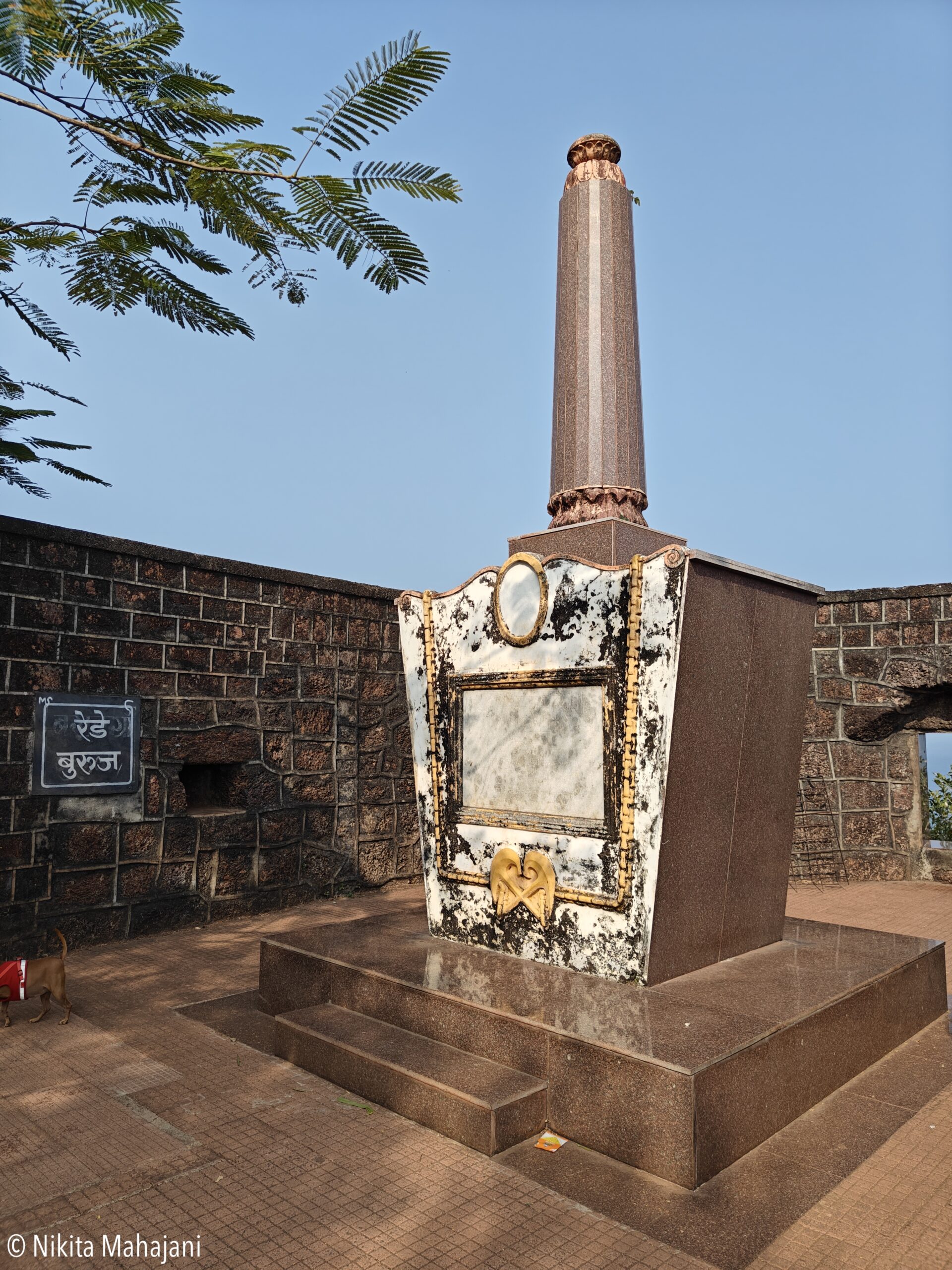
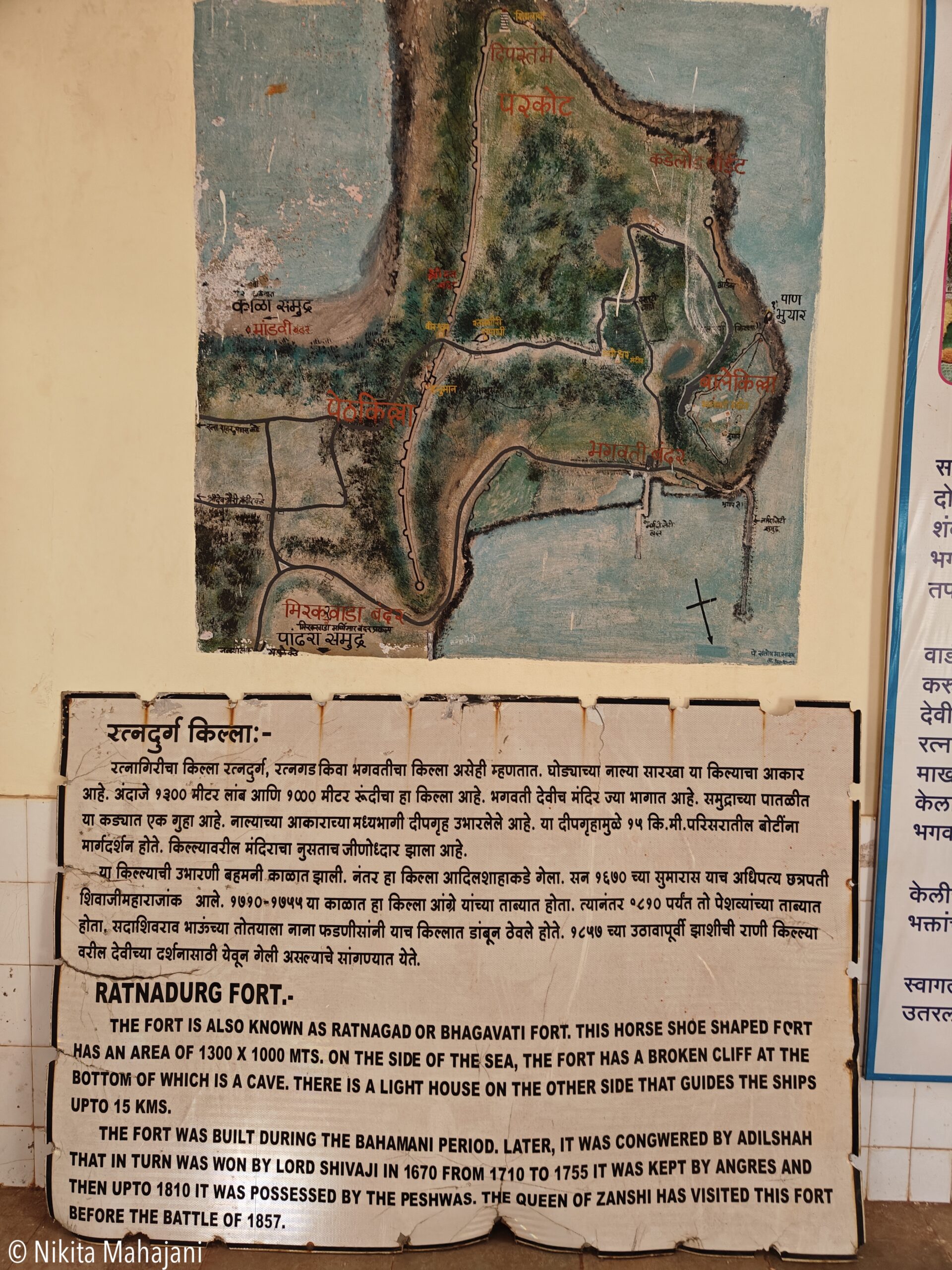
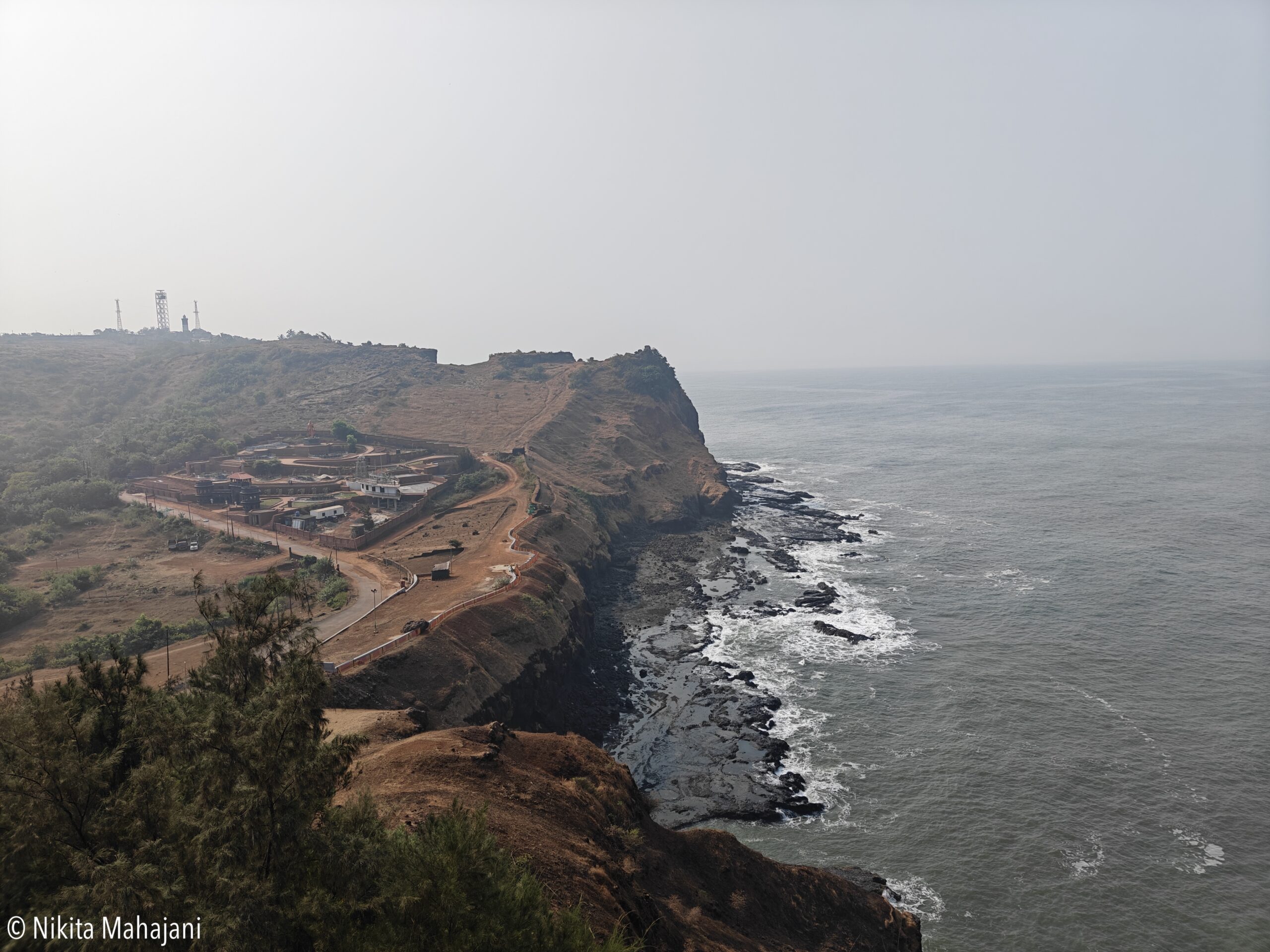
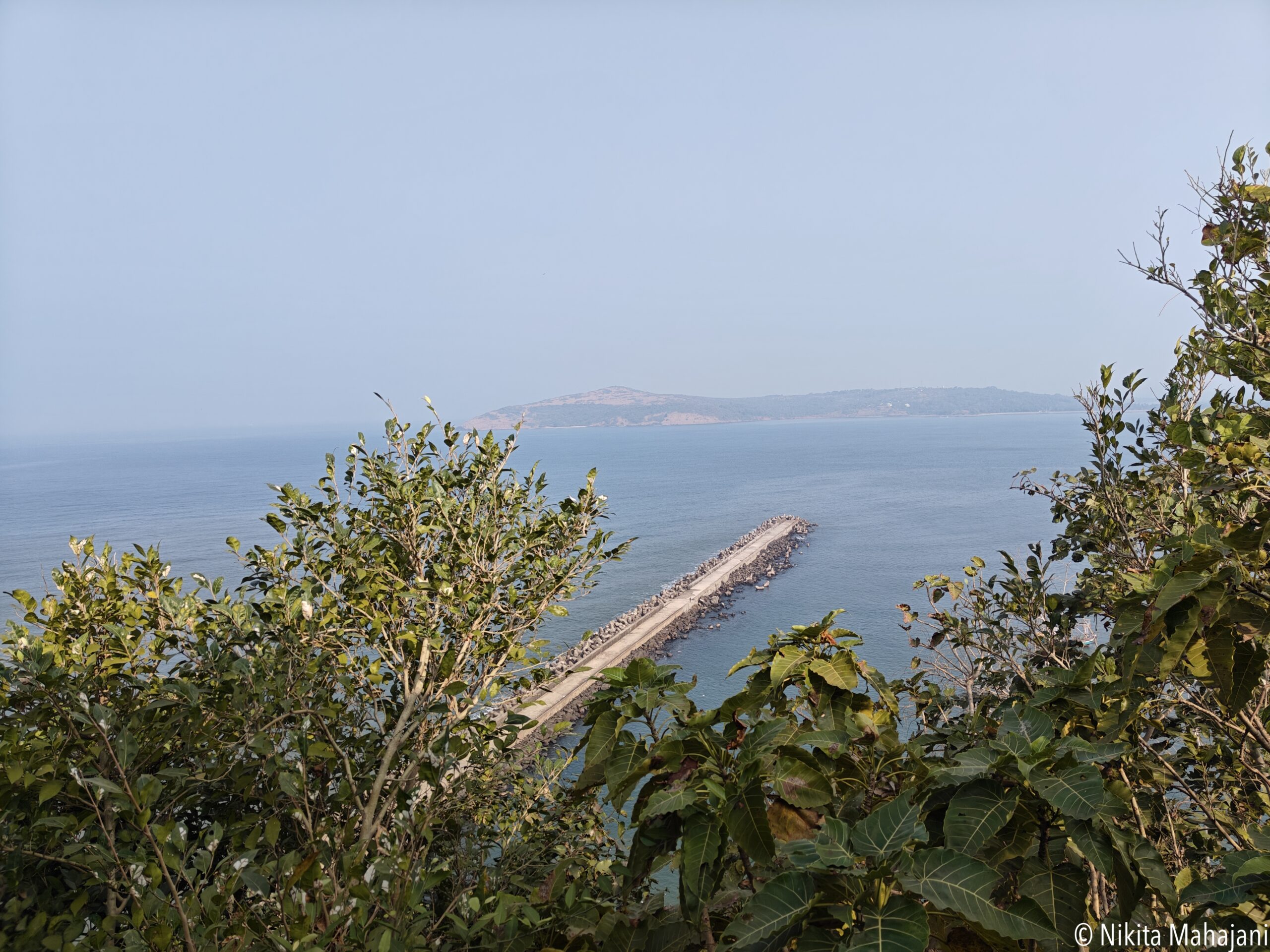
Our next destination was Sangameshwar which was 50kms from Ratnadurga Fort. We had lunch at Hotel Ganesh Krupa, relishing a Konkani thali with solkadhi and modaks. They allowed my pet on request. Apart from the restaurant, they also have a sweet shop and a general store. They have parking and washrooms. A wide variety of modaks are available at their sweet shop. After having lunch, we reached Sapteshwar temple and stepwell in just 15mins.
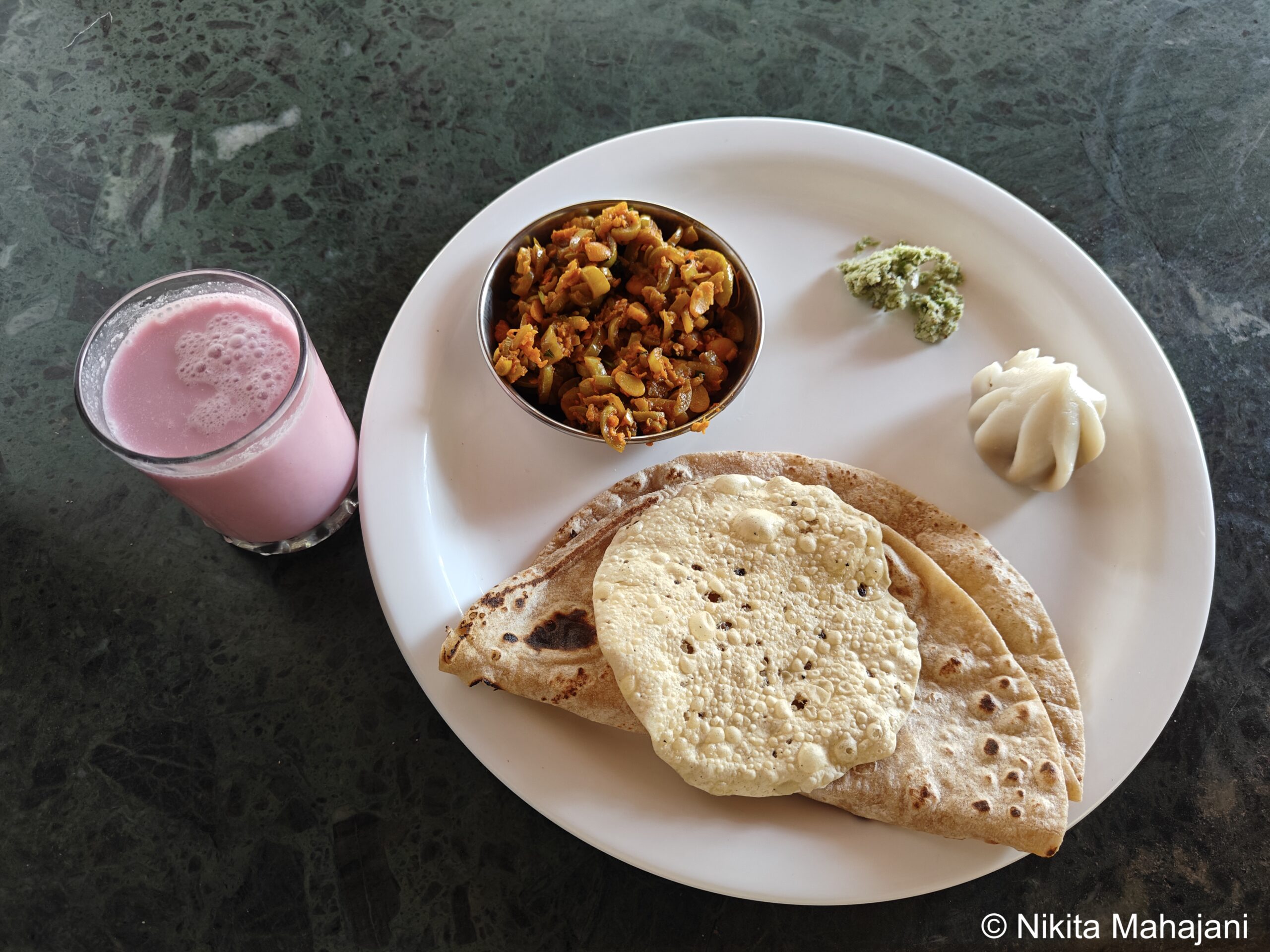
There is a dedicated parking space and washrooms at the entrance of the temple. This is a secluded and serene spot where visitors can immerse themselves in peace and tranquility, making it an ideal setting for self-reflection and personal discovery.
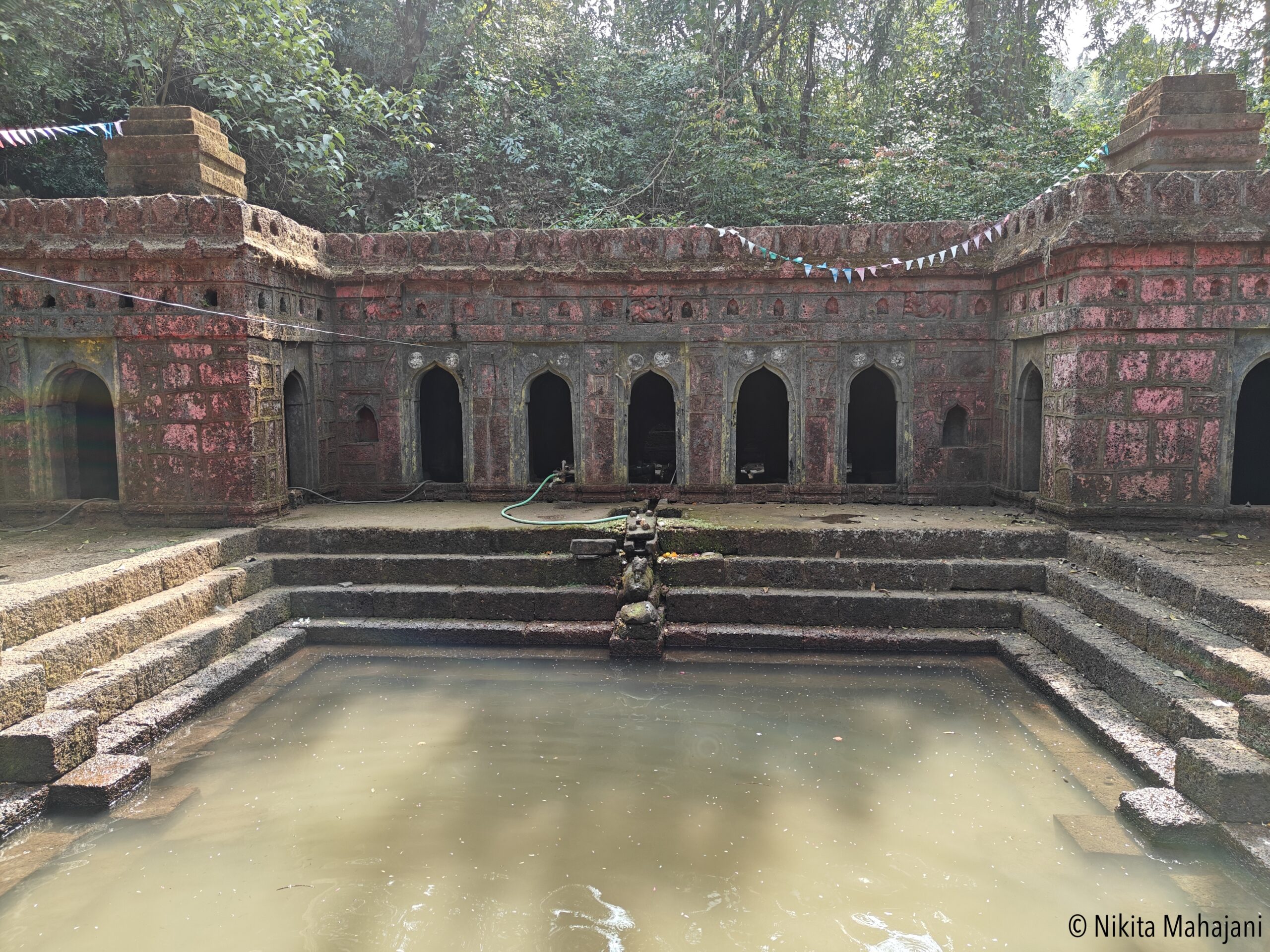
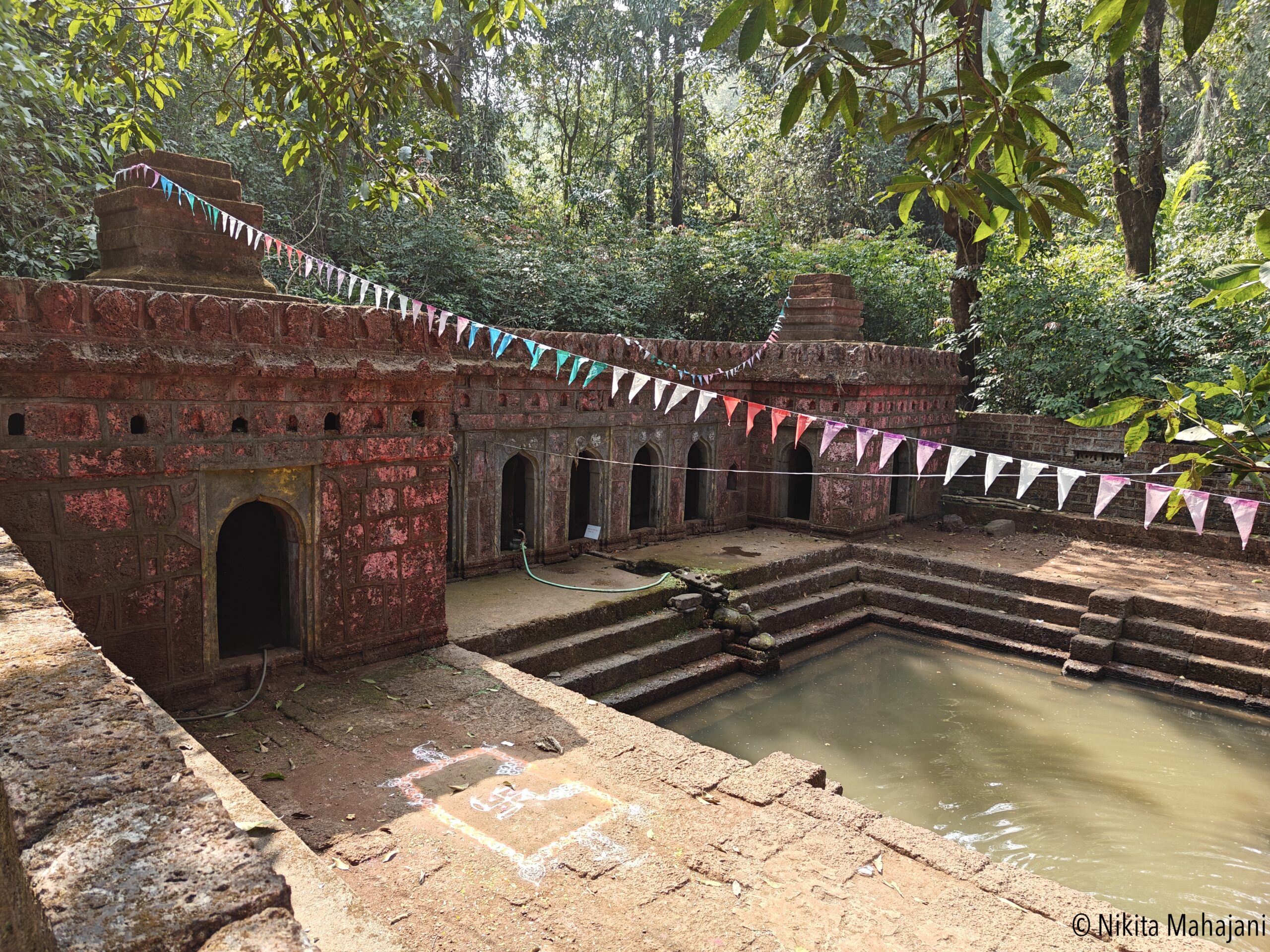
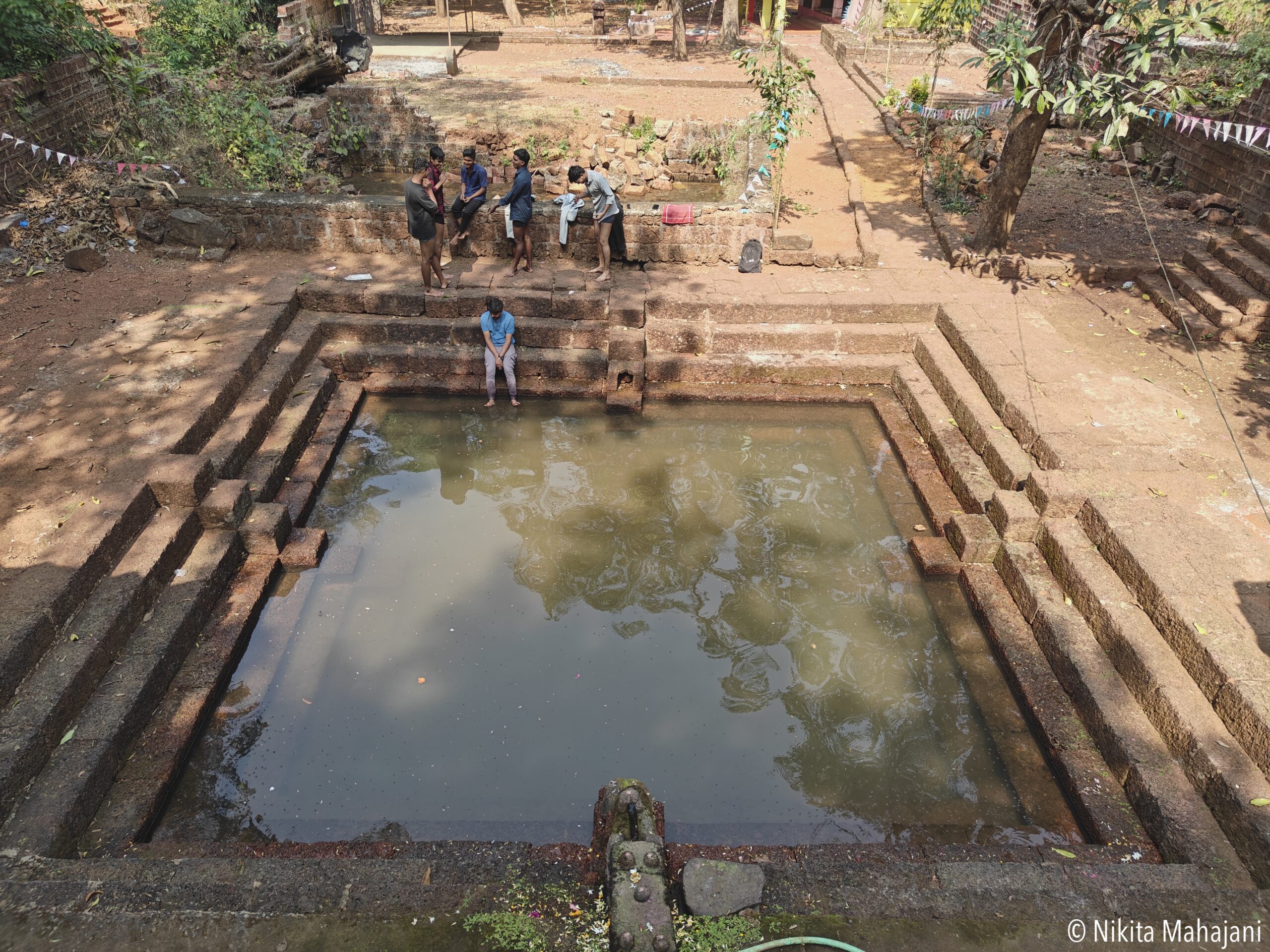
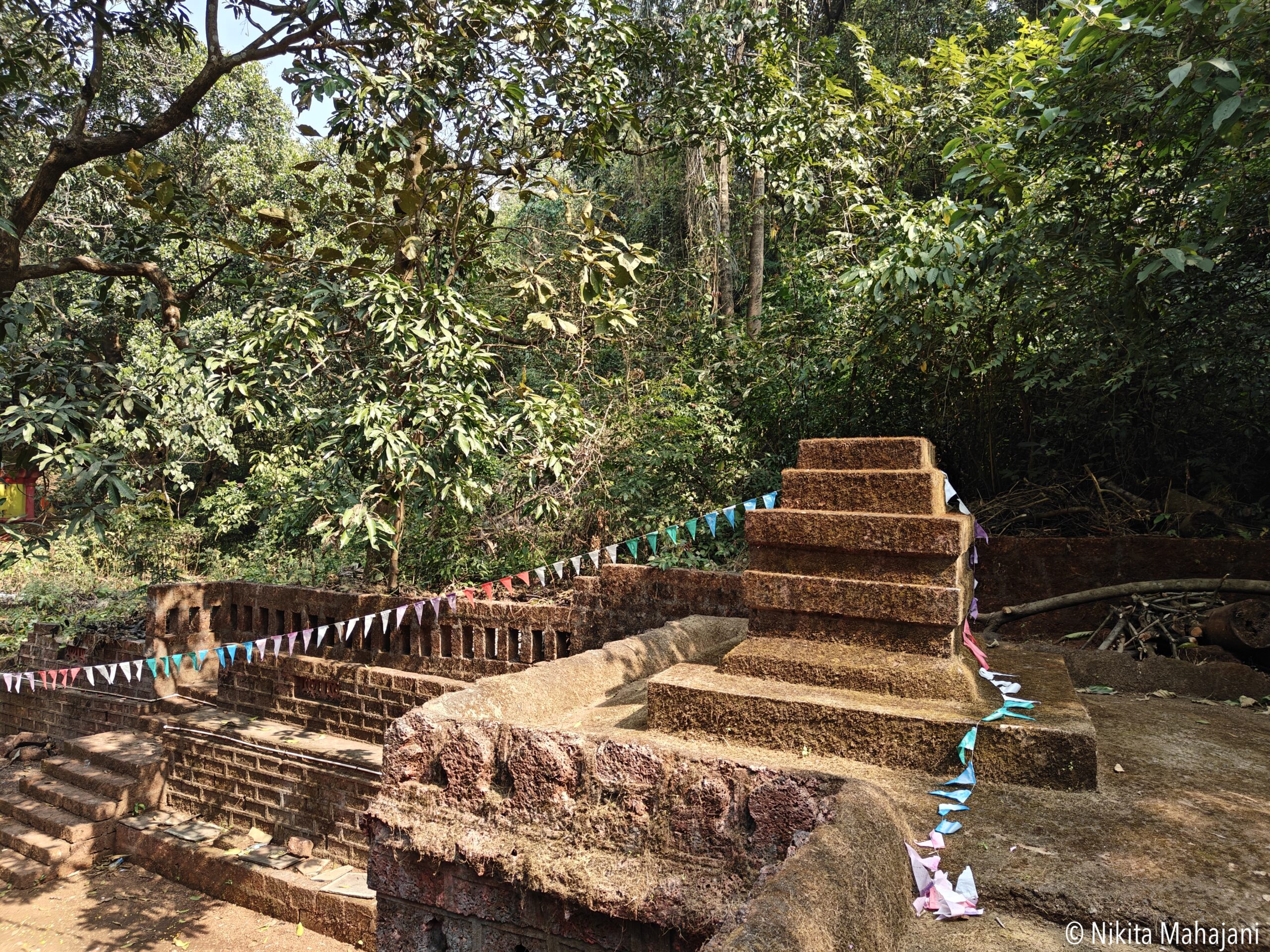
After a drive of 20mins, we reached Shri Karneshwar Temple in Kasba Sapteshwar. There is parking and washroom facility available. I just parked my car in the open space in front of the adjacent Shree Laxmi Nrusinha Mandir. Pets are allowed in the premises of the temple but not inside the temple. The temple has beautiful carvings depicting Ashtadikpals (gods of 8 directions), keertimukha, bharvaah devta, gadhegal, dashaavtar, dwarpals, etc. The plinth of the temple is star shaped like the Hoysala temples. The shikhar of the temple is built in the Shekhari stye.
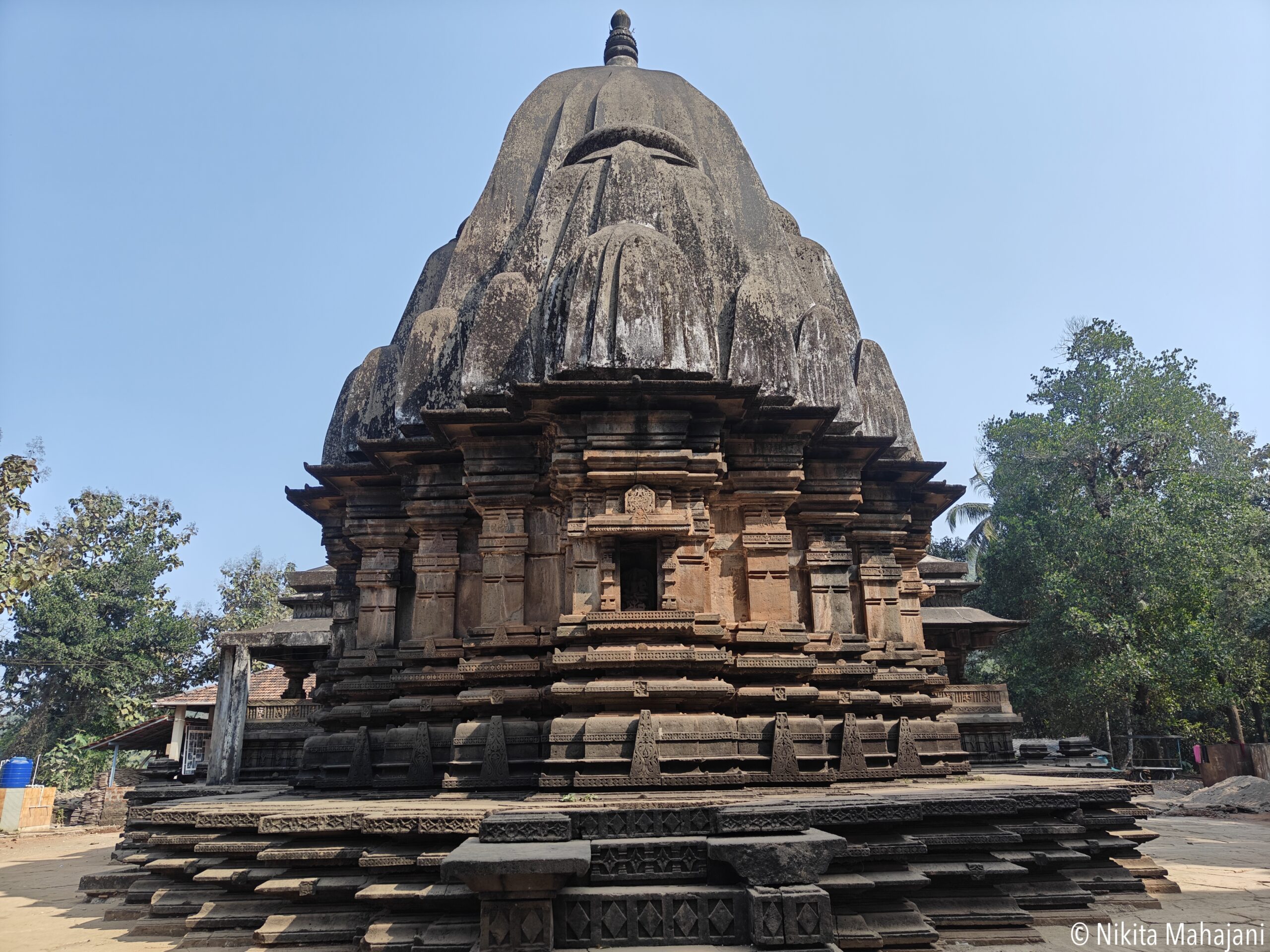
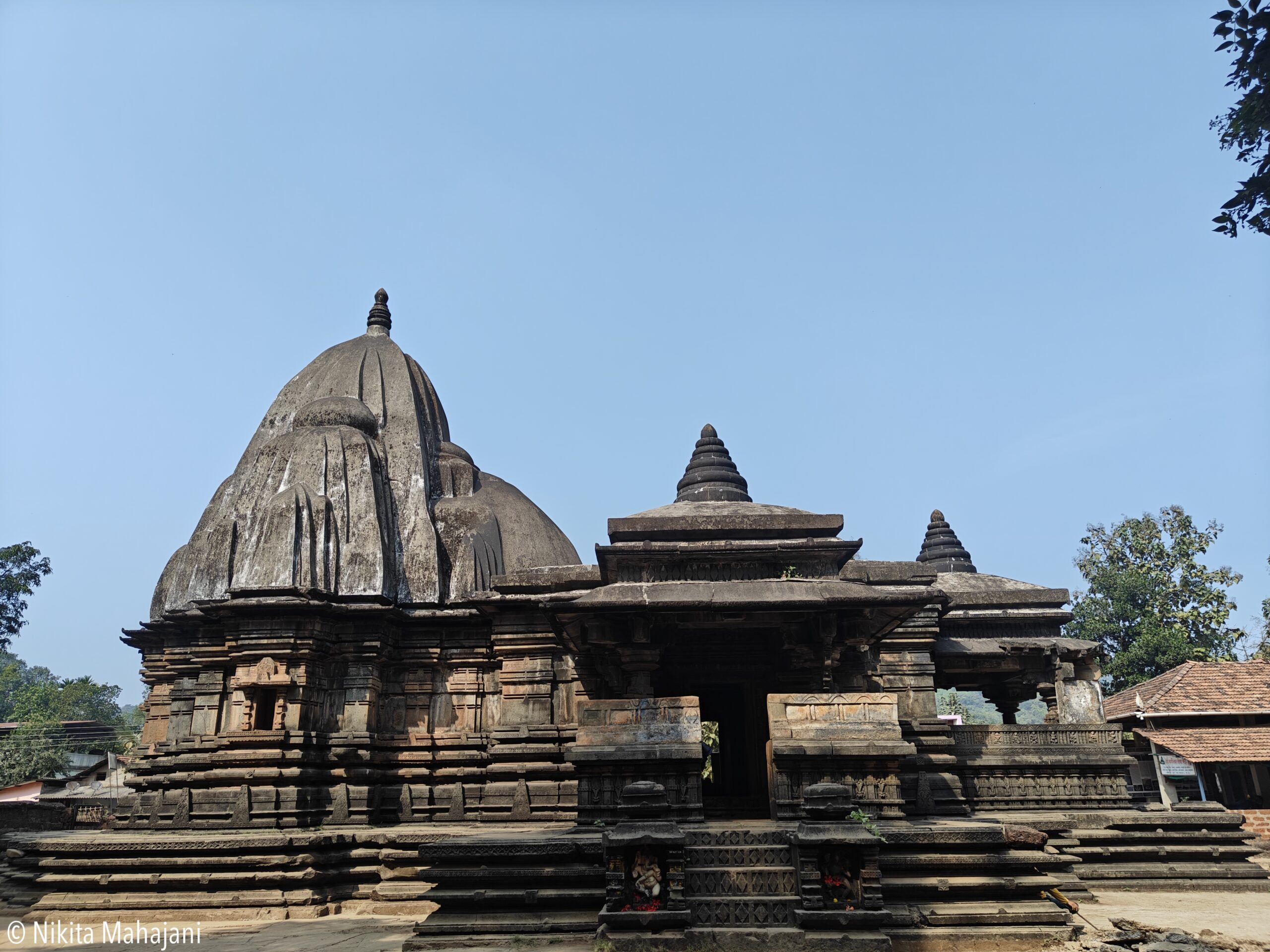
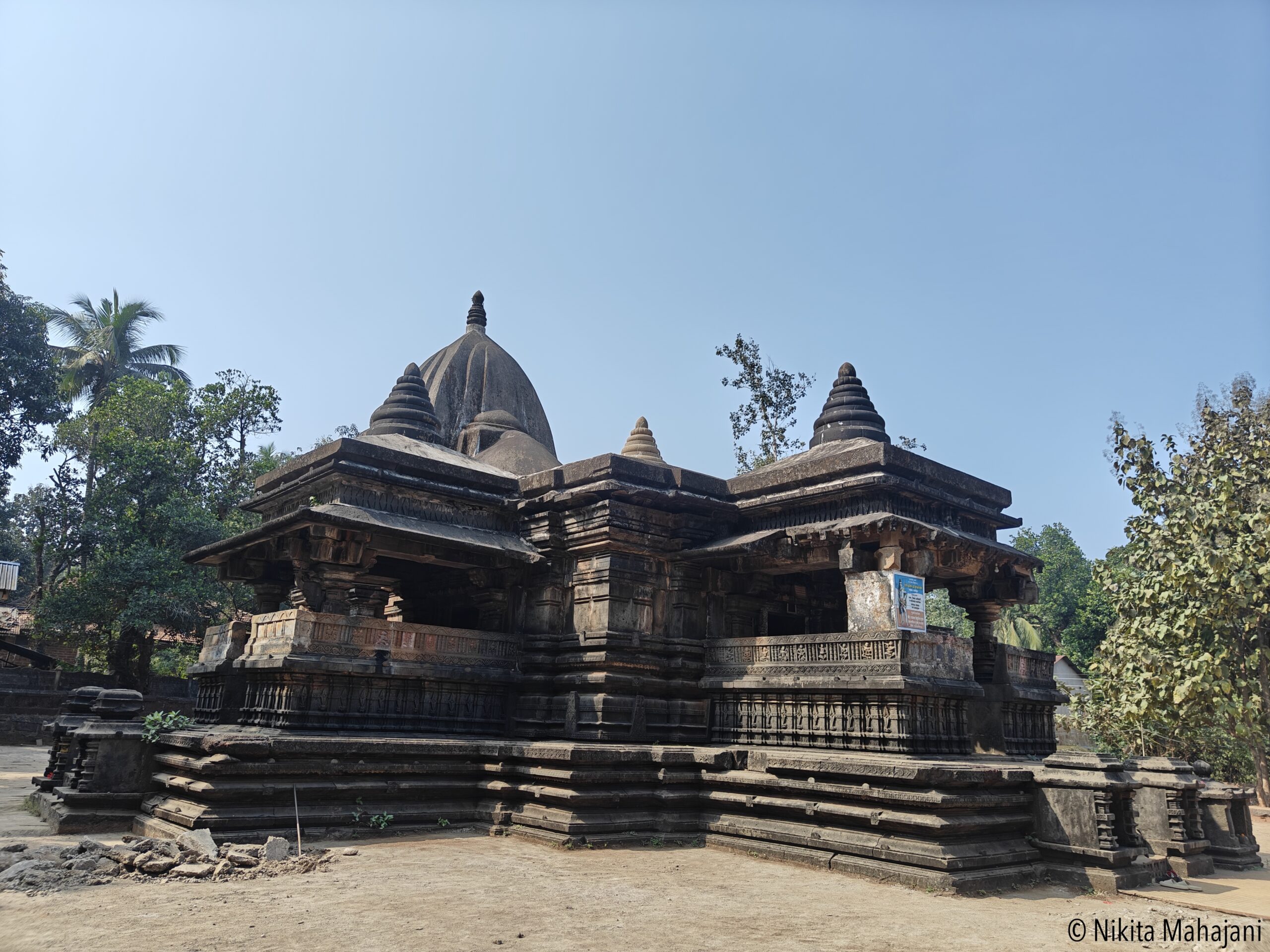
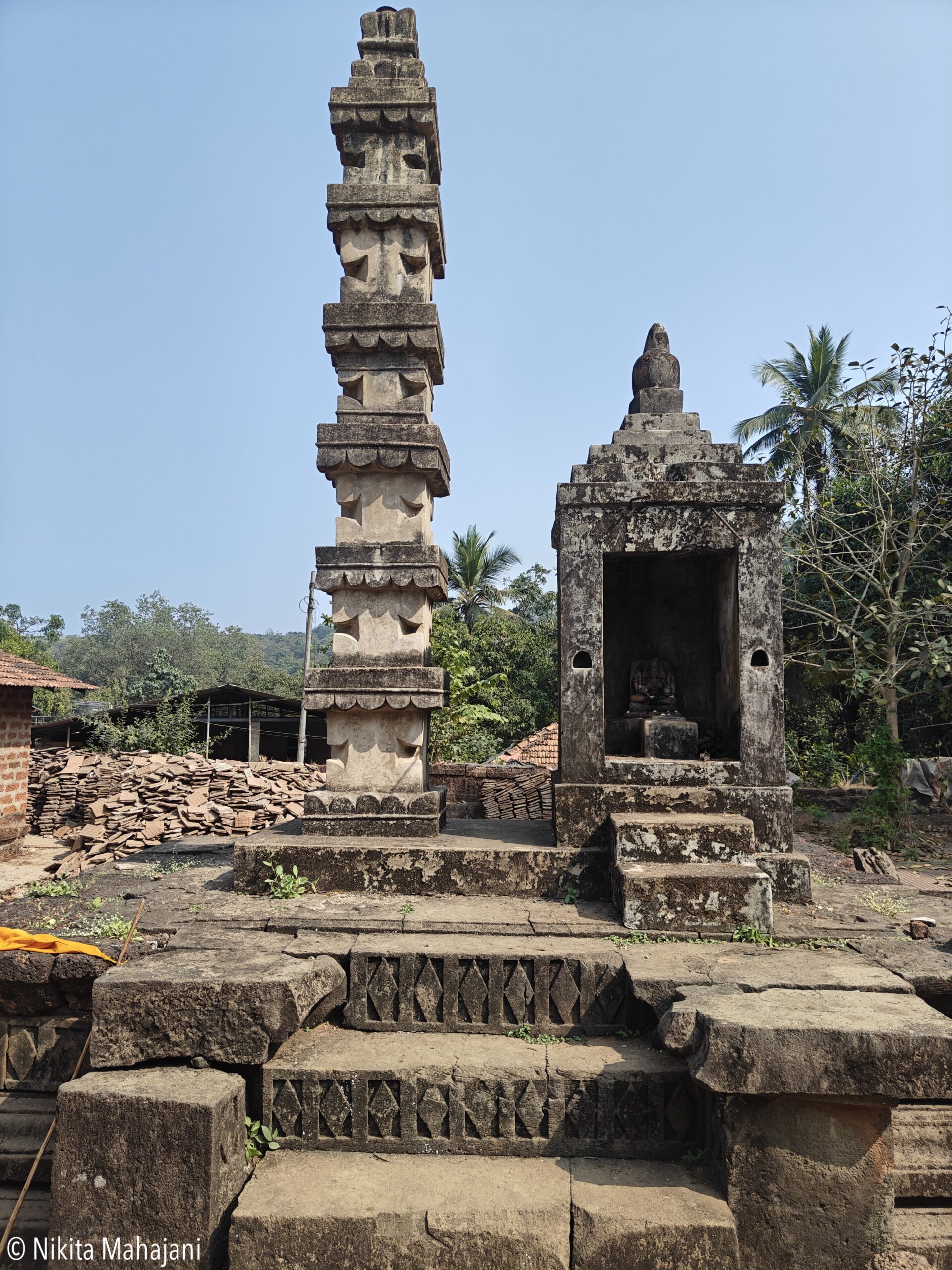
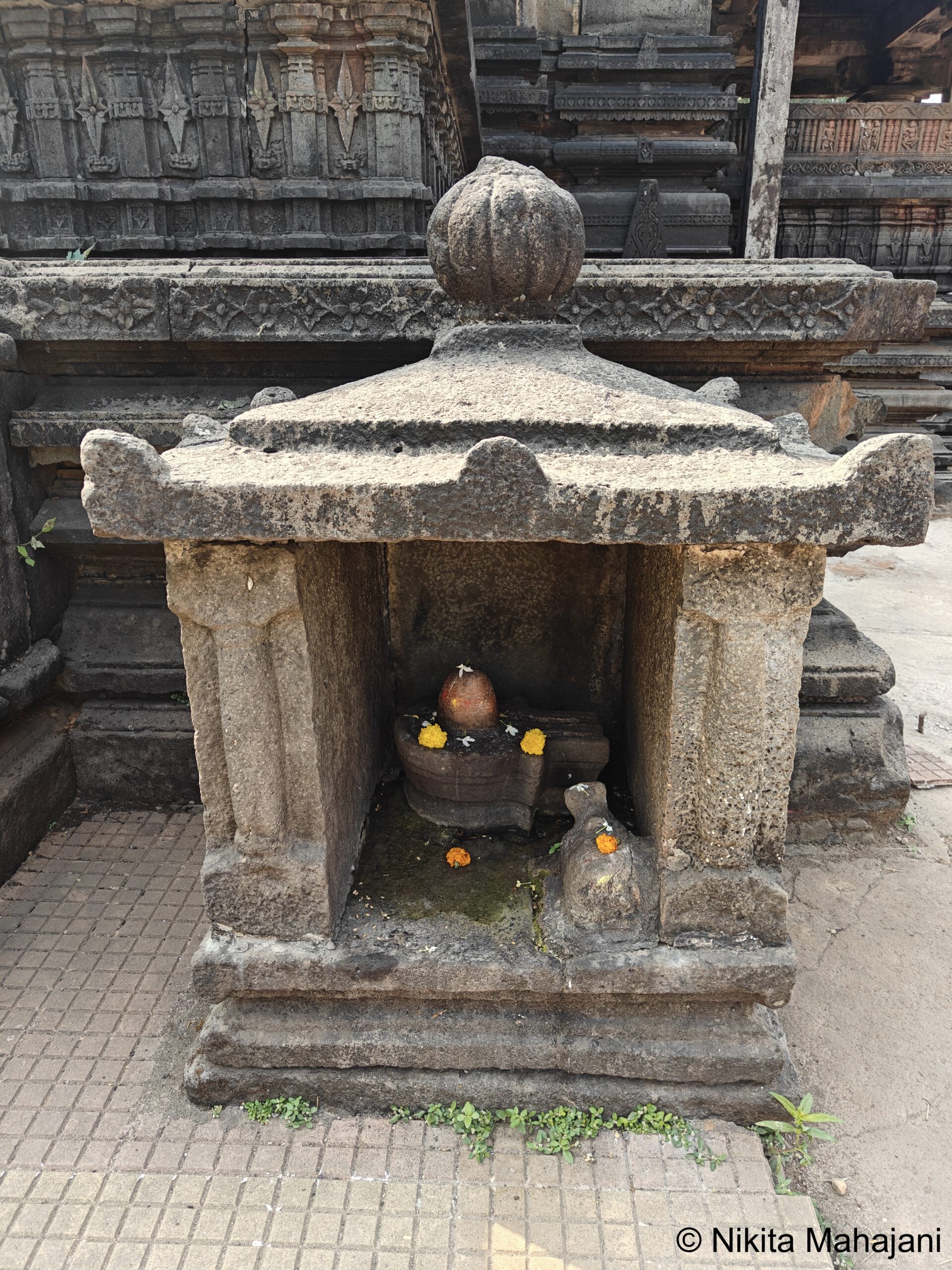
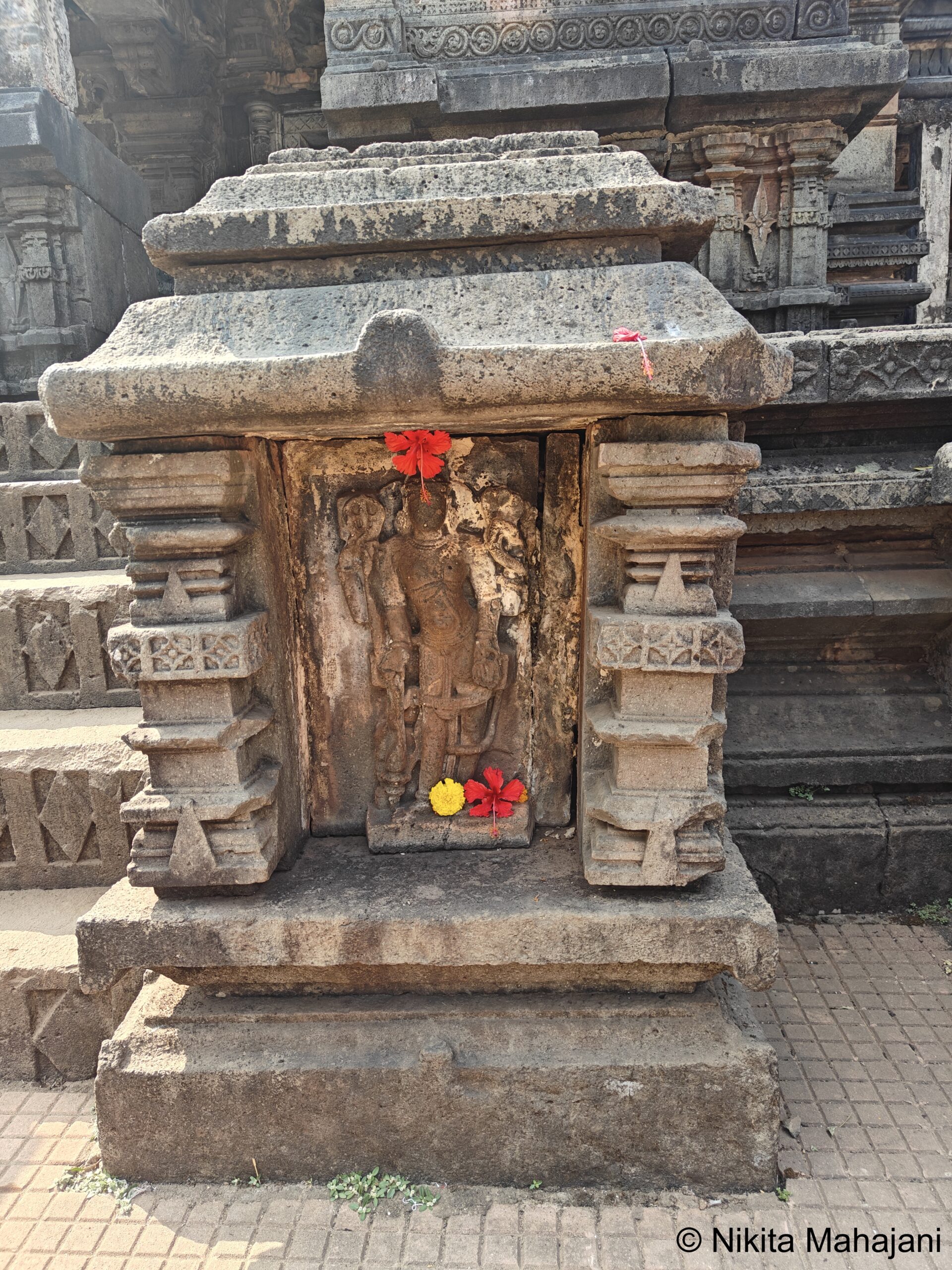
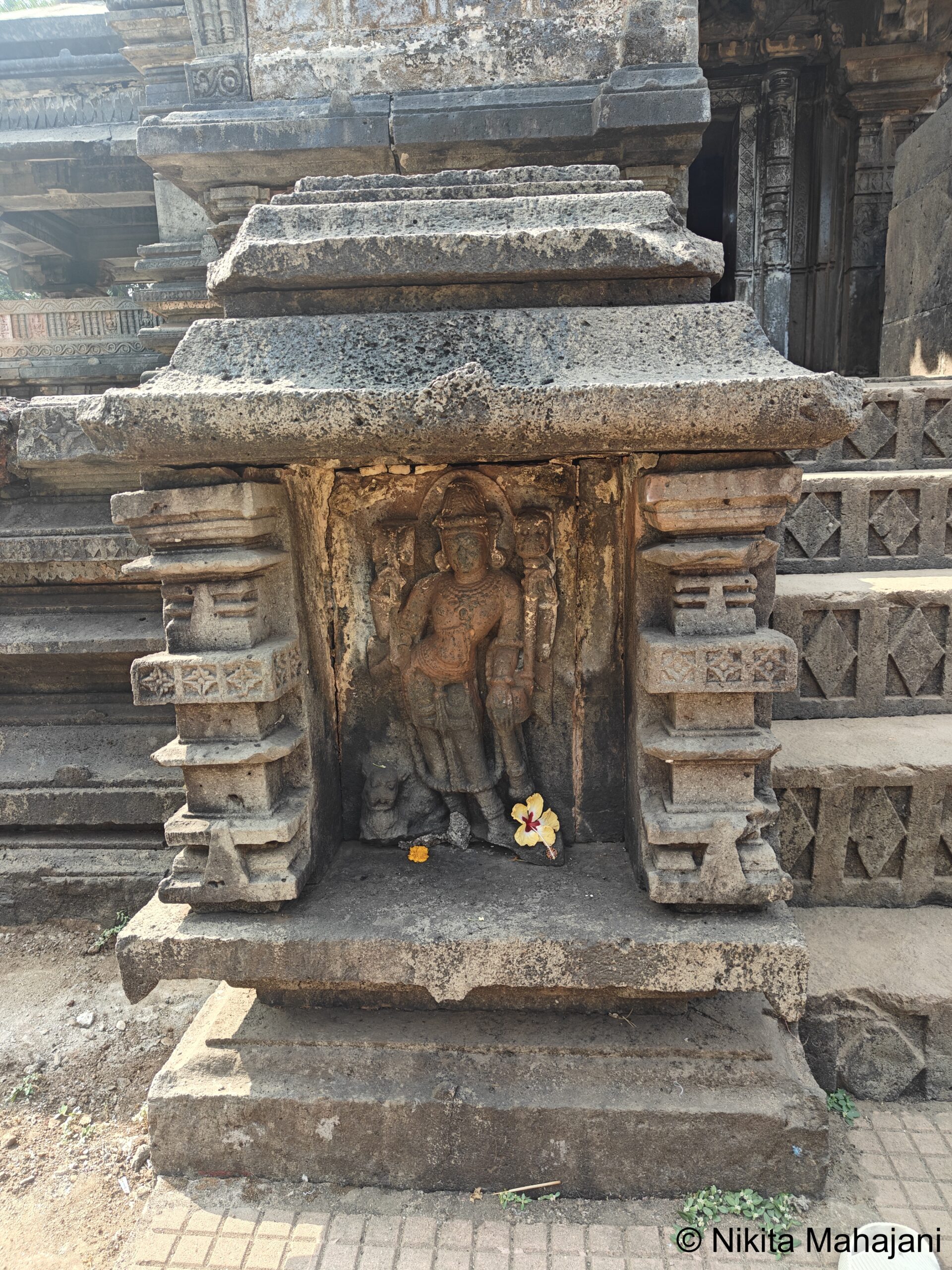
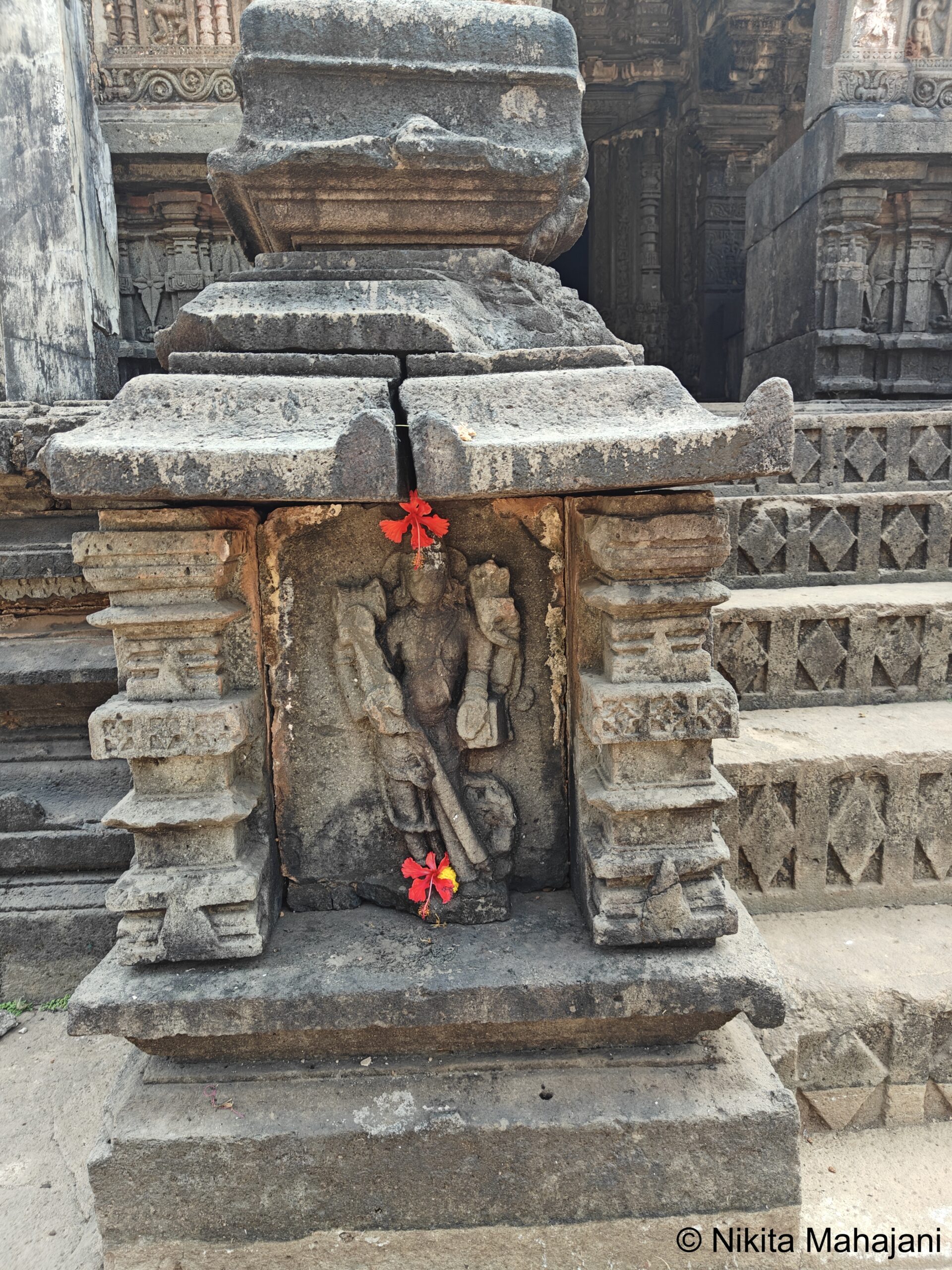
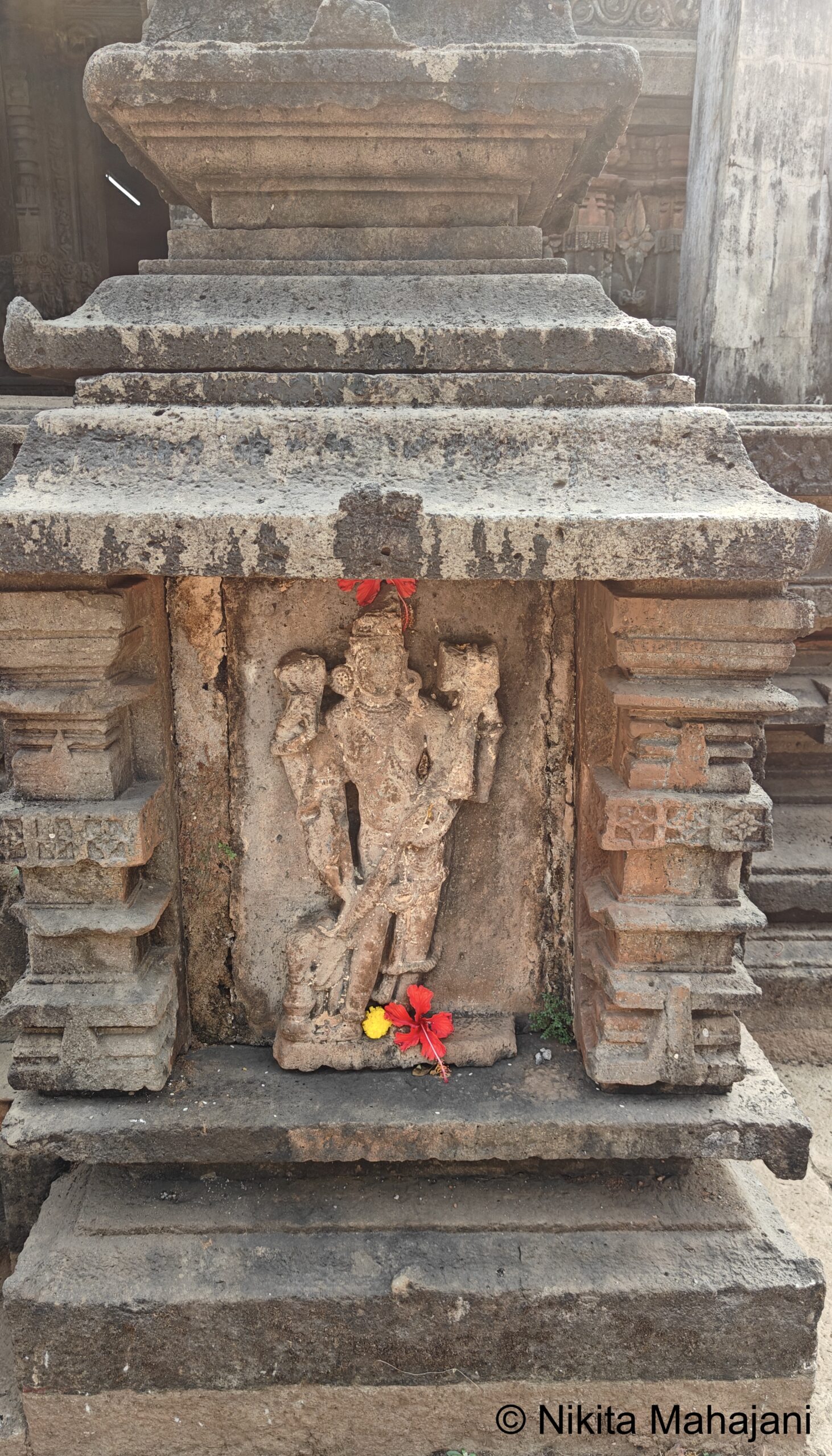
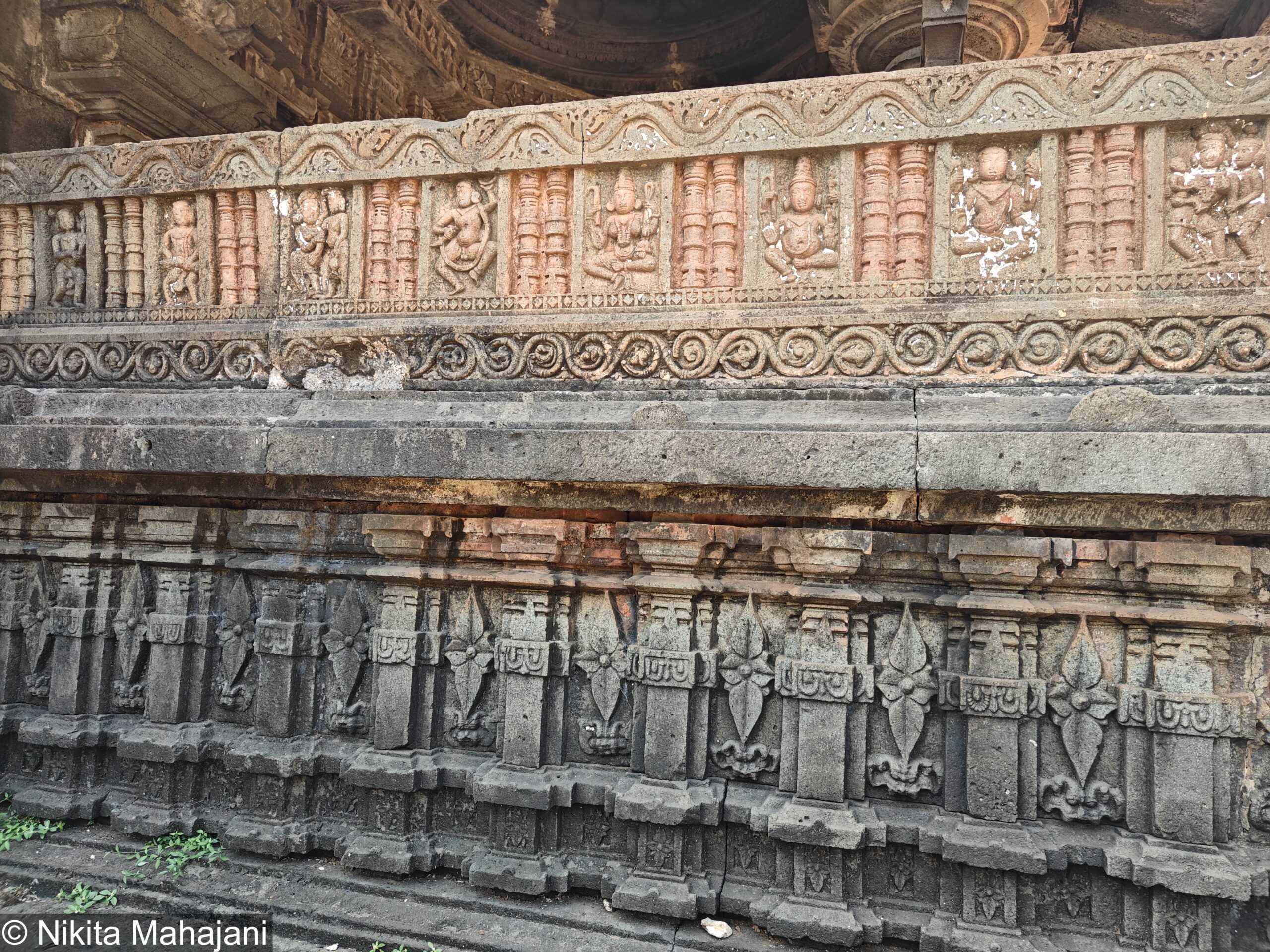
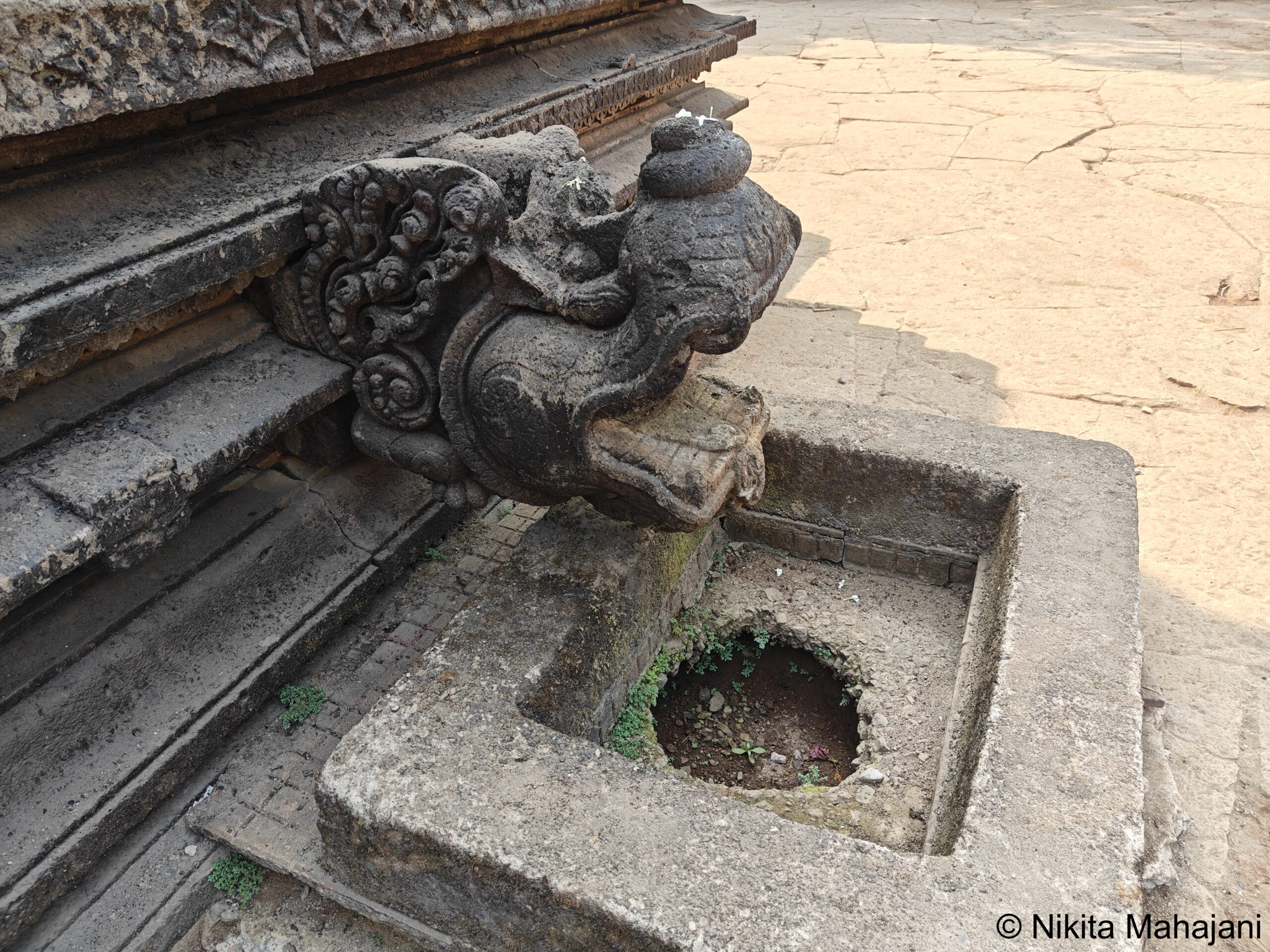
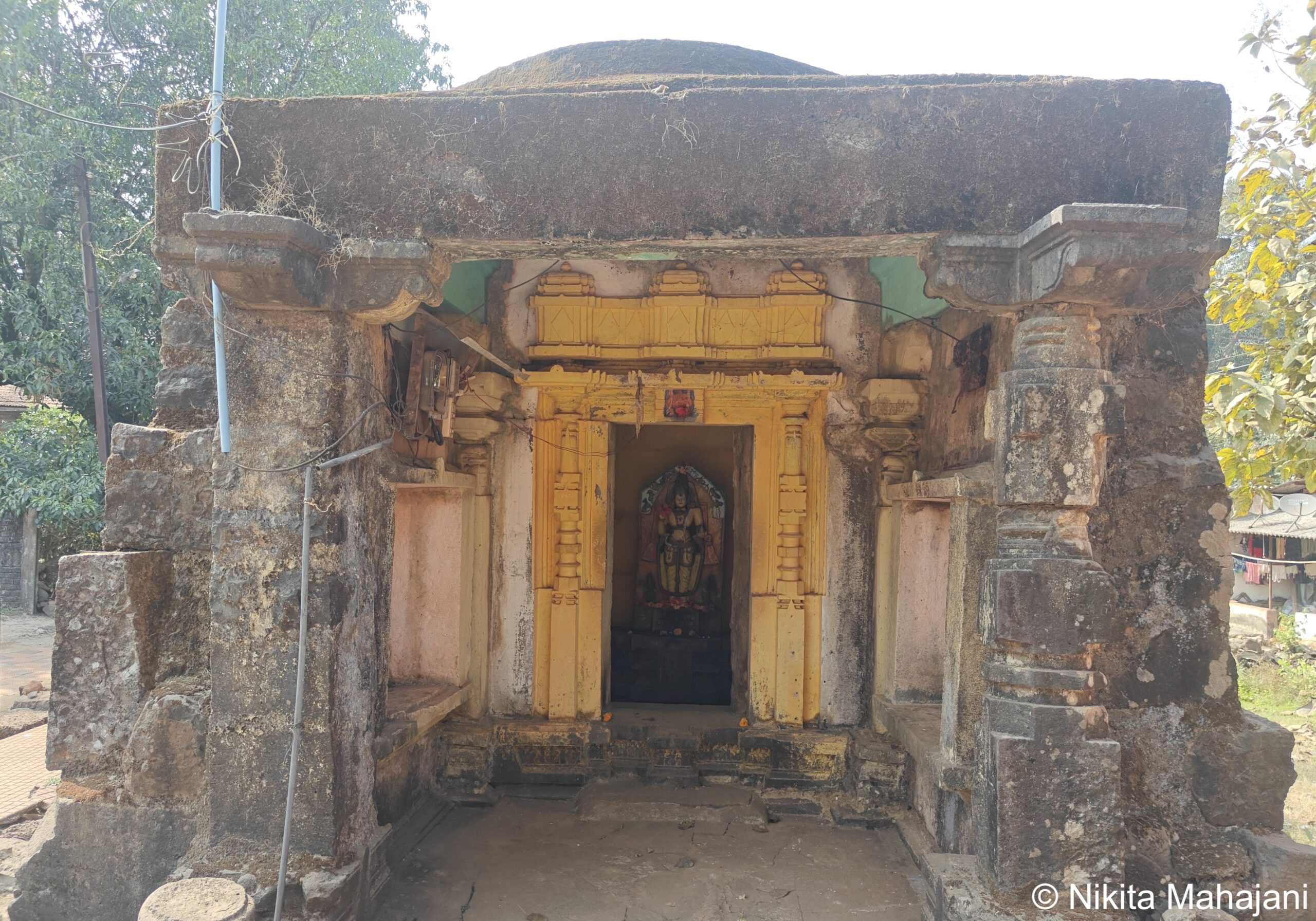
The Sangameshwar temple is situated at a 2 mins walking distance from Karneshwar temple. One needs to cross a pedestrian bridge to reach the Sangameshwar temple. It is constructed on the banks of a stream that begins from Umare Dam. There are some ghats (stepped seating) next to the temple.
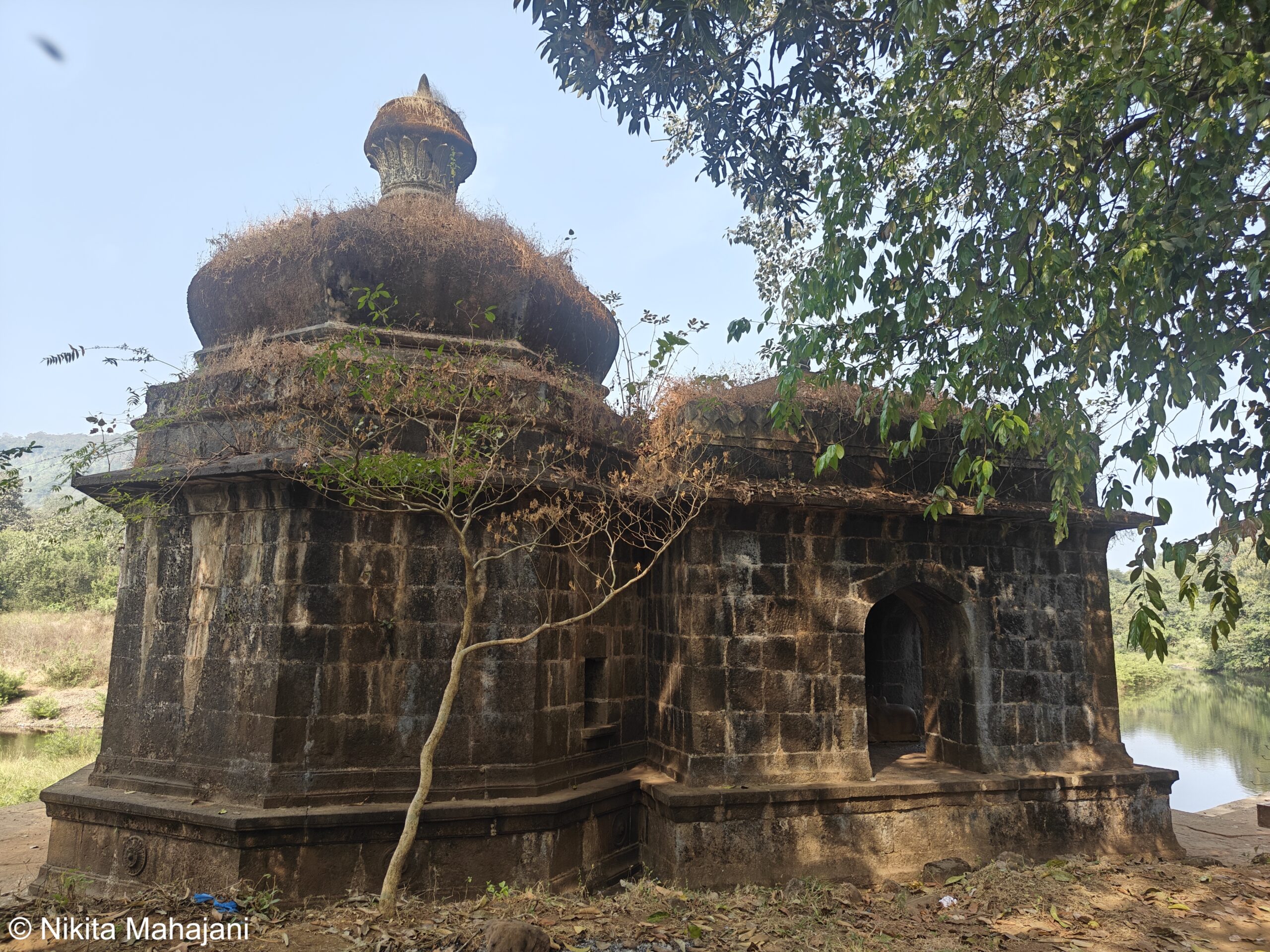
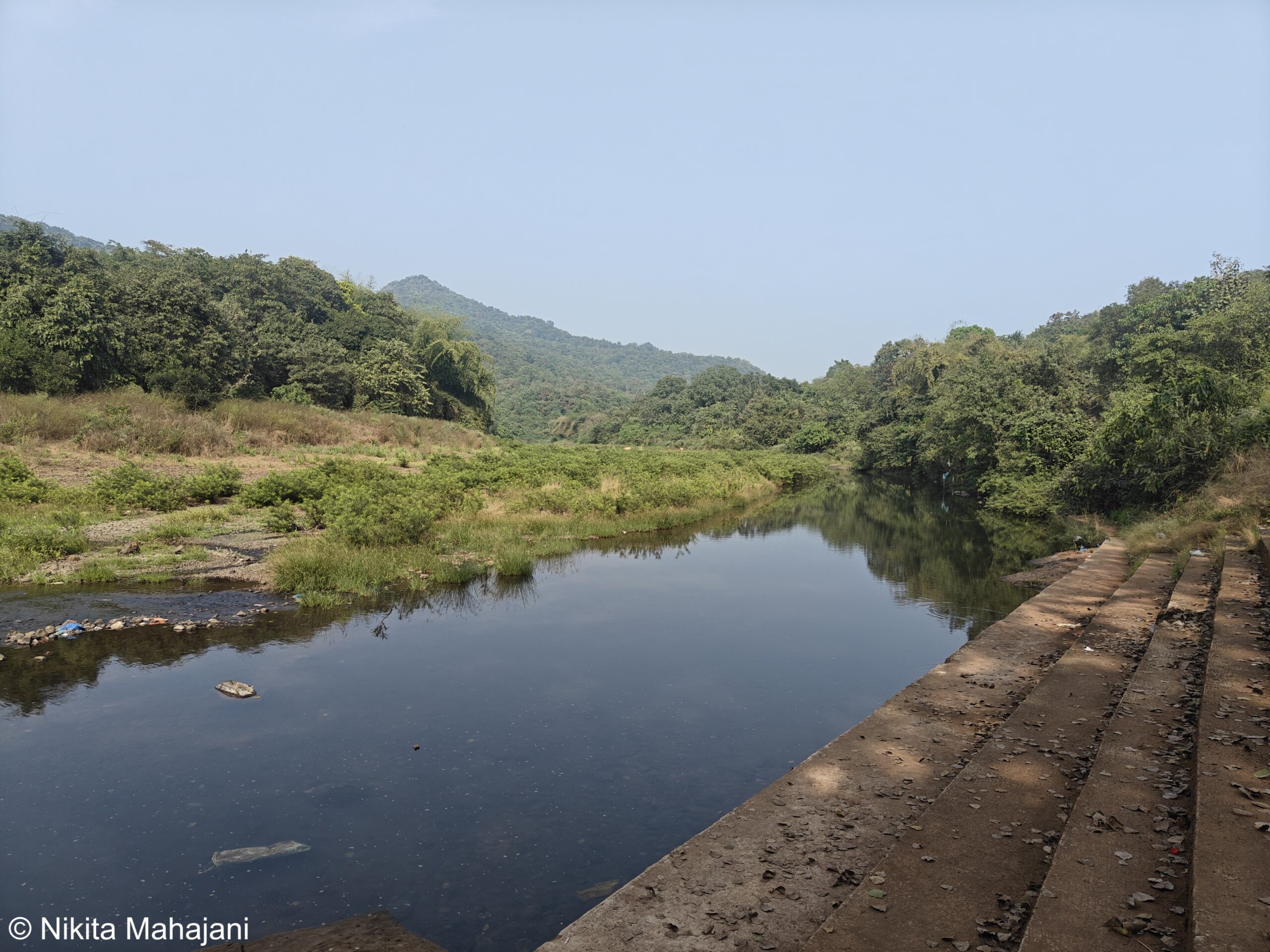
The highlight of the day was discovering three hidden Shiva Temples in a jungle near Sardesai Wada—a serene experience perfect for Sophie’s exploratory spirit. The site is in a state of ruin, with no informational boards or signage. Hidden deep within the forest behind Sardesai Wada are three ancient temples. A friendly black stray dog guided us through the dense greenery to reach them. These historic temples are best visited in winter or summer, as heavy monsoon rains make access challenging.
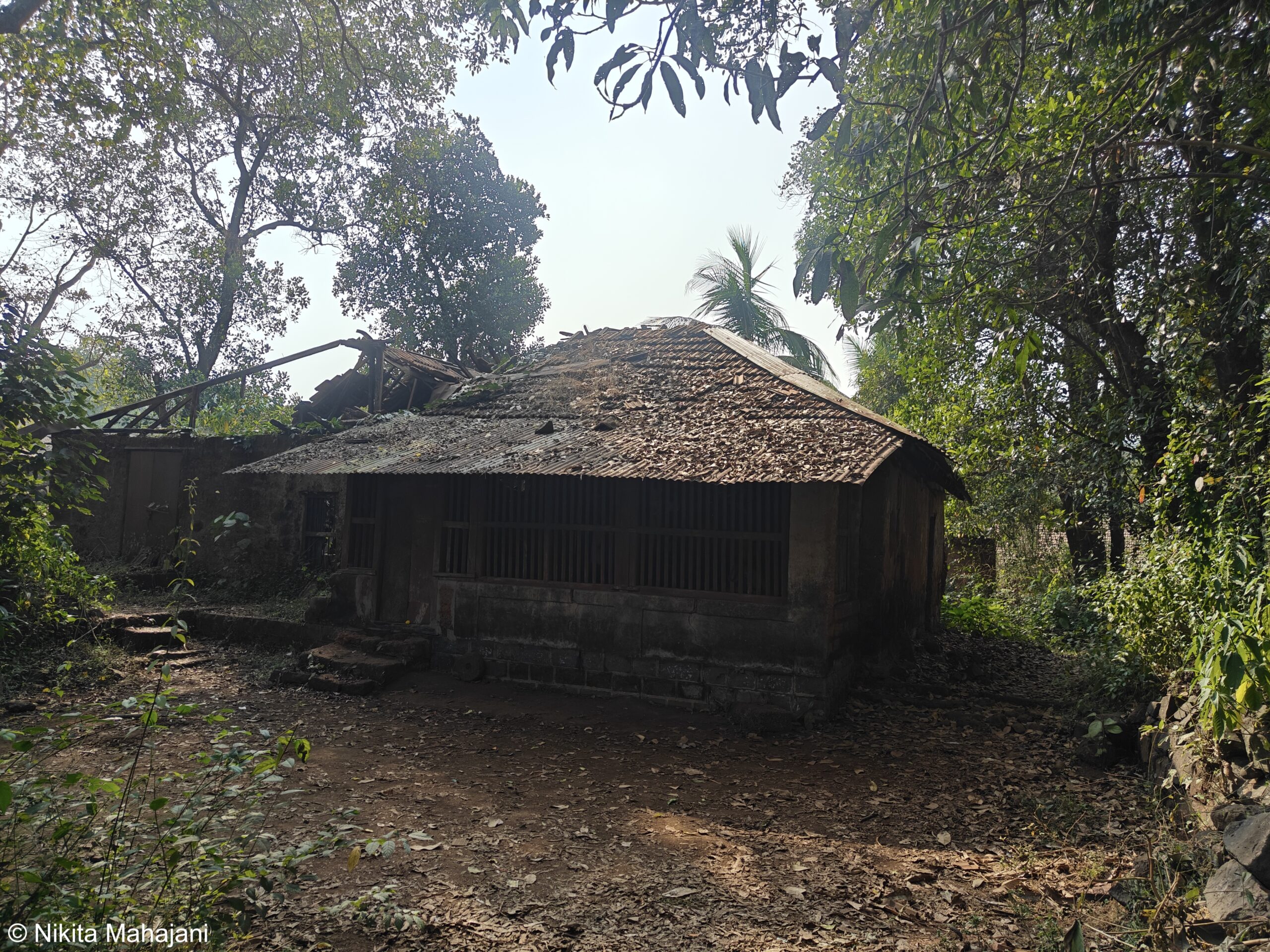
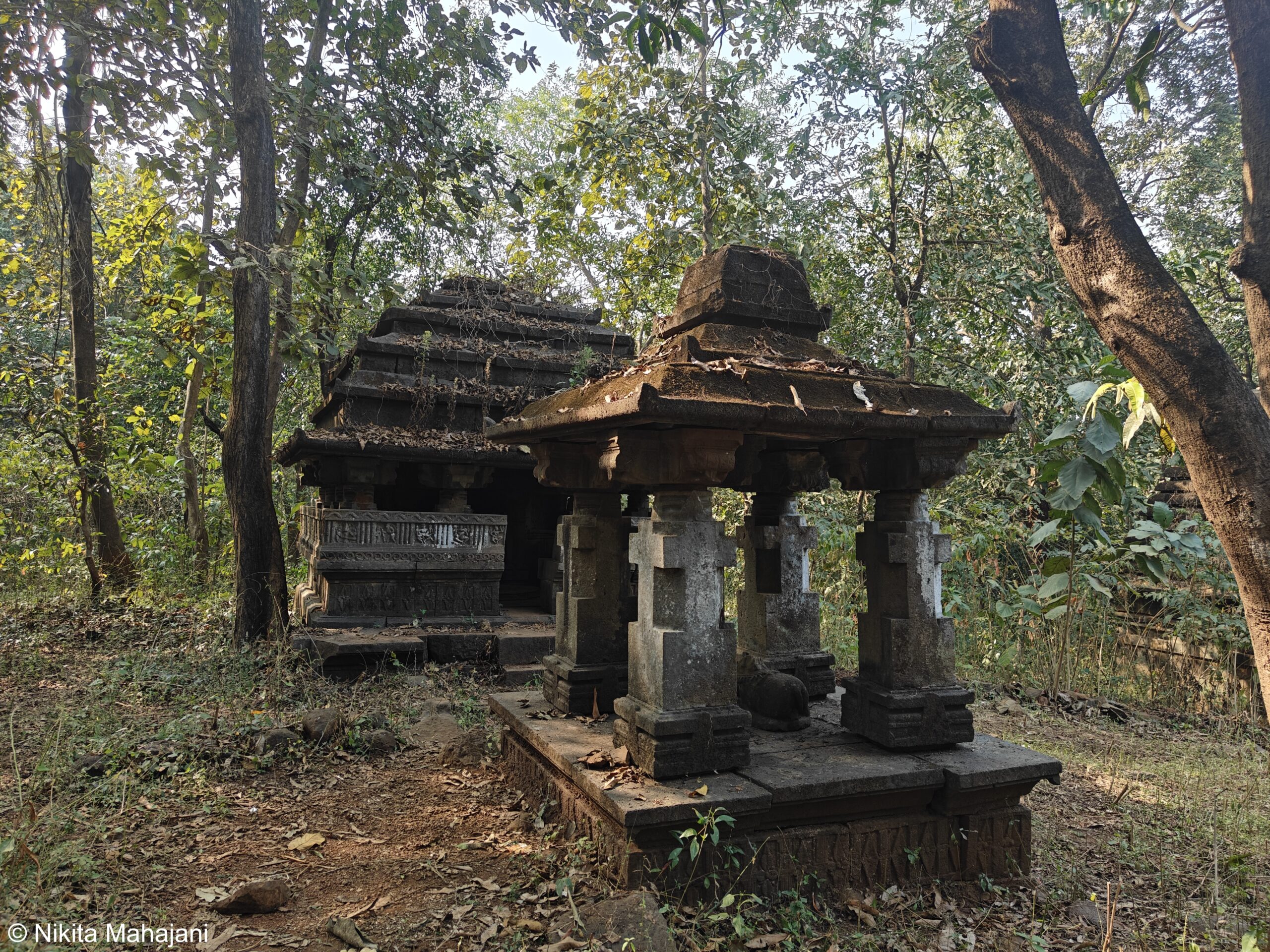
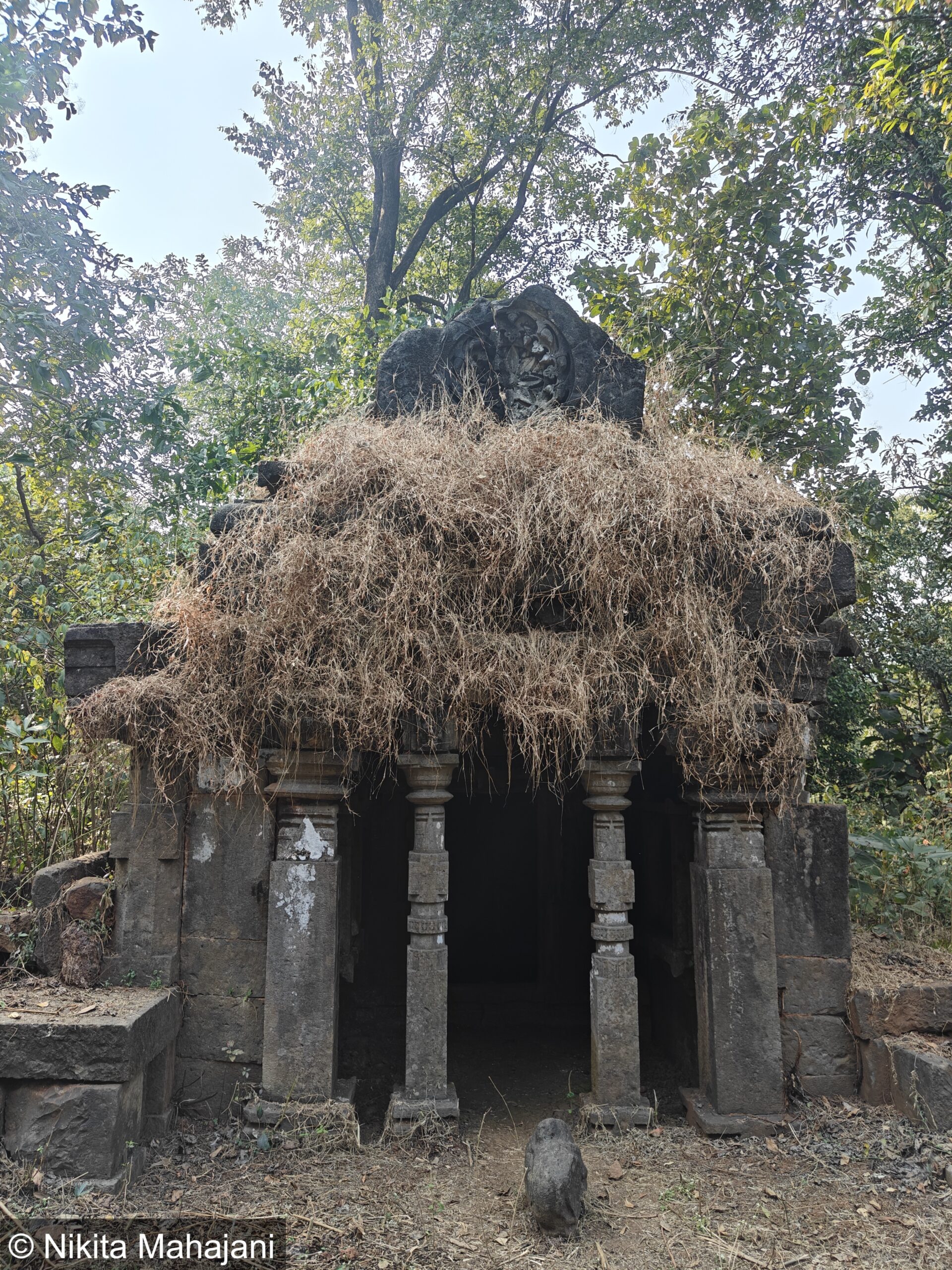
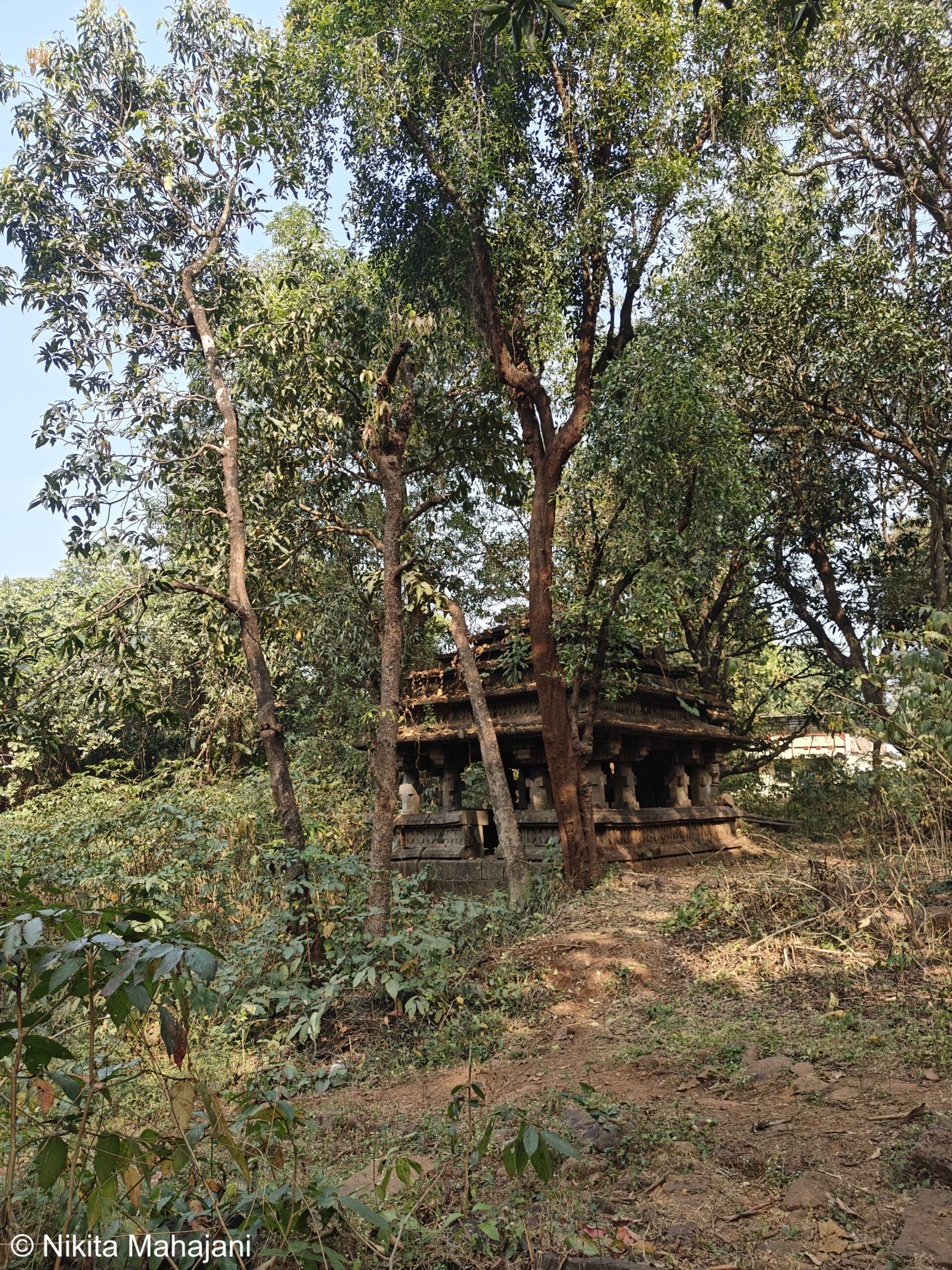
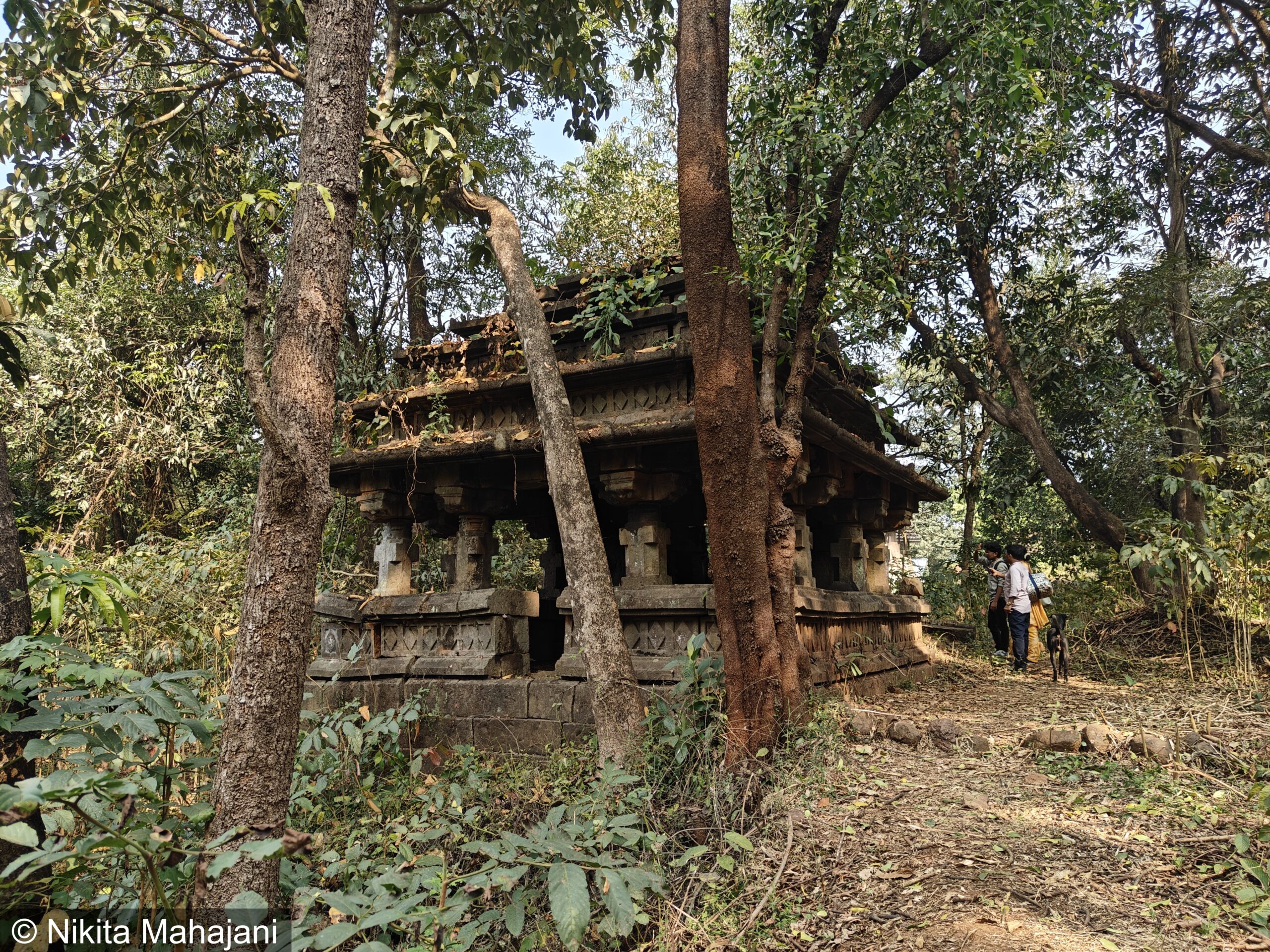
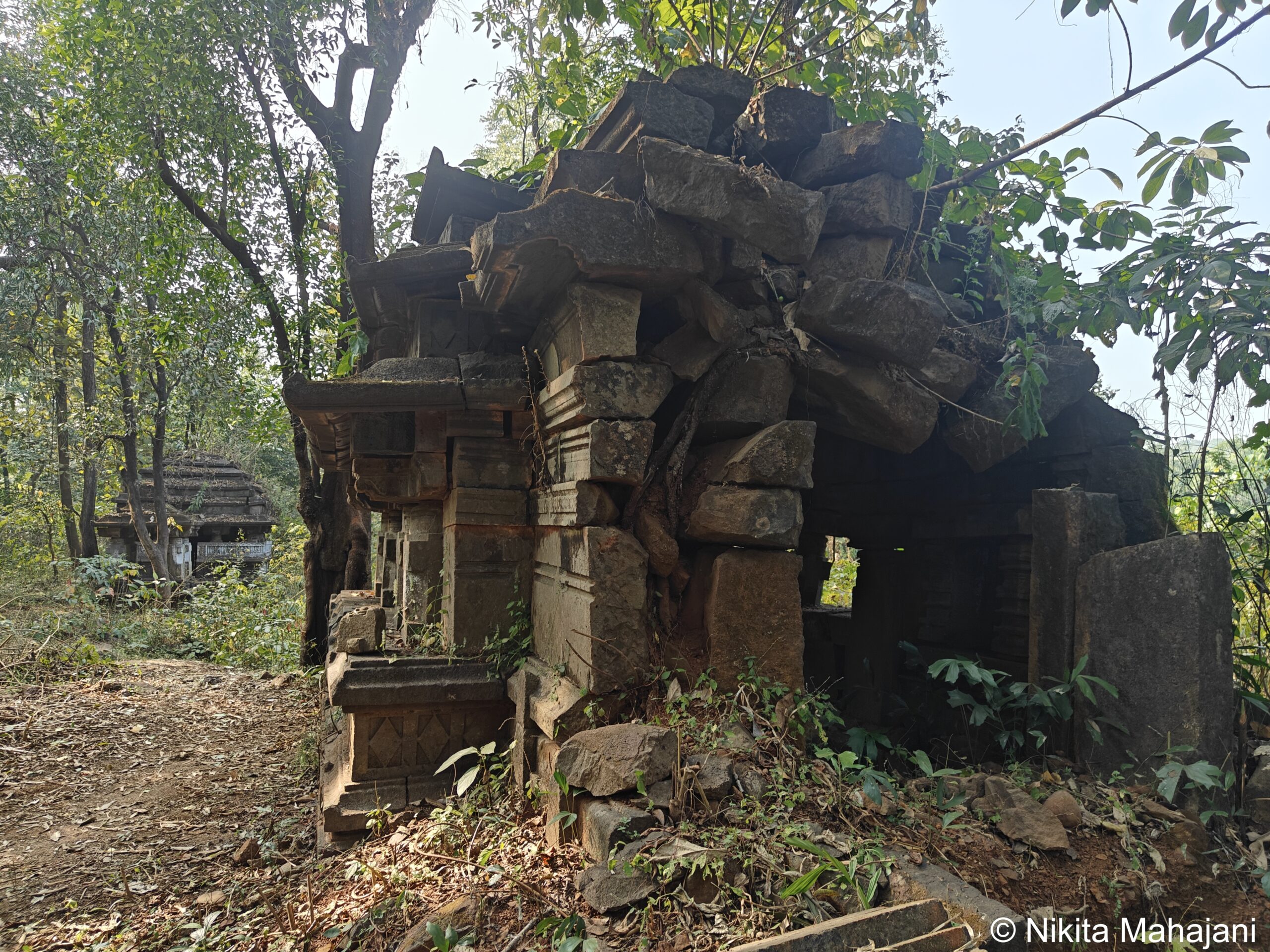
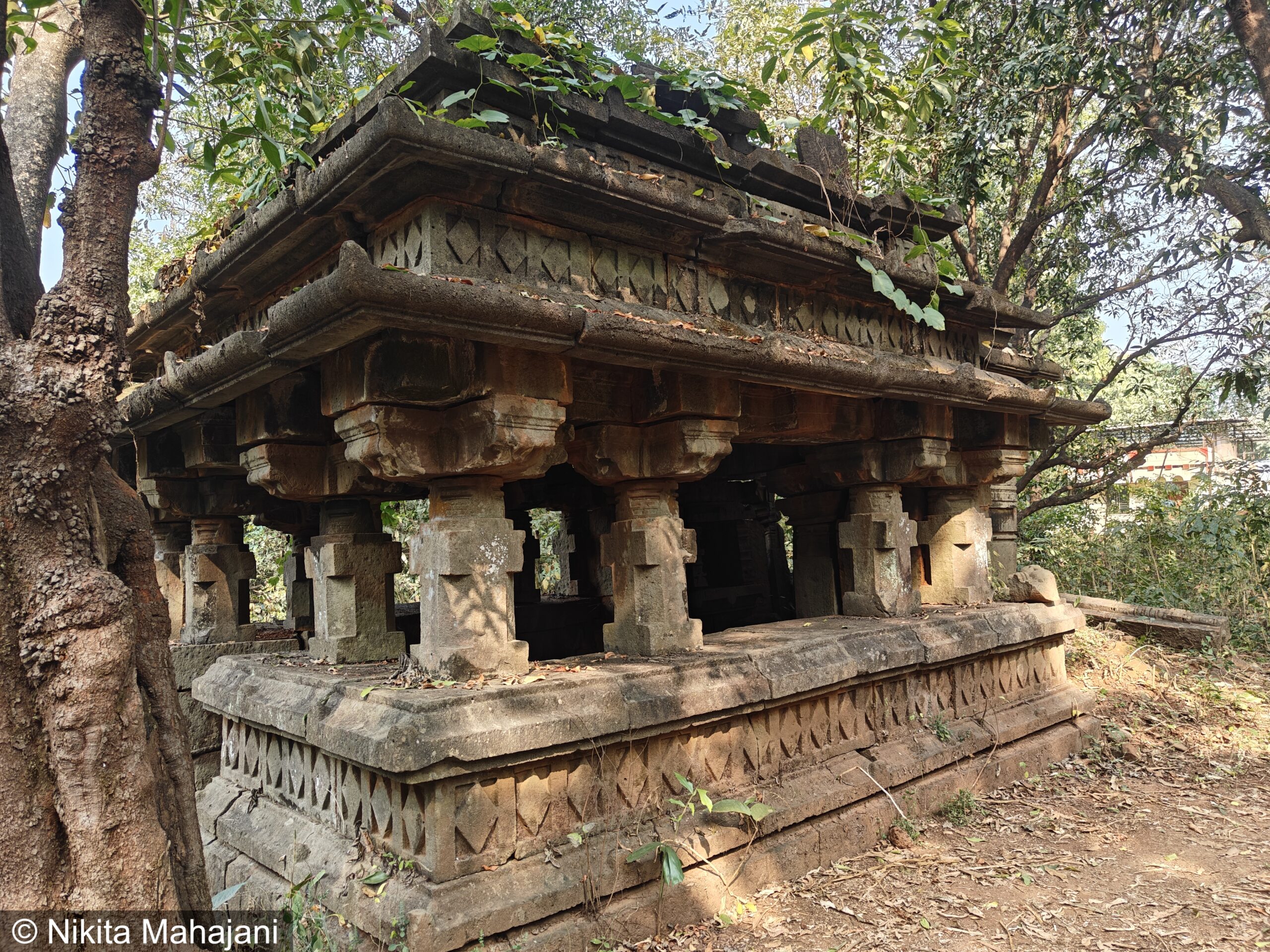
The next couple of temples that we visited are half kilometer away from Sardesai wada. The Someshwar Temple and the nearby Kashi Vishweshwar Temple are among the most stunning temples in Kasaba, reflecting the grandeur of our glorious past. Unfortunately, they are in a dilapidated and precarious state, making it unsafe to enter. Due to the marshy land surrounding the site, we couldn’t approach the temples closely. However, there is a large open space across the road where visitors can park their vehicles and admire the temples from a safe distance.
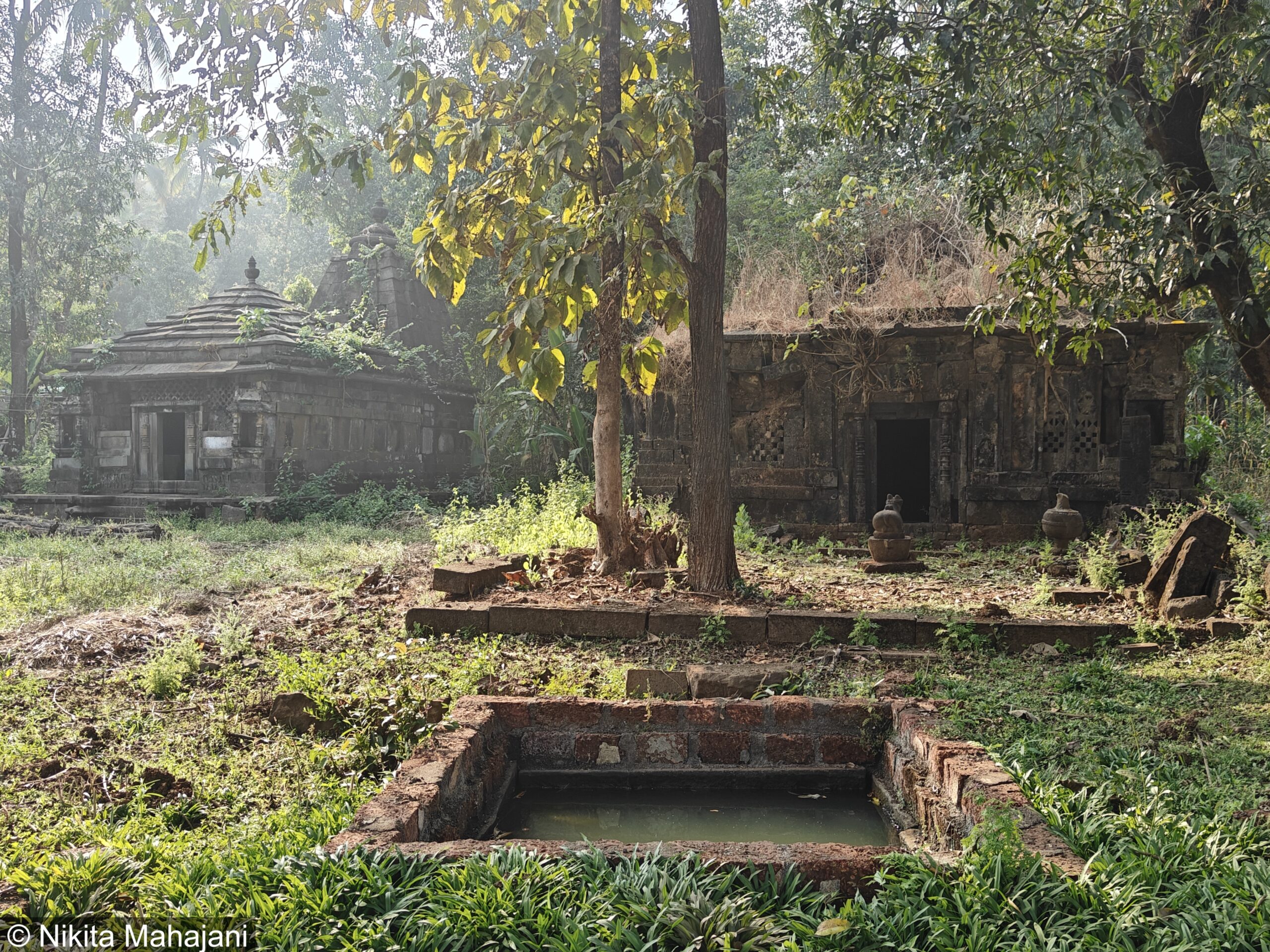
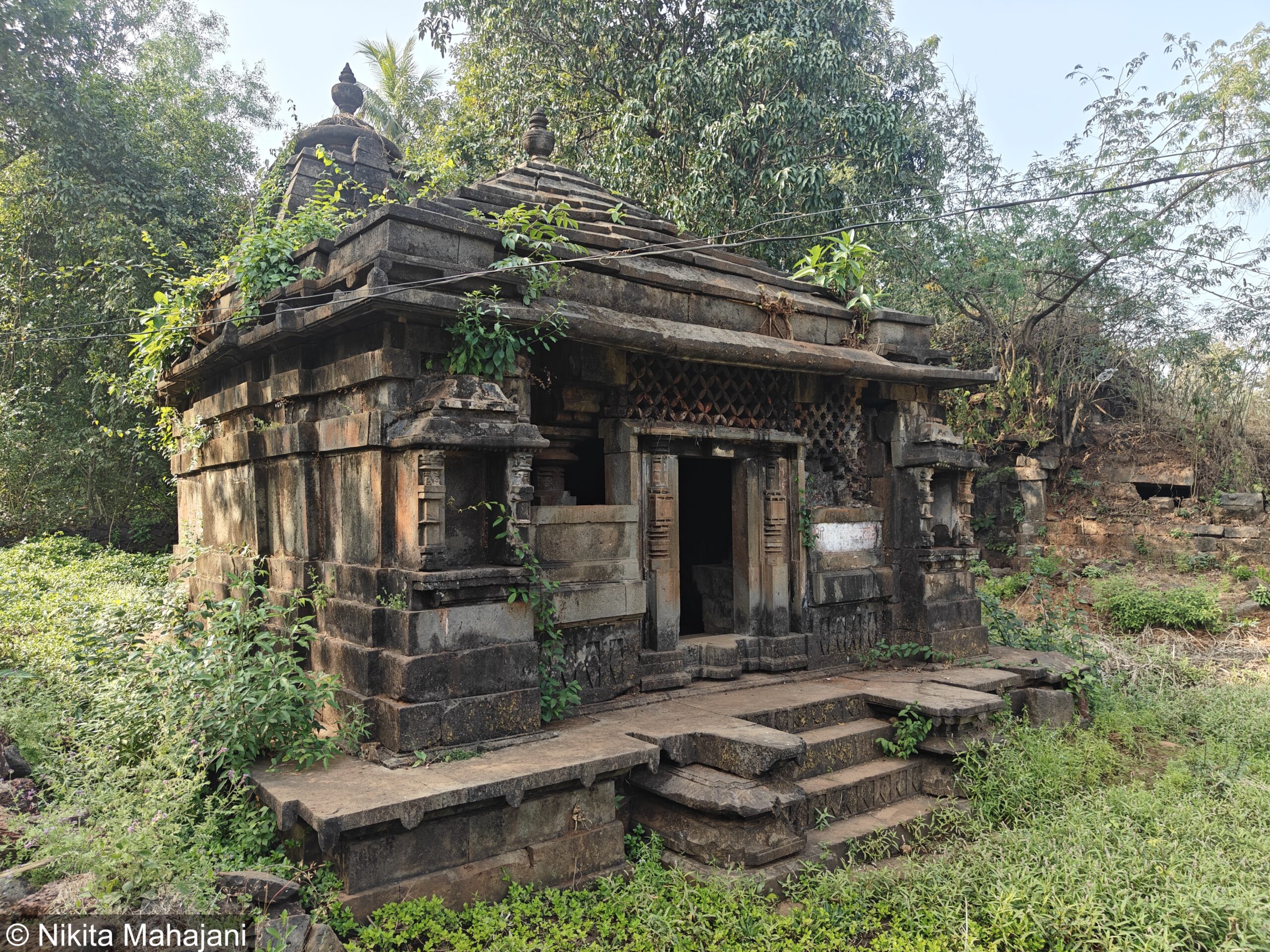
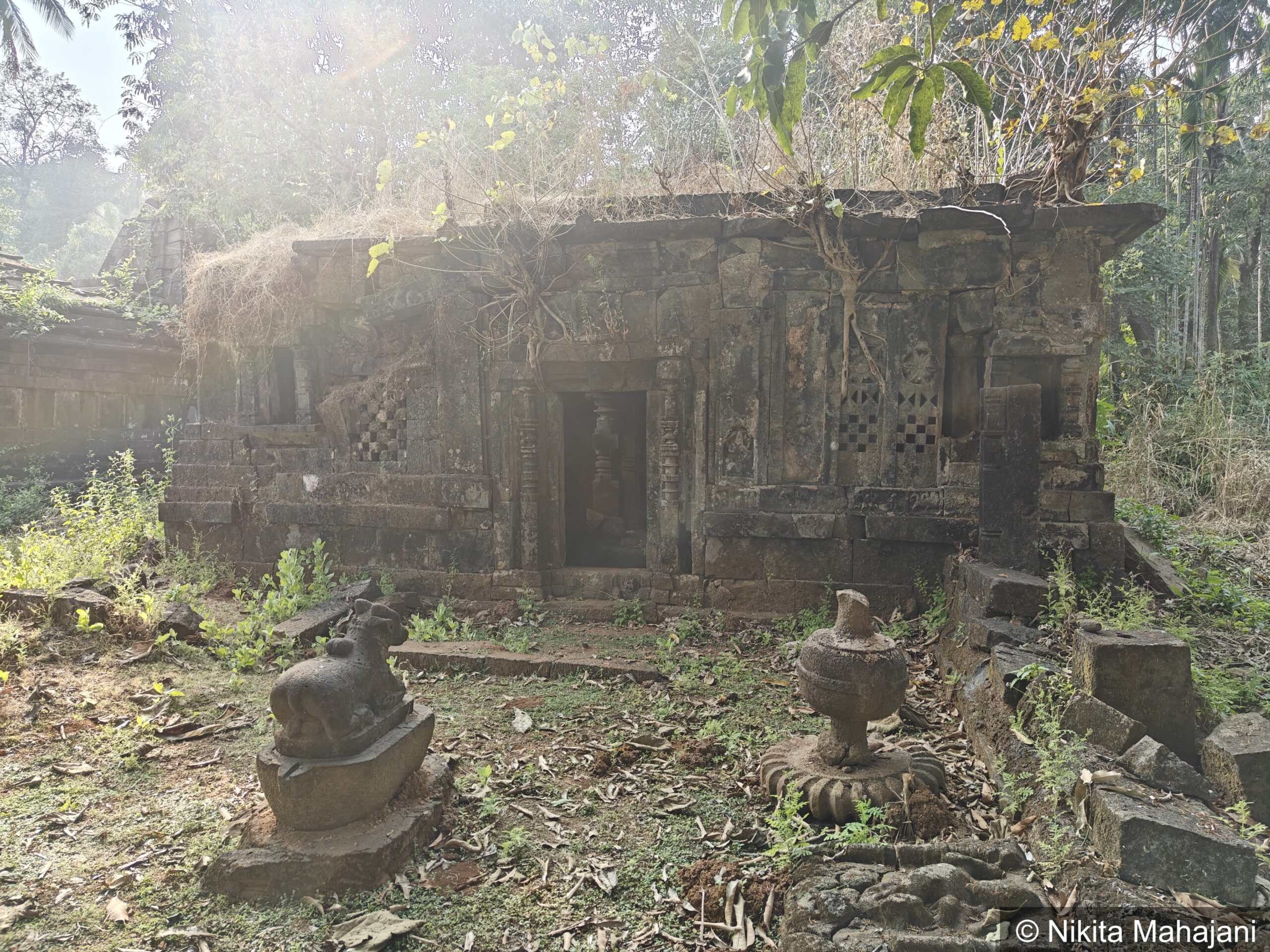
We returned to the resort for snacks and tea before heading to Bhatye Beach for sunset. Sophie’s excitement on the beach was contagious as we played fetch and enjoyed the waves.
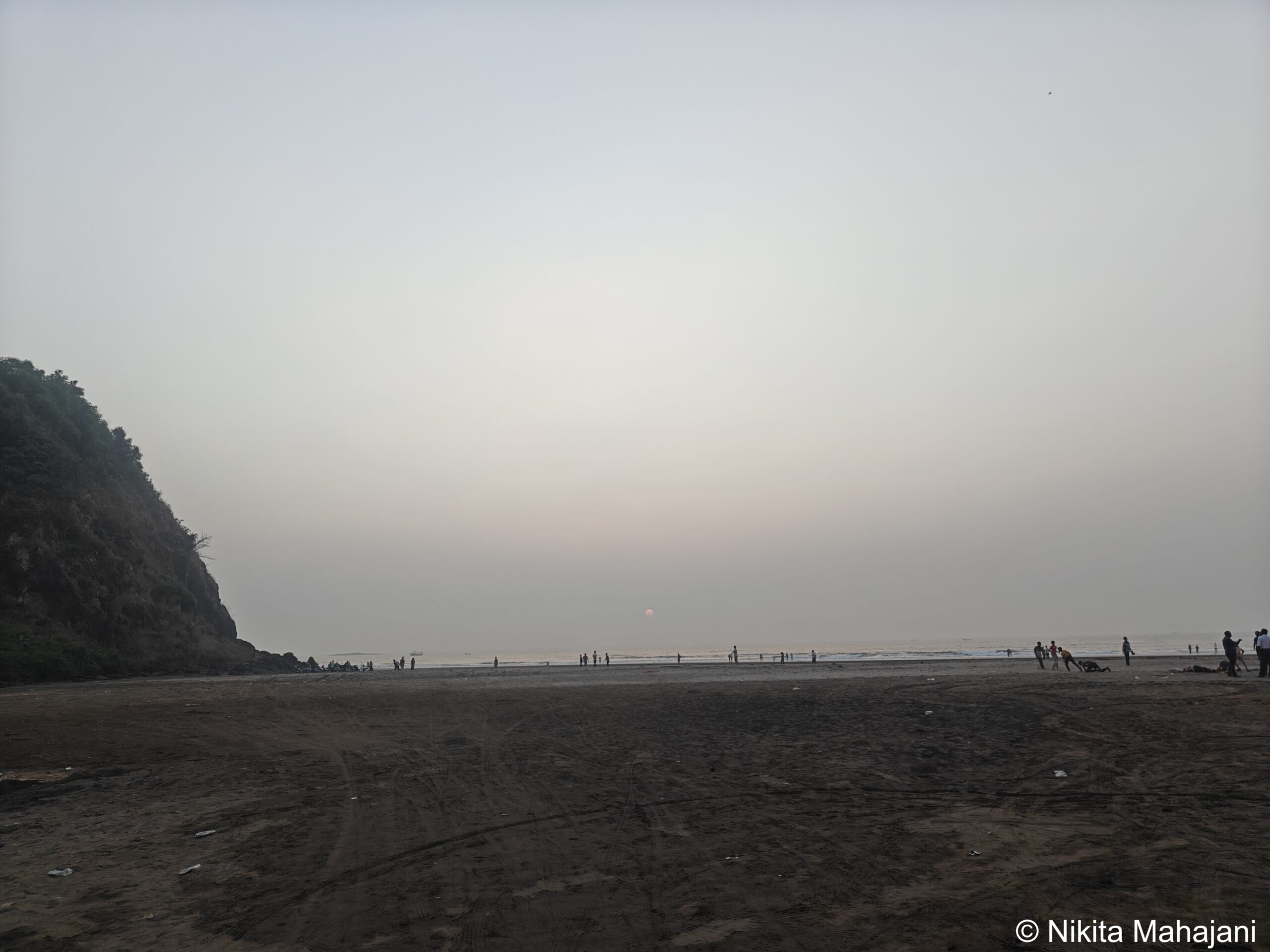
We came back to the resort so that Sophie could take some rest. As she slept at the resort, we went for a simple homemade pure veg dinner at Gogte Uphargruha , Tilak Ali and completed our eventful day. Pets are not allowed at Gogte Upharhruha. There are a lot of pure veg restaurants in Tilak Ali and on road parking is available.
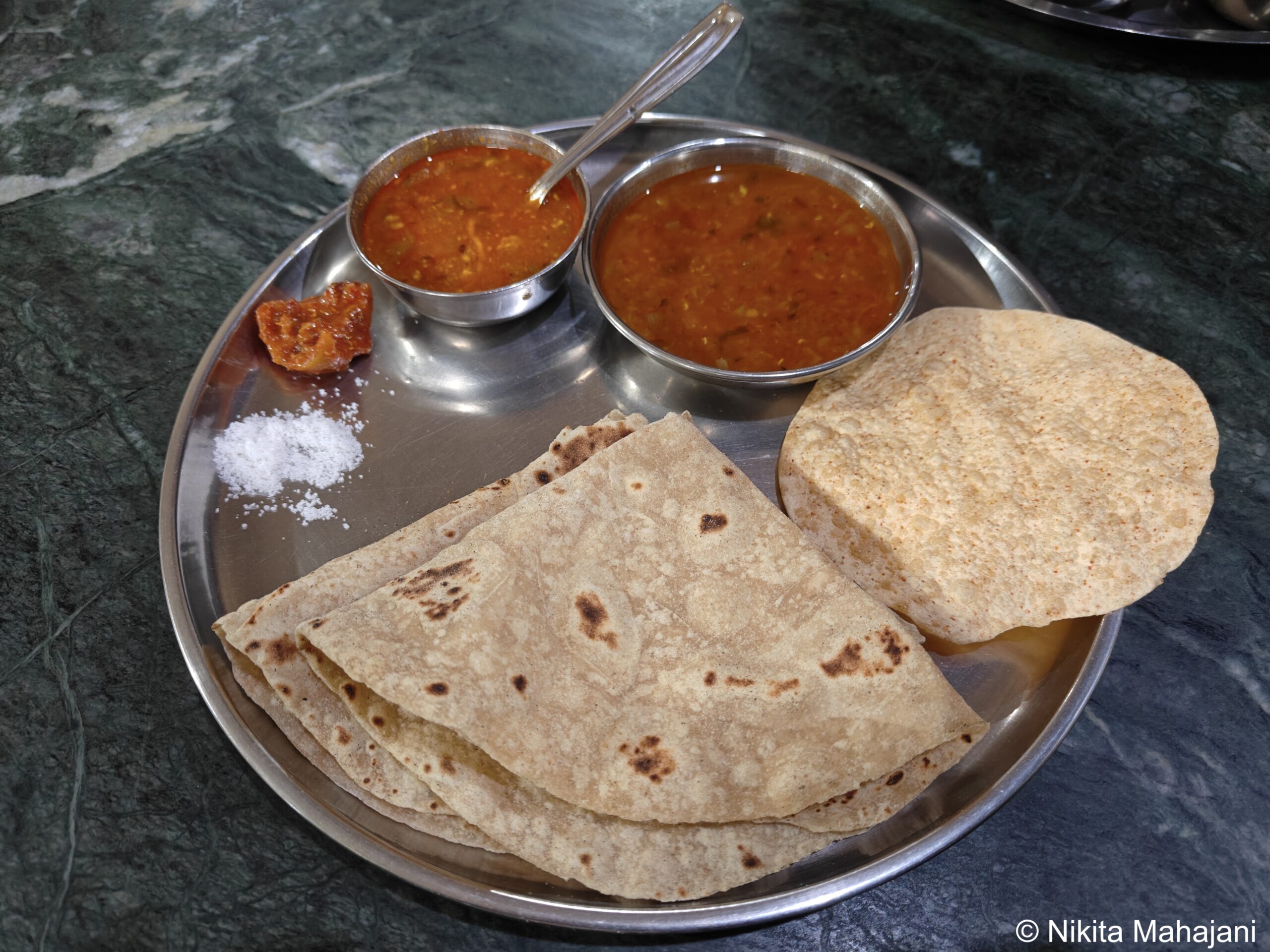
Day 3: Local sight seeing in Ratnagiri
We started the day with breakfast at the resort before checking out and visiting Shree Datta Mandir in Kolambe. On the way, we paused to admire the mangroves, a delightful natural habitat that fascinated Sophie.
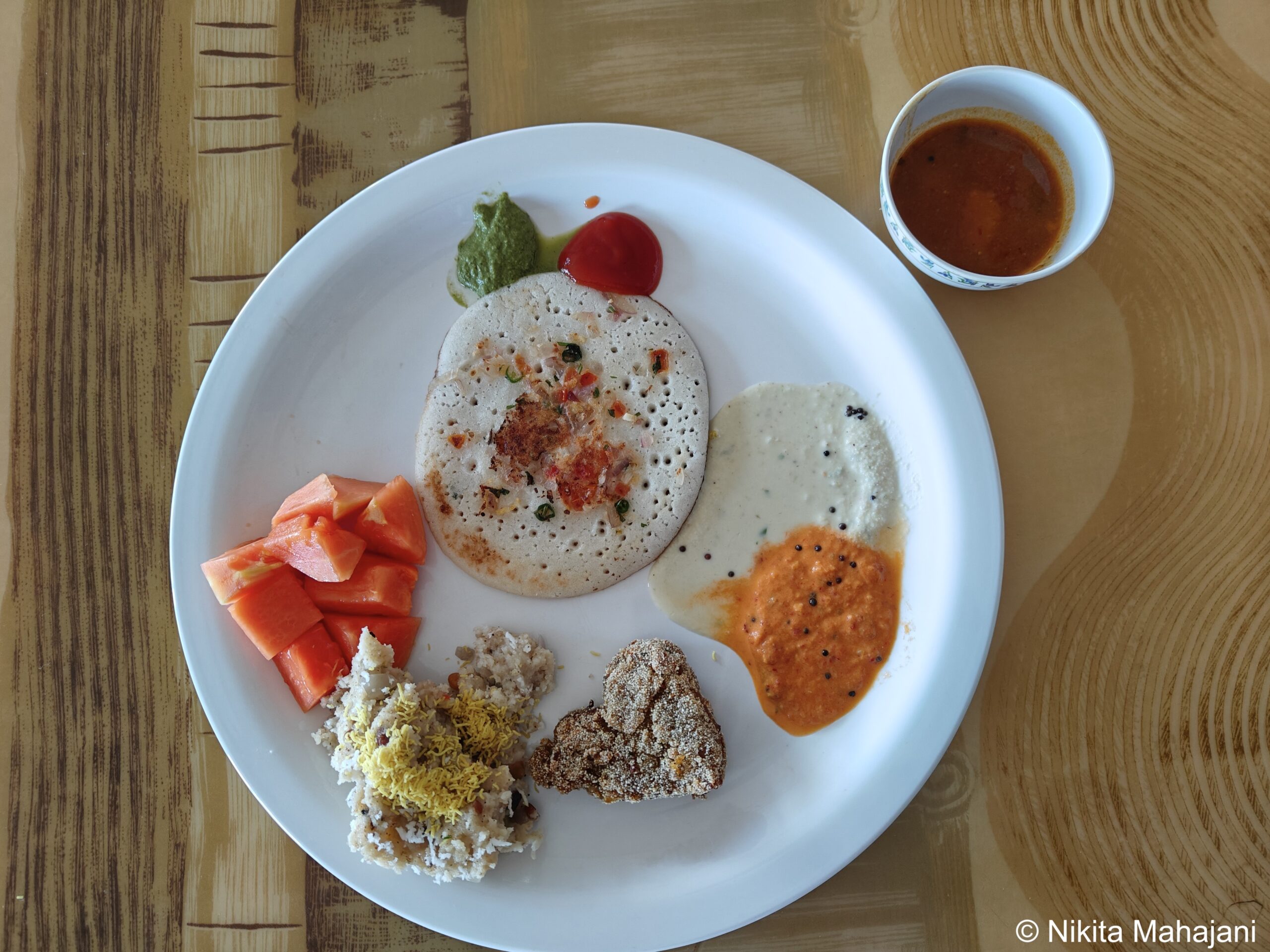
Shree Datta Mandir in Kolambe is surrounded by a lush green mango and coconut trees. Pets are allowed in the premises but not inside the temple. Toilets and bathrooms are available in the premises.
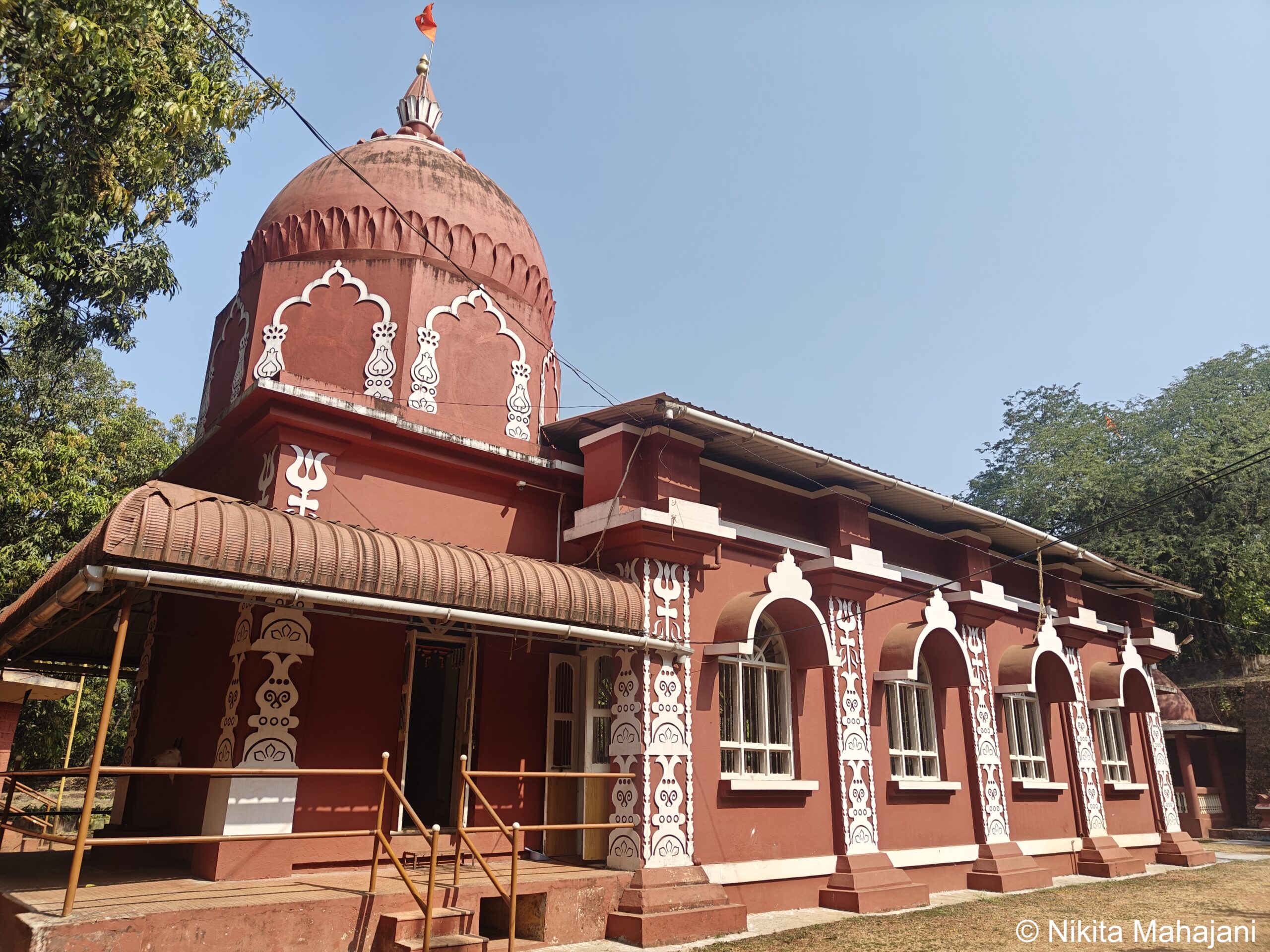
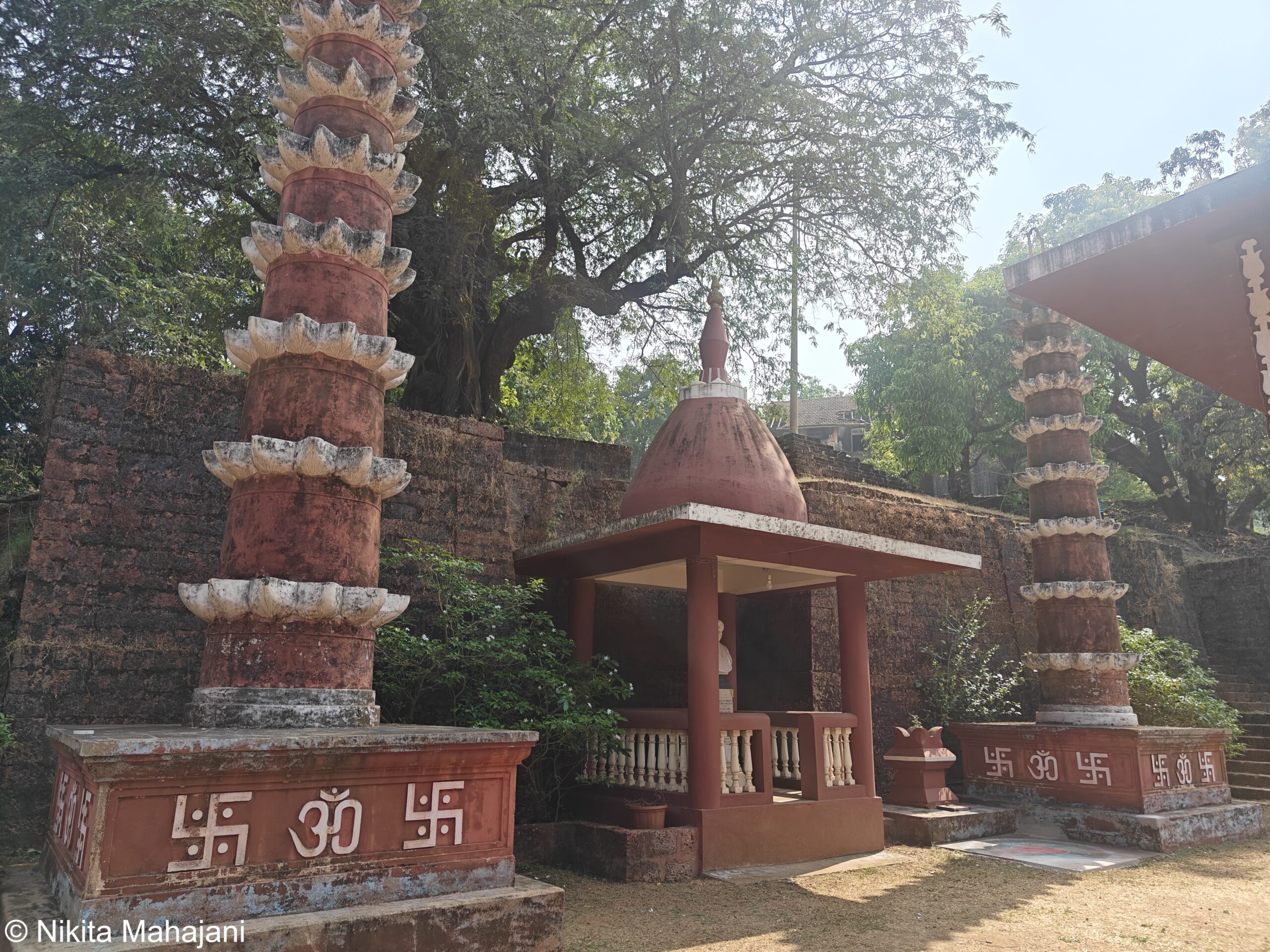
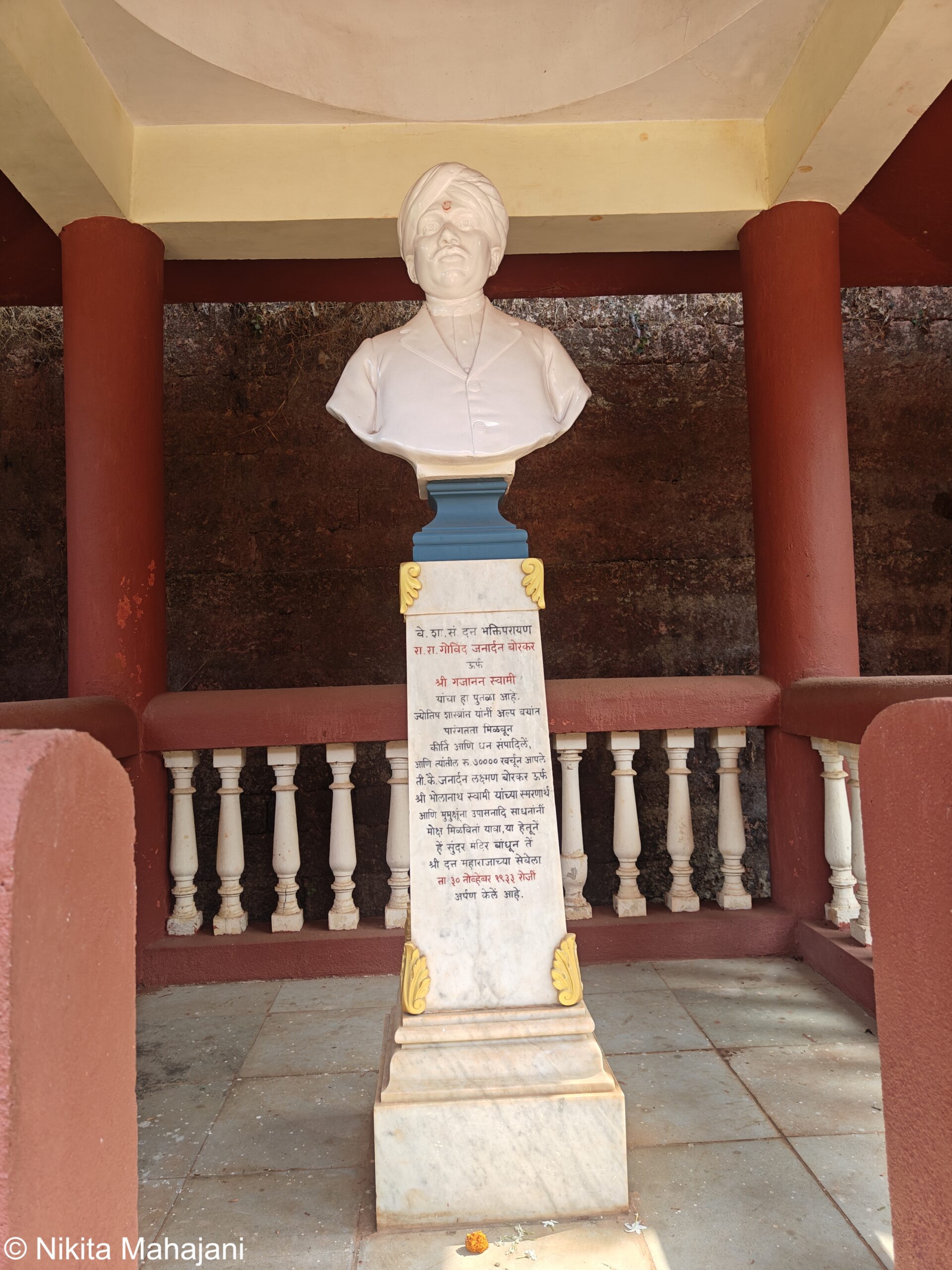
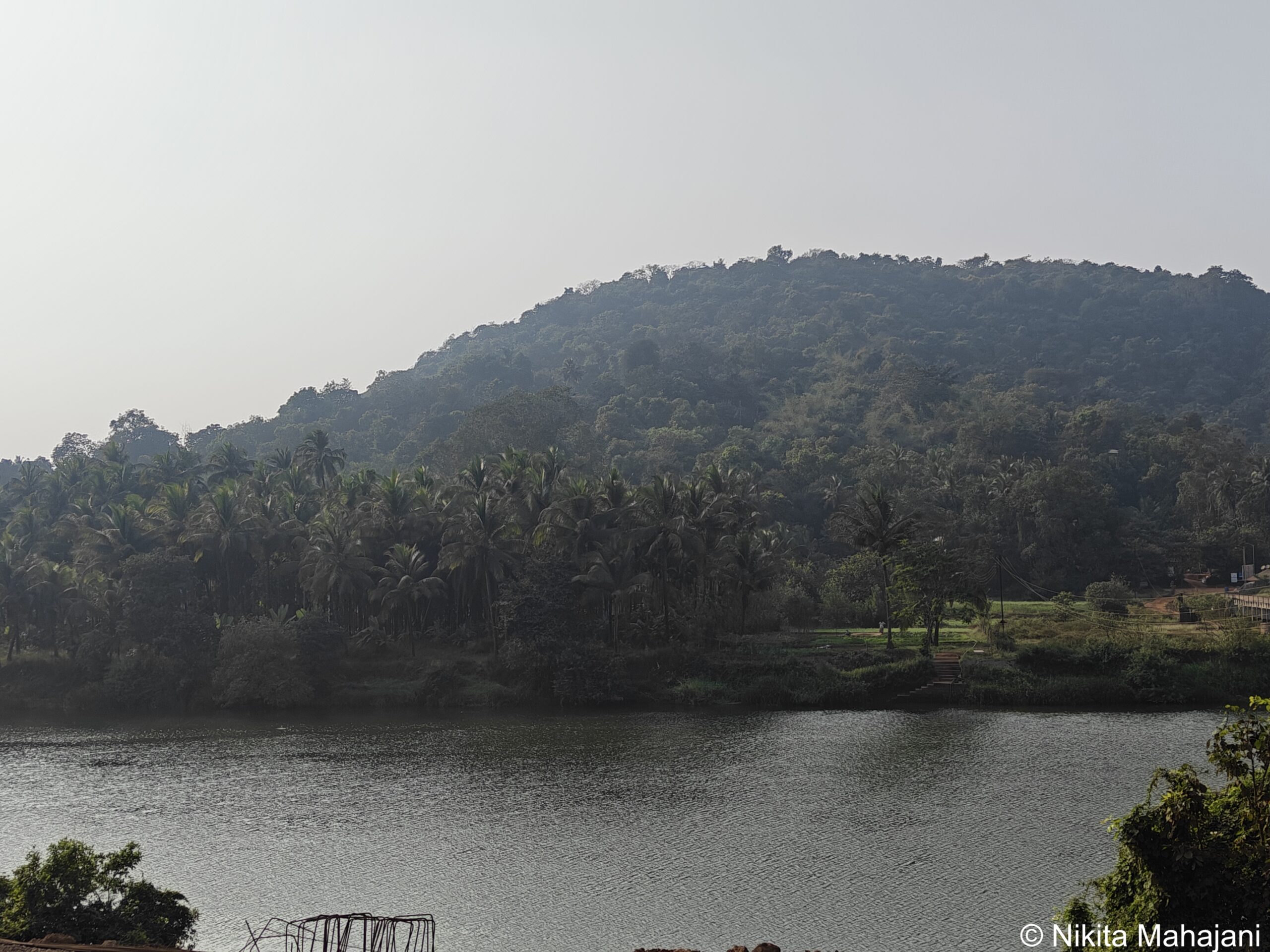
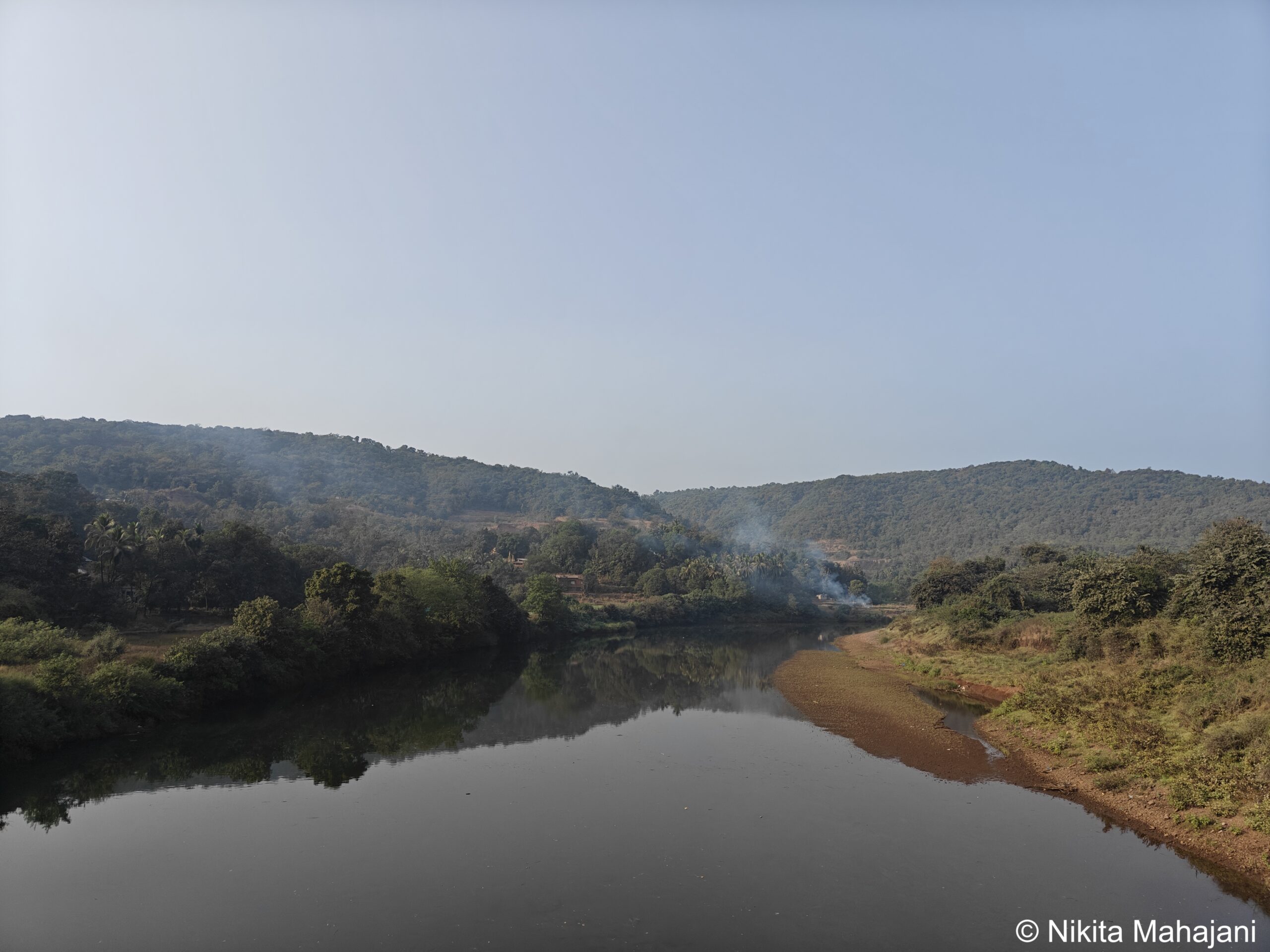
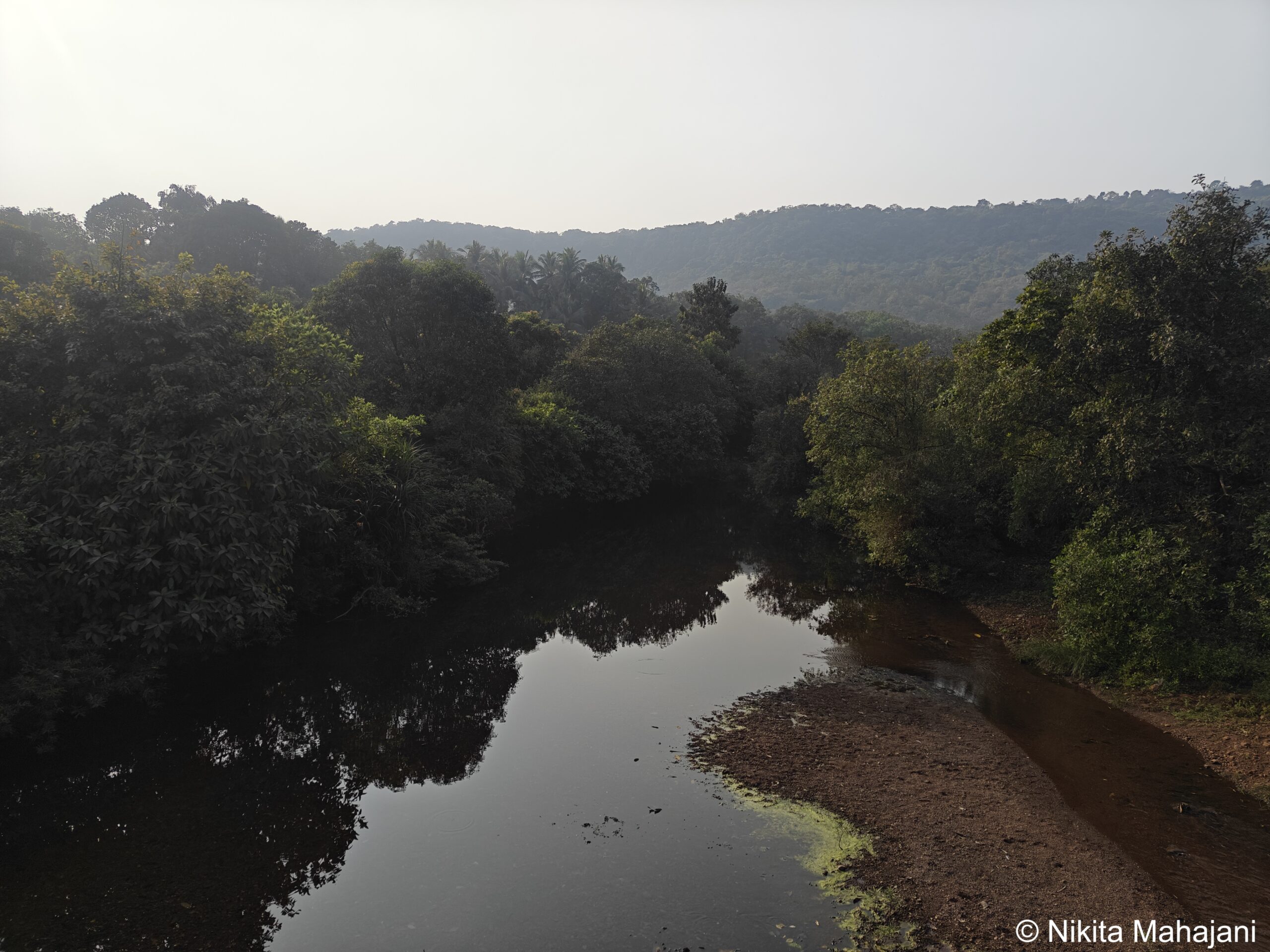
Our next stop was the historical Thiba Palace, giving us a glimpse into the region’s rich history. This palace was constructed by the British after their conquest of Burma, where they feared keeping the Burmese king might incite a revolt. To prevent this, the king was placed under house arrest in Ratnagiri District, Maharashtra. The palace was built according to the king’s specifications and served as the residence of the Burmese king and queen until their deaths.
Now maintained by the Archaeological Survey of India (ASI), the palace houses preserved artifacts used by the king, which visitors can view. It is open to the public from 10:00 AM to 5:00 PM, with a nominal entry fee of ₹5. Parking, eateries and washrooms are available. Pets are not allowed in Thiba palace. Hence we alternatively went inside the palace so that the other person could be with our pet in the parking.
Our next stop was the historical Lokmanya Tilak’s birthplace. Pets are not allowed in in Lokmanya Tilak’s birth place. Hence we alternatively went inside the palace so that the other person could be with our pet in the parking. There is no entry fee and photogrphy is strictly not allowed inside the bungalow. There is a beautiful landscaped garden behind the bungalow which consists of an open air amphitheatre, mounds, walkways and native trees.
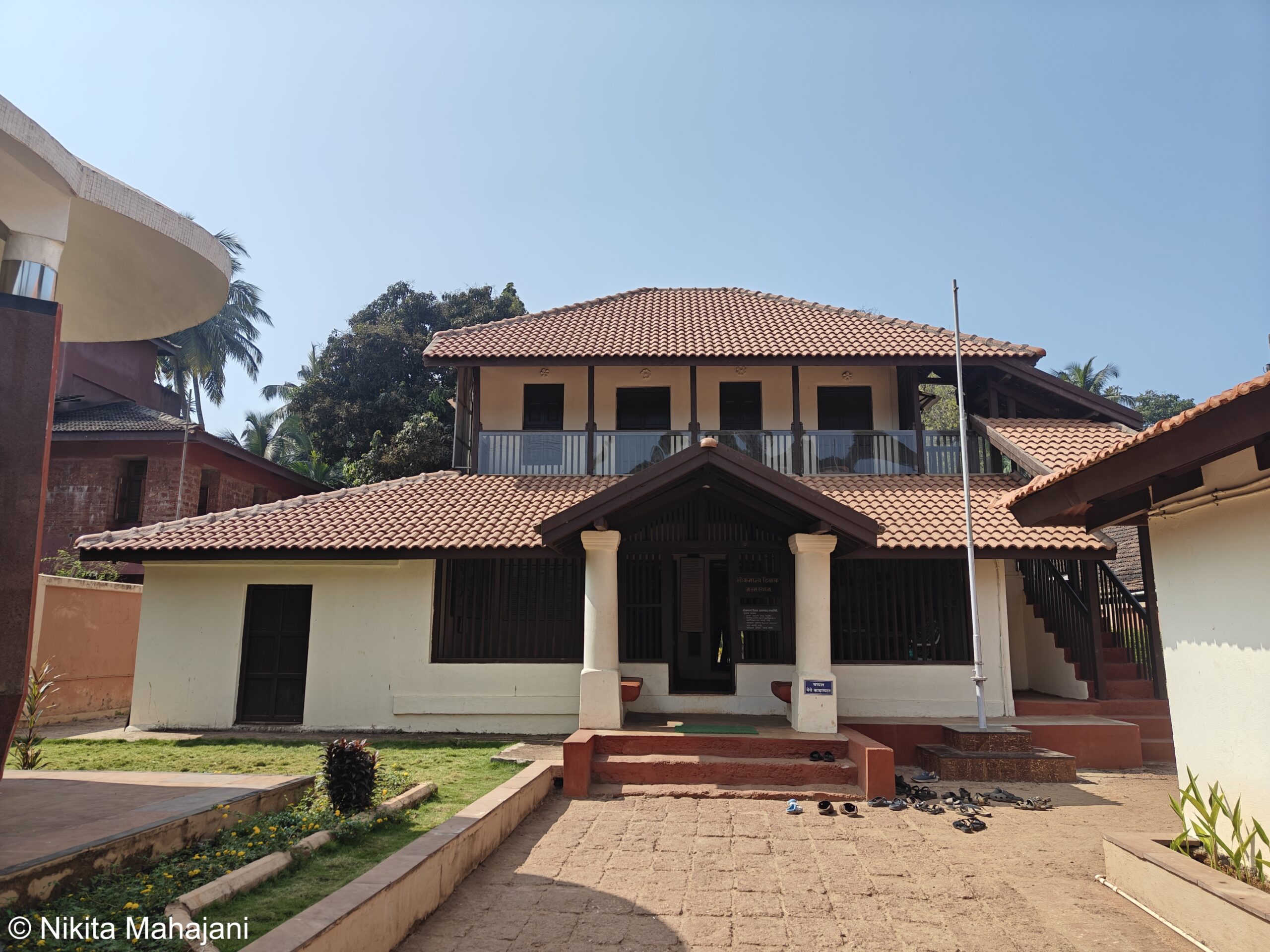
We started our journey to Ganpatipule.
To read PART-2 of this blog click here.
Where did we stay ?
Kohinoor Samudra beach Resort, Ratnagiri
Hotel Grand Ganesha, Ganpatipule
Where did we eat ?
Igatpuri: Day 2
To read the previous blog on day 1 of Igatpuri click here
Day 2: Exploring Igatpuri’s Hidden Gems
The next day began with breakfast at the resort before heading to Tringalwadi Fort. There is a tea shop at the base of the Fort. We parked our car near the shop and started walking. There are no signages near this parking. A few local kids offered to show the direction to the cave and asked for money in return. However, we denied to go with the kids. We spoke to some shopkeepers to understand the directions. They pointed towards one temporary shed and told us to walk in that direction. Since it was peak monsoon, we had to cross a huge pond. The depth of the pond was less. Our shoes got completely drenched in the pond. I had to pick up Sophie at a lot of places to protect her from rainwater.
We had to cross a lot of paths through paddy rice fields. But it wasn’t slippery. It was drizzling throughout the trek. After walking for 20mins, we came across a couple of blue colored signages by Archealogical Survey of India (ASI) which indicated that we are going in the right direction and we have come queit close to the cave. After crossing the signages, we could finally spot the cave at some distance. The short trek was well worth the effort, offering panoramic views of the Sahyadri range. Sophie, ever the adventurous pup, led the way, her tiny legs keeping up with our strides. It took us around 30-40 minutes to reach the caves from the parking area due to the rains. We explored the Tirthankar Adinath Jain Cave, a quiet, spiritual spot that left us in awe of its carvings.
The Jain caves are carved into a rock outcrop at the base of the fort. Their entrance features a decorative carved frame, though its supporting pillars have largely disintegrated. These caves were excavated during the rule of the Yadavas, who governed the Deccan region in the 12th and 13th centuries from their capitals at Chandradityapura (modern Chandor, Nashik District) and Devagiri (modern Daulatabad, Aurangabad District).
The cave has an outer verandah with intricately carved walls, most of which have deteriorated or been destroyed. A low parapet wall runs along the verandah’s front, supporting two pillars—one on each side of the entrance—which uphold the outer eave. The main doorway was originally adorned with paintings, remnants of which are still visible.
Flanking these pillars are pilasters, with the main entrance positioned between them. Beyond the pilasters, at both ends of the verandah, there are grille windows consisting of two square bars intersecting in a grid of nine openings. These bars are finely adorned with lotus rosettes at their intersections.
The verandah ceiling features a prominent relief carving in its center, directly in front of the entrance. This depicts a group of five figures arranged in a circle, with the central figure seemingly carried through the air by two others on either side, while two additional figures below assist in lifting.
The partition between the verandah and the inner hall is constructed from large, irregularly shaped stone blocks expertly fitted together. The spacious inner hall, measuring 35 feet square, leads to an antechamber and a shrine at its rear. The ceiling of the hall was once supported by four centrally placed columns. While the walls and ceiling are largely unadorned, the southwestern and northwestern corners contain low, continuous altars for images, whereas the northeastern and southeastern corners feature high benches, which do not serve as altars.
Of the original four columns, only the southeast pillar remains intact. The southwest pillar extends from floor to ceiling but is heavily eroded in the middle. The northwest and northeast columns have collapsed, leaving only ceiling fragments and floor stumps as remnants.
The shrine’s doorway, though deteriorated, was less ornate than the main entrance. Above it, three Jinas are sculpted on successive moldings. Inside the shrine, which measures approximately 13 by 12 feet, lies a damaged Jaina image on an altar against the back wall. The head, chest, and umbrella have been destroyed and discarded, with a portion of the umbrella found outside the cave. However, the legs and cushion remain intact, with a bull emblem at the center of the cushion identifying the image as Rishabdeva. An inscription on either side of the cushion is dated Saka 1266.
A significant inscription once adorned the northern wall of the cave, though only a small fragment of it remains. The surviving letters are finely carved and proportioned. Originally, the inscription spanned approximately four to five feet in width, though its full depth is uncertain.
Since it had started raining very heavily, we decided not to go ahead to Tringalwadi Fort.
So
we started our way back to the parking. By this time, we were super
hungry. So had some steaming hot maggi at the sop in the parking. All of
us were completely drenched. We had carried spare clothes and towels in
the car. So dried up ourselves in the car and changed our clothes.
Sophie felt extremely cozy and warm after I dried her up. She ate kibble
and dozzed off in her warm blankets inside the car.
We made our way to the Myanmar Gate, a stunning structure that pays homage to Igatpuri’s connection to Vipassana meditation. The road to Myanmar gate is through a slum.
Pets
are strictly not allowed at Myanmar gate. They have a huge parking lot.
One of us stayed back in Sophie in the parking and we visited it
alternatively. They have clean washrooms. There is nothing to see inside
apart from a small exhibition hall. It’s incredible how calm the area
feels, even with other tourists around. Afterward, we returned to the
resort for lunch, a hearty a-la-carte meal that refueled us for the rest
of the day.
Post-lunch, we had a afternoon nap for an hour and then we proceeded to Bhavli waterfall. It was drizzling at 3pm and it did not feel like an afternoon at all. The weather was amazing. We parked on the main road. The waterfall is just a 5 minutes walk from the main road. Sophie had never seen such huge waterfall and water bodies before and I could see the expression of astonishment on her face.
There are many other waterfalls in this area. Driving through Bhavli is a visual treat. We had some steaming hot tea and proceeded on the way back to the hotel. The day ended with a delicious desi dinner at Hotel Green Heritage.
To read the next blog on day 3 of Igatpuri-Daman click here
Where did we stay ?
Hotel Nest Beacon , Daman.
Green Heritage Resort, Igatpuri
Where did we eat ?
Hotel Shivneri Misal in Manchar
Prakriti Agro Farm, Jawhar
Envairoh, Daman
Igatpuri: Day 1
Igatpuri and Daman
If there’s one thing I love more than exploring new places, it’s doing so with my husband and our beloved pet dog, Sophie. Our recent trip to Igatpuri and Daman was the perfect blend of adventure, relaxation, and cultural exploration. From the picturesque temples nestled in the Western Ghats to the tranquil beaches of Daman, the trip was a refreshing escape from city life.
| Before lunch | After lunch | |
| Day 1: Pune to Igatpuri | Shri Siddheshwar Temple in Akole | Amruteshwar temple, Umbrella waterfall |
| Day 2: Local sightseeing in Igatpuri | Tringalwadi cave, Myanmar gate | Bhivli waterfalls |
| Day 3: Igatpuri to Daman via Jawhar | Journey from Igatpuri to Jawhar | Moti Daman beach & Fort, Jampore beach road. |
| Day 4: Local sightseeing in Daman | Nani Daman Fort | Udvada parsi town, Arjungad Fort |
| Day 5: Daman to Pune | Journey from Daman to Pune |
Day 1: The Scenic Road to Igatpuri
We set off early Saturday morning, aiming to beat the traffic. Our journey began with a drive through the countryside, stopping at Hotel Shivneri Misal in Manchar for a quick brunch. With a hot cup of tea, we were ready to dive into the day’s adventure. Sophie, of course, enjoyed a few biscuits by our side, tail wagging in excitement.
Our first stop was the serene Siddheshwar Temple in Akole. Located on the banks of the Pravara River in Akole, the remains of Siddheswar temple stand as a remarkable example of the Yadava dynasty’s architectural style. This Temple was buried under thick alluvial deposits due to frequent flooding and was accidentally unearthed in 1780. Over time, the temple suffered significant damage from systematic iconoclasm by Islamic forces, as it was situated along the route between Devgiri Fort in Sambhajinagar and Sinhagad Fort, in Pune.
According to legend, a farmer/ gardener accidentally struck the finial of the temple’s spire while plowing the field. However, it is unlikely that the original finial and spire were intact at the time of this incident. More plausibly, what he actually hit was the roof of the existing structure. The upper portion of the central dome likely sustained damage as well and was later reconstructed during restoration efforts. This was followed by the addition of three gilded pinnacles, which appear somewhat out of place.
The defacement of the sculptures clearly indicates that systematic Islamic iconoclasm took place here, as previously noted. The sacred goose motif appears both on the rear porch and the pillars. The intricately carved architrave forming the first course of the central hall beneath the central dome is a remarkable sight. Among the four sides, two showcase battle scenes, while the third portrays Vishnu reclining on the Seshanag, accompanied by nagas on either side. These nagas are depicted as half-human, half-serpent beings, shown squatting on their coiled tails.
There are a few veergals or hero-stones in the complex too. Interestingly, the temple does not fall under the jurisdiction of any central or state legislative authority and remains the private property of the Pethkar family, whose members also serve as priests. Notably, they have done an exceptional job in preserving the temple and its surroundings, which also include smaller shrines dedicated to Lord Ram and Goddess Bhavani.
Sophie enjoyed the spacious grounds, exploring every nook and cranny. Siddheshwar temple is completely pet friendly. Infact there are two indie dogs who are permanent residents of the temple. There is space available for parking 3-4 cars. However, very few vistors are seen at this temple.
We left from Akole towards Rtanawadi to visit the Amruteshwar temple. The route is full of waterfalls. The nearby Umbrella Waterfall added a magical touch to the place, with water cascading down, creating a peaceful ambiance that Sophie enjoyed as well. The road to Ratanwadi temple is not in a good condition at all. It is advisable to by a car having a lot of ground clearance.
After a peaceful stop, we continued our drive through winding roads until we reached Shree Amruteshwar Temple. Parking, washrooms and eateries are available outside the temple. There is no network in this area. So make sure to carry enough cash. Since it was raining, we could spend very less time in the temple.
The Amruteshwar Temple is an ancient shrine built in the 9th century by King Jhanj of the Shilahar dynasty. Located in Ratanwadi village, the base village for the renowned Ratangad Fort, this temple is dedicated to Lord Shiva and is approximately 1,200 years old. Constructed primarily from black stone, the temple also features red stone elements. The walls and ceiling are adorned with intricate murals, showcasing remarkable craftsmanship. A mandapa supported by 12 beautifully carved pillars, decorated with statues and floral motifs, enhances the temple’s architectural splendor. The temple houses a Shivling, beneath which lies a hot water spring. During the monsoon, the temple’s reflection in the surrounding pond creates a breathtaking sight.
The Amruteshwar Temple is open 24 hours a day. We enjoyed steaming hot tea and some snacks at one the shacks outside the temple. These shacks are pet friendly and they have clean washrooms.
By evening, we made our way to Green Heritage Resort, where a warm dinner awaited us. I booked this place for a week of relaxation before heading to Bhandardara. Overall, the stay was pleasant, with spacious and clean rooms in a well-situated location. The food was decent—not exceptional, but certainly not bad. The staff provided football and cricket equipment for outdoor games, along with indoor options like Jenga and Ludo. The swimming pool was well-maintained and open until 10 PM, which was a great perk. This place is ideal for a relaxing and enjoyable getaway with family and friends. Its location on the outskirts of Igatpuri adds to its charm, offering a peaceful retreat.The staff were welcoming, and the resort’s pet-friendly vibe made us feel right at home. Sophie settled into her cozy corner, while we reminisced about the day over a delicious meal.
To read the blog on day 2 of Igatpuri click here
Where did we stay ?
Hotel Nest Beacon , Daman.
Green Heritage Resort, Igatpuri
Where did we eat ?
Hotel Shivneri Misal in Manchar
Prakriti Agro Farm, Jawhar
Envairoh, Daman
Alibag – Day 1
Alibag, with its beautiful beaches, historical forts, and hidden
temples, is the perfect retreat for a weekend escape. This article
describes my 5-day trip to our second home in Alibag back in may 2018.
This journey was a blend of exploration, relaxation, and a taste of
coastal charm.
The itinerary of the entire trip is mentioned in the
table below. You can click on the links in the table to access the blogs
of the next days of this trip.
| Click the links below to read the blogs on the next days of this trip: | Before lunch | After lunch |
| Day 1 | Journey from Pune to Alibag | Colaba Fort, Varsoli Beach |
| Day 2 | Siddheshwar waterfall | Kankeshwar temple, Akshi beach, Nagaon beach |
| Day 3 | Revdanda Fort and Revdanda Beach | Shitaladevi temple and Rameshwar temple in Chaul |
| Day 4 | Khokari Tombs in Murud, Nawab palace. | Free time |
| Day 5 | Teenvira Dam | Journey from Alibag to Pune |
Day 1: Pune to Alibag
We set off from Pune early, via Pune Mumbai express highway. We waited for a quick lunch at Hotel Gayatri Garva along the way. It is just a 10 minutes drive from Khalapur toll gate on the Mumbai-Pune express highway. Hotel Gayatri G is our go-to-place whenever we are on the way to Alibag since they allow pets. There is a stream in the back yard of the hotel. There is a huge fenced lawn where dogs can play. They also have clean washrooms and ample parking space.
After a heavy meal, we continued our journey to Alibag. By the afternoon, we reached our Alibag home, which greeted us with a familiar, warm ambiance. Since it was just the beginning of monsoon, we could see lush green views of Sagargad from the balcony.
After some rest, we headed out to explore Colaba Fort. It is a sea Fort on Alibag beach. It is accessible by walking during low tide. If it’s a high tide, one can go by boats available at the beach. Horse rides are also available. but the horses are kept in extremely poor condition. Most of the houses are injured and malnourished. Its better to avoid horse rides and not be a part of cruelty to animals. Alibag beach was a peaceful place back in 2018. But now it has become super chaotic due to the large number of horse rides, noisy bike rides and water sports on the beach. Now, its not to impossible to leave pets unleashed in the beach because the congestion caused by noisy bikes rides is worst as compared to vehicular traffic on roads. Alibag beach also has CCTV cameras and a control room on the beach. There are lots of shacks and washrooms in the parking of Alibag beach.
Once you cross the water on the beach, you come across a rocky patch at the entrance of Colaba Fort. There is a ticket counter at the entrance of Fort. Pets are allowed. Some local villagers from nearby areas were selling Ranmeva, a mix of various wild fruits that grow abundantly in the forests. These fruits are served on a leaf with a sprinkle of rock salt and are available at a very affordable price. Their tangy flavour provides a delightful treat for the taste buds.
Courtesy: Bhataku’s Travel Tales!
Courtesy: Bhataku’s Travel Tales!
It takes around 45 minutes to explore the entire Sea Fort. There are temples, stepwells, memorials and other remnants on the fort.
The fort walls stand at an average height of 6 to 8 meters and feature a broad parapet encircling the structure, reinforced with 17 bastions for defensive fire during enemy attacks. The entire fortification is constructed using massive stone blocks. There are two primary entrances—one facing the sea and the other leading to present-day Alibag town. The land-facing entrance, known as the “Maha Darwaza,” served as the royal family’s gateway. These doors, made of teak wood, are embedded with iron spikes at various points.
Intricate carvings of animals such as tigers, lions, and peacocks adorn the doors. The fort’s stone construction, remarkably done without any lime content, has contributed to its lasting durability. Despite being a sea fort, it houses large freshwater tanks within its walls for drinking water. Outside the southern gate, the fort has its own dock, with two English cannons positioned on the parapets, aimed at the open sea. These cannons remain intact and are accessible for tourists to view.
Source: www.trekshitiz.com
After passing through the ticket counter, there is an ASI office on the fort. The entrance opens to a pathway flanked by temples on both sides. I was amazed to see numerous houses within the fort, where residents not only live but also take care of its upkeep—an incredible sight! The temples on either side are dedicated to Hindu deities such as Narayana and Padmavati.
At the center, a grand temple stood prominently. As I walked toward it, something unusual on the left caught my attention—Pushkarini, a sacred pond typically found within temple premises, used for rituals and offerings during festivals and special occasions.
According to tradition, devotees are expected to bathe in this pond before seeking the Lord’s darshan. What surprised me most was that, despite being surrounded by the sea with its salty waters, the fort has a well that provides fresh water.
At the heart of the fort stands a magnificent Ganesh temple, built by Raghoji Angre in 1759. Inside the sanctum, the idol of Lord Ganesha is accompanied by Riddhi and Siddhi, his two consorts.
The fort was placed under the command of Darya Sarang and Mainak Bhandari, during whose leadership Kolaba Fort became the focal point of Maratha assaults on British ships. Its strategic location provided a significant geographical advantage, making it a key naval base for planning attacks against British forces.
Military enthusiasts should visit the northern wall of the fort to witness two English cannons mounted on wheels. An inscription on one of the cannons reads: “Dowson Hardy Field, Low Moor Ironworks, Yorkshire, England.”
The history of the fort is truly fascinating. Its construction and subsequent reinforcement were completed by Sambhaji Maharaj following the passing of his father, Chhatrapati Shivaji Maharaj. Under the leadership of Kanhoji Angre, the Maratha navy launched relentless attacks on British ships, raiding and seizing their cargo. Despite multiple attempts, both the British and Portuguese failed to capture the fort. Historical accounts also mention that several fires broke out, causing significant damage to the estate within the fort.
Next, we moved on to Varsoli Beach, a peaceful spot where we enjoyed tea and snacks from nearby beach shacks while watching the sun dip into the horizon. There is paid parking available at Varsoli beach. There are no washrooms. There are lots of shacks under shady trees near the parking.
The serene evening ended with a delicious vegetarian meal at Suruchi Pure Veg Restaurant, a perfect conclusion to our first day. They allow pets on request
To read the blog on day 2 of Alibag click here
Where did we eat ?
Hotel Gayatri Garva
Suruchi Pure Veg Restaurant
First Old Original Mahesh Lunch Home
Hotel 4 1/2 Anandvan
Food Carnival
Alibag: Day 2
To read the previous blog on day 1 of Alibag click here
Day 2: Waterfalls, Temples, and Beaches
Day two began early with a trek to Siddheshwar Waterfall. The lush monsoon greenery and gushing falls made the climb an exhilarating experience, and Sophie was thrilled to be out exploring nature with us.
The Khandale Village bus stop in Alibag is easy to spot due to a prominent signboard. From this signboard, take a left turn to begin your trek. The route starts with a motorable road that passes through Khandale Village, stretching approximately 3-4 kilometers to the village’s end. Beyond this point, the motorable path transitions into a bullock cart track or dirt road. This trail leads through fields, open clearings, and forested areas, making for a scenic walk.
After about 20 minutes of walking, you will reach a set of stone stairs. Since we visited during the monsoon season, a stream was flowing across the path, requiring us to cross it. The actual climb of the trek begins from here.
A spectacular waterfall, plunging over 100 feet, awaits ahead. During the monsoon, the waterfall is visible from this very point. To reach its base, one must descend for approximately 20 minutes. The water source for this waterfall originates from behind the Siddheshwar Temple, acting as its natural feeder.
After the trek, we stopped at Hotel Trimurti for brunch to recharge. Hotel Trimurti is also one of my go-to-places in Alibag since its completely pet friendly. They have an enclosed dining area as well as outdoor dining under gazebos in the front yard.
We then made our way to Kankeshwar Temple, perched atop a hill, where we soaked in the peaceful atmosphere and scenic views. Since it was monsoon, we didn’t have to face the harsh sunlight in the afternoon. It was quite gloomy throughout the day.
The temple can be reached by ascending 750 steps. The entire path is shaded by trees, creating a soothing atmosphere. The trail is divided into three sections, allowing trekkers to gauge their progress along the way. The first section involves a steep uphill climb of about half a kilometer. Upon reaching Gaymundi, the path levels out, leading through a flat plain. A water reservoir along the route provides a refreshing stop during the ascent. From this point, the trail becomes relatively simple. After about 15 minutes of climbing, you will arrive at a plateau where the temple stands, surrounded by a dense forest, offering a breathtaking view.
Brahmakund– An elegant arch-shaped structure marks the entrance to the serene world of Kankeshwar temple. As you step through it, you will find a small shrine dedicated to Lord Hanuman. Next to the temple lies ‘Pushkarni,’ a well with steps on all four sides, allowing easy access to the water. During the monsoon season, the well fills up completely, offering visitors a chance to enjoy a refreshing dip in its pure waters.
The Temple –
Continuing along the path, you will
come across an artificial lake surrounded by stunning architectural
elements. Adjacent to the lake stands the Kankeshwar temple, dedicated
to Lord Shiva. The temple’s main sanctum was originally constructed
during the Rashtrakutan dynasty, while subsequent additions were made
under the Chalukya and Silhara dynasties. The Kalash (pointed
dome) of the temple, dating back 100 to 200 years, exemplifies intricate
and refined craftsmanship. The temple’s well-planned design fosters a
peaceful and tranquil ambiance.
The mandap (prayer hall) was built under the expert guidance of Shri Gurupad Swami, a disciple of Shri Shridhar Swami. The sanctum houses a Shivalinga, adorned with a silver coating, while a grand idol of Nandi stands guard at the entrance, with an idol of Lord Ganesha positioned to its right. The Guravs (priests) perform rituals and offer prayers to the deities three times a day, accompanied by the continuous lighting of lamps (deep-prajwalan). Additionally, the temple complex includes shrines dedicated to Ramsiddhivinayak, established by Lambodar Swami, as well as Shri Krishna and Balaram.
By this time we were quite exhaused. After a relaxing afternoon nap
back at our Alibag home, we started the journey to Nagaon to spend the
evening at Nagaon Beach.
One has to pay taxes and parking charges while entering the village
limits of Nagaon. Since this place is home to a temple having 9
sculptures of snakes (nau naaganche deul), it is called as Nagaon.
Washrooms
and bathing facility is available on paid basis in the parking area.
They also provide hot water buckets. There are lots of shacks on the way
to the beach. Nagaon beach is quite crowded. Hence it is better to
avoid visiting Nagaon beach on weekends. The whole nagaon village does
not have network for internet expect for airtel users.
Nagaon Beach stands out from most other beaches in Alibaug as it is primarily a sandy beach. It stretches over a vast, flat area with a smooth blend of white and black sand. The beach is considered safe for swimming, allowing visitors to wade far into the sea without any sudden depth changes.
The day concluded with a sumptuous dinner at First Old Original Mahesh Lunch Home, where we enjoyed fresh coastal flavors just steps from the shore. They serve unlimited veg thali which consist of ukdicha modak (sweet dumplings), solkadhi, koshimbir, one dry vegetable, one gravy preparation , dal rice , roti and papad. Pets are allowed at First Old Original Mahesh Lunch Home. They have clean washrooms and parking as well.
We returned home (in Alibag) after heaving a heavy dinner at Mahesh lunch home.
To read the blog on day 3 of Alibag click here
Where did we eat ?
Hotel Gayatri Garva
Suruchi Pure Veg Restaurant
First Old Original Mahesh Lunch Home
Hotel 4 1/2 Anandvan
Food Carnival
Which are the places unsuitable for pets ?
Murud Janjira Fort : The fort needs to be accessed by Ferry boats. Pets are strictly not allowed in the boats as well as on the fort.
Alibag: Day 3
To read the previous blog on day 2 of Alibag click here
Day 3: Revdanda Fort and Temples of Chaul
We started the day with a visit to Korlai Fort, offering breathtaking views of the coast and sea. From there, we headed to Revdanda Fort and Revdanda Beach, where the ancient ruins stand against a scenic backdrop.
Satkhani (सातखणी) Buruj at Revdanda Fort is one of its most iconic structures. Originally known as the Tower of St. Barbara, it was part of a church within the fort. The name Satkhani comes from its distinctive seven-story design. I made a quick sketch of the ruins of Satkhani Buruj.
This fort was constructed in 1558 by Portuguese Captain Soj and was originally named Santa Maria de Castelo. Over time, the locals began referring to it as Rev Danda. The fort is surrounded by dense vegetation, primarily coconut and betel nut trees, while the beach area outside the fort is lined with casuarina trees. It is possible that the Portuguese planted these trees within the fort premises.
Within the fort, there is a four-story tower along with a few cannons embedded in its walls. Additionally, the site contains the ruins of an old structure resembling a church, which now stands in a dilapidated state. The fort also houses the Chapel of St. Francis Xavier, where he is believed to have delivered some of his earliest sermons in India. Apart from these, there are several other ruins scattered throughout the fort.
Our exploration continued with visits to Shitaladevi Temple and Shree Rameshwar Mandir in Chaul, two peaceful spots that provided a tranquil end to our Alibag journey.
Shitaladevi is one of the revered and ancient seven deities of Chaul. This historic temple remains highly popular and is located approximately 2 km from Chaul Square. It was restored in 1759, with the Angre family holding deep faith in this goddess.
Originally, the Shitaladevi Temple was a wooden structure with a slanting clay-tiled roof. However, around 1990, it was reconstructed using cement concrete. The temple’s main entrance faces east, with additional entrances on the south and north sides. At the main entrance and the assembly hall, there is a distinct architectural culmination. The idol of the goddess remains in its original position at the temple’s core. In front of the temple stands a stone-built column of lamps. Additionally, an ancient Pushkarini (stepped well) is present, with its water still utilized by the local villagers.
The Rameshwar Mandir, an ancient shrine dedicated to Lord Shiva, is situated in Chaul, Revdanda, Maharashtra. The Chaul region is renowned for its numerous temples, with an astonishing count of 365—one for each day of the year.
According to local villagers, the temple was initially constructed in just over a day by the Pandavas, but they were unable to complete it. Had they succeeded, it would have been the only temple, like Kashi, to be built within a day. Later, Maratha Navy Admiral Kanhoji Angre took charge and completed the remaining work.
Like all Shiva temples, the Rameshwar Mandir features a Nandi statue positioned in front of the main shrine. The temple complex spans a vast area, with its dome reaching a height of 7.62 meters. A large pond, known as Pokhran, lies in front of the temple, enhancing its grandeur. Two towering Deep Jyoti Stambhs (pillars designed to hold small oil lamps) stand at the entrance, adding to the temple’s illumination.
As one steps inside, a spacious prayer hall supported by vibrant wooden pillars welcomes visitors. The presence of the large pond outside the temple further enhances its majestic appearance. During local festivals, aartis (ritual prayers) are performed along the pond, creating a mesmerizing spiritual atmosphere.
The serene evening ended with a delicious vegetarian meal at Moghe Khanawal which is a pure veg take away centre near Alibag beach. Moghe Khanawal is likely the only restaurant in Alibaug that serves exclusively vegetarian food. The menu features just one item – an authentic Maharashtrian thali. This thali is incredibly delicious, offering a comforting, home-cooked taste. The simple ambiance further enhances the experience, making it feel like a meal at home.
The restaurant serves a fixed menu with a set portion of a traditional rice plate, all at an affordable price that fits any budget. It is a small eatery with only a few tables but carries a rich traditional history. If you’re in Alibaug, this place is definitely worth a visit!
To read the blog on day 4 & 5 of Alibag click here
Where did we eat ?
Hotel Gayatri Garva
Suruchi Pure Veg Restaurant
First Old Original Mahesh Lunch Home
Moghe Khanawal
Hotel 4 1/2 Anandvan
Food Carnival
Which are the places unsuitable for pets ?
Murud Janjira Fort : The fort needs to be accessed by Ferry boats. Pets are strictly not allowed in the boats as well as on the fort.
Alibag: Day 4 & 5
To read the previous blog on day 3 of Alibag click here
Day 4: Tombs and Palace in Murud
On day 4, we started with a visit to Khokari Tombs in Murud.
Rajpuri
is a significant historical site on the mainland in front of Janjira.
To its east lies Kharshet, a now-deserted village, which was once
adjacent to Khokari. Khokari is home to an impressive stone mausoleum
built in the Indo-Saracenic architectural style, known as the Khokari
Tombs. This site serves as the final resting place of Siddi Sirur.
In addition to Siddi Sirur’s tomb, there are two other notable tombs. One belongs to Yakut Khan, who served as the Nawab of Janjira from 1670 to 1677, later becoming the Chief of the Mughal fleet from 1677 to 1691, and returning as Nawab of Janjira from 1696 to 1707.
The second tomb belongs to his brother, Khairiyat Khan, who was the Administrator of Danda-Rajpuri from 1670 to 1677 and later governed Janjira from 1677 to 1696. Several other tombs are scattered around the Khokari Tomb complex. Near the tombs of Yakut Khan and Khairiyat Khan, two inscriptions in Arabic can also be found.
The Khokari Tombs are stunning and captivating, situated near Murud Janjira and Kashid beaches. The tombs and the surrounding gardens are remarkably clean and tranquil, likely because they remain largely undiscovered by tourists. With no guards on-site, entry is free of charge. However, there are no washroom facilities available. On-road parking is convenient. Perched on a raised platform near the seashore, the tomb offers a striking view. The location is peaceful, uncrowded, even during holidays, and provides a fantastic vantage point to admire the seaside scenery.
On the way back home we also saw Nawab Palace from outside. It is not open to visitors. The Nawab Palace of Murud, also known as Siddhi Palace, is a majestic structure situated on the route to Revdanda, Alibaug. Built in 1885, this palace was designed in a blend of Mughal and Gothic architectural styles for administrative purposes and remains well-preserved to this day. The complex also features a stunning mosque. From the palace, one can enjoy a breathtaking view of Murud Beach and the Arabian Sea. As it is private property, visitors can admire its grandeur only from the outside.
We enjoyed playing on the rocky beach of Murud and came back home in the evening. Murud Beach is a picturesque and well-maintained destination. With no food stalls permitted on the shore, the beach remains clean and ideal for relaxation. Visitors can take long strolls along the coastline while enjoying the refreshing breeze. The atmosphere is peaceful, with a courteous crowd and minimal disturbances, making it a perfect spot to unwind in tranquility.
Day 5: Return to Pune
Our journey back to Pune was filled with a few delightful stops. We visited Teenvira Dam, a hidden gem with serene views. It primarily serves as a local water supply. However, the stunning backdrop of Sagargad enhances its scenic beauty. About a week into the monsoon, the dam overflows, creating a breathtaking waterfall effect as water cascades down the stony wall. Since the dam is located close to the highway, it is easily accessible, and with no deep streams on the flow side, it remains a safe spot to visit. Relaxing under the waterfall, using the dam wall as a backrest, is truly a delightful experience. Additionally, the garden at the dam has now been transformed into an eco-sensitivity center, which is worth exploring.
We enjoyed a fantastic lunch at Hotel 4 1/2 Anandvan. The food was absolutely delicious, offering a true taste of coastal flavors. The restaurant maintains a clean and hygienic environment, including well-kept washrooms. There is also ample parking space available. The warm and cozy ambiance, combined with attentive service, made the experience even more delightful. If you’re craving authentic and flavorful seafood, Hotel 4 1/2 Anandvan. is a must-visit. Highly recommended for families and food enthusiasts!
After lunch, we continued the journey to pune via Express highway. Our last stop was at Food Carnival, a pet-friendly food mall on the Mumbai-Pune Expressway, where Sophie could also unwind. After some evening tea, we resumed our journey, reaching Pune in about 4.5 hours.
Final Reflections
Alibag’s blend of historical, natural, and coastal charm made for a rejuvenating escape. With beach sunsets, hilltop temples, and quiet seaside dinners, each day offered something memorable. Whether you’re traveling with family or your furry friend, Alibag is an ideal coastal retreat with something for everyone.
Where did we eat ?
Hotel Gayatri Garva
Suruchi Pure Veg Restaurant
First Old Original Mahesh Lunch Home
Hotel 4 1/2 Anandvan
Food Carnival
Which are the places unsuitable for pets ?
Murud Janjira Fort : The fort needs to be accessed by Ferry boats. Pets are strictly not allowed in the boats as well as on the fort.
Talegaon Dabhade
A Pet-Friendly Day Trip to Talegaon Dabhade: Exploring History and Temples with Sophie
Talegaon Dabhade, just a short drive from Pune, is a place steeped in Maratha history, stunning architecture, and tranquil temples—a perfect spot for a day trip! With our energetic dog Sophie along, my husband and I spent a fulfilling day exploring this historical town. Here’s a peek into our itinerary, including pet-friendly tips for a smooth trip with furry companions.
Morning Journey to Talegaon Dabhade
We set off early, as Talegaon Dabhade is only about 40 km from our home in Pune, taking roughly 1.5 hours by car. Sophie settled in quickly, excited to begin a day of adventure with us.
1. Samadhi of Sarsenapati Shrimant Khanderao Dabhade
Our first stop was the Samadhi of Sarsenapati Shrimant Khanderao Dabhade, a peaceful spot paying tribute to an important Maratha military leader. Sophie loved walking around the serene surroundings, and it was a great way for us to start the day by immersing ourselves in the Maratha heritage.
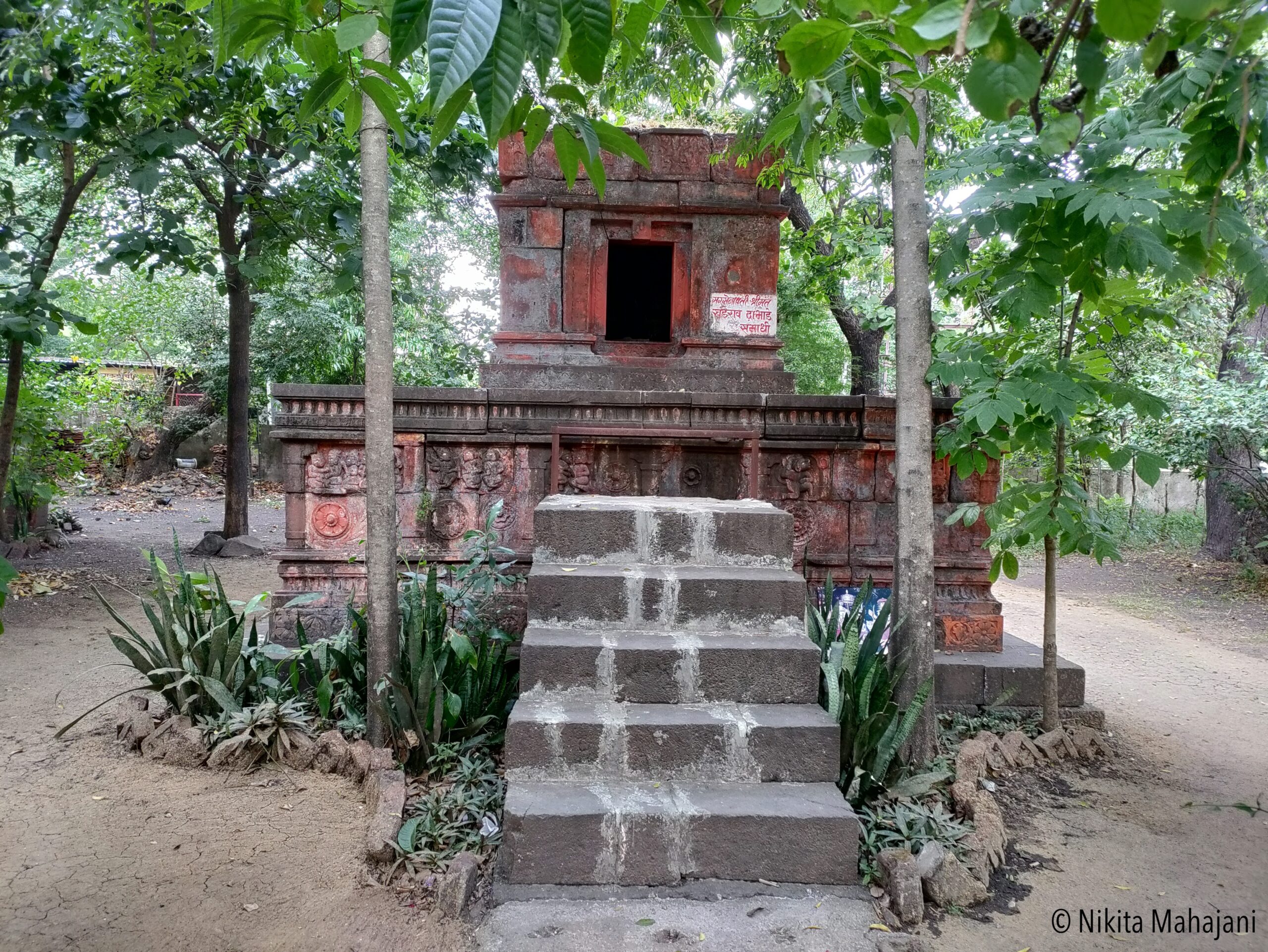
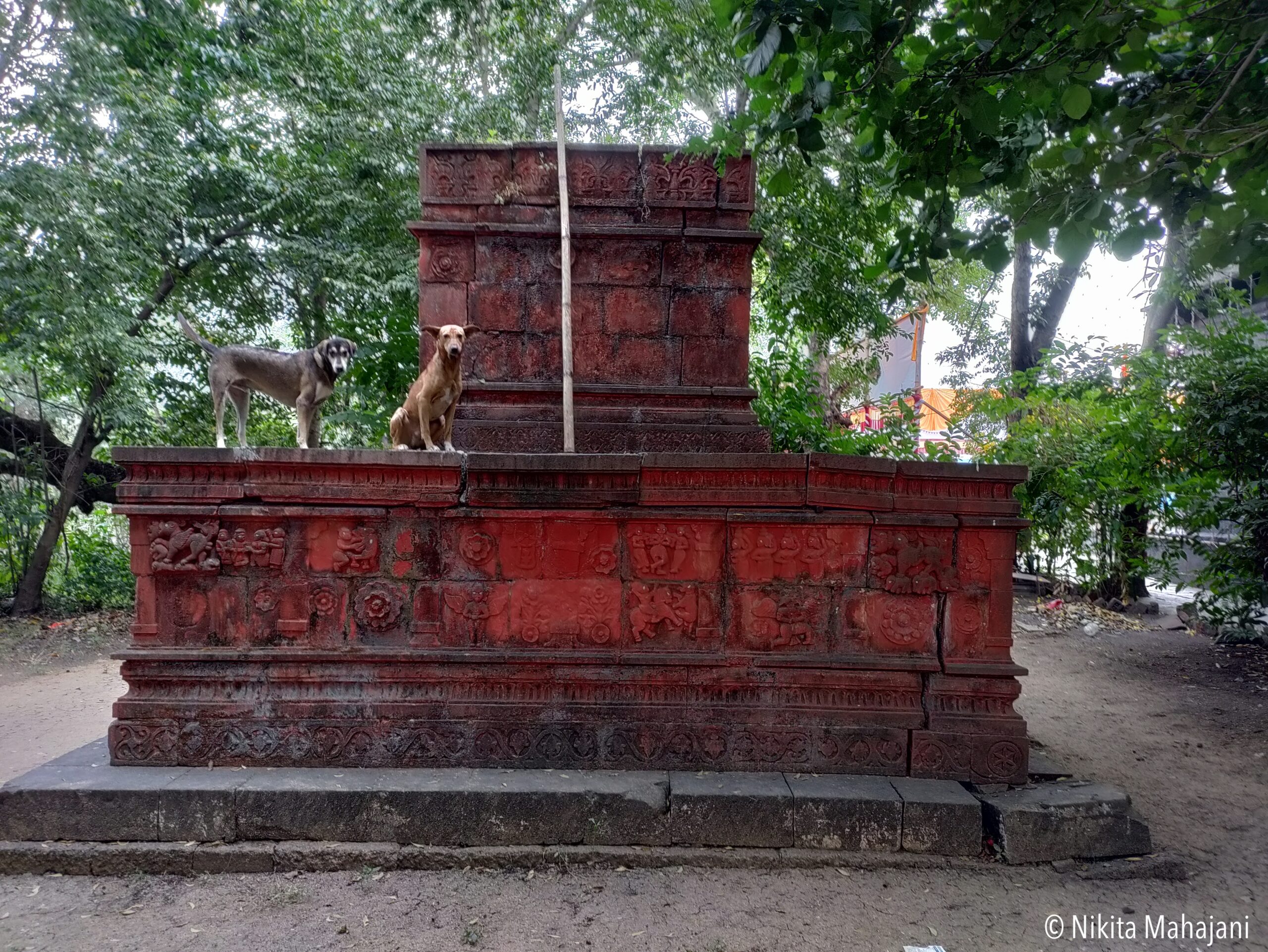
2. Samadhi of Sarsenapati Umabai Dabhade
Next, we visited the Samadhi of Sarsenapati Umabai Dabhade, a prominent Maratha leader and the first woman to hold the title of Sarsenapati. The historical atmosphere made this visit especially meaningful, and Sophie enjoyed stretching her legs in the tranquil area.
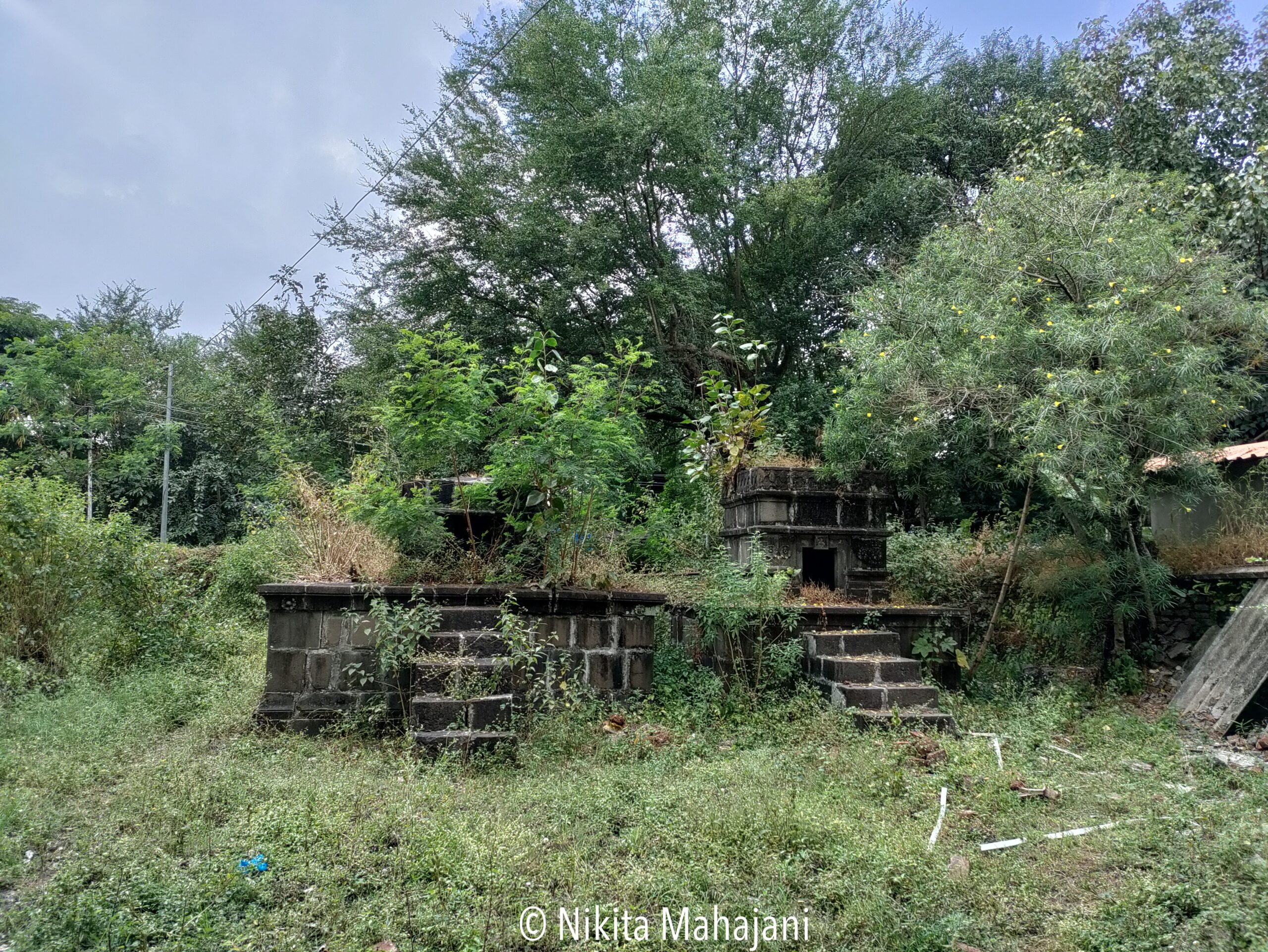
3. Aitihasik Barav – Maval
From there, we moved on to Aitihasik Barav (Maval’s historical stepwell). The architecture of this ancient stepwell is fascinating, and Sophie loved exploring the cool stone surroundings. It was a unique experience to take in this piece of history with her by our side.
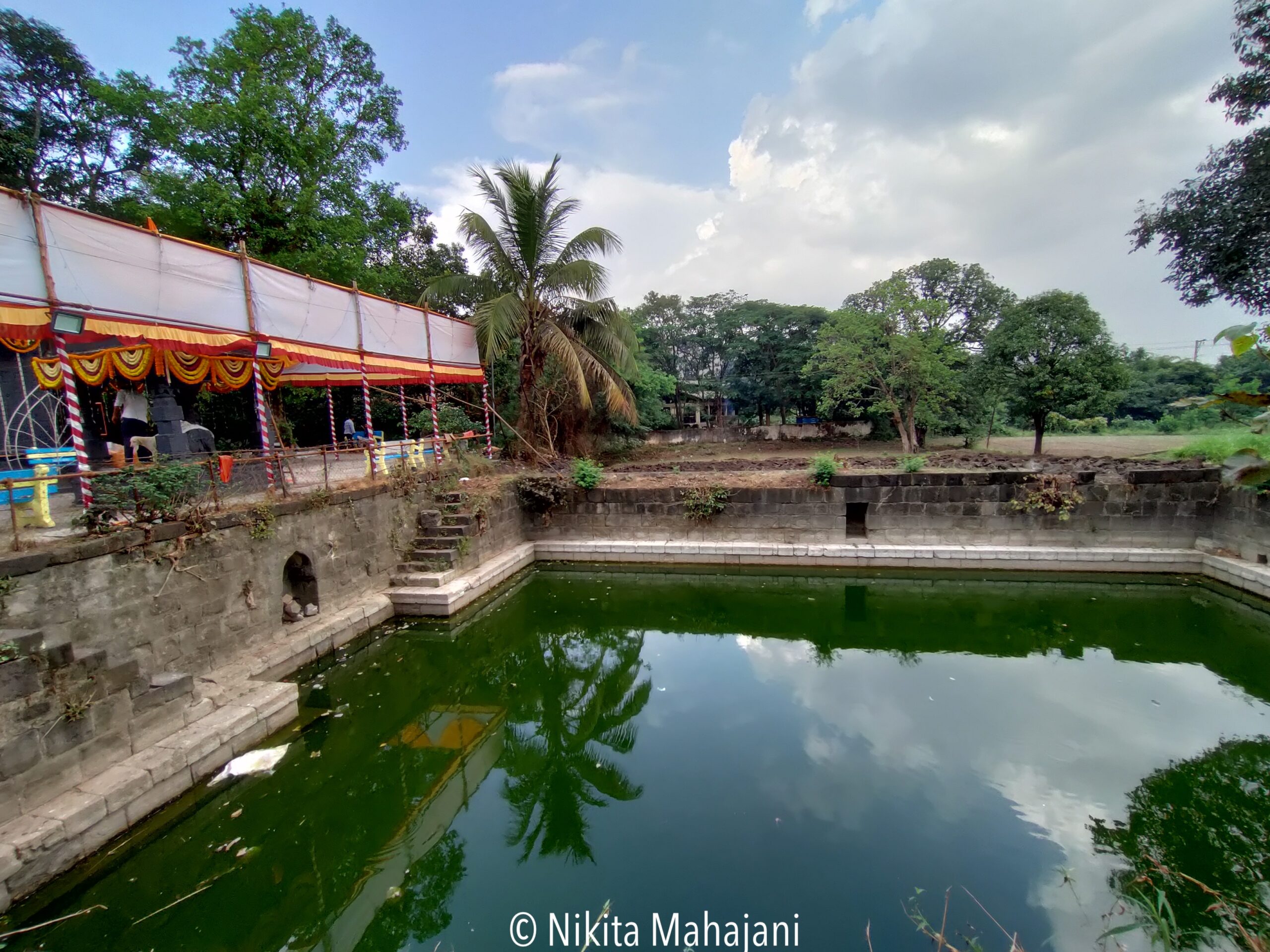
4. Baneshwar Temple
Our next stop was Baneshwar Temple, which offered a calm and inviting environment. The temple’s scenic setting and the sound of bells created a peaceful vibe that Sophie seemed to appreciate too! The space is open and inviting, making it a relaxing spot to stop for a while.
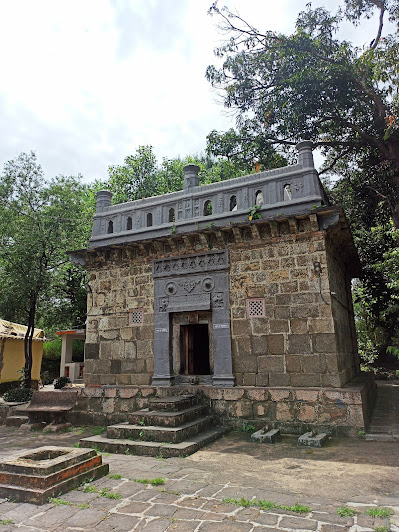
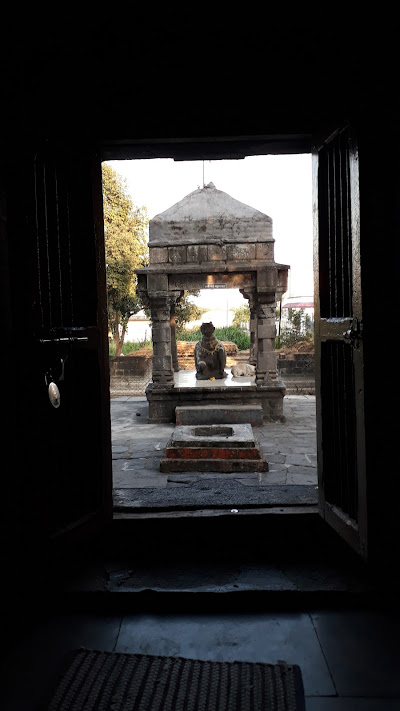
5. Ghumatachi Vihir, Talegaon Dabhade
Ghumatachi Vihir is another architectural marvel, and this heritage site was a captivating experience. Sophie seemed curious about the historical layout and enjoyed following us around the vihir (well). We spent some time here, capturing photos and taking in the intricate stonework.
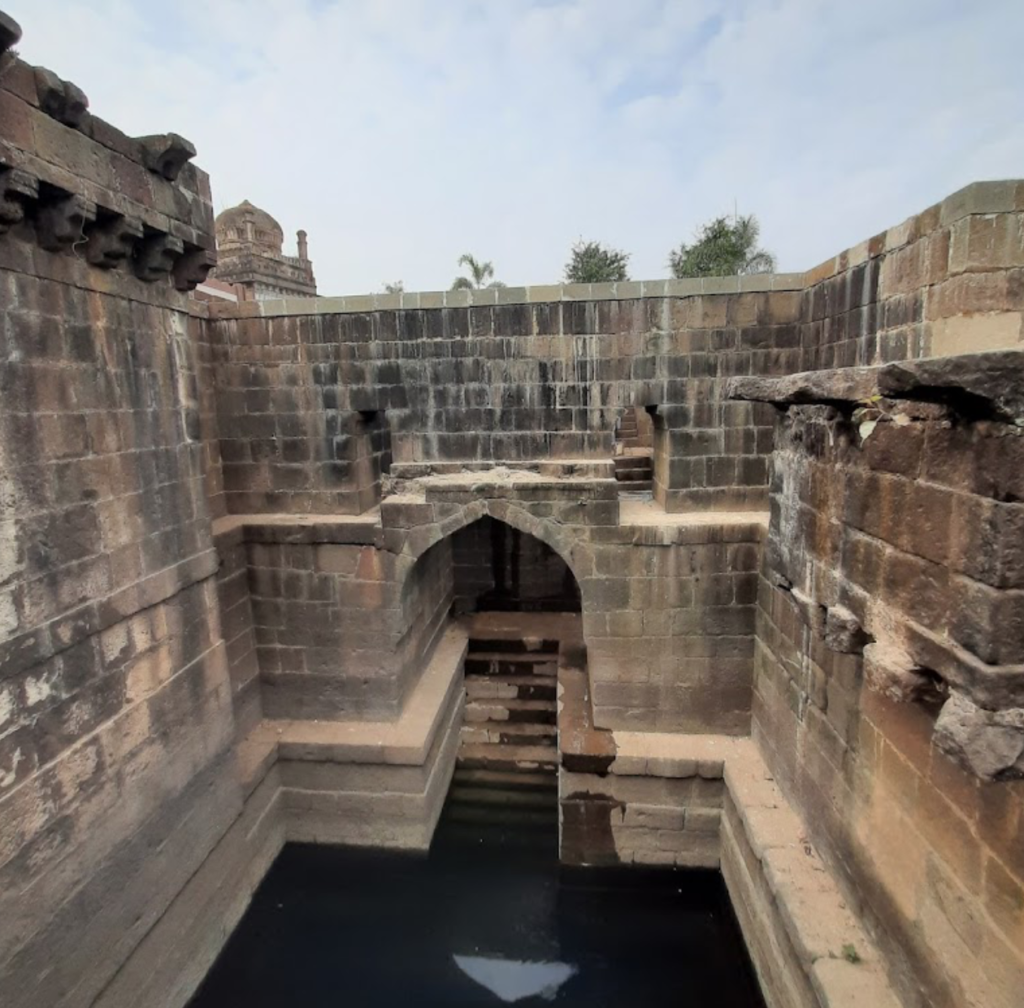
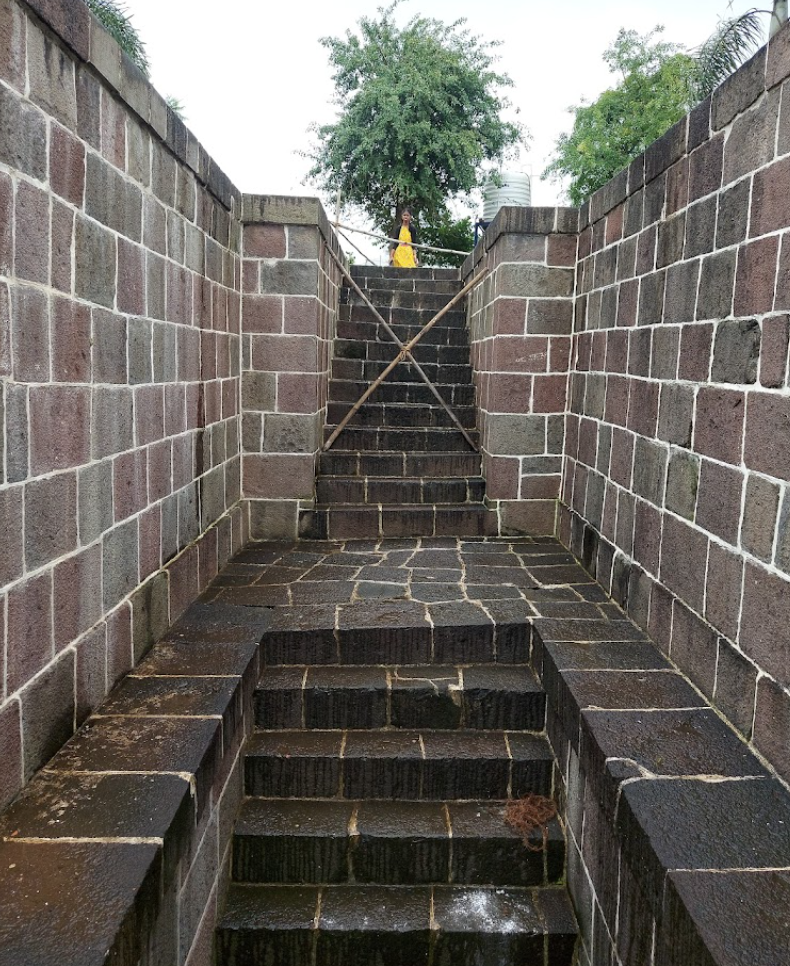
6. Kedareshwar Mandir
Kedareshwar Mandir was our next stop, a beautiful old temple with traditional architecture and a quiet ambiance. Sophie was happy to explore and take in the fresh air, while we admired the surroundings and soaked in the temple’s history.
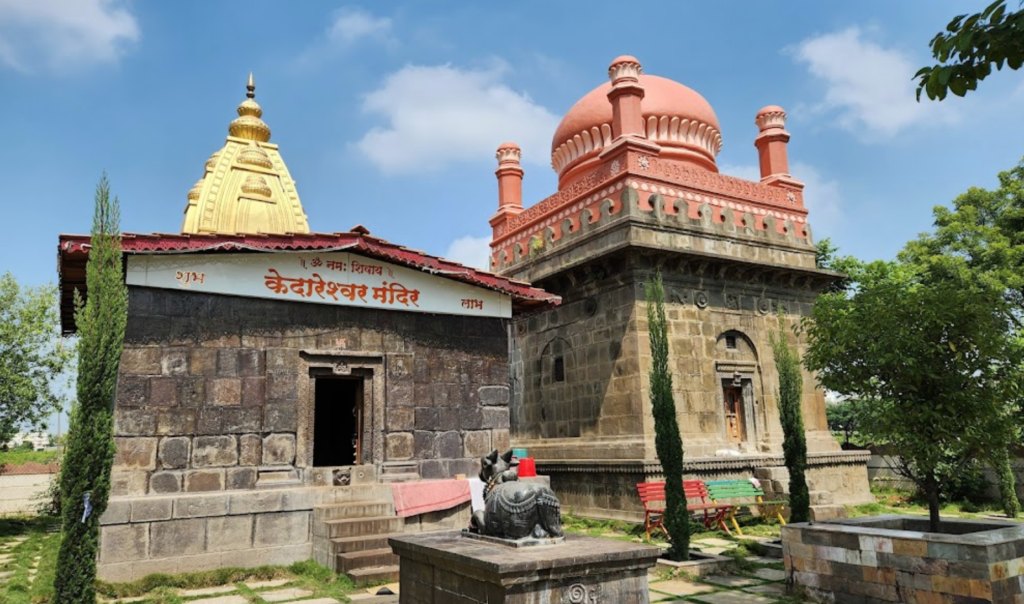
7. Bamandoh and Pach Pandav Temple
Our journey then took us to Bamandoh and the Pach Pandav Temple, both offering more history and mythology. The Pach Pandav Temple is a serene location with intriguing tales tied to it, which made our visit feel all the more mystical. These stops were perfect for winding down after a day full of sightseeing.
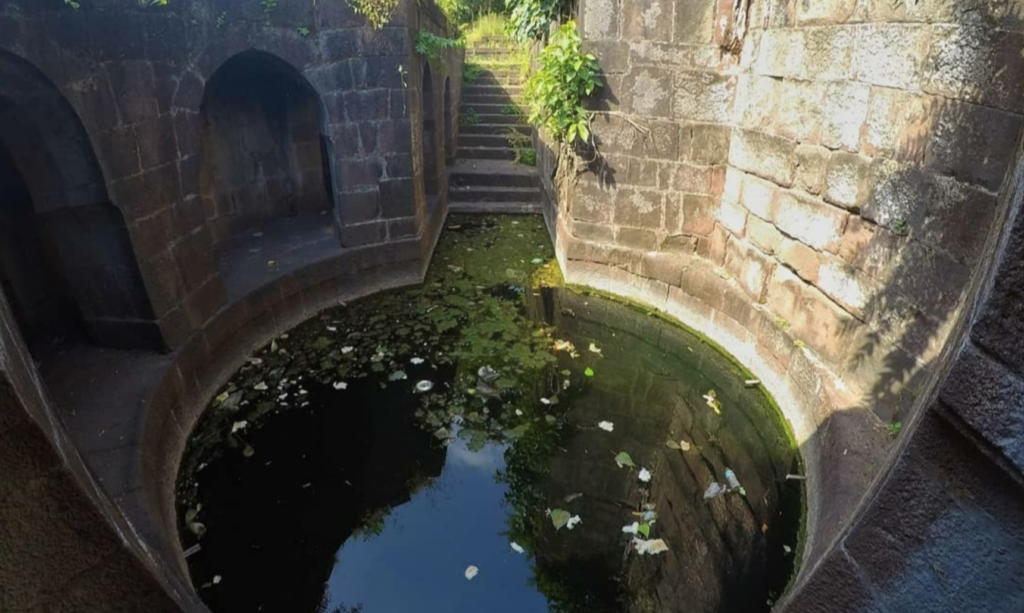
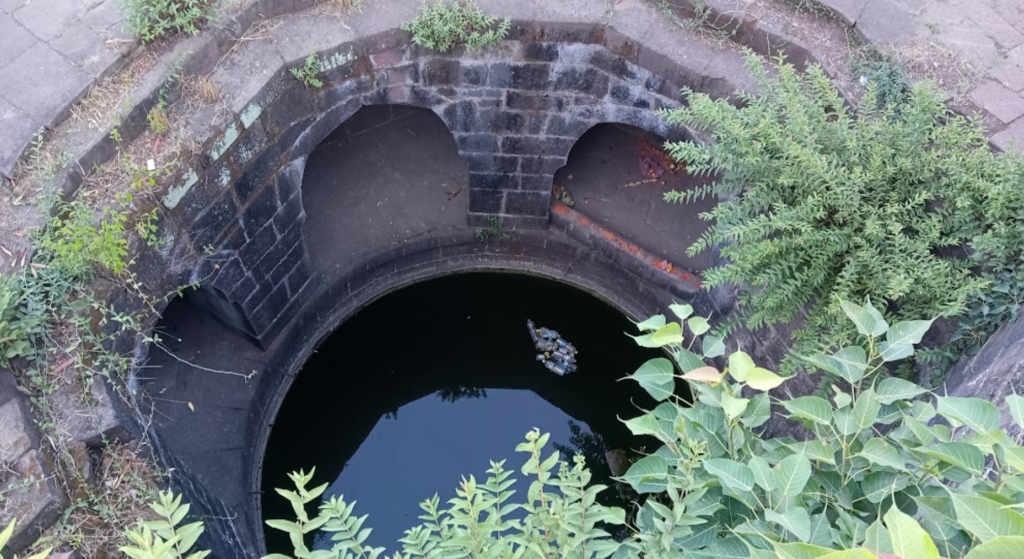
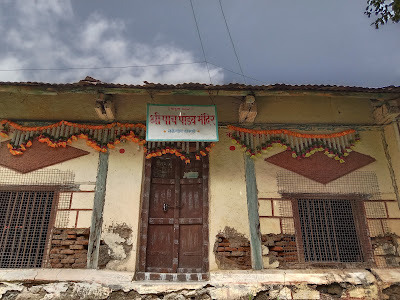
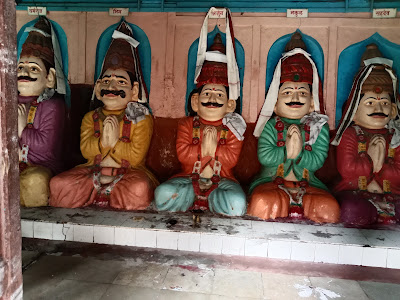
Evening Return
As the day drew to a close, we began our journey back to Pune. By the time we arrived home at 7:00 pm, we were fulfilled and grateful for a day spent exploring Maharashtra’s history with Sophie along for every step.
Talegaon Dabhade was a fantastic choice for a quick, history-filled day trip that welcomed our furry friend wholeheartedly. If you’re looking for an educational and scenic getaway near Pune, it’s definitely worth exploring!
Bhigwan
A Pet-Friendly Day Trip to Bhigwan: Exploring Temples and Forts with Sophie
Last weekend, my husband, our adventurous dog Sophie, and I decided to spend a day exploring Bhigwan and its nearby attractions. This was our chance to dive into the rich history of Maharashtra, visit serene temples, and enjoy scenic spots—all with our furry friend in tow! Here’s a look at our pet-friendly journey and the memorable places we explored.
Morning Start and Brunch at Vitthal Kamat, Yavat
We set out from Pune early in the morning, aiming to make the most of our day. Bhigwan is about 125 km away, a 2.5-hour drive, so the journey was perfect for a relaxed road trip with Sophie. Our go-to spot for brunch on the Pune-Solapur route is Hotel Vitthal Kamat in Yavat. They always allow pets on request, and the staff is incredibly welcoming. Sophie enjoyed her break while we savored some Maharashtrian specialties, and soon we were back on the road, energized and excited!
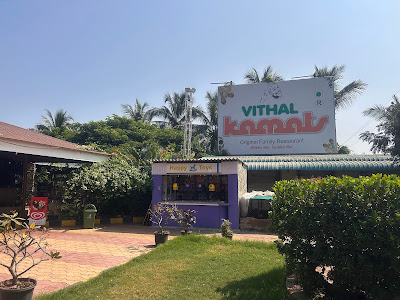
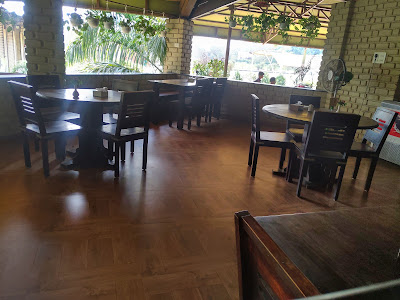
Boat Ride to Palasnath Temple
Our first destination was the Palasnath Temple on the banks of Ujani Dam. Reaching this temple is an adventure in itself since it’s accessible only by boat, adding a unique thrill to the trip. During monsoon, the temple is submerged by the dam’s waters, reemerging in the dry seasons of summer and winter, making our visit feel even more special. Sophie, a natural water lover, seemed thrilled by the boat ride, and it was a peaceful moment for all of us, surrounded by the calm of Ujani Dam.
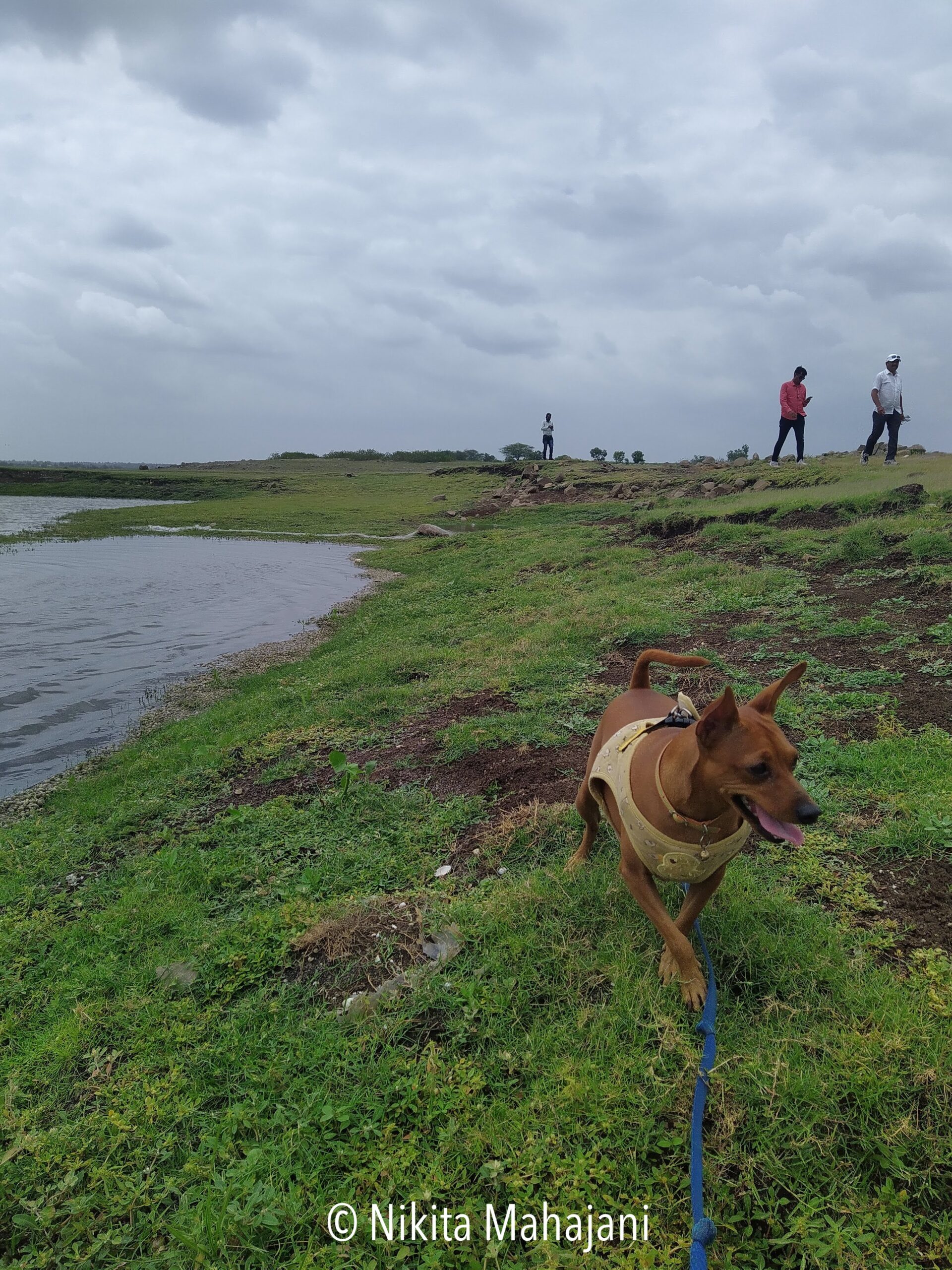
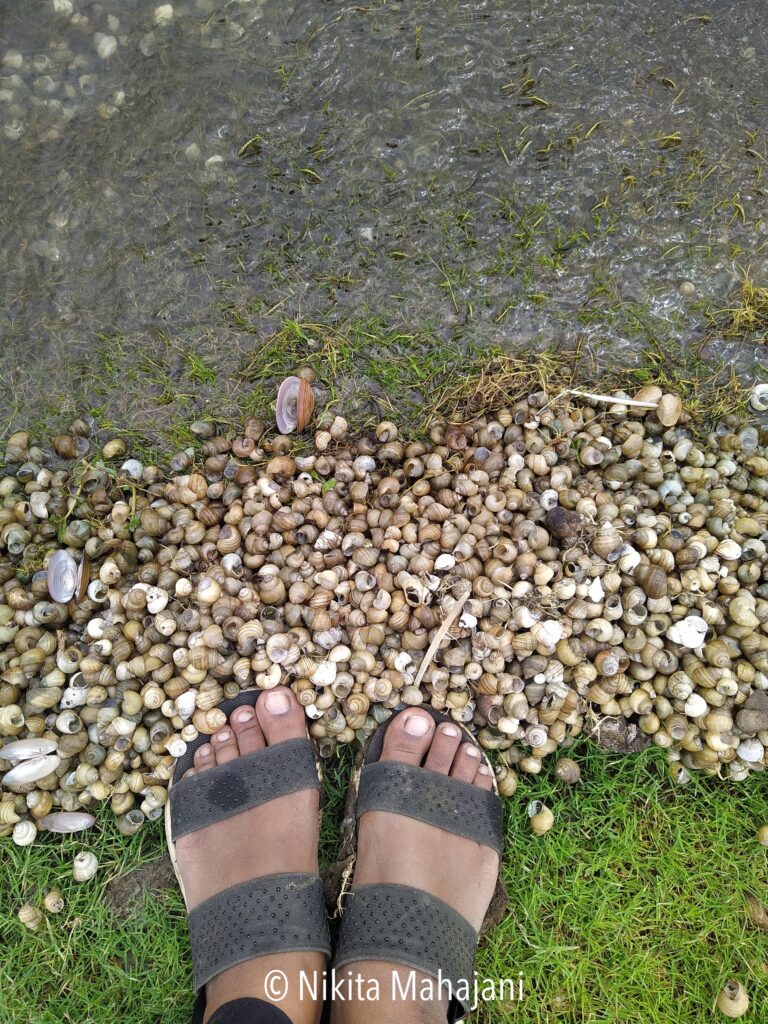
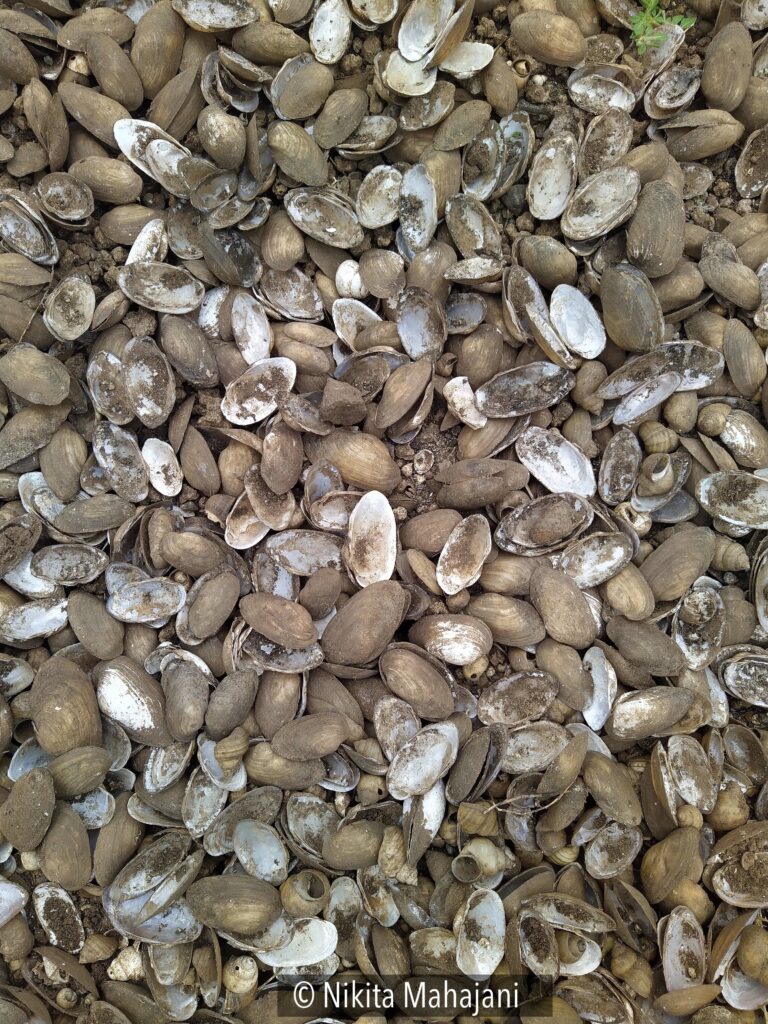
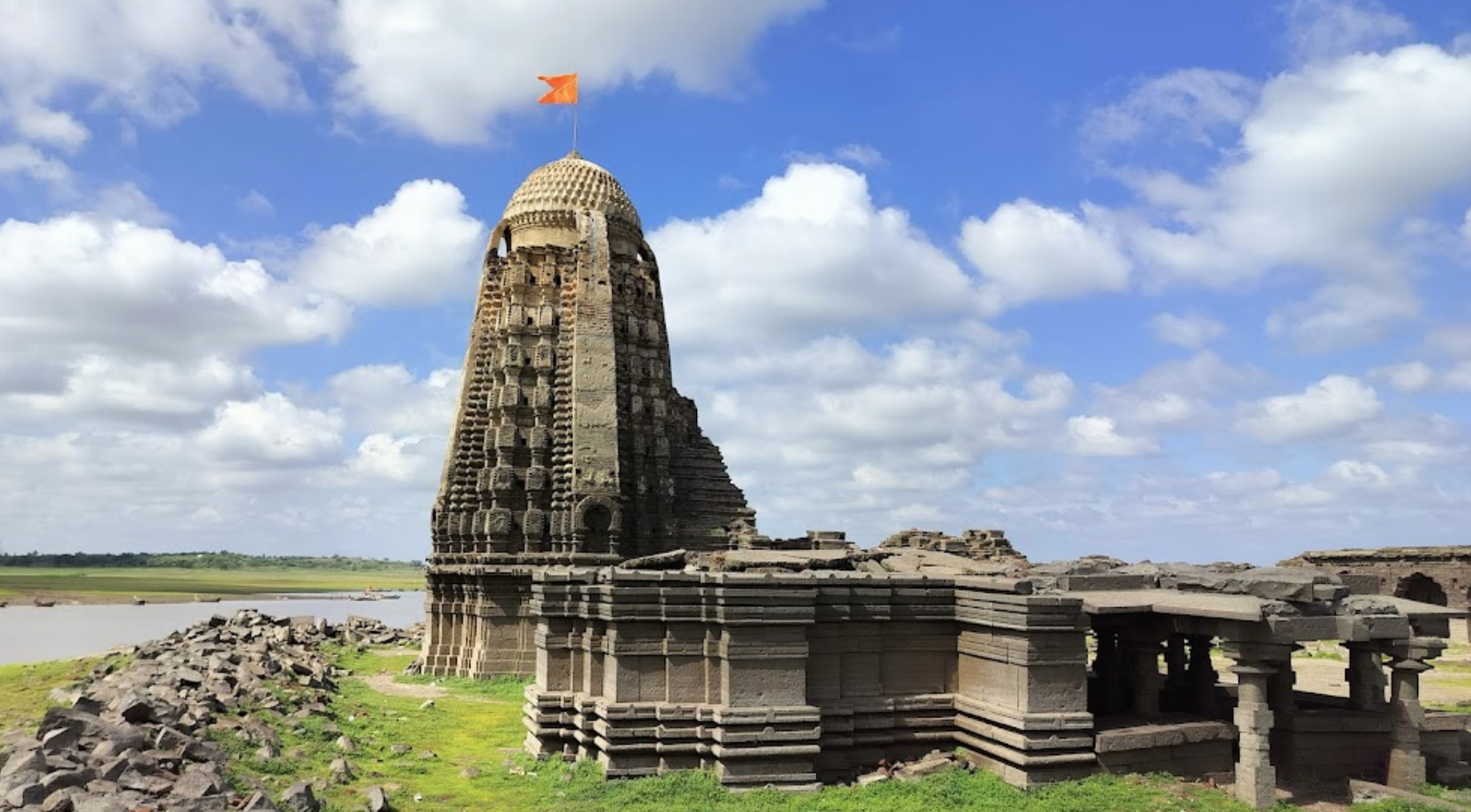
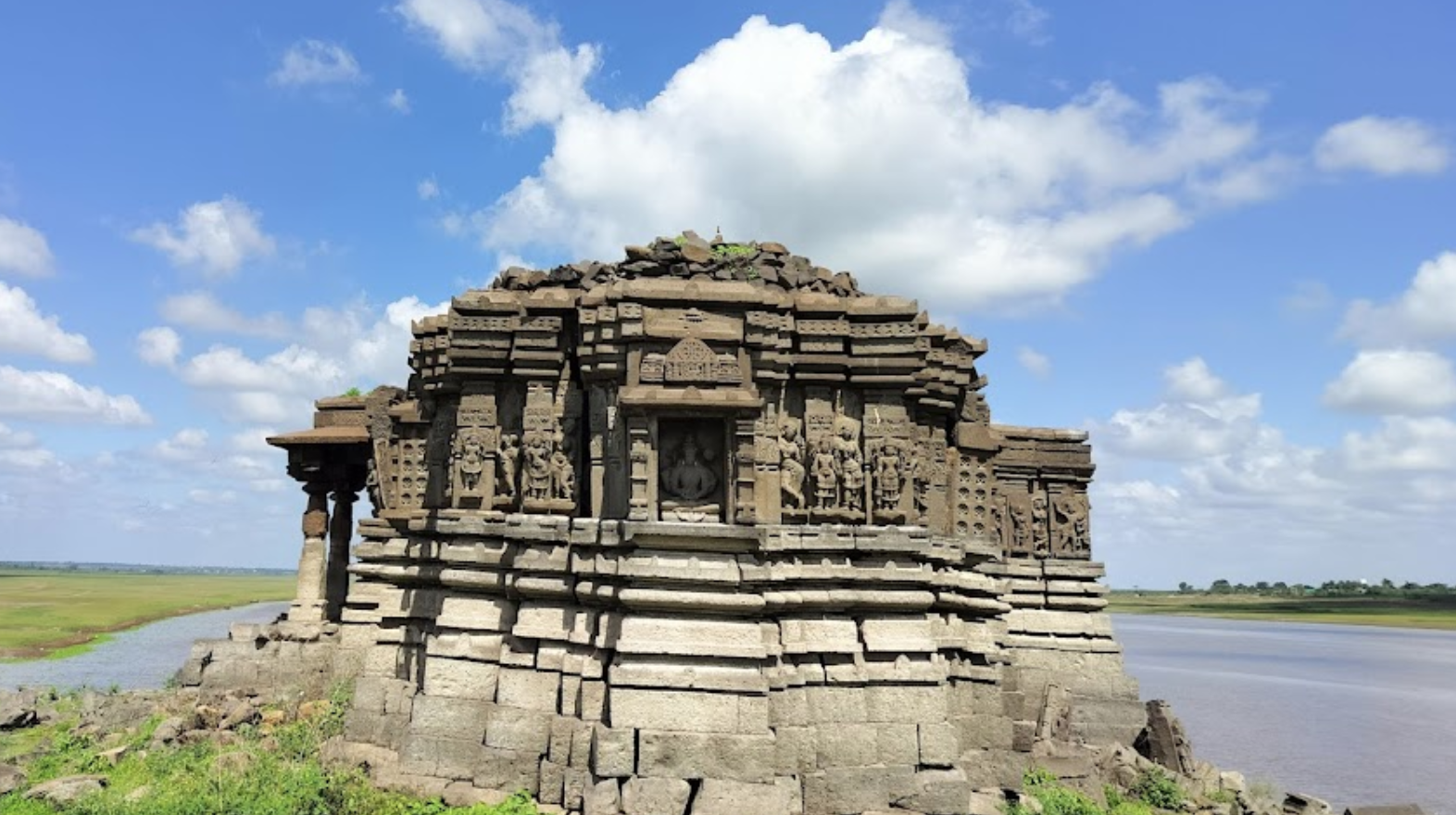
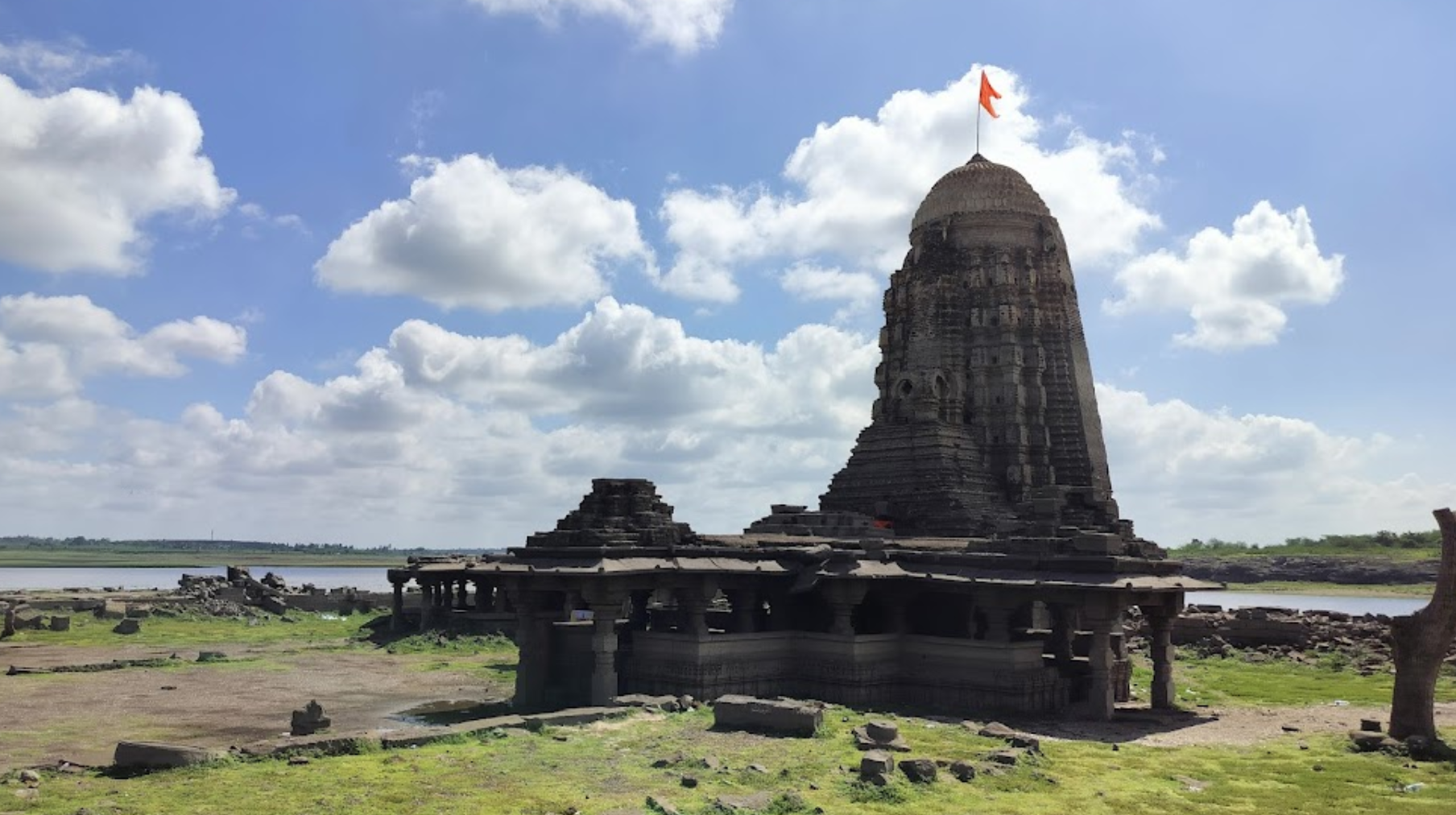
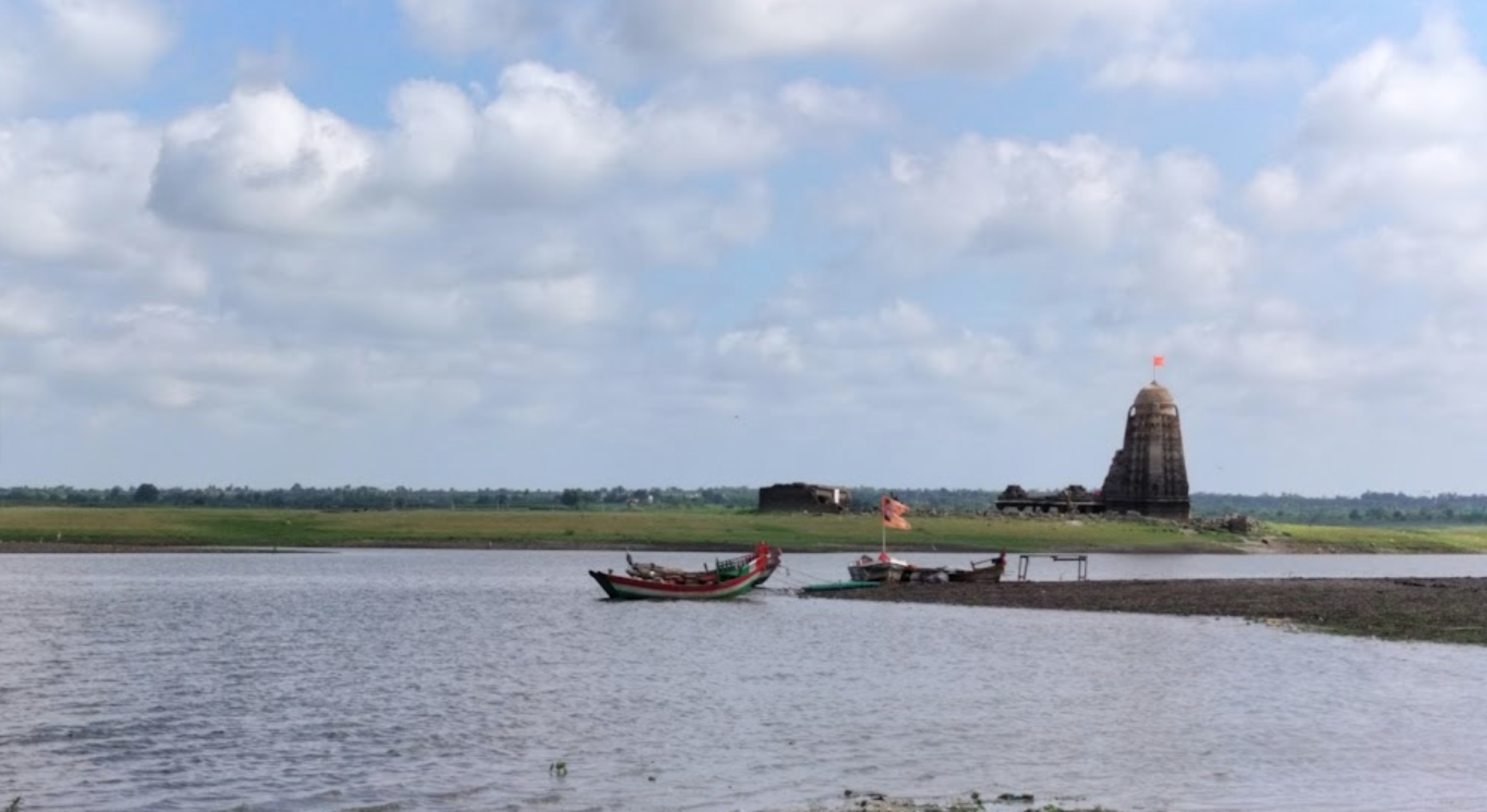
Exploring Parwadi Fort
After a serene temple visit, we set off to Parwadi Fort. This fort, rich in history and nestled in the Bhigwan landscape, offered great views and quiet spots for rest. Sophie loved exploring the grounds, while we soaked in the sights and learned a bit about the fort’s past. The open, expansive spaces were ideal for Sophie, who seemed to enjoy every sniff and stroll.
A Visit to Shri Shirsai Temple, Shrisuphal
Our next stop was Shri Shirsai Temple in Shrisuphal. This temple is a beautiful, calm spot, perfect for unwinding and reflecting on the day so far. By this time, Sophie was getting accustomed to our temple-hopping adventure, and it was lovely to have her by our side as we visited these spiritual places.
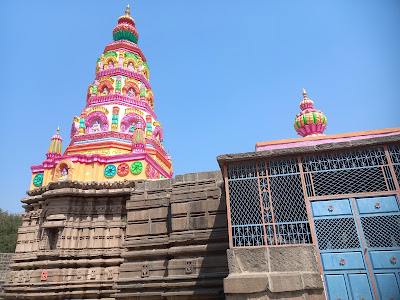
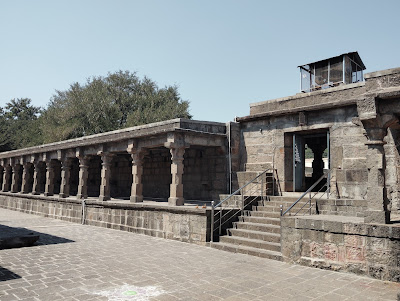
Wrapping Up at Bhuikot Fort, Supe
As the day wore on, we headed to Bhuikot Fort in Supe. With the sun setting, this fort provided a perfect place to end our explorations. The fort’s tranquil surroundings made it an ideal spot to relax and take in the evening breeze. We spent some time here, resting and reminiscing on the day’s highlights before starting our journey back.
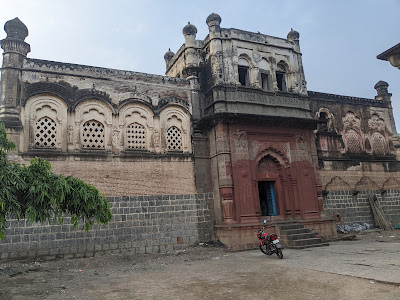
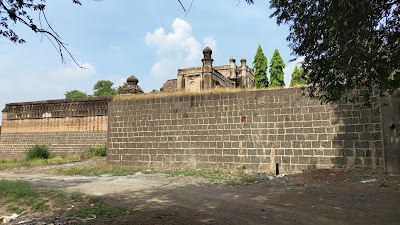
Evening Hi-Tea at Shree Leela World Veg Cuisine
On our way back to Pune, we stopped at Shree Leela World Veg Cuisine for a quick hi-tea. This is another of our favorite spots when returning from trips, as they always welcome Sophie warmly. We enjoyed some tea and snacks, winding down from the eventful day.
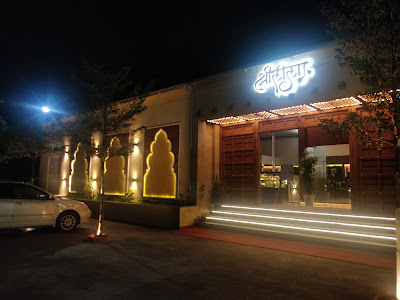
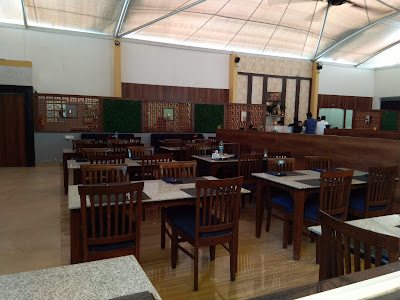
Final Thoughts
This day trip to Bhigwan was an excellent mix of history, nature, and spirituality, and every spot we visited had something unique to offer. Having Sophie with us made it all the more memorable, proving once again that travel with pets is entirely possible with a little planning.
This road trip to Bhigwan is a must for anyone looking for a pet-friendly adventure near Pune!
Where did we eat ?
Shree Leela World veg cuisine, Uruli Kanchan
Hotel Vitthal Kamat, Yavat
Temples of Pune-Satara road
Road trips with our furry companion Sophie are always special, but this one-day adventure along the Pune-Satara road (NH 48) was a delightful blend of history, nature, and pet-friendly experiences. From ancient temples to serene forests and boating adventures, here’s how our day unfolded.
Starting the Day Right
We set out from Pune at 8 AM, Sophie excitedly perched in the backseat, ready for the day ahead. Our first stop was at Kailas Bhel Food Court in Varve for a quick breakfast. This pet-friendly food court is perfect for a bite on the go, with ample open space for pets to stretch their legs.
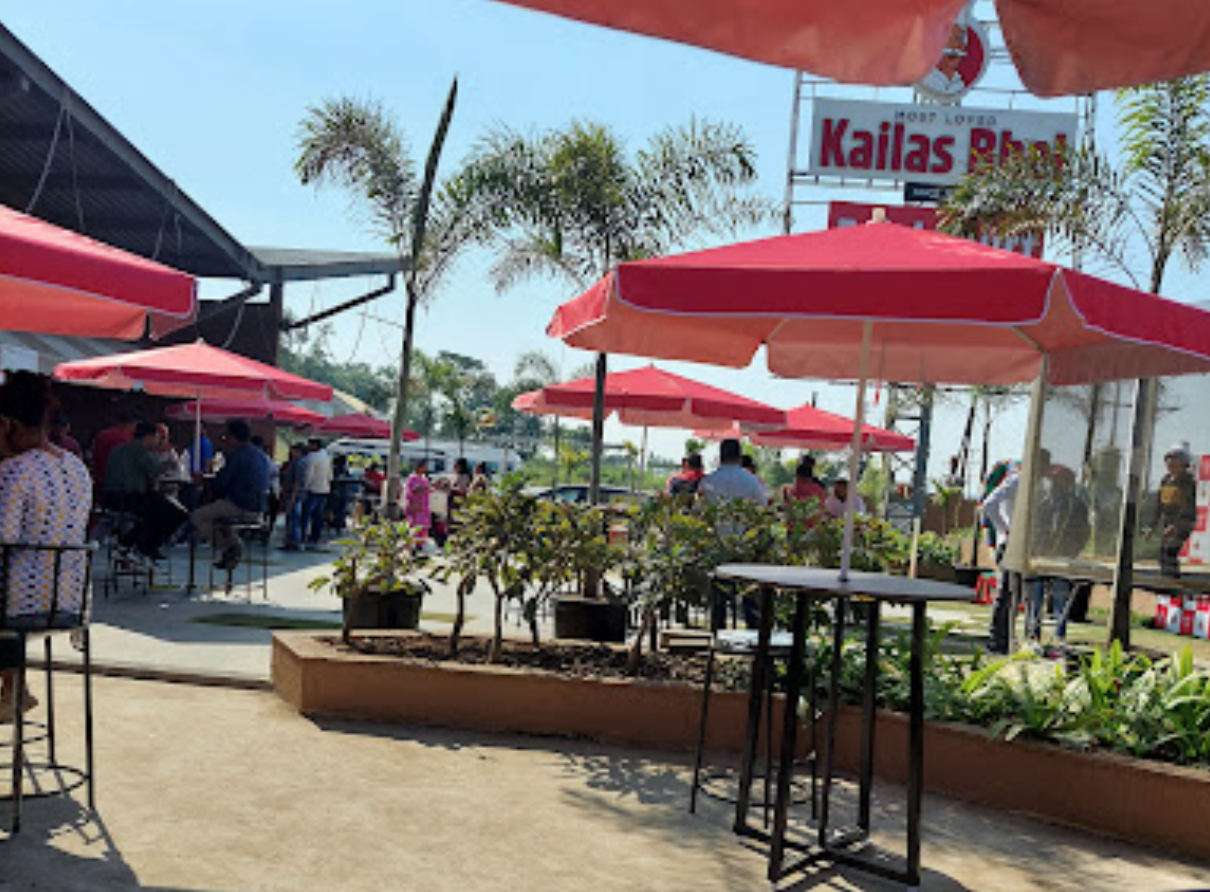
Temple Trails Begin: Adbalsiddhanatha Mandir and Shri Mandai-Kondai Mandir
Our first exploration was at the Adbalsiddhanatha Mandir, a peaceful spot with ancient roots. Sophie trotted alongside us, her curiosity piqued by the temple’s tranquil atmosphere.
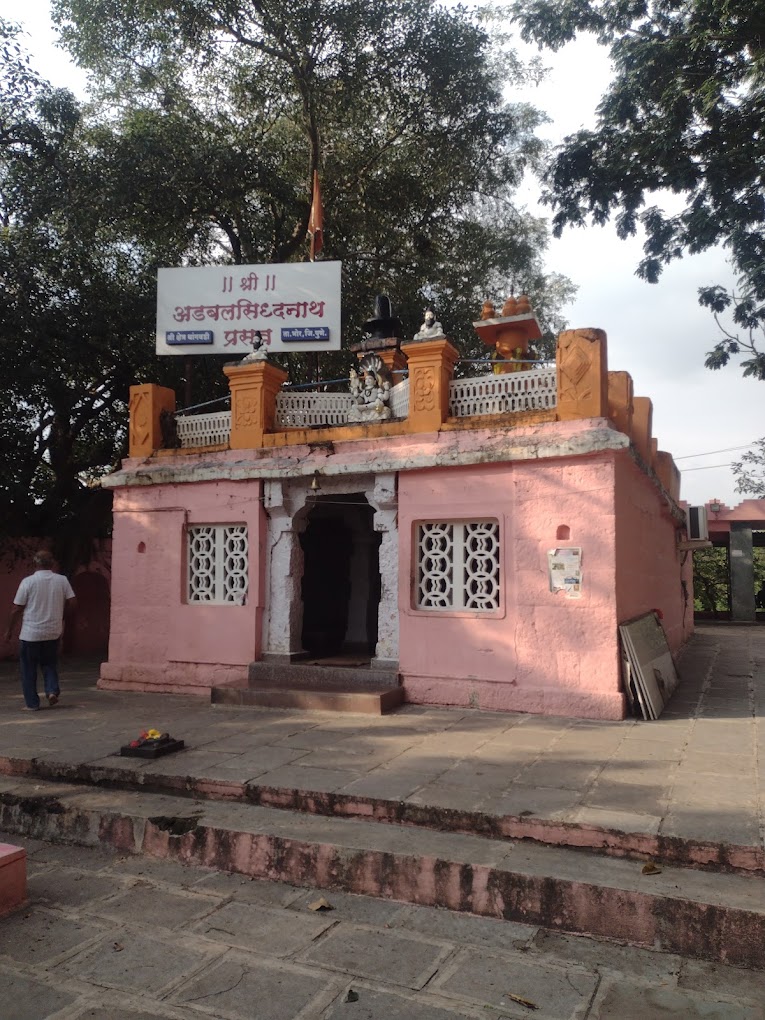
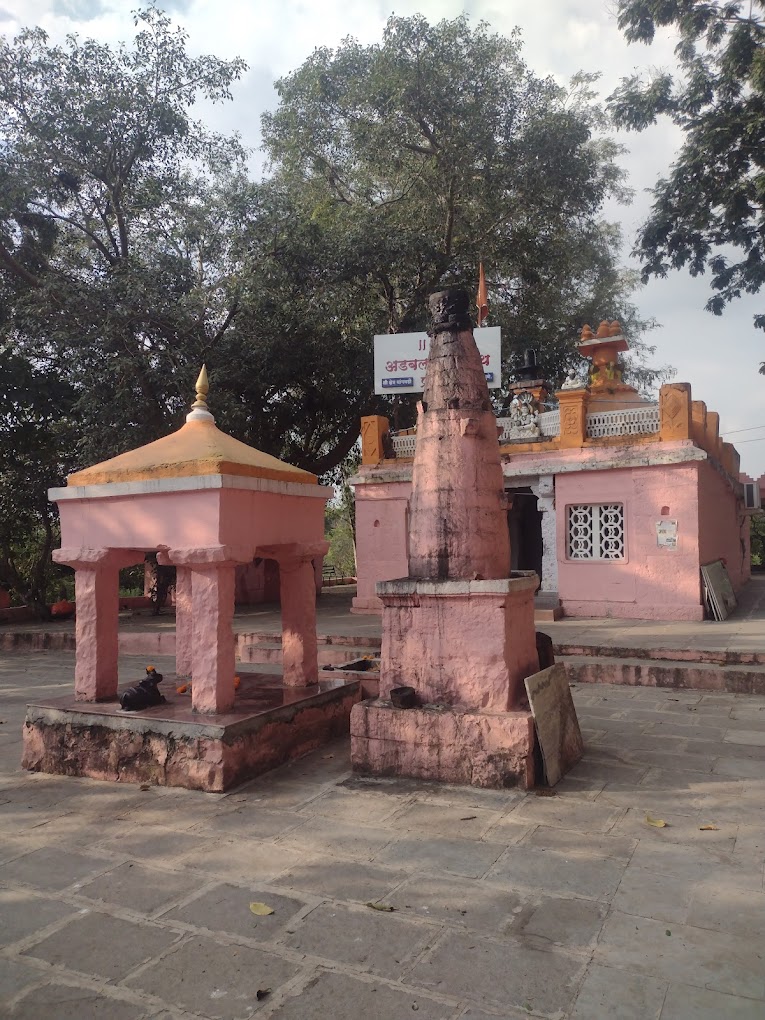
Next, we visited the Shri Mandai-Kondai Mandir, nestled amidst natural beauty. Both temples allowed us to pause and soak in the serenity, with Sophie happily sniffing around the lush surroundings.
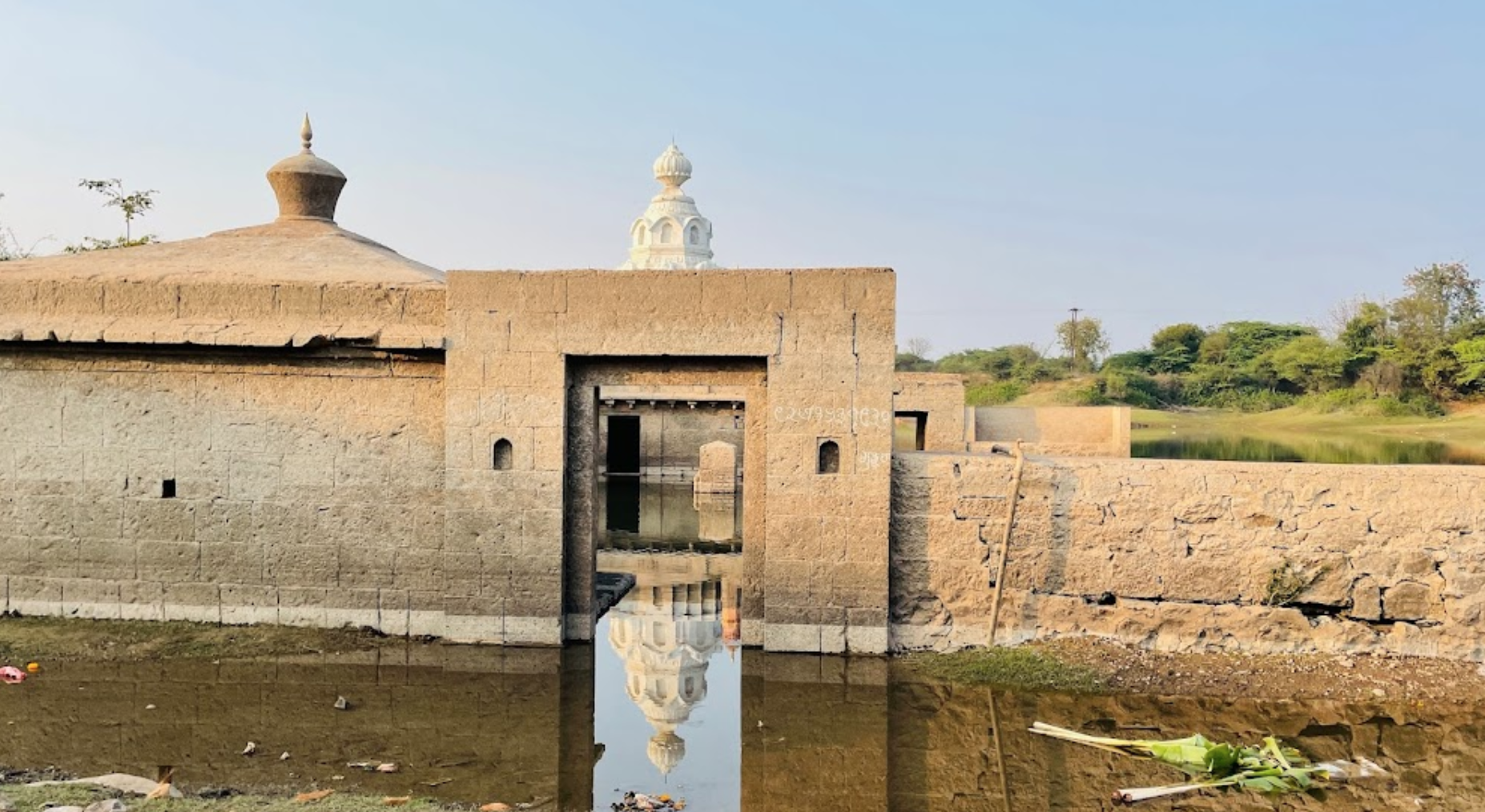
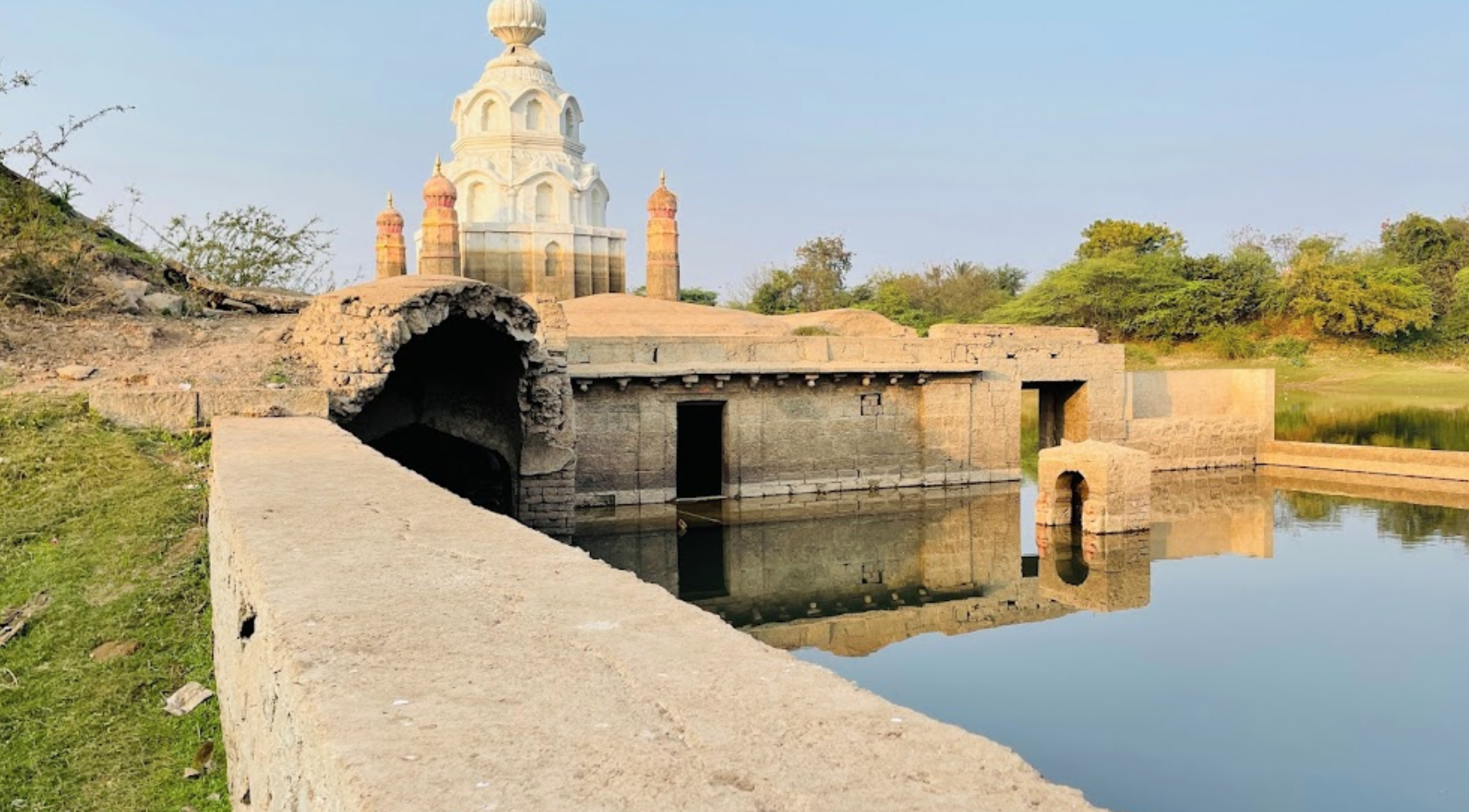
Nature and Devotion at Baneshwar Temple
The highlight of the trip was the Baneshwar Temple, a perfect blend of spirituality and nature. The temple grounds are expansive and pet-friendly, making it a great spot for Sophie to explore.
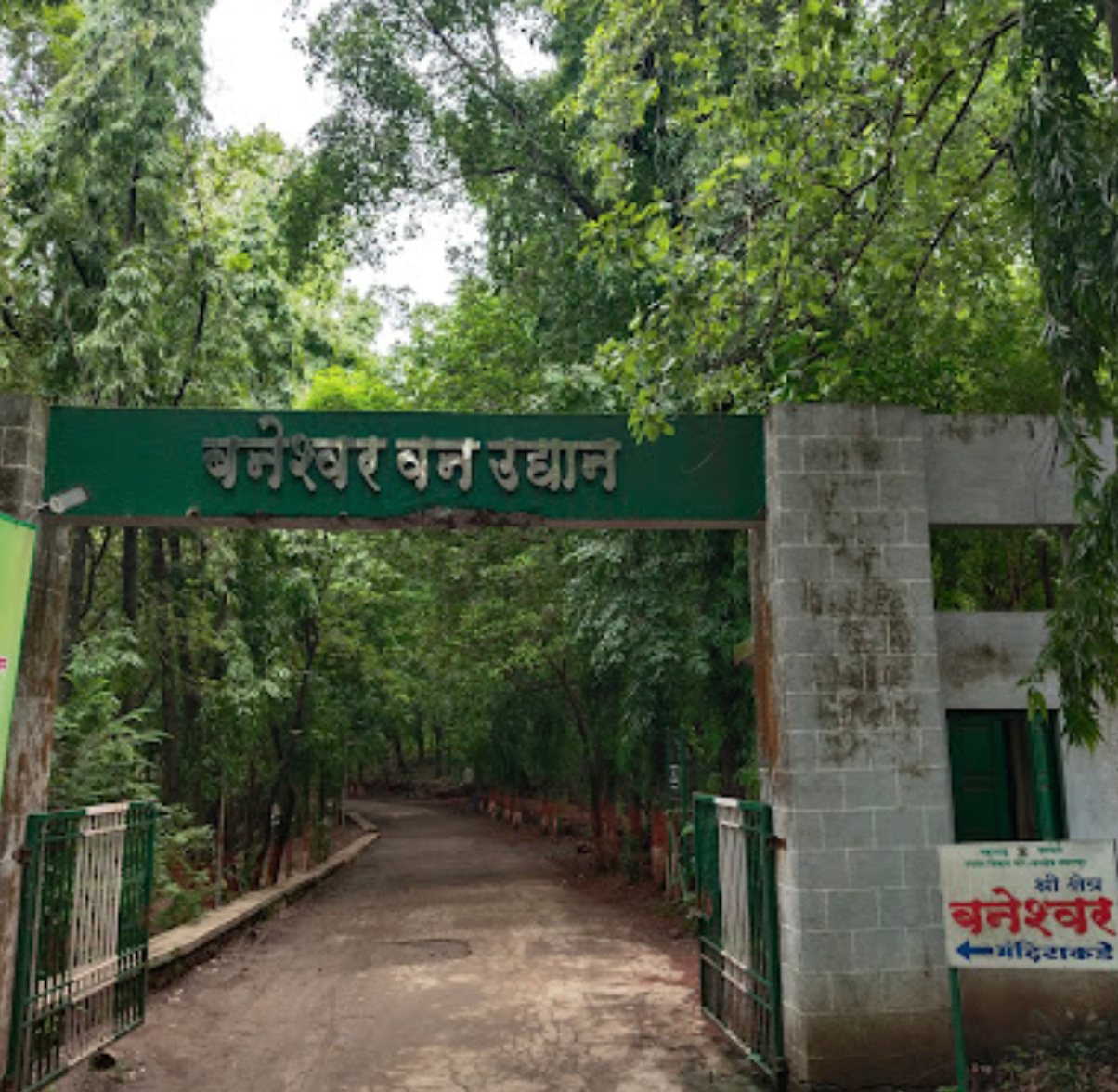
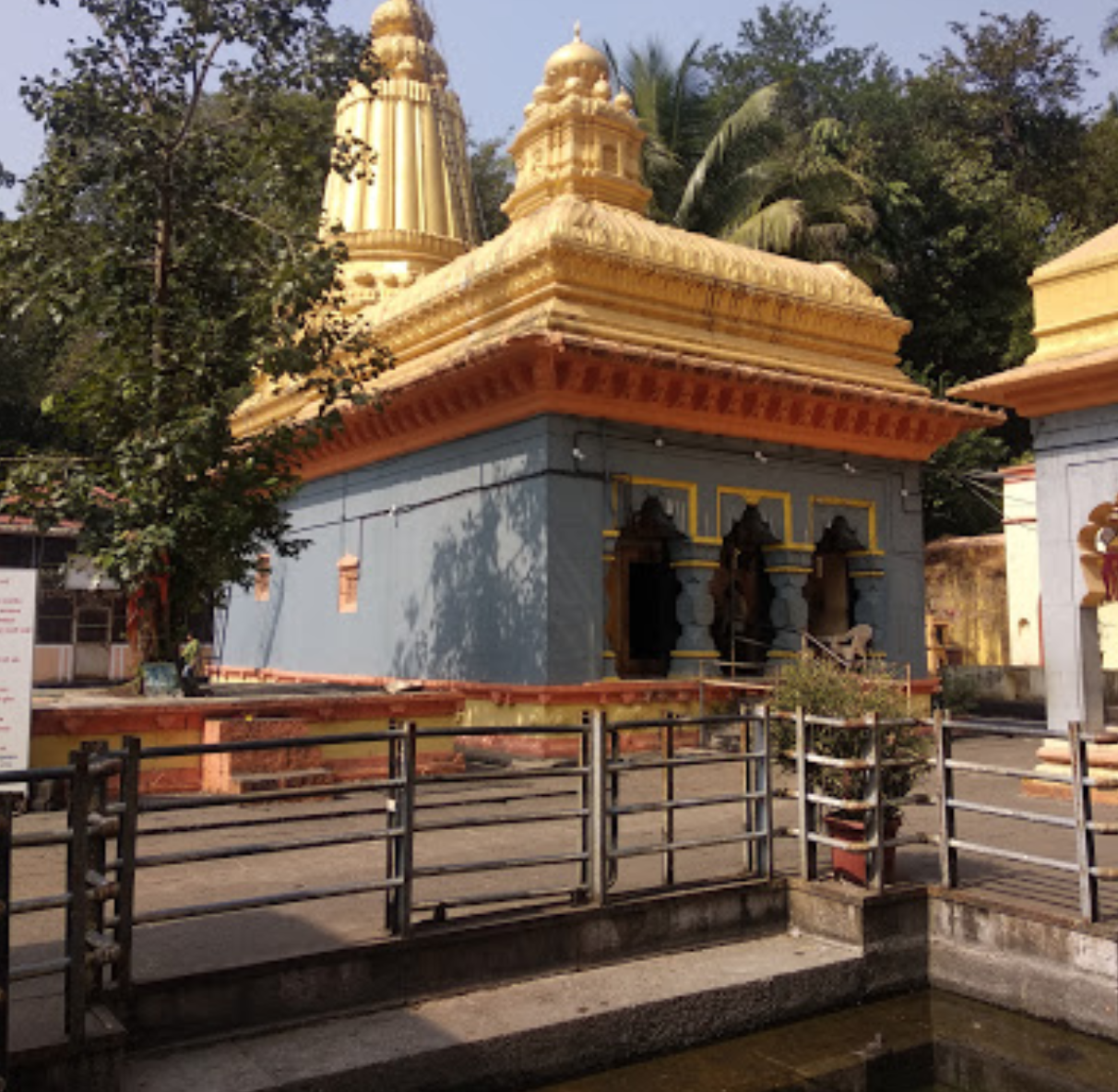
We walked through the Baneshwar Forest, a serene, paved pathway that leads to a hidden gem—the Baneshwar Waterfall. Sophie loved the forest trail, and her excitement was contagious as she explored the natural wonders around us.
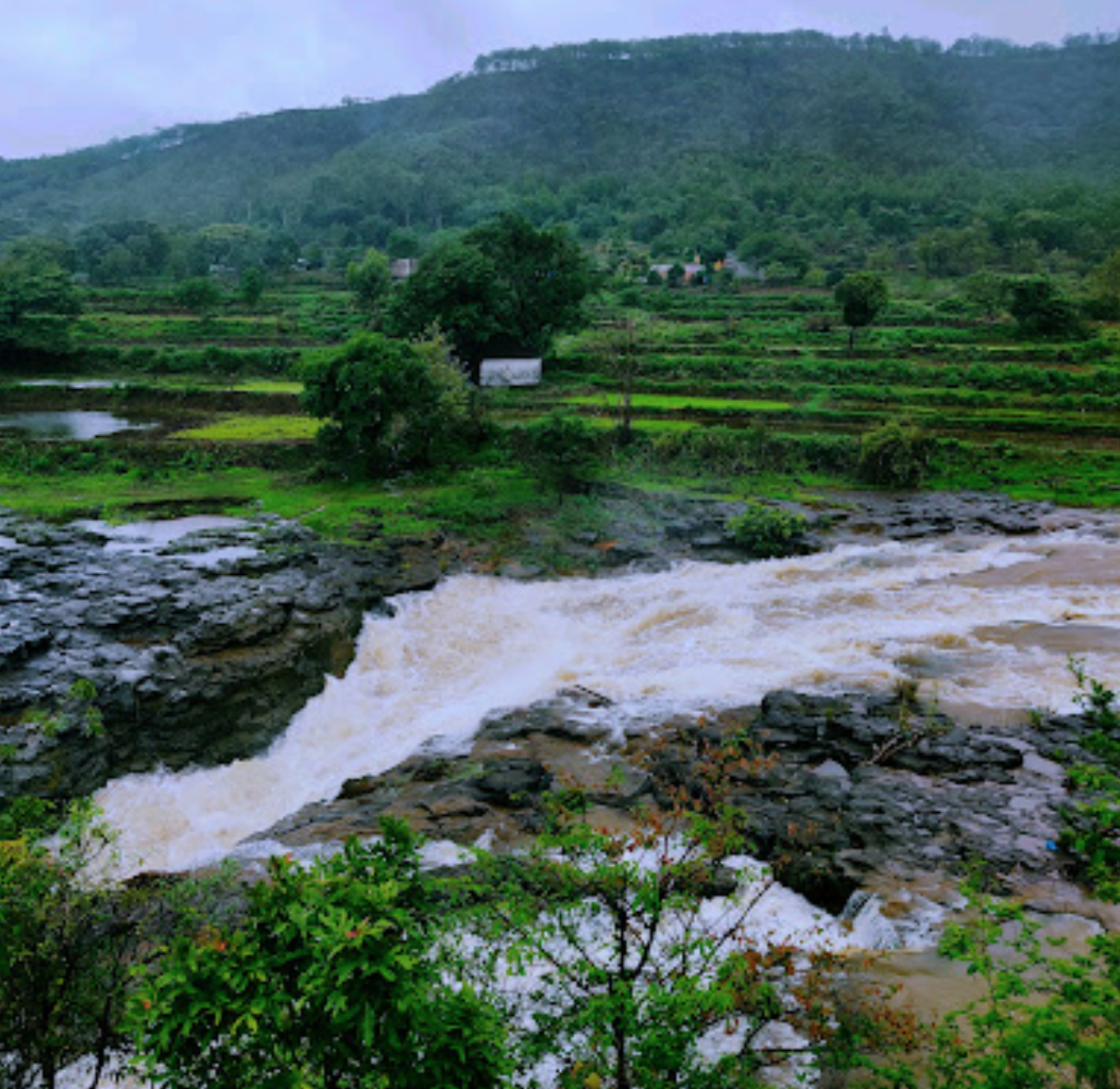
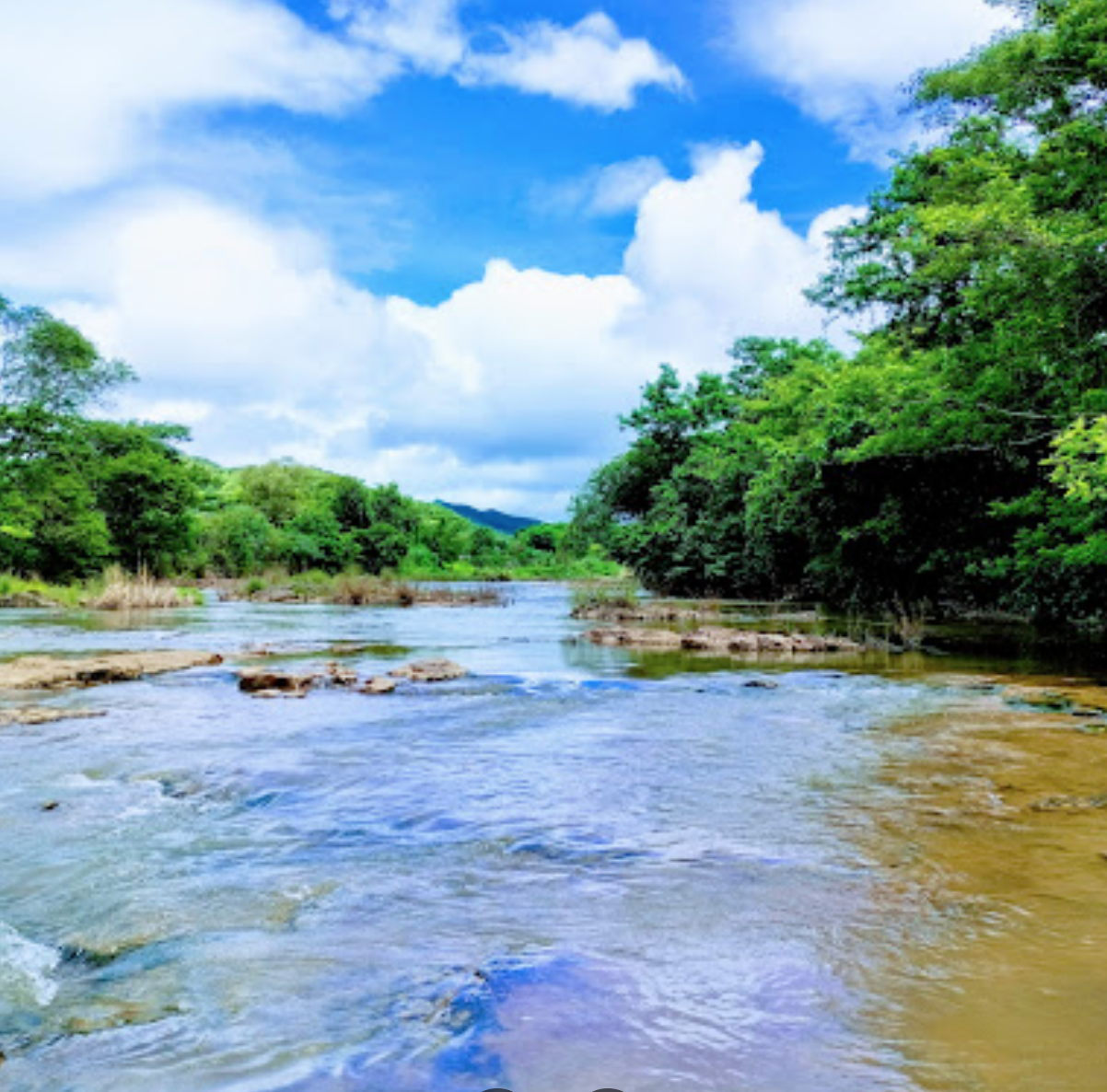
A Sacred Stop: Ranjeshwar Temple
Post our forest adventure, we visited the Ranjeshwar Temple, a small yet charming shrine with an aura of peace. Sophie sat quietly as we admired the temple’s architectural beauty, proving that even our four-legged companions can appreciate cultural heritage!
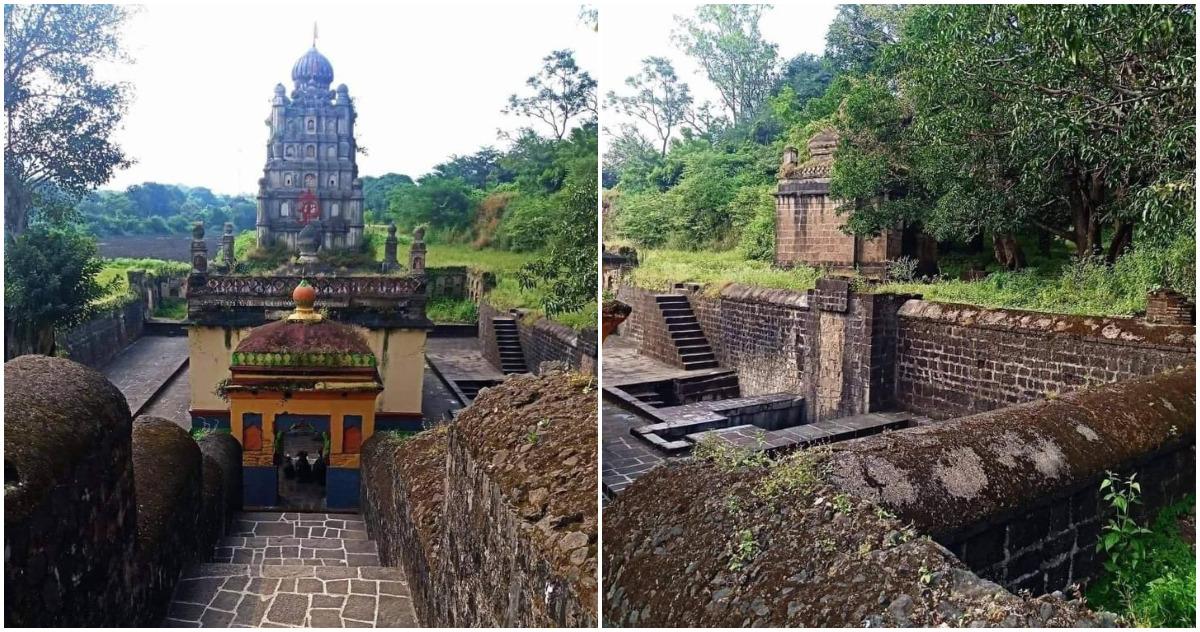
Lunch Break at Kailas Bhel, Shivapur
For lunch, we returned to another branch of Kailas Bhel, this time in Shivapur. The staff was welcoming and accommodating, ensuring Sophie had her space. With delicious food and a relaxed ambiance, it was the perfect midday break.
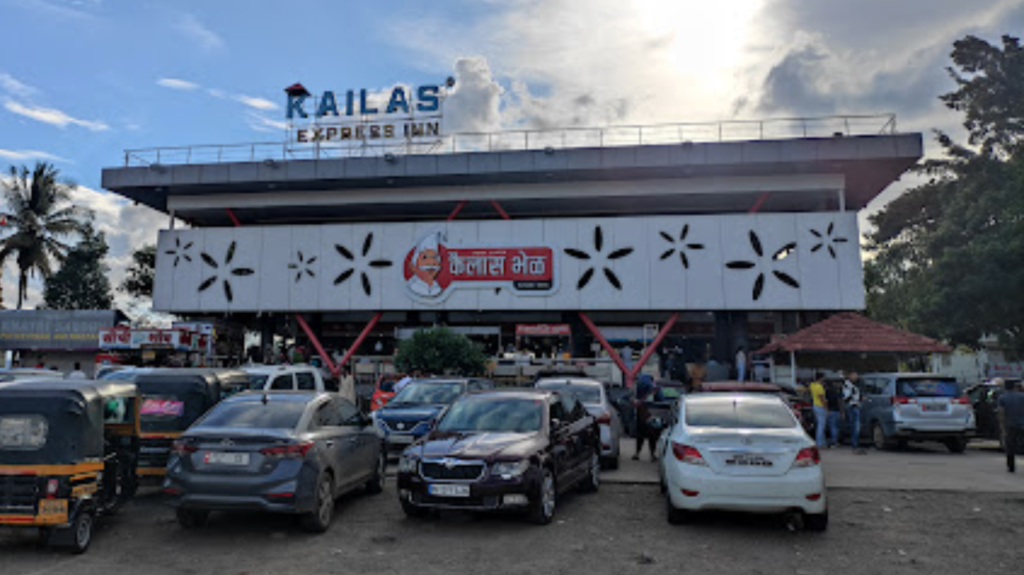
Evening Delight: Boating at Devadi Dam
As the sun began to dip, we headed to Devadi Dam, where boating awaited. The serene waters and the calming atmosphere made this an unforgettable experience. Sophie, safely tucked into the boat, enjoyed the gentle ripples of the water and the cool breeze brushing through her fur.
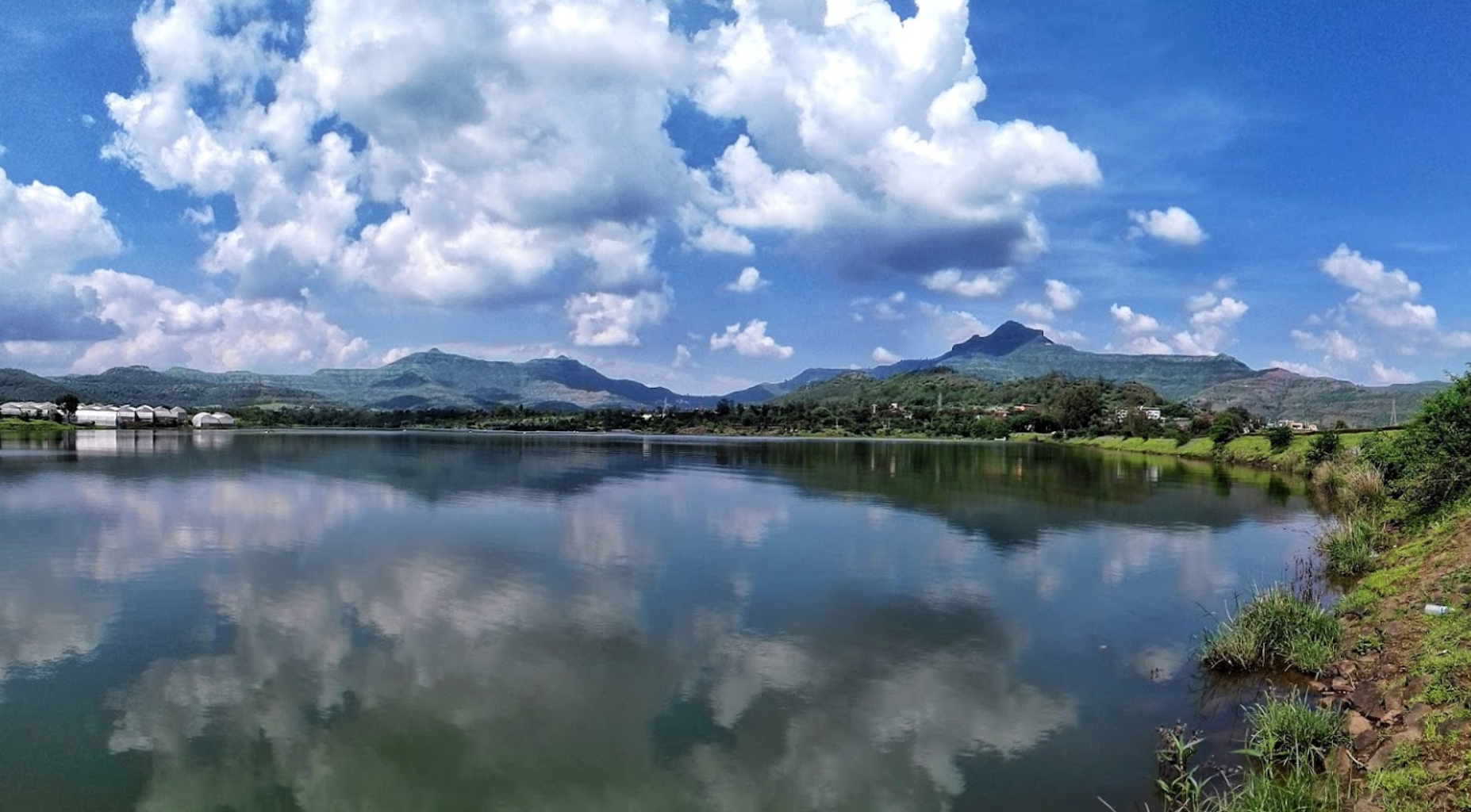
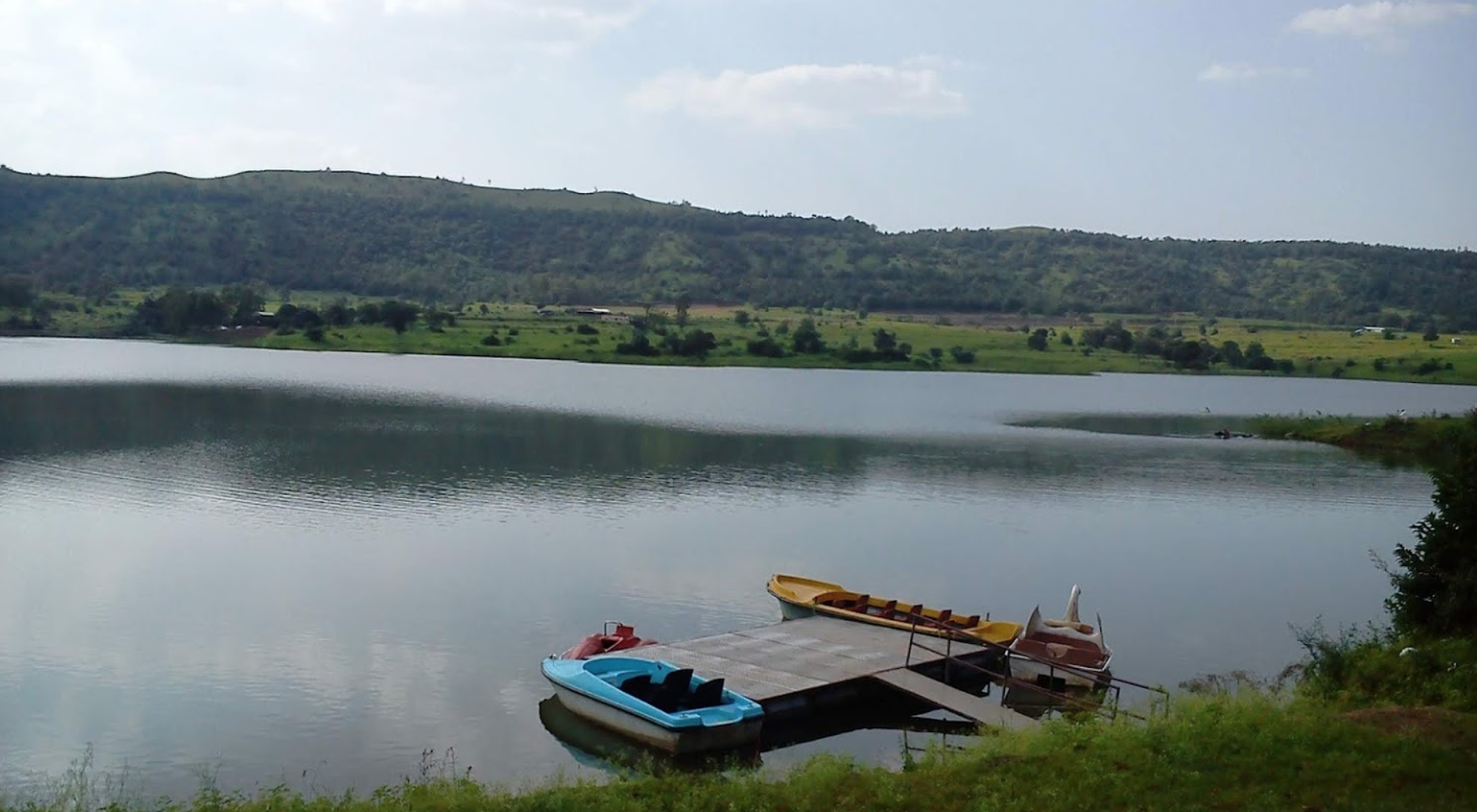
Relaxing by the Lake
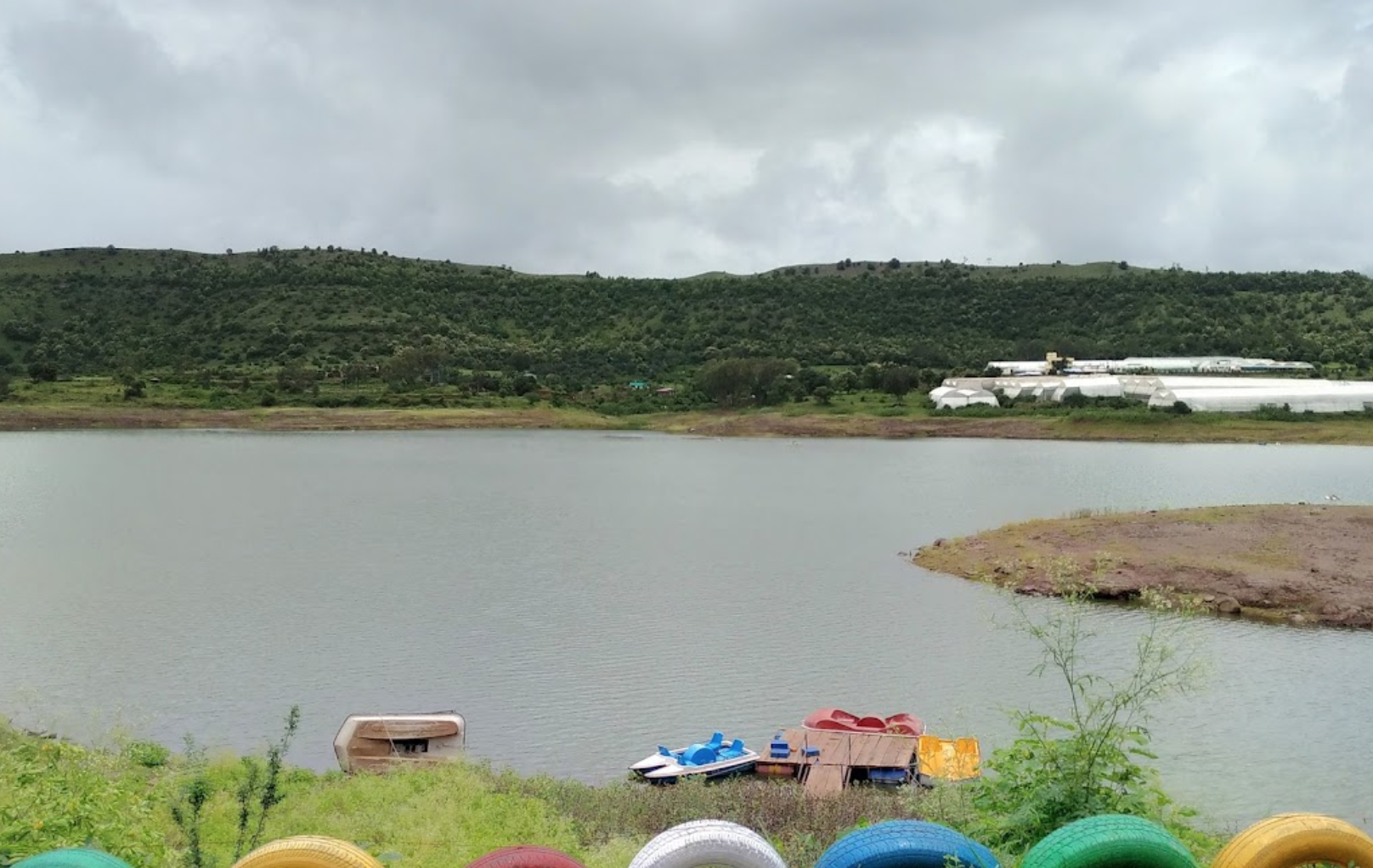
We ended our day with tea and snacks at Lakeview Resort, located near Devadi Dam. The resort’s open-air seating and proximity to the lake made it a cozy spot for winding down. Sophie lounged comfortably while we enjoyed steaming hot tea and crispy snacks, a fitting end to our adventure.
Heading Home
We started our journey back home as twilight set in, with Sophie curling up contentedly in the backseat. By 7:30 PM, we were back in Pune, carrying memories of a day well spent exploring the spiritual and natural wonders of the Pune-Satara road.
Traveling with Sophie always adds an extra layer of joy to our
journeys. If you’re a pet parent looking for a mix of temples, nature,
and fun, this route is perfect for a one-day getaway. It’s a trip that
leaves tails wagging and hearts full!
Where did we eat ?
Kailas Bhel, Shivapur
Kailas Bhel food court, Varve
Bhor
Bhor Taluka, tucked away on Pune-Satara Road, offers a perfect mix of history, nature, and tranquility. Our one-day road trip to this serene destination with our beloved dog Sophie was a rejuvenating escape from city life. Here’s a glimpse into our pet-friendly adventure.
A Morning Kick-Off
We set off from Pune at 8 AM with Sophie, her tail wagging enthusiastically as the adventure began. Our first stop was Kailas Bhel Food Court in Varve for a quick breakfast. This pet-friendly spot, with its outdoor seating and relaxed vibe, allowed Sophie to stretch her legs while we enjoyed some delicious food.
Trekking to Shirwal Buddhist Cave
From Bhor Junction, we took a right turn to head toward the Shirwal Buddhist Caves, an offbeat destination perfect for history buffs and adventure seekers. The trek was moderately challenging but manageable, even with Sophie. She enjoyed scampering along the trail, sniffing the fresh mountain air, and exploring the rocky terrain. The ancient caves were fascinating, their carvings echoing stories from a bygone era.
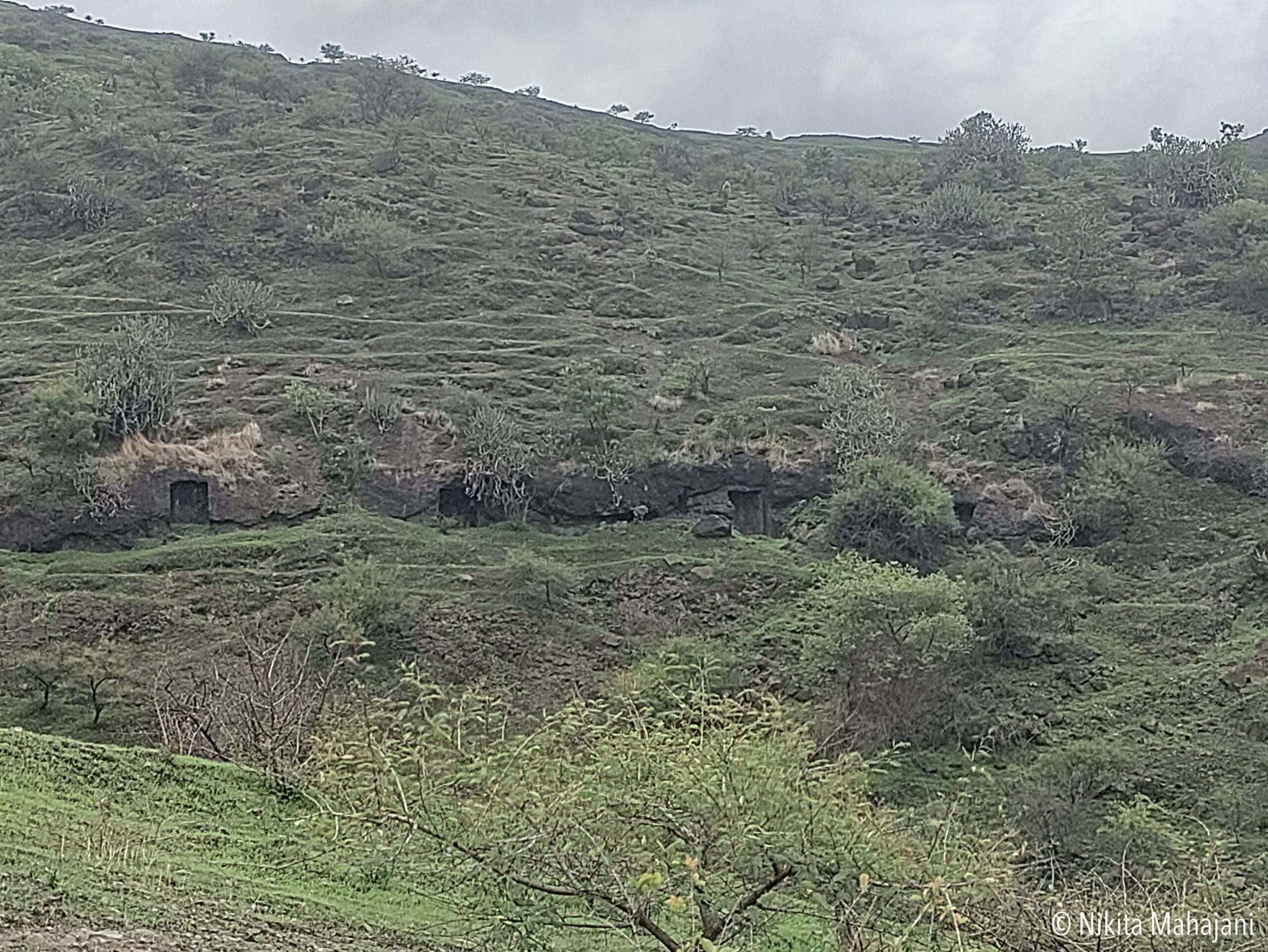
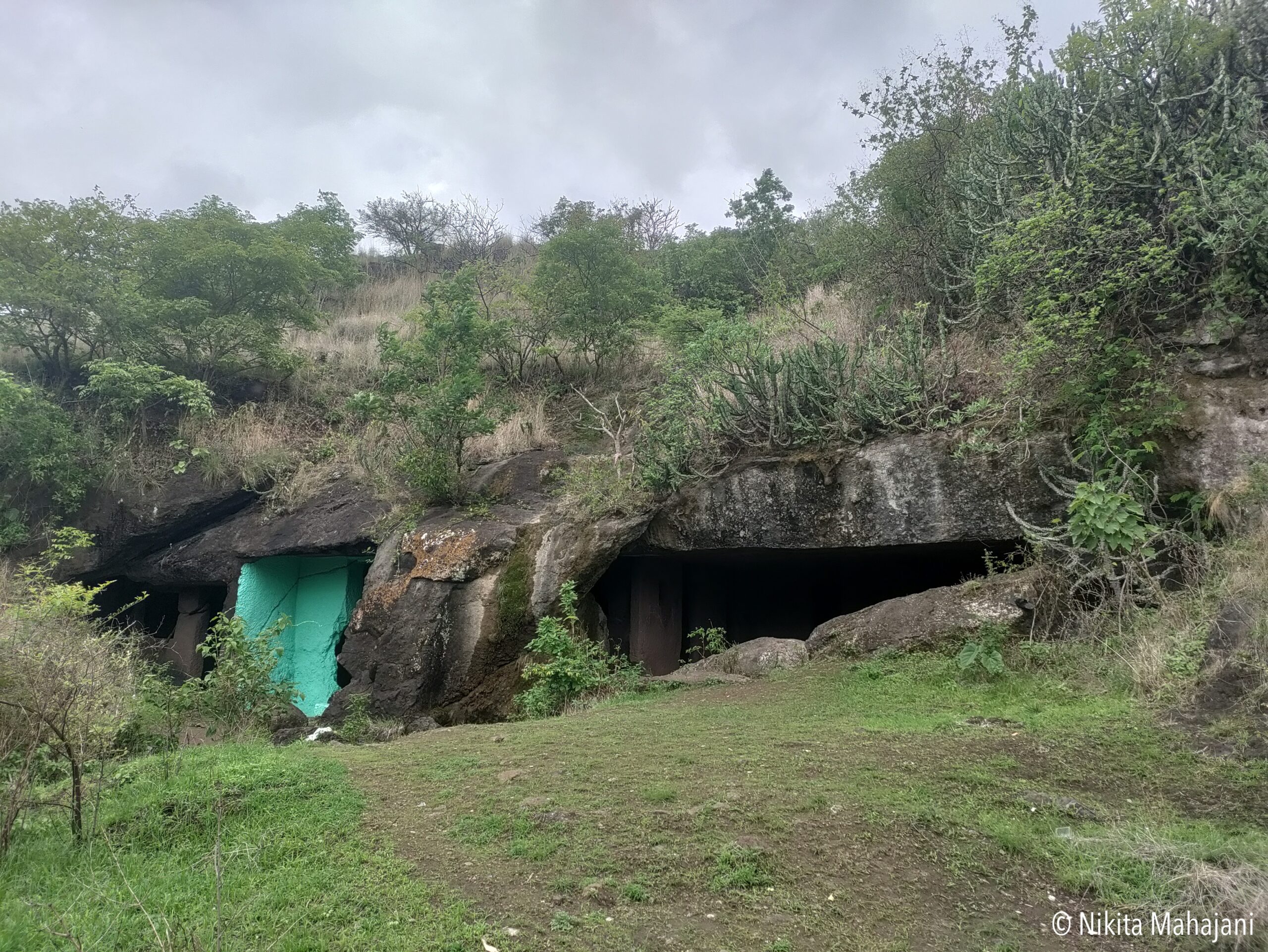
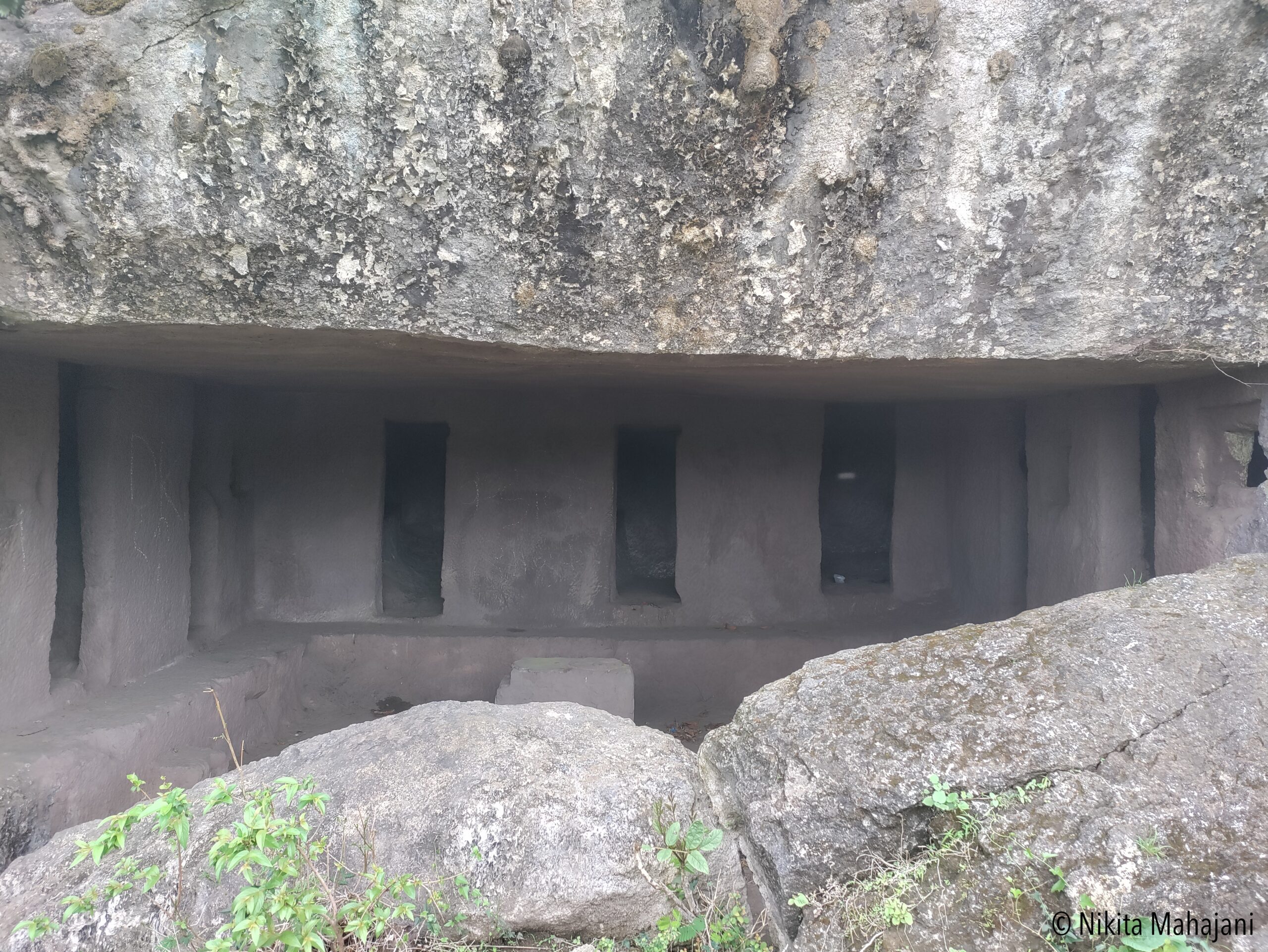
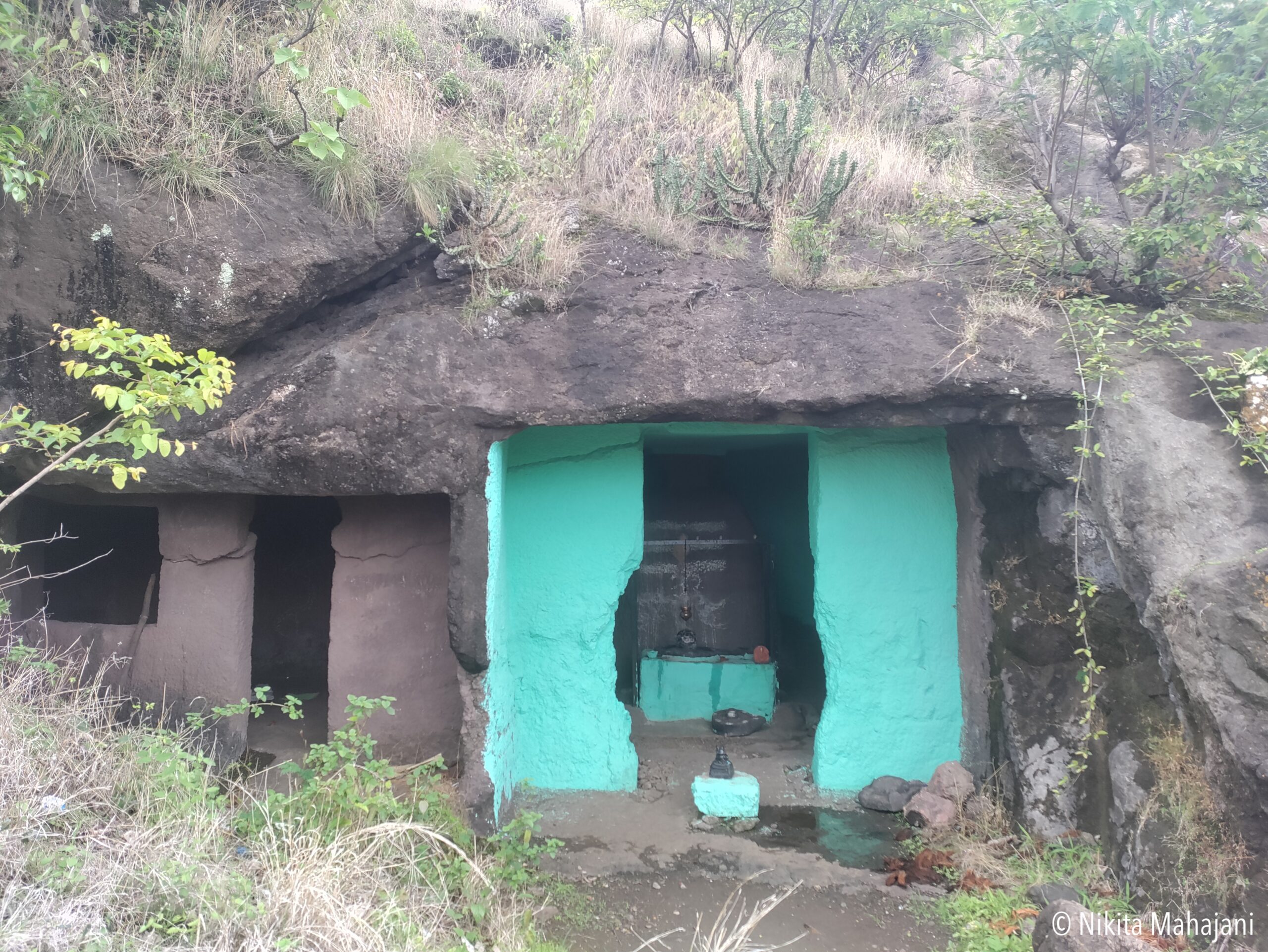
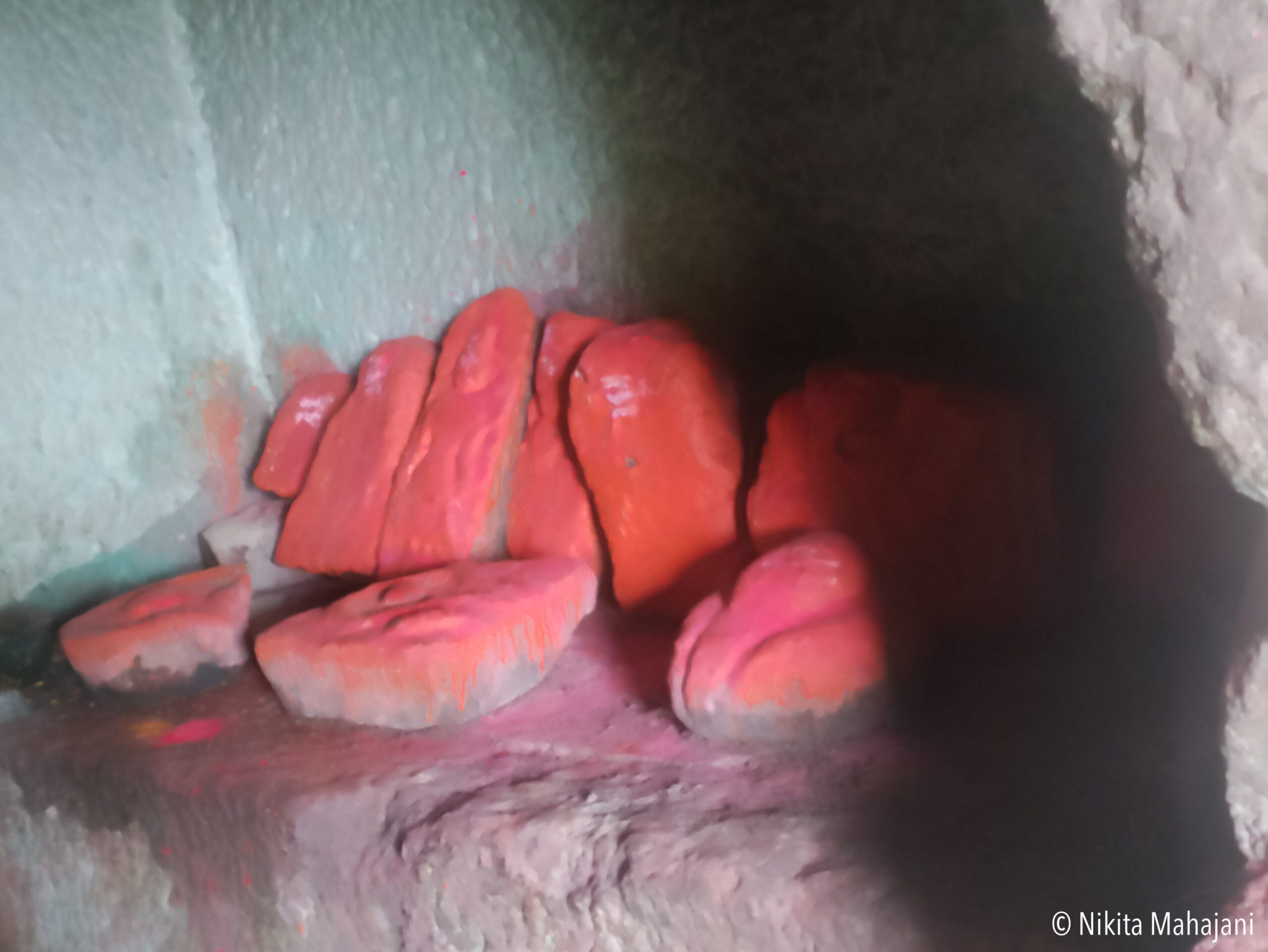
Serenity at Nageshwar Temple
Post-trek, we visited the Nageshwar Temple, a quiet and peaceful spot surrounded by lush greenery. Sophie loved the open spaces, and we took a moment to relax and soak in the temple’s tranquil atmosphere.
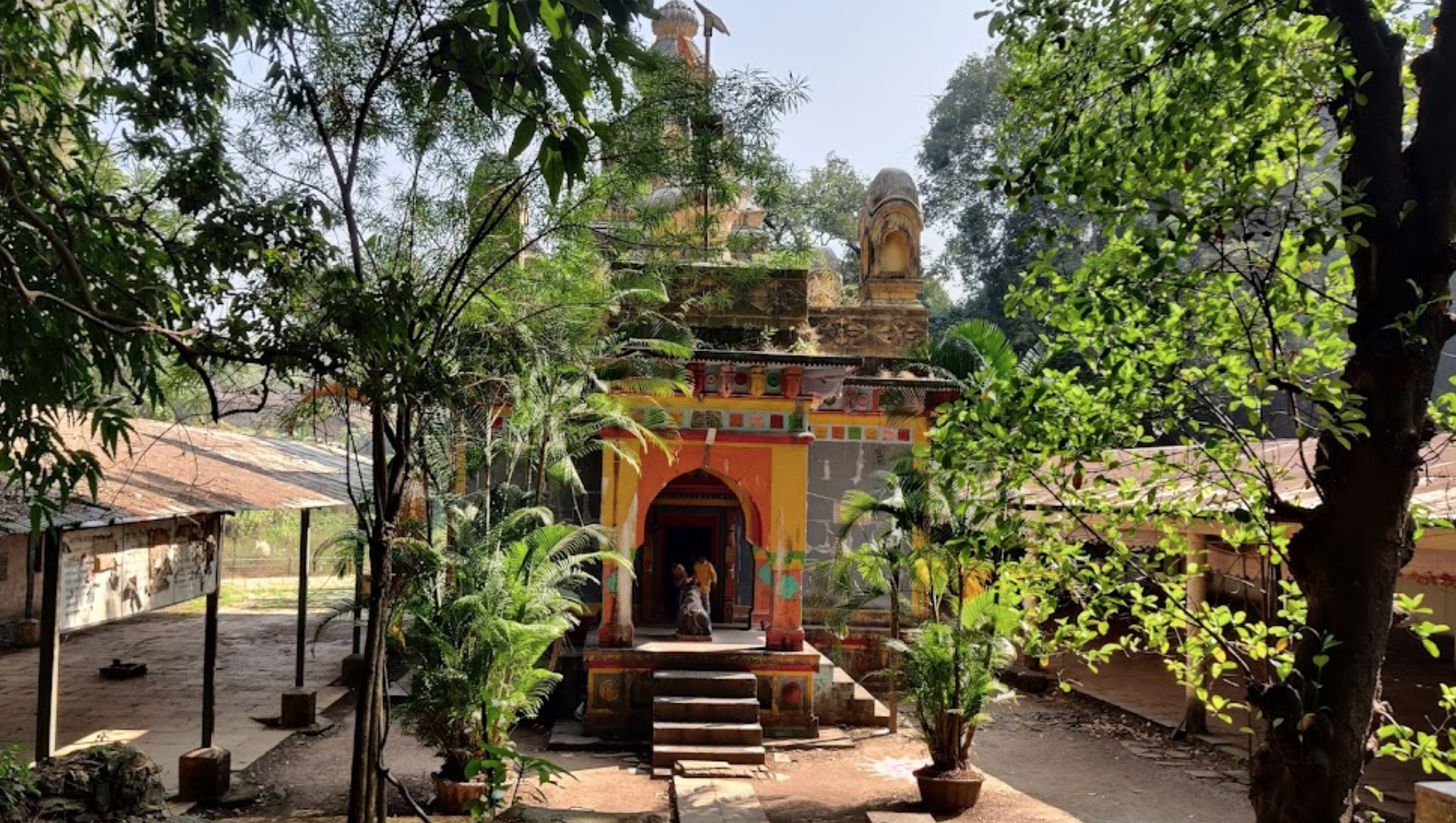
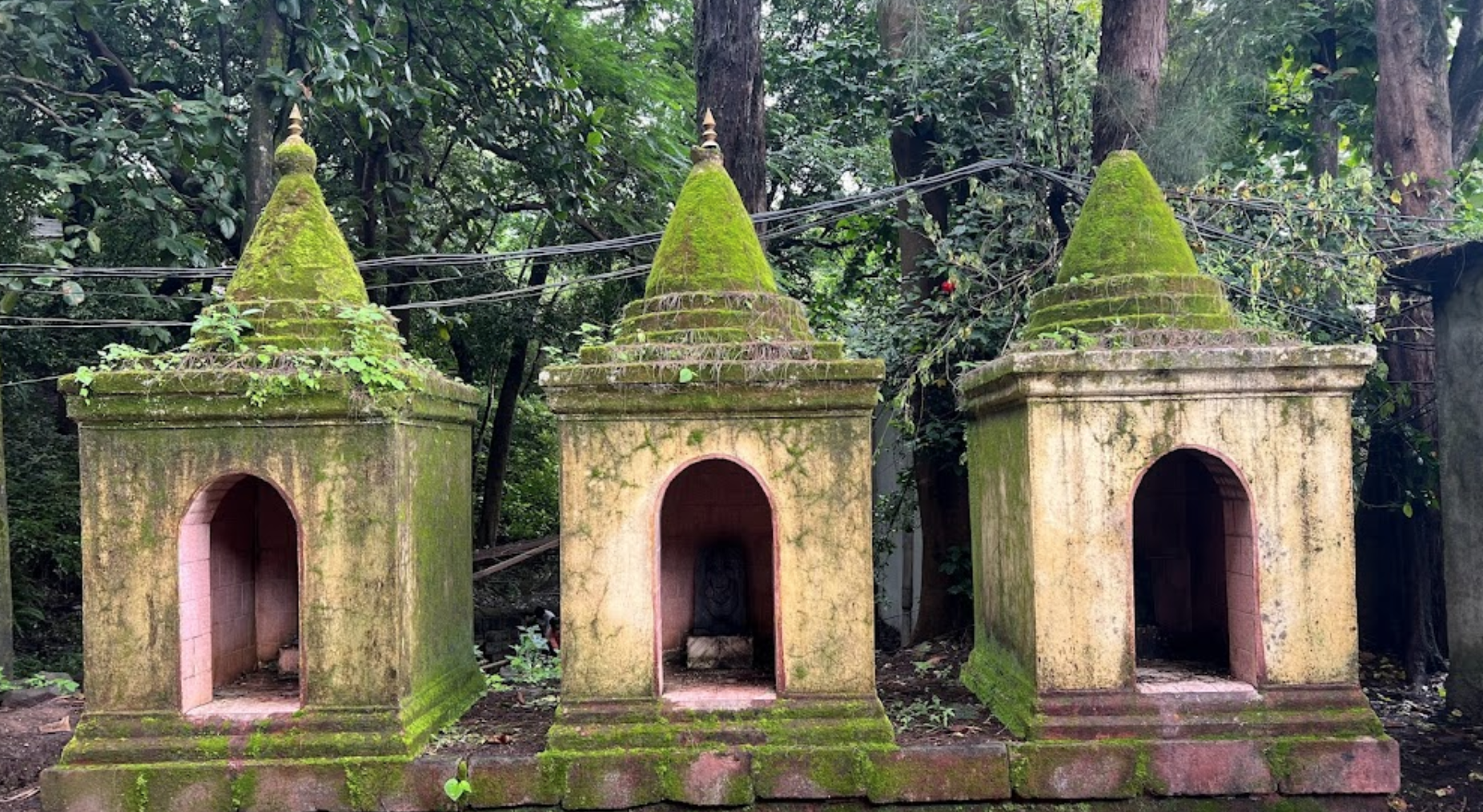
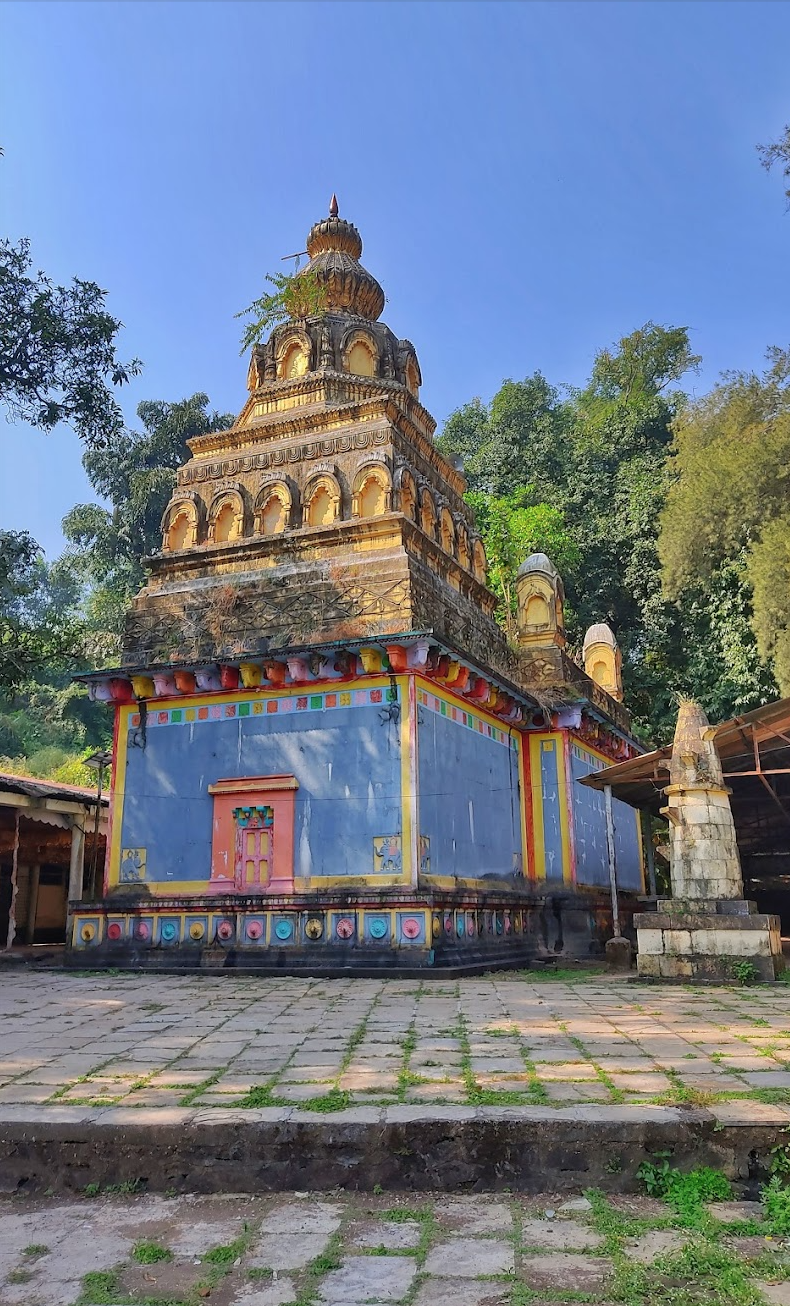
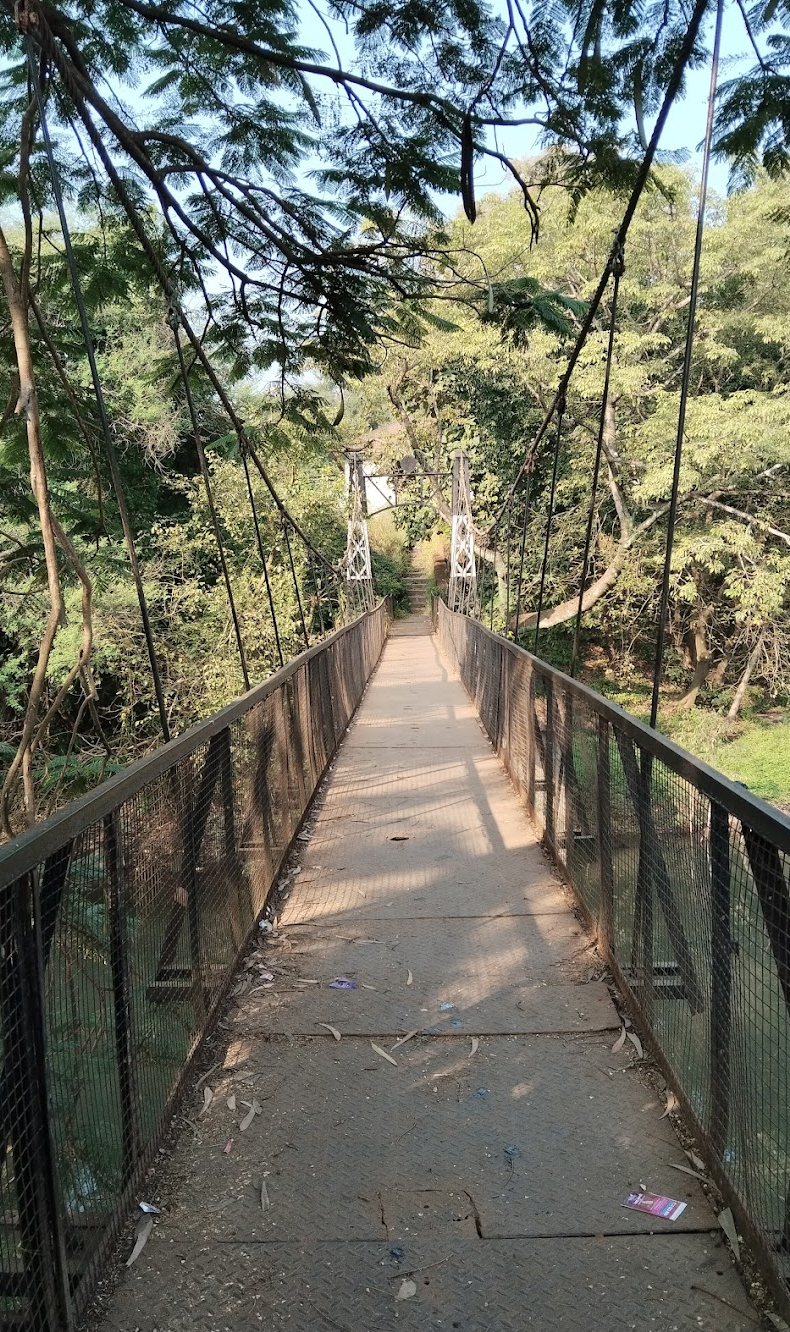
Necklace Point and a Hearty Meal
Our next stop was Necklace Point, a scenic viewpoint in Bhor that lives up to its name. The curving river surrounded by hills truly resembled a necklace, offering a stunning panoramic view. Feeling hungry, we stopped at a nearby small joint aptly named Hotel Necklace Point for some authentic and spicy misal. The place welcomed Sophie, making the meal even more enjoyable.
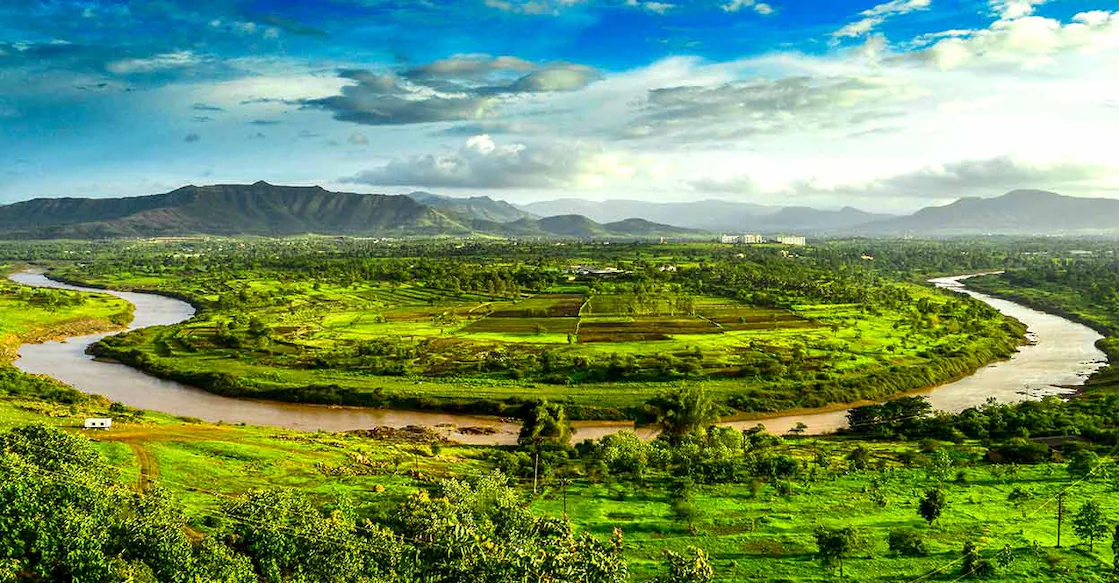
Ladakh Vibes at Bhatghar Dam
From Necklace Point, we headed to the majestic Bhatghar Dam, an offbeat gem with breathtaking views. The serene surroundings and the rocky landscapes reminded us of Ladakh. Sophie enjoyed exploring the quiet expanse, while we were captivated by the vast blue waters and the tranquility of the location. We stayed until sunset, watching the sky change hues over the backwaters—a picture-perfect moment etched in our hearts.
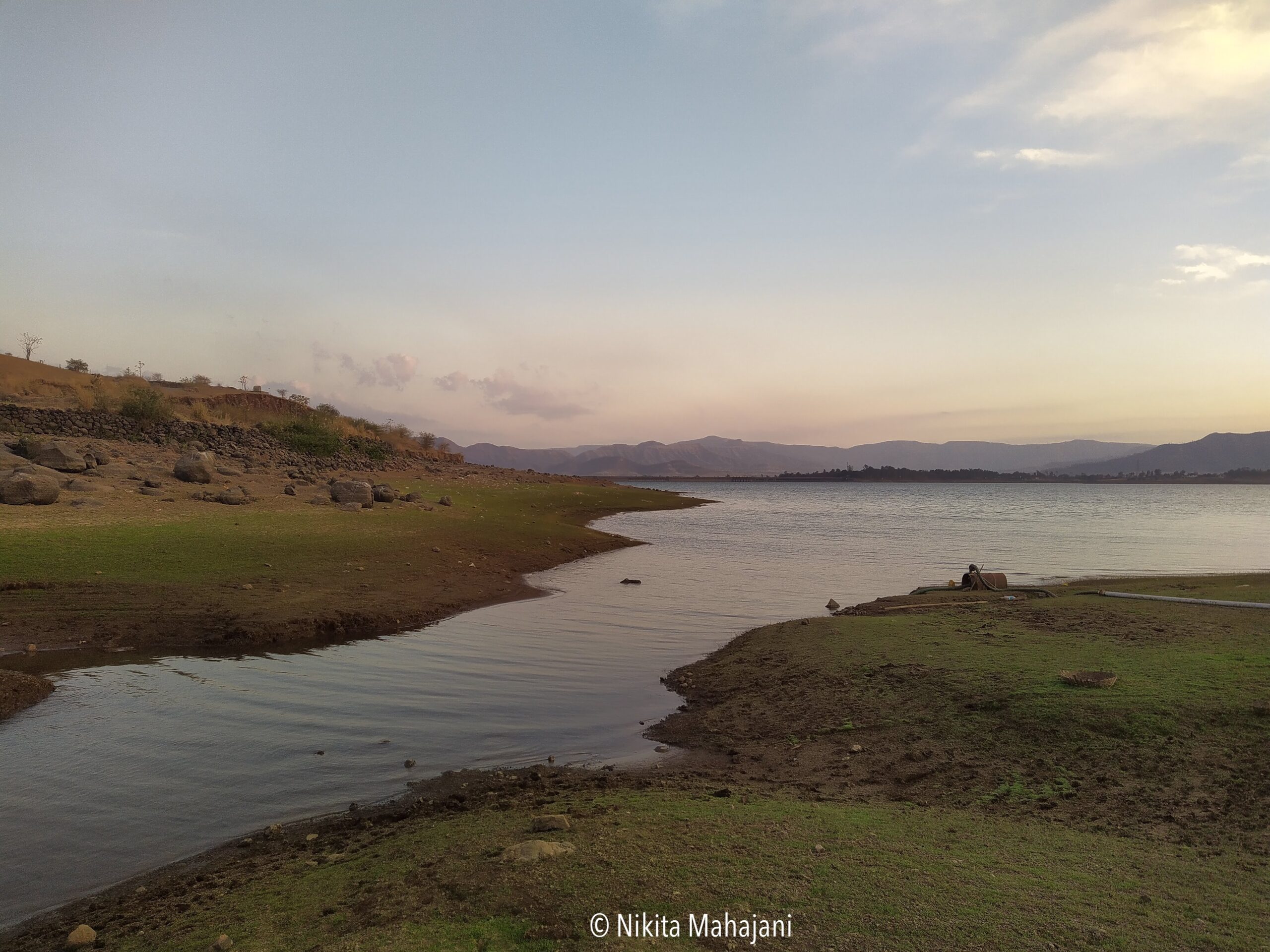
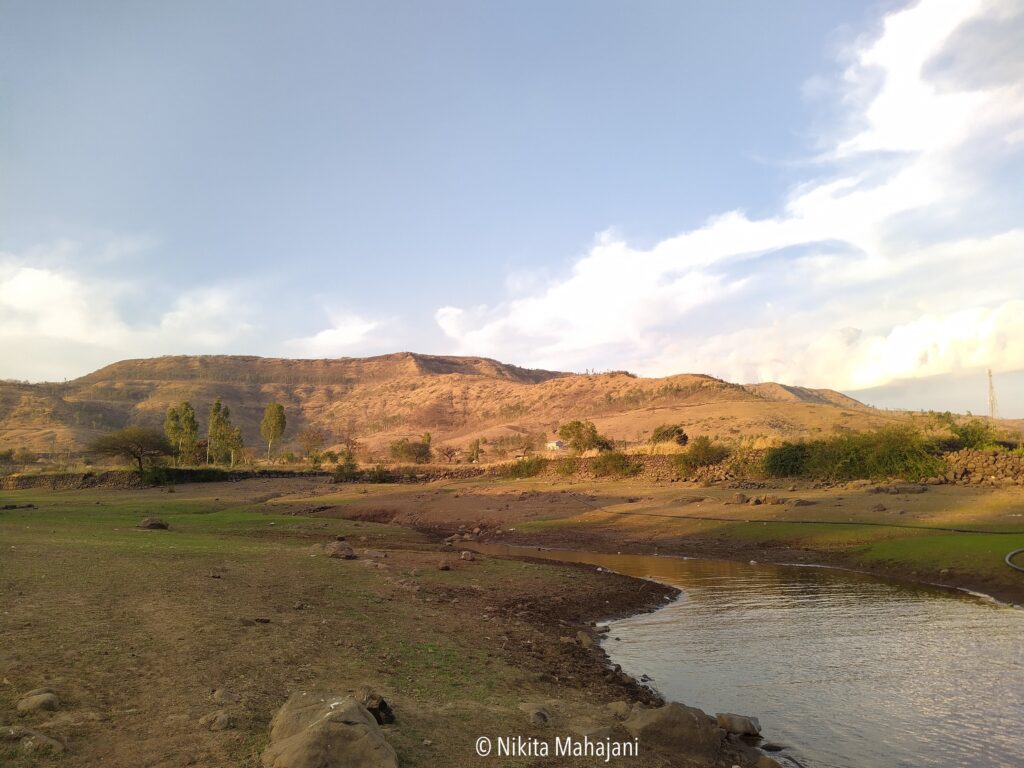
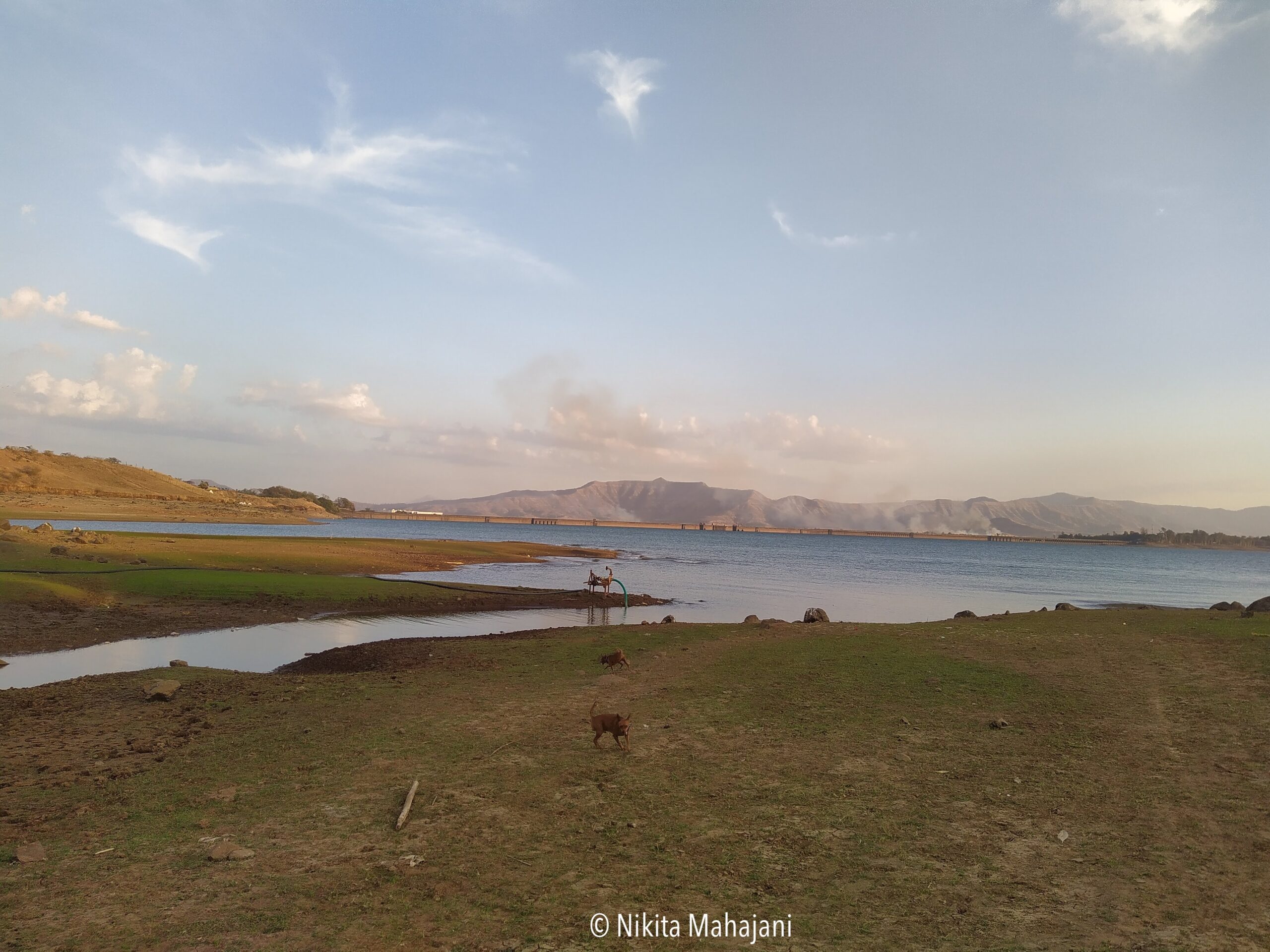
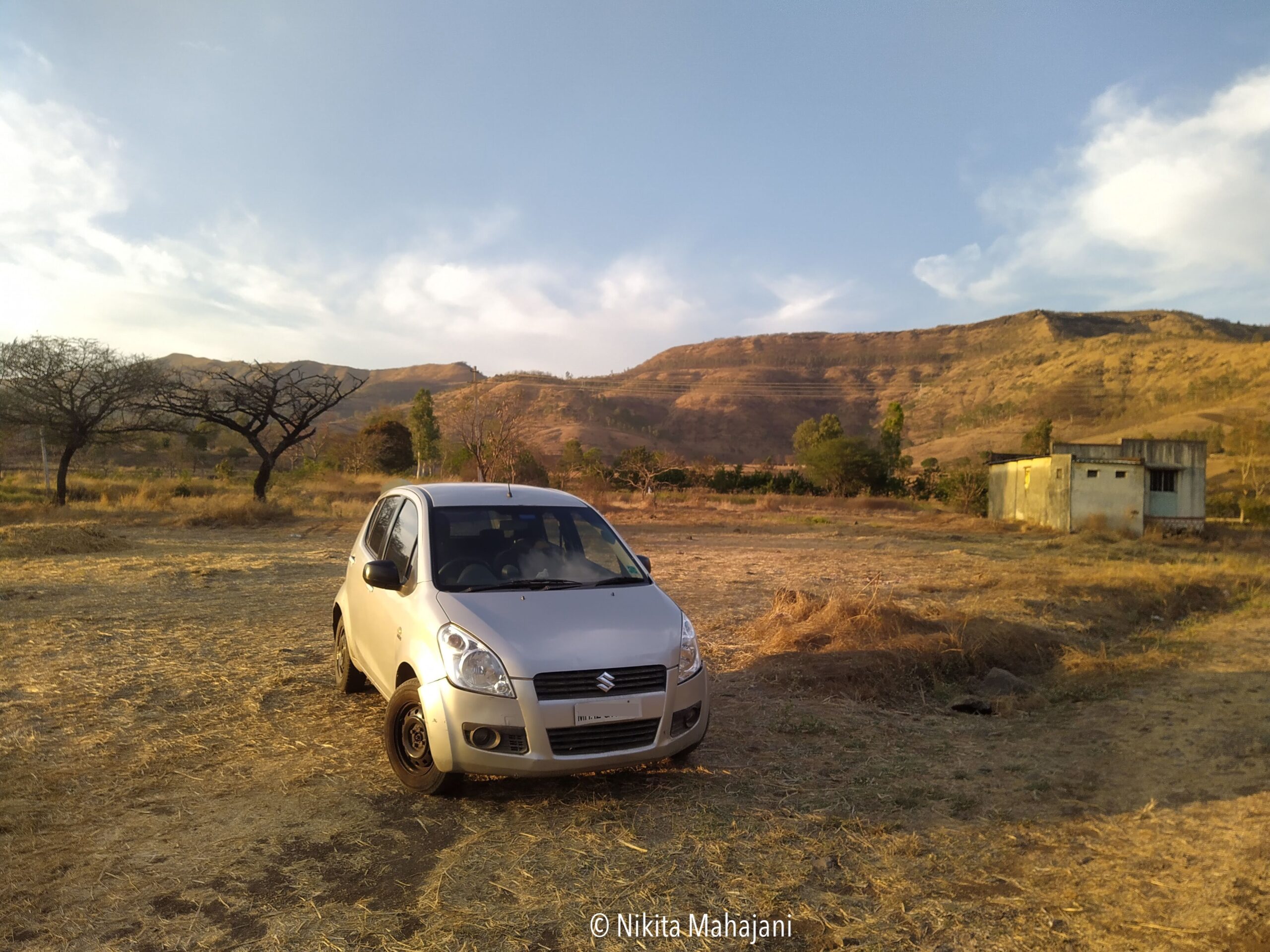
Evening Tea and Snacks at Kailas Bhel, Shivapur
As the day drew to a close, we stopped at Kailas Bhel in Shivapur for some chai and snacks. This pet-friendly food court has always been a favorite, and Sophie lounged happily by our side as we enjoyed our evening break.
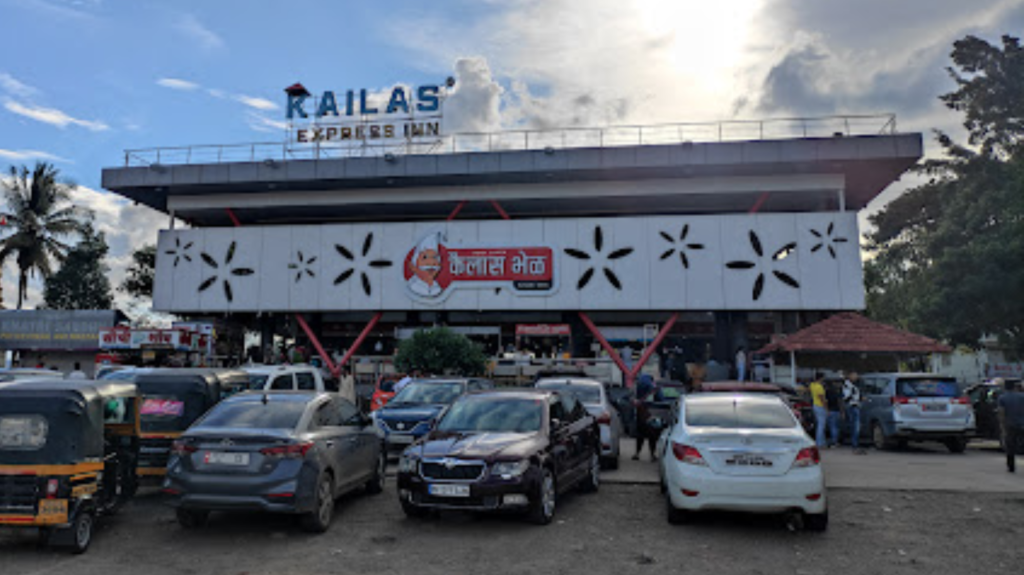
Back Home with Memories
We returned home by evening, tired but filled with joy. Sophie, too, seemed content, her little adventure spirit satisfied for the day.
Bhor Taluka’s mix of open landscapes, quiet viewpoints, and serene temples makes it a fantastic destination for a day trip with pets. Sophie had the time of her life exploring trails, basking in the sun by the dam, and enjoying the fresh air. For pet parents looking for a peaceful yet enriching experience near Pune, Bhor is a hidden gem worth discovering!
Where did we eat?
Kailas Bhel, Shivapur.
Kailas Bhel Food Court, Varve.
Forts of Satara
Satara, with its rich history and serene landscapes, proved to be the perfect getaway for my husband, our dog Sophie, and me. This three-day trip (November 15–17, 2024) blended history, nature, and relaxation while ensuring Sophie was part of every moment.
Day 1: Exploring Yamai Devi and Bhushangad
We set off from Pune at 8:00 AM, with a quick breakfast stop at Kailas Food Court in Varve, which offered delicious pet-friendly seating. Sophie enjoyed the open space while we indulged in Maharashtrian delicacies.
By 10:45 AM, we checked into Sunny Executive in Satara. This pet-welcoming hotel provided a comfortable room with ample space for Sophie. The staff is very kind and friendly. They do have an in-house senior dog which looked like a Dalmatian-indie mix. He is always off-leash and very calm. Essentials like a 24 hours medical shop, a tea shop (Amruttulya) and a vadapav shop are on the ground floor of the same building. They have have a fenced parking plot behind the hotel for the guests. I always took Sophie for walks in that plot. Rest of the neighbourhood is quite crowded.
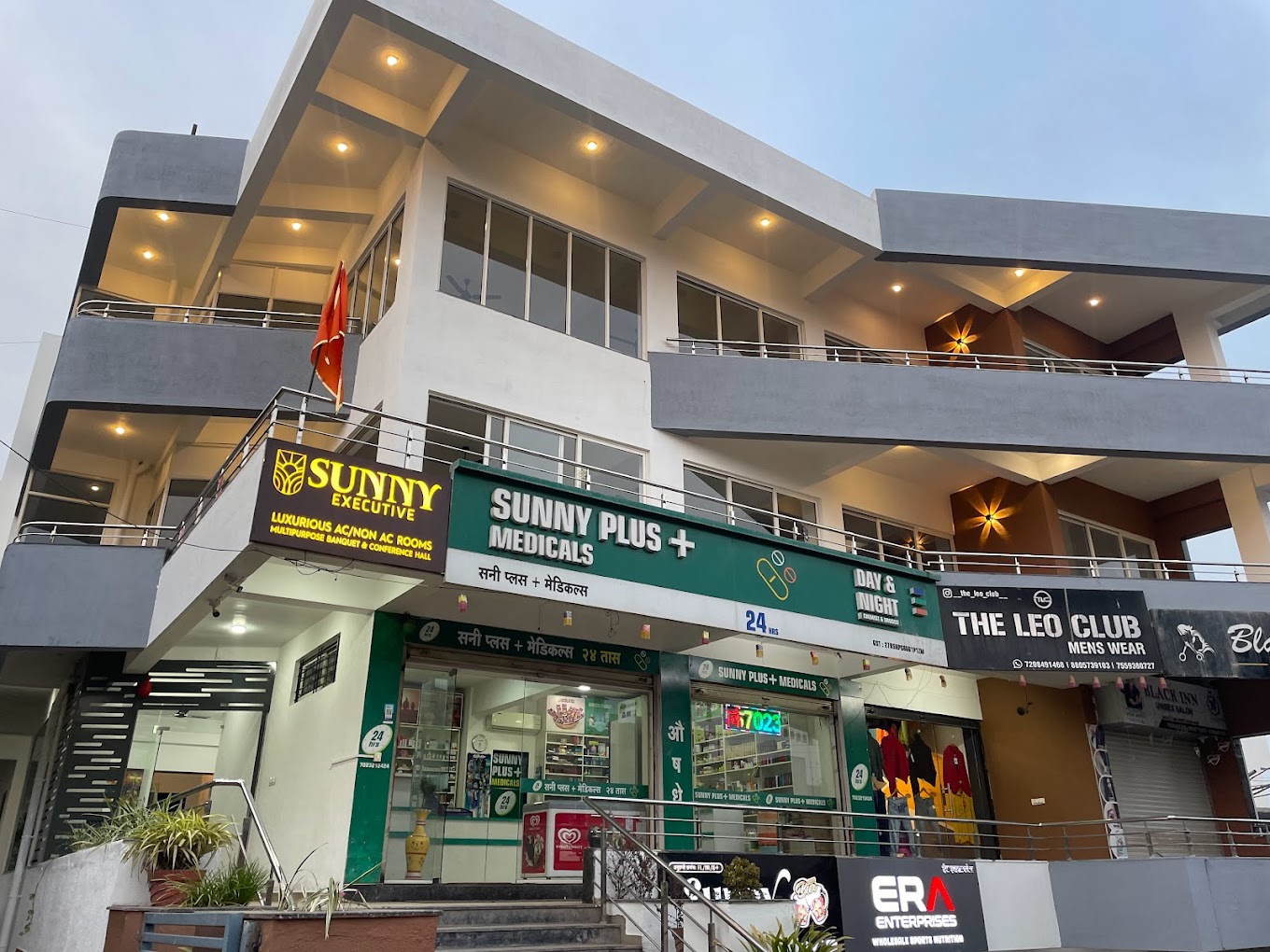
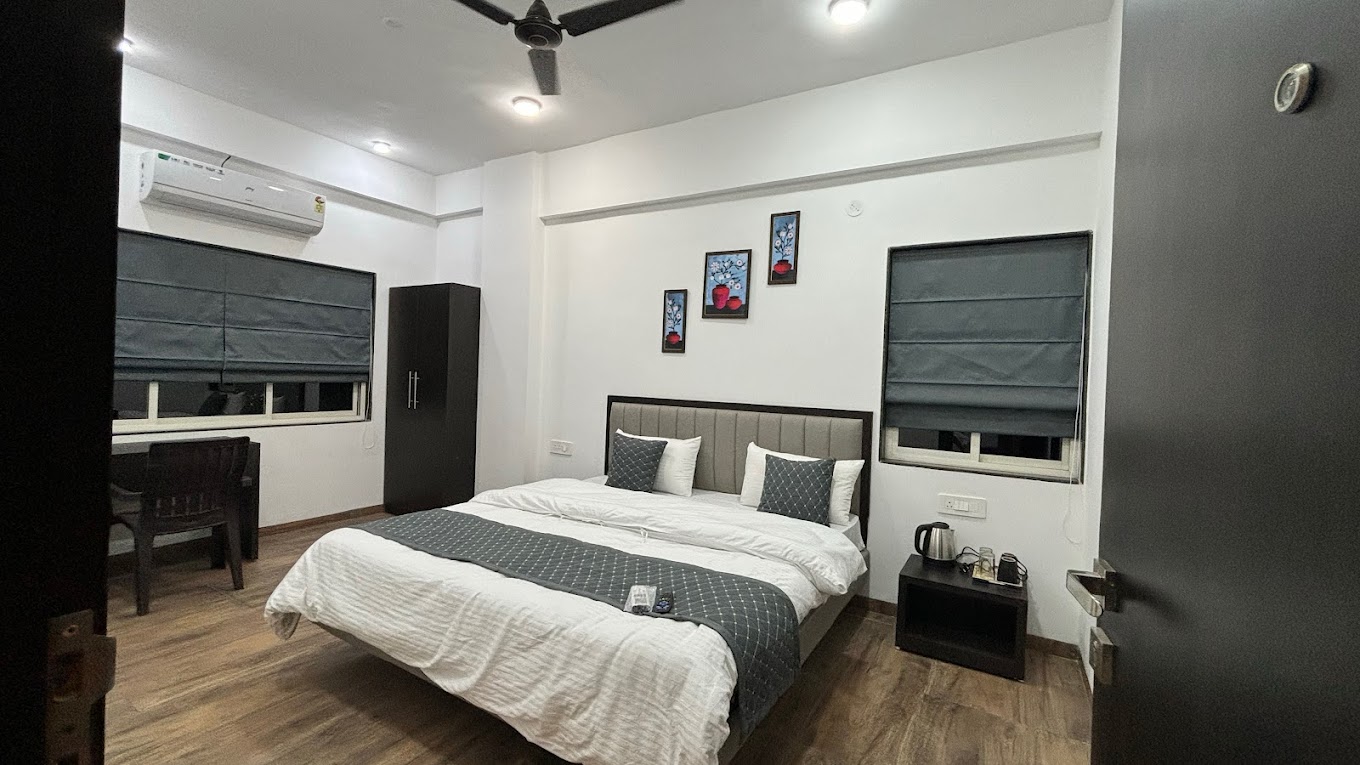
Post lunch and a short rest, Bhushangad Fort awaited—a hilltop fort with breathtaking views. Sophie’s leash adventures added excitement to the trek. Bhushangad is a lesser-known fort and makes for an easy one-day trip from Pune. The trek is very simple, taking only about 10-15 minutes. The road is under construction up to the midway point. You can either park at the base and hike to the top or, as we did, drive up to the completed section of the road. From there, it took just 15 minutes to reach the summit. The fort’s entry gate has been restored and is in good condition. Before the main gate (Mahadarwaja), there is a small temple dedicated to Khandoba. While some walls and bastions are in ruins, the fort houses a temple of Goddess Harnai. Exploring the entire fort takes roughly 30 minutes. On the way down, a small trail to the left leads to the Bhuyari Devi temple. Washrooms are not availbale and entry to the fort is free of charge. Hence the entire Fort is pet friendly.
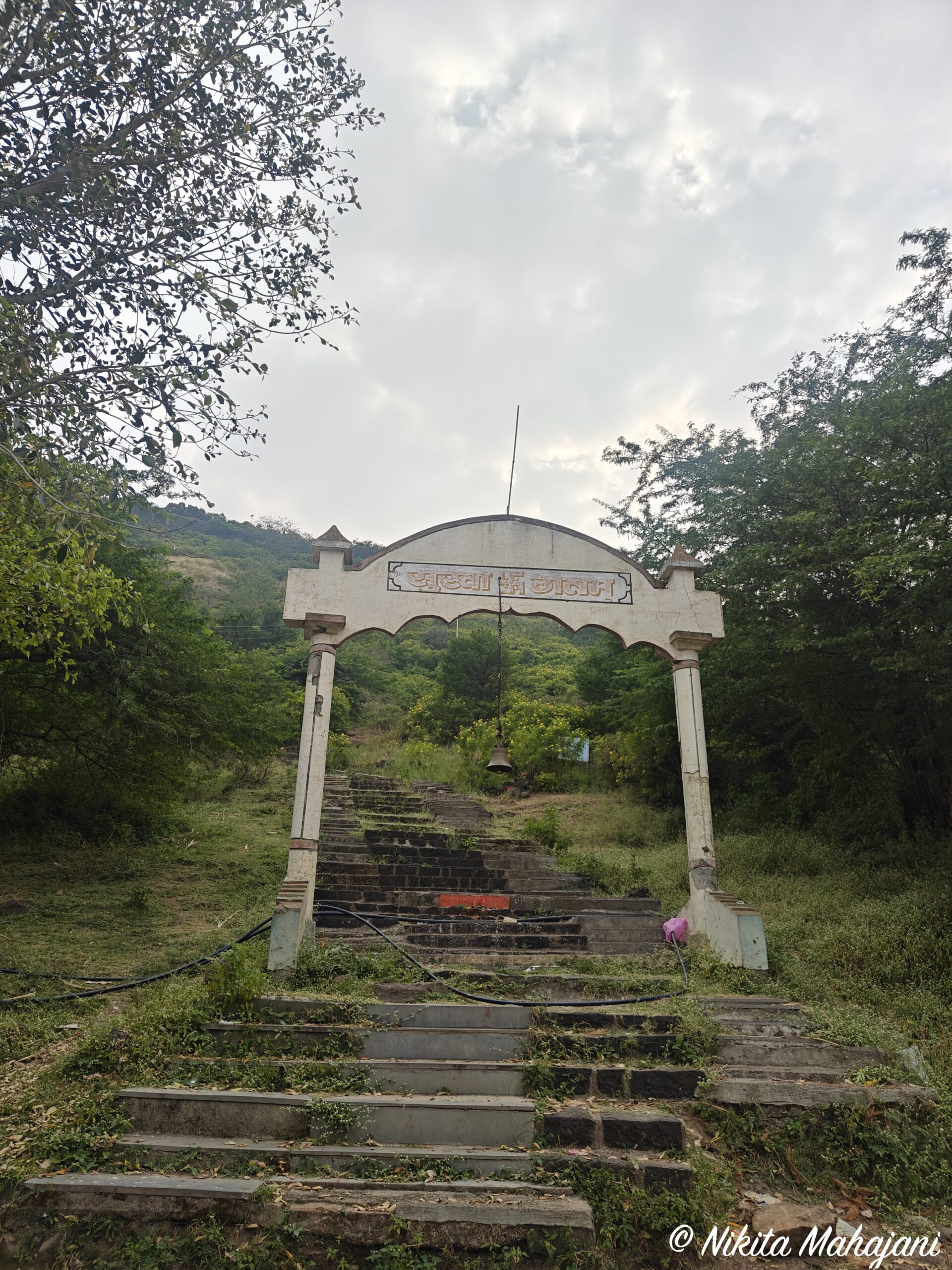
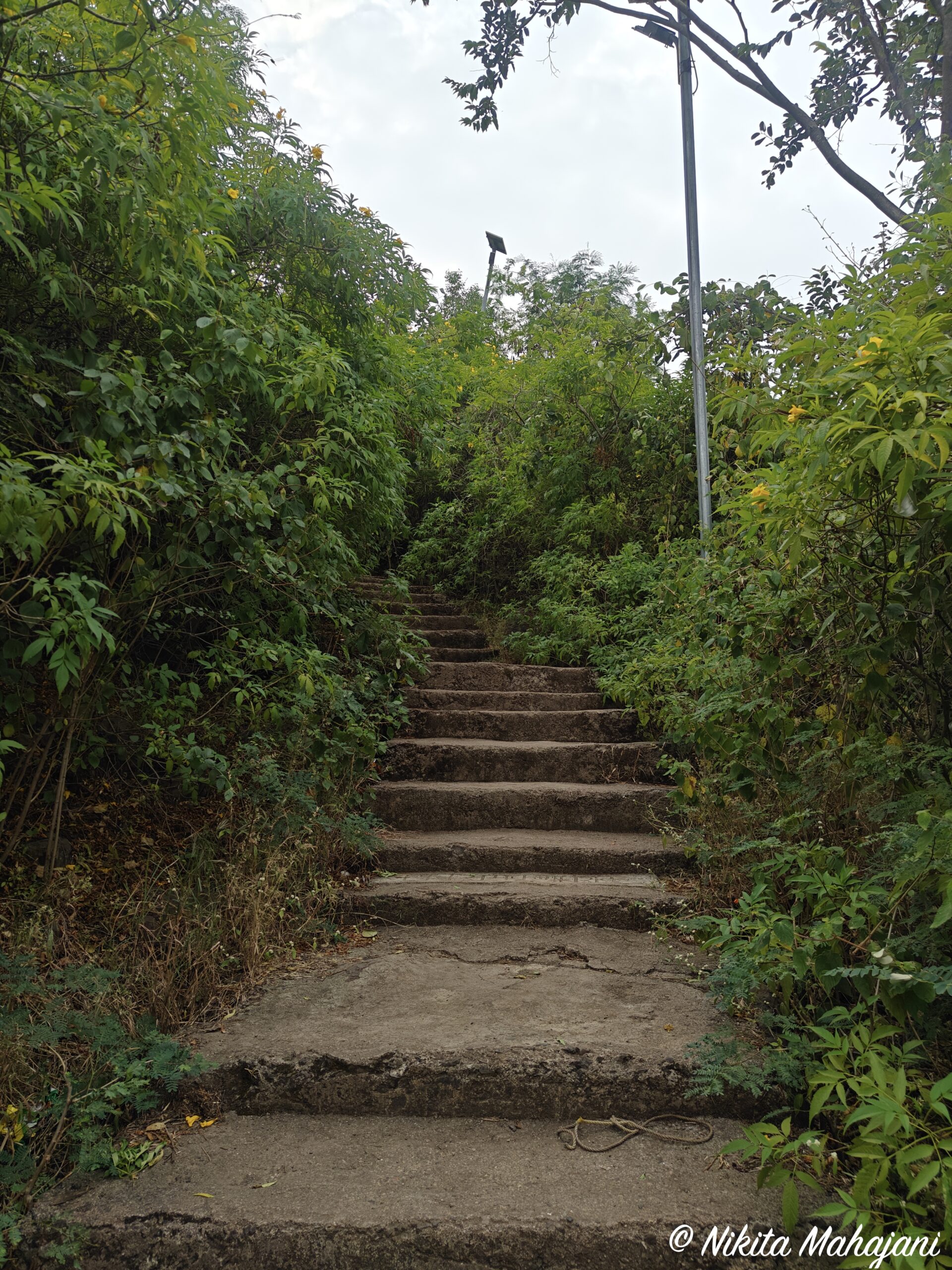
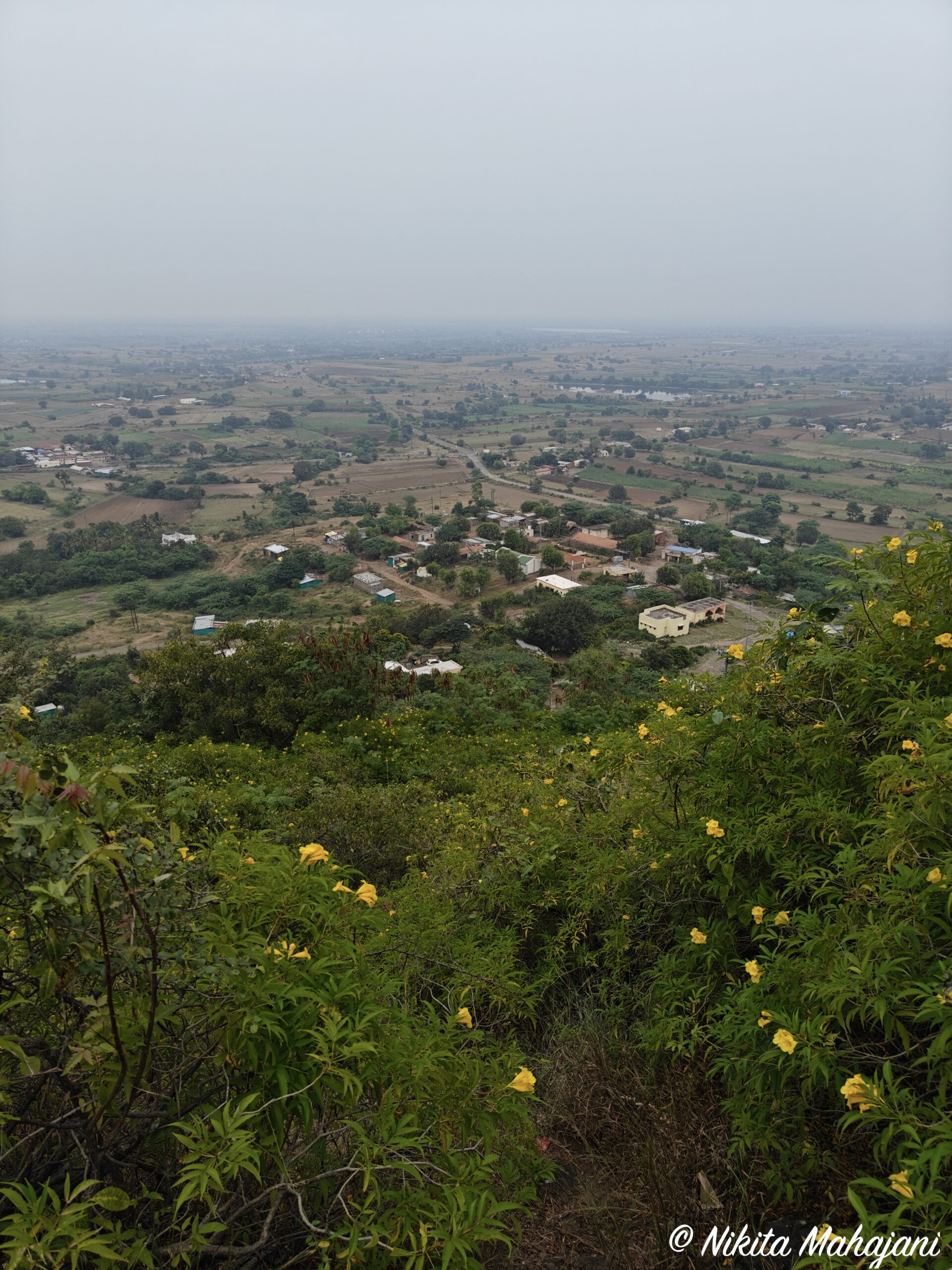
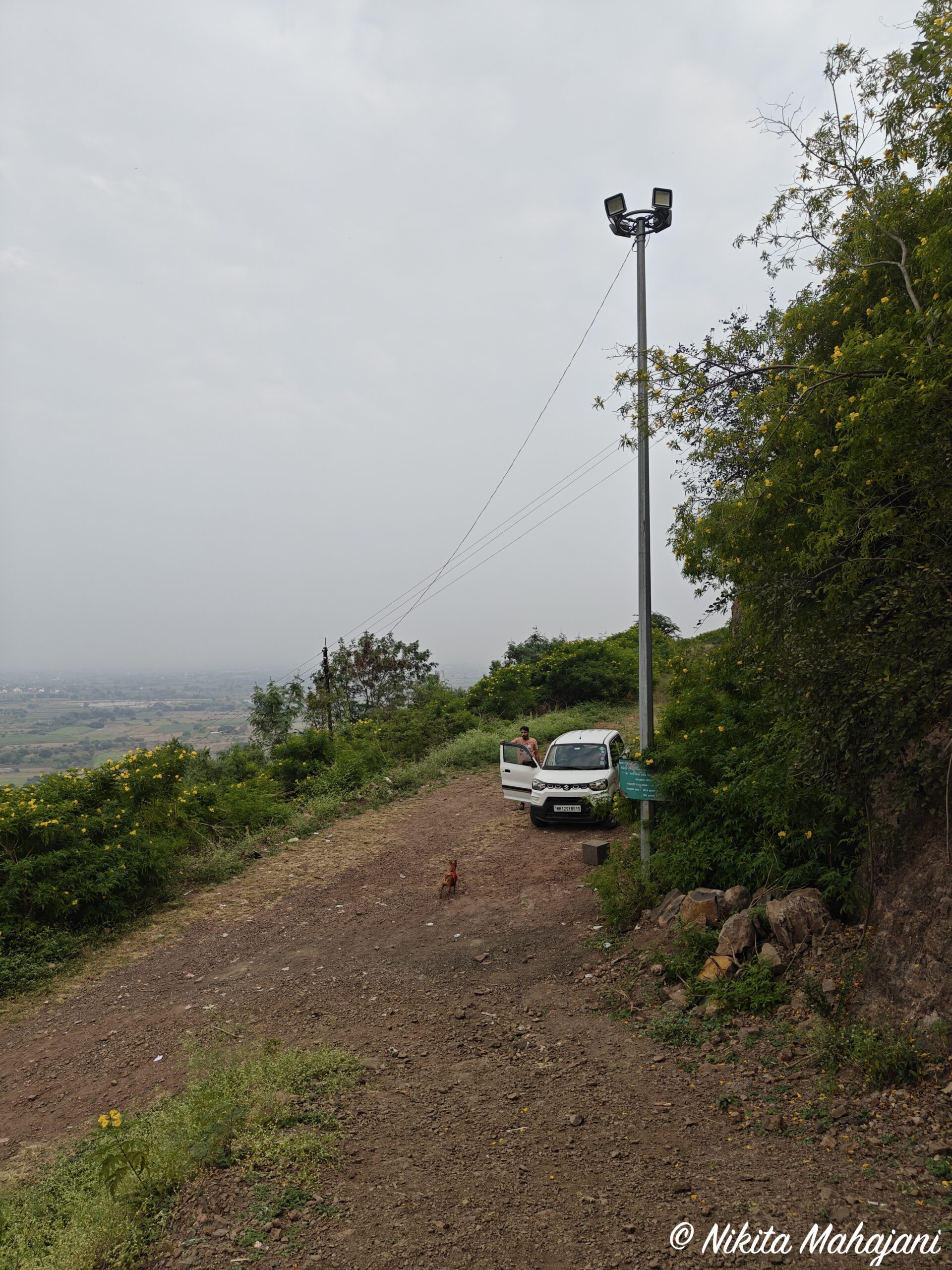
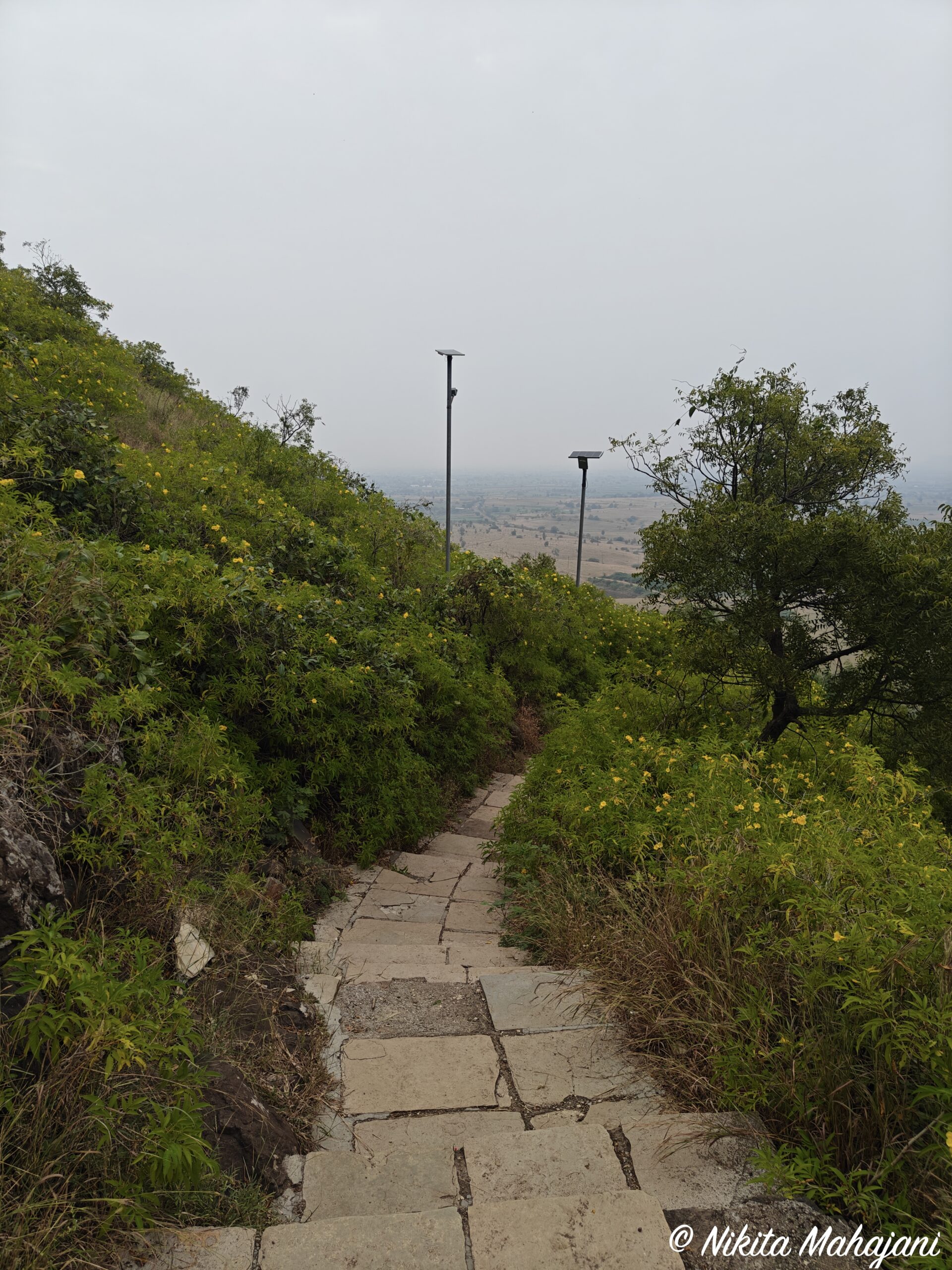
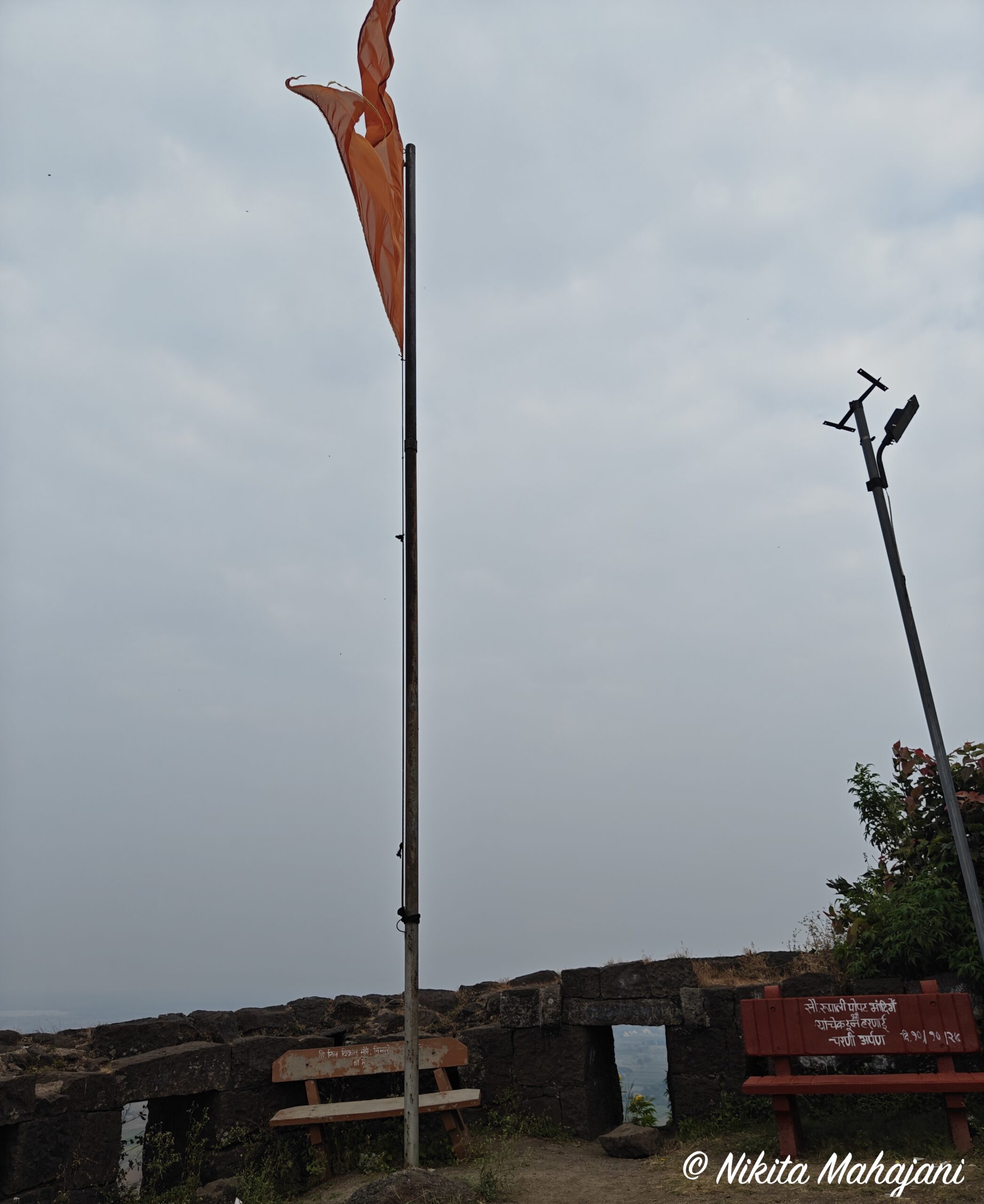
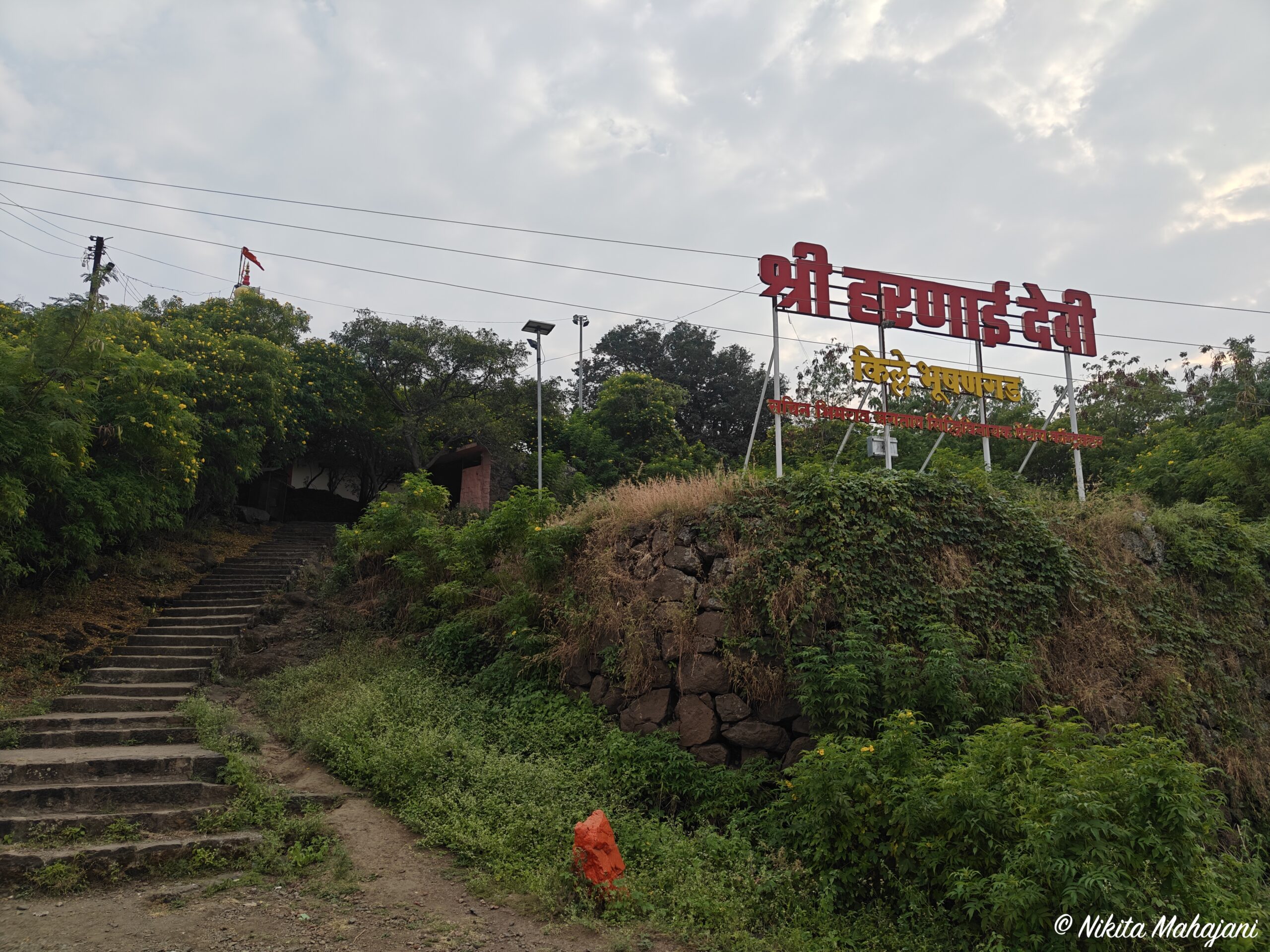
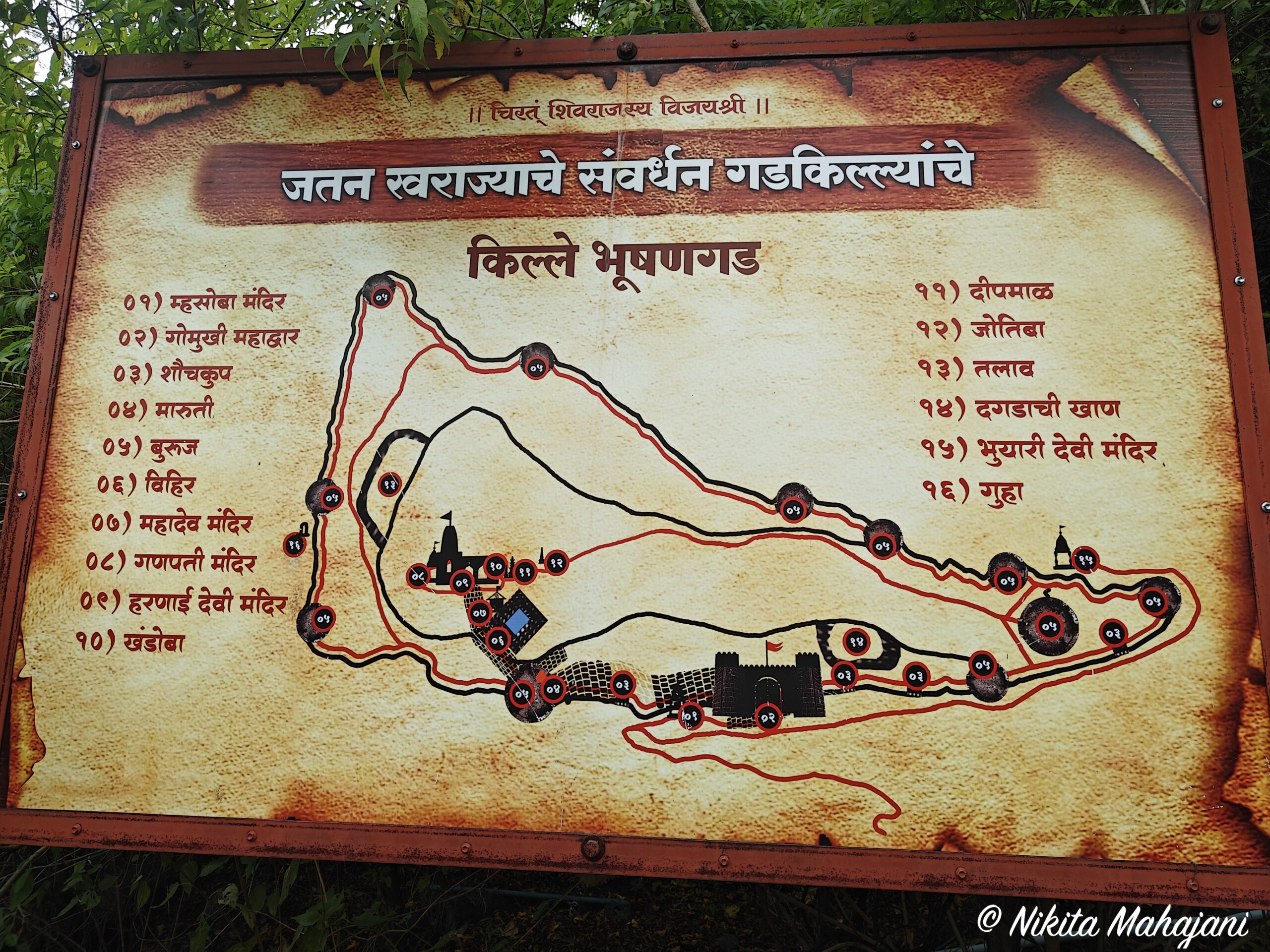
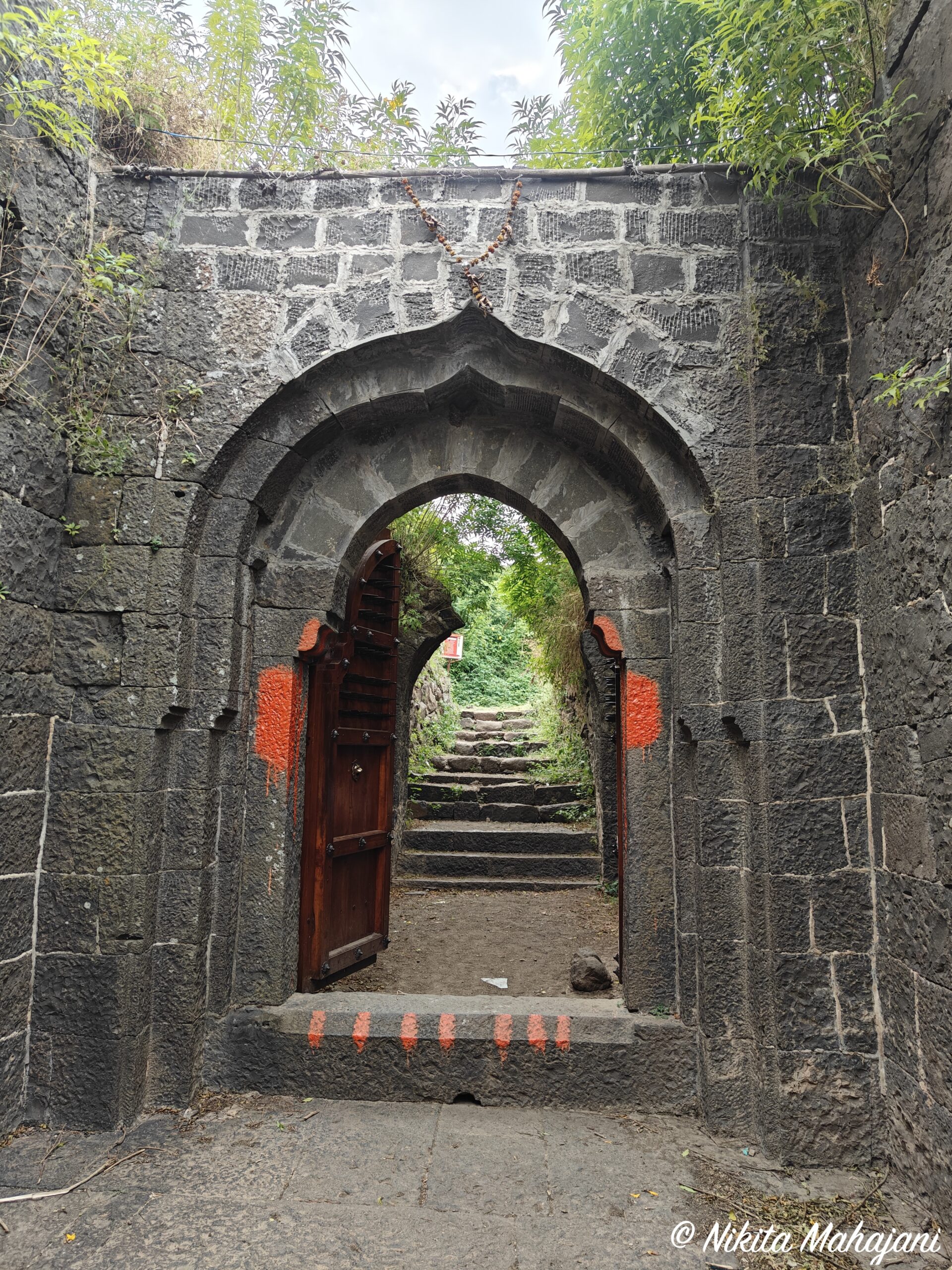
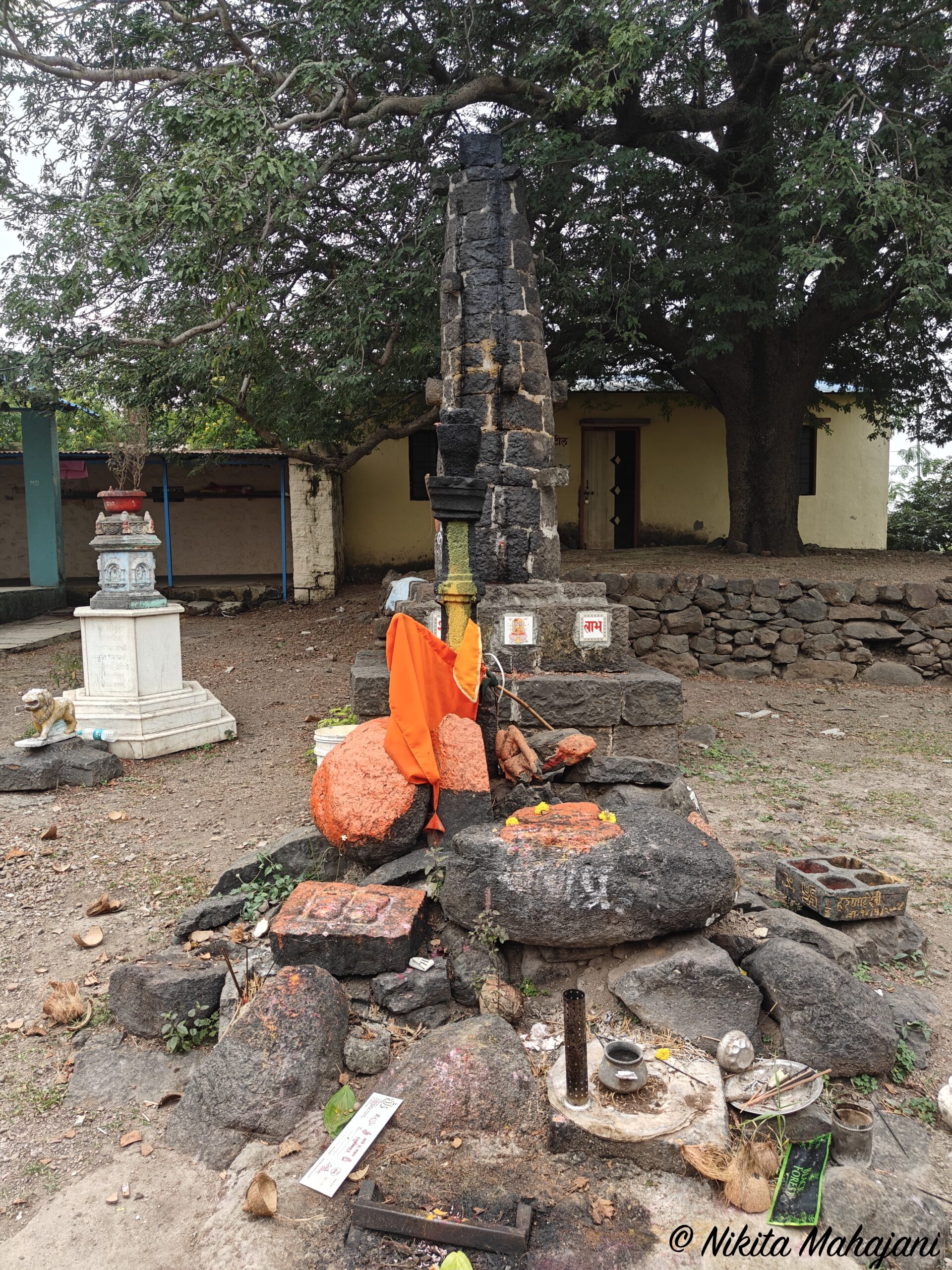
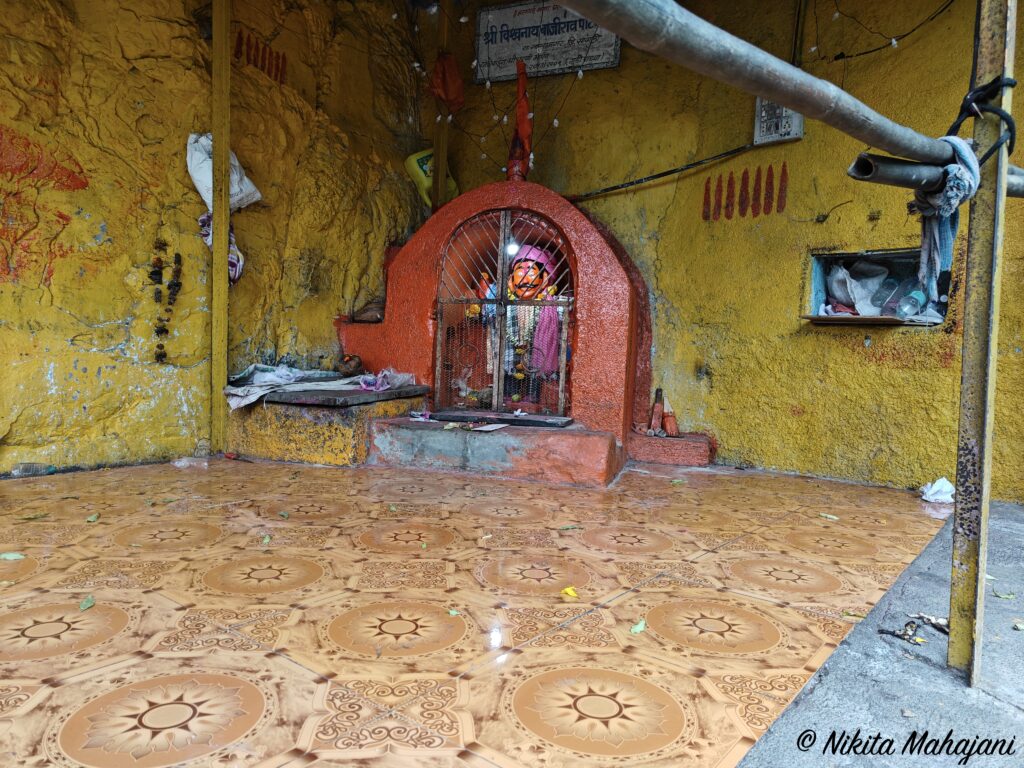
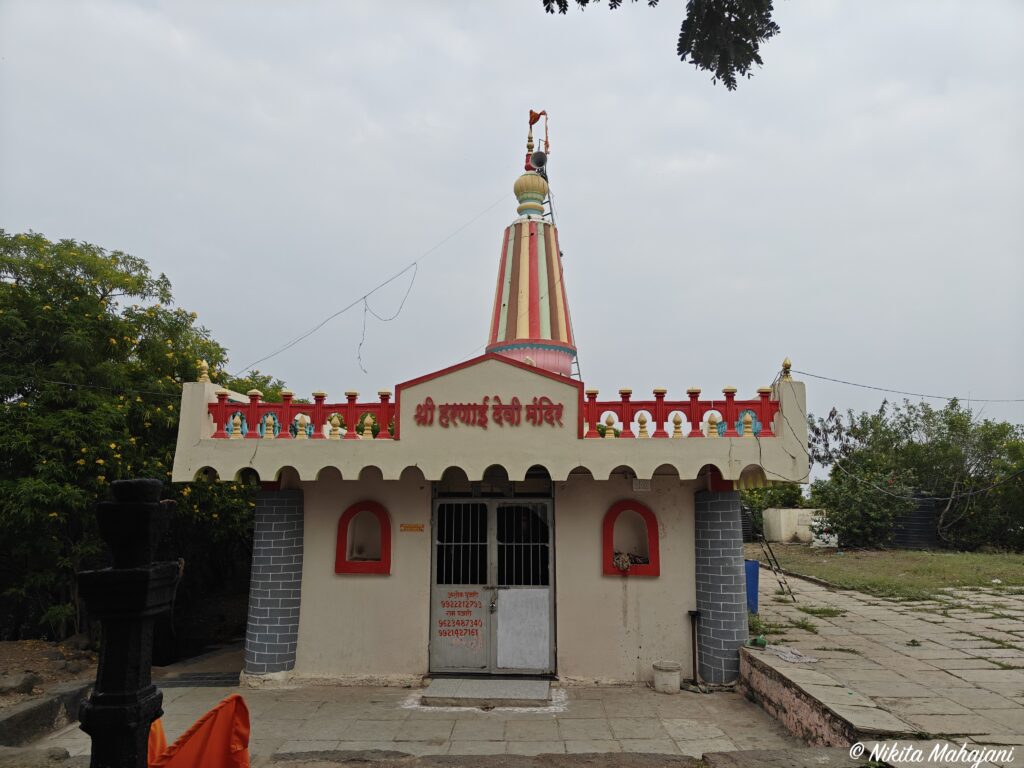
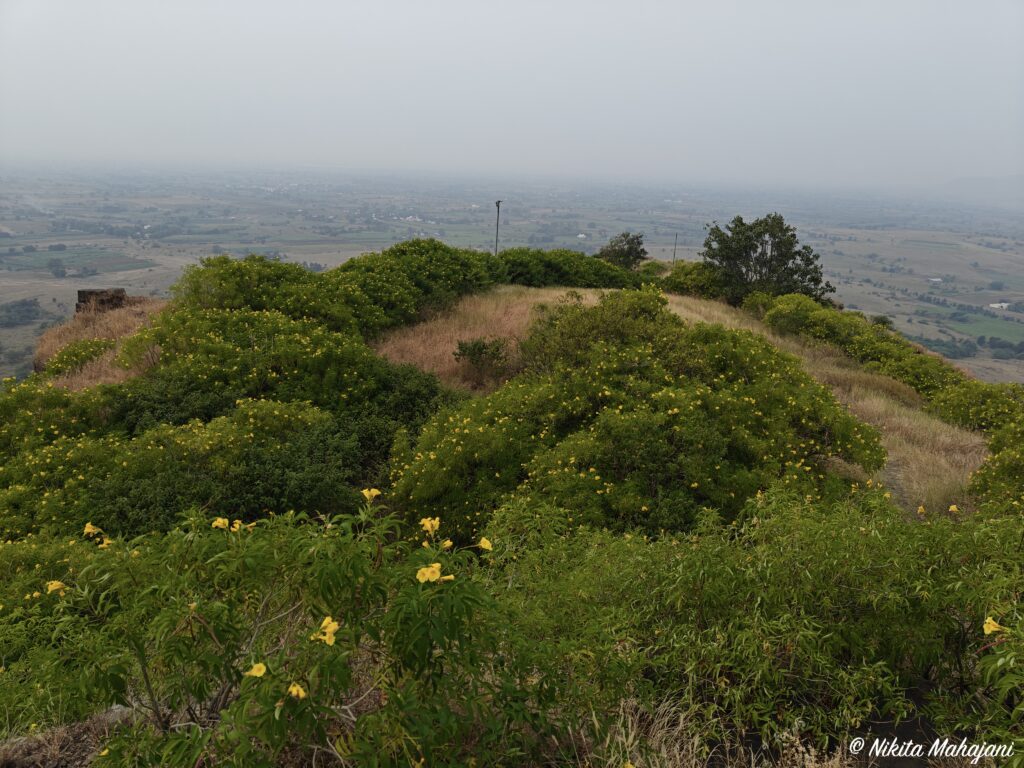
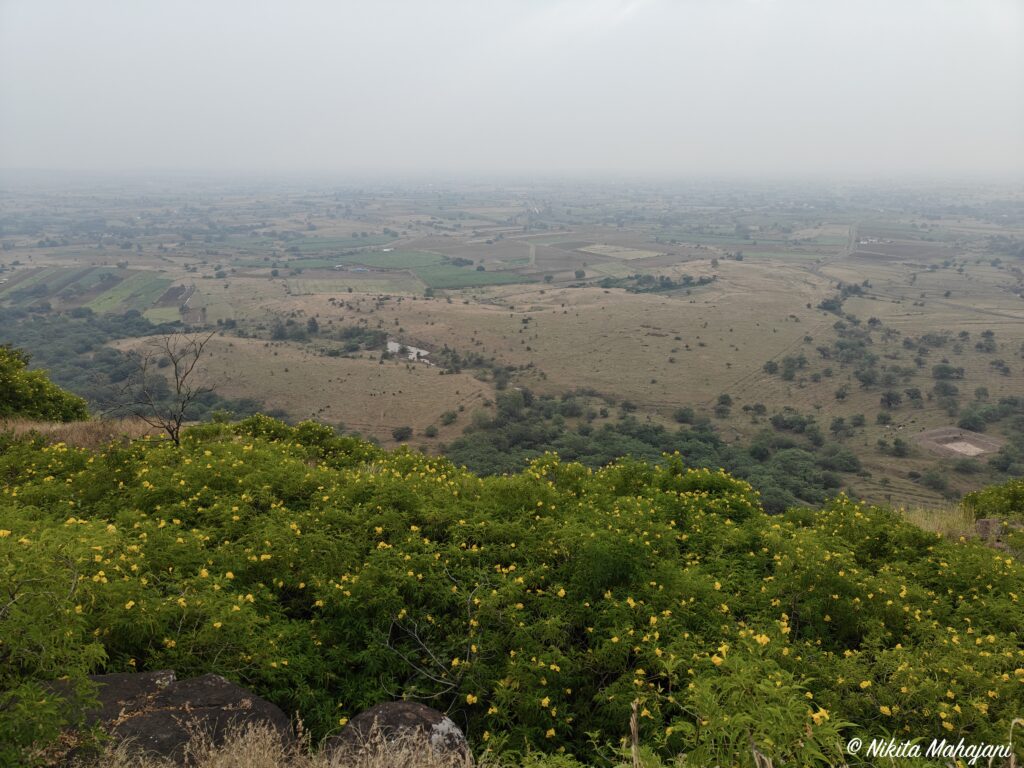
Next, we visited Yamai Devi Mandir in Aundh village in Satara. It is a serene spot located atop a mountain, resembling a hill fort from a distance. It is just a 30-minute drive from Bhushangad. The temple is not very crowded, allowing visitors to seek blessings peacefully while enjoying the scenic mountain views. Vehicles can reach the temple for those unable to climb the stairs, but if you’re fit, the climb is highly recommended.
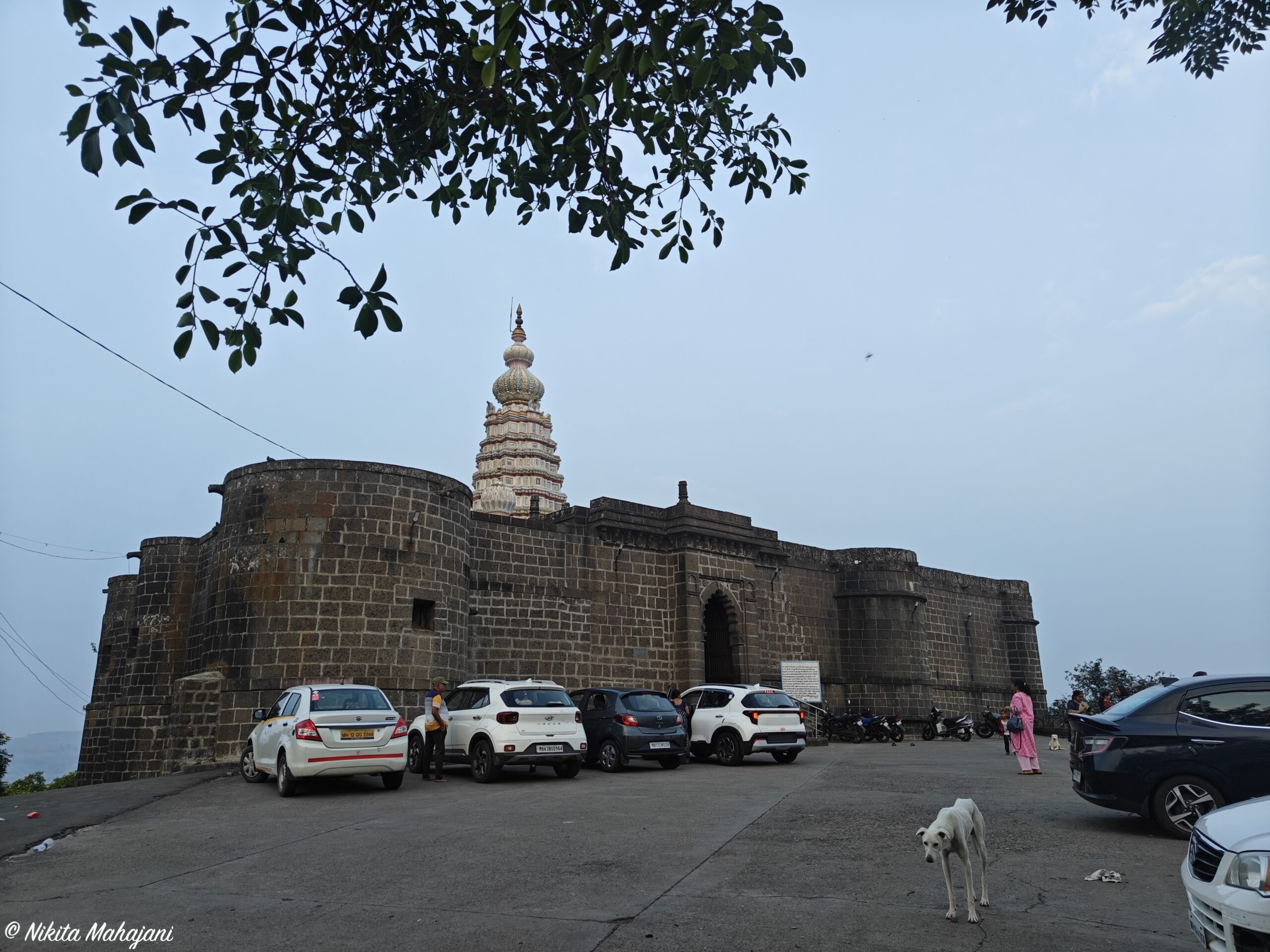
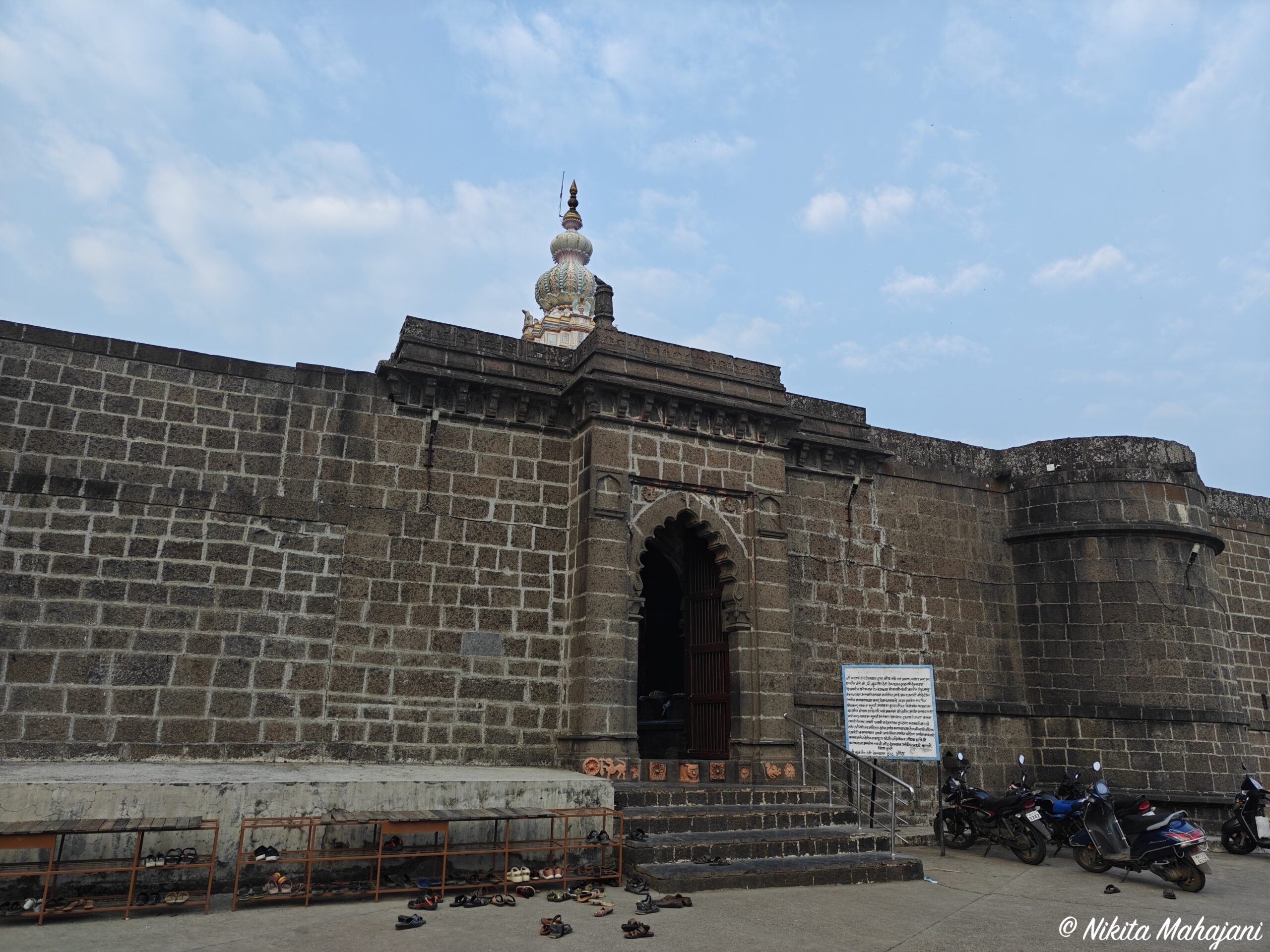
On the way up, there is a museum that closes at 4:45 pm, so plan your visit accordingly. Entry to the temple is free, but there are no washrooms or restaurants nearby. Parking is available at no cost. The temple premises are home to some stray dogs, so consider bringing dog food for them and avoid throwing stones at them. If you’re visiting with your pet, ensure they are leashed.
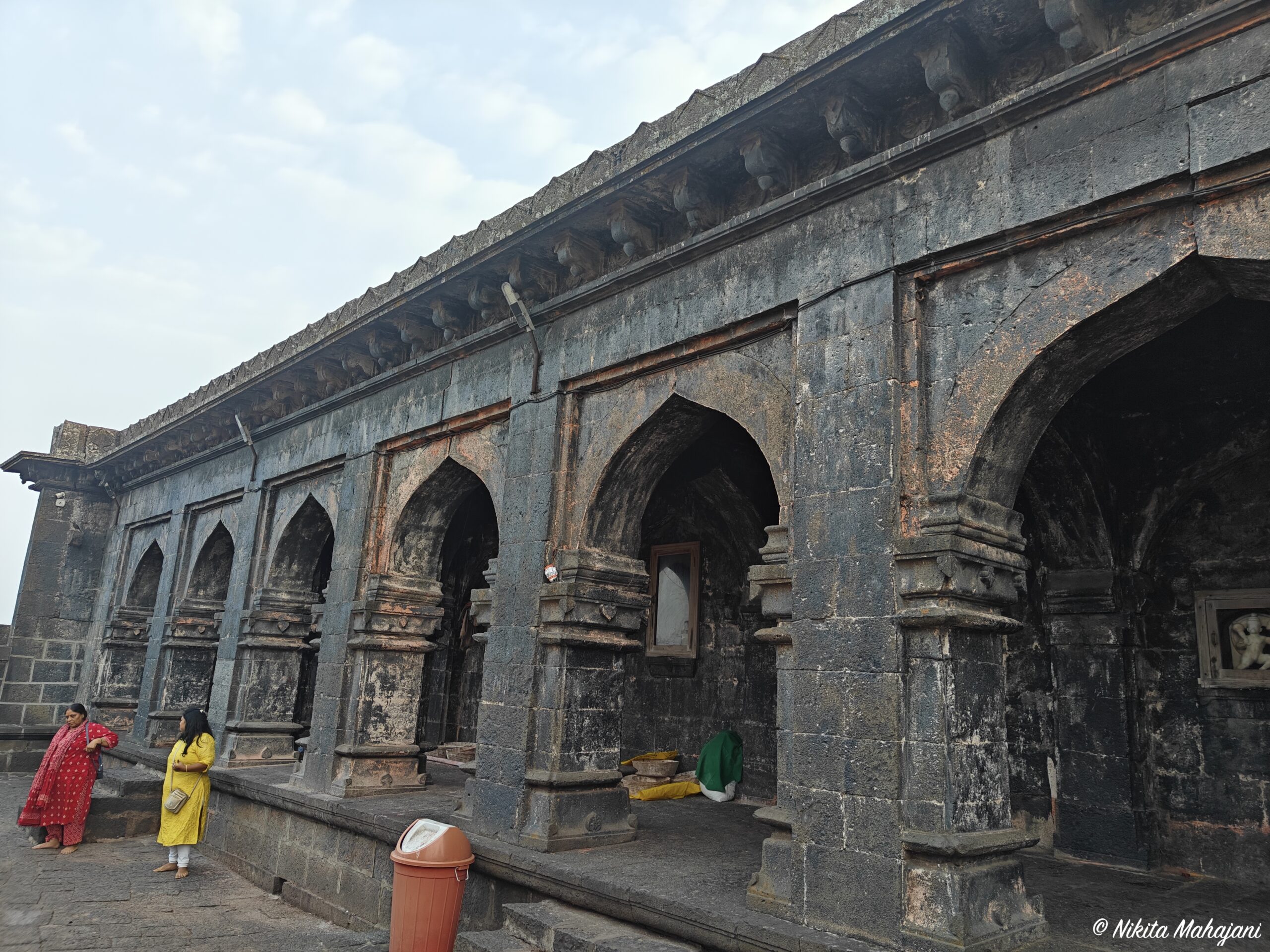
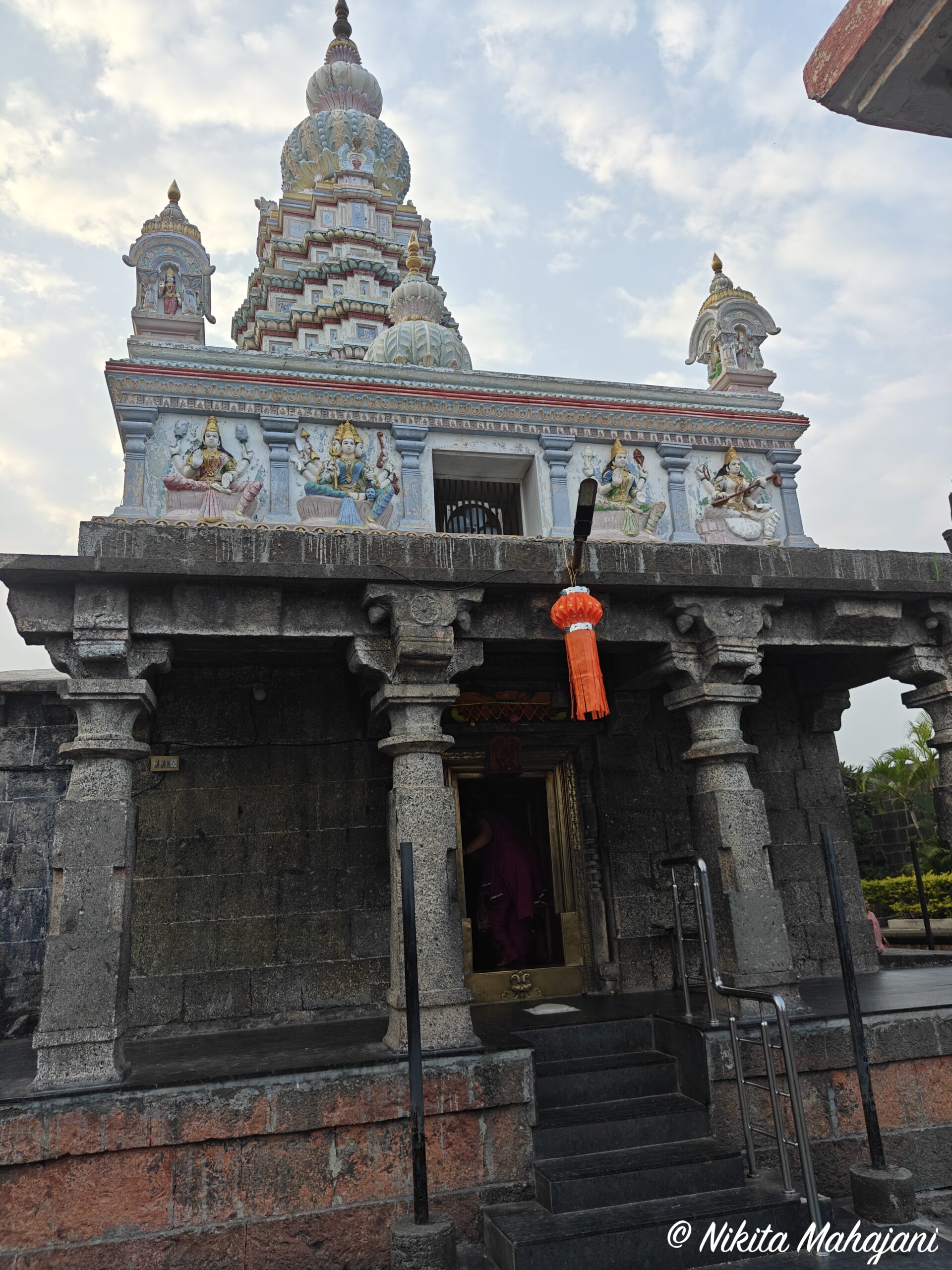
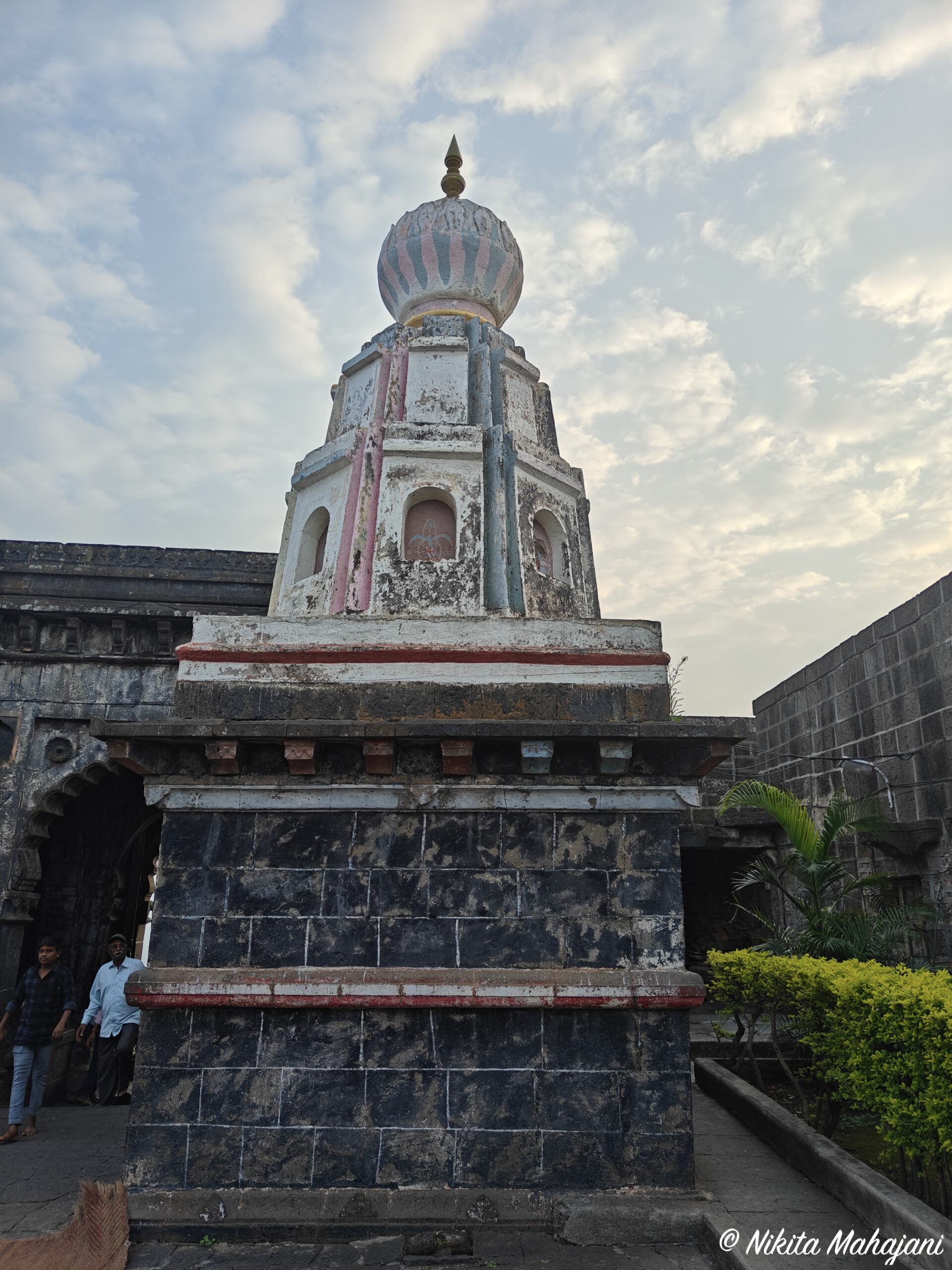
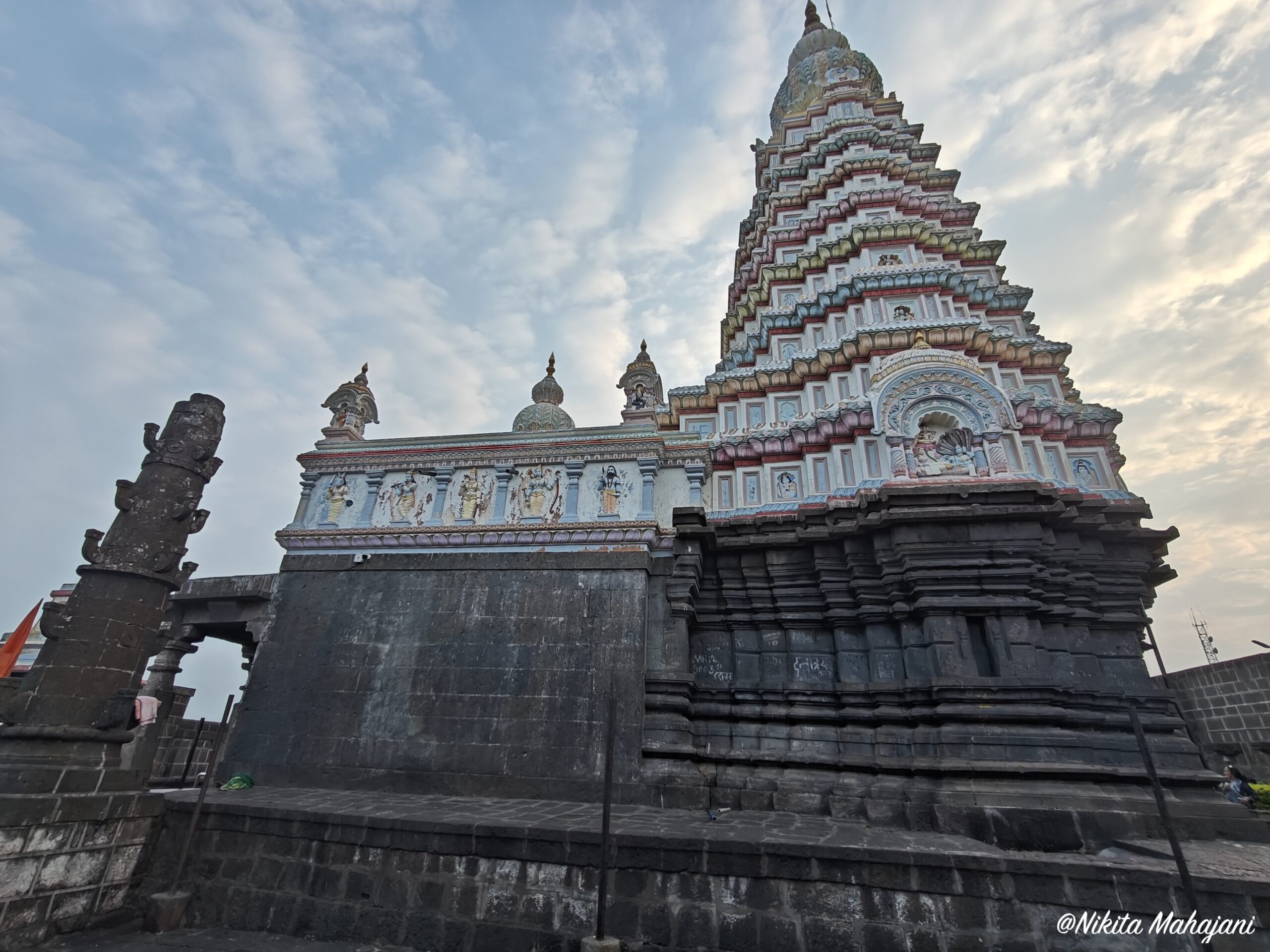
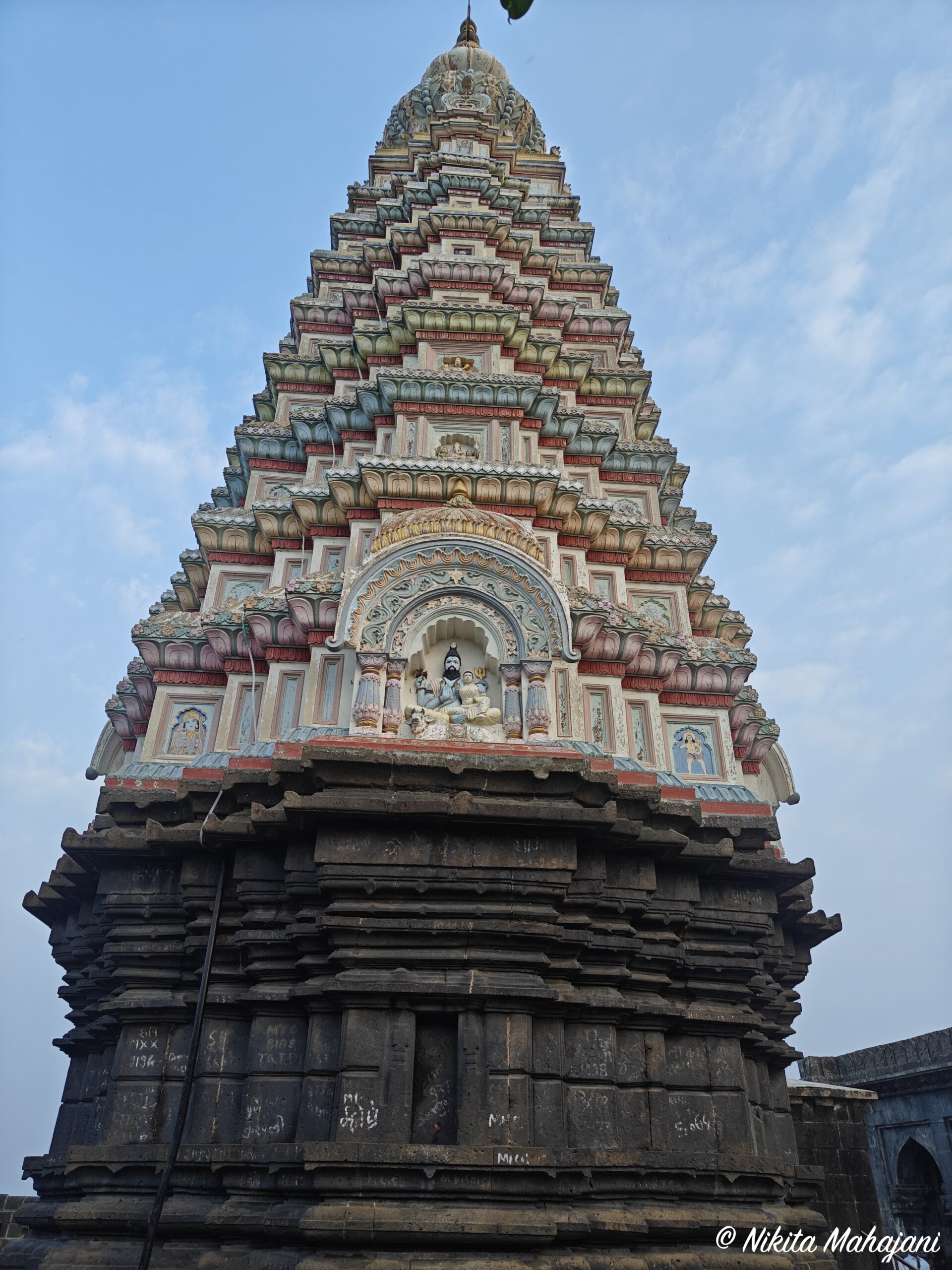
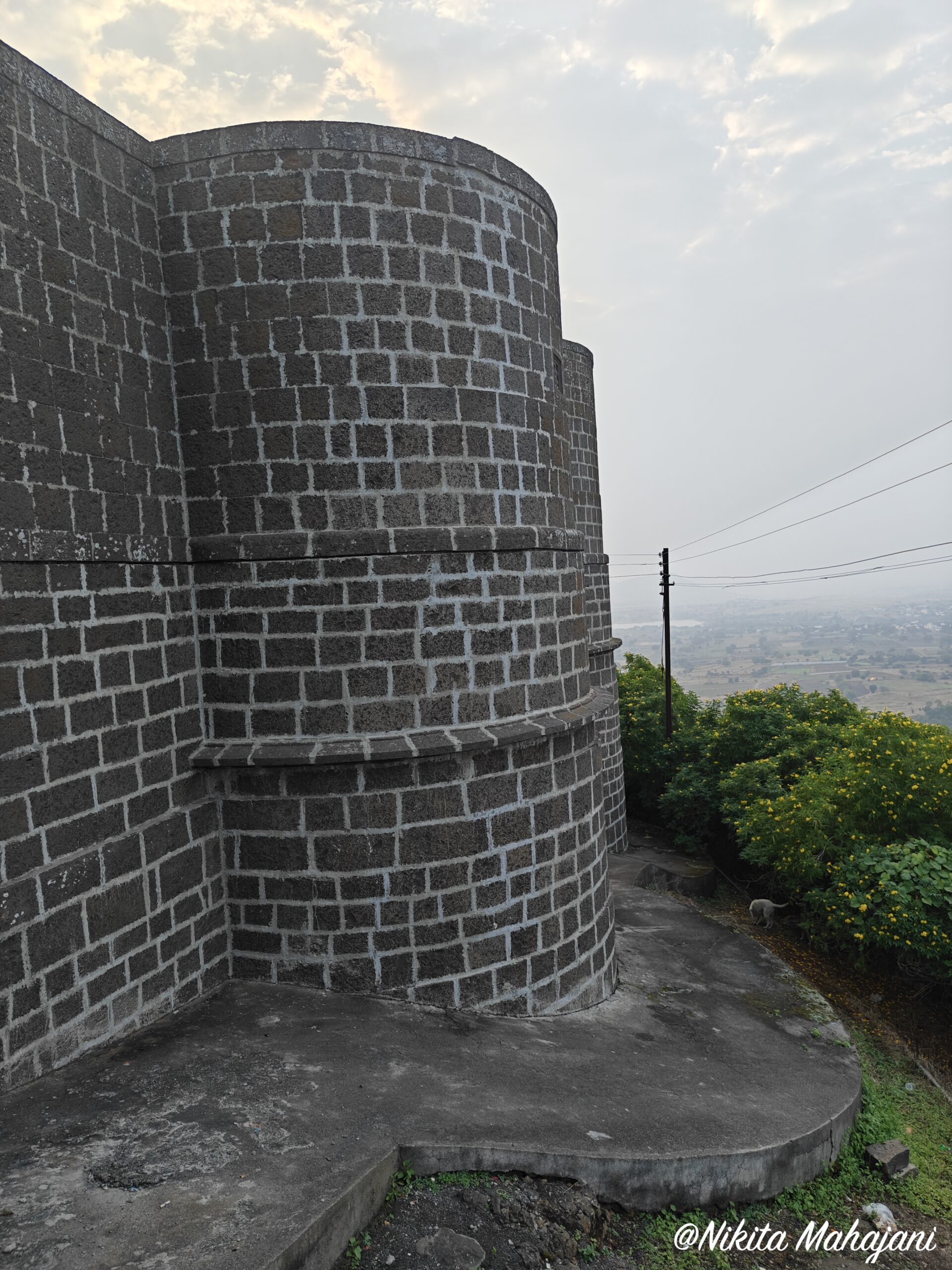
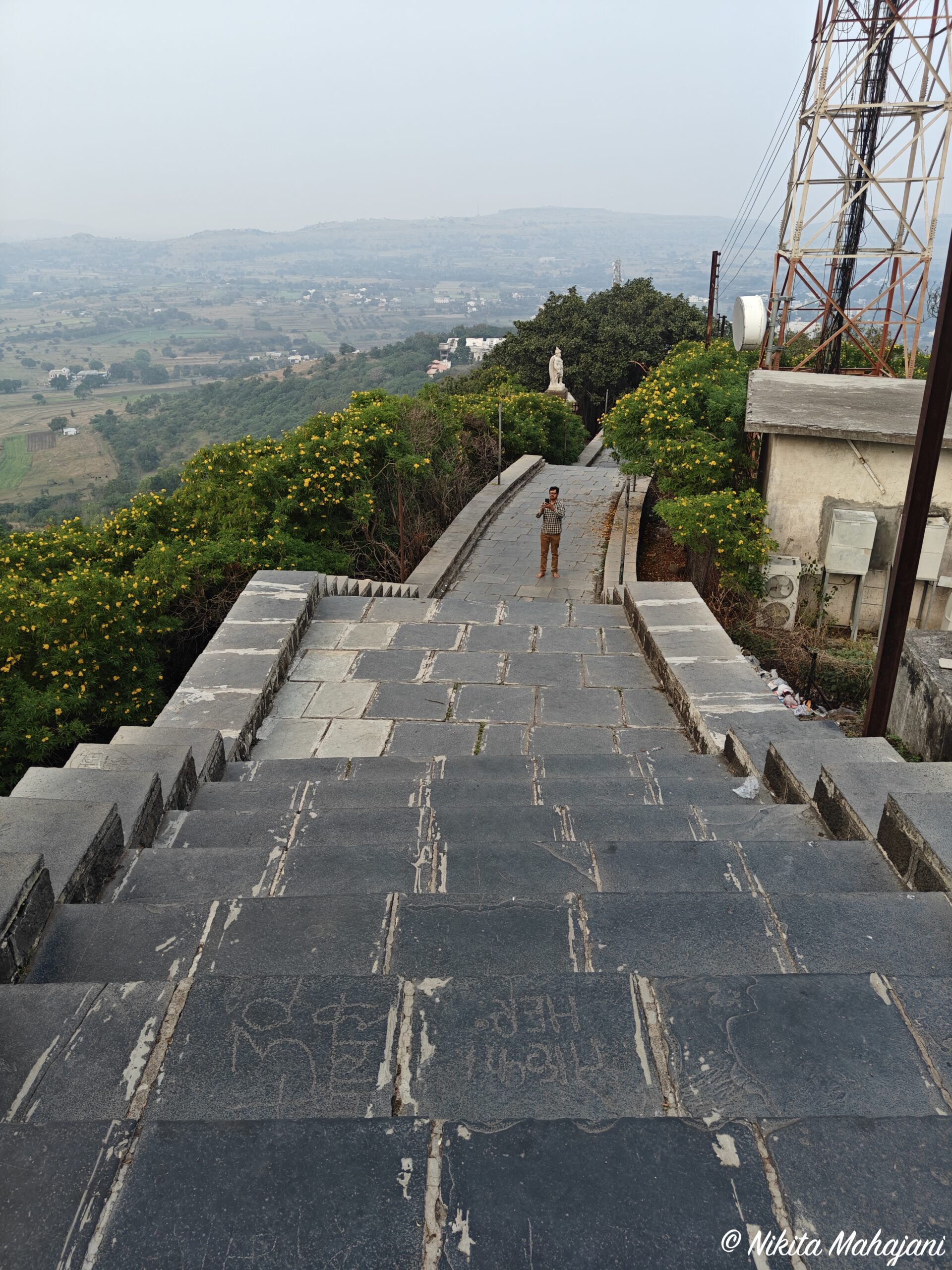
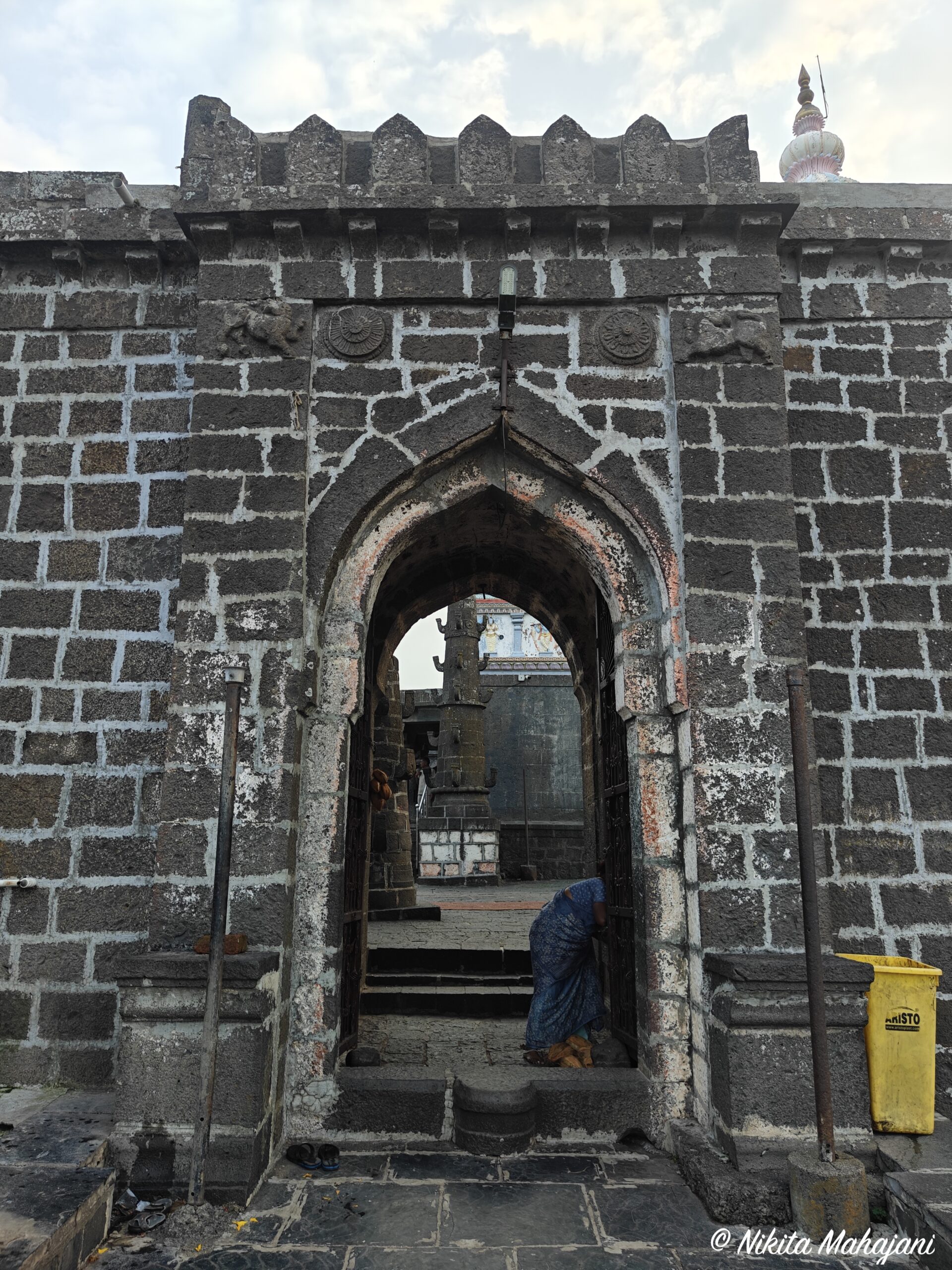
Near the temple, there’s a sunset point offering breathtaking panoramic views. From here, we even spotted a porcupine!
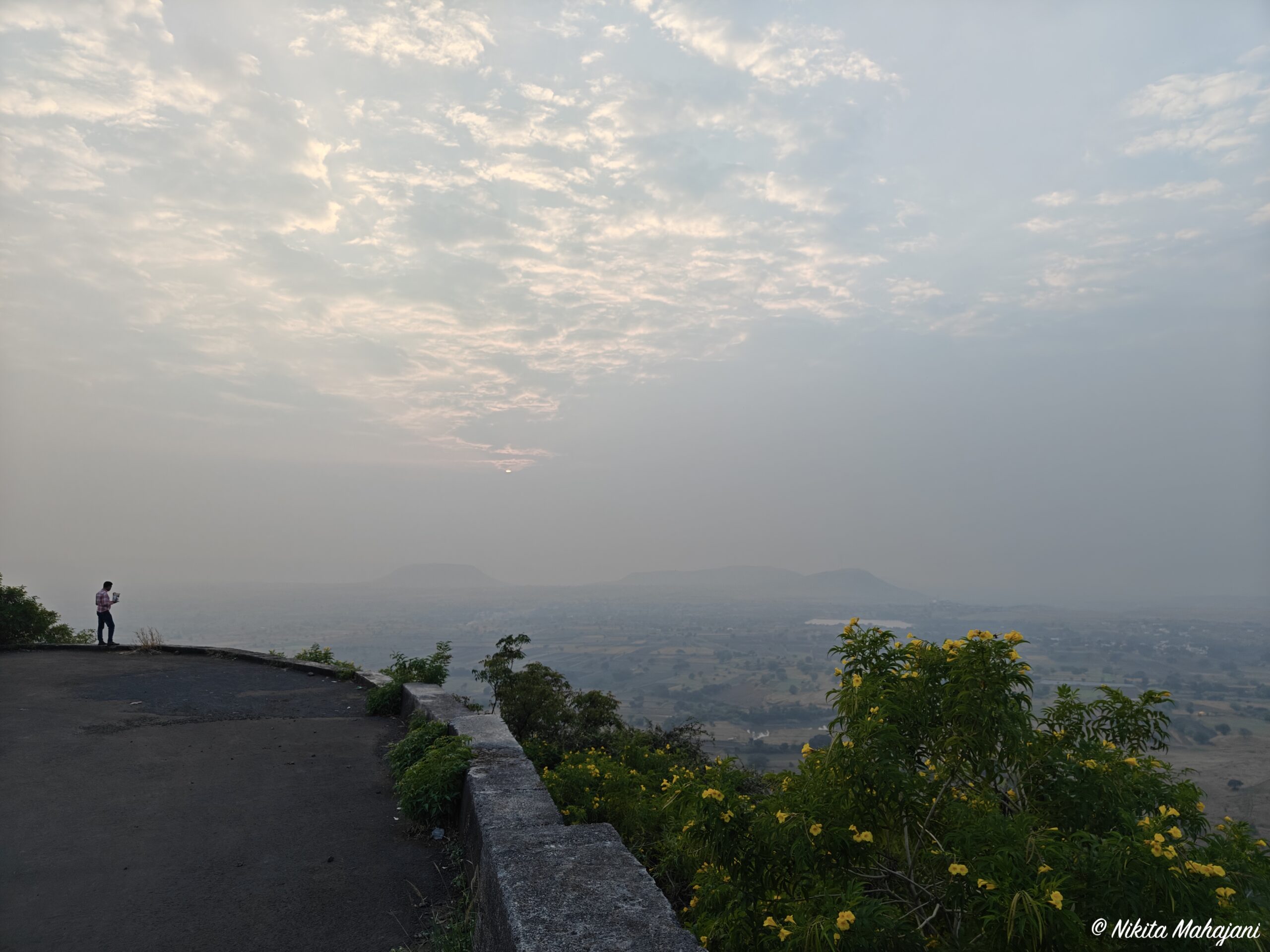
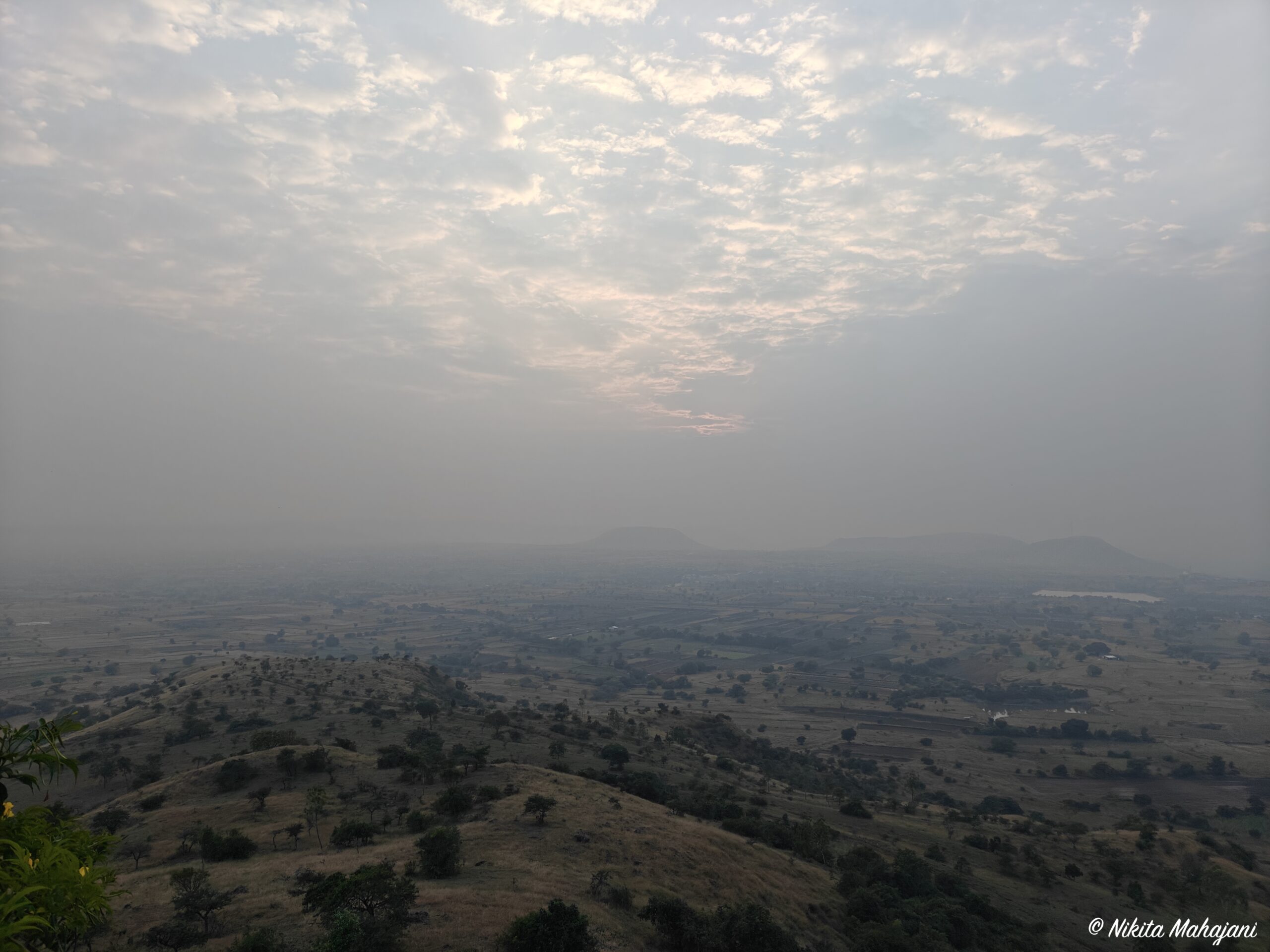
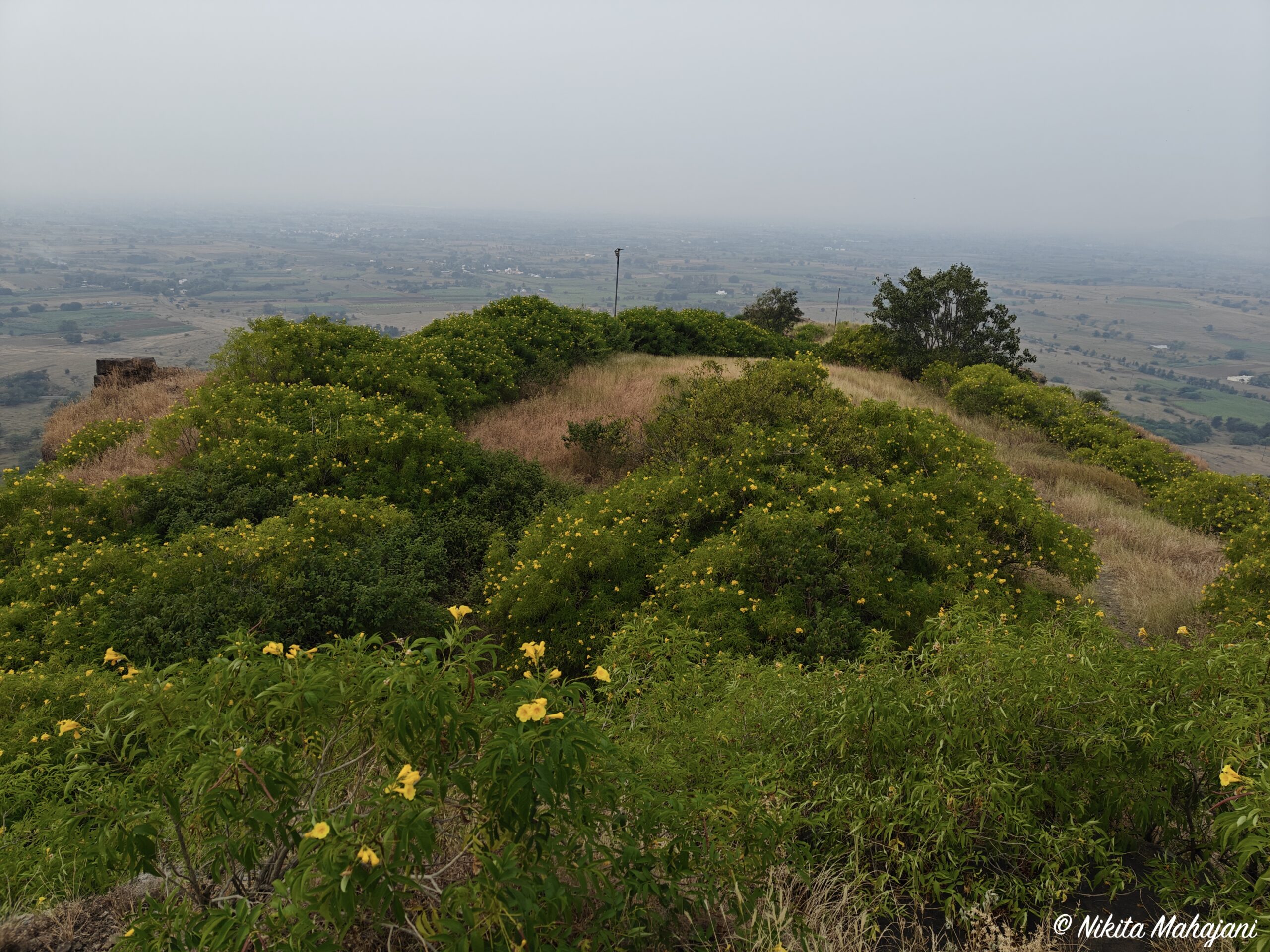
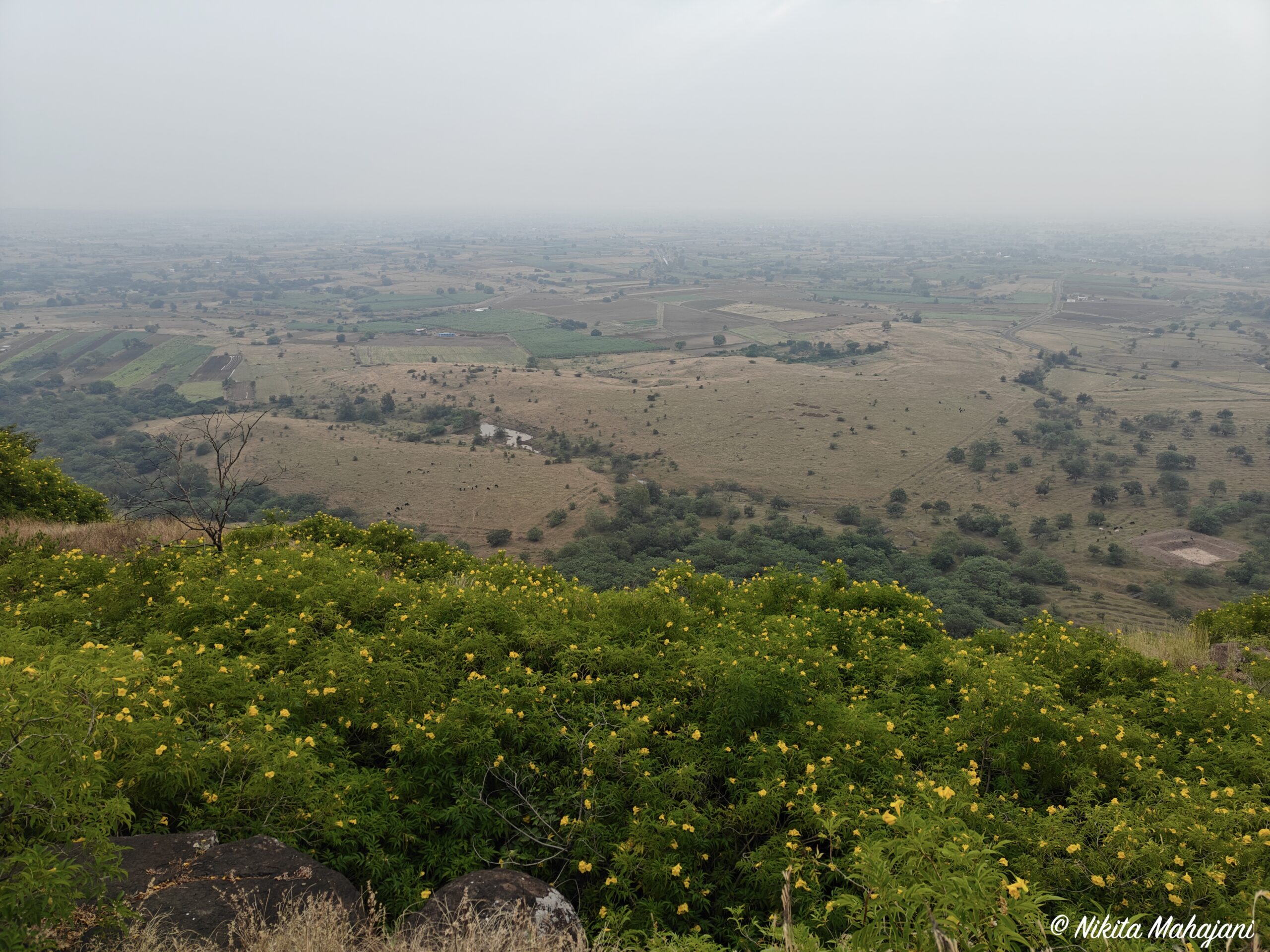
By evening, we returned to our hotel for a quiet dinner and rest.
Day 2: Forts, Temples, and the Serenity of Urmodi Dam
After a hearty breakfast at the hotel, we headed to Sajjangad Fort, famous for its spiritual aura. There are eateries, washroom and an ATM in the dedicated parking space of Sajjangad. The pathways were dog-friendly, and Sophie enjoyed her time under the fort’s shady trees.
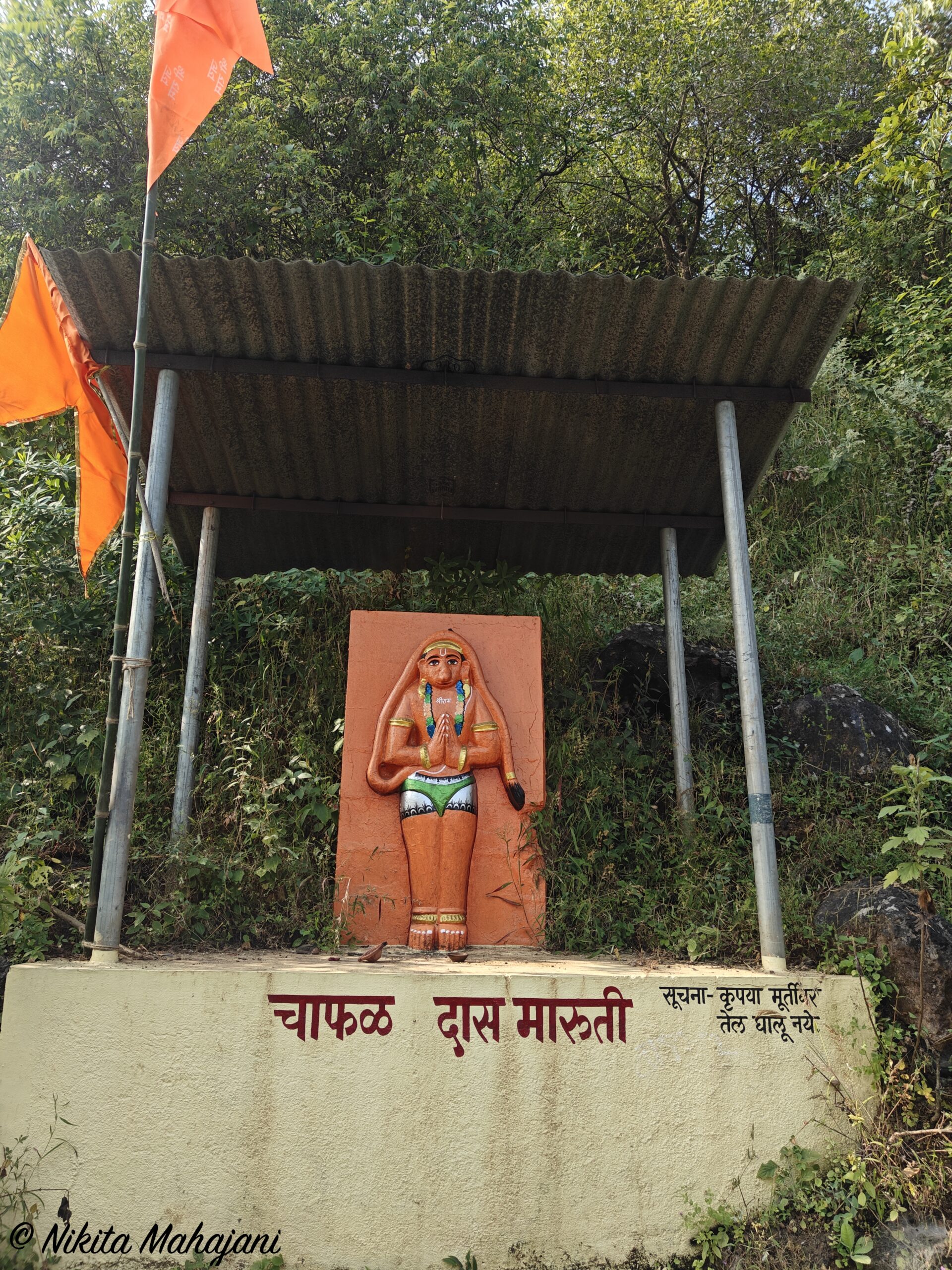
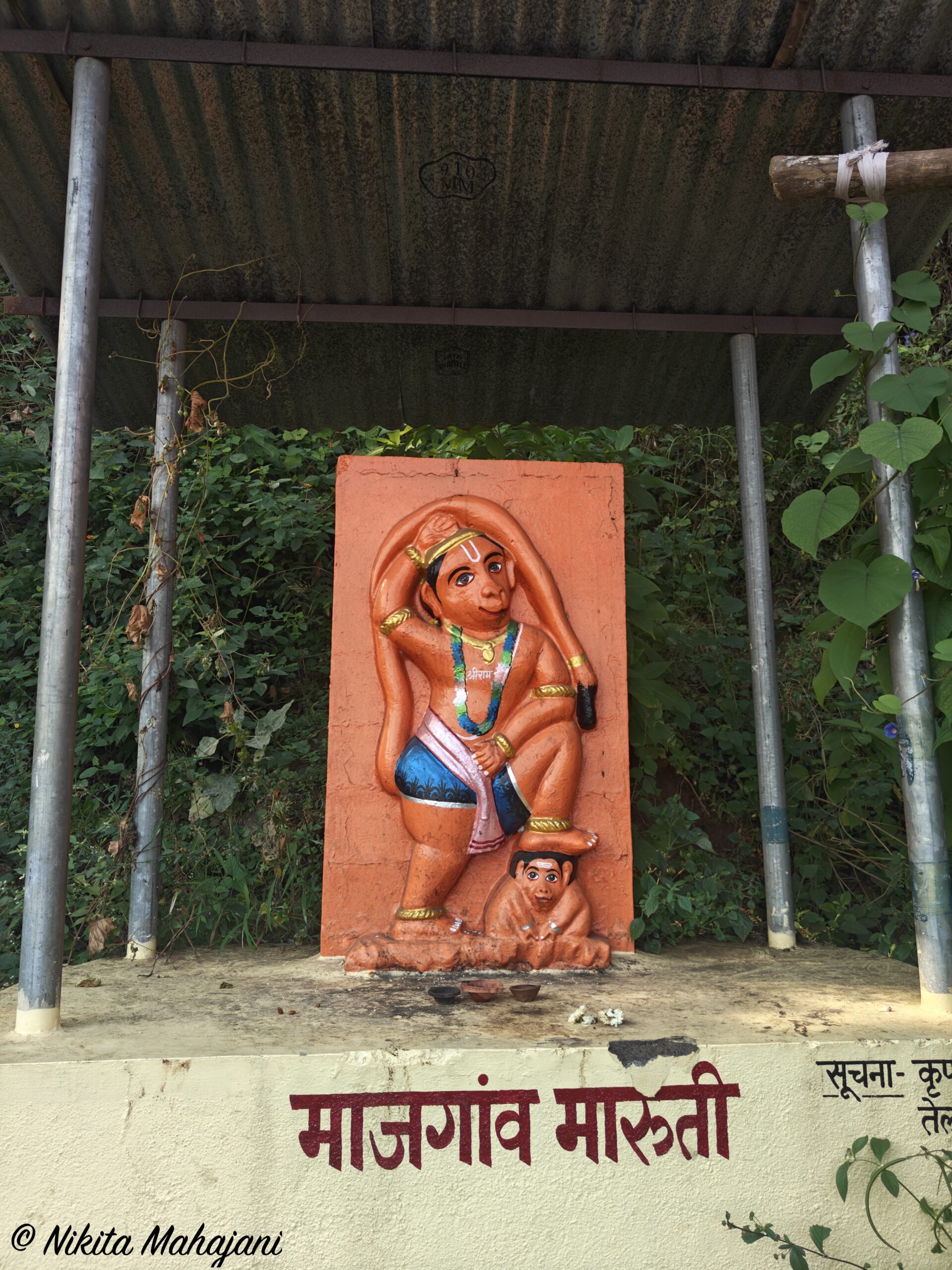
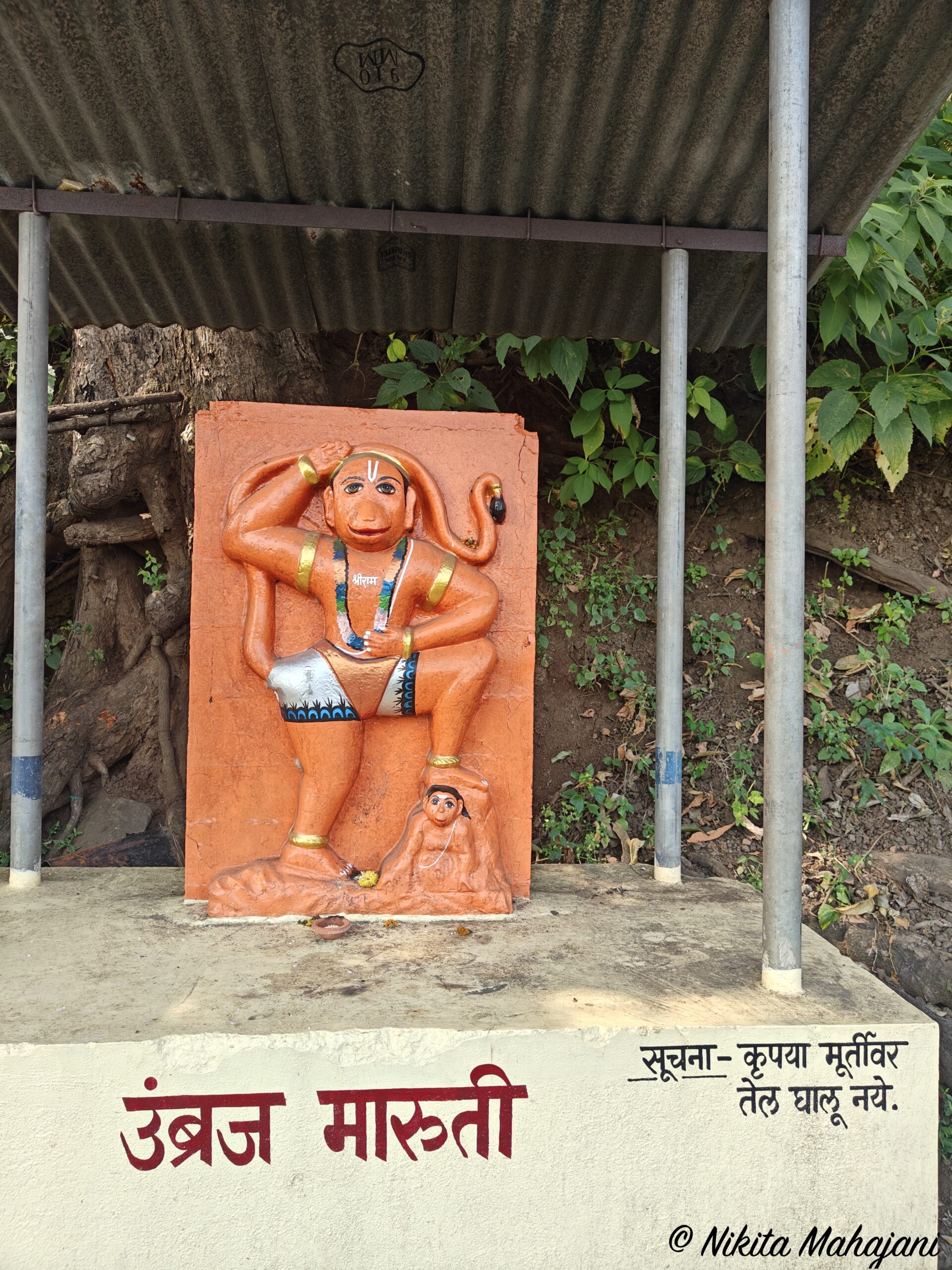
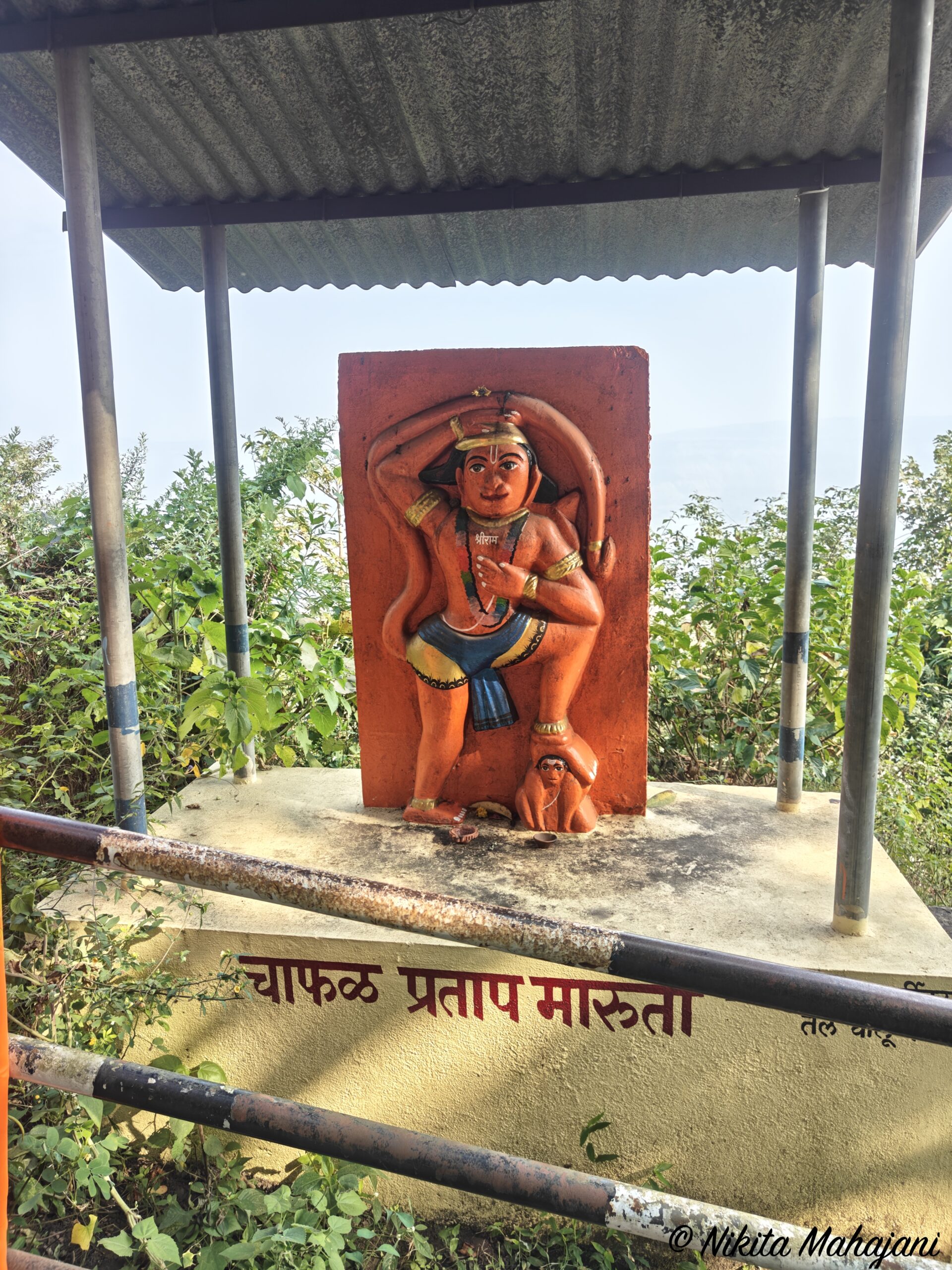
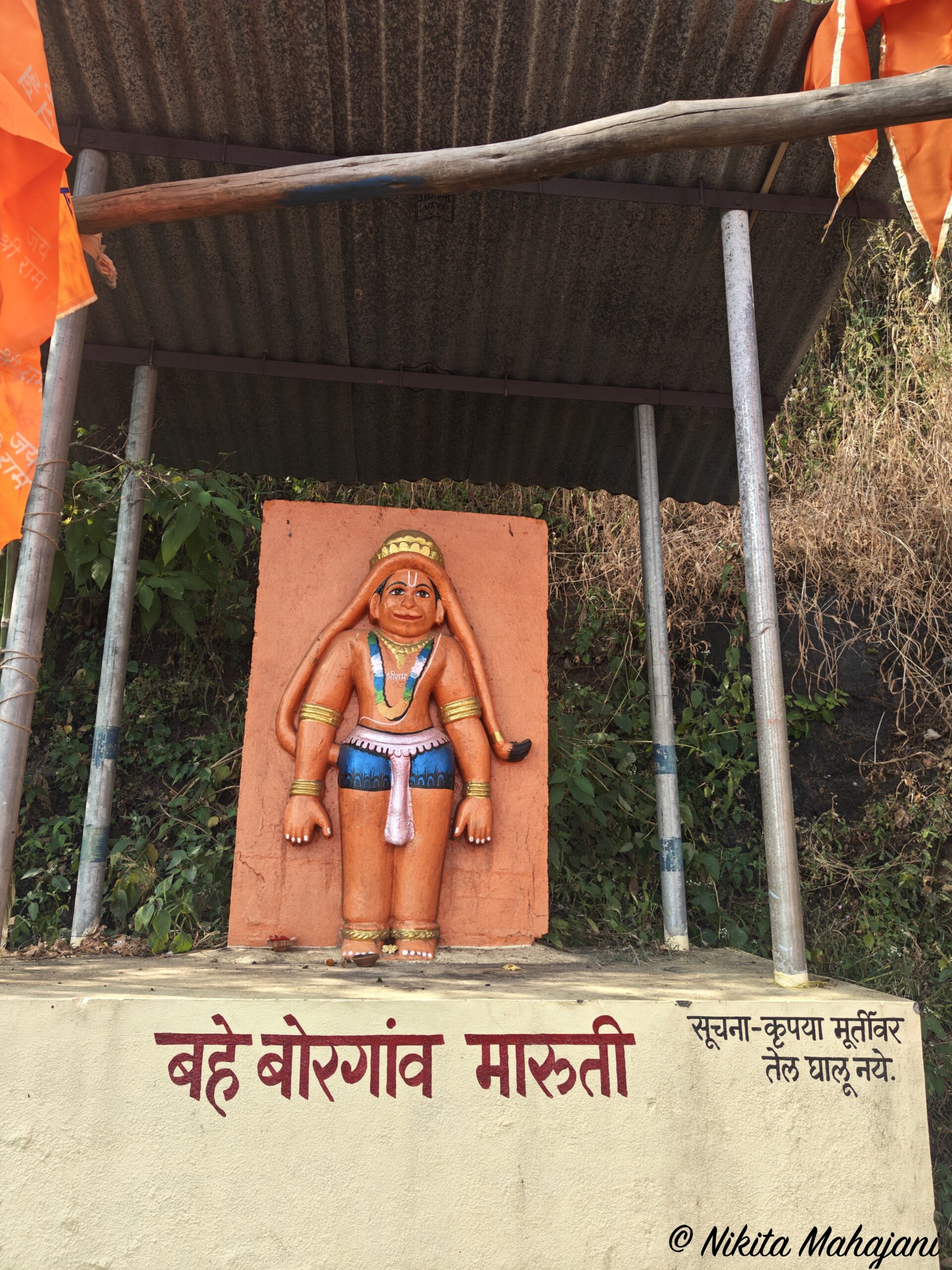
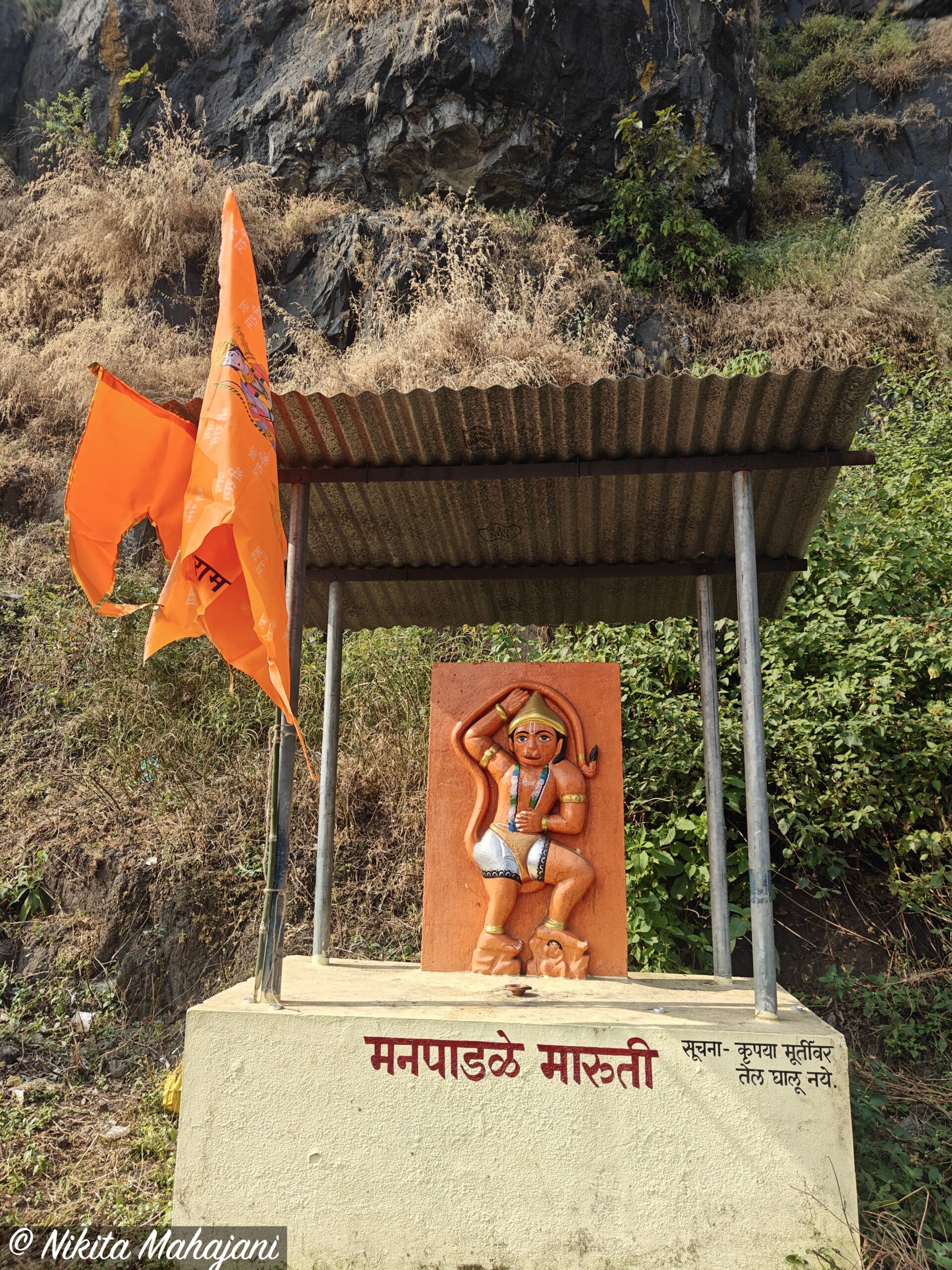
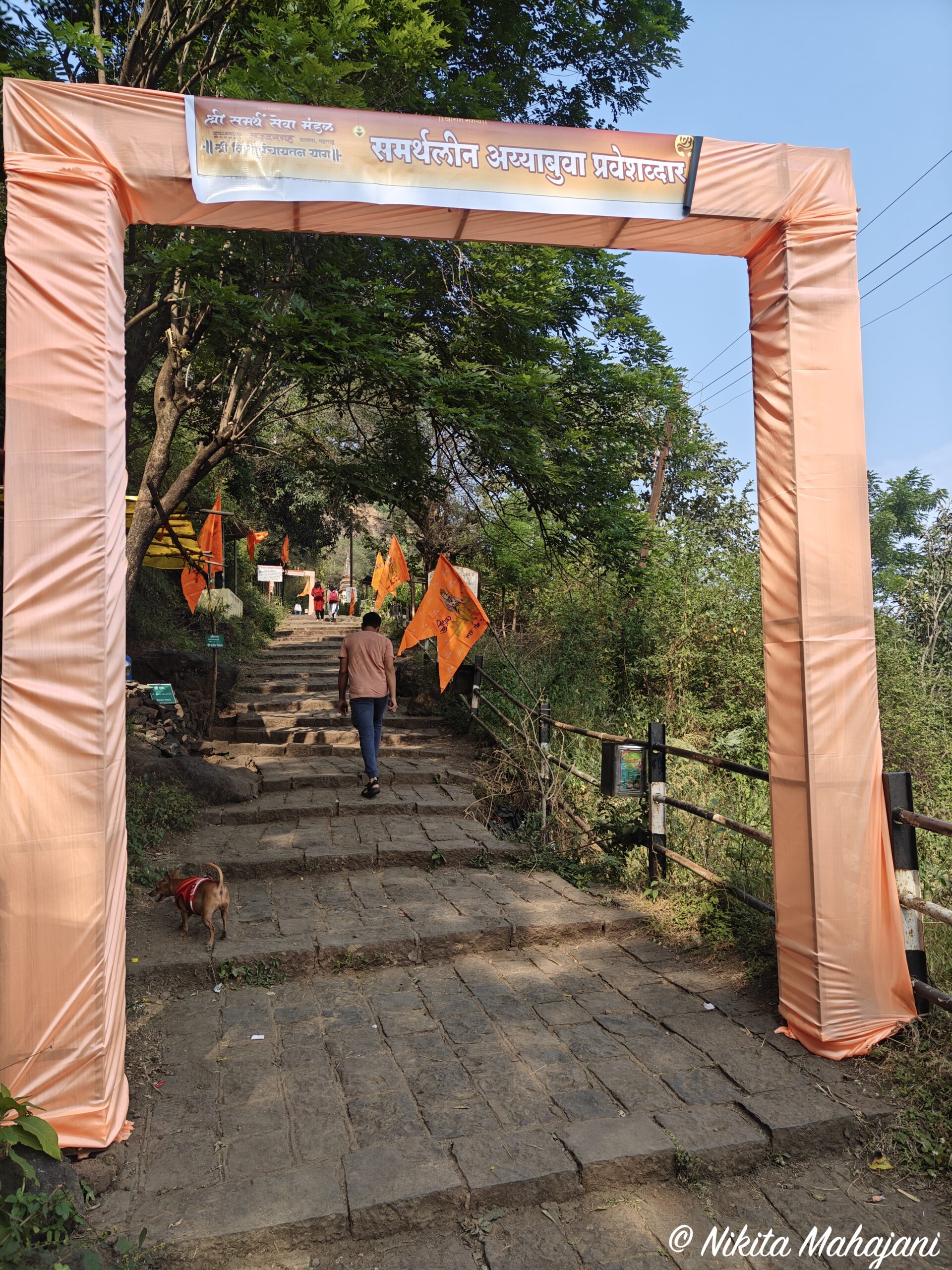
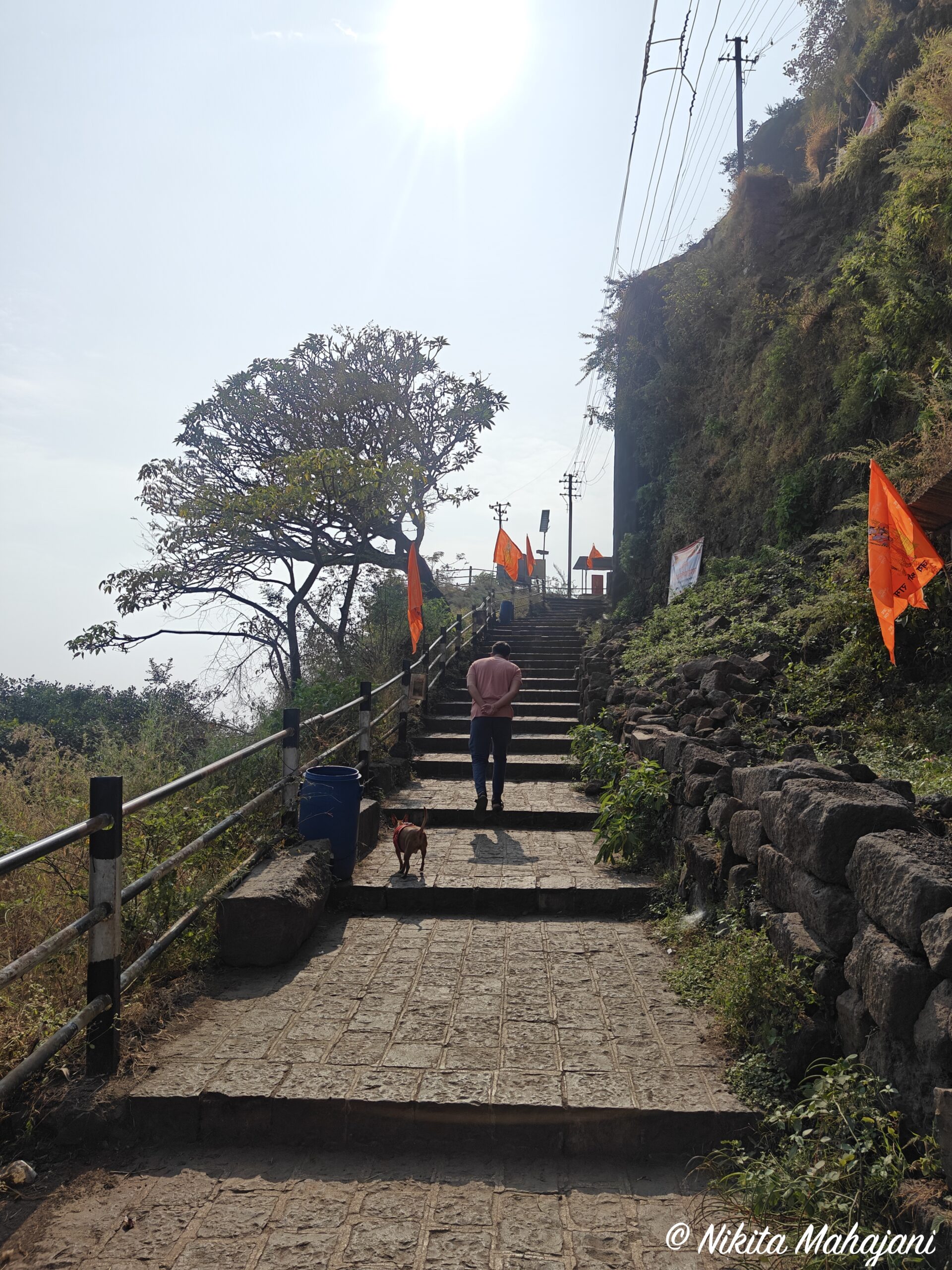
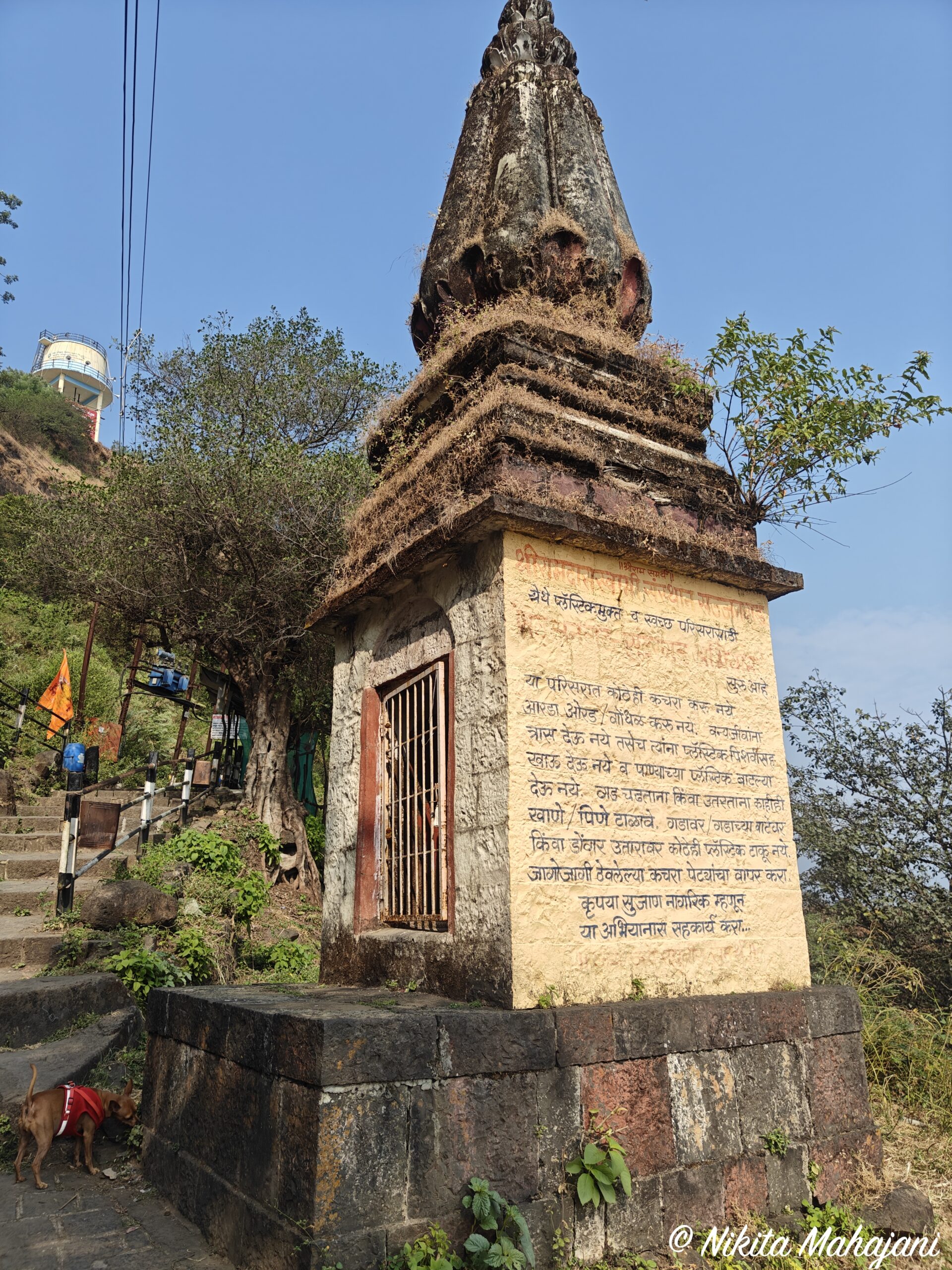
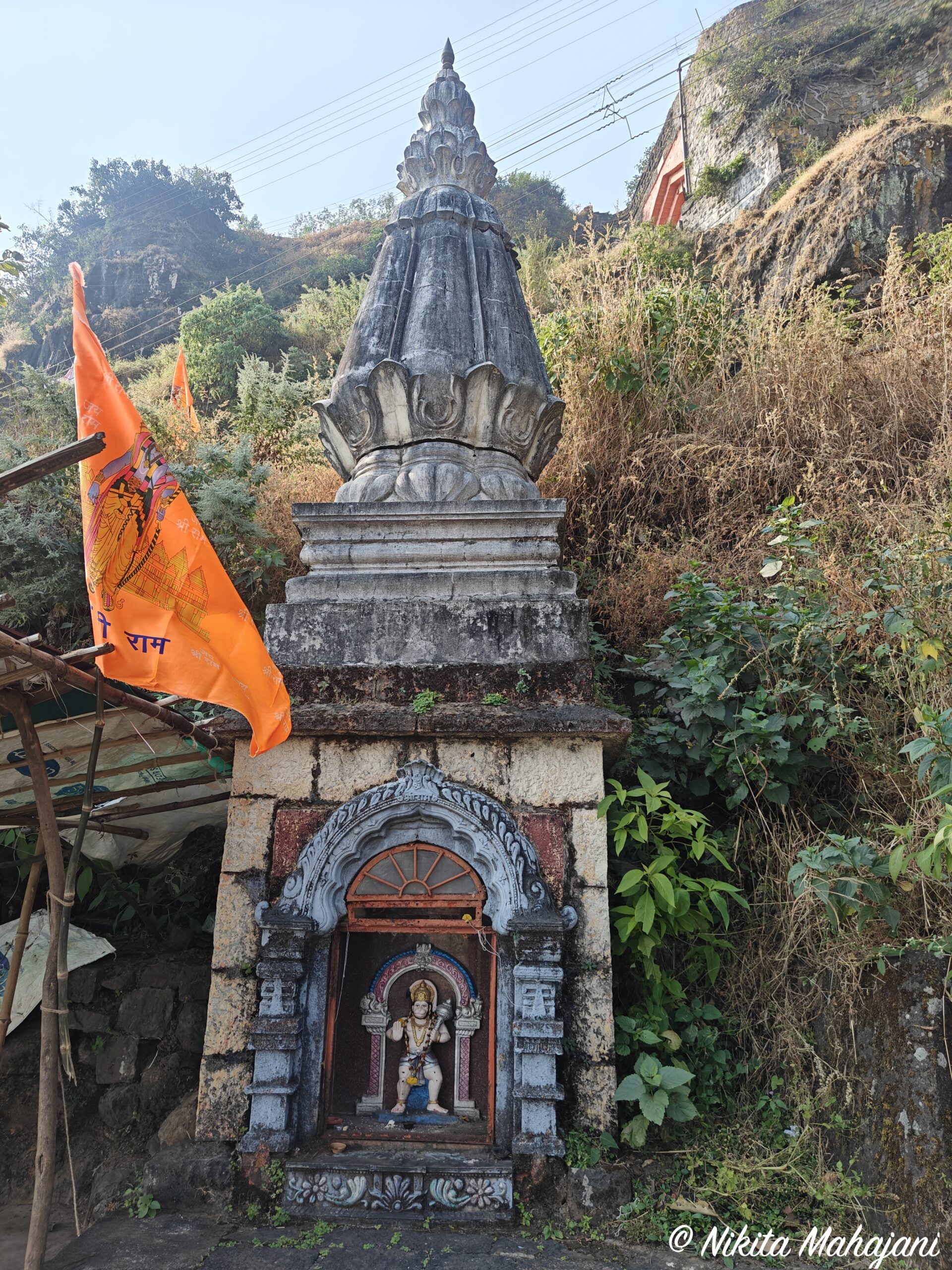
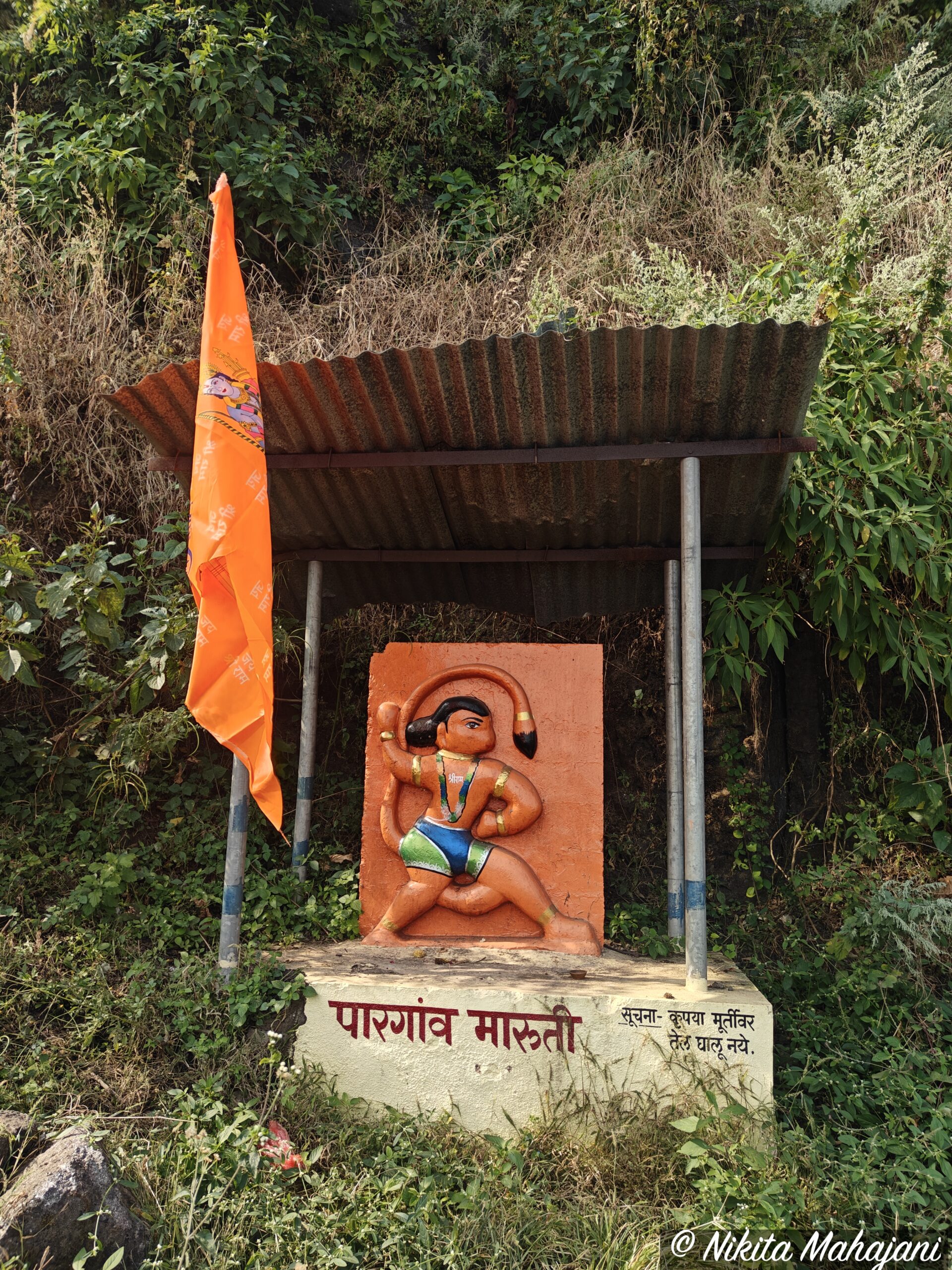
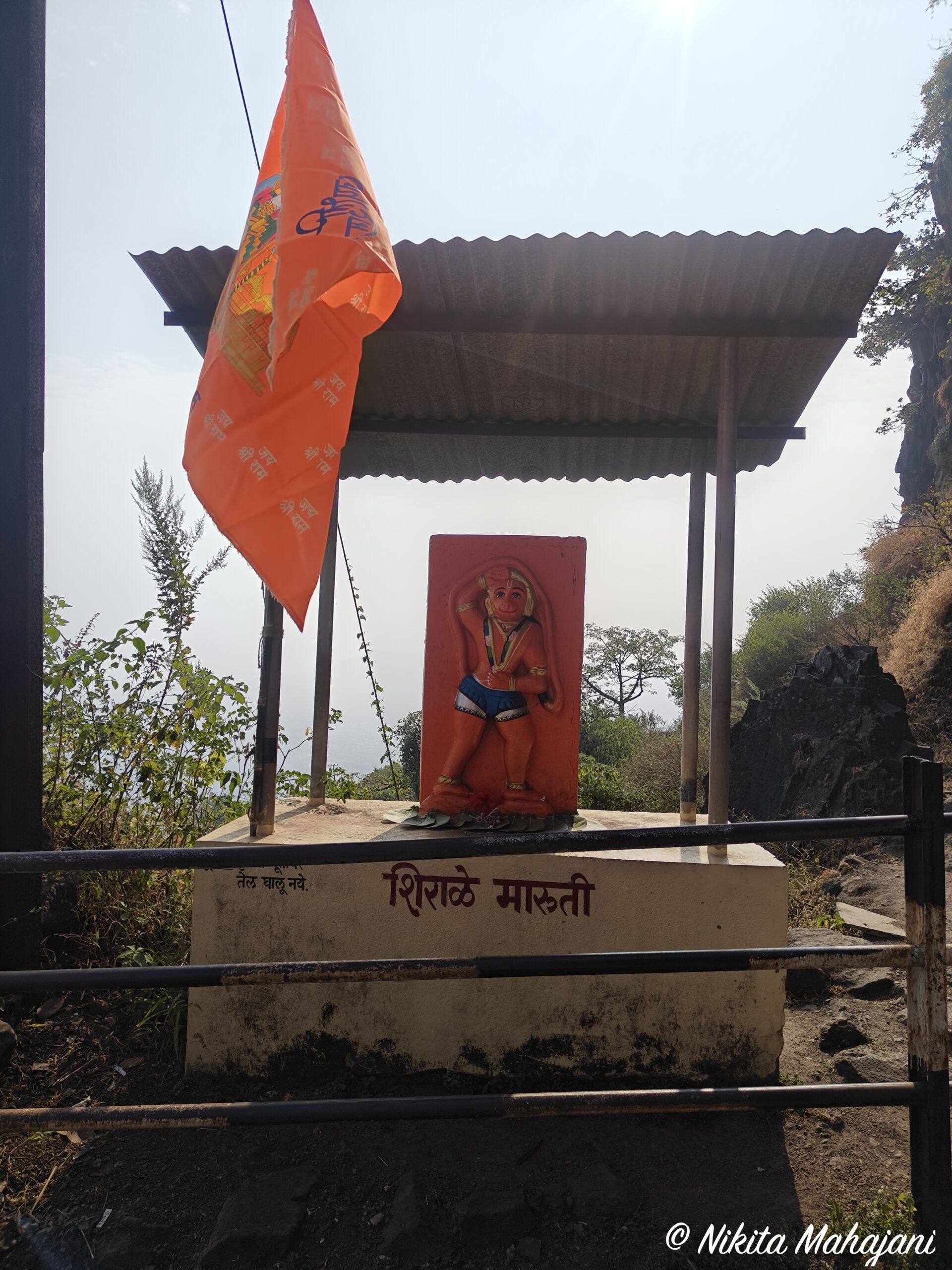
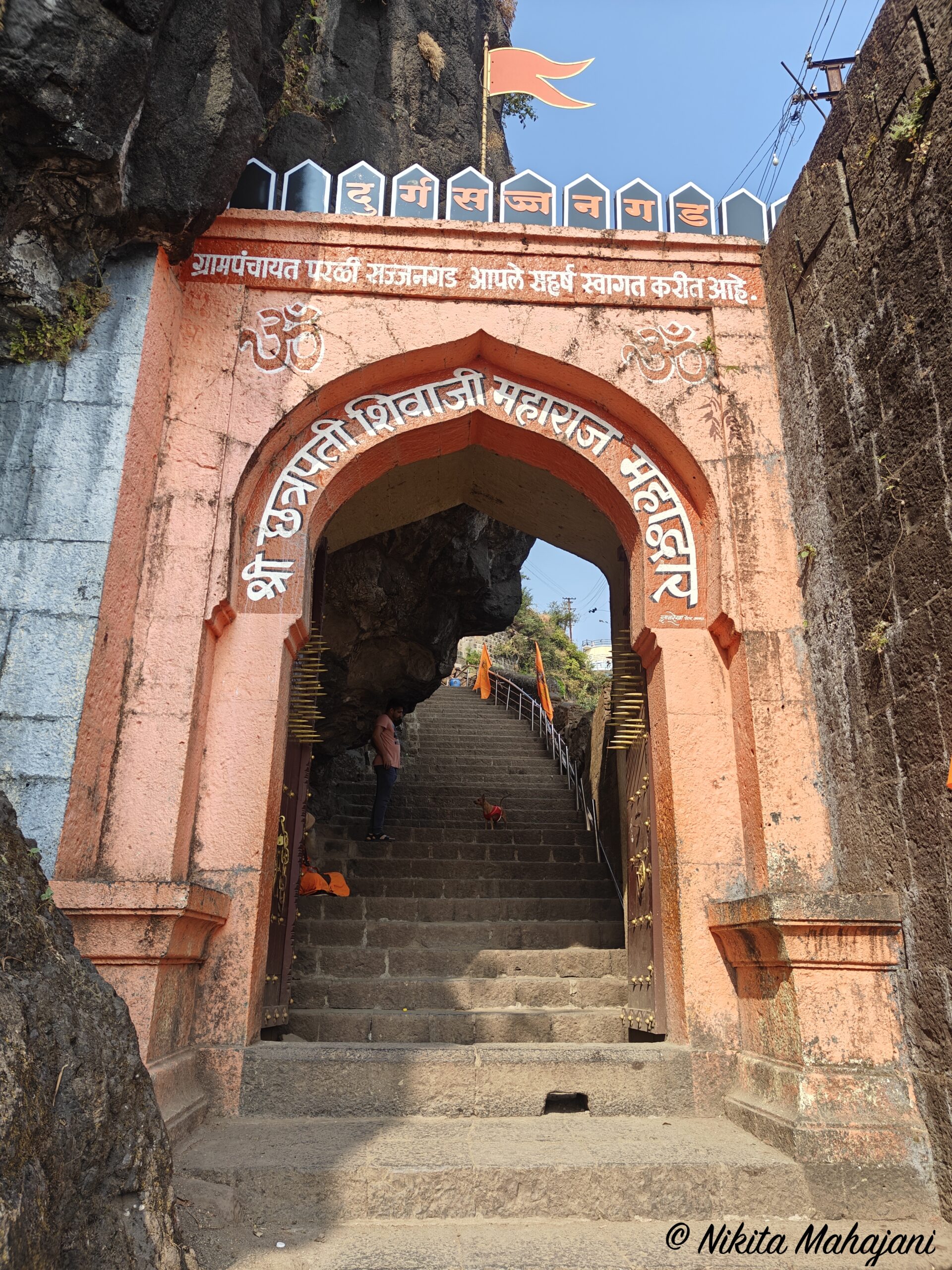
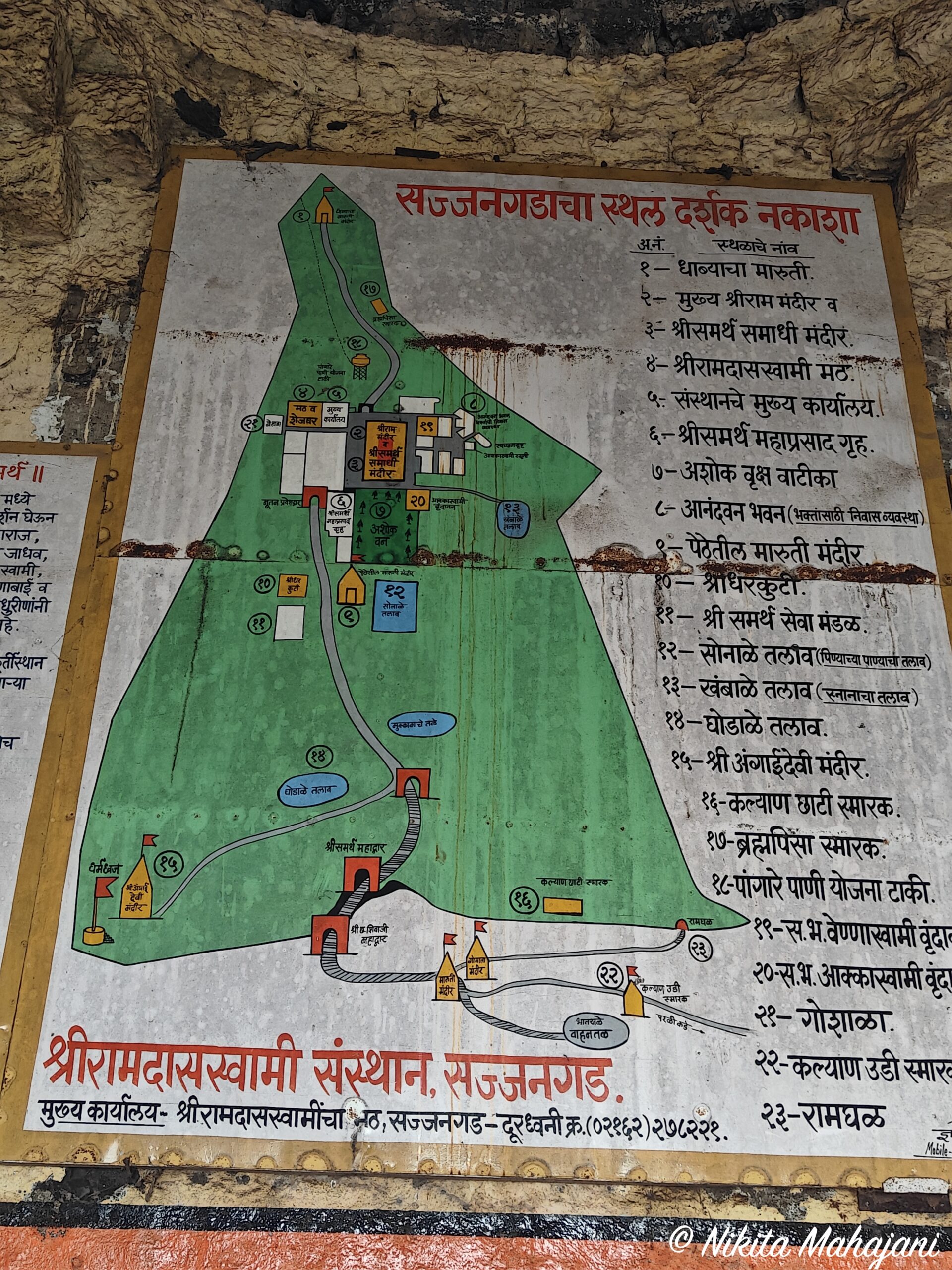
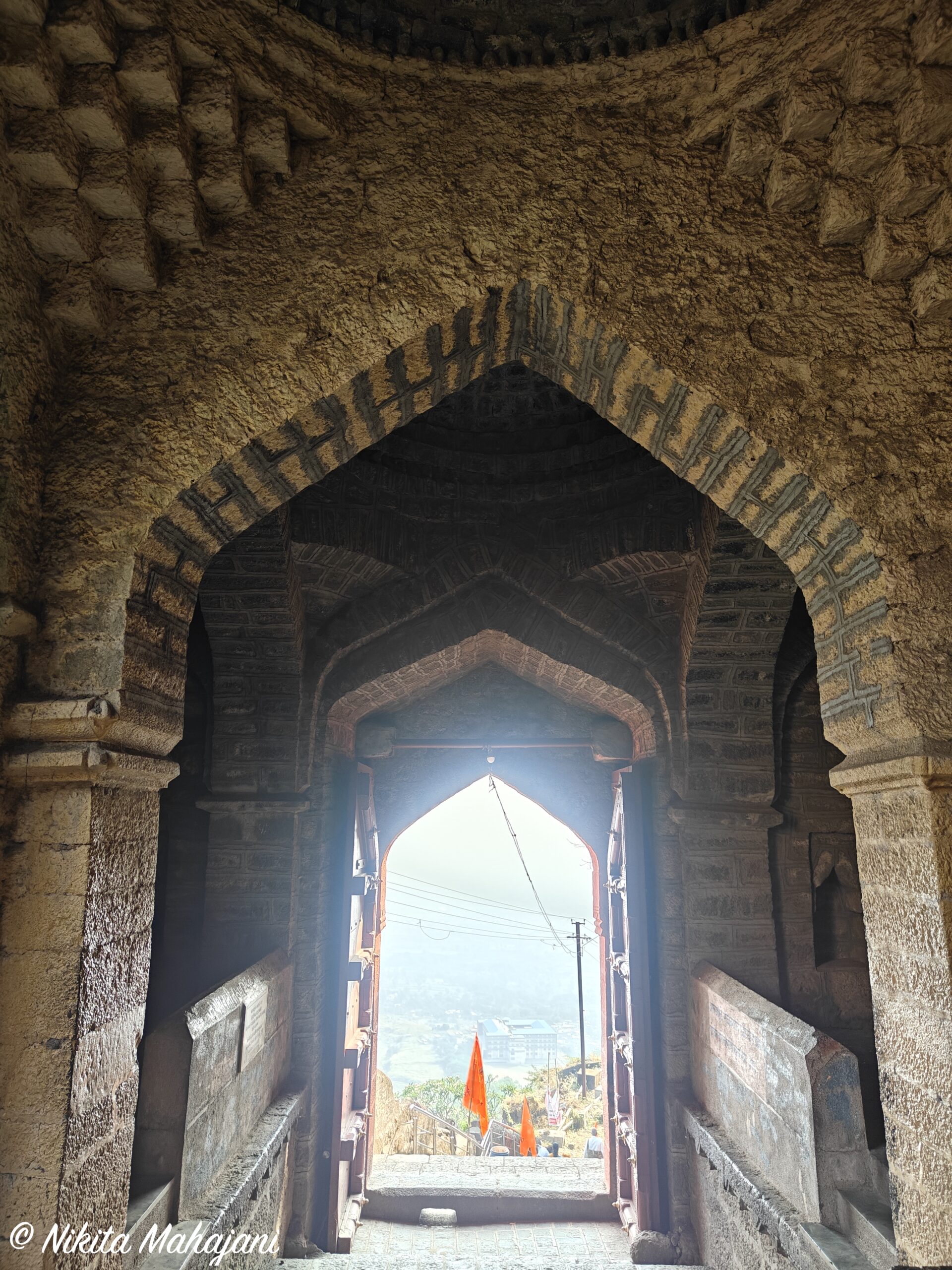
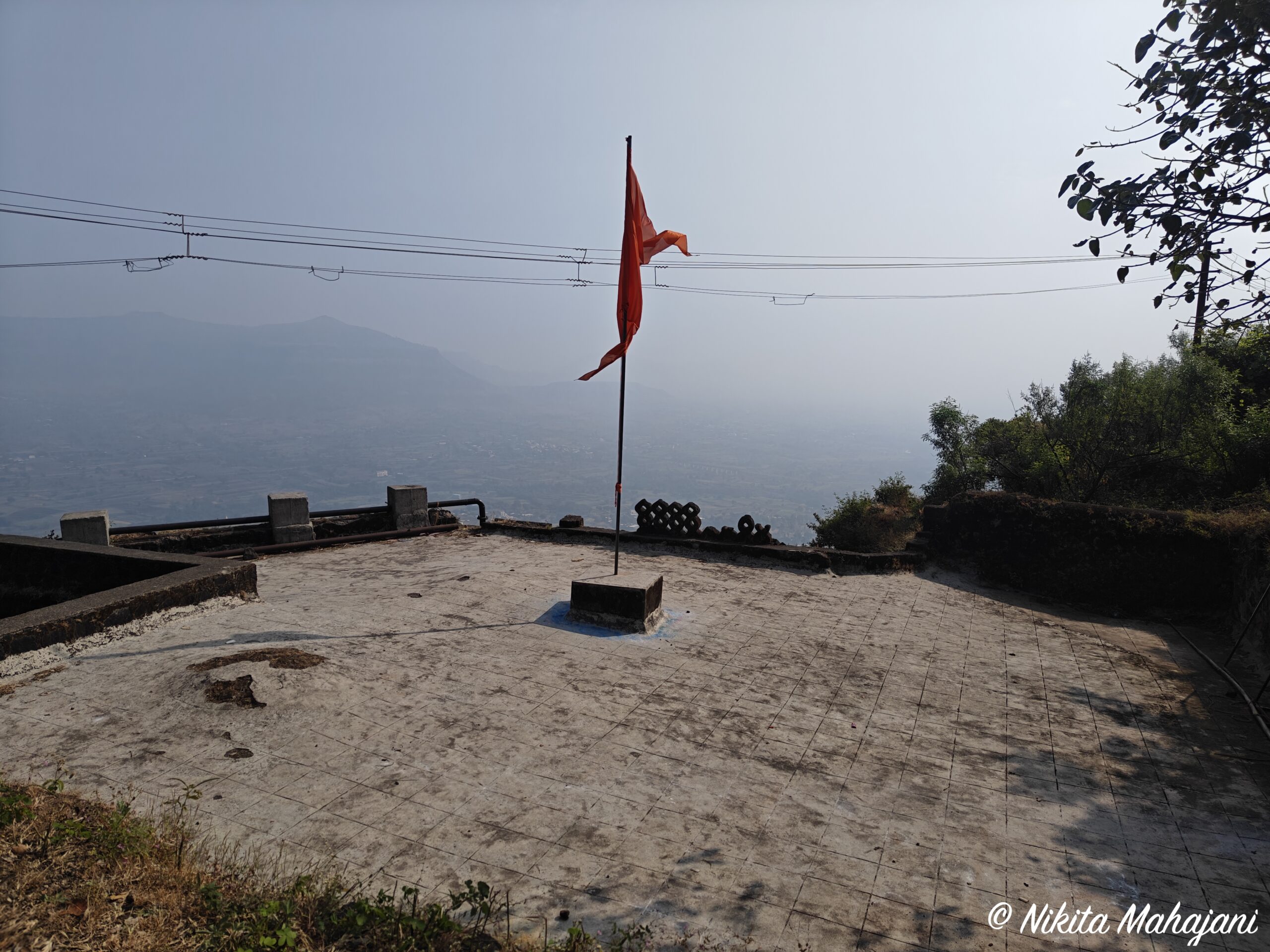
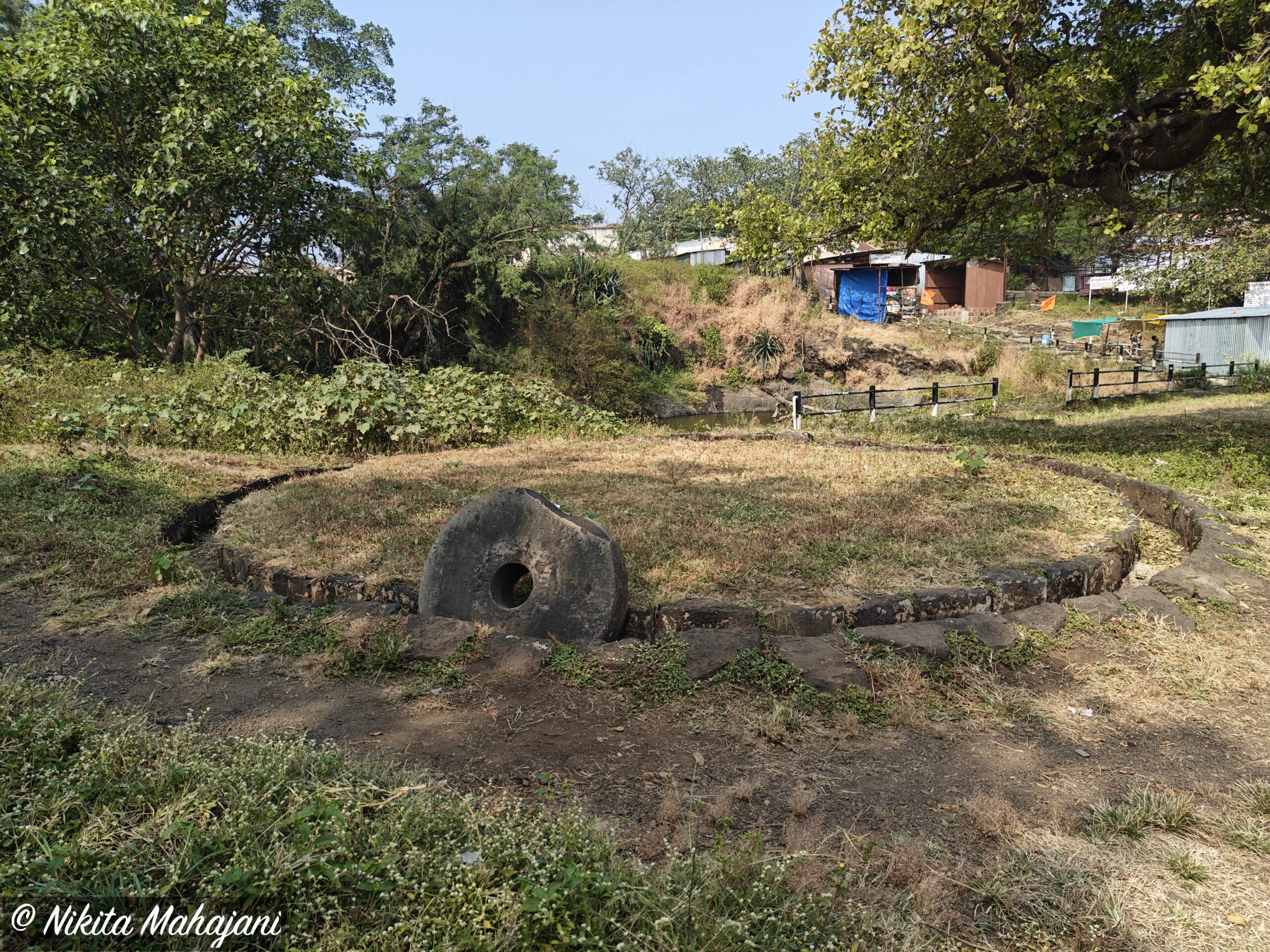
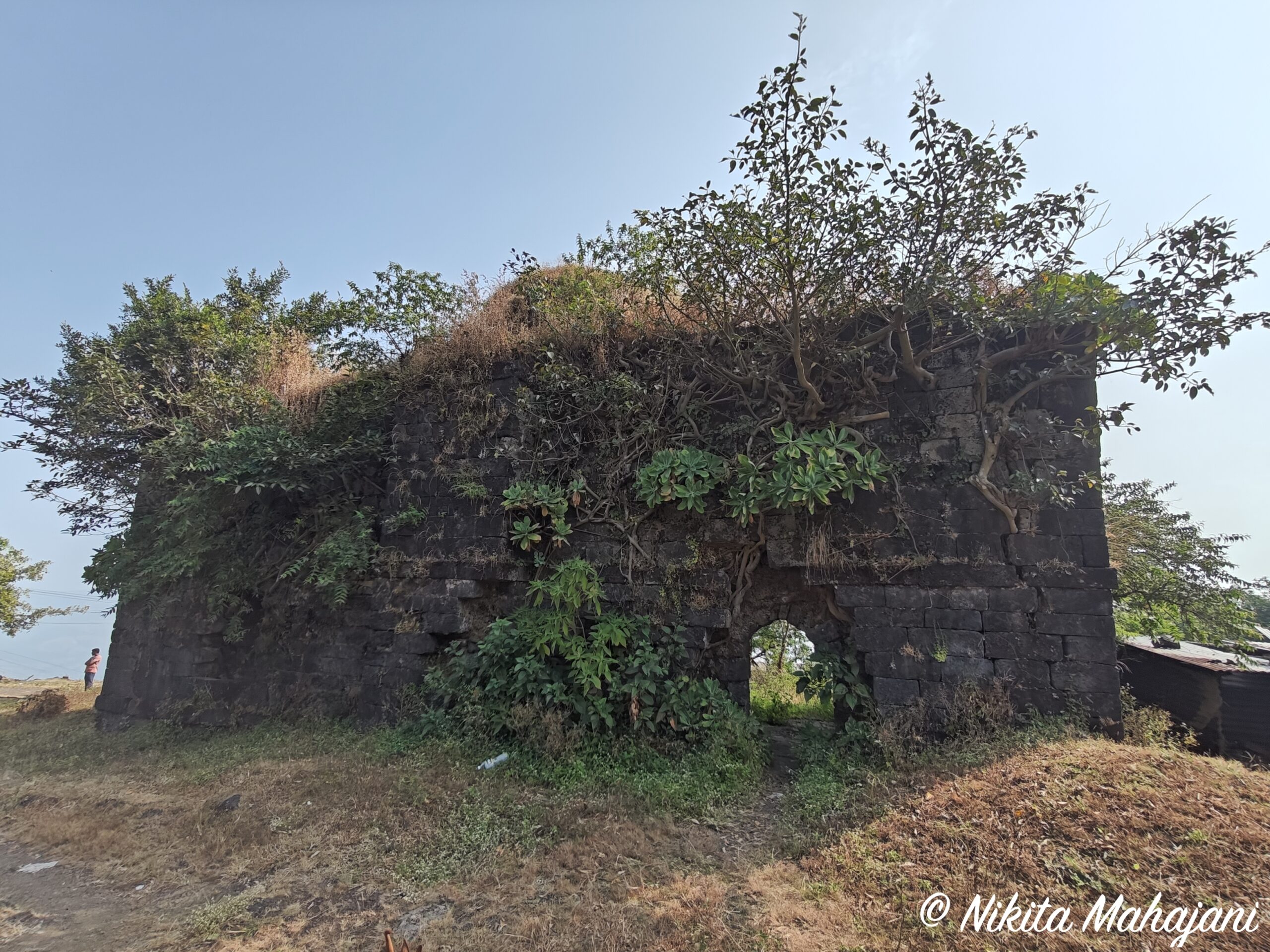
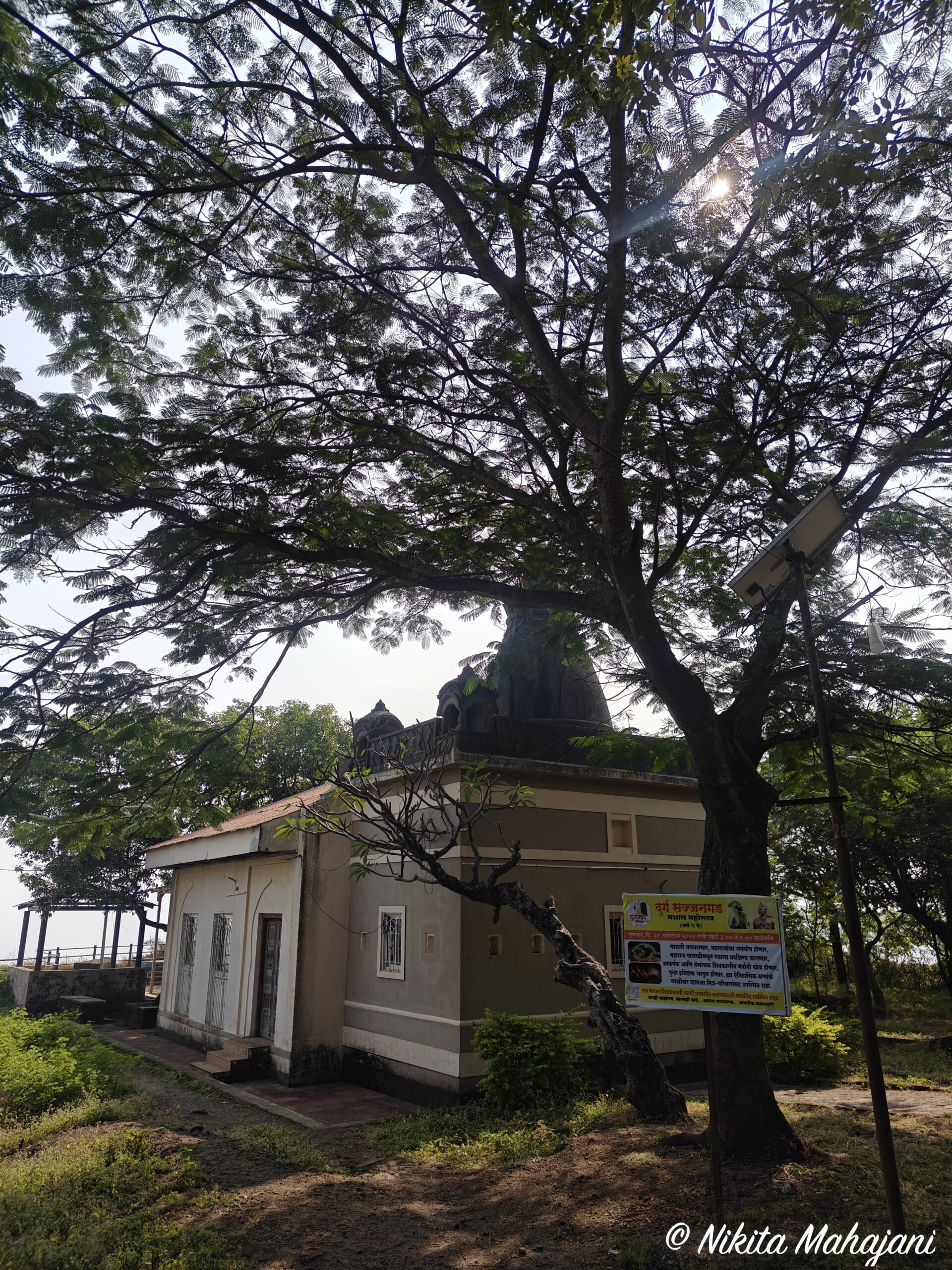
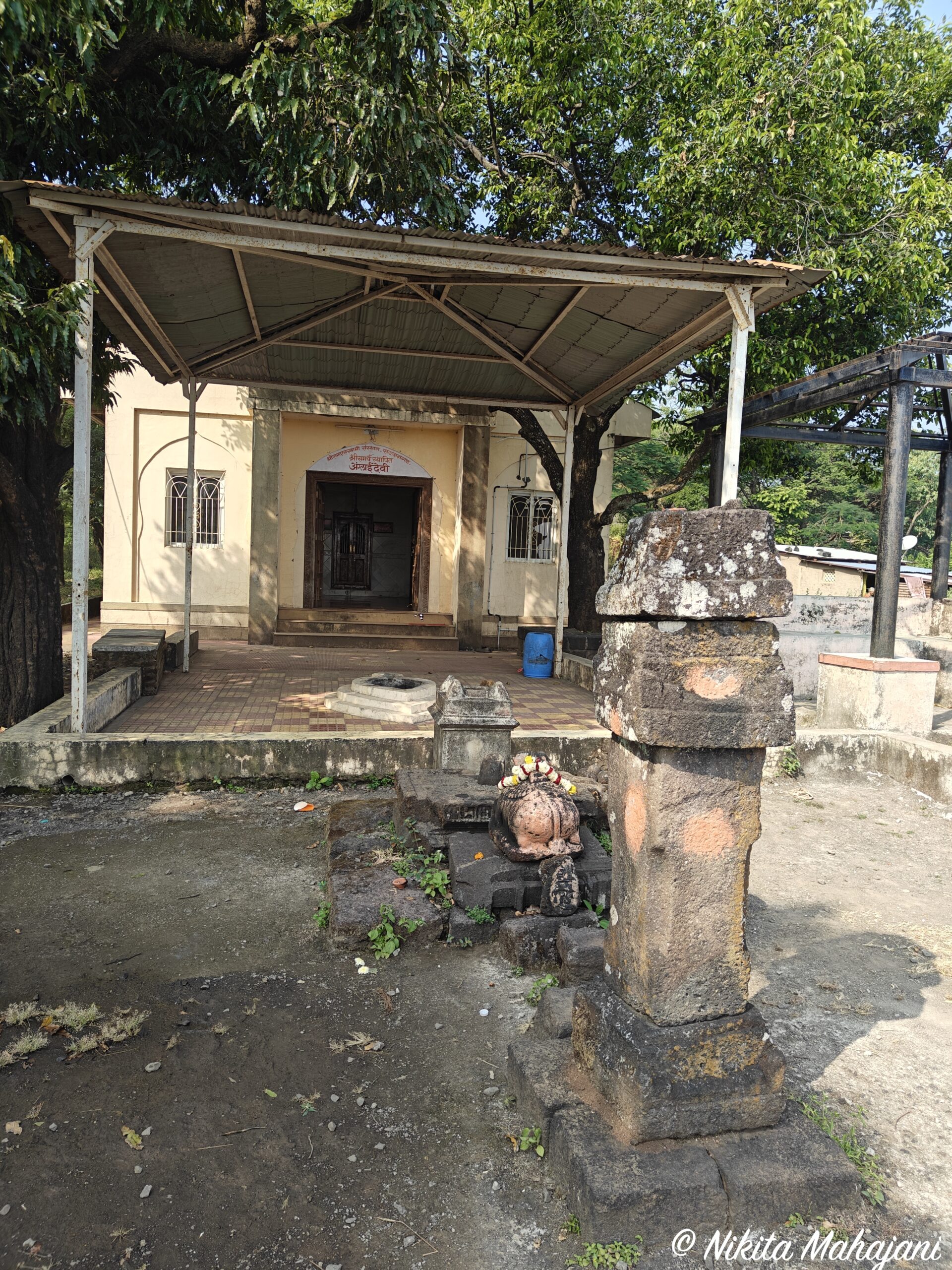
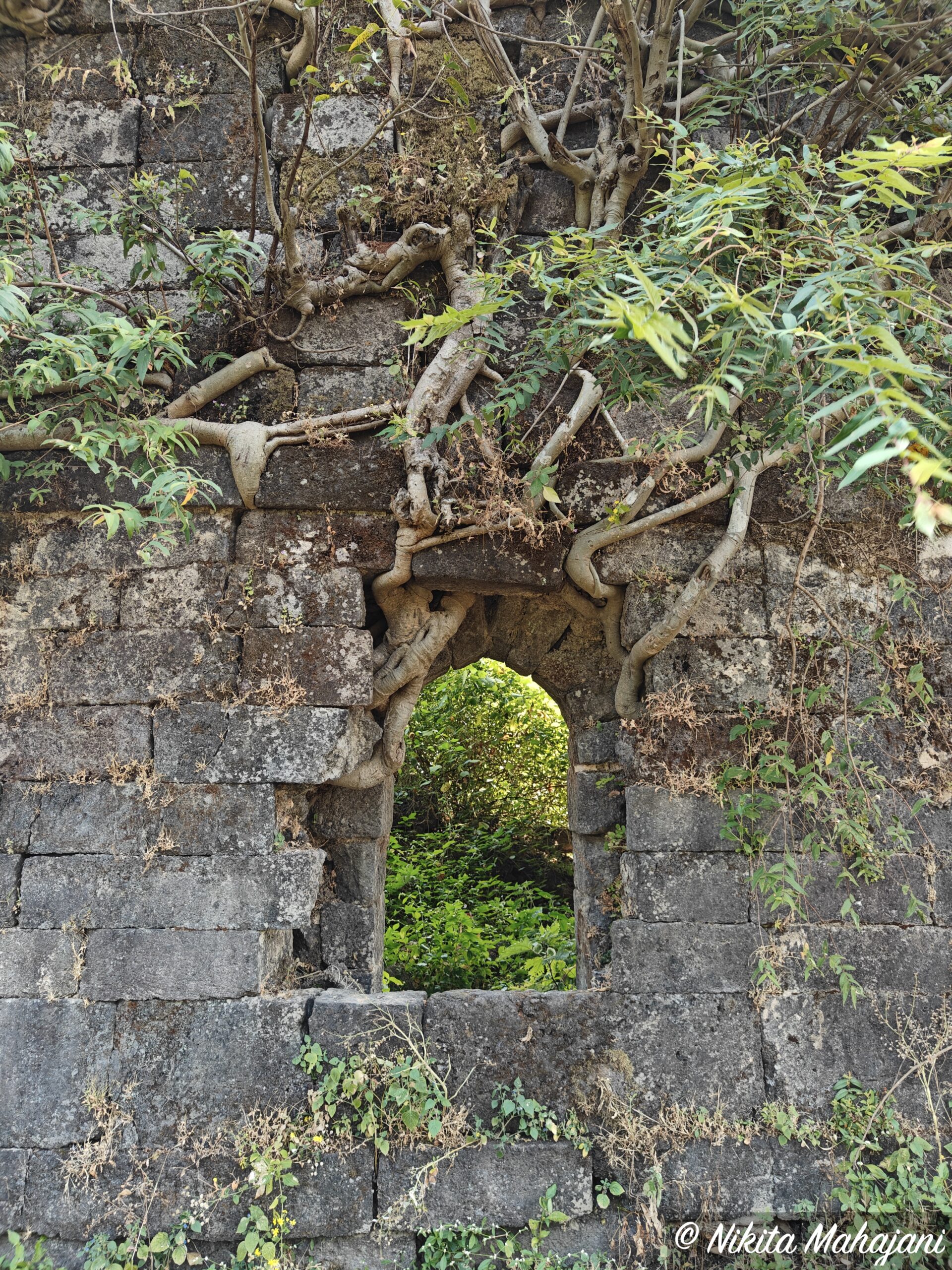
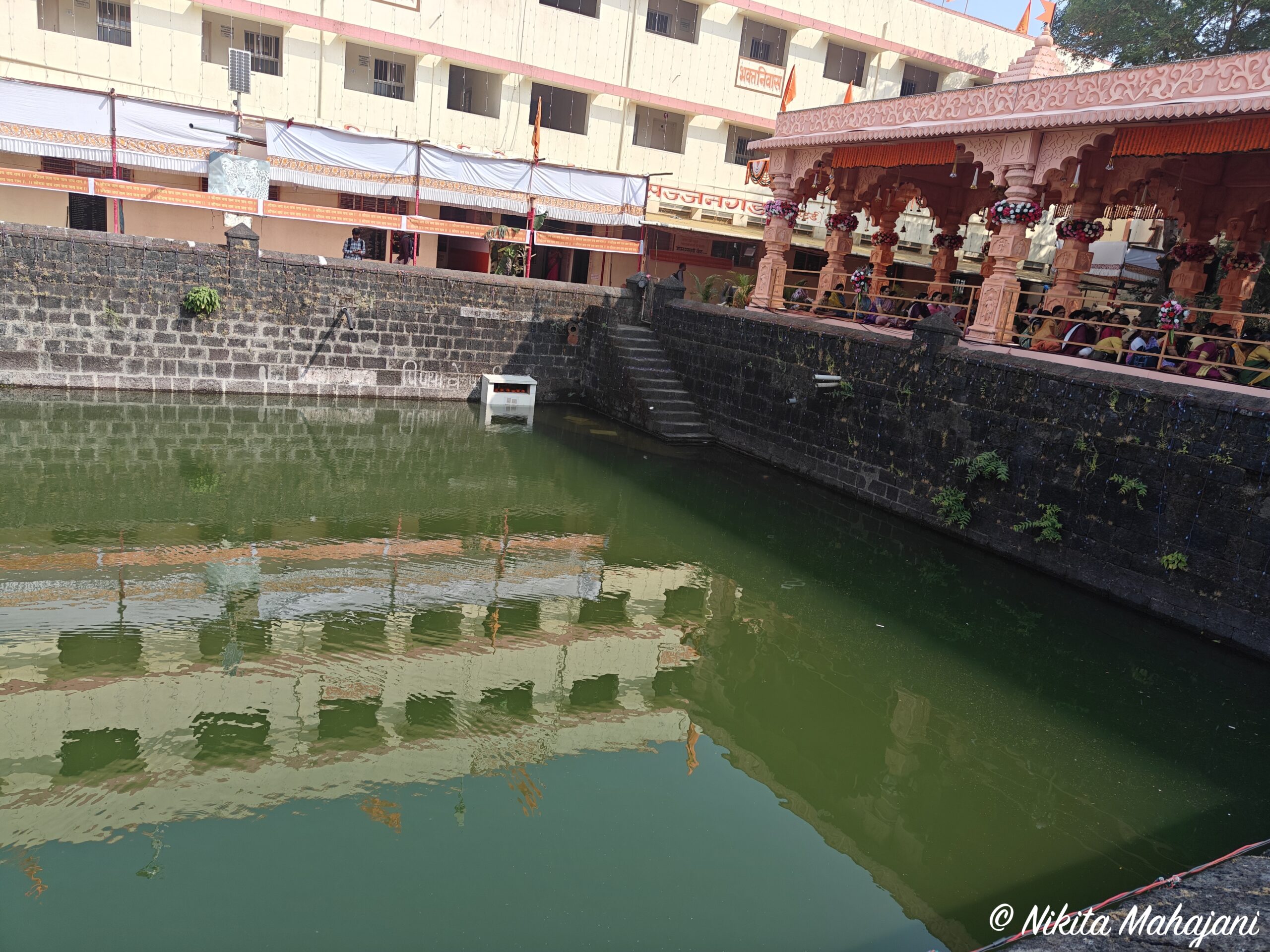
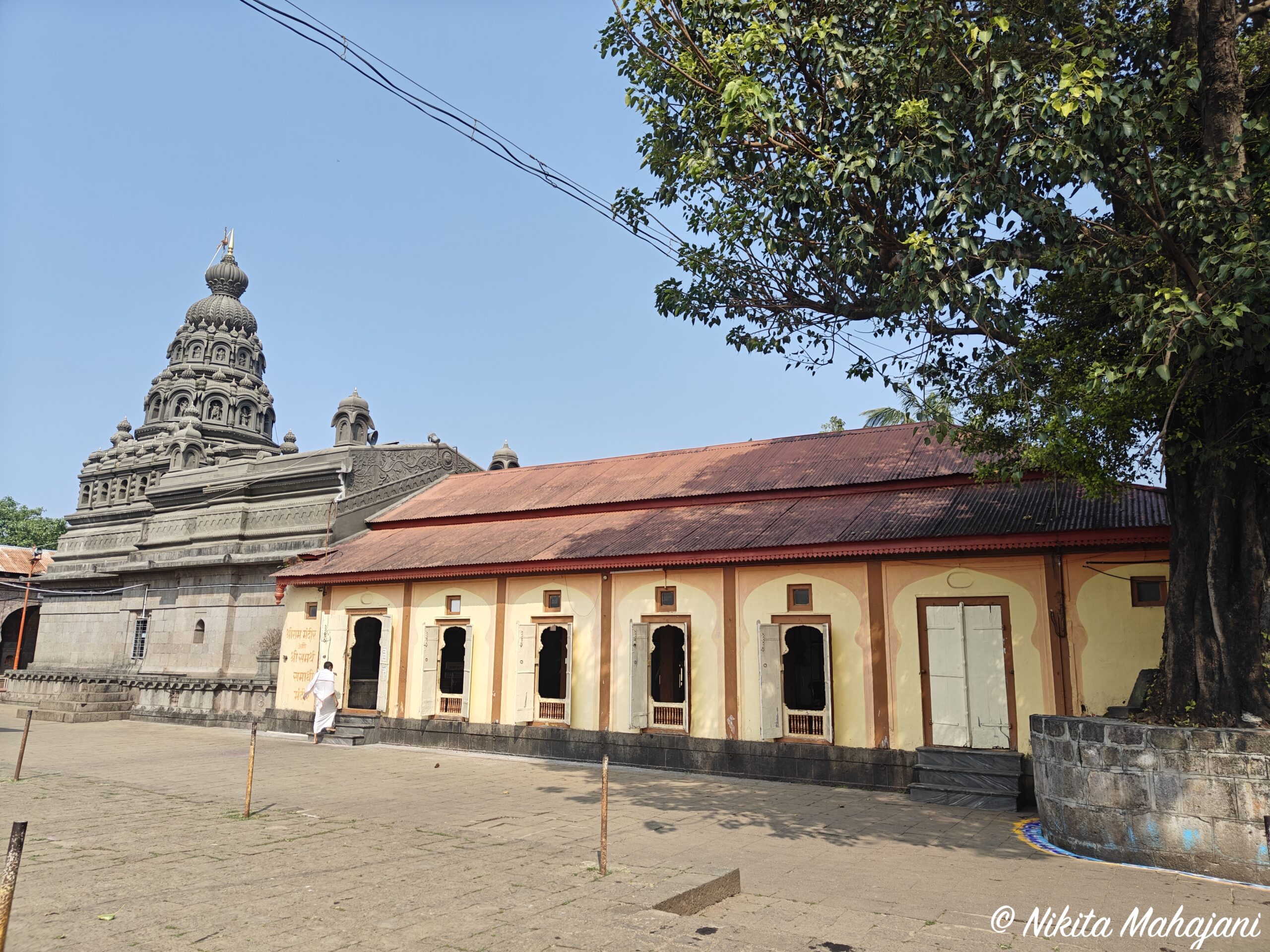
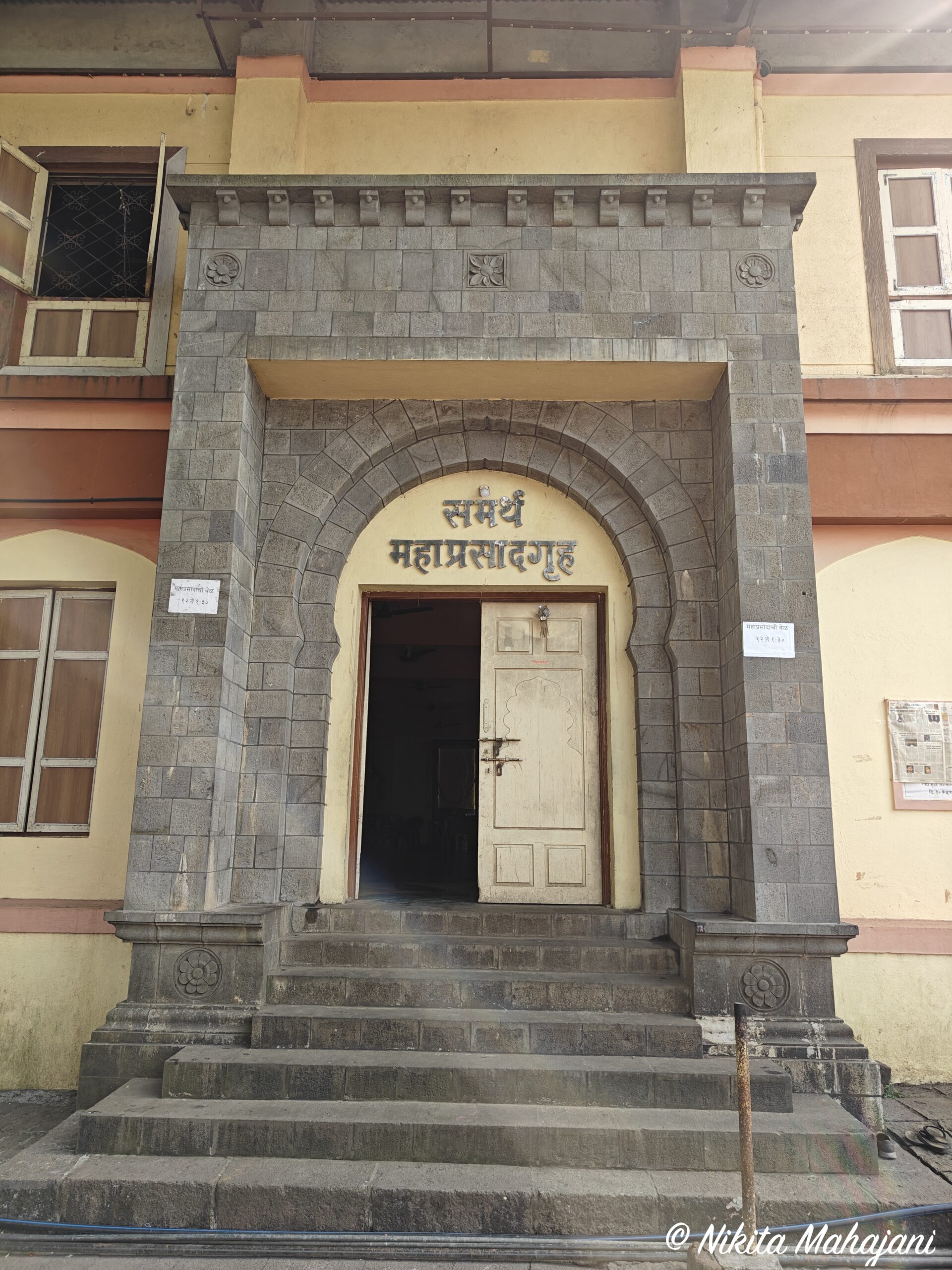
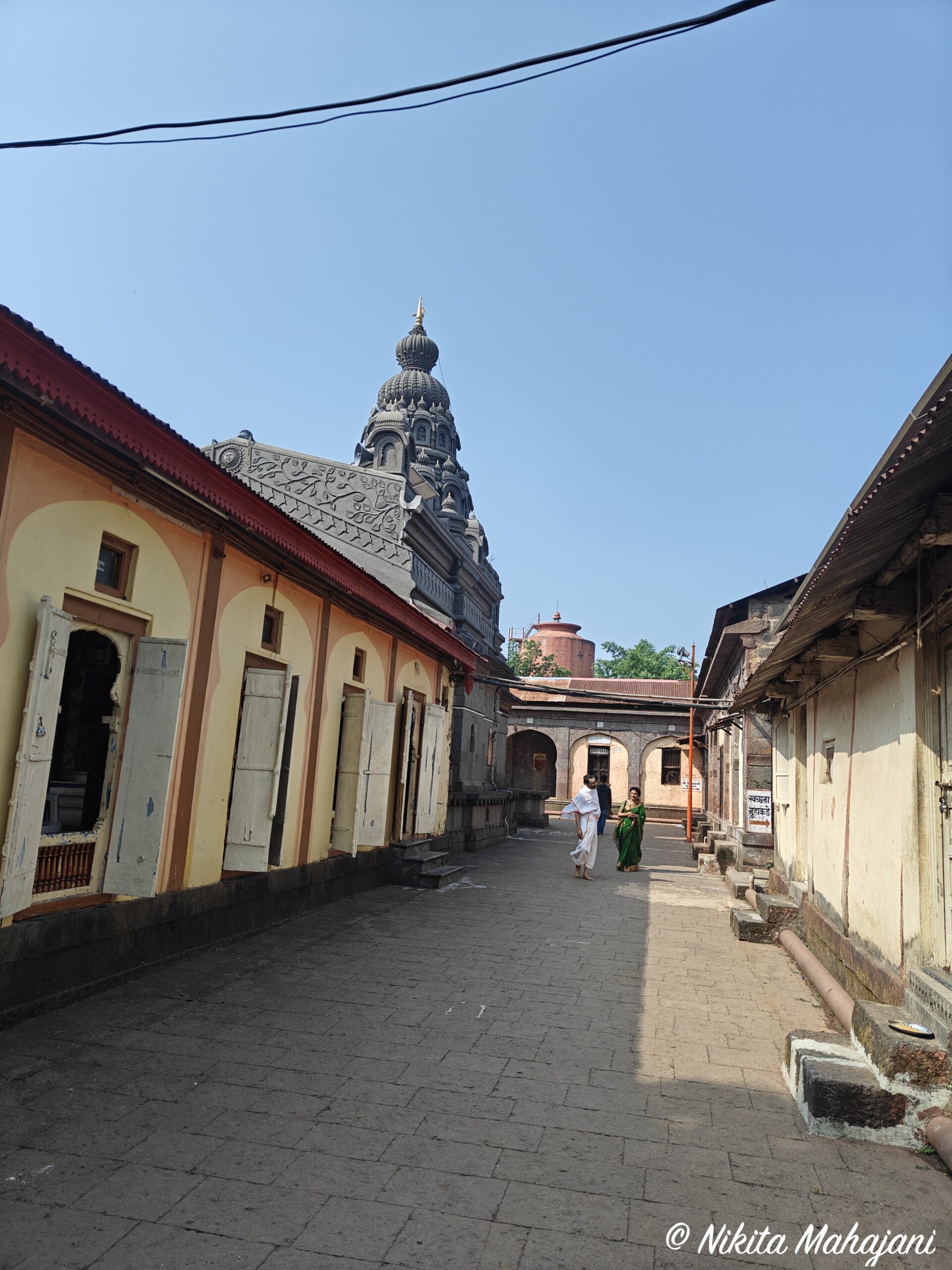
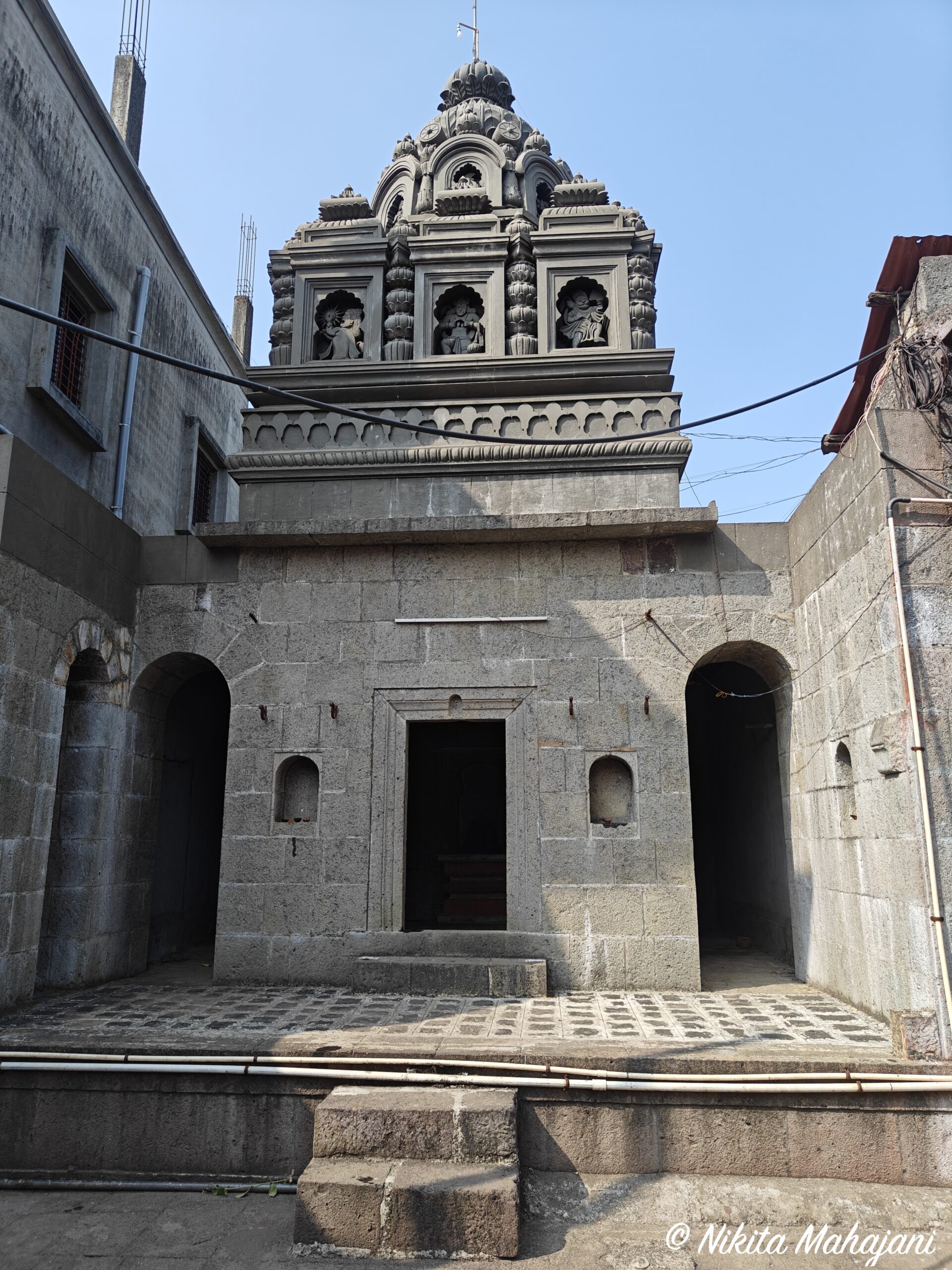
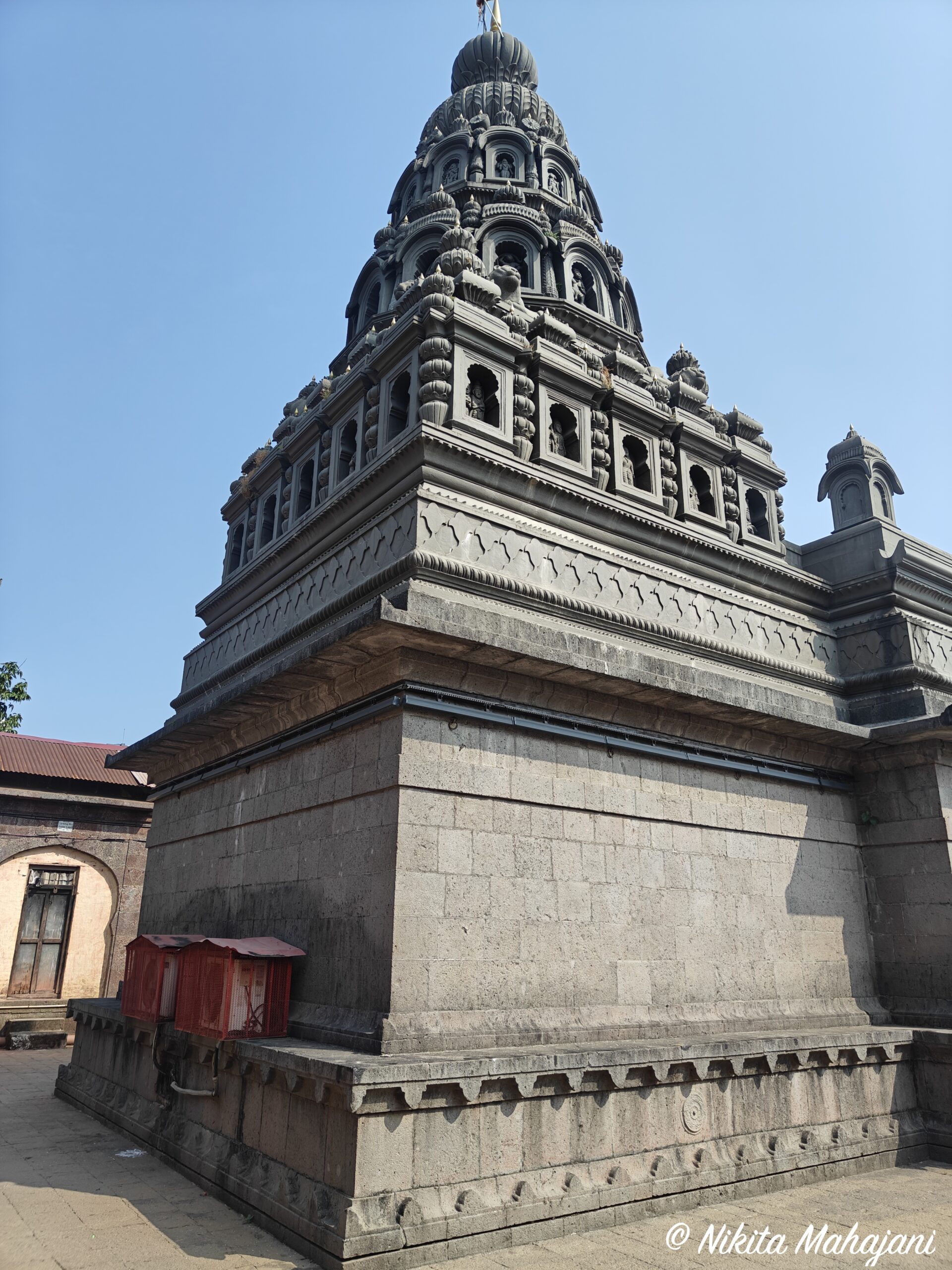
During the descend of our trek we waited at one of the local eateries to have brunch.
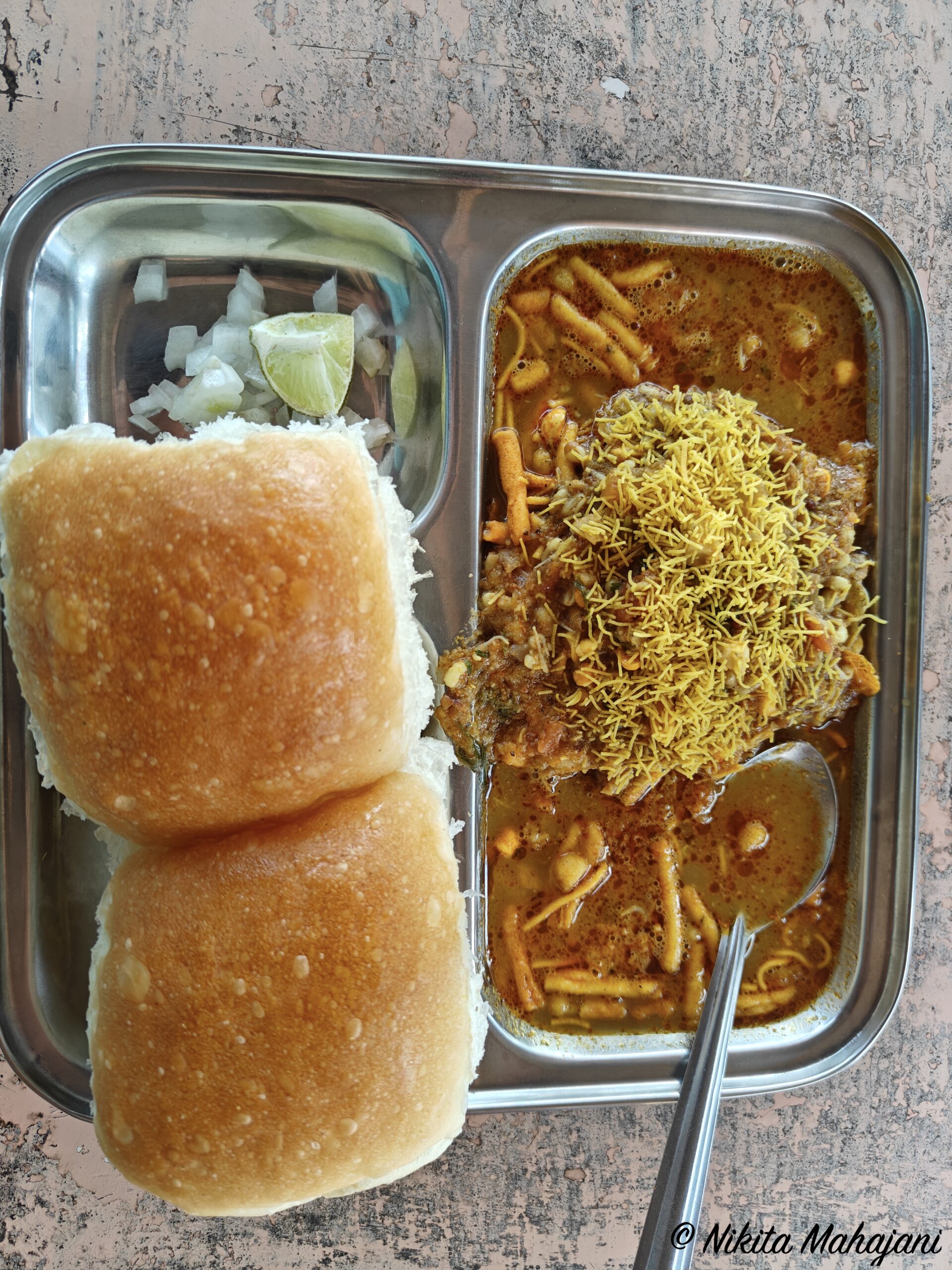
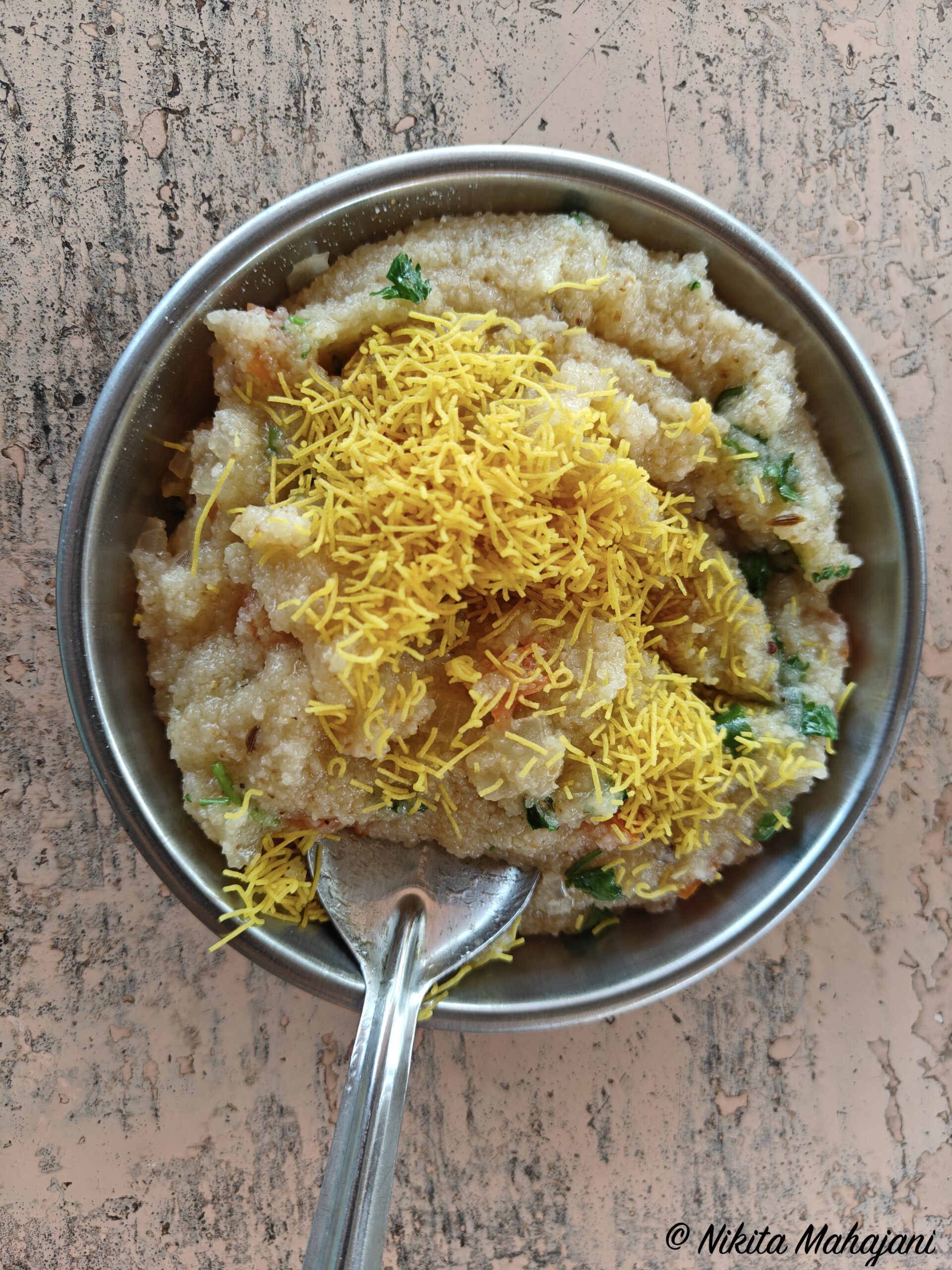
We visited Urmodi Dam at the base of Sajjangad. The shimmering waters of Urmodi Dam offered a perfect picnic spot. Sophie had fun playing by the banks while we soaked in the serene vibes.
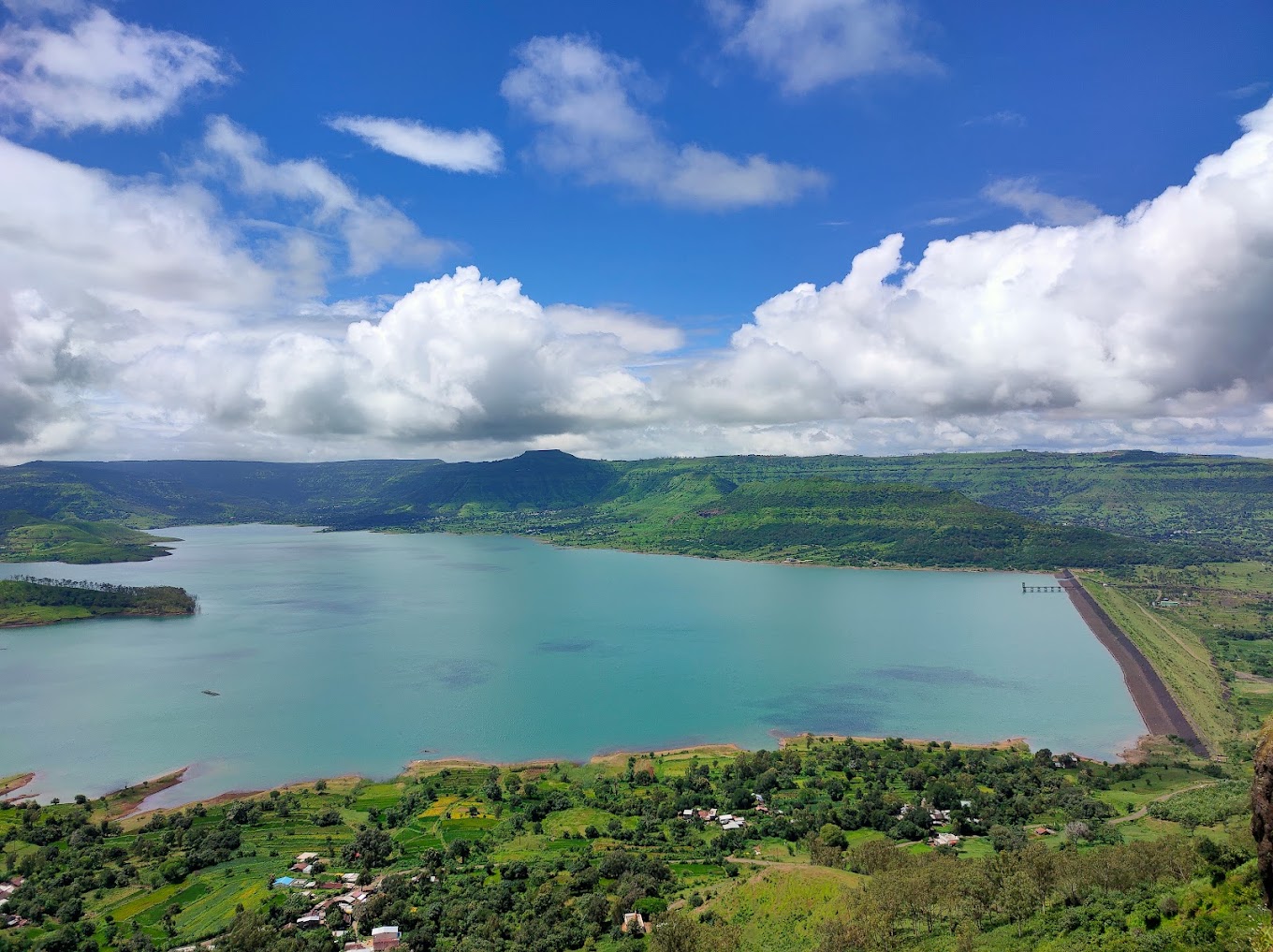
We went to Khandoli Nitin’s Canteen to have a light lunch. The restaurant is not pet friendly, but he allowed us on request and we were told to sit in the semi open dining area near the lawn. This restaurant has ample parking space, clean washrooms and a fenced lawn where Sophie was left unleashed. We had some sandwiches and proceeded ahead to our next destination.
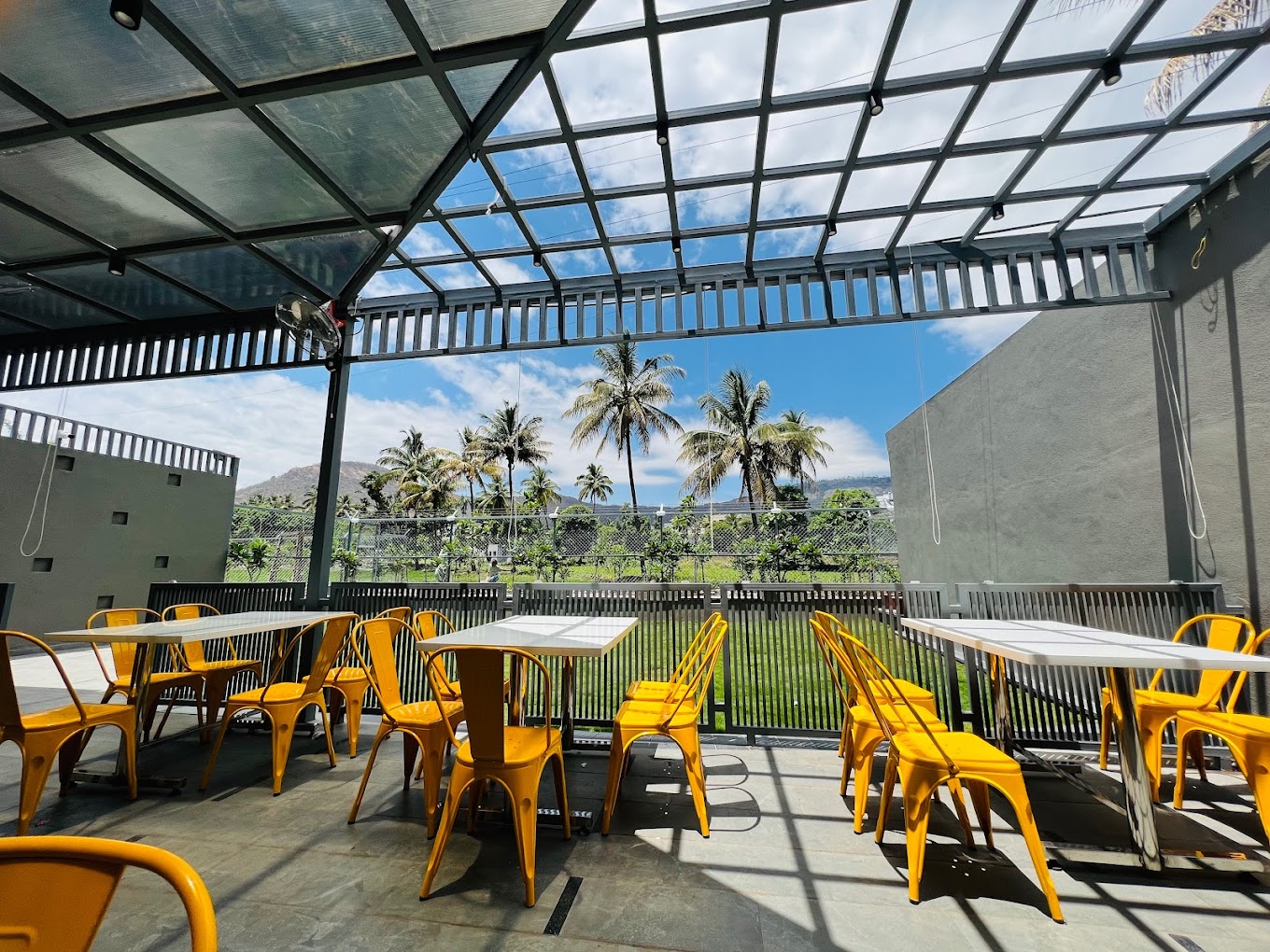
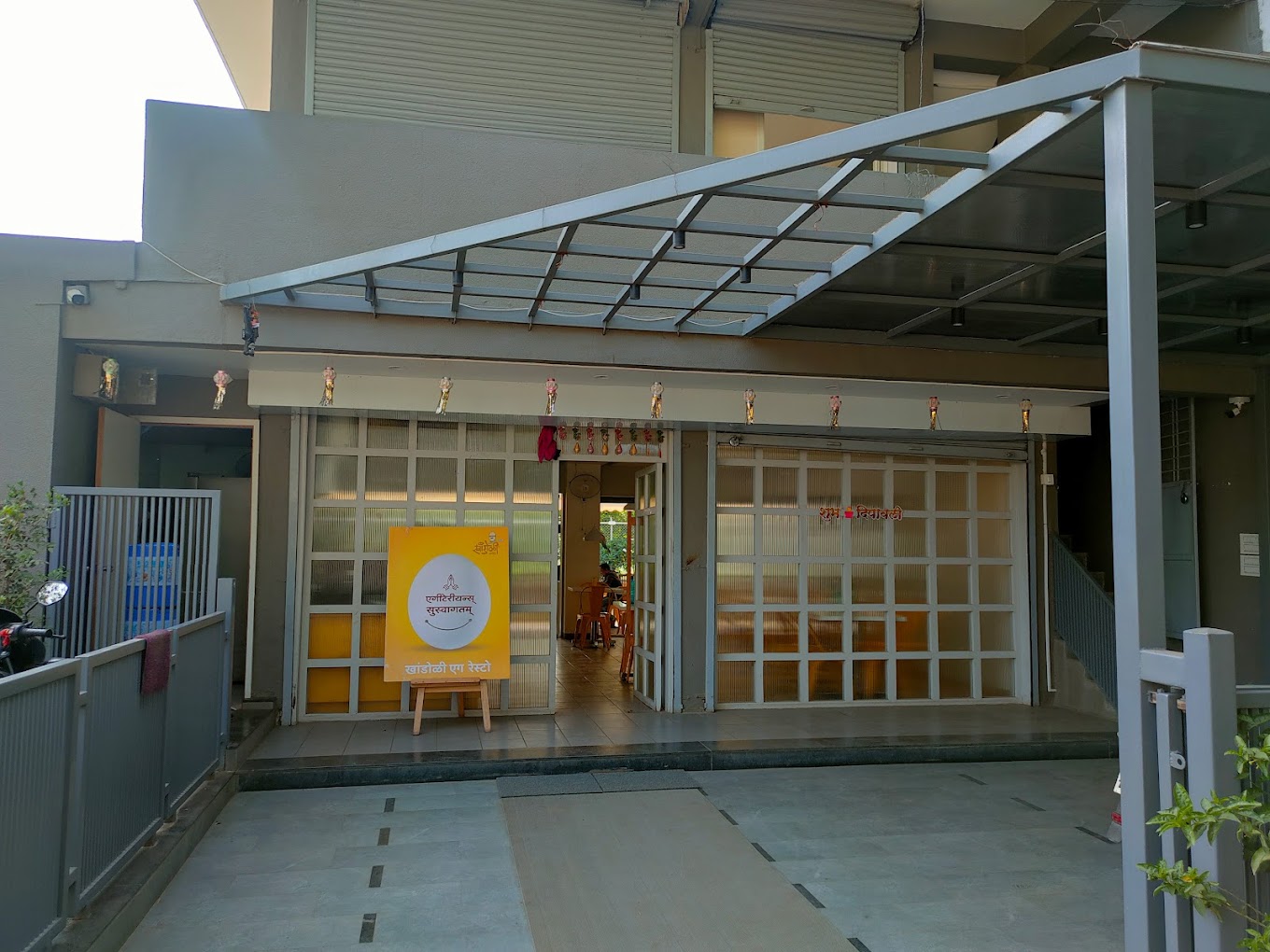
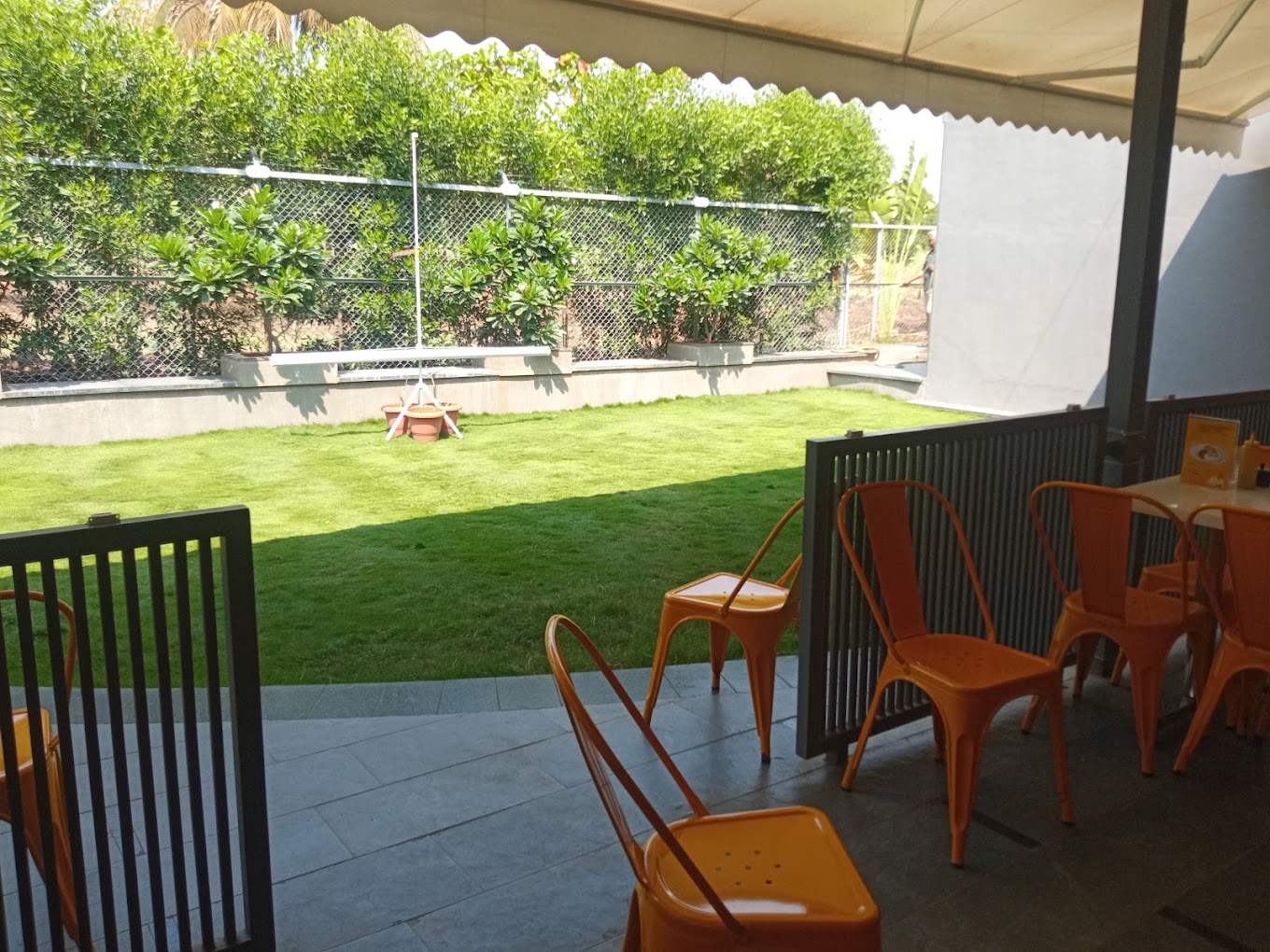
On the list was Yavateshwar Temple, a peaceful spot surrounded by nature. The road to Yavateshwar temple offers mesmerizing views. It was a joyful ride indeed.
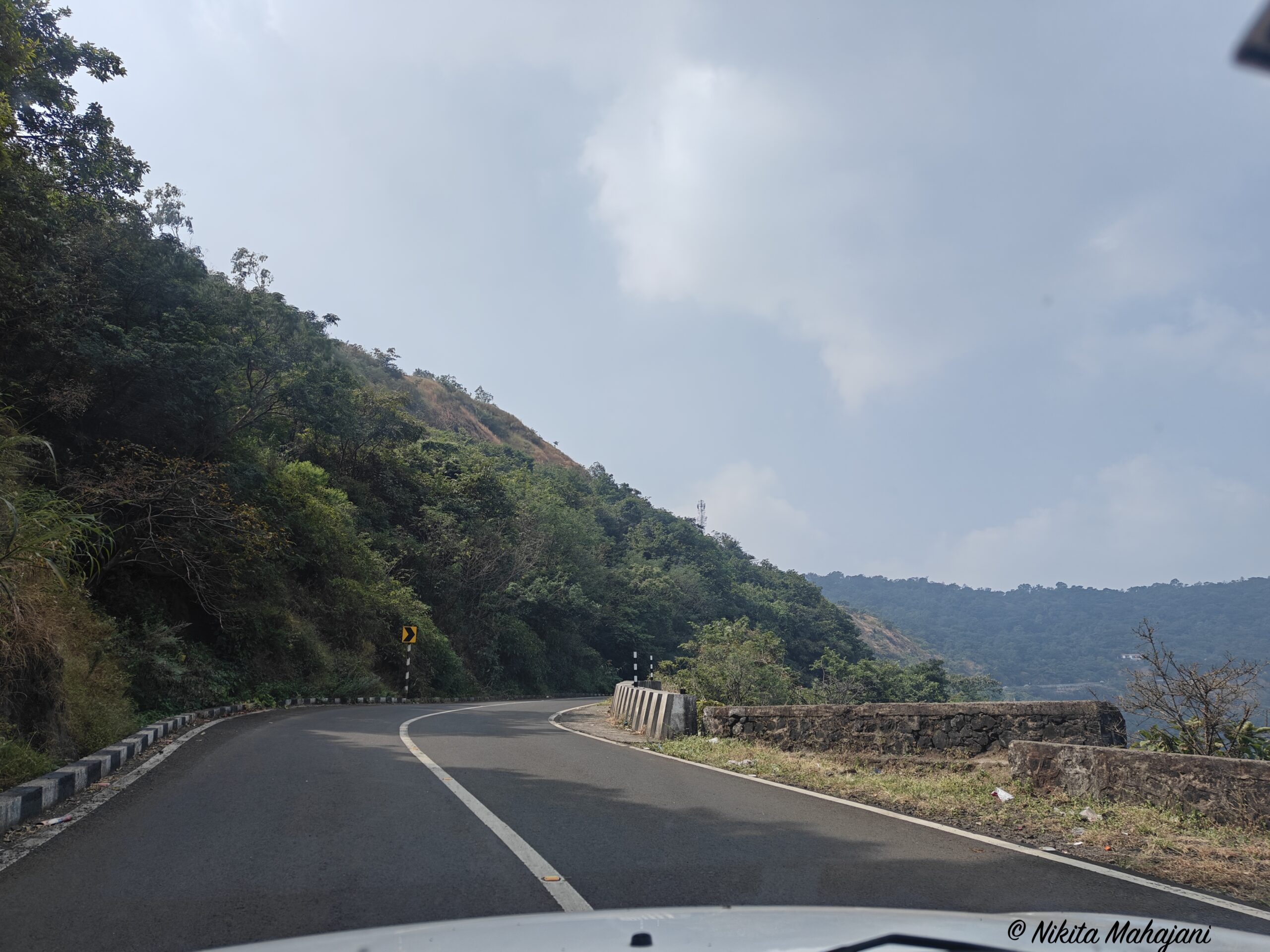
Cars can reach till the main gate of the temple. The temple has ample parking are which is free of charge. This temple is not crowded at all. We did take Sophie in the premises of the temple where she could rest on a shaded bench. But we never take her inside the sabhamandapa of any temple.
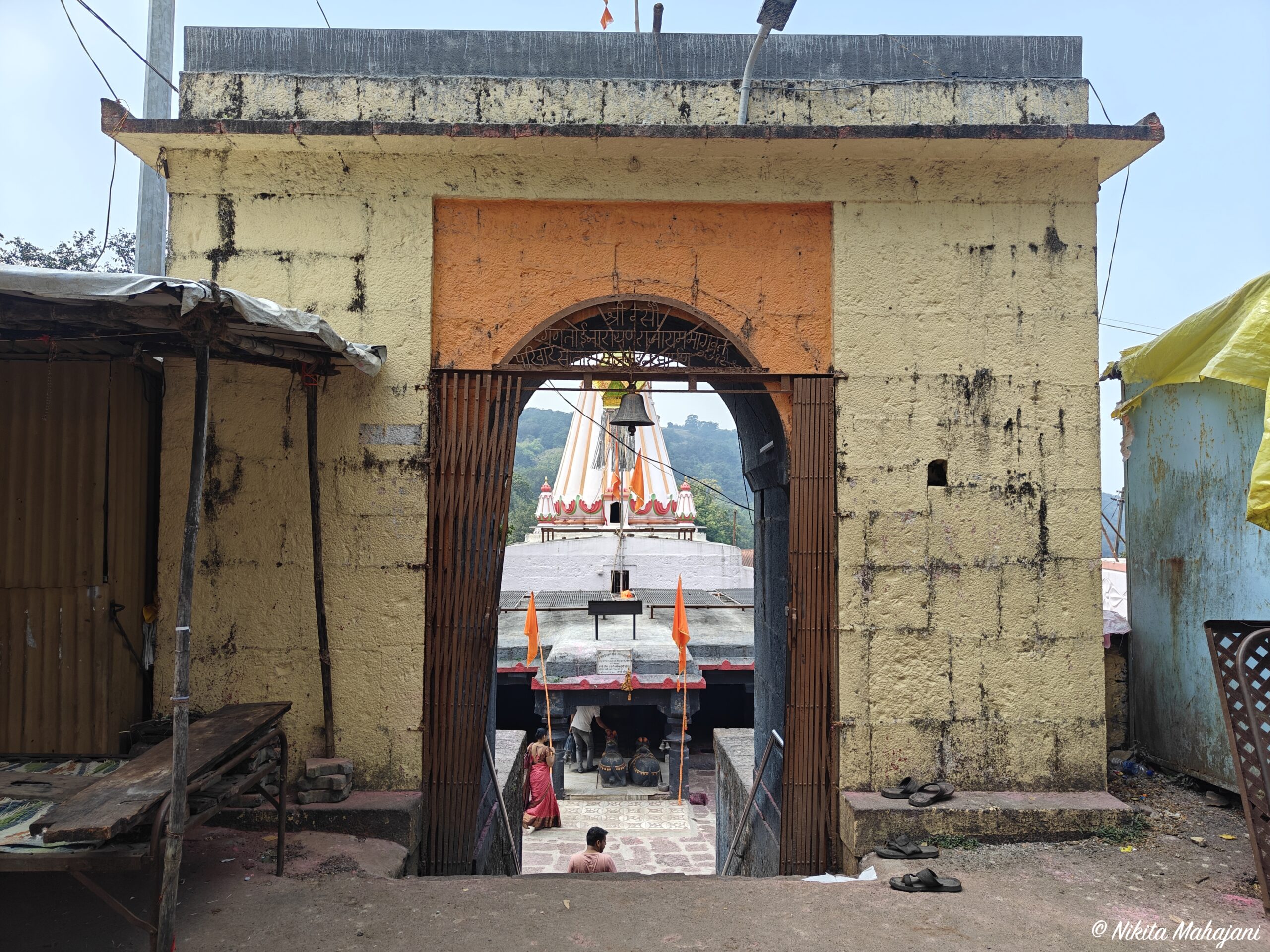
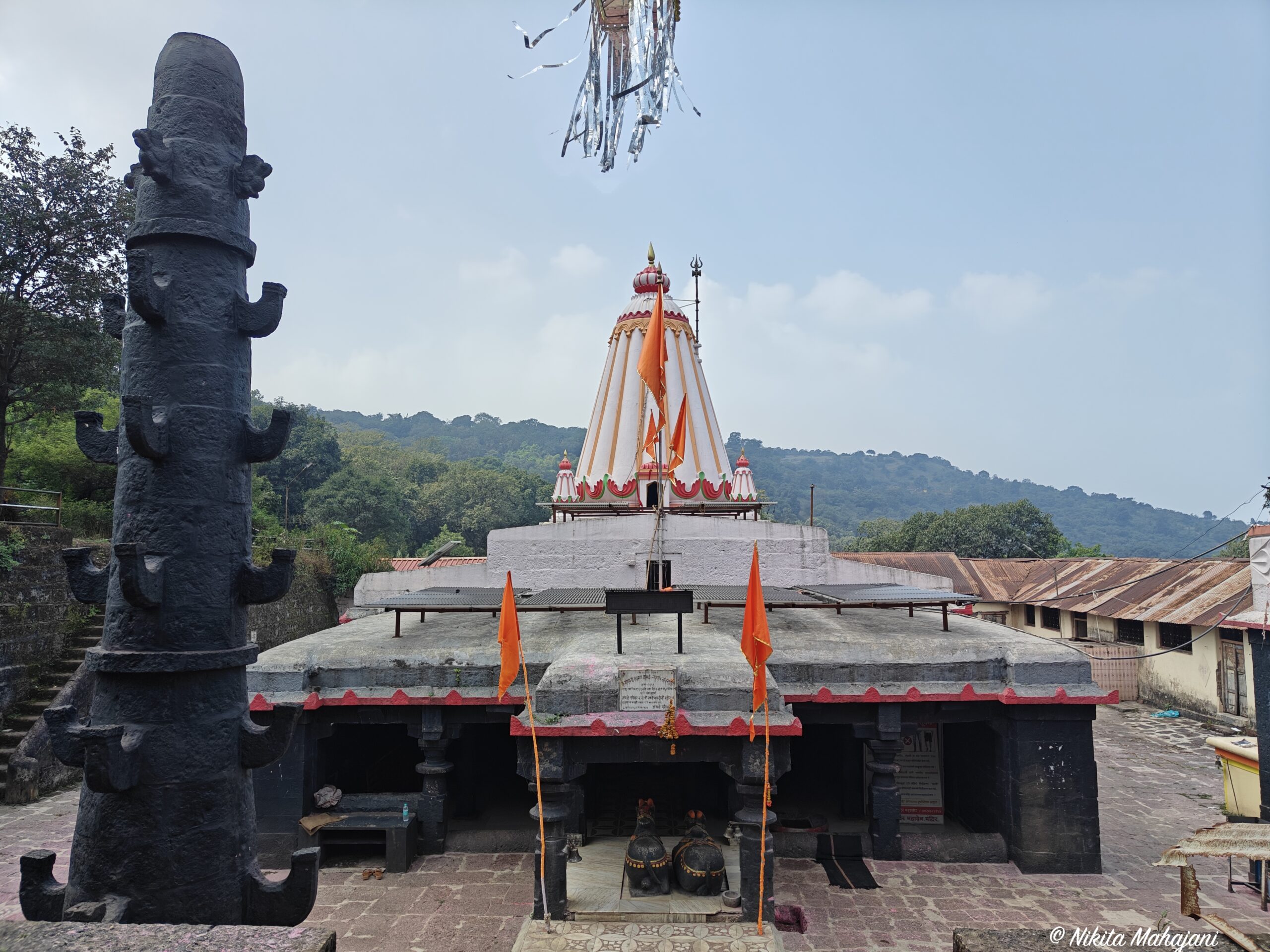
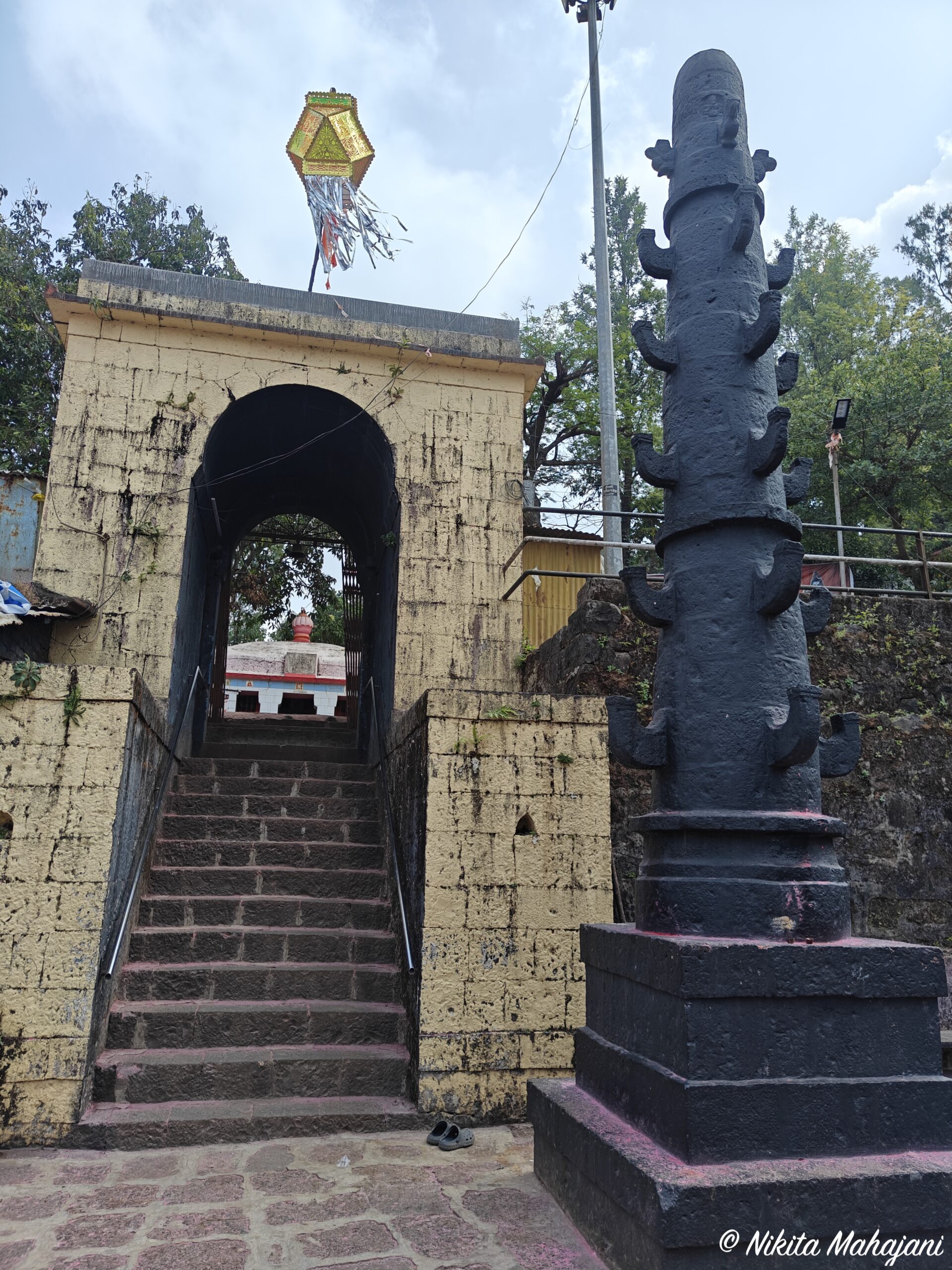
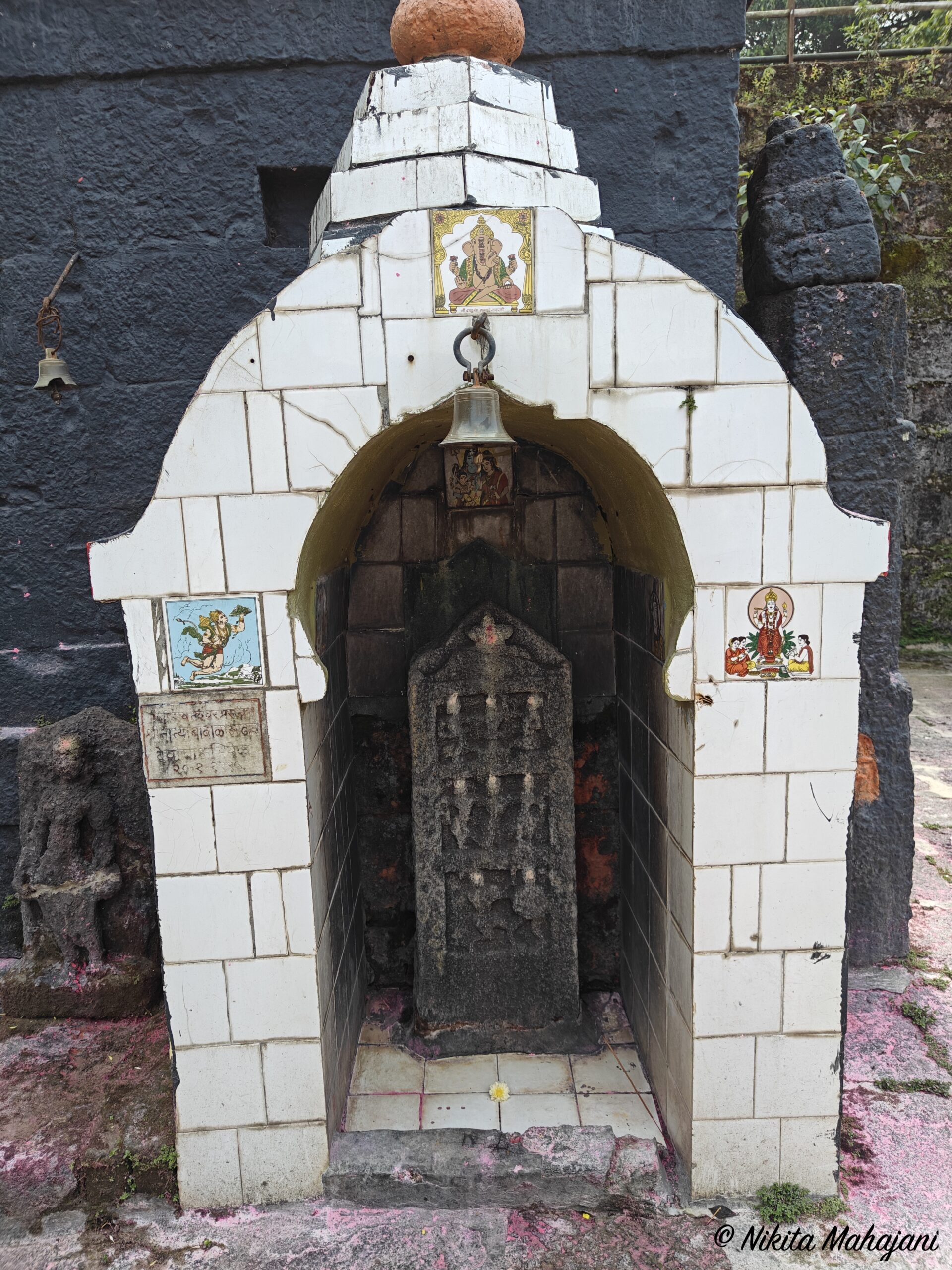
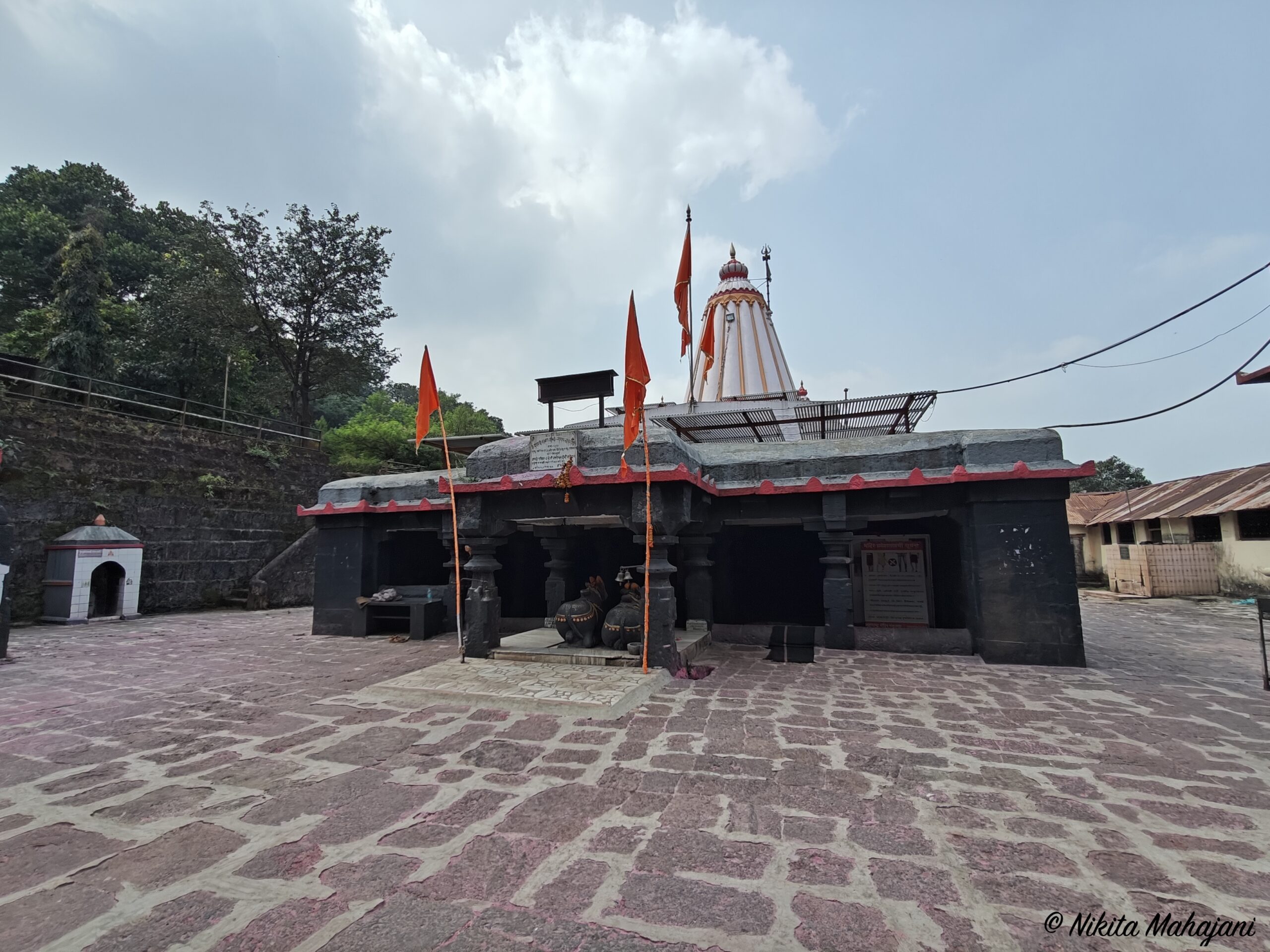
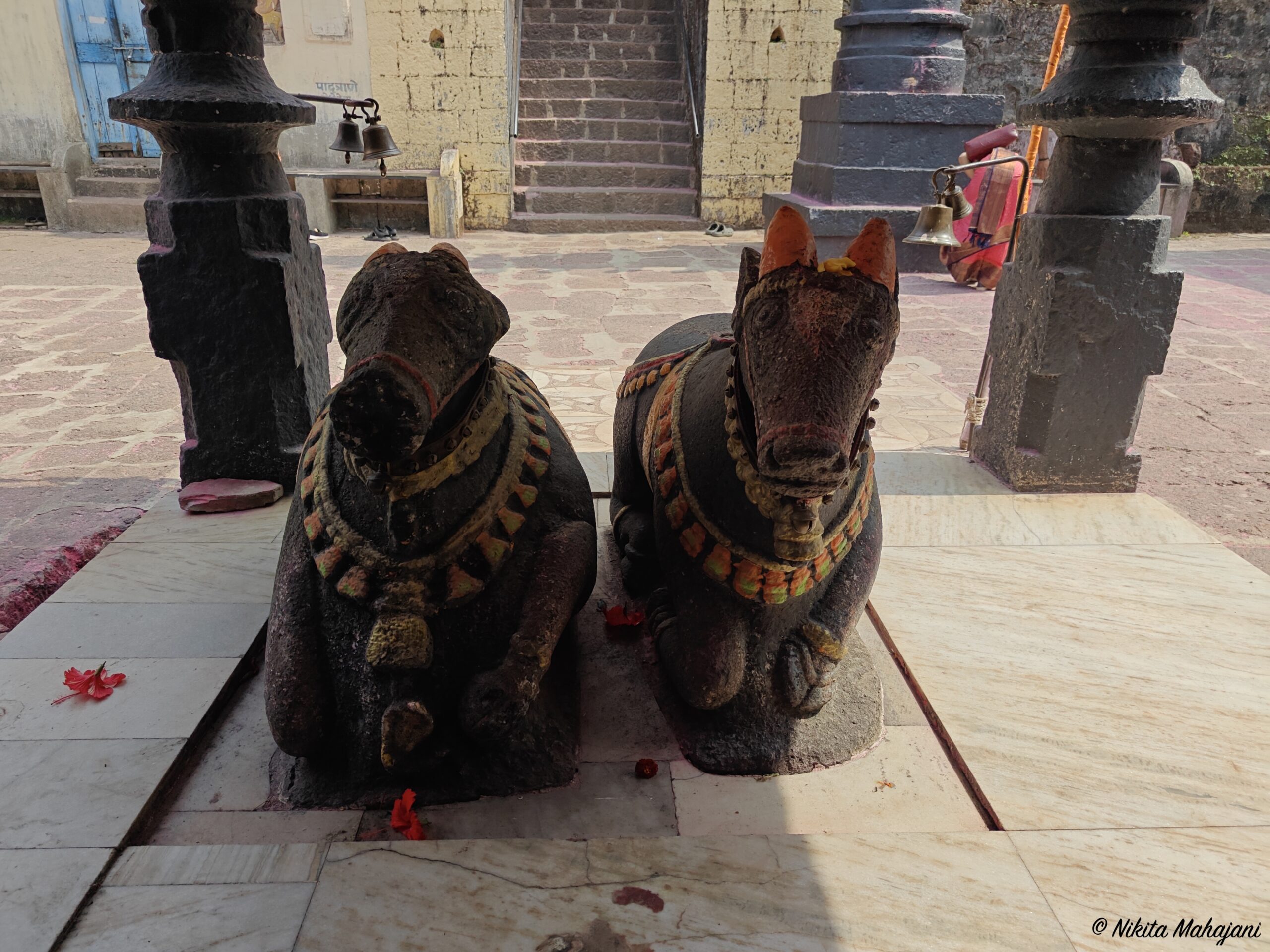
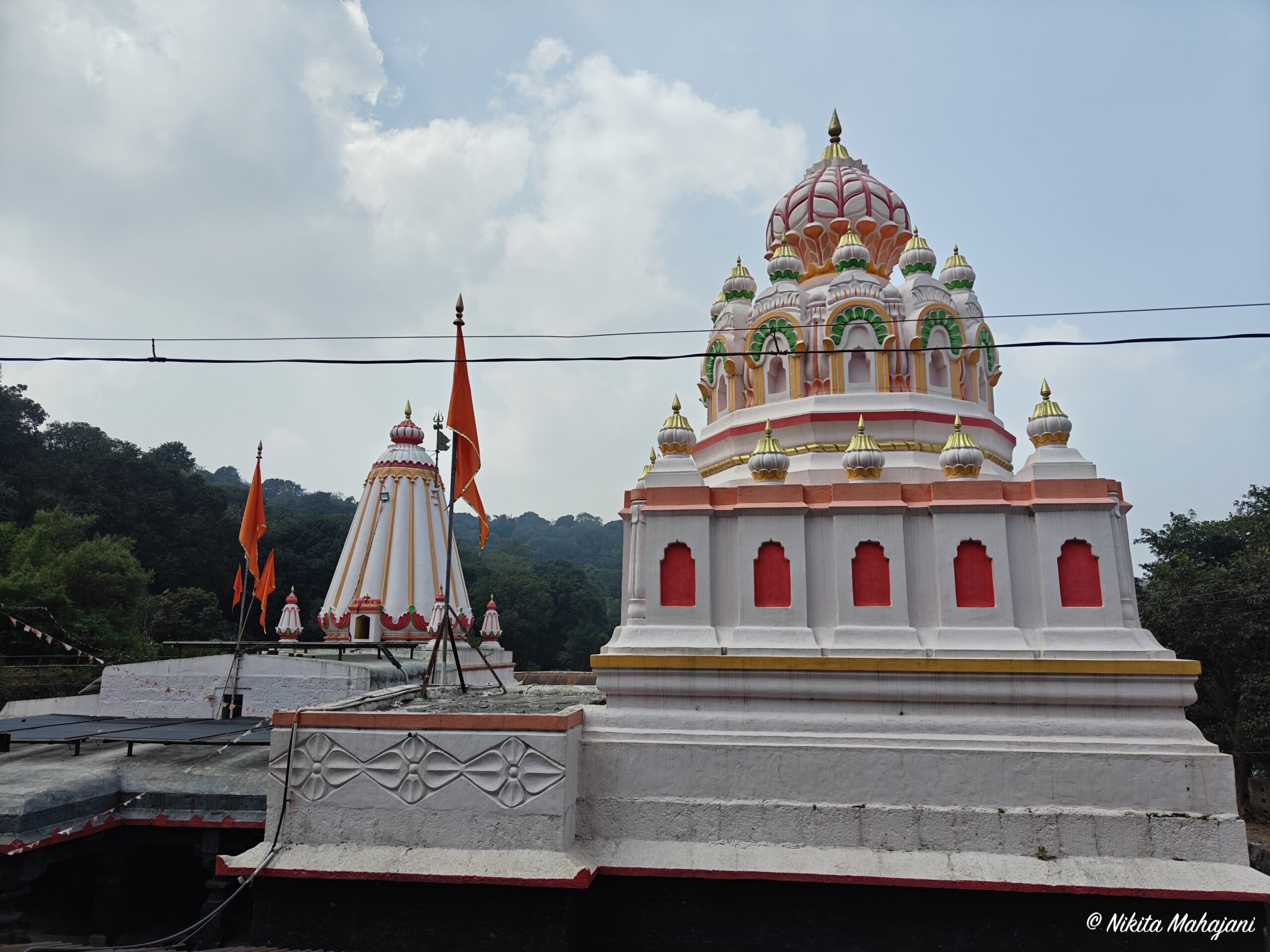
We wound down with dinner back at the hotel.
Day 3: Majestic Ajinkyatara and Spiritual Pateshwar
Post checkout, we explored Ajinkyatara Fort, which provided panoramic views of Satara city. Ajinkyatara Fort is a peaceful and uncrowded destination with a relatively short and easy trek. Vehicles can be parked right up to the fort’s entrance. The fort features twin Akashvani towers, offering a fantastic view of Satara city from the top. It’s an ideal spot for a morning walk and is conveniently located near the main city. If you’re up for it, you can take a 4-km walk along the well-maintained vehicular road leading to the fort.
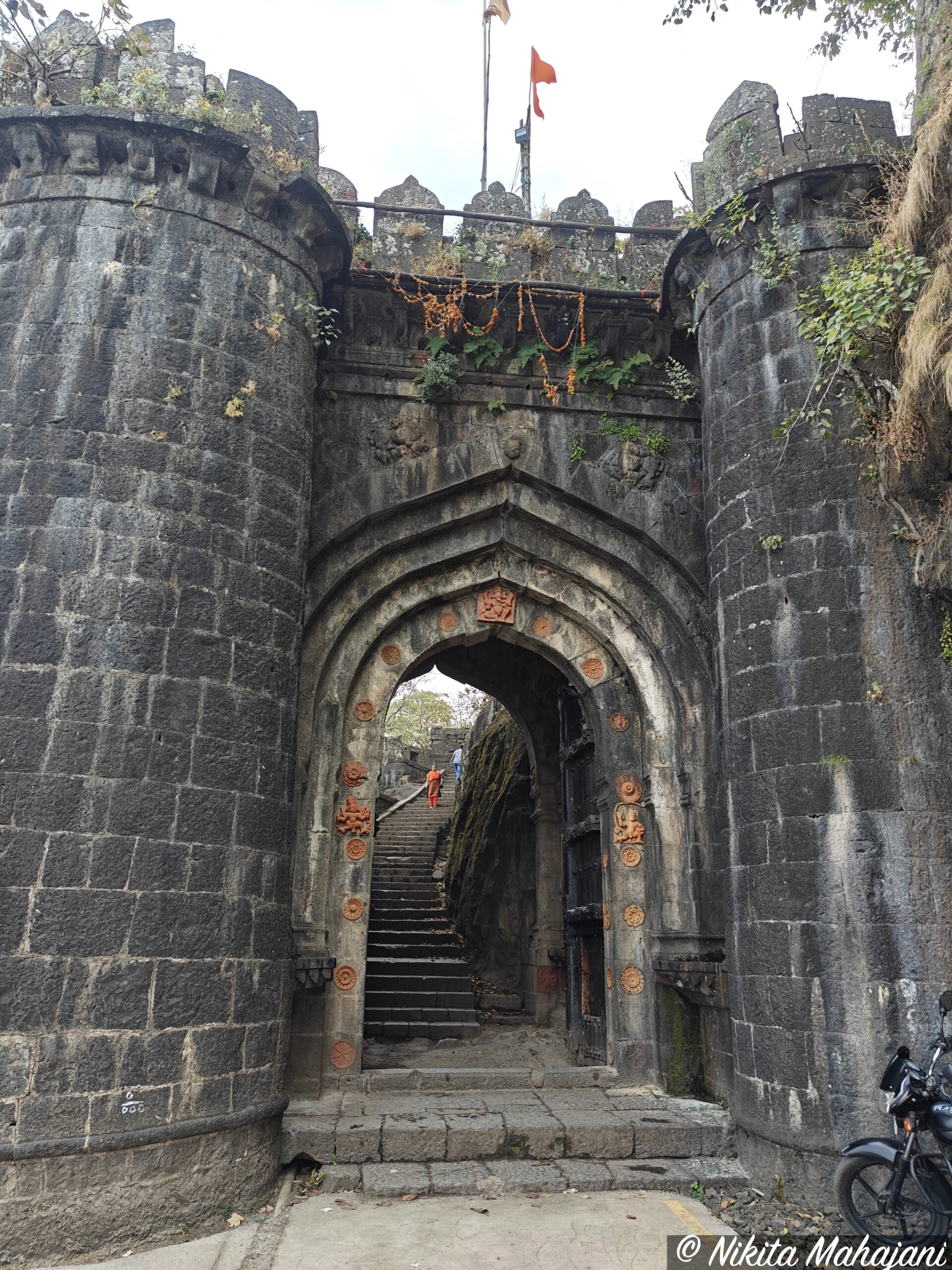
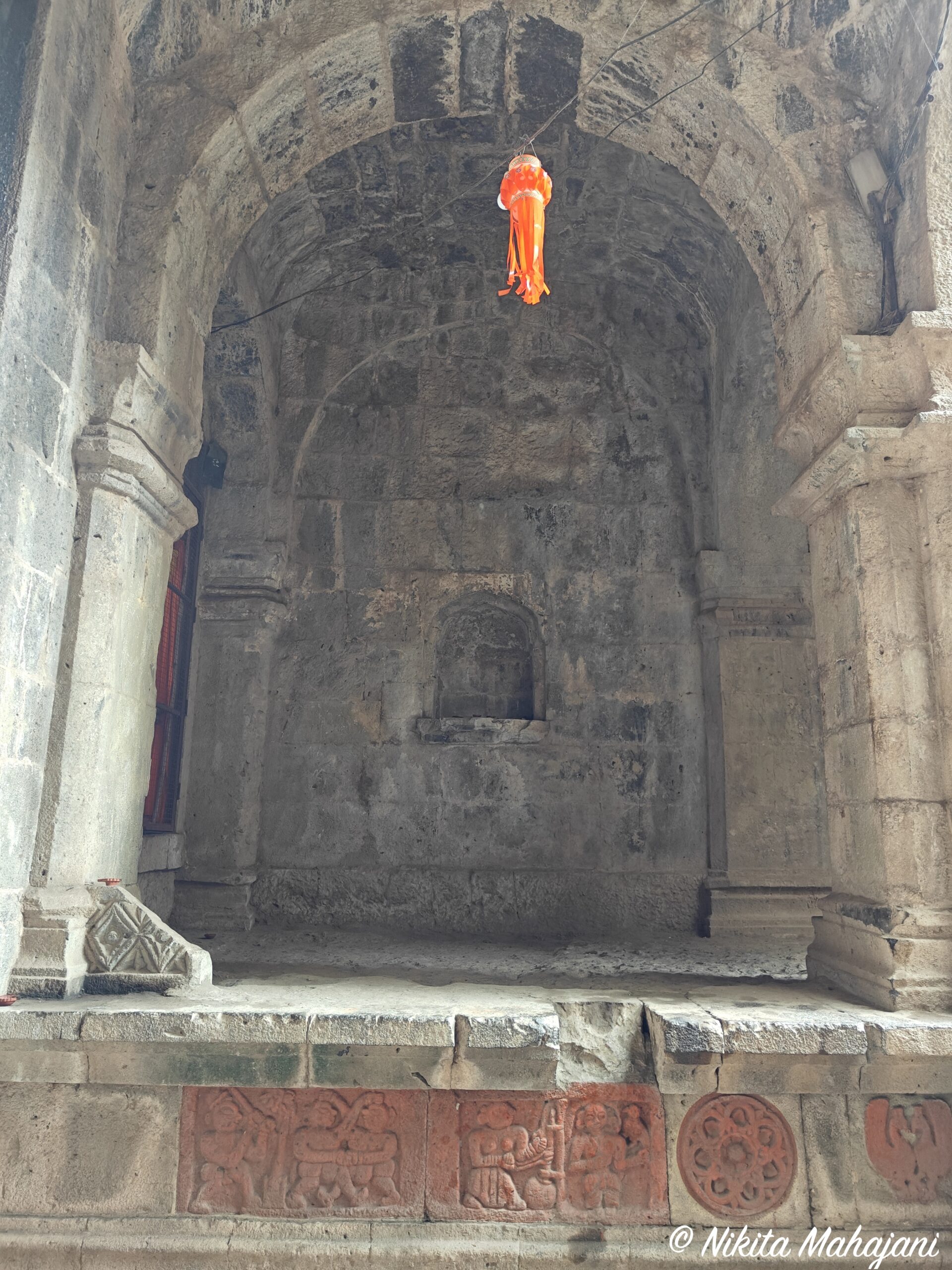
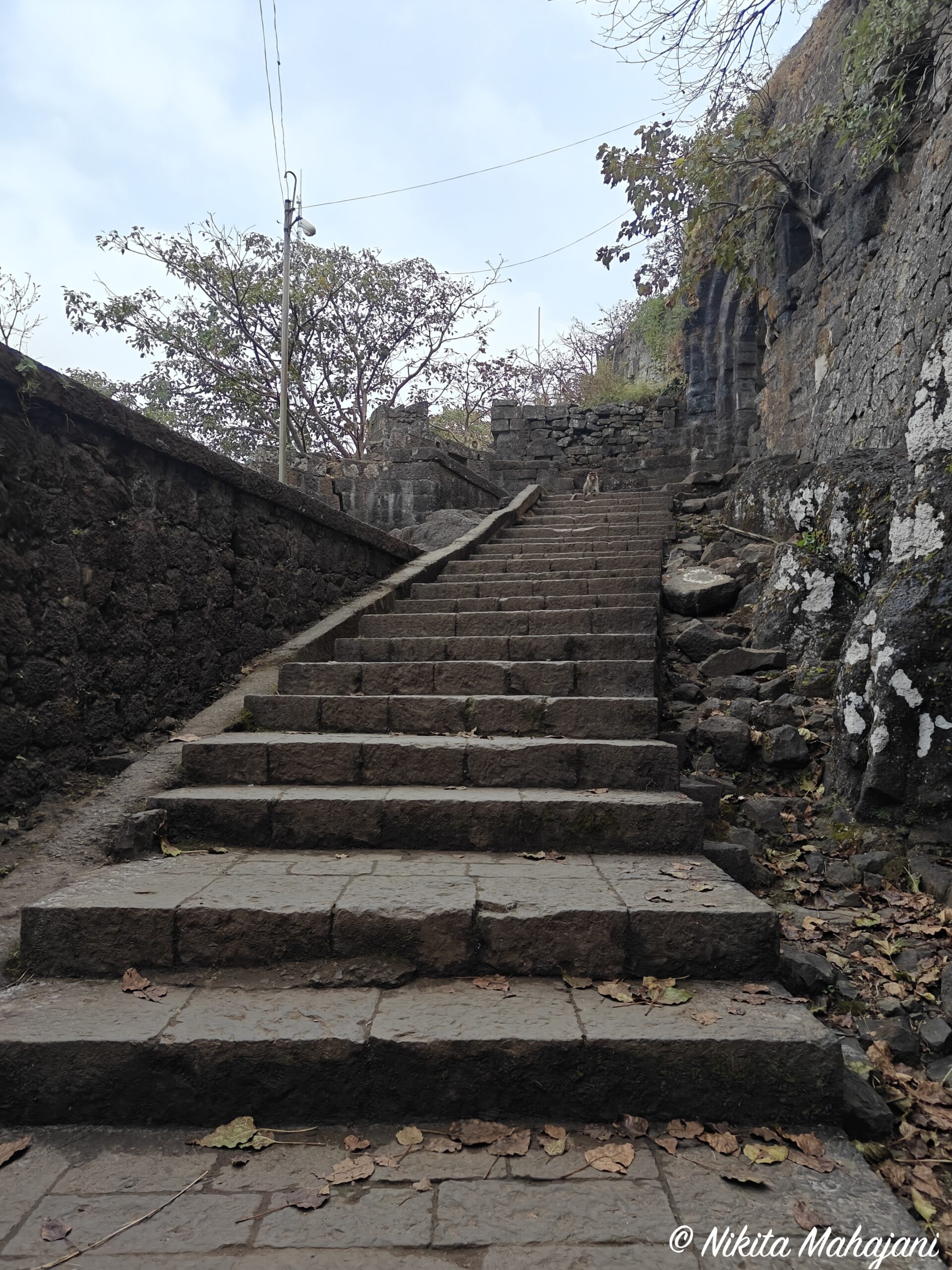
At the entrance, you’ll find a massive bastion (buruj) and an ancient wooden door. Within the fort, there are several notable landmarks. The large Hanuman temple, which can accommodate 12-13 people, and the revered Mahadev temple, known for its spiritual significance among locals, are must-visit spots. The bastions provide impressive views, and the historic Tara Rani’s Jail adds a glimpse into the fort’s rich heritage. Additionally, the Mangaldevi Mandir and the picturesque lakes enhance the fort’s charm.
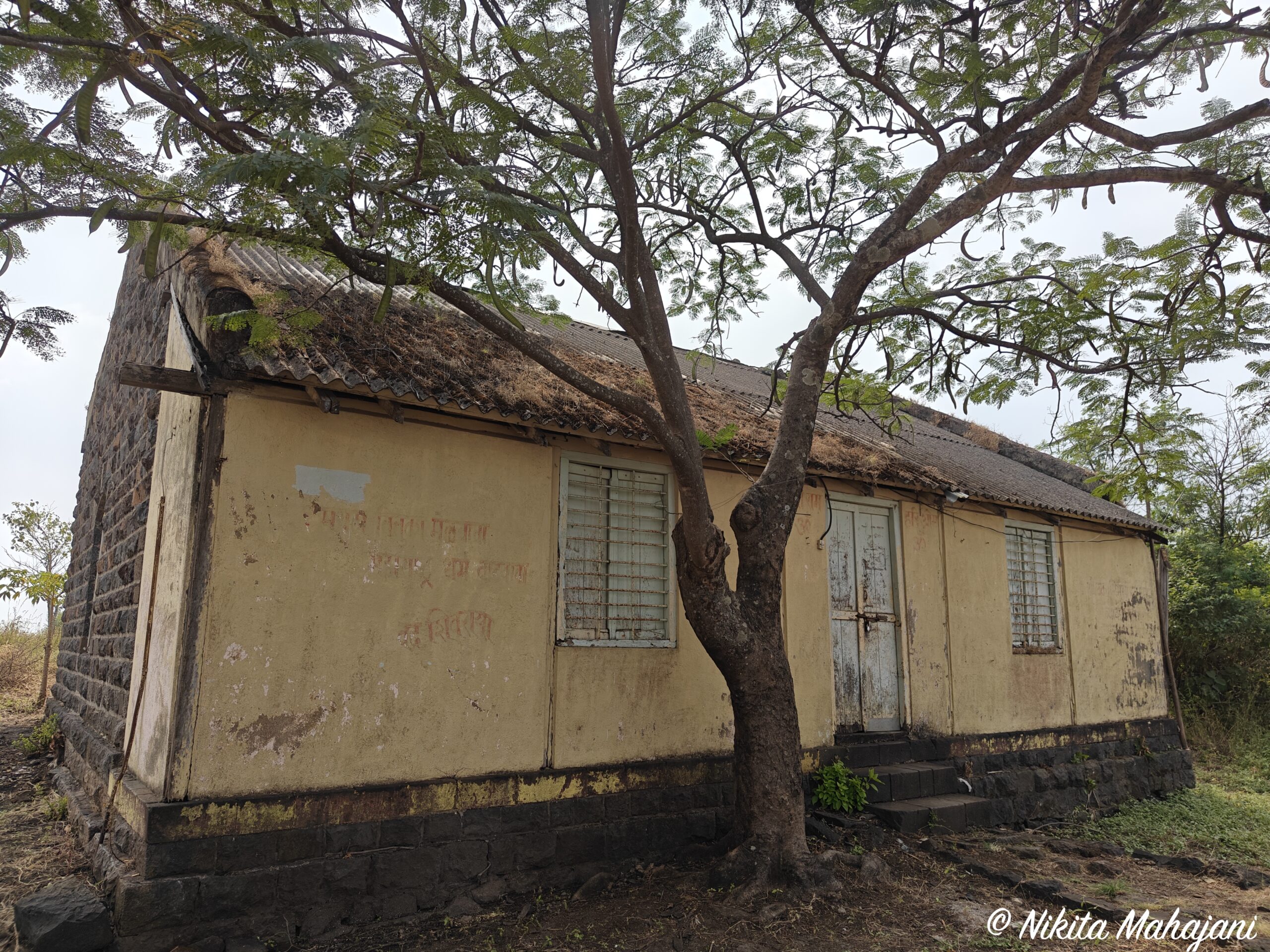
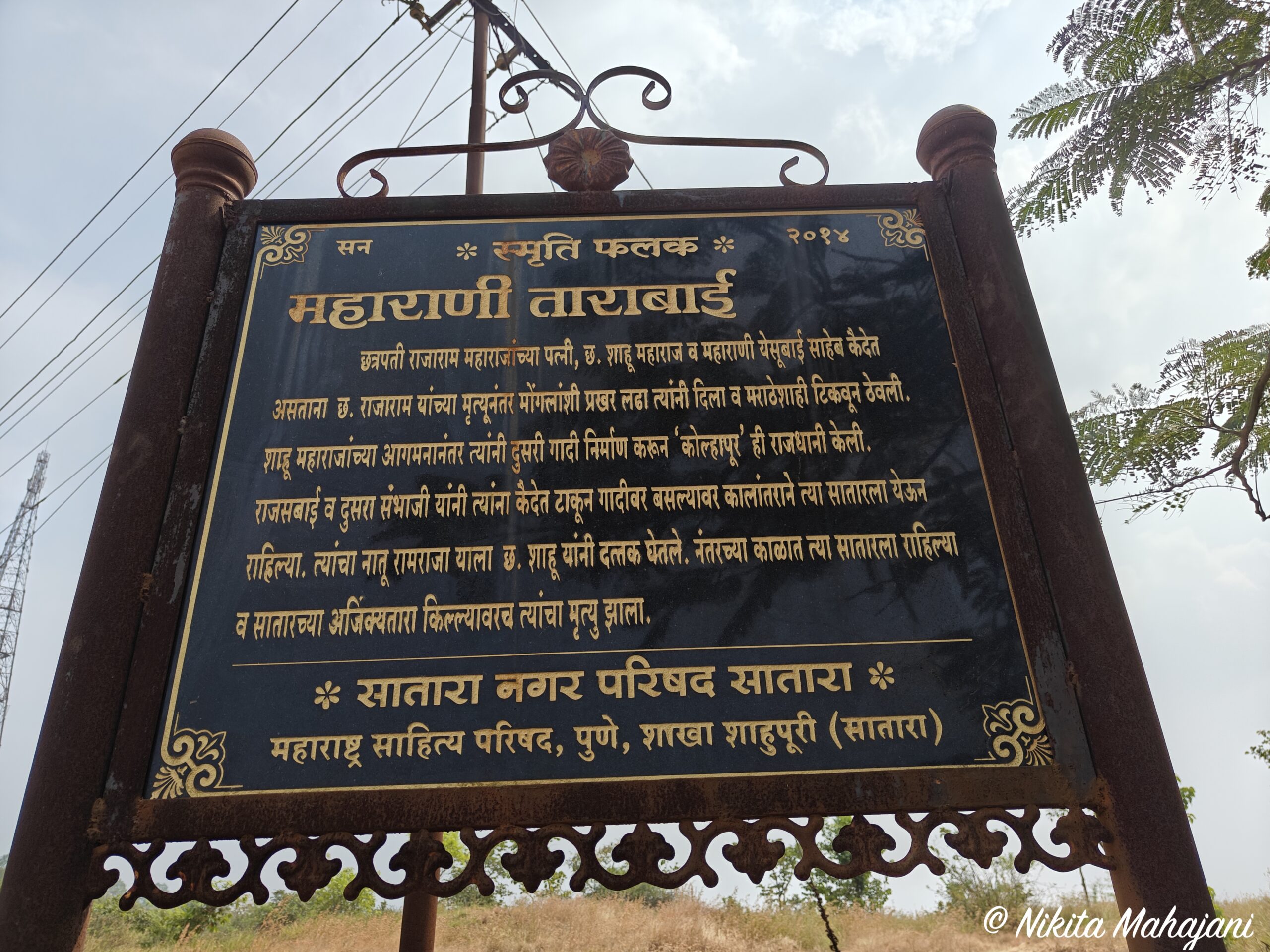
Entry to the fort is free, and drinking water bottles are available at the entrance. However, there are no washrooms or restaurants. The fort is pet-friendly, but caution is advised as there are monkeys near the entrance and stray dogs around Tara Rani’s jail. Keep pets leashed, avoid throwing stones at the strays, and consider carrying some dog food for them.
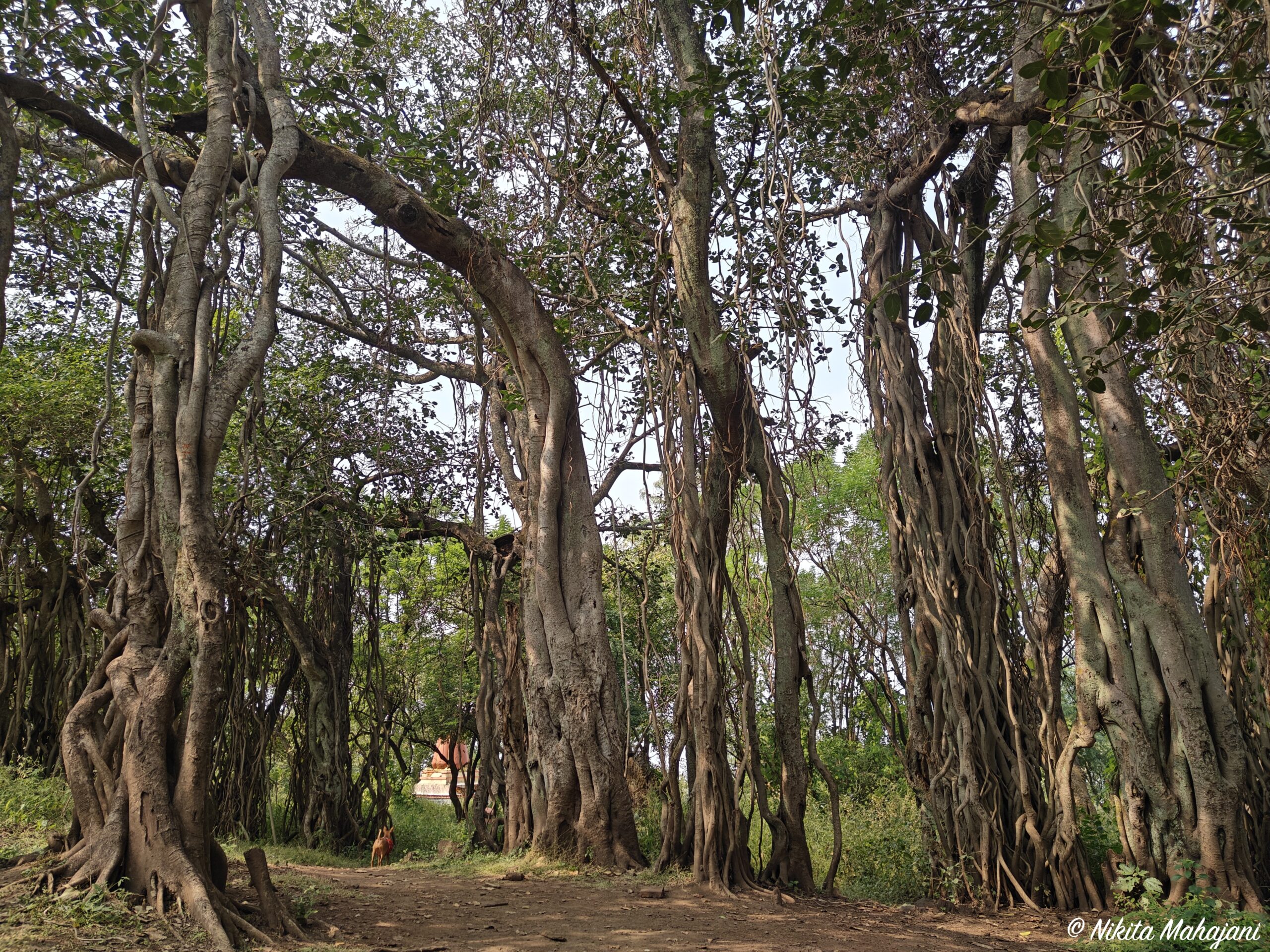
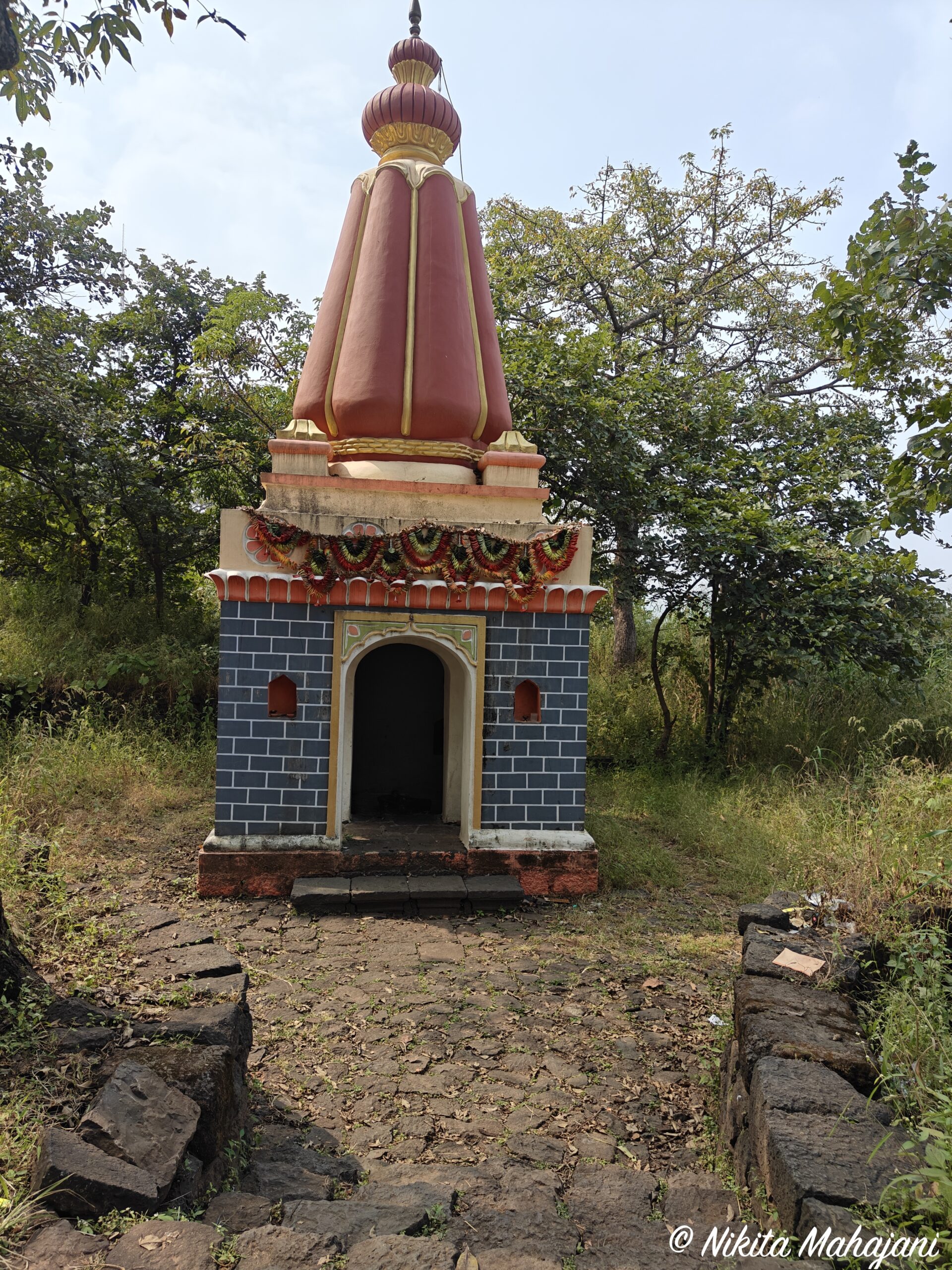
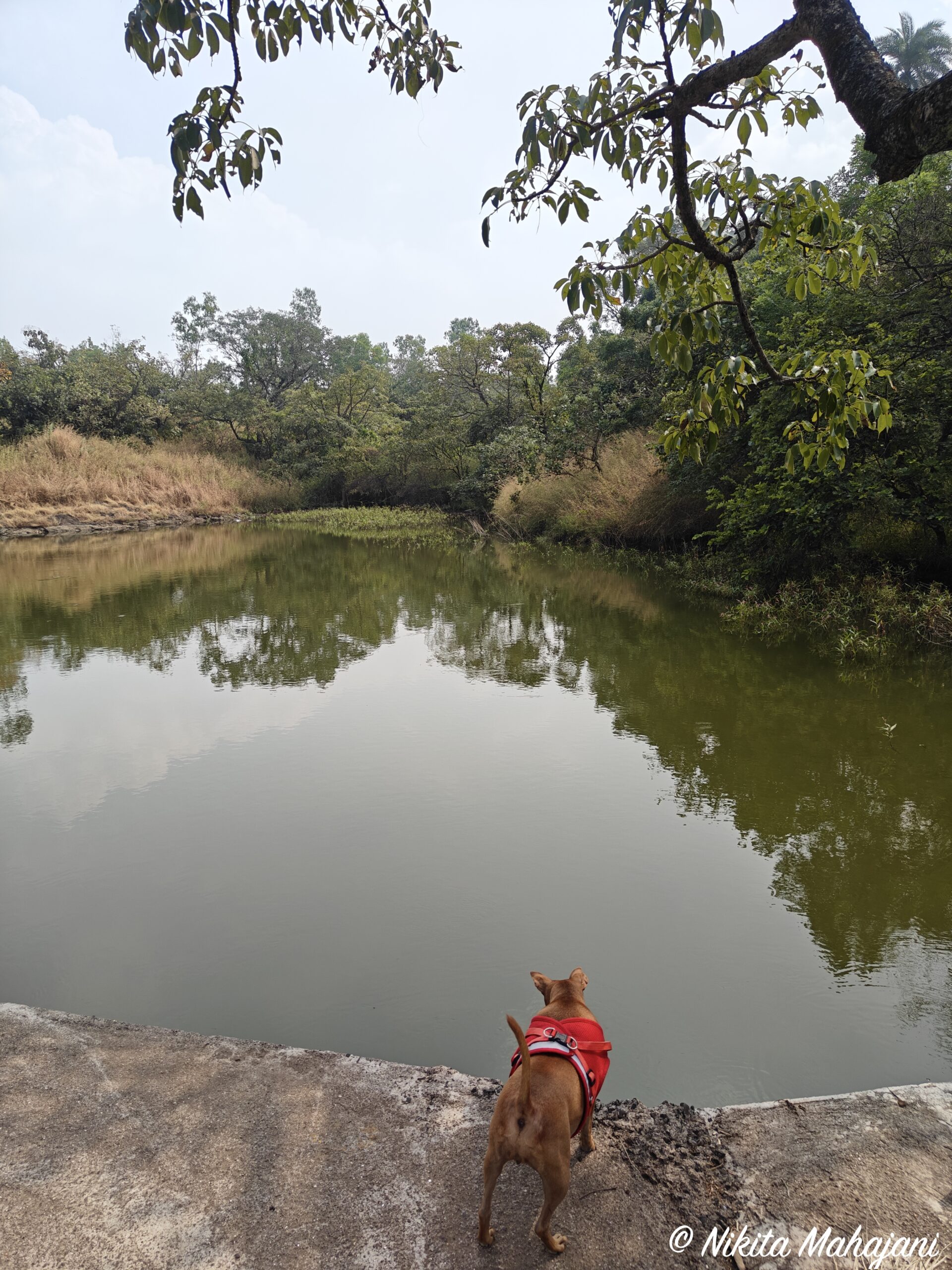
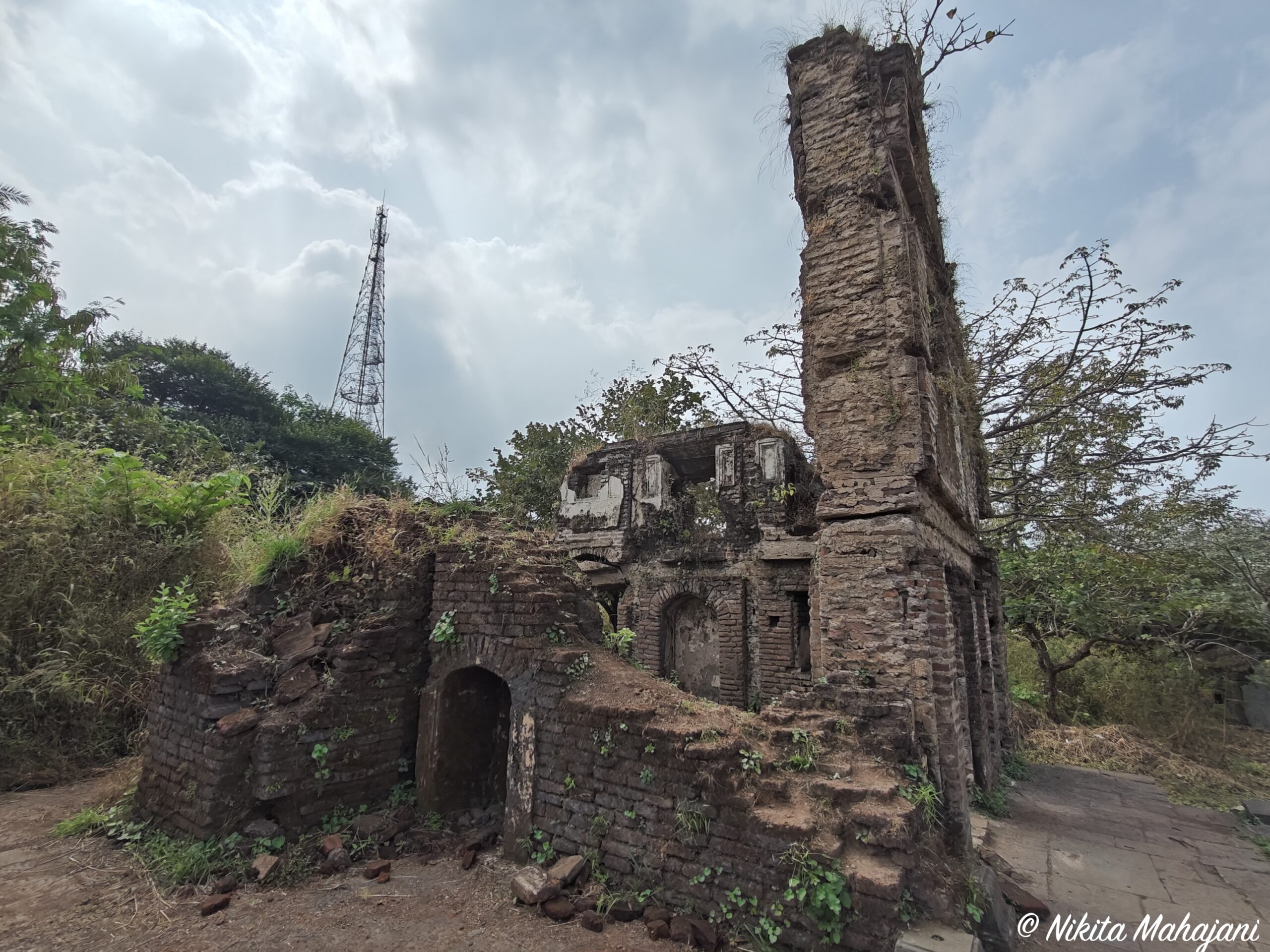
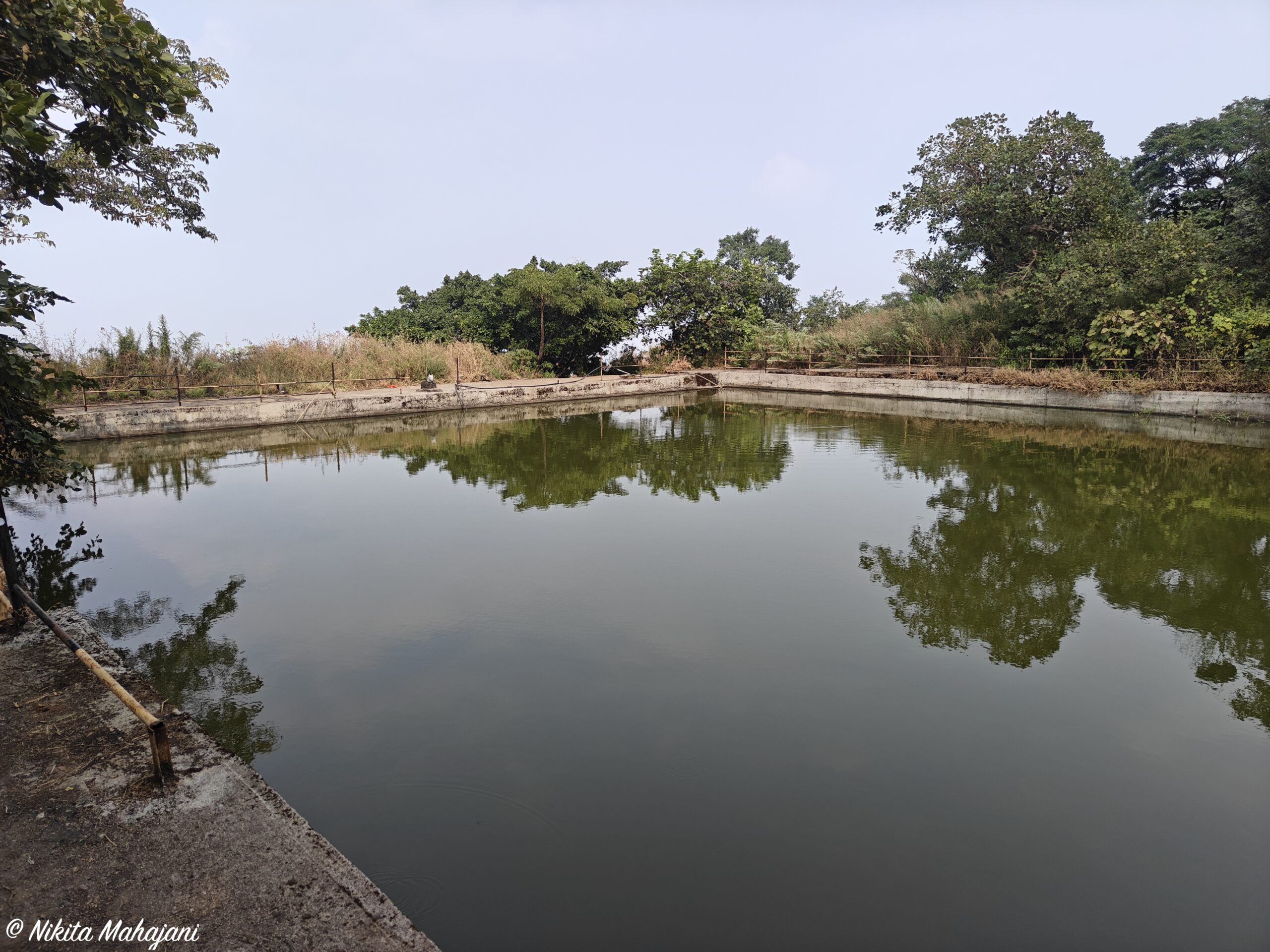
After Ajinkyatara, we visited the ancient rock-cut shrines of Pateshwar Temple, surrounded by lush greenery. Pateshwar Temple is relatively unknown and remains uncrowded even on weekends. The road to Pateshwar temple is quite narrow and offers mesmerizing views. There is no dedicated parking space available. We parked our car parallel to the road and started walking towards the temple using google map.
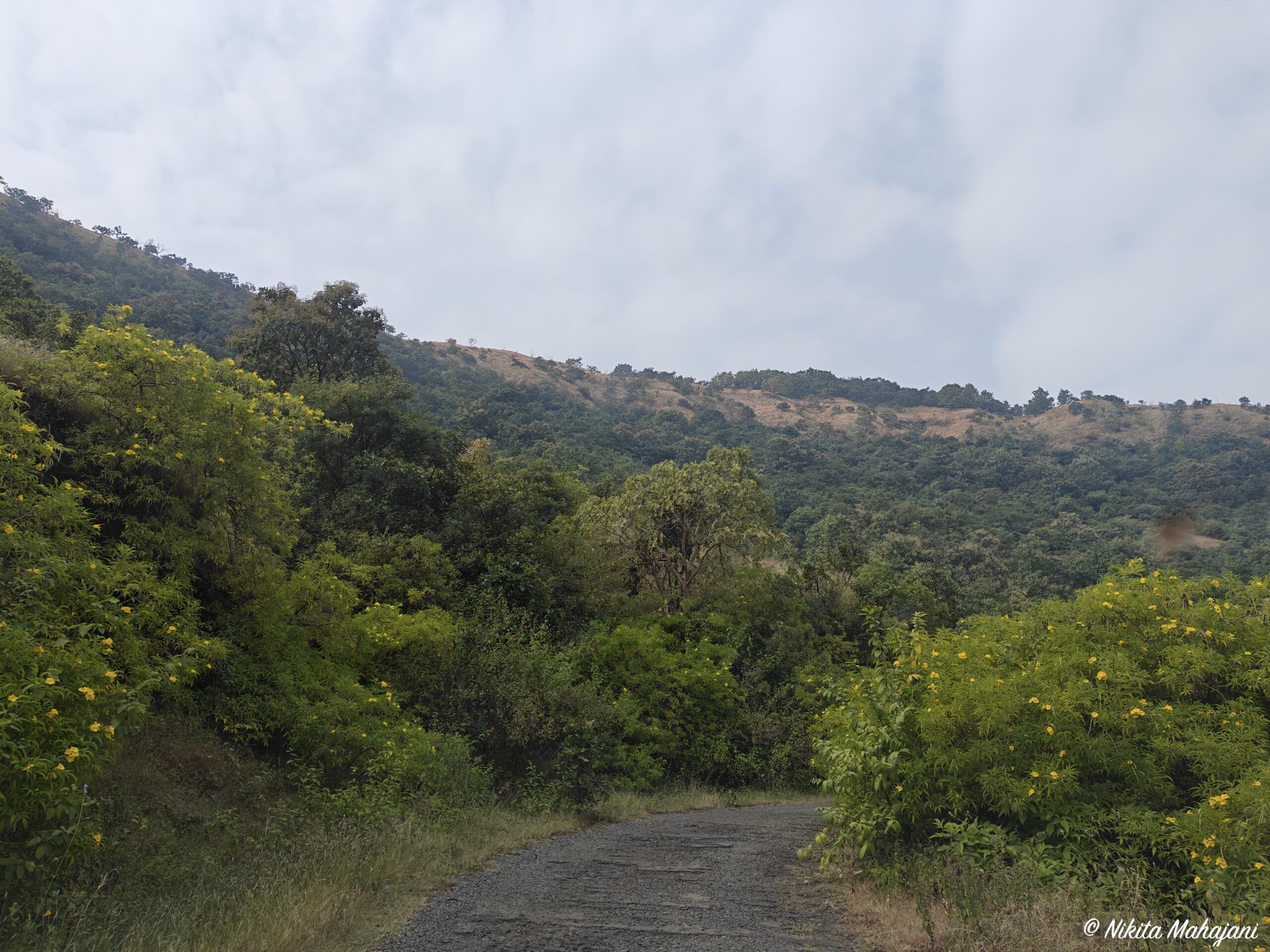
The initial pedestrian route is quite narrow and completely shaded by foliage of the trees. Even though we went in the afternoon, it was quite dark. Hence it is advisable to visit this temple before 2pm. After walking on the flat trail for 10 minutes we came across an orange gate with a signage of Pateshwar temple. There are some stone steps beyond the gate and it take merely 5 minutes to cover this portion of steps. There is a small shrine which houses a Ganesha statue smeared in saffron paste.
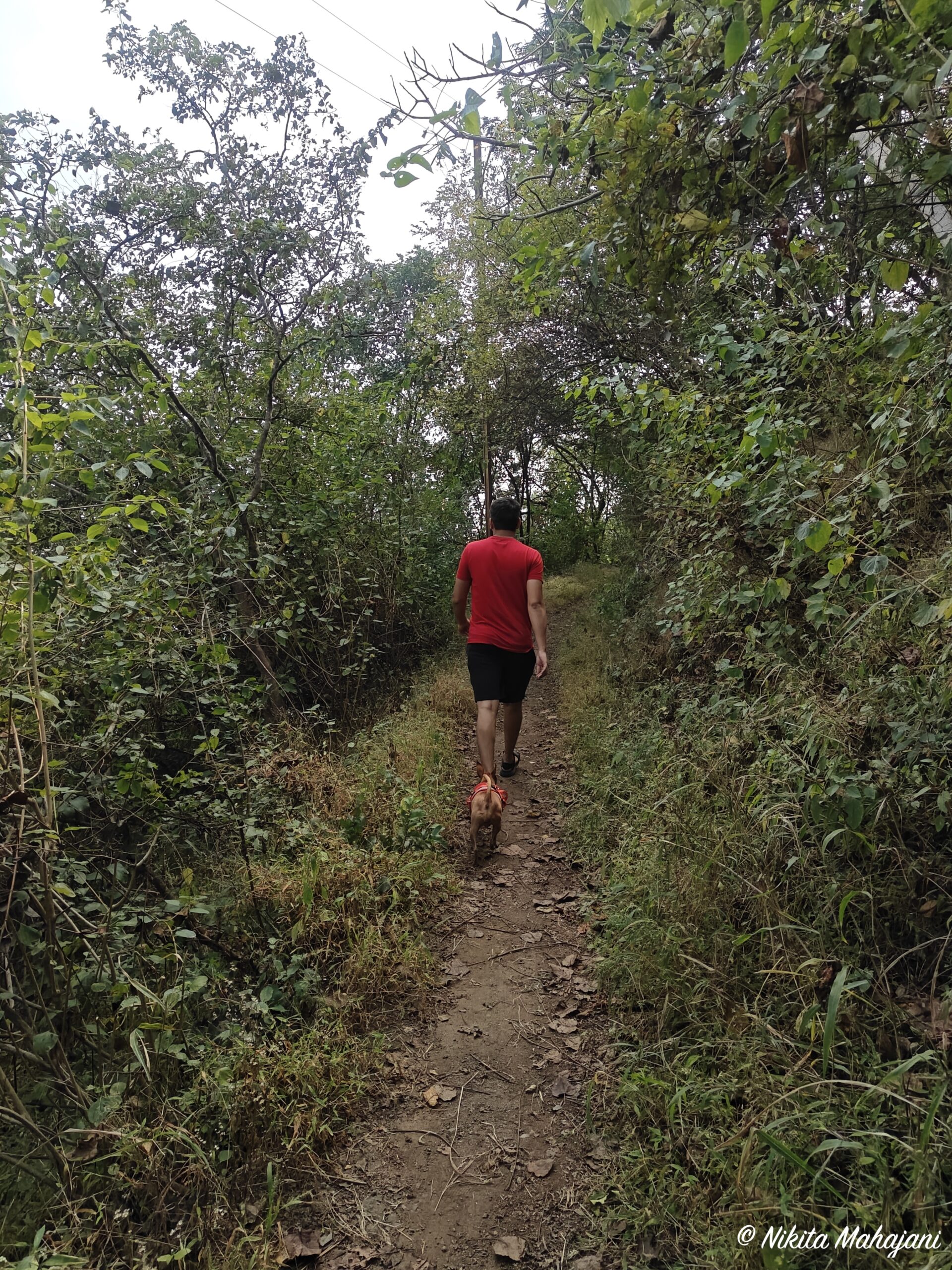
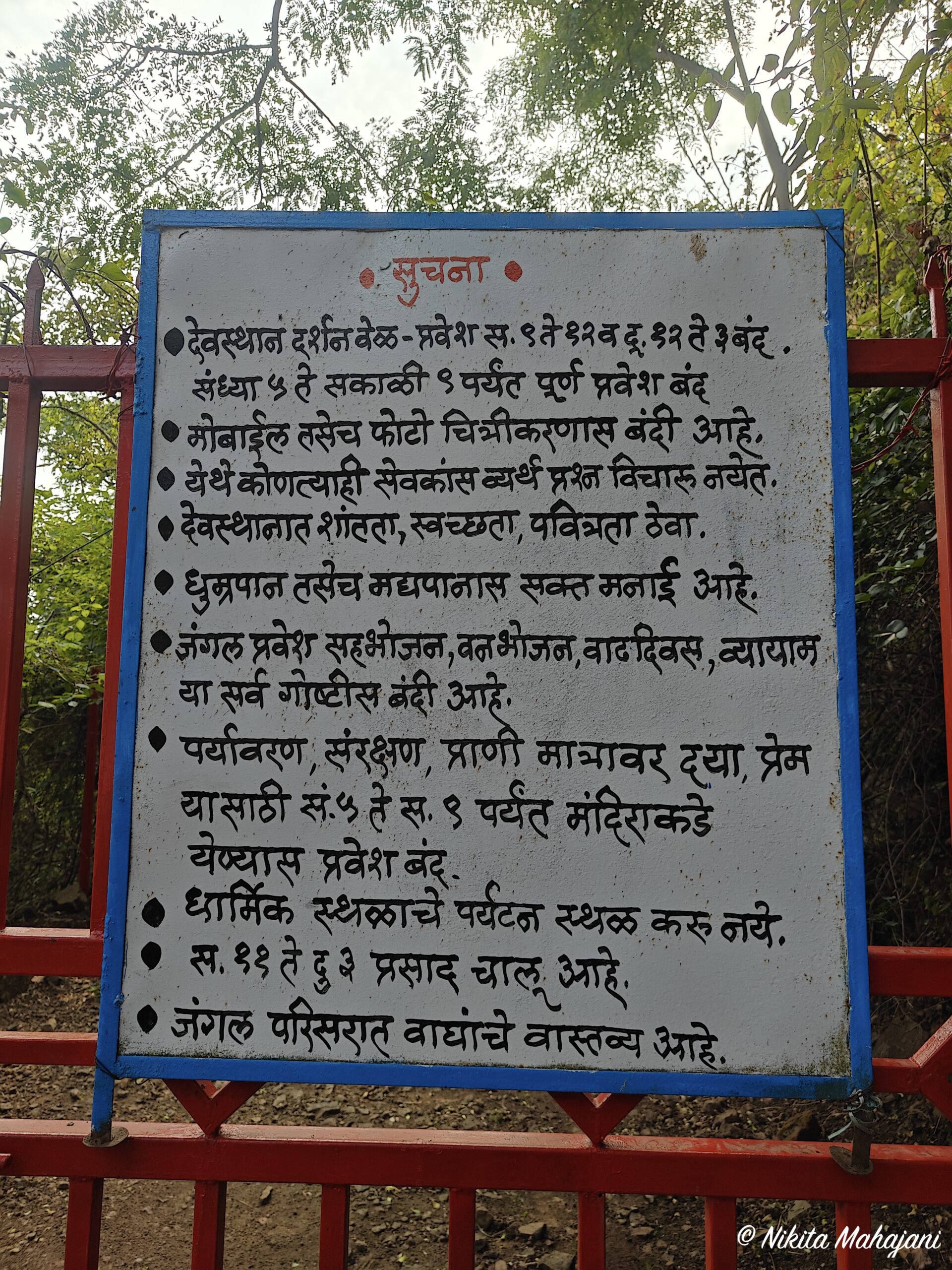
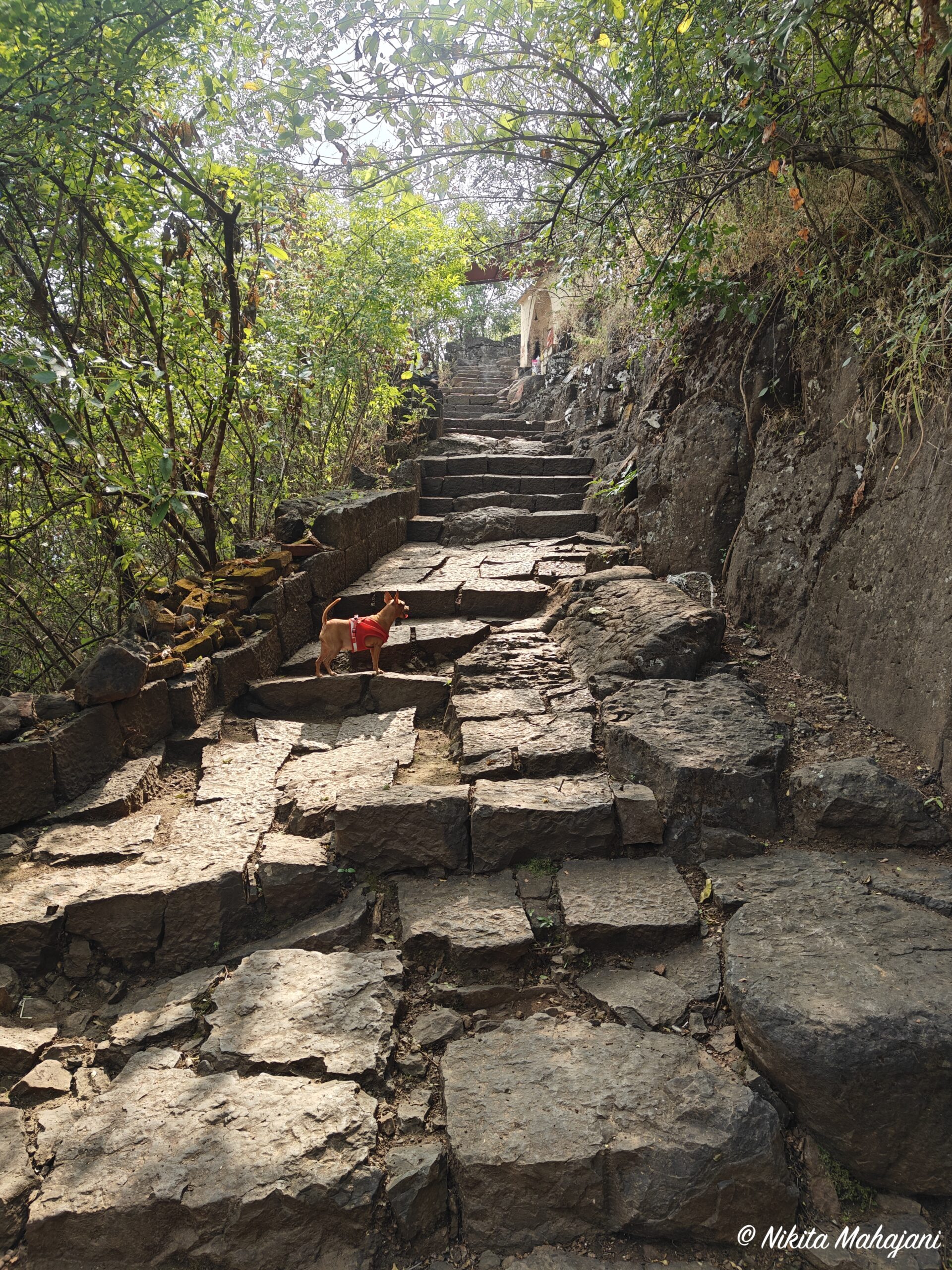
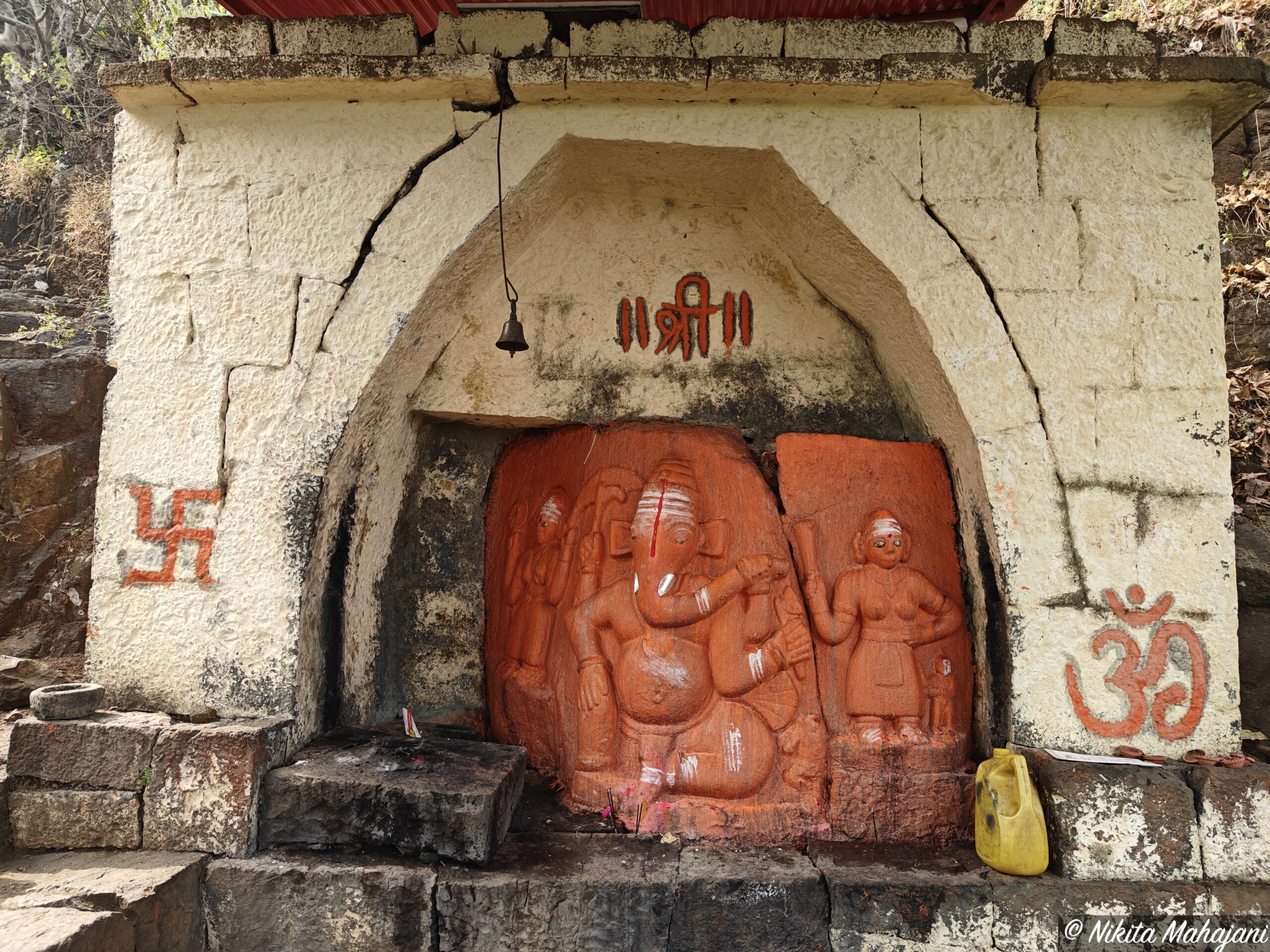
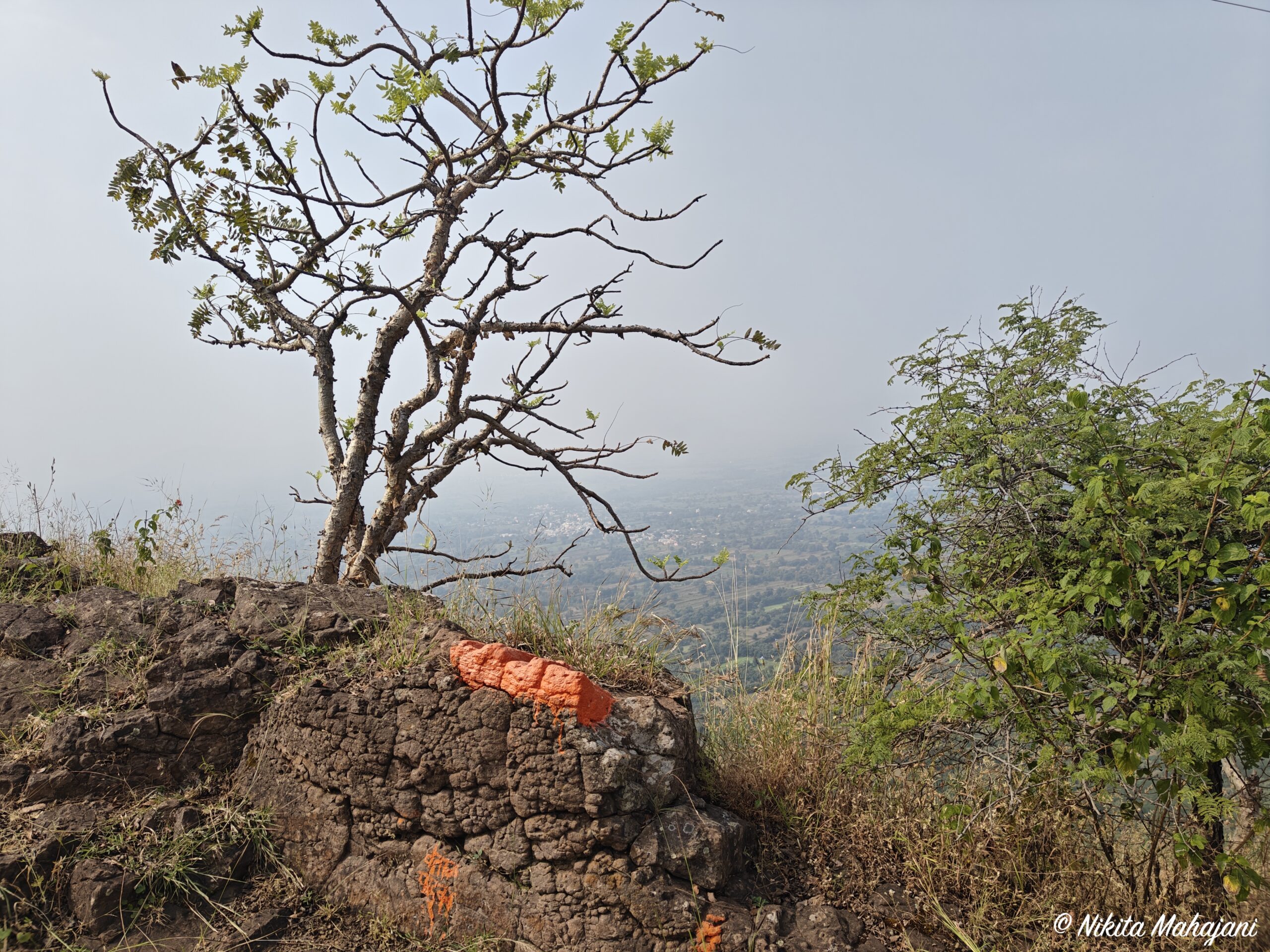
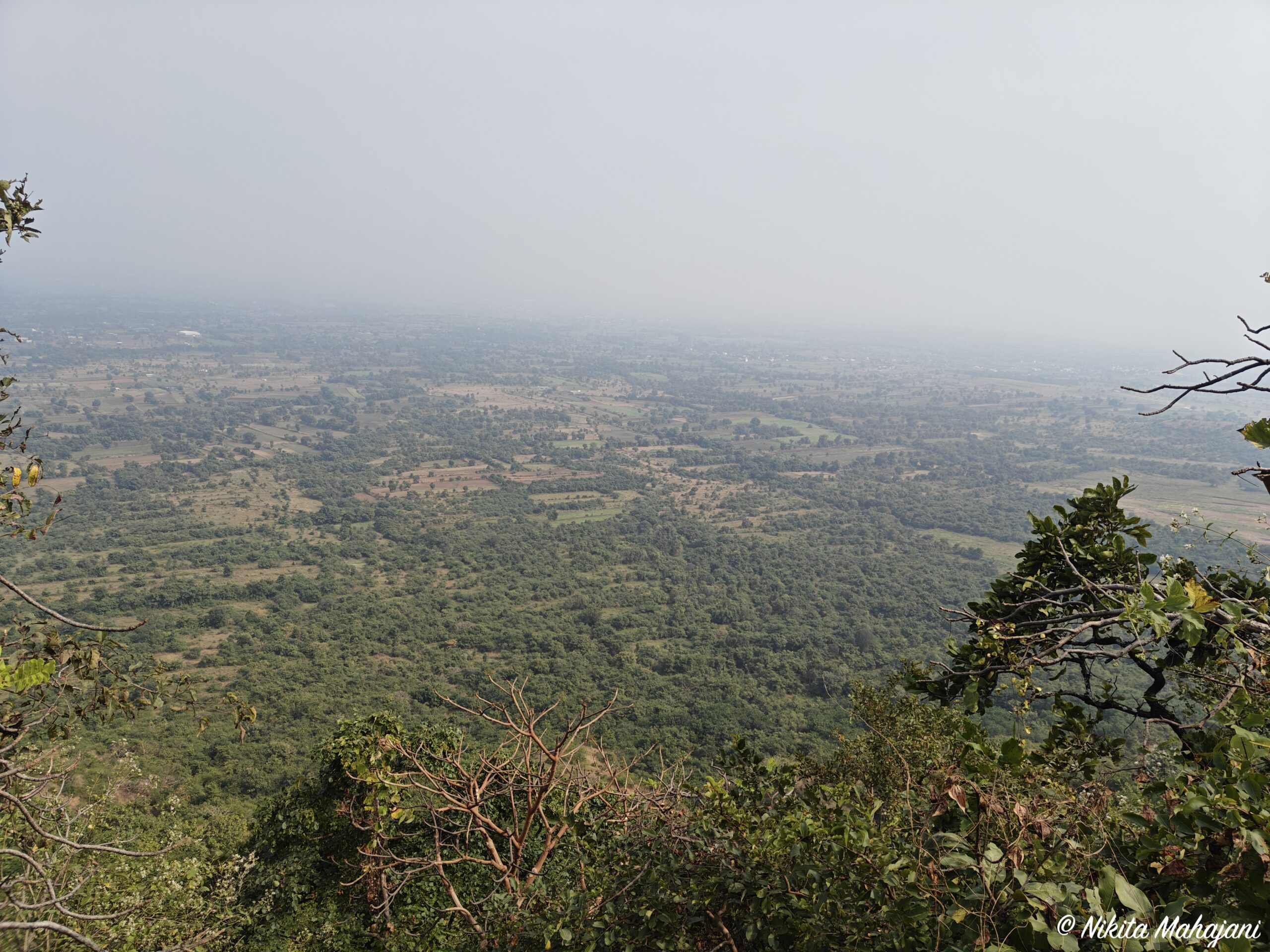
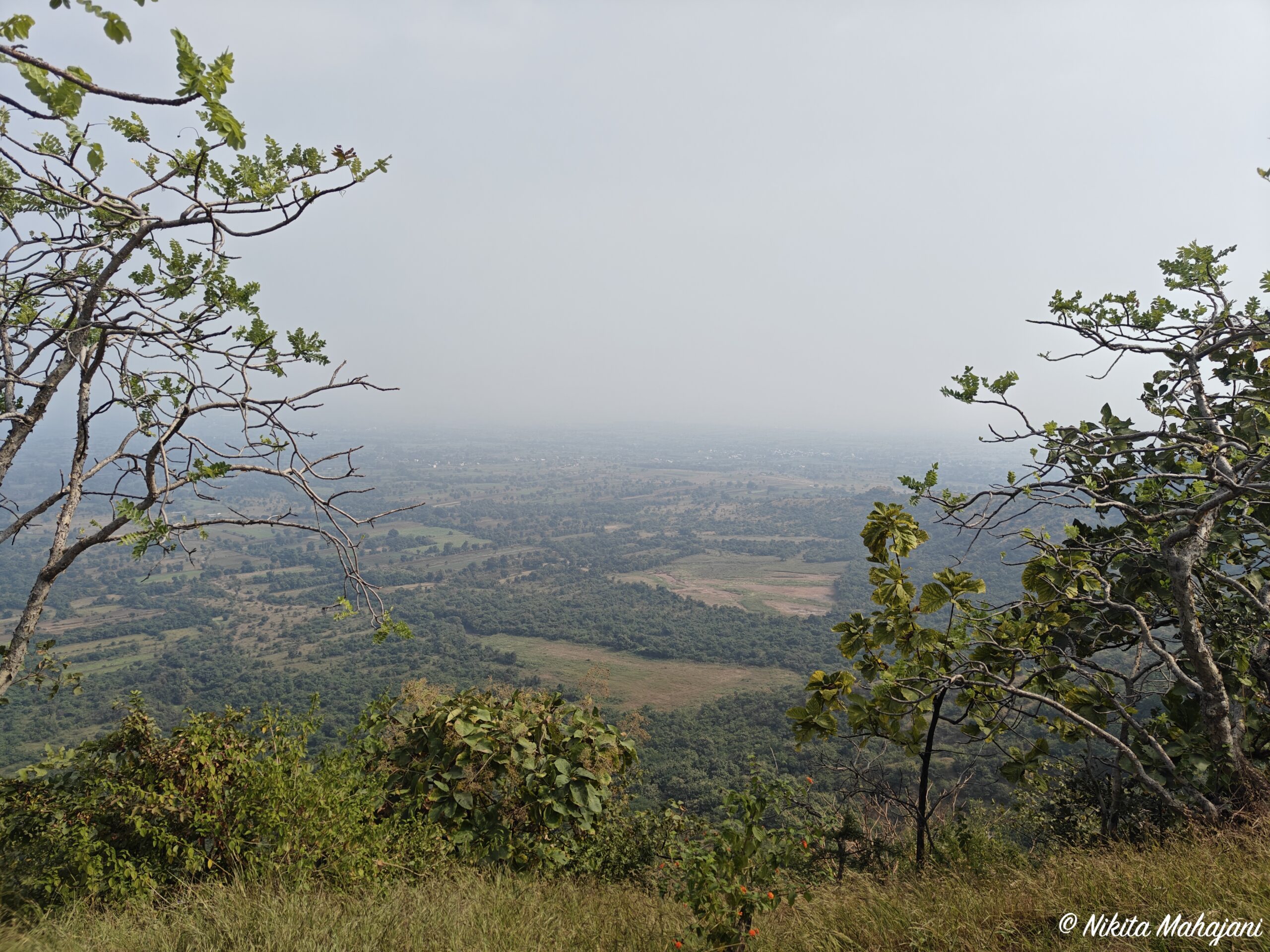
After walking for 20 minutes on a flat and shaded trail, we came across a huge pond and signages of the main temple. We skipped the main temple and proceeded ahead to explore the tertiary shrines first .
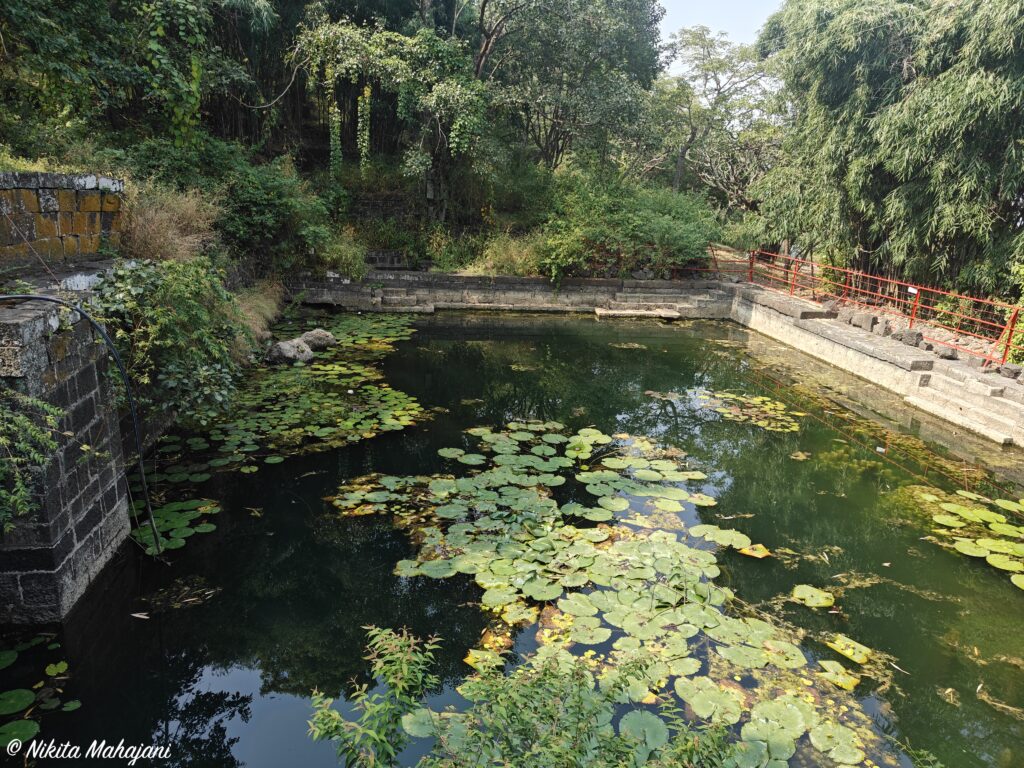
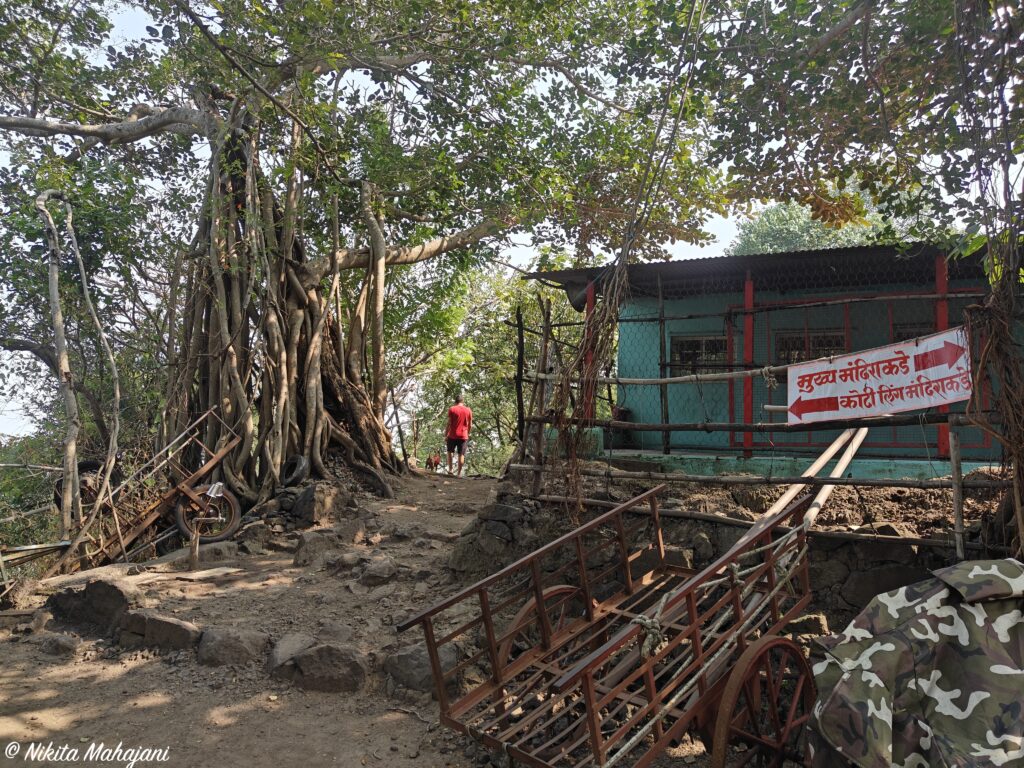
We came across another smaller kund (pond) and a very small temple surrounded by some shrines carved in the sloping terrain. The shrines were filled with rainwater and we could not enter them. Sophie enjoyed exploring the tranquil surroundings.
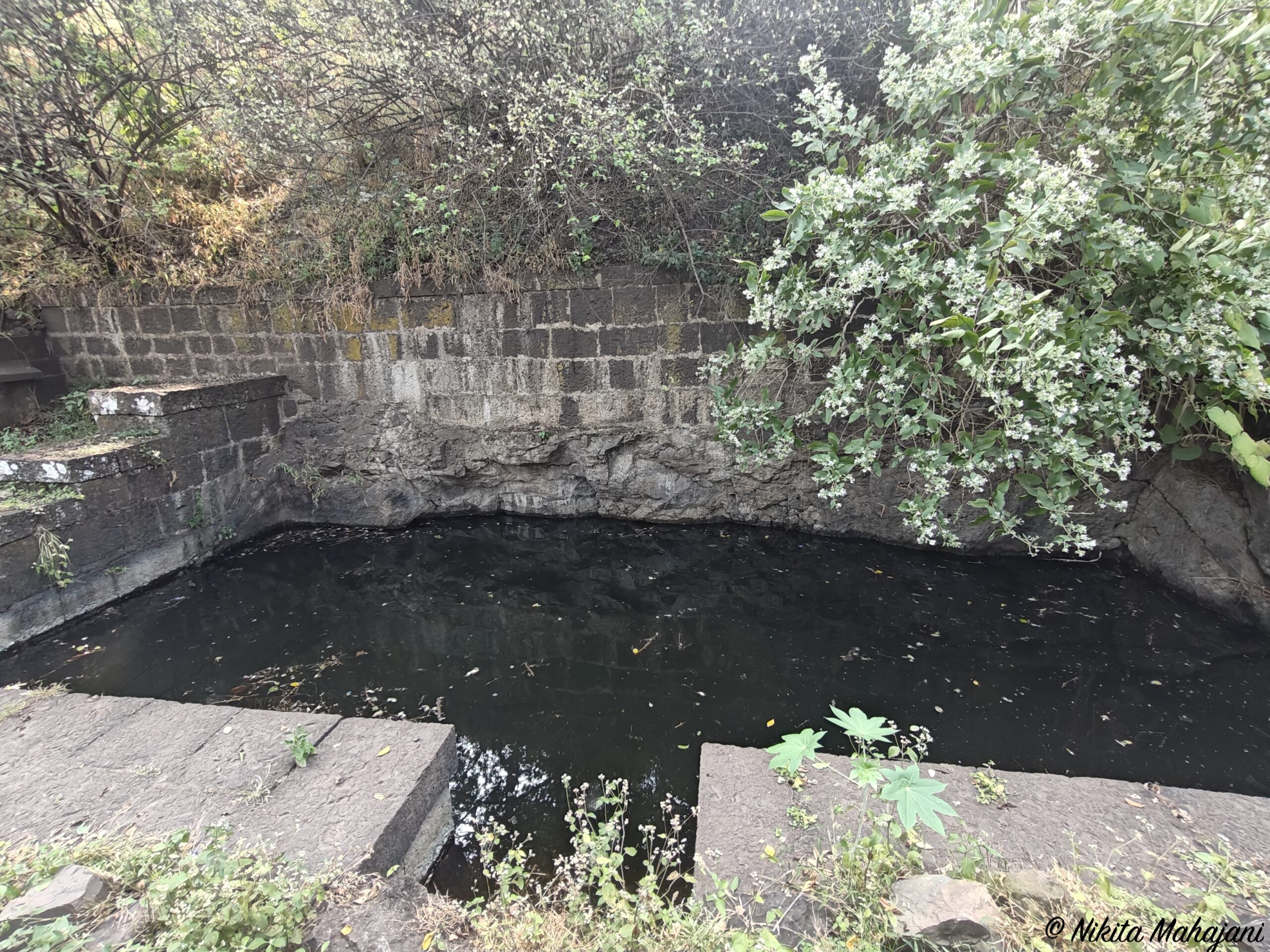
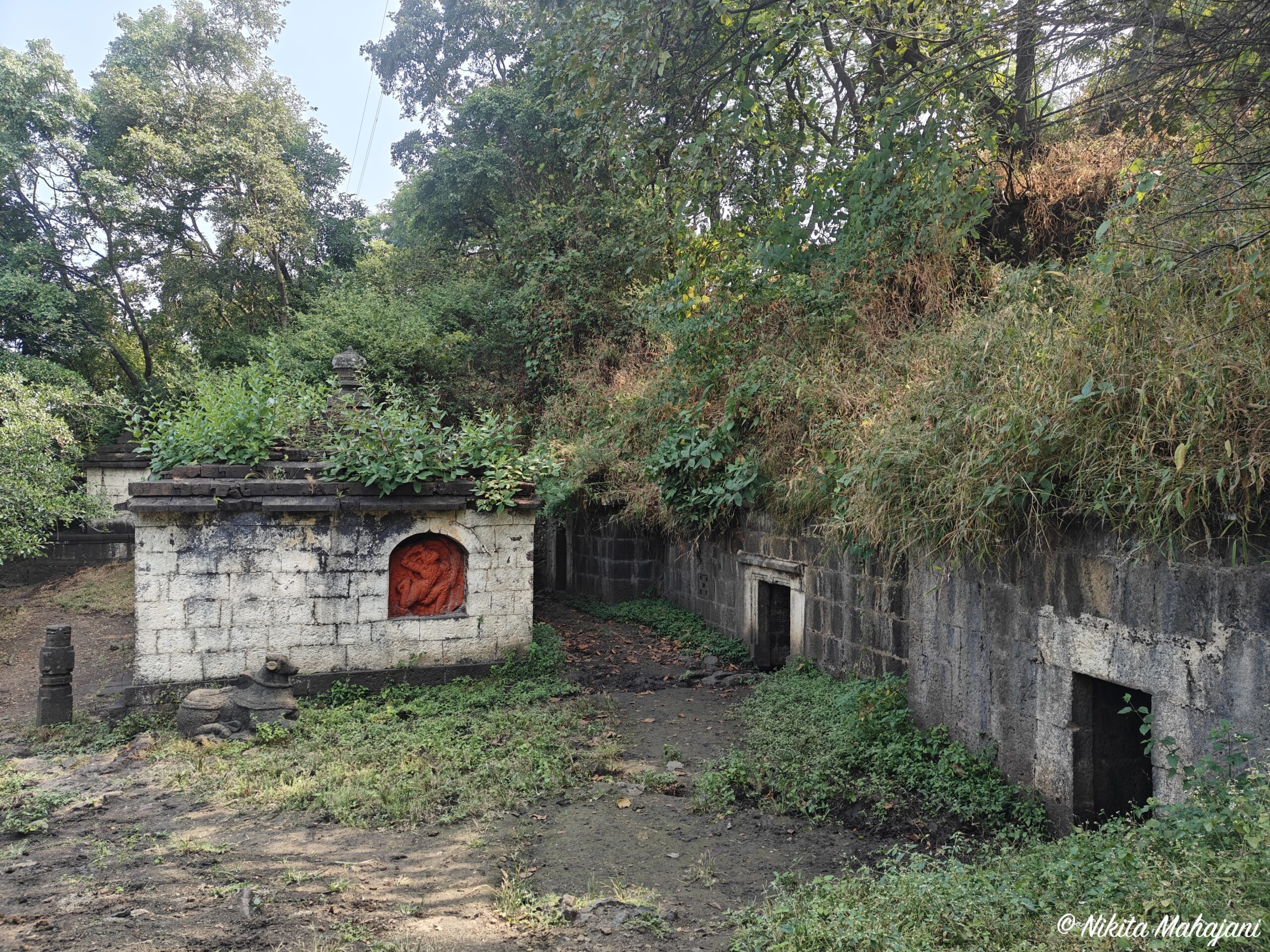
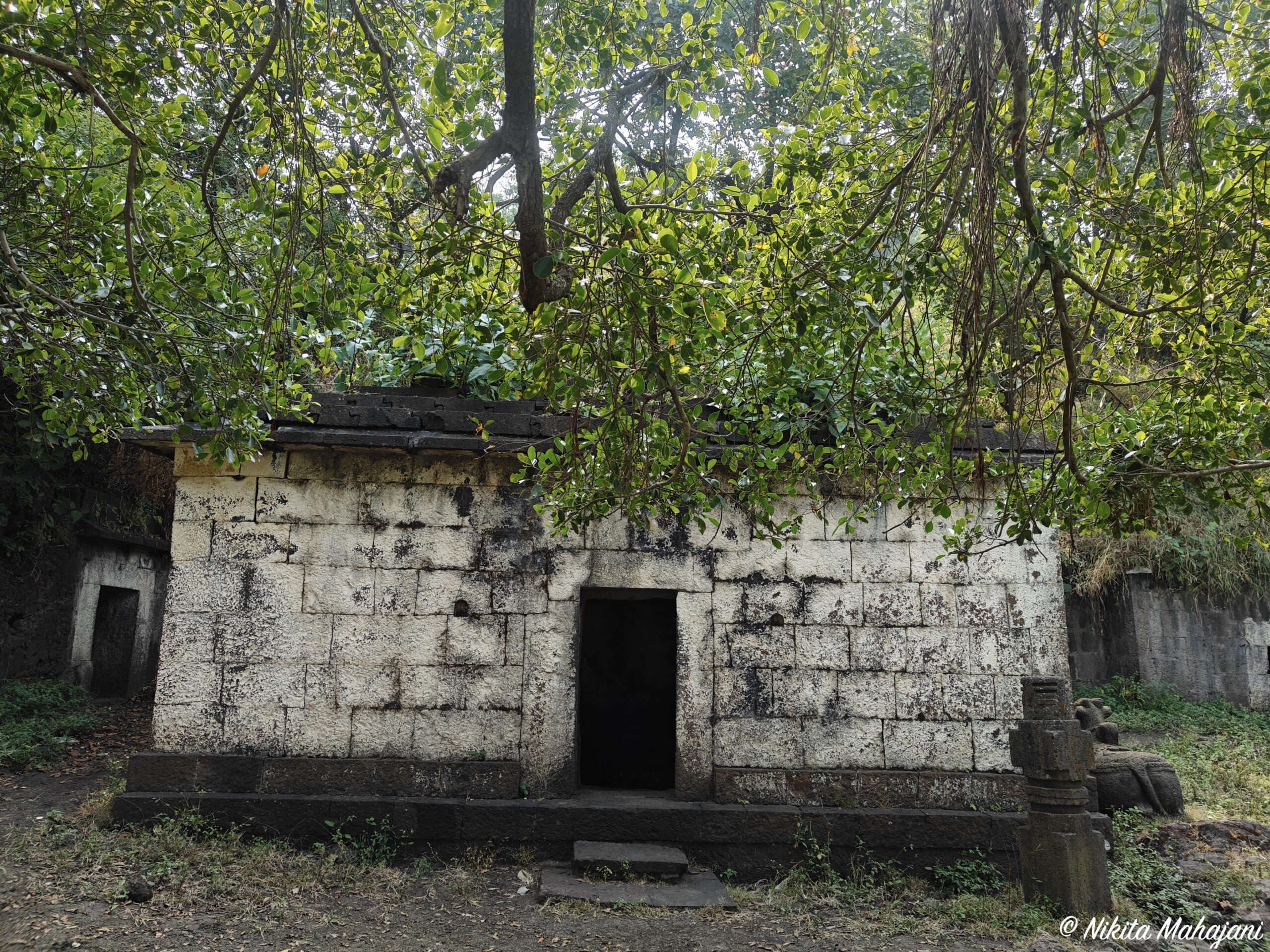
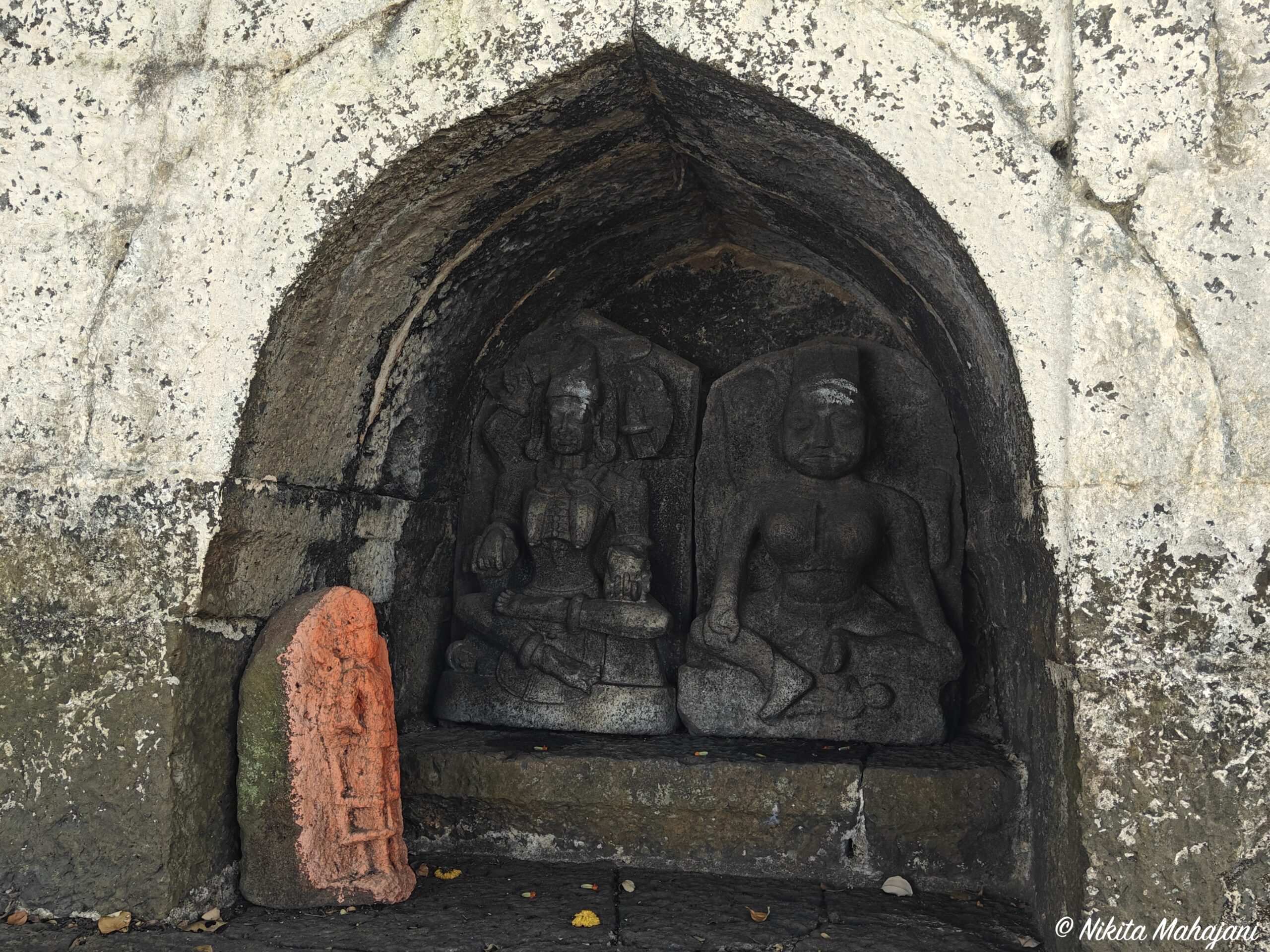
A few yards ahead, we came across a larger temple (as shown in photos below). There was a deepstambha outside the temple and a nandi at the entrance. A smaller nandi sculpture was lying outside the temple.
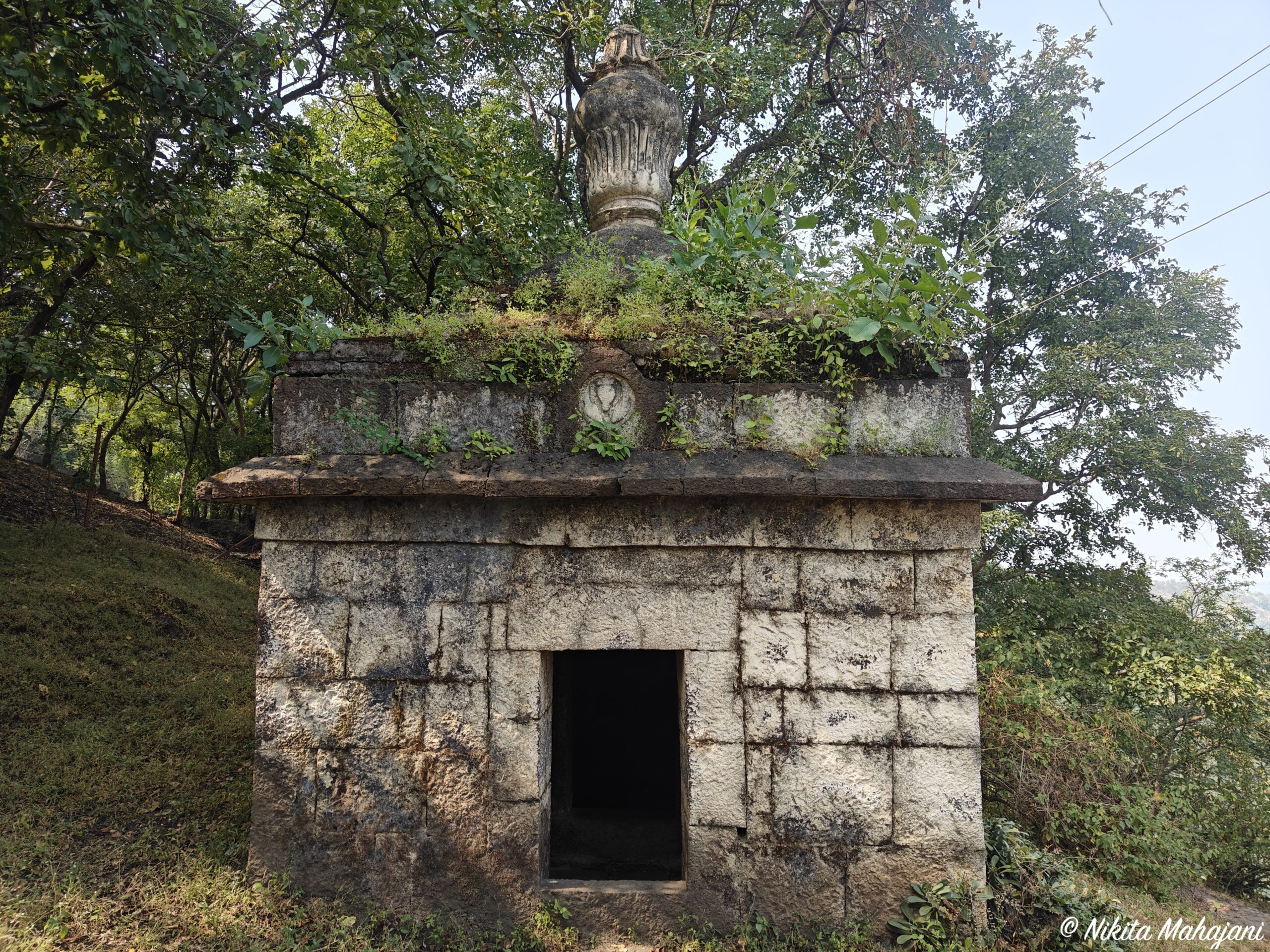
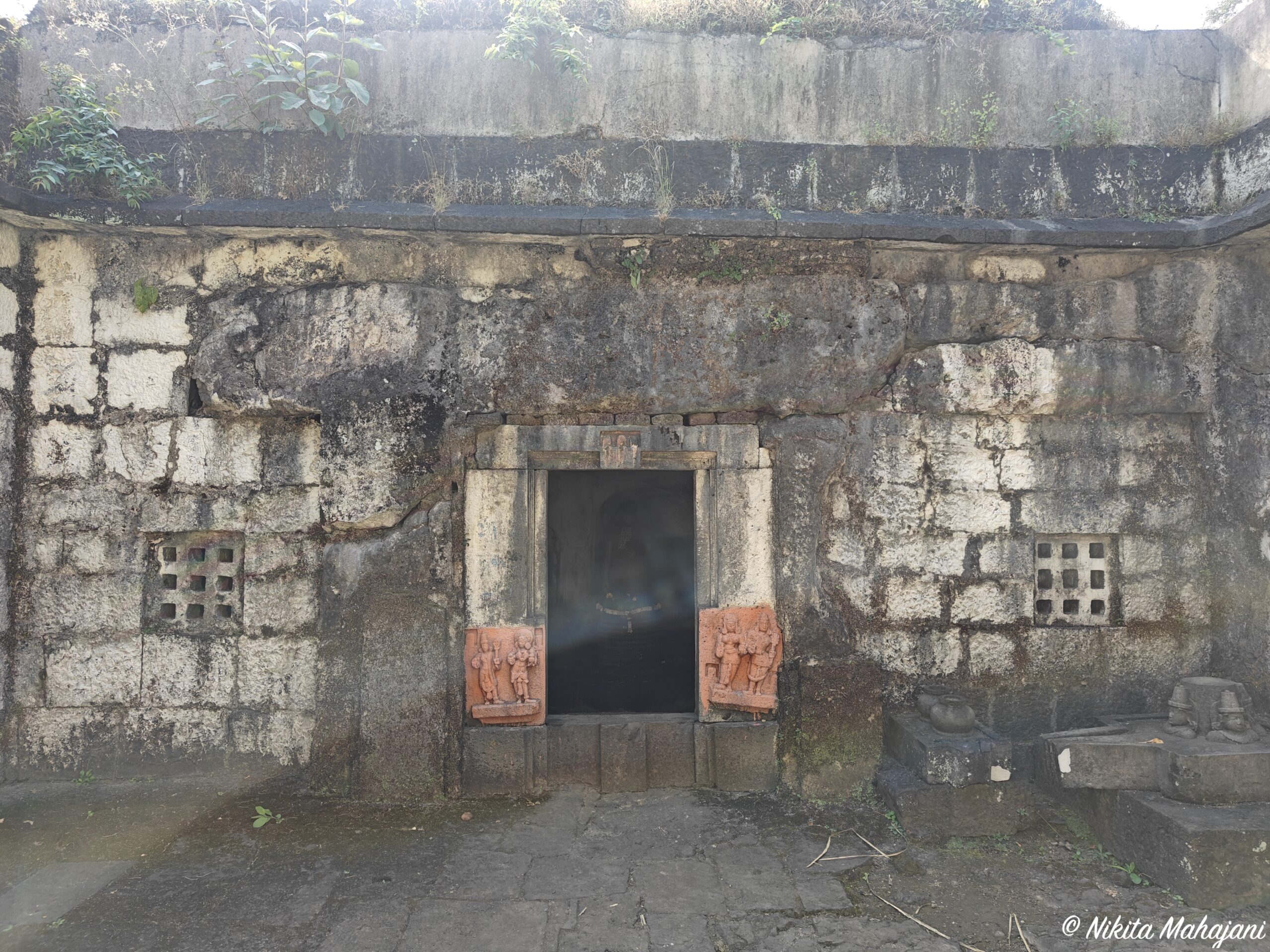
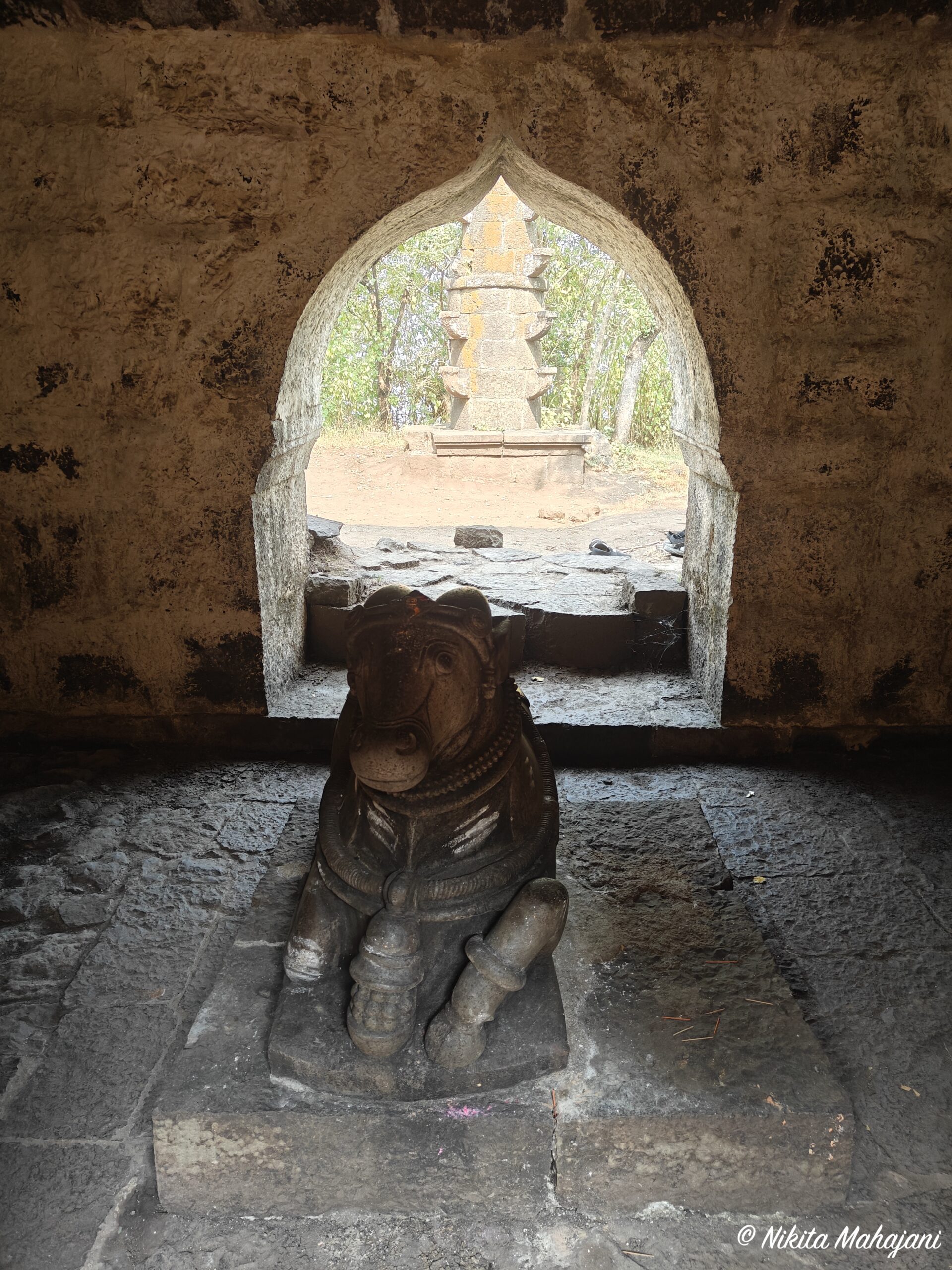
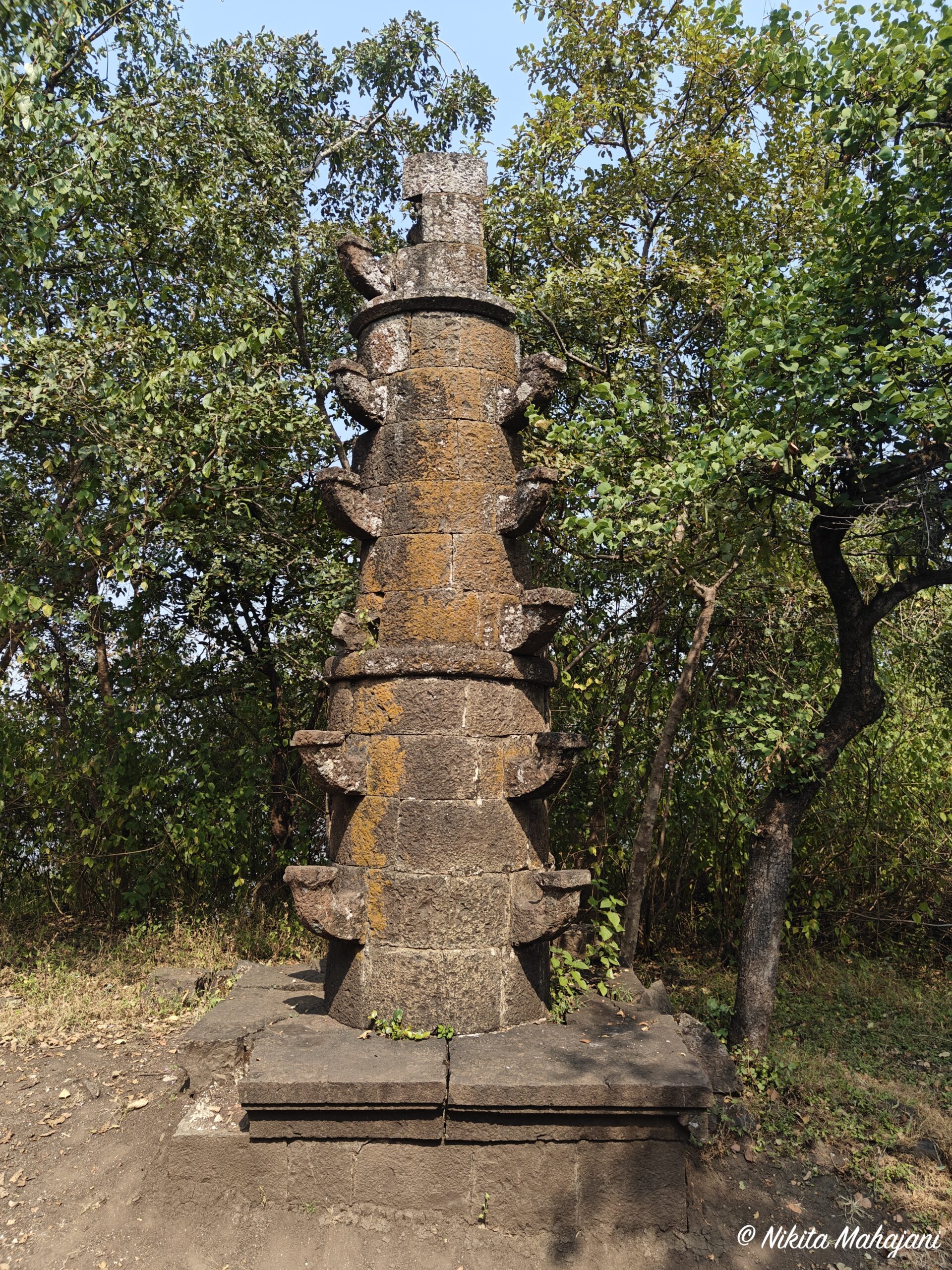
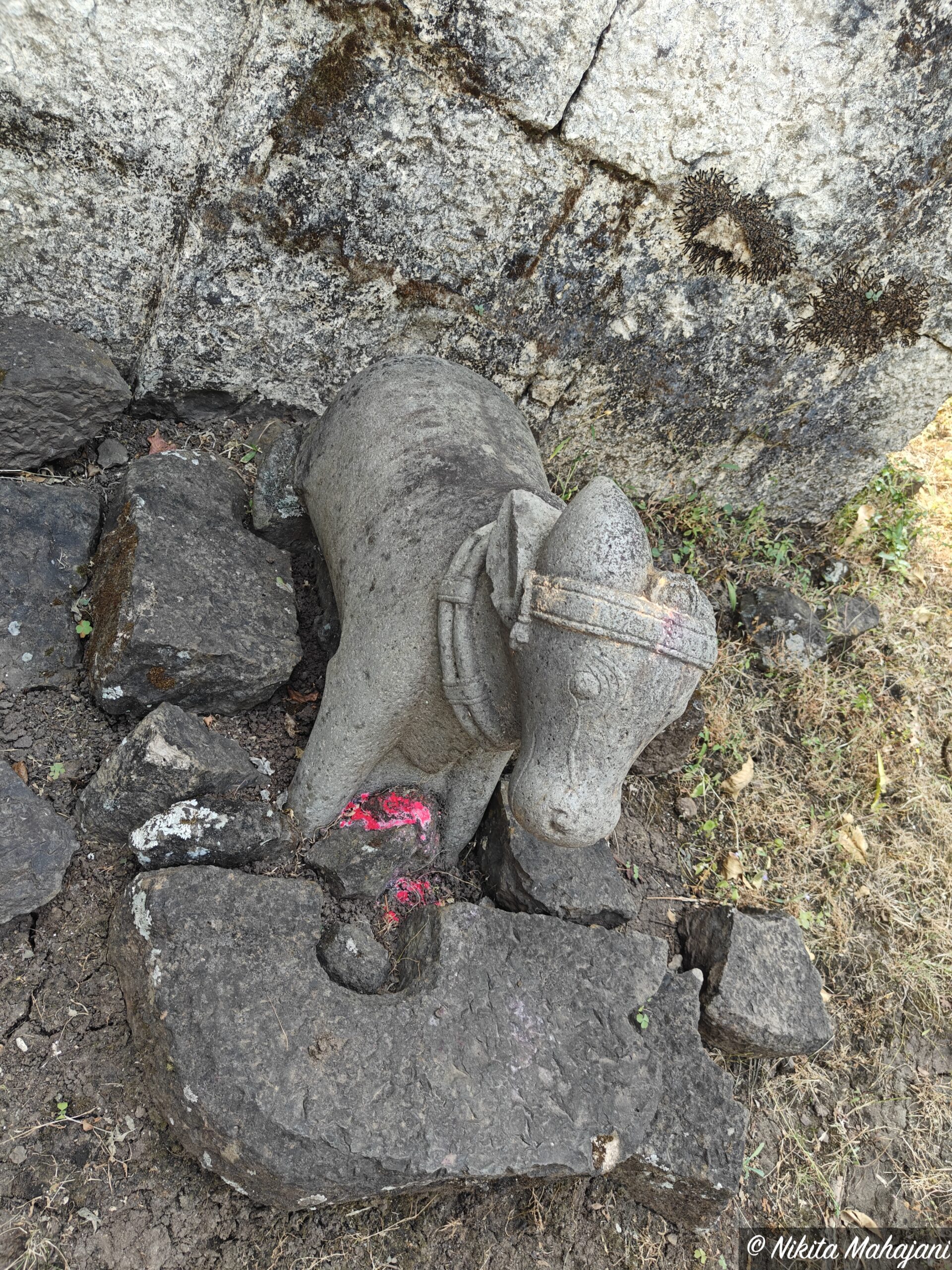
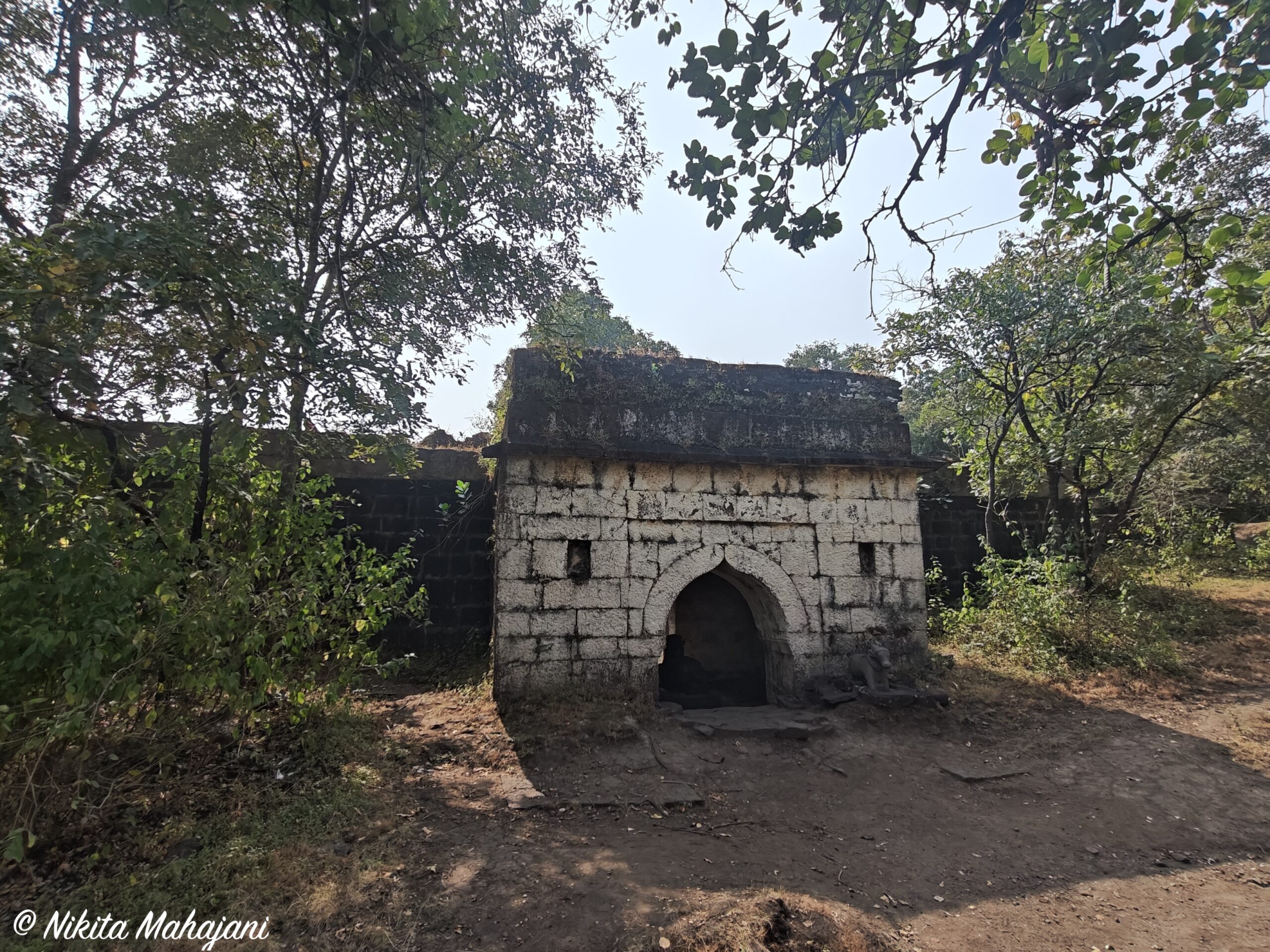
The temple had a unique chaumukhi shivlinga in its courtyard. It also had a shivlinga with two pots.
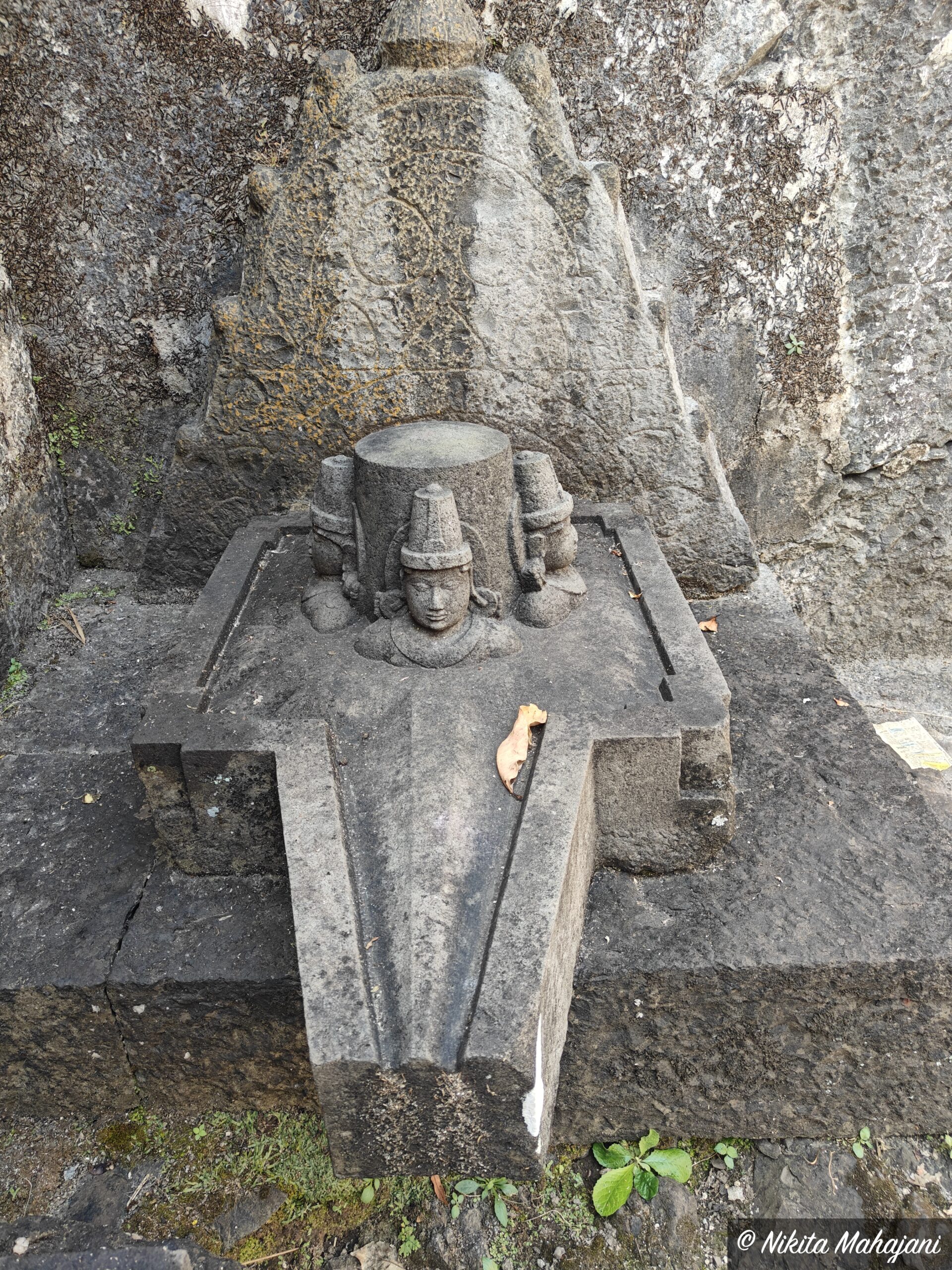
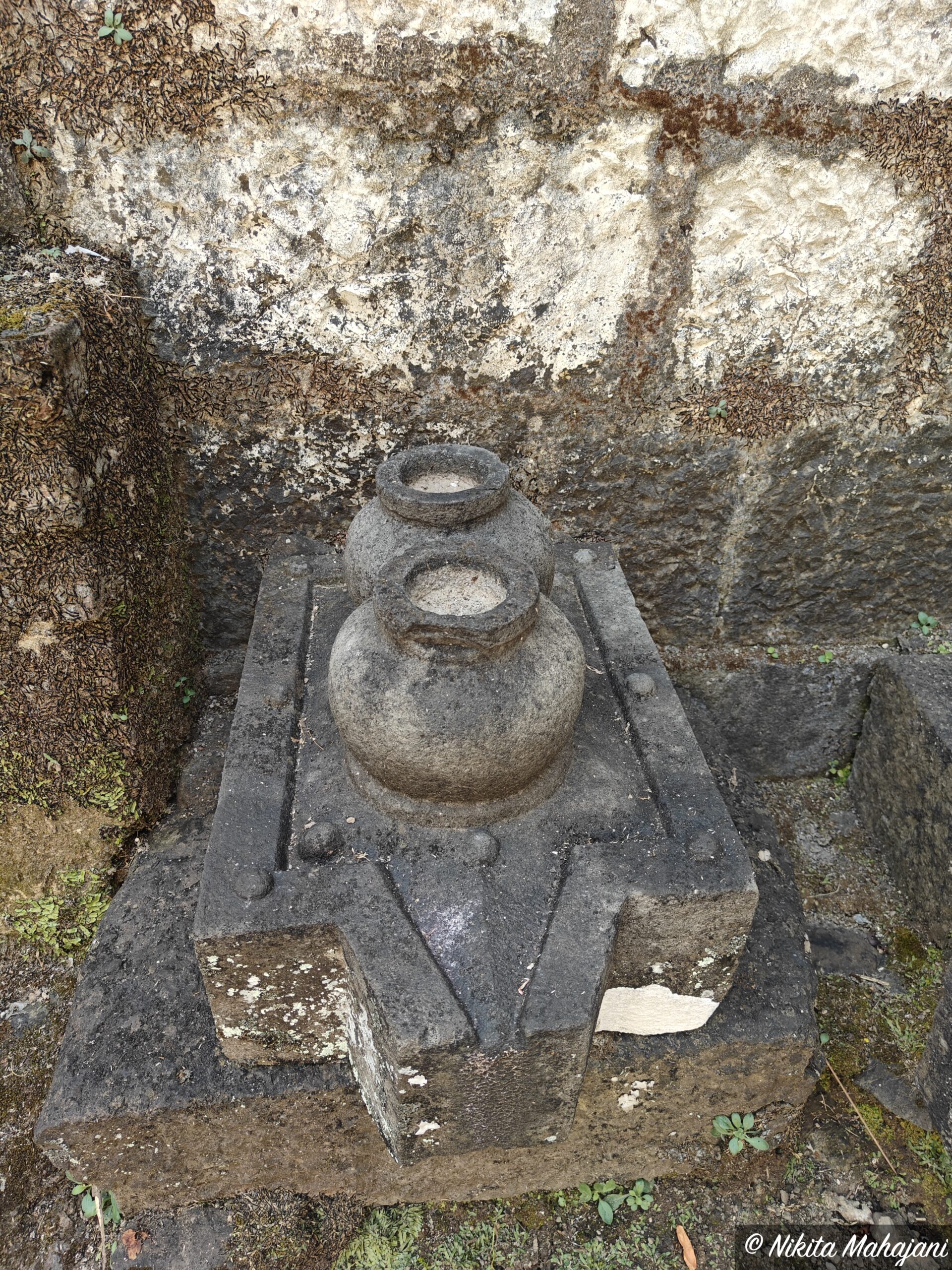
The temple is planned symmetrically around a square courtyard. There are four rooms around the courtyard. Since the temple is on a sloping terrain, we could access the terrace of the temple from the higher contours of the hills.
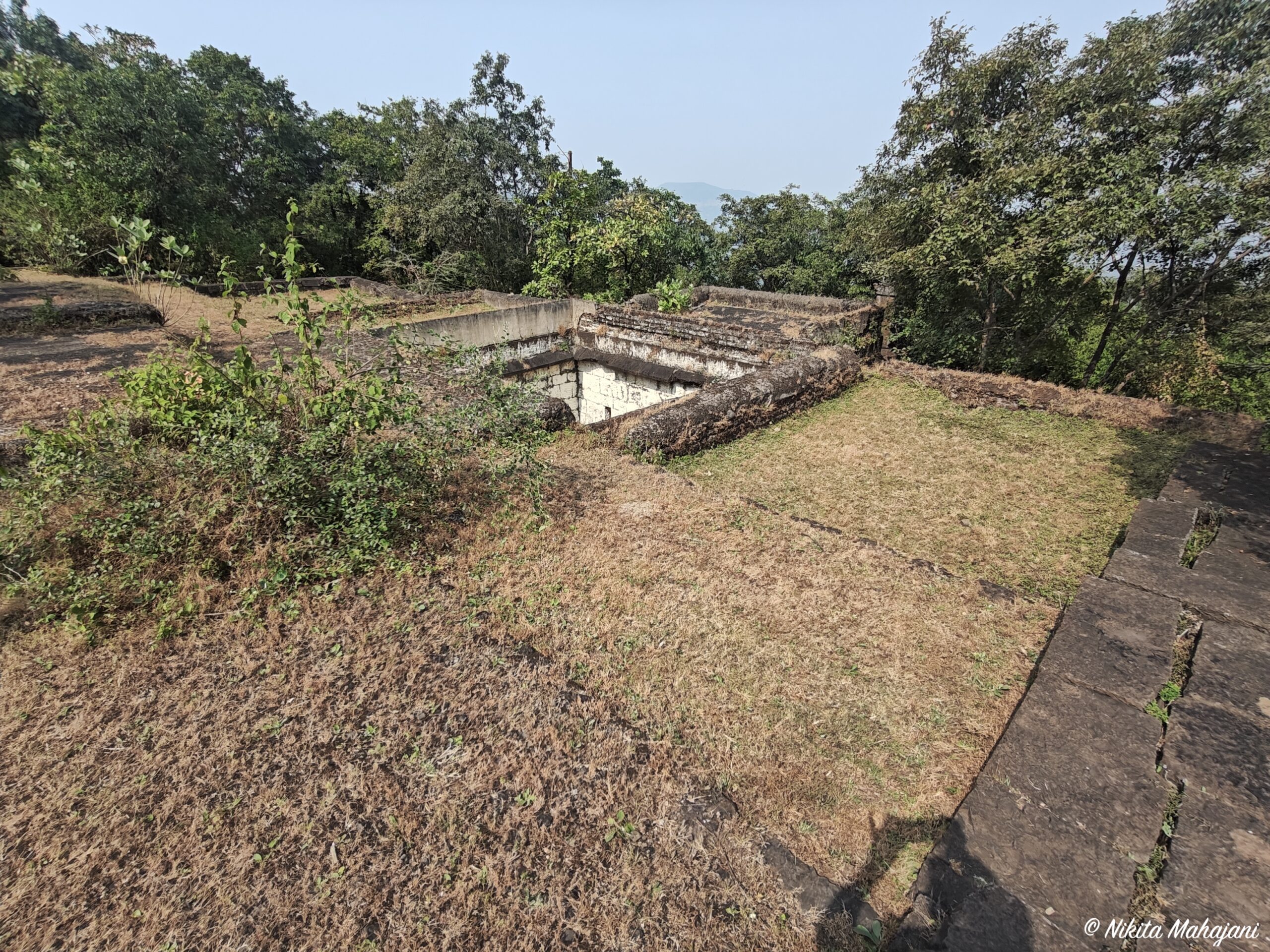
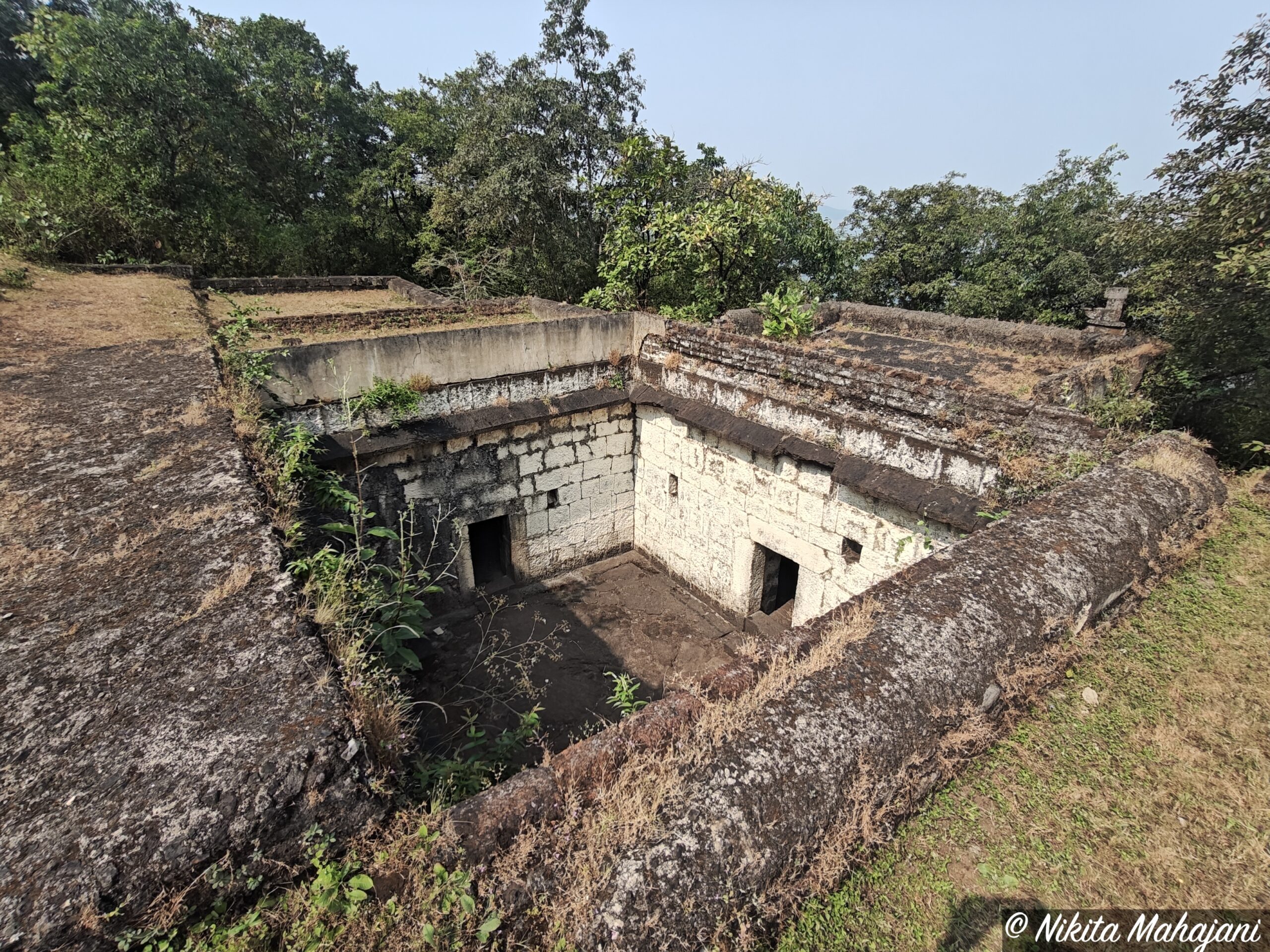
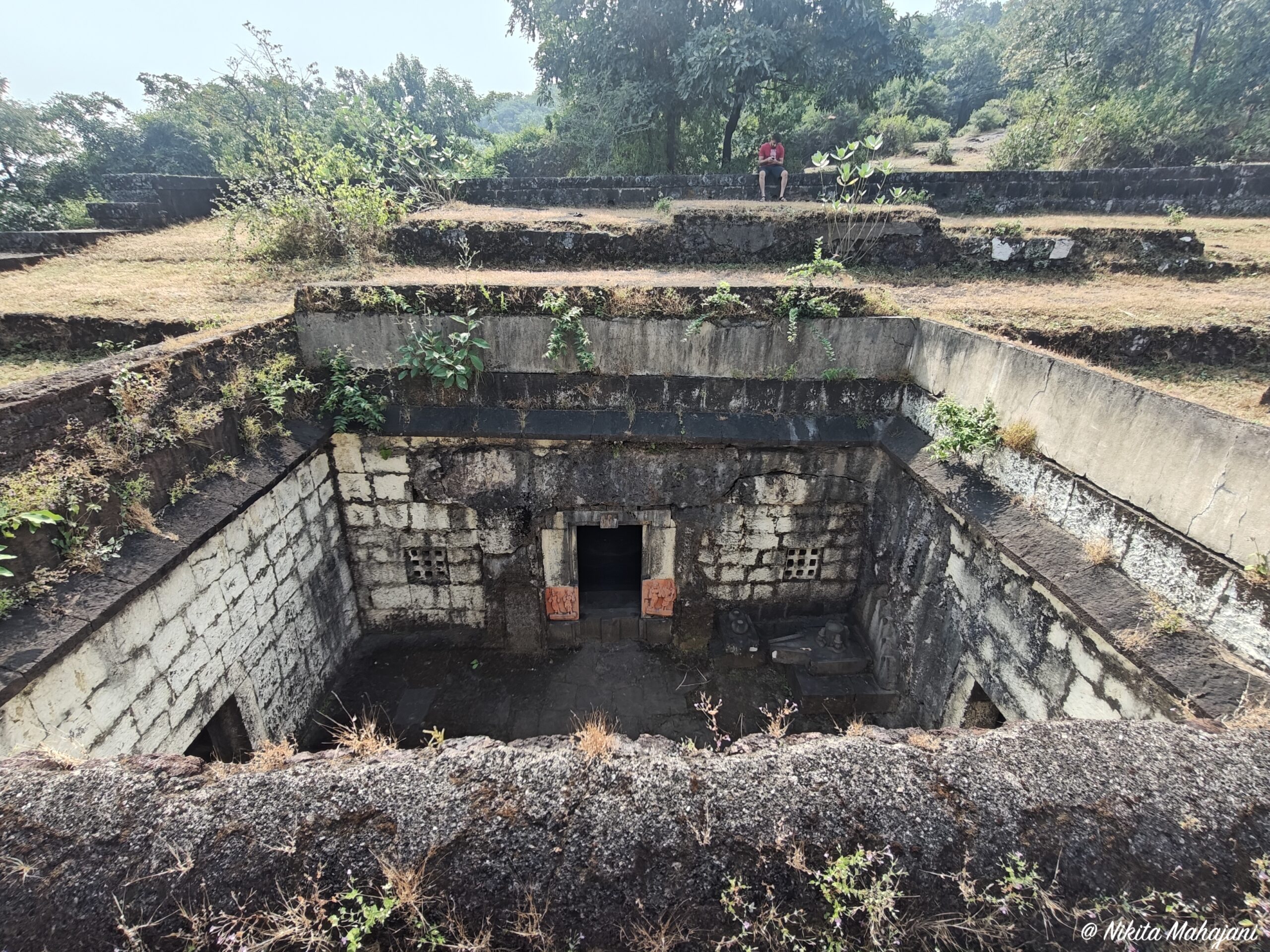
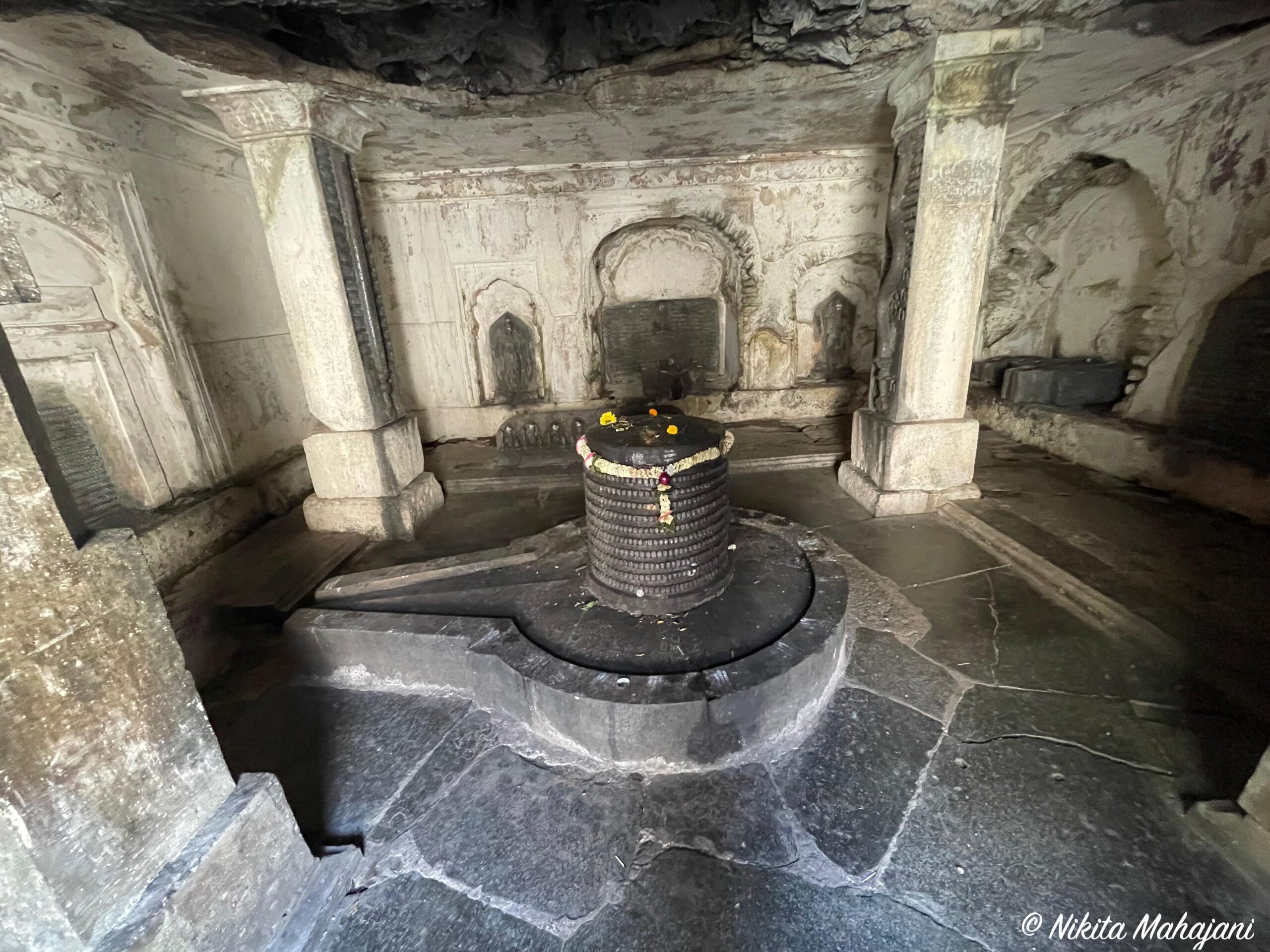
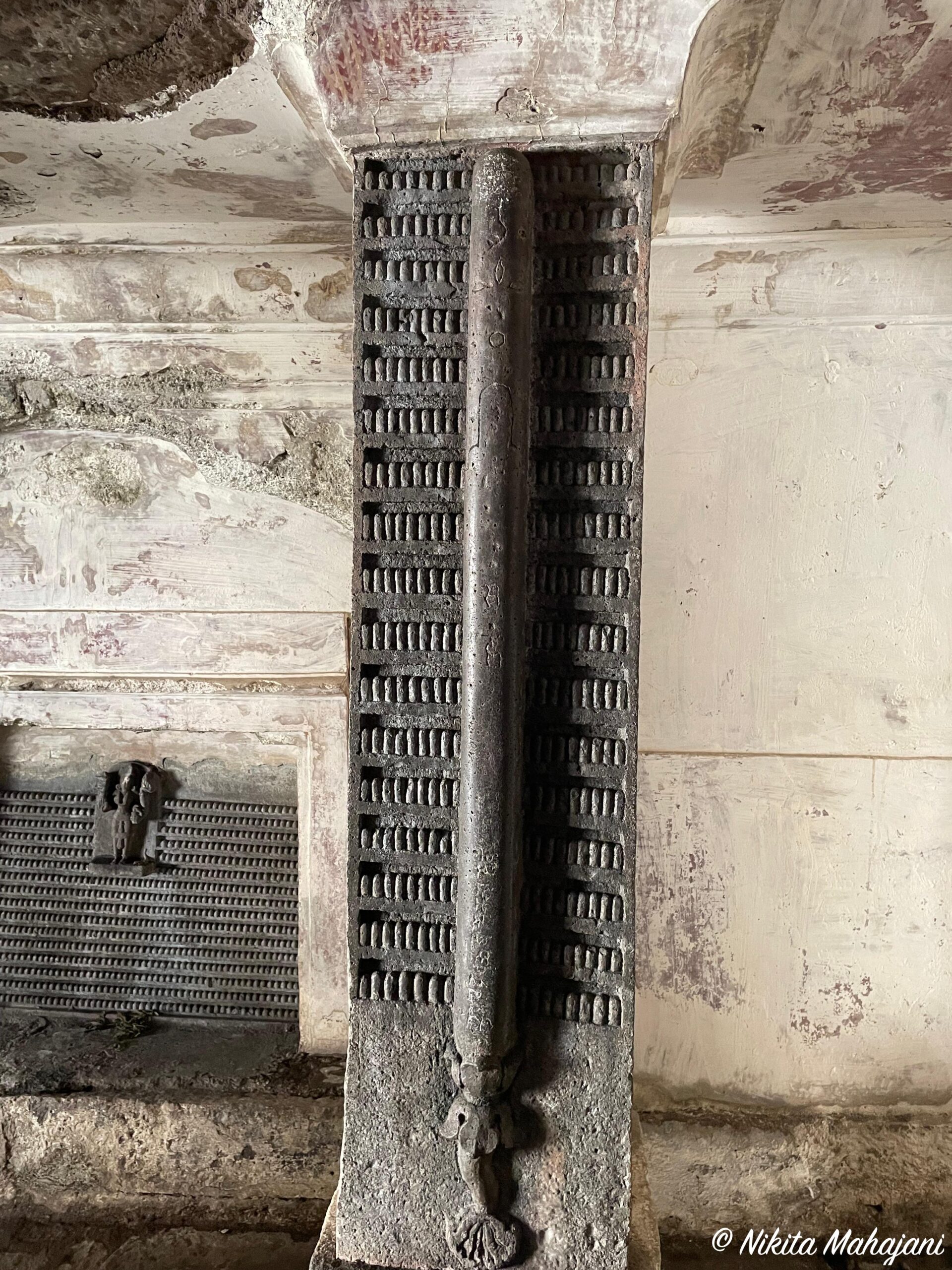
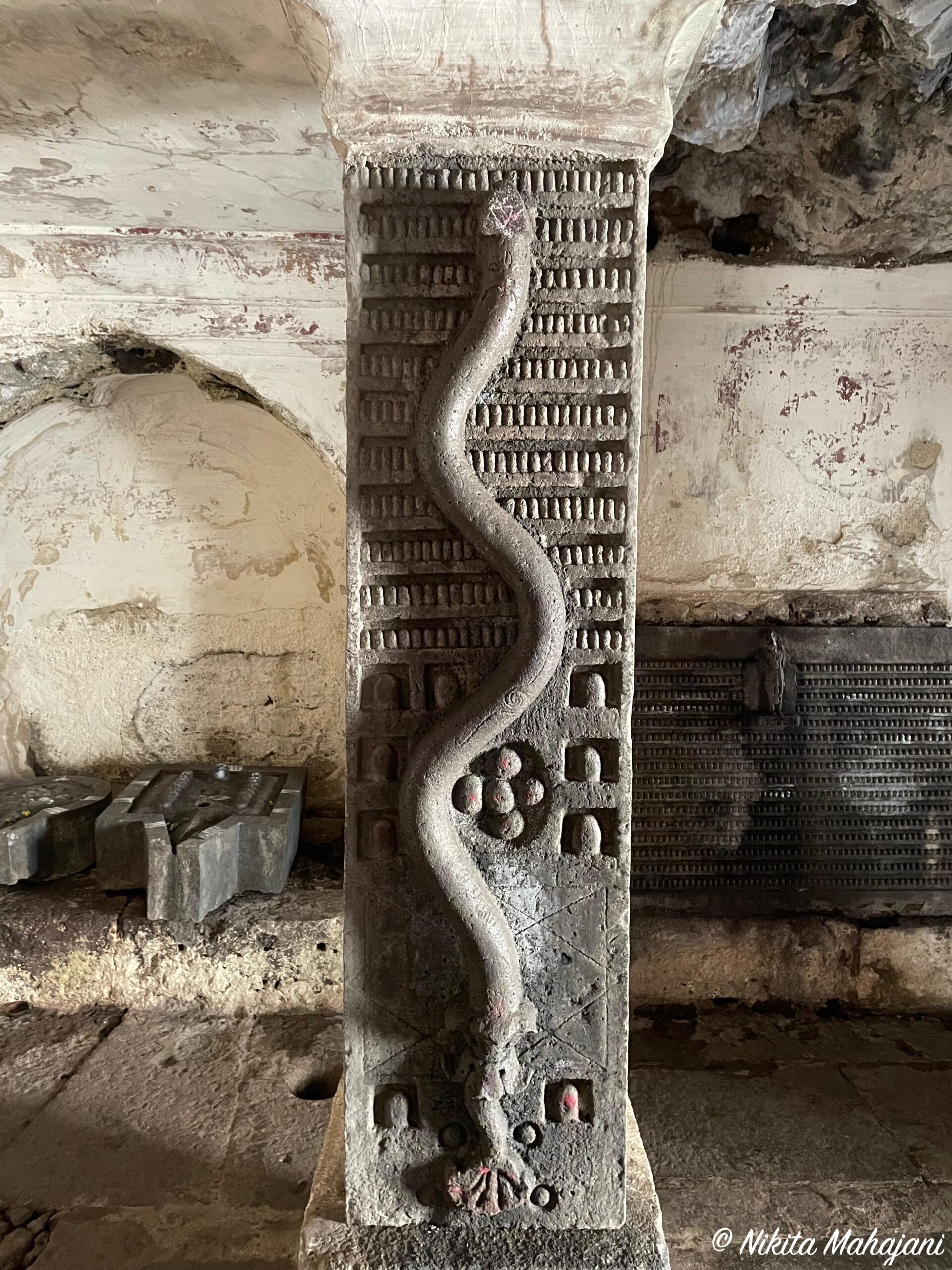
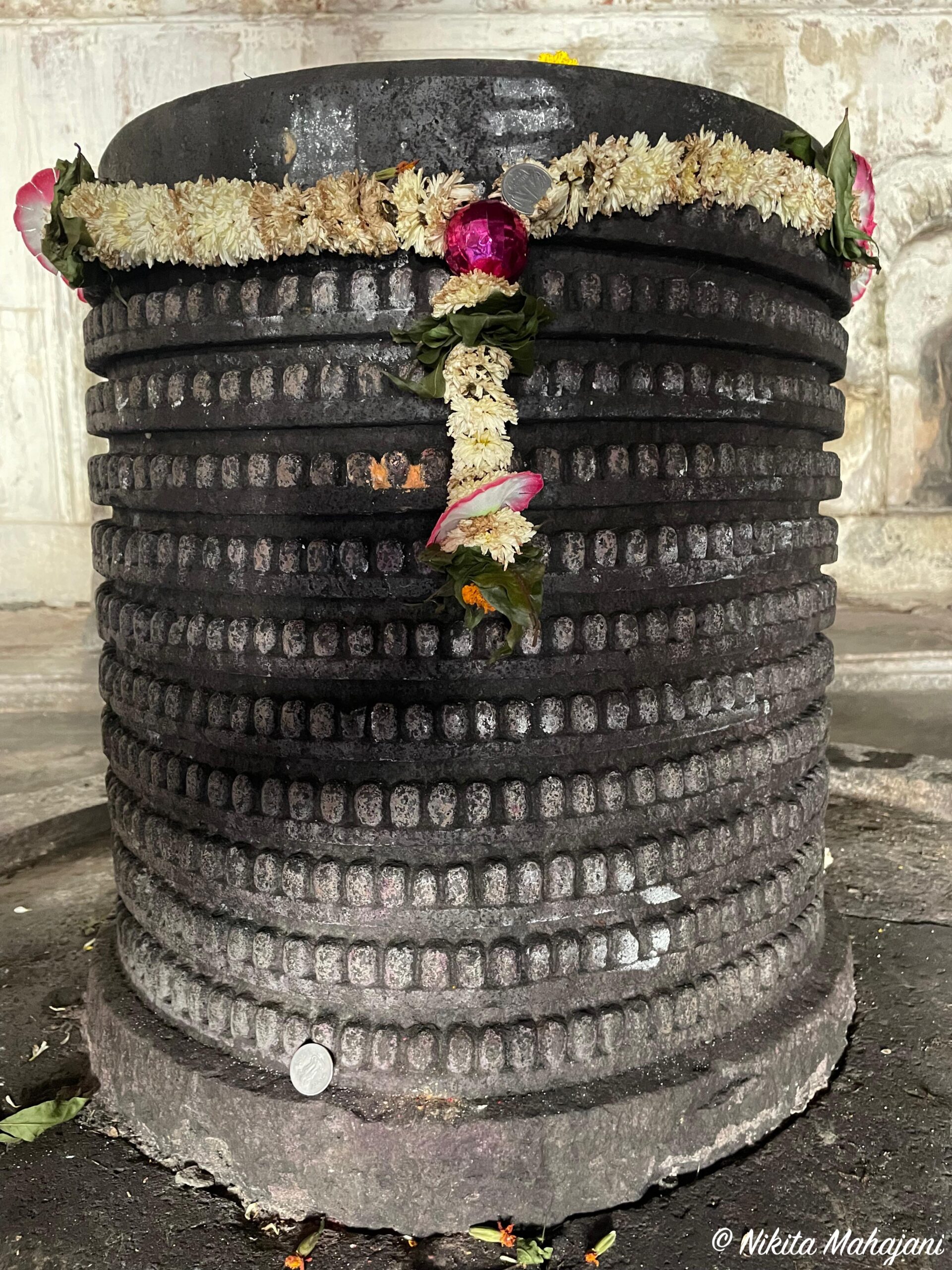
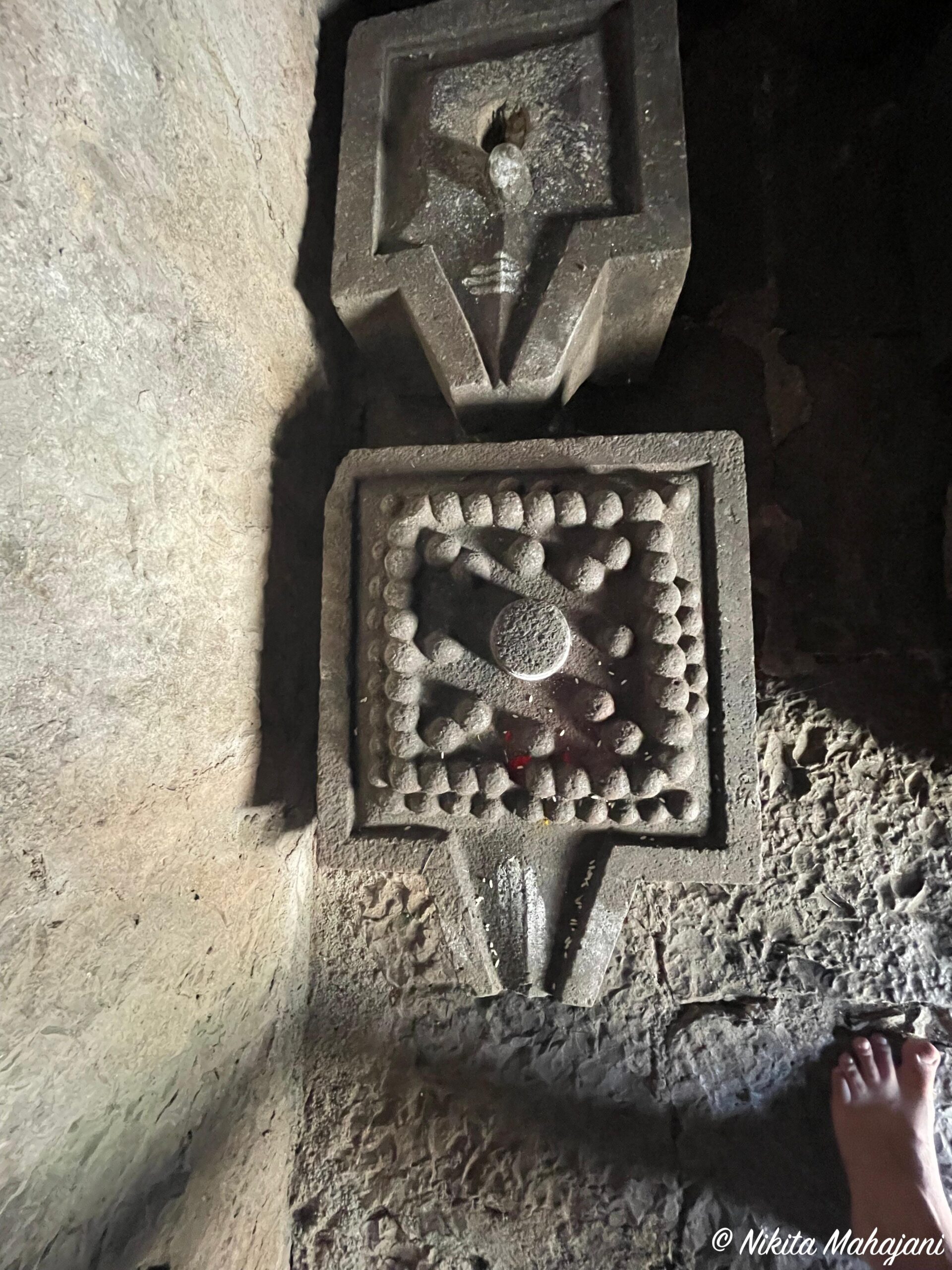
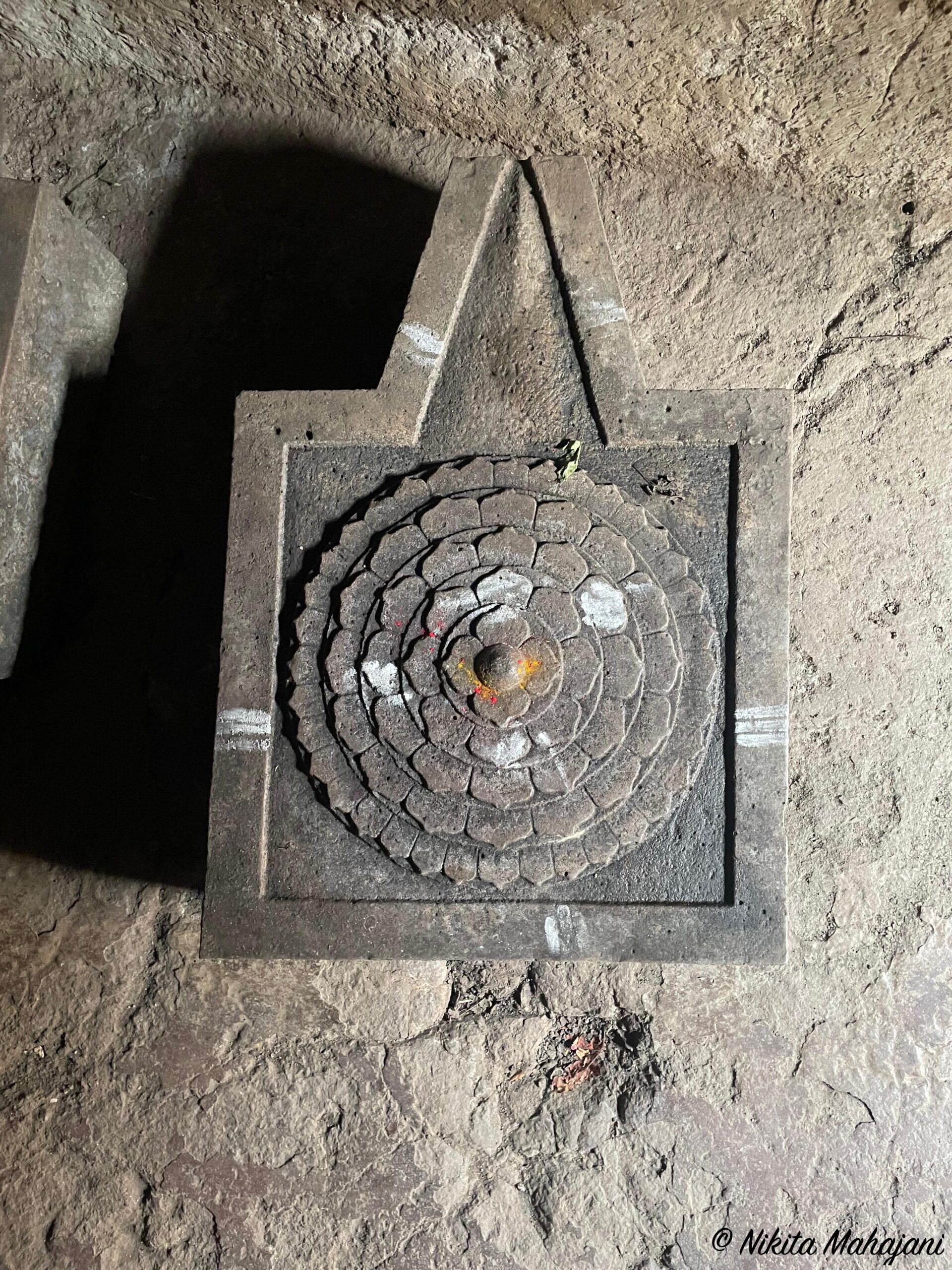
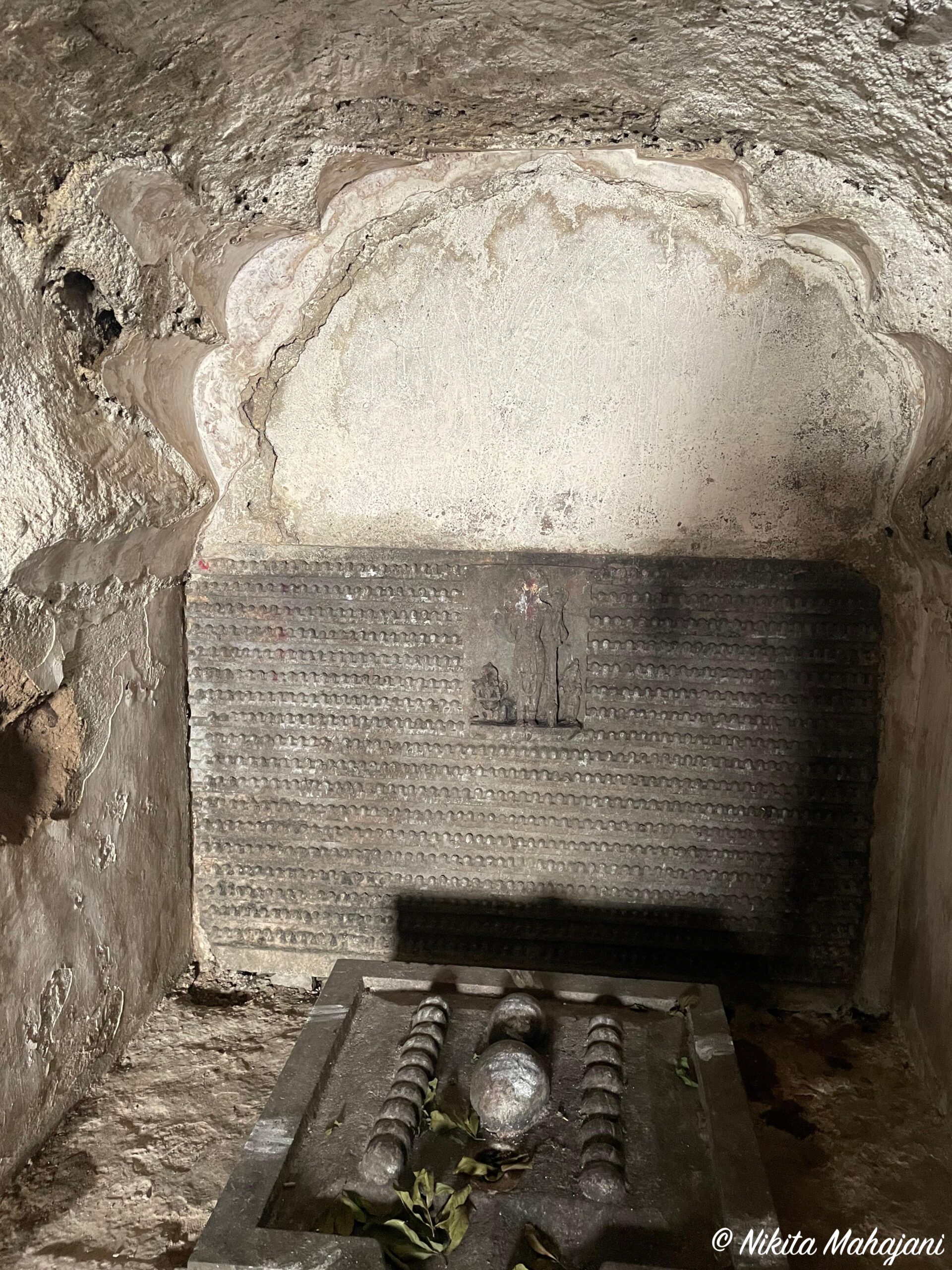
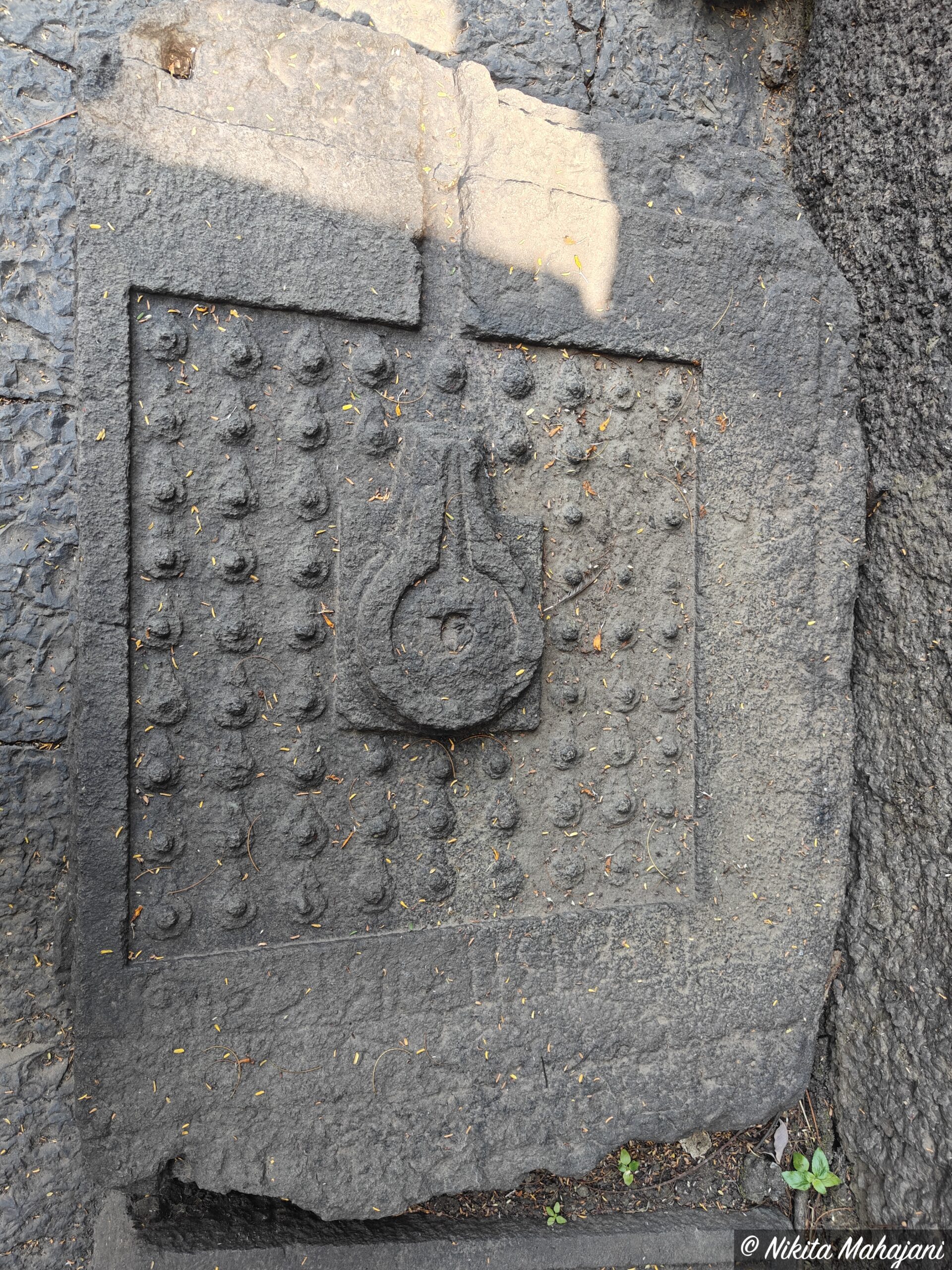
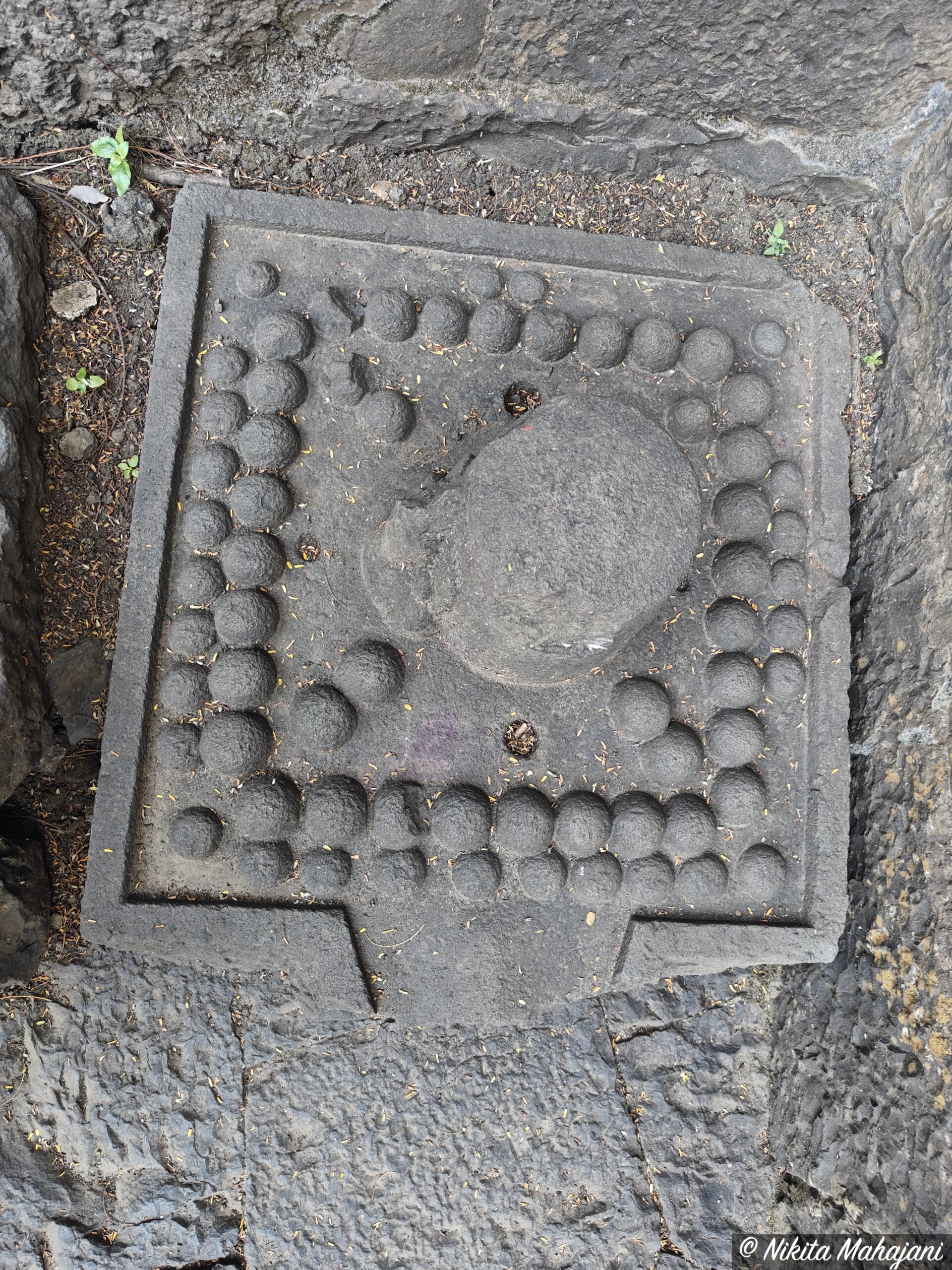
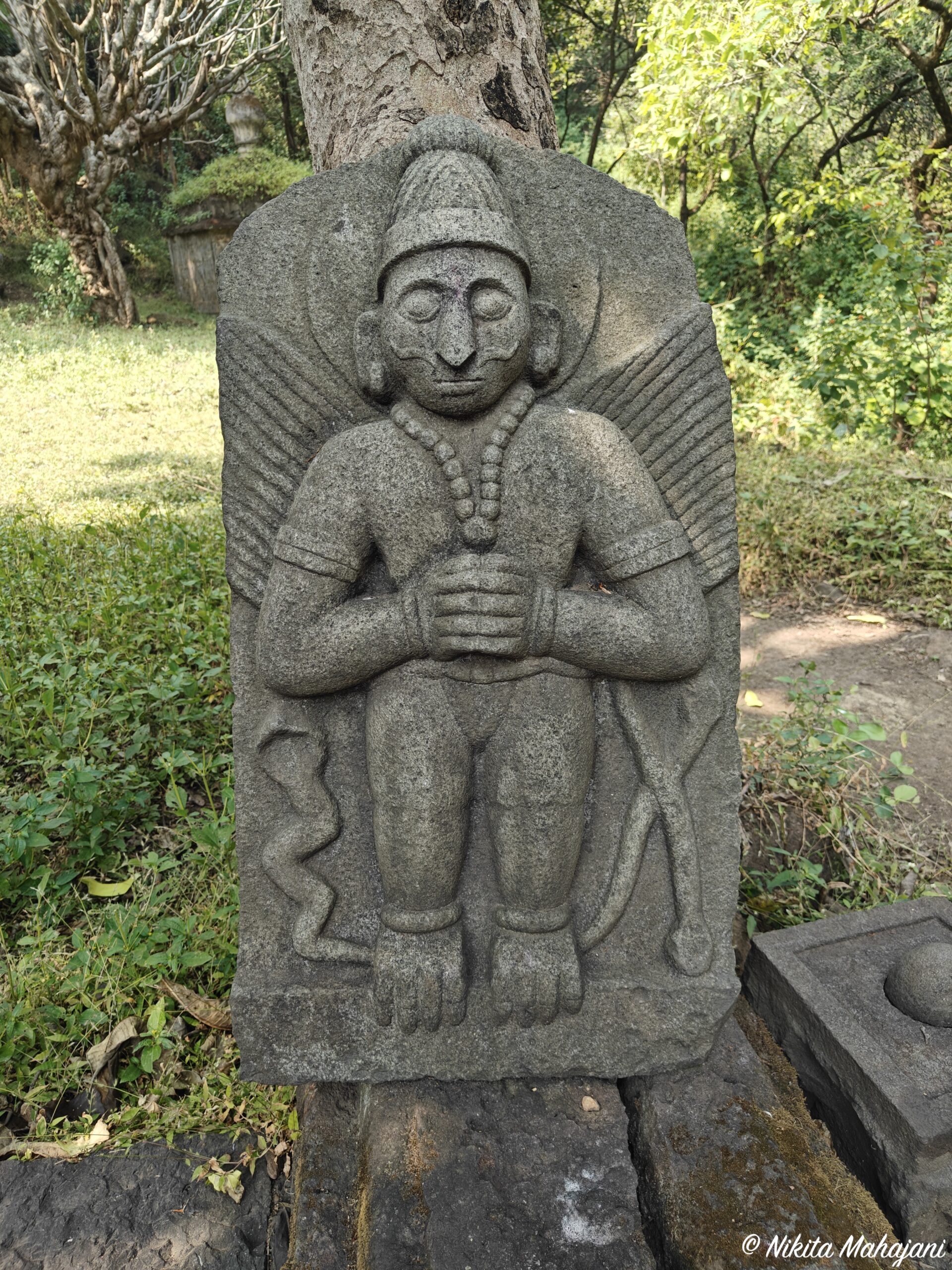
The temple is home to numerous ancient Mahadev pindis intricately carved in stone, showcasing a unique variety of Shivlingas rarely seen elsewhere. While coming back, we visited the main temple near the huge pond.
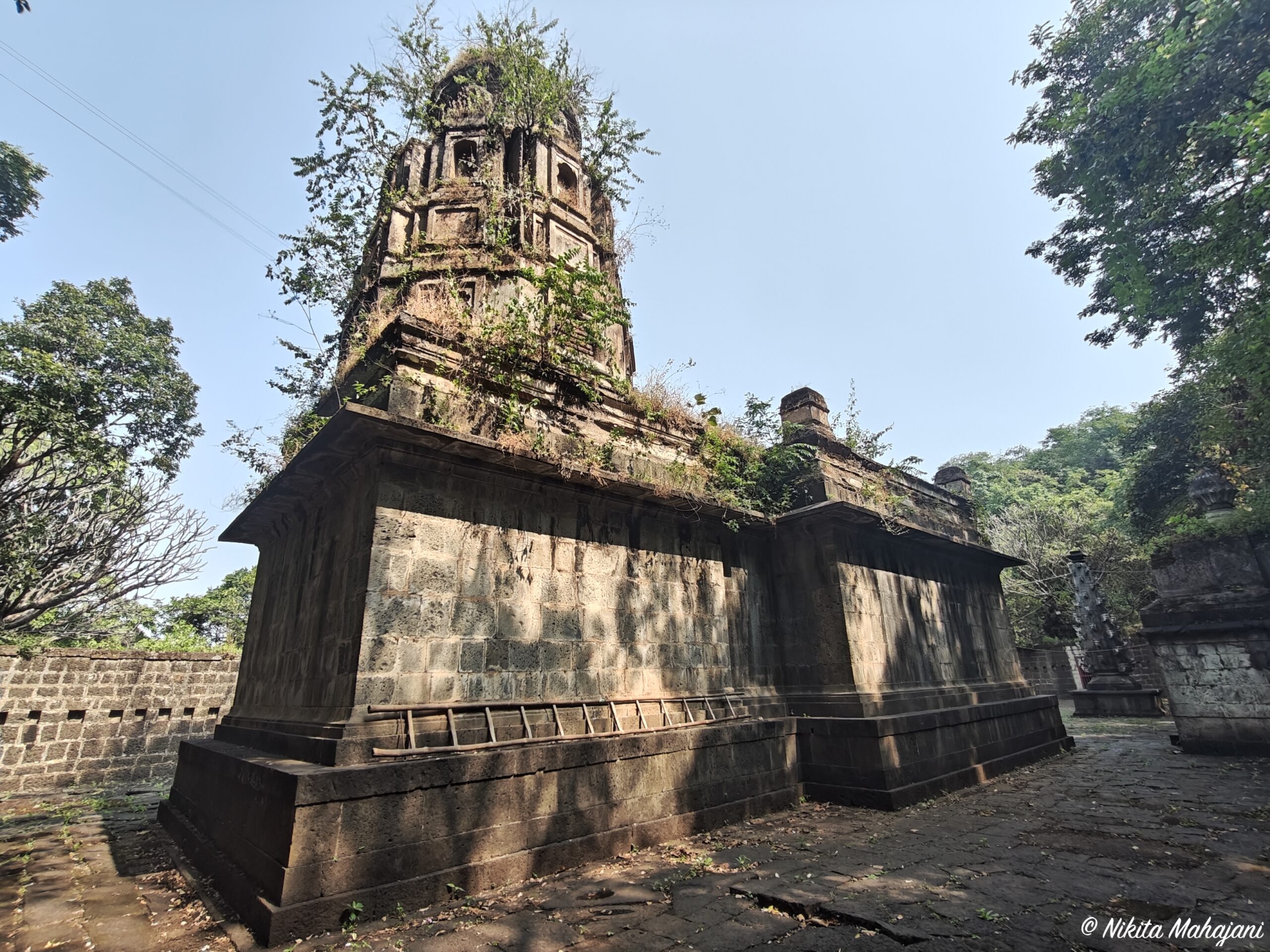
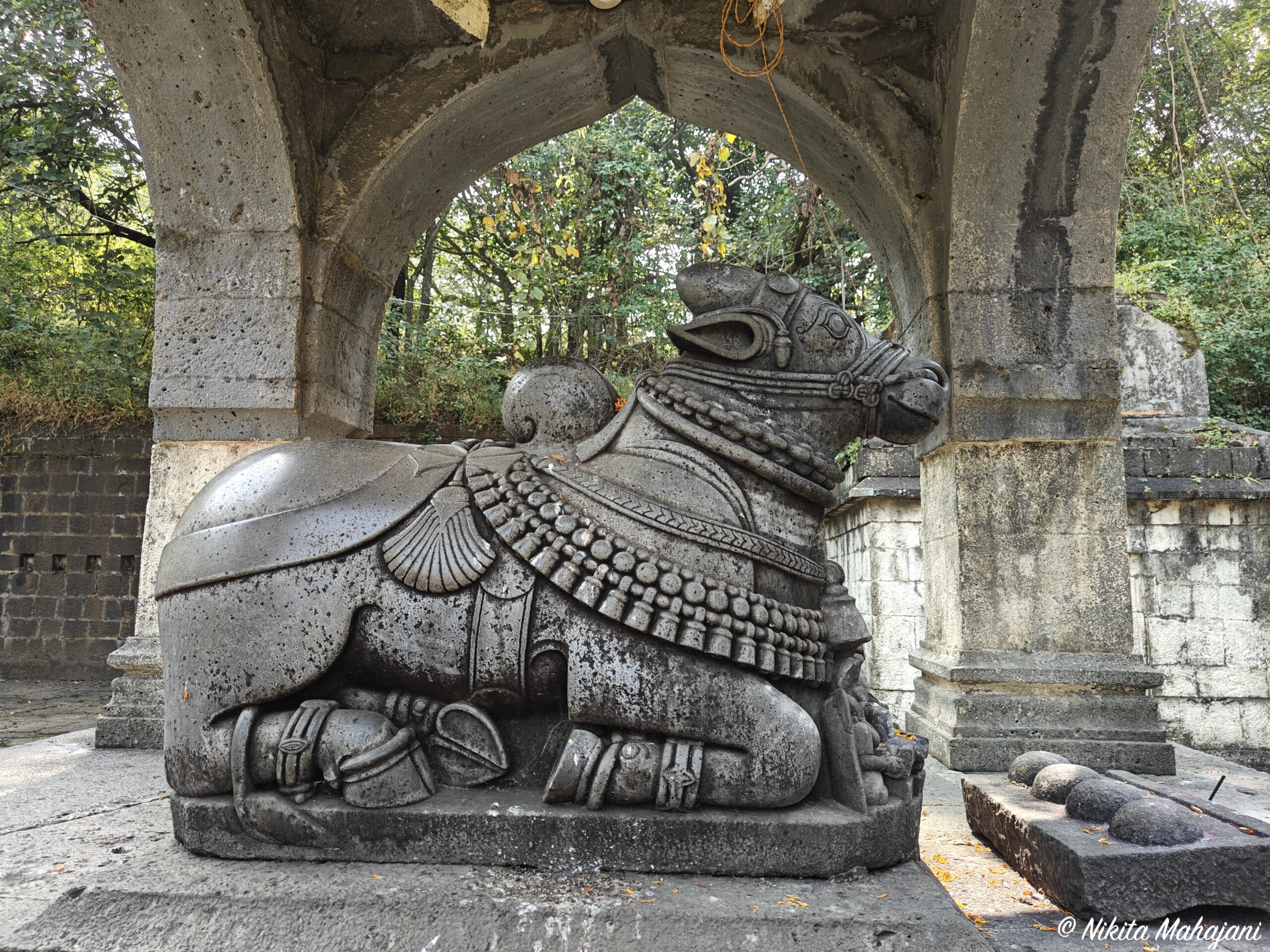
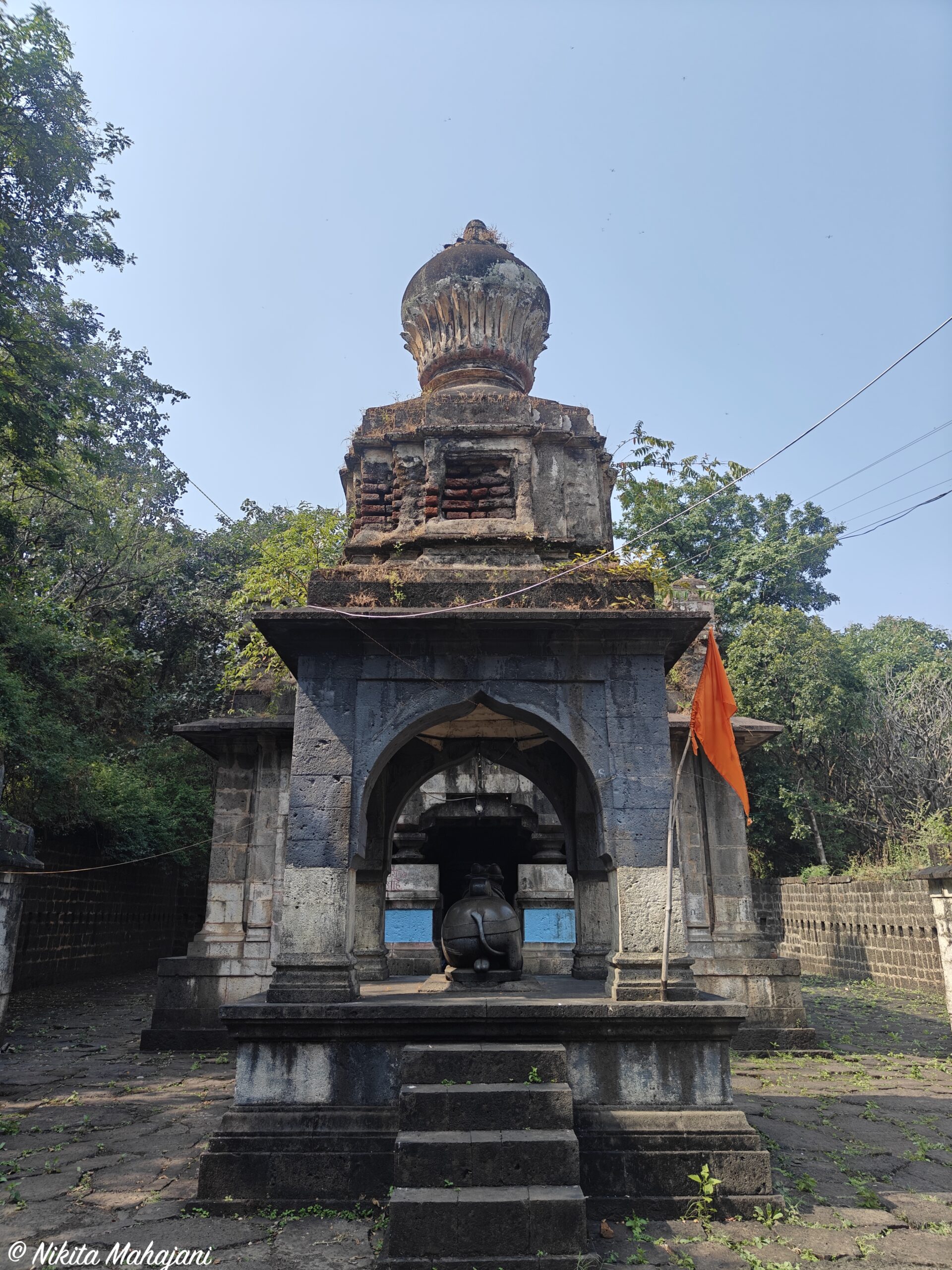
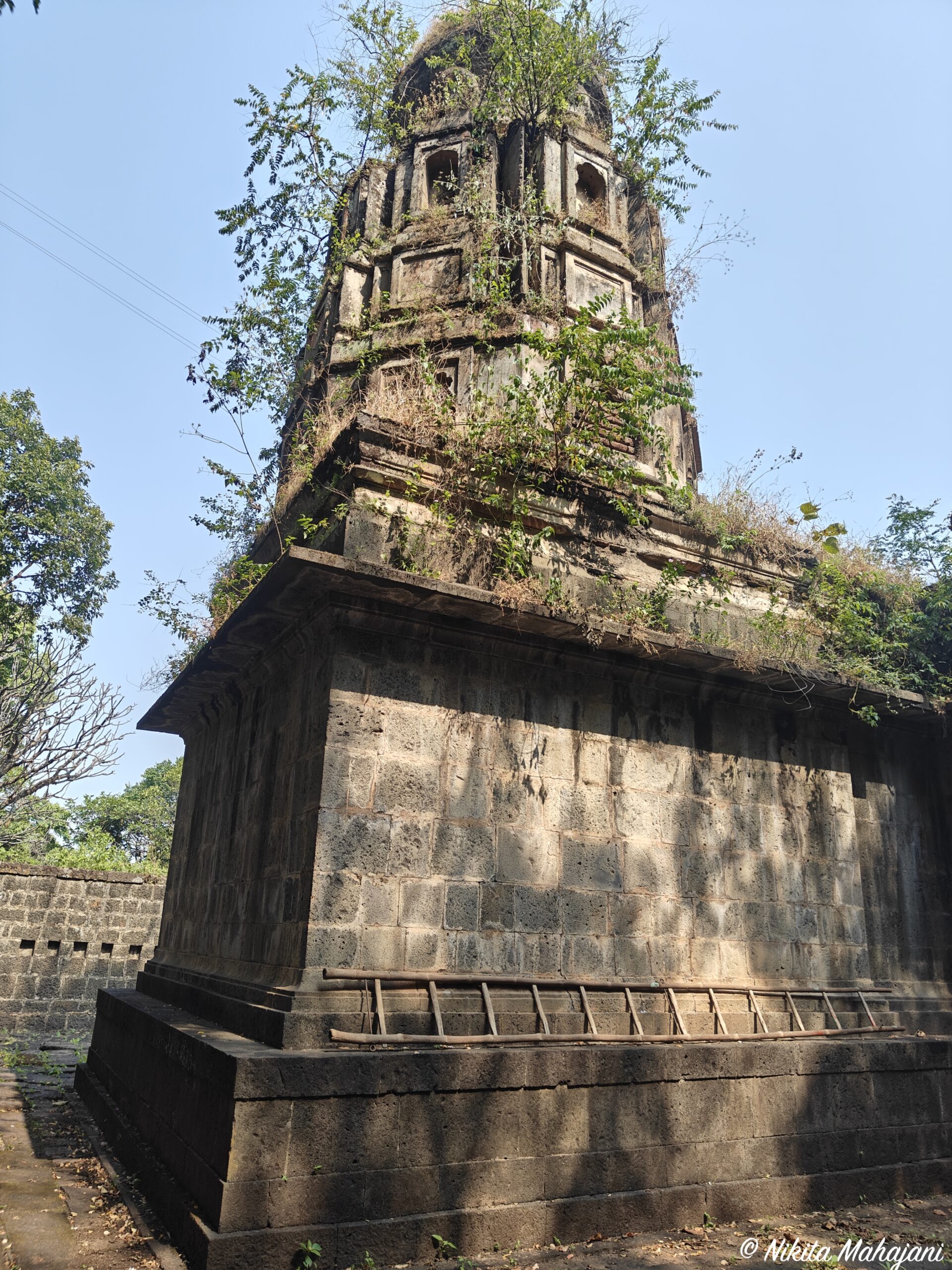
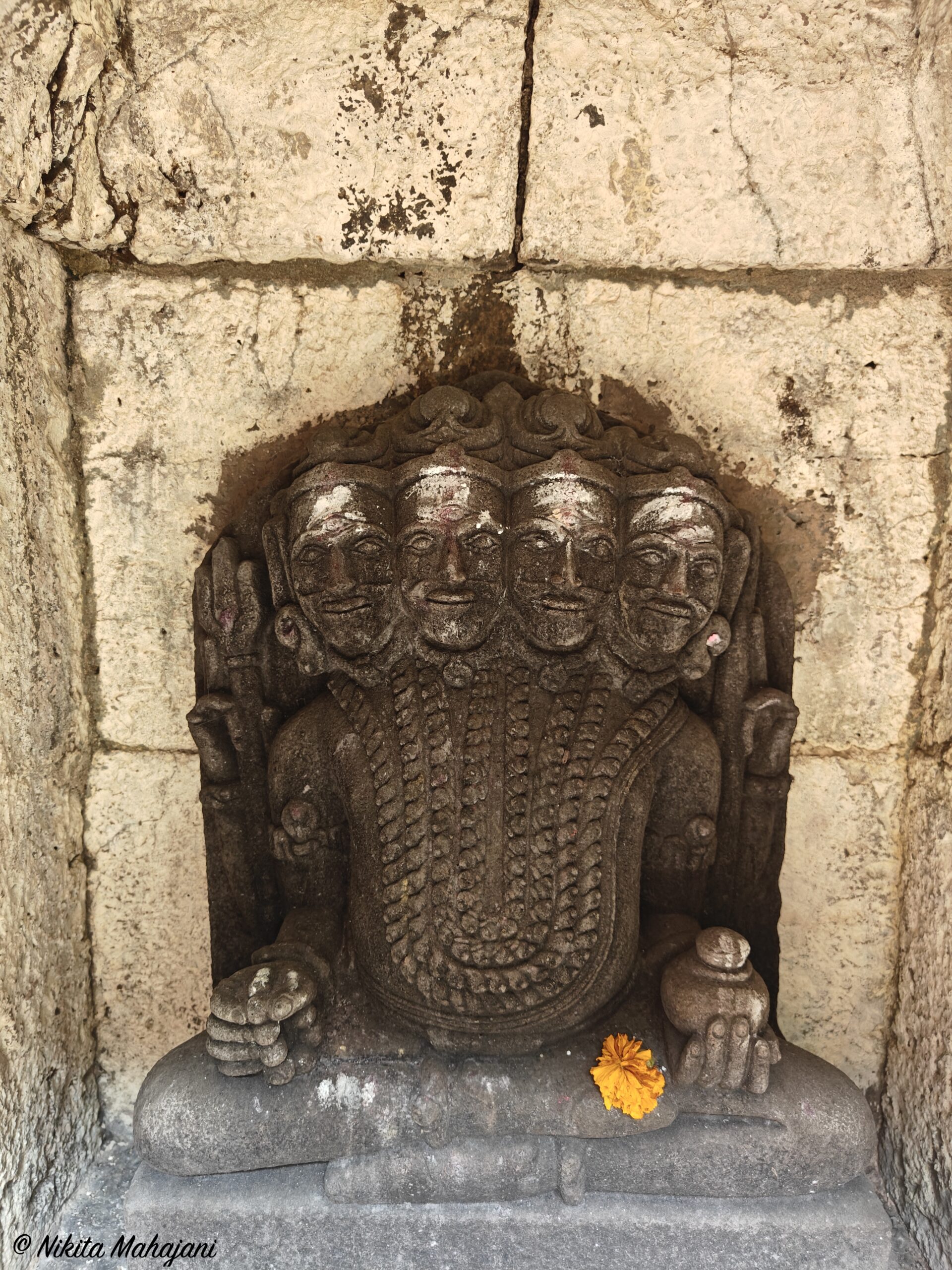
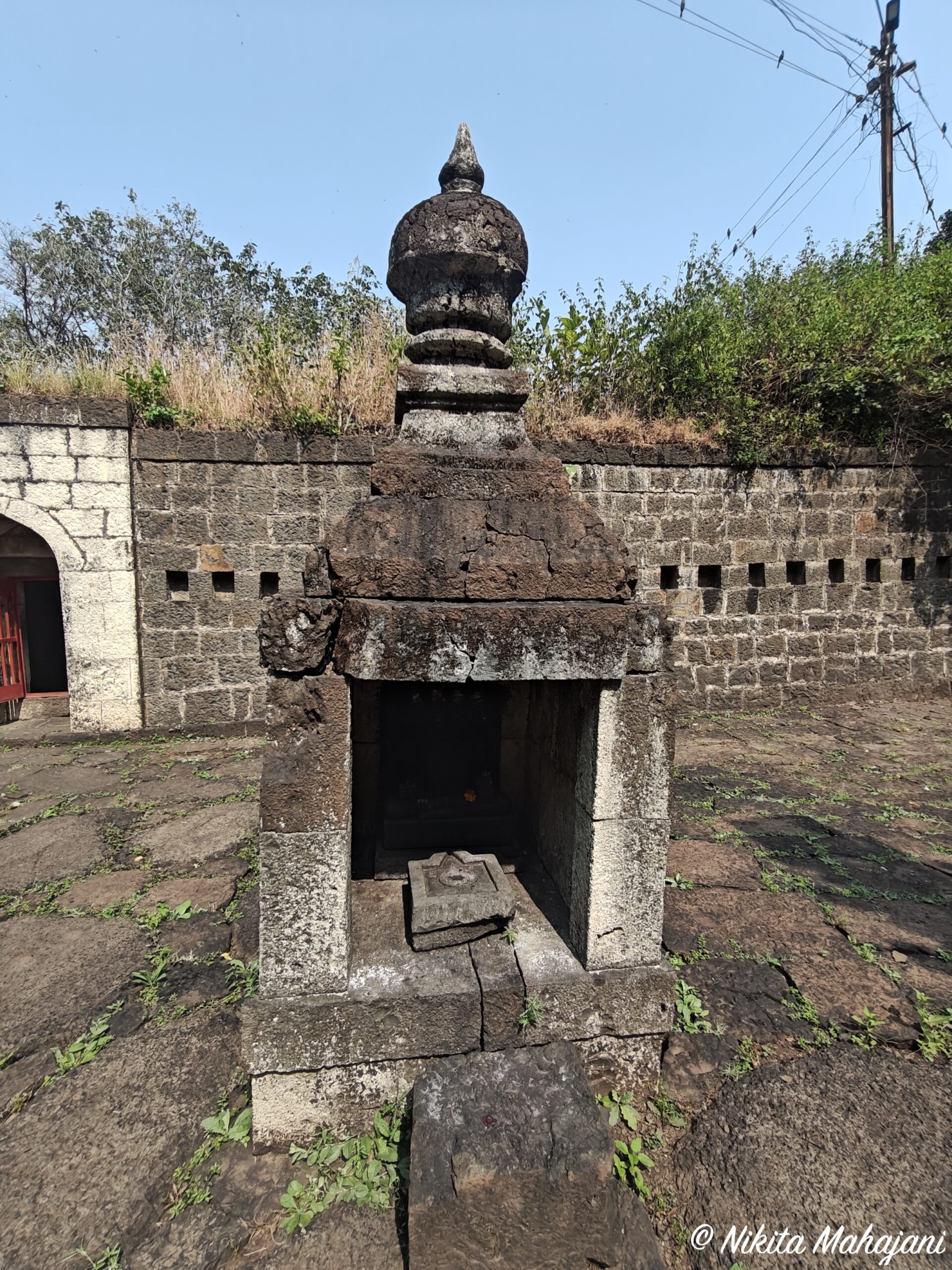
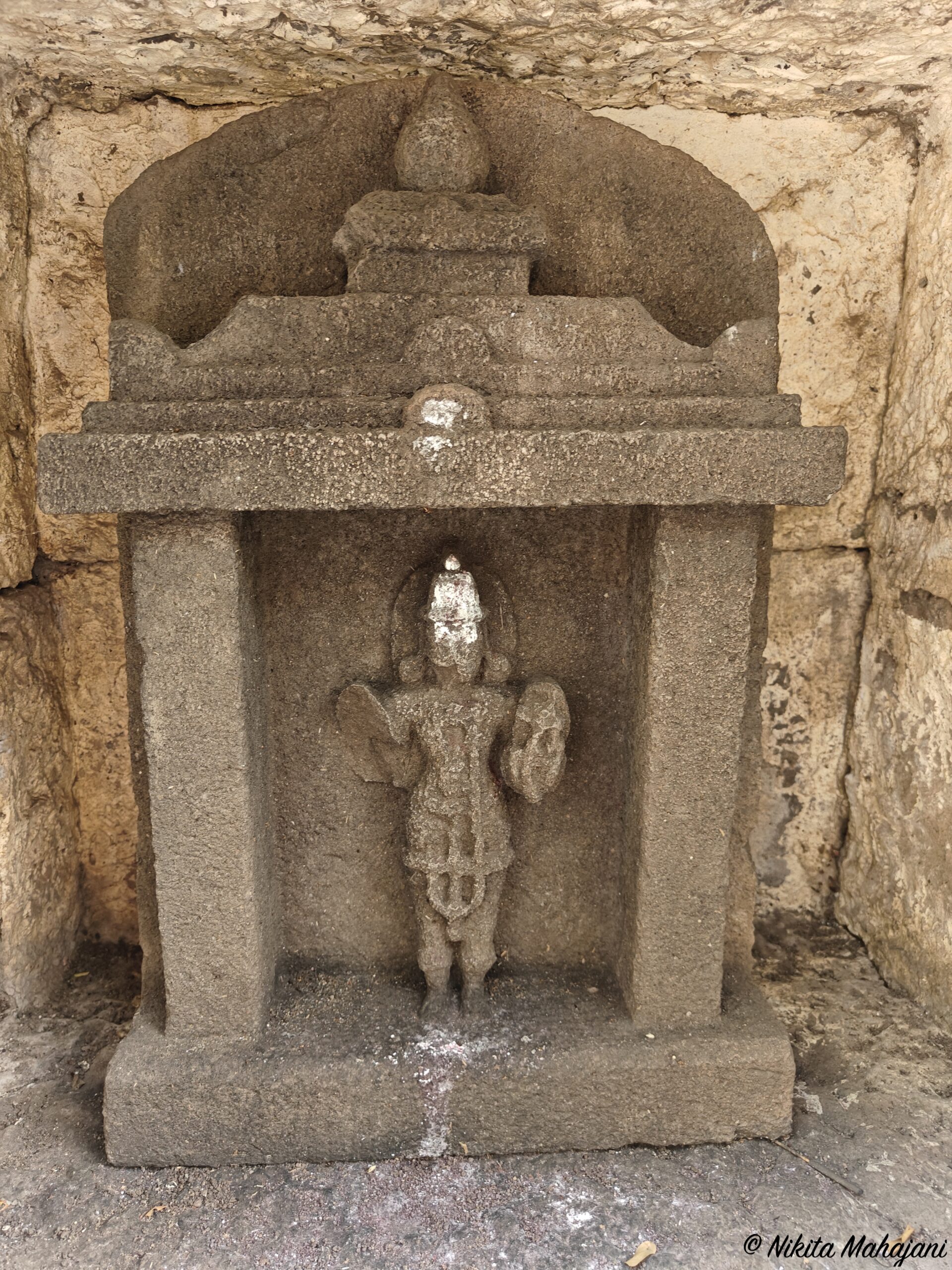
By this time I was super hungry and we still had to walk for 20
minutes to reach the parking. Fortunately, the temple caretakers offered
us food as naivedya, which typically includes dal, rice, and pickle. Sophie rested in the huge shade of the temple where we were having naivedya.
The care takers were kind enough to offer food to Sophie as well. This
mini meal gave me energy to complete the trek till the end. We reached
the parking at 1:00pm and drove back to Khandoli Nitin’s Canteen
again for lunch. In this second visit, the staff had become super
friendly with Sophie. They had realised that she is a well behaved dog.
They played with her and gave her complimentary scrambled egg. I also
had some ginger black tea that will keep me awake on our drive back to
Pune.
My house in Pune showed 99kms from Khandoli on Google maps. We
started our return journey to Pune at 4:00pm. We did not take any
breaks on the way. We reached Pune by 6:00pm.
Satara offered the
perfect blend of history, nature, and hospitality for our little family.
Watching Sophie explore new terrains and enjoy the journey alongside us
made this trip truly memorable. If you’re planning a pet-friendly road
trip, Satara should be on your list!
Where did we stay ?
Hotel Sunny Executive, Satara
Where did we eat?
Kailas Bhel, Shivapur.
Kailas Bhel Food Court, Varve.
Khandoli Nitin’s Canteen, Satara (pets allowed only on request)
Hotel Sunny Executive, Satara.


.jpg)


No comments:
Post a Comment
Note: Only a member of this blog may post a comment.