NAMES OF CITIES IN ANCIENT KASHMIR


The system of naming towns and cities followed in ancient Kashmir preserved a genuine tradition regarding their founder. The appellation “Pura” is attached to the name of the founder. In the cases of religious structures, terms indicating the deity or the object to which the building was dedicated follow. Some examples are:-
( Avtar Mota )
SIX VIEWS NEAR BOW BRIDGE INSIDE CENTRAL PARK, NEW YORK


A VISIT TO VENKATESWARA BALA JI TEMPLE BRIDGETOWN ,NEW JERSEY


VISIT TO VENKATESWARA BALAJI ( VISHNU ) TEMPLE, BRIDGEWATER, JERSEY STATE , USA.
Sandeep Mota and his wife took us to another grand temple
today. Known as Venkateswara Bala Ji Temple, it is a new temple built in
Dravidian style of Temple Architecture with two imposing white
Gopurams .The Gopuram refers to the pyramidal-shaped tower at the temple
entrance ,an important feature in South Indian temples.A Gopuram is
not seen in Nagara style Temple Architecture of North India . style?
Nagara architecture originated in northern India and spread to other
parts of the subcontinent. It is characterised
by its tall, pyramidal towers called Shikharas. These are topped by a
bulbous finial called a Kalasha.Laxminarayan Temple of Delhi Is a
perfect example of Nagara style of architecture .The Kandariya Mahadeva Temple,Khajuraho is perhaps the best example of Nagara style. We have mixed style temples also .Vesara is
a hybrid form of Indian temple architecture that combines Dravidian
Southern Indian site layouts with shape details characteristic of the
Nagara style of North India. This fusion style likely originated in the
historic architecture schools of the Dharwad region in Karnataka.The
trend was started by the Chalukyas of Badami (500-753AD) who built temples in a style that was essentially a mixture of the Nagara and the Dravida styles.
In the temples of South India, a Gopuram serves as the
entrance to the temple compound through the surrounding walls. From
tall, intricately carved gopurams to majestic pillars , the beautiful
temples in South India are rich in legend and stunning in their grandeur.In south India, Hindu temples share common architectural elements, including a
main entrance (Gopuram), a central shrine (Garbhagriha), an outer hall
(Mandapa), and often a circumambulatory path around the sanctum.
Temples are adorned with intricate carvings, sculptures, and religious
symbolism.The Gopuram of a temple is often decorated with brightly
coloured tiles and sculptures. The temples are also typically built on a
large platform, with a series of smaller shrines surrounding the main
temple.
Spread over an area of 11000 square feet, this Ventateswara Bala Ji
Temple is just one hour's car drive from Jersey city in Waterbridge. The
Waterbridge town has a good population of Indians. Many Pakistanis also
reside over here . We also visited an Indian grocery store that had
spices and grocery products from India and Pakistan.
Entering through the Gopuram, we went up by a speeding lift . The Temple had two lifts each with a capacity of 10 to 12 persons .It was 8.30 am and the Abhishekam of the deity was being performed . We joined the ceremony and had Prasada. Inside the Mandapam, I saw small shrines with statues of Sri Ganesha, Radha Krishna, Shivlingam with Nandi,Sri Rama Darbaar, goddess Durga, goddess Lakshmi, goddess Saraswati , Bhidevi, Sridevi, Garuda, Satyanarayana, Anjaneya and some more Hindu deities . We were told that there are sixteen shrines with one dedicated to Navagrahas.
It was a pleasure to see another grand temple built by Hindus from Andhra Pradesh ,India in Jersey state . The main idol inside the sanctum sanctorum is of Venkateswara Swami . Venkateswara is a form of the Hindu deity Vishnu. He is also known as Venkatachalapati, Balaji, or Srinivasa, and is considered one of Vishnu's ten incarnations. Venkateswara is the preserver of the universe and represents the function of sustenance in creation.
On weekends lot of devotees and visitors come to this
place. There is enough parking place within the temple' premises. Tasty
South Indian snacks are available at the temple's canteen. The Temple
was built by a group of Indians who have settled in the US over a
period of time. The temple also provides a spacious hall for Indian
weddings.
This temple is being managed by polite and helpful
volunteers coming from Telugu speaking Hindu residents some of whom
are highly qualified professional living in the US.
While waiting for snacks in the Temple canteen, I met Vinayaka Reddy , 7
year old boy born and brought up in the US.This is my conversation
with him.
" Do you know any Mantra , Vinayaka ? "
" I know Gayatri Mantra. Mom taught me Shivyajur Mantra . Papa,Mama and grandpa recite it everyday ."
" Can you recite Shivyajur Mantra ?"
"Yes"
"Please do it for me "
" Karpura-gauraṁ karuṇa-avataaraṁ
sansaar-saram bhujagendra-haaram ..
sada-vasantam hṛdayaaravinde
Bhavam bhavani-sahitam namaami "
I could only bless Vinayaka. Great for little Vinayaka and his parents to remain grounded and connected to India and its civilisation .
( Avtar Mota )
MY NEW BOOK KASHMIR: THE CROWN JEWEL OF INDIC CIVILISATION (ELEVEN ESSAYS)

“KASHMIR: THE
CROWN JEWEL OF INDIC CIVILISATION” (Eleven Essays )
By Avtar Mota
Published in May
2024
Available
…Worldwide on Amazon and Flipkart
Price Rs460/=
https:// www.flipkart.com/kashmir/p/itm5d171938b80d4?pid=9798894155456&affid=editornoti
https:// notionpress.com/read/kashmir-the-crown-jewel-of-indic-civilisation
Canada…… https:// www.amazon.ca/dp/B0D45XXSMF
UK…………… https:// www.amazon.co.uk/dp/B0D45XXSMF
France ……….https://www. amazon.fr/dp/B0D45XXSMF
Australia ……..https:// www.amazon.com.au/dp/B0D45XXSMF

THREE EXCERPTS FROM THE BOOK
(1)
Excerpt from the essay ,” KALHANA PANDIT AND HIS RAJATARANGINI”
Kalhana had studied the "VikramankaDevaCaritam"
of Bilhana, a fellow-poet of his period. He has not at times refrained from
quoting his phraseology and style. Another earlier work which he has consulted
is Bana's "Harshacharita". It is a well-known fact that this
historical record of King Harsha-vardhana of Kanauj enjoyed popularity in
Kashmir as Mammata in his Kavyaprakasa has quoted a passage from it.
“
(2)
(2) Excerpt from the essay ,” ANCIENT MUSICAL INSTRUMENTS OF KASHMIR “
“Music has been a part of Kashmir’s
social life since ancient times. The earliest proof of the popularity of music
and dancing in Kashmir is provided by
the archaeology. One can find it in terracotta tiles recovered from
Harwan. A tile from Harwan shows three musicians while another shows a dancing
girl. The tile showing three musicians also shows a flute , cymbals and a pair
of drums . A musician playing on flute is visible on a carved stone of
Marttanda Sun Temple. During every
festivity, whether religious or semi-religious or seasonal (sowing, harvesting,
spring, and new snowfall), the main item of celebration has been music; vocal
and instrumental .The Nilamata Purana makes mention of professional singers and
dancers active in ancient Kashmir. The Nilamata Purana also makes mention
of Vadya ,Vaditra and Vadya
Bhanda as the category of key musical instruments . The Nilamata Purana makes mention of Anaddha (percussion) and
Tantri (string) instruments that were played on certain occasions. One can
quote the relevant Slokas from the Nilamata Purana as under:-
(a)
“Singing should
be carried on and the instruments Anaddha and Tantri should be played upon ,”…….( Sloka 687-88a)
(b)
“The musical
instrument Tantri should be played upon while he is being sent . O descendent
of Kasyapa , he must be followed the next day “….( Sloka 690)
If one reads Vishnudharmottara-Purana,a text popular
in ancient Kashmir,one finds mention of Ghana
( cymbal ) ,Vitata ( percussion ) ,Tata ( stringed instruments ) and Susira (
wind instruments ) . The
Natya-Shastra, classifies musical
instruments into four groups: tata vadya
(stringed instrument), sushira vadya
(wind instrument), avanaddha vadya
(percussion instrument) and ghana vadya (solid instrument). Every
myriad instrument invented since then fits into one of these four timeless
categories.”
(3)
(3) Excerpts from the essay, “KASHMIR’S
CONTRIBUTION TO THE SANSKRIT LITERATURE OF INDIA “
“The contribution of Kashmiris to the
Sanskrit literature of India remains unparalleled .Even the Chitrasutra part of Vishnudharmotrapuran is believed to
have been written by some Kashmiri Brahmin .The best commentators on Rasa and Dhvani theory of Natyashastra
have been Kashmiris. Sharangadeva , a Kashmiri , left the valley during the rule of the Lohara Kings . He
wrote Sangita- Ratnakara
and established himself as one of the most influential
medieval-era music theorists of the Indian subcontinent. Dāmodaragupta
virtually created a literary genre, by composing the erotic work called the Kuṭṭanīmata-Kavya.
In this work, satirical and didactic materials have been mixed.
Dāmodaragupta acquired recognition as a poet, which is evinced by the citation
of his verses, in works on rhetorics and anthologies.
One cannot but be overwhelmed by the fact that almost all the
major schools of Indian aesthetics were founded by Kashmiri theoriticians -the
Alamkara School by Bhamaha, Riti School by Vamana, Vakrokti School by Kuntaka,
Dhvani School by Anandavardhana and Auchitya School by Kshemendra.
Patanjali, the commentator of Panini's Astadhyayi (the first
treatise on Sanskrit Grammar) was a Kashmiri, and so was Pingala, the author of
Pingala Sutra (a treatise on metrics and prosody). There are many remarkable
writers of Kashmir who have contributed to scientific subjects like astronomy,
medicine, agriculture, architecture, and other arts. For instance, Charaka, the
author of a well-known medical treatise, Charaka Samhita, belonged to Kashmir.
A comprehensive Sanskrit treatise on Agricultural Science (Krisi Shastra),
namely Kasapa-munikathita-Kasyapiya-Krisi-sukti is ascribed to Kashyapa, a
well-known sage of Kashmir. The study of Poetics cannot be
perfect and complete without a mention of the Kavyaprakasa of Rajanaka Mammata which occupies a unique position
in it. That it is both popular and erudite is clear by the numerous references
to it by later writers. Śivasvāmin
composed the Kapphanabhyudaya,
in twenty cantos, another Mahākāvya produced in the land of Kashmir.Poet Jaynayaka, the writer of another
text (with a historical description) Prithvirajvijay,
was also a Kashmiri Brahmin.He came to Ajmer by obtaining the asylum in the
court of Prithviraj Chauhan .
Jaynayaka wrote a historical poem titled Prithvirajvijay,
where the victory of Prithviraj Chauhan over Muhammad Ghori in the first Battle
of Tarain (1191) was celebrated. Jayanayaka portrays Prithviraj as Sri Rama and
his wife as Sita.”
(AVTAR
MOTA )
This is what I B Zutshi writes about the book in his review...
BOOK REVIEW
KASHMIR : THE CROWN JEWEL OF INDIC CIVILIZATION
(Published in May 2024)
Author Avtar Mota
Distribution..Amazon / Flipkart. Worldwide
Price Rs 460/=
............................
Researching into roots of history and civilisation is not every body's cup of tea.
Working on such topics requires hard labour , intense research,linguistic skills , and historical knowledge .
Avtar Mota, a well known blogger, author,photographer and researcher possibly is most suitable person to work on such delicate subjects which deal with cultural and historical stories of people and their past .
One is bound to get trapped in emotions and subjectivity while working on subjects that constitute one's own past. It goes to the credit of Avtar Mota that he has not allowed himself to get swayed by emotions or lose objectivity . In the alternative , he has consistently upheld the available historical and other works, that are available on the subject that have been brought into the book under review .
The book remains Authors Magnum opus in the sense that it has not only consumed his five years of hard labour and his research faculties but his sensitivities as an author and researcher have been utilised to the full extent.The book has finally seen the light of the day.
The book exhaustively deals with the routes of Kashmir's civilisational march. These routed, as per the author remain twined with indic civilisation, to which Kashmir has contributed enormously.
Kashmir has produced many poets, critics, historians, aestheticians, logicians, chemists, musicians, rhetoricians, philosophers, grammarians, translators and Shaiva Darshana scholars right up to the 16th -century. Some among them rose to eminence the world over for their original contribution. We have shining examples of men like Rishi Vasugupta, Abhinavgupta, Khemraja, Utpaldeva, Kshemendra, Bilhana, Kalhana, Somadeva, Sharangadeva, Bhatta Narayana, Jayanta Bhatta, Rajanka Bhatta, Sivaswamin, Srivara, Bhallaṭa, Vamana, Jonaraja, Anandavardhana, Udbhata, Kuntala, Mahima Bhatta, Silhana, Abhinanda Bhatta, Panini,, Charaka, Bhamaha, Rudrata, Kuntaka, Mammaṭa, Dandin, Bhatta Nayaka, Bhatta Tauta, Ruyyaka, Muktakana, Jaynayaka, Damodaragupta, Mukula-Bhatta, Ratnaka, Jayaratha, Shobhakaramitra, Ghantaka, Kirtidhara, Harsata, and many more.
The Sanskrit poets and scholars from Kashmir have left nothing untouched for subsequent poets and scholars . Poetical works covering a wide diversity of themes viz; historical, religious, devotional, didactic, romantic, satirical and even erotic as well as philosophical treatises, expounding the views of a distinct school of Śhaivism that developed in Kashmir, works dealing with poetics and music, anthologies and lexicons, the works of the prolific writer Kṣhemendra, especially the Bṛhatkathāmañjarī and Somadeva’s Kathāsaritsāgara -all these and many other works on diverse topics, touching upon various aspects of human life constitute a rich legacy of which, any part of India may feel proud.
From scrutiny of some ancient texts from Kashmir, one comes to know that ancient temples in Kashmir were not only housing deities but were storehouses of paintings and manuscripts as well. They were the centres for the dissemination of religious thought, literature, music and other arts. When Temples of Avantipura, Vijyeshwara, Kali-Shri, Maha-Shri, Tarapida, Vishnu Ranaswamin, Marttanda, Parihaspura, Bhima-Keshva, Naran-nag, and many more were demolished, many precious manuscripts were also destroyed along with priceless paintings and sculptures. Unfortunately, most of the works of Sanskrit scholars from Kashmir faced neglect from every corner. Many were destroyed during the period of Sultans especially when Sikandar Butshikan put all his energy into the destruction and demolition of Temples of Kashmir.It goes to the credit of many Kashmiri Pandits who saved many manuscripts at their individual levels for many centuries. The European scholars collected them from Kashmiri Pandit households, got them translated and shifted them to museums and libraries for proper custody.
From the book one comes to know that the Natya-Shastra guidelines have Influenced the sculpture art in ancient Kashmir. So have the Gandhra and Gupta styles influenced Kashmir’s art and sculpture. The Shilpshatra, Vastu-shastra and temple architecture of ancient India influenced the structural style of Kashmirian temples. This is starkly visible
in the demolished temple structures or ruins or sculptures retrieved from these structures and now lying in the SPS Museum, Srinagar and many other museums within the country and the world over. The Chitrasutra guidelines were also implemented in ancient Kashmiri Paintings. The Bhumishoba ( known as Vyoog in Kashmiri ) and Grihshobha ( known as Krool in Kashmiri ) decorations and paintings of ancient India are still in vogue among the Kashmiri Pandits even in their exile.
According to Avtar Mota, 'if the contribution of Kashmiri Pandits to the Sanskrit Literature of the world is removed, more than fifty percent of Sanskrit Literature of the world will be removed ' .The ancient musical instruments of Kashmir, the sacred water bodies of Kashmir, the sacred trees of Kashmir, the journey of Kashmiri shawls to Europe and Russia, the contribution of Kashmiri artists for the development of Pahari Miniature Art in India, the contribution of Punjabi Khatris towards the development of trade and commerce in Kashmir, Vanvun singing of Kashmiris right from Vedic age and some more engrossing topics constitute the core topics of the book. The critical assessment of Kalhana's work as poet, historian and narrator is a master essay in this book. Not only is it eye-opener , it also throws bright light on hitherto unknown facets of Kalhana's creativity.
The topics in the book have been dealt purely from an academician's and researcher's point of view. Those interested in Kashmiri culture and its contribution to the indic civilisational ethos may find this book Illuminating. Those peddling fake or false narratives need also to read it to know the truth.
The book is available in india at http: www.amzon.in/dp/BOD4M6TNR3
( IB Zutshi )
This is what Prof Ratan Parimoo writes about the book
"
Congratulations for your great book, "Kashmir: The Crown Jewel of
Indic Civilization". It is truly a great book and deserves a larger
and impressive format. Lot of wonderful information about Kashmir 's
past which will make every Kashmiri feel proud about our rich heritage,
establishing integrated relation with Indian culture. Explanation of
Tarkhan was very revealing. You have also shown that 'oral history '
and 'racial Memory' are equally valid in academic research. It has
indeed been a happy absorbing reading. " .......*Ratan Parimoo
PS
*Prof.
Ratan Parimoo is one of India’s leading art historians as well as an
accomplished painter and teacher. Beyond his post at M.S. University,
Baroda, as a professor of Art History and Aesthetics and the dean of the
department for twenty five years, Prof. Parimoo has been shaping modern
art discourse in the country since he was a young man. In 1956, he
cofounded the Baroda Group of Artists with peers including G.R. Santosh,
K.G. Subramanyan, Shanti Dave, N.S. Bendre, and Jyoti Bhatt, to expand
on the postcolonial aesthetics piloted in Santiniketan the previous
decade and evolve the meaning of contemporary art in India by
integrating living traditions with modern techniques.
This is what eminent scholar , Dr SS Toshakhani writes about the book :-
"Received a copy of your brilliantly written book ‘Kashmir: The Crown Jewel of Indic Civilisation’ All the essays are well researched and intellectually stimulating. Feel happy that I have a whole shelf of your books now."
PS
Dr. S. S. Toshakhani is a noted scholar, author , poet and critic from Kashmir, known for his extensive contributions to Kashmiri literature and culture. His works often delve into the rich heritage of Kashmir, exploring its literary traditions, historical narratives, and cultural dynamics. Dr. Toshakhani has been influential in preserving and promoting the linguistic and cultural identity of Kashmir through his scholarly writings, research, and educational endeavours.
SOME SACRED MOUNTAIN PEAKS OF KASHMIR


ABNINDRANATH TAGORE ( 1871-1951 ) AND BENGAL SCHOOL OF ART.


.jpeg)
THE GREEN SOUR PLUM OR GORDOUL OF KASHMIR


JAMMU CULINARY VARIETIES..
.jpeg)

SANSKRIT AND KASHMIR …II


.jpeg)
.jpeg)
( A portrait of Anandavardhana )

SANSKRIT AND KASHMIR..I

TULIP GARDEN OF SRINAGAR OPENS FOR PUBLIC
.jpeg)
ACHARYA UDBHATA (750-800 A D ) OF KASHMIR

THE UNSUNG ACHARYA UDBHATA (750-800 A D ) OF KASHMIR
“Not writing poetry is no crime; it won’t cause illness or lead to punishment; but writing bad poetry is a living death.”…( Acharya Bhamaha of Kashmir in Kaavyaalamkaara)
K S Nagarajan in his book, “Contribution of Kashmir to the Sanskrit Literature ” writes this :-
“The credit of presenting a full-fledged picture of the Science of Poetics can be attributed, in a large measure, to Kashmir. Though the fundamentals in Poetics could he traced to works like the Agnipurana and Natya-shastra of Bharata, it is remarkable to note that all aspects of this science are elaborated and discussed in detail by Kashmirian authors. Original theories have been suggested and speculations worked out in such a manner that one is tempted to say that the Science of Poetics' in its entirety, is visible only in Kashmir. Every topic pertaining to the Science, like Alamkara, Rasa ,Riti or Dhvani was thoroughly discussed by Kashmirian scholars . Even grammatical points which would require attention while discussing the relation between Shabda and Artha were not lost sight of, though they had no direct connection with the subject.”
From the hoary antiquity, India produced poetical compositions in abundance. Especially, in case of Sanskrit poetical works, India is very much rich. Far ahead is the place of Kashmir in contribution to the Sanskrit literary productions. Not only in quantity and variety, in case of quality also, the land of Kashmir contributed immensely. The Kashmirian Sanskrit scholars have left practically no facet of life, outside the ambit of their writings. It needs to be known that the major schools of Indian Poetics are: Rasa, Alankara, Riti, Dhvani, Vakroki, and Auchitya. The rasa-dhvani-auchitya-vakratā quartet applicable to all arts took appropriate shape in Kashmir . Endless is the list of contributors from Kashmir to the Sanskrit literature , grammar , poetics , rhetoric, religious thought, and aesthetics of India . A few scholars in these categories could be named Rishi Vasugupta , Abhinavgupta , Khemraja , Kshemendra , Bilhana, Kalhana, Somadeva , Sharangadeva,Bhatta Narayana , Jayanta Bhatta,Rajanka Bhatta ,Ratnakara ,Sivaswamin,Srivara ,Bhallaṭa,Vamana,Jonaraja,Anandavardhana, Udbhata, Kuntala , Mahima Bhatta, Silhana,Abhinanda Bhatta, Panini, Bhatta Sambhu, Charaka, Bhamaha, Gopendra, Jalhana,Namisadhu, Rudrata, Kuntaka, Mammaṭa,Vallavadeva,Dandin,Vasunanda,Kavi Chandaka,Varahamihira , Utpala, Visakhila , Vamanagupta, Manoratha, Padmagupta, Ratnakara, Mukula Bhatta, Kumarila Bhatta, Poetess Vijjika, Sabaraswami, Bhatta Nayaka, Bhatta Tauta, Hemachandra, Vidyadhara,Rajashekhara,Narendra, Ruyyaka, Sri Shankuka, Sambhunatha , Sumatinatha , Lollata ,Somendra, Cakrapala, Muktakana, Bhogendra, Prakasendra, Rāmayaśas,Jaynayaka, Damodaragupta, Mukula-bhatta, Jayaratha,Shobhakaramitra,Ghantaka, Lollata,Kirtidhara, Harsata, Rajanaka-Tilaka,Rajanaka-Ratankantha. For this write-up, let me take up one ,the unsung Acharya Udbhata .
Acharya Udbhata is a well studied Kashmirian writer on Poetics and a great literary theorists. Very little is known about his parentage. Kashmirian tradition identifies him as a great scholar who was the President of the Royal Council in the court of King Jayapida of Kashmir. Udbhata and Vamana were in the service of King Jayapida of Kashmir (Ca. 776-807 AD). Udbhata followed Bhamaha ; while Vamana followed Dandin. According to some scholars , while Vamana was a minister, Udbhata was the President of the Royal Council and King Jaypida was reportedly paying him one lakh Dinaras a day as his remuneration. The most prosperous part of his activity appears to be during the earlier half of King Jayapida’s long reign. He is quoted with great respect by later writers . Prof Daniel Holmes Ingalls , the well known Sanskrit scholar from America writes that Jayapida's court was responsible for birthing the "school of literary criticism in Kashmir “primarily through gems like Udbhata , Vamana , Damodargupta, and many more Sanskrit scholars .
Many reference surface up in texts of his period that mention that Udbhata has written a commentary titled Bhamaha-vivarana (also called Kavya-alankara-vivrti ), on Bhamaha’s Kavyalamkara. Like Abhinavgupta , he also wrote a commentary on Bharata’s Natyashastra. Both the works are not available now. He is also credited with a Kavya: Kumarasambhava written in Mahakavi Kalidasa’s style . Udbhata’s Bhamaha-vivarana, which is an explanation or commentary on Bhamaha’s Kavyalankara is said to have dealt mainly with Alamkara. In his explanations, he generally followed Bhamaha and his definitions of certain Poetic principles. What has come down to us is his Kavya-alamkara-sara- samgraha (a synopsis of the essence of Kavya Alamkara) clarifying the position of Alamkara principles that govern the Kavya. The Alamkaras that Udbhata talks about in his Kavya-alamkara-sara-sangraha are almost the same as those mentioned by Bhamaha in his Kavyalankara. Udbhata’s work gained great fame; almost overshadowing the original work of Bhamaha, perhaps because he remained focused on Alamkara and did not deviate into discussions on Guna / Dosha (grammatical purity) or such other elements of Kavya.

He expanded on the forms of Alamkara mentioned by Bhamaha. For instance; Bhamaha mentioned one kind of Atishayokti (hyperbole) while Udbhata distinguishes four varieties of it. Similarly, in place of Bhamaha’s two forms of Anuprasa (Alliteration), Udbhata describes four. He adds Drastanta (illustration) and Kavya-lingana (poetical reasoning -where the sense of a sentence or of a word is represented as a cause of something of which it becomes an attribute) to the forms of Alamkara-s mentioned by Bhamaha. While dealing with the varieties of Anuprasa, Udbhata recognises three different Vrttis or modes of expression. His classification of Alliterations into three classes was based on the ‘aural-effects’: primary alliterations classed as elegant (upa-nagarika); ordinary (gramya), and harsh (parashu).
Udbhata also brought into his work the element of analysis of the principles involved in the concepts. He explains the grammatical basis for different forms Upama (Similes). Here, he illustrates the forms of resemblance as qualified by different suffixes like – vat, – kyac, – kalpap etc. He also differs from Bhamaha on some minor points.
Udbhata’s contribution to the theory of Rasa (Rasa-vada) is more significant. He improved upon the elements of Rasa enumerated in Natyashastra. In his ‘Kavya-alamkara-sara-samgraha’ while discussing Rasa-vada-alamkara, the principles of Rasa in conjunction with the theories of Alamkara (santaḥ kavaya iti saṃbandhaḥ), he included the Shanta Rasa (tranquility) to the eight Rasa-s mentioned by Bharata. Later, Abhinavagupta elaborated on the theories of Rasa and accepted Shanta, suggested by Udbhata, as the primary or the fundamental Rasa from which all Rasa-s arise into which all Rasas subside.
Yigal Bronner , Associate Professor at the Hebrew University of Jerusalem, specializing in Sanskrit poetry and poetics , writes this about Kashmir’s Udbhata :-
“Contrary to the prevailing view, it needs to be pointed out that the big breakthrough of Kashmiri poetics took place, or at the very least decisively began, a generation or two before Ananadavardhana This breakthrough was led by Udbhaṭa (c.800) and, to a lesser extent, Vamana, his colleague at the court of Jayāpīḍa (r. 776-807), and Rudraṭa, who must have followed them by no more than a couple of decades. “As we learn from Kalhaṇa’s report, King Jayapida actively recruited intellectuals who belonged to a vast range of disciplines and philosophical schools in a way that may have encouraged an inter-disciplinary approach. Indeed, the court was highly tolerant of these scholars’ denominations, if not actively encouraging diversity in this area. For example, the list of Pandits of this king ends, or culminates, with the rising sun of the Buddhist scholar Dharmottara, who we directly influenced Vamana’s re-thinking of Alamkaras. It is perhaps not a coincidence that it was here, in this fertile setting that invited thinking across schools and theologies, that the erosion of boundaries between poetics and dramaturgy began, and that models from Mimamsa, Buddhist epistemology, and other disciplines began to be applied to the study of poetry.It was during this important phase that all the building blocks of Ānanda’s theory were introduced and Sanskrit poetics dramatically changed its course, as voices within the tradition testify. The genius of Ānanda’s Dhvanyāloka (Light on Suggestion –Dhvani) was in the perfect combination of his predecessors’ building blocks in a uniquely coherent and hence uniquely powerful – some would say too powerful – package or framework. Having said that; One needs to recognize that Sanskrit poetics underwent its pivotal turning point during Jayāpīḍa’s reign and under Udbhaṭa’s lead. It is this thinker whom Indologists have most misunderstood and neglected, partly, of course, because of the loss of the bulk of his corpus. But enough has been preserved or quoted to at least begin to understand his true impact.
According to Kalhaṇa’s account, which is unique in its wealth of details, the king appointed numerous poets’ laureate and even assigned some of them to high government posts. Indeed, the two highest offices went to the literary theorists who are the focus of this essay: Vamana, who was made a minister or ouncilor to the king (mantrin), and Udbhaṭa, who was installed as the chief scholar in his assembly (sabhāpati), the highest academic placement in the kingdom. Kalhaṇa even mentions Udbhaṭa’s astronomical remuneration in the only report in his chronicle of the wages paid to an academic: an extraordinary sum .”
The credit for making Udbhata known goes to G. Buhler who undertook , his famous tour in Kashmir in 1875, and brought to light many valuable works on poetry, rhetorics and history. of Kashmir. The credit of laying the plan for a systematic exposition of the Science of Poetics in Sanskrit literature goes (in some measure) primarily to Udbhata of Kashmir .
(Avtar Mota )
PS
Kashmir has made the largest contribution to poetics or Alamkarasastra (Rhetorics). The majority of famous rhetoricians of India belong to Kashmir. Vamana (7th century A.D.), the founder of the Riti School, wrote Kavyalankaravritti. Udbhatta (8th century A.D.), the expounder of the theory of three Vrittis, wrote Alankarasarasamgraha and Bhamavivarm. Rudratta (9th century), the expounder of the theory of three figures, wrote Kavyalankara. Anandavardhana (9th century), the founder of the School of Doctrine of Dhvani (Suggestion), wrote Dhvanyaloka. Mamatta (11th century), the upholder of the theory of Rasa (Sentiment), wrote Kavyaprakasa. Abhinavagupta (11th century), the expounder of the theory of Rasadhvam, wrote Dhvanyalokalohcana, Mahimbhatta, who held the view that Dhvani could always be reduced to inference, (Anumana), wrote Vyaktiviveka. Ruyyaka (12th century), who asserts Dhvanikara's view and accepts the principle of Vakroktijivita, wrote Alankara Sarvasva and a commentary on Kavyaprakasa. Ksemendra, who was both a poet and a critic, and laid down the theory that propriety is essential to sentiment, wrote Aucityavichara and Kavikanthabharana. All these renowned rhetoricians, besides Kayyatha, Alleta and others, hail from Kashmir. Kashmiri critics built up the twin disciplines of Alankara and Natyashastras- Rudrata, Sankuka, Anandavardhana, Candri Kakora Bhatta Nayaka, Bhatta Tota, Bhattenduraj, Abhinavagupta, Kuntaka, Mahima Bhatta, Kshemendra, Mammatta, Allata, Tilaka, Ruyyaka, Sobhakara, Jayadratha- who evolved original theories about the soul or the essence of the artistic expression and clarified and illuminated the different aspects of appeal in poetry and drama. There were some noteworthy writers in this field outside Kashmir, but the Dhvani and Rasadhvani doctrine expounded by Anandavardhana and Abhinavagupta eclipsed by its brilliance all other theories. According to certain evidences, Patanjali, the commentator of Panini's Astadhyayi (the first treatise on Sanskrit Grammar) was a Kashmiri, so was Pingala, the author of Pingala Sutra (a treatise on Metrics and Prosody). There are so many remarkable writers of Kashmir who have contributed to scientific subjects like Astronomy, Medicine, Agriculture Architecture, and other arts. For instance Charaka, the author of a well-known Medical Treatise, Charaka Samhita, according to some evidences, belonged to Kashmir. A comprehensive Sanskrit treatise on Agricultural Science (Krisi Shastra), namely Kasapa-munikathita-Kasyapiya-Krisi-sukti is ascribed to Kashyapa, a well-known sage of Kashmir.
Some basic terms in the science of poetics upon which Kashmirian scholars have worked hard are as under:-
ALANKAR OR ALAMKAR
Alankar is a figure of speech which means ornaments or adornments. Just like the women use ornaments to enhance their beauty, Alankar is are used essentially to enhance the beauty of a poem. The Alankara Shastra is the traditional Indian science of aesthetics that deals with the principles and techniques of literary composition and ornamentation. It is an important aspect of Indian literary criticism and aims to enhance the beauty and expressiveness of literary works
RASA
A Rasa literally means "juice, essence or taste". It connotes a concept in Indian arts about the aesthetic flavour of any visual, literary or musical work that evokes an emotion or feeling in the reader or audience but cannot be described. The aesthetic pleasure or bliss seen in Indian poetics is termed as Rasa. In English language , it is translated as aesthetic enjoyment, aesthetic bliss, poetic pleasure, poetic relish, poetic delight, poetic delectation etc. Rasa (aesthetic experience) secures for us this unique delight by kindling dispassion. According to Bharata Muni ( author of Natya-shastra ), in art, Rasa can be tasted like food. Any art that does not produce Rasa is not art. Rasa mediates between the creation and the onlooker or the listener . According to him, the onlooker or the listener gets a feeling or Brahm—Anubhuti ( feel of the Divine ) if the artist abides strictly to Rasa theory in his creative activity. The delight of Brahm-Anubhuti is everlasting bliss for the listener or the onlooker .
DHVANI
The kind of poetry where the word and its meaning giving up their explicit sense and suggest only the said implicit meaning is signified by the name Dhvani or suggestive poetry. Dhvani (poetic suggestion) is the vehicle that leads connoisseurs to Rasa by assisting them in recreating the emotional picture produced by the poet. Dhvani kavya is defined by Anandavardhana as wherein the conventional meaning renders itself secondary or the conventional word renders its meaning secondary and suggests the implied or intended meaning is designated as Dhvani or suggestive poetry.
RITI
The concept of Riti was highlighted by Dandin and Vamana in Sanskrit Poetics . Theory of Riti relates to the particular arrangement of sounds combined with poetic excellence. Riti is the going or the flowing together of the elements of a poem. The language and its structural form lead us to the inner core of poetry. During Ritikavya or Ritismagra Kavya period, the erotic element became predominant in the Indian literature. This era is called Riti (meaning 'procedure') because it was the age when poetic figures and theory were developed to the fullest.
AUCHITYA
The Auchitya is that proper placing of things in such a manner that is perfect to arouse Rasa and to avoid certain things that are not suitable to provoke Rasa. This is only the essence of poetic / artistic expression which is called Auchitya. It is stated as jivita, the life-breath of Kavya the poetry. Auchitya is defined as harmony and in one aspect it is the proportion between the whole and the parts, between the chief and the subsidiary. This is one of the theories that is commonly accepted by all poets without any argument. This theory is also known as the “Theory of Coordination”. Some scholars consider poet Kshemendra of Kashmir as the father of Auchitya theory in Sanskrit Literature.’Auchitya-Vichaar –Charcha’ is his famous work.
VAKROKTI
The word 'Vakrokti' is comprised of two words 'vakra' and 'ukti'. The former component means indirect, crooked or unique and the later component means poetic expression or speech. Thereby the literal meaning of 'Vakrokti' is indirect or crooked speech; arch or evasive speech. As an Alamkara Vakrokti was very inclusive to Bhamaha. He included all types of Alamkara under the term of Vakrokti. According to Bhamaha Vakrokti is the soul of poetry. Vakrokti emphasizes that both the content and form should be equally aesthetic; the emphasis is on their unity. It is the perfect harmony between the expression and the expressed in respect of beauty and promoting aesthetic experience. In ancient Indian poetic tradition Vakrokti (obliquity) is considered one of the most important poetic devices which brings about delight in the heart of competent reader. The theorists of Alamkara tradition included Vakrokti among the various types of Alamkara
MARATHAS IN JAMMU

MARRIAGE INVITATION CARD OF THE GRANDSON OF SAINT POET MASTER ZINDA KAUL OF KASHMIR
.jpeg)

WAS KALIDASA BORN IN KASHMIR ?

SHIVRATRI AND SEA SHELLS


IN THE 18TH CENTURY, THERE WAS A PUNJABI TRADERS COLONY IN RUSSIA

(Photo.. Old Cathedral of Astrakhan, Russia)
DARA SHIKOH'S TEACHER WAS A KASHMIRI PANDIT: CHANDER MOHAN BHAN " BRAHMAN" (1614-1663)

DARA SHIKOH'S TEACHER WAS A KASHMIRI PANDIT: CHANDER MOHAN BHAN " BRAHMAN" (1614-1663)
The first Urdu Gazal was written by a Kashmiri Pandit Chander Bhan better known as Chander Bhan 'Brahman'. He used Brahman as his pen name or Takhallus. Chander Bhan used his caste name as his Takhallus. The need for that identification was a sign that Chander Bhan was secure in both worlds – a “sacred thread-wearing” man from the learned castes who also counted among his mentors the Mughal officials who happened to be Muslim and were deeply spiritual. Most were like Chander Bhan himself, affected and influenced by this Indo-Persian ethos of seeking harmony and showing a “mystical civility” toward all.
Son of Pandit Dharam Das Bhan, a respected government official during the rule of Jahangir, Chander Bhan Brahman was an accomplished scholar, author , polyglot ,poet and philosopher . He was well-versed in Persian, Arabic , Hindi ,Sanskrit and Urdu . As young boy, he mastered most of the standard works of Persian language and literature under the tutelage of Abd-al-Ḥakim Sialkoti , Mīr ʿAbd-al-Karīm (mīr-a ʿemārat “superintendent of buildings” at Lahore), and Jafar Khan . He studied Persian calligraphy with the governor of Lahore Mollā Šokr-Allāh Afżal Khan , Āqā ʿAbd-al-Rašīd, and Kefāyat Khan . Before joining the court of Shahjahan ,Brahman served as secretary to several highly placed figures in the time of Shahjahan : Āṣaf Khan (commander of the royal forces at Lahore), Eslām Khan, ʿAllāmī Saʿd-Allāh Khan , Moʿaẓẓam Khan, ʿEnāyat Khan, and Afżal Khan (Wazīr-al-Mulk ). Through contact with them, his literary tastes were refined, and he developed a strong affinity for Sufis and saints. After the death of Afżal Khan, his nephew ʿĀqel Khan presented Brahman to Shahjahan and recommended him for a suitable post in the Royal Court. The emperor was highly impressed by Barahman’s deep knowledge of Persian literature and by his calligraphy . That is how Brahman entered Shahjan’s court
Brahman belonged to a Kashmiri Pandit family that had come to live in Lahore during the rule of Jahangir . He worked as Munshi (secretary) to Shahjahan. Chander Bhan remained in the service of Shahjahan for 30 years. He was very close to the emperor and used to write his diary. Chander Bhan "Brahman" stayed with the king during his travels and wrote down the circumstances of his travels. Later, he was given the responsibility of writing down the details of the Emperor’s visit to various countries. For historians, Chander Bhan’s books are the key source of information on Shahjahan's reign. Shahjahan was highly impressed by Brahman's knowledge of Persian literature .A linguist king like Shahjahan could not have entrusted the job of writing his diary to a non-linguist. He also worked on compiling Sanskrit epistemology. Chander Bhan was an Urdu-Persian poet and also a great scholar of Arabic, Persian and Sanskrit. He authored several books on Sufism and literature. The following works by Brahman are mentioned by his biographers and also by him in his letters . However, only a few of them are extant.
1. A Divan containing 342 Gazals, 36 quatrains , and some brief didactic Masanawis in Persian .
2.Chahar-chaman, a historical composition with four chapters
3. Goldasta-e Chanhar-chaman extracts from Chahar-chaman
4. Toḥfat al-wozarāʾ (Gems of the viziers).
5. Kār-nāma (Chronicle).
6. Toḥfat al foṣaḥāʾ (Gems of literary language).
7. Majmaʿ al-foqarāʾ (Collection of Sufi writings).
8. Monšaʾāt (letters), a collection of 128 letters divided into five sections, according to whether they are addressed to kings, statesmen, friends, and the like, all with brief forms of address, in contrast to the normal practice of the time.
9. Roqqaʿāt (fragments).
10. Mokālamāt-e Dārā-Šokūh wa Bābā Lāl, the Persian translation of a mystical discourse between Dara Shikoh and Bābā Lāl, a Hindu ascetic, that took place at Brahman’s residence .
Chander Bhan "Brahman " is one of the few Persian-language Indian poets who have been recognized by the people of Iran. His poetry dwelt on subjects of Tawhid, Sufism and Vedanta. Brahman was probably the first gifted Hindu poet and writer in Persian, a product of the Indo-Persian culture that flourished under the Mughals. His work in Persian has attracted the attention of modern-day Persian scholars including Prof Zabiollah Safa .
Chander Bhan's family moved from Kashmir to Lahore and then to Agra . He was also given some Jagir in Agra by the Mughal Emperor . He is believed to have died sometime after the death of Shahjahan. Chander Bhan Brahman's proximity to Shahjahan made the latter entrust him with the complete responsibility of education and upbringing of his favourite son, Prince Dara Shikoh, who rose to become a literary figure. Apart from Arabic and Persian literature, Brahman also passed on the knowledge of Vedanta and Islamic Tassavuf to young Dara who grew up to become a liberal and open-minded person . Dara was also an ardent follower of Sufi mystic Mian Mir . A proponent of peace and tolerance, Mian Mir is famously known as a friend of Guru Arjan Dev . Mian Mir was invited by the Sikh Guru to lay the foundation of the Golden Temple at Amritsar . Mian Mir used to say, “Karni Parvan Kya Hindu Kya Musalman? (In the path to God, there is no Hindu or Muslim)”. In 1657, Dara Shikoh got 52 Upanishads and Bhagavad Gita translated into Persian .Dara also had close bonds with the seventh Sikh Guru( Guru Har Rai ). Although in 1655 his father and Mughal emperor Shahjahan declared him the Crown Prince, Dara was assassinated on August 30, 1659, by his younger brother, Aurangzeb, in a bitter struggle for the throne. Dara Shikoh was 44 at the time of his death.
There is a fascinating story in Rajeev Kinra’s (Associate Professor in the Department of History at Northwestern University, USA ) book on Chandar Bhan Brahman titled , "Writing Self, Writing Empire: Chandar Bhan Brahman and the Cultural World of the Indo-Persian State Secretary" .Based on Chahar-Chaman of Chander Bhan Brahman, Rajeev Kinra narrates the story of Princess Jahanara, Shahjahan’s eldest child, who sustained severe burn injuries after an accident in the Agra fort. The sad emperor looked in every direction for help to ensure the recovery of, arguably, his favourite child. In his eloquent and flowery prose, Chandar Bhan details Shahjahan’s concern, his vigil over his convalescing daughter and the efforts the court took to ensure the best medical care for her. Those who arrived at the fort included not just Unani medical men, but also Hakims,alchemists, herbalists ,Yogis, Vaids, Jyotishis and other practitioners of native medicine. A call had gone out across a wide region to secure the best possible help. The narrative also accentuates Chandar Bhan’s role as a trusted official who was privy to the emperor’s emotions and feelings. Brahman’s book Chahar-Chaman is divided into four parts. The first chapter describes the celebration of festivals in the court of Shahjahan . Brahman used to recite poems in these festivals. The second chapter describes the splendour of the court, the daily business of Shahjahan , his new capital Shahjahanbad, and the major cities and suburbs of the empire .The third chapter contains the life story of Chander Bhan Brahman and his letters while the fourth chapter deals with moral and religious subjects . In Chahar-Chaman , Brahman writes the name of his son as Tej Bhan . He also mentions Rai Bhan as his brother who died young.The name of another brother of Brahman is mentioned as Udai Bhan .
He was deeply influenced by Islamic culture but in all his writings he shows his Hindu proclivities. In one of his verses, he says: -
“Maraa dilest ba-kufr-aashnaa ki chandii.n baar
Ba-kaabaa burdam-o-baazash barhaman aawardam.”
(I possess the heart of an infidel.
Many a time I took it to the Ka’ba
but always brought it back a Brahman”.)
It is related” that when he recited this verse in the court, Shah Jahan became greatly displeased, but Brahman’s patron Afzal Khan humorously quoted the well-known verse of Saadi:
‘Khar-e-iisaa agar ba-makka rawad
Chuun bayaayad hanuuz Khar baashad”
(If the donkey of Jesus goes to Mecca,
on its return, it remains a donkey.)
The king smiled at the pleasantry. Brahman being a devout Hindu had a special affection for his sacred thread. He says:
“Maraa ba-rishtaa-e-zunnaar ulfate Khaas ast
Ki yaadgaatr-e-man az barhaman hamii-daaram”
(I have a special love for my sacred thread,
for this is the only sign which I possess of the Brahmanic faith.)

What distinguishes Brahman from others is that he was not only the first Diwan-e-Hindu poet of Persian but also the first Diwan-e-Shair of Urdu language. He is credited with having written the first Urdu Gazal .Chander Bhan "Brahman ,lived before Wali Deccani. Though on records, it’s Deccani who is credited with writing the first Diwan (collection) of Urdu poetry, the fact is that Wali Deccani was born in 1669, six years after Chander Bhan’s death.A sample of his Urdu Gazal is as under:-
Khuda ne kis shahar andhar haman ko laaye daala hai...
Na dilbar hai na sheesha hai na saaqi hai na pyaala hai ...
piya ke naam ki simran kiya chaahoon karoon kis sinn,
na tasbih hai na simran hai na kanthi hai na maala hai ...
"Birahman"' vaaste ashnaan ke phirtaa hai bagiyan sinn,
na ganga hai na jamuna hai na naddi hai na naala hai ...
( Avtar Mota )
HOW KASHMIRIS ADDRESS EACH OTHER
.jpg)
SHAWL EXISTED IN MANY ANCIENT CIVILIZATIONS THE WORLD OVER

SHAWL AS APPAREL EXISTED IN MANY ANCIENT CIVILIZATIONS THE WORLD OVER
Kashmiri shawls are coveted fabrics that have a rich history of being the most valued possession. Pashmina shawls from Kashmir are often referred to as soft gold, owing to their softness, lightweight ,texture and fine weave. Cherished and prized by the courts of Caesar, or the French queen Mary Antoinette or Josephine Bonaparte , Kashmiri shawls have enjoyed patronage in Mughals ,Rajputana ruler ,Ottoman Turks and many Royal European courts. I saw a portrait of Josephine Bonaparte in Louvre ( Paris ) wearing a gown, the lower part of which is made from a Kashmiri embroidered Pashmina shawl. The portrait was done by Antoine Jean Gros. In Paris , I also saw a portrait of Marie Antoinette wife of King Louis XVI done by Jacques Louis David in 1790. She is shown wearing an exquisite Kashmiri shawl over her left shoulder and elements of it hang down below her leg revealing a patterned tip. The pretty queen was publicly guillotined by revolutionaries in Paris following the French Revolution which also abolished the monarchy in France. In another portrait that I saw, Queen Konigin Pauline of Wurttemberg, Germany wearing a Kashmiri shawl. This portrait was done in 1825 by artist Joseph Karl Stieler. The queen is shown holding her son Karl who later married Grand Princess Olga.
In France, I came to know that many Egyptian traders would move to Europe and sell Kashmiri Shawls. Apart from other commodities or handicrafts, some shops in Cairo used to sell Kashmiri shawls. Many books reveal the movement of silk, and other handicrafts including woollen shawls from India on the ancient Silk Route right up to Palmyra (Syria), the last outpost of the Roman Empire.
Kashmiri Pashmina Shawls and embroidery is certainly a unique gift to the world but the story of shawl as apparel is as old as human civilization . I have seen it in paintings ,sculpture , stories and fables from ancient Rome , Greece , India ,and Egypt. Even the ancient Chinese and Zoroastrians women wore a drapery that comes close to the shawl.
SHAWL IN ANCIENT
EGYPTIAN CULTURE
I have seen many ancient Egyptian paintings and sketches etched on stones where women are shown wearing cape shoulder drapery like a shawl. Some paintings depict women wearing shawl like drapery to cover their neck and chest. We have the story of Queen Neferititi ( around 1350 BC ) who wore fashionable shawl like apparel to cover her head or neck and chest which became a status symbol of women belonging to royal families in ancient Egypt . May be for this reason, the Kashmiri Pashmina shawl had its first market in Egypt wherefrom it travelled to France and Europe .
SHAWL IN ANCIENT ROME AND GREECE
In ancient Rome, only married women wore a stola . In addition to that , Roman women also wore a palla, a versatile shawl that was long, wide, and rectangular. The palla was a draped shawl that was placed over the outer tunic. It was pulled across the shoulder or over the head like a veil. It could be worn as a cloak or head covering. The more brightly coloured, decorative, and elaborately folded, the more wealthy the woman was. It was a status symbol. The Statue of Ashurnasrpal II from the 9th century BC features the emperor wearing a shawl.
Shawls also had a significant presence in ancient Greece. They were draped over the shoulders by men and women . Those amongst us who have visited Santorini (Greece ) must have observed typical Greek shawls, a blend of wool and linen or sometimes only heavy silk with a crinkled texture being sold to tourists . Silk shawls and scarves were popular in Hellenic homes. Ancient Greeks were masters in apparel embroidery .The designs embroidered included representations of floral patterns and geometric patterns as well intricate scenes from Greek stories. In ancient Greece , Shawl was known as Epiblema.
SHAWL IN RAMAYANA
There is a miniature painting in Philadelphia Museum of art in the US that shows a scene from Ramayana where Sita is shown throwing her shawl. This painting illustrates an episode from the fourth section of the Ramayana, the Kishkindha-kanda, which describes the politics of Kishkindha-the monkey kingdom-and tells how the monkeys helped Sri Rama in his quest to rescue Sita. Hoping to give Sri Rama a clue to her whereabouts, Sita threw down her shawl and jewellery, which the monkeys picked up and hid in a cave. So , In India , shawl is as ancient as Ramayana.
So long so much
( Avtar Mota)
A FILM ON THE ELEVENTH-CENTURY SANSKRIT POET BILHANA OF KASHMIR


A FILM ON THE ELEVENTH-CENTURY SANSKRIT POET BILHANA OF KASHMIR
I am beholden to many Sanskrit scholars and translators from South India who made it possible for me to know my own poets , scholars, critics, historians, aestheticians, logicians, chemists, musicians, rhetoricians, philosophers, grammarians,translators, playwrights and artists right up to the rule of Lohara Kings. Some of these great men from Kashmir who rose to eminence the world over for their original contributions are, Rishi Vasugupta , Abhinavgupta , Khemraja , Kshemendra , Bilhana, Kalhana, Somadeva ,Sharangadeva,Bhatta Narayana , Jayanta Bhatta,Rajanka Bhatta ,Ratnakara ,Sivaswamin,Srivara ,Bhallaṭa,Vamana,Jonaraja,Anandavardhana, Udbhata, Kuntala , Mahima Bhatta,Silhana,Abhinanda Bhatta, Panini, Charaka, Bhamaha, Gopendra, Namisadhu, Rudrata, Kuntaka, Mammaṭa, Vallavadeva,Dandin, Varahamihira, Utpala, Visakhila, Vamanagupta, Manoratha, Padmagupta, Ratnakara, Mukula Bhatta, Kumarila Bhatta, Poetess Vijjika, Sabaraswami, Bhatta Nayaka, Bhatta Tauta, Hemachandra, Vidyadhara,Rajashekhara,Narendra, Ruyyaka, Sri Shankuka, Sambhunatha , Sumatinatha , Lollata ,Somendra, Cakrapala, Muktakana, Bhogendra, Prakasendra and many more . In the rich history of Sanskrit literature, Kashmir stands out for its remarkable contribution. I am also beholden to ‘The Adyar Library and Research Centre’, Chennai for preserving these translations for posterity and also for the scholars the world over. My gratitude goes to ‘The Bhandarkar Oriental Research Institute’, Pune for preserving some rare books and Sharada and Sanskrit manuscripts from Kashmir.
The contribution of the Kashmiris to the Sanskrit literature of India remains unparalleled. Even the Chitrasutra part of Vishnudharmotrapuran is believed to have been written by a Kashmiri Pandit. The best commentators on Rasa and Dhvani theory of Natyashastra have been Kashmiris. And Bilhana remains a distinguished poet from Kashmir in this contribution. Bilhana’s life and works are subject of considerable interest for scholars the world over. And Bilhana tells me that household women in Kashmir spoke the Sanskrit language during the 11th century AD. Bilhana’s work offers many insights into the cultural and historical context of his time. Some facts related to Bilhana are as under:-
(1)…Bihana was a nomadic Pandit who had wandered through Mathura, Kanuj, Prayaga, Varanasi, Somnath, Kalyan and Rameswaram.
(2)…Bilhana was an 11th-century Kashmiri poet known for his poem “Chaura-panchasika” or “The Love Thief”.
(3)…Chaura-panchasika or ‘The Love Thief ‘ is a 50-stanza poem written by Bihana .Bilhana was in love with Princess Yaminipurnatilaka, daughter of King Madanabhirama. When the king discovered his love affair, he threw Bihana into prison.
(4)…Bilhana’s other notable work is an epic “Vikramankadevacharita” based on his patron King Vikramaditya VI of the Western Chalukyas of Kalyani.
Bilhana left his homeland in search of fame and fortune. He wandered through Mathura, Kanuj, Prayaga, Varanasi, Somnath, Kalyan and Rameswaram but luck eluded him. But while trekking back through Kalyan, Western Chalukya Empire King Vikramaditya VI appointed him as Vidyapathi or the master of sciences. His role was not just to entertain but to immortalize the reign and achievements of his patron king through his poetry. This relationship between poet and patron is a key aspect of understanding the cultural dynamics of the time.
In 1948, two producers made movies in Tamil based on the life story of Bilhana, the celebrated Kashmiri poet. One was by the famed TKS Brothers who first produced it as a stage play, then as a movie in April 1948 under the title Bilhanan. In November 1948, the next version was made with stage and singing star K.R. Ramasami as Bilhana, and the well-known dancer-actor of that day A R Sakunthala as the lovely princess Yamini. Not many are aware that during the same period, the South Indian movie mogul T.R. Sundaram of Modern Theatres released advertisements announcing his version of Bilhana with M.K. Thyagaraja Bhagavathar as the poet. Sadly, the project was given up as MKT was arrested for his alleged involvement in the sensational Lakshmikanthan murder case.
Bilhana’s life has some tragic element that was filmed beautifully in the 1948 movie. During his travels, King Madanabhirama father of Princess Yamini (Sakunthala in the movie ) engaged the poet Bilhana (Ramasami in the movie ) to educate his daughter. And to prevent any romance from blossoming between the two, he had told the princess that her Guru is visually challenged apart from telling Bilhana ( her teacher ) that his student had many physical deformities. Besides, the King ordered that a curtain be hung between the two so that the student and the teacher couldn’t see each other. As per the story, one day while lessons were in progress, Bilhana peeped through the curtain and was thrilled by the look of his student. He composed a poem there and then and sang it to his student. The 50-stanza poem came to be known as Chaura-panchasika or ‘The Love Thief ‘. The Chaurapanchasika is a well-known work of love poetry that is considered to be one of Bilhana's masterpieces. Bilhana in this poem writes that Yamini looked like a full moon on a cloudless sky. And Yamini wondered how a blind man could write about the moon with such brilliance. Excited, she pulls down the curtain and finds that Bilhana is a handsome young man while he finds Yamini the personification of female beauty. The two fall in love at once and decide to marry, but the enraged king sentences them to death. However, his friends and people rise in revolt against his decision, and finally, he yields, and the two marry to live happily thereafter. The story in the movie shows this version where some aspects of Bilhana’s life have been altered for commercial reasons.
What is unusual about Chaurapanchasika’ or 'The Love Thief' is its continuing popularity and survival into the 21st century. Its appeal was not only in the universally popular subject of love, but apparently in the accessible illustrative way in which it was written. The French translated the poem in 1848, opening it up to Western European audiences. In turn, poet and journalist Sir Edwin Arnold wrote and illustrated an English version in 1896. The imagery, metaphors, and ideals of romantic love abound throughout the verses and are enhanced in Arnold's version by his accompanying illustrations.
Whatever version of Bilhana ‘s life is shown in the movie it is a fact that poem ‘ Chaurapanchasika’ is a well-known work of love poetry that is considered to be one of Bilhana's masterpieces. Some scholars are of the view that Bilhana wrote the poem in prison after being arrested by King Madanabhirama who came to know about his secret love affair with his daughter Yamini.
( Avtar Mota )
PS
As per Rajatarangini , Bilhana left Kashmir in the 11th century during the rule of King Kalasa of Lohara dynasty .Kalasa was a weak king given to immoral activities. He also involved himself in an incestuous relationship with his daughter. Kalasa forced his father King Ananta to go into exile to Vijyeshwara Tirtha and sat on the throne of Kashmir . He also set the Vijyeshwara shrine on fire where the sad King Ananta was living like an ordinary person. When Vijyeshwara caught fire and flames rose to sky ,Kalasa danced in happiness like a mad man . Unable to bear the humiliation from his own son, King Ananta committed suicide. Kalasa spent little time on matters of government until his later years. Almost anarchy prevailed in his kingdom . Due to almost civil war like situation, many loyal courtiers and men of learning from Kashmir also left the kingdom. Bilhana was one amongst many fugitives from Kashmir .Kalhana also confirms this in his Rajatarangini as under :- .
“ During the reign of King Kalasa, Bilhana who had gone away from Kashmir and whom King Parmandii of Karnataka had made Vidyapati …..( Taranga VII Sloka 935 translation R S Pandit )
Many scholars believe that musicologist Sharangdeva's grandfather Bhaskara ( Ayurvedic physician ,) also left Kashmir during this period.
SWAMI VIVEKANANDA IN KASHMIR

( Swami Ji with monks and some Kashmiri Pandits ….. Kashmir 1897 )
SWAMI VIVEKANANDA IN KASHMIR
Swami Vivekananda ( 1863 – 1902) was a saint, social reformer, orator , thinker ,teacher and a celebrated spiritual leader of modern India . He was the foremost disciple of Sri Ramakrishna Paramahamsa , the priest of Kali Temple in Kolkata. Among the wandering monks of India ,Swami Vivekananda is the first name that comes to my mind . For 5 years , from 1988 to 1993, Swami Ji travelled the entire length and breadth of India to get a close feel of the people , cultures and spiritual practices as also to spread the gospel of Hindu reforms and social uplift . His sole possessions were a Kamandalu (water pot), staff and his two favourite books: the Bhagavad Gita and The Imitation of Christ. Swami Ji held the Bhagavad Gita in high regard. He considered it a spiritual and philosophical guide, emphasizing the importance of its teachings on duty, righteousness, and devotion.
Swami Vivekananda was responsible for reviving Hindu culture and renewing a spirit of nationalism in the Colonial India . He also worked about to bring Hinduism to the fore and giving it the status of one of the major religions of the world, by the 19th century. The most famed disciple of Saint Ramakrishna, Swami Vivekananda went on to become the founder of the Ramakrishna Math and the Ramakrishna Mission as well. Vivekananda is probably best known for his inspiring speech on Hinduism at the Parliament of the World's Religions, held at Chicago in the year 1893, where he had astounded and impressed the audience by starting with the phrase, "Sisters and Brothers of America". While Vivekananda came to be regarded as India's spiritual ambassador in the United States, he is revered as a patriotic saint in modern India.
Living primarily on Bhiksha (alms), Swami Vivekananda travelled on foot and by railway (with tickets bought by admirers). During his travels he met, and stayed with Indians from all religions and walks of life: scholars, Dewans, Rajas, Hindus, Muslims, Christians, Paraiyars (low-caste workers) and government officials.During his travels , he visited Nainital, Almora , Kashi, Rishikesh ,Ayodhya , Pune , Dehradun, Goa , Madurai , Pondicherry, Kashmir , Allahabad ,Ahmadabad , Mumbai , Ajmer, Jaipur Kanya-Kumari ,Mathura , Agra , Vrindavan, Bangaluru ,Kutchh , Girinar ,Thiruvananthapuram , Nadiad ,Baroda , Mysore,Dwarka , Rameshwaram and many more places. Finally Swami Ji embarked on his historic journey to America on May 31, 1993. During his voyage to the US, Swami Ji also visited Japan, Canada and China.
During his travels, he was deeply moved to see the terrible poverty and backwardness of the masses. He was the first religious leader in India to understand and openly declare that the real cause of India’s poverty and backwardness was the neglect of the masses .At every place where he visited, Swami Ji tried to utilise his spare time by meeting rulers, saints and sages or reading some ancient scriptures or books about culture and history of the place. In Jaipur, he studied Panini’s Ashtadhyayi under the tutelage of a Sanskrit Scholar. Swami Ji was invited by Mangal Singh, the King of Alwar, who did not believe in the practice of idol worship because of his western outlook. A meeting with Swamiji changed his attitude towards the idol worship by the Hindus. In Ghazipur ( UP ), he got in touch with Pavhari Baba, a great sage. Pavhari Baba was known for his absolute knowledge of Advaita Vedanta. Pavhari baba had done his religious and spiritual study under the tutelage of his uncle who was a follower of Ramanuja or Shri sect . On meeting the sage, he felt blessed and referred to him as a great soul of Bhakti and Yoga . In Varanasi , Swami Ji came across the saints like Trailanga Swami, the authors like Bhudev Mukhopadhyay, and the Vedic scholars like Babu Pramadadas Mitra. He interacted with and took favour from whoever came his way without caring their castes and creeds because he believed in non-duality of the soul. Some of those who were touched by his noble soul became his disciples and got initiated into service to the nation. Among them was Sharat Chandra Gupta, a railway station master in Haridwar, who came to be known as Swami Sadananda. Swami Ji fondly called him Sharat “the child of my spirit”. The Gujarat travel was full of enlightenment for Swami Ji. He studied the Jain scriptures there. He got the idea of preaching Vedanta in the Western World from Thakur Saheb Jaswant Singh who he came across in Limbdi. Haridas Viharidas Desai, the Diwan of Junagadh, welcomed him as a respected guest and became his ardent follower. While traveling by train in Bombay in 1892, Swami Ji happened to meet Bal Gangadhar Tilak, a Nationalist in the Freedom Movement of India. They spent a few days together in Pune. He moved to Panaji in Goa from Maharashtra, and studied the Christian theology at a convent in Goa.
During his travel to Southern India , Swami Ji met Ramnad Bhaskara Sethupathi, the then King of Madurai, who approached him with an urge to participate in the Parliament of Religions in Chicago. Swami Ji won the admiration of whoever came in touch with him during the itinerary across Tamil Nadu. Most of them became his disciples and responded to his call for renunciation in service to the nation. One of his most ardent disciples in South India was Alasinga Perumal who collected funds for Swami Ji’s voyage to Chicago by going from door to door. In Mysore, he met Chamaraja Wodeyar, the then King of Mysore who welcomed him cordially to the Mysore Palace. He also met the Diwan of Cochin. His travel continued till he reached the Southernmost part of India, Kanyakumari, on foot through Trissur, Ernakulam, Trivandrum, and Nagercoil. He did not have any money to pay for a boat ride that would take him across to a rocky island in Kanyakumai . He plunged into the sea and swam across to get there. There he meditated for three days and had a vision. While in the West, Swami Ji spoke about India’s great spiritual heritage; in India, he repeatedly addressed social issues: uplifting the people, eliminating the caste system, promoting science and industrialisation, addressing widespread poverty and ending colonial rule.
The places that Swami Ji visited in the undivided Punjab are: Ambala, Amritsar, Dharamshala, Rawalpindi, Sialkot, Lahore and Murree. In Lahore, Swami Ji spoke before a huge gathering about Vedanta .Gossain Tirtha Ram (later Swami Ram Tirath ), a professor of mathematics in Lahore was in the audience . He was already into spirituality and a great impetus was given to his spiritual life by Swami Vivekananda, whom he saw for the first time at Lahore. The sight of the great Swami as a Sannyasi kindled in him the urge to don the ochre robe. Later, he also visited the US to spread the message of Vedanta . Swami Ji was a great admirer of Sikh Gurus especially Guru Gobind Singh Ji . He described Guru Gobind Singh as a creative genius .Equally strong was his praise for the Marathas, who rebelled against Mughal power keeping them away from gaining a foothold in the Deccan , the Southern part of India.This is what he said in Lahore :-
“Wave after wave of barbarian conquest has rolled over this devoted land of ours. This is the land which, after all its sufferings, has not yet entirely lost its glory and its strength. Here it was that in later times the gentle Nanak preached his marvellous love for the world. Here it was that his broad heart was opened and his arms outstretched to embrace the whole world, not only of Hindus, but of Mohammedans too. Here it was that one of the last and one of the most glorious heroes of our race, Guru Gobind Singh , after shedding his blood and that of his dearest and nearest for the cause of religion, even when deserted by those for whom this blood was shed, retired into the South to die like a wounded lion struck to the heart, without a word against his country, without a single word of murmur .”
SWAMI JI’S FIRST VISIT TO KASHMIR
Enamoured by its natural beauty , abundant spirituality and simplicity of the residents , Swami Ji visited Kashmir twice. The first time he reached Srinagar was on September 10, 1897 accompanied by some monks including Sadananda, Niranjanananda, and Dhirananda . At Srinagar, he was the guest of Justice Rishibar Mukhopadhyaya. Rishibar Mukhopadhyay was the Chief Justice while Nilambar Mukhopadhyay was the Prime Minister of the Kashmir State during Maharaja Partap Singh’s rule. On the third day after his arrival in the Kashmir valley , Swami Ji decided to pay an informal visit to the palace of Maharaja Partap Singh who was in Jammu at that point in time. Swami Ji was received by Raja Rama Singh brother of the Maharaja . During this meeting ,Raja Ram Singh sat on the floor and offered the chair to Swami Ji. Raja Ram Singh was deeply impressed by Swami Ji's philosophy and zeal to improve the lot of the poor in India . Raja Ram Singh made a commitment to Swami Ji to help him in carrying out his mission . During this brief tour ,Swami Ji remained busy meeting delegations of officials of the Maharaja , groups of Sadhus ,students from schools and colleges and people in general including Kashmirri Pandits. He also addressed many gatherings . During this visit , he also visited a few places of historic interest in the Kashmir Valley .The purpose of his first visit was primarily to find some land for setting up his Math in the Kashmir valley.This proposal was turned down by the British Regent Adelbert Talbot. During this trip to Kashmir , Swami Ji also paid a brief visit to Kheer Bhawani Temple . Swami Ji left Srinagar for Baramulla and reached Murree on October 8 and from there to Rawalpindi on October 16, 1897. This was a brief visit .
SWAMI JI’S SECOND VISIT TO KASHMIR
In the summer of 1898 , Swami Ji visited Kashmir the second time .He came via Rawalpindi, Murree and Baramulla. Sister Nivedita, Mrs. Ole Bull and Miss MacLeod accompanied him. From June 22 to July 15, 1898 Swami Ji and his western guests stayed in houseboats (dungas) on the Jhelum River in Srinagar city .
Visit To Kheer Bhawani Shrine at Tulamula
On June 26, 1898, Swami Ji decided to go to Kheer Bhawani Temple in Tulamula .His disciples also joined him. A Doonga boat was hired . Accompanied by some Kashmiri Pandits and his Western disciples , Swami Ji arrived at Tulamula. Swami Ji was moved by the gesture of the Doonga Hanji ( boatman ), who although being a Muslim, didn’t allow him and his Christian disciples to land with shoes on in Tulamula , " so thoroughly Hinduistic," wrote Nivedita, "is the Mohammedanism of Kashmir with its forty Rishis, and pilgrimages made fasting, to their (i.e. the Hindus') shrines."
At Tulamula ,Swami Ji would spend his time in praying inside the shrine .One day at Kheer Bhavani ,Swami Ji had been thinking over the vandalism of the temple by the Muslim invaders time and again. Troubled at heart, he thought : "How could the people have permitted such sacrilege without offering tough resistance! If I had been here then, I would never have allowed such a thing. I would have laid down my life to defend the Mother ”. Thereupon, he heard the voice of the Goddess saying: "What if unbelievers should enter My temple and defile My image? What is that to you? Do you protect Me, or do I protect you?" Referring to this experience after his return, he said to his disciples : "All my patriotism is gone. Everything is gone. Now it is only Mother! Mother! I have been very wrong. I am only a little child”.
Another day, during his worship, Swami Ji thought of building a new temple in the place of a present dilapidated one. He had also built a monastery and temple at Belur . He even thought of trying to raise funds from his wealthy American disciples and friends. At once the Mother appeared to him saying : "My child! If I so wish I can have innumerable temples and monastic centres. I can even this moment raise a seven-storied golden temple on this very spot." "Since I heard that divine voice," Swami Ji later said, "I have ceased making any more plans. Let these things be as Mother wishes “.
After returning from his Amarnath Yatra , Swami Ji again went to Tulamula on September 30 leaving strict instructions that no one was to follow him. He returned from Kheer Bhawani Temple on October 6 .During this visit , he performed daily Homa (Havan), and worshipped Her with offerings of Kheer (thickened milk) made from one maund of milk, rice, and almonds. He also performed Kanya Pooja . Every morning he worshipped a Brahmin Pandit's little daughter as Uma Kumari, the Divine Virgin. He practised severe austerities. He became like a child before the Divine Mother. At the Kheer Bhawani Temple , he was no more a reformer , religious leader or orator or great thinker . He had become a monk in pure Sanyasa.
Local Excursions
Swami Ji also did some local excursions with his disciples. Swami Ji went to Shankaracharya Temple . This small, massively built Shiva temple that stands atop the Shankaracharya Hill rises a thousand feet above the surrounding terrain. Swami Ji was fascinated by the beauty of the lake as seen from the top of the hill . The extensive sweep of the scene from the hill drew from the Swami the exclamation : "Look, what genius the Hindu shows in placing his temples! He always chooses a grand scenic effect! See, it commands the whole of Kashmir. The rock of Hari Parbhat rises red out of blue water, like a lion couchant, crowned. And the temple of Martand has the entire valley at its feet!" Swami Ji also went to Hari Parbhat and Mughal gardens . Swami Ji also visited Pandrethn Temple along with his disciples
Visit To Ananatnag District By Boat
On July 19, Swami Ji and his disciples started for their journey to many places in the Anantnag district by boat. They halted their boat at the old Temple of Pandrethan (derived from Puran-adhishthana meaning "old capital") that lay sunk in a dirty pond within a forest close to the Jhelum River . Swami Ji was pained to see the beautiful temple with four doorways opening to the cardinal points lying in ruinous state. According to Swami Ji, “The temple had interior decorations, with their sun-medallion, and to the fine sculpture, in low relief, of male and female figures intertwined with serpants. From the outside , it had an image of Buddha standing with hands uplifted. And there was a much-defaced frieze, showing a seated woman and a tree. This evidently represented Maya Devi, the Buddha's mother “. "To the Swami," writes Sister Nivedita, "the place was delightfully suggestive," and she adds : "It was a direct memorial of Buddhism, representing one of the four religious periods into which he had already divided the history of Kashmir : 1) Tree and snake worship, from which dated all the names of the springs ending in Nag, as Veernag and so on; 2) Buddhism; 3) Hinduism in the form of sun-worship; and 4) Mohammedanism. Sculpture he told us, was the characteristic art of Buddhism. The figures with the serpants reffered to pre-Buddhism” .
Moving up the river, the party came next day (July 20) to the ruins of the two great temples of Avantipora. Its sculptures drew his admiration. In his view the temples were more than two thousand years old. Swami Ji said in the course of conversation: "In order to strengthen the national life, we must reinforce the current of that life itself along the line of its own culture of ideals. For instance, Budha preached renunciation, and India heard. Yet within a thousand years, she had reached her highest point of national prosperity. The national life in India has renunciation as its source. Its highest ideals are Seva (service) and Mukti (liberation ) “.
On July 21, Swami Ji and his party arrived at the temple of Bijbehara.The town was already thronging with Amarnath pilgrims. The Party made a nighthalt in Bijbihara .After visiting the temple, they left for Anantnag which was reached on the afternoon of July 22. On the 23rd morning, the party went to see the ruins of Martand. "It had been a wonderful old building evidently more abbey than temple, ” writes Nivedita, "and its great interest lay in the obvious agglomeration of styles and periods in which it had grown up “. On July 25 the party went on to Achhabal garden and in the afternoon came back to Anantnag.
Visit To The Holy Amar Nath Cave
Swami Vivekananda had great attraction for Lord Shiva since his childhood. As he grew older his love for Shiva became deeper. And now in the Himalayas, the abode of Shiva, the thought of Him was uppermost in the Swami Ji's mind. To his disciples, he would almost daily speak about Shiva, Shakti, Purusha,Prakriti, Ardhanarishawara and many issues relating to Shiva Sadhana . To him, It represented the junction of two great streams of thought, Monasticism and Mother-worship; or it represented the vision of truth where renunciation through philosophy and supreme love become inseparable. And "he understood, he said, for the first time the meaning of the nature-story that made the Ganga fall on the head of Lord Shiva, and wander in and out amongst His matted locks, before she found an outlet on the plains below.
During this visit to Kashmir ,Swami Ji had made an unsusseful attempt to visit the holy Amar Nath cave alone via Sonamarg. On July 10, he had left alone for a pilgrimage to holy Amarnath cave by way of Sonamarg. On the 15th he returned, having found that route impracticable because the summer heat had melted some of the glaciers. Again during the visit to Ananatnag areas , Swami Ji felt a deep desire to go to Amarnath via Pahalgham. It was at Achhabal that the Swami announced his intention of going to Amarnath with the two or three thousand pilgrims then en route to that shrine. As a special privilege, Sister Nivedita was allowed to join him as a pilgrim. It was settled that his other Western disciples would accompany the party as far as Pahalgam and there wait for the Swam Ji's return.
On July 27 the party halted for a night at Bhavan (also called Mattan) and reached Pahalgam on July 28. Throughout the rest of the journey Swami Vivekananda would bathe in the holy waters , offer flowers, fruits and sweets to the object of worship before breaking his fast, make obeisance by prostrating himself on the ground, tell his beads, make ritual circumambulation, and the rest. At every halt, Swami Ji's tent was besieged by scores of monks seeking knowledge from him. Many of them could not understand his broad and liberal views on religious matters. The Muslim Tehsildar, the state official in charge of the pilgrimage, and his subordinates, were so attracted to the Swami Ji that they attended his talks daily and afterwards entreated him to initiate them.
On July 30 , Swami Ji left for Chandanwari. Next day a steep climb towards Pissu top followed and then a long walk on the narrow path that twisted round the mountain-side. At last they camped (July 31) at Wavjan at a height of 12,500 ft. Next day (August 1), after crossing the Mahagunas Top, a pass at 14,500 ft., they reached Panchtarani, the "place of five streams".
On August 2, the day of Amarnath itself, there was first a steep climb followed by a descent, where a wrong step would have meant death. They walked across a glacier till they reached a flowing stream. When Swami Vivekananda reached the cave, his whole frame was shaking with emotion. The cave itself, says Nivedita, was "large enough to hold a cathedral, and the great ice-Shiva in a niche of depressed shadow, seemed as if throned on its own base." His body covered with ashes, his face aflame with devotion to Shiva, the Swami entered the shrine itself, nude except for a loin-cloth, and prostrated in adoration before the Lord. A song of praise from a hundred throats resounded in the cave, and the shining purity of the great ice-linga over-powered him. He almost swooned with emotion. A profound mystical experience came to him, of which he never spoke, beyond saying that Shiva Himself had appeared before him, and that he (the Swami) had been granted the grace of Amarnath, the Lord of Immortality, namely not to die until he himself should choose to do so. Shri Ramkrishna had prophesied regarding this disciple of his : "When he realises who and what he is, he will no longer remain in the body!"
Never had Swami Ji , in visiting a holy place, felt such spiritual exaltation. Afterwards he said to his European disciple, "The image was the Lord Himself. It was all worship there. I never have been to anything so beautiful, so inspiring!"
French Nobel Laureate Romain Rolland in his book (page 162 ),“The life of Vivekananda “ writes this about Swami Ji’s visit to Amar Nath cave in Kashmir :-
“On August 2, the day of the annual festival, they arrived at the enormous cavern large enough to contain a vast cathedral: at the back rose the ice-lingam-the great Shiva Himself. Everyone had to enter naked, his body smeared with ashes. Behind the others, trembling with motion , Vivekananda entered in an almost fainting condition; and there, prostrate ,in the darkness of the cave , before that whiteness, surrounded by the music of hundreds of voices singing, he had a vision. Shiva appeared to him. He would never say what he had seen or heard. But the blow of the apparition on his tense nerves was such that he almost died. When he emerged from the grotto, there was a clot of blood on his left eye , and his heart was dilated , and never regained its normal condition .For days afterwards, he spoke of nothing but Shiva, he saw Shiva everywhere; he was saturated by Him; the snowy Himalaya was Shiva seated on His throne.”
On the journey back the Swami and party returned to Anantnag, and from there by boat to Srinagar which they reached on August 8. Following the pilgrimage to Amarnath, the Swami's devotion became concentrated on the Mother. It was touching to see him worship, as Uma, the four-year old daughter of his Muslim boatman. He once told his disciples, during these days, that "wherever he turned, he was conscious of the presence of the Mother, as if she were a person in the room."
Thus we see during his stay in Kashmir, Swami Vivekananda was in a different world altogether. Visions of Baba Amarnath, Mother Kali and Kheer Bhavani remained always with him. Later at Belur Math he said , "Since visiting Amarnath, I feel as though Shiva were sitting on my head for twenty-four hours a day and will not come down."
In Kashmir Swami Ji and his party were treated with great respect by the Maharaja Partap Singh ; and during his stay various high officials visited Swami Ji's houseboat to receive religious instruction and converse with him on general topics. The party left Kashmir on October 11 and came down to Lahore. Swamiji reached Belur Math on October 18, 1898.
As a matter of routine, Swami Ji slept for 4 hours , meditated for most of his day aside from the times he spent cooking with his disciples, studying the scriptures and teaching/preaching.In a life-span of only 39 years, Swami Vivekananda, who spread the message of India's spiritual heritage across the world, battled several health problems all along. On 4 July 1902, at a very young age (39 years ) , Swami Ji passed away while meditating. According to his disciples, Vivekananda attained Mahasamādhi- the rupture of a blood vessel in his brain was reported as a possible cause of death. Swami Vivekananda's last rites were performed in the precincts of Belur Math, Kolkata. There is a Mahasamadhi Mandir built on the spot where his body was cremated.
Talking about Swami Vivekananda, Jawaharlal Nehru said, “Rooted in the past, full of pride in India’s prestige, he was yet modern in his approach to life’s problems, and was a kind of bridge between the past of India and her present.” Netaji Subhash Chandra Bose said, “Swami Ji harmonised the East and the West, religion and science, past and present.” It is no surprise that he managed to inspire two differing political ideologues to speak in unison!
“Na takht-o-taaj mein na lashkar-o-sipah mein hai
Jo baat mard-e-qalandar ki bargaah mein hai” ….Allama Iqbal
(A monarch’s pomp and mighty arms can never give such glee,
As can be felt in presence of a Qalandar bold and free .)
CECIL TYNDALE BISCOE (1863-1949) IN KASHMIR

CECIL TYNDALE BISCOE (1863-1949) IN KASHMIR
“The day after my arrival, Knowles and I walked through the city … a walk not to be forgotten. I recall what attracted my attention most. The stench, the utter filth of the streets, notwithstanding the thousands of pariah dogs, starving donkeys and cows trying to get a living from this foulness . Most of the houses had thatched roofs. I was astonished to see not a single chimney, and only one house, that of the Governor, had glass windows.”……Tyndale Biscoe
This is how Cecil Tyndale Biscoe describes Srinagar city when he arrived in the Kashmir valley . He saw poverty , shabbiness and illiteracy everywhere. Opportunities for modern education were non-existent in the Kashmir valley, at a time when the rest of British India was much ahead. Traditionally, Pandit boys were taught Sanskrit in Pathshalas run by Brahmins, whereas Muslim boys were taught Arabic in Maktabs that were linked to mosques. In addition, some Pandits taught Persian to both Hindu and Muslim boys in their homes, in return for a nominal fee. With Persian becoming the court language, this, and some arithmetic , were added to the teaching. By 1872, the state had responded to repeated requests from the community and opened a few schools in Srinagar, but these mirrored the Pathshalas and the Maktabs. This situation changed dramatically with the arrival of the Christian Mission Society in 1864. This society set up the first hospital in the city, followed by a school in 1880, both in the face of enormous opposition from the orthodox residents.
Biscoe was appalled by what he saw when he entered the school for the first time. The boys, nearly all 250 of them came to school dressed in their pherans, many of them holding a Kangri (fire pot) under it. Many of them 20 years in age and most of them were married and were already fathers. Discipline was lax and there was no uniform. The school was supposed to start at 11 a m but the students would report in till midday. The boys refused to take part in sports. The Brahmins boys would not touch the football or an oar for fear of being contaminated . Students abhorred any form of physical exercise as it would make them muscular and make them look like lower caste men. Biscoe found the Kashmiris coward, shabby, superstitious, haughty and lacking in sound moral education. However, he appreciated their great sense of humour, and acting skills. Using unconventional teaching methods that challenged the orthodox social order and ultimately left an indelible mark in the Kashmir valley . He made the most sincere effort to reshape the educational landscape of Kashmir. He was a key player in pushing Kashmiris to modern education and a better understanding of the world around them.
Before his journey to Kashmir, Biscoe worked as a curate in poor areas of London. In December 1890, he arrived in Kashmir from Amritsar where he had come from England. At that time, James Hinton Knowles had already arrived in Kashmir and started a school for boys. This school had 60 students . In March 1892, Knowles left Srinagar, leaving Biscoe in full charge of the four schools: the Central School at Fateh Kadal, the High School at Anantnag, and two junior schools in Srinagar at Habba Kadal and Rainawari.
FOOTBALL, BOATING , BOXING AND MOUNTAINEERING
Since day one of his joining, Tyndale Biscoe placed emphasis on physical activities including mountaineering, tug-of-war, trekking, boxing, boating, football, and cricket. When football was introduced in the valley, there was resistance initially. Some Hindu students felt that touching the ball made of cow leather was against their religion. When asked to play compulsorily, Hindu boys played football with a wooden clog (known as Khraav in Kashmiri) in their feet. Tyndale Biscoe was adamant on extracurricular activities and football became immense popular in Kashmir. Now the school organizes annual Tyndale Biscoe Invitational Football Tournament held in honour of Tyndale Biscoe at the Sheikh Bagh Campus. About introducing football in Kashmir , Tyndale Biscoe writes this :-
“The boys, as I’d expected, refused to play. They cried and blubbered and kicked. Some lay down moaning, so I took out my watch and said, ‘Now, you fellows; five minutes.You start kicking this ball in five minutes or I start kicking you’.They refused. They spat and whined. I held my watch and when the five minutes was nearly up I called off the seconds. Still they refused to kick, so I and the masters went after those boys with sticks. We made them kick and they did kick, quite furiously, while angry crowds on the side-lines jeered, hooted and cursed, but took no actual action. Soon one boy was smacked in the face by the flying ball. He fell to the ground in horror. Leather had touched him, touched his face-his very lips! His face was defiled. If he touched it with his hand his hand was defiled. So, as he could not do as he would and would not do what he could, he did the next best thing, which was to lie on the ground and call on his assorted gods to save him. The crowd, meantime, grew more menacing. They leaped into the playing fields and my masters deserted me. Luckily the idea of sacred waters entered my head. The Hindu considers many rivers sacred and holy; among them the Jhelum. ‘Take the boy down to the canal and wash him there lies his salvation,’ I commanded. This worked. Irate Hindus ceased threatening me and took the boy away to be bathed. The other players streaked for safety, but I brought them back and made them finish that game out. It took me twenty years of alternate threat and persuasion eventually to kill that opposition, but kill it we did, and today not only our school, but every school in Kashmir, has passable football teams.”
Biscoe’s desire to start boating, a loved activity in a city that had rivers and lakes was met with a cultural impediment .When boating was introduced , students did not like it because, in the orthodox Kashmiri society, boatmen weren't considerd respectable .However, due to determined efforts of Tyndale Biscoe, students of the Mission School became efficient paddlers and rowers. Implementing the school motto , “In All Things Be Men “, he introduced boating as a much needed extra-curricular activity for the school students. The orthodox Brahmins resisted it for sometime but due to the relentless efforts of Tyndale Biscoe, students from all communities joined this activity . The school boys were taken to Dal Lake and also to Wular Lake
for boating and swimming .July 17, 1906 was a historic day in Kashmir when four swimmers – Darim Chand, Assad Joo, Gana Koul, and Nedou – attempted the first-ever crossing of Wular Lake. Biscoe, accompanied by Dr Sam Barton in a boat as a precaution, joined them. Although three swimmers eventually gave up, Darim Chand and Biscoe persevered, completing the swim to Baba Shukr-u-Din. The annual regatta organised by the Biscoe school became an institution, and huge crowds started turning out on the riverbanks to watch the rowing and swimming events. All boys had to pass the swimming examination or risk paying double tuition fees.
Tyndale Biscoe was the first person to introduce boxing in Kashmir through Mission Schools. Here also he faced resistance as the boys initially refused to wear gloves believing that these were made of animal skin. Boxing also achieved popularity through untiring efforts of Tyndale Biscoe. Rcently two teenage players from Pampore in South Kashmir's Pulwama district have won gold medals at the second World Mixed Boxing Championship.
Trekking and mountaineering started by Tyndale Biscoe in Mission School were readily accepted by Kashmiris . Both Muslims and Hindus in Kashmir had no issue with it. In fact Hindus were already familiar with many trekking and mountain routes that led to their sacred places in the Kashmir valley . Tyndale Biscoe named the four houses of the Sheikh Bagh school as Mahadev, Tatakooti, Harmukh and Kolhai, all names of high mountains in the Kashmir valley .
BICYCLE IN KASHMIR
Some time around 1890, Tyndale Biscoe brought the first bicycle to Kashmir. He would use it as his local conveyance. As and when,Tyndale Biscoe would move to downtown Fatehkadal on his bicycle , Pandits and Muslims would line up on the road to see what the metallic animal Tyandle Biscoe was riding . It was named as “Biscoe sahib ka djjin “.So a bicycle was a Djjin for Kashmiris initially. They also named it as –‘zal-gur’ later .There is a popular story in Kashmir that once a Kashmiri lady came with some animal feed and put it in front of Tyandale Biscoe’s bicycle . She presumed it to be some unknown beast of burden. I quote relevant excerpts from the book, ‘Tyndale Biscoe Of Kashmir ’:-
“we usually went to school by boat until I brought the first Bicycle to Kashmir, which caused even more astonishment than did the first motor car many years later.My first bicycle ride was at night .As I passed a coolie carrying a load , I heard a shriek and on looking back , I saw the coolie shouting in terror .“ moodus ha ! mooduss ha ! or I am dead ! I am dead !” Poor fellow, he had heard much of the Djjins and had at last seen one with his own eyes .What a grand tale he must have had to tell when he reached his home !”
SOCIAL SERVICE
Biscoe did not shy away from tackling deeply entrenched social practices that would normally be considered outside the ambit of his functional duties. Some areas where he played laudable role could be summed up as under:-
(1) Child Marriage
He opposed child marriage tooth and nail. Boys who got married before the age of eighteen were charged double tuition fees, in an attempt to put an end to this custom.
(2) Widow Remarriage
Dr Kate Knowles spent three decades (1888-1917) in Kashmir to treat Kashmiri women in small dispensaries in Srinagar and finally was able to establish ‘Church of England Zenana Hospital’ which is now called JLNM Hospital, Rainawari. Through her work, Dr Knowles discovered the grim conditions in which women lived, particularly the detrimental effects of early marriage, early widowhood, and the prohibition on widow remarriage. The school took up the thorny issue of widow remarriage, going to the extent of organising marriages for widows and finding priests who would officiate at them. In fact the first remarriage of two young widows took place in May 1928 through the efforts of the school .The Brahmin priests who had agreed to perform the ceremony dropped out at the last minute, but the headmaster of the school, himself a Brahmin priest, stepped in and married them. This event was followed by relentless campaigning with the Maharaja to end this practice till he finally enacted a State Law permitting widows to remarry in 1933. Biscoe took the first step toward ending the curse of widowhood, and here is the official church report on this issue:
“After much preliminary spade work, two men and two widows had been found willing to face the music and go contrary to orthodoxy. So, on the day before Ascension Day, 300 Brahman guests marched to fetch the bridegrooms, and brought them to the house of the two waiting brides at 6.30 am. But when the ceremony should have begun it was discovered that the padres had bolted! However, one of our Sanskrit teachers is a priest, so he performed the ceremony, for which heinous sin he is the target for the poisonous darts of the enraged priesthood.”
And Tyndale Biscoe writes this:-
“On a May morning in 1928 at six-thirty, Shanker Koul, Headmaster of the C.M.S. school, Srinagar, led his school staff and 100 old students, all Brahmans, to a house where two Brahman bridegrooms, who were brave enough to face the music, were ready to march to a house a mile distant, where two young Brahman widows were also prepared to face the ordeal. Shanker Koul had arranged with three Brahman priests to perform the marriage ceremonies. But their courage had failed and they bolted. So one of our school staff, a Brahman priest, a brave fellow, married them . This marriage caused a great uproar in the city. But like all storms, this one blew itself out in time. Shortly afterwards, Shanker Koul led a deputation of old school students to His Highness the Maharajah to ask him to enact a State Law, permitting the re-marriage of Hindu widows. But their request was refused. Undismayed, two years later, he tried his luck again with the help of Mr. Wakefield who was Secretary to His Highness, and this time his request was granted. The remarriage of Hindu widows became law in Kashmir, but the Brahman Sabha refused to accept it. The President, however, of the Yuvak Sabha (grandson of a late much-feared President of the Brahman Sabha who was a great enemy of the C.M S schools) persuaded his party to put an end to the persecution and cruelties perpetrated on Hindu widows, and so at long last brought victory! I never expected in my lifetime to witness this miracle. “
.In his book ,’ Kashmir Under Sunlight And Shade’ , Tyndale Biscoe pays glowing tributes to Pandit Shanker Kaul and writes this :-
“ I must express my thanks to my headmaster, Mr Shanker Pandit, B A , who has allowed me to draw upon his knowledge of the ancient history of Kashmir, and of the various rites and ceremonies, both of Hindus and Mohammedans, with respect to birth, death, marriage, etc. What my friend Shanker does not know concerning his country is not worth knowing.”
(3( 3)Money Lending Practice
He tried in his own way to raise his voice against blood-sucking practices of money lenders in Kashmir. Tyndale Biscoe writes this :-
“I discovered, quite accidentally, that more than half of my staff were in debt, mostly to blood-sucking moneylenders,
who charge 36 or 40 per cent interest per mensem, and are not at all anxious to be paid off. A fund was started, and we took on all their debts, so that they might be in debt to the school; for how can a man be free when he is tied hand and foot to a blood- sucker? We charged them Io per cent, 5 per cent to go to the person who advanced the coin, and 5 per cent to the School Benevolent Fund. The result is that nearly all the original members are out of debt, and we used the fund for helping others in monetary difficulties.”
(4( 4 )Cholera Epidemics
Despite the challenges, during the Great Cholera Epidemic of 1892, Biscoe endeavoured to maintain certain school activities, such as cricket, to counter the prevailing terror. However, these efforts were eventually halted. During cholera epidemics, they would get involved in cleaning drains and courtyards, advise the residents on the need for hygiene and cleanliness, tend to the sick, take patients by boat to the Mission hospital and escort them in, or simply take the chronically ill for boat rides on the lake so they could get some fresh air, without making any distinctions of religion, caste or social standing. The bravery exhibited by the teachers from the Mission School during the epidemic was commendable, and six boys even volunteered to assist in caring for the sick, tragically resulting in the death of one. In his autobiography, Tyndale Biscoe writes this :-
“In 1892, 500 to 700 persons died of cholera per day in Kashmir valley. The Mullahs and the Brahmin priest won't allow people to take western medicine. The Mullah and the Brahmin priest wrote Allah and Shiva on a piece of paper and asked people to swallow it with Jhelum water that was already full of cholera germs. Later people started visiting Mission Hospital and lives of so many could be saved. One incident relating to a cholera patient is worth mentioning. He was in the third stage of cholera. The only option was the blood transfusion. Dr Arthur Neve did it by opening a vein in his own arm and transferring it with a rubber tube into his vein. Dr Neve and I spent a night at the hospital and hoped for the best, but it was not to be .”
(5) Girls Education
Most of Biscoe’s clashes with the orthodox Kashmiris cropped up because of women, and since he was continually landing in hot water over females, he decided to add a girls school, first of its kind in Kashmir where according to him ,” 95 per cent of the women are kept veiled and under guard ” . Both Biscoe and Knowles recognised the urgent need for a girls school in the city. Drawing upon her teaching experience in England, Knowles was ready to establish one. Biscoe provided the school buildings at Habba Kadal, along with some of his staff, to start a mixed school. The girls school commenced in November 1907 in the same buildings where the dispensary had previously operated . The idea of educating girls had intrigued Biscoe since Knowles’s work from 1907 to 1912, but it truly came to fruition in the mid-1920s with the arrival of Muriel Mallinson, who would oversee the girls school and the successful remarriage of two Hindu widows.
The end of 1940 marked the fiftieth anniversary of Biscoe’s arrival in Srinagar, where he embarked on his life’s work. Despite being 77 years old, he still held the official position of principal for the six boys schools and one girls school, although the primary responsibilities had shifted to his son Eric for the boys schools and Muriel Mallinson for the girls school.
(6) Stopping Prostitution
Prostitution had existed in Kashmir since ancient past. Kalhana, in his Rajtaranghni, has censured some of the kings for patronising prostitutes and courtesans. The Afghan period in Kashmir was the worst period in this regard. Amir Khan Jawan Sher the Afghan Governor institutionalised this activity and all those involved in the trade were registered. Kashmiri slaves, both women and men were exported to Kabul. With the licensing of prostitution, certain unscrupulous elements found the job profitable which assumed a shape of business venture for them. The people came to be known as ‘Kanjar’ or ‘Dalla’ and worked as agents for supply of girls for the red lights areas outside Kashmir, such as Quetta, Peshawar, Lahore, Delhi, Lucknow and Kolkata. In Srinagar city, the red light areas of Maisuma, Gawakadal and Tashwan( Fatehkadal ) became prominent. Under directions of the British, after the devastating famine of 1877-78 the Maharaja’s government conducted a survey in 1880 revealed that there were about 18715 licensed prostitutes involved in flesh trade in the valley. A survey made by the Church Mission Society in Srinagar, revealed that during the years 1877 to 1879, the total number of patients treated in the Mission Hospital were about 12,977 cases and 2,516 out of them were venereal diseases. The syphilitic disease was spreading like wild fire throughout Kashmir. No political leader of the period raised his voice against the flesh trade. Neither did plight of the innocent young girls engage attention of the leaders of the religious reform movements. It was a gallant barber from Srinagar by the name of Mohmammad Subhan Hajam who went on a crusade against the flesh trade in Kashmir. Subhan owned ‘Prince Hair-Cutting Salon’ near present day Lal-Chowk, Srinagar. Despite his meagre income and frail physique, he was equipped with great moral courage to face all challenges.
Hajam was helped in his mission by Tyndale Biscoe and his wife, Blanche Violet Burges . It was with Biscoe’s help that he could publish pamphlets for distribution among the people about the immoral menace in society. Master Mohammad Sidiq of Biscoe School provided much needed support to Hajam.
After selling his shop and losing his government job, he was rendered jobless. It was Biscoe who instilled courage in him and gave him the job of shaving the heads of 100 British boys and teachers of the Biscoe School. Tyndale Biscoe and Hajam knew each other already as the former was a regular customer at the latter’s shop.
Finally, the Maharaja was approached through a number of memorandums and appeals, drawing his attention towards the evil and seeking his intervention. Besides, the durbar was requested to help trace the girls who were sold out by their relatives to the brothels under the pretence of marriages outside Jammu and Kashmir. Tyndale Biscoe wrote about it: “This has not cured the evil, but it has put temptation at a distance.”
(7) Floods and Fires
During the devastating flood of 1893, the Mission School boys made use of the school boats to rescue people stranded on rooftops, exemplifying their courage and selflessness. During subsequent floods , Tyndale Biscoe would lead a contingent of the school boys for assisting people affected by floods . The boys would come with boats , dry food and clothes .Similarly during fires , he would take his boys to the spot and help people in dousing the fire apart from keeping watch and ward on goods retrieved from burning houses . These facts have been recorded in detail in the book, ‘Kashmir Under Sunlight And Shade’. In this book , Biscoe writes this :-
“Opportunities for social service in a city like Kashmir are endless, so we tackled the most obvious first—viz. the distress of the owners of houses when their property took fire ; and in the early days of which we are writing I suppose there must have been as many fires in the city within twelve months as there are days in the year.”
Biscoe dedicated a life-time of service to the cause of education in Kashmir, spending the best part of 60 years in Srinagar. He uprooted himself reluctantly from the State in 1947, soon after India became independent, but only because he was advised that his presence might cause difficulties for the new Principal. He moved to Rhodesia, where he passed away eighteen months later at the age of 86. During his brief stay there, he worked on his autobiography and remained in touch with his trusted staff, offering them advice and encouragement. Each of his letters ended with the words, “My body is in Africa but my soul is in Kashmir” . Eventually, on August 1, 1949, he passed away and was laid to rest beside his wife, with whom he had shared 56 years of marriage, in the cemetery near Salisbury Cathedral.
At the time of his departure, there were six CMS schools for boys and the first school for girls, the Mallinson School, which was started in 1912. After 1947, at least four Chief Ministers and several government ministers, senior bureaucrats, engineers, media personalities, doctors , and lawyers were alumni of the Biscoe school. The six schools underwent several upheavals and reversals of fortune in the decades that followed. At present, there is a functioning Biscoe School for boys and a Mallinson School for girls in Srinagar city. Both the schools kept the light of education beaming even during the dark days of Pakistan sponsored terrorism in Kashmir .
“Mein akela hee chala tha janibe manzil magar,
log saath aate gaye aur caravan banta gaya!”…..Majrooh Sultanpuri
(I set off alone towards my goal, but,
people came along and it began to turn into a caravan!)
( Avtar Mota )
HINDU GODS IN SOUTH KOREA

A VISIT TO LOUVRE MUSEUM, PARIS. .....THE MONA LISA
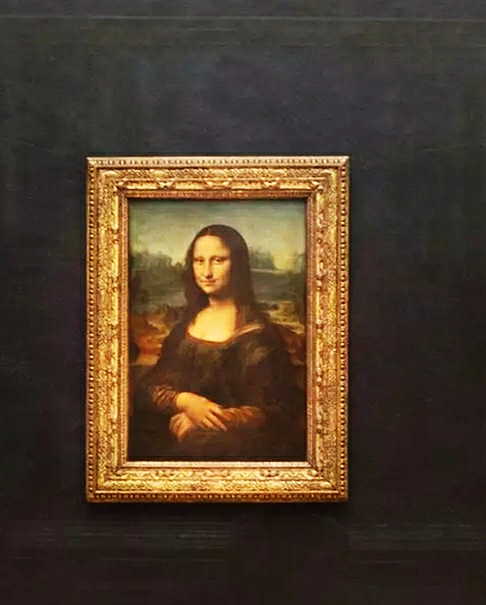


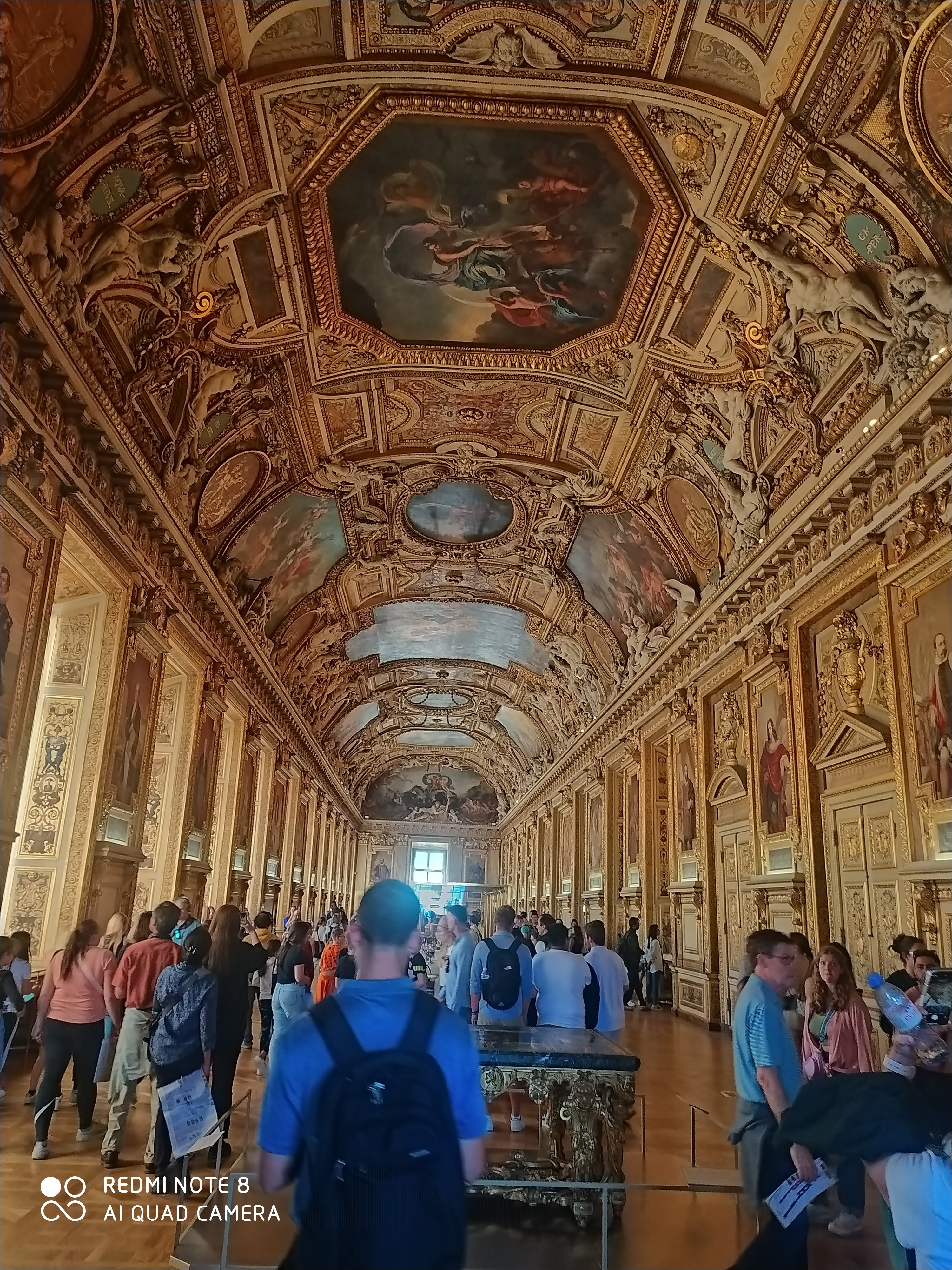




( The Wedding Feast at Cana' )


A VISIT TO LOUVRE MUSEUM, PARIS. .....THE MONA LISA
France has 1,218 museums while Paris is home to a whopping 140 museums. Opposite the Musée du Louvre stands the Musée d’Orsay, known for its Impressionist treasures. Further along the Seine is the Petit Palais, the Musée d’Art Moderne de la Ville de Paris, the Palais de Tokyo etc. The other museum visited by people include Rodin museum, Salvador Dali museum. ,National Museum of Natural History ,Louis Vuitton Foundation museum, Picasso Museum ,Guimet museum ,Center Pompidou and many more . From small local galleries to large national museums, there's something for everyone. If you appreciate art, culture, and creativity, then Paris has much to offer. France’s first museum – the Louvre – is also the world’s largest and most visited museum.
The Louvre
The Louvre has the distinction of being perhaps the most famous museum in the world. The museum is a landmark monument and contains the world's biggest collection of art, with perhaps the most famous painting of all-time hanging in its halls: da Vinci's Mona Lisa. The 782,000-square-foot museum is the most visited in the world with more than 10 million guests each year. The building that houses the Louvre today was built in the late 12th century and remains of the Louvre Castle fortress can still be seen in the museum's basement today. The building was extended many times to form the present Louvre Palace. In 1682, Louis XIV chose the Palace of Versailles as his house, leaving the Louvre as a place to display the royal collection. In 1692, the building was occupied by the Académie des Inscriptions et Belles-Lettres and the Académie Royale de Peinture et de Sculpture. The Académie remained at the Louvre for 100 years. During the French Revolution, the National Assembly decreed that the Louvre should be used as a museum, to display the masterpieces of the nation. The museum opened 10 August 1793 with an exhibition of 537 paintings. Due to structural problems of the building, the museum was closed in 1796 until 1801.


The museum collection increased under Napoleon, it was renamed the Napoleon museum. After the defeat of Napoleon at Waterloo, many works seized by his armies were returned to their original owners. The collection was further increased during the reigns of Louis XVIII and Charles X. During the Second French Empire the museum gained 20,000 pieces.
Located on the right bank of the Seine river in the heart of Paris city, Louvre is the world's biggest museum that houses about 300000 collections of art from Europe, Asia, the Islamic world, Egypt, Greece, Rome, France and many other places. It is spread over a huge complex inside an erstwhile palace with three levels. This collection includes treasures in sculptures paintings, fabrics, furniture, jewellery, crockery and innumerable artefacts housed in three separate wings known as Richelieu Wing, Denon Wing and Sully Wing. Each wing has different levels and each level has different rooms. It is not possible to see even a single wing in one day. Accordingly, one needs to do good homework to know what he plans to see and where it is located. I wasted time and money on my earlier visit without proper homework. On 25th May 2023, my visit was satisfying as adequate homework had been done about what to see and where it lay inside the three separate wings including room numbers in specific.
There are some major treasures housed inside the museum that need not be missed. Some of the most famous artworks inside the Louvre include the Mona Lisa, the winged Victory of Samothrace, the Venus de Milo, the Squatting Scribe, the Code Hammurabi, the Vermeer’s Lacemaker, the Coronation of Napoleon, the Raft of the Medusa. the Sleeping Hermaphrodite, the Venus de Milo and many more.
Louvre has three entrances but the main entrance is through the Glass Pyramid. It is better to enter through the main entrance as you have separate lines for those who need on-the-spot tickets and those who have already booked their time slot online. Better buy online as your entry is assured, smooth and hassle-free in about 20 to 30 minutes even if you see a huge crowd. Buying tickets across the counter on the day of the visit may take more than one hour and sometimes the tickets are already sold out. Roughly, 30,000 people visit Louvre every day. My suggestion would be to book 9 am slot online. The entry gates get crowded after 11 am. A ticket without a guide may cost 17 Euros. And remember that you need to walk about two to three km inside the Museum to go to various wings. You also need to use the staircase and escalators. All this is also going to give some discomfort to those who have knee problems or osteoarthritis. It is advisable to wear comfortable shoes, carry your water bottle and some snacks and take some rest in between visiting various wings. I purchased water @1 Euro from a Punjabi boy ( from Hoshiarpur ) outside the Glass Pyramid.
As you enter, you find people rushing to Denon Wing Level 1 (room no711). Mona Lisa is housed in this wing. As you go up the staircases, you confront 'The Winged Victory of Samothrace' another artistic wonder in sculpture from ancient Greece. Turn right and you are in multiple lobbies housing paintings. Go right and you are in room 711 which has many great paintings including Mona Lisa. On the wall facing Mona Lisa, you can find Paolo Veronese's ( 1528-1588) massive painting known in the world of art as The Wedding Feast at Cana'. At over 6 metres high and almost 10 metres wide, 'The Wedding Feast at Cana' is the biggest painting in the Louvre. It depicts an extraordinary banquet with a crowd of some 130 different characters in a blaze of light and colour. On account of its size and the Mona Lisa crowd in the room, it was difficult for me to clearly capture this painting with the camera. Veronese painted the scene for a monastery's refectory on the island of San Giorgio Maggiore in Venice. In 1798, Napoleon’s troops confiscated the painting and had it shipped to Paris. Besides Mona Lisa, you will find two other brilliant paintings, Jacques-Louis David’s ‘The Coronation of Napoleon’ and Delacroix’s ‘Liberty Leading the People’ on the first floor, Denon Wing.
THE MONA LISA
Many visitors expect the Mona Lisa painting in Louvre Museum to be a massive painting, but it is a tiny masterpiece. It is just 77 cm by 53 cm. The painting is placed in a temperature-controlled room and it is encased in bullet-proof glass. The glass cover has been a safety precaution since the early 1950s when a visitor poured acid on it. The visitors are kept 5 feet away from the painting by a specially erected barricade.
I stayed for about one hour in room 711 and the crowd was always unbelievably thick. Everyone wanted to take a selfie with her in the background. Could that be possible?
If Monalisa is going to be sold today, its price would be around $850 million. It is the world’s most expensive painting with the highest insurance value. This year it was insured for 830 million US dollars for comprehensive risks including damage and theft. It is pertinent to mention that there is a French heritage law that prohibits the painting from being bought or sold.


Painted by Leonardo Da Vinci in Florence, Italy sometime around 1503, it is believed to be the portrait of Lisa Gherardini, wife of a Florentine cloth merchant named Francesco del Giocondo, which is why the Mona Lisa painting is also called La Gioconda. After Leonardo finished the portrait, he didn’t give it to the cloth merchant or his wife. Instead, he brought it to France with him. Leonardo held the painting close to him for more than 15 years, and only at his death in 1519 did his friend and patron, French King Francois I bring the painting to his Palace. In 1804, after the French Revolution, the painting was removed from the Royal Palace and shifted to the Louvre Museum. Mona Lisa spent some time on Napoleon Bonaparte’s bedroom wall in the Tuileries Palace. In 1911, Mona Lisa was stolen by a patriotic Italian, who believed that since Leonardo was an Italian, his masterpiece must also be in Italy and not France. It was recovered in 1913.
Mona Lisa's smile is the most enigmatic: much spoken of, stolen, copied and reinterpreted. Mona Lisa is an icon that has fascinated the world for nearly four centuries. Da Vinci painted Mona Lisa on poplar wood instead of canvas. Like most Renaissance depictions of the Virgin Mary, the Mona Lisa also bears a strong resemblance to her. The woman in the painting is seen sitting on an armchair with her hands crossed and placed on her lap. Her iconic gaze is fixed on the eyes of viewers. Da Vinci gave the painting a lifelike appearance by omitting outlines on the figure, a method known as sfumato. The sfumato technique refers to a painting with no bold or harsh outlines. By blurring and blending carefully, artists use sfumato to give a smoky, atmospheric effect to a painting.
There is a new belief that Mona Lisa may not be artistically the best ever work in the world. All said and done, it is ultimately a portrait. It may even be one of the greatest portraits next to Raphael’s Girl Holding a Unicorn and in front of Thomas Gainsborough’s Blue Boy, but it’s still only a portrait. Has the theft of the Mona Lisa hyped its reputation and value? Is it a compromise in terms of artistic importance? Leonardo is not only famous for Mona Lisa, but he also painted other masterpieces such as The Last Supper and The Virgin of the Rocks.
I wanted to stay close to Mona Lisa and other masterpieces on display in room no 711 of Denon Wing but other works of art in my visit's itinerary made me leave the room. Can't call it a visit in a hurry as poet Jagan Nath Azad says:-
"Hamein tha kaam bahut ruuk sakay na pal do pal,
Guzar gaye teray kooche se hum saba ki tarah"
( Avtar Mota . Paris, France )
A VISIT TO THE TUILERIES GARDEN ,PARIS


JARDIN DES TUILERIES... OR.......TUILERIES GARDEN ,PARIS..
In French , jardin means garden and des means of . The train transit station in the heart of the Paris city is known as Chatelet ( Chatelet Les Halles ) pronounced as Shetlay in French. From Chatelet ,you can walk down to some well known landmarks of Paris including Louvre museum, Sainte Chapple. Pantheon ,Notre Dame cathedral , Pont Neuf and some other places . There are multiple entry and exit points to Louvre museum.; two major being from the Seine river side and the other opening on the road that leads to Chetelet train station. If you enter the spacious Louvre gate from Seine river side , the Tuiliries garden falls on your left side just opposite to the glass Pyramid. And if you enter from the other side, the gardens fall on your right side just opposite to the glass Pyramid in the compound. From inside the garden, one can see Arc de Triomphe , the Luxor Obelisk and the Eiffel tower. .Tuileries were royal gardens laid by Queen Catherine in 1564 outside the walled city of Paris. Tuileries means tiles. There must have been a tiles factory at the spot before the gardens were planned to be laid.
The Tuileries garden is actually located between the Louvre and the Place de la Concorde in the 1st arrondissement of Paris, France. The gardens were created by Catherine de' Medici as the garden of the Tuileries Palace in 1564, it was eventually opened to the public in 1667 and became a public park after the French Revolution.The gardens were completely redesigned in 1664 by Louis XIV’s landscape gardener, André Le Nôtre. At that time, it was opened for the enjoyment of ‘respectable folk ’ of Paris.After several modifications and partial privatisation – notably by Napoleon I then his nephew Napoleon III – it was finally opened to the general public in 1871.


The Tuileries Garden was one of the direct witnesses of the history of France: during the uprising of 1789, Louis XVI and Marie-Antoinette took refuge in the palace after the revolutionaries had taken them back to the palace of Versailles.During the Paris Commune uprising, rioters burned the Tuileries Palace down to protest against royal and imperial power.
The garden had springtime flowers and greenery. We saw some local school children also playing and enjoying their picnic.
In the heart of the Tuileries Garden, the Jeu de Paume museum offers an edgy programme of exhibitions showcasing photographers from the 19th century to the present day, alongside films and installations.
( Avtar Mota )
PARIS, THE CITY OF LIGHTS ( VILLE LUMIERE)


.jpg)


.jpg)
A VISIT TO SCEAUX PARK OR PARC DE SCEAUX NEAR PARIS




SCEAUX PARK OR PARC DE SCEAUX
Sceaux is a town of wealthy people outside Paris city . It is about 10 km from the city and is connected by trains, Metro,buses, taxis and other modes of transport .We arrived by Metro B boarding it at Chetelet junction .Many wealthy people have built spacious bunglows in Sceaux. In 1798, Sceaux hosted the wedding of Jean-Baptiste Bernadotte and Désirée Clary. He was to become Charles XIV John and Charles III John (Karl XIV Johan), King of Sweden and Norway in 1818. In 1895, Pierre Curie married Marie Sklodowska at the town hall of Sceaux. The two scientists lived in Sceaux for several years and were buried there before being transferred to the Pantheon in 1995.
The greatest attraction in Sceaux is the Royal Garden laid originally during the rule of Louis XIV along with a castle that is a museum of art now. We visited the Sceaux Park ( Parc) yesterday . This large set of gardens is spread in about 180 acres of green area with huge central water canal . Parc de Sceaux with 180 hectares is seven times larger than Luxembourg Gardens in Paris
The castle at the corner of the park was destroyed during the French Revolution and has been rebuilt in early 19th century. There are some sculptures resembling ancient Greek stone art in the park which is full of poplar and maple trees planted to make grand patterns and designs. I saw some people fishing in the central water canal of this Park.Sceaux castle was originally built by Jean-Baptiste Colbert, the minister of finance to Louis XIV and purchased by Louis' illegitimate son, the Duke of Maine in 1699. It is public park now and entree is free. One can see families from city relaxing in the park over coffee, snacks and food spreading mats on lush green grass or sitting under tall maple trees .
The gardens of “Parc de
Sceaux”, were designed in the same era as the gardens of Versailles.
This historic and listed site still bears the mark of its creator,
Jean-Baptiste Colbert, and its very first gardener, André Le Nôtre. The
park of the Domaine de Sceaux invites you to idle, stroll, jog or pedal
through its French-style gardens every day of the year.
( Avtar Mota)
THE NIGHT TIME SPECTACLE OF THE EIFFEL TOWER, PARIS


A VISIT TO THE CONFLUENCE OF MARNE AND SEINE RIVERS


A Visit to the Confluence spot of River Seine and River Marne in Alfortville, Paris..
The ancient human civilizations often treated watery locations as sacred places especially sources and confluences.The Pre-Christian Slavics chose confluences as the sites for fortified triangular temples, where they practiced their sacred rites.In Hinduism, the confluence of two sacred rivers often is a pilgrimage site for ritual bathing. In Pittsburgh, a number of believers of Mayanism consider their city's confluence to be sacred. In Europe ,confluences attract tourists and travellers. We visited the confluence of Seine and Marne rivers just at the outskirts of Paris city. One can arrive at this confluence spot using Metro line 8 or Bus 24 ,13 and 217 .RER trains also have a stop at Alfortville wherefrom one can either walk or trave by some connecting bus to Ecole Veternaire . Let may also say something about Seine and Marne rivers .
River Marne
The Marne is a river in France, an eastern tributary of the Seine in the area east and southeast of Paris. It is 514 kilometres long. The river gave its name to the departments of Haute-Marne, Marne, Seine-et-Marne, and Val-de-Marne.The source of the Marne river is in the Plateau de Langres, in the commune of Balesmes-sur-Marne, at an altitude of about 420 m (1,378 ft), in the Haute-Marne department.In history books children are taught about the Battle of Marne . The First Battle of the Marne succeeded in pushing the Germans back for a distance of 40 to 50 miles and thus saved the capital city of Paris from capture. It was a great strategic victory, since it enabled the French to renew their confidence and to continue the war.
River Seine
Running through the Paris city , the Seine is the beating heart of the City of Lights.Fully associated with Paris, the river originates in a distant land.It flows for 13km through the Paris city from east to west and at 26,72m (to be precise) above sea level.Its width varies from 30m to 200m and its depth from 3.4m to 5.7m.An iconic landmark of Paris, the river is spanned by 37 bridges including 4 footbridges.They make for an exceptional heritage and are a magnificent sight, by day as by night.The Seine riverbanks – from Pont de Sully to Pont de Bir-Hakeim via Pont Alexandre III – are a UNESCO world heritage site.
The river was also a natural and gigantic ‘bath tub’ for Parisians.It used to turn to ice during harsh winters and could even be crossed on foot.Came spring time and milder temperatures; it carried huge blocks of ice that often damaged the bridges over it.
The confluence
At Alfortville , just at the outskirts of Paris city , River Marne joins River Seine creating a grand confluence near the famous Chinese Hotel named ,Huatian Chinagora. In fact this hotel is located at the confluence of Marne and Siene . The huge hotel is a true floating pagoda, one of very few resorts of its kind in France that possess this surface area. Hotel Huatian Chinagora, inspired by Beijing’s Forbidden City and Chinese Imperial Palace, features 2 top-floor terraces with views of the Eiffel Tower. A magnificent view of the confluence can be had from the nearby bridge on Seine or the footbridge on River Marne. The Hotel Huatian Chinagora rooms and terraces also give a commanding view of the confluence .
( Avtar Mota).
A VISIT TO EIFFEL TOWER , PARIS ( FRANCE ).




 to
to


A VISIT TO EIFFEL TOWER , PARIS.
We were at the Eiffel Tower on 29th April, 2023.From Alfortville, we
went by a cab all along River Seine. However, one has a variety in
public transport options to arrive at the Eiffel Tower from any corner
of Paris. Line 6,8 and 9 ( Metro trains ), RER C ( train ) and Bus Line
82 and 42 all go to the Eiffel Tower. The easiest and the quickest way
to reach the Eiffel Tower would be to take the Metro and use Line 6 (green)
that passes through Bir-Hakeim Station .This station is about 400
metres from the Tower and the distance can be easily covered in 7 or 8
minutes walk .
The Eiffel Tower was built from 1887 to 1889 by French engineer Gustave Eiffel whose company specialised in building metal frameworks and structures. Gustave Eiffel is at the origin of many metallic works in Europe including the Porto Viaduct (Portugal), the Viaduct du Garabit (France) and the Budapest train station (Hungary). His company, that was located in Levallois Perret, near Paris, also built the metal framework for another world-famous monument: the Statue of Liberty (New York, United States), designed by Auguste Bartholdi and offered to the United States as a gift from France to celebrate the 100th anniversary of the American Declaration of Independence in 1886.
The Eiffel Tower has been built with painted puddle iron bars The puddle iron that makes up the Eiffel Tower's structure came from the Pompey Forges (East of France). The iron plates and beams produced through the puddling process were then preassembled in the Eiffel factories in Levallois Perret using rivets. The construction of the Tower was started to celebrate 100 years of the French Revolution. The first digging work started on the 26th January 1887. On 31st March 1889, the tower had been finished in record time – 2 years, 2 months and 5 days – and was established as a veritable technical feat. All the metal pieces of the tower are held together by rivets, a well-refined method of construction at the time the Tower was constructed. Journalist Emile Goudeau, who visited the site in 1889 when the construction had started , records this :-
"A thick cloud of tar and coal smoke seized the throat, and we were deafened by the din of metal screaming beneath the hammer. Over there they were still working on the bolts: workmen with their iron bludgeons, perched on a ledge just a few centimetres wide, took turns at striking the bolts (these in fact were the rivets). One could have taken them for blacksmiths contentedly beating out a rhythm on an anvil in some village forge, except that these smiths were not striking up and down vertically, but horizontally, and as with each blow came a shower of sparks, these black figures, appearing larger than life against the background of the open sky, looked as if they were reaping lightning bolts in the clouds."
Until 1929, the Eiffel Tower was the highest building in the world. Visible from almost anywhere in Paris, the tower has a privileged position on the Champs-de-Mars esplanade .Located on the bank of the Seine river , the Eiffel Tower is possibly the busiest tourist site in Paris . Its height and unique silhouette floating above the Paris landscape quickly made the Eiffel Tower one of the most popular attractions in Paris. Since the beginning, the Eiffel Tower drew attention and served as the theatre for numerous events in the life of Paris and France: the grandiose fireworks on July 14 ("Bastille Day"), national-level events and large-scale sporting events.
( Bastile day celebrations )
( Bastile day celebrations )
The Tower can be seen from many and various points around Paris and its suburbs. It is photographed, drawn, filmed, and replicated in all kinds of circumstances.It naturally slipped into the role of symbolising France in the collective imagination, not only in movies and graphic arts but also in literature and poetry.Closest to the Tower is the Champ de Mars, where one can relax and stroll through the vast park. On the Palais de Chaillot side, the Trocadéro terraces also offer a stunning panorama of the Tower in its entirety. For an unobstructed view with the Seine in the foreground, one needs to visit Bir-Hakeim Bridge, where one can also find the Renaissance France statue.
Every night, during its light show, the tower becomes even more mesmerising. The' Eiffel Tower Light Sparkle' at night is a sight to behold. The light show begins at sunset every night. Depending on the season, this usually occurs between 5:00 pm and 10.30 pm (local time). At that point, the 20,000 lamps spread out across the Tower are switched on and start to glow. The lights often change colours depending on the season and special occasions. For instance, during Christmas, the Tower lights up in red and green . Similarly, the Tower lights up in different colours on Bastille Day (July 14th).
We saw this light display during our 'River Cruise '( Seine river) . Infact the Tower is illuminated with thousands of golden lights from the base to the its top. Add to that, after every hour from 9.30 pm, there is a dazzle of additional lights that twinkle and sparkle for some minutes. Two beams of high intensity lights keep rotating from the top creating a circle over Paris or the 'City of Lights'. This fantastic spectacle of lights is worth watching . Mobile cameras, video cameras and digital cameras go busy at the sight of this spectacle. People on the deck of a moving ferry stand up to see, clap, whistle and cry in amazement.
Visiting the Tower, and seeing its historic gardens and the spectacular view of Paris from the top is an incredible experience. The Tower has three floors that are open to the public: the 1st floor, 2nd floor and the summit. The 2nd floor has 2 levels, as does the summit (an enclosed lower level, and an open-air level above). One can take the stairs from the bottom of the Eiffel Tower to go up to the 2nd Floor after covering 674 steps. In total, there are 1665 steps from the ground up to the top of the Tower, but the stairway from the 2nd floor to the top is not open to the public . Visitors can reach the first two floors either by the stairs or by elevators. The ascension from the 2nd floor to the summit is only possible by an elevator.And high speed elevators take no time to go upto the top of the Tower.
Walking out onto the glass platform on the first floor offers the unique sensation of walking in the void. Arriving on the 2nd floor, one can enjoy the view of the Louvre Museum , the Grand Palais, the meanders of the Seine river, Montmartre, Invalides museum, Notre-Dame cathedral and many more prominent structures of Paris city . It is here that one finds the Michelin-starred Jules Verne restaurant, alongside a Pierre Hermé macaron bar and take-away food stands. There are some official shops to discover a selection of exclusive products bearing the Eiffel Tower brand and made in France, such as snow globes, stationery accessories, miniature Eiffel towers, etc. The final destination: the summit! On its two levels, one enclosed and the other open-air,one can stroll around and take in the unique panorama of the 'City of Lights' from a height of 906 feet (276 metres). There is a champagne bar at the top level and it opens onto the outside. The father of the monument, Gustave Eiffel, had a huge office on the third floor of the Tower. Once covering an area of 100 square meters, only a small part of it remains today, not accessible to the public but visible through a glass window. One can see some period furniture, a phonograph, as well as three wax statues, made by the Musee Grevin, representing Gustave, his daughter Claire and Thomas Edison, one of the pioneers of electricity and sound recording.
Although the City of Paris owns
the Tower but its management has been entrusted to a company called
SETE or Société d'Exploitation de la Tour Eiffel.The French
government earns about 80 million francs per year from the sale of
admission tickets to this monument.
At the Eiffel Tower, we saw a group of street dancers entertaining
tourists with Indian song " Kaala Chashma " . Sung by Badshah and Neha
Kakkar( originally sung by Amar Arshi) , we saw this song being used
for dance acrobatics by another group of street dancers at the Chetelet
( pronounced as Shetlay in French ) train junction in Paris city.
Possibly, the song gives the street dancers a 'Global Feel' .The
Norwegian dance group, 'Quick Style' , performed on this peppy track
and it went crazy viral on social media for their moves. This song is
from the 2016 movie "Baar Baar Dekho" and has been filmed on Bollywood
actors Katrina Kaif and Siddharth Malhotra .
We saw some young Indians from Punjab rural areas selling wine ,champagne and beer in buckets to tourists. We also saw them in Lourve and some other tourist places selling mineral water for one Euro .These men looked semi literate or illiterate, and for sure they must have arrived in Europe under some painful circumstances navigating the route adopted by illegal immigrants . We also saw many immigrants from Africa selling Eiffel Tower replicas to tourists . When the African immigrants saw us , they cried , "namaste le lo. paanch eik euro ka. Special concession .Kitna babu ji ." France is a popular destination for Senegal migrants . Senegal had been a French colony. I am told that most of the Senegalese migrants come to Marseille followed by Paris. On persistent requests, a young wine seller from Punjab told us this :-
"I don't English or French speak home conversation . Only tourist selling language . I sell French German,Spanish tourist , So pick up business sentence languages . Speak Punjabi or Hindi. I comfortable"
And he spoke in Punjabi. He said this :-
" I am from Hoshiarpur rural area. I am a school drop out. I came to Italy many years back through an Indian agent. I went to Portugal. I prepared papers of Portugal. Now I can come to all EU countries. We found France better. Young boys come through a tough and inhuman route. Some come on tourist visa and keep shuttling borders when visa expires. They live as illegal migrants . Always on the run . Always worried. Always working very hard and sweating it out for a living. In Paris , we sold mineral water initially. Now we sell wine to tourists. Police is after us. Hide and seek game. We live 8 or 10 in one flat. Very hard life. We can't go back. We save around 400 to 500 Euros per month and send home. My father sold land in Punjab for my coming over here. None amongst us is educated enough to start a different life. These Africans selling key rings and models of the Eiffel Tower are mostly from Senegal. The Chinese agent gives them this stock for sale. Most of them are illegal migrants . Police is after them also. Police comes in morning hours . All footpaths sellers come in the afternoon. We see many educated young Indians in Europe . They earn good salary and live with dignity . We are happy to see our own countrymen doing well. They live their own settled life and don’t mix with us . They believe we are children of lesser god. Most of the young men from Punjab that you see here remain unmarried as they can't afford to live independent family life. Even if someone marries, he can't bring his wife here and live a family life as he doesn't earn much for such a venture . His wife has to live back with his parents . A life full of suffering and exploitation. No photo. No name or address details . No mobile recording please. I talk as friend and that is it."
The story of the Punjabi immigrant made us sorrowful. A story of pain and suffering in an ambiance of glitter in this ‘City of Lights’ called Paris .I was reminded of a couplet of Urdu poet Moin Ahsan Jazbi:-
“Sarv o saman bhi mauj e naseem e sahar Bbhi hai .
Aey gul teray chaman mein knoyee chashm e tar bhi hai.”
( You have the cypress and the jasmine and the wafting morning breeze as well,
O flower ! look around ,there also sits a person with moist eyes in your garden .)
(Avtar Mota )
A VISIT TO GRENOBLE : ‘ THE CAPITAL OF THE FRENCH ALPS’.


.jpeg)


A VISIT TO GRENOBLE : ‘ THE CAPITAL OF THE FRENCH ALPS’
Grenoble is an old city in the Southeast of France . With fortified castles dotting the countryside, churches and spouting fountains, palaces and crypts: from the most well-known sites to the hidden treasures, Grenoble is filled with impressive remnants of the past. Famous for its winter sports, hiking, museums, universities and research centres , the city is also known as the “Capital of the Alps”, due to its size and proximity to the mountains. The population of the city is about 159000. The TGV superfast trains to Grenoble start from Gare de Lyon station in Paris and take about 3 hours to cover a distance of about 580km . The TGV train speeding up to 320 km/h has comfortable seats and ample leg room, free Wi-Fi , power sockets at every seat and a bar/buffet. The TGV train journey to Grenoble is the stress-free way to travel. Located at the foothills of French Alps, one can see snow covered mountain peaks on all sides in the Grenoble valley . It is the last city on the Southeast border of France. Mont Blanc tunnel that connects France with Italy is also located at an altitude of 4000 feet in the Alps . Italy lies on the other side of Grenoble Alps,. Turin city of Italy is just 2 and half hours of car drive from Grenoble. Accordingly , one can see many Italian immigrants in Grenoble. There is a train link with Italy and Switzerland from Grenoble.
Grenoble’s history goes back over 2,000 years,. It used to be the capital of the Dauphiné in the 11th century. The Dauphine was a province of Southeastern France that comprised of areas falling under Isere river, areas of Drome and areas of Hautes Alps. For Some centuries, Grenoble was a part of the Roman Empire prior to becoming a part of France.
Grenoble is directly connected with 3 Regional Nature Reserve: Vercors, Chartreuse and Belledonne. These areas, stretching from the alluvial plains to the mountains are emblematic, protected areas that are home to unique and sometimes threatened wildlife, like bald eagles, European beavers, wild orchids, and many more. he mountain ranges : Chartreuse in North ( altitude max 2000 m), Vercors in West (altitude max 2300 m), and Belledonne in East (altitude max 2900 m) are the mountain ranges that surround and are close to Grenoble . Well-known ski resorts within a short drive of Grenoble city include Chamrousse and Villard-de Lans, plus those best-known to locals, such as the ski stations of the Chartreuse, Les 7 Laux or Le Collet d’Allevard. However, Grenoble also lies at the gateway to the Massif de l’Oisans, home of several internationally-renowned resorts including Alpe d’Huez. This huge ski area is lift-linked to the surrounding villages of Auris-en-Oisans, Oz-en-Oisans, Villard Reculas and Vaujany.The closest resort to Grenoble is the ski area of Les 7 Laux in the Belldonne mountain range. It is made up of 3 villages Le Pleynet, Prapoutel and Pipay, which all have access to the 120 km of slopes.
Winter Olympics of 1968 were held in Grenoble. Norway won the most medals, the first time a country other than the USSR had done so. Gender tests for women were introduced, as were doping controls for both men and women. The Grenoble Games were also the first to be broadcast in colour.
We stayed in a cottage in Uriage village in the hills. Uriage is about 5 km from the city . Our host owned a beautiful cottage in Uriage . Uriage is a green with beautiful houses, tall shady trees , forests , 24 by 7 water and power supply , pucca roads and many spots for mountaineering, camping , fishing and hiking. The 9 hole golf course near Uriage enjoys a perfect location in the Alps. From any point in Uriage, one can have a panoramic view of the Grenoble valley. The village church bell tolls after every hour . The eerie silence is quite often broken by the tweets of the birds. I am told quite often one comes across some wild animal in the lawn or compound after a heavy snowfall. We stayed in an environment and ambiance of overwhelming hospitality. It was almost a rainy day on 7th May ,2023, but our host drove us through the city via Grenoble international University established in 1339 . In the University ,we could see many Asian students .The university is well-known for its research and education in the natural sciences and engineering, but it also teaches courses in law, institutional economics, linguistics, and psychology. We were told that at the moment roughly 63000 students study in the university put of which about 3000 students were doing doctorate in various subjects.
In the Grenoble city ,we saw old churches, restaurants ,bars ,old buildings and
an imposing fort on a hill that overlooks the entire city. The fort is
known as Fort La Bastile . Our Gondola
tickets had been booked by our host . We were taken up the fort in the Gondola known as Grenoble
Cable Car that moved above the Isere river and a forest area . The
Gondola ride takes you up to have a panoramic view of the city below. Two
rivers namely Isere ( pronounced as Ezer ) and Drac move down from
glaciers in high Alps and create a confluence in the Grenoble city. The Fort
La Bastile was used by the French troops to defend the
country from attacks of some nearby hostile countries. Once you land on the
platform of the Gondola at the top ,you can go to various floors of the Fort
La Bastile using high speed lifts. There
are some cafes and a museum of art in
the fort. A huge observation deck at the top floor gives you a 360
degree view of the entire Grenoble city
below. One can also see Isere and Drac rivers meandering through the
city to reach the confluence spot . The Bastille is visited by some 600,000
people each year, approximately half of whom take the cable car from the city
centre. The rest of the visitors go by car or on foot by one of the numerous
signposted paths .
The old city of Grenoble is simply fascinating, with museums ranging from the Musée de Grenoble, which has one of the best art collections in France, to the Musée de la Résistance et de la Déportation de l’Isère, telling the story of one of the major centres of the Resistance in France during World War II. The city is perfect for walking . It has plenty of cafés and lots to look at. If one stands in Place Sainte-Andre, the square in the middle of the city, one can see some historic monuments all around. This is an impressive sight along with a good cup of coffee. A cup of coffee at Café de la Table Ronde (that happens to be the second oldest café in France ) is satisfying . The café was the favourite place of Sara Bernhardt, Jacques Brel and the city’s son, the novelist, Stendhal. One can walk through old markets, alleys ,the university, Tabac shops, Bistros, and the Italian ristorantes . Every major square has some impressive sculpture . The roads are wide and clean .The cool alleys nestled in old buildings offer a perfect walking experience. We saw two Indian restaurants , and some casinos at the outskirts of the city as we started going up towards Uriage . There are many fishing spots around Grenoble. People living in the foothills of then French Alps love fishing. One can see men, women, children and seniors fishing in rivulets, lakes and the Isere ( pronounced as Ezer ) and Drac rivers as one moves towards hills and mountains . One can see Arctic char and Rainbow trout in the waters around Grenoble .
Grenoble is also known for its walnuts . Grenoble walnut species have received a French AOC label (Protected designation of origin) in 1938. Three varieties of walnuts are authorised for the production of P.D.O. Grenoble walnuts : Franquette, Mayette and Parisienne. We bought good walnuts @7.50 Euro per kg. Apart from walnuts, the area is also known for producing cheese and wines. Apricots, cherries and strawberry are also grown in Grenoble .Rhone Valley near Grenoble is known for its sweetest apricots in France .
Grenoble is the city of Stendhal (Marie-Henry Beyle ), one of the 19th century France’s most beloved writers. Stendhal was born here way back in 1783 and went on to define the Realism genre in French literature. His house has been converted into a museum frequented by book lovers of all kinds.
( Avtar Mota)
A VISIT TO THE TOMB OF FREDERIC CHOPIN IN PARIS

.jpg)


A VISIT TO BASTILE MONUMENT OR COLONNE DE JUILLET ( THE JULY COLUMN ) IN PARIS

A VISIT TO BASTILE MONUMENT OR COLONNE DE JUILLET ( THE JULY COLUMN )
 ( (A painting depicting Storming of Bastile )
Located in the 11th arrondissement ( administrative district ) of Paris, getting to the July Column via public transport is quite easy, as there is a Metro station called the Bastille stop . Metro trains 1, 5 and 8 have a stop at this station. The Bus Lines 24, 29, 57, 61, 63, 67, 69 76, 86, 87 and 91 can also be used to get down close to the monument site. There are many more ways to come to the Bastile monument .We came via Chatelet train junction. The distance between the central train junction of Paris city known as Châtelet les Halles ( pronounced as Shetle ) and Bastille is about 2 km . One can walk it comfortably in 20 minutes or use Metro train 1 or Bus 29 or Bus 69 or Bus N 16 . The bus or the train tickets cost between €1 - €3 . A taxi may charge anything between 15 to 20 Euros from Chatelet train junction .One can also walk about 1 km from Gare de Lyon station to arrive at Bastile Square.


The Colonne de Juillet, or July Column as it is known, is located in the Place de la Bastille Square, which has a rich history from the Bastille fortress to the storming of the Bastille and the French revolution .Constructed in the 14th century ,Bastile was the notorious prison used by the Kings of France . The prison had become a symbol of the monarchy's dictatorial rule. On 14th July, 1789, this state prison was attacked by an angry and aggressive mob. This demolition of Bastille by the crowd marked the beginning of the French Revolution. Storming the Bastille , the fortress was completely demolished and its stone fragments were sold in the markets to all those who wished to keep a souvenir of its destruction. The capture of the Bastille symbolized the end of the ancient regime . It also provided an overwhelming momentum to the French Revolution .
 (Bastile Monument with new Opera in the background)
Between 1643 and 1793, France was ruled by just three kings. All three were absolute monarchs. They made all the decisions and did not believe in sharing power with a parliament. Further , vast sums of money had been consumed in the name of war, pledged by successive Kings to support battle against its enemies but with little return. The people paid tax after tax to fill up the royal coffers and life for the common man was fraught with difficulty, lack of money, lack of food (additionally there had been bad harvests which led to flour shortages) lack of much comfort on a daily basis. Against this backdrop of misery the royal family continued their gilded existence, seemingly oblivious to the suffering of the ordinary people. Popular myth reports that when the Queen, Marie Antoinette was told of bread shortages in Paris she stated “then let them eat cake” but there is absolutely no proof that this occurred. What is known is that on the 14th July, 1789, a crowd gathered, guns were procured and the baying and growing mob marched to the Bastille to obtain powder for the guns. The Bastille was at the time of its attack a medieval fortress which served as a prison and a warehouse for munitions and powder. In 1792, the monarchy was abolished and in 1793 , Louis and his wife Marie-Antoinette were sent to the guillotine for treason . The agitators also lynched Controller-General of Finances Joseph Foullon de Doué and his son-in-law Louis Bénigne François Bertier de Sauvigny. Both had held official positions under the monarchy.

The first project for one commemorative column, one that would commemorate the Fall of the Bastille, had been envisaged in 1792 .Where once stood the notorious prison space , presently only a memorial exists to commemorate the revolution of 1830 that actually began in 1789 . Today, the square plays host to large cultural events such as concerts, fairs and citizen events, and has many bars and restaurants close by on Rue de la Roquette . The square is also the starting point for a stroll on the Faubourg Saint-Antoine, where you can discover courses and picturesque passages: Passage du Chantier, Cour de l'Etoile d'Or, Cour des Trois Frères. The iconic landmark of the district is the new Opéra. Designed by architect Carlos Ott, this marvel of modern architecture with transparent facades was inaugurated on the day of the bicentenary of the French Revolution. The memorial , known as Colonne de Juillet ( The July Column ) , is a steel and bronze column standing 52 meters high and weighing 170 tons. It has an interior spiral staircase, and rests on a base of white marble ornamented with bronze bas-reliefs, of which the lion by Antoine-Louis Barye is the most noted. The top of the Colonne de Juillet is adorned by a gilded statue called the "Genie of Liberty". The Seine canal flows near the monument . Pont de la Bastile bridge is also close to the monument . Entire ground around the monument has been stoned and is being subjected to regular cleaning .It is the work of Durmont. It has a star on its forehead and is carrying a torch in one hand and in the other a broken shackles chain. Inaugurated in 1840, the July Column is the work of Alavoine and Ducs architects. Remembering the dead fighters during the days of 27, 28 and 29 July 1830 – revolution that replaced the Second Restoration by the July Monarchy – the remains of the martyrs who fell during the fighting were placed inside a burial, above which rises that column. The names of men buried are engraved around the monument. Some mummies brought to France from Egypt by Napoleon were also buried at the site. These mummies were decomposing in the Louvre museum . The throne of Louis-Philippe was symbolically burned in this memorial square, in July 1848.

Initially in 1793, a large revolutionary fountain featuring a statue of Isis was built on the former site of the fortress . Isis was the ancient Egyptian goddess of fertility and was also known as the goddess of motherhood, magic, death, healing, and rebirth. Thereafter, the spot had been occupied by a 14.6 meter tall and 16.2 meter wide wood and plaster model of an elephant. Napoleon desired to replace this elephant with one of bronze, making it a fountain with water spurting from its trunk. However, the Empire collapsed before this could be realised. While the elephant stood, it served as a refuge for street urchins, such as Gavroche in Victor Hugo's "Les Miserables". It was also the home of hordes of rats which infested the neighborhood when the elephant was brought down and replaced with the present bronze monument.


On the northern and southern sides of the base are inscribed the dates of the July Revolution " 27 28 29 Juillet 1830".On another side is written, "À la gloire des citoyens français qui s'armèrent et combattirent pour la défense des libertés publiques dans les mémorables journées des 27, 28, 29 juillet 1830" ("To the glory of the French citizens who armed themselves and fought for the defense of public liberties in the memorable days of 27, 28, 29 July 1830"). Inside the Colonne de Juillet are 238 steps which allowed access to the top of the column. This spiral stairway is, unfortunately, no longer available to the public.

On July 14 , Bastille Day is celebrated in entire France. It is a national public holiday and a day of celebration in France that has been officially held since 1878 and made a lawful holiday since 1880. France and its territories – cities, towns and villages have firework displays at the culmination of the day’s festivities which include official dinners, military parades in Paris and the night before a dance in the square where the Bastille once stood.
( Avtar Mota )
A VISIT TO PANTHEON , PARIS ( FRANCE )


A VISIT TO PANTHEON IN PARIS, FRANCE.
( All above 12 photos by Avtar Mota )
The Pantheon Paris ( Greek Pantheon meaning “Every God”) is one of the popular Paris tourist attractions. This majestic neoclassical building with its 19th century paintings and sculptures stands elegantly in the midst of the world-famous Latin Quarter. Latin Quarter is the area of the University of Sorbonne. During the Middle Ages, the University of Paris – now wildly referred to as Sorbonne – was in its golden years and the whole area was filled with students who spoke Latin. Therefore, the area was known as Latin Quarter. Pantheon is a stunning example of both Neoclassical and Gothic architectural styles . A repository of incredible art collection, it includes frescoes, paintings, sculptures, and mosaics that depict key points in the French history, including scenes from the Revolution. Many frescos and paintings pay homage to St-Genevieve as well as key figures from history of France . The Panthéon is conveniently located in the heart of the 5th Arrondissement( district ) next to Luxembourg Palace and the Jardin du Luxembourg, a beautiful green oasis in the heart of the city. From Pantheon, one can also walk down to Saint-Germain-des-Prés to visit the famous Café de Flore that used to be frequented by intellectuals and artists of the 20th century that include Hemingway, Jean Paul Sartre Albert Camus and Pablo Picasso . The Sainte Chapelle, the Sorbonne university ,the world-famous Shakespeare & Co. (book store) and the Notre Dame Cathedral are also nearby.
Parisians consider Saint Genevieve as the patroness saint of Paris .Sometime in the second half of 18th century , King Louis XV of France engaged architect Jacques Soufflot for building a church in honour of the saint at her original burial site in Paris . There existed an old dilapidated church at the burial site of the saint. Started in 1757 , the church ( Pantheon ) was completed in 1790. When the construction was over , the monarchy in France had been thrown away by the Revolution. The Revolution of 1789 transformed the monument into a temple for Great Men. During the turbulent years of the 19th century, as regimes changed, it alternated in its role as a religious and patriotic monument. The new assembly finally decided to convert the church into a mausoleum of distinguished French citizens keeping it free from any Royal Tomb . For sometime in the 19th century, the Pantheon was restored to church but finally it was officially decreed in 1881 that the Pantheon shall only be used as mausoleum . The remains of its architect Jacques Soufflot were transferred to it followed by the mortal remains of Victor Hugo. Built on the classical principles of Gothic cathedral architecture , this structure also reflects influence of architecture style of Donate Bramante , the Italian renaissance architect and painter . The building also bears influence of Greek Temple architecture especially the Façade and the Peristyle on the east side .In 1851, Jean Bernard Léon Foucault the noted French physicist added more attraction to the structure by suspending a pendulum from inside the ceiling of the dome. At present , one can marvel at the superb duplicate of the Pendulum, the original of which was used in 1851 by Leon Foucault to demonstrate the Earth’s rotation .One can have the best view of the Paris skyline by climbing up to the dome. It’s a steep climb, but well worth it for the view. The Pantheon building is 110 metres long , 84 metres wide and roughly 83 metres high . The massive dome is supported by four pillars .The main dome is actually a set of 3 domes held together .From the outside a single dome is visible. In 1790, a Cross was put at the top of the dome . Between 1830 and 1851, the Cross was replaced by a flag. The cross returned after Louis-Napoleon Bonaparte restored the building to church use. However again the cross was replaced with a red flag during the Paris Commune in 1871. Later, the cross was again installed . The inscription on the front of the Pantheon visible from outside reads this :-
Aux Grands Hommes,
La Patrie Reconnaissante
(Great men and a grateful nation)
From church to Republican temple, the Pantheon has always remained a symbol and a sanctuary dedicated to greatness. Eighty one persons are interred or commemorated inside the Pantheon. This list includes Mirabeau ( a revolutionary) ,Voltaire ( writer and philosopher ), Jean Jacques Rousseau ( writer and philosopher ), Victor Hugo ( writer ), Lazare Carnot ( politician and scientist ),Marcelin Berthelot( scientist ), Emile Zola ( writer ),Jean Perrin ( Nobel Laureate and scientist ), Louis Braile (educator) ), Rene Cassin ( Nobel Laureate and Human rights activist ) , Gaspard Monge ( mathematician ), Marie Curie ( Nobel Laureate and scientist ), Pierre Curie ( Nobel Laureate and scientist ),Andre Malraux (writer and politician ),Alexandre Dumas ( writer )and many politicians , military officers and clergymen. In fact, French president Nicolas Sarkozy wanted celebrated author Albert Camus to be reburied in the Panthéon to mark the 50th anniversary of the French writer's death. Jean Camus, the son of the late author opposed the plan. However, Jean’s twin, Catherine Camus, remained undecided. The plan was shelved .It is pertinent to mention that Marie Curie, winner of the Nobel Prize for Chemistry for her work on polonium and radium, was buried in the Pantheon in 1995. To avoid any risk of radiation contamination, her coffin is shielded by several layers of lead. Her body is perfectly preserved due to the radiation to which she was exposed during her work.
Admission to the Panthéon is free for all EU citizens and permanent residents of France, but tourists have to pay a small fee for a Pantheon tour. There are free pamphlets and audio tours available inside, as well as guides you can speak with if you’d like to learn more about the art, architecture, and history of the building.
- Adults – 11.50€
- Youths (18-25) – 9€
- Children (Under 18) – Free
- €3 extra to access the upper parts of the Panthéon (April-October).
From April to October,one can also go up to the cupola, and visit the higher part of the Panthéon.


I wanted to go to Sorbonne university nearby ( about 800 metres away) to donate my book ‘Landscape And Lament’ to the university’s library but the sky got overcast and there was every apprehension of heavy downpour. We saw just three sunny days since our arrival ( 7th April ,2023) in Paris .It may be pertinent to mention that Jiddu Krishnamurti , Mohammad Hamouda Bensai ( Algerian philosopher ), Nguyễn Hồng Giáp (Vietnamese scholar), Jacques Derrida (French philosopher), Boutros Boutros-Ghali ( sixth Secretary-General of the United Nations), André Comte-Sponville ( French philosopher) and many more well known names have been students at Sorbonne university . I have been told by Dr K N Pandita (eminent Persian scholar and historian) to bring some soil from Sorbonne , a university with which Dr Zabiollah Safa ,his teacher and Guru from Teheran University was associated . I shall surely do so upon my next visit to Sorbonne . We boarded bus no 24 for our return journey to Ecole Vetrnaire, Alfortville . I would conclude with a couplet of Urdu poet Ahmed Faraz :-
“Kisi ko ghar se nikalte hi mil gayi manzil,
Koyi Hamaai tarah umar bhar safar mein raha”
( Avtar Mota )
A VISIT TO 'CAFE DE FLORE ' , PARIS , FRANCE
Café de Flore, Paris , France


Café de Flore, Paris , France
( Above 14 photos by Avtar Mota )
If you walk near the cafes and the restaurants in Paris, the aroma in the air is so tempting that you want to go inside and try what is getting cooked. Inside these cafes, you may also rub shoulders with celebrities from films, theatre, literature, music, art, fashion and any other field.
Paris city is littered with historical landmarks. There’s the Louvre, the Eiffel Tower, the Versailles Palace,the Tuilieries garden, the Sainte Chapple ,the Le Bon Marche (the world’s first high-end department store), the Pantheon ,the Notre Dame Cathedral —the list is endless. But none reflects the Parisian way of life as authentically as some old cafes, brasseries and restaurants amongst which , Café de Flore occupies a pivotal position. Situated on the corner of Boulevard Saint-German and Rue Saint-Benoît in the sixth arrondissement, the Flore, as it’s so fondly called by the patrons, is one of the oldest coffeehouses in Paris.
We visited St Germain des Pres today. We came by RA- D train going in Nord ( north ) from Alfortville. Alfortville is close to Paris city . Getting down at Chatelet ( pronounced as Chhetle ) , we walked to St Germain des Pres using google map and city mapper as our guides. We went via Louvre museum and crossed River Seine at Pont Neuf (9th bridge ). Constructed in 1578 (though it was not completed until 1607), this bridge joins the left bank with the Ile de la Cité in front of Place Dauphine. From Pont Neuf, it is just a walk-able distance of less than one km to arrive at Aux Deux Magots close to which lies Cafe de Flore. One can also go by Metro o train from Chatelet to Saint-Germain-des-Prés every 5 minutes. Tickets cost €2 and the journey takes 5 minutes . Alternatively, Bus RATP operates a bus from Châtelet to Saint-Germain-des-Prés every 30 minutes. Tickets cost €1 - €3 and the journey takes 10 min. In this area (Saint-Germain-des-Prés) are the three cafes that were the favorites of the literati of 20th century Paris. There is the Brasserie Lipp, Cafe Dr Flore and Aux Deux Magots.Camus is said to have preferred Brasserie Lipp. Jean Paul Sartre and Georges Sand liked Cafe de Flore. .
Just 10 yards away from Les Deux Magots ( cafe and restaurant ) , and occupying just as much space in France’s literary history, is the Café de Flore. Apollinaire and Salmon would come here to work on their arts review, “Les Soirées de Paris,” while André Breton spent entire days here and across the street at Les Deux Magots. French poet Jacques Prevert also set up shop at the café, bringing in groups of friends for the night.
The cafe derives its name from the sculpture of “Flora”, the goddess of flowers.One can find this sculpture on the other side of Boulevard Saint Germain.The café gained new fame in the 1940s and 50s when it became a hot spot for existentialism after Simone de Beauvoir and Jean-Paul Sartre started spending a good part of their days over here, reportedly hashing out their philosophies from morning till night. Occasional visitors to Cafe de Flore included poet Guillaume Apollinaire ,Descartes , Trotsky, the Giacometti brothers, Zaskine , Albert Camus ,Pablo Picasso , Arthur Koestler, Ernest Hemingway, Truman Capote, Marcel Carne ( film director ), Serge Reggiani ( actor ) ,Jane Fonda ( actor ), Juliette Gréco ( singer ), Boris Vian( singer ) ,Georges Bataille, Robert Desnos, Léon-Paul Fargue, Raymond Queneau, Roman Polanski, Lawrence Durell,Chinese Premier Zhou Enlai and many more. Jean Paul Sartre wrote this :-
“We settled down there completely: from nine in the morning until noon, we worked there, we went for lunch and came back at two o’clock and then we talked with friends we made until eight o’clock. After dinner, we met the people we had appointment with. This may sound strange for you, but we were at home in the Flore”. Another important detail, under the Occupation, we couldn’t find Germans in the Flore. The roads of the Flore were four years for me the 'Roads to Freedom' ."

.jpeg)


The Guardian archives (28 August 1983: A boiled egg and a slice of Sartre, s'il vous plait) has this to convey:-
“When Sartre moved from Montparnasse to a hotel in St Germain-des-Prés, he used the cafe to write in. He came from opening time until midday and from the afternoon until closing," Boubal said. "I didn't know him by name, and he usually came with a woman who sat at another table in the corner. The woman was de Beauvoir and during the afternoon the couple went to the room upstairs where "you would see them with huge files writing interminable articles".It was not until months later when Sartre had completed his 350,000-word philosophical study L'Etre et le Néant and de Beauvoir published her first novel L'invitée, that he discovered their names. Later in the war, Sartre became so well known that a special phone line was installed for him, but when his popularity surged in 1946 and the bar became full of literary tourists he worked only from his flat in the Place de St Germain. By then, Sartre and de Beauvoir were surrounded by friends who included Camus, then editor of the Combat newspaper, and Juliette Greco, who later became the best-known singer in St Germain-des-Prés's youth cult known as "existentialists" after Sartre's philosophy.”
Opened in 1880, Cafe de Flore has appeared in many Hollywood and French movies and music albums. During World War II, the café was untouched by German occupation, providing an escape and a sense of freedom during a tumultuous time.It’s here that at the turn of the 20th century, French author Charles Maurras set up camp on the first floor of the Flore to write his book. In 1913, poet Guillaume Apollinaire and André Salmon transformed the café into a publishing house, which became the birthplace of literary art magazine Les Soirées de Paris, and eventually, the catalyst for the Dadaism movement.
The café continues to be the face of the intellectual life of Paris. Politicians, artists, musicians, intellectuals, film personalities , fashion Icons, designers, writers still keep visiting and patronising the place. 5hey come to meet, relax and talk in its cosy ambiance . No music is played inside the cafe. Crowded with tourists and visitors , we had to stand in a que to go inside and seek a table. The air inside is a mixture of aroma of the dishes and the fragrant perfumes used by the visitors. Although afternoons are best for perching on a table outside and enjoying the pulse of Boulevard Saint-Germain, there's also a vibrant after-dark scene. In other words, there's no wrong time to visit. The cafe provides dine in facility till midnight and no carry away or home delivery facility exists. In Paris, the bill in bars and restaurants includes a service charge, so you do not have to leave a tip. However, if you have been satisfied with your meal and the service you are welcome to do so. A tip in general amounts to 5 to 10% of the bill.

Since 1984, Moroslav Siljegovic has been efficiently running the Flore. Maintaining the solid reputation and the old traditions of hospitality at the Flore , he also runs the “Closerie des Lilas” a restaurant known for serving its clientele with fine wines , coffee, desserts ,chocolates , oysters , lunch , dinner , breakfast specialties in an ambiance made pleasant by piano music .
Café de Flore does a very good service to the French literature through the ‘ Prix de Flore’ annual prize. It is awarded every year at the Café de Flore in the month of November to youthful authors. The award is judged by a panel of reputed journalists.
Cafe de Flore may appear a little expensive even if you order a cup of coffee or simply a croissant. But remember, you are not paying for a commodity but for the invaluable experience of being inside an institution that was patronised by great writers, artists and intellectuals of Paris. You are paying for sitting in a space that was shared by some Nobel laureates and legends of the world.I end this write-up with a poem, ‘ Jab Teri Samandhar Aankhon Mein’ that poet Faiz Ahmed Faiz wrote in Paris .He wrote the poem while sitting on the bank of River Seine .
(Jab Teri SamandarAankhon Mein
by
Faiz Ahmed Faiz)
“Yeh
dhoop kinaara sham dhale
Milte hain dono waqt yahaan
Jo raat na din jo aaj na kal
Pal bhar ko amar pal bhar mein dhuaan
Is dhoop kinaare pal do pal
Honton ki lapak
Baahon ki chanak
Yeh mel hamaara jhoot na sach
Kyon raaz karo kyon dosh dharo
Kis kaaran jhooti baat karo
Jab teri samandar aankhon mein
Is shaam ka sooraj doobega
Sukh soenge ghar dhar waale
Aur raahi apni raah lega”
(When, In Your Ocean Eyes
translated from Urdu by
Mustansir Dalvi)
(That
time of dusk,
when on the edge of light
two moments reconcile,
that instant
that is neither night nor day,
tomorrow nor today
that lives forever for a blink,
that vanishes in a wink
on this edge of light,
in brief respite
lips lunge for lips
arms flash in embrace
our union is beyond falsehoods and truth
why keep secrets,
why hold reproach
what reason to cling to deceit
when, in your ocean eyes
this evening sun should sink
householders will fall
into peaceful slumber
and the traveller
will make his way)
( Avtar Mota )


.jpg)


No comments:
Post a Comment
Note: Only a member of this blog may post a comment.