Koratha Group of Temples, Uttar Pradesh
Koratha Group of Temples, Uttar Pradesh
Koratha Group of Temples are group of two ancient brick built Hindu temples located in Koratha Village in the Ghatampur Tehsil in the Kanpur Nagar District in the state of Uttar Pradesh, India. The temple is protected as monuments of national importance by the central Archaeological Survey of India.
.jpg)
.jpg)
.jpg)
History
The temple is believed to be built in 5th century CE by the Guptas.

.jpg)
.jpg)
The Temple
The temple complex is divided into two parts by a low wall. One part has the plinth of probably one temple in the centre and plinths on three corners. The other part of the complex has the remains of a temple seated on a high plinth. The temple complex is in complete ruins. The repetitive motifs adorn the external facades, style and the patterns are typical of the Gupta style of architecture. The decorative mouldings on the lower part of the temple are intricately carved. The terracotta friezes and molded bricks seen here are similar to those seen in Deogarh and Bhitargaon. There might have been a shikara over the flat roof of the sanctum.
.jpg)
.jpg)

Connectivity
The temple is located at about 5 Kms from Sarh, 5 Kms from Sarh Bus Stop, 7 Kms from Bhitargaon, 15 Kms from Patara Railway Station, 19 Kms from Ramaipur, 20 Kms from Ghatampur Railway Station, 21 Kms from Ghatampur, 23 Kms from Jahanabad, 32 Kms from Kanpur and 107 Kms from Lucknow Airport. The temple is situated at about 5 Kms to the south west of Sarh Bus Stop on Ramaipur to Jahanabad route.
Mahadev Temple, Gairaha, Uttar Pradesh
Mahadev Temple, Gairaha, Uttar Pradesh
Mahadev Temple is a Hindu Temple dedicated to Lord Shiva located on top of a hillock in Gairaha Village in Mauranipur Tehsil in Jhansi District in the state of Uttar Pradesh, India. The temple is protected as monuments of national importance by the central Archaeological Survey of India.

History
The temple was built during the reign of King Kirtivarman (1060 – 1100 CE) of Chandela dynasty.

The Temple
This temple is situated on top of small hillock. This temple is facing towards east and stands over a low raised platform. The temple consists of sanctum, antrala, sabha mandapa with lateral transepts and entrance porch. The sabha mandapa and the entrance porch are crowned with pyramidal style superstructure. The lintel of the sanctum doorway has image of Lord Shiva at the centre.
.jpg)
He is flanked by Brahma on the right side and Vishnu on the left side. The sanctum enshrines the presiding deity, Gairaha Mahadev in the form of Shiva Linga. The lower part of the shikhara is perpendicular while the upper part has a slight curve. There are ten images depicting the legends of Lord Shiva on the perpendicular sides. The sanctum is crowned with nagara style shikara.
.jpg)
Connectivity
The temple is located at about 7 Kms from Bangra, 23 Kms from Mauranipur Railway Station, 25 Kms from Mauranipur, 36 Kms from Barua Sagar, 54 Kms from Jhansi, 133 Kms from Khajuraho Airport and 157 Kms from Gwalior. The temple is situated at about 7 Kms to the north of Bangra on Mauranipur to Jhansi route.
Gokul Chand Temple, Gokulnagar – The Temple
Gokul Chand Temple, Gokulnagar – The Temple
The temple follows pancha ratna style of architecture. The temple is facing towards east and stands over a raised platform. The temple covers an area of about 23,500 sq. ft. surrounded by a high compound wall. Some portions of the wall has broken down. The temple is about 65 feet tall. The temple can be accessed through an arched gateway. The temple has a square flat roof with curved cornices with a pinnacle at the centre flanked by four smaller pinnacles at the corner of the roof.


The central pinnacle is a huge octagonal structure. The corner pinnacles are small quadrangular structure. All the pinnacles has ridged roof. The temple consists of sanctum and verandahs on three sides, each with a triple arched entrance and circumambulatory path goes round the temple. The Idol of Lord Krishna in the sanctum has long been removed from the temple for safety purposes and is currently housed in Bishnupur.
.jpg)
.jpg)
The idol is brought back for five days every year during Holi and Ras. Apart from these five days, a photograph kept at the sanctum is being worshiped regularly. There is a stone staircase leading to the roof of the temple. There is a Natamandir situated on the southern end of the temple. The roof of the natamandir had been collapsed long time ago but the pillars and the arched gateways are still intact. It has a triple arched entrance facing the temple and a single arched entrance on the other two sides.


There are places designated for kirtan and Gita recitals in the natamandir. There is a small stone Tulsimancha between the natamandir and the main shrine. The external walls of the temple are decorated with reliefs depicting various avatars of Lord Vishnu, raslila motifs and other mythological incidents. There are several sculptures on the eastern and southern wall of the temple in square panels.


The sculptures are heavily eroded due to the natural elements. The eastern wall is decorated with raslila motifs and mythological incidents are sculpted on the southern wall. The Vamana avatar of Lord Vishnu can be seen on top of the western wall. The foundation plaque seen on the southern wall of the temple is illegible at present. There are several stone slabs scattered inside the temple premises.
.jpg)

Gokul Chand Temple, Gokulnagar, West Bengal
Gokul Chand Temple, Gokulnagar, West Bengal
Gokul Chand Temple is a Hindu Temple dedicated to Lord Vishnu located in Gokulnagar village in the Joypur CD block in the Bishnupur subdivision of the Bankura district in the state of West Bengal, India. This temple is considered as the largest laterite Pancharatna Temple of Bankura District.


History
The temple was constructed by King Raghunath Singh I of Bishnupur Kingdom in 1643 CE. However, there is a popular belief that the temple was constructed by King Chandra Malla in 1460 CE. The foundation plaque seen on the southern wall of the temple is illegible at present. Rakhaldas Bandopadhyay of Mohanjodaro fame visited this temple in 1923. He met the then district magistrate of Bankura, briefed him about the temple and requested him to preserve the temple.
.jpg)
.jpg)

Further, he wrote about the temple in a Bengali magazine called Prabashi. The temple was plundered for the stones and bricks for road and house construction. The plunder continued till the Archeological Survey of India took over its maintenance in 1996. The temple complex is protected as monuments of national importance by the central Archaeological Survey of India.
.jpg)


The Temple
For brief details, please refer below link;
https://hindutemples-india.blogspot.com/2024/07/gokul-chand-temple-gokulnagar-temple.html
Festivals
Ras and Dol are the major festivals when the idol of Krishna is brought back from Bishnupur.
Connectivity
The temple is located at about 1 Km from Gokulnagar Railway Station, 3 Kms from Salda, 4 Kms from Joypur, 4 Kms from Joypur Bus Stop, 18 Kms from Kotulpur, 19 Kms from Bishnupur, 52 Kms from Bankura, 122 Kms from Kolkata and 125 Kms from Kolkata Airport. The temple is situated at about 3 Kms from Salda on the Bishnupur to Kotulpur route.
Vishnu Temple, Garui, West Bengal
Vishnu Temple, Garui, West Bengal
Vishnu Temple is a Hindu Temple dedicated to Lord Vishnu located in Garui Village, an outskirt of Asansol City in Paschim Bardhaman District in the Indian state of West Bengal. The temple is one of the state protected monuments in West Bengal declared by Archaeological Survey of India.

History
The temple is believed to be built in 14th century CE. The temple was extensively renovated by ASI in 1924.
.jpg)
The Temple
The temple is facing towards east and stands over a raised platform. The temple is built entirely of stone, but the constructions style is heavily influenced by the terracotta temples of Bishnupur. The temple consists of sanctum and a verandah with triple corbel arched entrance. The sanctum enshrines a Salagrama image of Lord Vishnu. However, the sanctum enshrined an image of Lokeshwara Vishnu in the past. The roof is of hut shaped. There are stone carvings on the entrance arches and interior of the temple.
.jpg)
Connectivity
The temple is located at about 2 Kms from Barachak Junction Railway Station, 6 Kms from Asansol, 7 Kms from Asansol Bus Stand, 7 Kms from Asansol Junction Railway Station, 9 Kms from Kalipahari Bus Stand, 11 Kms from Neamatpur, 14 Kms from Dendua and 41 Kms from Durgapur Airport. The temple is situated on Kalipahari Bus Stand to Dendua route.
Gaja Lakshmi Temple, Amragari, West Bengal
Gaja Lakshmi Temple, Amragari, West Bengal
Gaja Lakshmi Temple is a Hindu Temple dedicated to goddess Lakshmi located in Amragari village in the Amta II Block in Howrah District in the state of West Bengal, India. The temple is one of the state protected monuments in West Bengal declared by Archaeological Survey of India.
.jpg)
History
The temple was built in 1729 CE by Roy family of Howrah. The temple is currently in dilapidated state.

The Temple
The temple follows atchala style of architecture. The atchala style is similar to the four-sided char chala temple style, but with a small replica of the base temple on top. The temple is in dilapidated state. The main idol, Gaja Lakshmi housed in the sanctum of this temple is shifted to an adjacent building and worshipped. It is interesting to note that the Gajalakshmi worship is very rare in Bengal region.

Connectivity
The temple is located at about 750 metres from Amragari Kather Kali Mandir Bus Stop, 12 Kms from Amta Railway Station, 13 Kms from Amta, 13 Kms from Rajhati, 41 Kms from Howrah, 56 Kms from Kolkata and 64 Kms from Kolkata Airport. The temple is situated on Amta to Rajhati route. This temple can be reached by bus from Howrah Bus Stand.
Dharmaraj Temple, Kabilaspur, West Bengal
Dharmaraj Temple, Kabilaspur, West Bengal
Dharmaraj Temple is a Hindu Temple dedicated to Lord Vishnu located in Kabilaspur Village under Bhabanipur gram panchayat in the Rajnagar block of Birbhum District in the state of West Bengal, India. The temple is one of the state protected monuments in West Bengal declared by Archaeological Survey of India.

History
The temple was constructed in 1643 CE by Karan Rupdas during the rule of Bahadur Khan, the ruler of Rajnagar. It has two inscriptions in Bengali fixed above its entrance on east. The inscriptions records that a man named Karan Rupdas built this beautiful Hari temple in Karan Kayastha. Karan Rupdas / Dilipchand Sarkar was praised as one of the heroic generals of Bahadur Khan in the inscriptions. He was Kayastha of North Radhi in caste and was the Lord of Hetampur fort. He achieved fame by fighting valiantly on behalf of Rajnagar Raj against the English ruler.

The Temple
This temple is facing towards east and stands over a rectangular platform. The temple follows rekha deula style of architecture. The sanctum is rectangular in plan, and it has no idol in it. It is a plain stone temple with sharp corners and a tapering sikhara. The shikara is about 15 metres tall. It has no separation between base and shikara. The exterior is devoid of any decoration. It has two inscriptions in Bengali fixed above its entrance on east.
.jpg)
Connectivity
The temple is located at about 3 Kms from Bhabanipur, 5 Kms from Hirakuni More, 9 Kms from Rajnagar, 22 Kms from Suri, 23 Kms from Suri Bus Stand, 24 Kms from Suri Railway Station and 62 Kms from Durgapur Airport. The temple is situated at about 5 Kms to the north west of Hirakuni More on Suri to Rajnagar route.
Dakshineshwar Kali Temple, Kolkata – The Temple Complex
Dakshineshwar Kali Temple, Kolkata – The Temple Complex
This temple is facing towards south and covers an area of about 25 acres. The temple was built in the navaratna (nine pinnacles) style of Bengal architecture. The navaratna style of temple architecture consists of two main levels, each with four pinnacles at the corner of the roof and the top level (second level) has a central pinnacle. The temple can be accessed through an arched gateway on all sides. The temple stands on a high platform with a flight of stairs.


It measures 46 feet (14 m) square and rises over 100 feet (30 m) high. The sanctum enshrines an image of goddess Kali, known as Bhavatarini / Adi Shakti Kalika, standing on the chest of a supine Shiva, and the two idols are placed on a thousand-petaled lotus throne made of silver. The exterior walls of the temple is decorated with male & female figurines, animals, floral motifs and geometrical patterns. The huge spacious Natmandir situated on the northern side exactly opposite to the main shrine.


It is a rectangular structure with flat roof. It is an open hall supported by 16 pillars. It measures 50 feet in length and 75 feet width. This hall is used for religious discourses and bhajans. There are the row of twelve identical Shiva temples situated close to the main shrine. These temples are facing towards east and follows typical aatchala style of architecture. They are built on either side of the ghat on the Hooghly river. All these temples houses a Shiva Linga representing the Jyotirlingas.


The Radha Kanta temple is situated to the north east of the temple complex. The temple stands over a raised platform and can be reached via flight of steps. The temple consists of columned verandah and three shrines. It is a rectangular structure with flat roof. The main shrine houses an idol of Lord Krishna and his consort Radha. The left side shrine houses the damaged original idol of Krishna and photographs of Ramakrishna & his consort Sarada Devi.


The right side shrines houses an idol of Jagannath, Lord Shiva and photograph of Ramakrishna. There is a shrine dedicated to Rani Rashmoni can be seen in the temple premises. The Nahabat (the chamber), where Ramakrishna and his consort Sharada spent a considerable part of his life can be seen in the north western corner of the temple complex. There is a bathing ghat on the river for the benefit of devotees.
Dakshineshwar Kali Temple, Kolkata – History
Dakshineshwar Kali Temple, Kolkata – History
The temple was constructed during the 19th century CE by Rani Rashmoni (28 September 1793 – 19 February 1861). The temple is known for its association with Ramakrishna and Ma Sarada Devi, mystics of 19th Century Bengal. Rani Rashmoni was a businesswoman, Zamindar and philanthropist . Rashmoni planned to go on a pilgrimage to holy city of Kashi. She arranged twenty four boats for this pilgrimage carrying her relatives, servants, and supplies. Rani Rashmoni had a vision of goddess Kali in a dream.
The night before the pilgrimage began, Goddess Kali appeared in the dreams of Rani Rashmoni, instructed her to install her idol on the banks of the Ganges river and directed Rani to build a temple for the idol. Further, Kali said that she would manifest herself in the idol and would accept the worship of Rani at the newly built temple. As directed in the dreams, Rani immediately searched for a suitable land and purchased a 30,000-acre plot in the village of Dakshineshwar.
The large temple complex was built between 1847 and 1855. The 20-acre (81,000 m2) plot was bought from an Englishman, Jake Hastie, and was then popularly known as Saheban Bagicha. It is said that the site was party a old Muslin burial ground shaped like a tortoise. The place is considered befitting for the worship of Shakti according to Tantra traditions. It took eight years and nine hundred thousand rupees to complete the construction.
The idol of Goddess Kali was installed on the Snana Yatra day on 31 May 1855 amid festivities at the temple formally known as Sri Jagadishwari Mahakali, with Ramkumar Chattopadhyay as the head priest. Soon, his younger brother Gadadhar (later known as Ramakrishna) moved in and so did his nephew Hriday to assist him. On 31 May 1855 more than 1 lakh (one hundred thousand) Brahmins were invited from different parts of the country to grace the auspicious occasion.
The next year, Ramkumar Chattopadhyay died, and the position was given to Ramakrishna along with his wife Sarada Devi, who stayed in the south side of the Nahabat (music room) in a small room on the ground floor, which is now a shrine dedicated to her. Ramakrishna was responsible for bringing much in the way of both fame and pilgrims to the temple. Rani Rashmoni lived for only five years and nine months after the inauguration of the temple.
She fell seriously ill in 1861. Realizing that her death was near, she decided to hand over the property she had purchased in Dinajpur (now in Bangladesh) as a legacy for the maintenance of the temple to the temple trust. She accomplished her task on 18 February 1861 and died on the next day. After her death, her sons-in-law took to celebrating Durga Puja in their respective premises.
Dakshineshwar Kali Temple, Kolkata, West Bengal
Dakshineshwar Kali Temple, Kolkata, West Bengal
Dakshineshwar Kali Temple is a Hindu Temple dedicated to goddess Kali located in Dakshineshwar, north suburban region of Kolkata City in North 24 Parganas district in the state of West Bengal, India. The temple is situated on the eastern bank of the Hooghly river. This temple is considered as one of the largest temples in Kolkata. The temple is known for its association with Ramakrishna and Ma Sarada Devi, mystics of 19th Century Bengal.


.jpg)
History
For brief details, please refer below link;
https://hindutemples-india.blogspot.com/2024/07/dakshineshwar-kali-temple-kolkata-history.html
The Temple Complex
For brief details, please refer below link;
Temple Opening Time
The temple remains open from 06.30 am to 12.30 pm and 03.30 pm to 07.30 pm.
Festivals
Shyama Puja (Kali Puja), Shiva Chaturdashi, Bengali New Year's Day (Naba Barsha), Akshaya Tritiya and on 1 January every year on the occasion of Kalpataru Utsava (the day Shri Ramakrishna attained siddhi) are the famous festivals celebrated here. Devotees throng this temple during Amavasya, Tuesdays and Saturdays.
Contact
Dakshineshwar Kali Temple,
Dakshineshwar, Alambazar P.O,
Kolkata – 700 035
North 24 Parganas District, West Bengal
Phone: +91 33 2564 5222
Fax: +91 33 2564 1444
Email: dakshineswarkalitemple@yahoo.com
Email: info@dakshineswarkalitemple.org
Web: www.dakshineswarkalitemple.org
Connectivity
The temple is located at about 1 Km from Dakshineshwar Bus Stand, 1 Km from Dakshineshwar Metro Station, 3 Kms from Bally Railway Station, 4 Kms from Belur, 12 Kms from Sealdah Railway Station, 12 Kms from Kolkata, 12 Kms from Kolkata Airport, 14 Kms from Dharmatala Bus Stand and 18 Kms from Barrackpore. Dakshineshwar is situated on the Kolkata to Barrackpore route. It is well connected to other parts of Kolkata by buses, trains and metro trains. The 350 m long and narrow Rani Rashmoni Road links Dakshineshwar Bus Stand and Railway station to the temple.
Dadhimadhav Temple, Amragari, West Bengal
Dadhimadhav Temple, Amragari, West Bengal
Dadhimadhav Temple is a Hindu Temple dedicated to Lord Vishnu located in Amragari village in the Amta II Block in Howrah District in the state of West Bengal, India. The temple was constructed in 1764 CE by the Roy family. The temple is one of the state protected monuments in West Bengal declared by Archaeological Survey of India.

.jpg)
The Temple
This temple is facing towards south and stands over a raised platform. The temple has two entrances. The main entrance is from south and the other smaller entrance is from the west. The entrances are guarded by dvarapalas. There is a plaque on the southern wall. The temple follows atchala style of architecture. The atchala style is similar to the four-sided char chala temple style, but with a small replica of the base temple on top. The temple consists of sanctum and a verandah with triple arched entrance. The sanctum enshrines a salagrama image of Dadhi Madhav.
.jpg)

The temple is about twenty-five feet high. The façade, external walls and columns are decorated with rich terracotta ornamentation depicting Krishnalila scenes, Ramayana scenes, incarnations of Lord Vishnu, goddess Durga, hunting scenes, royal processions, devotees, Europeans, social life, floral motifs and geometrical patterns. There is a beautiful depiction of Lord Rama confronting Ravana their huge war chariots with monkeys and demons joining in the fray.

.jpg)
Connectivity
The temple is located at about 750 metres from Amragari Kather Kali Mandir Bus Stop, 12 Kms from Amta Railway Station, 13 Kms from Amta, 13 Kms from Rajhati, 41 Kms from Howrah, 56 Kms from Kolkata and 64 Kms from Kolkata Airport. The temple is situated on Amta to Rajhati route. This temple can be reached by bus from Howrah Bus Stand.
Bhairabi Kali Temple, Bindol, West Bengal
Bhairabi Kali Temple, Bindol, West Bengal
Bhairabi Kali Temple is a Hindu Temple dedicated to Goddess Kali located in Bindol village in the Raiganj Block in Uttar Dinajpur district in the state of West Bengal, India. The temple is one of the state protected monuments in West Bengal declared by Archaeological Survey of India.

.jpg)
History
The temple is believed to be built in 16th century CE but the idol might be dated to 12th century CE.


The Temple
The temple stands over a low raised platform and follows Islamic style of architecture. It is a brick temple of flat-roofed type with a round dome atop. It consists of a central chamber with a veranda on two sides supported on twin pillars with triple entrances. The two porches are not vaulted, but roofed by three domes, divided by arches. The sanctum enshrines an image of goddess Bhairabi Kali.


Connectivity
The temple is located at about 13 Kms from Hemtabad Bus Stand, 20 Kms from Raiganj, 22 Kms from Raiganj Railway Station, 26 Kms from Kaliyaganj, 96 Kms from Purnia and 155 Kms from Bagdogra Airport, 165 Kms from Siliguri. The temple is situated at about 13 Kms from Hemtabad Bus Stand on Kaliyaganj to Purnia route.
Rasamancha, Begunkodor, West Bengal
Rasamancha, Begunkodor, West Bengal
Rasamancha is a Hindu Temple dedicated to Lord Vishnu
located in Begunkodor village in
the Jhalda II CD block in the Jhalda subdivision of
the Purulia district of West Bengal, India. The temple is one of the state protected
monuments in West Bengal declared by Archaeological
Survey of India. It is situated at the border of the states of Jharkhand
and West Bengal. The railway station
of Begunkodor is famously called as ghost station due to the frequent
paranormal activities happening in the station.


The Rasamancha
The Rasamancha is situated in the middle of the Begunkodor market. There are no idols inside the temple, but the decoration and the artworks are of notable. This structure is different from the regular temple as it is regularly used as a market place for the locals.
Connectivity
The Rasamancha is located at about 100 metres from Begunkodor Bus Stand, 9 Kms from Jhalda, 10 Kms from Begunkodor Railway Station, 10 Kms from Jhalda Railway Station, 38 Kms from Purulia, 85 Kms from Ranchi, 88 Kms from Ranchi Airport and 288 Kms from Kolkata. The temple is situated on Purulia to Jhalda route. Begunkodor is well connected with Purulia and Jhalda by bus.
Mahalingeshwara Temple, Gokak, Karnataka
Mahalingeshwara Temple, Gokak, Karnataka
Mahalingeshwara Temple is a Hindu Temple dedicated to Lord Shiva located in Gokak City in Gokak Taluk in Belagavi District in the Indian state of Karnataka. This temple is situated close to Gokak Falls on the banks of Ghataprabha River. This temple is a protected monument under the Karnataka state division of the Archaeological Survey of India.

.jpg)
History
The temple was built in 1153 CE during the reign of Kartaveerya III of Ratta Dynasty. The temple was mentioned as Thateshwara Temple in an inscription belonged to Kartaveerya III found in the temple. Inscriptions dating back to 12th century CE can be seen in the temple premises. These inscriptions refers to the Jain temple in the village. But these inscription slabs are fixed in the walls of this temple. These inscriptions records the genealogy of the Tonda Mandalikas and grant of the Kundanur village for the benefit of a temple.


The Temple
This temple is facing towards north and follows Kalyani Chalukyan style of architecture. The temple consists of sanctum, ardha mandapa, sabha mandapa with entrances on the eastern, western and northern sides. The sabha mandapa is enclosed by parapet walls on all sides except the entrances. Nandi can be seen in the sabha mandapa facing towards the sanctum. The sanctum enshrines the presiding deity, Mahalingeshwara / Thateshwara in the form of Shiva Linga. The exterior is devoid of any decorations except the niches and the pilaster designs.


Connectivity
The temple is located at about 4 Kms from Konnur, 5 Kms from Konnur Railway Station, 7 Kms from Gokak Bus Stand, 10 Kms from Ghataprabha, 14 Kms from Arabhavi, 27 Kms from Hukkeri, 73 Kms from Belagavi and 122 Kms from Hubballi Airport. The temple is situated on Gokak to Konnur route.
Someshwara Swamy Temple, Gunjur, Karnataka
Someshwara Swamy Temple, Gunjur, Karnataka
Someshwara Swamy Temple is a Hindu Temple dedicated to Lord Shiva located in Gunjur, an outskirt of Bengaluru City in Bengaluru South Taluk in Bengaluru Urban District in the Indian state of Karnataka. The temple is believed to be built by the Cholas in 12th century CE. The present structure is completely renovated one.
.jpg)
The Temple
This temple is facing towards east. The temple consists of sanctum and mandapa. Stucco images of Lord Shiva and Parvati can be seen at the top of the entrance of the mandapa. Nandi can be seen in the mandapa facing towards the sanctum. The sanctum enshrines the presiding deity, Someshwara Swamy in the form of Shiva Lingam. Idols of Parvati, Vinayaga and Subramanya can be seen in the temple premises. Sthala Vriksham is Avadumbara Vriksha (Cluster fig tree).
Temple Opening Time
The temple remains open from 06:00 AM to 11:00 AM and 05:00 PM to 07:30 PM.
Festivals
Karthika Purnima and Maha Shivaratri are the festivals celebrated here with much fanfare.
Connectivity
The temple is located at about 750 metres from Gunjur Bus Stop, 4 Kms from Varthur, 4 Kms from Belandur Road Railway Station, 6 Kms from Thigala Chowdadenahalli, 24 Kms from Kempegowda Bus Station, 24 Kms from Bengaluru City Junction Railway Station and 44 Kms from Bengaluru Airport. The temple is situated on Varthur to Thigala Chowdadenahalli route.
Kalleshvara Temple, Bethuru, Karnataka
Kalleshvara Temple, Bethuru, Karnataka
Kalleshvara Temple is a Hindu Temple dedicated to Lord Shiva located in Bethuru Village near Davanagere Town in Davanagere Taluk in Davanagere District in the Indian state of Karnataka. This temple is believed to be built by the Cholas. This temple is a protected monument under the Karnataka state division of the Archaeological Survey of India.


.jpg)
The Temple
This temple is facing towards east. The temple consists of sanctum and sabha mandapa. The sabha mandapa is a pillared and open hall. However, the sabha mandapa was closed on a side by hero stones and inscription slabs. There is an ashta dikpalas panel in the middle of the mandapa ceiling. This panel has Gaja Samharamoorthy in the centre surrounded by the eight guardian deities. All the guardian deities are depicted with their consorts and respective mounts, except Nriti who is shown alone. Sculptures of Saraswati and Sapta Matrikas can be seen in the sabha mandapa.
.jpg)
.jpg)
.jpg)
The base of the doorjamb of the sanctum has dvarapalas accompanied with three male attendants and one female attendant. The sanctum enshrines the presiding deity, Kalleshvara in the form of Shiva Lingam. The shikara over the sanctum is of stepped pyramidal style. The top over the shikara is of square on plan. It has window (kudu) on each side. A spherical stupi can be seen above this portion. There is an intricately carved sculpture of Mahishasuramardhini can be seen outside the sabha mandapa. The sculpture is about 4.5 feet tall including its pedestal. She is eight armed holding several weapons.
.jpg)
.jpg)
.jpg)
Connectivity
The temple is located at about 4.5 Kms from Davanagere Railway Station, 5 Kms from Davanagere, 5 Kms from Davanagere Bus Stand, 47 Kms from Jagalur and 157 Kms from Hubballi Airport. The temple is situated on Davanagere to Jagalur route.
Someshvara Temple, Haralahalli – The Temple
Someshvara Temple, Haralahalli – The Temple
This temple is facing towards east and stands over a low raised platform. The temple is constructed in trikutachala style, consisting of three shrines, one each on north, south and west. All these three shrines connects to a common sabha mandapa through their respective vestibules. The sabha mandapa is provided with a mukha mandapa on the eastern side. The mukha mandapa is square on plan. The mukha mandapa is supported by two pillars and two pilasters.
.jpg)

The pillars stand on the kakasana. The mukha mandapa is enclosed by parapet walls on its sides. The mukha mandapa has flight of steps flanked by balustrades. The doorway is provided with double door jamb design. The lintel of the doorjamb has a carving of Gajalakshmi. The sabha mandapa is square on plan and stands on four central pillars set on an elevated floor in the centre.

.jpg)
The sabha mandapa has eight niches, two each on north, south, east, and west walls. Most of these niches are empty, one of the niche houses an image of Sapta Matrikas and another houses a broken Hoysala (man slaying lion) emblem. The central ceiling of the sabha mandapa is divided into nine compartment, each containing a flower with central hanging bud. The ceilings of the cardinal points also has flower decoration with hanging buds.

.jpg)
A Nandi can be seen in the sabha mandapa facing towards the main sanctum. The vestibules are square on plan. The doorjamb of the vestibules are decorated with creeper scrolls. The base of the doorjamb has depiction of dvarapalas on either side. The centre of the lintel has a carving of Gajalakshmi. The doorways of the antrala are provided with perforated windows. The vestibules have a superstructure called sukhanasi.
.jpg)
.jpg)
It looks like a shorter extension of its respective main tower. The central shrine (western shrine) is the most prominent one. This shrine is facing towards east and square on plan. The doorjamb of the sanctum has five bands of decoration carved with lozenges, creeper scrolls etc. The base of the doorjamb has depiction of dvarapalas on either side. The centre of the lintel has a carving of Gajalakshmi.


The sanctum enshrines the presiding deity, Someshvara in the form of Shiva Linga on a square pitha. The northern shrine houses Vikrameshvara and the southern shrine houses Gutteshvara. Both these shrines are similar to the main shrine. The superstructures over the shrines follow dravidian style with stupi and kalasa at its top. The superstructure over the western shrine is of four tiers while northern and southern shrines are of three tiers.


The exterior of the shrines are decorated with pillars & pilasters topped with nagara & dravida shikara turrets, niches, Mahishasura Mardini, Adi Varaha, Nataraja, Somanatha, Kirata Moorthy, Ganesha, Ugra Narasimha, Yoga Narasimha, Surya, Indra, Yama, dancers and musicians. Kaleshvara temple is another trikuta shrine situated to the north of the Someshvara temple. This shrine is referred as Chikkeshvara temple in the inscriptions. Though, it is a trikuta shrine, only two shrines have survived currently.
Someshvara Temple, Haralahalli, Karnataka
Someshvara Temple, Haralahalli, Karnataka
Someshvara Temple is a Hindu Temple dedicated to Lord Shiva located in Haralahalli Village in Haveri Taluk in Haveri District in the Indian state of Karnataka. The temple is situated on the banks of Tungabhadra river. This temple is a protected monument under the Karnataka state division of the Archaeological Survey of India. Haralahalli was considered as one of the important Kalamukha center during ancient times.
.jpg)

.jpg)
This temple is believed to be built in 11th century CE. The earliest inscription found in this temple belongs to the reign of Vikramaditya II of the Guttas of Guttal ruling under the patronage of Western Chalukyas. This ekakuta (single shrine) structure was converted into trikuta (triple shrine) structure as per the instruction of the Kalamukha priest of the temple, Kalyanashakti during the rule of Gutta King Joma II. Gutta King Joma II added two more shrines housing Vikrameshvara on the north and Gutteshvara on the south.
.jpg)
.jpg)
.jpg)
Both these shrines were dedicated to his predecessors Vikramaditya and Gutta. There is another trikuta shrine situated to the north of the Someshvara temple. This shrine is referred as Chikkeshvara temple in the inscriptions. This temple might have been built during the reign of Yadava King Singhana II in 13th century CE. There are mentions about two more shrines namely Daseshvara shrine and Tulvaleshvara shrine in the inscriptions found in the temple. However, these shrines had been lost completely and are not traceable now. Haralhalli was called as Gottamgadi in inscriptions.

.jpg)

The Temple
For brief details, please refer below link;
https://hindutemples-india.blogspot.com/2024/07/someshvara-temple-haralahalli-temple.html
Connectivity
The temple is located at about 1.5 Kms from Kancharagatti, 6 Kms from Guttal, 6 Kms from Guttal Bus Stand, 7 Kms from Mylara, 29 Kms from Ranebennur Railway Station, 30 Kms from Ranebennur, 32 Kms from Haveri Railway Station, 33 Kms from Haveri, 63 Kms from Davanagere and 103 Kms from Hubbali Airport. The temple is located at about 1.5 Kms to the northeast of Kancharagatti on Guttal to Mylara route.
Mukthi Natheshwara Temple, Binnamangala, Karnataka
Mukthi Natheshwara Temple, Binnamangala, Karnataka
Mukthi Natheshwara Temple is a Hindu Temple dedicated to Lord Shiva located in Binnamangala locality of Nelamangala Town near Bengaluru City in Nelamangala Taluk in Bengaluru Rural District in the Indian state of Karnataka. This temple is one of the lesser known Chola temples in Karnataka. This temple is a protected monument under the Karnataka state division of the Archaeological Survey of India.


History
The temple was constructed in 1110 CE during the reign of Chola Emperor Kulothunga Chola I (1070 – 1122 CE) as per the inscription in the temple.
.jpg)

The Temple
This temple is facing towards east and situated at a lower level from the surrounding ground level. Dwaja Sthambam can be seen in front of the temple. Nandi can be seen on a platform facing towards the sanctum. The temple consists of sanctum, antrala, maha mandapa and mukha mandapa. The mukha mandapa has four pillars and can be reached after climbing five steps. Carvings of ashta dikpalas can be seen on the ceiling of the mandapa. The sanctum enshrines the presiding, Mukthi Natheshwara in the form of Shiva Lingam.


The vimana over the sanctum follows dravidian style of architecture and is of single tier. The exterior of the temple is decorated with carvings of Vishnu, Nataraja, Vinayaga, Dakshinamoorthy, Venugopala, Mahishasura Mardini, various other Hindu deities and pilasters. There is an inscriptional slab situated in front of the temple recording the construction of the temple.


Temple Opening Time
The temple remains open from 07.00 am to 01.00 pm and 05.30 pm to 08.30 pm.
Connectivity
The temple is located 4 Kms from Nelamangala Bus Stand, 6 Kms from Nelamangala Railway Station, 23 Kms from Bengaluru Kempegowda Bus Station, 23 Kms from Bengaluru City Junction Railway Station, 26 Kms from Bengaluru and 44 Kms from Bengaluru Airport. The temple is situated on Nelamangala to Bengaluru route.
Lakshmi Narasimha Swamy Temple, Marehalli – The Temple Complex
Lakshmi Narasimha Swamy Temple, Marehalli – The Temple Complex
This temple complex is facing towards east with entrances from northern and eastern sides. The temple complex has an entrance mandapa on the northern side. The main shrine is facing towards east with a mahadwara. A 40 feet tall deepa sthamba, Balipeedam and Tulsi Madam can be seen in front of the mahadwara. There is a Vijayanagara era sixteen pillared mandapa on the left side and a four pillared mandapa on the right side of the mahadwara. Shrine of Veera Anjaneya can be seen immediately after the mahadwara.


The main shrine consists of sanctum, antrala and mukha mandapa. Garuda, Dwaja Sthamba and Balipeedam can be seen in the mukha mandapa. The vimana over the sanctum is of single tier. The sanctum enshrines the presiding deity, Lakshmi Narasimha / Marehalli Mudukappa / Sowmya Narasimha Swamy with his consort Lakshmi on his lap in sitting posture. A pillared prakara runs around the main shrine. Shrines of Bhudevi, Neela Devi, Nammazhwar and Vedanta Desigar can be seen in the 108 pillared prakara.


There is a Shiva temple situated at the entrance of the temple complex on the right side. This Shiva temple is believed to be built by the Cholas and later had extensive patronage from the Hoysalas. This temple is facing towards east. The temple consists of sanctum, antrala and navaranga. The vimana over the sanctum is of two tiers. The sanctum enshrines the presiding deity, Amruteshwara in the form of Shiva Linga. The temple pond has a Neerazhi mandapa at the centre and is situated to the north side of the temple across the road.


.jpg)
Lakshmi Narasimha Swamy Temple, Marehalli, Karnataka
Lakshmi Narasimha Swamy Temple, Marehalli, Karnataka
Lakshmi Narasimha Swamy Temple is a Hindu Temple dedicated to Lord Vishnu located in Marehalli Village in Malavalli Taluk in Mandya District in the Indian state of Karnataka. Lord Narasimha was locally known as Marehalli Mudukappa / Sowmya Narasimha Swamy. This temple is a protected monument under the Karnataka state division of the Archaeological Survey of India.


Legends
As per legend, two sages namely Suyagna and Lambakarna performed intense penance on Lord Narasimha in this place. Pleased with their devotion, Lord Narasimha appeared in their dreams and assured that he would take his abode here.
.jpg)

History
This temple was built by Chola Emperor Rajaraja Chola I (985 – 1012 CE) after his victory over Western Chalukyan King Satyashraya (997 – 1008 CE). Rajaraja Chola I acquired the title Rajasraya after this victory. ). The temple was called as Rajasraya Vinnagaram in the inscriptions. The 108 pillared mandapam and other shrines were built during the reigns of Hoysalas, Vijayanagara Kingdom and Mysore Wadiyar dynasty. There are about twenty five inscriptions found in this temple.
.jpg)

Inscriptions belonged to the Hoysalas, Vijayanagara Kingdom and Mysore Wadiyar dynasty can be seen in the temple. Inscriptions of Hoysala King Vishnuvardhana in Tamil and Kannada can be found in the temple. An inscription of Hoysala King Vishnuvardhana dated to 1148 CE records the gift of a village named Kanchanur of Vadakarai Nadu to this temple. This inscription was in Tamil and the deity was called as Narasingha Perumal. Marehalli was earlier known as Gajaranya Kshetra.


The Temple Complex
For brief details, please refer below link;
Temple Opening Time
The temple remains open from 06.00 AM to 02.00 PM and 05.00 PM to 07.00 PM.
Contact
Lakshmi Narasimha Swamy Temple,
Marehalli, Malavalli Taluk,
Mandya District – 571 463
Karnataka, India
Phone: +91 8231 242 277
Mobile: +91 89718 06449
Connectivity
The temple is located at about 3 Kms from Malavalli, 3 Kms from Malavalli Bus Stand, 33 Kms from Kollegal, 33 Kms from Mandya, 52 Kms from Mysuru, 59 Kms from Mysuru Airport and 108 Kms from Bengaluru. The temple is situated on Mandya to Kollegal route via Malavalli.
Mahamaya Temple, Kukkanur – Legends
Mahamaya Temple, Kukkanur – Legends
Chandrahasa was the king of Kuntala kingdom. The Kuntala kingdom roughly consisted of parts of the present-day northern Karnataka and southern Maharashtra. The story of Chandrahasa is mentioned in Ashvamedhika Parva of the epic Mahabharata. He was the son of the king Sudharmika of Kerala. Chandrahasa was born under the inauspicious Mula star in Arishtamsha. He had six toes in his left foot which is another inauspicious sign. It is said as a consequence of these two, the enemy army killed his father and occupied his kingdom. His mother fell into the funeral pyre of her husband.
Later a maid took him to the Kuntala province and started taking care of him. However, she also died after some time. This orphan was being taken care of by the citizens of the Kuntala country. Once, while playing on the bank of the river, Chandrahasa found a uniquely shaped black round stone which was like a big marble. He picked it up and showed it to a learned priest and asked what it was. The priest wondered that it was a Narasimha Murthy Saligrama which was very rare, auspicious and very beneficial for the person who finds it and worships it.
The priest guided Chandrahasa how to pray and worship the Saligrama. Dushtabuddhi, minister of the king of Kuntala performed Annasantarpane, feeding of people. This boy also went there. The priests who had gathered there noticed the royal features of this boy and told the minister to take special care of the boy. But Dushtabuddhi had other evil designs as the king had no issues and the minister had plans of assuming the throne. In order to get rid of the boy he got some Chandalas and ordered them to kill this boy, promising them suitable gifts.
They took the boy to the forest to kill him. Before killing, they asked him his last wish. Chandrahasa said that for the last time he would pray and worship the Saligrama, which he used to keep always with him. He prayed and then asked the Chandalas why they wanted to kill him. However, Chandalas kept quiet. All of a sudden, all the Chandalas heard the roaring sound of a lion behind each of them and saw a lion jumping on them. Out of fear, they fainted. Chandrahasa helped them and gave them water to drink.
Due to the fear of the lion-sight and behaviour of Chandrahasa, their heart melted, and they cut off only the sixth finger and showed it to Dushtabuddhi as a proof of killing Chandrahasa. Kulinda, king of the forest dwelling tribes saw this boy wandering and crying in the jungle, and as he had no issues of his own, brought him home and started bringing him up. Chandrahasa learnt all the aspects of education and won over all the provinces surrounding his kingdom, also added riches to the treasury.
Once, when Dushtabuddhi visited their kingdom he recognized him and, having learnt the details from Kulinda, wrote a note to his son to poison him and sent the note to his son through Chandrahasa. Chandrahasa came to Kuntala province and was resting in the garden in the outskirts of the town. Vishaye, daughter to Dushtabuddhi had also came to the garden with her maids. He saw the sleeping Chandrahasa and fell in love with him. She opened the letter addressed to her brother and recognized it as her father's note.
She assumed that her father must have meant Vishaye and not Visha (meaning poison), promptly changed it and put it back in Chandrahasa's pocket. Chandrahasa delivered the note to Madana, Dushtabuddhi's son, was honoured and the wedding took place accordingly. Madana informed Dushtabuddhi about Vishaye marriage with Chandrahasa. Upset over the development, he arranged hit men to kill Chandrahasa. He ordered them to kill the person who will come to the Kalika temple in Kukkanur.
Dushtabuddhi requested Chandrahasa to visit the temple in the evening, alone, assuring him that was their custom. He also ensured Chandrahasa would go to the temple. Madana, Dushtabuddhi's son was looking after the affairs of the palace in the absence of his father till now; it happened this day, too. When he went to the palace, the royal priest Galava informed him that the king was on his deathbed and, having seen Chandrahasa earlier had decided he is the right choice as his son-in-law and heir.
Madana was asked to convey this message Madana ran into Chandrahasa, asked him to rush to the palace immediately and took his place to go the temple, was promptly assassinated by the murderers sent by Dushtabuddhi. Chandrahasa went to the palace, was honoured and married the princess Champakamalini. When this news reached Dushtabuddhi, he was heart-broken and devastated when he learnt of his son's death. He decided to end his life and went to the Kali temple and beheaded himself.
When Chandrahasa learnt of this twin tragedy in the morning, he went to the temple and prayed to goddess Kali to restore their lives. When Kali was not appeased, he proceeded to behead himself; Kali appeared, restored their lives, granted many boons to Chandrahasa. Chandrahasa ruled this kingdom for many years having invited Kulinda to Kuntala province. He had a son by name Padmaksha from Champakamalini and Makaraksha from Vishaye, the minister's daughter.
When these two boys were roaming in their kingdom one day, they chanced upon the stallion of Yudhishthira’s Aswamedha yagna; dismayed, they came back and informed their father of it. Chandrahasa came there, met Krishna and Arjuna, treated them in a royal manner, gave them abundant wealth and army for the Yagna. He anointed his son Makaraksha and went with Krishna and Arjuna along with the army. It is said that there is a hidden underground temple dedicated to Kali below the current Mahamaya Temple.
This temple is the same Kali temple associated with Chandrahasa. This temple was place of Narabali, a type of human sacrifice, during ancient times. The temple was buried under earth beneath this temple centuries ago and Digbandhana (spiritual fence by chanting of mantras) done to contain the evil spirits within the earth. There were plans to excavate this temple, however they were cancelled after the villagers protested citing the possible release of evil spirits if it were to be uncovered.
Navalinga Temple, Kukkanur, Karnataka
Navalinga Temple, Kukkanur, Karnataka
Navalinga Temple is a cluster of Hindu temples dedicated to Lord Shiva located in Kukkanur Town in Kukkanur Taluk in Koppal District in the Indian state of Karnataka. This temple along with the Mahamaya Temple are enclosed within a fort like enclosure. This temple is a protected monument under the Karnataka state division of the Archaeological Survey of India.
.jpg)
.jpg)
.jpg)
.jpg)

History
This temple is believed be built in 9th century CE during the reign of King Amoghavarsha I or his son Krishna II of the Rashtrakuta Dynasty. The temple was later extensively renovated by the Western Chalukyas. There are about fifteen inscriptions found in Kukkanur. Most of the inscriptions belonged to 11th and 12th century CE. Few of the inscriptions are dated to the Vijayanagara Kingdom.
.jpg)
.jpg)
.jpg)
.jpg)

All the inscriptions record the grants of lands and villages to the different temples in Kukkanur. Most of the grants were made to the Mallikarjuna temple and the grants made to the other temples were Ganga, Kalika Devi, Sarasvati and Chamundi. Considering the number of goddesses mentioned in these inscriptions, it is possible that the Navalinga shrines might have been originally dedicated to these goddesses.
The Group of Temples
The group of temples consists of nine temples dedicated to Lord Shiva. Each temple enshrines a Shiva Linga within a circular yonipitha in its sanctum. Hence, the group of temples is called as Navalinga Temple. Navalinga temple is situated behind the Mahamaya temple. These temples appears to have been placed asymmetrically, without any particular order. The Navalinga temple houses nine of the 12 Jyotirlingas and is probably the only place to have such lingas.
.jpg)
.jpg)

.jpg)

Each Linga has a separate shrine surmounted by dravidian style shikara. There are four halls attached to one another, three of them being in a line from east to west and open to the shrines. The pillars in the halls are of better quality than Pattadakal. The lintel above the sanctum doorway of each shrine has an image of Gaja Lakshmi. The group of temples is famous for makara toranas.
.jpg)

.jpg)
.jpg)
.jpg)
The toranas are missing is one of the shrines while in some of shrines, they are party destroyed. The interiors are devoid of sculptures while the exterior carved with images of deities, floral motifs and geometrical patterns. Though the temple was constructed with inferior quality sandstone, the decorative finish is rich. However, the decorative features have been lost due to the degradation of the walls.
Connectivity
The temple is located at about 750 metres from Kukkanur Bus Stand, 7 Kms from Itagi, 12 Kms from Banni Koppa Railway Station, 16 Kms from Yelburga, 18 Kms from Talakal Railway Station, 25 Kms from Naregal, 27 Kms from Koppal, 51 Kms from Gadag and 112 Kms from Hubballi Airport. The temple is situated on Koppal to Yelburga route.
Mahamaya Temple, Kukkanur, Karnataka
Mahamaya Temple, Kukkanur, Karnataka
Mahamaya Temple is a Hindu Temple dedicated to goddess Sakthi located in Kukkanur Town in Kukkanur Taluk in Koppal District in the Indian state of Karnataka. This temple along with the Navalinga Temple are enclosed within a fort like enclosure. This temple is a protected monument under the Karnataka state division of the Archaeological Survey of India.


Legends
For brief details, please refer below link;
https://hindutemples-india.blogspot.com/2024/07/mahamaya-temple-kukkanur-legends.html
History
This temple might have been built by the Rashtrakutas in 8th century CE and had been extensively renovated by the Western Chalukyas.


The Temple
This temple is facing towards south with an unfinished gopuram. This temple along with the Navalinga Temple are enclosed within a fort like enclosure. The temple consists of sanctum, antrala and maha mandapa. The sanctum enshrines images of Mahakali, Mahamaya and Harihara. All the images are facing towards south. Shrines of Annapurna, Lakshmi Prasanna Venkatesa Perumal, Lakshmi Narayana, Rama with his consort Sita & his brother Lakshmana and Dattatreya can be seen in the temple premises of Mahamaya.


Contact
Mahamaya Temple,
Kukkanur, Kukkanur Taluk,
Koppal District – 583 232
Karnataka, India
Mobile: +91 96324 20126 / 8123993993925
Mobile: +91 99862 87525 / 98866 83811
Connectivity
The temple is located at about 750 metres from Kukkanur Bus Stand, 7 Kms from Itagi, 12 Kms from Banni Koppa Railway Station, 16 Kms from Yelburga, 18 Kms from Talakal Railway Station, 25 Kms from Naregal, 27 Kms from Koppal, 51 Kms from Gadag and 112 Kms from Hubballi Airport. The temple is situated on Koppal to Yelburga route.
Shesh Shaiya Idol, Bandhavgarh, Madhya Pradesh
Shesh Shaiya Idol, Bandhavgarh, Madhya Pradesh
Shesh Shaiya Idol is an idol of Lord Vishnu located inside Bandhavgarh National Park at the base of Bandhavgarh Fort in Umaria District in Madhya Pradesh, India. The idol is located on the main entrance of the footpath towards the fort. The idol is one of the state protected monuments in Madhya Pradesh declared by Archaeological Survey of India.

.jpg)

Legends
Charanganga:
As per legend, the water from all the lakes in the region were engineered by the ancient kings, to join together and designed in such a way that the waters emerged from the feet of this 32 feet long reclining Vishnu Idol. Thus, the stream came to be called as Charan Ganga (Charan means Feet and Ganga means Ganga river). This river is also called as Vetravali Ganga and has never been dried up. There is a unique blue-green algae, known as cyanobacteria in the waters of Charan Ganga. This bacteria is known to produce large amounts of oxygen. As the river originate from the feet of Lord Vishnu, the water of this river is considered to be sacred.
Bandhavgarh:
As per legend, Lord Rama requested Vanaras Nala and Neela to build a fort at this place after the battle of Lanka. Lord Rama gifted this fort to his brother Lakshmana. Thus, the fort and the place came to be called as Bandhavgarh (Bandhav means brother and Garh means fort). This fort is situated within the Bandhavgarh National Park. Lakshmana is also called as Bandhavdeesh here and a temple dedicated to him can be seen atop the hill.
History
This idol is believed to have been commissioned in 10th century CE. The Bandhavgarh fort was occupied by several dynasties like the Maghas, Vakatakas, Chandelas, the Gonds, the Sengars and the royal family of Rewa during the course of its history. The fort was extended by Raja Vyaghra Dev of Rewa during his reign. It is believed that this fort was used as intelligence quarters by Maharaja Gulab Singh and Maharaja Martand Singh of Rewa. Bandhavgarh is the favourite hunting grounds for the kings from the Rewa Kingdom.


The Idol
This idol of Vishnu is located at the base of Bandhavgarh fort. The idol is located on the main entrance of the footpath towards the fort. The idol is about 32 feet long and depicted in reclining posture. He is resting on the seven-headed serpent Adisesha. Thus, he came to be called as Shesh Shaiya. Lord Shiva and Lord Brahma can be seen near to this idol. Thus, the devotees can have darshan of the Trimurtis in single place. The river Charanganga originates from the feet of this idol.


There is a rectangular pool of spring water situate beneath the idol. The green cover on the pool is because of the presence of a unique blue-green algae, known as cyanobacteria. This bacteria is known to produce large amounts of oxygen. This pool serves as the drinking spot for the animals during summer but during the monsoon season, it receives a lot of devotees who throng here to worship the Lord Vishnu.


Connectivity
This idol of Vishnu is located at the base of Bandhavgarh fort. The fort is located at about 10 Kms from Tala, 35 Kms from Umaria, 36 Kms from Umaria Railway Station, 63 Kms from Beohari, 82 Kms from Shahdol, 183 Kms from Jabalpur Airport and 228 Kms from Khajuraho Airport. The fort is situated at about 10 Kms to the south of Tala on Umaria to Beohari route.
Jwalamukhi Temple, Rohaniya, Madhya Pradesh
Jwalamukhi Temple, Rohaniya, Madhya Pradesh
Jwalamukhi Temple is a Hindu Temple dedicated to goddess Durga located in Rohaniya Village in Manpur Taluk in Umaria District of Madhya Pradesh in Central India. The temple is believed to have been built in the 10th century CE. The temple is situated on the banks of Charan Ganga River inside the dense forests of Bandhavgarh Tiger Reserve.
.jpg)


The Temple
This temple is facing towards east and stands over a raised platform. The temple consists of sanctum and a mandapa surrounding the sanctum. The sanctum doorway is intricately carved. The sanctum enshrines an image of Jwalamukhi, an incarnation of goddess Durga. The sanctum is the original structure and the surround mandapa is of recent addition.


Connectivity
The temple is located at about 6 Kms from Manpur Bus Stand, 7 Kms from Manpur, 11 Kms from Tala, 44 Kms from Umaria, 45 Kms from Umaria Railway Station, 51 Kms from Beohari, 71 Kms from Shahdol, 192 Kms from Jabalpur Airport and 228 Kms from Khajuraho Airport. The temple is situated at about 7 Kms to the south west of Manpur on the Umaria to Beohari route.
Kabir Temple, Bandhavgarh, Madhya Pradesh
Kabir Temple, Bandhavgarh, Madhya Pradesh
Kabir Temple is a Hindu Temple dedicated to Saint Kabir located in Bandhavgarh Village in Bandhavgarh Taluk in Umaria District of Madhya Pradesh in Central India. This temple is situated in the Bandhavgarh fort at the hilltop inside the core zone of Bandhavgarh National Park.
History
Saint Kabir was a 16th century CE mystic poet and saint. He chose the ancient caves of the Bandhavgarh fort for meditation. He stayed in this place during the reign of Baghel ruler Virbhanusingh of Rewa State. Later, he became a disciple of saint Kabir. There is a Kabir Temple at the fort where Saint Kabir spent most of his time indulging in meditation. Dharam Das Naam Sahib, the wealthiest merchant of Bandhavgarh, was one of his first disciples who was initiated at the Bandhavgarh fort.
There is an interesting story as to how Kabir gave his salutation to whole Central India. When Kabir arrived in Bandhavgarh, Maharaja of Rewa did not know how to greet him as Kabir was not a Brahmin by birth and the Maharaja could not have touched his feet. Kabir greeted him by saying Salaam Sahib and solved the problem instantly. This salutation became the most famous and most common salutation in central India thereafter.
The Temple
The temple is situated inside the Bandhavgarh Fort on the Bandhavgarh hill at an elevation of 811 meters above sea level in the Vindhyan mountain range. This temple is situated on the banks of Kabir Talab inside the core zone of Bandhavgarh National Park. Kabir Chabuthara can be seen next to the temple. There is a cave called Kabi Guga situated at about 2 Kms from the main temple. It is the place where Saint Kabir meditated for several years.
Festivals
Kabir Darshan Yatra is celebrated for two days during the last week of December month. The festival is held in honor of Kabir, a 16th century CE holy man who lived on the premises of Bandhavgarh Fort. The fort is open to the normal public during these days. The devotees of Saint Kabir undertake a walking trip to the Kabir temple in the hill top and return back. The trip to the temple and back forth may take five hours.
Connectivity
The temple is located at about 10 Kms from Tala, 35 Kms from Umaria, 36 Kms from Umaria Railway Station, 63 Kms from Beohari, 82 Kms from Shahdol, 183 Kms from Jabalpur Airport and 228 Kms from Khajuraho Airport. The temple is situated at about 10 Kms to the south of Tala on Umaria to Beohari route. This temple is situated in the Bandhavgarh fort at the hilltop inside the core zone of Bandhavgarh National Park. It can be reached through safari vehicle only, after permission from Forest Department. The temple can be reached only for two days on foot during the Kabir Darshan Yatra.
Bandhavadeesh Temple, Bandhavgarh, Madhya Pradesh
Bandhavadeesh Temple, Bandhavgarh, Madhya Pradesh
Bandhavadeesh Temple is a Hindu Temple dedicated to Lakshmana, the brother of Lord Rama, located in Bandhavgarh Village in Bandhavgarh Taluk in Umaria District of Madhya Pradesh in Central India. The temple is situated on the Bandhavgarh hill at an elevation of 811 meters above sea level in the Vindhyan mountain range.


Legends
As per legend, Lord Rama along with his brother and Lakshman stayed at this place while on his way to Ayodhya after defeating Ravana, the demon king of Lanka. During his stay, Lord Rama asked Nar and Neel to build a fort at this place in order to keep an eye on Lanka as the place is situated on the highest hill in Central India. Then, he handed over the fort to his younger brother, Lakshmana to keep watch on Lanka and the surrounding region. As Lord Rama gave this fort as gift to his brother Lakshmana, the fort came to be called Bandhavgarh (Bandhava means brotherhood and Garh means fort). Lakshmana was the resident deity of Bandhavgarh. Hence, Lakshmana came to be called as Bandhavdeesh.
The Temple
This temple is situated in the Bandhavgarh fort at the hilltop inside the core zone of Bandhavgarh National Park. The temple enshrines an image of Lakshmana, brother of Lord Rama in the sanctum. The Rani Tank, cut out of sandstone can be seen adjacent to the temple. The Rani Maha also known as Moti Maha is situated on the banks of Rani Tank.
Connectivity
The temple is located at about 10 Kms from Tala, 35 Kms from Umaria, 36 Kms from Umaria Railway Station, 63 Kms from Beohari, 82 Kms from Shahdol, 183 Kms from Jabalpur Airport and 228 Kms from Khajuraho Airport. The temple is situated at about 10 Kms to the south of Tala on Umaria to Beohari route. This temple is situated in the Bandhavgarh fort at the hilltop inside the core zone of Bandhavgarh National Park. It can be reached through safari vehicle only, after permission from Forest Department. The temple can be reached only for two days on foot during the Kabir Darshan Yatra.
Ranganathaswamy Temple, Aluru – Legends
Ranganathaswamy Temple, Aluru – Legends
As per legend, Sage Vishwamitra was living in this place near the forest of Thadaka and was doing penance and yajna with his disciples. They were being tormented by Thadaka and her sons. Unable to tolerate the menace any longer, Vishvamitra approached Dasharatha, the King of Ayodhya for help. He requested Dasharatha to send his eldest son, Rama to protect his yajna. Though Dasharatha was initially reluctant to send his 16-year-old boy, he finally sent Rama and his younger brother Lakshmana with Vishvamitra on the advice of the royal guru Vashishta.
Vishvamitra trained them in warfare and taught them various mantras. When Vishvamitra and the princes were passing through the forest of Thadaka, Thadaka attacked them. Rama, aided by Lakshamana, slew her with his arrow. Vishvamitra blessed Rama, as the gods rejoiced in the end of Thadaka. The sage gave him divine weapons as a reward. Vishvamitra then began his six-day yajna, with the princes standing on guard. While the first five days passed without incident, on the sixth day the sacrificial fire suddenly faltered, indicating trouble.
Maricha and his brother Subahu, with a horde of rakshasas, appeared from the treetops like black clouds, roaring and making a thunderous noise. They tried to destroy the yajna fire by showering it with blood and flesh. Rama fired his Manavastra (astra which could hit a target miles away) from his bow. The arrow struck Maricha's chest and threw him a hundred leagues away, into the ocean. Subahu and the other demons were killed by Rama, using various other weapons. The sacrifice was completed successfully. To commemorate this event, Yerrama Timmaraju, a feudatory of Vijayanagara King Bukka Raya I built the current temple in 1334 CE.
Ranganathaswamy Temple, Aluru, Andhra Pradesh
Ranganathaswamy Temple, Aluru, Andhra Pradesh
Ranganathaswamy Temple is a Hindu Temple dedicated to Lord Vishnu located in Aluru Village in Tadipatri Mandal in Ananthapuramu District in Andhra Pradesh, India. This temple is also known as Kona Ranganatha Swamy temple. This temple is situated close to Aluru Kona Waterfalls.
.jpg)


Legends
For brief details, please refer below link;
https://hindutemples-india.blogspot.com/2023/11/ranganathaswamy-temple-aluru-legends.html
History
This temple was built in 1334 CE by Yerrama Timmaraju, a feudatory of Vijayanagara King Bukka Raya I. Yerrama Timmaraju donated vast amounts of lands to the temple to meet the temple expenses.


.jpg)
The Temple
This temple is situated on top of a hillock. There is an entrance arch on the road leading to this temple. The temple can be reached after climbing fifty steps. This temple is facing towards east with three tiered rajagopuram. Balipeedam, Dwaja Sthambam, Deepa Sthambam and Garuda shrine can be seen immediately after the rajagopuram.
.jpg)


The temple consists of sanctum, antrala and maha mandapa. The sanctum enshrines the reclining image of Ranganatha Swamy flanked by goddess Sridevi and Bhoodevi. There are guest houses for devotees available in the temple premises. There is a natural spring next to the temple, where water flows between the rocks for the whole year.


Temple Opening Time
The temple remains open from 06.00 AM to 12.30 PM and 04.00 PM to 08.00 PM.
Festivals
Annual Brahmotsavam is celebrated during the Chaitra month. The festival starts on Chaitra Suddha Pournami day.
Connectivity
The temple is located at about 13 Kms from Tadipatri, 13 Kms from Tadipatri Bus Stand, 16 Kms from Tadipatri Railway Station, 60 Kms from Gooty, 68 Kms from Anantapur, 109 Kms from Kadapa and 244 Kms from Tirupati Airport. The temple is situated at about 13 Kms to the north east of Tadipatri on Gooty to Kadapa route.
Kodandarama Temple, Vontimitta – The Temple
Kodandarama Temple, Vontimitta – The Temple
This temple is facing towards east with five tiered rajagopuram. The temple measures 72 metres in length and 46.4 metres in breadth. The northern and southern entrances are provided with four tiered gopurams. A pillared cloister runs abutting the prakara outside the temple from the southern gopura to the northern gopura covering the western prakara. Dwaja Sthambam and Balipeedam can be seen immediately after the rajagopuram. The main shrine consists of sanctum, antrala, mukha mandapa and maha mandapa.

The maha mandapa is rectangular on plan. The mandapa has thirty two pillars, sixteen of them regularly spaced so as to form a kind of colonnade along its outer edge, while twelve of them form an oblong court in the centre and the remaining four pillars stand on the eastern projected part of the mandapa. The pillars of this mandapa are of two types. The pillars that form the central oblong court have yali brackets while the remaining pillars lying on its outer edge have pillaretts facing outside.

Each pillaret has a bracket figure of Hindu deities namely Rama, Sita, Lakshmana, Panduranga, Vishnu, Sridevi, Bhudevi, Venugopala etc. All the pillars have the full blown Vijayanagara lotus corbels. The ceiling over the oblong court in the centre is raised up as a clerestory. This large central bay on the ceiling of the maha mandapa bears a lotus medallion while its vertical sides have sculptures of Hindu deities. Garuda shrine can be seen on the eastern projection of this mandapa.
.jpg)
This shrine is facing towards the sanctum. It houses an image of Garuda in human form. The maha mandapa has two flight of steps one from the south and the other in the north. Each flight of steps has two parapet walls lined by proboscis flowing out of the mouths of the vyalas at the top. The mukha mandapa is square on plan. There are four pillars in the centre of the mukha mandapa. Each pillar has a rectangular base, two square parts and two polygonal parts, crowned by capital with lotus corbels of the Vijayanagara order. These pillars have carvings of Hindu deities, animals, flowers etc.

The ceiling of this mandapa in between the four central pillars is arranged in an ashtakona design with padmasila in the centre. The entrance of the mukha mandapa in the east is guarded by two dvarapalakas of life size and carved in round with usual Vaishnavite features. The door way is of single jambed variety with lotus petal carvings, with dvarapalakas at the base of the jambs and the female figures standing under creepers. The wall that encloses this mandapa surrounds the antrala and the sanctum, thus providing a closed circumambulatory.

The sanctum is square on plan. The sanctum enshrines the images of Kothanda Rama with his wife Sita and his brother Lakshmana. All the images are carved as a composite image, out of a single rock. The Hanuman, who is generally shown with the trio is missing here. However, there is a separate temple for Hanuman here. The walls of the sanctum are decorated with the arrangement of two pilasters, kumbhapanjara, pilaster, salakoshta, a pilaster, kumbhapanjara and a pilaster on each face. The walls of the antarala are also adorned with pilasters and salakoshtas.

The interspaces of the walls are decorated with scenes from Ramayana. The upper register of the walls has lotus petal carvings, while the kapota is decorated with simhamukha gables. The vimana over the sanctum is of single tier. The Kalyana mandapa is situated in the south-west corner of the outer prakaram. This mandapa has sixteen pillars of which the central four pillars stand on a raised platform. All the pillars are of the Vijayanagara order. The cornice has a lower convex portion and upper concave portion.

There are two more mandapas situated in the north-east and north-west portions of the outer prakaram. Each mandapa has four pillars. There is a west facing shrine temple dedicated to Sanjeeviraya / Hanuman situated to the east of the rajagopuram of the Kothandarama shrine. The temple consists of sanctum and mukha mandapa. The mukha mandapa has eight pillars arranged in two rows. The front four pillars have each a pillaret facing outside with a bracket figure.

All the pillars have lotus corbels. The cornice of the mandapa is of double flexure with a lower convex portion and upper concave portion. The sanctum is square on plan. The sanctum houses an image of Anjaneya. The walls of the sanctum are plain. The kapota is decorated with simhamukha gables. The vimana is of ekatala variety crowned by a square griva and sikhara with a kalasa above. Theerthams associated with this temple are Rama theertham and Lakshmana theertham.

Kodandarama Temple, Vontimitta – History
Kodandarama Temple, Vontimitta – History
The temple is believed to be built by Kumara Kampana, son of Emperor Bukka Raya I (1356 – 1377 CE) of the Vijayanagara Kingdom from the Sangama Dynasty. The temple also received patronage from Matli dynasty. The Matli kings constructed the Sanjeeviraya temple in front of this temple. There are two inscriptions of King Sadasivaraya (1542 – 1570 CE) of Vijayanagara Kingdom on two slabs set up near the eastern gopura of the temple.
One inscription dated to 1554 CE records a gift of the lands and villages for daily worship, monthly festivals and offerings. Another inscription of King Sadasivaraya dated to 1558 CE records the gift of villages for daily worship and construction of prakara walls, gopuras and mandapas. Another inscription of King Sadasivaraya dated to 1559 CE records a gift of land registers a gift of land for the daily worship.
An inscription of Matla Anantaraju, son of Matli chief Yallamaraja dated to 1589 CE on the prakara wall records about the settlement of a dispute between Balija and Vadla Kammaras (carpenters) of Vontimitta. The Balijas did not allow the Vadla Kammaras to sit on the ratha of the god during the festival. Anantaraju ordered that the Vadla Kammaras should be allowed to sit on the ratha as the same custom was followed at Tirupati.
Bammera Potana (1405 – 1470 CE), a resident of Vontimitta wrote his magnum opus Maha Bhagavatham in Telugu language and dedicated it to Rama. A stone image of Potana is placed in the maha mandapa. Another poet Ayyala Thipparaju, the court poet of Praudha Devaraya (1423 – 1446 CE) who wrote Sree Raghuvira Satakam was also native of Vontimitta.
Ayyalaraju Ramabhadra, the grandson of Thipparaju was one of the Ashtadiggajas of Emperor Krishnadevaraya of Vijayanagara Kingdom. Vavilakolanu Subba Rao, known as Andhra Valmiki for translating Valmiki’s Ramayana into Telugu also spent his time here. The saint-poet Annamacharya is said to have visited the temple and composed and sang kirtans in praise of Rama.
Jean-Baptiste Tavernier, a French traveler who had visited this temple in 1652, appreciated the elegance of the temple's architecture. The administration of the temple is entrusted to the Tirumala Tirupati Devasthanams (TTD) by the Government of Andhra Pradesh. The TTD board had passed a resolution on 29 July 2015 to get the temple under its administrative control.
Kodandarama Temple, Vontimitta – Legends
Kodandarama Temple, Vontimitta – Legends
Vontimitta:
The name of the village Vontimitta is said to be derived from the names of two persons Vontodu and Mittodu. These two helped a king named Kampana who camped with his army at this place, by showing the water of Ramatirtham to quench the thirst of the king and his army. Pleased with their help, the king created this village and named after them.
Kothanda Rama:
As per legend, Sages Mrikandu and Shrungi were performing Yaga at this place. The Yaga was disturbed by some demons. Both the sages prayed to Lord Rama for his intervention. Lord Rama came here with bow and arrow to protect the Yaga. Hence, Rama is called as Kothanda Rama (Kothanda means bow).
Vontodu and Mittodu:
As per legend, the temple was built by the robbers Vontodu and Mittodu who turned into devotees of Lord Rama. It is said that they have turned into stone after building this temple.
Rama Thirtham and Lakshmana Thirtham:
As per legend, Sita asked Rama about the scarcity of water at this place during their stay in the forest. Lord Rama and Lakshmana shot their arrows into the ground and water started gushing out from the ground and formed the Rama Thirtham and Lakshmana Thirtham.
Jambavan installed the idols here:
As per legend, the idols in this temple were installed by Jambava, the king of bears, who assisted Lord Rama during his struggle against the rakshasa king of Lanka, Ravana. This is the only temple of Lord Rama with his consort Sita and his brother Lakshmana but without Anjaneya idol. As Jambavan is older than Anjaneya, he did not included Anjaneya. Later, a shrine dedicated to Anjaneya was built in front of the temple.
Mala Obanna:
As per legend, Mala Obanna, an ardent devotee of Rama used to sing Sri Rama Bhajans by sitting in front of main door. Some of the temple authorities asked him to move to the back side of the temple (i.e., west side door) The next day morning, when the temple doors were opened main idols of the temple were turned to west side indicating their support to Obanna. Immediately the temple authorities realized their mistake and asked him to sit in front of the main door of the temple then the idols were back to the normal position.
Lord Rama revealed his divine presence to a Muslim:
Once, a Nawab was going towards his fort called Siddhu Vadam Kottai. He decided to take rest at Vontimitta. During his stay, he argued with the people about the existence of Lord Rama. People told him that Lord Rama answers their prayers. Nawab ordered the closure of the temple doors and called Rama from outside. To his surprise, he heard the voice of Rama from the temple. Realizing his divine presence, Nawab excavated a well for the abhishekam of Lord Rama. Even now Muslims in Vontimitta visit this temple every Saturday.
Ayyalaraju Ramabhadra fed by Mother Sita:
As per legend, when Ayyalaraju Ramabhadra, the grandson of Thipparaju and one of the Ashtadiggajas of Emperor Krishnadevaraya of Vijayanagara Kingdom, was a kid, his parents forgot him in this temple. It is said that Mother Sita fed him with milk and protected him till the parents were back to the temple to get him back.
Lord Rama helped Bammera Potana in writing Bhagavatham:
Bammera Potana, the author of Bhagavatham in Telugu language was born in Vontimitta. When he had some difficulties in explaining certain events, Lord Rama directly helped him by clearing his doubts.
Srimadontimitta:
Vontimitta is situated in between two great Kshetras of the south India namely Srisailam and Tirupathi. Hence, Vontimitta came to be called as Srimadontimitta.
Ekasila Nagaram:
It is said that the idols of Rama, Sita and Lakshmana are carved out of a single stone with a common pedestal. Hence, this place came to be called as Ekasila Nagaram (Ekasila means single stone and Nagaram means town).
Vonti Mitta:
The village is situated on the high level ground by the side of a small hill. The village derived its name Vontimitta from this single hill. Vonti means single and Mitta means hill.
Kodandarama Temple, Vontimitta, Andhra Pradesh
Kodandarama Temple, Vontimitta, Andhra Pradesh
Kodandarama Temple is a Hindu Temple dedicated to Lord Vishnu located in Vontimitta Town in Vontimitta Mandal in Kadapa District in Andhra Pradesh, India. This temple is considered as the largest temple in the region built in Vijayanagara style of architecture, in the Sandhara order. This temple is protected as monuments of national importance by the central Archaeological Survey of India.


Legends
For brief details, please refer below link;
https://hindutemples-india.blogspot.com/2023/11/kodandarama-temple-vontimitta-legends.html
History
For brief details, please refer below link;
https://hindutemples-india.blogspot.com/2023/11/kodandarama-temple-vontimitta-history.html
The Temple
For brief details, please refer below link;
https://hindutemples-india.blogspot.com/2023/11/kodandarama-temple-vontimitta-temple.html
Temple Opening Time
The temple remains open from 05.00 a.m. to 10.00 a.m. and 04.30p.m. to 08.30 p.m.
Festivals
Rama Navami is the most famous festival celebrated here. Seeta Rama Kalyanam is performed during night time on 14th day from Telugu New Year. This is the only temple where the Kalyanam (marriage) is done at night.
Prayers
Devotees perform poojas to salagrama idol of Santhana Gopala Krishna for child boon. Devotees also circumambulate the anthill 11 times in the northeast of the temple with its feet symbol of Rama Paduka for child boon, fame and wedding boon. It is the faith of the devotees that darshan of Lord Rama here will relieve them from threats of enemies.
Connectivity
The temple is located at about 500 metres from Vontimitta Bus Stop, 1.5 Kms from Vontimitta Railway Station, 19 Kms from Nandalur, 25 Kms from Kadapa, 29 Kms from Rajampet, 111 Kms from Tirupati Airport and116 Kms from Tirupati. The temple is situated on Kadapa to Tirupati route.
Kothandarama Temple, Buchireddipalem, Andhra Pradesh
Kothandarama Temple, Buchireddipalem, Andhra Pradesh
Kothandarama Temple is a Hindu Temple dedicated to Lord Rama located in Buchireddipalem Town in Buchireddipalem Mandal in Nellore District in Andhra Pradesh, India. This temple is situated on the northern bank of Penna River.


History
The construction of the temple was started in 1765 CE by Sri Dodla Rami Reddy, also known as Bangaru Rami Reddy, a member of the Dodla family which established Buchireddypalem in 1715 CE. The temple was completed in 1784 CE. Brahmotsavams have been held every year since, commencing on the Sri Rama Navami day, which falls in the Chaitra month (April–May) of the Hindu calendar. Annadhanam is held on every Pournami (Full moon) day in this temple by Sri Kodandarama Swamy Charitable Trust since early 2002. It is said that this temple was constructed according to Dakshinaadi Vasthu and also all the pujas are done according to Dakshina Sampradaya.


The Temple
This temple is facing towards east with seven tiered rajagopuram. The rajagopuram is about 100 feet tall. The temple covers an area of about 1.25 acres and completely enclosed within a compound wall. Balipeedam and Dwaja Sthambam can be seen immediately after the rajagopuram. The Dwaja Sthambam is about 50 feet tall. A four pillared mandapam can be seen in front of the rajagopuram.


The temple consists of sanctum, antrala, maha mandapa and mukha mandapa. The sanctum enshrines the images of the presiding deity Kothandarama Swamy along with his consort Sita and his brother Lakshmana. Normally, goddess Sita is seen at the left side of the Lord Rama but in this temple, she is found on the right side of Lord Rama.


There are shrines for Chaturbhuja Lakshmi, Lakshmi Narasimha and Andal in the temple premises. Generally, the temple tank is situated in the northern side of the temple as per Vastu Sastra but in this temple, it is situated on the southern side. The temple has a grand chariot for carrying the deity during the Brahmotsavam festival around the village.


Temple Opening Time
The temple remains open from 05.00 AM to 11.45 AM and 04.00 PM to 09.00 PM.
Festivals
Chaitra Brahmotsavam (Apr-May) starting from Sri Rama Navami day is the major festival celebrated here. Dasara, Narasimha Jayanthi, Vaikunda Ekadasi and Hanuman Jayanthi are the other festivals celebrated here. The marriage ceremony of Sita and Rama on the Chaturdasi day is another major festival celebrated here. Rathotsava is held on the Pournami and the float festival (Theppotsavam) is held on the same day evening.
Prayers
Devotees worship goddess Sita here for wealth and salvation.
Connectivity
The temple is located at about 2 Kms from Buchireddipalem New Bus Stand, 2.5 Kms from Buchireddipalem Old Bus Stand, 17 Kms from Nellore Railway Station, 19 Kms from Sangam, 20 Kms from Nellore, 34 Kms from Atmakur, 123 Kms from Srikalahasti, 158 Kms from Tirupati, 199 Kms from Chennai and 213 Kms from Chennai Airport. The temple is situated on Nellore to Atmakur route.
Vishnu Varah Temple, Puraina, Madhya Pradesh
Vishnu Varah Temple, Puraina, Madhya Pradesh
Vishnu Varah Temple is a Hindu Temple dedicated to Lord Vishnu located at Puraina Village in Shah Nagar Tehsil in Panna District in Madhya Pradesh, India. The temple is one of the state protected monuments in Madhya Pradesh declared by Archaeological Survey of India.
.jpg)
History
The Temple
The ancient temple was completely demolished and reconstructed completely. The temple stands over a raised platform. The sanctum enshrines an idol of Varah. An image of Vishnu with Adisesha can be seen in front of the Varaha. Sculptures and architectural fragments belonged to the ancient temple are kept in the temple premises. There is an ancient step well situated in front of the temple. Shrines of Vishnu and Hanuman can be seen in the temple premises.
Connectivity
The temple is located at about 6 Kms from Shahnagar, 8 Kms from Hardua Railway Station, 16 Kms from Katni Bus Stand, 17 Kms from Katni, 18 Kms from Katni Junction Railway Station, 43 Kms from Pawai, 106 Kms from Panna and 112 Kms from Jabalpur Airport. The temple is situated on Shahnagar to Katni route.
Vishnu Temple, Binaika, Madhya Pradesh
Vishnu Temple, Binaika, Madhya Pradesh
Vishnu Temple is a Hindu Temple dedicated to Lord Vishnu located in Binaika Village in Banda Tehsil in Sagar District in Madhya Pradesh, India. This temple is situated in the north eastern side of the village. The temple is one of the state protected monuments in Madhya Pradesh declared by Archaeological Survey of India.
History
The temple is believed to be built in 10th century CE by the Gurjara Pratihara dynasty.
The Temple
This temple is facing towards east and stands over a raised platform. The temple consists of sanctum and vestibule. The base of the doorjambs survived the vagaries of time. The shikara over the sanctum has been lost completely. The exterior of the temple is decorated with images of Vishnu, Shiva, dikpalas, deities, floral motifs and geometric patterns.
Connectivity
The temple is located at about 19 Kms from Banda, 42 Kms from Sagar, 42 Kms from Sagar Railway Station, 54 Kms from Shahgarh, 110 Kms from Lalitpur, 152 Kms from Vidisha, 209 Kms from Bhopal and 215 Kms from Bhopal Airport. The temple is situated at about 19 Kms to the north west of Banda on Sagar to Shahgarh route.
Vishnu Temple, Varahawali, Madhya Pradesh
Vishnu Temple, Varahawali, Madhya Pradesh
Vishnu Temple is a Hindu Temple dedicated to Lord Vishnu located at Varahawali Village in Morena Tehsil in Morena District in Madhya Pradesh, India. The temple is situated close to Bateshwar Group of Temples, Padhawali. The temple is one of the state protected monuments in Madhya Pradesh declared by Archaeological Survey of India.
History
The temple is believed to be built in 11th century CE by Kachchhapaghata rulers.
The Temple
This temple is facing towards east and stands over a raised platform. The temple consists of sanctum, narrow antrala and pillared mandapa. The mandapa is enclosed by a parapet wall on all sides except at the entrance on the eastern side. The sanctum enshrines an image of four faced Vishnu with dasavathara carved on it. The doorway of the sanctum is profusely ornamented. The base of the doorjamb is carved with river goddesses Ganga and Yamuna with their attendants.
An image of Lord Vishnu is carved at the center of the lalata bimba and Lord Vishnu and Lord Brahma at terminal sides. Images of Navagrahas can be seen in between them. There is a small shikara over the sanctum. The amlaka of the shikara is missing. The exterior is carved with images of deities, floral motifs and geometrical patterns. There is a small Chhatri with a Linga can be seen in front of this temple.
Connectivity
The temple is located at about 5 Kms from Padhavali, 6 Kms from Bateshwar Group of Temples, 6 Kms from Rethaura Kalan Railway Station, 7 Kms from Rethaura Kalan, 14 Kms from Malanpur, 19 Kms from Gwalior Airport, 20 Kms from Nurabad, 25 Kms from Gwalior, 25 Kms from Gwalior Junction Railway Station and 35 Kms from Morena. The temple is situated on Morena to Malanpur route via Padhavali. The temple is situated in the center of Varahawali Village.
Virupaksha Temple, Bilpank, Madhya Pradesh
Virupaksha Temple, Bilpank, Madhya Pradesh
Virupaksha Temple is a Hindu Temple dedicated to Lord Shiva located in Bilpank Village in Ratlam Tehsil in Ratlam District in Madhya Pradesh, India. This temple follows Gurjara-Chalukyan style of architecture, a contemporary style of the Paramara temple architecture. This temple is also called as Bilkeshwar Temple.
.jpg)

History
The temple is believed to be built in 1st century BCE by the rulers of Shunga dynasty. The Kushana era pillar on the right side in the sabha mandapa at the entrance of the temple lends credibility to this historical fact. The temple suffered destruction at the hands of Iltutmish of Delhi Sultanate. Later, the temple was completely reconstructed in 13th century CE by Chaulukya dynasty.

.jpg)
The Temple
This temple is facing towards east and is built over a low raised platform. This temple follows panchayatana style of architecture. Panchayatana is an architectural style where the main shrine is built on a raised platform with four smaller subsidiary shrines at the four corners and making it a total of five shrines. This temple follows Gurjara-Chalukyan style of architecture, a contemporary style of the Paramara temple architecture. The temple consists of sanctum, antrala and sabha mandapa.


The sabha mandapa is supported by 22 intricately carved pillars. There is a Kushana era pillar situated on the right side in the sabha mandapa at the entrance of the temple. Images of Uma Maheshwar, Ardhnarishwar, Harihar, Chamunda, Parvati, and Ganpati can be seen in the antrala. The doorjamb of the sanctum doorway is profusely carved. The base of the doorjamb has been carved with images of dvarapalas and river goddesses Ganga & Yamuna.
.jpg)
.jpg)
The sanctum is square and saptaratha on plan. The sanctum has four central pillars and four pilasters on all four corners to support the roof. The sanctum enshrines a mutilated Shiva Linga. The Jaladhari of the Shiva Linga has an inscription recording that it was established in 1887 CE. A Paramara era earthen lamp keeping posts can be seen inside the sanctum. There is a huge metal bell near the temple. This bell is engraved with Samvat year 1941.

.jpg)
Connectivity
The temple is located at about 4 Kms from Nauganwan Railway Station, 16 Kms from Ratlam Bus Stand, 18 Kms from Ratlam, 19 Kms from Ratlam Junction Railway Station, 30 Kms from Badnawar, 79 Kms from Dhar, 89 Kms from Ujjain, 123 Kms from Indore Airport and 124 Kms from Indore. The temple is situated on Ratlam to Dhar route.
Kaleshwar Temple, Maheshwar, Madhya Pradesh
Kaleshwar Temple, Maheshwar, Madhya Pradesh
Kaleshwar Temple is a Hindu Temple dedicated to Lord Shiva located at Maheshwar Town in Maheshwar Tehsil in Khargone District in Madhya Pradesh, India. This temple is situated to the east of Jaleshwar Temple. The temple is situated at the confluence of Maheshwari river and Narmada river. This confluence is considered as Kalagni pilgrimage.


History
The temple is believed to have been built in 11th century CE. The temple was extensively renovated by Devdas Mandlaoi in 1565 CE during the reign of Emperor Akbar of Mughal Dynasty as per the inscription found in this temple.
The Temple
This temple is facing towards east and situated on the eastern mound of Maheshwari river. The temple is enclosed within a fort like structure with an entrance gate. There are pedestals on both sides of the gate, which are devoid of idols. A peacock is carved on the top of the left side pedestal and a female figure is shown between and elephant couple on the right side. The temple consists of sanctum, antrala and sabha mandapa. The sabha mandapa is supported by 22 pillars.
A parapet wall runs around the mandapa except the entrances. The sanctum enshrines the presiding deity, Kaleshwar in the form of Shiva Linga within circular yonipitha. An image of four armed goddess Parvati can be seen behind the Shiva Linga. The shikara over the sanctum follows nagara style architecture. The shikara is carved with urushringas and amalaka. The exterior is devoid of any decoration except the niches.
Connectivity
The temple is located at about 2 Kms from Maheshwar Bus Stand, 7 Kms from Mandleshwar, 24 Kms from Khalghat, 41 Kms from Mandu, 48 Kms from Barwaha Railway Station, 54 Kms from Khargone, 64 Kms from Omkareshwar, 93 Kms from Indore Airport and 98 Kms from Indore. The temple is situated on Mandleshwar to Khalghat route. The temple can be accessed only by boat from the ghat.
Jaleshwar Temple, Maheshwar, Madhya Pradesh
Jaleshwar Temple, Maheshwar, Madhya Pradesh
Jaleshwar Temple is a Hindu Temple dedicated to Lord Shiva located at Maheshwar Town in Maheshwar Tehsil in Khargone District in Madhya Pradesh, India. The temple is situated on the northern bank of Narmada river.


Legends
According to Rewa Khand of the Skanda Purana, Lord Shiva threw his weapon, which he used to kill Tripurasura in the Narmada water. The weapon went down to the Rasatala, the home of the Asuras after piercing the earth. A Bana Linga aroused from the weapon at Rasatala and appeared here. Later, a temple was built to enshrine the Lingam at this place.

The Temple
This temple is facing towards east and situated on a high mound. The temple consists of sanctum, antrala and mandapa. The mandapa is a recent structure with small dome shaped superstructure. Nandi can be seen in this mandapa facing towards the sanctum. The antrala is supported by two pillars decorated with floral patterns and ghatikas.


The sanctum enshrines the presiding deity, Jaleshwar in the form of Shiva Linga within circular yonipitha. An idol of goddess Parvati can be seen behind the Linga. The sanctum is crowned with a nagara style shikara. The shikara is of brick construction. The exterior of the temple is devoid of any decoration except the niches.


Connectivity
The temple is located at about 2 Kms from Maheshwar Bus Stand, 9 Kms from Mandleshwar, 24 Kms from Khalghat, 40 Kms from Mandu, 50 Kms from Barwaha Railway Station, 56 Kms from Khargone, 67 Kms from Omkareshwar, 93 Kms from Indore Airport and 97 Kms from Indore. The temple is situated on Mandleshwar to Khalghat route. The temple can be accessed only by boat from the ghat.
Baneshwar Temple, Maheshwar, Madhya Pradesh
Baneshwar Temple, Maheshwar, Madhya Pradesh
Baneshwar Temple is a Hindu Temple dedicated to Lord Shiva located at Maheshwar Town in Maheshwar Tehsil in Khargone District in Madhya Pradesh, India. The temple is situated on a riverine island of Narmada river. It is believed that this temple is located on the meridian connecting the centre of the earth with the Dhruva (the pole star).


Legends
As per legend, Banasura wished to install a Shiva Linga at the centre point of the earth and perform penance on Lord Shiva. When he wished to know the location of the center point of the earth, Goddess Bhoodevi revealed this location to Banasura. Banasura installed a Shiva Linga at this location and made the entire area into a small island. Then, he spent several years in penance on this island. It is said that not a single drop of water from Narmada river fell on him during his penance.


History
The temple is believed to have been built in 5th century CE and later extensively renovated by Rajmata Ahilyabai Holkar of Holkar dynasty. It is said that Rajmata Ahilyabai Holkar used to come to the temple in the early hours of the morning in a special boat to worship Lord Shiva. Ahilya Bai Holkar (31 May 1725 – 13 August 1795) established Maheshwar as the seat of Holkar Dynasty. Ahilya Bai was a great pioneer and builder of Hindu temples who constructed hundreds of temples and Dharmashalas throughout India. She is specially renowned for refurbishing and reconsecrating some of the most sacred sites of Hindu pilgrimage that had been desecrated & demolished in the previous century by the Mughal Emperor Aurangzeb.


The Temple
The temple is situated on a small island in the middle of the Narmada River. This temple is facing towards east and stands over a raised platform. The temple can be reached after climbing flight of steps. The temple consists of sanctum and vestibule. Nandi can be seen in the platform facing towards the sanctum. The sanctum enshrines the presiding deity, Baneshwar in the form of Shiva Linga within circular yonipitha.

.jpg)
The sanctum is crowned with a curved pyramidal style shikara. The exterior of the wall is devoid of any decoration except few carvings. There is a panel depicting a man riding on an elephant back fighting the mythological yali at the exterior of the temple. The triangular walls of the temple is an excellent example of ancient technique which protects the temples from the sharp currents.

.jpg)
Connectivity
The temple is located at about 2 Kms from Maheshwar Bus Stand, 10 Kms from Mandleshwar, 23 Kms from Khalghat, 39 Kms from Mandu, 51 Kms from Barwaha Railway Station, 56 Kms from Khargone, 67 Kms from Omkareshwar, 94 Kms from Indore Airport and 96 Kms from Indore. The temple is situated on Mandleshwar to Khalghat route. The temple can be accessed only by boat from the ghat.
Vishwanatha Temple, Madhi Bagh, Madhya Pradesh
Vishwanatha Temple, Madhi Bagh, Madhya Pradesh
Vishwanatha Temple is a Hindu Temple dedicated to Lord Shiva located at Madhi Bagh Village in Bandhogarh Tehsil in Umaria District in Madhya Pradesh, India. The temple is situated close to Umrar Dam. The temple is one of the state protected monuments in Madhya Pradesh declared by Archaeological Survey of India.


History
This temple is believed to be built in 10th century CE by the Later Kalachuri dynasty.


The Temple
This temple is facing towards east and stands over a raised platform. Originally, the temple consisted of sanctum, antrala and mandapa. Only the sanctum and antrala remains intact today. The mandapa has been lost completely. The base of the pillars of the antrala are decorated with ghata pallava motifs, shafts with floral motifs and decorative bracket capitals. The lintel of the doorway depicts Lord Shiva in Thandava posture at the centre and Sarasvati & Ganesha in dancing posture at the terminal end. The base of the doorjamb is carved with river goddesses Ganga and Yamuna with their attendants on either side.


The sanctum is square in shape. The sanctum enshrines a Shiva Linga within circular yonipitha. The ceiling of the sanctum is decorated with lotus. The sanctum is crowned with nagara style shikara. The shikara is topped by an amalaka and kalasha. The exterior portion above the base has two bands featuring sculptures of Nataraja, Ganesha, various other deities, ashta dikpalakas, apsaras and mythical creatures. Shrines of Anjaneya and Bhairava can be seen in the temple premises.

.jpg)
Connectivity
The temple is located at about 4 Kms from Umrar Dam, 7 Kms from Umaria Railway Station, 8 Kms from Umaria, 9 Kms from Umaria Bus Stand, 48 Kms from Shahpura and 124 Kms from Jabalpur Airport. The temple is situated on Umaria to Shahpura route.
Behati Math, Behati, Madhya Pradesh
Behati Math, Behati, Madhya Pradesh
Behati Math is an ancient Hindu monastery located in Behati Village in Chanderi Tehsil in Guna District in Madhya Pradesh, India. This math is considered to an ancient seat of Tantric cult. This math is situated on the banks of Betwa river. The famous Gupta temple at Deogarh in Lalitpur District of Uttar Pradesh is situated on the opposite bank of Betwa river.

History
This math is believed to be built in 5th century by the Guptas based on the architectural style. The math is one of the state protected monuments in Madhya Pradesh declared by Archaeological Survey of India.
The Math
This math (monastery) is facing towards east. It has a low and spacious rectangular platform which can be approached from the western side. The platform is in dilapidated state. The math stands in the west of the platform leaving a spacious open courtyard in front of it. The math is almost square on plan. It measures externally 13.95 m x 14 m and internally 10.80 m square. The math has four pillars at the centre and six peripheral pilasters fixed along with the walls. It opens out to the east by three openings consisted of two pillars at the middle and two pilasters on either side.
The intercolumniation of the pillars in the middle is wider than the pillars and pilasters on the sides. The plain Chandra Sila is found in between in front of the two front pillars. The roof of the math is covered with stone slabs except the central bay. The central bay perhaps had a raised ceiling over a sort of clerestory. The pillars are carved with figures of deities, humans, kirtimukha, makara, gajshardul, lions, horses, swans, peacocks and floral patterns. The Math is characterized by vivid depiction of divinities. The Math has an inscription engraved in shankha script.
Connectivity
The math is located at about 15 Kms from Naron, 22 Kms from Chanderi, 23 Kms from Chanderi Bus Stand, 44 Kms from Mungaoli, 45 Kms from Piprai Gaon Railway Station, 107 Kms from Guna and 226 Kms from Bhopal Airport. The temple is situated at about 15 Kms to the south east of Naron on Chanderi to Mungaoli route.
Sivatirtha Matha, Bhubaneswar – Connectivity
Sivatirtha Matha, Bhubaneswar – Connectivity
The matha is located at about 100 metres from Lingaraj Temple, 3 Kms from Lingaraj Temple Road Railway Station, 4 Kms from Bhubaneswar Railway Station, 4 Kms from Bhubaneswar Airport, 8 Kms from Baramunda Bus Stand, 20 Kms from Bhubaneswar New Railway Station, 31 Kms from Cuttack and 54 Kms from Puri. The matha is situated in front of the northern entrance of Lingaraj temple across the Ratha road. Bhubaneswar is well connected to rest of India by Train, Air and Land.
By Road:
Bhubaneswar is connected to the rest of Odisha and India by National Highway-NH 16, NH 203, State Highway 13 (Odisha) and State Highway 27 (Odisha). Asian Highway – AH 45 passes through the city. Baramunda Inter State Bus Terminus (ISBT) is the major bus terminus in the city from where buses ply to all the districts in Odisha as well as to neighboring state's cities like Hyderabad, Kolkata, Visakhapatnam, Raipur and Ranchi. City bus service (Mo Bus) runs across Bhubaneswar by Capital Region Urban Transport Authority run by Bhubaneswar Development Authority.
Nowadays popular online cab or auto transport system provided by Jugnoo, Ola, uber are widely used. Auto rickshaws are available for hire and on a share basis throughout the city. In parts of the city, cycle rickshaws offer short trips. Also, CRUT recently has launched Mo Cycle, a public bicycle Sharing platform to curb traffic, reducing pollution in city and providing last mile connectivity in city.
By Train:
Bhubaneswar railway station is one of the main stations of the Indian railway network. It is connected to major cities by daily express and passenger trains and daily service to all metro cities is available from here.
By Air:
Biju Patnaik International Airport, also known as Bhubaneswar Airport, located to the south of the city Centre, is the major and sole international airport in Odisha. There are daily domestic flights from Bhubaneswar to Delhi, Hyderabad, Mumbai, Kolkata, Vishakhapatnam, Chennai and Bangalore. There are international flights from Bhubaneswar to Bangkok, Dubai and Kualalumpur thrice a week.
Sivatirtha Matha, Bhubaneswar, Odisha
Sivatirtha Matha, Bhubaneswar, Odisha
Sivatirtha Matha is a Hindu religious monastery located in Bhubaneswar, the state capital of Odisha, India. The mutt is situated in the outskirts of old town of Bhubaneswar. The matha is situated in front of the northern entrance of Lingaraj temple across the Ratha road.


History
The Matha belonged to Sankaracharya Sampradaya. The endowments department of Odisha took over the matha in 1970.
The Matha
The matha is facing towards east. The wooden logs used for preparing the chariot of Lord Lingaraj are consecrated here in the monastery before used by the carpenters. The burial shrines of the matha are located within the matha premises in the eastern end. There are thirteen burial shrines arranged in two rows.


There are nine shrines in the rear row of which four shrines from the northern side have been encroached upon by a private compound wall. The shrines on the south are partially buried. There are four shrines in the front row of which three shrines are buried up to the gandi while the fourth one is buried up to the bada. The burial shrines are square on plan.
Festivals
Chandan Yatra and Dola Purnima are the most famous festival celebrated here. During Dola Purnima, Lord Lingaraja arrives to this Matha to take community lunch.
Connectivity
For brief details, please refer below link;
https://hindutemples-india.blogspot.com/2023/11/sivatirtha-matha-bhubaneswar-connectivity.html
Somanatha Temple, Ghoradia, Odisha
Somanatha Temple, Ghoradia, Odisha
Somanatha Temple is a Hindu Temple dedicated to Lord Shiva located in Ghoradia Village in Delanga Tehsil in Puri District in Odisha, India. The temple is situated on the left bank of Daya river. The temple is believed to be built in 12th century CE by the Gangas. The temple is a protected monument of Odisha State Archaeology and taken care by Somanath Temple Committee.


The Temple
This temple follows panchayatana style of architecture. Panchayatana is an architectural style where the main shrine is built on a raised platform with four smaller subsidiary shrines at the four corners and making it a total of five shrines. This main shrine is facing towards west. The main shrine consists of rekha vimana, antrala, pidha jagamohana and pillared mandapa. The vimana is pancharatha on plan and triangabada in elevation. The vimana is square on plan whereas jagamohana is rectangular on plan. The sanctum is situated at about 2.5 feet below the entrance level. The sanctum enshrines the presiding deity, Somanatha in the form of patalaphuta Shiva Linga within a circular yonipitha made of black chlorite.


The exterior is decorated with vajramundi niches in the jangha enshrining dikpalas in the kanika pagas and different forms of Lord Shiva like Andhakasura Vadha Moorthy, Ekapada Bhairava, Nataraja and Parvati in the anuratha pagas, miniature rekhamundi in all pagas on the base of the gandi, tala-garbhika in the pabhaga, udyota simha in all direction at the raha and dopichhasimhas and deulacharinis over the beki. Sculptures of four armed Ganesha, Nandi, Udyota Simha, Nandi, miniature rekhamundi enshrining female devotee worshipping Lingam, hero stone can be seen in the temple premises.
This temple is situated on the northwest corner of the Somanatha temple complex and considered one of the four subsidiary shrines. This temple is believed to be built in 11th century CE by Somavamsis. This temple is facing towards east. The temple consists of rekha vimana and shallow frontal porch. The temple is pancharatha on plan triangabada in elevation. The sanctum is square on plan. The presiding deity is missing now. The exterior is decorated with vajramundi niches in the jangha, miniature rekhamundis, pidhamundis, talagarbhika, kirtimukhas and udyotasimha.
Northeastern Shiva Temple:
This temple is situated on the northeast corner of the Somanatha temple complex and considered one of the four subsidiary shrines. This temple is believed to be built in 11th century CE by Somavamsis. This temple is facing towards west. The temple consists of rekha vimana and shallow frontal porch. The temple is pancharatha on plan triangabada in elevation. The sanctum is square on plan. The presiding deity is missing now. The exterior is decorated with vajramundi niches in the jangha, miniature rekhamundis, pidhamundis, talagarbhika, kirtimukhas and udyotasimha.
Southwestern Shiva Temple:
This temple is situated on the southwest corner of the Somanatha temple complex and considered one of the four subsidiary shrines. This temple is believed to be built in 11th century CE by Somavamsis. This temple is facing towards east. The temple consists of rekha vimana and shallow frontal porch. The temple is pancharatha on plan triangabada in elevation. The sanctum is square on plan. The presiding deity is missing now. The exterior is decorated with vajramundi niches in the jangha, miniature rekhamundis, pidhamundis, talagarbhika, kirtimukhas and udyotasimha.
Southeastern Shiva Temple:
This temple is situated on the southeast corner of the Somanatha temple complex and considered one of the four subsidiary shrines. This temple is believed to be built in 11th century CE by Somavamsis. This temple is facing towards west. The temple consists of rekha vimana and shallow frontal porch. The temple is pancharatha on plan triangabada in elevation. The sanctum is square on plan. The presiding deity is missing now. The exterior is decorated with vajramundi niches in the jangha, miniature rekhamundis, pidhamundis, talagarbhika, kirtimukhas and udyotasimha.
Festivals
Shivarathri, Kartika Purnima, Sankranti and Dola Purnima are the festivals celebrated here.
Connectivity
The temple is located at about 2.5 Kms from Kuapada, 4 Kms from Beguniapada, 6 Kms from Motari Railway Station, 10 Kms from Delanga, 11 Kms from Kanas, 15 Kms from Khordha Road Junction Railway Station, 17 Kms from Khordha New Bus Stand, 18 Kms from Khordha, 32 Kms from Bhubaneswar Airport and 39 Kms from Bhubaneswar. The temple is situated on Khordha to Delanga route via Beguniapada.
Svapnesvara Mahadeva Temple, Patharachakada, Odisha
Svapnesvara Mahadeva Temple, Patharachakada, Odisha
Svapnesvara Mahadeva Temple is a Hindu Temple dedicated to Lord Shiva located in Patharachakada Village near Kantilo Town in Khandapada Block in Nayagarh District in Odisha, India. The temple is situated on the right bank of Mahanadi river.

.jpg)
History
The temple was constructed in 10th century CE by the Somavamsis but the present temple is highly renovated one.


The Temple
This temple is facing towards west. The temple is pancharatha on plan & panchangabada in elevation. The temple consists of rekha vimana and pidha jagamohana. Both the vimana and jagamohana are square on plan. The interior northern wall of the jagamohana has an image of twelve armed Mahishasura Mardini. The sanctum enshrines the presiding deity Svapnesvara in the form of Shiva Linga within a circular yonipitha. The exterior is devoid of any decoration except a number of deities attached in the bada portion of the temple.
.jpg)
.jpg)
Images of Ganesa Kartikeya and Parvati can be seen in the parsvadevata niches. Images of Uma Mahesvara and Ganesha can be seen in the bada portion. Each raha is represented with two udyotasimha one above the other. The frontal raha has only one udyotasimha which is surmounted by a miniature rekhamundi. Idols of Ekapada Bhairava, Astikajaratkaru, Surya, Varahi, Hanuman, Udyotsimhas and architectural fragments can be seen in the temple premises.
.jpg)

Narayani Temple:
Narayani Shrine is situated close to Svapnesvara Temple. There is a pond situated close to this shrine.
Festivals
Shivarathri and Kartika Purnima are the famous festivals celebrated here.
Prayers
It is believed that the couple taking bath in the temple pond will be blessed with child boon.
Connectivity
The temple is located at about 2 Kms from Kantilo, 13 Kms from Bijipur, 17 Kms from Khandapada, 36 Kms from Nayagarh, 78 Kms from Bhubaneswar Airport and 79 Kms from Bhubaneswar. The temple is situated on Bijipur to Kantilo route.
Venkateswara Temple, Dwaraka Tirumala – Temple Practices
Venkateswara Temple, Dwaraka Tirumala – Temple Practices
Hair Tonsuring:
Many devotees have their head tonsured as Mokku, an offering to God. When Lord Balaji was hit on his head by a shepherd, a small portion of his scalp became bald. This was noticed by Neela Devi, a Gandharva princess. She felt such an attractive face should not have a flaw. Immediately, she cut a portion of her hair and, with her magical power, implanted it on his scalp. Lord Balaji noticed her sacrifice. As hair is a beautiful asset of the female form, he promised her that all his devotees who come to his abode would offer their hair to him, and she would be the recipient of all the hair received. Hence, it is believed that hair offered by the devotees is accepted by Neela Devi. The place where pilgrims fulfill their vow of tonsure is called Kalyana Katta, which is to the west of the main temple. Over 95 barbers, operating in two batches, are available at Kalyana Katta, to perform tonsure.
Prasadam:
Laddu is given at Dwaraka Tirumala Temple as prasadam similar to Tirupati. Daddojanam, Kattupongali, Sarkarapongali, Pulihora, Kadhambam, Gaarimukkalu and Appalu are being distributed daily to the devotees after Naivedana to the deity in this temple.
Venkateswara Temple, Dwaraka Tirumala – Legends
Venkateswara Temple, Dwaraka Tirumala – Legends
Dwaraka Tirumala:
As per legend, Sage Dwaraka performed penance on Lord Venkateshwara on an ant hill near this place for several years. Pleased with his devotion, Lord Venkateshwara appeared before him and offered him a boon. The sage wished to have his presence at this place so that he could offer his service to the Lord. Acceding to his request, Lord Venkateshwara informed him about his presence in this place and showed him the location of the idol. The sage located the idol and installed the idol at this temple. Hence, the place came to be called as Dwaraka Tirumala.
Thus, this shrine is regarded as the miniature form of Tirupati and came to be called as Chinna Tirupati. The devotees call Lord Venkateswara of this temple as Kali Yuga Vaikunta Vasa. The devotees who wish to go and offer their donations, or tonsures or any other offerings to Lord Venkateswara of Tirumala Tirupati but due to some reason, if they are unable to go there, they can offer their donations, prayers and worship in Dwaraka Tirumala temple. This temple is considered equivalent to Tirupati.
Swayamvaram of Indumati:
As per the Brahma Purana, Aja Maharaja, the grandfather of Lord Rama, worshipped Lord Venkateshwara for his marriage. On his way to the Swayamvaram of Indumati, he went through this temple. However, did not offer prayers to the Lord. Though Indumati garlanded him, but he had to face the wrath of the other kings participated in the Swayamvaram. He realized that the battle was forced on him for ignoring the temple on his way to the Swayamvaram. On realizing his mistake, Aja Maharaja prayed to Lord Venkateswara to forgive him and the battle was stopped immediately.
Venkateswara Temple, Dwaraka Tirumala, Andhra Pradesh
Venkateswara Temple, Dwaraka Tirumala, Andhra Pradesh
Venkateswara Temple is a Hindu Temple dedicated to Lord Vishnu located in Dwaraka Tirumala Town in Dwaraka Tirumala Mandal in Eluru District in Andhra Pradesh, India. This temple is famously called as Chinna Tirupati (Small Tirupati). This temple is considered as sacred as Tirumala Venkateswara Temple.
.jpg)


Legends
For brief details, please refer below link;
https://hindutemples-india.blogspot.com/2023/09/venkateswara-temple-dwaraka-tirumala-legends.html
History
The presiding deity is said to have been installed by the great social reformer Ramanujacharya in 11th century CE. The current temple was constructed by the Mylavaram Zamindars in 19th century CE. The vimana, mandapa, gopura and the prakara were constructed by Dharma Appa Rao (1762 – 1827 CE). The various golden ornaments and silver vahanas were gifted by Rani Chinnamma Rao (1877 – 1902 CE) of Mylavaram.


The Temple
This temple is facing towards south with five tiered rajagopuram. There are five tiered gopurams on the northern, eastern and western sides. The temple is situated atop a hill, which appears to be in the form of serpent. It is said that Anantha, the serpent king has taken up this form of serpent hill and is carrying Lord Mallikarjuna on the hood and Lord Venkateswara on the tail. The sanctum enshrines an image of presiding deity, Venkateswara Swamy. He is facing towards south.


The idol is said to be of Swayambhu Moorthy (self-manifested). It is said that the idol was unearthed by a saint named Dwaraka and hence, the temple is called Dwaraka Tirumala. The idol is visible above the waist and the lower portion is imagined to be in earth. The holy feet is believed to be worshipped by Maha Bali Chakravarthy in Patala loka. Abhishekam is never performed on the presiding deity due to the presence of anthill near it. There is another complete idol of Venkateshwara behind the main image.


It is believed that this image have been placed by Saint Ramanuja, a great social reformer of the 11th century CE. Idols of Goddess Padmavathi and Nanchari can be seen in the ardha mandapa. These idols are facing towards east. Shrines and idols of Anjaneya, Garuda, Azhwars, Sage Dwaraka and Tallapaka Annamacharya can be seen in the temple premises. The temple complex also has Deeparadhana temple, mandapas, Annadhana rooms, Gosala, Choultries, Cottages, dormitories and Kalyana Mandapams.


Temple Practices
For brief details, please refer below link;
Pooja Timings
|
Suprabatham (Sat & Sun) |
4.00 AM to 4.30 AM |
|
Suprabatham (Mon to Fri) |
4.30 AM to 5.00 AM |
|
Balabhoga |
5.00 AM to 6.00 AM |
|
Snapana (Only on Fridays) |
6.00 AM to 8.00 AM |
|
Early Darshanam |
6.00 AM to 1.00 PM |
|
Arjita Poojas |
9.00 AM to 12.00 Noon |
|
Vedaparayanam |
8.00 AM to 12.00 Noon |
|
Daily Arjita Kalyanam |
9.30 AM to 12.00 Noon |
|
Mahanaivedya |
12.00 Noon to 12.15 PM |
|
Closing of the Temple |
1.00 PM |
|
Sarva Darshanam |
3.00 PM to 5.00 PM |
|
Prabhutvotsavam |
3.30 PM |
|
Evening worships |
6.00 PM to 7.00 PM |
|
Pavalimpu Seva |
8.30 PM to 9.00 PM |
|
Closing of the temple |
9.00 PM |
Festivals
Giripradakshina (Jan), Swamy Vari Visakha Kalyanam & Radhotsavam (Apr-May), Pavithrotsavams (Sep), Swamy Vari Aswayuja Kalyanam & Radhotsavam (Sep-Oct), Theppotsavam (Boat Festival) in Narasimha Sagar Tank (Nov) and Vaikunta Ekadasi (Dec-Jan) are the major festivals celebrated in the temple.
Contact
Venkateswara Temple,
Dwaraka Tirumala,
Dwaraka Tirumala Mandal
Eluru District – 534 426
Andhra Pradesh, India
Phone: +91 8829 271 436 / 271 427 / 271 469 / 210 444
Fax: +91 8829 271 766
Email: endow-eodtiru-ap@gov.in / eo_dwarakatirumala@yahoo.co.in
Web: http://www.dwarakatirumala.org/home.html
Connectivity
The temple is located at about 500 metres from Dwaraka Tirumala Bus Stand, 16 Kms from Bhimadole Junction Railway Station, 18 Kms from Bhimadole, 39 Kms from Eluru, 84 Kms from Vijayawada Airport, 92 Kms from Rajamahendravaram, and 100 Kms from Vijayawada. The temple is situated at about 18 Kms to the north of Bhimadole on Eluru to Rajamahendravaram route. Dwaraka Tirumala is well connected by bus from Eluru and Bhimadole.
Venkateswara Temple, Tenali, Andhra Pradesh
Venkateswara Temple, Tenali, Andhra Pradesh
Venkateswara Temple is a Hindu Temple dedicated to Lord Vishnu located in Vaikundapuram locality of Tenali City in Tenali Mandal in Guntur District in Andhra Pradesh, India. This temple is considered as one of the most popular Vaishnavite Temples in Guntur District.
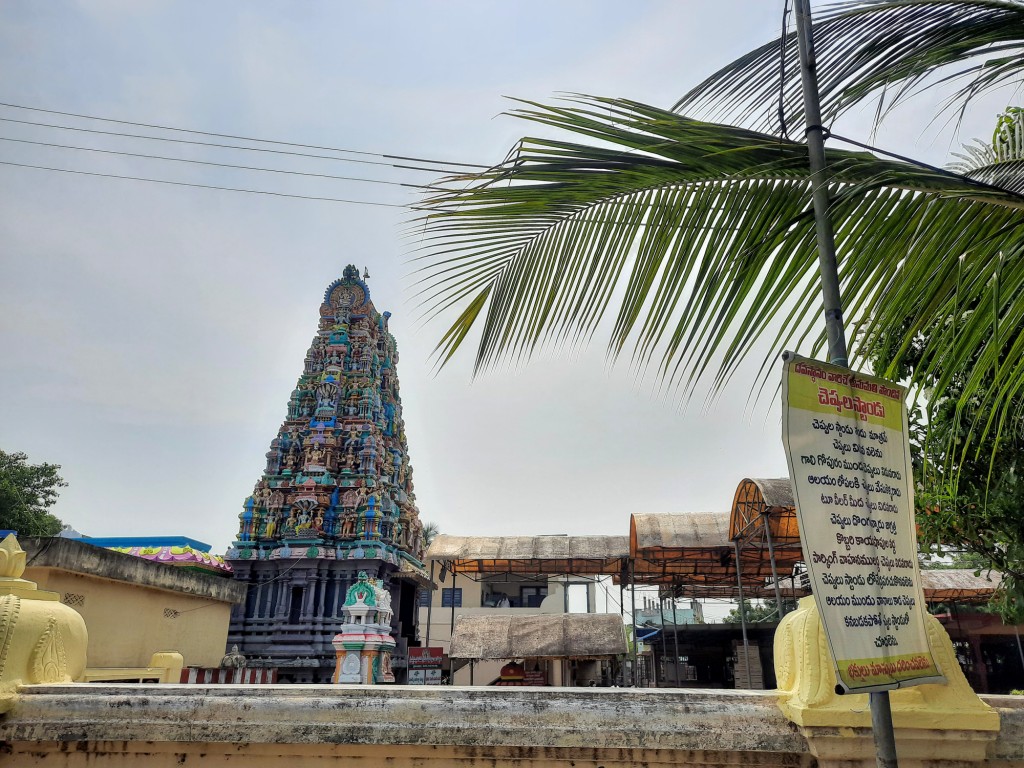

History
The temple was founded by Sri Tulluru Bala Narasimha Rao Gowda in 1961 but the deities were installed in 1972. The endowments department took over the control of the temple in 1973.

The Temple
This temple is facing towards east with five tiered rajagopuram. There is an entrance arch at the road. Balipeedam, Dwaja Sthambam and Garuda shrine can be seen immediately after the rajagopuram. The temple consists of sanctum, antrala and maha mandapa. The sanctum enshrines the image of presiding deity, Venkateshwara. Shrines of Padmavathi, Lakshmi, Hanuman, Chakrathalvar and Narasimha can be seen in the temple premises.


Temple Opening Time
The temple remains open from 06.00 AM to 01.00 PM and 03.30 PM to 08.00 PM. On Saturdays, the temple remains open from 05.30 AM to 02.00 PM and 03.30 PM to 09.00 PM.
Connectivity
The temple is located at about 2 Kms from Tenali Bus Stand, 2 Kms from Tenali Junction Railway Station, 27 Kms from Chandole, 31 Kms from Guntur, 37 Kms from Vijayawada and 52 Kms from Vijayawada Airport. Tenali is situated on Vijayawada to Chandole route.
Kanaka Durga Temple, Vijayawada – Legends
Kanaka Durga Temple, Vijayawada – Legends
Indrakeeladri:
As per legend, Sage Keela performed intense penance on goddess Durga to annihilate the demons who were causing troubles to the common people and Sages in the region. Pleased with his penance, goddess Durga appeared before him and offered a boon. He pleased the goddess to stay in her head and keep an eye on the demons. The goddess Durga informed him that he should stay at this place in the form of mountain. She further said that after the annihilation of the demons in the Krita Yuga, she would come here and take her abode in his head.
As per the instruction of the goddess Durga, he stayed here in the form of mountain known as Keeladri. After the annihilation of Mahishasura, the goddess Durga took abode in the Keeladri mountain. She took the form of Mahisasura Mardini with eight arms holding different weapons, riding on a lion and trampling Mahishasura on the hill of Keeladri. Indra and the devas worshipped goddess Kanaka Durga on this hill. Hence, the hill came to be called as Indrakeeladri.
Daughter of Sage Indirakila:
As per Skanda Maha Purana, Sage Indirakila performed penance on Mother Parvathi requesting her to be his daughter. Pleased with his penance, Mother Parvathi granted the boon on condition that Indirakila should become a mountain to have her as his daughter. After the sage became the mountain, she took her abode on top of the mountain.
Malleswara Swamy:
Lord Shiva took his abode on an adjacent hillock as Jyothirlinga to accompany Parvati. It is said that Lord Shiva was worshipped by Lord Brahma with jasmines (Mallelu). Thus, he came to be called as Malleswara Swamy.
Bezwada:
As per legend, once, Vijayawada was a rocky area strewn with hills obstructing the flow of the Krishna River. Thus, the land was rendered unfit for habitation or agriculture. People suffered due to the heavy floods as the mountains obstructed the path of the Krishna river. People prayed to Lord Malleswara and Mother Kanakeswari to direct the mountain to give way to the river. Lord Shiva made Bejjam (Bejjam means tunnel in Telugu) into the hills and thus providing free passage to the river. Thus, the place came to be called as Bezwada and later got changed to Vijayawada.
Vijayawada:
Arjuna, one of the Pandavas, performed intense penance for Lord Shiva on Indrakeeladri mountain in Dvapara Yuga in order to get the most powerful Astra called Pasupathastra. Pleased with his penance, Lord Shiva appeared before him and bestowed him with Pasupathastra. He also blessed him and called him as Vijayan (Victorious one). Thus, the place came to be called as Vijayawada. The installation of Vijayeswara is said to have been done by Arjuna. As Arjuna worshipped here, this place was also came to be called as Phalguna Kshetra.
Nose Ring of Durga:
The nose-ring of goddess Durga is never removed in this temple. As per the legend, Goddess Durga once borrowed the nose ring of Krishna and did not return it. Krishna took a vow that by the end of Kaliyuga he would take back the nose ring by raising its level to the hill top.
References in sacred texts:
Kalika Purana, Durga Saptashati and other vedic literature have mentioned about Goddess Kanaka Durga on the Indrakeeladri and have described the deity as Swayambhu, (self-manifested) in Tritiya Kalpa.
Kanakachala:
As goddess Durga shined on this mountain with golden colour glowing, the hill came to be called as Kanakachala, the place came to be called as Kanakapuri and the goddess came to be called as Kanakeswari.
Dharma, builder of this temple:
As per legend, the temple is believed to be built by Dharma, the eldest of the Pandava brothers.
Sage Agasthya installed a Shivalinga here:
As per legend, Sage Agasthya installed a Shivalinga here and named it as Malleswara.
Saint Shankaracharya installed Sri Chakra here:
As per legend, Saint Shankaracharya visited this temple in 8th century CE and installed Sri Chakra at the feet of the goddess.
Bijapuri:
As many herbal plants with medicinal effects were found on the banks of the river, this place also came to be called as Bijapuri.
Kanaka Durga Temple, Vijayawada, Andhra Pradesh
Kanaka Durga Temple, Vijayawada, Andhra Pradesh
Kanaka Durga Temple is a Hindu Temple dedicated to goddess Durga located in Vijayawada City in NTR District in Andhra Pradesh, India. Kanaka Durga, the goddess of power and riches is considered the presiding deity of Vijayawada. This temple is considered one of the largest temples in India and second largest temple in Andhra Pradesh. The temple is situated on the Indrakeeladri hill, on the banks of Krishna River.


For brief details, please refer below link;
https://hindutemples-india.blogspot.com/2023/09/kanaka-durga-temple-vijayawada-legends.html
History
The temple is believed to be built in 8th century CE. It is said that Hiuen Tsang, the Chinese traveler visited this temple. The temple received extensive patronage from Western Chalukyan King Vikramaditya VI during 11th century CE. It is said that Adi Sankara visited this temple and installed the Sri Chakra here. Inscriptions of different dynasties are found in the temple.


The Temple
The temple is situated on top of the Indrakeeladri mountain. The sanctum enshrines the image of presiding deity, Kanakadurga / Kanakeswari / Mahishasura Mardini. She is about four feet tall. She is eight armed holding several weapons. She is in standing posture over the demon Mahishasura and piercing him with her trident. The presiding deity is Swayambhu Moorthy (self-manifested) and considered very powerful.


Kanaka Durga is worshipped as Kanaka Mahalakshmi, Mahalakshmi form of Durga. All the poojas related to Lakshmi devi are performed in the temple. It is said that Adi Sankara visited this temple and installed the Sri Chakra here. The sanctum is covered with gold. There is a shrine for his consort Malleswara Swamy on the Indrakeeladri mountain adjacent to this temple. There is a hillock on the southern side of this temple.


It is carved with sculptures with inscriptions indicating the names of the gods and goddesses. Shrines of Krishna, Kali, Ganesha, Anjaneya, Nataraja, Sivagamasundari, Nagendra Swamy and Subramanya can be seen in the temple premises. Lord Anjaneya Swamy is the Kshetrapalaka (place guardian) of this temple. He is present near a big fig-tree in front of the temple. The temple has two Choultries near the temple for the benefit of the devotees.


Temple Opening Time
The temple remains open from 04.00 AM to 11.00 AM and 04.00 PM. to 09.00 PM.
Festivals
Navaratri is the most famous festival celebrated here. The Goddess Shakambhari festival is celebrated for three days during the month of Ashadha every year. It is celebrated from Sukla Paksha Thrayodashi to Purnima, of Ashadha month every year. Chaitra Brahmotsavam, Vasantha Navaratri, Saraswathi Pooja and Theppotsavam are the other festivals celebrated here. Varalakshmi Vratam is performed on all Fridays during the month of Shraavana.
Prayers
Devotees pray for safety from enemies and for prosperity in life. People perform abishek and archanas for Goddess Kanaka Durga.
Contact
Kanaka Durga Temple,
Indrakeeladri, Vijayawada,
NTR District – 520 001
Andhra Pradesh, India
Phone: +91 866 2423 600 / 2425 744
Web: https://kanakadurgamma.org
Connectivity
The temple is located at about 2 Kms from Vijayawada Junction Railway Station, 42 Kms from Vijayawada Bus Station, 23 Kms from Vijayawada Airport and 35 Kms from Amaravathi. Vijayawada is well connected to other parts of Andhra Pradesh and India by all means of transport.
Ranganatha Temple, Gandikota – The Temple
Ranganatha Temple, Gandikota – The Temple
This temple is facing towards east with a gopura gateway. The temple stands over a high ground and completely enclosed within a compound wall. The temple consists of sanctum, antrala, mukha mandapa and maha mandapa. The maha mandapa is rectangular on plan and is supported by twenty four pillars arranged in four rows of six each. The pillars are carved with Hindu deities, male & female figures, floral motifs and geometrical patterns.


The mukha mandapa is square in plan. The eastern doorway of the mukha mandapa has three bands of decoration. The doorjamb is adorned with lotus petal carvings, creepers, and floral motifs. The centre of the lintel has a carving of Gajalakshmi. The base of the doorjamb has carvings of dvarapalas on either side. The architrave above the door way is carved with the ten avatars of Lord Vishnu. The mukha mandapa has sixteen pillars arranged in two squares one within the other.

.jpg)
All the pillars of the outer square are attached to the wall and each having a plain rectangular shaft. The central four pillars are intricately carved. The ceiling of the mukha mandapa in between the central four pillars is arranged in lozenge shaped or double square method with a lotus medallion in the centre. The sanctum is square on plan. The superstructure over the sanctum is completely lost. The doorway of antarala has three bands of decoration.

.jpg)
The doorjamb is decorated with creepers, flowers and lotus petal carvings. The base of the doorjamb has carvings of dvarapalas on either side. The ceiling of the sanctum is arranged in lozenge shaped design with an inset lotus medallion in the centre. The image in the sanctum is missing. The kitchen hall (madapalli) is situated on the south eastern corner of the prakaram. It consists of two rooms. There is a four pillared mandapa in front of the kitchen hall.


There is another mandapa, which is completely in ruins, built in the space provided by the outward projection of south prakara. The Kalyana mandapa is situated on south western corner of the prakaram. The mandapa is supported by sixteen pillars. There is a pavilion in the centre with four pillars. The ceiling over the pavilion is adorned with a lotus medallion. The pillars are decorated with Hindu deities, floral motifs and geometrical patterns.


There is an east facing shrine for Devi situated to the north of the Kalyana mandapa. This shrine is in ruined condition. This shrine consists of sanctum and a six pillared entrance porch. The Devi image is missing. There is no vimana over the sanctum. The walls of the sanctum are devoid of any decoration. There are two rooms each with a doorway situated on the north eastern corner of the prakara. There is a ten pillared mandapa situated in front of these rooms.
Ranganatha Temple, Gandikota, Andhra Pradesh
Ranganatha Temple, Gandikota, Andhra Pradesh
Ranganatha Temple is a Hindu Temple dedicated to Lord Vishnu located in Gandikota Village in Jammalamadugu Mandal in Kadapa District in Andhra Pradesh, India. This temple is situated inside the fort complex of Gandikota. The temple is one of the state protected monuments in Andhra Pradesh declared by Archaeological Survey of India.


.jpg)
History
This temple is believed to have been built in 15th century CE by the Vijayanagara Kingdom. The earliest inscription in this temple is dated to 1557 CE. It records the gift of land to the temple of Ranganayakulu at Gandikota.

.jpg)


The Temple
For brief details, please refer below link;
https://hindutemples-india.blogspot.com/2023/09/ranganatha-temple-gandikota-temple.html
Connectivity
The temple is located at about 500 metres from Gandikota Bus Stop, 12 Kms from Gudemcheruvu, 15 Kms from Jammalamadugu Old Bus Stand, 16 Kms from Jammalamadugu New Bus Stand, 18 Kms from Jammalamadugu Railway Station, 29 Kms from Muddanuru Railway Station, 29 Kms from Muddanuru, 78 Kms from Kadapa Airport and 87 Kms from Kadapa. Devotees should travel on Jammalamadugu to Muddanuru route and should take Gandikota road immediately after crossing the Pennar river at Gudemcheruvu and travel for another 12 Kms to reach this temple. There are buses available from Jammalamadugu Old Bus Stand (Gandhi Statue Junction) to Gandikota.
Madhavaraya Temple, Gandikota – The Temple
Madhavaraya Temple, Gandikota – The Temple
This temple is facing towards east with a massive four tiered rajagopuram. The rajagopuram might be of five tiers and the topmost tier have been lost completely. The temple is completely enclosed within a massive granite wall. A pillared mandapa runs along the south, west and north in the prakaram abutting the compound wall. The temple consists of sanctum, antrala, mukha mandapa and maha mandapa. The maha mandapa is rectangular on plan and is supported by forty pillars.


The pillars are carved with Hindu deities, musicians, floral motifs, animals and geometrical patterns. The mukha mandapa is also rectangular in plan. It has entrance porches on northern and southern sides. The entrance porches are supported by two pillars. All the entrances of the mukha mandapa have doorjambs. The centre of the lintel has a carving of Gajalakshmi. The base of the doorjamb has carvings of dvarapalas on either side.


There are four finely carved pillars at the centre of the mukha mandapa. The ceiling in between the four central pillars is adorned with a lotus medallion. The walls of the mukha mandapa are plain except the carvings like lion, lotus flowers, monkey, etc. The sanctum is square on plan. The superstructure over the sanctum is completely lost. The doorway of antarala has three bands of decoration. The doorjamb is decorated with creepers, flowers and lotus petal carvings.


The centre of the lintel has a carving of Gajalakshmi. The base of the doorjamb has carvings of dvarapalas on either side. The image in the sanctum is missing. It is said that the main deity from the sanctum was shifted to Mydukuru after the Nizams finally broke the fort security. The kitchen hall (madapalli) is situated on the south eastern corner of the prakaram. This hall is closed on all sides except the doorway on the west. The hall is supported by four central pillars.


There is a six pillared mandapa in front of the kitchen hall. The Kalyana mandapa is situated on south western corner of the prakaram. The mandapa is in dilapidated condition and is supported by sixteen pillars. The navagraha mandapa is situated on the north eastern portion of the prakaram. It is situated to the west of Azhwars shrine. This mandapa is closed on all sides except the doorways on southern, eastern and western sides.


All the doorways have doorjambs decorated with creepers, flowers and lotus petal carvings. The centre of the lintel has a carving of Gajalakshmi. The base of the doorjamb has carvings of dvarapalas on either side. There is a raised pavilion in the centre with four pillars. This manḍapa might have been used as the shrine of planets or to celebrate some festival of the main deity. The Azhwar shrine is situated on the north east corner of the prakaram. This shrine consists of sanctum and an entrance porch. The sanctum is oblong in plan.
Madhavaraya Temple, Gandikota, Andhra Pradesh
Madhavaraya Temple, Gandikota, Andhra Pradesh
Madhavaraya Temple is a Hindu Temple dedicated to Lord Vishnu located in Gandikota Village in Jammalamadugu Mandal in Kadapa District in Andhra Pradesh, India. This temple is situated inside the fort complex of Gandikota. This temple is the grandest structure in Gandikota. The temple is one of the state protected monuments in Andhra Pradesh declared by Archaeological Survey of India.


History
This temple is believed to have been built in 16th century CE during the reign of Emperor Sri Krishna Devaraya of Vijayanagara Kingdom.


The Temple
For brief details, please refer below link;
https://hindutemples-india.blogspot.com/2023/09/madhavaraya-temple-gandikota-temple.html
Connectivity
The temple is located at about 1 Km from Gandikota Bus Stop, 12 Kms from Gudemcheruvu, 15 Kms from Jammalamadugu Old Bus Stand, 16 Kms from Jammalamadugu New Bus Stand, 18 Kms from Jammalamadugu Railway Station, 29 Kms from Muddanuru Railway Station, 29 Kms from Muddanuru, 78 Kms from Kadapa Airport and 87 Kms from Kadapa. Devotees should travel on Jammalamadugu to Muddanuru route and should take Gandikota road immediately after crossing the Pennar river at Gudemcheruvu and travel for another 12 Kms to reach this temple. There are buses available from Jammalamadugu Old Bus Stand (Gandhi Statue Junction) to Gandikota.
Kapotesvara Temple, Chejarla – The Temple
Kapotesvara Temple, Chejarla – The Temple
This temple is facing towards east with a single tiered rajagopuram. The temple consists of sanctum, antrala, maha mandapa and mukha mandapa. The sanctum is apsidal on plan. The sanctum enshrines the presiding deity, Kapotesvara in the form of Shiva Linga. The Linga said to be body (Kalebara) of Sibi with the head cut off. There are two large vertical cavities on top of the Linga. One of these cavities helps to drain off the Abhisheka Tirtha to an unknown place.


The cavities in the Linga looks like portions have been scooped or cut out. These are said to be the places of the body, from which Shibi cut off his own flesh, in order to save the life of the pigeon (Kapota). The smell of raw flesh and blood comes out of this Linga even today. The front of the sanctum is decorated with a chaitya-arch, similar to those found in Buddhist rock-cut architecture. The vimana, structure over the sanctum is in the form of Gajabrusta, the shape of an elephant in its sitting posture.
.jpg)
.jpg)
.jpg)
The exterior of the temple is devoid of any decoration. There is a temple dedicated to Lord Subramanya situated on top of the hills. There are steps to reach the temple. There are several shrines housing Shiva Lingas can be seen on the eastern side of the outer prakaram. Shrines of Vinayaga, Kumara, Surya, goddess Parvati and Durga can be seen in the temple premises. There is a Sahastralinga (thousand lingas) can be seen in front of the main shrine. An inscriptional stone slab with a trident symbol also can be seen in the temple premises.


Kapotesvara Temple, Chejarla – History
Kapotesvara Temple, Chejarla – History
This temple is believed to be built in 3rd century CE and was reconstructed by Emperor Mahendra Varman I (600 – 630 CE) of Pallava Dynasty. There is a Sanskrit inscription of Pallava Emperor Mahendra Varman I in grantha script on the face of the slab fixed behind the Nandi mandapa in front of the sanctum. This inscription is fully damaged however few portions of the inscriptions can be read. This inscription records the various titles of Mahendra Varman I namely Avani Bhajana, Vegavathi Sanatha and Mahendra Vikrama Varma.
It also records the construction of this temple and appointments of twelve Devakanmis for administering this temple. An inscription of Emperor Krishna Devaraya of Vijayanagara Kingdom dated in 1517 CE records a gift of 12 puttis measured by the Peddapatinagari Ambaram and 12 varahas to Namasivaya, the Srikarana of Lord Kapotesvara by Saluva Timmarasa at the command of the king for the merit of his family.
The Sanskrit verse at the start of the inscription refers Chejarla as the Sarva Manya Agrahara. This inscription also records the remission of certain taxes and specifies the quantities of rice, dhal, ghee, etc., for the daily use in the temple as well as the shares of the offerings to the various officials and temple servants including the Srikarana. This inscription is found on a slab near the mandapa in the temple.
Kapotesvara Temple, Chejarla – Legends
Kapotesvara Temple, Chejarla – Legends
As per legend, Emperor Sibi was the son of Ushinara of the Chandravamsha (Lunar dynasty). He was known for his liberal beliefs and selflessness. He was ruling the kingdom of Kashmir. He had two brothers namely Mehadambara and Jeemutavahana. One of his brother, Mehadambara took permission from his brother and reached the place Cherum Chorla as part of his pilgrimage where Rishis performing penance in the caves of a hill called Devarakonda.
Mehadambara performed penance here along with the sages. After his demise, he was buried on the summit of the hill, as his body would not perish it assumed the form of Linga. Villagers saw this Lingakara and built a shrine called Linga Mehadambeswara. The news reached Sibi by the people who accompanied him during his pilgrimage. The other brother, Jeemutavahana started to Cherum Chorla to bring the body of his brother back to Kashmir.
On reaching this place, he too followed the footsteps of his brother and his body reached Kailash. This incident was reported to Sibi by the people accompanied Jeemutavahana. Emperor Sibi himself reached this place and started performing hundred yajnas as he felt the place was divine. It is said that by performing hundred yajnas one would reach the realm of Lord Brahma. Lord Brahma, Lord Vishnu and Lord Shiva decided to test the devotion of Sibi and descended to the Earth at a place called Rupanaguntla.
Lord Shiva transformed as a hunter, Brahma as an arrow and Vishnu as the pigeon. Lord Shiva as a hunter trying to shoot the pigeon. The pigeon flew rapidly and found refuge in the hands of the Sibi, seeking his protection. During this incident, Sibi was performing his 100th Yajna. Lord Shiva in the form of hunter requested Sibi to release the bird so that he can kill and eat it. However, Sibi told the hunter that it was his dharma to protect the one who approached him.
He also determined that it was his moral obligation to protect the bird as well as fulfilling the wish of the hunter. Sibi placed the bird on one side of the balancing pan and tore portions of his body and placed it on the other side of the pan. The bird started weighing more to balance this Sibi started cutting large portions of his body and placed on the scale. The Gods were pleased with his devotion appeared before him in actual form and restored his life and Yajna. Lord Sibi desired the place of Kailasa for himself and his staff.
Further, he also desired that all their bodies should be transformed into Lingas. Lord Siva granted the wishes of Sibi and transformed them into Lingas. The Shiva Linga form of Emperor Sibi came to be called as Kapotesvara (Kapota means pigeon). Even today, the Linga in this temple has large cavities as if portions have been scooped or cut out, and these are said to be the places of the body, from which Sibi cut off his own flesh, in order to save the life of the pigeon. Later, a temple was built for the Linga form of Emperor Sibi.
Kapotesvara Temple, Chejarla, Andhra Pradesh
Kapotesvara Temple, Chejarla, Andhra Pradesh
Kapotesvara Temple is a Hindu Temple dedicated to Lord Shiva located in Chejarla Village in Nekarikallu Mandal in Palnadu District in Andhra Pradesh, India. This temple is one of the architecturally important temples because it is considered as one of the 11 major apsidal (Gajabrusta) Hindu temples in Andhra Pradesh. The temple is one of the state protected monuments in Andhra Pradesh declared by Archaeological Survey of India.


For brief details, please refer below link;
https://hindutemples-india.blogspot.com/2023/09/kapotesvara-temple-chejarla-legends.html
History
For brief details, please refer below link;
https://hindutemples-india.blogspot.com/2023/09/kapotesvara-temple-chejarla-history.html
The Temple
For brief details, please refer below link;
https://hindutemples-india.blogspot.com/2023/09/kapotesvara-temple-chejarla-temple.html
Temple Opening Time
The temple remains open from 06.00 AM to 12.00 Noon and 03.00 PM to 08.00 PM.
Festivals
Maha Shivaratri, Navratri and Karthika Deepa are the festivals celebrated here with much fanfare.
Connectivity
The temple is located at about 11 Kms from Gudipadu, 20 Kms from Nekarikallu, 20 Kms from Rompicharla, 27 Kms from Narasaraopeta, 27 Kms from Narasaraopeta Railway Station, 34 Kms from Piduguralla, 68 Kms from Addanki, 73 Kms from Guntur and 141 Kms from Vijayawada Airport. The temple is situated at about 11 Kms to the north west of Gudipadu on Rompicharla to Nekarikallu route.
Bugga Ramalingeswara Temple, Tadipatri – The Temple
Bugga Ramalingeswara Temple, Tadipatri – The Temple
This temple is facing towards west with three entrances in the south, north and west. All the entrances are provided with a gopuram. The main entrance is through the southern gopuram. It is a majestic unfinished gopuram carved intricately with various deities, birds, animals, floral motifs and geometric designs. The northern gopuram is famous for its sculptures. Some of the sculptures are Ashta Dikpalakas (each of the dikpalakas are depicted with their respective vahana (mount) and carrying weapons), manifestations of Lord Shiva such as Ardhanareeswara, Uma Maheshwara, Dakshinamoorthy, Kevalamurti, Nataraja, Haryadhra Moorthy, Bikshadana and Ramalinga Nayudu (he is depicted as a tall figure, wearing the typical conical Vijayanagara era crown).


The western gopuram has the insignia of the Vijayanagara dynasty, which is the boar with a sword in front and the sun and moon above, clearly carved on it. It overlooks the Penna River. Nandi, Balipeedam and Dwaja Sthambam can be seen immediately after the western gopuram. The main shrine consists of sanctum, ardha mandapa and mukha mandapa with entrance porches on northern and southern sides. The pillars of the entrance porches has pillars with rearing lions and pilasters. There is a shrine dedicated to Veerabhadra to the east of the southern porch.


There is a shrine dedicated to Parasurama near the northern porch. The sanctum enshrines the presiding deity, Bugga Ramalingeswara in the form of Shiva Linga. Lord is a Swayambhu Moorthy (self-manifested). The Swayambhu Linga is placed on a pedestal. It is said that the Linga is placed over a perpetual spring (Bugga). The water is seen flowing out of the pedestal all the time even though the Shiva Linga is about 18 feet higher than the Penna river and that the Penna river is dry for most of the year. This water is treated as holy water by the devotees. The vimana over the sanctum is of two tiers.
.jpg)

There is a shrine for goddess Rajarajeshwari on the southern side of the sanctum. Her shrine consists of sanctum, ardha mandapa and mukha mandapa. The vimana over the sanctum of the goddess shrine is of two tiers. There is a south facing shrine for Lord Rama in the goddess shrine. The exterior of the goddess shrine is intricately carved than the main shrine. The mukha mandapa contains sixteen pillars and nine pilasters. The mukha mandapa has four pillars at the centre forming a mandapa. The ceiling has been carved with a lotus There is a Kalyana mandapa on the south west corner of the temple premises.

.jpg)
Bugga Ramalingeswara Temple, Tadipatri – Legends
Bugga Ramalingeswara Temple, Tadipatri – Legends
Swayambhu Linga:
As per legend, When the cows of Pemmasani Ramalinga Nayudu were taken to the fields to graze, one particular cow used to empty its milk on an anthill. The cowherd had hurled an axe at the ant-hill. The same night Ramalinga had a dream in which Lord Shiva told him that the cowherd had harmed him. Further, Lord Shiva asked Ramalinga to build a temple at the spot. The next day Ramalinga and the villagers went to the spot and saw the Linga. They conveyed the new to the Vijayanagara Emperor. He granted a huge amount of money to build a temple for Lord Shiva. Further, he also entrusted sculptors for the construction activities. This temple was built under the guidance of Pemmasani Ramalinga Nayudu.
Bugga Ramalingeswara:
It is said that there is a spring named Bugga underneath the Shiva Linga and the temple was built by Pemmasani Ramalinga Nayudu I. Hence, Lord Shiva of this temple came to be called as Bugga Ramalingeswara.
Sage Parasurama worshipped Lord Shiva here:
As per legend, Sage Parasurama performed penance and worshipped Lord Shiva at this place. It is also said that the temple had been established at the site, where sage Parasurama performed penance.
Myth of drowning of Tadipatri:
There is an idol of a goddess by the edge of the river. The locals believe that the city will be drowned if the level of the river reaches the navel of the Goddess.
Tativanam:
As the place was abundant with Palmyra trees (Tati), the place came to be called as Tativanam.
Bugga Ramalingeswara Temple, Tadipatri, Andhra Pradesh
Bugga Ramalingeswara Temple, Tadipatri, Andhra Pradesh
Treteswara Temple is a Hindu Temple dedicated to Lord Shiva located in Tadipatri City in Tadipatri Mandal in Anantapur District in Andhra Pradesh, India. This temple is situated at about 1 Km from Tadipatri Chintala Venkataramana Temple on the southern bank of Penna River. The temple is one of the state protected monuments in Andhra Pradesh declared by Archaeological Survey of India.


Legends
For brief details, please refer below link;
https://hindutemples-india.blogspot.com/2023/09/bugga-ramalingeswara-temple-tadipatri-legends.html
History
This temple is said to have been constructed between 1490 CE and 1509 CE by Pemmasani Ramalinga Nayudu I, a Pemmasani Nayaka chieftain of the Gutti-Gandikota region during the reign of the Vijayanagara Empire. The Tadipatri Kaifiyat, collected by Col Mackenzie in 1802, narrates the story and events that led to the construction of temple. The temple was plundered by the Muslim rulers and was not in worship. The temple was renovated by British colonial administrator Thomas Munroe and the worship restarted in 1800.


The Temple
For brief details, please refer below link;
https://hindutemples-india.blogspot.com/2023/09/bugga-ramalingeswara-temple-tadipatri-temple.html
Temple Opening Time
The temple remains open from 06.00 AM to 01.00 PM and 04.00 PM to 08.00 PM.
Festivals
The Rathotsava (Chariot festival) is the most famous festival celebrated here on the Shivaratri day (Feb-Mar). Sri Ramanavami is another festival celebrated here.
Connectivity
The temple is located at about 1.5 Kms from Tadipatri Bus Stand, 4 Kms from Tadipatri Railway Station, 51 Kms from Gooty, 57 Kms from Anantapur, 112 Kms from Kadapa, 246 Kms from Bengaluru Airport, 252 Kms from Tirupati and 269 Kms from Bengaluru. Tadipatri is situated on Kadapa to Gooty route. Regular trains are available from Tirupati to Tadipatri. Direct buses are available from Tirupati to Anantapur. Tadipatri is well connected to Anantapur by buses.
Vishnu Temple, Aiti, Madhya Pradesh
Vishnu Temple, Aiti, Madhya Pradesh
Vishnu Temple is a Hindu Temple dedicated to Lord Vishnu located at Varahawali Village in Morena Tehsil in Morena District in Madhya Pradesh, India. The temple is situated close to Bateshwar Group of Temples, Padhawali. The Temple is one of the state protected monuments in Madhya Pradesh declared by Archaeological Survey of India.

.jpg)
History
The temple is believed to be built in 11th century CE by Kachchhapaghata rulers.
.jpg)
.jpg)
The Temple
This temple is facing towards east and stands over a low raised platform. The temple consists of sanctum, narrow antrala and mandapa. The mandapa is partly in ruined state. The mandapa is enclosed with a parapet walls on all sides except the entrance at the eastern side. The pillars of the mandapa are decorated with depiction of various figures. The doorway of the sanctum is profusely ornamented.
.jpg)
.jpg)
The base of the doorjamb is carved with river goddesses Ganga and Yamuna with their attendants. The doorjamb is also carved with erotic figures. An image of Lord Shiva is carved at the center of the lalata bimba and Lord Vishnu and Lord Brahma at terminal sides. Images of Navagrahas and Sapta Matrikas can be seen in between them. The exterior is carved with images of deities, floral motifs and geometrical patterns.
.jpg)
.jpg)
Connectivity
The temple is located at about 2 Kms from Rethaura Kalan Railway Station, 6 Kms from Rethaura Kalan, 10 Kms from Padhavali, 11 Kms from Bateshwar Group of Temples, 11 Kms from Malanpur, 19 Kms from Gwalior Airport, 24 Kms from Nurabad, 25 Kms from Gwalior, 27 Kms from Gwalior Junction Railway Station and 38 Kms from Morena. The temple is situated on Morena to Malanpur route via Padhavali.
Bhavanarayana Temple, Bapatla – History
Bhavanarayana Temple, Bapatla – History
The temple is believed to have been constructed in 1465 CE by a Chola king named Krimikanta Chola and was restored by King Vasireddi Venkatadri Naidu of Amravati kingdom in 1856 CE. It is said that the Chola King installed eight village deities on the eight corners of the village. The temple received extensive patronage from Gajapati Kings and Vijayanagara Kings.
This temple suffered destruction at the hands of Muslim Kings and British. It is said that the French demolished the eight deities in the village. The temple was renovated by Divan Sri Raja Kadrengula Jogi Jagannath Rao Bahadur from Rajahmundry and later by the Zamindari of Challapalli Raja Vasireddy Venkatadri. The rajagopuram was built by the Zamindari of Challapalli, Raja Vasireddy Venkatadri in 1850 CE.
The rajagopuram collapsed on 23 Oct 2011 and the rajagopuram was rebuilt by the ASI. The temple is protected as monuments of national importance by the central Archaeological Survey of India. The town was formerly known as Bhavapattana, Bhavapuri, Bhavapattu and Bhavapatta. It is said that the town was named after the Bhavanarayana Temple located in the town. Later, these names were transformed to the present name of Bapatla.
Bhavanarayana Temple, Bapatla – History
Bhavanarayana Temple, Bapatla – History
The temple is believed to have been constructed in 1465 CE by a Chola king named Krimikanta Chola and was restored by King Vasireddi Venkatadri Naidu of Amravati kingdom in 1856 CE. It is said that the Chola King installed eight village deities on the eight corners of the village. The temple received extensive patronage from Gajapati Kings and Vijayanagara Kings.
This temple suffered destruction at the hands of Muslim Kings and British. It is said that the French demolished the eight deities in the village. The temple was renovated by Divan Sri Raja Kadrengula Jogi Jagannath Rao Bahadur from Rajahmundry and later by the Zamindari of Challapalli Raja Vasireddy Venkatadri. The rajagopuram was built by the Zamindari of Challapalli, Raja Vasireddy Venkatadri in 1850 CE.
The rajagopuram collapsed on 23 Oct 2011 and the rajagopuram was rebuilt by the ASI. The temple is protected as monuments of national importance by the central Archaeological Survey of India. The town was formerly known as Bhavapattana, Bhavapuri, Bhavapattu and Bhavapatta. It is said that the town was named after the Bhavanarayana Temple located in the town. Later, these names were transformed to the present name of Bapatla.
Bhavanarayana Temple, Bapatla, Andhra Pradesh
Bhavanarayana Temple, Bapatla, Andhra Pradesh
Bhavanarayana Temple is a Hindu Temple dedicated to Lord Vishnu located in Bapatla City in Bapatla Mandal in Bapatla District in Andhra Pradesh, India. This temple is protected as monuments of national importance by the central Archaeological Survey of India.

.jpg)
Legends
As per Brahma Vyvarta Purana, Sage Agastya explained about the importance of this shrine to the sages of Naimisaranya forest.


History
For brief details, please refer below link;
https://hindutemples-india.blogspot.com/2023/08/bhavanarayana-temple-bapatla-history.html
The Temple
This temple is facing towards east with four tiered rajagopuram. There are two dwaja sthambams immediately after the rajagopuram. One dwaja sthambam is taller and the other one shorter than the first one. The main shrine consists of sanctum, antrala, maha mandapa and mukha mandapa. The sanctum enshrines an image of the presiding deity, Ksheera Bhava Narayana Swamy.


The deity is said to be Swayambhu Moorthy (self-manifested). There is a separate shrine for his consort, Sundaravalli in the temple premises. Shrines of Jwala Narasimha, Azhwars, Rama with his consort Sita & his brother Lakshmana, Kalinga Mardana and Prasanna Anjaneya Swamy in the temple premises.


Festivals
Pavitrotsavam and Radhotsavam are the festivals celebrated here with much fanfare.
Connectivity
The temple is located at about 350 metres from Bapatla Railway Station, 500 metres from Bapatla Old Bus Stand, 1.5 Kms from Bapatla New Bus Stand, 17 Kms from Chirala, 43 Kms from Bhattiprolu, 73 Kms from Ongole, 90 Kms from Machilipatnam and 99 Kms from Vijayawada Airport. Bapatla is situated on Ongole to Machilipatnam route.
Treteswara Temple, Attirala – Legends
Treteswara Temple, Attirala – Legends
Treteswara:
As per legend, a demon named Tretasura lived in this region during the Treta Yuga. He terrorized the sages and humans. To get rid of him, Sage Narada and the other sages performed Yagna in propitiation of Lord Shiva. Lord Shiva came out from the Yagna Kunda in the form of a Tejo Lingam and annihilated Tretasura. Thus, Lord Shiva of this temple came to be called as Treteswara.
Parasurama Kshetram:
Sage Jamadagni lived along with his wife Renuka lived in the Ramshrung mountains. Renuka helped the Jamadagni in all of his tasks of performing various rituals and puja. Renuka would wake up early in the morning to bathe in the river with complete concentration and devotion. Her devotion was so powerful that she was able to create a pot to hold water made only of sand, one fresh pot every day. She would fill this pot, on the bank of the river and would use a snake which was nearby, turning it into a rope-like convolution and placing it on her head, so that it supported the pot.
Thus, she brought the water to Jamadagni for his rituals of oblation. Renuka gave birth to five sons namely Vasu, Viswa Vasu, Brihudyanu, Brutwakanwa and Rambhadra. Rambhadra was the youngest and most beloved, gaining the favour of Lord Shiva and Parvati and hence called Parashurama (the sixth incarnation of Vishnu). One day when Renuka went to the river, she saw Gandharva spirits playing. These were young couples carelessly frolicking in the water with abandon. For a moment, she lost her concentration and devotion and fantasized about playing in the river with her husband.
She wished she and her husband had such fun sometimes too, living so close to such a beautiful place. After some time, Renuka came to her senses and cursed herself for her indiscretion. She hurriedly bathed, as she had lost precious time, and tried to create the pot, but was unable to as she had lost her concentration. She even tried to catch the snake, but it disappeared. Disappointed by this, she returned to the ashram in shame. Jamadagni came to know of what had happened with his yoga drusti (spiritual eye). He was furious with Renuka and Renuka and ordered his sons to kill their mother for the sin committed by her.
One by one, four of them refused flatly. Jamadagni, who possessed the power to burn anyone to ashes with his one look, was so angry that he went berserk and turned four of his sons into four piles of ashes. Parashurama, who was not there when this happened, found his mother weeping by the piles of ashes when he arrived, and his father was still raging mad. Jamadagni told him what happened and ordered him to behead his mother for her infidelity. Parashurama had to think quickly. Knowing his father's powers and the extent of his anger, Parashurama immediately obeyed his father, using his axe.
His father then offered a boon to Parashurama, who asked for his mother and brothers to be brought back to life. Jamadagni having no alternative, brought Renuka and his sons back to life. Yet the sin of killing his mother stuck to him and a bath in several sacred rivers could not absolve him of it. It is the bath in the Bahuda river at this place had absolved his sin. Hence, the place came to be called as Hathyarala (Hathya means killing and Rale means removed off). Thus, the place is famously called as Parasurama Kshetram.
Bahuda Nadi / Cheyyeru:
As per legend, two brothers namely Sage Shanka and Sage Likhitha were living during Treta Yuga. Once, Shanka was performing penance in a garden and Likhitha went to see him. He decided not to disturb his penance and waited in the garden. He plucked some fruits and ate them. After finishing penance, Shanka came to him and pointed out to his brother that he had eaten the fruits without the permission of the owner. Further, he informed that Likhitha has committed a theft.
Realizing his mistake, Likhitha went to the king and confessed his theft. The king ordered his two arms to be cut off as a punishment to his theft. Likhitha visited several sacred places and took bath in several sacred waters. Finally, he returned to his native place and took bath in the Bahuda Nadi / Cheyyeru (Cheyyi means arm & Yeru means river in Telugu and Bahu means arm and Nadi means river in Sanskrit) and got his arms back.
Dakshina Gaya:
It is believed that performing Tarpan for the deceased ancestors in the Cheyyeru River is equivalent in performing Tarpan at Gaya. Hence, Attirala came to be called as Dakshina Gaya.
Parasurameswara Temple, Attirala – The Temple
Parasurameswara Temple, Attirala – The Temple
This temple is facing towards west, but the entrance is from the eastern side. The temple measures 51 metres in length and 35 metres in breadth. The main shrine consists of sanctum, antrala and a pillared mukha mandapa. The pillared mukha mandapa surrounds the sanctum and the antrala. Thus, providing circumbulatory path around the sanctum. The mukha mandapa is completely enclosed by walls on all sides except the entrance doorway on the southern side.
.jpg)
The base of the doorjamb have dvarapalas. An image of Gaja Lakshmi can be seen on the lalata bimba of the doorway. The mukha mandapa consists of 44 pillars. Each pillar contains a plain round shaft crowned by a capital with roll and leaf corbels. The sanctum has an oblong exterior and an apsidal interior. The doorjambs of the sanctum entrance are decorated with creepers, pilasters, and lotus petal carvings. The dvarapalas are represented on the lower portions of the door jambs and Gajalakshmi motif in the lalata.

The lintel is adorned with makara torana topped by simhamukha. The torana consists of a warrior with a sword and shield in the centre and on either side of the simhamukha there are two human figures kneeling in a fighting pose. The ceiling of the sanctum is not flat as seen in the other temples. It rises conically like the barrel vaulted roofs. The sanctum houses an image of Shiva consecrated in recent times. A broken image of Parasuramesvara now lying in the mukha mandapa seems to be the original image of the sanctum.
.jpg)
The wall of the sanctum consists of a series of projections and recesses carried out from the adishtana level to the kapota. The walls are adorned with Chola style pilasters and niches surmounted by simhalalata makara toranas. The niches house no images. There are some sculptures on the walls in between the pilasters and in the recesses, which include Kankala Murti, Venugopala, Kaliyamardhana and Kalyana Sundaramurti. The kapota above is decorated with simhalalata gables.

Above this kapota there is a wide gala consisting of the projections and recesses corresponding to those of the wall portion. This gala portion is also decorated with Chola type pilasters niches topped by simhalalata makara toranas, the sculptures of vidyadharas, apsarasas and divinities. The niches house the deity images like Uma Mahesvara, Dakshinamurti, etc. The upper register of this wide gala consists of bhutamala in which the dwarfs are represented in different poses.

The kapota above is decorated with simhalalata gables which have human heads inside. The vimana, structure over the sanctum is in the form of Gajabrusta, the shape of an elephant in its sitting posture. There is an open pillared mandapa on the southwestern side of the outer prakaram. This mandapa is facing towards east. It is a rectangular structure and measures 22 metres in length and 11 metres in breadth.

This mandapa stands on seventy two pillars arranged in six rows and each consisting of twelve pillars. The pillars of the mandapa are of three varieties i.e., a pillar of the first variety has a lower rectangular block and a tapering octagonal shaft, a pillar of the second variety has three square blocks, two octagonal sections in between and the pillars of the last variety consists of round shafts. All the pillars have roll and leaf corbels. The idol of Ekatatayya, a saint who lived during the regime of Matli Chiefs can also been seen inside the temple.
.jpg)
Parasurameswara Temple, Attirala – Legends
Parasurameswara Temple, Attirala – Legends
Parasurama Kshetram:
Sage Jamadagni lived along with his wife Renuka lived in the Ramshrung mountains. Renuka helped the Jamadagni in all of his tasks of performing various rituals and puja. Renuka would wake up early in the morning to bathe in the river with complete concentration and devotion. Her devotion was so powerful that she was able to create a pot to hold water made only of sand, one fresh pot every day. She would fill this pot, on the bank of the river and would use a snake which was nearby, turning it into a rope-like convolution and placing it on her head, so that it supported the pot.
Thus, she brought the water to Jamadagni for his rituals of oblation. Renuka gave birth to five sons namely Vasu, Viswa Vasu, Brihudyanu, Brutwakanwa and Rambhadra. Rambhadra was the youngest and most beloved, gaining the favour of Lord Shiva and Parvati and hence called Parashurama (the sixth incarnation of Vishnu). One day when Renuka went to the river, she saw Gandharva spirits playing. These were young couples carelessly frolicking in the water with abandon. For a moment, she lost her concentration and devotion and fantasized about playing in the river with her husband.
She wished she and her husband had such fun sometimes too, living so close to such a beautiful place. After some time, Renuka came to her senses and cursed herself for her indiscretion. She hurriedly bathed, as she had lost precious time, and tried to create the pot, but was unable to as she had lost her concentration. She even tried to catch the snake, but it disappeared. Disappointed by this, she returned to the ashram in shame. Jamadagni came to know of what had happened with his yoga drusti (spiritual eye). He was furious with Renuka and Renuka and ordered his sons to kill their mother for the sin committed by her.
One by one, four of them refused flatly. Jamadagni, who possessed the power to burn anyone to ashes with his one look, was so angry that he went berserk and turned four of his sons into four piles of ashes. Parashurama, who was not there when this happened, found his mother weeping by the piles of ashes when he arrived, and his father was still raging mad. Jamadagni told him what happened and ordered him to behead his mother for her infidelity. Parashurama had to think quickly. Knowing his father's powers and the extent of his anger, Parashurama immediately obeyed his father, using his axe.
His father then offered a boon to Parashurama, who asked for his mother and brothers to be brought back to life. Jamadagni having no alternative, brought Renuka and his sons back to life. Yet the sin of killing his mother stuck to him and a bath in several sacred rivers could not absolve him of it. It is the bath in the Bahuda river at this place had absolved his sin. Hence, the place came to be called as Hathyarala (Hathya means killing and Rale means removed off). Thus, the place is famously called as Parasurama Kshetram.
Bahuda Nadi / Cheyyeru:
As per legend, two brothers namely Sage Shanka and Sage Likhitha were living during Treta Yuga. Once, Shanka was performing penance in a garden and Likhitha went to see him. He decided not to disturb his penance and waited in the garden. He plucked some fruits and ate them. After finishing penance, Shanka came to him and pointed out to his brother that he had eaten the fruits without the permission of the owner. Further, he informed that Likhitha has committed a theft.
Realizing his mistake, Likhitha went to the king and confessed his theft. The king ordered his two arms to be cut off as a punishment to his theft. Likhitha visited several sacred places and took bath in several sacred waters. Finally, he returned to his native place and took bath in the Bahuda Nadi / Cheyyeru (Cheyyi means arm & Yeru means river in Telugu and Bahu means arm and Nadi means river in Sanskrit) and got his arms back.
Dakshina Gaya:
It is believed that performing Tarpan for the deceased ancestors in the Cheyyeru River is equivalent in performing Tarpan at Gaya. Hence, Attirala came to be called as Dakshina Gaya.
Parasurameswara Temple, Attirala – History
Parasurameswara Temple, Attirala – History
This temple is believed to be built in early 10th century CE by the Vaidumbas, the feudatory of the Cholas. The mandapas and the prakara walls were built in 13th century CE. There are about nine inscriptions recorded in this temple. Inscription dating to Rajaraja Chola III (1216 – 1246 CE) records the gift of one madai for a lamp by a native of Nenpakkai to the temple of Tiruviramisvaradeva at Tiruvaratturai in Merpakkai Nadu, a subdivision of Adhirajendra Chola Mandalam.
Another inscription dated in 1272 CE records an agreement by the residents of Pottapi Nadu who had met in the mandapa called Chitrameli to raise one madai from each village in order to construct an embankment on the side of the river and to prevent any damage from floods to the temple of Parasuramesvaramudaiya Nayanar. An inscription dated in 1278 CE records the gift of twelve madai for a lamp to the shrine of Vairava Pillaiyar at Tiruvaratturai by a native of Pudoli (present poli near Attirala).
A damaged inscription dated in 1279 CE records the gift of land to the temple of Parasuramesvara of Araturevula for the merit of Ambadeva Maharaja ruling at Valluripattana. It also refers to a number of tanks, canals and villages founded and named after the king. The inscription also refers to the construction of a mandapa and a lamp post in the Parasuramesvara temple. Another inscription of 1280 CE records the gift of fifteen madai for lamps and garlands to the temple of Parasuramesvara Nayanar, by a native of Mandapalli.
An inscription dated in 1283 CE records the gift of two madai for providing a flower garland to the Parasuramesvaramudaiya Nayanar. Another inscription of 1290 CE records the gift of twelve madai for lamps by the wife of Ponunganti Vasireddi to the temple of Parasuramesvaramudaiya Nayanar at Tiruvaratturai in Pothapinadu, a sub-division of Merpakkainadu in Adhirajendra Mandalam.
An incomplete inscription dated in 1477 CE records the Annamarusayya came to Araturevula and enquired into the affairs of the Parasuramesvara and other temples, and after knowing that the income had been stopped in the interval, restored the temple lands at Proli for the merit of Vijayanagara King Saluva Narasimha Deva Raya.
Gadadhara Swamy Temple, Attirala – Legends
Gadadhara Swamy Temple, Attirala – Legends
Parasurama Kshetram:
Sage Jamadagni lived along with his wife Renuka lived in the Ramshrung mountains. Renuka helped the Jamadagni in all of his tasks of performing various rituals and puja. Renuka would wake up early in the morning to bathe in the river with complete concentration and devotion. Her devotion was so powerful that she was able to create a pot to hold water made only of sand, one fresh pot every day. She would fill this pot, on the bank of the river and would use a snake which was nearby, turning it into a rope-like convolution and placing it on her head, so that it supported the pot.
Thus, she brought the water to Jamadagni for his rituals of oblation. Renuka gave birth to five sons namely Vasu, Viswa Vasu, Brihudyanu, Brutwakanwa and Rambhadra. Rambhadra was the youngest and most beloved, gaining the favour of Lord Shiva and Parvati and hence called Parashurama (the sixth incarnation of Vishnu). One day when Renuka went to the river, she saw Gandharva spirits playing. These were young couples carelessly frolicking in the water with abandon. For a moment, she lost her concentration and devotion and fantasized about playing in the river with her husband.
She wished she and her husband had such fun sometimes too, living so close to such a beautiful place. After some time, Renuka came to her senses and cursed herself for her indiscretion. She hurriedly bathed, as she had lost precious time, and tried to create the pot, but was unable to as she had lost her concentration. She even tried to catch the snake, but it disappeared. Disappointed by this, she returned to the ashram in shame. Jamadagni came to know of what had happened with his yoga drusti (spiritual eye). He was furious with Renuka and Renuka and ordered his sons to kill their mother for the sin committed by her.
One by one, four of them refused flatly. Jamadagni, who possessed the power to burn anyone to ashes with his one look, was so angry that he went berserk and turned four of his sons into four piles of ashes. Parashurama, who was not there when this happened, found his mother weeping by the piles of ashes when he arrived, and his father was still raging mad. Jamadagni told him what happened and ordered him to behead his mother for her infidelity. Parashurama had to think quickly. Knowing his father's powers and the extent of his anger, Parashurama immediately obeyed his father, using his axe.
His father then offered a boon to Parashurama, who asked for his mother and brothers to be brought back to life. Jamadagni having no alternative, brought Renuka and his sons back to life. Yet the sin of killing his mother stuck to him and a bath in several sacred rivers could not absolve him of it. It is the bath in the Bahuda river at this place had absolved his sin. Hence, the place came to be called as Hathyarala (Hathya means killing and Rale means removed off). Thus, the place is famously called as Parasurama Kshetram.
Bahuda Nadi / Cheyyeru:
As per legend, two brothers namely Sage Shanka and Sage Likhitha were living during Treta Yuga. Once, Shanka was performing penance in a garden and Likhitha went to see him. He decided not to disturb his penance and waited in the garden. He plucked some fruits and ate them. After finishing penance, Shanka came to him and pointed out to his brother that he had eaten the fruits without the permission of the owner. Further, he informed that Likhitha has committed a theft.
Realizing his mistake, Likhitha went to the king and confessed his theft. The king ordered his two arms to be cut off as a punishment to his theft. Likhitha visited several sacred places and took bath in several sacred waters. Finally, he returned to his native place and took bath in the Bahuda Nadi / Cheyyeru (Cheyyi means arm & Yeru means river in Telugu and Bahu means arm and Nadi means river in Sanskrit) and got his arms back.
Dakshina Gaya:
It is believed that performing Tarpan for the deceased ancestors in the Cheyyeru River is equivalent in performing Tarpan at Gaya. Hence, Attirala came to be called as Dakshina Gaya.
Treteswara Temple, Attirala, Andhra Pradesh
Treteswara Temple, Attirala, Andhra Pradesh
Treteswara Temple is a Hindu Temple dedicated to Lord Shiva located in Attirala Village in Rajampet Mandal in Kadapa District in Andhra Pradesh, India. This temple is located at the top of the Tretachala hill on the banks of Cheyyeru River. The temple is one of the state protected monuments in Andhra Pradesh declared by Archaeological Survey of India. Attirala houses three major temples namely Gadadhara Swamy Temple, Parasurameswara Temple and Treteswara Temple.
.jpg)
.jpg)
.jpg)
For brief details, please refer below link;
https://hindutemples-india.blogspot.com/2023/08/treteswara-temple-attirala-legends.html
The Temple
The temple is situated at the top of the Tretachala hill and can be reached after climbing flight of steps. This temple is facing towards west with three tiered rajagopuram. Balipeedam, Dwaja Sthambam and Nandi can be seen immediately after the rajagopuram. The temple consists of sanctum, antrala, maha mandapa and mukha mandapa. The sanctum enshrines the presiding deity, Treteswara in the form of Shiva Linga.
.jpg)


There is a separate south facing shrine for goddess Kamakshi, the consort of Lord Shiva in the maha mandapa. Shrines of Chandikeswarar, Subramanya with his consorts Valli & Devasena, Vinayaga, Pancha Lingas and Navagrahas can be seen in the temple premises. There is a Kalyana mandapa in the temple premises.
.jpg)


Connectivity
The temple is located at about 8 Kms from Rajampet, 8 Kms from Rajampet Bus Stand, 8 Kms from Narayana Nellore, 10 Kms from Hastavaram Railway Station, 14 Kms from Nandalur, 56 Kms from Kadapa, 89 Kms from Tirupati Airport, 94 Kms from Tirupati and 221 Kms from Chennai Airport. The temple is situated on Rajampet to Narayana Nellore route.
Parasurameswara Temple, Attirala, Andhra Pradesh
Parasurameswara Temple, Attirala, Andhra Pradesh
Parasurameswara Temple is a Hindu Temple dedicated to Lord Shiva located in Attirala Village in Rajampet Mandal in Kadapa District in Andhra Pradesh, India. This temple is located on the banks of Cheyyeru River. The temple is one of the state protected monuments in Andhra Pradesh declared by Archaeological Survey of India. Attirala houses three major temples namely Gadadhara Swamy Temple, Parasurameswara Temple and Treteswara Temple.


.jpg)


.jpg)
For brief details, please refer below link;
https://hindutemples-india.blogspot.com/2023/08/parasurameswara-temple-attirala-legends.html
History
For brief details, please refer below link;
https://hindutemples-india.blogspot.com/2023/08/parasurameswara-temple-attirala-history.html
The Temple
For brief details, please refer below link;
https://hindutemples-india.blogspot.com/2023/08/parasurameswara-temple-attirala-temple.html
Festivals
Maha Shivaratri is celebrated for 5 days from Magha Bahula Chaturdasi (Feb-Mar). A fair is held during this festival.
Connectivity
The temple is located at about 8 Kms from Rajampet, 8 Kms from Rajampet Bus Stand, 8 Kms from Narayana Nellore, 10 Kms from Hastavaram Railway Station, 14 Kms from Nandalur, 56 Kms from Kadapa, 89 Kms from Tirupati Airport, 94 Kms from Tirupati and 221 Kms from Chennai Airport. The temple is situated on Rajampet to Narayana Nellore route.
Gadadhara Swamy Temple, Attirala, Andhra Pradesh
Gadadhara Swamy Temple, Attirala, Andhra Pradesh
Gadadhara Swamy Temple is a Hindu Temple dedicated to Lord Vishnu located in Attirala Village in Rajampet Mandal in Kadapa District in Andhra Pradesh, India. This temple is located at the top of a hillock on the banks of Cheyyeru River. The temple is one of the state protected monuments in Andhra Pradesh declared by Archaeological Survey of India. Attirala houses three major temples namely Gadadhara Swamy Temple, Parasurameswara Temple and Treteswara Temple.

.jpg)
.jpg)
Legends
For brief details, please refer below link;
https://hindutemples-india.blogspot.com/2023/08/gadadhara-swamy-temple-attirala-legends.html
History
This temple is believed to be built in 10th century CE. The temple was in dilapidated state and was rebuilt in the year 2000. Attirala was called as Hathyarala and Yethirevula during ancient times.


The Temple
The temple is situated at the top of a hillock and can be reached after climbing flight of steps. This temple is facing towards north with a three tiered rajagopuram on the eastern side. The temple consists of sanctum, antrala and sabha mandapa. Balipeedam and Dwaja Sthambam can be seen in front of the sabha mandapa on the northern side. Idols of Garuda, Ramanuja, Ganesha, Vishwaksena and Azhwars can be seen in the sabha mandapa. Stucco images of Ramanuja, Vedanta Dikshitar, Azhwars and Saptharishis can be seen at the top of the sabha mandapa. The sanctum enshrines the image of presiding deity, Gadadhara Swamy. He is seen in a reclining position on a slightly higher pedestal. He is four armed. His hands holds conch, chakra and Gada. One of his hand shows abhaya mudra.


Connectivity
The temple is located at about 8 Kms from Rajampet, 8 Kms from Rajampet Bus Stand, 8 Kms from Narayana Nellore, 10 Kms from Hastavaram Railway Station, 14 Kms from Nandalur, 56 Kms from Kadapa, 89 Kms from Tirupati Airport, 94 Kms from Tirupati and 221 Kms from Chennai Airport. The temple is situated on Rajampet to Narayana Nellore route.
Kothanda Rameswara Temple, Bokkasampalem – History
Kothanda Rameswara Temple, Bokkasampalem – History
This temple was built in early 10th century CE by Chola King Parantaka Chola I in memory of his father, Aditya Chola I. There is an inscription dating to the 34th regnal year of Parantaka I (941 CE) on the north base of the central shrine of this temple. This inscription records the temple as Kothanda Rameswaram / Adityeswara Azhwar Temple and informs that the temple was Pallipadai (memorial sepulchral) Temple erected in honour of Chola King Aditya I (Kodandarama). This inscription further records the endowment made for conducting the rituals, festivals and feeding the devotees.
Aditya Chola I (870 – 907 CE), the son of Vijayalaya Chola, was the Chola king who extended the Chola dominions by the conquest of the Pallavas and occupied the Western Ganga Kingdom. He was also called as Kodanda Raman. During the Pandyan invasion of Pallava Kingdom, the Chola King Aditya Chola I and the Ganga King Prithvipathi I sided with the Pallava King Nripatunga. The combined forces of Pallavas and the army of Pandyan King Varaguna Pandya were routed by Aparajita Pallava and Aditya I Chola at Thirupurambiyam battle.
Although the victor of the Thirupurambiyam battle was Aparajita, the real gains went to Aditya I Chola. This battle ensured the end of Pandya power in the south. Pandya Varagunavarman renounced his throne and followed an ascetic life. Pallava King Aparajita allowed Aditya I Chola to control the new territories gained in the war. Later, Aditya Chola killed the Pallava King Aparajita in a battle in 903 CE and annexed the Pallava Kingdom (Thondai Mandalam) to his dominion.
The conquest of the Tondaimandalam earned the epithet Thondainadu Pavina Rajakesarivarman for Aditya Chola I. Aditya Chola I also conquered the Kongu region. Aditya Chola I is claimed to have built a number of temples for Lord Shiva along the banks of the Cauvery. He died in 907 CE at Thandaimanarrur. His son Parantaka Chola I built this temple over his ashes. Tondaimanad was formerly called Thondaiman Arrur in Arrur Nadu, a division of Tiruvengala Kottam in Thondainadu.
Kothanda Rameswara Temple, Bokkasampalem, Andhra Pradesh
Kothanda Rameswara Temple, Bokkasampalem, Andhra Pradesh
Kothanda Rameswara Temple is a Hindu Temple dedicated to Lord Shiva located in Bokkasampalem Village in Sri Kalahasti Mandal in Chittoor District in Andhra Pradesh, India. This temple is the Pallipadai (Royal Sepulcher) temple of Chola King Aditya Chola I. This temple is also called as Kothanda Rameswaram / Adityesvaram.


History
For brief details, please refer below link;
https://hindutemples-india.blogspot.com/2023/08/kothanda-rameswara-temple-bokkasampalem-history.html
The Temple
This temple is facing towards east with three tiered rajagopuram. Balipeedam, Dwaja Sthambam and Nandi can be found immediately after the rajagopuram facing towards the sanctum. The temple consists of sanctum, ardha mandapa and mukha mandapa. The mukha mandapa is a concrete mandapa built recently. The sanctum is square on plan. The sanctum enshrines the presiding deity, Kothanda Rameswara / Adityeswara in the form of the Shiva Linga.


The Linga is said to be around 5 feet tall. The vimana above the sanctum is of single tier with kuta and panjara designs. The wall of the sanctum sanctorum and antarala are plain. Vinayaga, Dakshinamoorthy, Vishnu, Brahma and Durga are the koshta idols located around the sanctum. There is a separate east facing shrine for goddess Kamakshi Devi situated to left side of the main shrine. There is a shrine for Navagrahas in the temple premises.


Connectivity
The temple is located at about 1.5 Kms from Thondamanadu, 7 Kms from Sri Kalahasti Railway Station, 10 Kms from Sri Kalahasti, 10 Kms from Sri Kalahasti Bus Stand, 21 Kms from Tirupati Airport, 27 Kms from Gudimallam, 35 Kms from Tirupati, 102 Kms from Chittoor, 124 Kms from Chennai and 131 Kms from Chennai Airport. The temple is situated on Sri Kalahasti to Gudimallam route via Thondamanadu.
Biranchinarayan Temple, Buguda, Odisha
Biranchinarayan Temple, Buguda, Odisha
Biranchinarayan Temple is a Hindu Temple dedicated to Lord Surya located in Buguda Town in Buguda Block in Ganjam District in Odisha, India. This temple is the second Surya temple constructed in Odisha, after the famous Konark Sun Temple. This temple is famously called as wooden Konark / Arkha Kshetra.


Legends
As per legend, Lord Biranchi Narayana informed King Srikara Bhanjadeva about the presence of his idol in a state of neglect in the wooded area close to Keshripalli of Ganjam District in the dream of the king. The king reached the place and enquired about the idol to the villagers. A farmer told him that blood was oozing out whenever he was polishing his sword on the stone. The king with the help of the farmer dug out the stone and discovered an idol of the Lord Biranchi Narayana along with seven horses and a wheel. Then king built a temple and installed this idol in the temple. There is a belief that the idol is the lost idol of Konark Sun Temple.


History
The temple was built in 1790 CE by King Srikara Bhanjadeva of Bhanja Dynasty. The idol enshrined in the sanctum was placed much later. It is said that the idol was recovered from the ruins of Malatigarh. The temple is a protected monument of Odisha State Archaeology and under Endowment Department, Government of Odisha.


The Temple
This temple is facing towards west. The temple is built in the form of a chariot driven by seven horses. The temple rests on 32 intricately carved pillars. The pillars, the wheel of the chariot and the horses are carved out of stone and the rest of the temple is made out of wood. The fascinating feature is the depiction of forty-six intricately wooden carved pillars, thirty-two of shorter height and fourteen of taller height providing support to the roof of the temple. The sanctum enshrines an image of two armed Surya standing on a chariot over a platform. The chariot is driven by seven horses with one wheel on its left side, with Aruna as the charioteer. The idol is about five feet tall. The rays of the setting sun fall on the feet of Lord Surya daily.
.jpg)

The temple has two small replicas of the main idol made from copper and wood. The temple is famous for its wood carvings and wall paintings depicting the scenes of Sita-Vivaha, Bali Vadha, Setubandha Nirmana, Mayamirga Vadha, battle between Rama & Ravana, Krisnalila, the incarnation of Lord Vishnu, Kanchibhijana, the plan of the Jagannatha temple within the Shankhakshetra (Puri), Radha Krishna, courtesans, musicians, animals and social scenes. The temple also has a wide collection of 400 books of which around 200 are Tala Patra Pothis (engraved palm leaves documents) on Odia vyakarna (grammar), Puranas and texts on Ayurveda medicines among others. There is a Jagannath Temple situated at the other end of the main road.

.jpg)
Festivals
Magha Ratha Saptami, Pausha Samba Dashami, Makara Sankranti, Rama Navami, Krishna Janmashtami, Rath Yatra, Danda Yatra, Durga Puja and Kali Puja are the major festivals celebrated here.
Prayers
Devotees suffering from eczema pray here for relief.
Connectivity
The temple is located at about 1 Km from Buguda Bus Stand, 13 Kms from Ballipadar, 31 Kms from Asika, 36 Kms from Odagaon, 60 Kms from Nayagarh Town Railway Station, 70 Kms from Ganjam and 140 Kms from Bhubaneswar Airport. The temple is situated in the Badadanda Sahi of Buguda town at about 500 metres to the south-west of Palasara Chowk. Buguda is situated on Ballipadar to Odagaon route.
Sun Temple, Konark – The Temple Complex
Sun Temple, Konark – The Temple Complex
This temple is facing towards east so that the first rays of the sunrise strike the main entrance. The temple complex was enclosed within a wall 865 feet (264 m) by 540 feet (160 m), with gateways on three sides during ancient time. The temple was made from three types of stone. Chlorite was used for the door lintel and frames as well as some sculptures. Laterite was used for the core of the platform and staircases near the foundation. Khondalite was used for other parts of the temple.

None of these stones occur naturally nearby, and the architects and artisans must have moved the stones from distant sources, probably using the rivers and water channels near the site. The temple was originally constructed at the mouth of the river Chandrabhaga, but the waterline has receded since then. The temple is in the form of a giant ornamented chariot with twenty four wheels, drawn by seven horses to represent the mythological chariot of the Sun god.

The elaborately carved stone wheels are nearly 12 feet (3.7 m) in diameter. The wheels are sundials, which can be used to calculate time accurately to a minute. The temple is standing over a high platform (pista), which again is provided with a low upana. The vertical face of the upana is richly carved with war procession consisting of infantry, cavalry, elephants; palanquin, umbrella bearer, men and animal carrying supplies, hunting scenes, royal, and other sculptural motifs.
.jpg)
The temple consists of rekha vimana, pidha jagamohana, nata mandapa and bhoga mandapa. The temple is pancharatha on plan and panchangabada in elevation. The vimana, jagamohana, nata mandapa and bhoga mandapa are square on plan. The vimana and the jagamohana in the same axial alignment forming the component part of one architectural scheme are designed in the form of a grand chariot. The nata mandapa is a detached structure a few metres away to the east of the jagamohana.

The nata mandapa stands on a high, intricately carved platform. The relief on the platform is similar in style to that found on the surviving walls of the temple. It is said that the Aruna stambha stood between the main temple and the Nata mandapa. The Aruna sthamba was moved to the Jagannatha at Puri sometime during the troubled history of this temple. The jagamohana is about 128 feet (39 m) tall, still stands and is the principal structure in the surviving ruins.
.jpg)
The jagamohana has three tiers of six pidhas each. These diminish incrementally and repeat the lower patterns. The pidhas are divided into terraces. Images of musician figures can be seen on each of these terraces. The entrance has been sealed and the interior is filled with sand to prevent it from collapsing. The rekha vimana is lost completely. It is estimated to have been 229 feet (70 m) tall. The main vimana fell in 1837. It is believed that the top of the sanctum had a 52 ton magnet.

It is said that the entire structure has tolerated the harsh conditions, especially of the sea because of this magnet. It is believed that due to the attraction of the magnet the main idol of the temple remain suspended in the air. The magnet and idol do not exist anymore. It was surrounded by subsidiary shrines containing niches depicting Hindu deities, particularly Surya in many of his aspects.

The exterior of the temple is decorated with sculptures of Hindu deities, apsaras, male & female musicians holding various musical instruments, life of the royals, images from the daily life & culture of the people (artha and dharma scenes), nayikas, teaching scenes, architectural motifs like pidhamundis, khakharamundis & vajramundis, various animals, aquatic creatures, birds, legendary creatures, friezes narrating the Hindu texts, floral motifs and geometric patterns.
.jpg)
The parsvadevata niches of the temple are housed with three beautiful images of Sun god. The upana (moulding) layer at the bottom of the platform contains friezes of elephants, marching soldiers, musicians, and images depicting the secular life of the people, including hunting scenes, a caravan of domesticated animals, people carrying supplies on their head or with the help of a bullock cart, travelers preparing a meal along the roadside, and festive processions.

The temple is also known for its erotic sculptures of maithunas. These show couples in various stages of courtship and intimacy, and in some cases coital themes. The gateways of the temple are depicted with large sculptures of life-size lions subduing elephants, elephants subduing demons, and horses. The upper levels and terrace of the temple contain larger and more significant works of art than the lower level.
.jpg)
These include images of musicians and mythological narratives as well as sculptures of Hindu deities, including Durga in her Mahishasuramardini form, Vishnu in his Jagannatha form (Vaishnavism), and Shiva as a (largely damaged) Linga (Shaivism). Some of the better-preserved friezes and sculptures were removed and relocated to museums in Europe and major cities of India before 1940. There are Hindu deities depicted in other parts of the temple.

Some of them are the medallions of the chariot wheels of the Surya temple, anuratha artwork of the jagamohana, show Vishnu, Shiva, Gajalakshmi, Parvati, Krishna, Narasimha, and other divinities. Sculptures of Vedic deities such as Indra, Agni, Kubera, Varuna, and Adityas can be seen on the jagamohana. The notable sculpture in this temple is a colossal idol of Surya in the southern niche.
.JPG)
It is also one of the very few sculptures in India depicting a Surya wearing boots. The Surya is depicted standing on his chariot drawn by seven horses. The entire sculpture stands on a chlorite pedestal and is made from a single stone. It is 3.38 metres high, 1.8 metres wide and 71 cm thick. He is seen wearing a short lower garment in the drawer style (one end of the garment drawn between the legs and tucked in the waist at the back).
.jpg)
He wore a girdle at the waist, a necklace of five beaded strings with a central clasp, armlets, earrings and a crown. The hair is worn in a bun on the crown of the head. A halo is seen around the head, with tongues of flames protruding outwards. He holds lotus stalks in both his hands and is surrounded by several attendant figures, including celestial dancers and the king offering obeisance along with his family priest.

Chayadevi Temple:
For brief details, please refer below link;
https://hindutemples-india.blogspot.com/2023/08/chayadevi-temple-konark-odisha.html
Vishnu Temple:
For brief details, please refer below link;
https://hindutemples-india.blogspot.com/2023/08/vishnu-temple-konark-odisha.html
Temple Kitchen:
This structure is situated to the south of the bhoga mandapa. It was discovered in excavations in the 1950s. It includes means to bring water, cisterns to store water, drains, a cooking floor, depressions in the floor probably for pounding spices or grains, as well several triple ovens (chulahs) for cooking. This structure may have been for festive occasions or a part of a community feeding hall. This structure may have been added a little later than the original temple.
Well 1:
This well is located north of the kitchen, towards its eastern flank, was probably built to supply water to the community kitchen and bhoga mandapa. Near the well are a pillared mandapa and five structures, some with semi-circular steps whose role is unclear.
Well 2:
This well and associated structures are situated in the front of the northern staircase of the main temple, with foot rests, a washing platform, and a wash water drain system. It was probably designed for the use of pilgrims arriving at the temple.
Konark Interpretation Center:
The Interpretation Center has five galleries with interactive exhibits and multimedia displays. The galleries are devoted to the history, culture, and architecture of Odisha, as well as sun temples across the world.
Sound & Light Show:
A sound and light show narrates the historical and religious significance of the Sun Temple in the evenings in front of the temple complex. This show will not be conduction if it rains. High-definition projectors, with state-of-the-art 3D projection mapping technology, are used to project images onto the monument.
Auditorium:
A film about the history, evolution and greatness of Konark Sun Temple is screened in the auditorium.
Konark Archaeological Museum:
The collection of the fallen sculptures, architectural fragments and inscriptional stones are kept in the Konark Archaeological Museum. This Museum is maintained by the Archaeological Survey of India.

.jpg)
.jpg)

.jpg)
Sun Temple, Konark – History
Sun Temple, Konark – History
The current temple was built by King Narasimhadeva I / Langula Narasingha Deva I of the Eastern Ganga dynasty (1238 – 1264 CE). However, an older temple existed in Konark from 9th century CE. It is said that King Narasimhadeva I build this temple to commemorate his victory over Tughan Khan, a governor of Bengal of Delhi Sultanate. The temple was in ruins before its restoration. The cause of the destruction of the Konark temple is unclear and still remains a source of controversy.
Theories range from natural damage to deliberate destruction of the temple in the course of being sacked several times by Muslim armies between the 15th and 17th centuries. Early theories stated that the temple was never completed and collapsed during construction. These theories are contradicted by textual evidence and evidence from inscriptions. The Kenduli copper plate inscription of 1384 CE from the reign of Narasimha IV seems to indicate that the temple was not only completed but an active site of worship.
Another inscription states that various deities in the temple were consecrated, also suggesting that construction of the temple had been completed. A non-Hindu textual source, the Akbar-era text Ain-i-Akbari by Abul Fazl dated to the 16th century CE, mentions the Konark temple, describing it as a prosperous site with a temple that made visitors astonished at its sight, with no mention of ruins. This temple was called as Black Pagoda in European sailor accounts as early as 1676 CE because it looked like a great tiered tower which appeared black.
Similarly, the Jagannath Temple in Puri was called as White Pagoda. Both temples served as important landmarks for sailors in the Bay of Bengal. During the reign of the Marathas in Odisha in the 18th century, a Maratha holy man named Goswain (or Goswami) found the temple abandoned and covered in overgrowth. The Marathas relocated the Aruna stambha (pillar with Aruna the charioteer seated atop it) to the Singha Dwara (Lion's Gate) entrance of the Jagannath Temple in Puri. The temple might suffered its destruction in 17th century CE.
The East India Marine Board requested the Governor General of Bengal in 1803 CE to undertake the conservation efforts of this temple. However, the only conservation measure put in place at the time was to prohibit further removal of stones from the site. James Fergusson (1808-1836 CE), the noted Scottish historian of British India who played a key role in rediscovering ancient Indian antiquities and architectural sites, visited Konarak in 1837 CE and prepared a drawing.
He estimated the height of the portion still standing as being between 42.67 and 45.72 metres. The Asiatic Society of Bengal requested for the conservation efforts for the temple in 1838 CE, but the requests were denied, and only measures to prevent vandalism were put in place. The remnant of the main tower still standing, a small broken curved section, collapsed in 1848 lacking the structural support.
However, the then-Raja of Khurda, who had jurisdiction over this region in the early 19th century, removed some stones and sculptures to use in a temple he was building in Puri. A few gateways and some sculptures were destroyed in the process. In 1859, the Asiatic Society of Bengal proposed, and in 1867 attempted to relocate an architrave of the Konark temple depicting the navagraha to the Indian Museum in Calcutta.
This attempt was abandoned as funds had run out. In 1894 thirteen sculptures were moved to the Indian Museum. Local Hindu population objected to further damage and removal of temple ruins. The government issued orders to respect the local sentiments. The conservation activities picked up speed from 1900 CE onwards after Lt. Governor John Woodburn initiated the launch of a well-planned campaign to save the temple at any cost by adopting suitable measures.
In 1903, when a major excavation was attempted nearby, the then-Lieutenant governor of Bengal, J. A. Bourdillon, ordered the temple to be sealed and filled with sand to prevent the collapse of the Jagamohana. The Mukhasala and Nata Mandir were repaired by 1905. In 1906 casuarina and punnang trees were planted facing the sea to provide a buffer against sand-laden winds. In 1909 the Mayadevi temple was discovered while removing sand and debris. The Archaeological Survey of India has been conserving and maintaining the site since 1939 CE.
It is one of the few Hindu temples whose planning and construction records written in Sanskrit in the Odia script have been preserved in the form of palm leaf manuscripts. These manuscripts were discovered in a village in the 1960s and subsequently translated. There were 73 palm leaf manuscripts chronicled the planning of the temple and 12 years of construction from 1246 to 1258. The temple was sponsored by the king, and its construction was overseen by Siva Samantaraya Mahapatra. It was built near an old Surya temple.
The sculpture from the sanctum of the ancient temple was re-consecrated and incorporated into the newer larger temple. The temple was granted World Heritage Site status by the UNESCO in 1984. This temple is depicted on the reverse side of the Indian currency note of 10 rupees to signify its importance to Indian cultural heritage. The temple remains a major pilgrimage site for Hindus, who gather here every year for the Chandrabhaga Mela around the month of February.
Konark was known as Kainapara in ancient Indian texts. Konark thrived as a significant trading port by the early centuries of the common era. Several Puranas mention Surya worship centers in Mundira (might be an earlier name for Konark), Kalapriya (Mathura), and Multan (now in Pakistan). The Chinese Buddhist pilgrim and traveler Hiuen-tsang (also referred to as Xuanzang) mentions a port city in Odisha named Charitra.
He describes the city as prosperous, with five convents and storeyed towers that are very high and carved with saintly figures exquisitely done. Since he visited India in the 7th century, he could not have been referring to the 13th century temple, but his description suggests either Konark or another Odisha port city already featuring towering structures with sculptures.
The name Konark (Konarka) derives from the combination of the Sanskrit words Kona (corner or angle) and Arka (the sun). The context of the term Kona is unclear, but probably refers to the southeast location of this temple either within a larger temple complex or in relation to other sun temples on the subcontinent. The Arka refers to the Hindu sun god Surya. The Sun temple of Konark, the Puri Jagannath temple and the Lingaraj temple of Bhubaneswar form a bilateral triangle. Konark temple forms one Kona (angular point of the triangle).
Sun Temple, Konark – Legends
Sun Temple, Konark – Legends
Samba Dashami:
Samba was a son of the Hindu god Krishna and his second consort, Jambavati. Samba used his appearance to fool his stepmothers and play pranks with them in the absence of his father. Krishna bore it with patience as he did not like to hurt him. One day, Samba teased the sage Narada for his looks. The sage felt humiliated and was infuriated. He decided to teach Samba a lesson. He lured Samba to the private bathing pool where his stepmothers were taking bath. Finding intrusion on their privacy, they all complained to Krishna.
Krishna was mortified to learn that his son had been peeping and cursed him to suffer from leprosy. Samba pleaded his innocence and expressed that he was misled by Narada. Krishna found it to be true and repented for his action in haste. As the curse cannot be revoked, he advised Samba to pray Surya who alone can cure him of the deadly disease. Samba came to Konark and performed intense penance on Lord Surya for 12 years on the banks of Chandrabhaga at Konark.
He was cured by the Sun God Surya after 12 years of penance. In gratitude for healing his skin ailment, Samba erected a temple in the honour of Surya. He even brought some Magi (sun-worshippers) from Persia, as the local Brahmanas (the priestly class among the Hindus) refused to worship Surya's image. In memory of this event, the day he got cured is celebrated as Samba Dashami on the 10th day of the Shukla Paksha of Pausha Masa. On this day, mothers pray to Surya for the health of their children.
Dharmapada and twelve hundred masons of Konark:
As per local folklore, the king Langula Narasingha Deva I of the Eastern Ganga Dynasty decided to build a massive temple at Konark. The temple was to be in the shape of the Sun god, Surya riding in his chariot. The king recruited 1,200 craftsmen to construct the temple, led by one sculptor named Bishu Maharana. They have to complete the project within twelve years. Due to delays, the project was not completed by the end of twelfth year as the uppermost portion of Kalasha did not fit in the almost completed structure.
Enraged by the delays and doubting the competence of the masons, the king ordered the completion of the task by the next day morning or else all 1200 of them would be beheaded. On the very day, Dharmapada, the son of Bishu Maharana, now 12 years of age, came to see his father. Dharmapada was interested in architecture and crafts right from his childhood. Dharmapada had access to all the manuscripts describing the details of temple construction. By the time he turned 12, he had mastered the art of Odia temple architecture.
Bishu Maharana had not seen his son since he was born, as Bishu was assigned to the project before that and had never visited his family during the course of the construction. Unable to put the Kalasha on the top of the temple due to the weight of their bodies, the masons feared the worst. The small child somehow undertook this task and managed to place the Kalasha on the top of the temple, hence completing the task. As the orders were very specific for the assigned masons to finish the task, the news of a child completing the task would have still ensured their deaths.
A debate then took place among the craftsmen. Fearing for their own lives if it became known that a child had completed the work instead of them, they demanded that Dharmapada be killed, a suggestion his father strenuously resisted. At last, to settle this debate, Dharmapada jumped from the crown he had completed, killing himself and ensuring the safety of the craftsmen. This sacrifice by a twelve-year-old saved his father and all the other masons as Narasingha Deva I, on learning about the consequences of his severe orders, was resentful and spared their lives.
Sun Temple, Konark – Literary Works
Sun Temple, Konark – Literary Works
The temple had been mentioned in numerous poems, stories, and novels. The following authors wrote their literary works based on or inspired by Konark:
Sachidananda Routray:
Sachidananda Routray was the second Odia to win the Jnanpith Award, considered the highest literary award in India. His most famous work is the long poem Baji Rout, which narrates the story of courage and sacrifice by a child, similar to the tale of Dharmapada and his sacrifice for the masons who built Konark. He has written many poems based on the legends of Konarka:
· Bhanga Mandira
· Konarka
Gopabandhu Das:
Gopabandhu Das was a notable social activist and writer in pre-independence India, who was instrumental in the formation of the state of Odisha. His epic poem Dharmapada is one of the landmarks in Odia literature.
Mayadhar Mansingh:
Mayadhar Mansingh is a noted Odia poet and writer, who was popularly known for the romantic and erotic metaphors in his work, earning him the nickname of Premika kabi (Lover poet). His poems on Konark include:
· Konarka
· Konarkara Lashya Lila
· Mumurshu Konarka
Manoj Das:
Manoj Das is a celebrated Odia writer, with a Kendra Sahitya Academy Award to his name, among many other recognitions and awards. His second book of poems, Kabita Utkala (published in 2003), has four poems on Konark
· Dharmapada: Nirbhul Thikana
· Bruntahina Phulara Sthapati: Sibei Santara
· Konark Sandhane
· Kalapahadara Trushna: Ramachandi
Pratibha Ray:
Pratibha Ray is a modern Odia novelist and short story writer who has found both critical and commercial success. Her book Shilapadma (published in 1983) won the Odisha Sahitya Academy Award and has been translated to six other languages.
Mohanjit:
Mohanjit is a renowned Punjabi poet. His book of poems, Kone Da Suraj, which revolves around Konark, won the Kendra Sahitya Academy Award (one of the top awards for literature in India) for Punjabi language.
Jhumpa Lahiri:
The Sun Temple is the setting of "Interpreter of Maladies," a short story in Jhumpa Lahiri's Pulitzer Prize winning collection of the same name.
Sun Temple, Konark – Festivals
Sun Temple, Konark – Festivals
Chandrabhag Mela:
Chandrabhag Mela is celebrated on Magh Saptami in February is the most popular festival of Konark temple. It is said that Samba, son of Lord Krishna got cured of leprosy after he took bath in a sacred magical pond situated close to Konark beach. In memory of this event, every year, the Chandrabhag Mela is celebrated during the full moon phase of Magha. This festival is also called as Magha Saptami Mela. Thousands of people flock on this day to pay their venerations to the Sun God. They also take a holy dip in medicinal water as mentioned in Puranas and watch the sunrise over the sea. The event is followed by the worship of Navagraha.
Konark Dance Festival:
Konark Dance Festival is a five-day dance festival held every year in the month of December mostly from 1 to 5 in backdrop of the Sun temple in Konark, Odisha in India. It is one of the biggest dance festivals held in Odisha. Many celebrated dancers from all over the country perform at this venue. Since 1986, this festival has been organized in the state jointly by Odisha Tourism and Odissi Research Centre to promote the diverse Indian dance heritage as well as the popularity of Konark Temple and Odisha as a tourist destination.
International Sand Art Festival:
The International Sand Art Festival was started in 2015 on the Chandrabhaga beach, a short distance from Konark, Puri, Odisha, India. It was a part of the Konark Dance Festival that is organized during the same time. Every year, the theme for the Artists hover around the burgeoning issues of the Earth. The Sand festival celebrates sand sculptures produced by skilful sand artists. The festival celebrates the spectacular displays of sand artists from India and from many other countries. As many as 30 Indian and 10 foreign artists participate in this Competition-turned-Festival. Best sand artists from Mexico, Spain, Singapore, France, Norway, Germany, Netherland & USA and remaining 20 artists are from different states of India usually grace the golden beach of Chandrabhaga.
Vishnu Temple, Konark, Odisha
Vishnu Temple, Konark, Odisha
Vishnu Temple is a Hindu Temple dedicated to Lord Vishnu located in the Konark Sun Temple Complex in Konark Town in Konark Block in Puri District in Odisha, India. This temple is situated to the south-west of the Chayadevi Temple in the Konark Sun Temple Complex. This temple is a protected monument of Archaeological Survey of India.

History
This temple is believed to be built by the Somavamsis in 10th century CE. The temple was buried under the sand and was discovered in 1956 during the excavations carried out in the Konark Sun Temple Complex. This discovery was significant because it confirmed that the Konark Sun Temple complex revered all the major Hindu traditions and was not an exclusive worship place for the Saura cult as previously believed. The significance of Konark Sun Temple as a place of Vaishnavism pilgrimage is attested to in Vaishnava texts. It is said that Chaitanya Mahaprabhu, the early 16th century CE scholar and founder of Gaudiya Vaishnavism, visited the Konark temple and prayed on its premises.

The Temple
This temple is facing towards east. The temple consists of rekha vimana and pidha jagamohana. The temple is completely in ruined state except a portion of its bada. The temple is pancharatha on plan and panchangabada in elevation. The vimana is square on plan and the jagamohana is rectangular on plan. The interior of the jagamohana is plain. The base of the doorjamb of the jagamohana entrance way has dvarapalas on either side. Each door keeper holds a staff in one hand and shows abhaya mudra in the other hand.

Images of Balarama, Varaha, Trivikrama and a broken image of Narasimha can be seen in the sanctum. However, the original idol enshrined in the sanctum is missing. These images might have been adorned in the niches in the temple in the past. The exterior of the temple is devoid of any decoration except the architectural motifs like khakharamundis and pidhamundis on the walls of the jagamohana.

Connectivity
The temple is located at about 1.5 Kms from Konark Bus Stand, 15 Kms from Gop, 27 Kms from Astaranga, 35 Kms from Puri, 35 Kms from Puri Railway Station, 63 Kms from Bhubaneswar Airport and 67 Kms from Bhubaneswar. Konark is situated on Puri to Astaranga route. Konark is well-connected by Odisha State Public Transport buses plying on National and State highways linking it to Puri, Bhuvaneswar and other cities of Odisha.
Chayadevi Temple, Konark, Odisha
Chayadevi Temple, Konark, Odisha
Chayadevi Temple is a Hindu Temple dedicated to goddess Chayadevi, the consort of Lord Surya located in the Konark Sun Temple Complex in Konark Town in Konark Block in Puri District in Odisha, India. This temple is also called as Mayadevi Temple. This temple is situated to the south-west of the main shrine in the Konark Sun Temple Complex. This temple is a protected monument of Archaeological Survey of India.

History
This temple is believed to be built by the Somavamsis in 11th century CE. It was discovered during excavations carried out between 1900 and 1910. Early theories assumed that it was dedicated to Surya's wife and thus named the Mayadevi Temple. However, later studies suggested that it was also a Surya temple, albeit an older one that was fused into the complex when the monumental temple was built.

The Temple
This temple is facing towards east and stands over a raised platform. The temple consists of rekha vimana and pidha jagamohana. The temple is pancharatha on plan and panchangabada in elevation. The temple is completely in ruined state except a portion of its bada. A platform projecting on the eastern side forms the main entrance of the temple. The vimana and the jagamohana are square on plan.

The temple is standing over a pista consisting of three mouldings. The mouldings of the pista is decorated with lotus petals, scroll works and scenes of royal processions. The bada portion is decorated with naga and nagi pilasters, six-armed Nataraja and amorous couple in khakharamundis. The niches in the kanika pagas evidently carried eight dikpalas, of which only Agni remains at the southeastern corner.

There is an image of Surya in the northern side. The parsvadevata niches contain images of Surya in different forms. Images of dikpalas, gaja-vidalas, nayikas of different form and maithuna images are inserted in the niches on the walls of the jagamohana. The base of the doorjamb of the jagamohana entrance way has dvarapalas in the niches of the khakharamundis on either side.

The interior of the jagamohana is devoid of any decoration except the ornamental pilasters at intervals. Each pilaster has framed niches containing images of nayika in various modes. The ceiling of the jagamohana was spanned by corbels. Two sets of Navagraha architrave now kept in the Konark museum were found during excavation of this temple.

Connectivity
The temple is located at about 1.5 Kms from Konark Bus Stand, 15 Kms from Gop, 27 Kms from Astaranga, 35 Kms from Puri, 35 Kms from Puri Railway Station, 63 Kms from Bhubaneswar Airport and 67 Kms from Bhubaneswar. Konark is situated on Puri to Astaranga route. Konark is well-connected by Odisha State Public Transport buses plying on National and State highways linking it to Puri, Bhuvaneswar and other cities of Odisha.
Sun Temple, Konark, Odisha
Sun Temple, Konark, Odisha
Sun Temple is a Hindu Temple dedicated to Lord Surya located in Konark Town in Konark Block in Puri District in Odisha, India. The temple is in the form of a giant ornamented chariot with twenty four wheels, drawn by seven horses to represent the mythological chariot of the Sun god. This temple is considered as the most famous Sun temple in India. This temple is protected as monuments of national importance by the central Archaeological Survey of India. The temple is one of the UNESCO World Heritage Site of India.


.jpg)


.jpg)


Legends
For brief details, please refer below link;
https://hindutemples-india.blogspot.com/2023/08/sun-temple-konark-legends.html
History
For brief details, please refer below link;
https://hindutemples-india.blogspot.com/2023/08/sun-temple-konark-history.html
The Temple Complex
For brief details, please refer below link;
https://hindutemples-india.blogspot.com/2023/08/sun-temple-konark-temple-complex.html
Festivals
For brief details, please refer below link;
https://hindutemples-india.blogspot.com/2023/08/sun-temple-konark-festivals.html
Literary Works
For brief details, please refer below link;
https://hindutemples-india.blogspot.com/2023/08/sun-temple-konark-literary-works.html
Connectivity
The temple is located at about 1.5 Kms from Konark Bus Stand, 15 Kms from Gop, 27 Kms from Astaranga, 35 Kms from Puri, 35 Kms from Puri Railway Station, 63 Kms from Bhubaneswar Airport and 67 Kms from Bhubaneswar. Konark is situated on Puri to Astaranga route. Konark is well-connected by Odisha State Public Transport buses plying on National and State highways linking it to Puri, Bhuvaneswar and other cities of Odisha.
Belesvara Temple, Bhuan, Odisha
Belesvara Temple, Bhuan, Odisha
Belesvara Temple is a Hindu Temple dedicated to Lord Shiva located in Bhuan Village in Gop Block in Puri District in Odisha, India. The temple is located in the Southern outskirts of the Bhuan Village near the shores of Bay of Bengal.

.jpg)
History
The temple is believed to be built in 10th century CE by the Somavamsis. The temple is looked after by Hrusikesa Mohapatra family.
.jpg)

The Temple
This temple is facing towards west. The temple consists of vimana and a frontal porch. The temple is pancharatha on plan and panchangabada on elevation. The vimana is square on plan. Both the vimana and frontal porch has pidha deula of Kalingan order. The sanctum enshrines the presiding deity, Belesvara in the form of Shiva Linga within a circular Yonipitha. The sanctum is situated at about 2 metres below the doorjamb.


The entire surface of the temple is plastered & lime wash is applied over it. The exterior is devoid of any decoration. However, there is an image of Indra seated over an elephant within a niche in the southern wall of the porch and an image of Isana seats over a bull in a niche in the northern wall. A unique detached sculpture of a couple seated on the lotus pedestal is kept inside the frontal porch.

.jpg)
Festivals
Shivarathri, Sankranti, Kartika Purnima and Somabara are the festivals celebrated here.
Connectivity
The temple is located at about 4 Kms from Balighai Chowk, 16 Kms from Puri, 17 Kms from Puri Railway Station, 22 Kms from Gop, 23 Kms from Konark, 69 Kms from Bhubaneswar and 73 Kms from Bhubaneswar. The temple is situated at about 4 Kms to the east of Balighai Chowk on Puri-Konark marine drive road.
Siddha Rameshvara Temple, Niralgi, Karnataka
Siddha Rameshvara Temple, Niralgi, Karnataka
Siddha Rameshvara Temple is a Hindu Temple dedicated to Lord Shiva located in Niralgi Village in Shiggaon Taluk in Haveri District in the Indian state of Karnataka. This temple is a protected monument under the Karnataka state division of the Archaeological Survey of India.


History
The temple can be assigned to 12th century by the Western Chalukyas based on the constructional style. An inscription of much later period on a pillar of the navaranga records the renovation activities carried out in this temple by Yakshadeva of Huligere. Niralgi was known as Nirili / Nerilage / Nerulage as per the inscriptions found in this temple.
.jpg)
The Temple
This temple is facing towards north. The temple consists of sanctum, antrala and ranga mandapa. The ranga mandapa has entrance porch on the eastern and western side. The entrance porch on the eastern side has collapsed. There is a beautiful makara torana in front of the antrala. An image of Nataraja can be seen at the centre of the torana flanked by Vishnu and Brahma. Nandi can be found in the antrala facing towards the sanctum. There are two niches on either side of the antrala. One niche enshrines an idol of Sapta Matrikas and the other enshrines an idol of Lord Vishnu.
.jpg)

The lintel of the sanctum has an image of Vishnu with Garuda at its centre. The sanctum enshrines the presiding deity Siddha Rameshvara in the form of Shiva Linga. The tower over the sanctum and antrala are intact and highly decorative. The tower over the sanctum is crowned with kalasa on top and is of three tiers. The vestibule has a superstructure called sukhanasi. It looks like a shorter extension of the main tower. The external walls are decorated with miniature shikaras and decorative pillars.
.jpg)

Connectivity
The temple is located at about 10 Kms from Ramankop, 12 Kms from Tadas, 12 Kms from Tadas Bus Stand, 17 Kms from Shiggaon, 26 Kms from Kundgol, 26 Kms from Kundgol Railway Station, 35 Kms from Hubballi, 38 Kms from Laxmeshwar, 38 Kms from Hubballi Airport and 46 Kms from Haveri. The temple is situated on Hubballi to Laxmeshwar route.
Lakshmi Lingeshwara Temple, Lakshmeshwar, Karnataka
Lakshmi Lingeshwara Temple, Lakshmeshwar, Karnataka
Someswar Temple is a Hindu Temple dedicated to Lord Shiva located in Lakshmeshwar Town in Lakshmeshwar Taluk in Gadag District in the Indian state of Karnataka. This temple is considered as one of the largest neglected temples at Lakshmeshwar. This temple is situated close to the Someshwara Temple. This temple is a protected monument under the Karnataka state division of the Archaeological Survey of India.
.jpg)

History
This temple is believed to be built in the early 10th century CE based on the architectural style. Lakshmeshwar was called as Tirulugannada Nadu / Purigere / Porigere / Purikanagar / Pulikanagar / Huligere / Hurigere / Puligere (means pond of tigers) during ancient times. It was the capital of Puligere-300 division. The city was under the control of Badami Chalukyas, Rashtrakutas, Western Gangas, Western Chalukyas, Kalachuris, Cholas, Seunas, Hoysalas and Vijayanagara Kingdom. Adikavi Pampa composed Adi Purana and Vikramarjuna Vijaya (Pampa Bharata) in Lakshmeshwar. Lakshmeshwar was one of the famous Jain centres in ancient Karnataka region.
.jpg)
.jpg)
The Temple
This temple is facing towards west. The temple is constructed in trikutachala style, consisting of three shrines, one each on north, south and east. The central shrine (eastern shrine) is the most prominent one. All the three shrines connects to the ranga mandapa via vestibule. The pillars of the ranga mandapa are lathe turned, round and polished. The sanctum of the main shrine enshrines a Shiva Linga on a pitha. There are no superstructures over these shrines. The exterior of the temple is decorated with turrets, pilasters, and niches.
.jpg)
.jpg)
Connectivity
The temple is located at about 250 metres from Lakshmeshwar Bus Stand, 13 Kms from Yalavigi Railway Station, 37 Kms from Bankapura, 40 Kms from Gadag, 45 Kms from Dambal, 46 Kms from Haveri, 54 Kms from Hubli and 57 Kms from Hubli Airport. The temple is situated on Gadag to Bankapura route. There are private buses as well as KSRTC (Karnataka State Road Transport Corporation) buses plying between Haveri, Gadag and Hubli.
Someswar Temple, Lakshmeshwar – The Temple Complex
Someswar Temple, Lakshmeshwar – The Temple Complex
This temple complex is facing towards east and is completely enclosed within fortified walls. The temple consists of sanctum, ardha mandapa with entrance porches on southern and northern sides and ranga mandapa with entrances on eastern, northern, and southern sides. The sanctum enshrines an unusual image of Lord Shiva and Parvati riding a Nandi (bull) which is standing over a pedestal. Lord Shiva is seen sitting in the front while goddess Parvati is sitting behind him.


The deity is called as Saurashtra Someshwara as the idol is believed to have been brought by a merchant from Saurashtra. This is considered to be the only place where Shiva is worshipped in the form of an idol and not as a Linga. The exterior walls are profusely decorated with pilaster designs, floral motifs, kirtimukhas, geometrical patterns, ashta dikpalas and carvings of various deities. However, the external walls suffered much deterioration due to the vagaries of time.

.jpg)
The mahadwara pillars are in the style of later Chalukyas, whereas the cornices belong to the Vijayanagar style. The interiors of dakshina mahadwara exhibit the Vijayanagar style, while its exteriors fall into the later Chalukyan period. There are 16 bell-shaped decorated pillars in the navaranga. There are around ten subsidiary shrines in the temple complex. All these shrines exhibit Vijayanagara style of architecture.
.jpg)

Idols of Chaturbhuj Ganapati and goddess Mahishasuramardhini can be seen in the temple premises. There are few halls in the temple complex meant for devotees to take rest. There is an open step well situated behind the main shrine. This step well is richly carved and ornamented. The well is accessible by a flight of stairs. The well actually begins beneath the temple and extends outward. There is an entrance to the well just next to the temple. The water from this well is used for the pooja and the temple use.


Someswar Temple, Lakshmeshwar – History
Someswar Temple, Lakshmeshwar – History
The temple was built in 11th century CE by the Western Chalukyas. A Ghatika (educational institution for vedic studies) seems to be attached to this temple. Inscriptions recording the grants given to the Ghatika can be seen in the temple. It is said that a 6th century CE basadi existed at the place prior to the construction of this temple. There are about 53 inscriptions found in the temple premises. Inscriptions dating back to Western Chalukyan Kings Taila III, Somesvara IV & Vikramaditya VI and Vijayanagara King Sadasivaraya can be found in the temple premises.
These inscriptions records the endowments made to this temple, renovation activities carried out in this temple and remission of marriage taxes. Lord Shiva was mentioned as Muddesvara / Swaymbhu Somanatha / Dakshina Somanatha in the inscriptions. It is said that a local chieftain named Lakshmerasa had constructed Lakshmaneshwara Temple dedicated to Lord Shiva during 11th century CE. Later, the town came to be called as Lakshmeshwar.
Lakshmeshwar was called as Tirulugannada Nadu / Purigere / Porigere / Purikanagar / Pulikanagar / Huligere / Hurigere / Puligere (means pond of tigers) during ancient times. It was the capital of Puligere-300 division. The city was under the control of Badami Chalukyas, Rashtrakutas, Western Gangas, Western Chalukyas, Kalachuris, Cholas, Seunas, Hoysalas and Vijayanagara Kingdom. Adikavi Pampa composed Adi Purana and Vikramarjuna Vijaya (Pampa Bharata) in Lakshmeshwar. Lakshmeshwar was one of the famous Jain centres in ancient Karnataka region.
Shanka Basadi, Lakshmeshwar – History
Shanka Basadi, Lakshmeshwar – History
The Shankha basadi was built in 7th century CE. This basadi is one of the earliest Jain shrines in Karnataka and is believed to be older than Meguti Jain temple. Sendraka Durgasakti, a feudatory (vassal) of Emperor Pulakeshin II (609 – 642 CE) is said to have given gifts to this basadi as per the inscription found in this basadi. There is an inscription in Shanka Basadi that mentions the basadi received grants from Emperor Pulakeshin II. Lord of this basadi was mentioned as Sankha Jinendra in the inscription.
An inscription of King Vinayaditya of Badami Chalukyas dated to 686 CE records a grant given to this basadi and the Jain Acharya of Devagana of Mulasangha. Deva Gana is one among the four different ganas organized and defined by Acharya Arhadbali. The basadi belong to Mula Sangh monastic order of Jainism similar to the present day Digambar Jain order. Dhruvadevacharya was the main priest of the basadi during the time of the Badami Chalukya king Vinayaditya (680 – 696 CE).
An inscription dated to 723 CE by King Vijayaditya of Badami Chalukyas records a grant to Niravadya Pandita who was to house pupil of Sri Pujyapada. Another inscription dated to 734 CE of King Vikramaditya II of Badami Chalukyas records the gifts to Shanka Jinalaya. Srivijayadevapandita Acharya of deva gana received funds to make repairs to the basadi in 734 CE. Kunkuma Mahadevi, sister of Vijayaditya, constructed a large Jain temple called Anesejjeya Basadi during the reign of King Kirtivarman II of Badami Chalukyas.
The priests of this basadi seem to hail from Surastra Gana as per the inscription. The inscription mentions nirvana of two priests by observing Sallekhana. The Shanka basadi along with Gangakandarpa Jinalaya was patronized during the reigns of Western Gangas. The Gangakandarpa Jinalaya might have been constructed by King Marasimha II (963 – 975 CE) of Western Ganga dynasty. The priesthood was entrusted with the Balakara gana of Mula Sangh.
An inscription belonged to the Western Chalukya king Vikramaditya VI records the grants entrusted to Narendrasena belonging to Sena gana of Mula Sangh. During the Vijayanagara times, disputes were reported between the Hindus belonging to Someswara temple and Jains belonging to various Basadis. An inscription of Vijayanagara king Devaraya I dated to 1412 CE mentions a dispute over land between the Someswara temple priest Sivaramayya and Sankha basadi priest Hemadevacharya.
The dispute was settled by Mahapradhana Naganna Dandanayaka. The judgment was in favour of the Jain priest of Sankha basadi. Another dispute is mentioned in an inscription of 16th CE informs that there was a dispute was between the Jains headed by Samkhanacharya and Hemanacharya of the Sankha basadi and Kalahastideva and Sivaramadeva of the temple of Dakshina Somesvaradeva.
Adikavi Pampa wrote Adi Purana seated in this basadi during 9th century. He was born in 902 CE. His father abandoned Brahmanism to adopt Jainism. Pampa became the court-poet and a minister under a prince named Arikesari of Lakshmeshwar. Arikesari claimed to be a descendant from the early Chalukyas but was then a feudatory under the Rashtrakutas. Adikavi Pampa composed Adi Purana and Vikramarjuna Vijaya (Pampa Bharata) in Lakshmeshwar.
Lakshmeshwar was called as Tirulugannada Nadu / Purigere / Porigere / Purikanagar / Pulikanagar / Huligere / Hurigere / Puligere (means pond of tigers) during ancient times. It was the capital of Puligere-300 division. The city was under the control of Badami Chalukyas, Rashtrakutas, Western Gangas, Western Chalukyas, Kalachuris, Cholas, Seunas, Hoysalas and Vijayanagara Kingdom. Lakshmeshwar was one of the famous Jain centres in ancient Karnataka region.
Someswar Temple, Lakshmeshwar, Karnataka
Someswar Temple, Lakshmeshwar, Karnataka
Someswar Temple is a Hindu Temple dedicated to Lord Shiva located in Lakshmeshwar Town in Lakshmeshwar Taluk in Gadag District in the Indian state of Karnataka. This temple is protected as monuments of national importance by the central Archaeological Survey of India.


Legends
As per legend, Adayya, an ardent devotee of Lord Shiva came to Lakshmeshwar from Kashmir during ancient times. He married a Jain woman named Padmavati. He wanted to bring an idol similar to the one in the Gujarat Somanath Temple to Lakshmeshwar. He undertook an arduous journey and returned to Lakshmeshwar after 22 days with replica of the idols of Somanath temple. He installed the idols in this temple. Thus, this temple came to be called as Dakshina Somanatha.

.jpg)

.jpg)
.jpg)
History
For brief details, please refer below link;
https://hindutemples-india.blogspot.com/2023/08/someswar-temple-lakshmeshwar-history.html
The Temple Complex
For brief details, please refer below link;
https://hindutemples-india.blogspot.com/2023/08/someswar-temple-lakshmeshwar-temple-complex.html
Connectivity
The temple is located at about 250 metres from Lakshmeshwar Bus Stand, 13 Kms from Yalavigi Railway Station, 37 Kms from Bankapura, 40 Kms from Gadag, 45 Kms from Dambal, 46 Kms from Haveri, 54 Kms from Hubli and 57 Kms from Hubli Airport. The temple is situated on Gadag to Bankapura route. There are private buses as well as KSRTC (Karnataka State Road Transport Corporation) buses plying between Haveri, Gadag and Hubli.
Shanka Basadi, Lakshmeshwar, Karnataka
Shanka Basadi, Lakshmeshwar, Karnataka
Shanka Basadi is a Jain Temple dedicated to Jain Thirthankara Neminatha located in Lakshmeshwar Town in Lakshmeshwar Taluk in Gadag District in the Indian state of Karnataka. This Shanka Basadi is also called as Shanka Jinalaya / Sahasrakuta Jinalaya. This Basadi is situated in the Basti Bana area of Lakshmeshwar. This temple is protected as monuments of national importance by the central Archaeological Survey of India.


History
For brief details, please refer below link;
https://hindutemples-india.blogspot.com/2023/08/shanka-basadi-lakshmeshwar-history.html
The Temple
This basadi is facing towards east. There is a manasthamba (pillar) erected in front of the temple. The basadi consists of sanctum, ardha mandapa, maha mandapa and ranga mandapa. The ranga mandapa has entrances on northern, southern, and eastern sides. The front façade of the ranga mandapa is plain and whitewashed. The ranga mandapa is surrounded by a low parapet wall.
.jpg)
.jpg)
The hall instead of being open is closed with pierced window panels. The space between the parapet wall and window panels is carved with different images of amorous couples, musicians, and dancers. The frieze containing the amorous couples is flanked by creeper motif on the top and the flower motif at the bottom. The sanctum enshrines an image of Neminatha / Shankha Jinendra (Shankha is the symbol of Neminath), the 22nd Jain Tirthankara.

.jpg)
He is depicted in kayotsarga posture standing on a large shankha (conch shell). The shikhara of the temple is a modern structure. The unique feature of this temple is a monolithic pillar with the carving of 1008 Tirthankaras known as Sahasrakuta Jinabimba. Idols of Dharnendra and Padmavati can be seen in the temple premises. Several mutilated Jain idols can be seen on the wall of well nearby.
.jpg)
.jpg)
Connectivity
The basadi is located at about 1.5 Kms from Lakshmeshwar Bus Stand, 13 Kms from Yalavigi Railway Station, 37 Kms from Bankapura, 40 Kms from Gadag, 45 Kms from Dambal, 46 Kms from Haveri, 54 Kms from Hubli and 57 Kms from Hubli Airport. The basadi is situated on Gadag to Bankapura route. There are private buses as well as KSRTC (Karnataka State Road Transport Corporation) buses plying between Haveri, Gadag and Hubli.
Anantanatha Basadi, Lakshmeshwar, Karnataka
Anantanatha Basadi, Lakshmeshwar, Karnataka
Anantanatha Basadi is a Jain Temple dedicated to Jain Thirthankara Anantanatha located in Lakshmeshwar Town in Lakshmeshwar Taluk in Gadag District in the Indian state of Karnataka. This temple is protected as monuments of national importance by the central Archaeological Survey of India.

History
This temple is believed to be built in 12th century CE by the Western Chalukyas. Lakshmeshwar was called as Tirulugannada Nadu / Purigere / Porigere / Purikanagar / Pulikanagar / Huligere / Hurigere / Puligere (means pond of tigers) during ancient times. It was the capital of Puligere-300 division. The city was under the control of Badami Chalukyas, Rashtrakutas, Western Gangas, Western Chalukyas, Kalachuris, Cholas, Seunas, Hoysalas and Vijayanagara Kingdom. Adikavi Pampa composed Adi Purana and Vikramarjuna Vijaya (Pampa Bharata) in Lakshmeshwar. Lakshmeshwar was one of the famous Jain centres in ancient Karnataka region.

The Temple
This temple is facing towards north with an entrance arch. A granite manastambha can be seen immediately after the entrance arch. The temple stands over a low raised platform and is built using soap stone. The temple is constructed in trikutachala style, consisting of three shrines, one each on south, east, and west. The central shrine (southern shrine) is the most prominent one.

The sanctum of the central shrine enshrines an image of Anantanatha, one of the 24 Jain Tirthankaras. He is in standing posture. The superstructure over the southern shrine follows phamsana style of architecture. There are no super structures over the eastern and the western shrines. The eastern and the western shrines houses an image of Parshvanatha and Jina. All the three shrines connects to the navaranga via vestibule.

Connectivity
The temple is located at about 250 metres from Lakshmeshwar Bus Stand, 13 Kms from Yalavigi Railway Station, 37 Kms from Bankapura, 40 Kms from Gadag, 45 Kms from Dambal, 46 Kms from Haveri, 54 Kms from Hubli and 57 Kms from Hubli Airport. The temple is situated on Gadag to Bankapura route. There are private buses as well as KSRTC (Karnataka State Road Transport Corporation) buses plying between Haveri, Gadag and Hubli.
Bhagandeshwara Temple, Bhagamandala – Legends
Bhagandeshwara Temple, Bhagamandala – Legends
Bhagamandala / Bhaganda Kshetra:
As per Skanda Purana, Bhaganda Maharshi used live in an ashram in this place along with his disciples. He installed Shiva Linga and performed penance on Lord Shiva here. Pleased with his penance, Lord Shiva assured him of his presence in this place. Thus, the place came to be called as Bhagamandala / Bhaganda Kshetra and the Linga came to be called as Bhagandeshwara. He even performed penance on Lord Kartikeya. Pleased with his penance, Lord Kartikeya blessed him and promised his presence in the form of a stone image. Thus, the place also came to be called as Skanda Kshetra.
Triveni Sangama:
Bhagamandala is situated at the confluence of two rivers, the Cauvery and the Kannike. It is said that a third river named Sujyothi join the confluence from underground. Hence, the place came to be called as Triveni Sangama and also considered as Dakshina Kashi. It is the local belief that Kaveri, revered as Dakshina Ganga, comes out of the matted hair locks of Shiva here. It is a common practice for pilgrims to take a dip in the Triveni Sangama and perform rituals to their ancestors before proceeding to Talakaveri, the birthplace of Kaveri.
Bhagandeshwara Temple, Bhagamandala, Karnataka
Bhagandeshwara Temple, Bhagamandala, Karnataka
Bhagandeshwara Temple is a Hindu Temple dedicated to Lord Shiva located in Bhagamandala Village in Madikeri Taluk in Kodagu District in the Indian state of Karnataka. This temple is situated close to the Triveni Sangama, the confluence of Cauvery, Sujyothi and Kannika rivers. Bhagamandala is one of the famous pilgrimage place in Kodagu District.


Legends
For brief details, please refer below link;
https://hindutemples-india.blogspot.com/2023/08/bhagandeshwara-temple-bhagamandala-legends.html
History
The temple is believed to be built in 11th century CE by the Cholas. The temple was burnt and destroyed by Tipu Sultan during his occupation of the area in 1785 CE. He renamed Bhagamandala to Afzalabad. The temple was renovated in 1790 CE during the reign of Maharaja Dodda Vira Rajendra Wodeyar of Mysore Kingdom as per the inscription in the temple.


The Temple
This temple is facing towards east with three tiered rajagopuram. The temple follows Kerala style of architecture. The temple is enclosed within a massive compound wall. The sanctum enshrines the presiding deity, Bhagandeshwara in the form of Shiva Linga. Shrines of Ganesha, Narayana and Subramanya can be seen in the temple premises. All these shrines are facing towards east. The ceiling of the temple has intricate carvings that display mythological stories. The wooden ceilings are carved with scenes from Hindu epics and puranas.


The granite walls of the temple are carved with floral motifs and murals. Padi Temple is situated close to the Bhagandeshwara Temple. This temple houses Lord Igguthappa in its sanctum. This temple is considered as one of the most sacred shrines of Kodava people. Chinnathappa Temple is situated at Aiyangeri near Bhagandeshwara Temple. This temple houses Lord Krishna. A festival is celebrated in the month of February or March, where the golden flute will be brought out in procession from this temple.


Temple Opening Time
The temple remains open from 06.30 AM to 08.30 AM and 03.00 PM to 08.30 PM.
Pooja Timings
|
Schedule |
Timings |
|
Abhisheka |
06:30 am to 07:00 am |
|
Rudrabhiseka |
08:15 am to 09:30 am |
|
Maha Mangalarathi |
11:45 am to 12:20 pm |
|
Ganapathi Pooja |
07:15 pm |
|
Maha Mangalarathi |
07:30 pm to 08:30 pm |
Festivals
Thula Sankramana Jatra (Oct-Nov) and Maha Shivaratri (Feb-Mar) are the festivals celebrated here. Samuhika Satyanarayana Pooja is conducted at the temple on every full moon day and a Gana Homa on every Chathurthi.
Prayers
It is a common practice for pilgrims to take a dip in the Triveni Sangama and perform rituals to their ancestors before proceeding to Talakaveri, the birthplace of Kaveri. It is considered auspicious to take a dip in Triveni Sangama during the Tula Sankramana, which generally falls on the 18th of October every year.
Connectivity
The temple is located at about 500 metres from Bhagamandala Bus Stand, 7 Kms from Karike, 8 Kms from Tala Kaveri, 36 Kms from Madikeri, 85 Kms from Puttur Railway Station, 136 Kms from Mangaluru, 136 Kms from Mangaluru Airport and 153 Kms from Mysuru. The temple is situated on Madikeri to Tala Kaveri route.
Subramanya Temple, Ghati – Legends
Subramanya Temple, Ghati – Legends
Swayambu Subramanya and Lakshmi Narasimha:
As per legend, a betel leaf trader used to take rest in this place during his business trips. He used to take his bath in Kumara Theertha and have his food on the bank of the pond. After his food, he used to rest on an idol under a tree. He used to hear a mysterious voice informing that he was resting on someone. One day, Lord appeared in his dream and informed that he would meet a learned scholar tomorrow. Lord further instructed him along with the scholar, the trader should go and meet the king and inform about my presence to the king.
He woke up next day morning and found the brahmin scholar. He informed about his dream to him. They together went to Sandur to inform the king. They met and informed about the dream to him and requested the King to accompany them to this place and build the temple. The King thought that this was too small a task for him to leave all royal duties and travel to a place so far. However, he promised them enough monetary and other supports would be provided to carry out the task. The trader and the brahmin declined the offer and left the palace immediately.
They started their journey back to Ghati. They were so tired due to their arduous journey and decided to stay in a brahmin house for the night and resume their journey the next day. The same night Lord appears in the dream of the king in ferocious form and cursed him that the entire kingdom would undergo tremendous hardships for dishonoring the instructions. The king immediately woke up and beg pardon for his mistake. He sent his guards early next day morning in search of the trader and the brahmin. The royal family accompanied them to Ghati.
They reached the place in the noon and started searching for the idol. They were not able to find the idol. The cooks were making a stove for cooking for the royals and the search party. The cooks brought two big and two small rocks to create a stove. They lit fire to the stove and kept the vessel on the stove with ingredients for the food to be cooked. After some time, when they opened the lid to check whether the food is ready, they found that the food cooked appeared bloodied. Frightened seeing the bloodied food, they immediately rushed to the king and informed him about the food.
Then, they noticed the place where the stove was set up and found openings of an anthill. They also noticed a cow in the evening came to this place and automatically released its milk from the udder into the anthill. The same night, Lord appeared in the dream of the king and instructed him to remove the anthill which would reveal the presence of the Lord along with Lakshmi Narasimha. The next day morning, they discovered Lord Subramanya along with Lakshmi Narayana in the form of an idol. The king gifted lands and wealth for the maintenance of the temple and appointed the Brahmin as the main priest of the temple. Till this date, the main priest is form the same family.
Ghati:
As per legend, Lord Subramanya performed penance in the guise of a serpent inside the caves in the mountain ranges of this area before going to kill the demon Tarakasura. Ghata means pot in Sanskrit. The hood of the serpent resembles like a pot. As Lord Subramanya lived here in the form of Ghata Sarpa, the place came to be called as Ghati. It is also said that ghat means mountain range in Hindi and this temple is situated in the mountain ranges. The place came to be called as Ghati.
Subramanya invoked the protection of Lakshmi Narasimha here:
As per legend, Lord Subramanya invoked the protection of Lord Lakshmi Narasimha here for the serpentine clan from the onslaught of Garuda.
Annihilation of Ghatikasura:
As per legend, it is believed that Lord Subramanya annihilated the Ghatikasura here.
Subramanya Temple, Ghati, Karnataka
Subramanya Temple, Ghati, Karnataka
Subramanya Temple is a Hindu Temple dedicated to Lord Subramanya and Lakshmi Narasimha located in Ghati village on the outskirts of Bengaluru in the Doddaballapura Taluk of Bengaluru Rural District in the Indian state of Karnataka. This temple is considered as Parihara sthalam for Rahu, Ketu, Sarpa & Naga doshas.
.jpg)
Legends
For brief details, please refer below link;
https://hindutemples-india.blogspot.com/2023/08/subramanya-temple-ghati-legends.html
History
The temple is believed to be built in 17th century CE by the Ghorpade rulers of Sandur State. They were believed to have ruled parts of current Bellary district.

The Temple
This temple is facing towards east with five tiered rajagopuram. Dhwaja Sthamba, Balipeedam and peacock mount can be found immediately after the rajagopuram facing towards the sanctum. The temple consists of sanctum, ardha mandapa and mukha mandapa. The sanctum enshrines the presiding deity Lord Subramanya seated on peacock.
.jpg)
He is found together with Lord Narasimha. The idol of Subramanya is depicted in serpentine form with seven hoods and is made from a single stone. A carving of Lakshmi Narasimha can be seen on the rear of the idol. Lord Subramanya faces towards east while Lord Narasimha faces towards west. A huge mirror is placed in the rear in the sanctum to ensure that both deities are visible to the devotees at the same time.

The idol is Swayambhu Moorthy (self-manifested). The mud from the anthill in the sanctum is distributed as prasada to the devotees. Idols of Adi Shesha and Vasuki can be seen in the temple premises. There is an anthill located opposite to the temple. Devotees pour milk on it as part of one of the rituals. Huge number of Naga stones can be seen under a Peepal tree.
.jpg)
Festivals
The temple celebrates its annual car festival (Brahma Rathotsava) on Pushya Shuddha Shashti (6th day of Pushya month). A cattle fair is also held during this festival. Narasimha Jayanti, Skanda Sashti, Panguni Uthiram and Vaikasi Visakam are the other festivals celebrated here. Kuja Dosha, Naga Pratistha, Sarpa Dosha and Nivarana Puja are some of the major rituals performed in this temple.
Prayers
People pray to Lord Subramanya for child boon, relief from Angaraka dosha, relief from marriage related problems, wealth & prosperity, relief from Rahu, Ketu, Sarpa & Naga doshas, relief from leprosy & leukoderma, relief from enemies (both internal & external), relief from debts and general wellbeing. Those who take bath in Kumara Theertha, the temple pond will be relieved of lunacy, leprosy, back / stomach ailments, heart problems and also infertility.
People offer prayers to a snake mound situated outside the temple. Milk is also regularly poured into the snake mound as a form of offering. It is believed that devotees who worship here sincerely are never troubled by Serpents. If their prayers or wishes are fulfilled, devotees install idols of Nagas near temple. It is believed to be an auspicious act and offering. Thousands of Naga idols can be seen around the temple attesting the benevolence of the Lord here.
Connectivity
The temple is located at about 5 Kms from Makalidurga Railway Station, 9 Kms from Tubagere, 15 Kms from Doddaballapura, 15 Kms from Doddaballapura Bus Stand, 29 Kms from Gauribidanur, 46 Kms from Bengaluru Airport and 55 Kms from Bengaluru. The temple is situated on Bengaluru to Gauribidanur route.
Shanteshwara Temple, Tilavalli, Karnataka
Shanteshwara Temple, Tilavalli, Karnataka
Shanteshwara Temple is a Hindu Temple dedicated to Lord Shiva located in Tilavalli Village in Hangal Taluk in Haveri District in the Indian state of Karnataka. This temple is a protected monument under the Karnataka state division of the Archaeological Survey of India.


History
The temple was constructed by Savanta Kalideva, a subordinate of the Seuna King Singhana II (1200 – 1246 CE), in memory of his father, Savanta Thakkura in 1237 CE as per the inscription in the temple. This inscription is found on the slab of the compound wall. This inscription is dated to the reign of Seuna King Singhana II dated to 1237 CE. It records the genealogy of the king and his exploits. It further records the gift of the Sudangi village to this temple by Savanta Kalideva for conducting worship.


It also mentions that he carried out the renovation activities in the temple built by him and the genealogy of Savanta Kalideva. Lord Shiva was referred as Savanteshvara in the inscription. The priests conducting rituals in this temple were from Kalamukha lineage as per the inscription. A hero stone dated to the 29th regnal year of Seuna King Singhana I (1160 CE) can be seen in the temple. It records a death of a warrior, the Sena Nayaka of Sovi Deva of Aguri, in a battle.

.jpg)
The Temple
This temple is facing towards east. The temple measures 75 feet long and 57 feet wide. The temple consists of sanctum, antrala and sabha mandapa with entrances on eastern, northern, and southern sides. The sabha mandapa is supported on 48 lathe turned pillars. The central ceiling of the mandapa has ashta dikpalas on its offsets. The antrala doorway is provided with perforated panels on either sides. The doorjambs are plain and devoid of any decoration.

.jpg)
There are niches provided on either side of the doorway and the northern and the southern side walls. The southern niche has an image of Sapta Matrikas, the left side western niche has an image of Saraswathi, the right side western has an image of Mahishasura Mardini, and the northern niche has few sculptures. The sanctum enshrines the presiding deity, Santesvara in the form of Shiva Linga. The tower over the central shrine and the vestibule are intact and highly decorative.
.jpg)
.jpg)
The kalasa on top of the tower is replaced with metallic pinnacle at later stage. The vestibule has a superstructure called sukhanasi. It looks like a shorter extension of the main tower. The exterior of the temple is decorated with niches, turrets, erotic figures, floral motifs, and geometrical patterns. Inscription slabs and hero stones can be seen in the temple premises.


Connectivity
The temple is located at about 500 metres from Tilavalli Bus Stand, 18 Kms from Haunsbhavi, 24 Kms from Hangal, 33 Kms from Haveri, 33 Kms from Haveri Railway Station, 37 Kms from Banavasi and 106 Kms from Hubbali Airport. The temple is situated on Hangal to Haunsbhavi route.
Rameshvara Temple, Narasamangala – The Temple
Rameshvara Temple, Narasamangala – The Temple
This temple is facing towards east. The sanctum sanctorum consists of sanctum, antrala and maha mandapa. There might have been a mukha mandapa in front of the maha mandapa. The walls and the roof of the mukha mandapa was lost completely. Only the basement of the mukha mandapa remains. The steps on the sides of the mukha mandapa has reliefs of Sanga Nidhi and Padma Nidhi.


Dvarapalas can be seen guarding the entrance of the maha mandapa. The maha mandapa is supported by four lathe turned ganga period pillars. The ceiling of the maha mandapa has bas reliefs of Nataraja flanked by Ashta dikpalas. A huge idol of Chandikeswara is kept in the maha mandapa for safety reasons.


The sanctum is square in plan. The sanctum enshrines the presiding deity, Rameshvara in the form of Shiva Linga. The niches around the sanctum are empty. The vimana over the sanctum is of three tiers and made of brick & mortar. It is about eleven meters tall and stands on adhisthana of two meters high. Nandi with its ears broken can be found in the outer prakaram on a platform facing towards the sanctum.


An idol of Mahishasura Mardini can be seen on the north western platform in the temple premises. A Shiva Linga housed in an avudaiyar can be seen on the south eastern platform in the temple premises. There is a shrine on the south western corner of the temple premises. It houses images of Saptamatrikas, Jain Tirthankara Parshvanatha and Vinayaga.
.jpg)

An image of Ganga king seated with his queen by his side is one of the remarkable image found in this temple. An inscription engraved on two slabs to the south of the temple refers to Hoysala Viraballala III and certain grants made by him to the god Ramanatha Deva of Narasamangala. Hero Stones, pillars and architectural fragments can be found in the temple premises.


Rameshvara Temple, Narasamangala, Karnataka
Rameshvara Temple, Narasamangala, Karnataka
Rameshvara Temple is a Hindu Temple dedicated to Lord Shiva located in Narasamangala Village in Chamarajanagar Taluk in Chamarajanagar District in the Indian state of Karnataka. This temple is a protected monument under the Karnataka state division of the Archaeological Survey of India.


History
The temple was constructed during the 9th century by the Western Ganga Dynasty of Talakad. The temple received extensive patronage from the Hoysala Kings. There are two Kannada language inscriptions slabs in the temple. It records the grants made by King Veera Ballala III (1292 – 1342 CE) to the presiding deity Ramanathadeva of Narasamangala. There is also a Tamil inscription dated to King Veera Ballala III in this temple.
.jpg)


The Temple
For brief details, please refer below link;
https://hindutemples-india.blogspot.com/2023/08/rameshvara-temple-narasamangala-temple.html
Connectivity
The temple is located at about 21 Kms from Gundlupet, 21 Kms from Chamarajanagar, 21 Kms from Chamarajanagar Bus Stand, 22 Kms from Chamarajanagar Railway Station, 71 Kms from Mysuru Airport, 80 Kms from Mysuru and 197 Kms from Bengaluru. The temple is situated at about 9 Kms from Terakanambi Market on Chamarajanagar to Gundlupet route.
Mukteshvara Temple, Chaudayyadanapura – The Temple
Mukteshvara Temple, Chaudayyadanapura – The Temple
This temple is facing towards east. The main shrine consists of sanctum, antrala and ranga mandapa. The ranga mandapa has entrances on the eastern and southern sides. These entrances are provided with mukha mandapa. The mukha mandapa on the east is found detached from the main shrine. The ranga mandapa is supported by four central pillars.
.jpg)

An image of Surya can be seen on the space between these pillars. He is shown standing below a canopy made of seven hoods of a serpent. A Sapta Matrikas panel can be seen in one of the niche of the ranga mandapa. The sanctum is square on plan. The sanctum enshrines the presiding deity, Mukteshvara in the form of Shiva Linga. It is unique to note that this Linga is not placed over any base.


The Linga is said to be Swayambhu (self-manifested). The tower over the sanctum is of pyramidal shape and has three stories of diminishing size. It is topped with a square dome with its angles protruding up like lotus petals. The tower over the central shrine and the vestibule are intact and highly decorative. The antrala has a superstructure called sukhanasi. It looks like a shorter extension of the main tower.


There is a small west facing shrine situated to the south of the detached mukha mandapa of the main shrine. This shrine consists of sanctum and a mandapa. An inscription of Kannadevi dated to 1262 CE records that this shrine was built by her in memory of her husband and dedicated the shrine to Lord Kalinath. There are few smaller shrines housing Lingas in its sanctum can be seen in the temple premises. The inscriptions found in the temple are housed under a shed.


Mukteshvara Temple, Chaudayyadanapura, Karnataka
Mukteshvara Temple, Chaudayyadanapura, Karnataka
Mukteshvara Temple is a Hindu Temple dedicated to Lord Shiva located in Chaudayyadanapura Village in Ranebennur Taluk in Haveri District in the Indian state of Karnataka. The temple is situated on the southern bank of Tungabhadra river. This temple is protected as monuments of national importance by the central Archaeological Survey of India.
.jpg)


History
The temple was constructed in 12th century CE by Attiraja during the reign of Chalukyan King Vikramaditya VI. An inscription dated to 1225 CE records that the temple was completely renovated by a person named Shivadeva. There are about nine inscriptions found in this temple. There are also few fragmentary inscriptions found on the steps leading to the Tungabhadra river.
.jpg)

.jpg)
These inscriptions were dated to the Chalukyas, Kadambas, Hoysalas, Yadavas, Guttas and Jata Cholas. Most of these inscriptions records the names of the kings, chieftains, construction of the temple, genealogy of Guttas & Jata Cholas, land endowments, gifts made to this temple, renovations carried out in the temple and life of Muktajiyar, a Lakulisa saint, and Shivadeva, a Virashaiva saint.
.jpg)


The Temple
For brief details, please refer below link;
https://hindutemples-india.blogspot.com/2023/08/mukteshvara-temple-chaudayyadanapura-temple.html
Connectivity
The temple is located at about 9 Kms from Guttal, 9 Kms from Guttal Bus Stand, 11 Kms from Mylara, 24 Kms from Ranebennur, 36 Kms from Haveri, 47 Kms from Harihar and 106 Kms from Hubbali Airport. The temple is located at about 9 Kms to the southeast of Guttal on Haveri to Mylara route.
Megheswar Temple, Bhubaneswar, Odisha
Megheswar Temple, Bhubaneswar, Odisha
Megheswar Temple is a Hindu Temple dedicated to Lord Shiva located in Bhubaneswar, the capital of Odisha, India. The temple is located at Tankapani road situated close to Bhaskareswarar and Brahmeswara Temples. The temple is one of the state protected monuments in Odisha declared by Archaeological Survey of India.


History
The temple was constructed as per the instruction of Swapnesvara, brother in law of the Ganga King Rajaraja II (1170 – 1190 CE) during the period of Anangabhima II (1190 – 1198 CE), the brother of Rajaraja II.


The Temple
This temple is facing towards west with a pidha style entrance gopura. The temple consists of rekha vimana and pidha jagamohana. It is considered as one of the first navaratha plan temples in Odisha. Nandi can be seen in front of the jagamohana facing towards the sanctum. The entrance of the jagamohana has two big naga sthambas. The architrave of the doorway has images of Navagrahas.


The central part of the lintel has an image of Lakshmi. The sanctum enshrines the presiding deity, Megheswar in the form of Shiva Linga. Ganesha, Parvati with her attendants & her mount lion on her either side and Kartikeya with wife & his mount peacock are the parsvadevatas enshrined in the niches around the exterior walls of the sanctum.


The vimana as well as the exterior walls are full of carvings of dancing ladies, animals such as lions, elephants and Yalis, birds, decorations and Shiva in different postures. The exterior walls of the temple are decorated with various forms of Lord Shiva, Hindu deities, dancing females, various animals such as lions, elephants & yalis, birds, scroll work, floral motifs and geometric patterns.


Connectivity
For brief details, please refer below link;
https://hindutemples-india.blogspot.com/2023/08/megheswar-temple-bhubaneswar-connectivity.html
Megheswar Temple, Bhubaneswar – Connectivity
Megheswar Temple, Bhubaneswar – Connectivity
The temple is located at about 3 Kms from Lingaraj Temple, 5 Kms from Bhubaneswar Airport, 5 Kms from Bhubaneswar Railway Station, 6 Kms from Lingaraj Temple Road Railway Station, 10 Kms from Baramunda Bus Stand, 22 Kms from Bhubaneswar New Railway Station, 28 Kms from Cuttack and 54 Kms from Puri. The temple is situated on the Tankapani Road leading from Ravi Talkies square to the river Daya. The temple is situated very close to Bhaskaresvara temple. Bhubaneswar is well connected to rest of India by Train, Air and Land.
By Road:
Bhubaneswar is connected to the rest of Odisha and India by National Highway-NH 16, NH 203, State Highway 13 (Odisha) and State Highway 27 (Odisha). Asian Highway – AH 45 passes through the city. Baramunda Inter State Bus Terminus (ISBT) is the major bus terminus in the city from where buses ply to all the districts in Odisha as well as to neighbouring state's cities like Hyderabad, Kolkata, Visakhapatnam, Raipur and Ranchi. City bus service (Mo Bus) runs across Bhubaneswar by Capital Region Urban Transport Authority run by Bhubaneswar Development Authority.
Nowadays popular online cab or auto transport system provided by Jugnoo, Ola, uber are widely used. Auto rickshaws are available for hire and on a share basis throughout the city. In parts of the city, cycle rickshaws offer short trips. Also, CRUT recently has launched Mo Cycle, a public bicycle sharing platform to curb traffic, reducing pollution in city and providing last mile connectivity in city.
By Train:
Bhubaneswar railway station is one of the main stations of the Indian railway network. It is connected to major cities by daily express and passenger trains and daily service to all metro cities is available from here.
By Air:
Biju Patnaik International Airport, also known as Bhubaneswar Airport, located to the south of the city Centre, is the major and sole international airport in Odisha. There are daily domestic flights from Bhubaneswar to Delhi, Hyderabad, Mumbai, Kolkata, Vishakhapatnam, Chennai, and Bangalore. There are international flights from Bhubaneswar to Bangkok, Dubai and Kualalumpur thrice a week.
Belesvara Temple, Bhubaneswar – Connectivity
Belesvara Temple, Bhubaneswar – Connectivity
The temple is located at about 200 meters from Lingaraj Temple, 1 Km from Garage Square Bus Stop, 3 Kms from Lingaraj Temple Road Railway Station, 4 Kms from Bhubaneswar Railway Station, 8 Kms from Baramunda Bus Stand, 19 Kms from Bhubaneswar New Railway Station, 4 Kms from Bhubaneswar Airport, 30 Kms from Cuttack and 54 Kms from Puri. The temple is situated on the southern embankment of the Bindusagar tank. The temple is located on the left side of Talabazar road leading from Lingaraja Temple to Kedar-Gouri Lane. Bhubaneswar is well connected to rest of India by Train, Air and Land.
By Road:
Bhubaneswar is connected to the rest of Odisha and India by National Highway-NH 16, NH 203, State Highway 13 (Odisha) and State Highway 27 (Odisha). Asian Highway – AH 45 passes through the city. Baramunda Inter State Bus Terminus (ISBT) is the major bus terminus in the city from where buses ply to all the districts in Odisha as well as to neighboring state's cities like Hyderabad, Kolkata, Visakhapatnam, Raipur and Ranchi. City bus service (Mo Bus) runs across Bhubaneswar by Capital Region Urban Transport Authority run by Bhubaneswar Development Authority.
Nowadays popular online cab or auto transport system provided by Jugnoo, Ola, uber are widely used. Auto rickshaws are available for hire and on a share basis throughout the city. In parts of the city, cycle rickshaws offer short trips. Also, CRUT recently has launched Mo Cycle, a public bicycle Sharing platform to curb traffic, reducing pollution in city and providing last mile connectivity in city.
By Train:
Bhubaneswar railway station is one of the main stations of the Indian railway network. It is connected to major cities by daily express and passenger trains and daily service to all metro cities is available from here.
By Air:
Biju Patnaik International Airport, also known as Bhubaneswar Airport, located to the south of the city Centre, is the major and sole international airport in Odisha. There are daily domestic flights from Bhubaneswar to Delhi, Hyderabad, Mumbai, Kolkata, Vishakhapatnam, Chennai and Bangalore. There are international flights from Bhubaneswar to Bangkok, Dubai and Kualalumpur thrice a week.
Belesvara Temple, Bhubaneswar, Odisha
Belesvara Temple, Bhubaneswar, Odisha
Belesvara Temple is a Hindu Temple dedicated to Lord Shiva located in Bhubaneswar, the state capital of Odisha, India. The temple is believed to be built in 9th century CE. The temple is situated on the southern bank of the Bindusagar Tank.

The Temple
This temple is facing towards east. The temple is in a dilapidated condition and partially buried. The temple consists of rekha vimana and shallow porch. The vimana is triratha on plan. The door jambs are carved with three plain vertical bands. The sanctum enshrines the presiding deity, Belesvara, in the form of Shiva Linga within a circular yoni pitha. There are niches on the northern, western, and southern side of the external walls. The niches are empty. A broken amalaka and stone carved with kirtimukha can be seen front of the temple.
Festivals
Shivarathri and Sankrantis are the festivals celebrated here with much fanfare.
Connectivity
For brief details, please refer below link;
https://hindutemples-india.blogspot.com/2023/08/belesvara-temple-bhubaneswar-connectivity.html
Nilamadhava Temple, Kantilo – The Temple Complex
Nilamadhava Temple, Kantilo – The Temple Complex
The temple complex is situated on top of a low hillock locally known as Bramhadri Pahada on the right bank of Mahanadi river. The temple architectural style is similar to the Jagannath Temple of Puri. The temple is facing towards east and stands over a low raised platform. The temple is pancharatha on plan and panchangabada in elevation. The temple consists of rekha vimana, pidha jagamohana, garuda mandapa and an open mandapa.


The vimana, jagamohana, garuda mandapa are square on plan whereas the open mandapa is rectangular on plan. Images of two Mahisasuramardini can be found near the entrance of jagamohana. The sanctum enshrines an image of Nilamadhava over a pedestal. He is four armed. He holds Sankha and Chakra in his upper two hands and lower hands rests on the head of his two consorts.


There is a permanent flow of holy water from the feet of Lord Nilamadhava. It is unique natural attraction of the temple. Images of Trivikrama, Varaha and Narasimha can be seen in the parsvadevata niches around the sanctum. The exterior is devoid of any decorations except the parsvadevata niches.


.jpg)


Siddhesvara Mahadeva Temple:
This temple is situated in front of the southern gate inside the Nilamadhava Temple Complex. This temple is facing towards east. The temple is pancharatha on plan and panchangabada in elevation. The temple consists of pidha vimana and flat roofed nandi mandapa. Both the vimana and nandi mandapa are square on plan. The doorjambs of the sanctum has three bands of decoration. Dvarapalas can be seen at the bottom portion of the doorjambs. The dedicatory block of the lintel has the image of Gajalakshmi. Navagraha panels can be seen on the architrave.
The sanctum enshrines the presiding deity, Siddhesvara Mahadeva, in the form of Shiva Linga within a circular yonipitha. Images of Ganesha, Kartikeya and Parvati can be seen in the parsvadevata niches around the sanctum. The niche above the parsvadevata niches are represented with nayikas in different posture. The exterior of the vimana is devoid of any decorations except dopichhasimhas on each corner of the pista and a series of foliated arches on the veranda portion. An image of Surya can be seen on the frontal facade of the vimana.
Jagannatha Temple:
This temple is situated in front of the northern gate of the Nilamadhava Temple Complex. This temple is facing towards east and stands over a low raised platform. The temple is panchangabada in elevation. The temple consists of pidha vimana and jagamohana. The vimana is square on plan whereas the jagamohana is rectangular on plan.
Vaishnavite dvarapalas can be seen within the miniature pidhamundis at the frontal facade. The sanctum enshrines the images of Lord Jagannatha, Balabhadra and Subhadra. The exterior of the temple is decorated with images of Vishnu, Narasimha, Varaha, Nagarjuna, Hanuman, Rama, Ganga, Yamuna, Krishna Lila scenes, erotic scenes and nayikas in different posture.
Gopinatha Temple:
This temple is situated on the western side of the Nilamadhava Temple Complex. This temple is facing towards east and stands over a low raised platform. The temple is pancharatha on plan and panchangabada in elevation. The temple consists of rekha vimana and pidha jagamohana. The vimana and jagamohana are square on plan. The sanctum enshrines a black chlorite image of Lord Krishna and brass image of his consort Radha. The exterior is decorated with dopichhasimhas and Garuda image over the beki, projecting lion on each raha, mithuna and maithuna images, animals, floral motifs and geometric patterns.
Mahalaxmi Temple:
The temple is situated on the north western corner of the main shrine. This temple is facing towards east and stands over a low raised platform. The temple is pancharatha on plan and panchangabada in elevation. The temple consists of rekha vimana and pidha jagamohana. The vimana and jagamohana are square on plan.
The sanctum enshrines an image of goddess Mahalaxmi. She is four armed and stands over a high pedestal. The exterior is decorated with architectural motifs like pidhamundi design, miniature rekhamundi surmounted by a gajakranta motif, dopichhasimhas & deulacharinis, mithuna & maithuna images, animals, floral motifs and geometric patterns.
Vimala Temple:
This temple is situated on the western side of the Nilamadhava Temple Complex. This temple is facing towards east and stands over a low raised platform. The temple is pancharatha on plan and panchangabada in elevation. The temple consists of rekha vimana and pidha jagamohana. The vimana and jagamohana are square on plan. The sanctum enshrines a black chlorite image of Vimala, a form of goddess Parvati. The exterior is devoid of any decorations except a rekhamundi surmounted by a gajakranta motif on the frontal raha, pidhamundi design over the parsvadevata niches and a pair of projecting lion on each raha.
Nilamadhava Temple, Kantilo, Odisha
Nilamadhava Temple, Kantilo, Odisha
Nilamadhava Temple is a Hindu Temple dedicated to Lord Vishnu located in Kantilo Town in Khandapada Block in Nayagarh District in Odisha, India. The temple complex is situated on top of a low hillock locally known as Bramhadri Pahada on the right bank of Mahanadi river. The temple is situated near the confluence of three rivers Mahanadi, Kuanria, and Kusumi. Hence, this place is called as Triveni Sangam of Odisha.


History
The original temple is believed to be built in 9th century CE. This temple is considered to be contemporary of the old Jagannatha Temple of Puri built during the pre-Ganga period. It is also believed that Visvavasu, the chief of Savaras worshipped Kitung. Nilamadhava is known as Kitung in Sabara dialect. The deity was originally worshipped in the form of Indranila gem (blue rock) in a Sal grove. Even today, Savaras inhabitate an area called Kalia Palli adjacent to Kantilo. They claimed to be the descendants of Savara Chief, Visvavasu. The wooden (Daru) image came much later. The temple was completely reconstructed in 19th century CE during the princely rule of the former state of Khandapadagarh. The temple is now under the control of Endowment Department, Government of Odisha.


The Temple Complex
For brief details, please refer below link;
https://hindutemples-india.blogspot.com/2023/08/nilamadhava-temple-kantilo-temple-complex.html
Festivals
Dusshera, Shivarathri, Kartika Purnima, Krishna Janmashtami, Snana Purnima, Mahalaxmi Puja, Dola Purnima, Rathasaptami, Magha Saptami, Ekadasi, Pausa Poornima, Chandana Yatra and Bhauma Ekadasi are the festivals celebrated here.
Connectivity
The temple is located at about 500 metres from Kantilo Bus Stand, 14 Kms from Khandapada, 27 Kms from Narasinghpur, 31 Kms from Nayagarh Town Railway Station, 33 Kms from Nayagarh, 41 Kms from Daspalla, 78 Kms from Bhubaneswar and 78 Kms from Bhubaneswar Airport. The temple is situated on Bhubaneswar to Narasinghpur route. Frequent buses are available from Khandapada, Nayagarh, Narasinghpur and Bhubaneswar to reach Kantilo.
Bata Mahadeva Temple, Bhubaneswar – Connectivity
Bata Mahadeva Temple, Bhubaneswar – Connectivity
The temple is located at about 500 metres from Lingaraj Temple, 3 Kms from Lingaraj Temple Road Railway Station, 4 Kms from Bhubaneswar Airport, 4 Kms from Bhubaneswar Railway Station, 8 Kms from Baramunda Bus Stand, 19 Kms from Bhubaneswar New Railway Station, 31 Kms from Cuttack and 54 Kms from Puri. The temple is situated at the middle of the Bindusagar road, leading from Kedar-Gouri Lane to Lingaraja Temple. Bhubaneswar is well connected to rest of India by Train, Air and Land.
By Road:
Bhubaneswar is connected to the rest of Odisha and India by National Highway-NH 16, NH 203, State Highway 13 (Odisha) and State Highway 27 (Odisha). Asian Highway – AH 45 passes through the city. Baramunda Inter State Bus Terminus (ISBT) is the major bus terminus in the city from where buses ply to all the districts in Odisha as well as to neighbouring state's cities like Hyderabad, Kolkata, Visakhapatnam, Raipur and Ranchi. City bus service (Mo Bus) runs across Bhubaneswar by Capital Region Urban Transport Authority run by Bhubaneswar Development Authority.
Nowadays popular online cab or auto transport system provided by Jugnoo, Ola, uber are widely used. Auto rickshaws are available for hire and on a share basis throughout the city. In parts of the city, cycle rickshaws offer short trips. Also, CRUT recently has launched Mo Cycle, a public bicycle Sharing platform to curb traffic, reducing pollution in city and providing last mile connectivity in city.
By Train:
Bhubaneswar railway station is one of the main stations of the Indian railway network. It is connected to major cities by daily express and passenger trains and daily service to all metro cities is available from here.
By Air:
Biju Patnaik International Airport, also known as Bhubaneswar Airport, located to the south of the city Centre, is the major and sole international airport in Odisha. There are daily domestic flights from Bhubaneswar to Delhi, Hyderabad, Mumbai, Kolkata, Vishakhapatnam, Chennai, and Bangalore. There are international flights from Bhubaneswar to Bangkok, Dubai and Kualalumpur thrice a week.
Bata Mahadeva Temple, Bhubaneswar, Odisha
Bata Mahadeva Temple, Bhubaneswar, Odisha
Bata Mahadeva Temple is a Hindu Temple dedicated to Lord Shiva located in Bhubaneswar, the state capital of Odisha, India. The temple is also called as Muktesvara Temple. The temple is believed to be built in 15th century CE by the Gajapatis. This temple is under the control of Lingaraja temple administration. The temple is situated at the middle of the road.

Legends
As per legend, Lord Shiva took rest at this place during his visit to Ekamra Nagari (present day Bhubaneswar).
The Temple
The temple is facing towards north. The temple has a single pidha vimana. It is pancharatha on plan as distinguished by a central raha and a pair of anuratha paga and kanika pagas on the either side of the raha. The vimana is square on plan. The doorjamb is plain. The sanctum enshrines the presiding deity, Bata Mahadeva in the form of Shiva Linga within a circular yonipitha made of sandstone. The exterior is devoid of any decoration.
Connectivity
For brief details, please refer below link;
https://hindutemples-india.blogspot.com/2023/08/bata-mahadeva-temple-bhubaneswar-connectivity.html
Balunkesvara Temple, Barala – The Temple
Balunkesvara Temple, Barala – The Temple
This temple is facing towards east. The temple is enclosed by a high wall with Simhadvara in the east and another entrance on the southern side. The temple is pancharatha on plan and panchangabada in elevation. The temple consists of rekha vimana, pidha jagamohana and natamandapa. The vimana, jagamohana are square on plan whereas the natamandapa is rectangular.


The main doorjambs of the natamandapa is decorated with river goddesses Ganga and Yamuna and the southern entrance of the jagamohana is adorned with the images of Ganesa and dvarapalas. The sanctum enshrines the presiding deity, Barala Balunkeswar in the form of patalaphuta Shiva Linga within a circular yonipitha. The parsvadevata niches are provided with nisha shrine of pidha order.

.jpg)

The temple is decorated with khakhara & pidhamundi pilasters in the talajangha and uparajangha respectively. The beki of the temple is decorated with the images of Surya and dopichhasimhas. Shrines of Durga, Kshetrapala, Ardhanariswara, Damodara, Gopal, Narasimha, and Ambika can be seen in the temple premises. Idols of Jain Thirthankaras, Astikajaratkaru and Bhairava can be seen in the temple premises.

.jpg)

Annapurna Shrine:
This shrine is situated on the northern side of the temple complex. The shrine is believed to be built by the Bhoi Dynasty in 19th century CE. This shrine is facing towards east and stands over a low raised platform. The shrine consists of rekha vimana, pidha jagamohana and muktimandapa. The shrine is square on plan. The shrine is pancharatha on plan and panchangabada in elevation. The sanctum enshrines an image of goddess Annapurna. She is two-armed holding danki in her right hand and a bowl in the left hand.
Images of ten-armed Mahisasuramardini and a two-armed Bhairava in standing posture holding a staff in his right hand and a bowl like object in the left hand are attached in the interior wall of the jagamohana. The exterior is decorated with dopichhasimhas and deulacharinis over the beki of all the components of the temple and two projecting lion separated each other on each raha of the gandi. Images of ten armed Nataraja, Radha and Krishna are attached in the niches of the southern wall.
Rama Shrine:
This shrine is situated inside the temple complex. This shrine is also called as Bali Deula. The shrine is believed to be built by the Bhoi Dynasty in 19th century CE. This shrine is facing towards south and square on plan. The shrine is pancharatha on plan and panchangabada in elevation. The shrine consists of rekha vimana and pidha jagamohana. The sanctum enshrines the images of Lord Rama, Sita, Lakshmana, Bharata, Shatrugna and Hanuman. The exterior is decorated with udyota simhas on each raha except a gajakranta motif on the frontal raha and deulacharinis over the beki.
Balunkesvara Temple, Barala, Odisha
Balunkesvara Temple, Barala, Odisha
Balunkesvara Temple is a Hindu Temple dedicated to Lord Shiva located in Barala Village in Satyabadi Block in Puri District in Odisha, India. This temple is considered as one of the most important Shaiva shrines of Puri. This temple is situated on the bank of Bhargavi river.


Legends
Once, this place was dense forest and a local cowherd named Puruba Barala used to graze his livestock in this forest. One day he noticed a black coloured cow dripping its milk on a piece of a rock. He informed fellow villagers about this unusual incident. The news spread like a wildfire and reached the king of Angul. The king of Angul visited the place and ordered to excavate the rock out but his efforts failed. He engaged elephants to lift it up from the ground even elephants failed. Realizing the divine presence, the king named the rock as Barala Balunkeswar after the cowherd. Further, he arranged priests to worship the rock as Lord Shiva. Later, a temple was built at that place. People believe their wishes are granted after offering prayers to the Lord here.
.jpg)
.jpg)
.jpg)
History
The temple is believed to be built by the Bhoi Dynasty in 17th century CE. The temple is under the care of Endowment Department, Government of Odisha.

.jpg)

The Temple
For brief details, please refer below link;
https://hindutemples-india.blogspot.com/2023/08/balunkesvara-temple-barala-temple.html
Festivals
Shivarathri, Chandani, Sitalasasti, Sankranti, Ramanavami, Dolapurnima, Solapuja and Ekadasi are the festivals celebrated here.
Connectivity
The temple is located at about 3 Kms from Pattanaikia Chowk, 5 Kms from Bir Purushottampur Railway Station, 8 Kms from Sakhigopal, 18 Kms from Pipili, 24 Kms from Puri, 39 Kms from Bhubaneswar Airport, 40 Kms from Konark and 43 Kms from Bhubaneswar. The temple is situated at about 3 Kms to the east of Pattanaikia Chowk on Bhubaneswar to Puri route.
Kalakeshwara Temple, Gajendragad, Karnataka
Kalakeshwara Temple, Gajendragad, Karnataka
Kalakeshwara Temple is a Hindu Temple dedicated to Lord Shiva located in Gajendragad Town in Gajendragad Taluk in Gadag District in the Indian state of Karnataka. The temple is also referred to as the Kashi of the South or Dakshina Kashi. It is one of the lesser known pilgrimage site of North Karnataka. The Gajendragad Town is situated in the midst of hills and mountains.


Legends
A miracle happens in this temple every year during Ugadi (New year of Kannadigas). It is said that the priest of the temple makes a limestone mixture and a painting brush is placed close to this mixture a day before the New Year. It is said that when the priest opens the temple next day morning, the temple is painted on its own.


The Temple
The temple is situated on the hills and can be accessed through flight of steps. The temple enshrines the presiding deity, Kalakeshwara, in the form of Udhbhava Linga. There is a separate shrine for Veerabhadra in the temple premises. The Athare Gange is a small reservoir, situated at the entrance of the temple. The water from the reservoir continuously falls on the Peepal tree throughout the year and no one has been able to identify the source of the water.


Connectivity
The temple is located at about 5 Kms from Gajendragad, 5 Kms from Gajendragad Bus Stand, 27 Kms from Ron, 32 Kms from Kushtagi, 35 Kms from Aihole, 44 Kms from Badami and 116 Kms from Hubballi Airport. The temple is situated at about 5 Kms from Gajendragad on Kushtagi to Ron route.
Thirumangalam Maha Vishnu Shiva Temple, Engandiyur, Kerala
Thirumangalam Maha Vishnu Shiva Temple, Engandiyur, Kerala
Thirumangalam Maha Vishnu Shiva Temple is a Hindu Temple dedicated to Lord Shiva and Lord Vishnu, located at Engandiyur Village in Thrissur District in Kerala, India. This temple is considered as one of the 108 Shiva Temples created by Lord Parasurama. It is one of the most important Hindu pilgrimage centres in Kerala.


Legends
According to Hindu mythology, Lord Parasurama created the land between Gokarna and Kanyakumari. Parasurama the sixth avatar of Maha Vishnu, he was youngest son of sage Jamadagni and Renuka. It is said that Kerala was reclaimed from the ocean using his axe for donating to Brahmins after killing of King Kartavirya Arjuna and other Kshatriyas. He split this land in to 64 villages (64 gramas). Out of these 64 villages, 32 villages are in between Perumpuzha and Gokarnam and the spoken language was Tulu.
.jpg)
The remaining 32 villages were in Malayalam speaking area between Perumpuzha and Kanyakumari. According legends, after donating the land to Brahmins108 Maha Shiva Lingam and Durga Idols were installed in these 64 villages. These 108 Shiva Temples are mentioned in the Shivala Stotram and song is written in Malayalam language. Of the 108 Shiva Temples, 105 temples are situated in Kerala state, 2 temples in Karnataka and 1 in Kanyakumari District of Tamil Nadu.

Among these temples, the Lord Shiva of Gokarnam Mahabaleswara Temple in the north and Goddess Kumari of Kanyakumari temple in the south were considered as the protectors of Kerala. The first temple created by Parasurama was the Thrissur Vadakkunnathan Temple and the last one was the Thrikkariyoor Mahadeva Temple. This temple is considered as one of the 108 Shiva Temples created by Lord Parasurama.

The Temple
This temple complex is facing towards east. This temple complex houses two sanctums enshrining Lord Shiva and Lord Vishnu. Both the sanctums are facing east. The Lingam housed in the Lord Shiva Sanctum is considered to be of Swayambhu (self-manifested). There is a sub shrine for Lord Ganapathy can be seen in the temple premises.


Temple Opening Time
The temple remains open from 05:00 AM to 12:00 Noon and 05:00 PM to 07:30 PM.
Festivals
Ashtami Rohini and Maha Shivarathri are celebrated in this temple with much fanfare.
Contact
Thirumangalam Maha Vishnu Shiva Temple,
Pokkulangara P.O., Engandiyur,
Kerala – 680 615
Mobile: +91 85479 55479
Email: thirumangalamtemple@gmail.com
Connectivity
The temple is located at about 500 meters from Pokkulangara Bus Stop, 13 Kms from Guruvayur, 14 Kms from Guruvayur Railway Station, 24 Kms from Thrissur and 68 Kms from Cochin Airport. The Temple is situated on Kodungallur to Guruvayur Route (NH – 66).
Sreekanteswaram Temple, Avanoor, Kerala
Sreekanteswaram Temple, Avanoor, Kerala
Sreekanteswaram Temple is a Hindu Temple dedicated to Lord Shiva, located at Avanoor Village in Thrissur District in Kerala, India. This Temple is considered as one of the 108 Shiva Temples created by Lord Parasurama. It is one of the most important Hindu pilgrimage centres in Kerala.

Legends
According to Hindu mythology, Lord Parasurama created the land between Gokarna and Kanyakumari. Parasurama the sixth avatar of Maha Vishnu, he was youngest son of sage Jamadagni and Renuka. It is said that Kerala was reclaimed from the ocean using his axe for donating to Brahmins after killing of King Kartavirya Arjuna and other Kshatriyas. He split this land in to 64 villages (64 gramas). Out of these 64 villages, 32 villages are in between Perumpuzha and Gokarnam and the spoken language was Tulu.
The remaining 32 villages were in Malayalam speaking area between Perumpuzha and Kanyakumari. According legends, after donating the land to Brahmins108 Maha Shiva Lingam and Durga Idols were installed in these 64 villages. These 108 Shiva Temples are mentioned in the Shivala Stotram and song is written in Malayalam language. Of the 108 Siva Temples, 105 temples are situated in Kerala state, 2 temples in Karnataka and 1 in Kanyakumari District of Tamil Nadu.
Among these temples, the Lord Shiva of Gokarnam Mahabaleswara Temple in the north and Goddess Kumari of Kanyakumari temple in the south were considered as the protectors of Kerala. The first temple created by Parasurama was the Thrissur Vadakkunnathan Temple and the last one was the Thrikkariyoor Mahadeva Temple. This temple is considered as one of the 108 Shiva Temples created by Lord Parasurama.
History
Avanoor, earlier known as Avunganoor, has been mentioned in Chandrolsavam, a Manipravala work written in 15th Century CE. The temple belonged to Aattoor Changaliyod Vaadyaan Mana.
The Temple
This temple is facing towards west. Presiding Deity is called as Sreekanteswara and is facing west. He is housed in the sanctum in the form of Lingam. He is considered to be in Rowdra Bhava without the presence of Devi. There is a Namaskara Mandapa situated before the sanctum. It houses a Nandi facing the sanctum. There are few stones in the place of Balikallu at the temple.
There are shrines of Bhagavathy and Ayyappa in the outer prakaram of the temple premises. Naga Idol can be found under a tree in the outer prakaram. Dilapidated Dwarapalakas can be found in the inner prakaram. There are shrines of Ganapathy and Murugan found near the sanctum. There is an ancient pond provided with laterite stone steps for reaching the pond.
Festivals
Thiruvathira during the Malayalam month of Dhanu is the main festival associated with this temple.
Connectivity
The temple is located at about 4 Kms from Mundur Bus Stop, 6 Kms from Mulangunnathukavu Railway Station, 6 Kms from Mundattikode, 12 Kms from Thrissur, 13 Kms from Thrissur Railway Station, 13 Kms from Wadakkanchery Railway Station, 14 Kms from Wadakkanchery, 15 Kms from Kunnamkulam, 20 Kms from Guruvayur and 68 Kms from Cochin Airport. The Temple is located near to Althara Junction on Thrissur - Mundattikode Road. The Temple is located at about 4 Kms east of the Thrissur – Kunnamkulam highway from Mundur Junction.
Puramundekkadu Mahadeva Temple, Vattamkulam, Kerala
Puramundekkadu Mahadeva Temple, Vattamkulam, Kerala
Puramundekkadu Mahadeva Temple is a Hindu Temple dedicated to Lord Shiva, located at Vattamkulam Village in Malappuram District in Kerala, India. This Temple is considered as one of the 108 Shiva Temples created by Lord Parasurama. It is one of the most important Hindu pilgrimage centres in Kerala. The temple is also considered as one among the five Shiva temples around Guruvayur.


Legends
According to Hindu mythology, Lord Parasurama created the land between Gokarna and Kanyakumari. Parasurama the sixth avatar of Maha Vishnu, he was youngest son of sage Jamadagni and Renuka. It is said that Kerala was reclaimed from the ocean using his axe for donating to Brahmins after killing of King Kartavirya Arjuna and other Kshatriyas. He split this land in to 64 villages (64 gramas). Out of these 64 villages, 32 villages are in between Perumpuzha and Gokarnam and the spoken language was Tulu.
.jpg)
The remaining 32 villages were in Malayalam speaking area between Perumpuzha and Kanyakumari. According legends, after donating the land to Brahmins108 Maha Shiva Lingam and Durga Idols were installed in these 64 villages. These 108 Shiva Temples are mentioned in the Shivala Stotram and song is written in Malayalam language. Of the 108 Siva Temples, 105 temples are situated in Kerala state, 2 temples in Karnataka and 1 in Kanyakumari District of Tamil Nadu.
.jpg)
Among these temples, the Lord Shiva of Gokarnam Mahabaleswara Temple in the north and Goddess Kumari of Kanyakumari temple in the south were considered as the protectors of Kerala. The first temple created by Parasurama was the Thrissur Vadakkunnathan Temple and the last one was the Thrikkariyoor Mahadeva Temple. This temple is considered as one of the 108 Shiva Temples created by Lord Parasurama.
The Temple
This temple is facing towards east. The temple follows Kerala style architecture. The main shrine consists of sanctum and namaskara mandapa. The sanctum is square on plan. The sanctum enshrines the presiding deity, Mahadeva in the form of Shiva Lingam.


Connectivity
The Temple is located at about 3 Kms from Edappal Bus Stop, 12 Kms from Kuttippuram Railway Station, 13 Kms from Ponnani, 28 Kms from Guruvayur, 29 Kms from Guruvayur Railway Station, 44 Kms from Malappuram, 61 Kms from Kozhikode Airport and 96 Kms from Cochin Airport. The Temple is situated on Palakkad to Ponnani Road.
Bala Sundari Temple, Trilokpur, Himachal Pradesh
Bala Sundari Temple, Trilokpur, Himachal Pradesh
Bala Sundari Temple is a Hindu Temple dedicated to goddess Durga located in Trilokpur Village in Nahan Tehsil in Sirmaur District in Himachal Pradesh, India. The temple follows Indo-Persian style of architecture and situated on a hillock. Trilokpur is considered to be the childhood place of Maa Vaishno Devi. Trilokpur is the land of three Goddesses namely Balasundari, Lalitha Devi and Tri Bhavani.

Legends
As per legend, a pindi (a sacred stone representing goddess Balasundari had appeared in a bag of salt, purchased by a local trader named Ram Dass. Dass kept selling salt all day from the bag, but it always remained full. The goddess appeared in the dreams of Dass and instructed him to build a temple at Trilokpur for the pindi. Further, she instructed him to worship the pindi in the name of Mahamaya Balasundari (an infant form of goddess Vaishno Devi).

Dass did not have enough money to build a temple, so he approached the ruler of Sirmaur state for funding. The ruler gave him enough money to build the temple and also invited artisans from Jaipur to assist in the temple building. The construction of the temple was completed in 1573 CE. The descendants of Lala Ram Dass have been performing the pooja at this temple from its inception.

History
The temple was built in 1573 CE by Raja Dip Parkash of Nahan. The temple was renovated by Maharaja Fateh Prakash in 1823 CE and by Maharaja Raghubir Prakash in 1851 CE. The descendants of Lala Ram Dass have been performing the pooja at this temple from its inception. The temple is currently run by a temple trust headed by Deputy Commissioner, Sirmaur.
.jpg)
The Temple
The temple follows Indo-Persian style of architecture and situated on a hillock. The sanctum enshrines a pindi representing Balasundari, an infant form of goddess Vaishno Devi. A small idol of Sherawali Mata stands behind the pindi. There are eighty four bells at the entrance to the sanctum, giving it the local name of Chaurasi Ghanton Wali Mata (the Goddess with 84 bells).

Two Lankra Birs, and a fierce image of Goddess Kali adorn the large niches on the outer walls of the sanctum. Shrines of Ganesha, Sherawali Mata and Hanuman can be seen at the corner of the temple courtyard. A langar hall, dormitory and a few air-conditioned rooms are available in the temple for the convenience of devotees.

Festivals
An important fair is held at Trilokpur twice a year in the month of Chaitra and Ashvina on Sudi Ashtami to Chaudash (from the 8th to the 14th of the bright half). The fair in Chaitra draws more people than the one held in Ashvina.
Connectivity
The temple is located at about 750 metres from Trilokpur Bus Stop, 7 Kms from Kala Amb, 16 Kms from Nahan, 16 Kms from Nahan Bus Stand, 16 Kms from Naraingarh, 51 Kms from Ambala Cantonment Junction Railway Station, 53 Kms from Ambala, 53 Kms from Sirmaur, 106 Kms from Patiala Airport and 146 Kms from Shimla. The temple is situated at about 7 Kms to the north of Kala Amb on Nahan to Naraingarh route.
Sankat Mochan Temple, Shimla, Himachal Pradesh
Sankat Mochan Temple, Shimla, Himachal Pradesh
Sankat Mochan Temple is a Hindu Temple dedicated to Lord Hanuman located in Shimla City in Shimla District in Himachal Pradesh, India. This temple is second most visited Hanuman temple in Shimla after the Jakhu Temple. The temple is situated at an altitude of about 1,975 m above sea level on Kalka-Shimla highway.


History
Neem Karoli Baba / Neeb Karori Baba was a Hindu guru and a devotee of the Hindu deity Hanuman. He is known outside India for being the spiritual master of a number of Americans who travelled to India in the 1960s and 70s. Neem Karoli Baba visited Shimla during 1950’s and was awestruck by the beauty of Shimla. He spent two weeks in the forest area in Shimla doing yoga and meditation. He told his followers about his wish to build a temple dedicated to Lord Hanuman in this place. Eventually in the year of 1962 the then Lieutenant Governor Raja Bajrang Bahadur Singh and other followers started the construction of the temple. The temple was inaugurated on 21 June 1966 on the day of Tuesday.


The Temple
The temple spreads over an area of about 3.75 acres and situated amidst the natural forested environment. The temple is situated at an altitude of about 1,975 metres. The main shrine is dedicated to Lord Hanuman. There are shrines for Shiva, Rama, Ganesha and Navagrahas in the temple premises. The temple dedicated to Lord Ganesha has been built in the South Indian style of architecture. The temple complex also has a separate shrine for Baba Neeb Karori Ji Maharaj.

.jpg)
The temple has a three storey building consisting of several facilities for the convenience of the devotees. There is a Langar hall in the building used for distributing the prasad. There is a marriage hall for conducting marriages at a nominal fee. The rest of the building is the residential complex of the priests and the staffs of this temple. The temple also has an Ayurvedic clinic and thirty well maintained toilets. The magnificent view of the Shimla City can be seen from this temple.


Temple Opening Time
During winters, the temple remains open from 07.00 AM till 06.30 PM and during summers, the temple remains open from 06.30 AM till 08.00 PM.
Festivals
Dusshera, Rama Navami and Vinayagar Chathurthi are the famous festivals celebrated here. People throng this temple during Tuesdays, Saturdays and Sundays.
Connectivity
The temple is located at about 2 Kms from Taradevi Railway Station, 4 Kms from Shimla New Bus Stand, 6 Kms from Shimla Railway Station, 7 Kms from Shimla Old Bus Stand, 15 Kms from Shimla Airport and 37 Kms from Solan. The temple is situated on Shimla to Solan route.
Ambika Devi Temple, Nirmand – Legends
Ambika Devi Temple, Nirmand – Legends
Sakthi Peethas:
In Hindu mythology, Daksha Yajna or Daksha-Yaga is an important event, which is narrated in various Hindu scriptures. It refers to a yajna (sacrifice) organized by Daksha, where his daughter Sati immolated herself. The wrath of god Shiva, Sati's husband, thereafter, destroyed the sacrifice. The tale is also called Daksha-Yajna-Nasha (destruction of Daksha's sacrifice). The story forms the basis of the establishment of the Shakti Peethas, temples of the Hindu Divine Mother. It is also becoming a prelude to the story of Parvati, Sati's reincarnation who later marries Shiva. The mythology is mainly told in the Vayu Purana. It is also mentioned in the Kasi Kanda of the Skanda Purana, the Kurma Purana, Harivamsa Purana and Padma Purana. Linga Purana, Shiva Purana, and Matsya Purana also detail the incident.
Sati-Shiva marriage:
Daksha was one of the Prajapati, son of Brahma, and among his foremost creations. The name Daksha means "skilled one". Daksha had two wives: Prasoothi and Panchajani (Virini). Sati (also known as ‘‘Uma’’) was his youngest daughter; born from Prasoothi (the daughter of the Prajapati Manu), she was the pet child of Daksha, and he always carried her with him. Sati (meaning truth) is also called Dakshayani as she followed Daksha’s path; this is derived from the Sanskrit words Daksha and Ayana (walk or path).
Sati, the youngest daughter of Daksha, was deeply in love with the god Shiva and wished to become his wife. Her worship and devotion of Shiva strengthened her immense desire to become his wife. However, Daksha did not like his daughter’s yearning for Shiva, mainly because he was a Prajapati and the son of the god Brahma; his daughter Sati was a royal princess. They were wealthy nobility, and their imperial royal lifestyle was entirely different from that of Shiva.
As an emperor, Daksha wanted to increase his influence and power by making marriage alliances with powerful empires and influential sages and gods. Shiva on the other hand led a very modest life. He lived among the downtrodden, wore a tiger skin, smeared ashes on his body, had thick locks of matted hair, and begged with a skull as bowl. His abode was Mount Kailash in the Himalayas. He embraced all kinds of living beings and did not make any distinction between good souls and bad souls.
The Bhutaganas, his followers, consisted of all kinds of ghosts, demons, ghouls, and goblins. He wandered through garden and graveyard alike. As a consequence, Daksha had aversion towards Shiva being his daughter’s companion. However, unlike Daksha, Sati loved Shiva as she had the revelation that Shiva was the Supreme God. Sati won Shiva as her husband by undergoing severe austerities (tapas). Despite Daksha's disappointment, Sati married Shiva.
Brahma's Yajna:
Once Brahma conducted a huge yajna (sacrifice), where all the Prajapatis, gods and kings of the world were invited. Shiva and Sati were also called on to participate in the yajna. All of them came for the yajna and sat in the ceremonial place. Daksha came last. When he arrived, everyone in the yajna, with the exception of Brahma, Shiva, and Sati, stood up showing reverence for him. Brahma being Daksha's father and Shiva being Daksha's son-in-law were considered superior in stature to Daksha. Daksha misunderstood Shiva’s gesture and considered Shiva's gesture as an insult. Daksha vowed to take revenge on the insult in the same manner.
Daksha Yaga:
Daksha’s grudge towards Shiva grew after Brahma's yajna. With the prime motive of insulting Shiva, Daksha initiated a great yajna, similar to that of Brahma. The yajna was to be presided over by the sage Bhrigu. He invited all the gods, Prajapatis and kings to attend the yajna and intentionally avoided inviting Shiva and Sati.
Dadhichi – Daksha argument:
The Kurma Purana discusses the dialogues between the sage Dadhichi and Daksha. After the sacrifice and hymns were offered to the twelve Aditya gods; Dadhichi noticed that there was no sacrificial portion (Havvis) allotted to Shiva and his wife, and no Vedic hymns were used in the yajna addressing Shiva which were part of Vedic hymns. He warned Daksha that he should not alter the Holy Vedas for personal reasons; the priests and sages supported this. Daksha replied to Dadhichi that he would not do so and insulted Shiva. Dadhichi left the yajna because of this argument.
Sati's Death:
Sati came to know about the grand yajna organized by her father and asked Shiva to attend the yajna. Shiva refused her request, saying that it was inappropriate to attend a function without being invited. He reminded her that she was now his wife more than Daksha’s daughter and, after marriage, is a member of Shiva’s family rather than Daksha’s. The feeling of her bond to her parents overpowered the social etiquette she had to follow. She even had a notion that there was no need to have received an invitation in order to attend as she was Daksha’s favourite daughter and no formality existed between them.
She constantly pleaded and urged Shiva to let her attend the ceremony and became adamant in her demands without listening to the reasons Shiva provided for not attending the function. He allowed Sati to go to her parents' home, along with his followers including Nandi, and attend the ceremony, but refused to accompany with her. Upon arriving, Sati tried to meet her parents and sisters; Daksha was arrogant and avoided interacting with Sati. He repeatedly snubbed her in front of all the dignitaries, but Sati maintained her composure.
Because of Sati’s persistence in trying to meet him, Daksha reacted vehemently, insulting her in front of all the other guests at the ceremony to which she had not been invited. He called Shiva an atheist and cremation ground dweller. As planned, he took advantage of the situation and continued shouting repugnant words against Shiva. Sati felt deep remorse for not listening to her beloved husband. Daksha’s disdain towards her, and especially her husband Shiva, in front of all the guests was growing each moment she stood there.
The shameless insult and humiliation of her and her beloved, eventually became too much to bear. She cursed Daksha for acting so atrociously toward her and Shiva and reminded him that his haughty behaviour had blinded his intellect. She cursed him and warned that the wrath of Shiva would destroy him and his empire. Unable to bear further humiliation, Sati committed suicide by jumping into the sacrificial fire.
The onlookers tried to save her, but it was too late. They were only able to retrieve the half-burnt body of Sati. Daksha's pride in being a Prajapati and his prejudice against his son-in-law created a mass hatred within himself, which resulted in the death of his daughter. The Nandi and the accompanying Bhootaganas left the yajna place after the incident. Nandi cursed the participants and Bhrigu reacted by cursing the Bhootaganas back.
Destruction of the Yajna by Lord Shiva:
Lord Shiva was deeply pained upon hearing of his wife's death. His grief grew into a terrible anger when he realized how Daksha had viciously plotted a treachery against him; but it was his innocent wife who fell into the trap instead of him. Shiva learned of Daksha’s callous behaviour towards Sati. Shiva's rage became so intense that he plucked a lock of hair from his head and smashed it on the ground, breaking it into two with his leg. Armed and frightening, two fearsome beings Virabhadra and Bhadrakali (Rudrakali) emerged. Lord Shiva ordered them to kill Daksha and destroy the yajna.
The ferocious Virabhadra and Bhadrakali, along with the Bhutaganas, reached the yajna spot. The invitees renounced the yajna and started running away from the turmoil. Sage Bhrigu created an army with his divine penance powers to resist Shiva’s attack and protect the yajna. Bhrigu’s army was demolished, and the entire premises were ravaged. All those who participated, even the other Prajapatis and the gods, were mercilessly beaten, wounded, or even slaughtered.
The Vayu Purana mentions the attack of Bhutaganas: the nose of some goddesses were cut, Yama's staff bone was broken, Mitra's eyes were pulled out, Indra was trampled by Virabhadra and Bhutaganas, Pushan's teeth were knocked out, Chandra was beaten heavily, all of the Prajapatis' were beaten, the hands of Vahini were cut off, and Bhrigu's beard was cut off. Daksha was caught and decapitated, the attack culminated when the Bhutaganas started plucking out Bhrigu’s white beard as a victory souvenir.
The Vayu Purana do not mention the decapitation of Daksha, instead it says Yagna, the personification of yajna took the form of an antelope and jumped towards the sky. Virabhadra captured it and decapitated Yagna. Daksha begs mercy from the Parabrahmam (the Supreme Almighty who is formless), who rose from the yajna fire and forgives Daksha. The Parabrahmam informs Daksha that Shiva is in fact a manifestation of Parabrahmam. Daksha then becomes a great devotee of Shiva. The Linga Purana and Bhagavatha Purana mention the decapitation of Daksha.
Certain other puranas like Harivamsa, Kurma, and Skanda narrate the story from the perspective of the Vaishnava-Shaiva community feud prevalent in ancient times. In these puranas, there are fights between Vishnu and Shiva or Virabhadra, with various victors throughout. The story of Daksha Yaga in Vaishnava and Shaiva puranas end with the surrendering of Daksha to the Parabrahmam or with the destruction of yajna and decapitation of Daksha.
Aftermath:
As the obstruction of the yajna will create havoc and severe ill effects on the nature, Brahma and the god Vishnu went to the grief-stricken Lord Shiva. They comforted and showed their sympathy towards Shiva. They requested him to come to the yajna location and pacify the Bhutaganas and allow the Yaga to be completed; Shiva agreed. Shiva found the burnt body of Sati. Shiva gave permission to continue yajna. Daksha was absolved by Shiva and the head of a ram (Male goat) meant for yajna was fixed on the decapitated body of Daksha and gave his life back. The yajna was completed successfully.
The later story is an epilogue to the story of Daksha yajna mentioned in Shakta Puranas like Devi Bhagavata Purana, Kalika Purana, and the folklores of various regions. Shiva was so distressed and could not part from his beloved wife. He took the corpse of Sati and wandered around the universe. To reduce Shiva's grief, Vishnu cuts Sati's corpse as per Vaishnava Puranas; whose parts fell on the places Shiva wandered. The Shaiva version says that her body disintegrated on its own and the parts fell while Shiva was carrying Sati's corpse in various places. The head of Goddess Sati fell here. Thus, the place came to be called as Nirmand (means without head).
These places commemorating each body part came to be known as the Shakti Peethas. Shakti Peethas are holy abode of the Mother Goddess. Each temple have shrines for Shakti and Kalabhairava. There are 51 Shakti Peethas, representing the 51 letters of Sanskrit. Some of the puranas which came in later ages gave more importance to their supreme deity (depending on Vaishnava, Shaiva, and Shakta sects) in their literature. Shiva went to isolation and solitude for ages and wandered all around until Sati reincarnated as Parvati, the daughter of the King Himavan. Like Sati, Parvati took severe austerities and gave away all her royal privileges and went to forest. Shiva tested her affection and devotion in disguise. He eventually realized Parvati is Sati herself. Shiva later on married Parvati.
Annihilation of Asuras by Ambika at this place:
As per legend, the asuras created an atmosphere of terror for the humans and the sages in the Himalayas during the Satya Yuga. Parasurama came to Nirmand during this turbulent period. A Naga attacked him and Parasurama cut the Naga into pieces. Parasurama, then in his rage, eliminated several asuras with his axe. But he could not be able to overcome all the asuras. When Devas saw that even Parasurama was unable to kill all the asuras, they approached Lord Vishnu for solution. Lord Vishnu advised them to get the help of goddess Maha Kali (Ambika). As per the advice of Lord Vishnu, the devas prayed to Mahakali for protection. Pleased with their prayers, Devi Ambika fought the demons using her weapons like khapar (bowl), trishul (trident) and sword and killed all of them. In gratitude, this temple was built in honour of Ambika.
Parasurama built this temple to get relief from the sin of killing his mother:
here for relief As per legend, Lord Parasurama had killed his mother Renuka Devi on the orders of his father, Jamdagni. In order to get relief from the sin of killing his mother, he built this temple.
Parshuram Kothi:
It is believed that Lord Parasurama settled the Brahmins at Nirmand in a bid to eliminate the Kshatriyas from the face of earth. To honour of the Parasurama, the villagers built a temple called Parshuram Kothi here.
Ambika Devi Temple, Nirmand, Himachal Pradesh
Ambika Devi Temple, Nirmand, Himachal Pradesh
Ambika Devi Temple is a Hindu Temple dedicated to goddess Durga located in Nirmand Village in Nirmand Tehsil in Kullu District in Himachal Pradesh, India. Nirmand is often called as the Kashi of the Himalayas. Nirmand is one of the largest villages in Himachal Pradesh and stands overlooking the Sutlej Valley.

.jpg)
Legends
For brief details, please refer below link;
https://hindutemples-india.blogspot.com/2023/08/ambika-devi-temple-nirmand-legends.html
History
Nirmand is famous for its ancient wooden and stone of the 6th and the 7th centuries. It has been in existence since the early Vedic period, making it one of the oldest rural settlements in India. The most notable relic from Nirmand is the copper plate grant of Raja Samudra Sen of 7th century CE.

.jpg)
The Temple
The present structure of the temple is in the pent roof style, built in alternating layers of wood and stone. It is built in the traditional Pahari form. The temple is approached by a series of uneven and grassy stone steps. The entrance of the temple is decorated with geometric designs. There are figures of fighting animals on the entrance. The roof of the temple is coated with copper sheets.
.jpg)

The sanctum enshrines an image of Ambika Devi. The idol is about 0.75 metres tall. The idol might have been brought here from the plains. The devi has eight mohras and the main mohra is called Bhadrakali. The courtyard has several ancient sculptures, Shiva Linga, and pair of tigers. The temple is renowned for its intricately carved wooden doors and pillars that are probably the finest examples of woodcarving in the state.
.jpg)
.jpg)
Festivals
Navratra, Nirshu Mela, Kaw Chhat Mela and Budhi Diwali are the festivals celebrated here.
Connectivity
The temple is located at about 750 metres from Nirmand Bus Stop, 18 Kms from Rampur Bushahr, 18 Kms from Rampur Bushahr Bus Stand, 49 Kms from Kumarsain, 52 Kms from Sarahan, 125 Kms from Shimla, 127 Kms from Shimla Railway Station, 139 Kms from Shimla Airport and 166 Kms from Kullu. Devotees need to travel from Rampur Bushahr towards Kumarsain in NH 5. After travelling for about 4 Kms, devotees need to cross the Bazir Bawli bridge over the Sutlej river and travel for another 14 Kms to reach this temple. Nirmand is well connected by a major district road with the nearby town Rampur. Regular government and private buses ply to Rampur, Shimla and Kullu.
Narbadeshwar Temple, Tira Sujanpur, Himachal Pradesh
Narbadeshwar Temple, Tira Sujanpur, Himachal Pradesh
Narbadeshwar Temple is a Hindu Temple dedicated to Lord Shiva located in Tira Sujanpur Town in Tira Sujanpur Tehsil in Hamirpur District of Himachal Pradesh, India. The temple has been classified as a Monument of National Importance by the Archaeological Survey of India (ASI). The temple is situated on the banks of Beas river.


History
The temple was built by Maharani Prasanni Devi, the wife of Raja Sansar Chand of Katoch dynasty in 1802 CE. The temple survived the devastating earthquake of 1905 in Kangra region.
.jpg)
.jpg)
The Temple
This temple is facing towards west and stands over a raised platform. The raised platform can be approached through flight of steps. The temple is completely enclosed within a compound wall. This temple follows panchayatana style of architecture. Panchayatana is an architectural style where the main shrine is built on a raised platform with four smaller subsidiary shrines at the four corners and making it a total of five shrines. The temple consists of sanctum with circumbulatory path and mandapa.
.jpg)

The sanctum enshrines the presiding deity, Narbadeshwar in the form of Shiva Linga. Shrines of Surya, Durga, Ganesha, Lakshmi Narayana are the subsidiary shrines surrounding the main shrine. The walls of this temple have the finest frescoes of the famous Pahari School of painting depicting scenes from the Ramayana & Mahabharata, legends of Lord Shiva, animals and birds.


Connectivity
The temple is located at about 500 metres from Tira Sujanpur Bus Stand, 24 Kms from Hamirpur, 42 Kms from Palampur, 62 Kms from Kangra, 63 Kms from Kangra Railway Station and 64 Kms from Kangra Airport. The temple is situated on Hamirpur to Palampur route.
Muralidhar Temple, Naggar, Himachal Pradesh
Muralidhar Temple, Naggar, Himachal Pradesh
Muralidhar Temple is a Hindu Temple dedicated to Lord Vishnu located in Nagar Village in Kullu Tehsil in Kullu District in Himachal Pradesh, India. The temple is situated on the banks of Beas river. This temple offers breathtaking views of the surrounding valley.
.jpg)

History
The temple is believed to be built by the Guptas as evident from the Gupta style carvings seen at the base of the temple. The shikara of the temple was collapsed during the earthquake in 1905 and has been rebuilt after the earthquake.


The Temple
This temple is facing towards east. The temple follows Sarvatobhadra Style of architecture (having four functional doors on cardinal directions). However, only one entrance door can be seen on the eastern side. All the other three sides were made into niches. The temple consists of sanctum and mandapa. The sanctum is square in plan. The sanctum enshrines the image of Lord Krishna.


Idols of Radha, Garuda and Lakshmi Narayan can be seen in the temple premises. It is believed that the idol of Lord Krishna stayed here only after installing the idol of Goddess Radha. The sikhara over the sanctum is of seven tiers. It is topped by an amalaka. There is a small rath situated on the southern side of the temple. It is used as chariot for Lord Krishna in processions during Dussehra festival.
.jpg)
.jpg)
Festivals
Kullu Dussehra festival is the famous festival celebrated here with much fanfare.
Connectivity
The temple is located at about 1 Km from Naggar Bus Stop, 23 Kms from Manali, 23 Kms from Manali Bus Stand, 23 Kms from Kullu Bus Stand, 24 Kms from Kullu, 34 Kms from Kullu Manali Airport, 147 Kms from Joginder Nagar Railway Station and 222 Kms from Shimla. The temple is situated on Kullu to Manali route.
Mahakaleshwar Temple, Mangarh, Himachal Pradesh
Mahakaleshwar Temple, Mangarh, Himachal Pradesh
Mahakaleshwar Temple is a Hindu Temple dedicated to Lord Shiva located in Mangarh Village in Pachhad Tehsil in Sirmaur District in Himachal Pradesh, India. This temple is considered as one of the oldest temple in Himachal Pradesh. Mangarh Village is situated between Sarahan and Rajgarh Town.
.jpg)

Legends
As per legend, Pandavas took shelter in disguise during their Ajnatavas in Mangarh. During their stay, they installed a Shiva Linga and worshipped it. It is said that the presiding deity of this temple is considered as the Shiva Linga worshipped by the Pandavas.

.jpg)
History
The temple is believed be built in 9th century CE. The temple has been classified as a Monument of National Importance by the Archaeological Survey of India (ASI).

.jpg)
The Temple
.jpg)
.jpg)
The lalatabimba has image of Lord Shiva at this central position flanked by six figures on either side. The architrave has images of Navagrahas with Surya being at the centre. The sanctum is crowned with curvilinear sikhara, showing five rathas decorated with the miniature chaitya windows. The vedibandha mouldings and bhadra niches on the exterior walls are completely absent in this temple.
.jpg)

Connectivity
The temple is located at about 31 Kms from Sarahan, 55 Kms from Rajgarh, 57 Kms from Kumarhatti Dagshai Railway Station, 64 Kms from Koti Railway Station, 84 Kms from Sirmaur, 99 Kms from Chandigarh and 110 Kms from Chandigarh Airport. Mangarh Village is situated between Sarahan and Rajgarh Town.
Aadi Himani Chamunda Temple, Chandar Bhan – Trekking & Connectivity
Aadi Himani Chamunda Temple, Chandar Bhan – Trekking & Connectivity
The temple can be accessed through a moderate trek from the starting point of the temple. This trek offers you a spectacular view of the mid Dhauladhar ranges as well as the Kangra Valley. The trek can be completed in a single day and the devotees can even stay at the temple premises. Also, the devotees can pitch their tents at the top but be advised, this place often sees sub-freezing temperatures even during the summers.
The temple remains open between mid of April and mid of November. Devotees can visit any time in the year, but the temple priest and his aides would not be available apart from that window period. This trek can be approached from two sides, one via the Jadrangal village, a 15 minute’s walk from the new Chamunda temple located near the main road. This trail is frequented by pilgrims & it is a much straighter and paved with stone steps.
Devotees need to climb few thousand steps to reach the top. The other trail starts from Jia Village. This trail is also a well-marked trail but passes through a dense forest. Devotees need to walk for about 15 Kms to reach the temple. The route is dotted with shops, solar lights and shelters. There is no perennial water point available on this trek route or at the temple, so it is advisable to carry your own water.
The temple provides a dormitory and bedding for pilgrims and trekkers. Jadrangal is located at about 8 Kms from Jia, 8 Kms from Chamunda Marg Railway Station, 14 Kms from Dharamshala, 14 Kms from Dharamshala Bus Stand, 20 Kms from Palampur, 20 Kms from Kangra Airport, 23 Kms from Kangra, 94 Kms from Pathankot and 99 Kms from Pathankot Airport. Jadrangal is situated on Dharamshala to Palampur route.
Aadi Himani Chamunda Temple, Chandar Bhan, Himachal Pradesh
Aadi Himani Chamunda Temple, Chandar Bhan, Himachal Pradesh
Aadi Himani Chamunda Temple is a Hindu Temple dedicated to goddess Chamunda Devi located in Chandar Bhan Village in Kangra Valley in Palampur Tehsil in Kangra District of Himachal Pradesh, India. The temple is also called as Barfani Chamunda Temple. The temple is situated on a hilltop at an altitude of about 3185 meters flanked by Dhauladhar mountain range. The temple is considered as one of the ancient seat of the goddess Chamunda.


Legends
As per local folklore, the goddess Chamunda killed two demons Chanda and Munda from the top of the mountain by throwing huge boulders on them. Devotees can still see one of the boulder above the Shiva Temple located nearby.


History
The temple is situated close to the ruins of the palace of Chandar Bhan Chand Katoch built in 17th century CE. The temple is also believed to be built in 17th century CE. The temple was in complete ruins till 1992. Mr. P. D. Saini, a retired Class 1 officer, restored the temple back to glory with help of the devotees. He continued his service for the improvement of the temple even after its administration was taken by the government. The temple was again destroyed by a fire accident in 2014 and rebuilt with the help of the devotees.


The Temple
The temple is situated on a hilltop at an altitude of about 3185 meters flanked by Dhauladhar mountain range. The temple is a simple structure and enshrines an image of goddess Chamunda. The temple offers a panoramic views of the surrounding meadows and mountain ranges. The temple is an ideal destination for trekkers.


Trekking & Connectivity
For brief details, please refer below link;
Ananda Bhairabi Temple, Sukharia, West Bengal
Ananda Bhairabi Temple, Sukharia, West Bengal
Ananda Bhairabi Temple is a Hindu Temple dedicated to Goddess Anandamoyee Kali located in Sukharia Village in Hooghly District in the Indian state of West Bengal. This temple is considered as one of the five Panchabimsati Ratna temples in West Bengal. The temple is situated on the banks of Bhagirathi River.


History
This temple was constructed in 1813 CE by the Zamindar Bireswar Mustafi.


The Temple Complex
This temple follows the Panchabimsati Ratna style of architecture and stands over a raised platform. The Panchabimsati Ratna temple has 25 pinnacles. It consists of three stories with three pinnacles each at the four corners of the first storey (12 pinnacles), two pinnacles each at the four corners of second storey (8 pinnacles), one pinnacle each at the four corners of the of the third storey (4 pinnacles) and a central pinnacle. The temple consists of sanctum with triple arched entrance porch.


The sanctum enshrines an image of Anandamoyee Kali. The façade and the pillar of the temple are elaborately decorated with terracotta ornamentation. The pathway to the main temple is flanked by two parallel rows containing six temples each. Five of the temples on each row follow aatchala style of architecture and the sixth temple in each row follows pancharatna style of architecture.


All the aatchala temples enshrine Shiva Linga in its sanctum. One of the Pancharatna temples enshrines a Shiva Linga and the other enshrines an image of Ganesha. The Radha Kunja, the ancestral palace of the Mustafi family is situated next to this temple complex. This ancestral palace is in ruins. However, the family Durga Puja is still held there.


Religious Significance
This temple is considered as one of the five Panchabimsati Ratna temples in West Bengal. The temples are;
1. Krishna Chandra Temple, Kalna
5. Ananda Bhairabi Temple, Sukharia
Connectivity
The temple is located at about 1.5 Kms from Somra Bazar Railway Station, 2.5 Kms from Balagarh Railway Station, 2.5 Kms from Balagarh Bus Stand, 29 Kms from Kalyani, 54 Kms from Barrackpore, 77 Kms from Kolkata Airport and 78 Kms from Kolkata. The temple is situated on Kolkata to Kalna route.
Sridhar Temple, Sonamukhi, West Bengal
Sridhar Temple, Sonamukhi, West Bengal
Sridhar Temple is a Hindu Temple dedicated to Lord Vishnu located in Madani Galli close to Chowrasta in the centre of Sonamukhi Town in Bankura District in the Indian state of West Bengal. This temple is considered as one of the five Panchabimsati Ratna temples in West Bengal. The temple is situated on the southern banks of Sali River.

.jpg)
History
The temple was constructed in 1845 CE by a rich weaver named Kanai Rudra. The ownership of the temple is currently with the Ganguly family. Sonamukhi has been mentioned as the village of weavers and an important trading centre for cotton, silk and clothes in many manuscripts and historical documents during the British rule. Sonamukhi is named after the local deity Swarnamukhi Devi (Swarna means gold and Mukhi means face).

.jpg)
The Temple
The temple is facing towards west and stands over a raised platform. This temple follows the Panchabimsati Ratna style of architecture. The Panchabimsati Ratna temple has 25 pinnacles. It consists of three stories with three pinnacles each at the four corners of the first storey (12 pinnacles), two pinnacles each at the four corners of second storey (8 pinnacles), one pinnacle each at the four corners of the of the third storey (4 pinnacles) and a central pinnacle. The central pinnacle has collapsed completely.

.jpg)
The temple consists of sanctum with triple arched entrance porch. The sanctum enshrines a Shaligrama image of Lord Sridhar. The façade and the pillar of the temple are elaborately decorated with terracotta ornamentation. The terracotta ornamentation depicts scenes from Mahabharata & Ramayana, Krishna Leela, birth of Lord Brahma from the navel of Lord Vishnu, divine marriage of Lord Shiva and goddess Parvati, Mahishasura Mardini, Puranas, sages, saints, musicians, dancers, social life, foreigners, floral motifs and geometrical patterns.


Religious Significance
This temple is considered as one of the five Panchabimsati Ratna temples in West Bengal. The temples are;
1. Krishna Chandra Temple, Kalna
5. Ananda Bhairabi Temple, Sukharia
Connectivity
The temple is located at about 150 metres from Sonamukhi Bazar Bus Stand, 2 Kms from Sonamukhi Railway Station, 31 Kms from Bishnupur, 41 Kms from Durgapur, 42 Kms from Bankura, 55 Kms from Bardhaman and 58 Kms from Durgapur Airport. Sonamukhi is situated on Bankura to Bardhaman route.
Lalji Temple, Kalna, West Bengal
Lalji Temple, Kalna, West Bengal
Lalji Temple is a Hindu Temple dedicated to Lord Vishnu located in Kalna Town in Purba Bardhaman District in the Indian state of West Bengal. The temple is considered as the oldest temple in the complex and situated at the front of the first gate of Rajbari complex. This temple is considered as one of the five Panchabimsati Ratna temples in West Bengal. The temple is situated on the banks of Hooghly river.

Legends
As per legend, a saint named Lalji took a halt in Kalna seeking alms during his pilgrimage. He had a beautiful idol of Lord Krishna with him. Brajakishori Devi, the wife of Maharaja Jagat Ram of Bardhaman Raj was fascinated with the idol of Lord Krishna and requested the saint to leave the idol with her. Initially, the saint was reluctant to part with his idol but when she proposed a marriage between his idol of Krishna with her idol of Radha, the saint acceded to the proposal. Thus, the idols got married and installed in this temple. Even, the saint Lalji stayed permanently in Kalna and continued his worship of Lord Krishna. The temple came to be called as Lalji Mandir after his death.

History
The temple was built by Raja Kritichand Rai of Bardhaman Raj for his mother Brajakishori Devi in 1739 CE.

The Temple
The temple is facing towards south and enclosed within the compound wall. This temple follows the Panchabimsati Ratna style of architecture. The Panchabimsati Ratna temple has 25 pinnacles. It consists of three stories with three pinnacles each at the four corners of the first storey (12 pinnacles), two pinnacles each at the four corners of second storey (8 pinnacles), one pinnacle each at the four corners of the of the third storey (4 pinnacles) and a central pinnacle.

There is a dome shaped charchala (four sloped roofs) natamandir in front of the temple. Each pillar of the natamandir is elaborately decorated with terracotta figures. The Panchabimsati Ratna temple consists of sanctum and porch with triple arched entrances. The sanctum enshrines the image of Radha and Krishna. Garuda can be found facing towards the sanctum.

The exterior walls of the temple are decorated with rich terracotta ornamentation depicting the Krishna Leela, puranic scenes, hunting scenes and social life of the ancient times. The temple complex also houses the Giri Gobardhan Temple. Three statues of horses can be seen at the entrance of the complex.

Religious Significance
This temple is considered as one of the five Panchabimsati Ratna temples in West Bengal. The temples are;
1. Krishna Chandra Temple, Kalna
5. Ananda Bhairabi Temple, Sukharia
Connectivity
The temple is located at about 1.5 Kms from Kalna Old Bus Stand, 2.5 Kms from Kalna New Bus Stand and 2.5 Kms from Kalna Railway Station. Kalna is located at about 22 Kms from Pandua, 23 Kms from Boinchi, 26 Kms from Nabadwip, 26 Kms from Ranaghat, 27 Kms from Satgachia, 30 Kms from Krishnanagar, 33 Kms from Memari, 34 Kms from Purbasthali, 44 Kms from Bandel, 59 Kms from Burdwan, 63 Kms from Katwa, 95 Kms from Kolkata and 95 Kms from Kolkata Airport. Ambika Kalna Railway Station is situated on the Bandel – Katwa railway line.
There are many local trains (EMU) and a few express & passenger trains from Howrah and Sealdah Railway Stations. Kalna is well connected to Pandua, Boinchi, Memari, Krishnanagar, Katwa, Bandel, Bardhaman, Purbasthali and Kolkata. The main bus stand is situated beside the STKK Road (SH 6). Many private local and long route express buses are available. There is a Government bus depot operated by South Bengal State Transport Corporation (SBSTC) for long distance buses. Autos and Rickshaws are available for exploring this town.
Gopalji Temple, Kalna, West Bengal
Gopalji Temple, Kalna, West Bengal
Gopalji Temple is a Hindu Temple dedicated to Lord Vishnu located in Gopal Bari in Kalna Town in Purba Bardhaman District in the Indian state of West Bengal. This temple is considered as one of the five Panchabimsati Ratna temples in West Bengal. The temple is situated on the banks of Hooghly River. The temple is situated behind the Siddheshwari Kali Temple.


History
The temple was constructed in 1766 CE by Krishna Chandra Barman of Bardhaman royal family during the reign of the King Trilokchand.


The Temple
The temple is facing towards east and enclosed within the compound wall. This temple follows the Panchabimsati Ratna style of architecture and stands over a raised platform. The Panchabimsati Ratna temple has 25 pinnacles. It consists of three stories with three pinnacles each at the four corners of the first storey (12 pinnacles), two pinnacles each at the four corners of second storey (8 pinnacles), one pinnacle each at the four corners of the of the third storey (4 pinnacles) and a central pinnacle.
.jpg)
.jpg)
The temple consists of sanctum with triple arched entrance porch and jagamohana. The jagamohana follows charchala (four sloped roofs) style of architecture. The jagamohana is devoid of any terracotta ornamentation and is painted yellow. The sanctum enshrines an image of Gopal. It also enshrines an image of Radha Krishna. The walls, entrance pillars and entrance arches are decorated with terracotta ornamentation. These terracotta ornamentation depicts social lives, floral designs, erotic scenes, hunting scenes and deities from Hindu pantheon.

.jpg)
Religious Significance
This temple is considered as one of the five Panchabimsati Ratna temples in West Bengal. The temples are;
1. Krishna Chandra Temple, Kalna
5. Ananda Bhairabi Temple, Sukharia
Connectivity
The temple is located at about 1 Km from Kalna Old Bus Stand, 2 Kms from Kalna New Bus Stand and 2 Kms from Kalna Railway Station. Kalna is located at about 22 Kms from Pandua, 23 Kms from Boinchi, 26 Kms from Nabadwip, 26 Kms from Ranaghat, 27 Kms from Satgachia, 30 Kms from Krishnanagar, 33 Kms from Memari, 34 Kms from Purbasthali, 44 Kms from Bandel, 59 Kms from Burdwan, 63 Kms from Katwa, 95 Kms from Kolkata and 95 Kms from Kolkata Airport. Ambika Kalna Railway Station is situated on the Bandel – Katwa railway line.
There are many local trains (EMU) and a few express & passenger trains from Howrah and Sealdah Railway Stations. Kalna is well connected to Pandua, Boinchi, Memari, Krishnanagar, Katwa, Bandel, Bardhaman, Purbasthali and Kolkata. The main bus stand is situated beside the STKK Road (SH 6). Many private local and long route express buses are available. There is a Government bus depot operated by South Bengal State Transport Corporation (SBSTC) for long distance buses. Autos and Rickshaws are available for exploring this town.
Vijay Vaidyanath Temple, Kalna, West Bengal
Vijay Vaidyanath Temple, Kalna, West Bengal
Vijay Vaidyanath Temple is a Hindu Temple dedicated to Lord Shiva located in Kalna Town in Purba Bardhaman District in the Indian state of West Bengal. The temple is situated on the banks of Hooghly river. The temple is situated behind Krishna Chandra Temple.


Legends
As per legend, the mother of King Trilokchand worshipped Lord Shiva for child boon. Lord Shiva blessed her with him. She instructed him to build a temple for Lord Shiva when became the king.
History
The temple was constructed by King Trilokchand of Bardhaman Raj during 18th century CE.

The Temple
The temple follows atchala style of architecture. The atchala style is similar to the four-sided char chala temple style, but with a small replica of the base temple on top. The temple is facing towards east and stands over a raised platform. The temple consists of sanctum and verandah with triple arches. The frontal facade is decorated with variety of terracotta plaques.


Connectivity
The temple is located at about 1.5 Kms from Kalna Old Bus Stand, 2.5 Kms from Kalna New Bus Stand and 2.5 Kms from Kalna Railway Station. Kalna is located at about 22 Kms from Pandua, 23 Kms from Boinchi, 26 Kms from Nabadwip, 26 Kms from Ranaghat, 27 Kms from Satgachia, 30 Kms from Krishnanagar, 33 Kms from Memari, 34 Kms from Purbasthali, 44 Kms from Bandel, 59 Kms from Burdwan, 63 Kms from Katwa, 95 Kms from Kolkata and 95 Kms from Kolkata Airport. Ambika Kalna Railway Station is situated on the Bandel – Katwa railway line.
There are many local trains (EMU) and a few express & passenger trains from Howrah and Sealdah Railway Stations. Kalna is well connected to Pandua, Boinchi, Memari, Krishnanagar, Katwa, Bandel, Bardhaman, Purbasthali and Kolkata. The main bus stand is situated beside the STKK Road (SH 6). Many private local and long route express buses are available. There is a Government bus depot operated by South Bengal State Transport Corporation (SBSTC) for long distance buses. Autos and Rickshaws are available for exploring this town.
Krishna Chandra Temple, Kalna, West Bengal
Krishna Chandra Temple, Kalna, West Bengal
Krishna Chandra Temple is a Hindu Temple dedicated to Lord Vishnu located in Gopal Bari in Kalna Town in Purba Bardhaman District in the Indian state of West Bengal. This temple is considered as one of the five Panchabimsati Ratna temples in West Bengal. The temple is situated on the banks of Hooghly River. The temple is situated to the eastern side of Lalji Temple.


The temple was built by King Trilokchand of Bardhaman Raj in memory of his mother Lakshmi Kumari Devi in 1752 CE.


The Temple
The temple is facing towards south and enclosed within the compound wall. This temple follows the Panchabimsati Ratna style of architecture and stands over a raised platform. The Panchabimsati Ratna temple has 25 pinnacles. It consists of three stories with three pinnacles each at the four corners of the first storey (12 pinnacles), two pinnacles each at the four corners of second storey (8 pinnacles), one pinnacle each at the four corners of the of the third storey (4 pinnacles) and a central pinnacle.


There is a dome shaped charchala (four sloped roofs) jagamohana with triple arched entrances in front of the temple. The temple also has three arched entrance on all the other sides. The sanctum enshrines the images of Krishna Chandra and Radha. The façade and the pillar of the temple is elaborately decorated with terracotta ornamentation.


The terracotta ornamentation depicts scenes from Mahabharata & Ramayana, social life, foreign pirate ships, battle scenes, Zamindar on an elephant, Vaishnavas dancing with musical instruments and geometrical patterns. The temple is surrounded by Vijay Vaidyanath Temple on the northern side, Badrinarayan Temple on the western side and Radha Ballav Jew Temple on the eastern side.

.jpg)
Religious Significance
This temple is considered as one of the five Panchabimsati Ratna temples in West Bengal. The temples are;
1. Krishna Chandra Temple, Kalna
5. Ananda Bhairabi Temple, Sukharia
Connectivity
The temple is located at about 1.5 Kms from Kalna Old Bus Stand, 2.5 Kms from Kalna New Bus Stand and 2.5 Kms from Kalna Railway Station. Kalna is located at about 22 Kms from Pandua, 23 Kms from Boinchi, 26 Kms from Nabadwip, 26 Kms from Ranaghat, 27 Kms from Satgachia, 30 Kms from Krishnanagar, 33 Kms from Memari, 34 Kms from Purbasthali, 44 Kms from Bandel, 59 Kms from Burdwan, 63 Kms from Katwa, 95 Kms from Kolkata and 95 Kms from Kolkata Airport. Ambika Kalna Railway Station is situated on the Bandel – Katwa railway line.
There are many local trains (EMU) and a few express & passenger trains from Howrah and Sealdah Railway Stations. Kalna is well connected to Pandua, Boinchi, Memari, Krishnanagar, Katwa, Bandel, Bardhaman, Purbasthali and Kolkata. The main bus stand is situated beside the STKK Road (SH 6). Many private local and long route express buses are available. There is a Government bus depot operated by South Bengal State Transport Corporation (SBSTC) for long distance buses. Autos and Rickshaws are available for exploring this town.
Karni Mata Temple, Deshnoke – Religious Significance
Karni Mata Temple, Deshnoke – Religious Significance
This temple is famously called as the Temple of Rats. The temple has approximately 25,000 rats. These rats are revered in the temple. These rats are considered the ancestors of Charans and called kabbas. The temple draws visitors from across the country for blessings, as well as curious tourists from around the world. The rats are known as kabbas (little children). They are fed grains, milk, and coconuts shells from large metal bowls.
The rats are fed by members of the extended Depavats family. There are 513 Depavats families and devotees to Karni Mata. Though most of the devotees work at the temple in shifts based on the lunar cycle, some families live in the temple permanently, taking care of the rats and sweeping the floor of excrement and food crumbs. The water drunk by the rat and the food leftovers by the rat are considered holy. By doing so, it is said to bring good fortune to the devotees.
It is said that if any one of the rats is accidentally killed, it must be replaced with a rat made of silver or gold. Shoes are not allowed in the temple, and it is considered auspicious for a rat to run over your feet. Out of all the rats, white rats are held specifically sacred as they are believed to be the incarnations of Karni Mata and her four sons. Sighting them is a special blessing and visitors put in extensive efforts to bring them forth, offering prasad, a sweet holy food.
Because of its revered rat population, the temple was featured in the 2016 documentary film Rats, directed by Morgan Spurlock. The temple appeared on the first season of the American reality television series The Amazing Race. The temple was also featured in Season 2, Episode 3 of Mighty Trains as a stop on the week-long train route of the Maharajas Express. Rajputs also come with their children on jadula (first haircut of children), to take the blessing of the goddess for their children.
Karni Mata Temple, Deshnoke – Legends
Karni Mata Temple, Deshnoke – Legends
As per legend, Hinglaj Devi was reborn as Karni Mata to a Charan brahmin family. She performed several miracles from her younger age. She cured her paternal aunt from paralysis. Then on, she called affectionately as Karni (the doer) by her aunt. Karni married Kipoji Charan of Sathika village for the sake of her parents. She revealed her divine form to her husband before the marriage was consummated and commanded him to marry her younger sister. Four sons were born to them. One day, Lakshman, the stepson of Karni Mata drowned in a pond in Kapil Sarovar in Kolayat while he was attempting to drink from it.
Grieved by his loss, Karni Mata prays ardently to Yama, the Hindu God of death, who first denies her request to bring her son back to life. However, moved by her sorrow and will, he gives in to her pleadings and reincarnates not just Laxman but all of Karni Mata’s male children as rats. Grieved by his loss, Karni Mata requested Yama, the God of death to bring her son back to life. Yama initially denied her request stating that it would be against the natural cycle of life and death.
However, Yama was moved by her sorrow and reincarnates not only Lakshman but all of Karni Mata’s male descendants as rats. Karni Mata promised that all members of the Charan caste would be reincarnated as rats in her temple. When they die as rats, they are once more reincarnated as members of the Depavats family, as Karni Mata’s descendants are known. It is believed that feeding rats at this temple brings good fortune.
Karni Mata Temple, Deshnoke, Rajasthan
Karni Mata Temple, Deshnoke, Rajasthan
Karni Mata Temple is a Hindu Temple dedicated to goddess Durga located in Deshnoke Town near Bikaner City in Bikaner Tehsil in Bikaner District in the western Indian state of Rajasthan. The temple is famously known as the Temple of Rats. The temple is situated in the Marwar region of the Thar Desert.


Legends
For brief details, please refer below link;
https://hindutemples-india.blogspot.com/2023/08/karni-mata-temple-deshnoke-legends.html
History
The original temple might have been built in 15th century CE. The current temple was built in the early 20th century by Maharaja Ganga Singh of Bikaner. The temple was further renovated by Kundan Lal Verma, a Hyderabad-based Karni Jeweller in 1999. Karni Mata is considered as the patron deity of the erstwhile royal family of Bikaner. It is said that Karni Mata was a Hindu warrior sage from the Charan caste, who lived in the 14th century CE. Karni Mata was highly revered by the locals. She even laid the foundation stones of the Mehrangarh and Bikaner Forts on the request of Maharajas of Jodhpur and Bikaner.


The Temple
The temple follows late Rajput style of architecture. There is a beautiful marble façade with silver doors with panels depicting the various legends of the goddess at the entrance of the temple. The sanctum enshrines an image of Karni Mata. The idol is about 75 cm tall. She is accompanied by her sisters on either side and holds a trident in her hand. The temple has approximately 25,000 rats and these rats are revered in the temple. The ritual priests of the temple known as the Charan Brahmins draw on the one hand their ritual sacred identity as children of Karni Mata.


Temple Opening Time
The temple remains open between 04.00 a.m. in the morning to 10.00 p.m. at night, every day.
Festivals
Karni Mata Fair is held twice in a year. The first and larger fair is held in March–April during the Navratras from Chaitra Shukla Ekam to Chaitra Shukla Dashami. The second fair is held in September–October, also during the Navratras, from Ashvin Shukla to Ashwin Shukla Dashami. During Navratri thousands of people make pilgrimage to the temple by foot.
Religious Significance
For brief details, please refer below link;
Connectivity
The temple is located at about 250 metres from Deshnoke Railway Station, 500 metres from Deshnoke Bus Stand, 30 Kms from Bikaner, 33 Kms from Nokha, 42 Kms from Bikaner Airport, 89 Kms from Nagaur and 324 Kms from Jaipur. The temple is situated on Bikaner to Nokha route.
Eklingji Temple, Udaipur – The Temple Complex
Eklingji Temple, Udaipur – The Temple Complex
The temple complex is facing towards west and surrounded by massive compound wall. The main shrine stands over a raised platform and covers an area of about 2500 sq.ft. The main shrine is a double storied structure and consists of sanctum with doors on cardinal directions, antrala and sabha mandapa. A black stone Nandi and a metallic Nandi made of Ashtadhatu (eight metals) can be seen in the sabha mandapa facing towards the sanctum.


An idol of Bappa Rawal in worshipping posture can be seen behind this Nandi facing towards the sanctum. This idol is said to have been established by Maharana Bhagwat Singh. The superstructure over the sabha mandapa is of pyramidal style. The sanctum enshrines the presiding deity, Eklingji in the form of four faced Linga made of black marble. The north face represents Vishnu, east face represents Surya, south face represents Rudra and west face represents Brahma.


The top of the Shiva Linga represents the embodiment of Sadashiva with his consort Amba. The sanctum sanctorum has four doors in all the four directions and the door steps are jutted with gems. A Nandi can be seen facing the Linga in front of each door. Idols of Goddess Parvati, Ganesha and Kartikeya can be seen around the Lingam. The western and the southern doors are covered with silver. The eastern gate has stone lattices to allow fresh air to enter the sanctum.

.jpg)

The shikara over the sanctum follows nagara style architecture and is about 65 feet tall. There are two tanks situated on the northern side of the temple premises namely Karz Kund and Tulsi Kund. Shrines and idols of Amba Mata, Kalka Mata, Ganesh, Lakulisa, Pataleshwar Mahadev, Arbuda Mata, Rathasan Devi, Vindhyavasini Devi, Ganga, Saraswathi and Yamuna can be seen in the temple premises. The temple complex has 108 shrines representing the 108 beads of the rudraksha necklace of Sadhus.


There is a unique shrine called Nathon ka Mandir in the temple premises. Poojas or ceremonies were never performed in this shrine. Sas-Bahu Marble Temple and Abhudji Jain Temple are some of the notable temples situated within the temple complex. There is an inscription on the southern wall of the temple. It records the installation of the idol by Maharana Raimal (1473-1509) of Mewar Kingdom. There is a large lake named Indra Sagar situated near this temple. There are several ancient temples of Ganesh, Lakshmi and Bhairava can be seen on the shore of this lake.
.jpg)


Eklingji Temple, Udaipur – History
Eklingji Temple, Udaipur – History
Eklingji is believed to be the ruling deity of Mewar Kingdom. Eklingji was considered as the ruler of Mewar Kingdom and the Maharanas of Mewar Kingdom have ruled as a representative of Lord Eklingji. As per the 15th century text Ekalinga Mahatmya, the original temple was constructed by King Bappa Rawal of Mewar Kingdom in 8th century CE as per the advice of Acharya Viswaroopa (a contemporary of Adi Shankaracharya). This temple is also believed to be the place where Bappa Rawal was believed to have received religious discourse from Harit Rishi.
The original temple and the idol were destroyed during invasions by the Delhi Sultanate rulers. The earliest extant idol was installed by Maharana Hammir Singh (1314 – 1364 CE). He also carried out extensive renovations to the main temple. Maharana Kumbha (1433 – 1468 CE) rebuilt this temple in 15th century and added a Vishnu shrine to this temple complex. One of his inscription dated to 1460 CE describes him as the personal servant of Ekling.
Ghiyath Shah of Malwa Sultanate attacked Mewar and devastated Eklingji in the later 15th century CE. King Rana Raimal (1473 – 1509 CE), son of Rana Kumbha defeated and captured Ghiyath Shah alive. He obtained a huge ransom for his release. Rana Raimal rebuilt the temple complex with this ransom and installed the present idol in the main shrine. The temple originally belonged to the Pasupatha sect and was subsequently in the custody of the Nath sect.
The temple came under the control of Ramanandis in 16th century CE. The temple was managed by a private trust named Eklingji Trust established by Maharana Bhupal Singhji of Mewar, in April 1955. This temple is a private temple of Maharanas. However, the daily pooja is performed by priests appointed by Maharanas. These priests declare during the pooja that they are performing the pooja in the name of Maharana and the priest receives the blessings of Eklingji at the end of the pooja for the Maharana.
Eklingji Temple, Udaipur – Legends
Eklingji Temple, Udaipur – Legends
Indra worshipped Eklingji here:
As per legend, Lord Indra was afflicted with Brahmahatya for killing Vritrasur. He sought the advice of his guru Brihaspati for relief from the sin. Brihaspati advised him to worship Lord Eklingji for relief. As advised, Indra worshipped Lord Eklingji and was relieved from the sin for killing Vritrasur.
Eklingji saved Kamdhenu Nandini from the army of Viswamitra:
As per legend, Kamdhenu Nandini was scared of the army of Vishwamitra and sought the shelter of Lord Eklingji. Later, she was able to successfully overcome the army of Vishvamitra with the help of Lord Eklingji.
Takshaka Kunda:
As per legend, Takshaka, the serpent king was frightened by the serpent sacrifice of Kuru King Janamejaya and sought the shelter of Lord Eklingji. He was saved from the wrath of Janamejaya with the grace of Lord Shiva. In gratitude, Takshaka excavated a Kunda in this temple. This Kunda came to be called as Takshaka Kunda.
Bappa Rawal:
As per legend, Lord Shiva appeared in the dream of Bappa Rawal, the founder of Mewar dynasty and solved the problem of Bappa Rawal which he was facing during that time. In gratitude, Bappa Rawal built the Eklingji Temple in the honor of Lord Shiva. It is also believed that Lord Shiva had directly empowered Bappa Rawal to establish the Mewar dynasty.
Eklingji Temple, Kailashpuri, Rajasthan
Eklingji Temple, Kailashpuri, Rajasthan
Eklingji Temple is a Hindu Temple dedicated to Lord Shiva located in Kailashpuri Village in Girwa Tehsil in Udaipur District in the western Indian state of Rajasthan. Eklingji is believed to be the ruling deity of Mewar Kingdom. Eklingji was considered as the ruler of Mewar Kingdom and the Maharanas of Mewar Kingdom have ruled as a representative of Lord Eklingji. The temple is situated on the banks of Indra Sagar Lake. This temple is protected as monuments of national importance by the central Archaeological Survey of India.


.jpg)


.jpg)
Legends
For brief details, please refer below link;
https://hindutemples-india.blogspot.com/2023/08/eklingji-temple-udaipur-legends.html
History
For brief details, please refer below link;
https://hindutemples-india.blogspot.com/2023/08/eklingji-temple-udaipur-history.html
The Temple Complex
For brief details, please refer below link;
https://hindutemples-india.blogspot.com/2023/08/eklingji-temple-udaipur-temple-complex.html
Temple Opening Time
The temple remains open from 04.15 am to 06.45 am in the morning, 10.30 am to 01.30 pm in the noon and from 05.15 pm to 07.45 pm in the evening.
Festivals
Makar Sankranti (Jan-Feb), Maha Shivaratri (Feb-Mar), Mewad Mahotsav (Mar-Apr) and Shilpgram Fair (Nov-Dec) are the festivals celebrated here. Navratras of both Chaitra and Ashwin month of Hindu calendar are also celebrated here. Monthly Pradoshas are also observed here. Mondays are considered special here.
Connectivity
The temple is located at about 3 Kms from Nagda Sahasra Bahu Temples, 21 Kms from Udaipur, 23 Kms from Udaipur Bus Stand, 25 Kms from Udaipur Railway Station, 27 Kms from Nathdwara and 34 Kms from Udaipur Airport. The temple is situated on Udaipur to Nathdwara route.
Mahadeva Temple, Bichhalas, Rajasthan
Mahadeva Temple, Bichhalas, Rajasthan
Mahadeva Temple is a Hindu Temple dedicated to Lord Shiva located in Bichhalas Village in Atru Tehsil in Baran District in the western Indian state of Rajasthan. This temple is believed to be built in 11th century CE. The temple is one of the state protected monuments in Rajasthan declared by Archaeological Survey of India.

.jpg)
The Temple
This temple is facing towards east and can be reached after climbing seven steps. The temple consists of sanctum, antrala and mandapa. The mandapa is rectangular on plan. The inner walls of the sanctum are plain accompanied with a niche on southern and western wall. The ceiling is carved with lotus and kirtimukha. The sanctum enshrines a Shiva Linga. The lintel of the sanctum appears to be of a Vishnu temple.


The original superstructure over the sanctum, antrala and mandapa would have been lost completely during ancient times and has been restored in the later period. The present shikara is a curvilinear structure and is devoid of any decoration. The exterior of the sanctum, antrala and mandapa are carved with various Hindu deities, scenes of social life, floral motifs, animals and geometrical patterns.


Connectivity
The temple is located at about 17 Kms from Atru, 18 Kms from Atru Railway Station, 19 Kms from Kawai, 20 Kms from Bapawar, 44 Kms from Baran, 96 Kms from Kota and 250 Kms from Bhopal Airport. The temple is situated on Bapawar to Kawai route.
Mahadeva Temple, Bhundana, Rajasthan
Mahadeva Temple, Bhundana, Rajasthan
Mahadeva Temple is a Hindu Temple dedicated to Lord Shiva located in Bhundana Village in Bhopalgarh Tehsil in Jodhpur District in the western Indian state of Rajasthan. This temple is believed to be built in 9th century CE. The temple is one of the state protected monuments in Rajasthan declared by Archaeological Survey of India.
.jpg)
.jpg)
The Temple
This temple is facing towards east and stands over a low raised platform. The temple consists of sanctum, sabha mandapa and an entrance porch. The entrance porch has four pillars. The entrance porch and the sabha mandapa are enclosed by parapets walls on all sides except the entrance. The parapet walls of the sabha mandapa have been lost. The sanctum is triratha on plan. The sanctum doorway has five bands of decoration carved with scrolls, mithunas, ganas, vyalas and lotus petals.

.jpg)
The lalata of the sanctum doorway has a carving of Kshemankari in seated posture and four pairs of kinnara mithunas wearing peaked caps on the threshold. The sanctum enshrines a Shiva Linga. The sanctum is crowned with a curvilinear nagara style shikara. The exterior of the temple is decorated with sculptures of Hindu deities, floral motifs and geometrical patterns.
.jpg)

Connectivity
The temple is located at about 3 Kms from Sathin Road Railway Station, 18 Kms from Kheri Salwa, 21 Kms from Bhopalgarh, 36 Kms from Gotan, 70 Kms from Jodhpur and 71 Kms from Jodhpur Airport. The temple is situated on Jodhpur to Gotan via Kheri Salwa.
Amba Mata Temple, Udaipur, Rajasthan
Amba Mata Temple, Udaipur, Rajasthan
Amba Mata Temple is a Hindu Temple dedicated to goddess Sakthi located in Udaipur City in Girwa Tehsil in Udaipur District in the western Indian state of Rajasthan. This temple is considered as one of the major places of worship in Udaipur.

Legends
As per legend, it is believed that Maharana Raj Singh I (1652-1680) of Mewar Kingdom suffered from severe eye disease. Despite the efforts of the royal physician, the eye disease could not be cured. He was then advised to visit the Ambika Mata temple in the Arbudancha hills of Gujarat. Before starting his journey, the goddess appeared in his dream and informed him that he need not to take the journey as the goddess herself manifested in Mewar. She further instructed him to how to find her idol.

Based on the instructions given by the goddess, Maharana ordered his soldiers to dig a place. During their digging, they found an idol of goddess Amba Mata. The idol was excavated carefully. Maharana worshipped the idol sincerely and prayed for relief. Subsequently, he got cured of his eye disease. Maharana then ordered to construct an idol similar to the idol he saw in his dream. Once, the idol got completed. He placed the excavated idol as well as this idol in the temple he built for the goddess Amba Mata.
History
This temple was constructed in 1664 CE by Maharana Raj Singh I of Mewar Kingdom.

The Temple
This temple is facing towards east and built over a 20 feet high platform. The platform is enclosed within a compound wall. There is a courtyard outside the main compound wall. It is said that the original idol after excavation was kept on Charan Paduka in front of a house with four big rooms. It can be seen under the neem tree in this courtyard. Programs of Gavri, Ger and Garba dances takes place in this platform. There are steps leading from this courtyard to the main temple.

Nakkarkhana can be seen above the main entrance gate. Dvarapalas and her mount lion are painted on either side of the entrance gate. The temple consists of sanctum, antrala, sabha mandapa with lateral transepts and entrance porch. The sanctum enshrines two idols of Amba Mata. The small idol is the Swayambhu (self-manifested) idol and the bigger one is the idol made by Maharana Raj Singh I. The Swayambhu idol is decorated with Sindoor in every six months.

The shikara over the sanctum follows nagara style architecture. The antrala has a superstructure called sukhanasi. It looks like a shorter extension of the main tower. The mount of goddess Amba Mata, lion can be seen on top of the sukhanasi. Several roosters can be seen in the temple premises. Usually, these animals are used for the sacrifice, but the temple did not allow the practice of animal sacrifice. Hence, these roosters are left by the devotees.
Festivals
Navaratri is the most famous festival celebrated here with much fanfare. The royal family of Mewar has a tradition of visiting the temple on second Navratri.
Prayers
Devotees pray here for welfare of their families and prosperity. Women make inverted swastika with sindoor, kajal, mehandi, etc. and pray for the fulfillment of their wishes. When wishes are fulfilled, they come back with families and after night long prayers set the swastika right.
Connectivity
The temple is located at about 5 Kms from Udaipur City Bus Depot, 5 Kms from Udaipur City Railway Station, 7 Kms from Rana Pratap Nagar Railway Station and 25 Kms from Udaipur Airport. The temple is located on the Amba Mata Temple Road, near Fateh Sagar Lake. Udaipur is located at about 20 Kms from Eklingji, 46 Kms from Nathdwara, 102 Kms from Nimbahera, 111 Kms from Chittorgarh, 128 Kms from Sirohi, 163 Kms from Mount Abu, 250 Kms from Jodhpur and 396 Kms from Jaipur. Udaipur lies on the intersection point of East West Corridor, Golden Quadrilateral, National Highway (NH) 76 and National Highway (NH) 8, midway between Delhi and Mumbai. Udaipur is well connected to the major cities of India by land, rail, and air.
Lakshmikantha Temple, Mullur, Karnataka
Lakshmikantha Temple, Mullur, Karnataka
Lakshmikantha Temple is a Hindu Temple dedicated to Lord Vishnu located in Mullur Village in Heggaddevanakote Taluk in Mysore District in the Indian state of Karnataka. This temple is a protected monument under the Karnataka state division of the Archaeological Survey of India.


History
The sanctum and the antrala were built in 13th century CE during the Hoysala period. The pillared maha mandapa and the mukha mandapa were added in 17th century CE during the rule of Wodeyars of Mysore. An inscription found in the dwaja sthamba records that the dwaja sthamba was installed by Chamraja Wodeyar in 1625 CE.


The Temple
This temple is facing towards east. The temple consists of sanctum, antrala, maha mandapa and mukha mandapa. The mukha mandapa have four pillars and four pilasters. The sanctum enshrines an image of Lakshmikantha with his consorts. The superstructure over the sanctum is a later addition and is of two tiers. It is made of brick and stucco with a short neck and a kuta ending in a finial.


The basement of the sanctum and antarala have conventional mouldings. The exterior wall of the sanctum and the antrala are carved with images of Tandava Ganapati, Dhanvatri, Kodanda Rama, Sarasvati in dancing posture, Lakshminarayana, Chamaradharini drummers and various Hindu deities. There is a tall stone dwaja sthamba in front of the temple.


Connectivity
The temple is located at about 4 Kms from Hosabeerwal, 13 Kms from Sargur, 24 Kms from Heggaddevanakote, 29 Kms from Begur, 37 Kms from Nanjangud Town Railway Station, 50 Kms from Mysuru and 50 Kms from Mysuru Airport. The temple is situated at about 4 Kms to the north of Hosabeerwal on Begur to Heggaddevanakote route
Dattatreya Temple, Chattarki – The Temple
Dattatreya Temple, Chattarki – The Temple
The temple consists of sanctum, antrala and sabha mandapa with entrance porches on three directions. The sabha mandapa is supported by four central pillars and twelve pilasters set against the walls. The central pillars have figures of dwarfs on the upper brackets. There is a circular natya mandapa (dance hall) at the centre of these pillars. The niche on the right side of the sabha mandapa enshrines an image of Sapta Matrikas and the left side enshrines an image of Ganesha.

.jpg)
The central ceiling of the sabha mandapa has an intricate carving of an inverted lotus bud with miniature sculptures. The entrance porches of the sabha mandapa are supported by two pillars and pilasters. The entrance porch is enclosed with parapet walls with kakasanas inside. The parapet walls are carved with images of Krishna Leela, Krishna playing the flute, Kalingamardhana, Krishna and Madanikas. The antrala has two decorative pillars on either side.
.jpg)
.jpg)
There is a separate detached mukha mandapa on a raised adhistana can be seen in front of the temple. This mandapa has two entranced with four decorative pillars at the centre. The canopy of this mandapa also has a Bhuvaneswari with an inverted lotus. The sanctum is square on plan. The lintel of the sanctum has a seated figure of Lakshmi. The sanctum enshrines an image of Dattatreya on high pedestal. He is in sambhangi posture and is about 1.5 m tall.


He holds the shanka, chakra, trishul, damaru and kamandala in five hands while his sixth hand rests on his waist. The sanctum might have enshrined an image of Vishnu originally. The current image of Dattatreya might have been placed in the sanctum at a later date. The sanctum is crowned with pyramidal style shikara. This shikara is a later addition. The exterior of the temple is decorated with carvings of Madanikas in dancing postures and images of Vishnu & Vamana in the star shaped niches.
.jpg)
.jpg)
Dattatreya Temple, Chattarki, Karnataka
Dattatreya Temple, Chattarki, Karnataka
Dattatreya Temple is a Hindu Temple dedicated to Dattatreya, an avatar of the Hindu Trimurti located in Chattarki Village in Sindagi Taluk in Vijayapura District in the Indian state of Karnataka. This temple is considered one among the few Vaishnava temples built by the Kalyani Chalukyas. This temple is a protected monument under the Karnataka state division of the Archaeological Survey of India.
.jpg)
.jpg)


History
The temple was built in 12th century CE by the Western Chalukyas as per one of the inscriptions found in this temple. This inscription also refers this place to be an agrahara (learning center).

.jpg)
.jpg)
.jpg)
The Temple
For brief details, please refer below link;
https://hindutemples-india.blogspot.com/2023/08/dattatreya-temple-chattarki-temple.html
Connectivity
The temple is located at about 4 Kms from Kadlewad, 5 Kms from Hachyal, 13 Kms from Tamba, 18 Kms from Devara Hippargi, 18 Kms from Devara Hippargi Bus Stand, 21 Kms from Sindagi, 45 Kms from Vijayapura Railway Station, 47 Kms from Vijayapura and 251 Kms from Hubbali Airport. The temple is located at about 4 Kms to the east of Kadlewad on Devara Hippargi to Tamba route.
Chennakesava Temple, Thandaga – The Temple
Chennakesava Temple, Thandaga – The Temple
This temple is facing towards east and is constructed in ekakuta chala style. The temple consists of sanctum, vestibule, navaranga and mukha mandapa. The mukha mandapa (entrance porch) is supported by two lathe turned pillars and two pilasters. There is an unusual sculpture of a man bowing in reverence before the Lord can be seen at temple entrance in mukha mandapa.
.jpg)
.jpg)
The navaranga is a closed hall (mandapa) and is supported by four lathe turned pillars. The ceilings are domes with padma design except the central one in which a ribbed dome rises over two sets of corner stones carved with rosette friezes on the sides and lion faces on the lower surfaces. There are two niches seen in the western wall of the navaranga without their original deities.

.jpg)
There are perforated screens on both sides of the doorjambs of the antrala. The lintel of the doorway has a carving of Gaja Lakshmi. The sanctum enshrines a five feet tall image of Chenna Kesava on a Garuda pedestal. The sanctum is crowned with a shikara. The shikara has a finely carved stone kalasha on its top. The shikara is of three tiers.
.jpg)

The exterior walls are decorated with images of various forms of Vishnu, Ugra Narasimha, Uma Mahesvara, Brahma, pilaster designs, turrets, floral motifs, and geometrical patterns. There is an oath stone at the entrance which is believed to have immense power. Though the oath stone was frequently used in the olden days, people now fear doing the same realizing its true power.
Chennakesava Temple, Thandaga, Karnataka
Chennakesava Temple, Thandaga, Karnataka
Chennakesava Temple is a Hindu Temple dedicated to Lord Vishnu located in Thandaga Village in Turuvekere Taluk in Tumakuru District in the Indian state of Karnataka. This temple is a protected monument under the Karnataka state division of the Archaeological Survey of India.
.jpg)

As per the legend, all the sculptors took blessings of the Chenna Kesava here after the completion of the temple. To their astonishment, one of the sculptors turned into a stone after completing this temple. Lord Vishnu was so pleased with his dedication towards the construction of the temple and blessed him in such a way that he would remain a part of the temple permanently.


History
This temple is believed to be built in 12th century CE by the Hoysalas. The idol of the presiding deity, Chenna Kesava is one of the rarest idol sculptured by Amara Shilpi Jakanachari. It is said that this idol was the last idol sculptured by him before his death. Tandaga was called as Sankaranarayana Agrahara during ancient times.

.jpg)
The Temple
For brief details, please refer below link;
https://hindutemples-india.blogspot.com/2023/08/chennakesava-temple-thandaga-temple.html
Connectivity
The temple is located at about 5 Kms from Doddaghatta, 12 Kms from Turuvekere, 12 Kms from Turuvekere Bus Stand, 24 Kms from Tiptur, 24 Kms from Tiptur Railway Station, 73 Kms from Tumakuru and 154 Kms from Bengaluru Airport. The temple is situated at about 5 Kms to the south of Doddaghatta on Turuvekere to Tiptur route.
Chennakesava Temple, Honnavara, Karnataka
Chennakesava Temple, Honnavara, Karnataka
Chennakesava Temple is a Hindu Temple dedicated to Lord Vishnu located in Honnavara Village in Hassan Taluk in Hassan District in the Indian state of Karnataka. This temple is a protected monument under the Karnataka state division of the Archaeological Survey of India.

.jpg)
History
This temple was built by Mahapradhana Lakshmayya Heggade in 1149 CE during the reign of Hoysala King Narasimha 1. The inscription found in front of the temple records that the temple was consecrated on Saturday, the thirteenth (Trayodashi) day of the month of Magha in Vibhava Samvatsara (1149 CE). It also records the exploits of Mahapradhana Lakshmayya Heggade in dealing with the enemies of the Hoysala kingdom and paving the way for the ascension of Narasimha I to the throne. The inscription further records the land grant made to this temple and the warning to those who try to encroach the temple lands would be born as worms on the earth for more than 60,000 years.
.jpg)
.jpg)
The Temple
This temple is facing towards east and built in the Hoysala style of architecture. The sanctum sanctorum consists of sanctum, antrala, navaranga and mukha mandapa. The mukha mandapa is supported by four lathe turned pillars. The navaranga (closed hall) is supported by four polished lathe turned pillars. The four central pillars divide the hall into nine equal bays (compartments) and nine decorated ceilings. The ceiling of the navaranga has carvings of the ashtadikpalakas.
.jpg)
.jpg)
The sanctum enshrines an image of Prasanna Chenna Kesava. The tower over the sanctum and the antrala are intact and highly decorative. The tower over the sanctum is crowned with kalasa on top and is of five tiers. The antrala has a superstructure called sukhanasi. It looks like a shorter extension of the main tower. The Hoysala crest (emblem of the Sala stabbing a lion) over the sukhanasi is missing. The eaves runs around the sanctum where the superstructure meets the wall of the shrine.
.jpg)
.jpg)
The eaves projects about half a meter from the wall. Miniature decorative towers can be seen below this eaves. Friezes of Hindu deities and their attendants can be seen below the decorative towers. Some of them are Kesava, Narayana, Madhava, Vishnu, Trivikrama, Vamana, Sridhara, Hrishika, Padmanabha, Damodara, Sankarshana, Vasudeva, Aniruddha, Purushottama, Narasimha, Janardana, Varaha, Manmatha, Venugopala, Govardhanadhari etc.
.jpg)

Connectivity
The temple is located at about 7 Kms from Dudda, 7.5 Kms from Dudda Halt Railway Station, 8 Kms from Kandali, 19 Kms from Hassan, 29 Kms from Halebeedu, 30 Kms from Arasikere, 193 Kms from Bengaluru and 209 Kms from Bengaluru Airport. The temple is situated at about 7 Kms to the north of Dudda on Hassan to Arasikere route.
Kadambesvara Temple, Rattihalli – The Temple
Kadambesvara Temple, Rattihalli – The Temple
The temple is facing towards east. The temple is constructed in trikutachala style, consisting of three shrines, one each on north, south and west. All these three shrines connects to the navaranga via vestibule. The navaranga is connected to open pillared sabha mandapa. The temple was originally an ekakuta shrine but converted into a trikuta shrine during the reign of Yadava King Singhana II in 1237 CE. The sabha mandapa is open on sides and supported on pillars.
.jpg)
.jpg)
Dvarapalas can be seen on either side of the entrance of the ranga mandapa. The ranga mandapa has a central platform supported on four pillars. A Nandi can be seen in this platform facing towards the sanctum. The pillars are decorated with sixteen side frieze decorated with several miniature carvings. Images of Shiva Lingas, Ganesha, Saraswathi and Sapta Matrikas can be seen on the niches in the ranga mandapa. The doorway of the vestibule of the main shrine has a beautiful makara torana above the lintel.


It has a carving of Nataraja at the centre flanked by Brahma & Ganesha on the left and Vishnu & Mahishasura Mardini on the right. Shanka Nidhis are shown on the extreme sides of the torana. The doorway of the vestibule of the southern and northern shrine does not have any makara torana. The doorjamb of the vestibule and the sanctum of the main shrine has five bands of decoration. The southern shrine enshrines a Shiva Linga called Malleshvara representing the aghora aspect of Lord Shiva.
.jpg)
.jpg)
The northern shrine enshrines a Shiva Linga called Rajeshvara representing the vamadeva aspect of Lord Shiva. The western shrine is the principal shrine and houses the presiding deity, Kadambesvara in the form of Shiva Linga on a stele type pedestal. The tower over the northern shrine has not survived. The towers over the western and southern shrines remain intact. These towers are of three tiers.

.jpg)
The tower over the western shrine shows three different aspects of Lord Shiva namely Aghora on the southern side, Sathyajotha on the western side and Vamadeva on the northern side. The tower over the southern shrine is mostly dedicated to the Bhairava. The Hoysala emblem of a man slaying a lion can be seen on the sukanasi of the western shrine. The exterior of the temple is devoid of any decoration except the niches. Images of Nagi and Chamunda can be seen by the side of the ranga mandapa.
.jpg)

Kadambesvara Temple, Rattihalli – History
Kadambesvara Temple, Rattihalli – History
This temple is believed to be built in 10th century CE. The earliest inscription recording this temple belongs to the Western Chalukya King Jagadhekamalla II (1138-1151 CE). The temple was extensively renovated during the reign of Yadava King Singhana II. The temple was under the priesthood of the Kalamukha pontiffs. Murujavideva, the priest who was the pontiff during the Yadava period. He was responsible for converting the single cell temple into trikuta structure.
There are about ten inscriptions found in this temple. Most of these inscriptions belonged to Western Chalukya King Jagadekamalla II, Kalchuri King Rayamurari Sovideva and Yadava king Singhana II. These inscriptions records the genealogy of Western Chalukyan dynasty, genealogy of Kadamba chiefs of Rattihalli, genealogy of Seuna Yadavas, political conditions & military conflicts of medieval period, Kalamukha sect, land grants, rituals and burning of perpetual lamps.
Rattihalli was an important town during the rule of Kadambas of Banavasi and Rashtrakuta. Rattihalli was called as Rashtrapalli during the Rashtrakuta period. Rattihalli was the capital of the Banavasi division during medieval times. The division was known as Rattipalli Nurumbada (Rattihalli-100) comprising of 100 villages with Rattihalli as their capital. Kadambas ruled over Rattipalli Nurumbada under the suzerainty of Western Chalukyas, Kalachuris and Yadavas. Kadambesvara was the tutelary deity of the Kadambas of Rattihalli.
Kadambesvara Temple, Rattihalli, Karnataka
Kadambesvara Temple, Rattihalli, Karnataka
Kadambesvara Temple is a Hindu Temple dedicated to Lord Shiva located in Rattihalli Town in Rattihalli Taluk in Haveri District in the Indian state of Karnataka. The temple is situated on the bank of Kumadvati river. This temple is a protected monument under the Karnataka state division of the Archaeological Survey of India.
.jpg)

.jpg)
.jpg)
.jpg)
History
For brief details, please refer below link;
https://hindutemples-india.blogspot.com/2023/08/kadambesvara-temple-rattihalli-history.html
The Temple
For brief details, please refer below link;
https://hindutemples-india.blogspot.com/2023/08/kadambesvara-temple-rattihalli-temple.html
Connectivity
The temple is located at about 1 Km from Rattihalli Bus Stand, 11 Kms from Masur, 16 Kms from Hirekerur, 20 Kms from Halageri, 27 Kms from Ranebennur, 28 Kms from Shikaripur, 29 Kms from Ranebennur Railway Station, 43 Kms from Harihar, 58 Kms from Haveri and 138 Kms from Hubbali Airport. The temple is situated on Ranebennur to Shikaripur route.
Someshwara Temple, Kurudumale, Karnataka
Someshwara Temple, Kurudumale, Karnataka
Someshwara Temple is a Hindu Temple dedicated to Lord Shiva located in Kurudumale Village in Mulbagal Taluk in Kolar District in the Indian state of Karnataka. This temple is situated at about 200 metres from Kurudumale Ganesha Temple. This temple is a protected monument under the Karnataka state division of the Archaeological Survey of India.


Legends
Jakanachari & his son Dankanachari:
As per legend, when Jakanachari had gone out for few days, his son, Dankanachari, who was a small boy came in search of his father, saw the unfinished temple and completed it in three days and nights. The difference in the carvings in the temple is due to the change of sculptors.
Shamada Ambal:
As per legend, the goddess Parvati of this temple forgave a fierce demon. Hence, she came to be called as Shamada Ambal (Shamey means forgiving in Kannada).
Sage Koundinya installed Shiva Linga here:
As per legend, the Shiva Linga of this temple was installed by Sage Koundinya
History
This temple is believed to have been built by the Cholas in 10th century CE. This temple is considered to be older than the Ganesha Temple. It is believed that Jakanachari started building the temple, later taken over by his son Dankanachari. Due to change of sculptors, the difference in pattern of carvings can be noticed. The part of the temple supposedly built by Dankana has more intricate carvings rather than the part carved by his father, Jakanachari. Kurudumale was one of the provincial capital of the Hoysala Empire.


The Temple
This temple is facing towards east with the entrance on the southern side. The temple is situated on top of a mound and can be reached via flight of steps. The main shrine consists of sanctum, ardha mandapa and maha mandapa with an entrance porch on the southern side. Nandi housed in a mandapa can be seen in front of the main shrine on the eastern side. Nandi is facing towards the sanctum through a stone window.


The entrance porch is supported by two pillars and two pilasters. The pillars are carved with Shaivite images. An image of Ganesha of about 4.5 feet can be seen at the entrance porch. This image is protected by a metal cage. The sanctum enshrines the presiding deity, Someshwara in the form of Shiva Linga. The super structure over the sanctum is a brick structure and follows vesara style of architecture.


There is an east facing shrine for goddess Kshamadamba Devi in the temple premises. Her shrine consists of sanctum, antrala and maha mandapa with an entrance on the southern side. The super structure over the sanctum of her shrine is a brick structure and follows Vallabhi style of architecture. Shrines of Chennakesava with her consorts Sridevi & Bhoodevi, Kala Bhairava along with a Lingam and Dakshinamoorthy and can be seen in the temple premises.


Temple Opening Time
The temple remains open from 08.00 AM to 01.00 PM and 03.00 PM to 07.00 PM.
Connectivity
The temple is located at about 4 Kms from Kurudumale Cross Road, 11 Kms from Mulbagal, 11 Kms from Mulbagal Bus Stand, 28 Kms from Srinivaspur, 28 Kms from Srinivaspur Railway Station, 35 Kms from Kolar and 99 Kms from Bengaluru Airport. The temple is situated at about 4 Kms to the east of Kurudumale Cross Road on Mulbagal to Srinivaspur route.
Ganesha Temple, Kurudumale – Legends
Ganesha Temple, Kurudumale – Legends
Koodal Malai:
It is believed that the idol of Lord Ganesha was installed by the Hindu Trinity (Lord Brahma, Lord Vishnu and Lord Shiva) during Satya Yuga to destroy the demon, Tripurasura. As Lord Brahma, Lord Vishnu and Lord Shiva met together here to install the idol of Ganesha, the hill came to be called as Koodal Malai / Kotadri / Kootamale (Koodal means meeting and Malai means Hill in Tamil). Later, the name got corrupted to Kurudumale.
Sage Koundinya worshipping Lord Ganesha here every day:
It is believed that Sage Koundinya comes and offer worship to Lord Ganesha of this temple at midnight every day. It is said that he still resides in the nearby caves. It is said that even celestial beings worship Lord Ganesha during the night time. Locals have reported mysterious sightings of lights hovering over this temple in the night time.
Lord Krishna got relieved from the curse of Syamantaka Mani:
As per legend, Lord Krishna worshipped Lord Ganesha here in order to get rid of the curse of Syamantaka Mani. Pleased with his worship, Lord Ganesha absolved Lord Krishna of his curse.
Rama offered prayers to Ganesha during his search for Sita:
As per legend, Lord Rama offered prayers to Lord Ganesha at this place during his search for Sita.
Pandavas offered prayers to Ganesha before Mahabharata:
As per legend, the Pandavas offered prayers to Lord Ganesha at this place before the final battle of the Mahabharata.
Place for recreation for Devas on Earth:
As per legend, Kurudumale was believed to be the place where Devas would descend from the heavens for recreation on earth.
Ganesha Temple, Kurudumale, Karnataka
Ganesha Temple, Kurudumale, Karnataka
Ganesha Temple is a Hindu Temple dedicated to Lord Vinayaga located in Kurudumale Village in Mulbagal Taluk in Kolar District in the Indian state of Karnataka. This temple is situated at about 200 metres from Kurudumale Someshwara Temple. This temple is a protected monument under the Karnataka state division of the Archaeological Survey of India.

.jpg)
Legends
For brief details, please refer below link;
https://hindutemples-india.blogspot.com/2023/08/ganesha-temple-kurudumale-legends.html
History
This temple was built by the Emperor Krishnadevaraya (1471 – 1529 CE) of Vijayanagara Kingdom as per the inscriptions available in the temple. It is said that the huge Ganesha idol was placed in a field on the hill in Kurudumale and was in worship for a long period in an open field before the temple was built.


The Temple
This temple is facing towards east. The temple consists of sanctum, antrala, ranga mandapa and entrance porch. The Mushika (rat), vehicle of Lord Ganesha made of green stone can be seen in the entrance porch facing towards the sanctum. The idol id about 2 feet tall and 3 feet long. There is an image of Kumara seated on peacock can be seen in the navaranga.


It is said that this image had been brought from the ruined temple situated to the south of this temple. The sanctum enshrines a 14 feet tall image of Ganesha. This image is said to be bigger than the Dodda Ganesha of Basavanagudi. It is said that idol is continuously growing. The deities from the ruined temples in Kurudumale have been kept in this temple.


Festivals
Ganesh Chaturthi is the most famous festival celebrated here with much fanfare.
Prayers
Devotees pray here for job promotion, excellence in education and business development.
Connectivity
The temple is located at about 4 Kms from Kurudumale Cross Road, 11 Kms from Mulbagal, 11 Kms from Mulbagal Bus Stand, 28 Kms from Srinivaspur, 28 Kms from Srinivaspur Railway Station, 35 Kms from Kolar and 99 Kms from Bengaluru Airport. The temple is situated at about 4 Kms to the east of Kurudumale Cross Road on Mulbagal to Srinivaspur route.
Ganesh Temple, Devtek, Maharashtra
Ganesh Temple, Devtek, Maharashtra
Ganesh Temple is a Hindu Temple dedicated to Lord Vinayaga located at Devtek Village in Nagbhid Taluk in Chandrapur District in Maharashtra, India. The temple is one of the state protected monuments in Maharashtra declared by Archaeological Survey of India.
.jpg)

.jpg)
History
Devtek is famous for its inscriptions dating back to the reigns of Emperor Ashoka of Mauryan Empire. It is said that Dharma Mahamatra, an officer of Emperor Ashoka lived in this village. There was a stone slab containing two distinct inscriptions dating back to the reigns of Emperor Ashoka of Mauryan dynasty and Vakataka dynasty. Both of them are fragmentary but mention a place named Chikambari. Chikambari referred in the inscription might be the present Chikmara Village, situated close to Deotak. The inscriptional slab has now been moved to the Nagpur Museum for the safe keeping.
.jpg)
The Temple
This temple is facing towards east. This temple consisted of sanctum and a small mandapa. Only sanctum remains currently. The sanctum enshrines a sculpture of Ganesha. The sanctum is crowned with stepped pyramidal style shikara. Few Yonipithas, Nandis, pillars and architectural fragments can be seen in the temple premises.
.jpg)
.jpg)
.jpg)
Connectivity
The temple is located at about 8 Kms from Nagbhid, 8 Kms from Nagbhid Junction Railway Station, 11 Kms from Nagbhid Bus Stand, 15 Kms from Brahmapuri, 107 Kms from Nagpur Airport and 115 Kms from Chandrapur. The temple is situated on Nagbhid to Brahmapuri route.
Bhandareshwar Temple, Vairagad, Maharashtra
Bhandareshwar Temple, Vairagad, Maharashtra
Bhandareshwar Temple is a Hindu Temple dedicated to Lord Shiva located at Vairagad Village in Armori Taluk in Gadchiroli District in Maharashtra, India. The temple is located at the confluence of Khobragadi and Vainlochna rivers. The temple is one of the state protected monuments in Maharashtra declared by Archaeological Survey of India.
.jpg)


.jpg)
The Temple
This temple is situated on a high mound and follows Hemadpanti style of architecture. This temple is facing towards east and stands over a raised platform. The temple consists of sanctum and entrance porch. The sanctum enshrines the presiding deity, Bhandareshwar in the form of Shiva Linga within circular yonipitha. The shikara over the sanctum is of stepped pyramidal style. The exterior of the temple is decorated with sculptures of various Hindu deities.

.jpg)
.jpg)
.jpg)
.jpg)
Connectivity
The temple is located at about 11 Kms from Thanegaon, 15 Kms from Armori New Bus Stand, 16 Kms from Armori, 34 Kms from Wadsa Railway Station, 42 Kms from Gadchiroli and 156 Kms from Nagpur Airport. The temple is situated at about 11 Kms to the east of Thanegaon on Armori to Gadchiroli route.
Kholeshvar Temple, Barshi Takli, Maharashtra
Kholeshvar Temple, Barshi Takli, Maharashtra
Kholeshvar Temple is a Hindu Temple dedicated to Lord Shiva located in Barshi Takli Town in Barshi Takli Taluk in Akola District in Maharashtra, India. The temple is believed to be built in 12th century CE. The temple is one of the state protected monuments in Maharashtra declared by Archaeological Survey of India.


The Temple
This temple follows Hemadpanthi style of architecture. The ramparts of the temple resemble Rajput forts and palaces. There are two deepa sthambas in front of the temple. The temple consists of sanctum, antrala and sabha mandapa. The sanctum is star shaped and situated below the ground level. The sanctum enshrines the presiding deity, Kholeshvar in the form of Shiva Linga within circular yonipitha. The exterior of the temple is devoid of any decoration. An ancient step well can be seen adjacent to the temple premises.
.jpg)
.jpg)
.jpg)
.jpg)
Connectivity
The temple is located at about 1 Km from Barshi Takli New Bus Stand, 1.5 Kms from Barshi Takli Railway Station, 19 Kms from Akola, 32 Kms from Shelu Bazar and 254 Kms from Nagpur Airport. The temple is situated on Akola to Shelu Bazar route.
Kalanka Devi Temple, Barshi Takli, Maharashtra
Kalanka Devi Temple, Barshi Takli, Maharashtra
Kalanka Devi Temple is a Hindu Temple dedicated to goddess Sakthi located in Barshi Takli Town in Barshi Takli Taluk in Akola District in Maharashtra, India. The temple is one of the state protected monuments in Maharashtra declared by Archaeological Survey of India.

.jpg)
History
The temple was initially built as Vishnu temple by Gamiyaya, a minister of Hemadrideva of an unknown royal family of Tekkali in 1177 CE. Later, the temple got converted into Bhavani temple. Barshi Takli was called as Tekkali / Tankavati during ancient times. Barshi Takli was the capital of an unknown royal family during 12th century CE. A damaged Sanskrit inscription dating back to 1177 CE of King Hemadrideva of an unknown royal family can be seen in the temple. Hemadrideva ruled over the region with Tekkali (modern Barshi Takli) as his capital. This inscription records that Gamiyaya, a minister of Hemadrideva, constructed a temple of Vishnu, a tank and a well at Tekkali.
The Temple
This temple is facing towards east, but the entrance is from the north. The temple follows Hemadpanthi style of architecture and stands over a raised platform. The temple consists of sanctum, antrala and sabha mandapa. The sabha mandapa can be entered from the northern side. The mandapa is rectangular on plan and the sanctum is star shaped. The ceiling of the mandapa is supported by four intricately carved pillars.


The northern side of the sabha mandapa has parapet wall with seating arrangement. There are two half pillars and pilasters supporting the roof on the northern side. The eastern wall of the sabha mandapa has two miniature windows to allow the first rays of the sun to fall on the head of the goddess in the sanctum.
.jpg)

The ceilings of the sabha mandapa are intricately decorated. The sanctum enshrines an image of the presiding deity, Kalanka Devi / Bhavani. The exterior of the temple is carved with images of various deities, animals, floral motifs and geometrical patterns. Images of Ganesha, Mahakali and Mahishasura Mardini can be seen in the temple premises.
.jpg)

Connectivity
The temple is located at about 2 Kms from Barshi Takli New Bus Stand, 2 Kms from Barshi Takli Railway Station, 16 Kms from Akola, 32 Kms from Shelu Bazar and 254 Kms from Nagpur Airport. The temple is situated on Akola to Shelu Bazar route.
Mahadeva Temple, Ramdegi, Maharashtra
Mahadeva Temple, Ramdegi, Maharashtra
Mahadeva Temple is a Hindu Temple dedicated to Lord Shiva located in Ramdegi Village in Chimur Taluk in Chandrapur District in Maharashtra, India. This temple is located in the buffer zone of Tadoba Tiger Reserve. The temple is one of the state protected monuments in Maharashtra declared by Archaeological Survey of India.


.jpg)
Legends
It is believed that this place is one of the sites where Lord Rama had spent some time during his 14-year exile.


The Temple
This temple is facing towards east and situated on the slope of a hillock. The temple can be reached after climbing 50 steps. The temple consists of sanctum, antrala and sabha mandapa. The ceiling of the sabha mandapa is supported by four central pillars and eight half pillars resting on the kakasanas. The sabha mandapa is enclosed by a parapet wall on all sides except at the entrance way on the eastern side.
.jpg)

.jpg)
Two Nandis can be seen in the sabha mandapa facing towards the sanctum. The sanctum enshrines a Shiva Linga. The sanctum is crowned with a pyramidal style shikara. There is a Buddha Vihar near to this temple. It has idols of Buddha around an old banyan tree. A small water fall is also located nearby.


Connectivity
The temple is located at about 6 Kms from Gujgavhan, 29 Kms from Chimur, 34 Kms from Warora, 36 Kms from Warora Railway Station, 79 Kms from Chandrapur and 109 Kms from Nagpur Airport. The temple is situated at about 6 Kms to the east of Gujgavhan on Warora to Chimur route.
Mahadeva Temple, Bhejgaon, Maharashtra
Mahadeva Temple, Bhejgaon, Maharashtra
Mahadeva Temple is a Hindu Temple dedicated to Lord Shiva located in Bhejgaon Village in Mul Taluk in Chandrapur District in Maharashtra, India. The temple is situated on the banks of Andhari River. This temple is believed to have been built in 12th century CE. The temple is one of the state protected monuments in Maharashtra declared by Archaeological Survey of India.


The Temple
This temple is facing towards east and pancharatha on plan. The temple consisted of sanctum, antrala and mandapa. The mandapa is completely missing currently. However, the remains of the mandapa can be seen currently. The sanctum and the antrala remain intact. The antrala is rectangular on plan. The antrala has four pilasters at each corner surmounted by a simple massive capital. Nandi can be found in the antrala facing towards the sanctum. The sanctum is square on plan and has four pilasters at each corner.

.jpg)

The doorjamb of the sanctum has
three bands of decoration. The sanctum currently enshrines a Shiva Linga. The
sanctum also enshrines an image of Sheshayi Vishnu. The shikara over the
sanctum follows Latina nagara style of architecture. The shikara is crowned
with amalaka at its top. The shikara is decorated with miniature shikaras. The
temple stands over an adhisthana constituted of three mouldings. The mouldings
have depiction of images of deities and sages in sitting posture.


The exterior wall of sanctum has two layers of jangha. The upper jangha is decorated with images of Natha Yogis (Adinatha, the founder of natha sect, the second image is of Matsyendranatha the actual preceptor of the natha sect & Goraksanatha), episodes from Ramayana and erotic scenes. These sculptural depictions are badly weathered. The lower jangha is without any sculptural depictions except traces of geometrical designs and floral motifs. There is a band separating the upper and lower janghas. The band has miniature images of animals, birds and geometrical motifs.
Connectivity
The temple is located at about 8 Kms from Bembal, 10 Kms from Mul, 10 Kms from Mul-Maroda Railway Station, 12 Kms from Junasurla, 48 Kms from Gadchiroli, 51 Kms from Chandrapur and 171 Kms from Nagpur Airport. The temple is situated on Mul to Bembal route.
Mahadeva Temple, Jugad, Maharashtra
Mahadeva Temple, Jugad, Maharashtra
Mahadeva Temple is a Hindu Temple dedicated to Lord Shiva located in Jugad Village in Wani Taluk in Yavatmal District in Maharashtra, India. The temple is situated at the confluence of Wardha River and Penganga River. The temple is one of the state protected monuments in Maharashtra declared by Archaeological Survey of India.


History
This temple is believed to be built by King Jagadeva of Paramara Dynasty in 11th century CE.

.jpg)
.jpg)
The Temple
This temple is facing towards east and stands over a raised platform. The temple consists of sanctum, antrala and sabha mandapa. The sabha mandapa has three entrance porches on eastern, northern and southern sides. The sanctum enshrines a Shiva Linga within circular yonipitha. The shikara over the sanctum follows nagara style of architecture. Dwaja Sthambam and Nandi can be seen in front of the temple facing towards the sanctum. The exterior is devoid of any decoration except the niches on three sides. The basement has three rows of decoration. The bottom row depicts yalis, next row depicts the bulls and the last row depicts floral motifs.

.jpg)
.jpg)
Festivals
Guru Purnima is the most famous festival celebrated here with much fanfare.
Connectivity
The temple is located at about 10 Kms from Ghugus, 11 Kms from Ghugus Bus Stand, 13 Kms from Ghugus Railway Station, 33 Kms from Chandrapur, 38 Kms from Wani, 147 Kms from Yavatmal and 156 Kms from Nagpur Airport. The temple is situated at about 10 Kms to the south of Ghugus on Wani to Chandrapur route.
Vishnu Temple, Jugad, Maharashtra
Vishnu Temple, Jugad, Maharashtra
Vishnu Temple is a Hindu Temple dedicated to Lord Vishnu located in Jugad Village in Wani Taluk in Yavatmal District in Maharashtra, India. The temple is situated at the confluence of Wardha River and Penganga River. The temple is one of the state protected monuments in Maharashtra declared by Archaeological Survey of India.

.jpg)
History
This temple is believed to be built by King Jagadeva of Paramara Dynasty in 11th century CE.
.jpg)
.jpg)
The Temple
This temple is completely in dilapidated state. The temple consists of sanctum, antrala and sabha mandapa. The sabha mandapa is completely lost except the basement. The roof the of the antrala and sanctum are also lost completely. The doorways of the sanctum and antrala remains intact and are profusely carved.
.jpg)
.jpg)
The sanctum is currently empty. Sculptures of Chathur Bhuja Vishnu holding shanka, chakra, padma & gada in his hands along with goddess Lakshmi can be seen in of the pillars at the entrance of the temple. Sculptures of Hindu deities and architectural fragments can be found scattered around the temple premises.

.jpg)
Connectivity
The temple is located at about 10 Kms from Ghugus, 11 Kms from Ghugus Bus Stand, 13 Kms from Ghugus Railway Station, 33 Kms from Chandrapur, 38 Kms from Wani, 147 Kms from Yavatmal and 156 Kms from Nagpur Airport. The temple is situated at about 10 Kms to the south of Ghugus on Wani to Chandrapur route.
Goroba Kaka Temple, Ter – Legends
Goroba Kaka Temple, Ter – Legends
Gora Kumbhar (Goroba) was born in 1236 CE in the village of Terdhoki (Satyapuri). He was a potter by profession and earned his livelihood from pottery despite inheriting large plots of lands. He would always be engaged in singing devotional songs of Lord Vithoba. He was married to Shanti and had a son. Once, his wife left their child in the courtyard where he was working and went to bring water. Gora Kumbhar was busy in preparing the mud required to make the earthen pots and was as usual engrossed in singing bhajans of Vithoba. His son was playing near the ditch where the mud for preparing the pots was laid and fell into it.
Gora Kumbhar was churning the mud with his feet and was in a trance position singing bhajans of Vithoba. In this state, he accidentally trampled and crushed his child under his feet. His wife returned back and started searching their child. She was not able to find his child and went to Gora Kumbhar to know the whereabouts of their child. She saw the churned mud with blood and realized that her child had been crushed under the mud. She started blaming Vithoba for the loss of her child. As an ardent devotee of Vithoba, Goroba got angry on his wife for blaming Vithoba and ran towards her to thrash her.
She got frightened and requested him not to touch her invoking the name of Vithoba. Goroba pardoned her and got involved in the bhajan of Vithoba again. Santi got reconciled after some days and approached Goroba one night. Goroba reminded her about her own oath not to touch her on the name of Vithoba and accordingly he did not allow her to touch him. She felt that their family line would come to an end if Goroba continue to behave in this manner. She approached her father for help. She suggested to her father that her younger sister Rami should be given to Goroba in marriage so that the family would have a successor.
This suggestion was accepted by her father and accordingly he approached his son-in-law and requested him to accept Rami, his second daughter, as his wife. Goroba agreed to the proposal and the marriage took place. After the marriage was over, the father-in-law requested him to treat both his daughters alike. Goroba accepted the request of his father-in-law and started to behave in the same way he behaved with his first wife. He interpreted the request in such a way that the second wife should also be treated in the same way as the first one. He therefore avoided both his wives and did not touch either of them.
The sisters got upset and devised a plan and carried out their plan on one night. When Goroba was asleep, they went and slept on either of his sides and kept his hands on their breasts. Goroba woke up and found that the oath on Vithoba had been violated. He thought his hands were responsible for this act. He was not able to tolerate this disorderly behavior of his hands. He wanted to punish his hands as atonement and hit them with a sharp instrument and chopped off both his hands. As his hands were chopped, his pottery business also suffered a setback.
Thereafter, Lord Vitthal and Goddess Rakumai started living in his house in the guise of workers and his business started to flourish again. But both the wives felt bad about the condition transpired on them. Goroba consoled them that Lord Vithoba would provide a solution for their sufferings. After some time, the famous saints namely Sant Jnaneshwar and Sant Namdev were on their way to Pandharpur. On their way, they came across the village of Teredoki and asked Gora Kumbhar along with his wives to accompany them to Pandharpur. He immediately started to Pandharpur with his wives and reached the place on the Ekadashi day.
After reaching Pandharpur, they took a bath in the sacred Chandrabhaga river and visited the Pundalik temple. Then, they went to Vithoba temple and had darshan of the Lord. During their visit to Vithoba temple, Sant Namdev was performing bhajan and he requested his audience to sing bhajan and clap. During the kirtan, people raised their hands and started clapping. Even Goroba forgot that his hands were chopped off and instinctively moved the stumps of his hands emotionally in the air. To his surprise, his hands sprung up from his broken arms. Further, his wife Shanti prayed to Vithoba, begged his pardon and requested him to give her child back to her.
To everyone’s surprise, her child appeared from nowhere and rushed crawling towards Shanti. Shanti lifted the child, embraced and kissed the child with joy. On this happy occasion, Rukmini, the consort of Vithoba, reminded Goroba of the oath of his wife and said that the oath was now over and that he should accept both his wives and live happily with them. After the above incident, Goroba was fully reconciled with his wives. They also understood him in the proper perspective and never interrupted him in his bhajan. On the other hand, they also joined him in the bhajan. It is said that he merged with Lord Vithoba at Ter in 1317 CE.

.JPG)

.jpg)

No comments:
Post a Comment
Note: Only a member of this blog may post a comment.