Doddagaddavalli Lakshmi Devi Temple: One of the earliest known Hoysala Temples

This early 12th century soapstone temple happens to be one of
the earliest known temples built in the Hoysala era. It is the only
chatushkuta (four shrines) temple built by the Hoysala dynasty. It was
the first grand temple dedicated to goddess Lakshmi in the South of
India. There are many architectural aspects to it that are unique to
this temple only and not found in any of the other Hoysala temples. I am
talking about the architectural beauty called Lakshmi Devi temple that
is located in the village of Doddagaddavalli.

Located somewhere between Belur and Hassan, the Lakshmi Devi temple at Doddagaddvalli is a rural holiday gem set amidst a sleepy village, coconut plantations and a lake. Many things about this temple are unique. It doesn’t have a jagati or raised platform that is common with other Hoysala temples. It has a combination of Kadamba and Dravidian shikharas. It has 4 shrines. And unlike the other Hoysala temples, it lacks ornate sculptures and intricate carvings. From a Hoysala perspective, it is a rather simple temple. May be, the architects started practicing their craft here.

Unlike most of the Hoysala temples, which are dedicated to Lord Vishnu, the one at Doddagaddavalli is dedicated to goddess Lakshmi Devi. Maha Lakshmi faces east and right opposite her is the shrine of Lord Shiva facing west. Goddess Kali is located facing South and Lord Vishnu is located right opposite her facing north.
As you enter the temple premises, you pass through a small hall with lathe turned pillars before you step into a courtyard with multiple shikharas showcasing Hoysala emblems. As you approach the door to this chatushkuta, you will see two large sculptures of females with intricate jewellery.

As soon as you enter the ranga mantapa, you will notice the shrine of Mahakali shrine to your left. As your eyes adjust to the dimly lit interiors, you will notice the two life size nude betalas standing guard in front of the Maha Kali shrine. While these betalas look scary, the statue of Maha Kali looks just the opposite and is very peace inspiring. She has been showcased in her Shanta Swaroop. If you look up at the ceiling right next to the Maha Kali shrine, you will notice a dancing Shiva and also Lord Shiva playing his Rudra Veena.

If you continue to look up flashing a torchlight at the ceiling, you will see the different Vaastu devatas at different directions that they are lord of. You will see Kubera and Rambha on a horse in the north direction, Agni riding on a one horned ram and holding his weapon Shakti in the south-east direction, Yama riding his buffalo and holding his danda in the South, Goddess Niruti in her human form in the south-west, and Varuna riding a crocodile in the West. In the center of the hall, you will also notice Lord Indra with his consort Indrani on his Airavat elephant.

In the main shrine, goddess Lakshmi, facing East, holds a conch in her upper right hand, a chakra in her upper left hand, a rosary in her lower right and a mace in her lower left hand. There are female attendants on both her sides. And right opposite her shrine is the shrine of Lord Shiva as Bhootanatha with his sons Karthik (Subramanya) and Ganesh on his either side. This shrine to Lord Shiva also makes it a rare Hoysala temple that has shrines to both Lord Shiva and Lord Vishnu and their respective consorts.

Overall, the Lakshmi Devi temple at Doddagaddavalli is an architectural gem from the Hoysala era and is a must visit on your Hoysala temple trail. Its offbeat nature, beautiful rustic setting and unique design elements make it a top destination on the Hoysala temple trail. I absolutely love this temple and would recommend it within a heartbeat. Do remember to carry a good flashlight with you to appreciate the carvings on the ceiling.

Guide services for the temple:
If you wish to know the rich history of the Lakshmi devi temple at Doddagaddavalli, it is best to hire a government guide from Belur or Halebid and bring him over here. If you are staying at Hoysala village resort, you can also hire their in-house travel guide.
In case you don’t have access to any guide, it is best to read up a bit on the internet about this temple and ask the ASI caretaker at the temple campus to show you around and share his knowledge with you. You might want to tip the caretaker for his services.

How to reach there:
There are 2 different routes by road to approach the temple:
1) Tiptur – Shimoga route: Bangalore –> Kunigal –> Yediyur –> Turuvekere –> Tiptur –> Arsikere –> Banavara –> Belur –> Doddagaddavalli
2) Hassan route: Bangalore –> Kunigal –> Channarayapatna –> Hassan –> Doddagaddavalli
The nearest railway station would be Hassan.
The nearest airport would be Mangalore airport, but the one with the best connectivity would be Bangalore international airport.

Temple timings:
The Lakshmi devi temple at Doddagaddavalli opens at 8 AM and closes at 6 PM. The ASI caretaker / security guard / farmer stays close by. Do give a look around and shout out if you find the premises locked. This ASI caretaker will also double up as your guide in case you do not have one or you wish to know more about this beautiful temple.
The priest visits the temple in the early hours of the morning to perform the daily puja. Do get his number in advance in case you wish to offer archana or wish to watch the daily puja.

Where to stay:
If you wish for close proximity and something cheap, there are a lot of budget hotels in and around Belur and Halebid.
If you want something luxurious, look up the Hoysala village resort between Belur and Hassan.
If you wish to stay amidst coffee estates and pristine nature, look up the homestays, hotels and resorts located in Chickamagaluru. Some of these would be farm stays or plantation stays.

Where to eat:
You can hardly find anything to eat at Doddagaddavalli. If you seek a decent hotel or a restaurant, head to Belur or Halebid
If you want high quality dining with good washrooms and ample parking space, I would recommend that you visit Hoysala village resort that is located between Belur and Hassan.
If you wish to dine amidst nature, look up the restaurants in and around Chickmagalur.

Other offbeat Hoysala temples nearby:
1) Veeranarayana temple at Belavadi
2) Chenna Keshava temple at Javagal
3) Lakshmi Narasimha temple at Nuggehalli
4) Sadashiva temple at Nuggehalli
5) Brahmeshvara temple at Kikkeri
6) Panchalingeshwara temple at Govindanahalli
7) Lakshmi Narasimha temple at Hosaholalu

8) Chenna Keshava temple at Somnathpur
9) Chenna Keshava temple at Aralaguppe
10) Chenna Keshava temple at Turuvekere
11) Ishvara temple at Arsikere
12) Chenna Keshava temple at Anekere
13) Mallikarjuna temple at Basaralu
14) Lakshmi Narasimha temple at Haranhalli

Other nearby tourist attractions:
1) Shettihalli rosary church ruins in the Hemavati reservoir
2) The hill station and coffee estates of Chickamagaluru
3) The wide Hemagiri falls on the Hemavati reservoir
4) The temple town of Melukote famous for its Iyengars and delicious puliyogare
5) The Jain pilgrimage site of Shravanabelagola that is home to the mighty Baahubali statue
6) The hill station of Kemmangundi
7) The beautiful Hebbe falls surrounded by coffee estates
8) The absolutely photogenic Mysore palace
9) The butterfly forest of India called Bisle Ghat
10) The world famous Hoysaleswara temple at Halebid
11) The world famous Chenna Keshava temple at Belur
12) Bhadra tiger reserve that is known for its river terns, tigers and leopards
Krishna & Balram : The Earliest Representation

Agathocles
issued an intriguing range of bilingual coinage, displaying what seem to be
Buddhist as well as Hindu symbolism. Manufactured according to the Indian
standard, using either Brahmi (ancient Indian script), Greek or Kharoshthi
(ancient script used in Gandhar kingdom : present day Afghanistan & Pakistan),
and displaying symbols of the various faiths in India,
The Hindu coins of Agathocles are few but spectacular. Six Indian-standard silver
drachmas were discovered at Ai-Khanoum in 1970, which depict Hindu deities. These
coins, discovered on 3 October 1970 hidden in a pilgrim’s water-vessel in a
room of the administrative quarter of the Greco-Bactrian city of Ai-Khanoum,
are key to the understanding of the evolution of Vaisnava imagery in India.
These coins
from Ai-Khanoum are a precious indication of the forms taken by the Bhagavata
cult and Vaishnavism in early India, and shows that this cult was already
popular in the area of Gandhara around the 2nd century BCE.
The dancing girls on some of the coins of Agathocles and Pantaleon are also sometimes considered as representations of Lakshmi, the consort of Vishnu, but also a Goddess of abundance and fortune for Buddhists, or Subhadra, the sister of Krishna and Balarama. She is also seen in the Post-Mauryan coinage of Gandhara, on a Taxilan coin which is thought to have been minted by Demetrius I following his invasion.

Description of Deities on the Coins.
The coinage of Agathocles (circa 180 BCE) incorporated the Brahmi script and several deities from India, which have been variously interpreted as Vishnu, Shiva, Vasudeva, Balarama or the Buddha.
1. Zeus holding Hecate and a scepter.
2.
Divinity with a long coat (himation) with some volume on top of hair,
partly folded arms. The attitude is similar to the Buddha of the Bimaran
casket
3. Hindu god Balarama-Samkarshana with attributes
4. Hindu god Vasudeva-Krishna with attributes
5. Indian goddess Lakshmi.
|
|
|
Early representation of Balarama at the lower right of a Mauryan empire punch-marked coin, holding a mace and conch; 3rd BC. (Presently at British Museum)
|

  |
|
The plaque depicts the scene of a charioteer
holding four horses, standing behind a half-chariot with a spoked wheel. The
tablet was authenticated by Oxford Authentication using thermoluminescence or
TL dating method on May 14th, 2019. The result of the authentication confirms
that the date of the firing was between 2,300 and 3,600 years ago, that is,
1,600 BCE to 300 BCE. Presently
it is in the possession of a Hong Kong-based art dealer. Reference |
|
Krishna worship was prevalent in the time
of Greek historian Megasthenes (350-290BCE). More tellingly, Roman historian
Quintus Curtius wrote that “an image of ‘Hercules’ (Krishna, sometimes also
written as Herackles) was carried in front of the army of Porus as he advanced
towards Alexander on the Jhelum river”. Reference https://sundayguardianlive.com/news/vasudeva-krishna-mathura-god-temple-history |
|
  Believed to be the oldest Hindu temple
ever found archaeologically. Remains of Vidisha Sri Krishna temple, MP.
It is here the famous Heliodorus pillar is found, erected by Greek ambassador
to Shunga court who became Krishna Bhakta. Archaeologist SP Gupta dated early
layers to 5th century BCE.
Reconstruction
sketch of the temple as per archaeologist DK Chakrabarti. |

 A king worshipping Vasudeva- #Krishna. This is a Kushan seal, 4th or 5th century,
inscribed in Bactrian. Presently at British Museum. |

Rare Mahishasura Mardini sculpture found in Siddipet’s Kondapaka
Siddipet: Historians have discovered a rare 1000-year-old sculpture of Mahishasura Mardini at Kondapaka in Siddipet district. The sculpture probably dates back to Kalyana Chalukyas period. Goddess Durga is seen killing the demon Mahishasura in the sculpture carved on a black stone. Samaleti Mahesh, a member of Kotha Telangana Charitra Brundam (KTCB), discovered the sculpture during […]
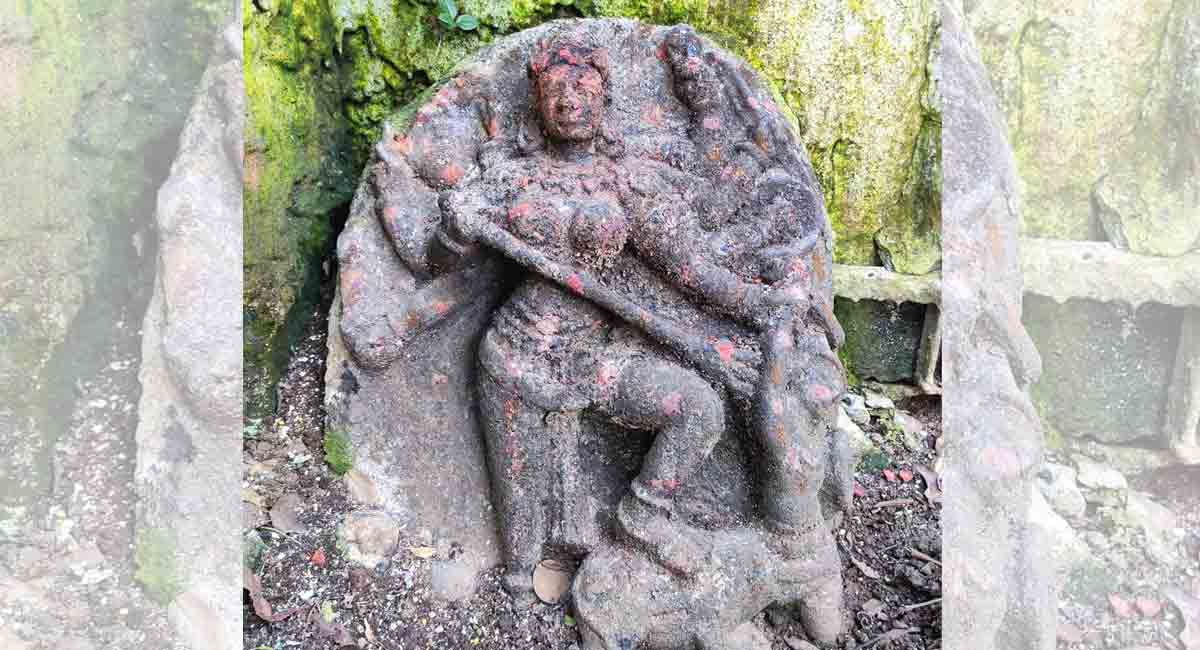


Siddipet: Historians have discovered a rare 1000-year-old sculpture of Mahishasura Mardini at Kondapaka in Siddipet district. The sculpture probably dates back to Kalyana Chalukyas period. Goddess Durga is seen killing the demon Mahishasura in the sculpture carved on a black stone. Samaleti Mahesh, a member of Kotha Telangana Charitra Brundam (KTCB), discovered the sculpture during a visit to Kondapaka.
Kondapaka was a well-known centre during the Rashtra Kutas, Kalayana Chalukyas and Kakatiyas period. Archaeological evidences of these three periods were found in and around Kondapaka in the past. Another 8th Century Mahishasura Mardini sculpture was found on the outskirts of Kondapaka earlier.
48 Hours in Agra

It is a city that you have to visit. It could either be as part of a relaxed holiday or a rushed weekend trip from Jaipur or the capital New Delhi. I have explored this city many times and each time I have experienced something different. If you have 48 hours in Agra, these are my top recommendations!
Sunrise or Sunset at the Taj Mahal

For most, a visit to Agra is just to visit the Taj Mahal. I completely empathize with this craze as I absolutely love this monument too. Such has been my craze that I gape in wonder every time I see the beautiful Taj Mahal. The best time to see and experience the Taj Mahal is either at sunrise or at sunset. If you are visiting during the foggy winters, sunset is recommended. At this time of the day, crowds are lower and the light is better, thus allowing you more time to take those amazing portraits in front of the Taj Mahal.

It is best that you book your ticket in advance online so that you can avoid standing in queue at the ticket counter. It is always nice to understand the history of the monument so that we can connect with it better. As I prefer to move at my own pace, I usually opt for an audio guide, but if you wish you can opt for a government approved guide.

Do remember that the Taj Mahal is closed on Fridays. And that the east entrance is the one with the fewest people.
Siesta at Mehtab Bagh with the special Taj View

The Persians loved their gardens and specialized in it. This brilliance with gardens and water gardens permeated into the Mughal style of architecture too. Persian styled Baghs or gardens can be found all over Agra. The famous one is the Mehtab Bagh, located on the bank of the Yamuna river opposite to the Taj Mahal. Shah Jahan built this gorgeous garden just to enjoy amazing views of the Taj. You can also enjoy this view by taking an autorickshaw to the other end of the old city.

If you are visiting during the rainy season, this place is perfect for those sunset shots of the Taj Mahal with reflections in the Yamuna and for other seasons, this place is ideal for that afternoon siesta with a surreal Taj Mahal view. May be, you could also read a book here. The best part about this place is that it is so blissfully quiet and a far cry from the Taj Mahal campus which is always bustling and buzzing with people.
Amaze yourself at the Red Sandstone Beauty of Agra Fort

Housing many palaces, stunning carvings, gorgeous marble work and a bird’s eye view of the Taj Mahal, the red Agra Fort is where I would go straight after an early breakfast. An UNESCO world heritage site, the Agra fort, which looks very similar to the Red Fort of Delhi is so well preserved and hence is a special treat to the eyes. Do compare notes when you visit New Delhi’s Red Fort, which holds iconic status and where India’s Independence Day and Republic Day events are held. Do check out the Expedia guide to New Delhi to know more about such charms, attractions and off-beat locations in India’s capital.
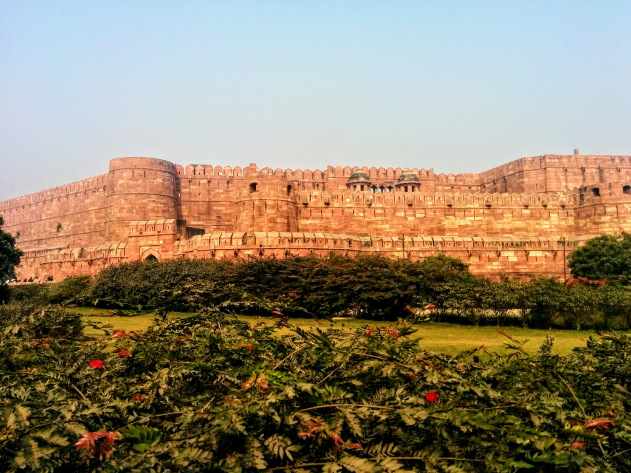
Right from the massively decorated entrance doors to the slow climb into the palaces and to the place where Shah Jahan used to live and watch the Taj Mahal, this place is full of historical wonders.
You have to see the Baby Taj
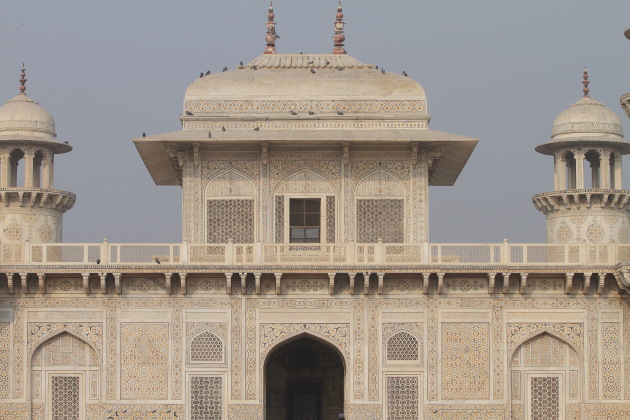
Locally referred to as the Baby Taj, the Itmad-ud-Daulah tomb, located on the bank of the river Yamuna is a khazana of sorts. Built by Empress Nur Jehan (wife of Mughal Emperor Jehangir), for her father Ghias-ud-din-beg is possibly one of the prettiest tombs from the Mughal era.

This is a perfect place to spend those late mornings or early part of the afternoon where you can enjoy its white marble, pietra dura, inlay work and amazing lattice work in a relaxed fashion.
Early Morning Visit to the 16th Century City of Victory

An hour away from Agra, Fatehpur Sikri, was built by Akbar in the 16th century and it remained the capital of the Mughal empire for about 10 years. Surprisingly it was abandoned, but today, it exists as a UNESCO world heritage site that comprises of stunning entrance ways, well preserved palaces, one of the largest mosques in India and beautiful courtyards. Out of the two sunrises that you have, I would recommend one for the Taj Mahal and the other for Fatehpur Sikri.
Go for a Quiet Walk at Sikandra

If you feel like a good long walk amidst stunning red sandstone marvels in Agra, Akbar’s tomb at Sikandra should be one of the top options. Lush lawns with many grazing blackbucks, screeching parakeets and a secular campus, Akbar’s tomb, located in the center of this Sikandra garden is full of lovely nature and beautiful architecture.

Started by Akbar himself and completed by his son Jehangir, this place is full of marble tombs of Akbar’s family, colorful pathways and ceilings with inscriptions and a sense of calm in busy Agra.
Read a Book at any of Agra’s Off-Beat Parks

Located enroute to Mehtab Bagh are many public parks that don’t hold any importance to the tourist, but I think that they are fantastic places to relax and read a book while watching locals and the Taj Mahal from a different perspective. These off-beat parks don’t charge any fee, are not crowded with tourists and offer a stunning view of the Taj.

If you get lucky, you could even play a game of cricket with the locals at one of these parks.
Shopping Time

While the days in Agra are usually spent in exploring its architectural marvels that stay open only till sunset, a good part of the evenings can be devoted to shopping. From souvenir shopping at Mughal Bazaar on Taj East Gate road to shopping for leather goods at Sadar Bazaar and from shopping for spices at Rawatpara market to specialized marble product shopping at Gokul Para near Raja Mandi, evenings at Agra can be spent quite fruitfully. Even if you don’t wish to buy anything, these places are full of color, vibrant mood and local flavor, thus offering a wholesome local experience.
Indulge in Chaats and Sweet Petha

A trip to Agra is not complete until you whet your palate with Agra’s iconic chaats and sweets. Starting with the spicy berahi to delicious samosa, kachori, Aloo-tikki, jalebis, paneer tikka and golgappa, Agra’s famous chaat items are available all across the town. You could either taste them while exploring the attractions of the city or during your evening shopping walks. And do remember to take some iconic petha back home as a souvenir. The best petha can be found at Hari Petha, Panchis, Bhimsain Baidyanath and the Pracheen Petha store.
Where to Stay:

As most people who visit Agra wish to see the Taj Mahal, it is recommended that you stay close to the Taj. In fact, most of the hotel properties are located around the Taj. On my recent visit, I stayed at a homestay called Pearl of Taj, which is located near the quiet Taj East Gate.
How to Reach:

Agra has an airport, but it is poor in terms of connections and tickets are more expensive than other cities. Delhi and Jaipur are possible airport alternatives. Delhi has more connections and Jaipur works out as a good low cost hub. Train connectivity for Agra is excellent. It has 2 train stations – Agra Cantt and Agra Fort. Do remember that while searching for trains. Road connectivity is also excellent, though during the winter months, foggy conditions can pose quite a problem.
Other Sightseeing Options:

If you have more than 48 hours in hand, you can choose from the following:
1) Birdwatching at Bharatpur Bird Sanctuary (60 kms frm Agra)
2) Wildlife Boat Safari at National Chambal Gharial Sanctuary (70 kms from Agra)
3) Temple towns of Mathura and Vrindavan (50 kms from Agra)
Wednesday, February 08, 2017
10 Iconic Vegetarian Food Joints of Jaipur

Here are a list of 10 iconic vegetarian food joints in Jaipur that offer a slice of heaven to all food lovers. Do make it a point to include some of these places in your itinerary on your next Jaipur holiday or even better if you experience all these places as part of a foodie trip to Jaipur.
Lassiwala
Lassi is possibly one of the most popular drinks of India. Even though it is most popular in the state of Punjab, I like the Lassi of Jaipur the best. And no better place to have it than iconic Lassiwala who started lassi operations way back in 1944. Served in earthen pots, this thick creamy yoghurt drink is a sure shot way to experience paradise.
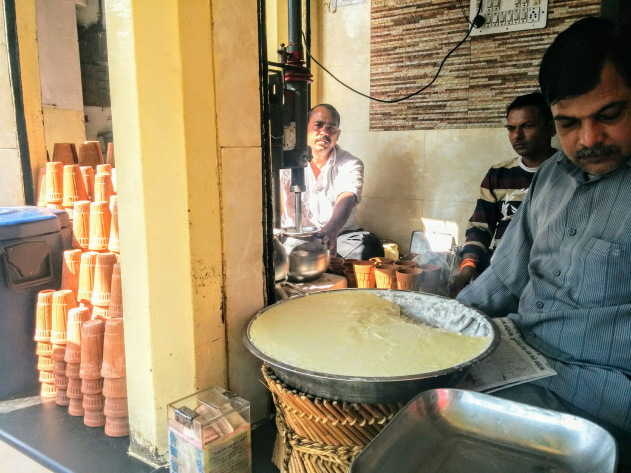
Do note that there are a bunch of lassi shops on MI road just beside the original lassi wala. While all of them dish out these tasty yoghurt drinks, the original Jaipur lassi is to be had at the Lassiwala (1944 – Kishan Lal Govind Narian Agarwal).
Laxmi Misthan Bhandar or LMB

Popularly known as LMB, the Laxmi Misthan Bhandar is one of the best places in the city to taste the iconic Ghewar dessert. Known for its snacks and sweets, do remember to try out their Mawa Kachori and Mirchi bada. Most of the LMB chains have an in-house restaurant where you can try out the traditional Rajasthani Thali or the traditional Marwari Thali which includes the famous Dal Baati Choorma. Personally, I think they offer the perfect thali experience without the drama of a staged dance environment where the food is sub standard and the prices are exorbitant. If you wish to go a-la-carte, try out their Lehsun chutney, Govind Gatta, Kher Sangri and Rasmalai.
Niros
A slightly more upmarket restaurant, Niros is known for its food served in a rich environment. While it is not a pure vegetarian joint, they do serve delicious Indian, continental and Rajasthani cuisines. This is a perfect place to head to with your family for a long lunch. For all meat lovers, this place is famous for its Laal Maas.
Ramchandra Kulfi Bhandar

While the Faluda Kulfi at Bapu Nagar and Pandit Kulfi at Bhagwan Das road are the well known ones, I like the Ramchandra Kulfi Bhandar located on MI road. A simple road side stall, this place serves amazing kulfi and gajar ka halwa cooked in desi ghee. A true iconic street food joint of Jaipur!
Rawat Misthan Bhandar
Located near the bus stand (Sindhi Camp), the Rawat Misthan Bhandar, like its competitor, Laxmi Misthan Bhandar is known for its sweets and snacks. It’s specialty is the Pyaz Kachori, Ghewar and Mawa Kachori. Whether you are going for a traditional Halwayi breakfast or for an evening snack, Rawat is bound to offer you a lip-smacking experience.
Indian Coffee House
Masala chai is more the norm in Jaipur, but if you are a coffee lover, especially the traditional Indian filter coffee, head to Indian coffee house on MI road, a place with an old world rustic charm. And while you are sipping on the filter coffee, chomp into their famous cutlets, toasts, dosas or other snack items.
Falahaar

Extremely popular with locals for its iconic dishes of Sabudana Khichdi and Shrikhand, this food joint located in the Saraogi Mansion is known for its delicious treats and affordable prices. In addition to their iconic dishes, I liked their sabudana dahi vada and makkan lassi.
Jal Mahal Ice cream Parlor
If you feel like having ice cream in Jaipur, Jal Mahal Ice cream parlor is the place to go. Located right opposite the famous Lassiwala, Jal Mahal specilizes in all kinds of ice creams, especially sundaes. Their italian shakes, Ice cream pizzas and ice cream cakes are also extremely popular. And all this comes in so many flavors that it will take you multiple visits to try them all.
Purana Pandit Pav Bhaji
Another street food icon of Jaipur, the mobile cart of Pandit Pav Bhaji, located on JLN mark right opposite Birla Mandir is the place to head to for some of the most mouth watering Pav Bhajis of Jaipur. With rich dollops of butter, specially made Garlic chutney and very affordable prices, the pav bhaji here is supremely famous. Again, like lassiwala, there are a lot of phonies with the same name doing business, so when you head to the place, ask the locals for advice or head to the shop that has the most crowd.
Chawla’s PaniPuri and Nand’s Golgappa
Whenever you find a need to take a break while shopping on fashion street, head to Chawla’s PaniPuri or Nand’s Golgappa (located right opposite) for some mouth watering pani puri, golgappe, chat items and sweets.
Friday, October 30, 2015
10 Yummy Amritsar Experiences the Foodie in you should not miss!
Below are 10 top food experiences from this holy city that you should experience on your next trip. As I am a vegetarian, these experiences are from a vegetarian’s perspective. If you are a meat eater, you will find an even better range as Amritsar is also one of the meat food capitals of India.
A Glass of Fresh Lassi in the Morning

Some people start their day with a cup of coffee. For some it is a cup of tea. When you are in Amritsar, it is a big glass of freshly made lassi. This sweet yoghurt drink is available almost everywhere in the city and available from as early as half past six in the morning. My favorite lassi moment was from the streets of Shastri market where I would drink a glass of fresh lassi every morning (my power charger) just before I went for my morning walk around the old corridor of Amritsar.
Puri Chana for Breakfast
Most of India associates Puri with Alu Gravy. In Amritsar, it is Puri served with Pind de Chole, onions and tangy radish. And this combo is like a traditional breakfast choice and one that you should not miss at any cost. Whether you are relishing them at the iconic Kanha Sweets, Goenkar Sweets or at any of the small thela walas on the streets of old city, you are bound to absolutely enjoy this iconic Amritsari breakfast.
True Ghee Experience at Kesar da Dhaba

If there is one dhaba that you have to visit in Amritsar, this has to be it. Kesar da Dhaba, located in the old city of Amritsar and not far away from the Golden temple is an iconic restaurant here. They do not use oil to cook the food. Instead, they use ghee. Their dal makhani, gulab jamun, lassi and kulches are to die for. But, let me warn you. Do not expect to feel hungry for a long time as the rich ghee food takes you to food heaven and keeps you there for a long while.
Langar at Golden Temple

Another iconic eating joint of Amritsar. Called the Guru ka Langar or the community Kitchen, this place serves food to thousands daily. And did I say that food here is free of cost? People from all walks of life come here, sit on the floor and eat the delicious food cooked in the community kitchen. Food served here is simple and traditional, but its taste is top class. A must visit after offering your prayers at the Durbar Sahib (Golden Temple).
Gurdas Ram de Jalebi Wale

The name says it all. A small and non-descript joint, this place whose history traces to 1956, dishes out some dreamy jalebis and gulab jamun. They only make these 2 desserts and make it right in front of you. Not set in the most enterprising atmosphere, but the food is as good as it can be. As it is located very close to Jallianwala Bagh and the Golden temple, it offers the perfect excuse to recover those lost calories and get closer to heaven.
Kaala Khatta at Ramkaran Cool Spot

Chuski le lo! Chuski le lo! These calls from my school days still ring loud in my head even today. The different colored Chuskis and the Kaala Khatta are two super popular summer drinks/sip ons. Ram Karan Cool-Spot, a popular name in Amritsar is a mobile vehicle that serves these treats on a tri cycle. Located in the posh residential area of Amritsar, Ram Karan has served his treats on destination weddings for Punjabis worldwide. I was lucky to discover this mobile cool-spot thanks to a Sardarji friend of mine. The Kaala Khatta here is legendary and one that I would always recommend.
A-One Kulfa

Falooda, Rabri, Gond Kathira and Kulfi ice cream put together make the Kulfa. Created in a mighty big tin device, the A-One Kulfa on Queens road is the best place to enjoy this sweet treat. Open between 3 and 11 pm, if you having a craving for something sweet and if you wish to try something iconic, then the cold Kulfa definitely makes the cut.
Chungi de Kulche for your afternoon Kulche Lunch

A small dhaba that only locals know, Chungi de Kulche is one of the best places in town to enjoy your Kulche lunch. Much cheaper than the other dhabas, this place is known mainly for its Kulche. Go here for your Kulche craving!
Family Dinner at Brothers Dhaba
A name that every Amritsari family knows is Brothers Dhaba. Insanely popular during weekends, this place serves all the top food attractions of Amritsar. It’s dal makhani, chole, Kulche and Parantha are famous. I had one of my dinners there and was very happy with the quality of food served.
Bade Bhai ka Brothers Dhaba
With a name that makes you take notice, the Bade Bhai ka Brothers Dhaba is another Amritsari restaurant that commands great status for its tasty food. Be it breakfast, lunch or dinner, this Amritsari Dhaba chain offers great food value. Paranthas, Kulche, Chole, Paneer, Dal Makhani and much more are on offer here. I had Kulche, Chole and Lassi here for breakfast and thoroughly enjoyed it. One of its branches is located close to Jallianwala Bagh and not too far away from the Golden Temple.
Wednesday, March 12, 2014
Top 10 Traditional Food Joints of South Bangalore

Brahmins Coffee Bar
The Idlis here are like how my mother used to make. They are so soft and tasty that sometimes I feel like I am eating at home. If you want a home away from home taste, then this is the place you should go to for authentic south Indian breakfast items that are available all day long. The Uppittu (upma) and filter coffee of this iconic restaurant are also great. They don’t have many items on their menu, but whatever they have is top class. They do not serve Sambar for the dishes, but just chutney, which is very nice.
Davangere Benna Masala Dosa
 This
place is not on Zomato, but it gets so much crowd that you will realize
this place serves great food. One of my absolute favorites of South
Bangalore, this restaurant is located near East Anjaneya street, NR
Colony. It is next to a ICICI Bank ATM and a Bisleri water shop. Like
the name of the restaurant, the famous item on their menu is their Benne
Masala Dosa. While this is very tasty, my personal favorite is paddu,
which is served with groundnut chutney. Their butter idlis, girimittu
and filter coffee are also very nice. The best part about this place is
that it offers total value in a taste vs cost scenario.
This
place is not on Zomato, but it gets so much crowd that you will realize
this place serves great food. One of my absolute favorites of South
Bangalore, this restaurant is located near East Anjaneya street, NR
Colony. It is next to a ICICI Bank ATM and a Bisleri water shop. Like
the name of the restaurant, the famous item on their menu is their Benne
Masala Dosa. While this is very tasty, my personal favorite is paddu,
which is served with groundnut chutney. Their butter idlis, girimittu
and filter coffee are also very nice. The best part about this place is
that it offers total value in a taste vs cost scenario. VB Bakery
This is one of the oldest bakery in the city and is definitely a house hold name in South Bangalore. Their masala bun, khara biscuit, Masala Bread, Coconut biscuit, KBC (Khara Bun Congress), Honey cake, fruit cake and many other items are hot favorites. This iconic place is at the edge of Bangalore’s only food street – Thindi Beedhi. So, you can couple Thindi Beedhi and VB Bakery making it a culinary extravaganza.
Mavalli Tiffin Room (MTR)
 This
place put Bangalore on the world food map and holds its place high in
all the foodie hearts of Bangalore. Most of the visitors to Lalbagh are
regulars here. They have branches all over the town, but there is
something about the 1st MTR restaurant that brings people in huge
numbers to it. Popular with both the young and the old, this icon of
Bangalore serves a lot of delicious traditional South Indian food, but
my personal favorites are Ragi Dosa, Rava Idly with ghee, Khara Bath,
Masala Dosa and Coffee.
This
place put Bangalore on the world food map and holds its place high in
all the foodie hearts of Bangalore. Most of the visitors to Lalbagh are
regulars here. They have branches all over the town, but there is
something about the 1st MTR restaurant that brings people in huge
numbers to it. Popular with both the young and the old, this icon of
Bangalore serves a lot of delicious traditional South Indian food, but
my personal favorites are Ragi Dosa, Rava Idly with ghee, Khara Bath,
Masala Dosa and Coffee. Thindi Beedhi
This is not a traditional restaurant, but a street that is full of traditional restaurants. Located in the VV Puram area of South Bangalore, this is possibly Bangalore’s only food street. From Kali Dosa to benne masala dosa, from masalai mandakki to filter coffee. from hot jalebis to hot badam milk and from maddur vada to akki roti, this place has it all. If you feel like eating the traditional foods of Karnataka, this is the place you have to visit. Since this people doesn’t feature on Zomato, I have linked to my earlier post about Thindi Beedhi to give you more details.
Vidyarthi Bhavan
 This
is another of those iconic restaurants of South Bangalore. Located
right in the heart of super busy Gandhi Bazaar of Basavanagudi, this
place always runs full. Personally, I dig their Rava vadai, but their
benne masala dosai seems to be the crowd’s favorite. Their coffee is
also pretty special. Such is the popularity of this place that even the
elderly people prefer to wait for a seat in this restaurant.
This
is another of those iconic restaurants of South Bangalore. Located
right in the heart of super busy Gandhi Bazaar of Basavanagudi, this
place always runs full. Personally, I dig their Rava vadai, but their
benne masala dosai seems to be the crowd’s favorite. Their coffee is
also pretty special. Such is the popularity of this place that even the
elderly people prefer to wait for a seat in this restaurant. New Modern Hotel
I don’t know how many of you Bangaloreans have heard of NMH. Located in VV Puram, this is one of the older restaurants of Bangalore. Their Thatte Idli, Thairode, Chiroti Milk, Chow Chow Bath, Rava Idli and Hot Badam Milk are favorites here. For some reason, I like their simple vegetarian meals during lunch here too. Simple and tasty food that is easy on the stomach and the wallet, I will always remain a big fan of NMH.
Maiyas
They belonged to the family of MTR, but due to a family split, they started their own food business in Maiyas. While they are relatively new when compared to the MTR name, their food still has the same quality to it. Every time my father and I visit the Jayanagar side, we always make sure to have a cup of coffee here. And I know how long is the queue for this special coffee here. Their baked items and snack items are also very good.
Puliyogare Point
Like the name suggests, this restaurant located in NR Colony is famous for its Puliyogare or tamarind flavored rice. Apart from Puliyogare, my taste buds have also taken a liking to their Sakkare Pongal, Pongal, Coconut rice and button idlis. And finally wash it down with some filter coffee. This place might have have the iconic status of Vidyarthi or Brahmins, but its quality is definitely up there.
Kamat Bugle Rock

The Kamats are a big name in the restaurant industry of Karnataka and hence it is no surprise that one of their restaurants sees a mention in this list. The Kamat Bugle Rock is one of their newer restaurants that is famous for its North Karnataka lunch that includes Jowar Roti, Palak Sagoo and more. In fact, whenever I feel the craving for North Karnataka food, I end up going to this restaurant. Apart from the north Karnataka meals, they serve typical south Indian food too.
Top 10 Summer Weekend Getaways from Bangalore
Kabini National Park, Karnataka

Kabini happens to be my favorite wildlife destination in the state. It is one of those rare places where you will always end up sighting a leopard and sometimes if you are lucky, a Royal Bengal Tiger. And did I say huge herd of elephants, packs of wild dogs and lots of bird life. Summer is famous at Kabini as the increasing temperatures and receding water levels of the Kabini reservoir attracts a huge number of elephants who come to eat the grass that grows on the banks of the reservoir. This grass is like a delicacy for the elephants. Between the jeep safari drives and the boat safari drives, you will always spot lots of wild animals and birds. The calm ecosystem also offers great relaxation therapy.
Go For: Wildlife and Birdwatching
Ideal For: All types of travelers
Budget: Medium to High
Preferred Places to Stay: Jungle Lodges and Serai Kabini
Distance from Bangalore: 220 kms
Detour Options: Kuta Coffee Estates, Lakshman Teertha Falls and Bylaguppe Tibetan Monastery
Bandipur Tiger Reserve, Karnataka

Another wildlife hotspot of Karnataka, but a much drier one, which makes it a great place to spot tigers is Bandipur Tiger Reserve. It is one of those places with a huge number of tigers in India. In addition to tigers, you will spot bears, elephants, gaurs, deer and many other animals. This place is great for wildlife, but mid day here might be a tad too warm and is best spent indoors either relaxing or playing indoor games. Summers are the best time to visit this tiger reserve and hence it comes heavily recommended by me.
Go For: Wildlife and Birdwatching
Ideal For: Wildlife lovers
Budget: Medium to High
Preferred Places to Stay: Jungle Lodges
Distance from Bangalore: 240 kms
Detour Options: Ooty, Red Hills and Gopalswamy Betta
Valparai, Tamil Nadu

One of my favorite tea estates in tropical India, Valparai is a great hill station that is located right in the middle of dense greenery and wildlife. It has a very laidback charm and is a great destination for relaxation. You could go for walks in the tea estates, explore dams and view points or even spot some lion tailed macaques and gaurs in the tea estates around you. And did I say that it is one of the top places in South India to see the beautiful hornbills.
Go For: Tea Estates, Relaxation, Cooler Weather and Birdlife
Ideal For: All types of travelers, especially couples
Budget: Budget to High
Preferred Places to Stay: Monica Garden Bungalow of Woodbriar Bungalows
Distance from Bangalore: 460 kms
Detour Options: Athirampally Waterfalls and Chinnar Wildlife Sanctuary
Kabinnakad of Coorg, Karnataka

Coorg is a hot destination with most Bangaloreans, but not all places in Coorg are summer friendly. Only the densely forested and mountainous areas near the Thadiyendamol peak offer cooler climes. A very scenic and calm part of Coorg, the Kabinnakad area of Coorg is great for its coffee estates, hikes, Rudraksha trees and good ‘ol relaxation. The local Pandi curry, homemade fruit wines and local coffee are just the icing on the cake.
Go For: Relaxation, Cooler Weather, Coffee Estates, Hiking, Bird Watching
Ideal For: All types of travelers. A bit of physical fitness is preferred. Great for Romantic Holidays too.
Budget: Budget to High
Preferred Places to Stay: Honey Valley and Tamara Coorg
Distance from Bangalore: 260 kms
Detour Options: Thithimathi Elephant Camp and Iguthuppa Temple
Kodanad, Tamil Nadu

In that belt, Ooty, Coonoor and Red Hills are very popular destinations, but these places have been beaten to such an extent that they face traffic jams and water problems in the summer months, which is why I have mentioned Kodanad here. Kodanad, Ooty and Coonoor are like 3 points on a equilateral triangle. It happens to one of the quietest spots in the Nilgiris and is also the relaxed getaway of Ms. Jayalalitha, Tamil Nadu’s chief minister.
Go For: Hill station relaxation, Cooler Climes
Ideal For: All types of travelers. Great for Families.
Budget: Budget to Medium
Preferred Places to Stay: Home Stays
Distance from Bangalore: 320 kms
Detour Options: Nilgiri Toy Train Railway
Kudremukh, Karnataka

One of the greenest parts of Karnataka, Kudremukh faced a lot of trouble due to naxalites. But, now that there is no naxalite trouble, this is one of the top places to discover in Karnataka. Ideal for campers and trekkers, this place is also great for families. Between the Hanuman Gundi Falls, the Botanical Gardens, the Sludge dam and oodles of greenery and mountains, this place offers many avenues for a thrilling weekend.
Go For: Nature and Outdoors
Ideal For: Campers and Trekkers
Budget: Budget to Medium
Preferred Places to Stay: Home Stays
Distance from Bangalore: 330 kms
Detour Options: Gomateshwara Jain Statue at Karkala
Kodaikanal to Munnar, Tamil Nadu and Kerala

Both Kodaikanal and Munnar are famous hill stations and hence have been beaten to the core, but in between these 2 hill stations, there are lots of places where you can still enjoy solitude and the Blue Mountains in its pristine form. Berijam Lake, Eravikulam National Park and Top Station are some of my favorites. But, if you are adventurous kind, I would definitely recommend trekking the 75 kms from Kodaikanal to Munnar through the forests or cycling the 120 kms of mountainous roads between these 2 hill stations.
Go For: Hill Station, Cooler Climes
Ideal For: All types of travelers. For adventurous getaways, medium level of fitness is required. Couples, families and kids will all enjoy here.
Budget: Budget to High
Preferred Places to Stay: Outdoor Camping
Distance from Bangalore: 470 to 500 kms
Detour Options: Periyar Tiger Reserve
Dandeli, Karnataka

If you feel like river rafting and kayaking in the summer months, this is your best bet in South India. Due to the hydroelectric power project, the mighty Kali river always sees a lot of water in the summer months that offer great fun and adventure for those rafting enthusiasts. For those not interested in rafting, they can indulge in coracle rides on the river, visit the local tribes of Dandeli or go on jeep safaris to the Dandeli Wildlife Sanctuary and spot the elusive Black Panther. Or you can choose from any of these top things to on your Dandeli holiday.
Go For: River Rafting, Kayaking, Tribes and Wildlife
Ideal For: All types of travelers, though medium physical fitness is required for water sports
Budget: Budget to Medium
Preferred Places to Stay: Home stays and Tree Houses
Distance from Bangalore: 470 kms
Detour Options: Anshi National Park, Gokarna
Bhadra Tiger Reserve, Karnataka

Situated along the Bhadra river and surrounded by Shola forests and the pristine Western Ghats, the Bhadra Tiger Reserve is one of the of the best places in tropical India to see river terns and sometimes even the elusive tiger too. I would go here more for relaxation than for wildlife, though between the boat rides and the jeep safaris, you will see enough wildlife and bird species.
Go For: Relaxation, Wildlife and Birdwatching
Ideal For: All types of travelers
Budget: Medium to High
Preferred Places to Stay: Jungle Lodges
Distance from Bangalore: 270 kms
Detour Options: Jog Falls, Linganamakki Reservoir, Agumbe and Sringeri
Kemmangundi and/or Chickmagalur, Karnataka

Kemmangundi is a poor man’s hill station, while Chickmagalur is a rich man’s holiday destination. Both places offer cooler climes and great greenery amidst the Baba Budan hills. Kemmandundi is more forests, while Chickmagalur is a mix of forests and coffee estates. Easy walks, Kalhatti Falls, Hebbe Falls, lots of relaxation and Mulayangiri, the highest peak of Karnataka are on the agenda here.
Go For: Relaxation and Coffee Estates
Ideal For: All types of travelers
Budget: Budget to High
Preferred Places to Stay: In a coffee estate
Distance from Bangalore: 250 kms
Detour Options: Belur and Halebid Hoysala Temples, Sringeri.
Top 10 Iconic Vegetarian Street Food Joints of Hyderabad
If you are a vegetarian, a street food lover and are planning to visit Hyderabad soon, this is something that might interest you. You could also do a food walk as most of these joints are in and around the main attractions of the city. This list aims to be cover the entire gamut of food through main courses, snacks or tiffin items, drinks and desserts. Hopefully, it will appeal to people with different palate needs. Bon Apetit!
1) Ram Ki Bandi
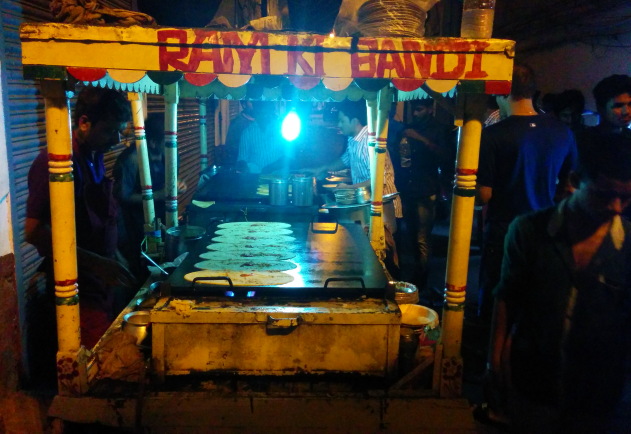
Opening at 3 AM, Ram Ki Bandi’s two mobile food stalls is an absolute rage in Hyderabad and it regularly features in the top 10 late night traditional food joints in the country. They dish out everything from butter dosa, cheese dosa, pizza dosa, podi dosa, upma to fried idli. Personally, I loved their fried idli (an absolute sensation for the taste buds) and their podi butter dosa. Come late night, students, tourists and locals arrive in droves on their fancy motorcycles and expensive cars. By 5 AM, Ram Ki Bandi is doing such brisk business that you can simply stand and be amazed as you will anyways have to wait for your order. And by 7:30 AM, when the world gets ready to start its day, they run out of their supplies, close shop and go home.
Location: Next to Karachi Bakery, Nampally
Similar places: Govind Dosa Bandi near Mecca Masjid, Laxman ki Bandi, Pragati ki Bandi
2) Shahi Bakers and Sweets

It will take you a while to locate this place, but once you do, you will want to buy all their supplies. Run by a Muslim family from their home amidst a Persian garden like setup, Shahi Bakers and Sweets is not like your typical bakery. Rather, they are a home who only make a limited quantity of sweets every day unless they have received a prior order. Sitting in the verandah of their 85 year old home and tasting their Badam Ki Jali is like going on a momentary trip to heaven. Badam ki Jali is their specialty and my absolute favorite in the whole of Hyderabad. They make Ashrafi too and other sweets and desserts depending on occasion and prior orders. If you love desserts, you have to visit this place. This rare traditional dessert experience is a must-do in the whole of Hyderabad.
Location: Aziz Baugh, Noorkhan Bazaar
Similar places: None. They are in a league of their own.
3) Famous Ice Cream

Nothing more than a small shack from the outside, Famous Ice Cream is famous all over Hyderabad for its seasonal fruit ice creams. Be it fig, watermelon, custard apple, Mango or others, every single flavor of theirs is delicious. And as I had visited them during a heat wave, I ended up enjoying all their flavors. My favorite was the fig ice cream.
Location: Mozamjahi Market
Similar places: Bilal Ice Cream
4) Hameedi Confectioners
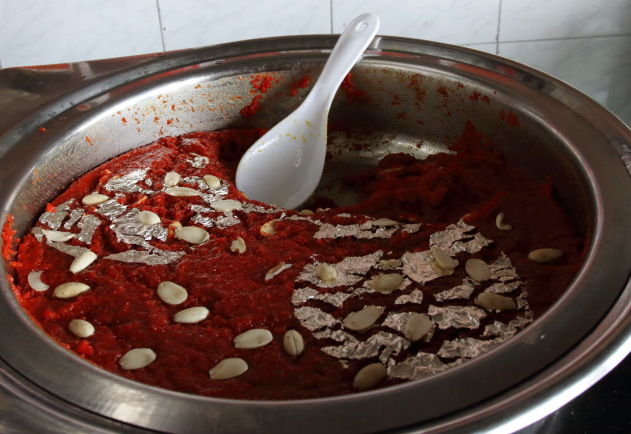
An iconic store that used to prepare desserts during the time of the Nizam, Hameedi confectioners on Mozamjahi market is the place to go for Jauzi Ka Halwa, Double Ka Meetha, Kubhani ka Meetha and Kaddu ka Kheer. Each one of their desserts is loaded with ghee, dry fruits and sugar, but as soon as you put a spoonful into your mouth, you are instantaneously transported to heaven. There own 2 shops on the same street, but the one located opposite to Famous Ice Cream is the old one.
Location: Mozamjahi Market
Similar places: None. Their creations are really something else.
5) Harsha Mess
If you feel like tasting an authentic Andhra Thali that can make you cry because of its high spice levels, you have to go to Harsha Mess, one of the best places in town for the Andhra Thali. Local Veggies, Pappu, Chutney, Podi, Ghee, Sambar, Rice, Papad, Rasam, Curd and more lip smacking dishes are served as part of their Thali. They also serve good vegetarian biriyani.
Note: This is not a pure vegetarian place.
Location: Opposite Maitrivanam, near Ameerpet
Similar places: Kakatiya Mess, Sri Kanya
6) Nimraf Irani Cafe

All Hyderabad foodies would have taken a picture of them holding a cup of Irani chai with the Charminar in the background. And to go with the Irani chai, you have fresh Osmania biscuits. This is one of the top food experiences of Hyderabad. Nimraf Irani Cafe, located right opposite Charminar is one of the best places to go for this iconic experience.
Location: Opposite Charminar
Similar places: Shah Ghouse Cafe on Shah Ali Bandar Road, Cafe Iqbal in Gosha Mahal
7) Subhan Bakery

Everybody knows about the famous biscuits of Hyderabad. But, most of them know it as Karachi biscuits due to the excellent marketing and reach of Karachi Bakery. While, I personally love their fruit biscuits, I prefer a different place when it comes to Osmania biscuits. And that place is the iconic Subhan Bakery located in the Nampally area of Hyderabad. They serve fresh hot biscuits that are so tender that they absolutely melt in your mouth. The perfect combination of sugar, salt, cardamom and butter make it a super hit for all tea sessions. And as Subhan Bakery doesn’t have to maintain a huge showroom and lots of employees, their prices are a good 25 to 30% lower. Personally, I think their quality is superior as you get biscuits straight out of the oven.
Location: Nampally
Similar places: Karachi Bakery
8) Cafe Iqbal
Bagara Rice with Mirchi ka Salan, Baghare Baingan and Khatti Dal as the main course and topping the palate with a cup of Dum ka chai is living like a vegetarian Nizam (if ever there exists one). If you wish to indulge in this gastronomical delight, head to Cafe Iqbal, who offers these and much more.
Location: Lad Bazaar near Charminar
Similar places: Shadab Hotel, Sohail Hotel
9) Munshi Naan

The traditional square breads from the iconic Munshi Naan go best with meat, but these breads are so fresh and delicious that they will absolutely go with anything. Be it a cup of Irani chai, a vegetable curry or a meat curry, there can’t be any better company. It was the Nizam’s munshi who made this bread famous and thus the name. A family run business, they produce the best naan. There are many others on the same street as them who produce similar type of breads, but if you wish for an authentic experience, head to the Munshi Naam store near Purani haveli.
Location: Near Purani Haveli, close to Charminar
Similar places: None. They hold iconic status.
10) Authentic Street Food Creations

This last one is not necessarily a food joint, but they are the small mobile stalls on the streets of Hyderabad. They serve everything from Hyderabadi lassi, Buttermilk, Goli Soda, Pudina Sharbat, Ganne ka Joos to simple Nimbu Soda. If you are going on a Hyderabad food walk, you will definitely need to stay hydrated and keep replenishing your energy stores from time to time. And there is no better option than indulging in these local drinks that are like specifically created by and for the city of Hyderabad.
Nalumukku: The Wettest place of India during the North East Monsoon

This region is home to some of the most pristine forests in the
Western Ghats. It’s climate is influenced by the winds coming from all
the three oceans surrounding the Indian mainland – Indian Ocean, Bay of
Bengal and Arabian Sea. It receives rains from both the South West and
the North East monsoons, but since most of its valleys are facing the
east, it receives bountiful rains during the North East monsoon. Such is
the abundance of rains that it receives between October and December
that it rivals most of the monsoon giants of the Western Ghats like
Talacauvery, Chinakallar, Agumbe, Masthikatte, Castle Rock, Amboli,
Malshej and Chorla. It receives between 3000 mm to 5000 mm of rain
during the North East monsoon and between 5000 mm to 7000 mm for the
whole year. I am talking about the relatively unknown village of
Nalumukku that is located in the Kalakad Mundanthurai Tiger Reserve of
South Tamil Nadu. It is located at at elevation of about 4600 m above
MSL in the Western Ghats. It is part of the catchment area of the
Thamirabharani river and its tributaries.

Nalumukku enjoys a typical Western Ghats hill station like weather. It is is lush, it is misty, it is wet and it enjoys some of the most well preserved forests in the region. Nalumukku is a tiny village that consists of a few houses and a post office. The village limit ends a few hundred metres from its start. At Nalumukku, the road forks into three, one going towards Oothu and Kudrevetty, one going towards Kakkachi and Manjolai and the other going towards Kodayar Dam. Dense mist almost always envelops the tea estates and forests surrounding this village and thus giving it a dreamy look and feel. Nalumukku and its surroundings are home to umpteen mountain streams and waterfalls each carrying some of the sweetest water in the region and that holds medicinal value too as it flows through medicinal herbs and plants. In simple words, if there was a tropical forest paradise that is untouched by the bursting population of India, it has to be Nalumukku and its surroundings. Kalakad Mundanthurai Tiger Reserve and the connected Agasthyamalai biosphere is one of Western Ghat’s most well preserved secrets and Nalumukku happens to be bang in the centre of it. It might be tough to access this place, but it is worth all the hassle. I cannot stop raving enough about the raw beauty of mother nature here.

Best season to visit:
Nalumukku is open all year round and can be visited in all seasons. Summers are incredibly pleasant and are a far cry from the hot plains below. The rainy season between October and December is magical here and this is when close to 3000 to 5000 mm of rain precipitates in three months and dresses up the surroundings in fresh green with full water bodies and waterfalls.January and February offer clearer weather with low humidity and this allows for clear views of the spectacular landscape that includes tea estates, forests, mountains and dams. June to August is when Nalumukku is at its windiest best due to the winds coming during the South West monsoon.
How to reach there:
If you are traveling from Tirunelveli, head towards Cheranmadevi and Kallidaikurichi. Just before Kallidaikurichi railway station, turn left and take the road leading towards Manimuthar. You will cross Golden nagar, Thekku Pappankulam, Tamil Nadu special force IX battalion and Manimuthar village. If you head straight from Manimuthar village, climb the narrow road and you will reach the forest check post at Manimuthar Dam. You will have to get your permits checked here, pay the necessary fees and then drive onwards towards Manimuthar Falls, Manjolai, Kakkachi, Nalumukku, Oothu and then onto Kudrevetty.

How to get permits for this place in KMTR:
To travel to Manjolai, Kakkachi, Nalumukku, Oothu and/pr Kudrevetty, you will have to get permits in advance from the forest department at Ambasamudram. The permit costs INR 200 at Ambasamudram and you will have to pay vehicle fee and per person charge at the Manimuthar forest check post. The forest check post opens at 7 AM and closes at 6 AM.
If you book a room at the forest rest house in Kudrevetty, then that booking is good enough and you don’t need to get the permits in advance.

Where to stay:
If you wish to stay within the tiger reserve, you can book the forest rest house at Kudrevetty through the Kalakad Mundanthurai Tiger Reserve website.
If you wish to stay in traditional Brahmin agraharam houses, you can try the home stays and guest houses at Kallidaikurichi village.
If simple, yet modern hotels are your thing, you can try Hotel Ambai Grand at Ambasamudram.
If you wish for a wide variety of hotels, you will have to try looking at the hotels in Tirunelveli.

Where to eat:
The forest rest house at Kudrevetty will prepare food for you if you happen to be staying with them. They will buy basic supplies once your booking is confirmed. However, if you have any specific requirements like country eggs, country chicken or any other requirements, you will have to inform them at least a day in advance.
There are a few family run restaurants at Oothu where you can get some local meals along with some tea and coffee. However, you need to order your meals at least a day in advance so that the people can arrange the ration and vegetables.
There are a few tea shops at Manjolai where you can find basic snacks along with tea/coffee, but if you order in advance, you can get some food.
There are a few shack-like restaurants at Manimuthar village before the forest check post. Here, you can get basic meals and a decent array of tiffin items.

Other tourist attractions inside KMTR:
1) Kudrevetty: The gorgeous windy station of Kalakad Mundanthurai Tiger Reserve
2) Manimuthar Falls: The herbal waterfall inside a tiger reserve
3) Agastyar Falls: A gorgeous waterfall on the Thamirabharani river
4) Manjolai: The offbeat hill station of Tamil Nadu
5) Oothu: The quaint little hill station of Tamil Nadu
6) Kakkachi: The highest point inside Kalakad Mundanthurai Tiger Reserve
7) Scenic Iron Bridge of Kalakad Mundanthurai Tiger Reserve: Pristine nature overloaded
8) Karaiyar Dam: Offbeat wildlife and nature holiday destination in India’s deep south
9) Cycling through the backyards of Kalakad Mundanthurai Tiger Reserve
10) Hidden pristine waterfall inside Kalakad Mundanthurai Tiger Reserve

Other nearby tourist attractions:
1) Mekkarai to Achankovil to Konni: Heavenly motorcycling route through pristine forest
2) Mekkarai: One of Tamil Nadu’s prettiest villages
3) Courtallam: The herbal bath holiday destination of Tamil Nadu
4) Sunderapandiapuram: Of lovely brahmin agraharam houses, sunflower fields, windmills and mountain views
5) Puliyarai View Point: Scenic pit stop on the Tenkasi – Kerala highway
6) Sivasailam Temple: 1000 year old temple surrounded by the lush mountains of the Western Ghats
7) Sivasailam: One of the wettest places during the North East monsoon in India
8) 13th century Kasi Visvanathar temple at Tenkasi
9) Manalar Falls: The gorgeous forest waterfall perfect for a family getaway
10) Kambhavurutty Falls: Pristine jungle waterfall in the middle of dense forest

11) Thenmala Forest: Offbeat nature and wildlife getaway
12) Vintage Pathimoonu Kannara Bridge: Colonial charm of the Indian Railways
13) Punalur Suspension Bridge: Historical gem of Kerala
14) Lesser Known Kerala Mountain Railways: Treat for nature lovers
15) Achankovil Saastha Temple: That happy Lord Ayyappa in the middle of pristine jungle
16) Palaruvi Falls: Kerala’s herbal waterfall that drops like milk from the sky
17) Thenmala Dam: A monsoon pit stop view
18) Aryankavu Saastha Temple: Ancient temple located in the sacred forests of the Western Ghats
19) Rosemala: Spectacular view point of the Thenmala reservoir
20) Mannarkoil Rajagopalaswamy Temple: Magnificent 10th century temple with an ashtanga vimana

21) 10th century Brahmadesam Kailasanathar Temple: Lesser known architectural marvel of South India
22) 1000 year old Papanasanathar Temple: Where you can wash all your sins away
23) Kallidaikurichi: The village of the saaral season
24) Iruttu Kadai Halwa: Icon of Tirunelveli
25) Nellaiappar Temple: A 7th century cosmic dance wonder
26) Pattamadai Pai: GI Tagged beautiful handwoven mats from a tiny Tamil Nadu village
27) Thamirabharani river delta: A motorcycle route full of rustic gorgeousness
28) 10th century Valiswara Temple at Thiruvaliswaram: Hidden Chola gem in the Tirunelveli district of Tamil Nadu
29) Tiruchendur Murugan Temple: Sea Shore Magic
30) Kallidaikurichi to Manimuthar Dam: A top scenic and rustic cycling route

31) Garuda Sevai from the agraharams of Kallidaikurichi
32) Festival of Thiruvathirai from a traditional Tamil Nadu village
33) The Festival of Karthigai Deepam from a traditional Tamil Nadu village
34) The exotic tropical fruit shops of Puliyarai
35) Kallidaikurichi Adi Varaha Temple Chariot Festival: Grand cultural spectacle in rural Tamil Nadu
36) Kallidaikurichi Anaicut: Gorgeous picnic spot nestled in the lap of nature
Mekkarai: One of Tamil Nadu’s Prettiest Villages

It commands a spectacular panoramic view of the Western Ghats. It
is home to lush paddy fields, coconut palms and orchards of other
tropical fruits. It is here that the mountain top and the clouds merge
into one. It receives both the monsoons of India. It is one of Tamil
Nadu’s prettiest villages. I am talking about Mekkarai, the surreal
village located on the border of Tamil Nadu Kerala and that is part of
the ecosystem that connects Shendurney wildlife sanctuary with Konni
reserve forest.

Imagine this view…lush green or golden paddy fields (depending on maturity of crop) swaying in the winds that are blowing from the west, a consistent drizzle in the air, dense jungle views in the yonder and dark monsoon clouds kissing the mountain top. This is the view that nature presents to you as soon as you enter the tiny village of Mekkarai that is located in the Tenkasi district of Tamil Nadu. In the middle of the village lie the homes and the paddy fields around them, towards the mountain side are mountain streams, waterfalls and umpteen scenic locations and to one side of the village lies the Adavinainar dam that commands stunning views of the surrounding Western Ghat mountains.
If you head to the west of the village, you will ascend and hit the forest road that connects it to the temple town of Achankovil in Kerala. To its east, lie Elathur and Tenkasi and to its south lie the towns of Shenkottai and the waterfall holiday destination of Courtallam. In simple words, Mekkarai is home to beauty and is surrounded by more natural beauty. It makes for a fantastic nature getaway in rural Tamil Nadu with its scenic picnic spots, pretty views, many waterfalls, winding roads and forests. It is literally a slice of heaven during the South West Monsoon.

Best season to visit:
Mekkarai looks its best during the monsoon season between June and October. During this season, there are on and off drizzles, a strong and cool breeze blowing through the region, the paddy fields are shining in the sunshine and the surrounding mountains are all green with dense monsoon clouds over them. The other months of the year are also beautiful. January to March is cool and radiant, while October to December can be wet with copious rainfall. April and May can be much cooler than the other parts of the region.
How to reach there:
If you are traveling from Konni, take the forest route via Achankovil to reach Mekkarai. This route also happens to be the most scenic.
If you are traveling from Thiruvananthapuram, Kollam or Punalur, take the road via Punalur –> Vettithitta –> Cherukadavu Dam –> Chempanaruvi Falls –> Achankovil –> Mekkarai.
If you are traveling from Thenmala, take the road via Ottakal –> Edamon –> Valacode –> Cherukadavu dam –> Chempanaruvi Falls –> Achankovil –> Mekkarai.
If you are traveling from Shenkottai, Tenkasi or Tirunelveli direction, take the road via Shenkottai to Elathur –> Panboli –> Mekkarai.

Where to stay:
There are a few resorts and homestays in and around Mekkarai that offer simple accommodation with the best views. For a diverse range of decent hotels, head to Tenkasi, about 17 kms away.
If you prefer staying amidst nature, try the resorts in and around Courtallam, the accommodation inside Thenmala Eco Zone (Kerala) or the forest accommodation inside Kalakad Mundanthurai Tiger Reserve.
For luxurious options, head to Tirunelveli in Tamil Nadu or Kollam/Thiruvananthapuram in Kerala.
Where to eat:
The nearest place to eat would be Shencottai. There are restaurants that serve basic tiffin and meals here. For more diverse options, Tenkasi would be your nearest hub.

Other nearby tourist attractions:
1) Mekkarai to Achankovil to Konni: Heavenly motorcycling route through pristine forest
2) Kutralam: The herbal bath holiday destination of Tamil Nadu
3) Sunderapandiapuram: Of lovely brahmin agraharam houses, sunflower fields, windmills and mountain views
4) Puliyarai view point: Scenic pit stop on the Tenkasi – Kerala highway
5) Sivasailam Temple: 1000 year old temple surrounded by the lush mountains of the Western Ghats
6) Sivasailam: One of the wettest places during the North East monsoon in India
7) 13th century Kasi Visvanathar temple at Tenkasi
8) Manalar Falls: The gorgeous forest waterfall perfect for a family getaway
9) Kumbhavurutty Falls: Pristine jungle waterfall in the middle of dense forest
10) Thenmala Forest: Offbeat nature and wildlife getaway
11) Vintage Pathimoonu Kannara Bridge: Colonial charm of the Indian Railways
12) Punalur Suspension Bridge: Historical gem of Kerala
13) Lesser Known Kerala Mountain Railways: Treat for nature lovers
14) Achankovil Saastha Temple: That happy Lord Ayyappa in the middle of pristine jungle
15) Palaruvi Falls: Kerala’s herbal waterfall that drops like milk from the sky
16) Thenmala Dam: A monsoon pit stop view
17) Aryankavu Saastha Temple: Ancient temple located in the sacred forests of the Western Ghats
18) Rosemala: Spectacular view point of the Thenmala reservoir
19) Kudrevetty: The gorgeous windy station of Kalakad Mundanthurai Tiger Reserve
20) Manimuthar Falls: The herbal waterfall inside a tiger reserve
21) Agastyar Falls: A gorgeous waterfall on the Thamirabharani river
22) Manjolai: The offbeat hill station of Tamil Nadu
23) Nalumukku: The wettest place of India during the North East monsoon
24) Kakkachi: The highest point inside Kalakad Mundanthurai Tiger Reserve
25) Scenic Iron Bridge of Kalakad Mundanthurai Tiger Reserve: Pristine nature overloaded
26) Karaiyar Dam: Offbeat wildlife and nature holiday destination in India’s deep south
27) Cycling through the backyards of Kalakad Mundanthurai Tiger Reserve
28) Mannarkovil Rajagopalaswamy Temple: Magnificent 10th century temple with an ashtanga vimana
29) 10th century Brahmadesam Kailasanathar Temple: Lesser known architectural marvel of South India
30) 1000 year old Papanasanathar Temple: Where you can wash all your sins away
31) Kallidaikurichi: The village of the saaral season
32) Iruttu Kadai Halwa: Icon of Tirunelveli
33) Nellaiappar Temple: A 7th century cosmic dance wonder
34) Pattamadai Pai: GI tagged beautiful handwoven mats from a tiny Tamil Nadu village
35) Thamirabharani river delta: A motorcycle route full of rustic gorgeousness
36) 10th Century Valiswara Temple at Thiruvaliswaram: Hidden Chola gem in the Tirunelveli district of Tamil Nadu
37) Tiruchendur Murugan Temple: Sea Shore Magic
38) Kallidaikurichi to Manimuthar Dam: A top scenic and rustic cycling route
39) Garuda Sevai from the agraharams of Kallidaikurichi
40) Festival of Thiruvathirai from a traditional Tamil Nadu village
41) The festival of Karthigai Deepam from a traditional Tamil Nadu village
42) The exotic tropical fruit shops of Puliyarai
43) Kallidaikurichi Adi Varaha Temple Chariot Festival: Grand cultural spectacle in rural Tamil Nadu
44) Kallidaikurichi Anaicut: Gorgeous picnic spot nestled in the lap of nature
Wednesday, October 09, 2024
Veetikunnu Island Nest: Living on an Island inside a Tiger Reserve


This jungle property offers the perfect mix of pristine
nature and digital detox. There is no property within 50 sq km of it. In
fact, to get to the nearest human civilization, you will have to travel
an hour by boat. It is in the middle of a tiger reserve and is
surrounded by a massive reservoir. I am talking about the Veetikunnu
Island Nest, a property run and managed by the Kerala forest department.
It is in the middle of the Parambikulam reservoir inside the
Parambikulam tiger reserve in Kerala. The island is called Veetikunnu
Island and it can be only accessed by boat. It is surrounded by huge
mountains of the Western Ghats and a lot of wild animals and birds
frequent this place.
Wild animals swim the waters of the Parambikulam reservoir to come and graze here. Elephants, gaurs and spotted deer are often seen here. During the dry months, when the water levels recede, the island is connected to other parts of the jungle through a narrow land mass. This ensures excellent migration of wild animals to the island during the dry season.

The island is special and picturesque and one will fall in love with it right from the time they spot it from the boat. The island is not more than four square kilometers and it mainly consists of bamboo forests, though in the middle of the island, you will spot Arjuna, rosewood, sandalwood and many other local tree varieties. A steep walk from the boat mooring point will take you to the top of the island where the property is located. Once you cross a trench that is there to protect you from the elephants, you are inside the property. From here, you can see the vast Parambikulam reservoir while listening to the chirps of the birds. There is hardly any civilization nearby and you and your group will have the entire tiger reserve to yourselves here.

The only way around the island is on foot. You will have to negotiate the sharp bamboo thickets and steep terrain for most of the walk, but once you reach the other side of the island, the terrain flattens out. Here, the bamboo forest gets denser and this is where the elephants hang out along with the gaurs, deer, crocodiles and other wild animals. The entire trek around the Veetikunnu island is eventful as you keep seeing animals and birds. Once you are out in the open grassland, you can see the mountains in the yonder and the vast expanse of water surrounding the island. This stretch along the water is extremely scenic around sunset as that is when the sky changes colours and looks very picturesque.

Early mornings and late evenings are the best time to spot the wild animals as that is when the weather is pleasant and the mist surrounding the bamboo thicket gives the animals some cover from the predators. This is also the time to be extremely cautious as visibility is quite poor and you might miss out on an elephant foraging in the bamboo thicket next to you. The forest guard will keep you on your toes, but it is best if you stay quiet and keep an eye out too.
Afternoons are perfect for that siesta under a tree near your property and the nights are perfect for that campfire under the starry sky while listening to the croaks of the frogs and the sounds of the cicadas and crickets. The air is absolutely pure here and sometimes when the wind is strong, you can hear the gentle laps of the reservoir water against the shore. Overall, it is a magical location offering a surreal experience.

If pristine forest environment and remote location is your thing, then you will definitely love this place. Digital detox is definitely on the cards here and so is an overdose of nature. A perfect combo for a rejuvenating holiday. This place is not for everyone, but if you are willing to rough it out, you are bound to have an absolutely swell experience. As it is not often that you get to stay on an island in the middle of a tiger reserve.

Things to keep in mind while visiting Veetikunnu Island:
1)There is no cell phone or internet connectivity on the island. Be prepared for a total detox from technology. It is up to you if you wish to spoil the sanctity of the place with music from your mobile phone or portable sound systems. You will miss the natural music of the island if you bring your own music.
2) Electricity can be patchy on the island. If your weather is preceded by harsh weather or rains, be prepared for trouble with the power. Flashlights and/or headlamps will be your best companion here.
3) There is no food ration available on the island. Remember to carry everything from the mainland.
4) There is no hot water facility on this island. If you need hot water to shower, you will need to boil the water in a wooden stove.
5) Elephants visit this island frequently. There are trenches dug around Veetikunnu Island Nest, so that will keep you safe. When exploring the island by foot, stay close to the forest guard and keep an eye out for wild elephants.
6) It is a steep walk from the boat mooring location to the place of accommodation. Do ensure that you are in decent physical condition. Also, do carry a good pair of walking shoes with you or a good pair of walking sandals.
7) There are no mosquitoes on the island, but you can expect a lot of insects and bugs as they will all get attracted to the lights in your accommodation. If you are sensitive to bugs, do carry some form of a bug spray to repel them.
8) If you have young kids in your group, do make sure to keep them close to you at all times.
9) Watch out for crocodiles when you go near the shore.

Best season to visit:
Parambikulam tiger reserve is open all year round. If you can handle the heat, the best time to see wild animals would be the dry months between March and May. If you wish to see the forest in all its lush glory, the post monsoon months from November to February would be ideal. During the other months, you can see animals and birds, but it would depend on your luck. Monsoons happen to be the season of mating, so may be, you will see the birds busier than usual and showing their best plumage.
How to reach there:
The nearest airport and large railway station would be Coimbatore. The nearest large bus station would be Pollachi. From Coimbatore, Parambikulam tiger reserve is about 120 kms away. Only four wheelers are allowed into the forest. It is best to hire your own vehicle to travel to Parambikulam as a lot of different places in Parambikulam are quite far away from each other. The route would be Coimbatore –> Pollachi –> Top Slip (Anaimalai Tiger Reserve) –> Parambikulam Tiger Reserve. If you have booked your accommodation at Parambikulam, you can show that booking voucher at the different forest entry gates. From Parambikulam reservoir, a forest department boat will take you and your belongings to Veetikunnu Island.

Where to eat:
There are no hotels or restaurants on Veetikunnu Island. The people who row your boat and who bring you to Veetikunnu Island from the mainland double up as your cooks. You will have to carry your food rations for the duration of your stay. This includes rice, wheat, lentils, eggs, meat, spices, oil, tea, coffee, milk, sugar, salt, etc. You can either carry the supplies with you from home or buy them at the line of shops near the Parambikulam reservoir. You can share your dietary requirements with the cooks before they prepare the dishes.

How to make the bookings:
Bookings can be made easily by visiting the Parambikulam tiger reserve website. The bookings include your accommodation, food, safari, treks and entry fee. Anything additional will be charged. As there is only one place to stay on Veetikunnu Island, it might be prudent to book well in advance, especially if it is the holiday season or the weekend.

Other places to stay inside Parambikulam Tiger Reserve:
The other places to stay inside Parambikulam tiger reserve are the properties managed by the forest department. These include the tented niche, treetop hut at Thunakadavu, Honeycomb, Peruvari Island Nest and Tented Roost. All these places will provide you with food, though some places might you to carry the food rations as they are totally remote and do not have a functioning kitchen.

Other tourist attractions inside Parambikulam Tiger Reserve:
1) Trekking inside Parambikulam tiger reserve: A thrilling adventure
2) Kannimara Teak: The oldest teak tree in Parambikulam tiger reserve
3) Jungle safari inside Parambikulam tiger reserve

Other nearby tourist attractions:
1) Anaimalai Tiger Reserve: Of elephants, gaurs, tigers and hornbills
2) Puthuthotham Estate: The hidden gem of Anaimalai Tiger Reserve
3) The best place to see the rare Lion Tailed Macaque in the wild
4) Monkey Aliyar Falls, Aliyar Dam, Sholayar Dam and other vast water bodies
5) Pristine Vazhachal rainforest highway: A special road trip hot spot
6) Valparai to Athirapally: One of the top tropical motorcycle routes in India

7) Poringalkuthu Reservoir: Nestled in the tropical rainforests of Vazhachal, Kerala
8) Athirapally Falls: The Niagara of Kerala
9) Valparai: The unsung hill station of India
10) Nallamudi Poonjolai: Velu saw god there
11) Udumalpet to Munnar forest highway: Perfect route for your Neelakurinji highway
12) Chinnar Wildlife Sanctuary: An offbeat wildlife heaven
13) The tea estates of Valparai and around

14) Eravikulam National park: The Nilgiri Tahr lives here
15) Mukurthi National Park: A treasure trove of nature near Ooty
16) Emerald Lake: An offbeat gem near Ooty, Tamil Nadu
17) Cauliflower Shola Forests from Mukurthi National Park, Tamil Nadu
18) Nilgiri Mountain Railway: Go for a joy ride on this heritage train
19) Silent valley national park is not really silent
A Traveller's Guide to Authentic Local Experiences in Japan

Japan offers a wealth of authentic experiences that allow
travellers to immerse themselves in the country's unique culture and
traditions. From riding scenic railways through picturesque landscapes
to participating in ancient tea ceremonies, this guide explores a range
of activities that provide genuine insights into Japanese life.
Ride the Sagano Scenic Railway

The Sagano Scenic Railway, also known as the Sagano Romantic Train, offers a picturesque journey through the stunning landscapes of western Kyoto.
Passengers can enjoy breath taking views of mountains, forests, and the river along the Hozugawa River gorge from the train's vintage-style cars, including an open-air carriage for an immersive experience.

The train operates from early March to late December each year, with peak seasons during cherry blossom viewing (late March to late April) and autumn foliage (mid-November to early December).
For a complete experience, consider combining the train ride with a Hozugawa River boat cruise for the return journey, offering two unique perspectives of the scenic Arashiyama area, including the stunning Bamboo Grove.
Stay at a Ryokan

Staying at a ryokan offers an authentic Japanese experience, immersing guests in traditional hospitality and culture. These traditional inns typically feature tatami-matted rooms, futon bedding, and communal baths, often supplied by natural hot springs.

Guests are provided with yukata robes to wear during their stay, and are served elaborate kaiseki meals, showcasing seasonal local ingredients. Ryokans are best experienced in rural areas for a more authentic atmosphere, but you can also find the inns in large cities like Kyoto and Tokyo.
Bathe in an Onsen

Bathing in an onsen, or Japanese hot spring, is a quintessential experience that offers both relaxation and cultural immersion. These natural hot springs are rich in minerals and believed to have therapeutic properties.
Some of the best places to bathe in an onsen include:
1) Hakone, renowned for its picturesque mountain scenery and diverse onsen options with views of Mount Fuji.
2) Kusatsu in Gunma Prefecture, famous for its yubatake, or hot water field, in the town centre.
3) Noboribetsu, Hokkaido's most famous hot spring resort which features various types of mineral waters and the dramatic ‘Hell Valley’, full of steaming vents.
Many ryokans and hotels in Japan offer both communal onsen baths and rooms with private onsen, providing a more intimate experience.
Participate in a Tea Ceremony
Participating in a Japanese tea ceremony offers a profound insight into Japan's rich cultural heritage. Known as sadō or chanoyu, this ritualistic preparation and consumption of matcha green tea is an art form that emphasizes harmony, respect, purity, and tranquillity.
The ceremony often takes place in a traditional tearoom adorned with tatami mats and seasonal decorations. Guests are usually served Japanese sweets (wagashi) before the tea to complement its bitterness.
One of the best places to participate in a tea ceremony is in the Nishinomaru Garden of Osaka Castle, which is particularly beautiful during the cherry blossom. Alternatively, tea ceremonies in Kyoto’s historic Gion district offer you the chance to be served by geisha, known locally as geiko, and observe their graceful movements.
Visit Famous Temples and Shrines

One of the best reasons to visit Japan is to visit its numerous famous temples and shrines. Some of the most notable are found in Kyoto and include:
1) Fushimi Inari Taisha - This shrine dates back to 711 A.D. and is renowned for its thousands of vermilion torii gates that create a stunning path up the mountain.
2) Kinkaku-ji - Also known as the Golden Pavilion, this temple was originally built as a shogun's villa and is famous for its gold-leaf façade that reflects beautifully in the surrounding pond.
3) Kiyomizu-dera - This iconic Buddhist temple offers breath taking views from its large veranda overlooking the city, especially during cherry blossom and autumn leaf seasons.
Also worth a visit is Sensō-ji, Tokyo's oldest temple, completed in 645. The temple is particularly beautiful at night when illuminated, highlighting its intricate architecture.
Experience a Japanese Festival (matsuri)

Some of the most renowned Japanese festivals or matsuri, are held in the summer, and include:
1) Gion Matsuri - Held in July in Kyoto, this festival is known for its grand processions of elaborately decorated floats called yamaboko.
2) Aomori Nebuta Matsuri -Taking place from August 2nd to 7th in Aomori, this festival is famous for its giant illuminated floats depicting warriors and mythical figures, accompanied by vibrant music and energetic dancers known as haneto.
3) Tanabata Matsuri - Celebrated from August 6th to 8th, this festival in Sendai is known for its stunning decorations made from colourful paper streamers, and a spectacular fireworks display on the opening night.

If you’re visiting Japan in winter, it’s also well worth visiting the Sapporo Snow Festival. Held in February, it features impressive snow and ice sculptures displayed throughout Sapporo City in Hokkaido, attracting millions of visitors each year.
Note: The photographs in this article are courtesy of wikipedia.org and have been borrowed under the creative commons license. Each photograph has been linked to its host page on wikipedia.org.
Sunday, September 29, 2024
Mekkarai to Achankovil to Konni: Heavenly Motorcycling Route through Pristine Forest

This motorcycling route is one of my top motorcycling holiday destinations in India.
Now, why do I say that? It is offbeat and consists of a narrow highway
that passes through dense jungles. You can come across many wild animals
on this route. In fact, it is a common occurrence to see wild elephants
standing in the middle of the road here. This route has steep hairpin
bends, criss-crosses a meandering river, has many waterfall and river
pit stops where you can bathe, enjoy and relax and it is home to some of
the most pristine forest in this region.

The route begins at Mekkarai in Tamil Nadu and goes till Achankovil, about 16 kms away. This short route is for the people who wish for some civilization, decent roads and a safety road. However, for those who do not mind poor road conditions and love adventure, the route begins at Mekkarai and heads all the way to Konni covering a distance of 80 kms. This entire route is part of Konni reserve forest, which connects Kalakad Mundanthurai Tiger Reserve, Agasthyamalai biosphere reserve and Shendurney wildlife sanctuary with Ranni forest and Periyar tiger reserve. It is one of India’s largest contiguous forests and some of the best preserved tracts of jungle in the Western Ghats.

The typical route would be:
Mekkarai in Tamil Nadu –> Kerala Forest Check Post –> Manalar Falls –> Kambhavurutty Falls –> Achankovil Saastha Temple –> Chempanaruvi Temple and Falls –> Kalleli Bridge –> Kalleli –> Konni
When you are starting at Mekkarai, you will leave the plains with the paddy field views below and start to rapidly ascend into dense forest. A few hairpin bends will bring you to the Kerala forest check post and from there, the route gets denser and more beautiful. You will ascend initially and then rapidly descend. You will keeping crossing many some jungle streams and water bodies while getting fleeting glimpses of the vast and dense jungle in the yonder. Usually such far away views are rare as the road has dense green cover on both its sides. It is this dense cover that makes this route very difficult to navigate if wild animals happen to be around and therein lies the challenge and adventure.
Once you have completed your descent, you will come across Manalar waterfall, a stunning jungle waterfall with a natural swimming pool. You can park your vehicle here, get yourself the entry ticket and trek a short distance to reach the waterfall. This waterfall has multiple levels and you can choose to climb it, enjoy a refreshing dip and head back to your vehicle. Once you have crossed the Manalar falls parking lot, you will keep crisscrossing the Achankovil river all the way till Konni. The river is not fairly deep, but it can carry a fair amount of water during the rainy season. The next stop is Kambhavurutty falls, another gorgeous forest waterfall that falls from a much higher location and is located deeper in the forest from the main road. You can choose to take another refreshing dip here, before heading to Achankovil Dharma Saastha temple and see the lord’s blessings. Here, Lord Ayyappa is in a happy avatar and it seems like he is enjoying his stay in this pristine forest. When I was traveling this route, even I felt peaceful inside in this unsullied jungle.
Further west from Achankovil lies the Chempanaruvi falls. This waterfall is a bit far away from the main road, but the detour is totally worth it. The road beyond Chempanaruvi temple is in poor condition and you will hardly see any people or vehicles here. There is a very high chance to spot wild animals here. It is best to ride/drive slowly with a keen lookout for animals. This stretch is also the most raw and wild. You continue to cross the meandering Achankovil river at many places before reaching Kalleli bridge and Orekkar waterfall, which is a short deviation away. Once you cross the Njavanal forest check post, you can either take a detour to Chelikkuzhu waterfalls or head straight to Konni city. At Konni, do remember to visit the Konni Eco tourism elephant shelter and museum.

This route is one of my favourites in the Western Ghats owing to its pristine nature, dense forest cover, wildlife sightings and due to its offbeat nature. The roads are narrow here and it offer the perfect route for a jungle motorcycling experience coupled with scenic pit stops, waterfall and river stops, a temple and so much more. It is one of South Kerala’s hidden gems and one that I would recommend to all nature loving motorcyclists.

Timings:
This forest route is open from sunrise to sunset. However, the forest department might allow some vehicles to pass through. If you happen to travel in the early hours of the morning, in the late hours of the evening or during heavy rain or dense mist, be on the lookout for wild animals, especially elephants, as they might be standing next to the road or on the road. If you get to know that elephants have been sighted on the route, travel in a convoy with larger vehicles like jeeps, vans or buses.
Best season to visit:
This route looks the best during the rains when the waterfalls are in full flow, the rivers are in spate and the surroundings are dressed in fresh green. However, monsoon season can also bring along floods, landslides and road closures. One needs to plan for that.
The winter months from December through February are also magical as this is when there is the added cover of mist during the early morning hours and the late evening hours. This adds a whole new dimension to the route.
This forest route is open all year round. Summers can get quite warm and sticky, but it is also the best time to spot wildlife as all wild animals are attracted to the rapidly shrinking water bodies.

How to reach there:
If you are traveling from Konni, take the forest route to reach Achankovil. The road is narrow and in poor condition.
If you are traveling from Thiruvananthapuram, Kollam or Punalur, take the road via Punalur –> Vettithitta –> Karavoor –> Cherukadavu check dam –> Chempanaruvi Falls –> Achankovil
If you are traveling from Thenmala, take the road via Ottakal –> Edamon –> Valacode –> Cherukadavu check dam –> Chempanaruvi Falls –> Achankovil
If you are traveling from Shenkotta, Tenkasi or Tirunelveli direction, take the road to Elathur –> Mekkarai –> Manalar Falls –> Kambhavurutty Falls –> Achankovil

Where to stay:
There are simple guest houses and hotels at Achankovil and these happen to be the best in terms of proximity. For decent hotels, head to Tenkasi.
If you prefer staying amidst nature, try the resorts in and around Courtrallam, the accommodation inside Thenmala Eco Zone (Kerala) or the forest accommodation inside Kalakad Mundanthurai Tiger Reserve.
For luxurious options, head to Tirunelveli in Tamil Nadu or Kollam/Thiruvananthapuram in Kerala.

Where to eat:
The nearest place to eat would be Achankovil. Here, you can find basic food options next to the temple. The temple also serves delicious vegetarian meals from time to time. For more diverse options, Tenkasi would be your nearest hub. Shenkottai and Aryankavu would also be decent hubs for meals in case you are traveling from either direction.

Other nearby tourist attractions:
1) Kutralam: The herbal bath holiday destination of Tamil Nadu
2) Sunderapandiapuram: Of lovely Brahmin agraharam houses, sunflower fields, windmills and mountain views
3) Puliyarai view point: Scenic pit stop on the Tenkasi – Kerala highway
4) Sivasailam Temple: 1000 year old temple surrounded by the lush mountains of the Western Ghats
5) Sivasailam: One of the wettest places during the North East monsoon in India
6) 13th century Kasi Visvanathar temple at Tenkasi
7) Mekkarai: One of the prettiest villages of Tamil Nadu
8) Manalar Falls: The gorgeous forest waterfall perfect for a family getaway

9) Kumbhavurutty Falls: Pristine jungle waterfall in the middle of dense forest
10) Thenmala forest: Offbeat nature and wildlife getaway
11) Vintage Pathimoonu Kannara Bridge: Colonial charm of the Indian Railways
12) Punalur Suspension Bridge: Historical gem of Kerala
13) Lesser known Kerala Mountain Railways: Treat for nature lovers
14) Achankovil Saastha Temple: That happy Lord Ayyappa in the middle of pristine jungle
15) Palaruvi Falls: Kerala’s herbal waterfall that drops like milk from the sky
16) Thenmala Dam: A monsoon pit stop view
17) Aryankavu Saastha Temple: Ancient temple located in the sacred forests of the Western Ghats

18) Rosemala: Spectacular view point of the Thenmala reservoir
19) Kudrevetty: The gorgeous windy station of Kalakad Mundanthurai Tiger Reserve
20) Manimuthar Falls: The herbal waterfall inside a tiger reserve
21) Agastyar Falls: A gorgeous waterfall on the Thamirabharani river
22) Manjolai: The offbeat hill station of Tamil Nadu
23) Nalumukku: The wettest place of India during the North East monsoon
24) Kakkachi: The highest point inside Kalakad Mundanthurai Tiger Reserve
25) Scenic Iron Bridge of Kalakad Mundanthurai Tiger Reserve: Pristine nature overloaded
26) Karaiyar Dam: Offbeat wildlife and nature holiday destination in India’s deep south

27) Cycling through the backyards of Kalakad Mundanthurai Tiger Reserve
28) Mannarkoil Rajagopalaswamy Temple: Magnificent 10th century temple with an ashtanga vimana
29) 10th century Brahmadesam Kailasanathar Temple: Lesser known architectural marvel of South India
30) 1000 year old Papanasanathar Temple: Where you can wash all your sins away
31) Kallidaikurichi: The village of the saaral season
32 Iruttu Kadai Halwa: Icon of Tirunelveli
33) Nellaiappar Temple: A 7th century cosmic dance wonder
34) Pattamadai Pai: GI Tagged beautiful handwoven mats from a tiny Tamil Nadu village
35) Thamirabharani river delta: A motorcycle route full of rustic gorgeousness

36) 10th century Valiswara temple at Thiruvaliswaram10th century Valiswara temple at Thiruvaliswaram: Hidden Chola gem in the Tirunelveli district of Tamil Nadu
37) Tiruchendur Murugan Temple: Sea shore magic
38) Kallidaikurichi to Manimuthar Dam: A top scenic and rustic cycling route
39) Garuda Sevai from the agraharams of Kallidaikurichi
40) Festival of Thiruvathirai from a traditional Tamil Nadu village
41) The festival of Karthigai Deepam from a traditional Tamil Nadu village
42) The exotic tropical fruits of Puliyarai
43) Kallidaikurichi Adi Varaha Temple Chariot Festival: Grand cultural spectacle in rural Tamil Nadu
44) Kallidaikurichi Anaicut: Gorgeous picnic spot nestled in the lap of nature
Rolling in Style - The Best Casinos on the Planet
.jpg "Interiors of Casino de Monte Carlo, Monaco")
World-class casinos provide more than just a place to gamble; they
provide an experience full of luxury amenities, dining, entertainment
and accommodations.
From Monte Carlo's luxurious Casino de Monte Carlo to Maxim's, these gambling hotspots radiate elegance. Check out our list of best casinos outside Las Vegas and start rolling in style.
The most popular casinos in the world are interesting, but it is much easier to visit online casino game and get maximum service without leaving your home.
1. Casino de Monte Carlo

Monaco's Casino de Monte Carlo was designed by Charles Garnier--architect of the Paris Opera House--and stands as an elegant Belle Epoque temple to gambling. As per law, however, only visitors from outside Monaco may participate. Thus relying heavily on wealthy tourists and high-rollers from around the globe as patrons.
GoldenEye, Heartbreaker and Ocean's Twelve have featured this luxurious casino with its exquisite interiors, gold leaf details and gorgeous wall paintings as a major draw for actors. Visitors to the casino can try their luck at roulette, blackjack or baccarat while admiring its magnificent décor - not forgetting a restaurant/bar/helipad all rolled into one!
2. The Kurhaus of Baden-Baden

Casinos that lack an eye-catching backdrop don't measure up; Germany's Kurhaus of Baden-Baden can take great pride in boasting such an exquisite one.
Style, history and tradition come together to create an unparalleled environment - be it for business meetings, gala events or parties of any sort - making your experience one of a kind! This venue has everything necessary for an unforgettable event experience.
Baden-Baden is an idyllic spa town where traditional luxury meets contemporary culture. Stroll through immaculate gardens, shop stylish designer wear under colonnades, or gamble away your days at its renowned casino - Baden-Baden will leave an indelible mark that you won't soon forget! You won't forget this gem that awaits!
3. Maxim’s Casino
Maxim's Casino is an elegant and sophisticated venue designed to cater to high stakes gamblers. Situated within London Kensington Palace Gate House building, it has managed to retain many of its original features for added charm and allure.
The elegant gaming floor boasts 26 tables offering American Roulette, Blackjack and Baccarat with different stake levels for your enjoyment. Furthermore, electronic Roulette and slots machines can also be found here to add to the fun! Furthermore, regular cash poker games and private poker parties can be organized within their Dickens Card Room.
Between gaming sessions, players can dine at an oak panelled restaurant where specialty chefs serve French, Chinese, Lebanese and Indian dishes. Furthermore, guests can visit a whiskey bar to sample over 126 types of whiskey from all over the world along with cocktails from an impressive cocktail selection.
5. Hotel Lisboa
Hotel Lisboa combines state-of-the-art comfort with breath taking panoramas on one of Lisbon's hills, offering unparalleled panoramic views from each room and from their Limao (Lemon) Chill-out Terrace. 89 comfortable rooms provide the ideal setting for viewing these spectacular scenes; yet what really draws guests is its breath taking landscapes that you can appreciate from either within your room or from its Limao (Lemon) Chill-out Terrace.
This hotel is less than five minutes' walk from Chiado and Baixa's vibrant shopping and café scene, where you will also find Lisbon Cathedral and Rossio Square. Additionally, nearby are fado clubs and restaurants offering traditional Portuguese music; its staff are extremely welcoming and helpful - it will be hard to beat this place!
6. WinStar World Casino and Resort

WinStar World Casino and Resort lies across the Texas-Oklahoma border in Thackerville and stands as an unparalleled gaming paradise. As the World's Biggest Casino, it offers an unmatched collection of electronic games as well as a massive poker room - not to mention an array of luxurious amenities! But this resort offers much more than gaming alone.
WinStar Resort features multiple hotel towers, a golf course and shopping promenade - providing plenty of choices for guests of all ages and interests. There are 17 restaurants and bars at WinStar as well as the new 6,500-seat Lucas Oil Live arena that showcases chart-topping musicians.
Off the casino floor, guests can experience world-class dining or relax at the spa before resting their head at Fun Town RV Park - both conveniently close to WinStar!
To follow the latest news, you can visit Melbet Insta.
Wednesday, September 04, 2024
A Jungle Safari inside Tadoba Andhari Tiger Reserve: A Wild Photo Story

As you know, two months back, I was exploring the gorgeous tiger reserves of Central India. In my last post about this trip, I wrote about Pench Tiger reserve, the land of Mowgli, Bagheera, Baloo, Sher Khan and Kaa through a wild photo story. This time, I bring to you a wild photo story from Tadoba,
one of the best places to see the Royal Bengal tiger. Not only are
their numbers very healthy here, the tigers are actually thriving.
Hence, you can regularly see tigers and their cubs here. My previous
trips to Tadoba Tiger reserve
were full of wild riches as I had stayed for a good 8 to 10 jungle
safaris. This time around, I got to experience the jungle only through
two jeep safaris and 2 jungle treks in the core zone, but the experience
was equally special. This photo series aims to share this rich and wild
experience with you. Hope you like them and do stay tuned for more
photos and videos from my wildlife holiday to Central India, including
reviews of the awesome properties where I stayed.
Above photo: Sambar deer happen to be the tiger’s favourite prey and these sambar deer exist in healthy numbers inside Tadoba tiger reserve. No wonder, the tiger population is thriving here. These sambar deer was busy grazing in the gentle rains, when they looked up to see the people disturbing their grazing session.

Above photo: This is a fairly large monitor lizard that we spotted on the floor of the jungle at Tadoba. Usually, monitor lizards are tough to spot due to the dense grasses and thick bamboo thickets, but I guess we got lucky here.

Above photo: During my stay at Tadoba, I stayed at the rustic looking, yet uber luxurious property called Waghoba Eco Lodge that is managed by Pugdundee Safaris. One of the best perks of staying here is the close proximity to the core zone of the tiger reserve. And it gets even better. You can actually trek inside this core zone in the company of a trained naturalist and track the tiger on foot. How cool and adventurous is that. This is a few hours old pugmark that I spotted during one of my such jungle treks. My naturalist told me that it belonged to a tigress and recommended that I measure its size against a standard measure and that is how I landed up clicking this picture of the pugmark against the 100 rupee note.

Above photo: It was raining hard and close to fifty jeeps were in the vicinity. And all of them were searching for the tigress ‘Choti Tara’ and her young cubs. Suddenly, some jeeps spotted a tiger in the bushes nearby and there was a mad rush to see the tiger. While all the jeeps were scrambling to see the tiger, news came to the guides that Choti tara and her cubs were spotted in a nearby turn and they had come out onto the jeep track. Thus, began another scramble to see the tigress and her cubs and by then the rains had begun to pick up speed again. I was holding onto the roof of the jeep with one hand and my camera in the other when the tigress and her cubs came into my view. It was a surreal sight to see the cubs moving playfully while their mother walked on the jeep track. We saw Choti Tara and her cubs for a good ten minutes before we had to make our way for the other jeeps who were waiting behind us. Such is the raw joy of a tiger safari in Tadoba Andhari Tiger Reserve.

Above photo: The rains usually reduce the quality of sightings in the jungle, but sometimes they can bring out different colours in the frame. In this case, you can see the clean coats of these spotted deer against the lush green vegetation, thus offering a beautiful contrast.

Above photo: This is another photo of Choti Tara, the tigress walking on the jeep track. Her cubs were playing nearby, but they are not in the frame. The safari jeep in front of the tigress had the best seat in the house and I was so jealous of them.

Above photo: The paradise flycatcher bird is one of the prettiest birds in the Western Ghats of India. The female has a more ruddy look, while the male is a gorgeous white with a long white tail that looks like it floats in the air behind the bird.

Above photo: This is a male peninsular rock agama in breeding colours. This shy reptile was found a few inches above the jungle floor and apparently, they are spotted often during the rainy months.

Above photo: Another pretty bird of Tadoba, the Indian Pitta is made up of nine colours and hence it is locally referred to as ‘navrangi’. Despite its small size, it packs a serious punch with its vibrant colours. They usually stick to the shade of the trees, but whenever the rays of the sun fall on them, you can see their rich colours.

Above photo: This is a male grey jungle fowl, that was seen crossing the jeep track. It is a brave bird and it lives in good numbers at Tadoba. Along with the deer and langurs, it gives very good alarm calls when it spots a predator.

Above photo: This pretty bird called the ‘Red Wattled Lapwing’ is usually found on the floor of the jungle and close to a water body. It is known for its sharp call that sounds like ‘Did we do it?’

Above photo: This photo looks like a painting. Huge numbers of spotted deer could be seen next to the lake chomping on the fresh green grass. This also happens to be the mating season for the spotted deer and you can see the dark breeding colours on the coat of the males along with their huge antlers.

Above photo: This is a greater coucal bird (male) located in the high branches of a tree that is devoid of any leaves. Also, known as the crow pheasant, it is famous for its cou-cou-cou sound that is very common to hear in India during the rainy season.

Above photo: This is a common garden lizard in its breeding colours. The monsoons are usually their breeding season and you can notice them by their puffed neck and the orangish head and neck. I saw them near the swimming pool area inside Waghoba Eco Lodge, a stunning property located by the core zone of the tiger reserve and one of the top resorts in Tadoba.
Wednesday, August 21, 2024
Lush views of Kallidaikurichi from my village home terrace

The last time I wrote about my village, I mentioned the paddy sowing season
through a rustic photo series. That was the beginning of the South West
monsoon and the rains had just started to fill the dams. This meant
that the dams could be opened and their water could be channelled via
the irrigation canals for all agricultural work downstream.
Since then, we have had a good monsoon season, good agricultural activity and hence the landscape has completely changed. You can see different shades of green all around you.
This is the lush view of Kallidaikurichi village from my home terrace. You can see the gorgeously green paddy fields, the Kannadigan canal flowing till its brim and an overall lush green atmosphere. This abundant greenery, ample water sources and good rains has ensured that there is a lot of flora and fauna activity.

You can hear more birds chirping almost every morning and evening. You can see the birds busy building their nests. And you can also see them don their mating colours and perform the mating dance. A common occurrence during this time is the mating dance of the peacocks. And you can hear and see these mating dances almost every day. Luckily for me, I can see this stunning mating dance right from my terrace. Either the peacock dances on my terrace or at my neighbour’s terrace. Either way, you can see it at close quarters and record the action through your phone camera.

The above video recorded through my phone camera is a practice mating dance of the peacock. I call it a practice mating dance because there were no pea hens in the vicinity and usually peacocks hone their mating dance so that they can put on their best performance when the peahens are nearby. These mating dances are usually accompanied by calls that are different from the peacock’s regular call. Some sound like a loud horn and the others sound like a series of horns that the peacock makes while bobbing its head and neck up and down.

This is also the time to see all weeds and plants flowering as there is bright sunshine almost every day. This attracts colourful butterflies, bees and dragon flies. All in all, the onset of the south west monsoon changes the entire behaviour of mother nature at the village of Kallidaikurichi in rural Tamil Nadu. This is my small slice of heaven in rustic India.
Leveraging Emerging Cybersecurity Measures to Visit India’s Iconic Sites

India, with 1,428,627,663
people and a population density of 481 per square kilometre in 2023, is
a land of captivating contrasts, boasting a rich mix of culture,
history, and natural beauty. From the beehive-like activities on the
bustling streets of Delhi to the serene backwaters of Kerala and its Parambikulam tiger reserve, a traveller nips the bud of the country's famous sites and iconic landscape, with its diverse and vibrant heritage.
What are you waiting for? The taste of the pudding is in the eating; pack your bags and baggage: hit the road for a journey like never before to savour simple, authentic, traditional, iconic, and home-cooked, delicious Mumbai food.
This article delves into the benefits of leveraging cybersecurity measures to experience India's breath taking cultural heritage and iconic sites while highlighting the intersection of technology and tradition in a traveling expedition.
Travellers' transportation options within India

If you come to India from another country, you may have to disembark at the Indira Gandhi International Airport (DEL) in Delhi. It is one of the busiest airports in the country and serves as a hub for domestic and international flights; if you want to avoid the hustle and bustle of the Indira Gandhi International Airport (DEL), you can fly into the country through Chhatrapati Shivaji Maharaj International Airport in Mumbai or Kempegowda International Airport in Bengaluru.
Travelers in India have access to a variety of transportation options, such as railways, roadways, metro, air travel, waterways, cycling, and walking.
The means of transportation you choose while visiting India depends to a large extent on your travel needs and preferences in exploring the country’s vast and vibrant landscape. When visiting iconic sites in two Indian cities, it's essential to consider the best mode of transportation to make the most of your trip.
Exploring Delhi and Mumbai

Starting your exploration from Delhi, India’s capital city, you can visit several iconic sites, such as the majestic Red Fort, the historical India Gate, and the serene Lotus Temple.
To explore these iconic sites of Delhi, the best mode of transport within Delhi is the metro. Delhi Metro is a modern and efficient way to travel around the city, providing connectivity to major attractions and minimizing travel time.
Due to the vast landmass in India, to travel between cities, especially from Delhi to Mumbai, the best mode of transportation is air travel. Fortunately, Delhi and Mumbai are well-connected by domestic flights, and flying between these cities offers convenience and time-saving benefits. Chhatrapati Shivaji Maharaj International Airport in Mumbai and Indira Gandhi International Airport in Delhi are flight hubs with numerous flying options.

In Mumbai, the best modes of transportation include local trains, taxis, and auto-rickshaws. The Mumbai Suburban Railway, as it is popularly known, is an efficient and cost-effective way to travel within the city and explore its iconic sites. Hold on to your travel guide! Gateway of India, the vibrant markets of Colaba, and Marine Drive are three iconic sites you mustn't miss in Mumbai.
Let’s briefly glimpse into what you should expect in these three sites.

The Gateway of India is an iconic monument in Mumbai with historical significance; a traveller shouldn’t miss this monumental architectural attraction, built during the British Raj and serving as an entry point for distinguished visitors and viceroys who arrived in India. The architecture reflects a captivating touch of Hindu and Muslim styles, with intricate lattice work and elegant arches; I believe that will leave you wondering.
Located along the beaches of the Arabian Sea, the Gateway of India is a beautiful sight to behold and a famous and celebrated melting point for locals and travellers alike. Additionally, it holds a symbolic historic importance; Indians will proudly tell you it was the exit point for the last British troops to leave India following the country's independence in 1947, marking the end of colonial rule and the dawn of liberty.
You mustn’t waste all your time at the Gateway of India this time around in Mumbai; you still need to visit Marine Drive for its picturesque seaside promenade, fondly called "the Queen's Necklace," by locals due to the stunning view of the streetlights along the crescent-shaped boulevard, resembling a string of pearls. This iconic site is an ideal spot to let go of your travel stress and unwind, take leisurely walks, enjoy beautiful sunsets, and experience the city’s bustling atmosphere.

You must have heard of the Arabian Sea and probably want to see it from an overwhelming angle. Marine Drive offers a captivating view of the Arabian Sea, fringed with Art Deco buildings; even locals throng this beautiful site for relaxation and its scenic beauty. Why should you miss it for memorable recollections on your visit to India?
As a traveller, you may want to get some Indian traditional attire, such as dhoti, kurta, and sherwani for males and sarees, salwar kameez, and lehenga choli for females; the markets at Colaba in Mumbai is the place to visit, offering a wide range of goods, including clothing, accessories, jewellery, handicrafts, home décor, and souvenirs. Exploring the vibrant stalls and shops selling traditional Indian items, trendy clothing, and unique artifacts will leave you with scintillating stories to tell about your trip to India.
The market is also known for its bustling atmosphere and mouth-watering street food options for those who seek to indulge in and savour local flavours.
By considering these transportation options, travelers can efficiently visit iconic sites in Delhi and Mumbai, thereby maximizing their time and experiencing the rich cultural heritage of these cities.
Overcoming cybersecurity-related issues
As a traveller in India, you have several memorable sites to record; going around the country, even for a local, is not a small feat; there is always the constant need to stay in tune with family and friends through various communication channels. The sheer landmass of India and the need for travellers to deploy collaboration tools can pose cybersecurity issues; hackers and other cybercriminals thrive where several people try to adopt technology for their daily activities; there is always room for people to make mistakes; hackers seek such vulnerabilities to access networks and cause irreparable damage.
India’s giant strides in emerging as the global tech hub and cultural diversity of the world’s most populous country make VPN (Virtual Private Network) a vital tool and cybersecurity measure for travellers seeking to explore the country's iconic destinations.
With the rapid adoption of technology, the use of VPN has become vital for individuals seeking to safeguard their online privacy and access geo-restricted content. When traveling to India and planning to leave the country with a memorable experience, VPN can be a game-changing tool, offering several advantages for visitors eager to explore the country's iconic sites.
The most significant aspect of travel is privacy and security. VPN for India can offer practical advantages for travellers making logistical arrangements during their visit to India. By utilizing VPN for India’s innovative features, such as split tunnelling 2.0 to selectively direct internet traffic to the net or the encryption channel based on the information sensitivity, freeing bandwidth and increasing internet speed; post-quantum cryptography, and multi-hop, cascading, or double VPN to create complex web from routing traffic through several servers, rendering online monitoring fruitless; travellers can secure their online transactions and communications, providing an added layer of cybersecurity when making hotel reservations, booking transportation, or accessing local services.
This heightened level of security contributes to a seamless and worry-free travel experience, allowing visitors to focus on savouring the exotic experiences of India’s iconic sites.
Another vital benefit of an emerging VPN for India’s technology, such as geo-locational obfuscation, is bypassing geo-blocked content and accessing websites with detailed information on the country’s local cuisine, wines, fruits, and vegetables, and streaming services in certain regions; you can’t enjoy India, the home of Shah Rukh Khan, Amitabh Bachchan, Hema Malini, and Dharmendra, without streaming movies and films from Bollywood.
More memorable sites in India

When visiting India's iconic sites, VPN for India can also contribute to overcoming internet censorship and promoting unrestricted access to information. India’s historical landmarks capture its myriad and diverse cultural heritage, from the awe-inspiring Taj Mahal to the ancient caves of Ellora, Amber Palace, and Valley of Flowers, Uttarakhand.
You may need a travel guide to help pick out more memorable sites you must visit; however, these three must be among the iconic sites any traveller can’t afford to miss.
1. The Taj Mahal in Agra - This iconic white marble mausoleum, a symbol of love and a UNESCO World Heritage Site, is known for its stunning architecture and beautiful gardens.
2. Jaipur's Amer Fort - Set on a hilltop, this majestic fort offers breath taking views and showcases the rich history and culture of Rajasthan.
3. The backwaters of Kerala - You can’t have enough of this serene network of lagoons, lakes, and canals in Kerala; you must insist on enjoying houseboat rides and experiencing the natural beauty and tranquillity of the region for a lasting memory of your visit to India.
What you must avoid on your trip to India

Visiting India can be an incredible experience, but there are several things travellers should be cautious about. Here are a few things to avoid while visiting India:
1. Drinking tap water: It's best to stick to bottled water to avoid potential health issues.
2. Disregarding local customs: Indians hold their customs and traditions sacred; to prevent accidentally offending anyone, you must be mindful of local customs and traditions.
3. Not carrying sufficient cash: While credit cards are widely accepted in urban areas, having money in your wallet is crucial, especially in rural areas.
4. Ignoring safety precautions: Even when you have taken steps to thwart cybersecurity-related issues, you must be aware of your surroundings, and safeguarding your belongings can help prevent theft or other incidents.
5. Disrespecting religious sites: Indians are very religious; to enjoy traditional Indian hospitality, you must endeavour to show respect when visiting religious sites by following dress codes and behavioural expectations.
Conclusion

Deploying the emerging cybersecurity measures presents an invaluable tool for travellers seeking to experience the country's iconic sites seamlessly and securely. By leveraging VPN, individuals can transcend digital barriers, access restricted content, and engage with India's technological landscape while immersing themselves in its rich cultural heritage.
Converging traditions, history, technology, and nature in India leaves a traveller awe-stricken. As travellers embark on their journey to India, the integration of VPN serves as a gateway to unlock the country's marvels, fostering a deep and meaningful exploration of its iconic destinations.
By embracing the potential of emerging cybersecurity measures, visitors can embark on a transformative voyage through India's diverse tapestry of history, culture, and natural beauty.
Note: Some of the pictures in this article are courtesy of wikipedia.org and have been borrowed under the creative commons license. Each photograph has been linked to its host page on wikipedia.org.
Top Travel Tips for Your Philippine Adventure

The Philippines is a stunning archipelago with more than 7,000
islands, each offering unique experiences, breath taking landscapes, and
vibrant cultures. Whether you're planning a relaxing beach getaway, an
adventurous island-hopping trip, or an immersive cultural exploration,
the Philippines has something special for everyone. To make your
adventure unforgettable, follow these top travel tips to ensure a smooth
and enjoyable journey.
1. Plan Your Itinerary
Before you embark on your Philippine adventure, it's essential to plan your itinerary. The country offers a wide range of destinations, from bustling cities like Manila and Cebu to tranquil islands such as Palawan and Boracay. Decide on the places you want to visit, the activities you want to do, and the duration of your stay in each location. Planning ahead will help you make the most of your trip and ensure you don't miss out on any must-see spots.
2. Understand the Local Culture

The Philippines is known for its rich cultural heritage, which is a blend of Malay, Spanish, Chinese, and American influences. To show respect and make a positive impression, it's helpful to understand and appreciate the local customs and traditions. For example, Filipinos are known for their hospitality, so be sure to greet people with a warm smile and use polite language. Learning a few basic phrases in Filipino, such as "salamat" (thank you) and "kumusta" (hello), can go a long way in connecting with locals.
3. Pack Smart
Packing appropriately is key to having a comfortable and enjoyable trip. The Philippines has a tropical climate, which means it is generally hot and humid year-round. Pack light, breathable clothing, such as shorts, t-shirts, and dresses. Don't forget essentials like sunscreen, a hat, and sunglasses to protect yourself from the sun. If you plan to visit higher elevations or cooler areas, bring a light jacket or sweater. Also, pack comfortable shoes for exploring and flip-flops for the beach.
4. Stay Hydrated

The tropical heat can be intense, so it's crucial to stay hydrated throughout your trip. Always carry a reusable water bottle and refill it regularly. Avoid drinking tap water and opt for bottled water instead. You can also enjoy refreshing coconut water or local fruit juices to stay hydrated and cool down.
5. Try Local Cuisine
Filipino cuisine is diverse and delicious, with influences from various cultures. Be sure to try local dishes such as adobo (marinated meat), sinigang (sour soup), and lechon (roast pig). Street food is also a popular and affordable option—don't miss out on trying items like balut (duck embryo) and fish balls. For a unique experience, visit local markets and food stalls to taste authentic Filipino flavours.
6. Use Public Transportation
Getting around the Philippines can be an adventure in itself. Public transportation options include jeepneys, tricycles, and buses. Jeepneys are colorful and iconic vehicles that offer a fun and affordable way to travel short distances. Tricycles or pedicabs are motorized bikes with sidecars, ideal for navigating narrow streets. For longer journeys, consider taking buses or flights between islands. Always check schedules and routes to ensure a smooth trip.
7. Respect the Environment
The Philippines is home to stunning natural beauty, including pristine beaches, lush forests, and vibrant coral reefs. To preserve these wonders, it's essential to practice responsible tourism. Avoid littering and always dispose of your waste properly. When snorkelling or diving, refrain from touching or disturbing marine life and coral reefs. Support eco-friendly initiatives and respect local wildlife by observing them from a distance.
8. Stay Safe
While the Philippines is generally a safe destination for travellers, it's important to take precautions to ensure your safety. Be aware of your surroundings, especially in crowded areas or unfamiliar places. Keep your belongings secure and avoid displaying valuable items. Follow local advice and stay informed about any potential safety concerns or travel advisories.
9. Travel Insurance
Travel insurance is an essential part of preparing for your trip, offering coverage for unexpected events like medical emergencies, trip cancellations, or lost luggage. When traveling to the Philippines, it’s important to select the best travel insurance for your needs. To find the best travel insurance Philippines, compare options online and choose a plan tailored to your travel needs.
10. Embrace the Local Activities

The Philippines offers a wealth of activities to suit every interest. For beach lovers, enjoy the white sands and crystal-clear waters of Boracay, Palawan, or Cebu. If you're an adventure seeker, try zip-lining, snorkelling, or hiking in stunning locations like the Chocolate Hills or Mount Apo. For cultural enthusiasts, explore historic sites like Intramuros in Manila or visit traditional festivals and events. Embracing local activities will make your trip more memorable and enjoyable.
11. Learn About Local Etiquette
Understanding and practicing local etiquette can enhance your travel experience and help you connect with locals. For instance, when visiting religious sites or rural areas, dress modestly and remove your shoes before entering. It's also customary to greet elders with a respectful gesture called "mano," where you take their hand and place it on your forehead. Being mindful of these customs shows respect and appreciation for the local culture.
12. Stay Connected
Staying connected during your trip can be helpful for navigation, communication, and staying informed. Consider purchasing a local SIM card or a pocket Wi-Fi device to ensure you have reliable internet access. This will allow you to use maps, book accommodations, and stay in touch with family and friends.
13. Be Prepared for Weather Changes
The weather in the Philippines can be unpredictable, with occasional rain showers or typhoons, especially during the rainy season from June to November. Pack a lightweight rain jacket or umbrella and check weather forecasts before heading out for the day. Being prepared for weather changes will help you stay comfortable and make the most of your time in the country.
14. Stay in Touch with Local Authorities
Familiarize yourself with the contact information for local authorities, such as the nearest embassy or consulate, in case of emergencies. It's also a good idea to register with your country's embassy or consulate upon arrival. This ensures that you receive important updates and assistance if needed.
15. Enjoy the Local Arts and Crafts
The Philippines is known for its vibrant arts and crafts scene. Explore local markets and shops to find unique souvenirs such as handwoven textiles, intricate wood carvings, and colourful beadwork. Supporting local artisans not only provides you with memorable keepsakes but also contributes to the local economy.
16. Be Mindful of Local Laws and Regulations
Each country has its own set of laws and regulations, and the Philippines is no exception. Be aware of local rules regarding behaviours, such as restrictions on smoking in public places or regulations on the use of drones. Following these laws helps ensure a smooth and trouble-free trip.
17. Practice Good Hygiene
Maintaining good hygiene is essential for a healthy trip. Wash your hands frequently with soap and water, and use hand sanitizer when soap is not available. Be cautious when eating street food and ensure that the food is cooked thoroughly to avoid foodborne illnesses.
18. Prepare for Cultural Differences

Cultural differences can enhance your travel experience, but they may also require some adjustment. For example, Filipino time may be more relaxed compared to what you're used to, so be patient if things don't always go as planned. Embrace the local way of life and enjoy the cultural diversity that the Philippines has to offer.
19. Make Use of Local Resources
Take advantage of local resources such as tourist information centres, maps, and guides. These resources can provide valuable insights and help you navigate your way around new places. Don't hesitate to ask locals for recommendations or directions—they are often more than happy to assist.
20. Stay Flexible
While planning is important, staying flexible allows you to adapt to any changes or unexpected events during your trip. Embrace spontaneity and be open to new experiences that may come your way. Flexibility can lead to some of the most memorable moments of your adventure.
Conclusion
Your Philippine adventure promises to be an unforgettable experience filled with beautiful landscapes, rich culture, and warm hospitality. By following these top travel tips, you can ensure a smooth and enjoyable trip, allowing you to fully immerse yourself in all that this amazing country has to offer. Remember to plan ahead, stay safe, and make the most of every moment. Happy travels!
Wednesday, July 24, 2024
Ladakh’s Stakna Gompa as seen from the banks of the Indus River

This is a 16th century Buddhist monastery of the Drugpa sect in Ladakh. It is located about 25 kilometers from Leh
on the banks of the Indus river. I am talking about the Stakna Gompa
that is located at an altitude of 11,800 feet above MSL and that offers a
fantastic view of the Hemis monastery
and its nearby surroundings. The name ‘Stakna’, literally means
‘Tiger’s Nose’, because the monastery is situated on a hilltop and
appears to be in the shape of a tiger’s nose. You can get a great view
of this palace from the banks of the Indus river that runs parallel to
the Thiksey – Shey – Leh highway.

Do not miss to see this palace from the riverside when you visit the Thiksey monastery, Shey Palace, Chemrey monastery and/or the Changa la pass. The Stok palace is also located close by and you can easily couple both these attractions along with the other nearby palaces and monasteries for a fantastic day trip from Leh.
Trekking inside Parambikulam Tiger Reserve: A Thrilling Adventure

The sheer thrill of being on foot with an apex predator like a
tiger or a leopard prowling close by. Or the fact that you can come
across a herd of elephants or gaurs during your forest walk. Trekking
inside a tiger reserve is all of that adrenaline rush and more. Our
forest department folks patrol our national parks and tiger reserves in
this fashion and it is an absolutely sensational experience to explore
the forest like them. But, most of the tiger reserves in India allow you
to experience the jungle only from the safe confines of a forest jeep
or safari vehicle. Only a select few offer the option to experience the
forest on foot. Kerala’s Parambikulam tiger reserve and Tamil Nadu’s Anaimalai Tiger reserve that it is contiguous with are two gorgeous tropical jungles that offer the option to trek deep inside the jungle.
Parambikulam tiger reserve offers a variety of jungle treks. They offer 2 hour, half day or full day treks depending on the physical capability of its guests. Each trek is to be compulsorily accompanied by a member of the forest department who is well versed with the route, the dos and donts and knows how to react when confronted with a wild animal. The trekking routes might vary based on season, but usually they try and follow the same trail. Depending on the comfort of the trekking group, steep inclines can be opted to trek deeper into the forest.

During my time inside Parambikulam tiger reserve, I went on 3 morning treks and two evening treks, each lasting between two to four hours. While 3 of these were around the Parambikulam tented niche, two of them were on Veetikunnu Island, which is deep inside the Parambikulam dam. Unlike the jeep safaris, on a trek, you can experience the forest from much closer quarters. You can smell the plants and the flowers, you can see the animal footprints and pug marks more closely, you can catch the scent of the animals close by, you can see animal droppings more closely, you can soak in the aura of the jungle better and you can hear the animals and the birds just like they can hear you. And unlike the jeep safaris, you don’t have to breathe in the diesel/petrol fumes, you only hear the sound of the jungle and your feet crushing the dried leaves/twigs below you and if your group is quiet, you only get to hear the jungle sounds and of course you breathing and your heartbeat. You can also see the smaller life that survive on the base of the jungle.
Morning treks usually begin just after sunrise. You can have your morning tea/coffee prior to starting on the trek. A good pair of shoes, sunglasses, a bottle of water and a camera are all that you need while going on the jungle walk. In these early hours of the morning when the birds are at their most active self, you can hear the different bird calls echo throughout the forest. My favourite bird to hear in the morning hours is the Malabar Whistling thrush, which whistles its heart out in this tropical jungle. You can also hear the drilling sound of the greater flameback woodepecker reverberate throughout the forest. Other birds active in the morning are the Greater racket tailed drongo, brown headed barbet, common drongo, grey junglefowl, white-throated kingfisher, green bee eater, spotted owlet and malabar parakeet. The prettiest bird that I spotted was the black hooded oriole with its rich yellow coloured body. If you have a keen eye, a good pair of binoculars and oodles of patience, you might see well over 50 species of birds during these morning treks.

As the sun ascends in the sky, you will start noticing more of the larger creatures. You will see Nilgiri Langurs moving in the trees. You might also spot the malabar giant flying squirrel jumping from one branch to the other. You might get to see a common or a ruddy mongoose moving along the jungle floor. The call of the peacock will reverberate through the jungle and you might see them basking in the morning sun. The spotted deer and sambar deer who have been grazing might stop their grazing and look up at you to see who disturbed their breakfast. And the most thrilling time would be when you hear an alarm call ring throughout the jungle. It could be the alarm call of the spotted deer, the langur, the peacock or the junglefowl. Whosever call it might be, the news is that there might be a tiger or a leopard close by. Had you been in the forest jeep, you would have stopped, taken your binoculars out and started searching for the predator. But, when you are on foot, the reaction is much different. You look all around you to see if the tiger is visible. You wait for a while to see where the calls are coming from and pretty soon, you try to ascend or move in the opposite direction. This is to give some space between you and the predator. And all this while, you can feel your heart racing, your adrenaline pumping and some raw excitement flowing through your veins.

When we were trekking the trails of Veetikunnu Island, the thrilling adventure went up a few more notches. All throughout the trail, we kept seeing elephant dung, some of which was very fresh. This only means one thing that elephants are close by. For those who don’t know, elephants can run pretty fast and stay at it for long distances. And we all know about their strength and temperament, especially if there are solo tuskers or if they have young calves in their herd. Hence, seeing fresh elephant dung can get your adrenaline pumping. And you have to stay quiet too as elephants have excellent long distance hearing. Pretty soon, we spotted a large herd of elephants with some young ones a bit far away. Somewhere, I wished to see them at much closer proximity, but at the same time, I was aware of the dangers too. That dual feeling of joy and thrill together is what these Parambikulam tiger reserve treks offer. Along with these elephants, we also spotted crocodiles and spotted deer. And yes, more birds.

The evening treks are even more adventurous as by the time you return to your base, it will be well past sunset. This means that you have to trek for close to 30 minutes in failing light. This is the best time to spot more wild animals as most animals start coming out of the deep jungle around this time. If the weather is cooler, you might see gaurs and elephants while returning. We heard a lot of alarm calls, but just missed spotting a leopard and a wild tusker. Apparently, other groups were lucky to see them at close quarters. What a thrill it must have been for them! We saw spotted deer, peacocks and even a barking deer during these evening treks.

I was hoping to see some lion tailed macaques and great hornbills, but apparently, one needs to trek in a different part of the forest, where the altitude is much higher and the forest more dense and evergreen. Treks inside Parambikulam tiger reserve allow you to see the diverse nature of the forest, which includes the flora, fauna, the rich wildlife and the gorgeous view points that fall on your different trekking routes. If you wish to see a wild animal at a few feet from you without any safety net, these jungle treks are for you. It will allow you to appreciate and experience nature at a much deeper level.

Best season to visit:
Parambikulam tiger reserve is open all year round. If you can handle the heat, the best time to see wild animals would be the dry months between March and May. If you wish to see the forest in all its lush glory, the post monsoon months from November to February would be ideal. During the other months, you can see animals and birds, but it would depend on your luck. Monsoons happen to the season of mating, so may be, you will see the birds busier than usual and showing their best plumage.
How to reach there:
The nearest airport and large railway station would be Coimbatore. The nearest large bus station would be Pollachi. From Coimbatore, Parambikulam tiger reserve is about 120 kms away. Only four wheelers are allowed into the forest. It is best to hire your own vehicle to travel to Parambikulam as a lot of different places in Parambikulam are quite far away from each other. The route would be Coimbatore –> Pollachi –> Top Slip (Anaimalai Tiger Reserve) –> Parambikulam Tiger Reserve. If you have booked your accommodation at Parambikulam, you can show that booking voucher at the different forest entry gates.

How to make the bookings:
Bookings can be made easily by visiting the Parambikulam tiger reserve website. The bookings include your accommodation, food, safari, treks and entry fee. Anything additional will be charged. There are certain remote places in the tiger reserve where you might need to carry your food supplies with you. This will be informed to you at the time of booking.
Where to stay and eat:
The only places to stay inside Parambikulam tiger reserve are the properties managed by the forest department. These include the tented niche, Treetop hut at Thunakadavu, Honeycomb, Peruvari Island Nest,Veetikunnu Island Nest and Tented Roost. All these places will provide you with food, though some places might need you to carry the food rations as they are totally remote and do not have a functioning kitchen.

Other nearby tourist attractions:
1) Anaimalai Tiger Reserve: Of elephants, gaurs, tigers and hornbills
2) Puthuthotham Estate: The hidden gem of Anaimalai tiger reserve
3) Kannimara Teak: The oldest teak tree in Parambikulam Tiger Reserve
4) The best place to see the rare Lion Tailed Macaque in the wild
5) Monkey Aliyar Falls, Aliyar Dam, Sholayar Dam and other vast water bodies
6) Pristine Vazhachal Rainforest highway: A special road trip hot spot
7) Valparai to Athirapally: One of the top tropical motorcycle routes in India
8) Poringalkuthu Reservoir: Nestled in the tropical rainforests of Vazhachal, Kerala
9) Athirapally Falls: The Niagara of Kerala
10) Valparai: The unsung hill station of India
11) Nallamudi Poonjolai: Velu saw god here
12) Udumalpet to Munnar Forest highway: Perfect route for your Neelakurinji holiday
13) Chinnar wildlife sanctuary: An offbeat wildlife heaven
14) The tea estates of Valparai and around
15) Eravikulam National Park: The Nilgiri Tahr lives here
Wednesday, July 17, 2024
Exploring Cambodia - Siem Reap to Battambang Bus Adventure

Are you up for a scenic trip through the heartland of Cambodia? Join us on an exciting bus journey from Siem Reap to Battambang in Cambodia to discover the captivating culture and picturesque landscapes.
A Tranquil Trip: The bus travels from Siem Reap through Battambang and passengers enjoy panoramic views of Cambodia’s lush landscape. Enjoy the tranquil canals, lush rice fields and charming villages that are scattered throughout the countryside. This journey lasts approximately 3-4 hours and is a comfortable , affordable , and convenient mode of transportation for all travellers.
Convenient Online Booking: Travelers can book siem reap to battambang bus tickets online to ensure a smooth journey. Secure your seat with just a few clicks and begin an unforgettable journey through the Cambodian countryside.

Exploring Battambang: Upon arrival in Battambang, travelers will be greeted with a city rich in culture, history and charm. Immerse yourself in vibrant culture as you stroll through quaint streets decorated with elegant buildings. Battambang has something to offer everyone, from traditional Khmer dances, bustling markets to cosy cafes.
Best time to visit: The dry period, between November and April, is the best time to explore Battambang. This season offers moderate temperatures and low humidity, making it ideal for outdoor activities like cycling, sightseeing and boat trips on the Sangker River.
Prices and Booking: The bus fares between Siem Reap and Battambang vary from $10 to $12, depending on factors like seat availability and the bus operator. RedBus offers affordable tickets for your Cambodian adventure.
Must Do Activities in Battambang
1) Bamboo Train: Take a scenic ride on the Bamboo Train.
2) Phare Ponleu Selpak: Enjoy a performance by Phare Ponleu Selpak. This organization is dedicated to the promotion of Khmer performing arts.
3) Phnom Sampeau: Explore the caves and shrines of spiritual and archaeological importance on Phnom Sampeau Hill , as well as witnessing a stunning sunset.
4) Wat Banan: Discover the ancient temple complex at Wat Banan. It is perched on a hill, offering a panoramic view of the landscape.

5) Boat Trip: Take a relaxing boat ride along the Sangker River. You will pass through rice fields, pools filled with lotus, and ancient stilted villages.
Travel Tips
1) Keep your passport accessible and safe.
2) For humid and dry weather, pack lightweight and breathable clothing.
3) Learn the basic Khmer phrases.
4) Check the baggage policy before you travel to avoid additional fees.

Summary: Take a trip through Cambodia from the vibrant streets in Siem Reap, to the peaceful beauty of Battambang. Get your bus tickets now and experience the magic first hand. Cambodia offers something for everyone, whether you are a culture explorer, a nature lover, or if you enjoy history. Pack your bags, get on the plane, and start the adventure!
Unveiling the Beauty of Hampi - India's Ancient Ruins and Breath taking Lands

Hampi's temple complexes, stepped tanks and elephant stables alone
are enough to showcase Vijayanagara empire's architectural prowess; yet
its natural heritage is equally captivating.
Discover this spectacular world heritage site which showcases India's diverse culture through its beautiful temples, royal palaces, markets, pillared halls and water structures.
1. Virupaksha Temple

Virupaksha Temple stands as the entryway into Hampi's numerous monuments, dating back to its construction in the 7th Century. Even then it was grandiose; but with successive rulers adding their unique touch over time it has come into its current state today.
Temples feature exquisite carvings on every pillar, but one stand-out example is the marriage mandapam that depicts different epics and stories.
2. Vittala Temple

The Vittala Temple stands out as an architectural marvel that stands out among Hampi's monuments. Devoted to Lord Vishnu, this structure is famous for its musical pillars.
India is home to numerous astonishing phenomena and events that defy logic and science, such as these temple pillars that emit music when struck. Also, behold the stone chariot which makes an impressive sight!
The best online betting site in India offers unparalleled entertainment, providing a seamless and secure platform for sports enthusiasts. With a wide range of betting options, live updates, and user-friendly interfaces, it ensures an exciting and engaging experience. Accessible anywhere in India, it combines thrill and convenience for all bettors.
3. Hazara Ramachandra Temple

Hazara Ramachandra Temple or "Temple of a Thousand Ramas" is an incredible shrine dedicated to Lord Rama. Renowned for its exquisite carved panels depicting incidents from the epic Ramayana like Dasaratha's sacrifice for sons, birth of Lord Rama, exile into forest with Sita and abduction by Ravana and ultimate struggle between good and evil forces are depicted vividly here.
4. Krishna Temple

The Krishna Temple in Hampi is one of the city's most iconic landmarks. Built by the Vijayanagara king to mark his victory over Ulkala Kingdom to the east, its construction became one of the hallmarks of victorious rule over its rival kingdoms.
The Krishna Temple stands as the centerpiece of the Virupaksha Temple Complex. With a vast tank and granary for storage purposes, its pillars depict Prahlada's story with Lord Narasimha.
5. Lakshmi Narasimha Temple

Lakshmi Narasimha Temple in Hampi is one of its most iconic structures. With a two storey tower that stands out among other structures, this two storey temple is said to grant any sincere devotee visiting with hopes that their wishes may be granted upon entering.
Lord Lakshmi Narasimha, an incarnation of Vishnu, presides as its primary deity at this temple and devotees from across the state come here for worship services.
6. Dhananayaka’s Enclosure
Hampi is a UNESCO world heritage site and was the austere capital city of the Vijayanagara empire (14th-16th Century CE). Although captured by Deccan Muslim sultanates, its many ancient artifacts remain an invaluable treasure trove.
Virupaksha temple features panels depicting events from dynastic history and Ramayana tales, with paintings showing transitions from Chola style paintings to more rectilinear ones with long eyes and compartmentalized bodies.
7. Mahanavami Dibba
While other structures in Hampi were damaged during the Deccan Muslim confederacy's destruction of Vijayanagara by Deccan Muslim confederacy invaders, Mahanavami Dibba was spared. While its exact cause is unclear, historians speculate that its grandeur and significance might have left an impression filled memory with them.
This massive stone platform displays intricate carvings of everyday life, exotic animals, ritualistic dances and musical processions from India's former rulers - a testament to their artistic brilliance.
8. Lotus Mahal

The Lotus Mahal stands out among Hampi's notable structures with its towering structure resembling lotus petals, symbolizing harmonious combination of various architectural styles during Vijayanagara rule.
Vijayanagara Empire's ability to adapt and incorporate various cultural influences is represented in Zanana enclosure, where this monument stands as a reminder. Built as an amenity for royal women living within this empire, Zanana pavilion was originally intended for leisure time usage by royal ladies within their empire.
9. Elephant Stables
Elephant Stables of Hampi remain one of its few remaining structures and remain one of its top tourist draws. Comprised of eleven chambers arranged around a central dome, visitors flock to this landmark structure.
The building's design pays homage to elephants' significance in Vijayanagara Empire as well as to incorporating both Hindu and Islamic architectural styles, reflecting its vibrant capital city nature. Metal hooks used to tie elephants can be seen on its interior roofs.
10. Queen’s Bath

The Queen's Bath is a magnificent structure once used by royal women of Vijayanagara to bathe. Today it stands as an icon of Hampi's glorious past and serves as an important reminder.
Hampi's ruins cover an expansive area. To maximize your sightseeing experience, it is advisable to hire a taxi, car or rickshaw and head out on an exploration. Don't forget to snap some beautiful shots of this UNESCO World Heritage Site!
Follow melbet facebook for more interesting news.
A Jungle Safari in Pench Tiger Reserve: A Wild Photo Story!

A couple of weeks back, I was exploring the tiger reserves of Central India – Tadoba Andhari Tiger Reserve in Maharashtra and Pench Tiger Reserve in Madhya Pradesh. I was visiting Tadoba
after 5 years and Pench after 16 years and boy did I have a ball of a
time. Over the course of this week and the next, I will be sharing my
experiences along with the many gorgeous photos and videos that I
clicked at these stunning wildlife destinations of Central India.
Let me begin with a wild photo story from Pench Tiger Reserve, the land
of Mowgli, Bagheera, Baloo, Sher Khan and Kaa. During a safari in Pench National Park,
you will feel as if the jungle is coming to life. That is how I felt as
I got to see the many different flavours of wild Pench is just two
days. This photo series aims to share those different flavours with you.
Hope you like them and do stay tuned for more photos and videos from my
wildlife holiday to Central India.
Above photo: I saw my first tiger within the first two hours of my first tiger safari in Pench. Meet Lakshmi, a gorgeous tigress who was out marking her territory after some overnight rains in Pench Tiger Reserve. Only 2 jeeps got to see her and she silently crept right behind our jeep. No wonder, stealth is their biggest weapon.

Above photo: This is the view of entering Pench tiger reserve from the Karmajhiri gate in the early hours of the morning. Teak, mahua, crocodile bark tree, tendu, flame of the forest and other species make up these dense woods.

Above photo: We saw this gorgeous male leopard within the first 30 minutes of entering the tiger reserve. He was quietly sitting on his rock throne and watching the world go by. After a lot of us jeeps noticed him sitting there, he moved on to the lake bed, thereby giving us unobstructed view of him for the next 30 minutes. A great and long leopard sighting.

Above photo: Spotted deer are one of the prettiest herbivores in the Indian jungle. This is a handsome male with large antlers and dark brown breeding colours. During the breeding season, spotted deer’s coat changes to dark brown or black and they grow antlers. Post the breeding season, their coat returns to their regular brown colour and they shed their antlers.

Above photo: This small monitor lizard seemed to enjoy feasting on the termites coming out from the termite hill. A great source of nutrition and protein for the monitor lizard.

Above photo: This massive male tiger called Swastik came to this watering hole with a full belly. He cooled himself in the pool, quenched his thirst and then gave us a long and really close sighting. He was also seen snarling at all the forest jeeps as we has blocked his path. I have a full video of this encounter. More on this in another blog post.

Above photo: Pench is an absolutely pretty forest. It’s dense woods, diverse landscapes and water bodies make you feel like you are in a different part of the jungle almost at every third turn.

Above photo: This is the Indian roller, a gorgeous bird that shows its multiple hues of blue when it flies. When it sits like this in the picture, you see more of its brown plumage. It is the state bird of Karnataka, Telangana and Odisha.

Above photo: This is the ghost tree or Sterculia Urens. It is one of those trees that requires very little water to grow, grows near rocky slopes and remains leafless for close to half a year. It’s main tree trunk and bark glistens in the night and that is what gives it its name as it is visible in the otherwise dark forest. It’s gum lets out a gum that is used as a laxative and a tablet binder in the medical world.

Above photo: A lot of us see these rhesus macaques in our Indian cities and we try to protect ourselves and our food from their mischievous nature. The ones in the forest are also equally naughty and social, but you hardly see such gorgeous coats and chiselled body on the urban monkeys.

Above photo: This is a crested serpent eagle, a medium to large species of eagle that is usually found on empty branches of trees looking for its prey. Personally, I find its yellow eyes really captivating.

Above photo: India’s national bird, the peacock, thrives inside Pench National Park. You can see and hear it almost in every nook and corner of Pench Tiger Reserve.

Above photo: Another gorgeous raptor bird, the changeable hawk eagle or the crested hawk eagle is a large eagle that is slightly larger in size when compared to the crested serpent eagle. It’s large crest gives it its beautiful form and name.

Above photo: This is the northern plains grey langur, another primate that is seen in large numbers at Pench National Park. The grey langur is a bit more shy when compared to the macaques, but they play a very vital role in the maintenance of the forest. They are usually seen alongside the spotted deer and form a symbiotic relationship when it comes to eating and alerting each other of the predators.

Above photo: This is the same male leopard that you had seen sitting on top a rock earlier. Here, it is walking along the boundary of a nearby water body and trying to find a place where it can peacefully quench its thirst.

Above photo: One can also see a lot of hornbills during a safari in Pench national park. This is the grey hornbill. Also, got to see the Malabar pied hornbills, but unfortunately, couldn’t click any good photos as they tend to stay in the top branches of most trees.

Above photo: This is a sub-adult nilgai or blue bull, a type of antelope found in India. As it matures into an adult, its coat will turn dark blue to black and it will have a sheen to it.

Above photo: Usually, I see a lot of wild dogs or dhole in the forests of Central India, but this time around, I couldn’t spot these pack hunters. Rather, spotted these golden jackals at multiple places. This is one such instance where they are exploring their territory and kept on criss crossing the jeep track in front of us.

Above photo: Indian gaurs are the largest bovine species to be found in India. They are very strong, muscular and can easily be spotted by the white coloured socks that they wear naturally on their legs. Here, you can see a large muscular male sitting with his female partner.

Above photo: Indian gaurs can be quite intimidating when you find them in the middle of your jeep track. These large creatures wearing more than a 1000 kilograms can overturn a forest jeep with their head. Usually, they are very calm, but they can become unpredictable especially when there is a young one in their herd.

Above photo: This is an alpha male Indian gaur. They are heavily muscular and can weigh anywhere between 2000 and 3000 kilograms. They look like a body builder and they usually have a short fuse. Which means, you should leave them alone if you find yourselves around a large male Indian gaur.

Above photo: Usually, the morning jungle safari at Pench Tiger Reserve starts at 5:30 AM and ends at 11:30 AM. This means that you get the opportunity to have a bush breakfast. There are lots of shielded enclosures within the jungle where you can have such a breakfast. This bush breakfast was arranged by Pench Tree Lodge, one of the top resorts in Pench. The driver and the naturalist help set this table in the forest and you can either have a quick and dirty breakfast in case you wish to explore more of the jungle or you can have a relaxed breakfast and share stories from your day so far.
Wednesday, July 10, 2024
Budget-Friendly Bucharest: Exploring the Romanian Capital on a Shore Excursion

If you are cruising to the Mediterranean in 2024
and want to experience something different, something truly off the
beaten path, then Bucharest, the vibrant capital of Romania might be the
answer. This unheralded but excellent city is rich in history and
culture and has an edgy, alternative charm that makes it a brilliant
choice for travellers looking for a change from the more popular spots.
.jpg "Cismigiu gardens, Bucharest, Romania")
Best of all, thanks to its status as a hidden gem, it remains incredibly affordable, meaning that you can plan a wonderful day trip or shore excursion without breaking the bank! So if you want something different from your next European excursion, here’s how to explore the wonderful capital of Romania on a budget.
Efficient and Affordable Transport

Bucharest’s public transport system is efficient and incredibly affordable. From buses and trams to an extensive metro network, getting into and around the city centre is a breeze. The metro is particularly useful, with tickets costing as little as 5 Romanian lei (1 dollar) for a round trip. It is worth checking with your cruise operator to plan a shuttle bus from your port to the city itself.
Historical and Cultural Attractions

Bucharest is full of amazing historical sites and interesting cultural attractions that will fill your day without emptying your wallet.
Start off with the bombastic magnificence of the Palace of the Parliament, a hubristic monument created by the dictator Ceacescu to be one of the largest buildings in the world. It is both impressive and extremely over-the-top, and a testament to the complex history of both Romania and Eastern Europe more generally. Entry isn’t free, but guided tours are available for extremely reasonable prices, and it is a great way to discover more about Romania’s history and politics.

Next up, take a few hours to wander around the cobbled streets of Bucharest’s Old Town, with its combination of charming architecture, pretty churches, and excellent cafes and restaurants. Many of the most impressive sights, including Stavropoleos Church and Manuc’s Inn, are free to enter, and a great way to spend an afternoon is with a stroll through Cismigiu Gardens, Bucharest’s oldest and most charming park.
Inexpensive Culinary Delights
If hunger strikes, you can satisfy your cravings easily, deliciously, and inexpensively in the Romanian capital. There is a huge variety of budget-friendly local eateries to try, as well as some amazing street food options. Don’t miss out on traditional Romanian dishes like “mici” (grilled minced meat rolls), “sarmale” (cabbage rolls), and “ciorbă” (sour soup) at the sit-down restaurants, or grab a quick bite of “covrigi” (pretzels), “plăcinte” (savory or sweet pies), or “kürtőskalács” (chimney cake).
Free and Low-Cost Activities

There are plenty of great activities in Bucharest that are either free or extremely low-cost and it is easy to dive deep into the history, heritage, and culture of the city without spending a fortune.
Free walking tours are one of the best ways to explore Bucharest, with expert local guides taking you on a deep dive into its amazing hidden gems and rich history. Of course, tipping the guides at the end is appreciated, but not mandatory.
.jpg "Curtea Veche Church, Romanian Orthodox church at Bucharest, Romania")
Museums and galleries in Bucharest are often free or heavily discounted on certain days, so check their websites and plan in advance if you want to save. The National Museum of Romanian History and the National Museum of Art of Romania are must-visits.
While many shore excursions in Europe are pricey, Bucharest is a wonderful option for a budget-friendly day trip and a true hidden gem. It is interesting, unusual, and affordable, making it a great addition to any European cruise itinerary.
Friday, July 05, 2024
Paddy Sowing Season at Kallidaikurichi, Tamil Nadu: A Rustic Photo Series

With the onset of the South West Monsoon, the consistent pitter
patter replenishes the earth, fills up all the water bodies and allows
for new life to thrive. As the Papanasam and the Manimuthar
Dams get filled near my village, the irrigation canals are opened and
they are brimming with water. This opening of the canal signifies the
paddy sowing season. The season begins with the sowing of the paddy
seeds in the nursery (this is locally referred to as ‘nattu pavaradu’).
It takes about 3 to 4 weeks for the seed to germinate and ready to be
planted in the paddy fields. In parallel, the paddy fields are tilled
with tractors/humans/cattle and animals are allowed to graze on it. Once
the canal water is opened, all these fields are irrigated. And once the
paddy from the nursery is ready, they are sown into the tilled fields
(this is called ‘nattu nadaradu’). For about two and a half to three
months depending on the species of rice, these paddy fields will don a
gorgeous green colour before turning golden just before harvest.
The best part about this paddy sowing season is that I can see all of these events unfold right from my village home terrace (it is my favourite past time with my cup of coffee in the evening) and more when I cycle across my village and the other villages. Here are some photos taken from my village home terrace. More photos to come soon. Hope you enjoy this rustic photo series of the paddy sowing season from Kallidaikurichi in rural Tamil Nadu.
Above photo: The nattu nadavu season has begun at Kallidaikurichi. The rich green in the yonder is actually the paddy nursery that is the precursor to the actual sowing. In the foreground is the irrigation canal or vaykaal that irrigates these rice fields.

Above photo: The actual paddy sowing work is finished within 2 to 3 days as people want to make the best use of the bright sunshine and the canal flowing full with water.

Above photo: Most of these people working in the paddy fields work other jobs and take leave from work during the sowing and/or the harvest season. Only a select few spend full time in the paddy fields.

Above photo: The paddy sowing work is intensive and gives one a serious workout. You have to stand in ankle deep slushy water for close to 6 hours in a bent position and sowing the paddy at equal intervals. Add to it, the bright and warm sun and the insects and you have a hard days work.

Above photo: Just before the paddy is sown, the earth wears a dull brown colour. And as the paddy is sown, it morphs into a fresh green colour. Within a few weeks, the entire horizon is shining in gorgeous green.

Above photo: This is the Kannadigan canal that people use to access their paddy fields. During sowing and harvest season, people and tractors can be seen buzzing on this route. On other days, you will the locals who are heading to the Thamirabharani river for a bath and the farmers who have to access their farms for spraying pesticide or for watering their fields using the sluice gates from the canal.

Above photo: Along with paddy, some farmers also grow banana and some tubers. Usually, they plant such crops during the dry season. During the wet season, they try to plant as much paddy as possible.

Above photo: Looking towards West, you can see the tall mountains of the Western Ghats. The Manimuthar and the Papanasam ranges of the Kalakad Mundanthurai Tiger Reserve fall in the West. Kallidaikurichi is surrounded by these mountains on the south, west and a little bit of the north. This canal begins at the Kallidaikurichi anaicut where the Thamirabharani and the Manimuthar rivers join.
The Perfect Plan for a Venice Vacation

Venice is one of the most popular spots in Italy for visitors due
to its rich history, beautiful scenery and romantic setting. Venice is
also a small city that can easily be discovered in just a couple of
days. This gives you scope to visit other neighbouring areas and hit the
Venice attractions quickly during your stay there. When it comes to
checking out brand new destinations
for your summer vacations, you should definitely add Venice to your
list. You’ll experience a whole variety of different sights, sounds and
delicious foods, but it’s important to have a plan so that you don’t
miss out on some of the best attractions in the city. Here are a handful
of ideas to get you started if you’re planning a Venice vacation in the
coming months.
Wander and Walk The Streets of Venice
.jpg "Iconic scenes from Venice, Italy")
You can take an airplane or train to Venice, depending on where you’re traveling from. Transportation around the city is very good, but you can also walk to a lot of the major tourist spots in the area. When you first arrive in the city, you may want to look into luggage storage Venice so that you don’t have to cart your belongings around this cobblestoned city. Checking into your accommodation may not be possible until later on in the day, so why not leave your bags in a dedicated place and explore Venice freely until you’re ready to rest up for the night?! When you first arrive in Venice, it’s a good idea to put away the local map and just start walking. You should be able to walk the city in just a few hours, and you will find your way through the narrow streets and along the canals fairly easily. Stop for a traditional Italian coffee or an Aperol Spritz depending on the time of day and soak up the vibrant surroundings as much as possible.
Go Up The Campanile Di San Marco
.jpg "Rio Priuli o de Santa Sofia in Venice, Italy")
If you choose to go up the Campanile Di San Marco you can expect to see some of the best panoramic views of Venice. If you’ve never heard of the Campanile before, it’s the bell tower which is the most visible landmark in the city of Venice. Luckily, you don’t have to climb any steps to get to the top, you can use the elevator!
Take a Gondola Ride
It surely wouldn’t be a trip to Venice without a ride on the classic Gondola, but is it actually all hyped up? You certainly won’t be disappointed as soon as you catch a ride on a Venice Gondola. You can expect to pay around €80-€100 for a Gondola ride along the canals of Venice. Usually, you can agree on the pride of your Gondola ride before you take the ride. It may cost a little extra if you want your gondolier to sing though so make sure you keep this in mind!
Visit St Mark’s Square

You will find St Mark’s Square right in the centre of Venice, and you certainly won’t miss it either. Even if you’re not following a map, you’ll stumble upon St Mark’s Square very easily, and it’s a great thoroughfare to other main sightseeing locations in close proximity. This is one of the best places to soak in the views, relax with your friends and take some stunning pictures!
Check Out The Rialto Bridge

One of the most popular bridges in the entire city of Venice has to be the Ponte di Rialto. It stretches along the entirety of the Grand Canal, and it will provide you with one of the most memorable views of the city. If you’re an early riser make sure you head there to watch the beautiful sunrise across Venice. Equally, you can also enjoy it during its peak in the middle of the day when tourists are flocking to see it in all its beauty. You can discover the beauty and history of the Rialto Bridge in Venice at any time of day, just pick your ideal spot and make sure to take your camera with you too.
Final Notes on Venice
As you can see, there are so many beautiful places to visit during your trip to Venice. From classic gondola rides to scenic wanders through the city, there are so many wonderful opportunities to explore when you’re visiting Venice for the very first time. Enjoy each moment of planning your Venice trip, and make sure you take plenty of pictures when you’re enjoying the sights and picturesque surroundings in this majestic city!

.JPG)

.jpg)

._Bilingual_series._BASILEWS_AGAQOKLEOUS_with_Indian_god_Balarama-Samkarshana.jpg)

No comments:
Post a Comment
Note: Only a member of this blog may post a comment.