विश्व के 10 खतरनाक ब्रिज
जंगलों से घिरी घाटियों से लेकर आसमान की
ऊंचाइयों तक विश्व भर में एक से एक खतरनाक पुल बने हुए हैं ! कुछ इतने
पुराने और कुछ इंजीनियरिंग का बेजोड़ नमूना ! हमें उन लोगों को धन्यवाद देना
चाहिए जिन्होंने नए विचारों को अपने तकनीकी कौशल और अपनी योग्यता के दम
पर मानवता के भले के लिए काम किया ! कुछ लोग होते हैं जो इंसानों के बीच
पुल बनाते हैं उन्हें हम मानवता का पुजारी कहते हैं और कुछ लोग होते हैं जो
मानवता के भले के लिए काम करते हैं उन्हें कुछ भी नाम दे सकते हैं !
इन
पुलों को खतरनाक कहने के लिए कुछ फैक्टर्स लिए गए हैं जैसे उनकी संकीर्णता
( Narrowness ) , पुरानी सरंचना (old construction ) , उसमें लगने वाली
धातु (Material ) ! आइये ऐसे 10 खतरनाक पुलों के बारे में जानने की कोशिश
करते हैं !
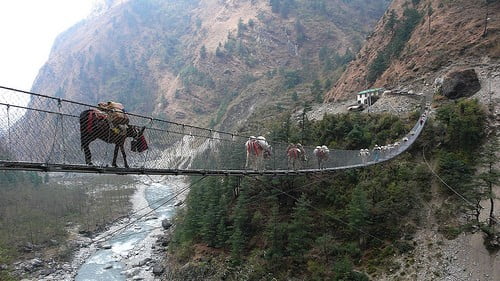
10. घासा -नेपाल
घासा का पुल बहुत ही खतरनाक है जो गुस नामक गांव में बना है ! इस पुल के बन
जाने से लोगों के आने जाने की दूरी करीब 60 किलोमीटर कम हो गयी है और सबसे
बड़ी बात ये हैं की इसे एक इंजीनियर ने अपनी सरकारी सेवा से रिटायर्ड होने
के बाद बनाया ! भले ही ये सस्पेंशन पुल खतरनाक हो लेकिन फिर भी इससे होकर
हर रोज़ इंसानों के साथ साथ पशु भी रोज़ अपना रास्ता तय करते हैं !!
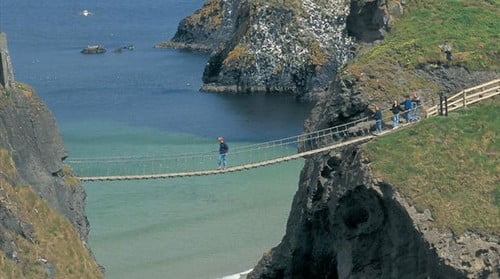
9. कार्रिक ए रेड़ी रोप ब्रिज -यूके (Carrick-A-Rede Rope Bridge – UK)
कार्रिक ए रेड़ी रोप ब्रिज उत्तरी आयरलैंड के एन्ट्रिम टाउन में स्थित है !
लगभग 21 मीटर लम्बा पुल 30 मीटर की ऊंचाई पर स्थित है। देखने में ये पुल
भले सामान्य सा लगे किन्तु इसकी रस्सियों में होने वाला कम्पन अच्छे अच्छों
को पुल पार करते समय पसीना ला देता है।
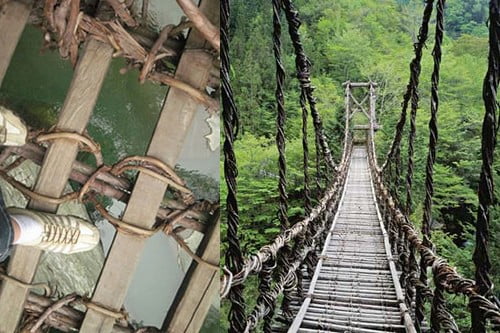
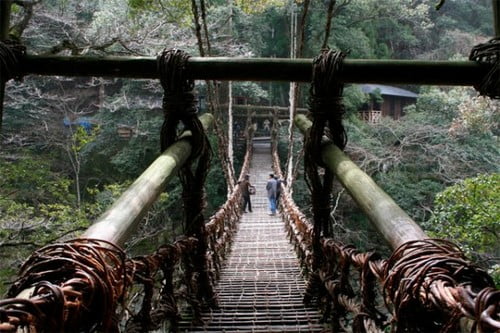
8. वाइन फुटपाथपुल,जापान (Vine Footpaths Bridges – Japan)
वाइन फुटपाथ पुल , जापान की आइवी घाटी पर बना हुआ है ! इसे बहुत पहले
योद्धाओं के लिए बनाया गया था और फिर इसे गिराया नही गया ! इस चित्र में
आपको दो व्यूज दिखाई दे रहे होंगे जो अलग अलग पुल की स्थिति बयान कर रहे
हैं और इस पुल को समझने के लिए पर्याप्त हैं ! आइवी नदी के एक किनारे पर
रेपोवेसी नेचर पार्क है लेकिन इस खतरनाक पुल से वहां तक जाने की अनुमति नही
है ! कुछ शौक़ीन लोग ही कभी कभार इसे पार करते हैं !!
7 . तमान नेगरा नेशनल पार्क -मलेशिया (Taman Negara National Park Bridge – Malaysia)
तमान नेगरा नेशनल पार्क एक लंबा और सस्पेंशन पुल है ! हर रोज़ बहुत सारे
स्थानीय लोग और टूरिस्ट दूसरी दिशा में इसका प्रयोग करते हैं लेकिन बारिश
के मौसम में ये पुल बहुत गीला हो जाता है और एक तरह से पार करना असंभव हो
जाता है ! लगभग 40 मीटर ऊँचा ये पुल 550 मीटर लम्बा है !
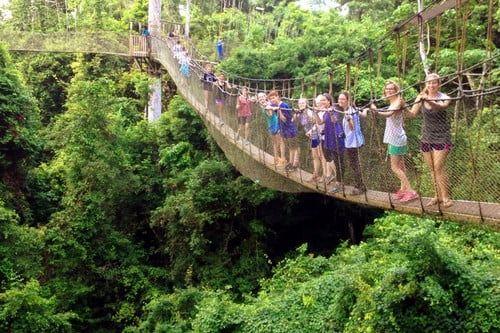
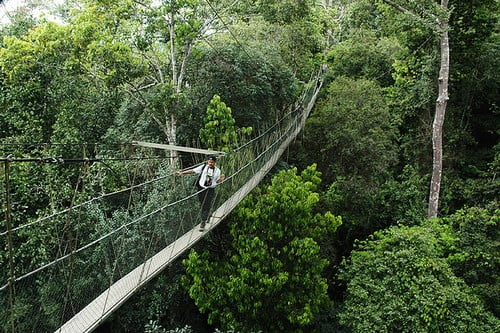
6.काकुम नेशनल पार्क पुल -घाना ( Kakum National Park Canopy Walkway – Ghana)
पुल की शक्ल देखकर ही इसके खतरनाक होने का अंदाजा लगाया जा सकता ! ये पुल
घाना की घाटियों में स्थित है ! इसके पास स्थित काकुमनेशनल पार्क में
पर्यटकों की खूब भीड़ उमड़ती है किन्तु या पुल क पार करना सच में एक एडवेंचर
ही कहा जाएगा । इसे पहाड़ी के सिरों पर सपोर्ट दिया गया है और बीच में एकदम
से झोल है । झोल समझते हैं आप ? जैसे रस्सी की बनी हुई चारपाई जब ढीली हो
जाती है तो वो नीचे की तरफ निकलने लगती है उसे हमारे ब्रज में झोल कहते हैं
! इसके दोनों तरफ लकड़ी का रास्ता बना है जिस पर ही लोग चल पाते हैं !!
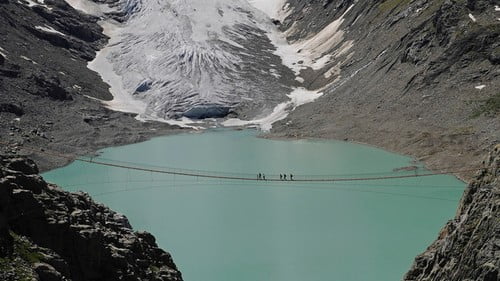
5. ट्रिफ्ट ब्रिज -स्विट्ज़रलैंड (Trift Bridge – Switzerland):
स्विट्ज़रलैंड की शानदार आल्प्स पहाड़ियों में स्थित "द ट्रिफ्ट ब्रिज " 180
मीटर लंबा और 110 मीटर ऊंचा पुल है ! इसे सन 2004 में बनवाया गया था और फिर
सन 2009 में दोबारा सुधारा गया ! इस पुल को पार करना आसान नहीं है और न
इसमें सुरक्षा की दृष्टि के लिए कुछ विशेष किया गया है !
4. मुसो त्सूरीबाशी पुल (Musou Tsuribashi Bridge – Japan):
मुसो त्सूरीबाशी पुल एक जापानी पुल है और दुनियाँ के सबसे खतरनाक पुलों में
से एक है ! इसे 1950 में बनाया गया था और बहुत ही संकीर्ण बनाया गया था !
बहुत ही कमजोर रस्सियों और पिलर पर टिके इस पुल को फिर भी हर रोज़ हजारों
लोग पार करते हैं ! अगर आपके मन में भी इस पुल को पार करने का ख्याल आ रहा
है तो कम से कम तीन बार सोचियेगा !!
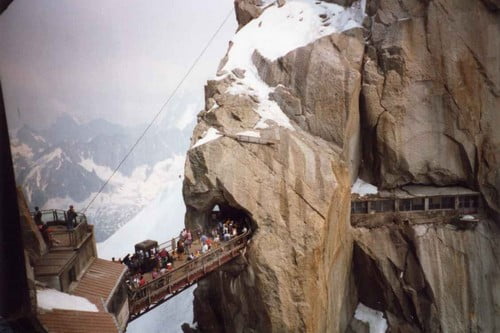
3.एगुले डू मिडी पुल -फ्रांस ( Aiguille du Midi – France):
एगुले डू मिडी पुल फ्रांस में स्थित है ! अगर आप को कोई हार्ट की प्रॉब्लम
है तो इसे पार करने का सपना भी मत पालिए ! ये बहुत ही नैरो है और उस पर
इसकी 12600 फ़ीट की ऊंचाई इसे और भी खतरनाक बना देती है ! इसे दोनों तरफ से
सपोर्ट दिए गए हैं किन्तु इसकी ऊंचाई दिल में खलबली मचा देती है !!
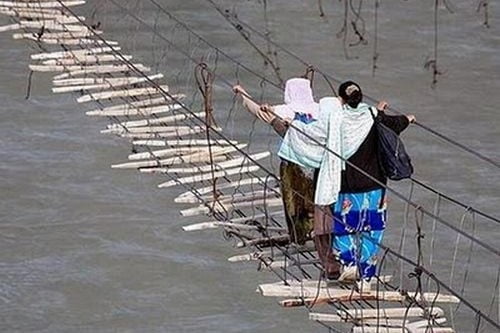
2. पैदल पुल -पाकिस्तान (Foot Bridges – Pakistan):
पाकिस्तान
का पैदल पुल वहां रहने वाले बच्चों के लिए किसी खेल के मैदान से कम नही है
! इसे बस ऐवें ही बना दिया गया है ताकि लोग इधर उधर आ जा सकें अन्यथा
इसमें सुरक्षा का कोई भरोसा नही है !!
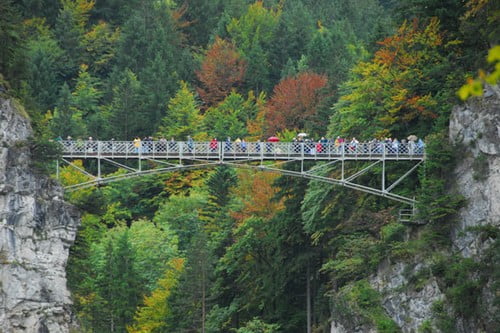
1.मरिनब्रुक -जर्मनी ( Marienbruecke – Germany):
मरिनब्रुक -जर्मनी में स्थित है ! इसे देखकर ऐसा लगता है जैसे ये बहुत
खूबसूरत दिखने वाला पुल एकदम से सुरक्षित होगा ! लेकिन सच में ऐसा नही है !
बवेरियन ऐल्प्स की चोटियों से जुड़ता ये पुल दूर से देखने पर बहुत खूबसूरत
दिखाई देता है लेकिन जब इसके पास जाते हैं और इसे पार करने की कोशिश करते
हैं तो दिल की धड़कन कई गुना बढ़ जाती है !!
ये
तो हुई दुनिया के खतरनाक पुलों के विषय में एक जानकारी ! आप प्लान बना रहे
हैं ? या आप कभी इन जगहों पर गए हैं तो कृपया अपना अनुभव जरूर साझा करिये
!! धन्यवाद
http://yogi-saraswat.blogspot.com/2015/11/10.html
योगमाया मंदिर : महरौली , दिल्ली
माँ जब बुलाती है तभी जा पाते हैं !
चलो बुलावा आया है
माता ने बुलाया है !!
ये शब्द हम हमेशा माँ वैष्णो देवी के द्धार जाने के लिए बोलते हैं लेकिन
गाजियाबाद से मात्र 38 किलोमीटर की दूरी पर स्थित महरौली , दिल्ली में
देवी योगमाया के मंदिर तक पहुँचने में पूरे 4 महीनों का समय लग गया ! कभी
कुछ काम लग गया कभी कुछ ! आखिर नवरात्रों के दिन में कुछ समय मिला और
योगमाया मंदिर देखने निकल गया ! दोपहर बाद साढ़े तीन बजे जापानी भाषा की
क्लास ख़त्म कर मूलचंद मेट्रो स्टेशन से केंद्रीय सचिवालय, वहां से येलो
लाइन की मैट्रो से साकेत पहुंचा ! साकेत उतरने का कारण ये था कि वहाँ
मैट्रो स्टेशन से बाहर निकलकर बस मिल जाती हैं ! मालवीय नगर स्टेशन पर या
हौज ख़ास में बस नही मिल पाती ! मिलती भी है तो पैदल चलना पड़ता है ! साकेत
मेट्रो स्टेशन से बाहर आकर 427 नंबर महरौली जाने वाली बस पकड़ी ! मंदिर की
एग्जेक्ट लोकेशन मालूम नही थी इसलिए बस कंडक्टर से एक बार कह दिया - भाई
योगमाया मंदिर उतार देना ! वो तुरंत बोला - ये बस योगमाया मंदिर नही जायेगी
! पीछे एक स्कूल का बच्चा बैठा था - वो बोला , अंकल आप बैठे रहो ! ये उधर
होकर ही जायेगी ! रोड से बिलकुल पास ही है ! बच्चे स्मार्ट होते हैं !!
थोड़ी देर बाद बस जाने पहिचाने से रास्ते पर चल रही थी ! ऐसा लगा जैसे मैंने
ये जगह देखी है पहले कभी ! अरे , ये तो कुतुबमीनार की तरफ की जगह है ! सब
याद आ गया ! थोड़े दिनों पहले परिवार के साथ कुतुबमीनार गया था लेकिन तब
योगमाया मंदिर का नाम भी नही सुना था ! दिल्ली ऐसे खूब घूमी है लेकिन कोई
कहे कि मुझे फलां जगह जाना है तो मैं नही बता सकता ! कुतुबमीनार के बिलकुल
पीछे के तरफ एक गोल सा चक्कर काट के बस निकलती है ! बस बिलकुल पीछे ही है
योगमाया मंदिर ! इस रास्ते में आपको देश के बड़े बड़े फैशन डिज़ाइनर जैसे ,
जे.जे वलैया , मनीष पॉल , मनीष मल्होत्रा , ऋतू कुमार आदि के बुटीक मिल
जाएंगे देखने को ! आपकी मर्जी है खरीदना चाहें तो खरीदें , मेरी हिम्मत और
औकात नही होती इतने महंगे कपडे खरीदने की !!
 |
|
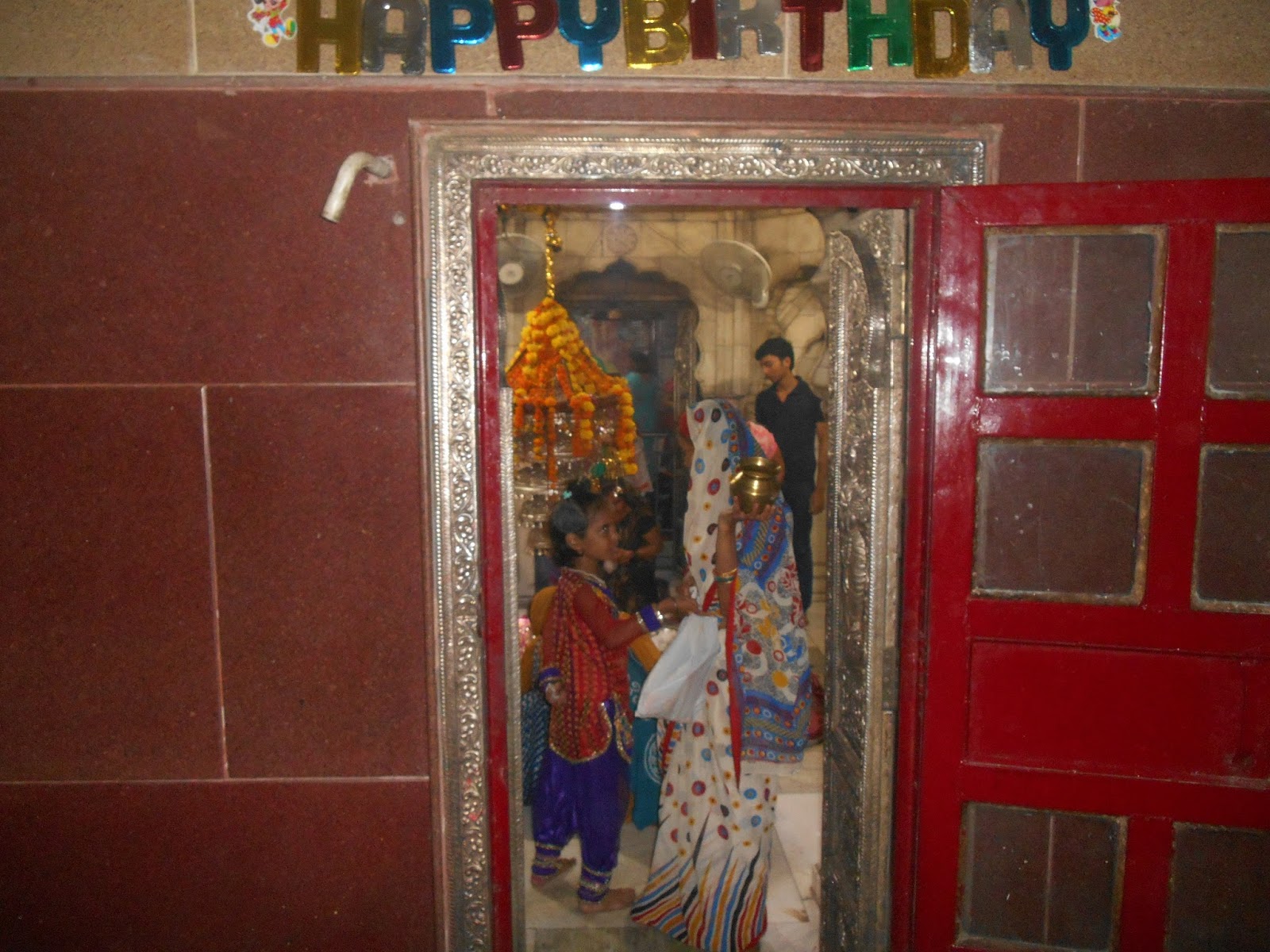
ऐसा माना जाता है कि भगवान श्री कृष्णा की बहन योगमाया
का मंदिर दिल्ली में महाभारत कालीन पांच मंदिरों में से एक है ! इस मंदिर
को ग़जनी ने तहस नहस कर डाला था लेकिन फिर हिन्दू राजा हेमू ने इसे फिर से
बनवाया ! औरंगजेब के शासनकाल में इस मंदिर को मस्जिद बनाने का प्रयास किया
गया था और इसके लिए एक आयताकार कमरा भी बना दिया गया था जो आजकल माता के
वस्त्र भण्डार के तौर पर प्रयोग में लाया जाता है ! ऐसा माना जाता है कि इस
मंदिर को प्रारंभिक रूप में पांडवों ने बनवाया था लेकिन अब यहां घरों का
इतना बड़ा जाल फ़ैल चूका है कि सिर्फ मंदिर ही रह गया है उस जमाने का !
ऐसा कहा जाता है कि एक बार अकबर के पुत्र मिर्ज़ा जहांगीर को कुछ परेशानी हो
गयी तो उसकी माँ को एक रात सपना आया कि अगर तुम योगमाया मंदिर पर फूलों का
पंखा अर्पित करोगी तो तुम्हारा पुत्र सुरक्षित और स्वस्थ हो जाएगा। और तब
से इस मंदिर को और भी ज्यादा प्रसिद्धि मिलने लगी ! अकबर के ही समय में
लाला सेठमल ने इस मंदिर का पुनर्निर्माण कराया था ! और तब से ही फूल वालों
की सैर शुरू हुई थी जो
जहाज़ महल होकर गुजरती है ! !
महरौली
बस स्टैंड पहुंचकर थोड़ा सा पीछे की तरफ लौटना पड़ता है योगमाया मंदिर के
लिए ! सीधे हाथ पर बोर्ड लगा है "योगमाया मंदिर " और उस बड़े से गेट के
दोनों तरफ सिंह की मूर्तियां भी हैं ! हाँ , एक बात और भी है ! महरौली बस
स्टैंड के पास में ही अकबर के भाई
आदम खान का मक़बरा भी है , जिसे मैं पहले
देख चुका था इसलिए अब दोबारा नही गया ! दूर से देखने पर लग रहा था कि इस पर
रेंनोवशन का काम चल रहा है ! आप जाना चाहें तो जाकर आ सकते हैं , एक जगह
जाएंगे दो देख पायेंगे !
आज इतना ही ! फिर मिलते हैं जल्दी ही
 |
| नवरात्रों में हवन चलता रहता है |
 |
| जय माँ अम्बे |
 |
| जय माँ अम्बे |
 |
| पिण्डी पूजन |
फिर मिलते हैं जल्दी ही :
गाँधी तेरे रूप अनेक
विदेशों की खूबसूरत वादियों, पहाड़ों और समंदर के तटों से अलग कुछ देखने का
मन है, एक अलग एक्सपीरियंस के साथ ट्रैवल करना चाहते हैं तो इन जगहों पर
आएं। पूरी जिंदगी देश के लिए लड़ने वाले गांधी जी के इन जगहों पर स्टैचू
देखकर आश्चर्य के साथ ही गर्व भी होगा, क्योंकि इन जगहों पर गांधी जी को कई
बार अपमान का सामना करना पड़ा था। आइये आपको अलग अलग देशों में ले चलते हैं जहां गांधी जी की मूर्तियां लगी हुई हैं :
1. जोहानिसबर्ग, साउथ अफ्रीका
जोहानिसबर्ग में गांधी की यह मूर्ति शहर के बीचोंबीच गांधी स्क्वेयर पर
स्थित है। माना जाता है कि यह दुनिया में गांधी की एकमात्र प्रतिमा है,
जिसमें उन्हें वकील के तौर पर दिखाया गया है। वह कोर्ट में पहने जाने वाले
कपड़े पहने हुए हैं। उन्होंने यहां लॉ की प्रैक्टिस की थी। इस कारण जगह का
नामकरण उनके नाम पर किया गया है। बताता चलूँ कि महात्मा गांधी 1893 में साउथ अफ्रीका गए थे। वह 1903-14 तक जोहानिसबर्ग में रुके थे।
2.पीटरमैरित्जबर्ग, साउथ अफ्रीका
महात्मा गांधी के अंदर अहिंसा की भावना तो शुरू से ही थी, पर साउथ अफ्रीका
के पीटरमैरित्जबर्ग में 1983 से ज्यादा गहरी हुई। प्रिटोरिया की सैर करते
वक्त गांधी जी को ट्रेन से फेंका गया था, जबकि उनके पास फर्स्ट क्लास की
टिकट थी। इस घटना ने गांधी जी को पूरी तरह बदल दिया था। उन्होंने नस्लभेद
के खिलाफ आवाज उठाने की ठानी। ये स्टैचू उनके इसी प्रण की निशानी है।
3.एम्सटर्डम, नीदरलैंड
एम्सटर्डम में साल 1995 में महात्मा गांधी के स्टैचू को लगाया गया था। इसके
अलावा, महात्मा गांधी को अर्धनग्न फकीर कहने वाले ब्रिटेन के पूर्व
प्रधानमंत्री चर्चिल के ही देश में गांधी की मूर्ति उन्हीं की मूर्ति के
बगल में लगाई गई है।
4.वॉशिंगटन, यूएसए
मेसाच्युसेट्स की इंडियन एंबेसी के पास बनी है गांधी जी की ये मूर्ति। इसे
गौतम पाल नाम के एक आर्टिस्ट ने बनाया था। 8 फीट ऊंची इस स्टैटू को 16
सितंबर, 2000 को स्थापित किया गया था।
5.द हेग, नीदरलैंड
नीदरलैंड के सूरीनामी इंस्टीट्यूट द्वारा लगाए गया यह स्टैचू काफी बड़ा है।
इसे कैरल गोम्ज ने बनाया था। 25 जून, 2004 को इसका अनावरण किया गया था।
6.होनोलुलू, हवाई
साल 1990 में हवाई आइलैंड के पार्क में गांधी जी की स्टैचू लगाई गई थी।
होनोलुलू खासतौर से अपने जू और एक्वेरियम के लिए जाना जाता है। यहां आने पर
लोग गांधी जी की स्टैचू को जरूर देखते हैं।
7.लंदन, इंग्लैंड
साल 1968 में प्रधानमंत्री हेराल्ड विल्सन ने इस स्टैचू का उद्घाटन किया था। इस स्टैचू को फ्रीडा ब्रिलिएंट ने बनाया था।
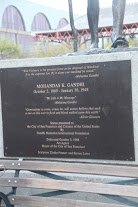
 |
| Here's Gandhiji at the Ferry Terminal in San Francisco. Pic. sent by my Blogging friend D.Nambiar. |
 |
| Here's Gandhiji at the Ferry Terminal in San Francisco. Pic. sent by my Blogging friend D.Nambiar. |
यहाँ कुछ फोटो ब्लॉगर मित्र
D.Nambiar ने
भी भेजी हैं ! मेरे ब्लॉग पोस्ट को पढ़कर उन्होंने सूचित किया था कि
अमेरिका के सेन फ्रांसिस्को में भी गांधी जी की प्रतिमा लगी हुई है लेकिन
उसकी फोटो मेरे पास नहीं थी ! बहुत बहुत धन्यवाद आपका !
फिर मिलते हैं जल्दी ही :
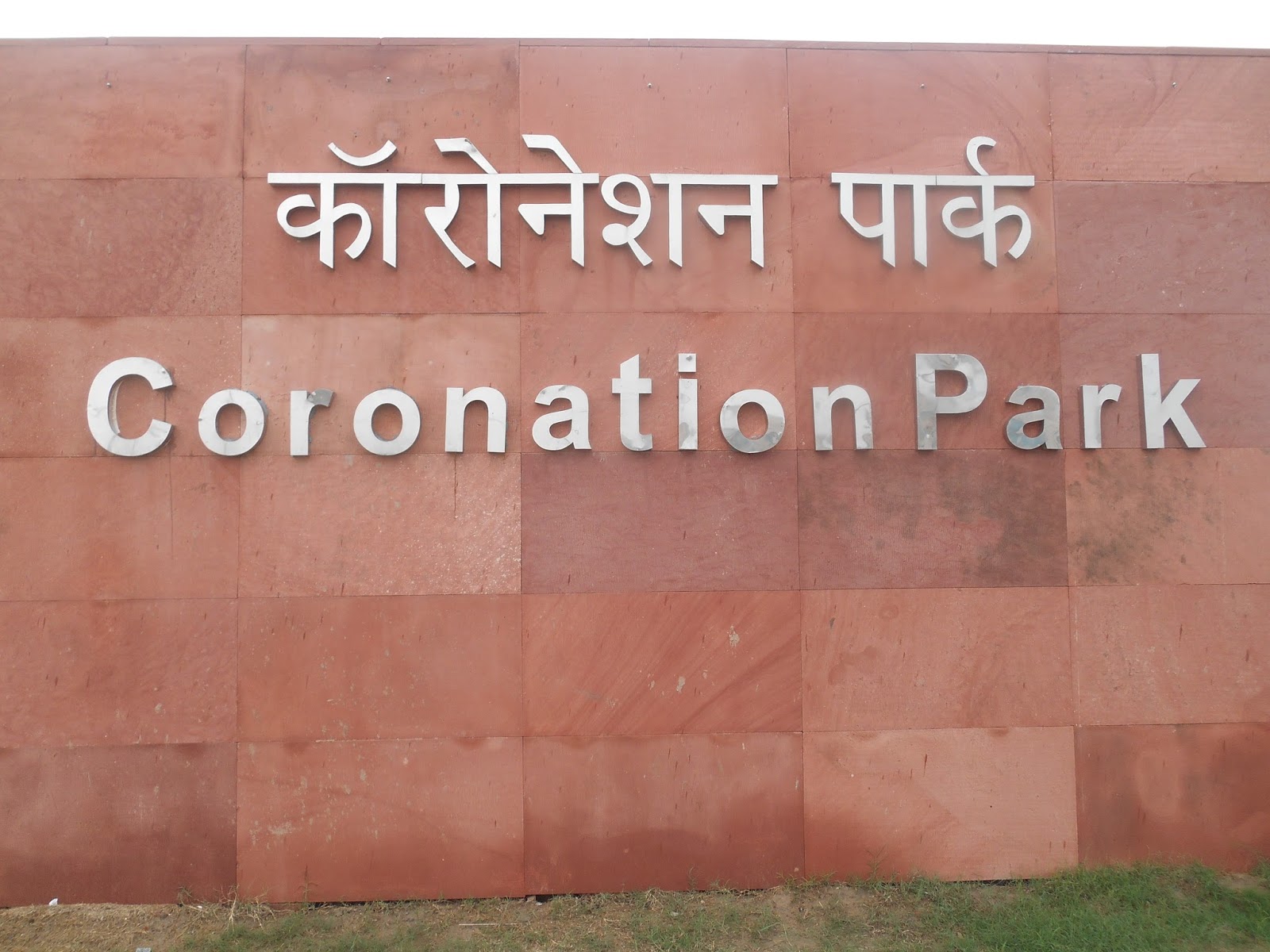
कोरोनेशन पार्क : दिल्ली
एक दिन ऐसे ही नेट पर सर्च कर रहा था कि दिल्ली के आसपास घूमने लायक क्या
क्या जगह हैं , उनमें एक जगह मिली कोरोनेशन पार्क ! कुछ आसपास के लोगों से
पता किया और कुछ जो दिल्ली में रहते हैं उनसे पता किया कि कहाँ है कोरोनेशन
पार्क ? लेकिन हद हो गयी ! मुझे ही पूछने लगे ये क्या है ? लेकिन भला हो
तकनीक का , बहुत नही तो इतनी मदद जरूर कर देती है कि एक खाका तैयार कर सकते
हैं हम अपने दिमाग में ! उसी तकनीक की मदद ली ! नेविगेशन की ! दिल्ली
हजारों बार गया होऊंगा लेकिन नई जगह जाना हो तो हमेशा रास्ता देखना पड़ता है
!
शनिवार को जापानी भाषा की क्लास खत्म करके सीधा मूलचंद से केंद्रीय सचिवालय
पहुंचा और वहां से यलो लाइन की मेट्रो पकड़कर GTB नगर निकल गया !
विश्वविद्यालय से अगला स्टेशन पड़ता है GTB नगर ! कुछ मेट्रो ट्रेन सिर्फ
विश्वविद्यलय तक जाती हैं और कुछ आगे आजादपुर होते हुए जहांगीरपुरी तक !
GTB नगर मेट्रो से बाहर आइये सीधे हाथ पर बुराड़ी जाने वाली बस , ऑटो ,
टेम्पो सब मिल जाएगा ! लेकिन ये मत कहिये कि कोरोनेशन पार्क जाना है ,
सिर्फ उसे बताइये कि निरंकारी सरोवर जाना है ! बस पास में ही है कोरोनेशन
पार्क !
अब ज़रा बात कर लेते हैं कोरोनेशन पार्क के बारे में ! 1877 में ये जगह
दिल्ली दरबार हुआ करता था जब महारानी विक्टोरिया को भारत की भी सामग्री
घोषित किया गया था ! और फिर यहां 1903 में किंग एडवर्ड सातवें को राजा बनने
पर सम्मानित किया गया और उसका आशीर्वाद लिया गया लेकिन वो स्वयं यहाँ
उपस्थित नही था ! और आखिरी बार इस जगह का उपयोग दिल्ली दरबार के रूप में सन
1911 ईस्वी में किया गया जब किंग जॉर्ज पंचम को 11 दिसंबर को भारत का भी
राजा घोषित किया गया और जैसे श्री राजीव दीक्षित जी कहते हैं किंग जॉर्ज
पंचम और महारानी के सम्मान में जो गीत " जन गण मन …… " गाया गया वो अब
हमारा राष्ट्र गान है ! इस कार्यक्रम में भारत के सभी राजाओं और
राजकुमारों ने अंग्रेज़ राजा के समक्ष अपनी उपस्थिति दर्ज़ कराई ! ये जगह
उन्ही घटनाओं का एक तरह से मेमोरियल है ! यहाँ राजा जॉर्ज पंचम की सबसे
लम्बी मूर्ति लगी हुई है ! ये मूर्ति पहले 1960 तक इंडिया गेट पर लगी हुई
थी जिसे बाद में यहाँ शिफ्ट कर दिया गया ! और यही वो राजा था जिसने कलकत्ता
से हटाकर दिल्ली को राजधानी बनाया और एक नए शहर की नींव रखी !
दिल्ली को दिल्ली दरबार लगाने के लिए इसलिए चुना गया था क्योंकि यहां पहले
से ही राजसी ठाठ बने हुए थे और शहर पहले से ही प्रसिद्ध था ! दिल्ली दरबार
नाम हिन्दू , मुस्लिम और मुग़ल शासकों की परम्पारों को ध्यान में रखते हुए
रखा गया था और 40 साल के समय में तीन दिल्ली दरबार लगाए गए थे !
पहला दिल्ली दरबार भारत के तब के
वाइसराय लार्ड लिटन ( Lord Lytton ) ने महारानी विक्टोरिया को भारत की
सामाज्ञी घोषित करने के लिए 1 जनवरी 1877 को आयोजित किया था ! जगह यही थी
जिसे अब कोरोनेशन पार्क कहते हैं !! ये दिल्ली दरबार लार्ड लैटिन और उसकी
पत्नी की आवभगत में पानी की तरह बहाये गए अनाप शनाप पैसे के लिए जाना गया !
इस दरबार में लार्ड लैटिन और उसकी पत्नी 70 ,000 लोगों की तालियों की
गड़गड़ाहट के साथ हाथी पर विराजमान होकर आये ! और उनके समक्ष सभी भारतीय
राजाओं और ब्रिटिश शासन के अधिकारियों ने अपनी उपस्थिति दर्ज़ करवाई ! ये सब
ब्रिटिश राज के कायदे कानून और उसकी धसक को भारतीय लोगों को समझाने के
लिए किया गया और इस सबका खर्च भारतीय राजाओं ने वहन किया ! दूसरा और तीसरा
दरबार भी यहीं इसी स्थान पर लगाए गए ! और ये दरबार ब्रिटिश सम्राट के
राज्याभिषेक को मनाने के लिए आयोजित किये गए !
दूसरा दिल्ली दरबार पहली जनवरी 1903 को
सम्राट एडवर्ड सप्तम के राज्याभिषेक के लिए आयोजित किया गया जिसमें तब के
वाइसराय लार्ड कर्ज़न ने पूरी शान ओ शौकत दिखाई और इस सब के लिए भारतीय
राजाओं ने अपने खजाने खोल दिए या कहें कि उनके खजाने खुलवा लिए गए ! लॉर्ड
कर्ज़न ने इस निर्जन और दलदली जमीन को रंगीन टेंट सिटी में तब्दील कर दिया !
इसे सभी सुविधाओं से जोड़ा गया और यहां हुए दरबार में प्रतिदिन झांकियां ,
नृत्य और आतिशबाजी का प्रदर्शन हुआ और इस कार्यक्रम को यादगार बनाने के लिए
लार्ड कर्जन ने डाक टिकट भी छपवाए ! कमाण्डर इन चीफ लार्ड कित्चेनर ने
प्रतिदिन परेड कराई , बैंड बजाये गए लेकिन जिस सम्राट के लिए ये सब किया
गया वो नहीं आया और उसकी जगह उसके भाई ड्यूक ऑफ़ कनॉट ने इसमें अपनी
उपस्थिति दिखाई। ये वही ड्यूक ऑफ़ कनॉट था जिसके नाम पर दिल्ली के दिल कनॉट
प्लेस का नाम रखा गया ! ड्यूक मुंबई से यहां पूरे लाव लश्कर के साथ पहुंचा
था ! पूरी रात दरबार में नए नए अलग अलग तरह के कार्यक्रम प्रस्तुत किये गए
और बीसवी सदी की शुरुआत का ये बहुत ही खर्चीला और शान ओ शौकत दिखाने वाला
कार्यक्रम माना गया ! इसे दिल्ली दरबार की जगह कर्ज़न दरबार कहा गया क्योंकि
लार्ड कर्ज़न ने अपने लिए जो तैयारियां कराई थीं वो उसे वाइसराय के रूप
में बहुत ताकतवर सिद्ध कर रही थीं ! इस दरबार में भारत के सभी राज्यों के
राजाओं ने अपने लाव लश्कर , हाथियों , घोड़ों और खजाने से ड्यूक का सम्मान
किया !
तीसरा और अंतिम दरबार 1911 में आयोजित
किया गया , उस वक्त लार्ड हार्डिंग भारत का वायसराय हुआ करता था ! लार्ड
हार्डिंग ने इस कार्यक्रम की बहुत बेहतर और शानदार तैयारियां की थीं ! उसका
कारण भी था क्यूंकि पहली बार कोई सत्ताशीन सम्राट इस कार्यक्रम में शिरकत
करने के लिए आ रहा था ! जॉर्ज पंचम वो राजा था जो पहली बार राजा के तौर पर
इस दरबार में शामिल होने आ रहा था ! उसके साथ रानी मैरी भी थी। सम्राट
और महारानी सोने की छतरी के नीचे सोने के ही सिंहासन पर बैठे ! ये दरबार 11
दिसंबर 1911 को आयोजित किया गया जिसमे राजा ने भारत की राजधानी कलकत्ता से
हटाकर दिल्ली बनाने की घोषणा की ! कहा जाता है कि इस दरबार के लिए कुल
600,000 पोंड खर्च किये गए और सुरक्षा और परेड में लगे 80,000 सिपाहियों के
वेतन और अन्य खर्च के लिए भारत सरकार ने 300,000 पोंड खर्च किये !
पोस्ट बड़ी हो जायेगी और फिर पढ़ने में बोरियत होने लगेगी इसलिए आज इतना ही !
इसे दो बार में नही लिखना चाहता था लेकिन बात बढ़ती गयी और मजबूरन दो बार
में लिखना पड़ेगा !!
ज्यादातर फोटो अपने खिचे हुए हैं लेकिन कुछ नेट से भी उठाये हैं !!
 |
| The Delhi Durbar of 1877. Lord Lytton, the Viceroy of India, is seated on the dais to the left. |
 |
| Lord Curzon and Lady Curzon arriving at the Delhi Durbar, 1903. |
 |
| King George V's
statue was removed in the 1960s from the canopy opposite India Gate. It
was relocated on a plinth in Coronation Park, directly opposite the
Obelisk | |
 |
| स्मृति स्तम्भ |
 |
| इंडिया गेट के सामने यहीं से 1960 में किंग जॉर्ज की मूर्ति हटाकर कोरोनेशन पार्क ले जाया गया |
 |
| भारत का 22 वां वायसराय लार्ड विलिंग्डन |
 |
| भारत का 22 वां वायसराय लार्ड विलिंग्डन |
 |
| उस वक्त भारत का वायसराय लॉर्ड हार्डिंग |
 |
| उस वक्त भारत का वायसराय लॉर्ड हार्डिंग! |
 |
| उस वक्त भारत का वायसराय लॉर्ड हार्डिंग! इसकी नाक टूट गयी है ! |
कोरोनेशन पार्क -2 : दिल्ली
Mahant Ghasidas Sangrahalaya - The Raipur Museum
“Sangrahalaya?
Woh kya hota hai?” (“Museum, whats that?”) asked a bewildered gentleman, when I asked him
directions to the museum at Raipur.
By now, we had gotten quite used to the
refrain - “Aapko ghoomna hai, toh
Sirpur Jaiye, Bilaspur Jaiye, yahan toh kuch bhi nahin hai” - “If you want
to go see something, go to Sirpur or Bilaspur. There is nothing here in Raipur.
” It was with great perseverance that our fellow journalists, Aruna and
Susheela, with years of experience behind them, had drawn out of an exasperated
receptionist at the hotel that there was indeed a museum at Raipur. Me and Sid had happily tagged along, eager to see at least something of Raipur before we
headed to Sirpur for the Music and Dance Festival for which we had been
invited. A local share auto had brought us to Ghadi Chowk, the central area of
Raipur marked by a clock tower. Our share auto driver, unable to get us to pay
anything more than the usual fare, had grumpily moved away, leaving us to
figure out the location of the museum ourselves. Our questions had begun
collecting a crowd of locals, wondering what on earth we tourists wanted to see
in their town. Eventually, it was another auto driver who came to our aid,
pointing out the museum, which was just down the road.

After
that experience,
our hopes, I must admit were rather dimmed. The museum therefore, came as a big
surprise. To begin with, it was huge, surrounded by lawns and gardens, with an
art gallery in one corner, and sculptures all over the place!
 |
| Narasimha, 10th Century |
The
museum was set
up Raja Mahant Ghasidas, the ruler of Rajnandgaon, in 1875. This was soon after
Lord Cunningham of the Indian Archaeological Service discovered the ruins of
Sirpur, and other sites in the region in 1872, and thus served as the perfect
place to display the exhibits discovered. The museum has an astounding
collection of sculptures, pottery, as well as etchings in stone and metal.
 |
| Raja Mahant Ghasidas, founder of the museum |
 |
| This would have been part of a simple decorative toran, but I love the detail and the depth of the work! |
The
pottery section
was interesting. It showed evidence of trade with Rome as well as other
civilizations, and the stone edicts pointed to a recorded history we see little
of. However, to be honest, the sculptures were what I enjoyed the most. I have
already written about the first sculpture (or rather a replica) I saw there, of
Rudra Shiva. Here then, are some more really interesting pieces from the museum….
This
seems to be a pillar, but very interesting are the figures of Vishnu on Garuda on each face.
Made from a single piece of stone, can you imagine how impressive it would have
looked, in the temple it originally stood in?
This
one was titled ‘Uma Maheshwara, 10th Century, Karitalai, Jabalpur’. While I loved the
expression of total love on Shiva and Parvati’s faces, more interesting were
the figures below… Ravana, lifting Kailash, and on either side, Ganesha and Karthikeya!
This is so like the sculptures I have seen in Ellora and Southern India!
Which
brings me to
the next one, of Karthikeya…
Note the
six faces, the peacock vehicle, and the cock near his hand. Then, look down and
see the woman kneeling by his left. Those of you from Tamilnadu will recognize
her as ‘Avvayyar’, one of the most ardent devotees of Karthikeya, far down
south, well removed from Chhattisgarh! An interesting discovery dating back to
the 10th century from Gomri near Bilaspur!
And
then there is
this…
Sheshasayee
Vishnu,
reclining on a serpent, Brahma sitting on a lotus emanating from the navel,
Lakshmi by his feet, sages and Garuda gathered around. Now take a second look.
Above him are twelve figures, 10 of which depict the Dashavatar (the ten
avatars of Lord Vishnu) and two depicting devotees. Below him are even more
figures. The layer just below him shows Naga Kanyas, women from the world of
serpents, the wives of Adishesha, on whom the Lord rests. On the lowest layer
are depicted the Navagrahas – the nine planets. Again, I have seen similar
depictions more often in the south!
In the
same series,
here is another sculpture of Vishnu, holding a chakra. The conch seems to have
broken, but the rest of the sculpture is in great condition.
Ready
to move on?
Wait. take a second look. Can you see the Dashavatar hidden in this sculpture? We couldn’t, till they were
pointed out to us! Let me help you out…
Finally, here are two more interesting sculptures….
Brahma..
And Raja
Purusha…12th
century, Ratanpur near Bilaspur…
I
found their depiction really interesting…. The beards, their headgear! What do you think?
Apart
from this, the
museum also has a natural history section, and a folk art section, both of
which were under repair when we visited. Besides, the museum also holds regular
workshops for artisans as well as laymen, in folk art and craft.
The museum also has an enthusiastic woman in
charge, who guided us through the museum, and pointed out interesting details
we had missed. After all the trouble we had finding the museum, it was a relief
to see that there still were people like her, so immersed in history and
heritage. Sid had a long conversation with her while we immersed ourselves in
the sculptures, and you can read all about her here.
The
museum can
easily take up two to three hours, so if you are visiting Raipur, take time off
and go see this museum and its incredible artifacts!
Information:
- Raipur is easily accessible from all parts of
India, by road, train and air.
- There are also lots of options for
accommodation. We stayed at the Babylon Inn.
- The Museum is located on Ghadi Chowk, though
you might need to ask the auto drivers for help locating it.
- While in Raipur, take the opportunity to
explore the old city and the temples and markets there. I hear the experience
can be an interesting one.
- Try out Raipur’s Samosas and Jalebis! Just walk
along the Railway station road, and you will find lots of places selling them.
I visited Raipur en route to Sirpur to attend the Sirpur Music and Dance Festival on invitation from the Chhattisgarh Tourism Board.
Related Posts:
A Sculpture like none other
A Sculpture like none other!
He is
over 8 feet tall,
and simply seems to take up all the space! We were, to be honest, rather
startled, when we first set eyes on him. The reason though, was not his size,
but the fact that he seemed to be made up of faces! Wondering what I am talking
about? Here, let me show you….
At
first glance,
he appears grotesque, but he gets more and more interesting as we take a closer
look, and realize, that he isn’t just made up of faces. The entire statue is
made up of animal and human figures, a thought grotesque in the extreme, but a
result surprisingly intricate and awe inspiring….
His
head has two serpents coiled around, his eyes are frogs, their mouths open, holding eggs as
eyeballs. His nose is a lizard, whose legs form his eyebrows; his moustaches
are fishes; his mouth is a crab, and his ears are doves!
His
neck is another snake, and his shoulder has birds on them, one looks like an owl, while the
other seems to have succumbed to weathering. The hands are the legs of
elephants, and his fingers, once again, snakes. His chest, stomach, and thighs
are all human faces – interestingly, the upper ones seem to be males while the
lower are females! His feet and legs are tigers, and yet another snake rises
its hood near his feet, as if it formed his cloak!
He is
incredibly interesting, but who is he? We were told that he was Rudra Shiva, from the temple
of Tala in Chhatisgarh (the figure here is a replica), but he doesn’t seem to
be mentioned in the scriptures, at least the ones we know of. It is evident
that he is incredibly ancient, and, according to the ASI, he dates back to the
6th century! He is believed to predate Hinduism as we know it, a
combination of Aghora and Rudra worship, more common in tribal societies.
This was
my first visit to Chhattisgarh, and I travelled to Raipur and Sirpur, to attend the Sirpur Music and
Dance festival, on an invite from the Chhattisgarh Tourism Board.
There was
much I saw and appreciated, but this sculpture - the first one I saw on
my visit - is one which has made a lasting impression – and above all,
has made me curious
about Chhattisgarh and its history. I now have a deep and burning desire
to
visit Tala and see the original sculpture!
Sirpur - Heritage Unearthed
Long,
long ago, there
was a city on the banks of a river. The builders planned it well. They built on
the right side of the river, allowing for the natural slopes, which ensured
that when the river swelled during the monsoons, the extra flow would be to its
left, leaving the city dry. The main walls of the town were built in a
direction along the river, so that in case there ever was a flood, it would do
the least damage. They built massive temples for their deities, towering over
the city, so everyone could see the spires, and hear the bells from their
houses.
 |
| Surang Tila |
As
the city grew,
traders arrived, bringing with them goods the locals had never seen before.
Soon, the city planners built a marketplace, so more traders arrived. As
knowledge grew, so did the facilities. As visitors grew, so did the religions.
Buddhism arrived, and then Jainism; and the new arrivals built their own
temples and monasteries.
 |
| One of the Buddha Viharas |
No
one minded.
After all, everyone contributed to the growth of the city. They lived in
relative peace, despite the wars all around them. Regimes changed, but life
went on, with little discord among the residents. Would it have remained the
same? We do not know, for nature had other ideas. A massive earthquake rent the
town, and all the planning couldn’t save the residents. As the houses crumbled
and the river burst her boundaries, the people were left with just one choice –
to flee. The toll must have been huge, and we will never know how many escaped,
and how many succumbed. The city was abandoned, and reclaimed by earth.
Centuries passed, and the city was forgotten. Till someone turned up with a
spade and began digging. Long forgotten structures emerged from the earth, and
the city started taking shape again, albeit in another form – as a relic of a
time gone by.
This
is the story of Sirpur, in Chhattisgarh. The erstwhile city, most of which is still buried
under the earth, went by many names over the period it flourished, chiefly
among them, Sabaripura, (for Sabari from the Ramayana, who is said to have
offered fruit to Rama somewhere in this region,) and Shripura, which is where
the present name comes from. Sirpur’s glorious history first came to light in
1872, when Alexander Cunningham, the founder and first director of the Archaeological
Survey of India, discovered the most impressive structure here – the Lakshman
Temple. Recent excavations have uncovered 22 Shiva temples, 5 Vishnu temples,
12 Buddha Viharas, 1 Jain Vihara, a huge marketplace with an underground
granary market, hospital, and a medicinal bath! And these appear to be simply the
tip of the iceberg, since there are many more mounds yet to be excavated!
 |
| An underground granary |
The
two most impressive temples are the Lakshman Temple and the Gandheshwar Mahadev temple, the
first dedicated to Vishnu and the second to Shiva. While the first is solely
maintained by the ASI, the second is still frequented by devotees.
 |
| The Lakshman Temple |
The
Baleshwar Mahadev mandir, has a pair of Shiva temples side by side, said to have been built by a
king for his two wives! Surrounding it are remnants of other temples, which
lead to the belief that this must have been a temple complex at one time. The
main sanctum in these shrines must have been in the shape of a star, which is
one of the most interesting things about them.
 |
| One of the shrines at the Baleshwar Mandir. Note the 6 pointed star shape of the sanctum. |
The
Buddha Viharas
are no less interesting, with extremely intricate sculptures lining the doorway
and the pillars, most of which seem to have been found intact! Interestingly,
they seem to depict a wide range of stories, from the Panchatantra to the
erotic!
 |
Sculptures at the entrance to the Buddha Vihara.
The amorous couples do grab our attention, but look above them at the detailed miniature depiction of a ram fight! |
However, the most interesting, and
impressive structure is what is locally called the ‘Surang Tila’,
since it was believed that there was a tunnel (surang) under the mound
which existed here. As it turns out, there was no tunnel, but this must have
been the highest structure in Sirpur during its prime. Much of it remains
intact, which is also why it shows us a glimpse of the reason for Sirpur’s
decline – the massive earthquake.
 |
| Locals at the Surang Tila |
The
structure is an
enormous platform, with steps leading to the top, where there are 5 shrines,
four housing Shiva and one, Ganesha. It must have been quite an important
structure in its time, for, on one side is what must have been the priest’s
house – a huge structure which gives us an idea of how important the priest
must have been; and to the south is a Tantric shrine, housing the trinity – Brahma,
Vishnu and Shiva.
 |
| One of the shrines at the Surang Tila, with the sculptures and pillars found here arranged in a row |
This
structure was
certainly built to withstand natural disasters, considering that it has stood
the test of time. Besides, the massive quake which turned the city to rubble
only managed to dent the structure, folding the steps inward! That is the
reason for the apparently curved steps you can see here.
 |
| The steps which seem to have folded inwards, during the earthquake |
The
only thing that
surpasses the Surang Tila in conception and magnificence is the marketplace.
Set out in neat rows, just off the riverbank, this is a masterpiece of
planning. With spaces for the individual traders, temples for them to worship
in, ayurvedic baths for them to rejuvenate, and even a hospital, everything
seems to be well thought out. There are underground granaries which have
provision for keeping the grain from spoiling, depressions for the grain to be
ground into flour, and even safes for keeping the money earned! No wonder,
traders flocked here from across the world!
 |
| A view of the marketplace. Look how it is seems to have been arranged in straight rows! |
These
are certainly
some of the most impressive monuments Sirpur has to show us. However, these
aren’t the only ones. There are about 40 monuments in all, each of them with a
story to tell, and masterpieces to show off. As we realized, three days were
barely enough to scratch the surface. It did give us a peek into the Sirpur of
the past, and made me want to go again, in peace, and with time to spare, so I
could explore more.
 |
Another view of the marketplace, with two Bodhi trees in the background.
It is believed that the saplings of these trees were brought from Bodh Gaya by the Buddhist monks who settled here |
I
visited Sirpur
to attend the Music and Dance festival, on invitation from the Chhattisgarh Tourism Board. I am grateful to them for giving me an opportunity to visit
a new state.
Special thanks to Mr. Arun Kumar Sharma, the retired archeologist
who excavated many of the monuments, for spending time with us, taking us
around, explaining the importance of these monuments, and most importantly,
answering all our questions with immense patience and good humour!
Information:
- Location: Sirpur is located in Chhattisgarh, about 80
Km from the state capital, Raipur.
- By Air: The nearest airport is at Raipur, a drive of
about 3 hours.
- By Train: The nearest railway station is Mahasamund
(30Km), though Raipur (80 Km) is better connected.
- By Road: Buses are available from Mahasamund as well
as Raipur, and the roads are good. However, the buses aren’t too frequent, so
it is better to hire a car for the journey. Also, there are no cars or autos
available at Sirpur, so it is best to hire a car for the whole trip.
- The only accommodation available at Sirpur is
at Hiuen Tsang, the resort run by Chhattisgarh Tourism. Book early, because there
are a limited number of rooms.
- There are more options available at Raipur,
which has hotels to suit every budget.
- It is possible to make a day trip to Sirpur
from Raipur, but if you want to explore all the monuments, stay overnight at
Sirpur.
























.JPG)

.jpg)

No comments:
Post a Comment
Note: Only a member of this blog may post a comment.