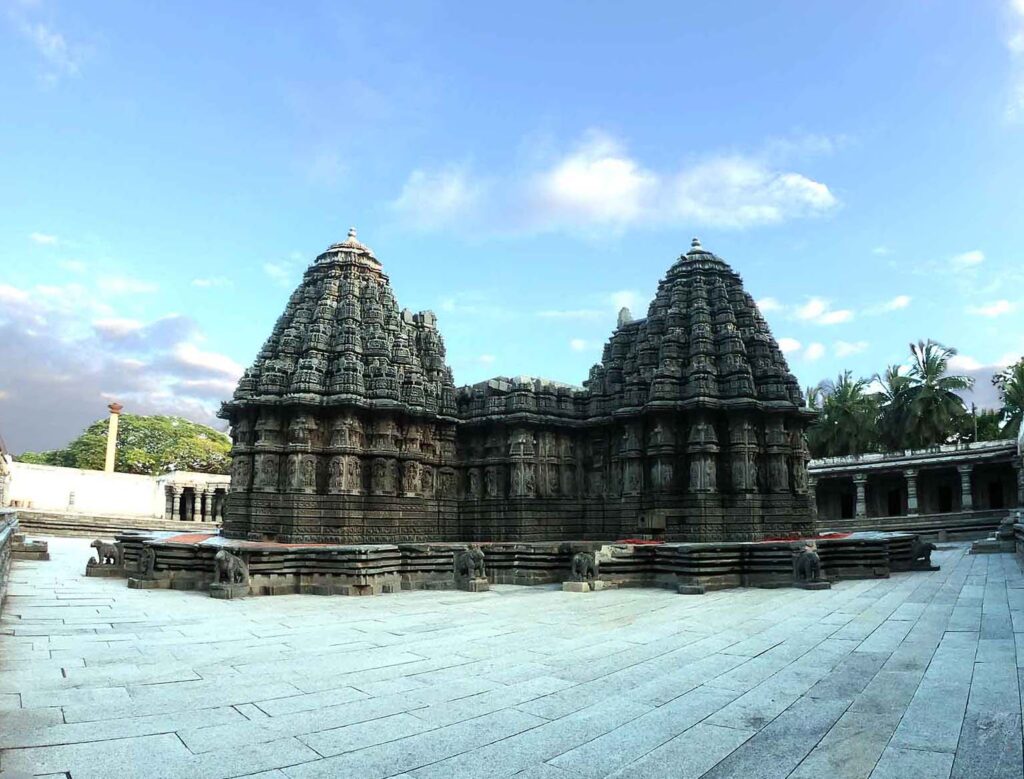
Welcome to my blog, where I delve into the world of temple architecture and take you on a journey to discover the hidden gems of India. Today, we will be exploring the magnificent Chennakeshava Temple, an UNESCO World Heritage Site, located in the small village of Somnathpura in the state of Karnataka, India.
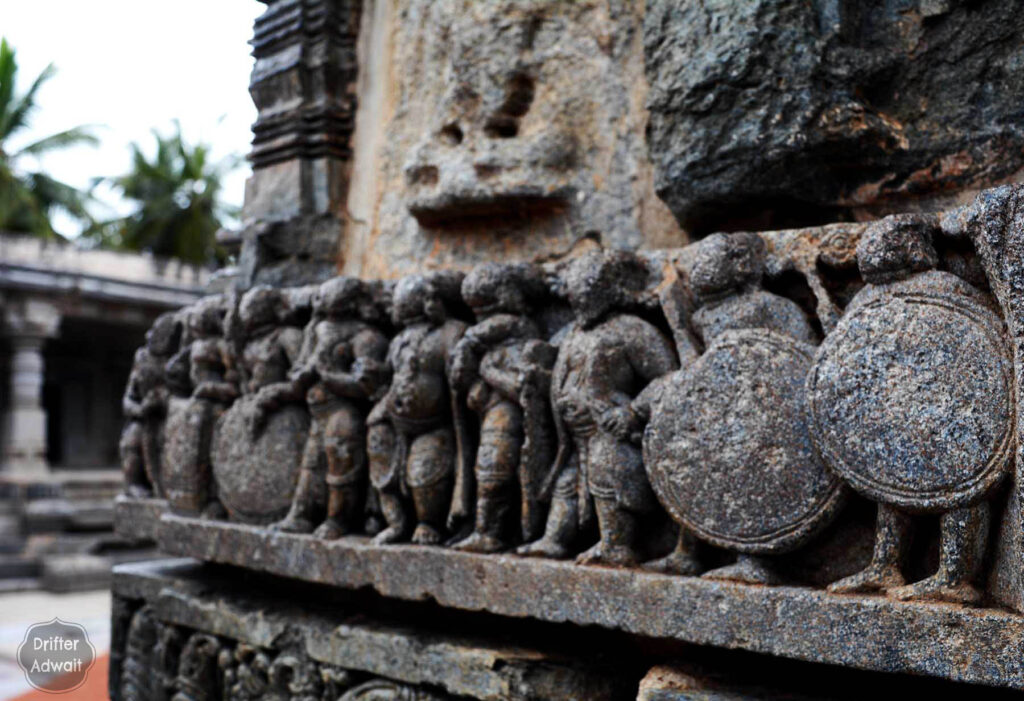
Built during the 13th century, this stunning temple is a prime example of the Hoysala style of temple architecture, which flourished in the region during the 11th to 14th centuries. The temple is renowned for its intricate carvings and sculptures, which adorn every inch of its walls and pillars, showcasing the exceptional skill and craftsmanship of the local artisans.
As I visited this stunning temple, I was mesmerized by the elaborate details and exquisite beauty on display throughout the complex. The temple’s distinct architectural features, such as the intricate cornices, elaborately carved pillars, and ornate ceiling, are all hallmarks of the Vesara style of temple architecture.
The Chennakeshava Temple is not only a magnificent example of Indian temple architecture, but also a site of immense cultural and historical significance. It is a testament to the rich cultural heritage of Karnataka and a place where visitors can learn about the fascinating history of the Hoysala dynasty.
Join me as I delve into the fascinating world of temple architecture and explore the intricate details and rich history of the Chennakeshava Temple. Discover the beauty of this Hoysala architectural marvel and immerse yourself in the spiritual energy of this magnificent site.
It was a month of November 2019, we were on one of our impromptu
road trips riding our Beloved Honda Activa, heading towards Ooty. We
have decided to avoid state highways as much as possible enjoying rural
India, and the reward was picturesque. For the last one hour, smooth tar
road was twisting and turning, cutting through miles of lavish paddy
fields with occasional coconut plantation besides. What a drive.
We took a right turn on Somnathpura, paid 20 rs each as entry fees, and entered the premises.
How to Reach Somnathpura Temple:
🚗 Mysore is the nearest metro city, just 35 kilometers away. You can hire a cab/bike for a day from Mysore to reach here.
🚌
There is no direct bus from Mysore to Somnathpura, but its easily
reachable, with the KSRTC bus. From the main bus stand, take a bus to
Bannur for 50 Rs. From there, there is a good frequency of private
vehicles going to and fro Somnathpura village (20Rs).
🚗 From
Bangalore, take Kanakpura Highway till Bannur (100KMs) and then take a
left on T.Narsipura-Srirangapatana road for seven kilometers to reach
Somnathpura village.
🚉 The nearest railway station is Mysore, 35 KMs away.
🚀 Nearest airport and city Mysore is about 35 Kilometers from Somnathpura.
🏨 Places to Stay in Somnathpura:
Being
a small village, there are no hotels available in Somnathpura. You will
find a few hotels in Bannur and Turumakudalu village. The best option
is to stay in Mysore.
Somnathpura Temple History
Hoysala King Narasimha III ruled from 1254 to 1291. His General Soma
built this temple in 1268 and established Agrahara (Small town,
dedicated to the gods) surrounding it. This turned out to be the last
temple ever built by Hoysalas-the great architects. After the ‘Green’
invasion, the temple was left in a completely ruined state until the age
of Vijaynagara kings. As per the inscriptions, in the 16th century,
Vijaynagara Kings tried rebuilding the temple which was kept intact till
the 19th century, when it was again heavily damaged, and beautiful
sculptures were stolen and smuggled to England by British.
Somnathpura Chennakeshava Temple Architecture
Belur’s Channakesawa is famous for its intricacy. Hoysaleshwar,
from Halebeedu, is famous for the grandeur and its Nandi shrines. But
both of these lack one thing: Intact turrets or Shikhara.
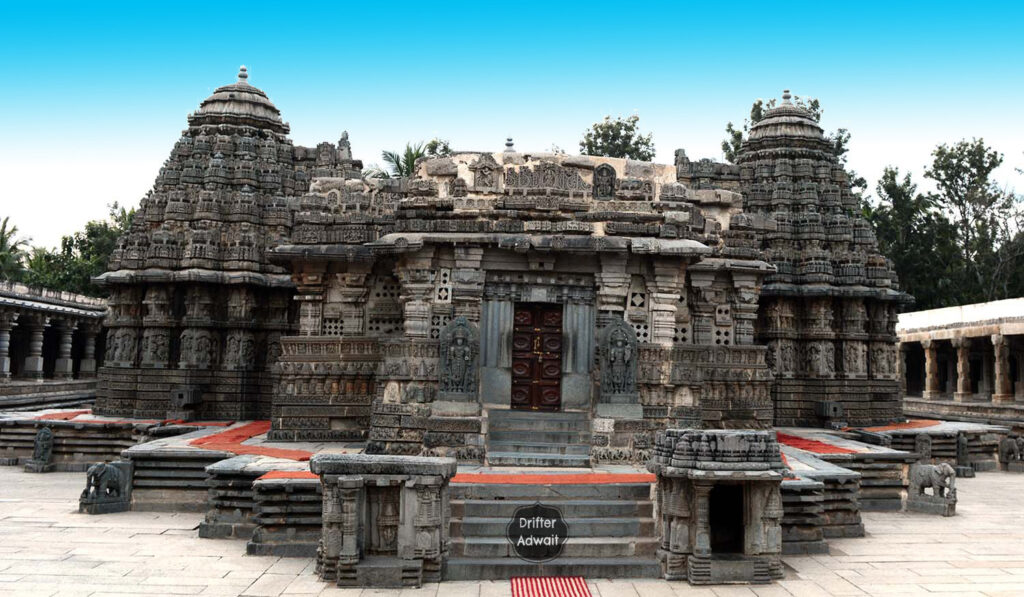
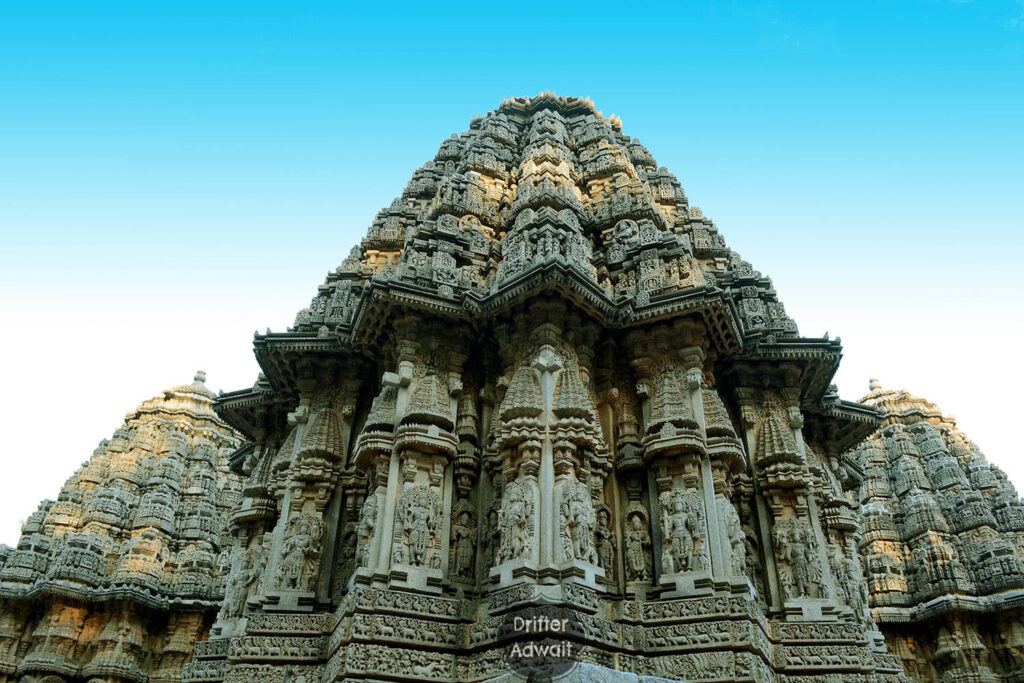
Somnathpura temple has it all, beautiful sculpting and grandeur, along with three intact towers.
As
per the checklist, it has all the defining characteristics of Hoysala
temples. Temple on an elevated stage, ornate circumambulation path,
nearby water body (situated right in between Cauvery river and
Kagalipura Lake), lathe operated pillars, brilliantly carved ceilings,
and Mantapas surrounding the main temple. ASI has done a brilliant job
conserving the structure.
This temple was built 150 years after
Belur and Halebeedu, representing the last stage of the Hoysala style of
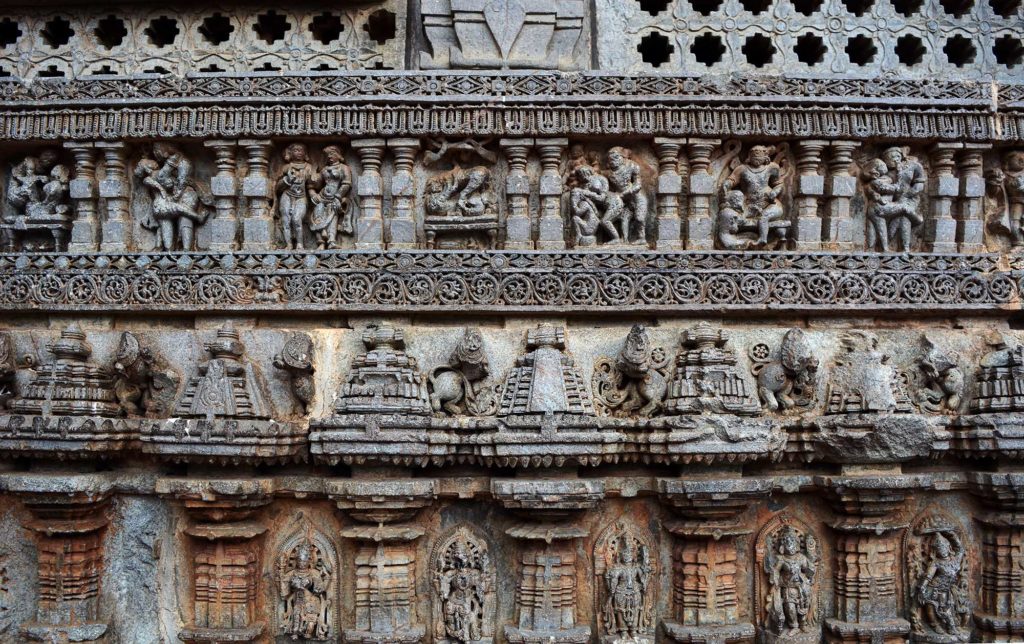
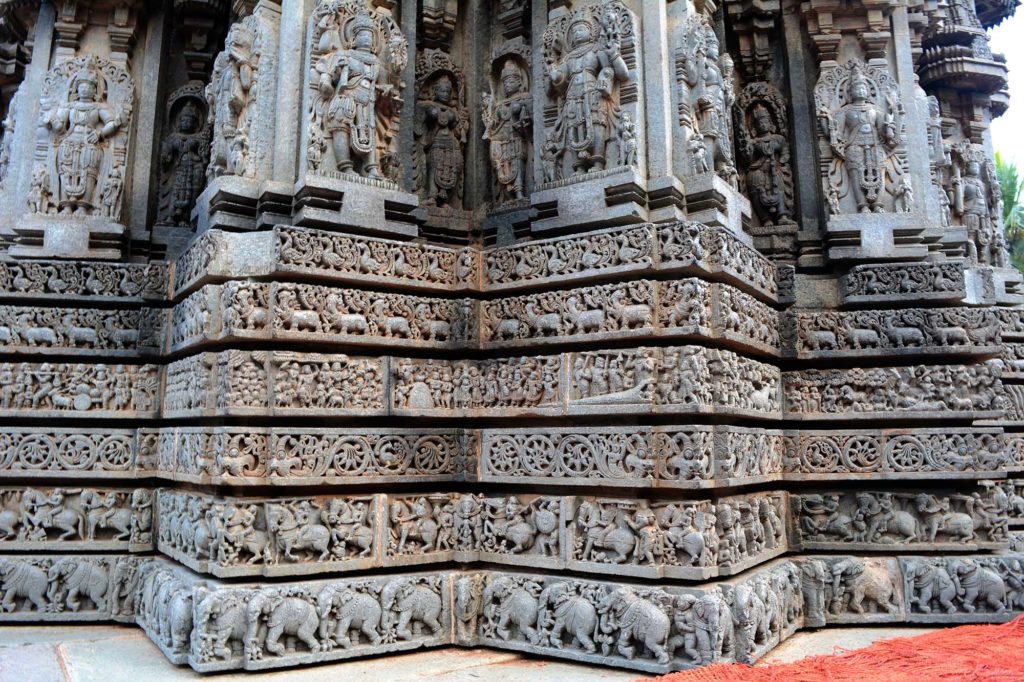
Architecture. The outer walls are ornated in such a way, that prevents
overcrowding of the sculptures like Belur and that of Halebeedu temples.
Never the less, as always, brilliant architecture overwhelms you with
the intricacy and detail.
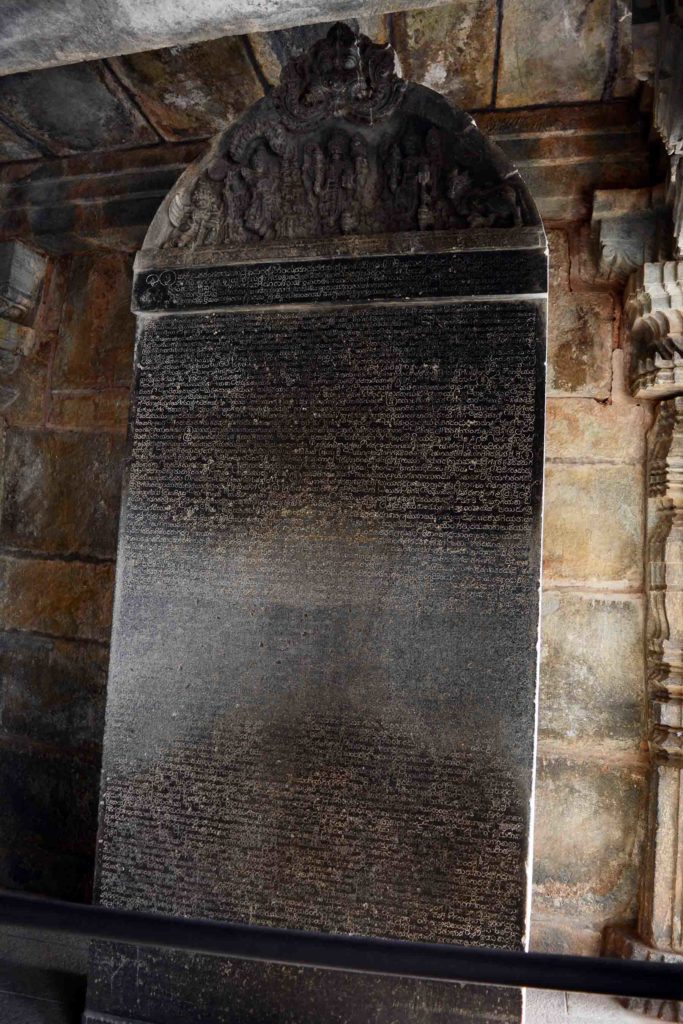
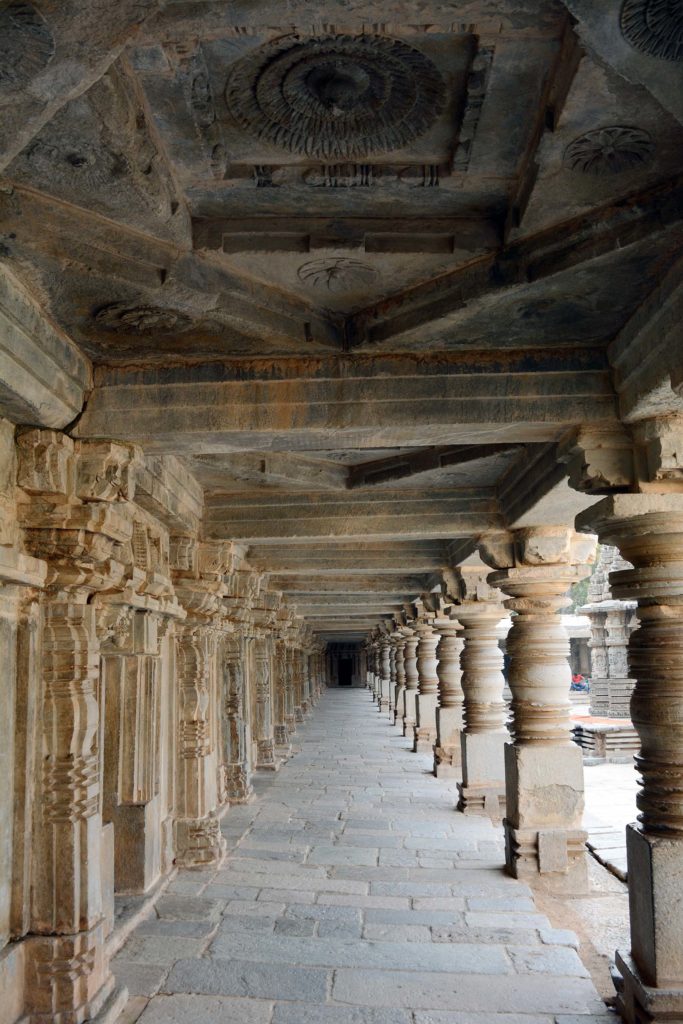
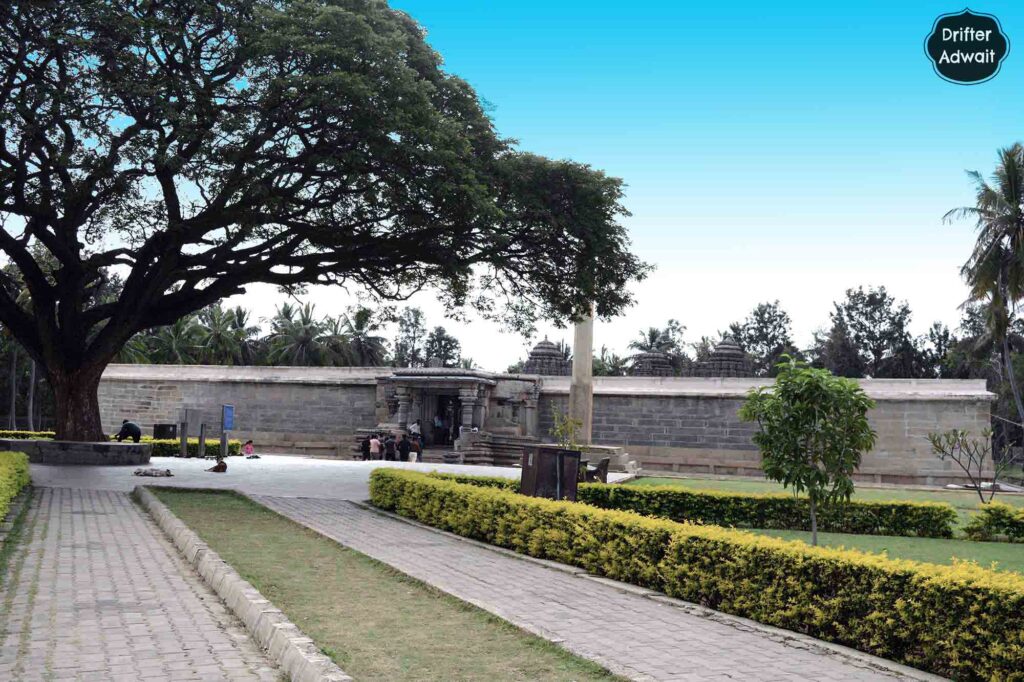
As you cross well maintained lush green lawns, you will stand in
front of a flag pole and a gate in between a plain wall with large
granite stones. If you have been to Hampi, these walls will look
familiar. You enter the premice after showing the ticket, you are in the
entrance hall. Chennakeshava temple does not have entrance Gopuram, but
an entrance hall, where you will find a big rock slate with ancient
Kannada inscriptions on it. Entire temple history can be found on this
rock under small Vigrahas of Keshava, Janardana, and Venugopala.
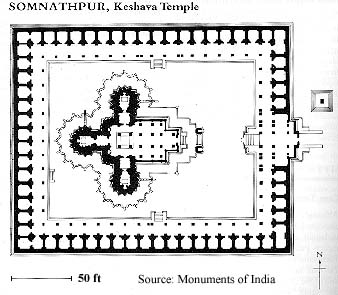
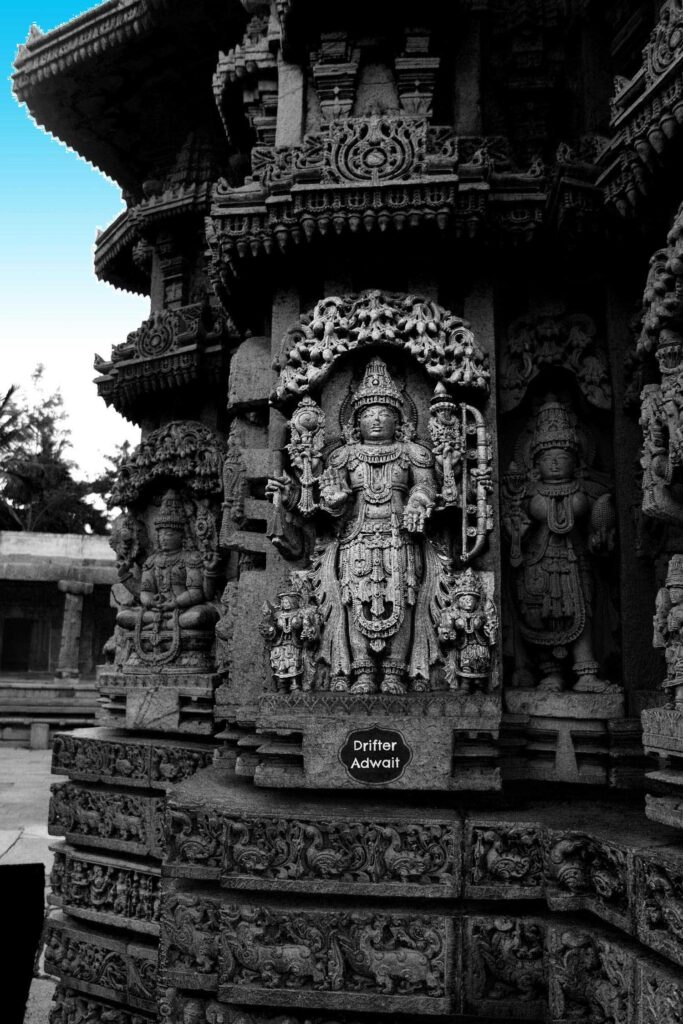
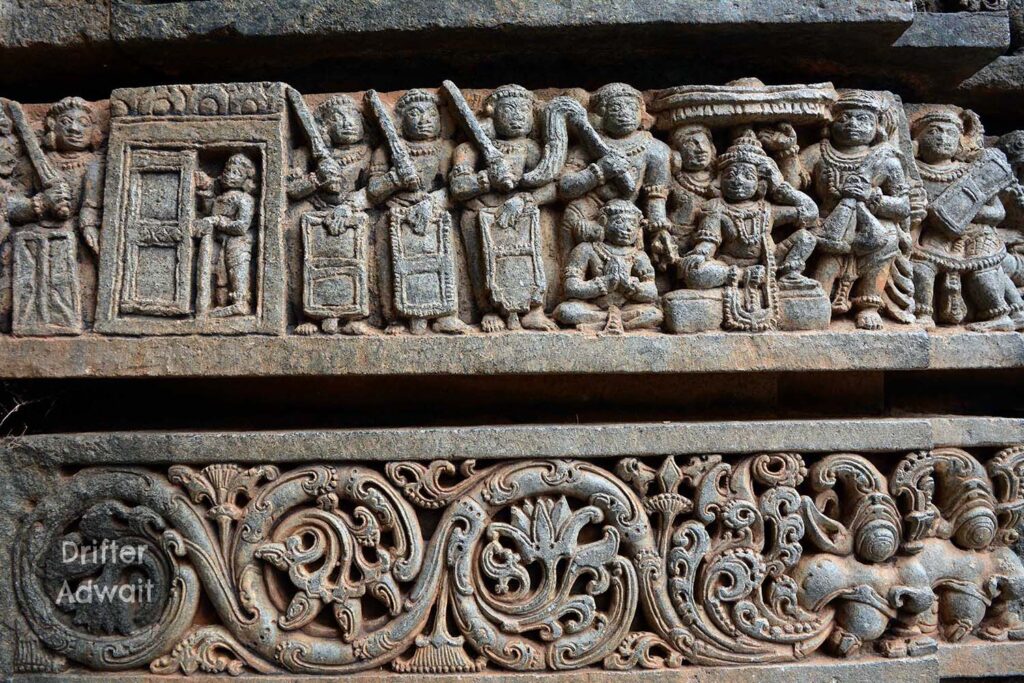
The outer wall of Chennakeshava temple is not merely just a wall, but
the entire square-shaped corridors of small shrines surrounding the
main temple and courtyard. The idols inside the small shrines are
missing, stolen, or were broken during the Islamic Invasions. As you
will see, the temple with three intact turrets can be seen from here and
the symmetry will just blow your mind.
Walk on the courtyard, climb
steps, greet Jay Vijaya on the entrance and enter the temple from the
east. Give it few seconds to adjust your eyes with darkness, and you
will see how light is almost getting reflected from super smooth black
soapstone pillars. Entire Mantapa is held by these smooth, lathe
operated pillars with intricate design.
Chennakeshava Sanctorum
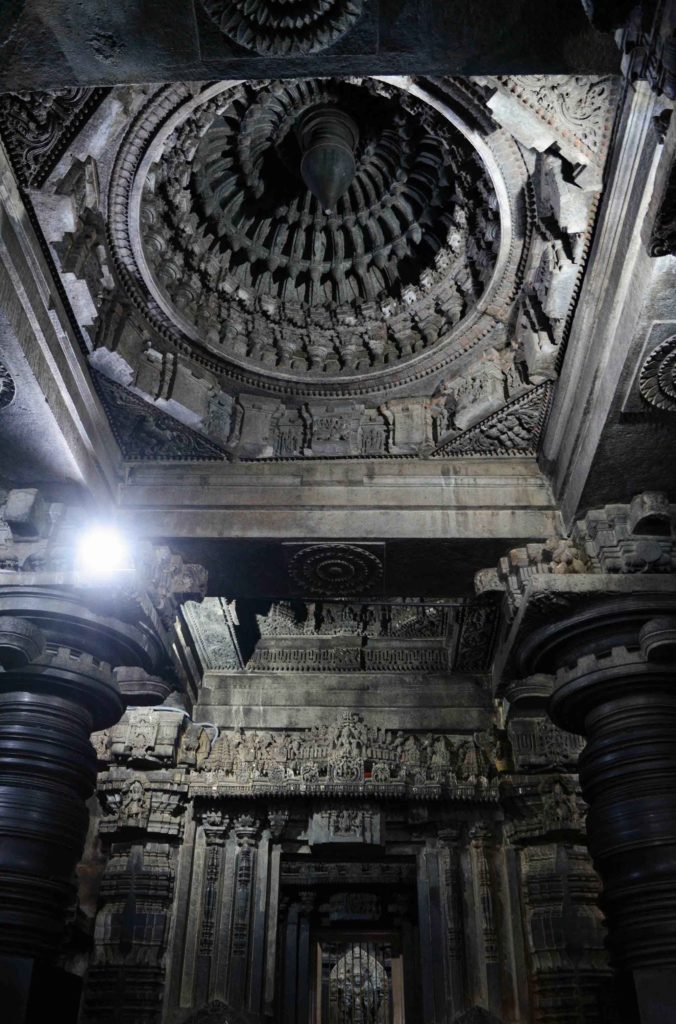
When you will stand on the center stage, where dancers used to
perform their arts in front of gods, you will face the west shrine of
Keshava temple. Enter the Sanctorum and observe the canopy, where
Keshava is standing under lintel with a design of Gajalaksmi on the
canopy. Here is a Garuda pedestal on which, Keshava must be standing,
currently decorating British Museum. British, stole the sculpture and
carried away to their museum. Currently, the pedestal is occupied by
Keshava statue from some other temple. That is just insulting and
humiliating to all of us Indians. We must find these original Vigrahas,
bringing them back to their past glory.
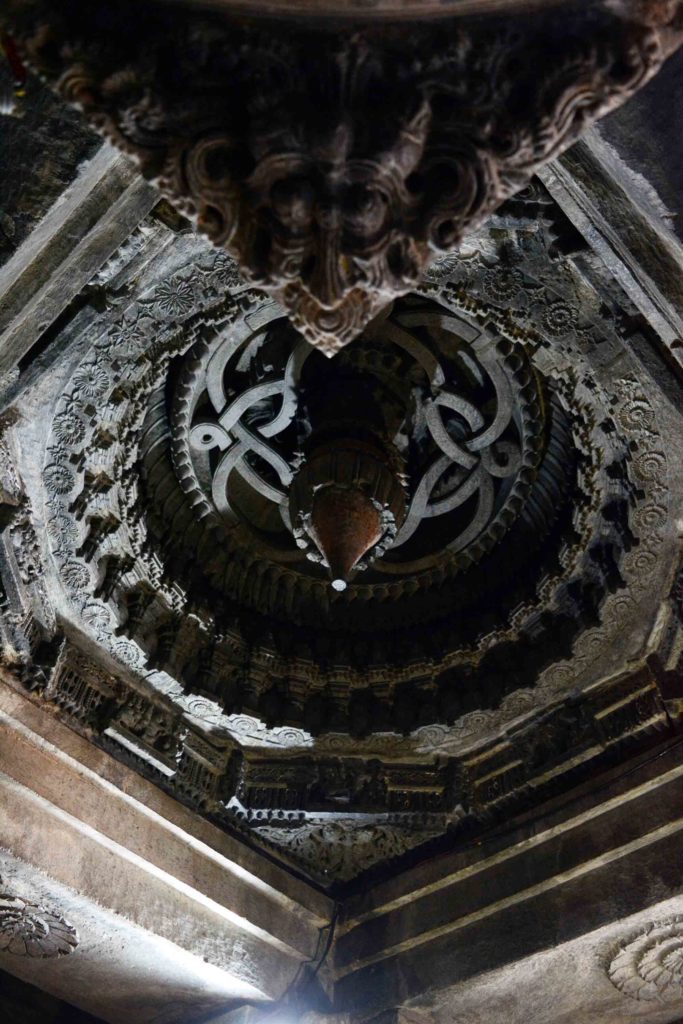
The false ceiling over the
dance floor is remarkably beautiful, representing an inverted lotus.
When you enter the temple, you kind of lose the sense of time and
directions in the semi-lit Garbha Griha. Ashta Digpals or Protectors of
the eight sides are standing beneath the inverted lotus, give you an
idea of directions. Torana or Door arch is gorgeously ornated with
Vishnu and layers of Kirtimukahs, along with Gajant Laxmi.
Venugopala Sanctum
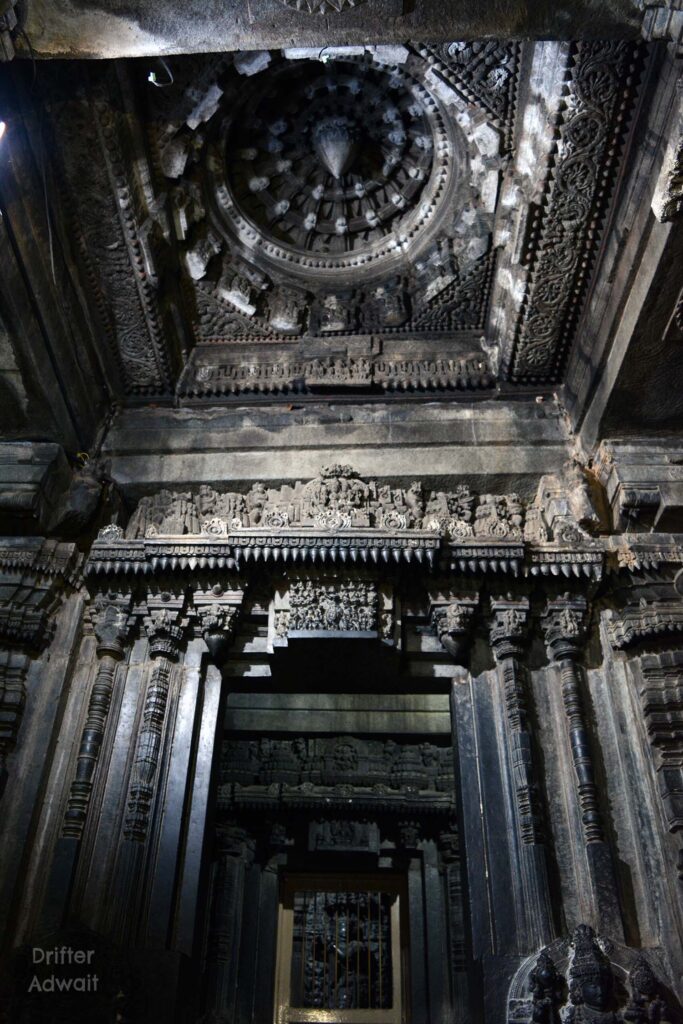
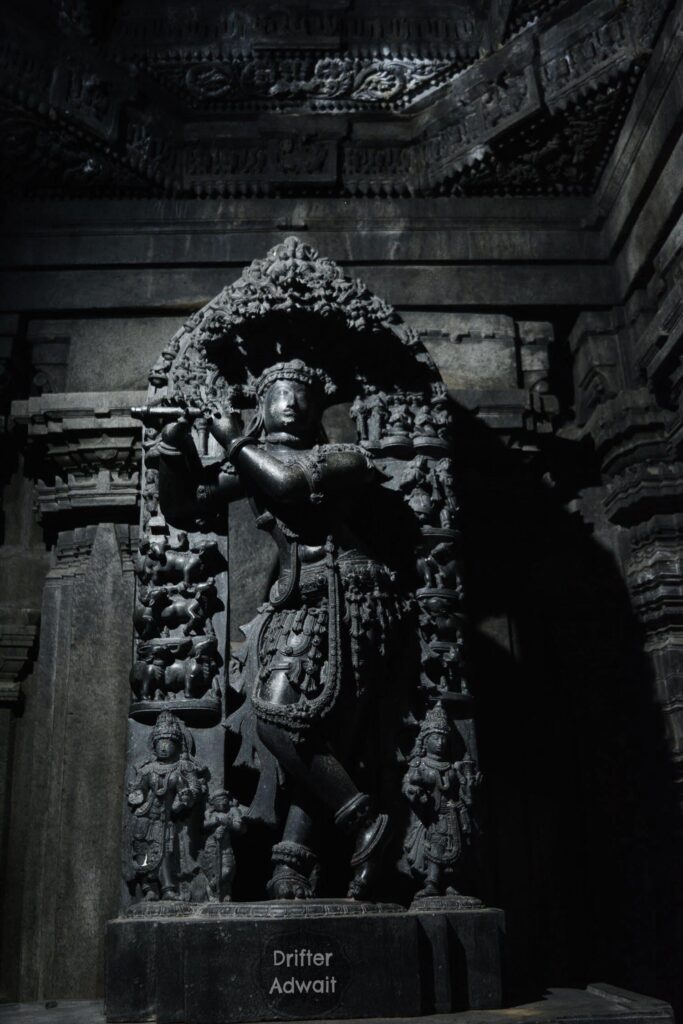
South shrine belongs to Venugopala, i.e. Shri Krishna. On the
entrance border of Chennakeshava temple, you can see Lakshmi Narayana
sitting in a Yoga pose. Dwarapalas or doorkeepers will greet you on your
way in.
8×8 feet Garbhagruha is a home for Lord Krishna. Four and a
half feet tall lord is standing here, playing is a famous flute, in his
iconic cross-legged stance. He is wearing jewelry like bracelets,
anklets, girdle, neckless and rings on his long thin fingers which are
playing the flute, like nobody’s business. Sages, Gopikas, cows, and
even birds around him are lost in his hypnotically divine music.
Janardana Sanctum
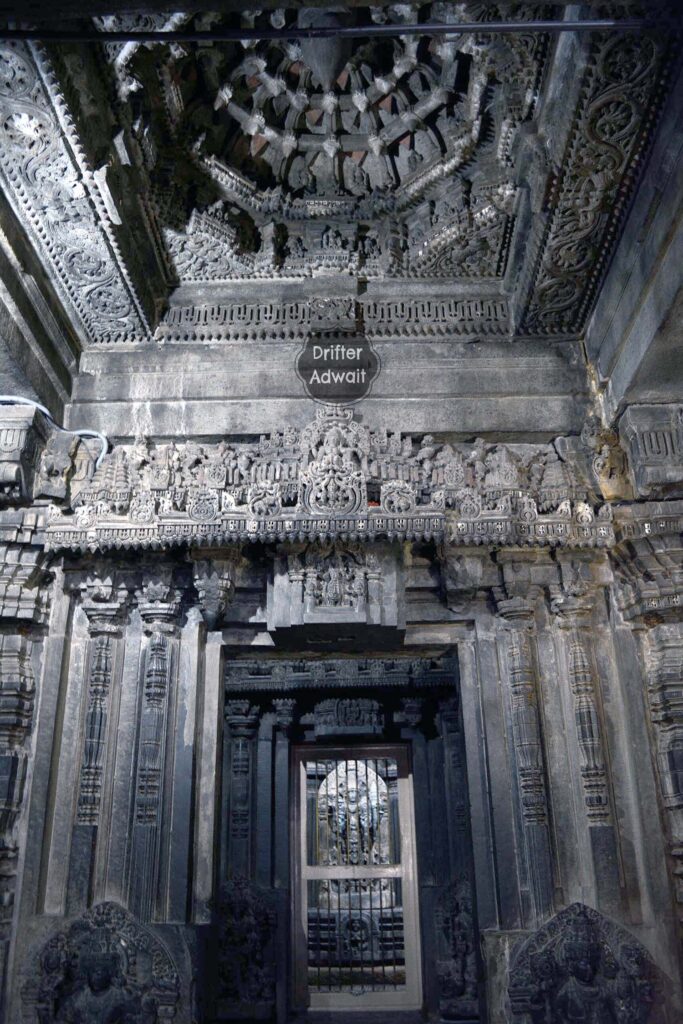
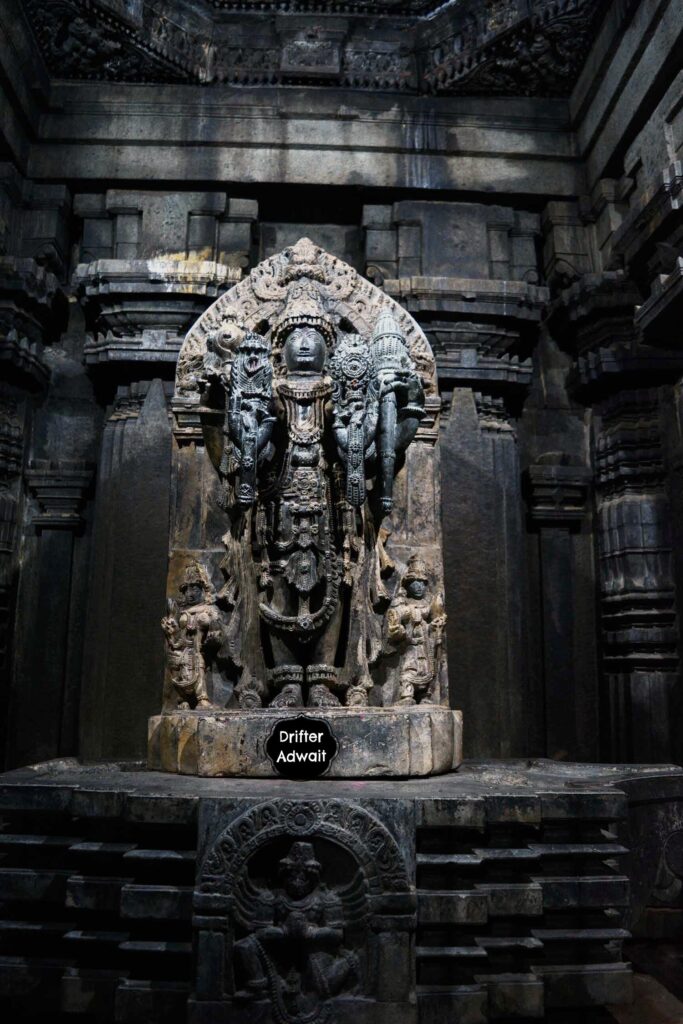
Janardana resides in the North Shrine. Four and a half feet Janardana
is carrying Conch, Chakra, Lotus, and Mace. Door border of the sanctum
is minutely decorated with Horse riders, Shardul animals, Gajanta Laxmis
while Lord Vishnu and Goddess Laxmi sitting in the middle with a yoga
pose.
Four feet Janardan is wearing some minutely detailed ornaments
from head to toe. Vanamala, the sacred ornament coming from behind his
shoulder, reaching under his knees is defining his stance. Above his
crown, you can see a border emerging from the mouth of fierce
Kirtimukha. Lord is standing on a Garuda pedestal in attention pose, as
similar to the west shrine. His home is being guarded by warriors Bhadra
and Subhadra, standing on the door.
Ceilings of Chennakeshava Temple, Somnathpura
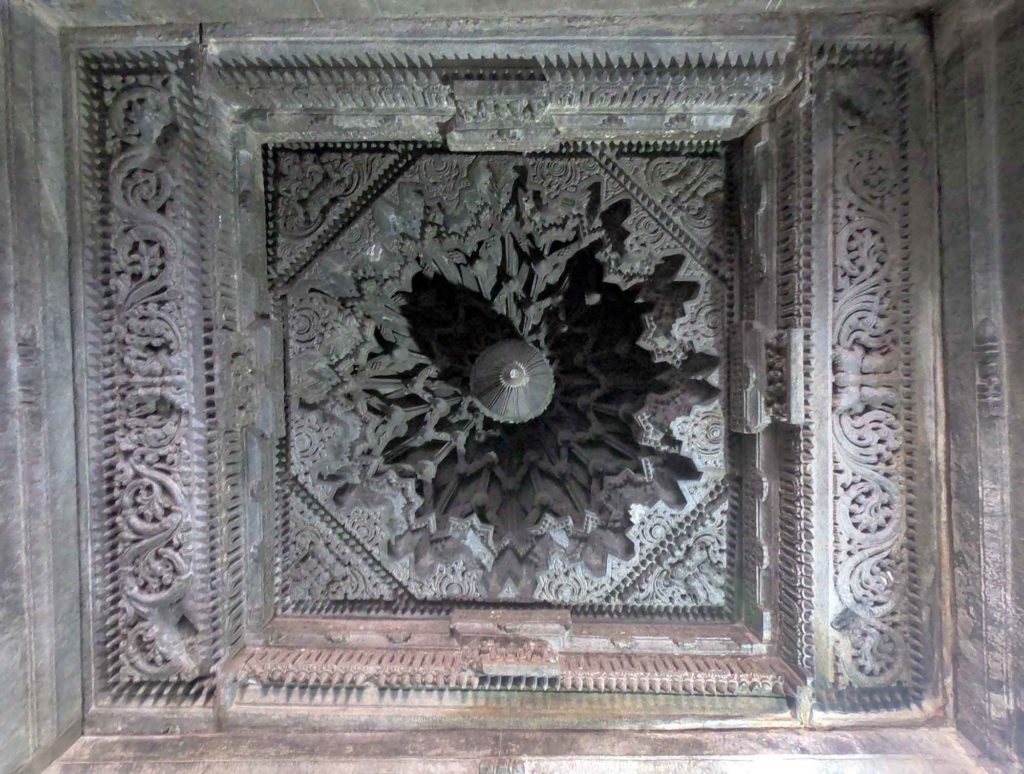
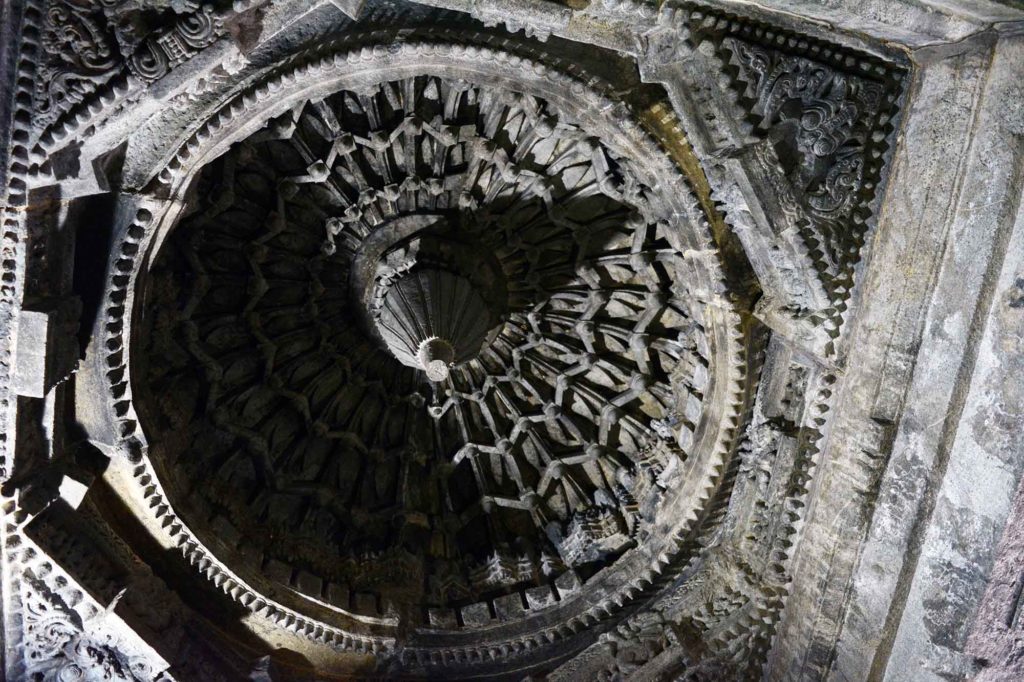
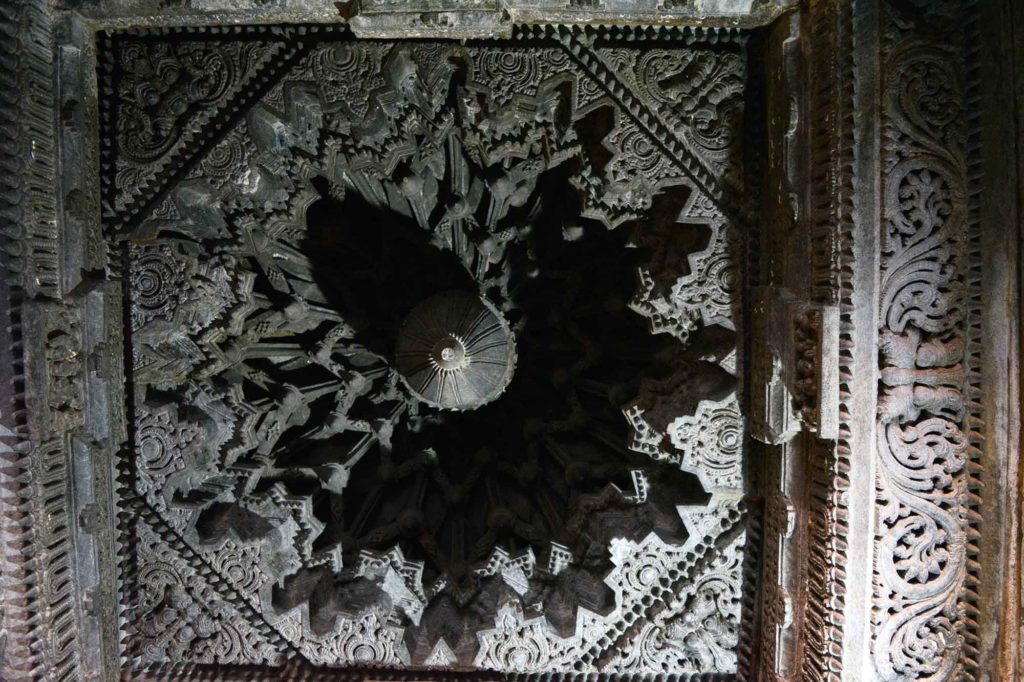
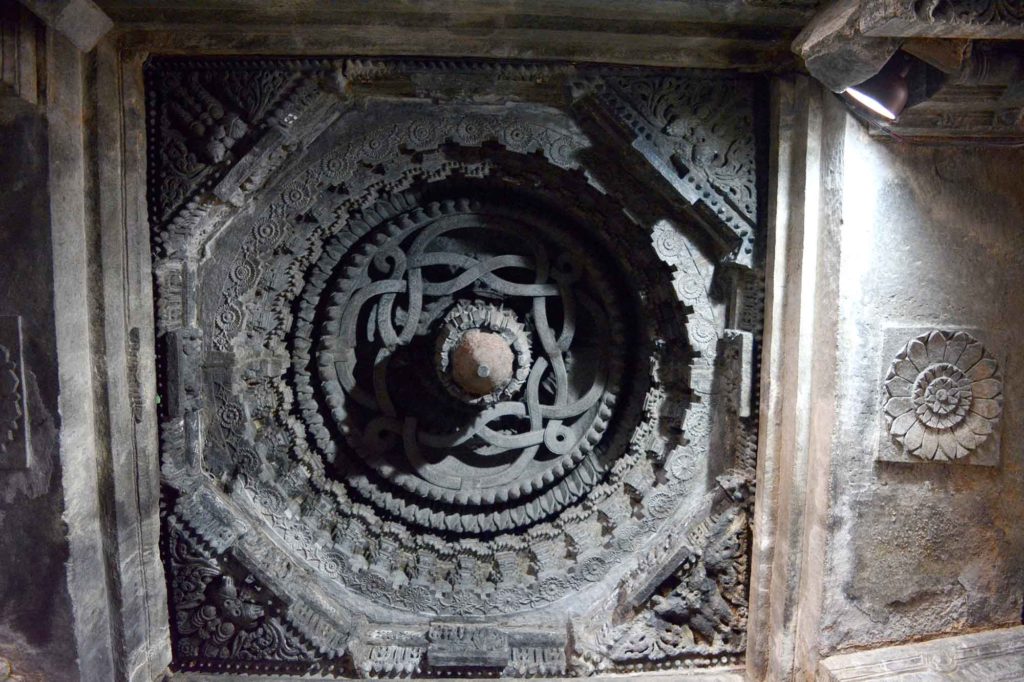
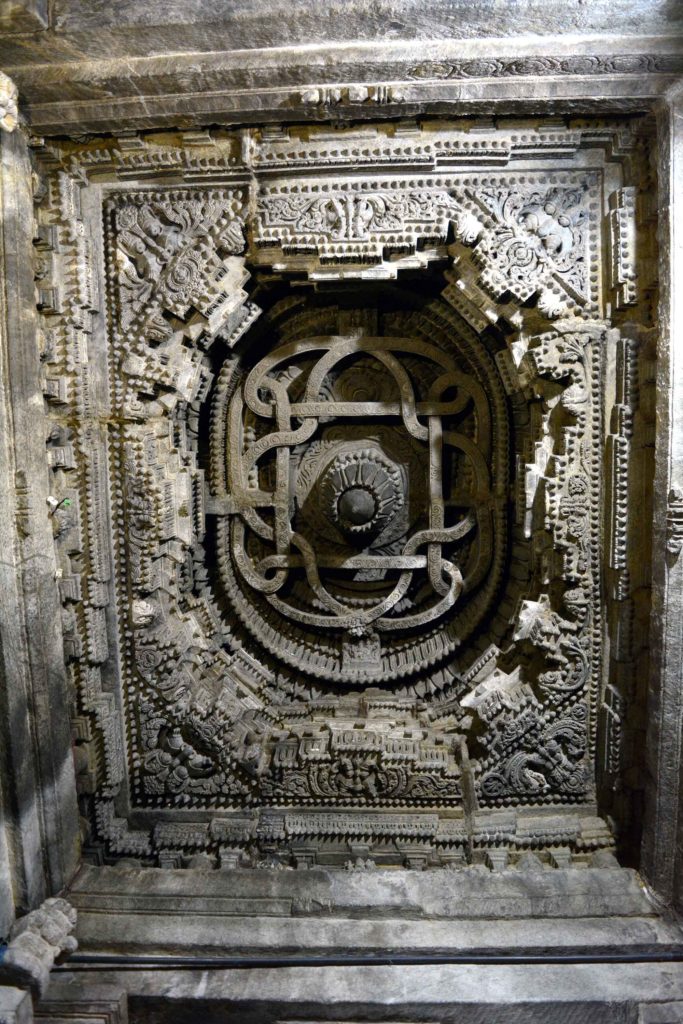
Till now, you have seen boundary walls, lathe operated pillars, three shrines, and deities inside. But, the main showstopper is the ceiling. Mantapa of Chennakeshava temple is divided into several squares with ridiculous carvings. Invert lotuses with different stages of blossomings, endless knots and Ashta Digpals protecting the directions are simply mid blowings. I have seen a fair number of Hoysala temples till now, but this one is the paramount of architecture expertise so far. Every fall ceiling square is loaded with minute detailing, brilliant craftsmanship, and masterpieces of Hindu Architecture. You will definitely lose track of time while looking and enjoying each and every one of them. After a while, your neck will start cramping, but don’t let those cramps keep you away from absorbing the man-made miracle performed here, seven hundred years ago. Small windows with designer mesh carved out of stone helps the light drip in, helps the viewer appreciate the intricacy and detail.
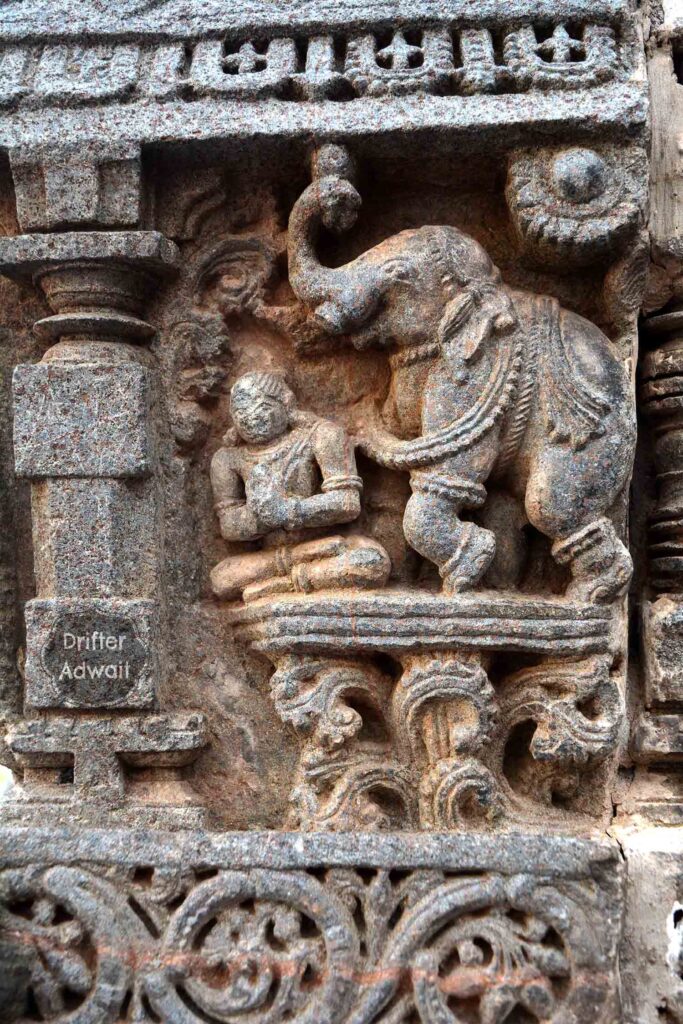
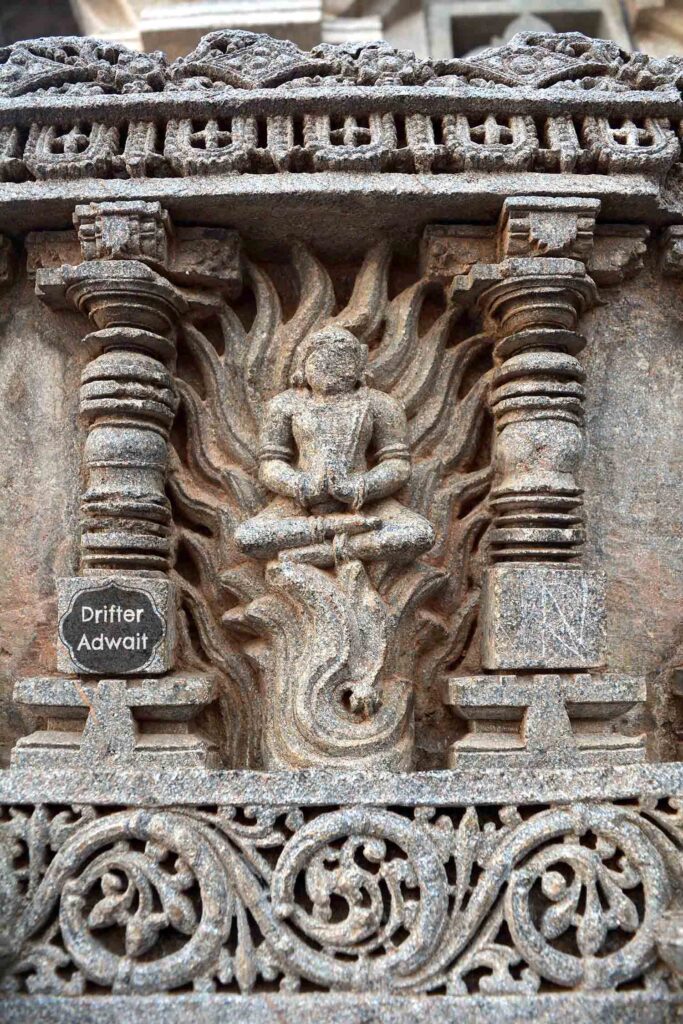
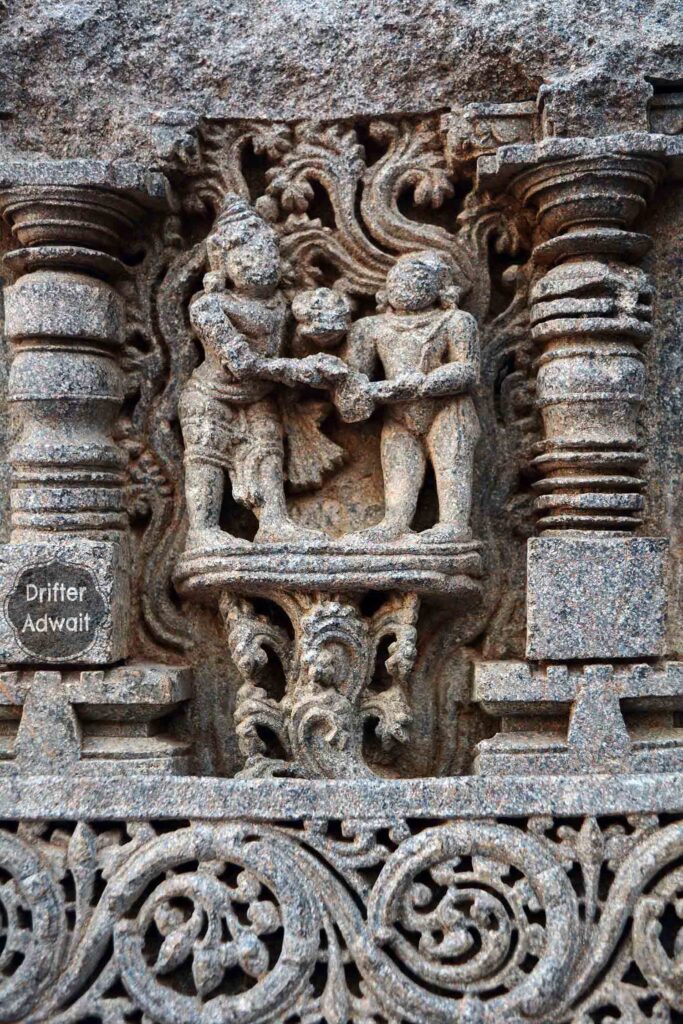
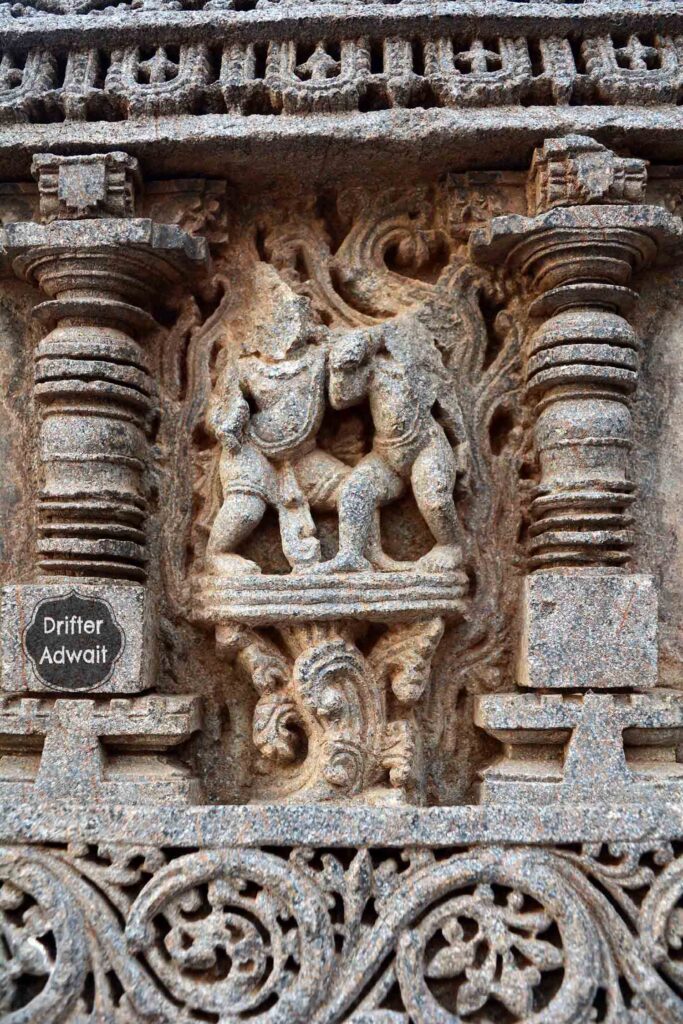
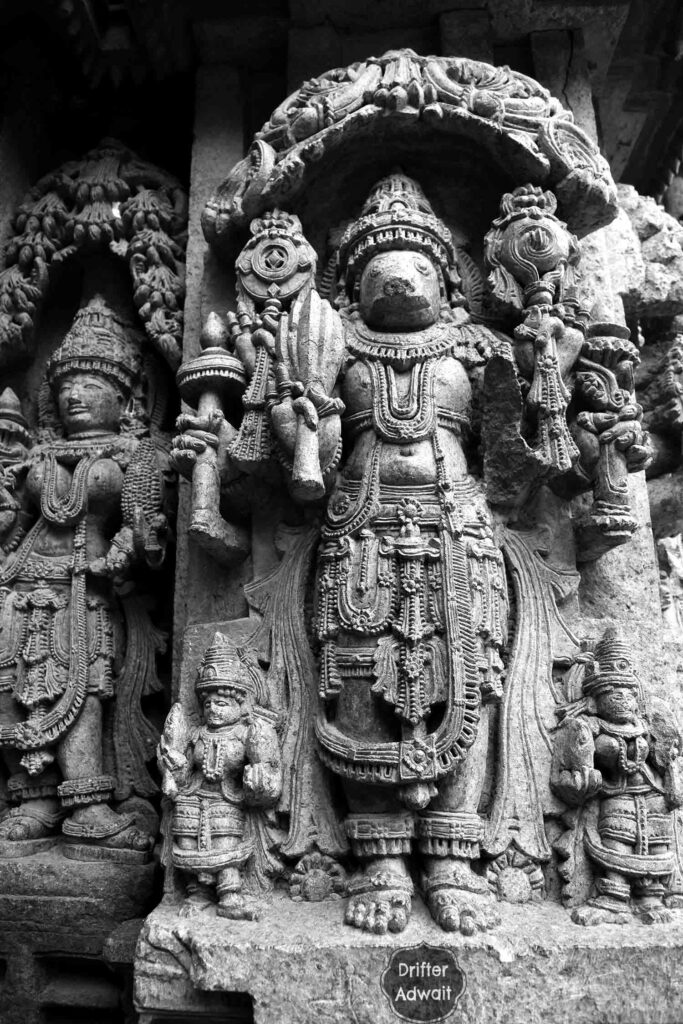
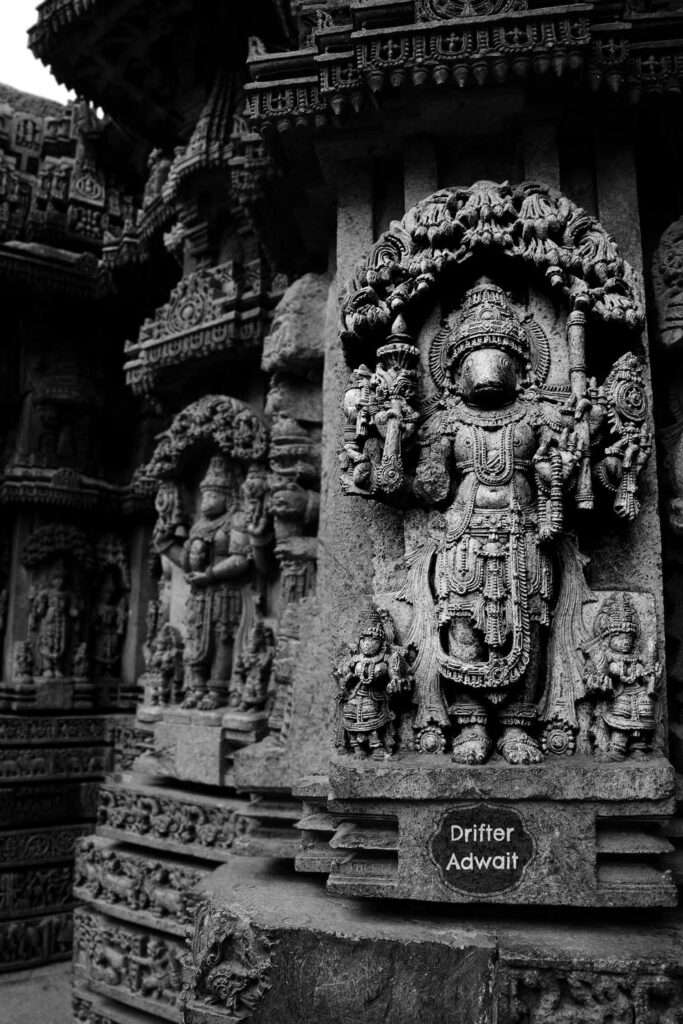
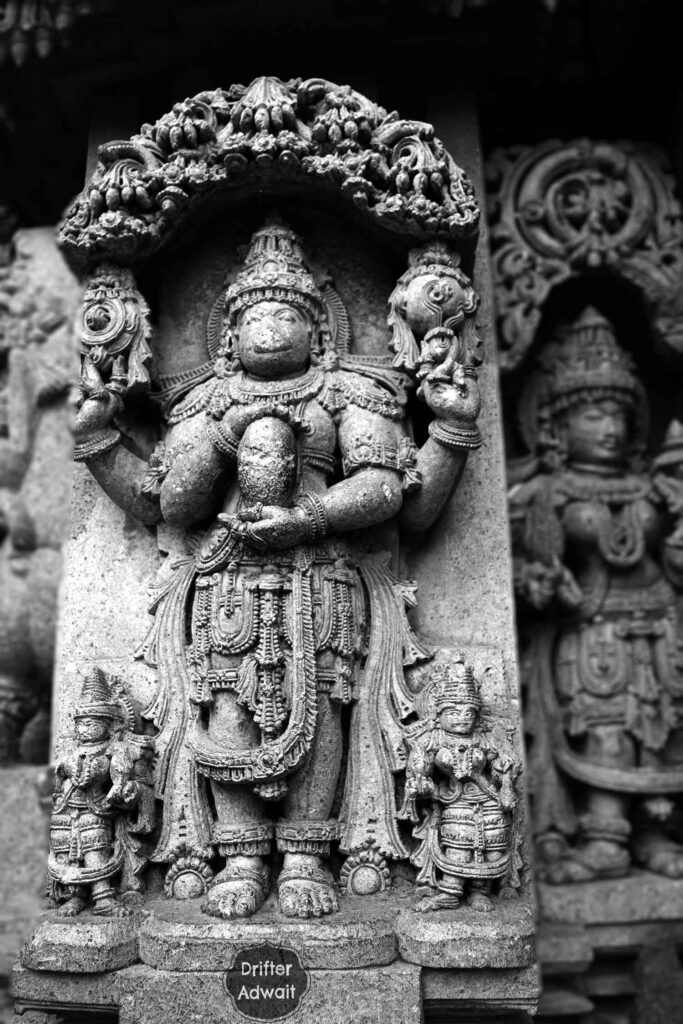
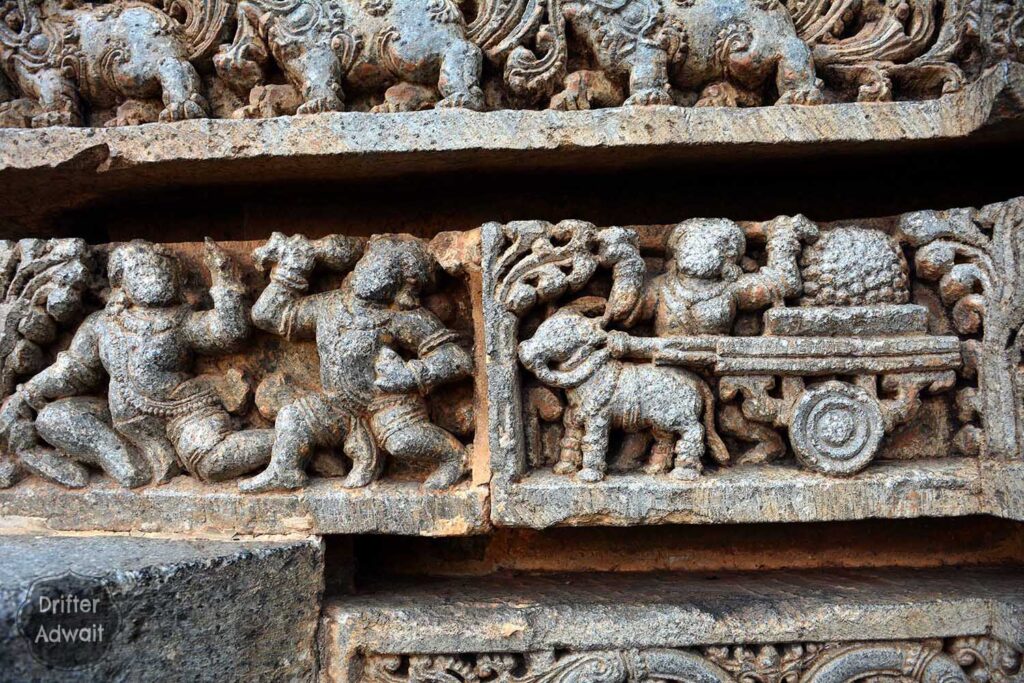
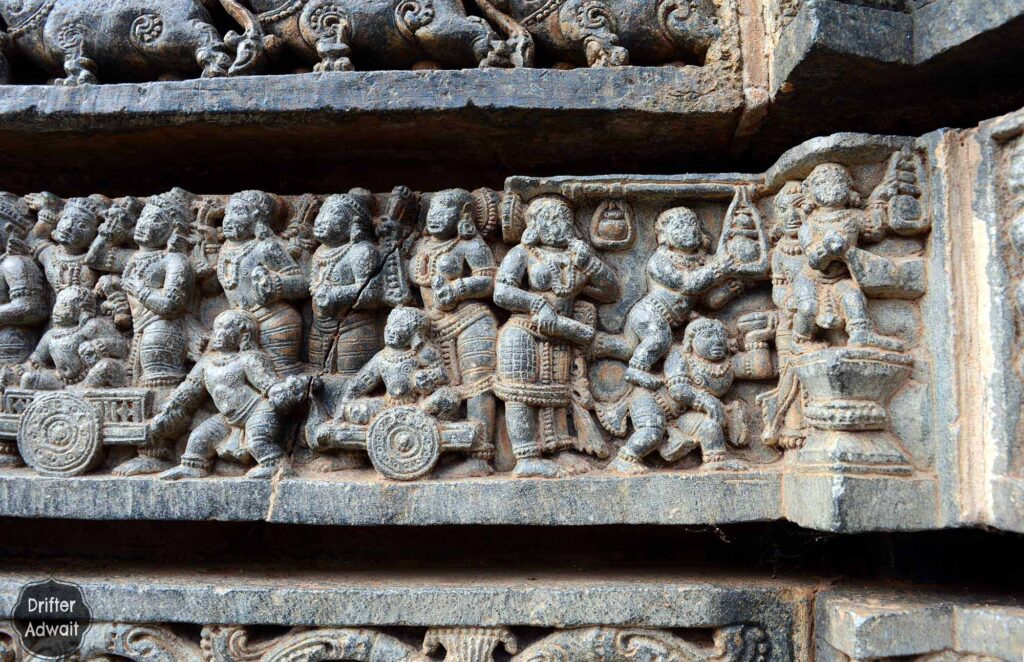
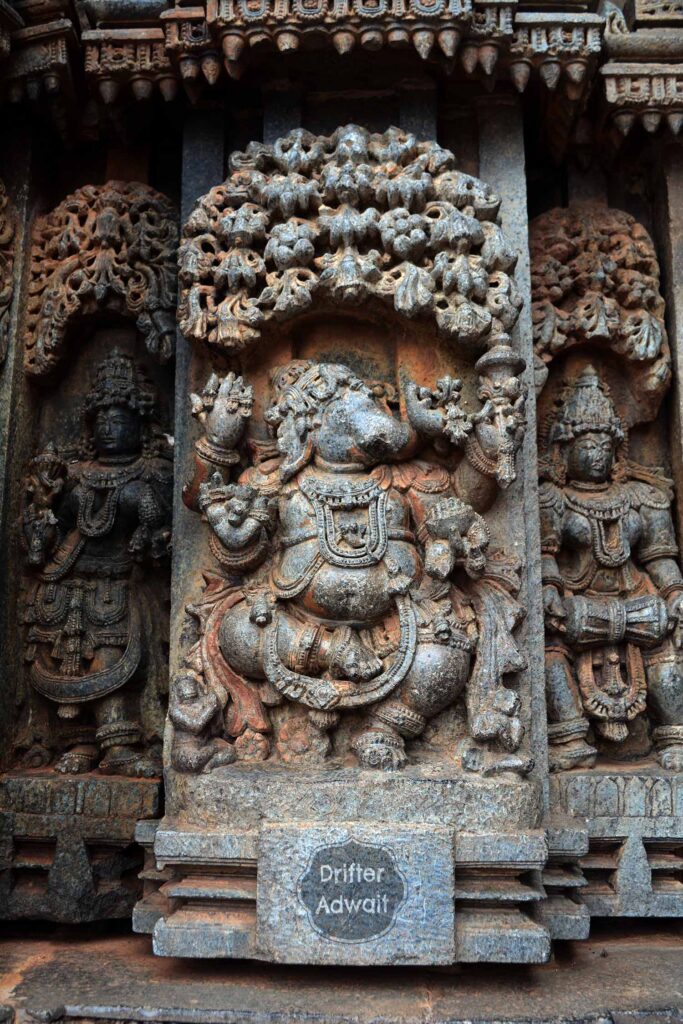
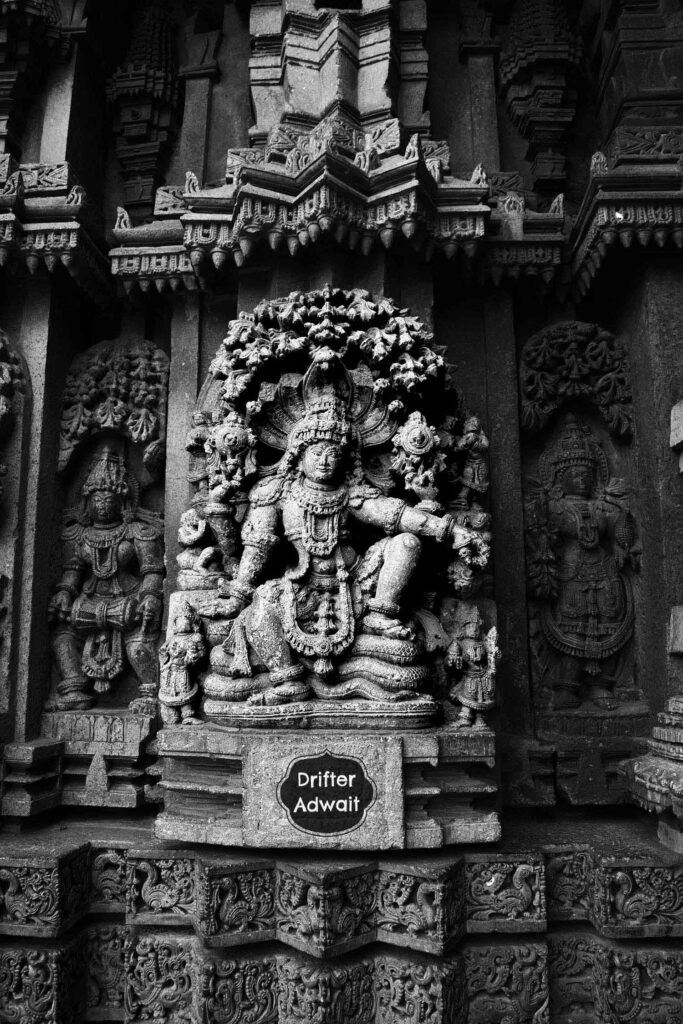
Outer Walls of Somnathpura Temple
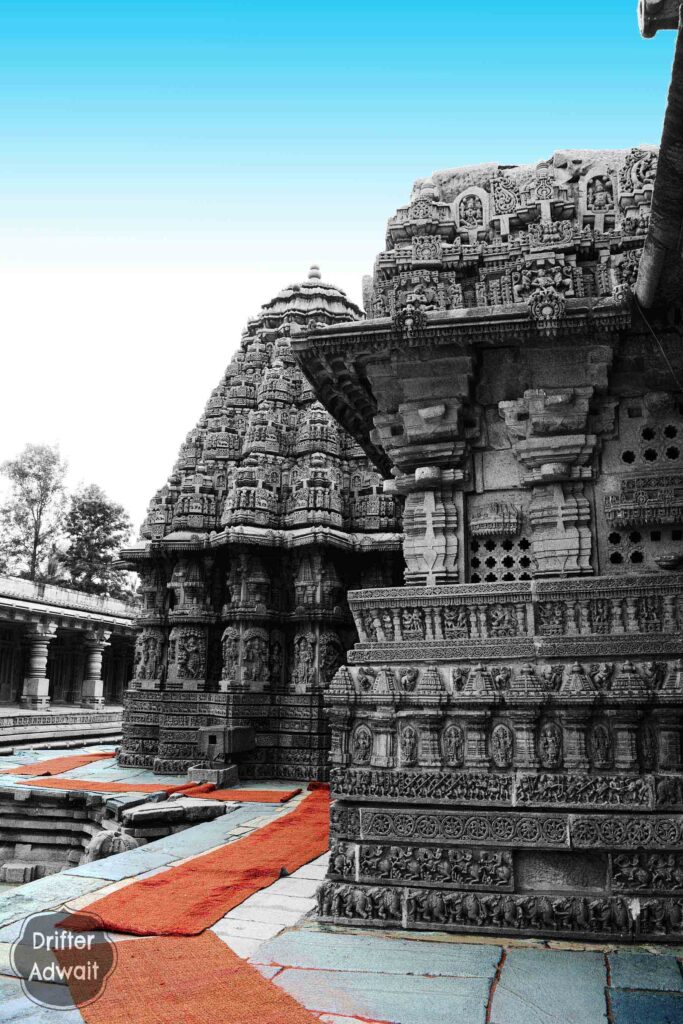
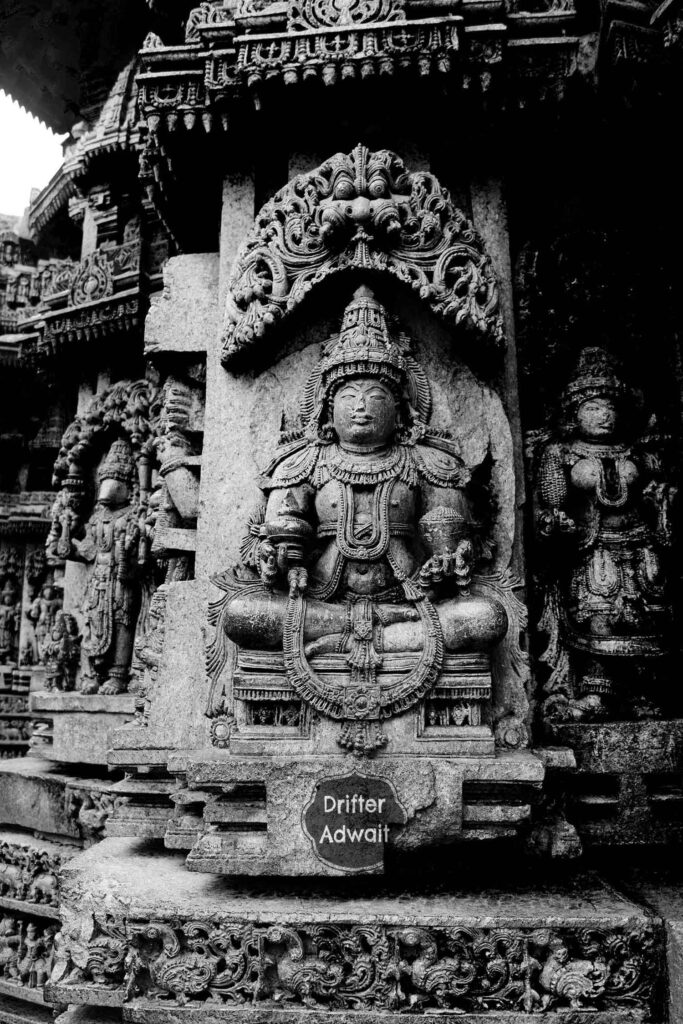
After going in and out again several times, I and Amruta finally
walked out of the shrine to observe what they have erected on the outer
walls of the temple, and the temple does not disappoint you indeed. As
per Hoysala architecture norms, three feet platform on which the temple
is constructed has a circumambulation path on it. Where you can observe
the beauty of the outer walls along with circling the deities.
Clockwise
rotation or Parikrama in Hindu, Buddhist, Jain, and Sikh philosophy has
a very high significance. It signifies journey from ignorance to
knowledge, a process to acquire the positivity and qualities of deity to
which you are praying. Hoysala temples make you do the Parikrama even
if you don’t have that in mind, while they make you see the beauty on
outer walls.
Malik Kafur Invasion and The fate of Hoysalas:
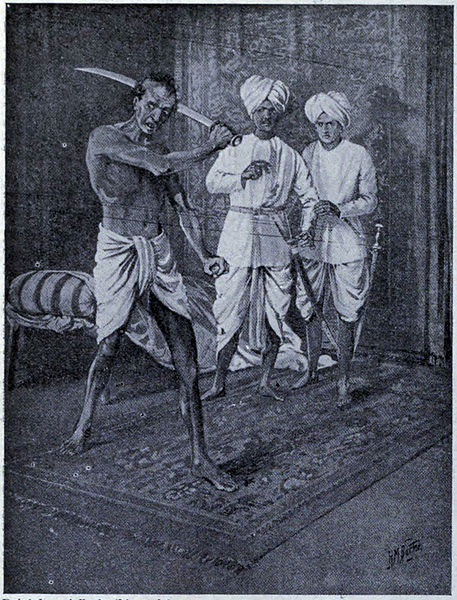
This was the last of magnificent Hoysala temples among 1500.
After that, Malik Kafur came, Malik Kafur saw and Malik Kafur destroyed
the entire civilization, entire kingdom, entire culture, and knowledge
of architecture. Originally being born as a Hindu (Hence Kafur) was
bought by Alauddin Khilji for 1000 dinars (Hence, Malik Kafur Hazaar
Dinari), had blind hatred towards anything that is remotely related with
Hindu culture. After the fall of Maharashtra’s Devagiri Yadav empire,
he descended till Warangal with a hundred thousand soldiers. In 1311, he
started his second invasion, destroying Dwarsamudra, the capital of
Hoysalas with the army of 10000. He waited there for 12 days for the
rest of his army, while his soldiers brutally plunder, rape, kill,
ransack, and hammered the entire kingdom. After gathering all of his
forces, he marched on to conquer the Pandya empire, which was going
through political turmoil. Two brothers were fighting for the succession
of the throne. Again, the same story repeated, invader took advantage
of the division among us and got what he came for. Pandya also became
Vassal of Khiljis as Malik destroyed the famous Meenakshi temple after
the siege of one week. Kafir looted and the heavy price of more than 500
elephants, 20000 horses, and 50000 KG of gold was sent to Delhi. It
resulted in the rise of the Madurai Sultanate. Then, it began the age of
darkness, bloodbath, and loot.
Once, during these clashes of Hoysala and Madurai Sultans, two young
military commander brothers were captured and later were drafted in
their own army by Sultans. Later, during one of their invasions to the
south, they got in contact with one monk. Under his guidance, these two
brothers gathered fighters, took a stand and started overthrowing Delhi
rule and freeing southern India from green invasion.
The monk was
none other than Sri Vidyaranya Swami and the brothers were Harihara and
Bukka who established a legendary Hindu empire named Vijaynagar Empire.
They regained the lost territories and pushed Sultanates to their edges.
Lord Chennakeshava again saw the better days. Vijaynagar Kings repaired
the Somnathpura temple to its original glory. Now, it is just a small
agrarian town, about 40 kilometers from Mysuru and 140 Kilometers from
Bengaluru, wakes up at nine every day when the temple opens, and goes
back to sleep after five-thirty in the evening after the Chennakeshava
temple closes…
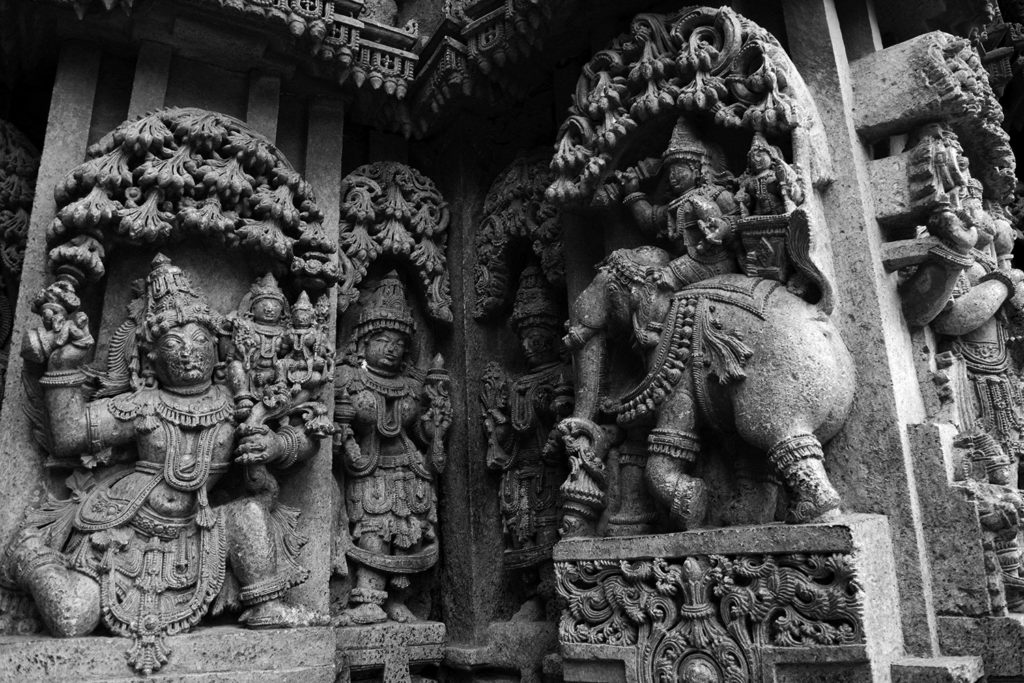
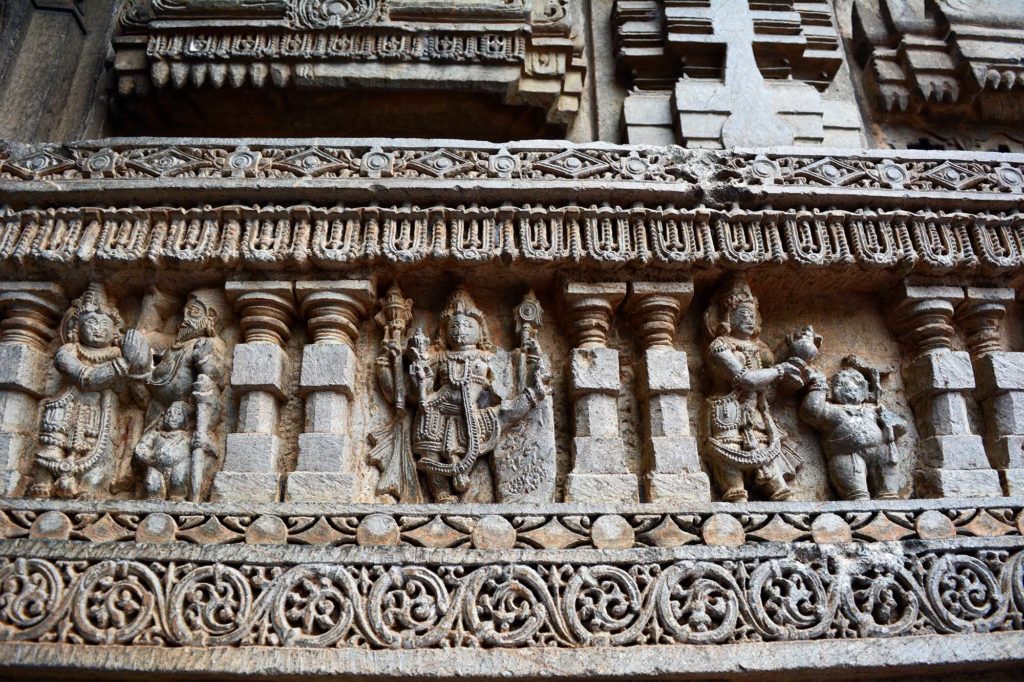
Vamana and King Mahabali (R)
References:
1.https://tfipost.com/2017/02/malik-kafur-alauddin-khilji-south/
2.A Forgotten Empire (Vijayanagar): A Contribution To The History of India by Robert Sewell
3.http://indiafacts.org/terror-unlimited-staggering-loot-lust-alauddin-khilji/
4.Musalmani Riyasat (Set of 2 Volumes) – Marathi (Marathi) Hardcover – 2018, by Govind Sakharam Sardesai, Popular Prakashan

.JPG)

.jpg)

No comments:
Post a Comment
Note: Only a member of this blog may post a comment.