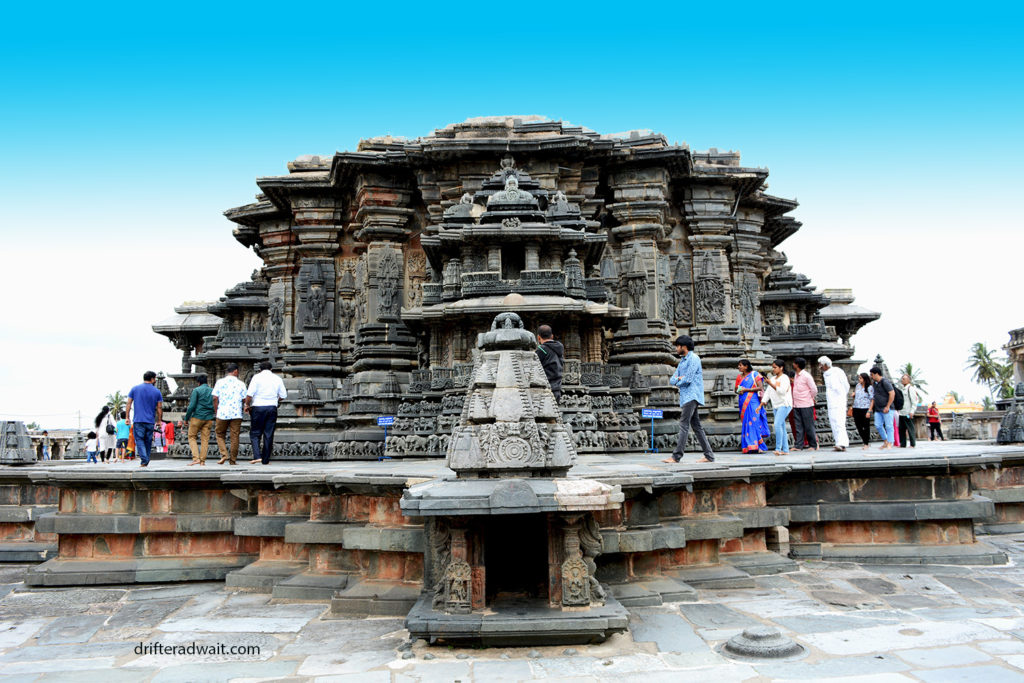
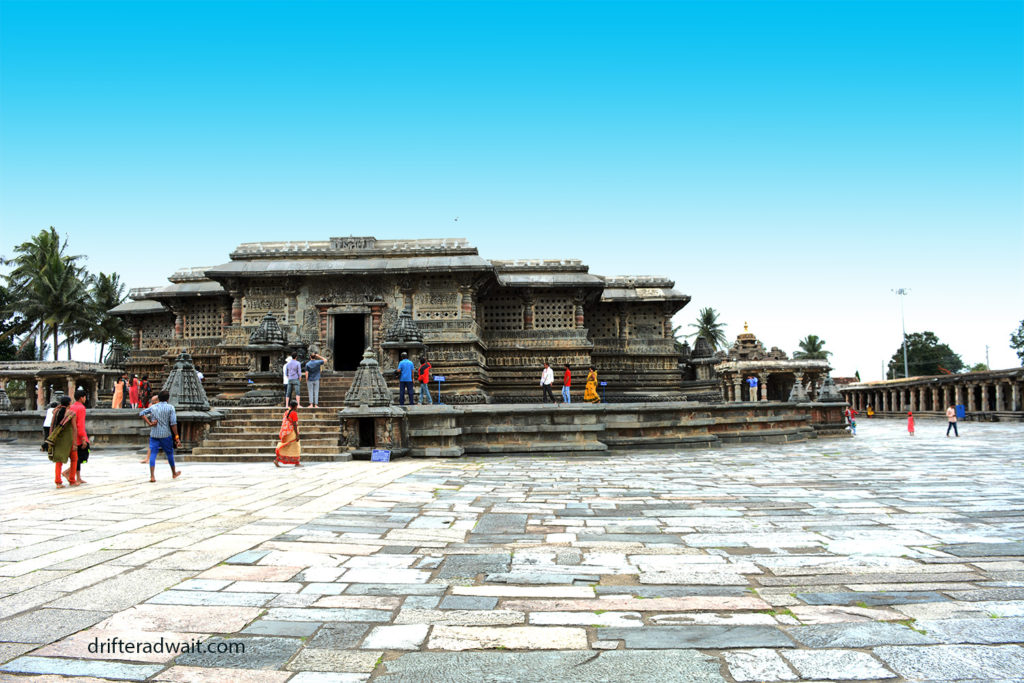
A small town, just like any other town in southern India. Dusty, crowded streets buzzing with the street vendors, agriculture shops, tractor showrooms, and some Udupi restaurants surrounding central bus stand. Adjacent to National Highway 73, located on the southern shore of the Yagachi reservoir, Belur is a home of one of the most brilliant architectures ever created in history. Channakeshava Temple.
Hoysala Empire History:
Hoysalas were one of the respectable families in southern India, from
a village named Malenadu. Initially, they were serving the Western
Chalukya Dynasty during the early 11th century. Taking the advantages of
the constant clashes occurring between Chalukyas and Kalachuris in
southern India, Hoysala rose to power.
Hoysala dynasty has a rather
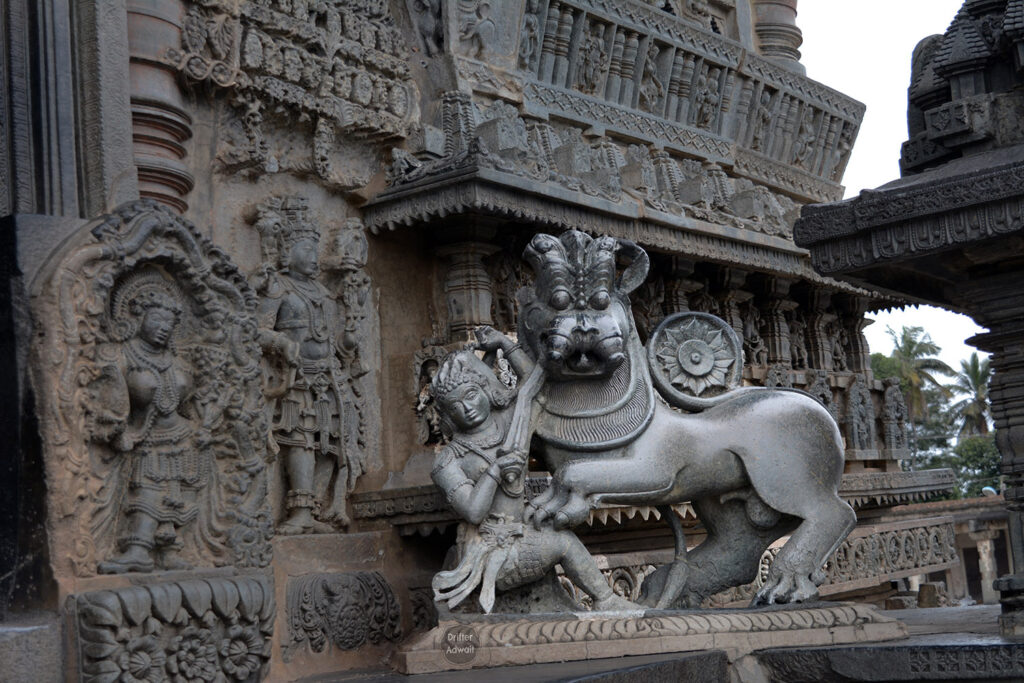
interesting origin story as per the local folklore. In the 11th century,
there was a Jain teacher sage named Sudatta, living in the village of
Sosevuru with his few students. Once, a gigantic lion attacked his
Ashram while he was teaching. Sudatta ordered his student Sala to slain
the lion. Without any hesitation, Sala picked up the sword and after a
horrible battle between man and the beast, he killed the lion. In old
Kannada, Hoy means to Slay. Hence, the Dynasty Sala established was
named as Hoysala. This emblem will be found on stone inscriptions, on
the temple walls as well as on the turrets of the temples belonging to
the Hoysala dynasty.
Many inscriptions are found praising the Hoysalas, from Solapur to Tanjore and from Kodagu to Arcot. Many brave Kings like Sala, Ballala, Narsimha, and Vishnuvardhana ruled here with honesty, empathy, and wisdom. They fought many wars with Kadambas, Pandyas, and Cholas to expand their territories. Initially, they have capital right here at Belur. Later, they moved it to Halebeedu. For a while, even they tried to stop the Islamic invasion, coming from the north. But after a while, they could not match the brut ferocity of Malik Kafur. in 1311, on his second invasion of South India, he raided the Hoysala Kingdom, looting, Killin, raping and burning anything and everything in his way with a force of a hundred thousand riders. He halted at new Capital Dwarsamudra, for twelve days, so that he can peacefully burn the city and destroy the Halebeedu temples with Hammers. And everything was destroyed as per his satisfaction, he returns to the North.
Legendary Architecture Historian James Fergusson describes Belur as, “It may be probably considered as one of the most marvelous exhibitions of Human Labor, to be found in the patient east. No two facets of the temples are the same, every evolution of every scroll is different. No two canopies in the whole building are alike and every part exhibits joyous exuberance of fancy scorning every mechanical restraint”.
History of Chennakeshava Temple, Belur
As per the various inscriptions, found across Karnataka, within the
span of 350 years, Hoysalas built more than 1500 temples. They made
Velapuri their capital. Due to their devotion towards Lord Vishnu,
Velapuri (Belur) was received admiration as Dakshin (Southern) Varanasi,
and Vaikuntha on Earth.
This great monument of medieval art was
built by King Bittideva, who called himself Vishnuvardhana. Bettideva
initially was following Jainism. But after coming under the influence of
Sage Ramanujacharya, he transformed himself as Vaishnav or the one who
follows Vishnu. He had glorious military campaigns during his regime
fighting alongside his general Punisa. After his spiritual
enlightenment, he went on war and had a huge victory over Cholas in the
war of Talakadu. To celebrate his victory over the Chola dynasty, he and
his beloved queen Santala Devi started the construction of the temple.
Hence, this temple is also called as Vijaya Narayana Temple. After 130
years of meticulous construction, this marvel was erected. His grandson,
Veerballala II added many sculptures to it, later on, completing this
masterpiece.
After the invasion of Malik Kafur, Belur was decimated
to the ground. In the 14th century, Vijaynagara kings reconstructed the
temple, with some more additions.
In 1433, one Iraqi traveler named
Abdul Razaq visited the temple. He was so impressed with the marvelous
architecture, he just writes this in his journal: “I dared not attempt
any description, or I will be accused of exaggeration”.
Chenna means beautiful. Kesava is one of the thousand names of Lord Vishnu. Chennakesava means Gorgeous Vishnu.
Chennakeshava Temple Architecture
Hoysala temple has some unique distinguishing characteristics.
Usually, these temples will be located near a water reservoir. They all
will be constructed on elevated platforms, and the walls will be
constructed in such a way that the maximum number of sculptures can be
added to them. Chennakeshava is not different from it. Hoysala style of
architecture is a perfect blend of southern as well as the Northern
Indian style of architecture. Best of the two worlds. First, you will be
greeted by the Raj Gopuras. As you cross them, flag pole and Garuda in
Namaste pose welcome the devotees. Then, you will find yourself in front
of the main temple, elevated on a star-shaped platform. This temple has
two sides. Front and back. The front side has been called a Jeevatma
side, as it represents every day from our normal materialistic life. The
entire Jeevatma part of the temple is underscored with beautiful
figurines in female form, fixed with brackets on the roof. These women
or Madanikas are inspired form queen Shantala.
The backside is
referred to as Parmatma or, divine. Brilliantly beautiful sculptures of
Gods, Goddesses, and other holy beings are chiseled here.
Gopuram of Chennakeshava Temple:
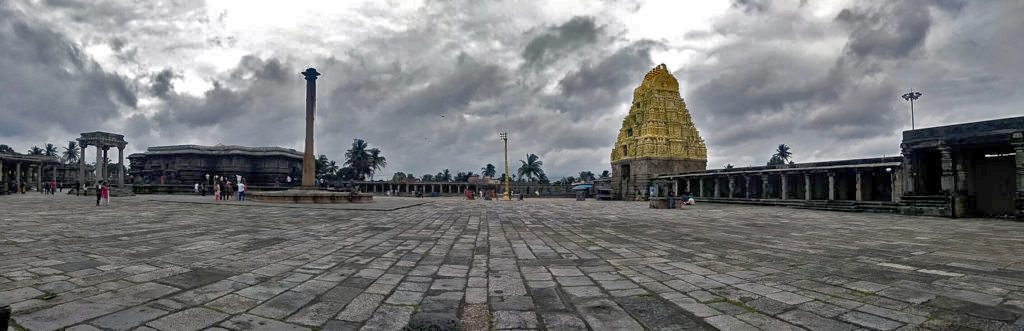
Temple is surrounded by a huge wall, protecting the temple. By using the same sturdy walls, corridors with small rooms are constructed from within. The entrance is decorated by a huge yellow Gopuram (Tower), which is visible from anywhere within the town. Hoysala king Immadi Ballala built the original Gopura during 1200 AD, but it was destroyed by Bahamani invader sultan Shamshuddin Shaha. The Gopuram and the wall you are seeing are built in 1397 AD by Vijaynagar kings. Hence, this Gopuram resembles the Gopuras from Hampi temples like Vitthal or Virupaksh temples. Remove your foot ware on a stand and enter through the grand entrance. Hire a guide, he will be worth every Rupee. You will find yourself standing in a huge courtyard, keeping ChannaKesava temple in front.
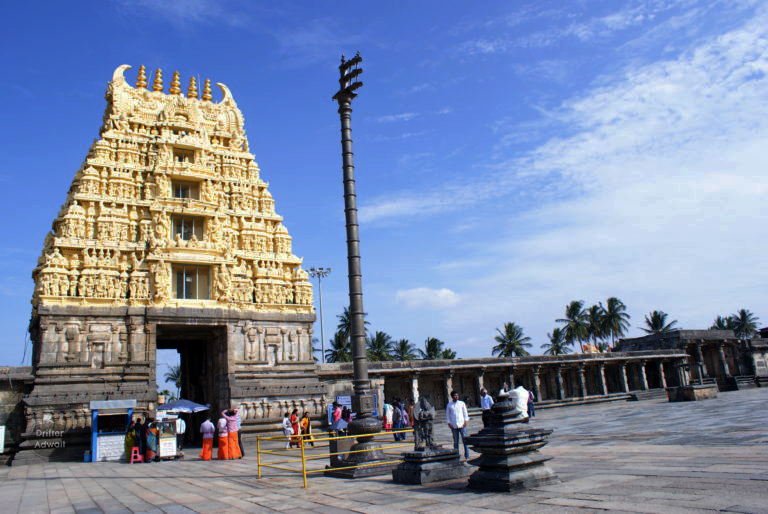
Gopuram structure is the specialty of South Indian temple
architecture. Gau means cow, or holy in Sanskrit. Puram means town.
Hence, gopuram means Holy Land. You can see two cow horn-like curvey
structures are set on the top of the tower, naming the tower as Gopuram.
Representing the holiness of the place.
In between two horns, you
will find five decorative brass pots or Kalasha like structures. Number
five has a special place in Vedic religion. Number five dominates human
life in many ways. As per Vedic texts, there are five elements (Panch
Bhoota as in earth, water, fire, air, and space), there are five senses
(Panchendriyas, as in sound, touch, sight, taste, and smell), five
Sacraments (Panchamrut), Five products from Cow (Panch Gavya as in milk,
urine, dung, curd, and Ghee), five lamps to be offered to Lord Vishnu
(Pancharati), Five Vedas and last but not least, Five Pandavas as well.
Pole of the Garuda
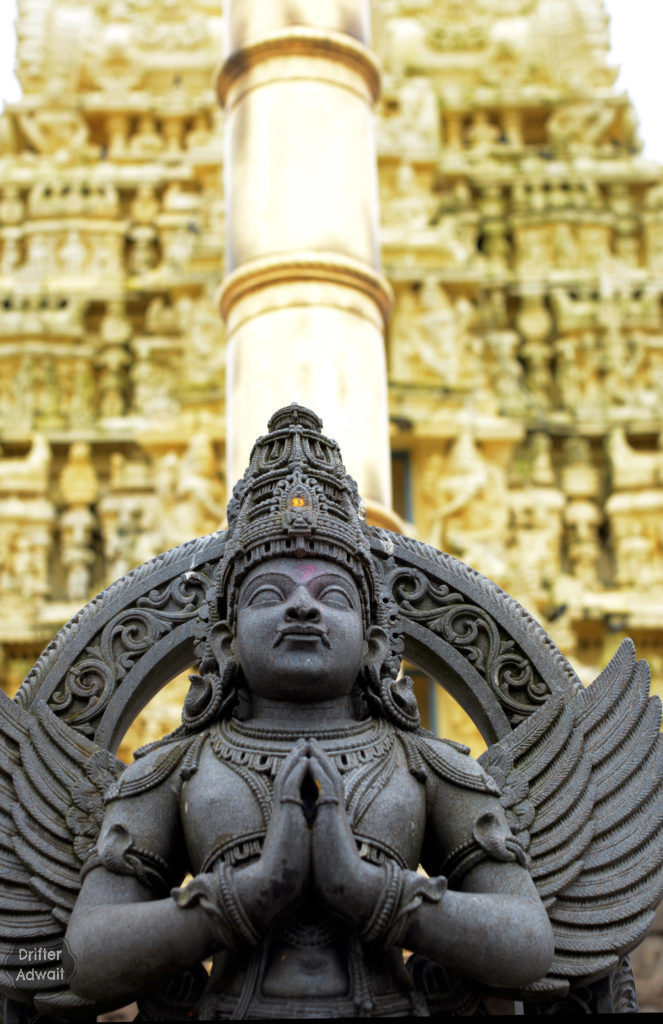
There is a twenty-two-foot brass flagpole, right in the middle of the
temple courtyard. During the festival of Brahmotsava, Garuda, the eagle
flat is hosted on the top of the pole. The presence of a flag pole with
Garuda statue represents the completion of the temple, inviting the
devotees.
Garuda idol is kept in front of the pole. Garuda is a
demigod, god of all the birds, is standing here in front of
Channakeshava, in Namaste position. The statue is loaded with jewelry of
exquisite carvings. Lord of birds is wearing arm-bands and wrist bands
made up of Cobras, along with a beautiful ornament called Mekhala, under
his stomach, adorning his thighs and Hips.
The statue is, however, established a few centuries after the Hoysala Period by the sculpture named Javaracharya.
Temple Surroundings
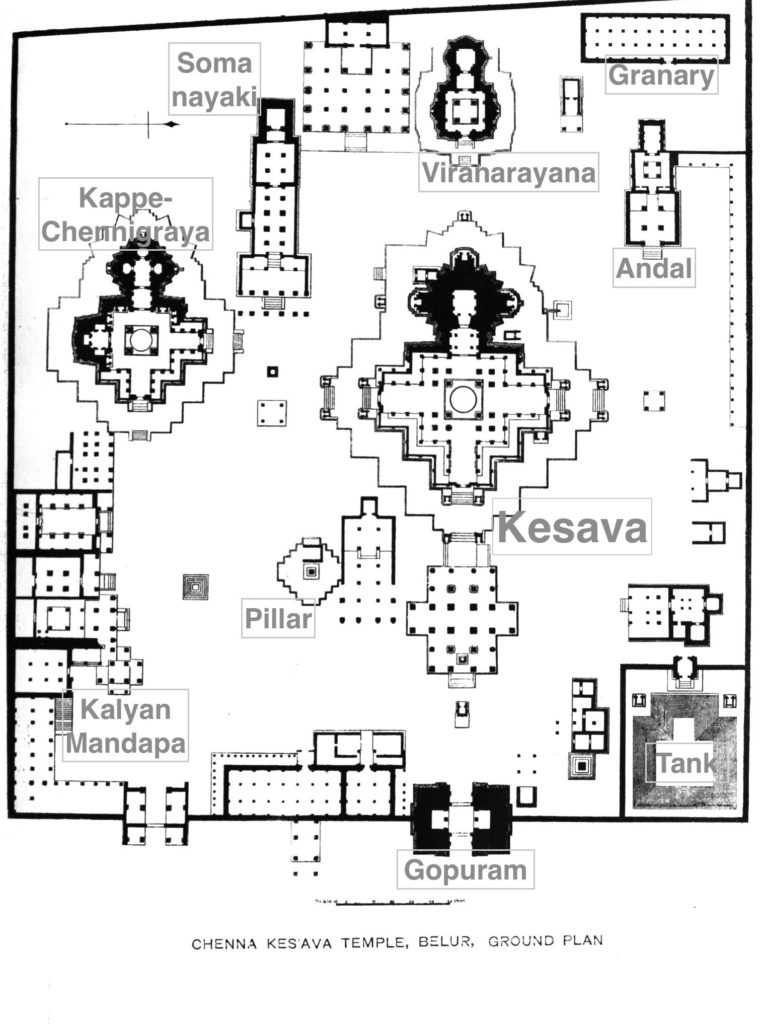
The main temple is surrounded by several mini shrines, a well-built water tank, one ceremonial hall, one giant gravity pillar, a granary, and roofed corridors with stone pillars running across the fence wall.
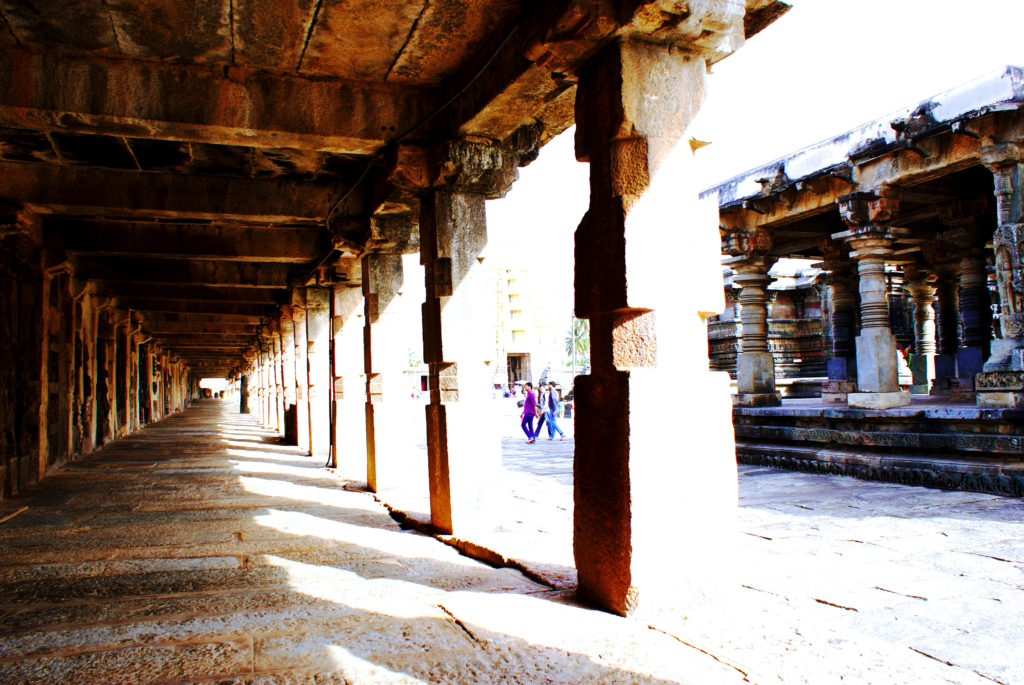
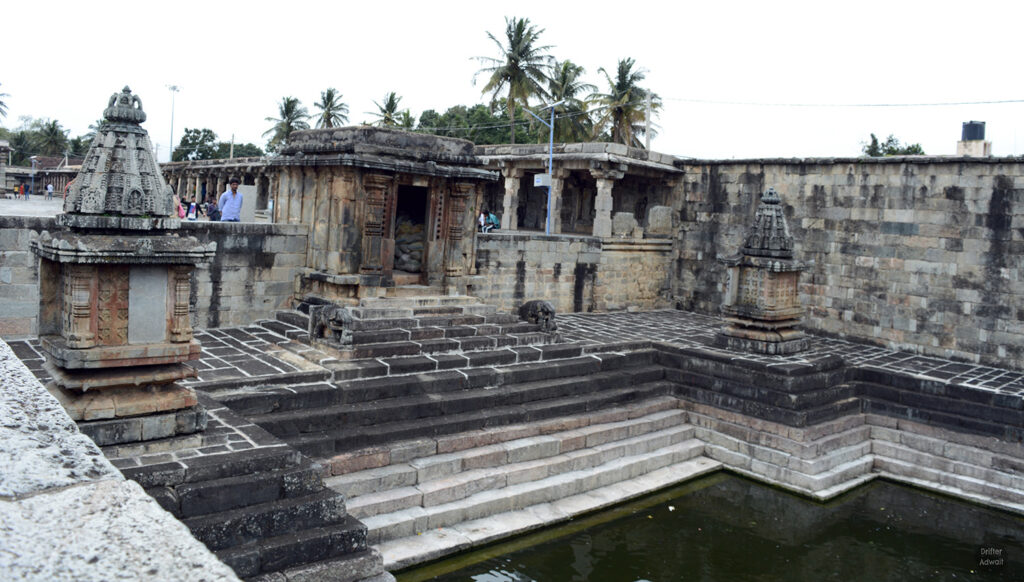
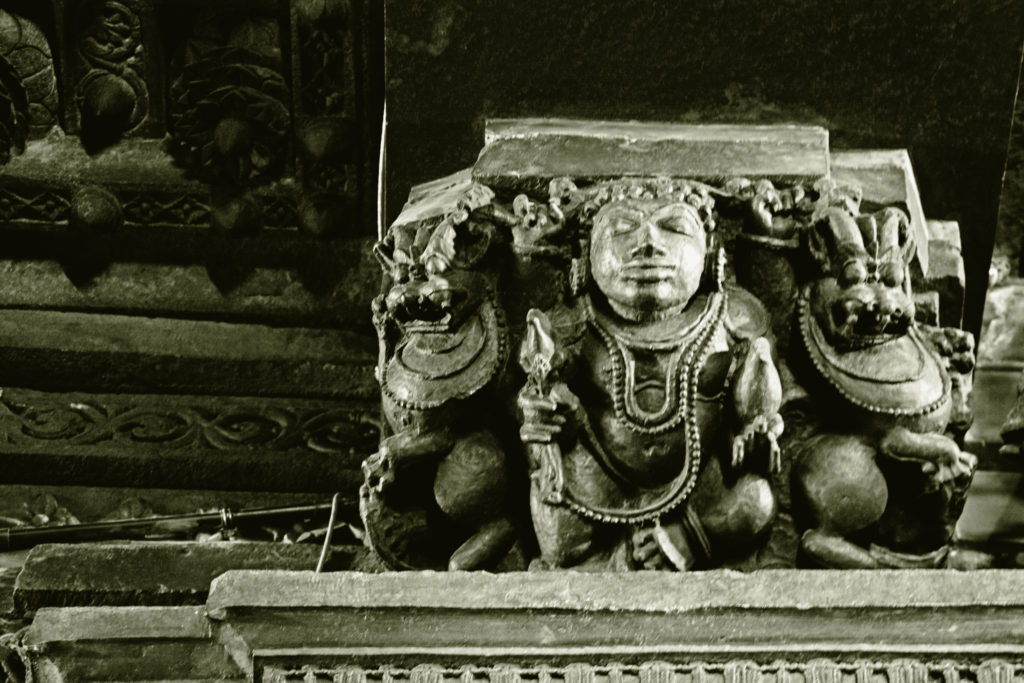
Don’t be in such a hurry to climb those steps to enter the main temple. There are four mini temples on each side of these steps. Tini tiny elephants are carrying these four mini temples on their backs for centuries.
Chennakesava Temple Entrance
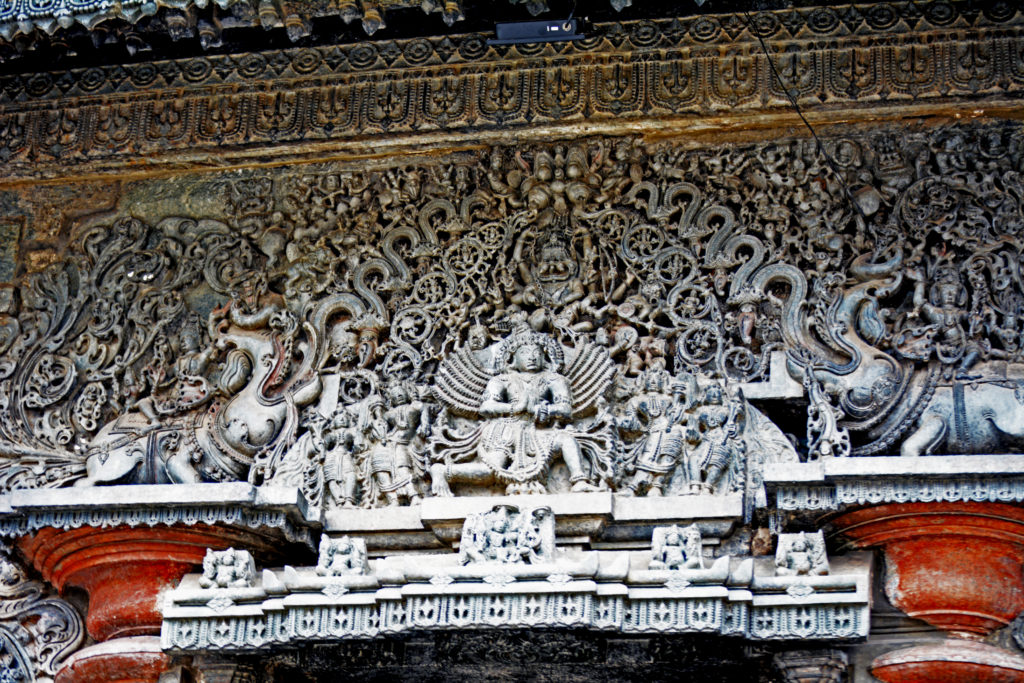
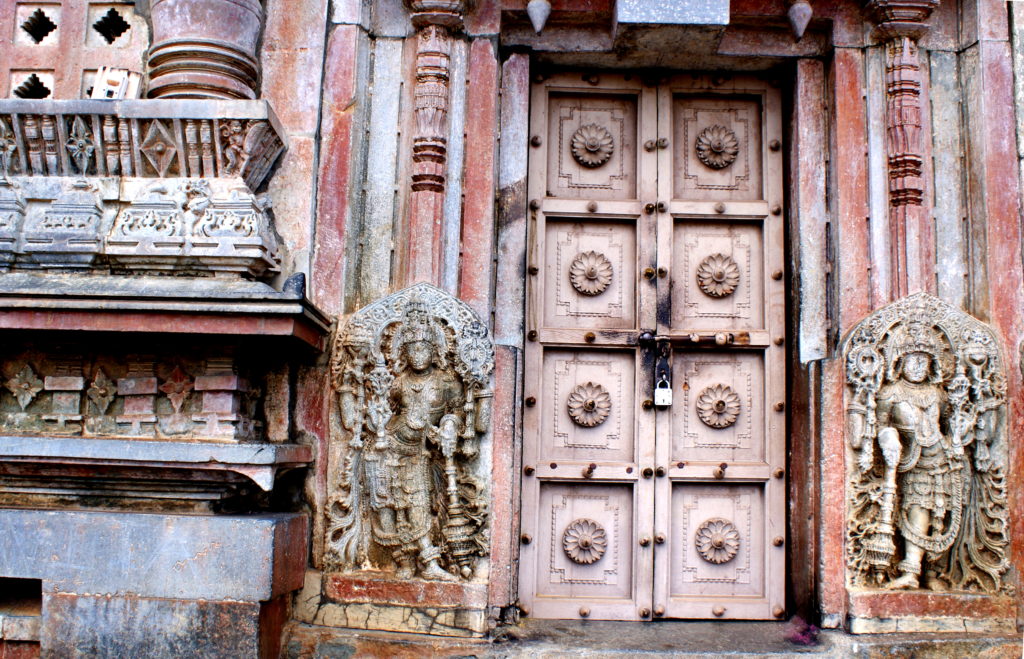
Before entering the temple, spend some time observing the east-facing entrance. A skillful, ultra minute craftsmanship is ornamenting the entrance. The symmetry is just astonishing. Makar animals, saluting Garuda and Narsimha on top while Kirtidhwaja looking over them. Narsimha is wearing the intestines of HiranyaKashyapu like garlands. Look close enough, you will see ten incarnations of Lord Vishnu hidden inside the circular creeper bordering the Narsimha. Rest is just a stone coming to life, like ripples on calm water. Hoysala kings were Vaishnav (followers of Lord Vishnu) and their clan god was Narsimha. Here, you will encounter this ghastly demon slayer god in many forms.
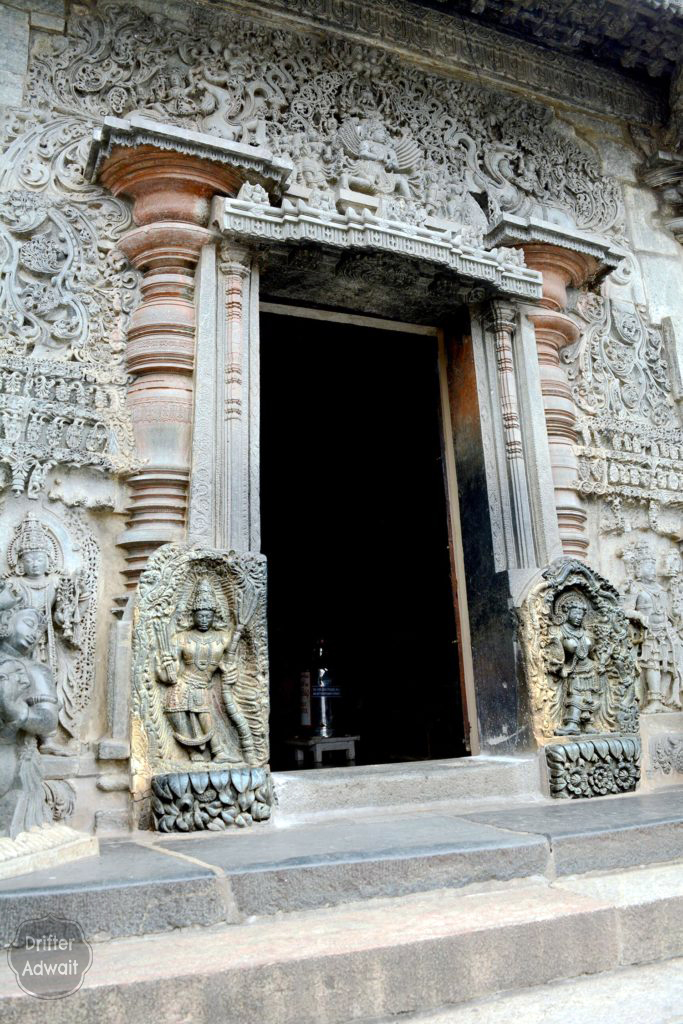
Kama and Ratee are considered as celestial gods of desire, love, lust, passion, and carnal pleasures. They greet you at the doorsteps of Chennakesava temple, reminding you to get rid of such desires if you want to meet the Parmatma. Leaving the lusty desires outside the temple, you enter the structure.
Entrance Bay
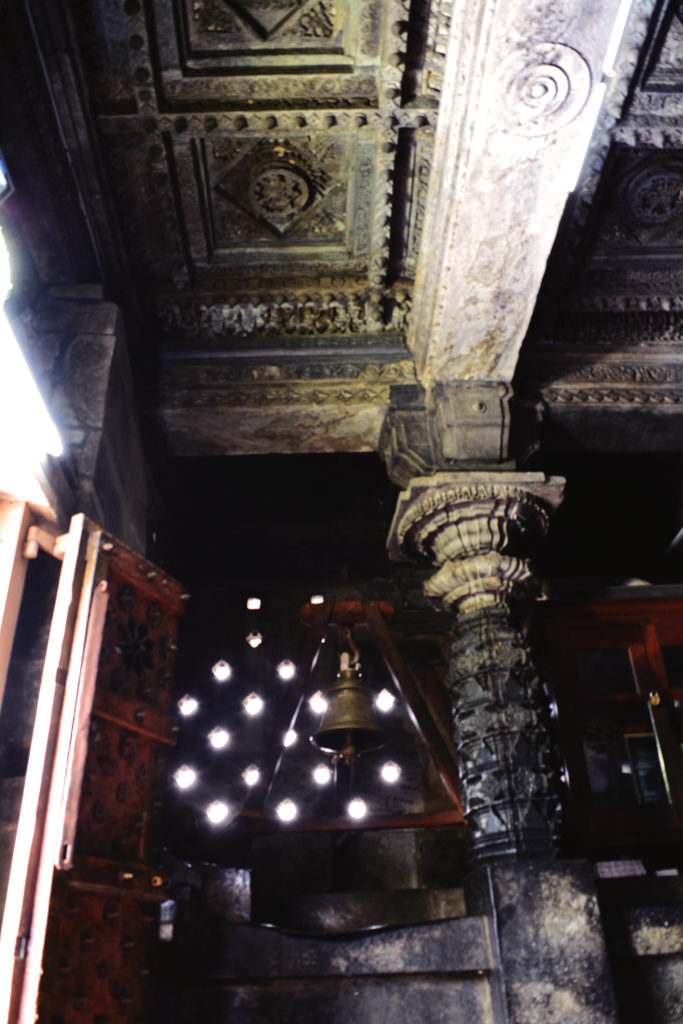
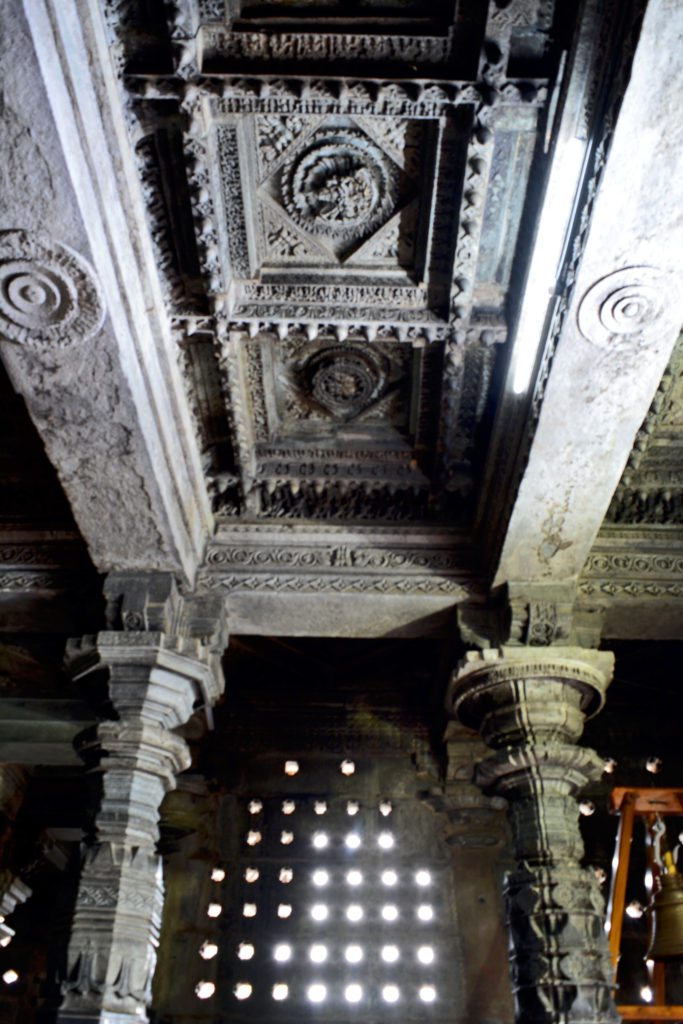
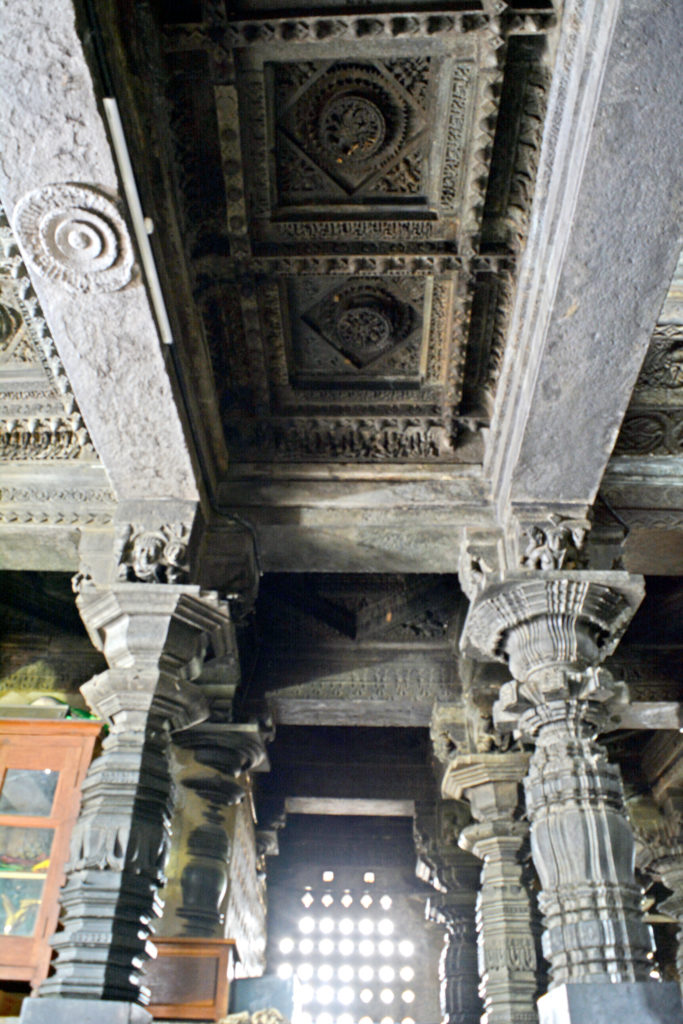
Its dark inside, so be careful not to bump into one of these
lathe-turned pillars carrying the main temple. Their edges are sharp
like swords. How they have carved them so sharp and accurate? Don’t
know.
Each pillar has a different story to tell. Belur temple roof is
held on top of 48 pillars. Some of them are smooth circular in shape,
some of them have lotus, stars, and umbrella carved on them. But, two of
them, stand out the most.
Narsimha Pillar
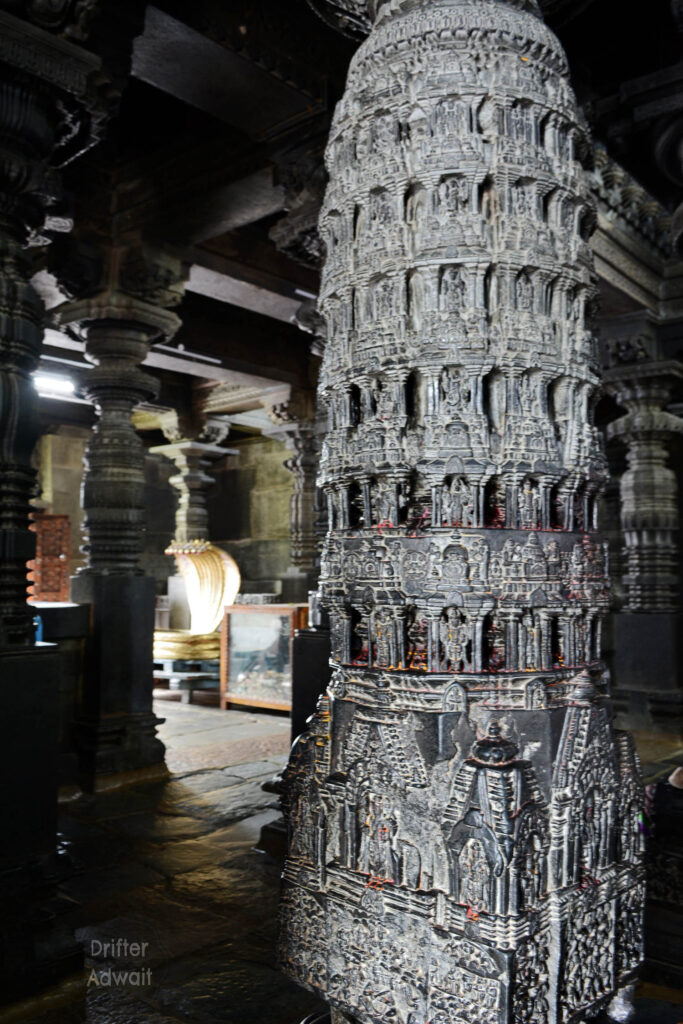
It uses to rotate around its axis
There is one pillar named Narsimha pillar, which is said to be revolving with the help of ball bearings, once upon a time. as the time passed, the ball bearings inside got damaged. Narsimha pillar portrays the idea of heaven with several floors. Each floor has small pillars, which are hollow from inside. I think these sculptures are just showing off to the gods what they can create with the stones. Different gods, deities, and other celestial creatures have been portrayed on the pillar. The entire pillar is filled with minute craftsmanship, except for one small square. This square represents the almighty God, in his formless characteristic. Some sects in Hinduism believe god does not have shape, size, and any definitive form. This blank square represents the formless god. Guides in the temple believe, that it was left blank intentionally, to challenge the future generation of sculptures.
Mohini Pillar
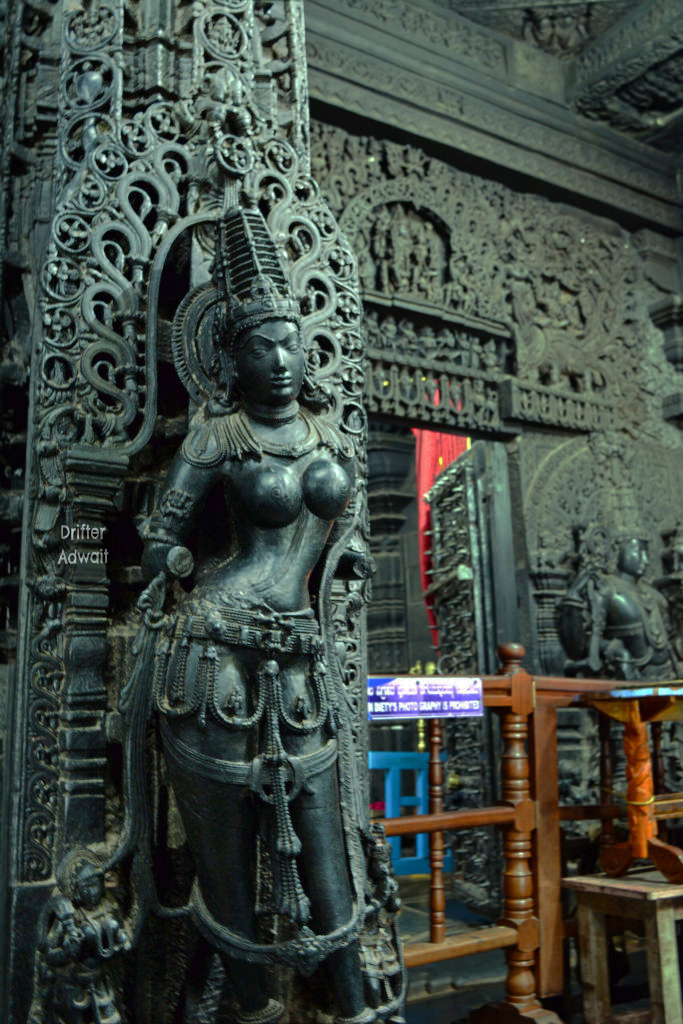
Same story with the famous Mohini pillar. The female incarnation of Lord Vishnu is beautifully carved here, presenting the perfect female form. She is called Kamakshi, the one with hauntingly beautiful eyes., with a narrow waist (Simha Kati). She has shown wearing a sacred thread- A Janeu, underlining the equality in ancient India, where women had equal rights as men. Her hips are decorated with an ornament called Mekhala, and one garland, which is coming over her shoulder, till her knees is called Vanamala.
Bhuvaneshwari: Decorative Ceiling
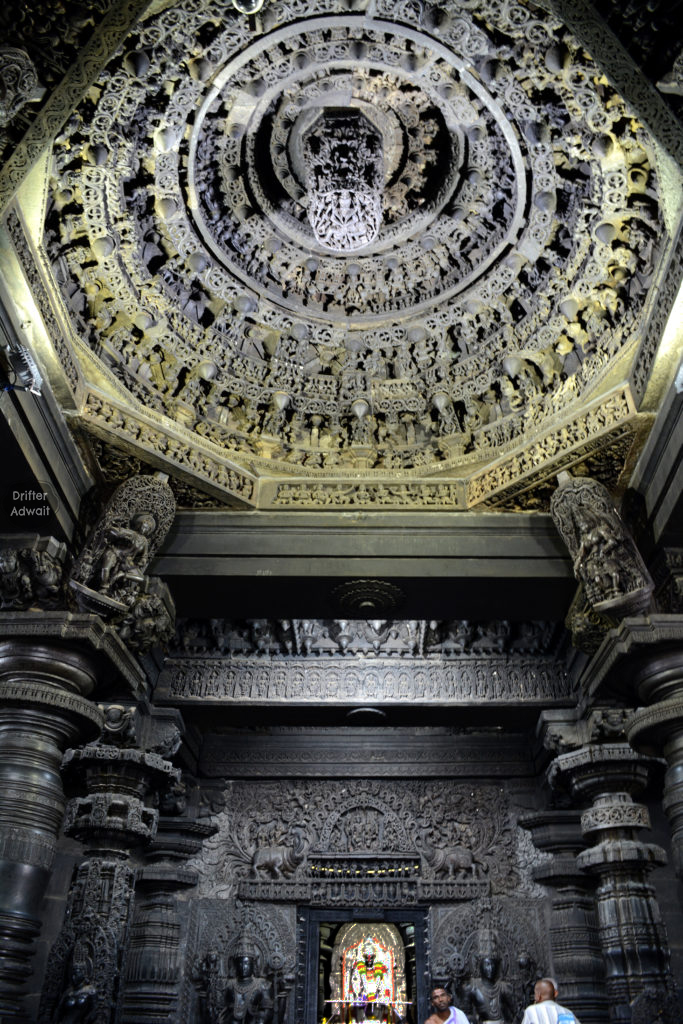
Now, comes the best part of the temple. Its roof. Right in front of Sanctum, there is a round platform of six inches height. It is said, that queen Shantala used to perform her dance here on auspicious days, to honor the Keshava. Right above this ancient dance floor, there lies the best roof in the world. Forget the Sistine Chapel from the Vatican, painted by Michelangelo. This is carved over your head. Most intricate design, on the inverted dome, is the silent feature of Hoysala architecture, presented here in the most beautiful manner. This design has an appropriate name as Bhuvaneshwari. These are 52 soapstones, interlocked with each other, without any cementing material.
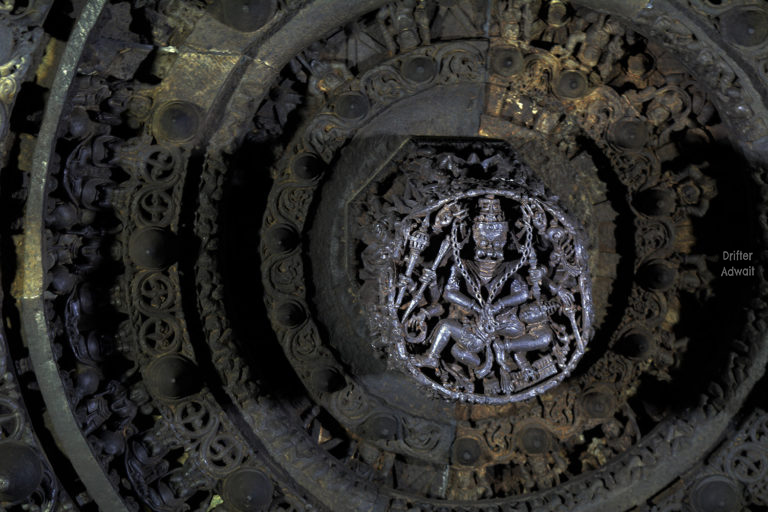
If you look closely on your head, you will find a small intricate
carving of Ugra Narsimha, slaying the demon Hiranyakashipu. Narsimha is
tearing the demon’s stomach and wearing his intestines as the garland,
around his neck. He has ten hands, and in remaining hands, he is holding
various weapons. This Chandelier made up of stone is the highlight of
the Belur temple.
The most beautiful, intricate entrance in the world, carved out of black stone, and not from white marble…
Torana (Entrance Border of Sanctorum)
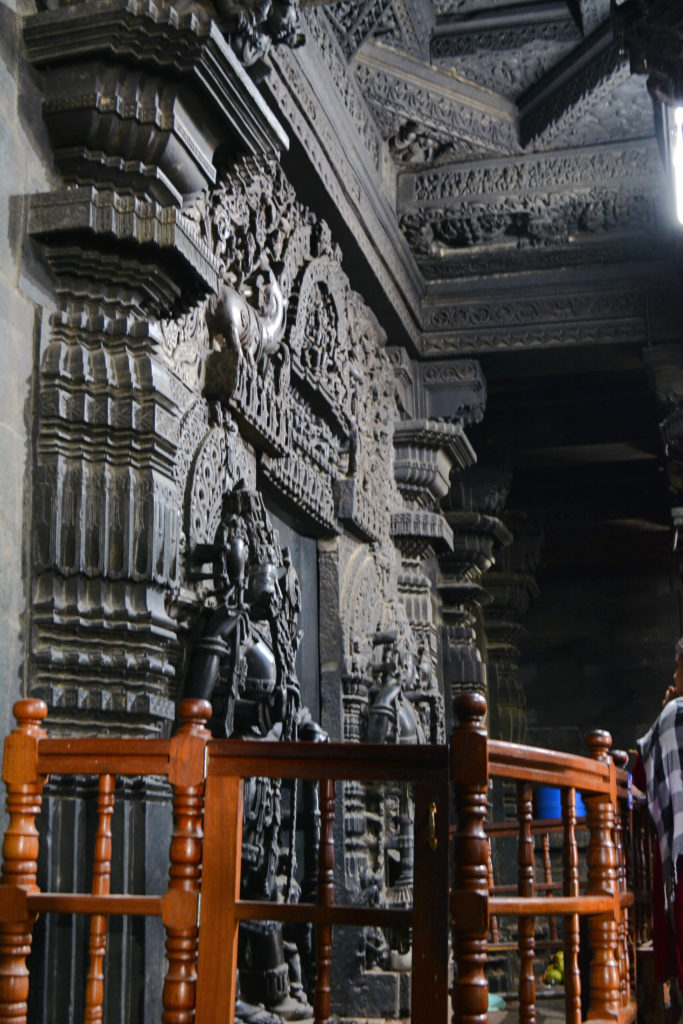
This is perhaps the most intricate stone carving I have seen in my life. On the door border of the Sanctum Sanctorum of Chennakesava Temple. Lord Chennakeshava, is guarded by horrifying Jay-Vijay. They are covered with some seriously minute detailed, laser-cut, exquisite Jewelry. Detailing will just blow your mind. These two doormen of Kesava are loaded with such a finest jewelry that I have not seen before.
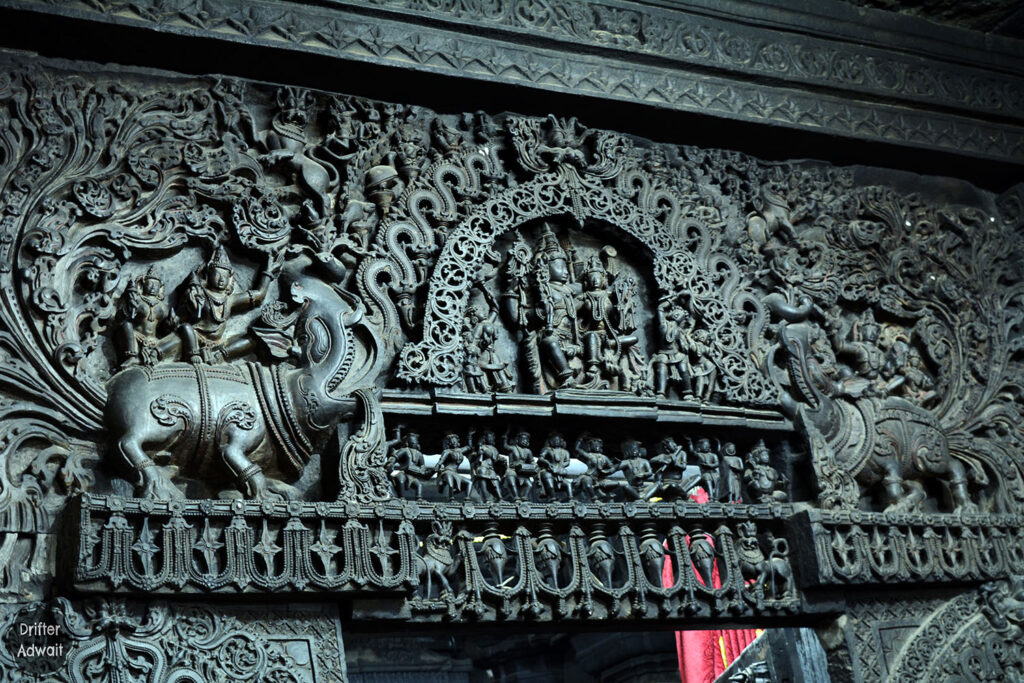
On the top of the Jay Vijay, you will see some epic craftsmanship
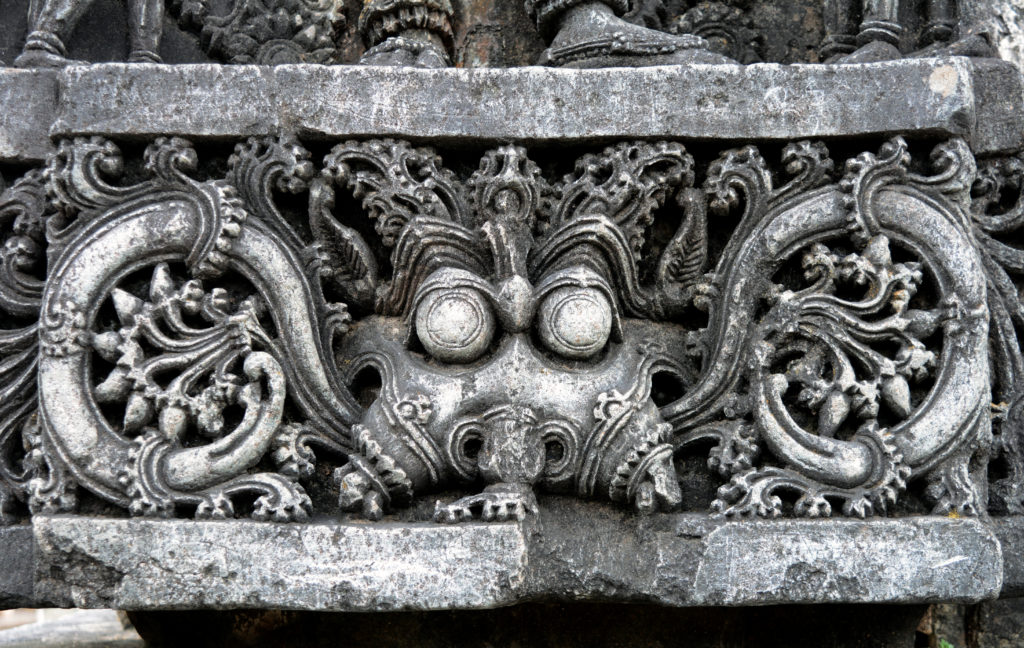
indeed. On the crowned heads of Jay and Vijay, you will see Makara
animals. These celestial animals are a combination of several ferocious
creatures from the animal kingdom. Riding on them, are Varuna and his
consort Varuni. The lord of the rains and prosperity. One of the
legendary Ashta Digpalas, protecting the west direction. They have tails
like a peacock, creating waves on the stones. A border coming out from
their mouth is escalating towards another fierce creature called
Kirtimukha. These waves have their own fold, and each wave has five
folds. On each fold, you will see a fish, a tortoise, Varaha, and so on.
Each fold represents the incarnation of Lord Vishnu.
These waves,
coming from the mouths of Makara have created an arch-like structure,
under which, you can see, Lord Vishnu and Goddess Lakshmi are sitting.
Bellow
them, you can see celestial musicians and dancers called Gandharva,
doing what they are best-known for-Dancing and singing. Each of them has
the body language of their own, all are praising Lord Vishnu with their
heavenly music.
Bellow them, you will see five half blossomed inverted lotuses and Lions on their both sides.
Madanikas Surrounding the Dance floor:
Here, you might get that weird feeling that somebody has eyes on you…There is a soft spotlight right in the front of the main Garbha Griha. Once illuminated, you realize, that feeling of being looked was correct indeed. You were indeed surrounded by 4 amorous, beautiful celestial Nymphs, sitting on each pillar, teasing you, out of your reach.
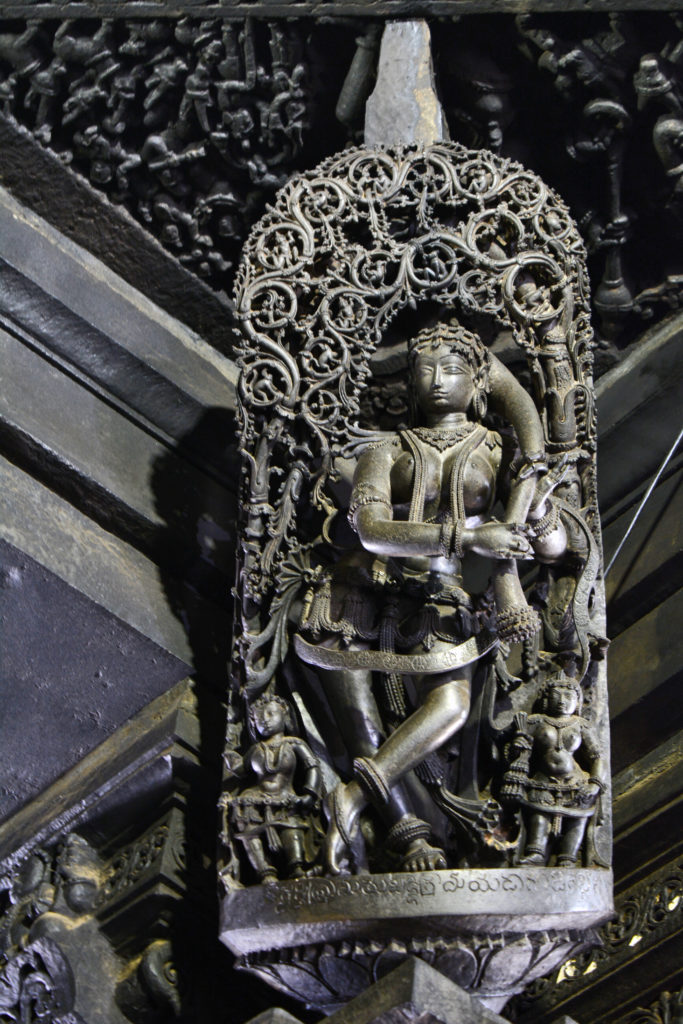
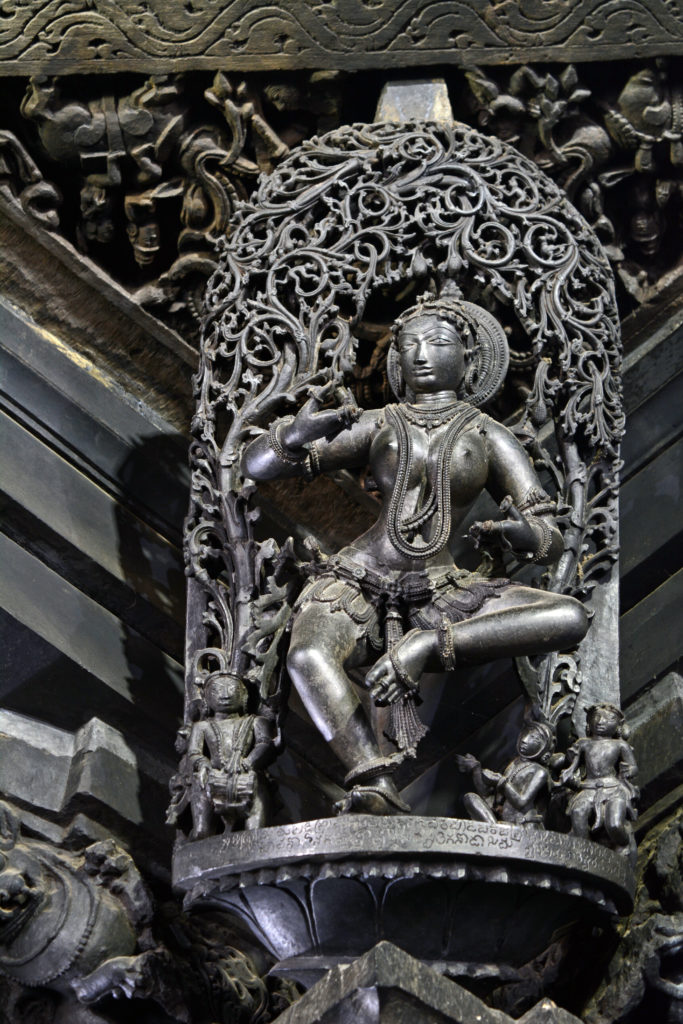
Here, Madanika 1 is trying to dry her long hair. You can see the
water droplets accumulated at the bottom of her hair. Her two attendants
are helping her to get ready. A creeper behind her is carved with
tremendous intricacy. Taking a look closer reveals several monkeys and
birds are jumping up and down on those branches of the creeper. At the
bottom, you can see an inscription reading “Balligavi Dasoja” who was
the sculpture of this beauty.
The second lady is none other than
Queen Shantala herself, dancing on the beats of a drummer, presenting in
front of Lord Chennakesava. “Chavana” was the name of the sculpture who
kept the memory of this legendary queen alive. The sculpture has
brilliantly carved the facial expressions, hairstyles, and body language
of the queen here.
There are a total of 42 of these gorgeous women,
spread across the entire temple. Dancing, singing, hunting, poisoning,
drumming, dressing, observing their reflection in the mirror, and
whatnot. It is said that they represent an ideal female form. Indeed
they do.
Circumambulation of Belur:
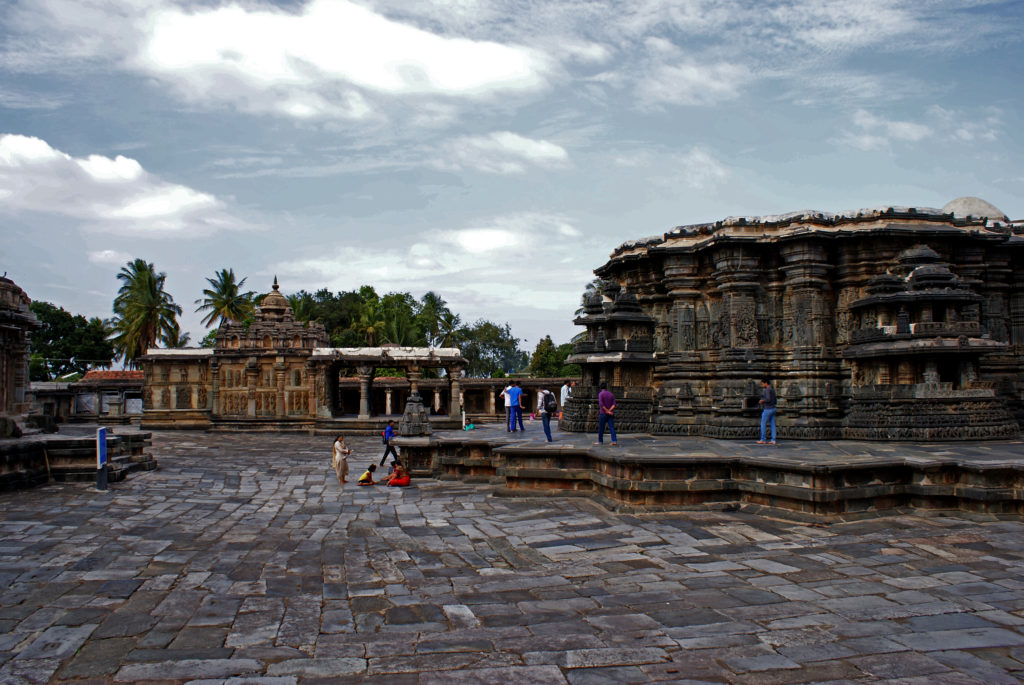
As mentioned earlier, Hoysala temples are mostly built over a
star-shaped platform. Parikrama path around the deity is decorated here,
with the highest degree of imagination, devotion, and artistic vision.
There are almost 600 sculptures to be found on these walls, out those,
80 are missing.
Once you get out of the main temple and start
circumventing, you slowly start to realize something. You have to stop
each and every foot. This temple is not to be taken lightly. You need at
least 2 days, to absorb the beauty of sculptures, carved on the walls
of the main temple itself.
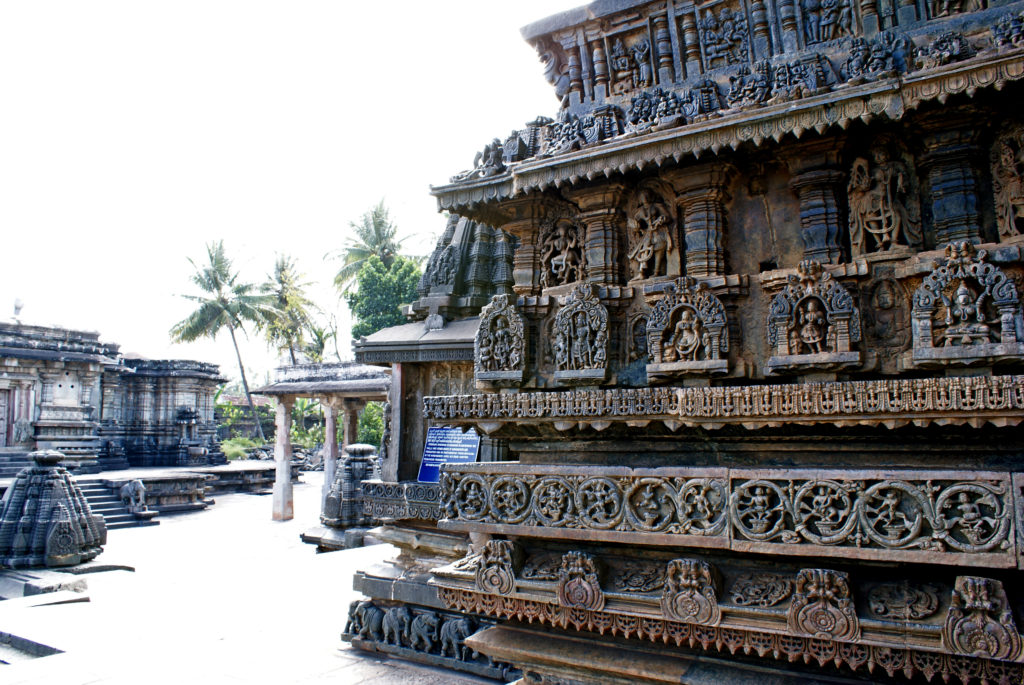
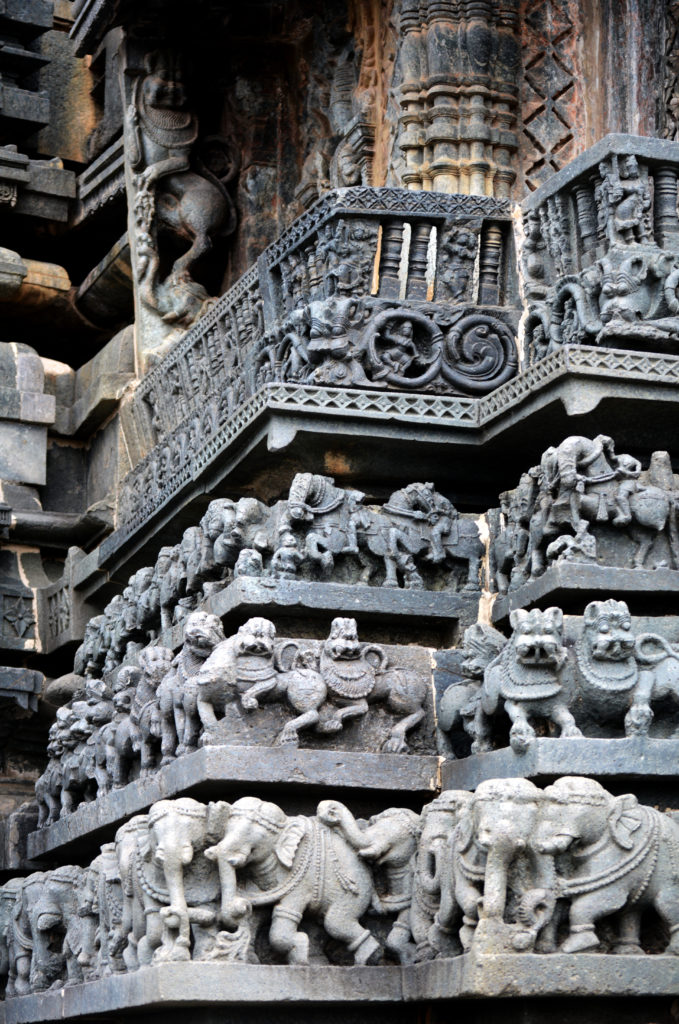
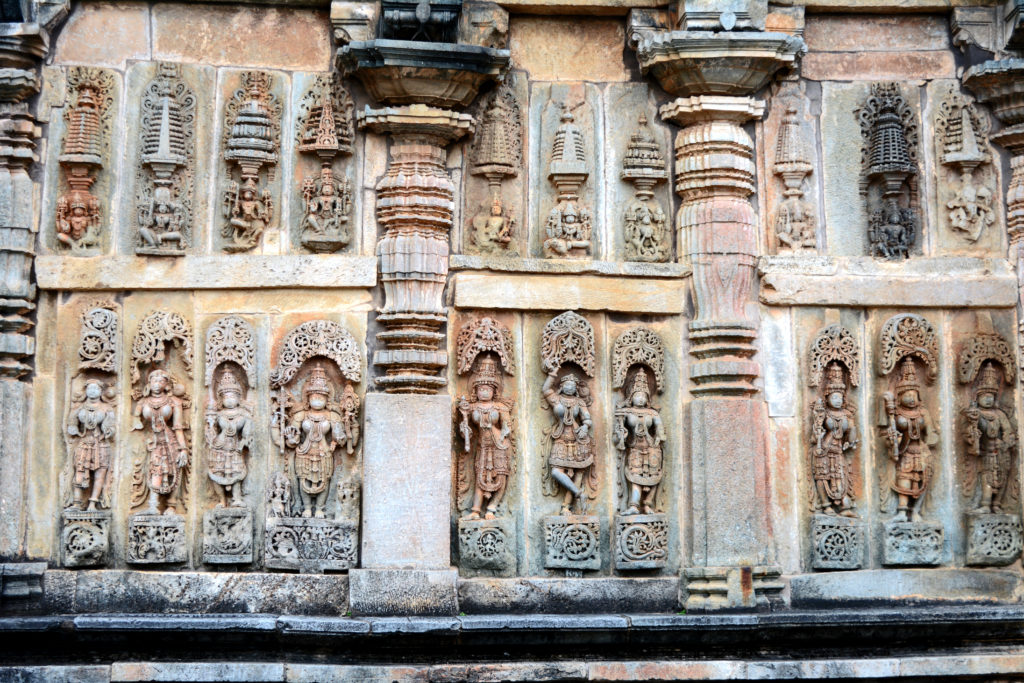
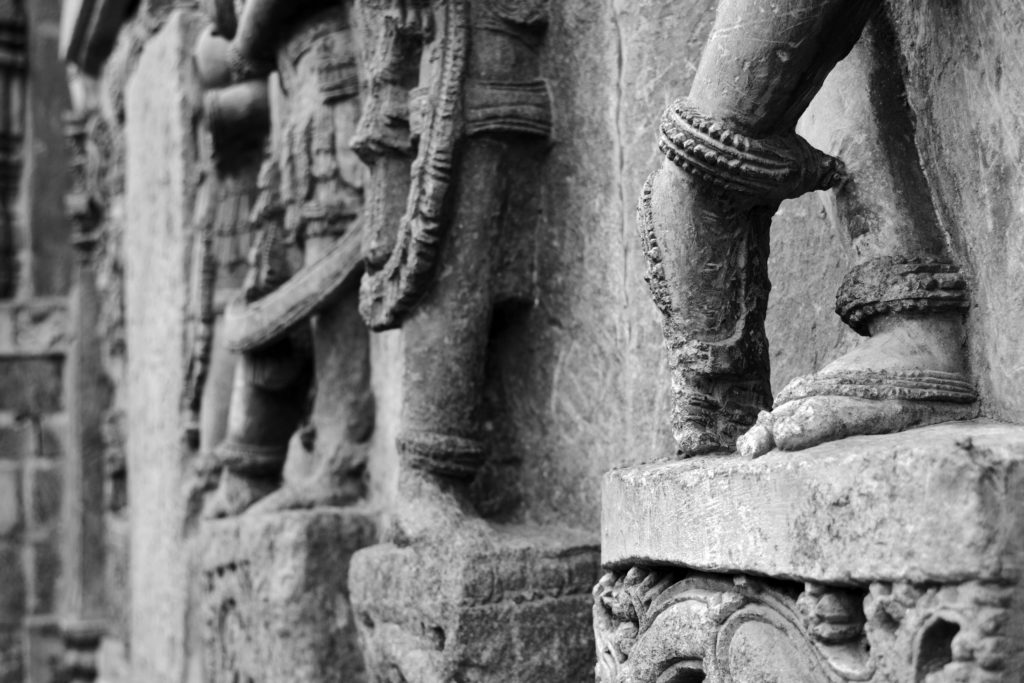
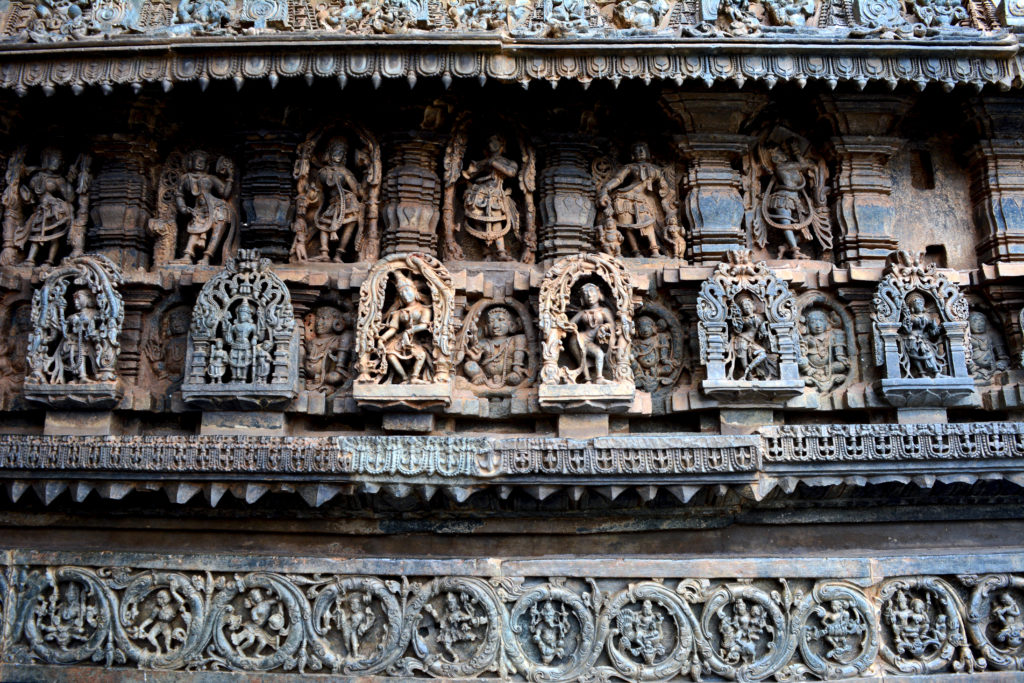
There is not a foot of space left blank on the outer walls. The
entire temple is made up of small layers. On the base layer, there are
hundreds of -one feet elephants. Lions on top of that, and horse riders
on top of those. It is confirmed that not one of these hundred tiny
sculptures is repeated anywhere in this temple. Meaning, among these
hundreds of elephants, no two elephants are the same. On top of that,
there are these poster-sized sculptures of different Avatars of Lord
Vishnu, Brahma, and Lord Shiva, overlooking them.
The elephant layer
represents the strength and stability of the Kingdom, while the horse
layer represents the swiftness of the soldier on the battlefield. In
between these two, you will find a layer, made up of lions, representing
the valor.
The entire temple is built with soapstone with an
interlocking system. No cementing material is what so ever anywhere.
This means, the entire temple can be dismantled and can be erected once
again, somewhere else.
The sculptures you should not miss at Belur:
Gajasur Samhara
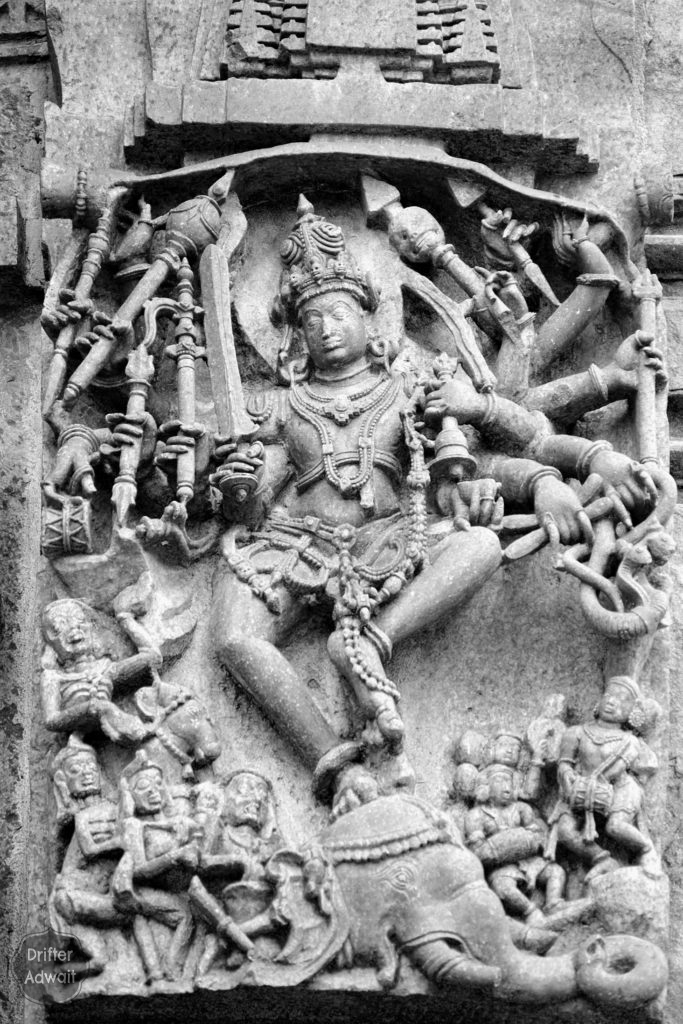
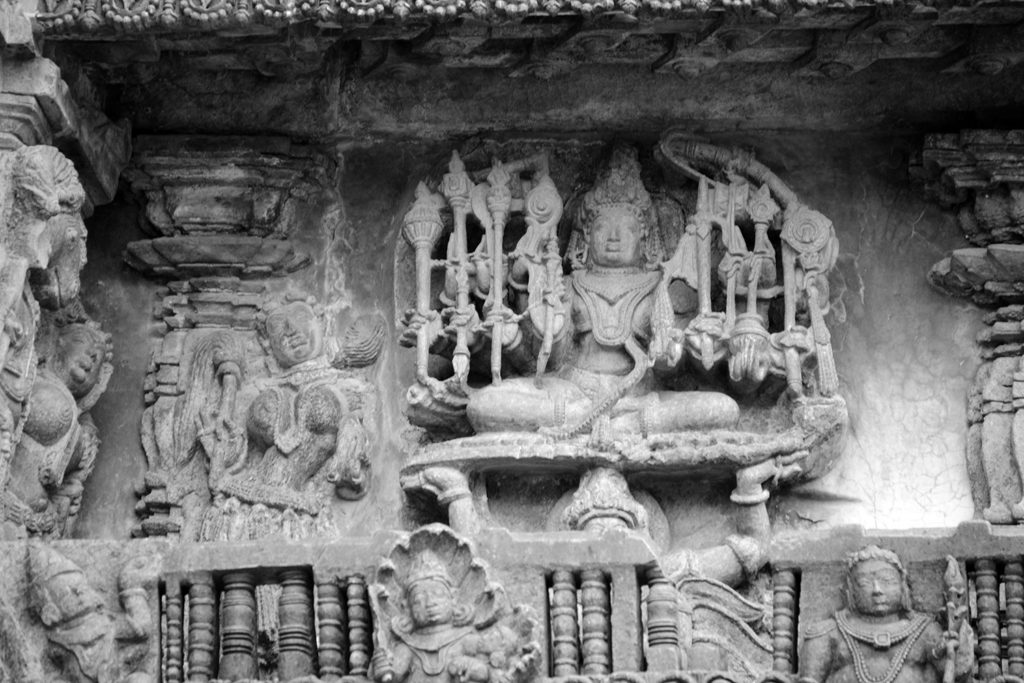
Lord Mahadev, answering the call of his devotee, as he always does, arrived at Kashi and started a war with Gajasur the torment. In the middle of the fight, Gajasur increased his size and swallowed Bholenath. Immigietly, Mahadev started his famous celestial dance – Tandava, inside his stomach, opening the demon from inside. Just before dying, Demon Gajasura apologized to the Bholenath and requested to wear his skin as a cape. Bholenath being Bholenath, accepted the brave demon’s request. What you are seeing here is a brilliant masterpiece. Mahadev is holding many weapons in his hands, while his remaining three hands are holding the heavy elephant skin upwards. He is dancing on the elephant head, while his thin to bone disciples, Gunas, are praising him.
Varaha
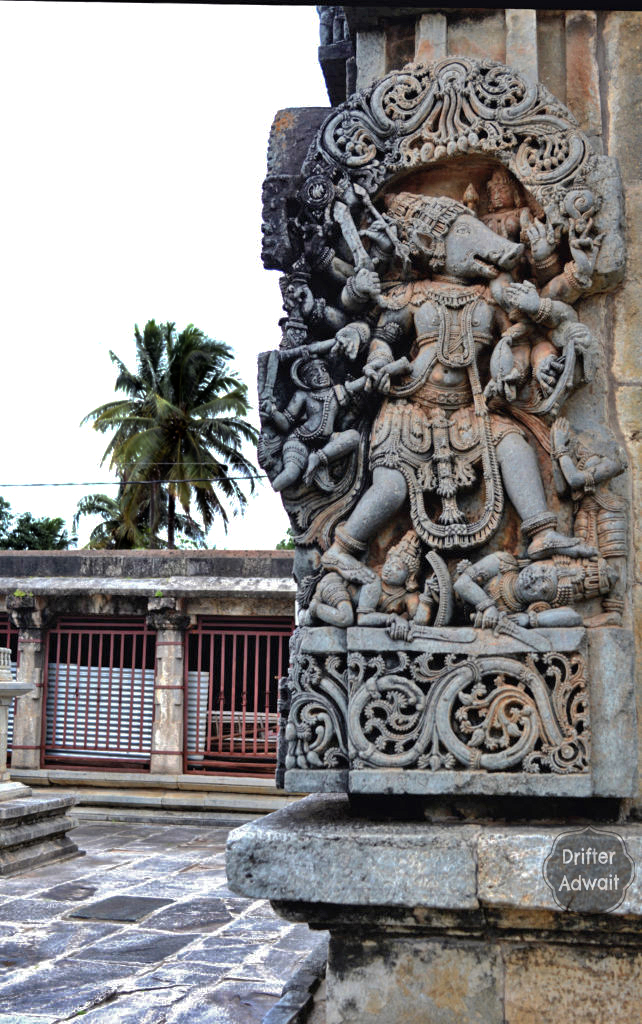
Everyone knows how Vishnu in the form of wild boar Varaha, saved the earth from the grasps of Demon Hiranyaksha. Here, in Belur courtyard, it has been depicted rather marvelously. You can see, earth, in the form of Bhu devil, sitting on the strong shoulders of twelve handed Varaha. He has a powerful snout and bore fangs coming out of them. Beneath his feet, you can see demon Hiranyaksha, holding the sword. Due to the enormous weight of Varaha, the demon’s eyes are bulging out. He is shouting in pain with his demon teeth out.
Ugra Narsimha
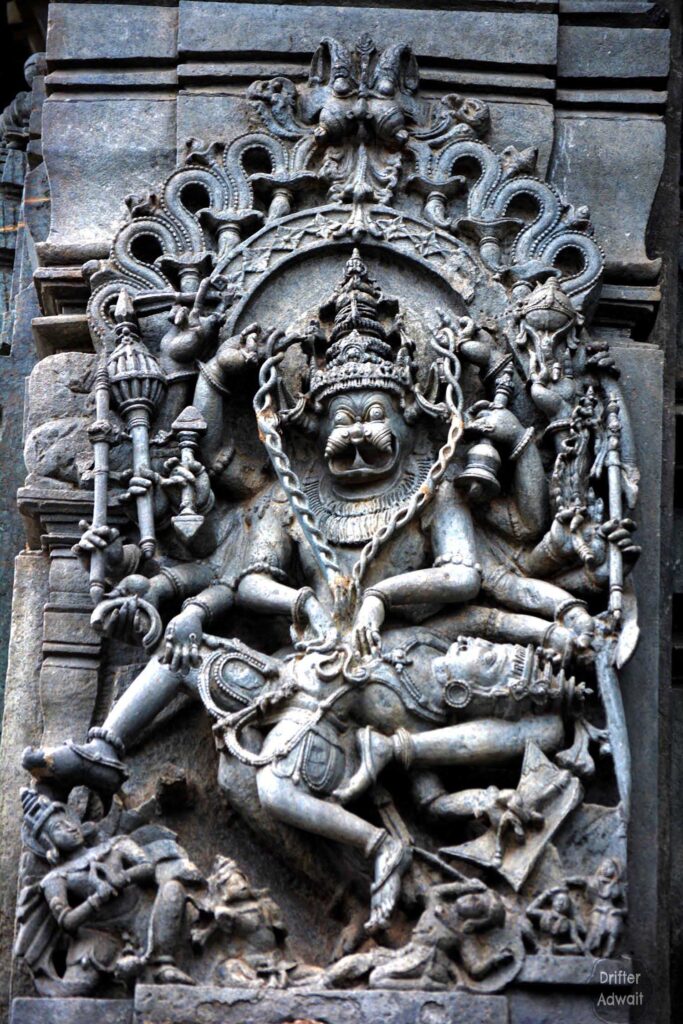
It’s one of the most ferocious sculpture I have ever seen. Demon Hiranyakashipu is on the lap of Narsimha. The demon is shouting in pain as his stomach is being stored by the sharp nails of Narsimha. Sixteen handed Narsimha is holding various celestial weapons along with his beloved conch, mace, disc, and lotus. His eyes are bulging out with extreme anger. In anger, he has removed the intestines from the stomach of Hiranyakashipu and, he is wearing them like some garland. Beneath his feet, you can see Garuda and Prahlada, saluting him, praising him to calm down. What an imagination.
Brahma and Surya
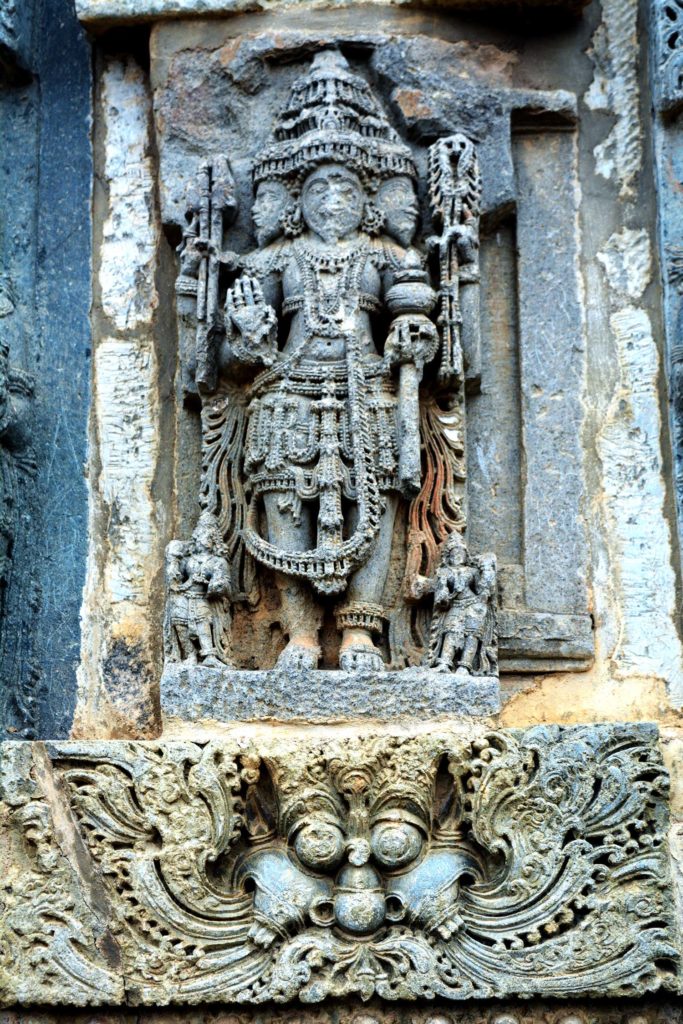
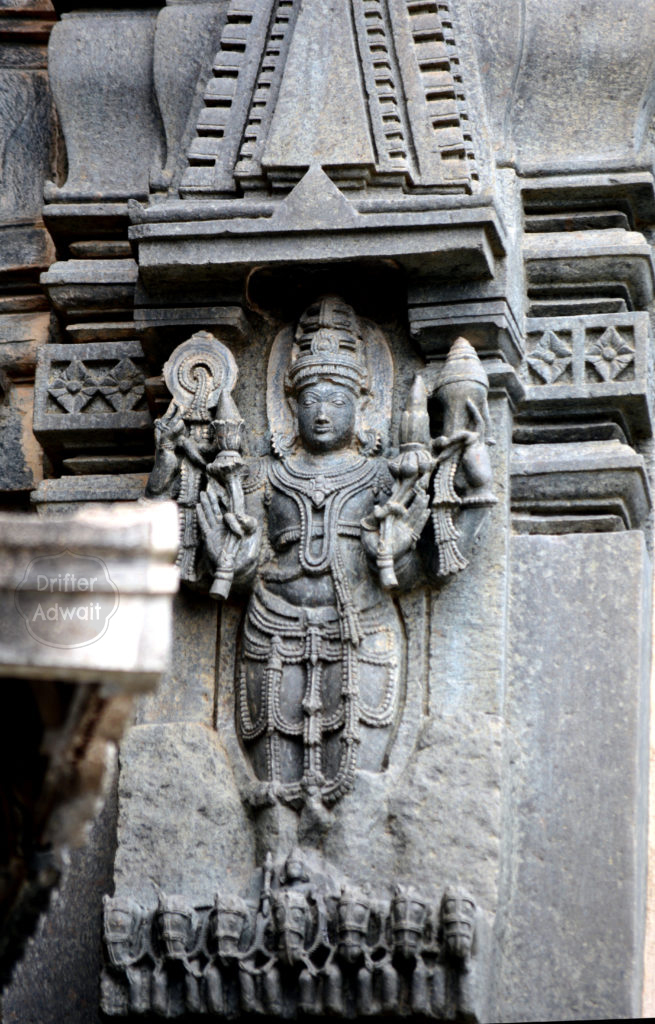
On left you can see three-headed Brahma, standing on Kirtimukha face. On the right, you will see Surya (Sun), riding on his chariot of seven horses. These seven horses represent seven days of the week. His chariot is being driven by his driver Aruna.
Bheema fighting Bhagadatta
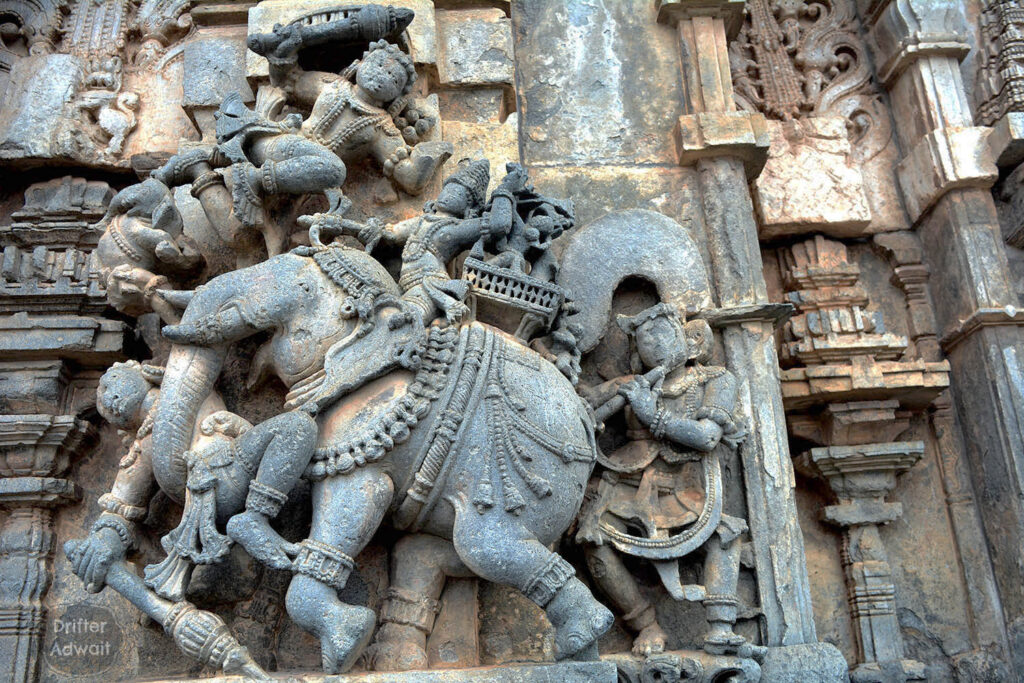
On the walls of Veer Narayana temple, which is at the backside of Chennakesava temple, you will find this brilliant masterpiece. Here, the fight between Bhagadatta and Bheema is sculpted in two steps. In fist, they have shown Bhima is getting trapped in the trunk of the elephant named Supratika of Bhagadatta. After his narrow escape, he is bouncing back, literally, on the Bhagadatta, sitting on the back of his legendary Elephant.
Gowardhan Giridhari
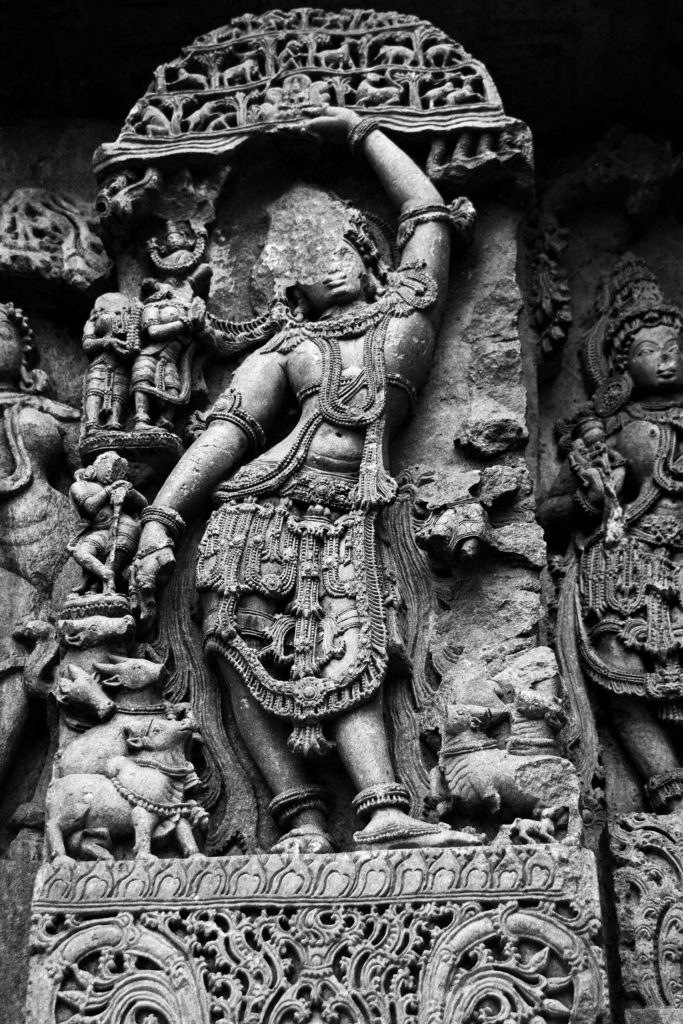
Here, Bhagwan Krishna is holding Govardhan mountain over his head with his left hand. You can see, lifting a mountain is nothing for him, as the way he is standing in a relaxed position. A careful look at the mountain will reveal the tiny details of the sculpture. You will see wild animals and trees, loaded with fruits and flowers on the mountain. Cows are gathering beneath the mountain, seeking the shelter, to be saved from continuous rain on Gokul. Cow herder is standing above the cows, railing on his staff. Residents of Gokul are praising Krishna for saving them from the wrath of Indra.
Saga of Vamana
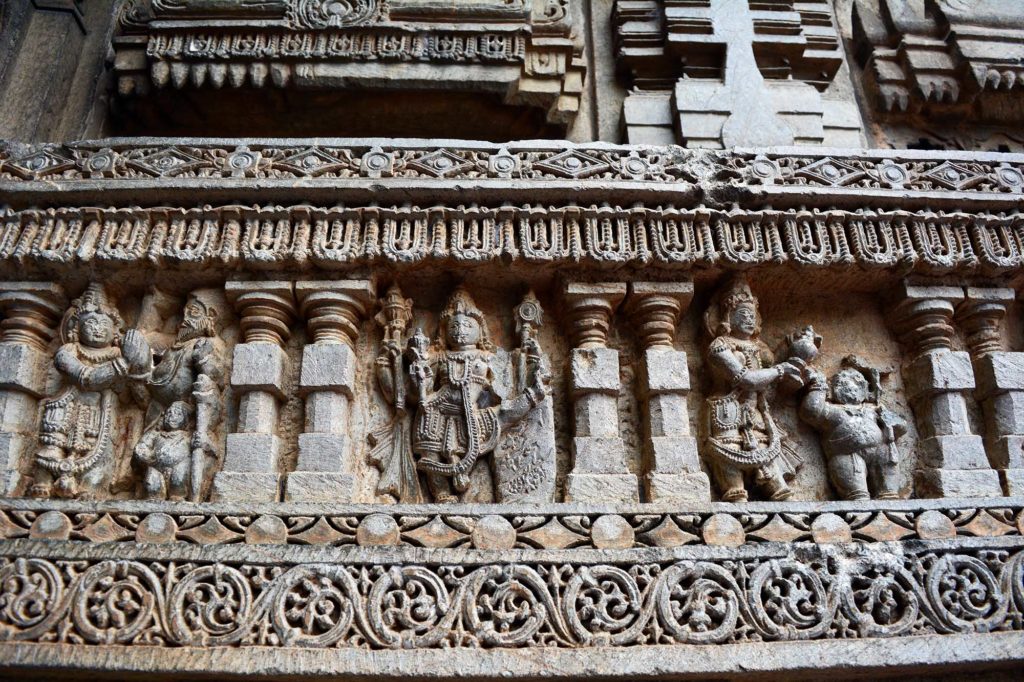
This is one of the miniature sculptures I found on my 3rd tour of
Hoysalas. On left, you can see Legendary Demon King Bali, the lord of
all worlds. He is saluting his teacher sage Guru Shukracharya. Besides
Shukracharya, you can see a pot-bellied dwarf named Vamana, holding a
long staff.
On right, you will see King Bali, pouring the sacred
water from the kettle, officiating the giveaway, in front of Vamana. In
the middle, you can see Vamana, in his Trivikrama form, occupying heaven
in one step.
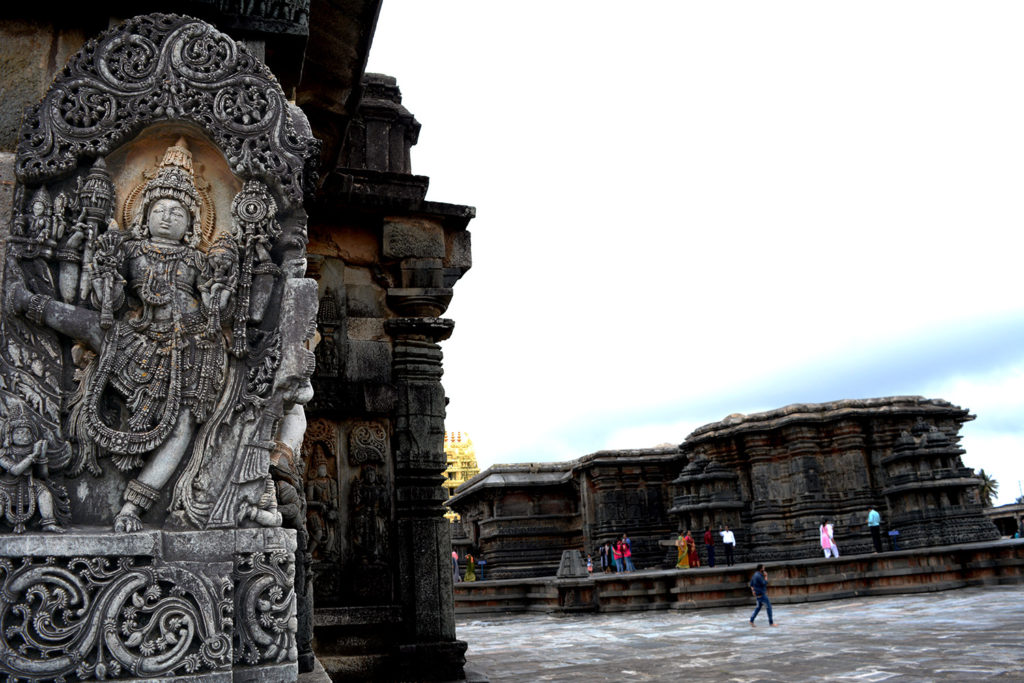
This idol is holding a mace, disc, lotus, and conch. If you are here with me till now, you know, that this idol belongs to Vishnu. After Bali giveaway three steps of land to dwarf Vamana, Vamana started expanding. In the first step, he occupied the entire heaven. This particular form is called as Trivikrama. Here, Vishnu is ready to take his second step. While doing so, his feet have reached Brahmalok. Brahma is pouring water on his feet, praising him. As Brahma is pouring water, the river is generated, You can see, stream, starting from Vishnu’s feet is getting bigger and bigger. If you look carefully, you will see fish, crocodiles, and turtles swimming in the river.
Sweet Sixteen and the Poison Girl
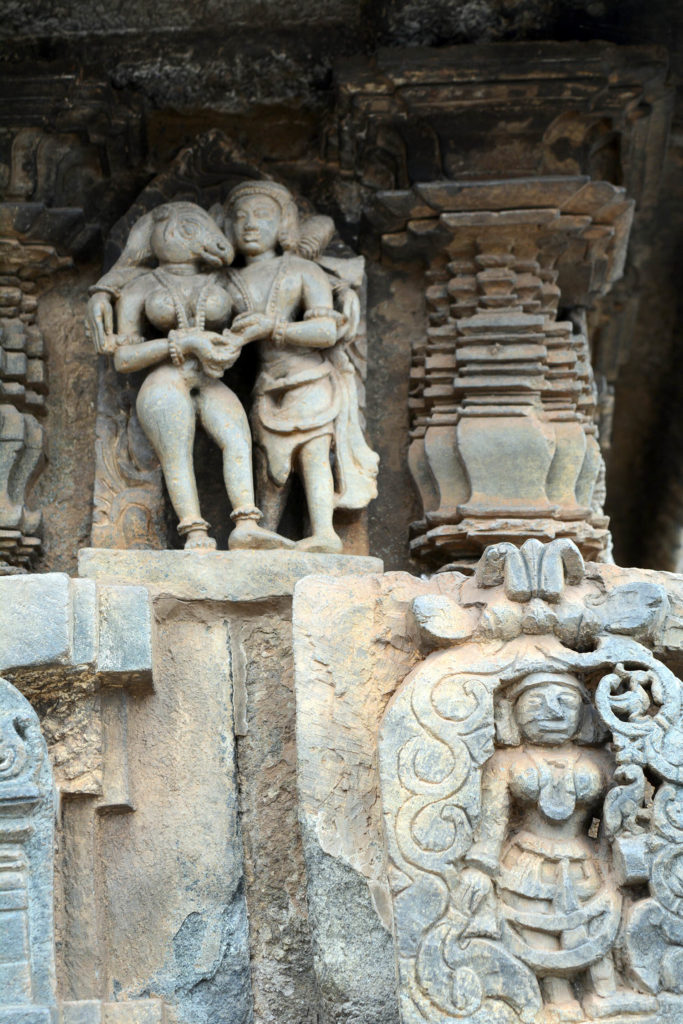
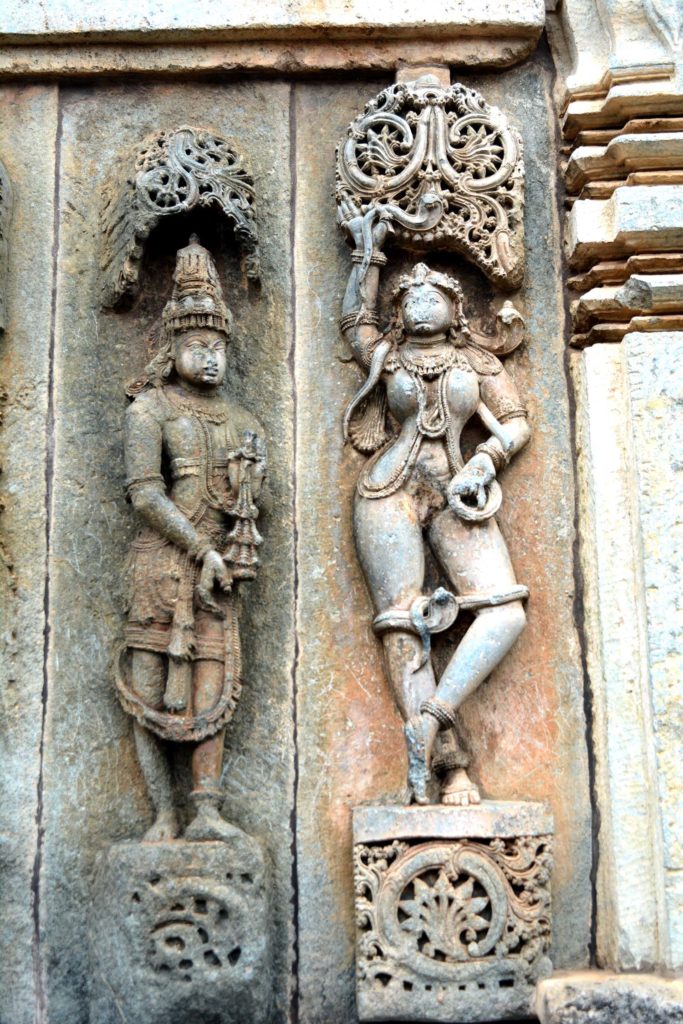
In the first pic, we can see a man, affectionately holding the hand
of a woman, with the head of a donkey. In Sanskrit, there is a saying
which goes something like this:
“Prapte Shodashe Varshe Gardhavi Bhavati Sundari”
Which
means, sixteen years is a delicate, yet funny age. Even a donkey looks
like a beautiful girl when you turn sixteen. This carving depicts a
young man, fallen hopelessly in love with a young woman, with the brain
of a donkey. But the real donkey is the young man, blinded by his
desires.
In the second picture, you can see a beautiful woman,
holding king cobras. In ancient times, while playing the game of
thrones, often these beautiful Vishakanyas (Poison girls) were set upon
to kill the King. That has been beautifully sculpted here.
Exam Ganesh
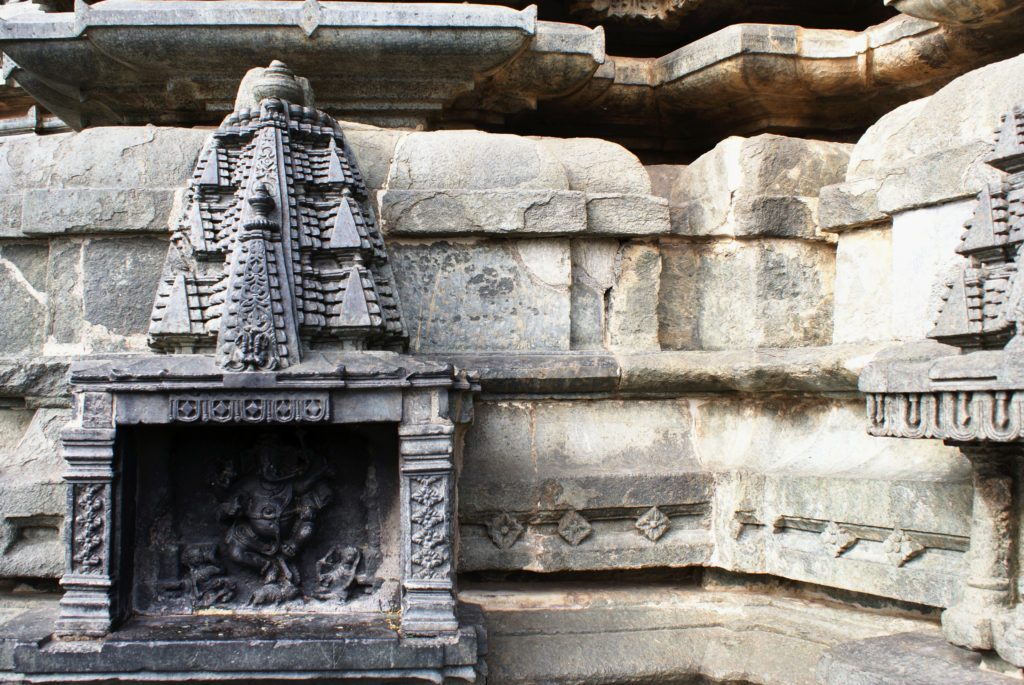
Students from Belur, pray to this Ganesha for passing grades.
It’s the most popular and busy Ganpati during April exam seasons.
Madanikas of Belur
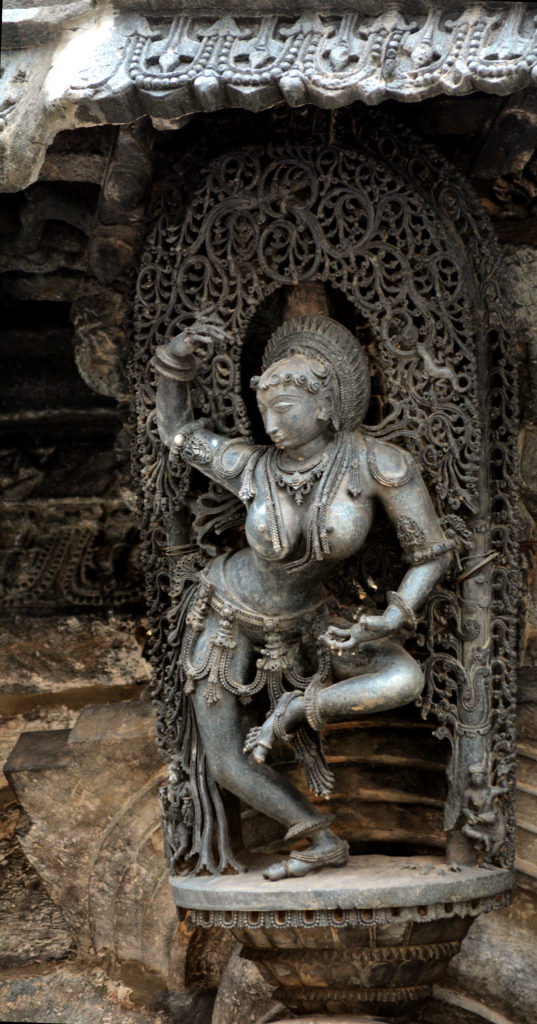
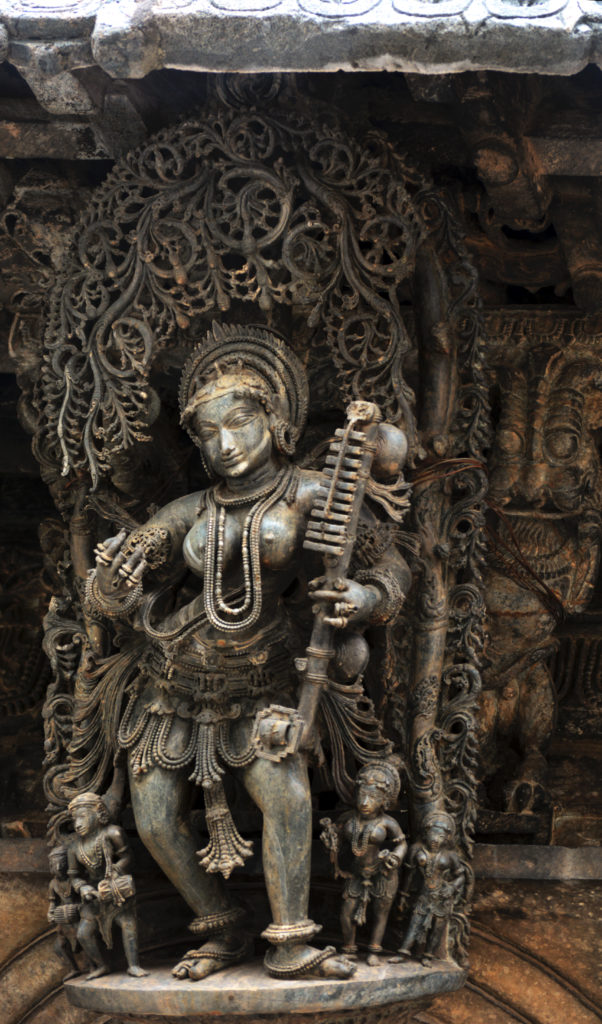
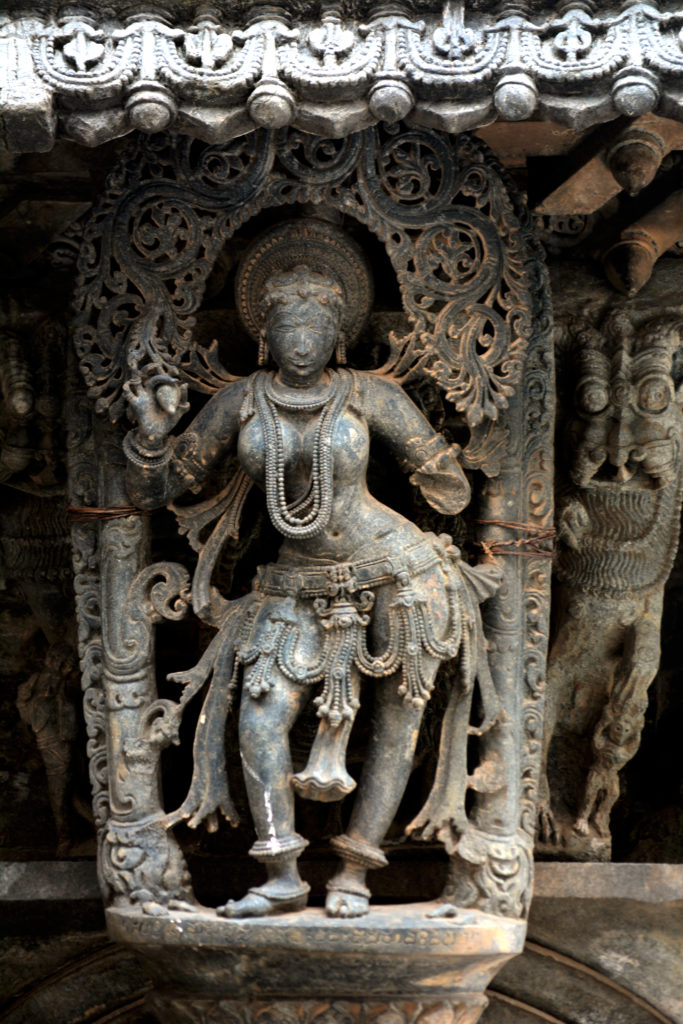
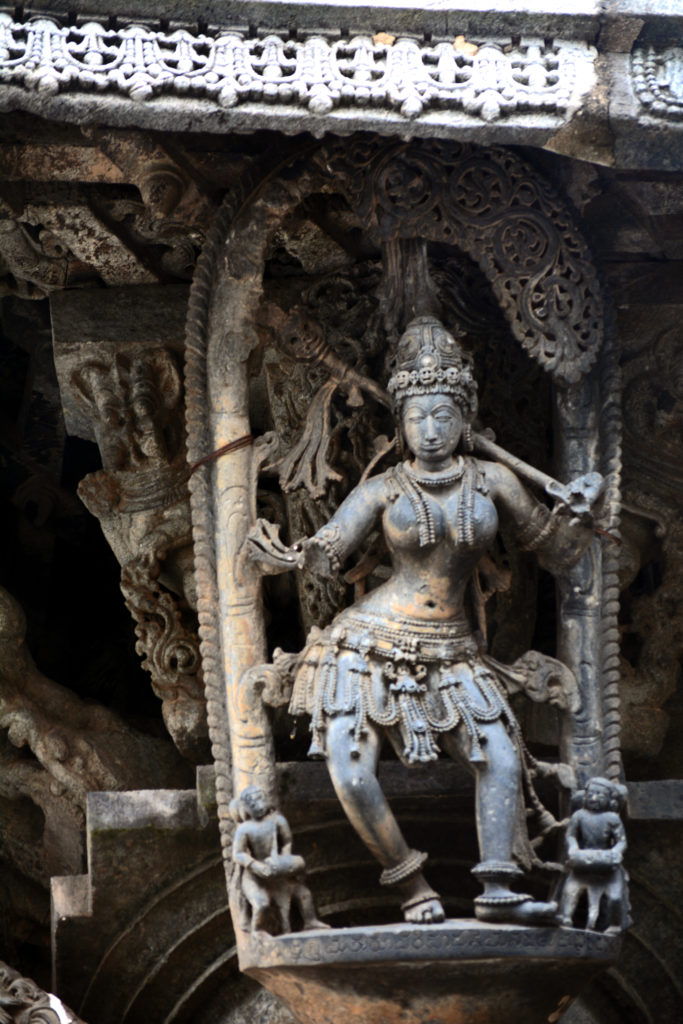
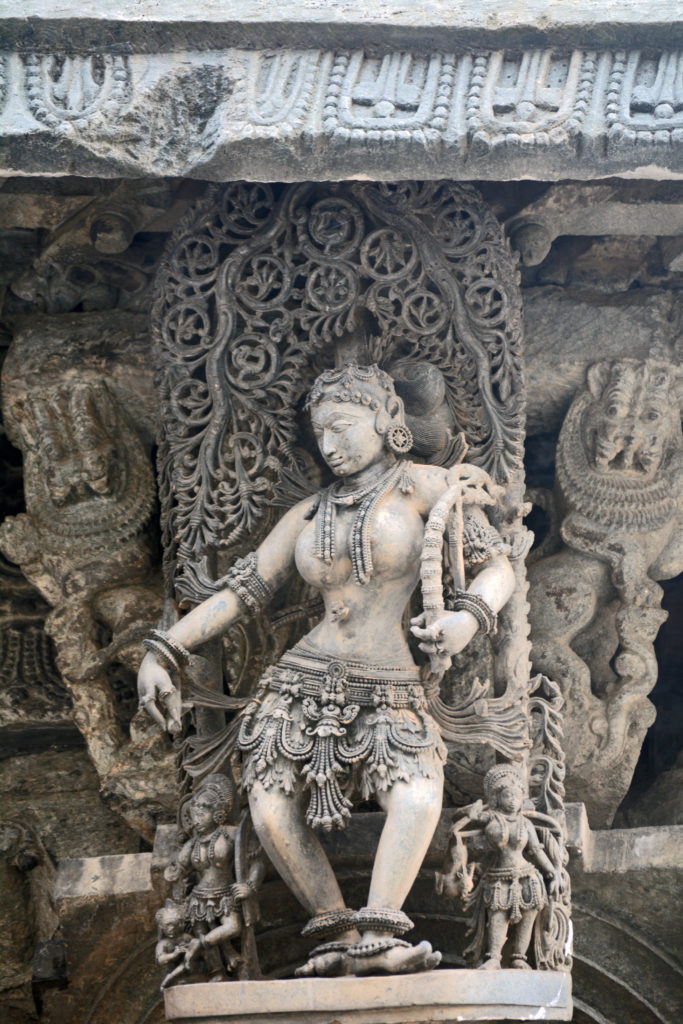
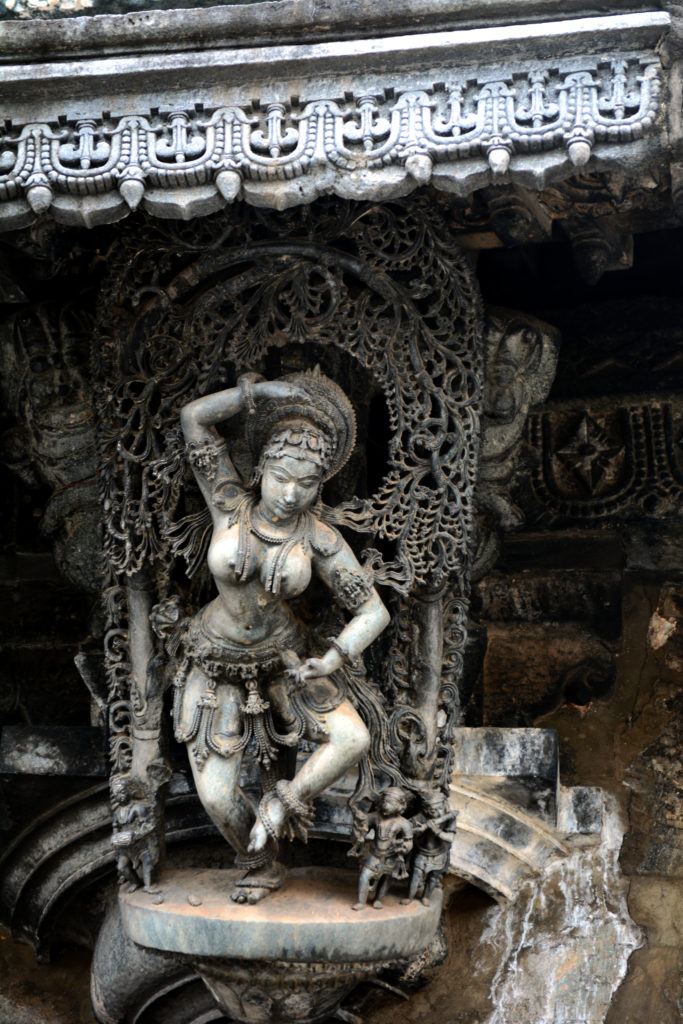
Ranganayaki Temple
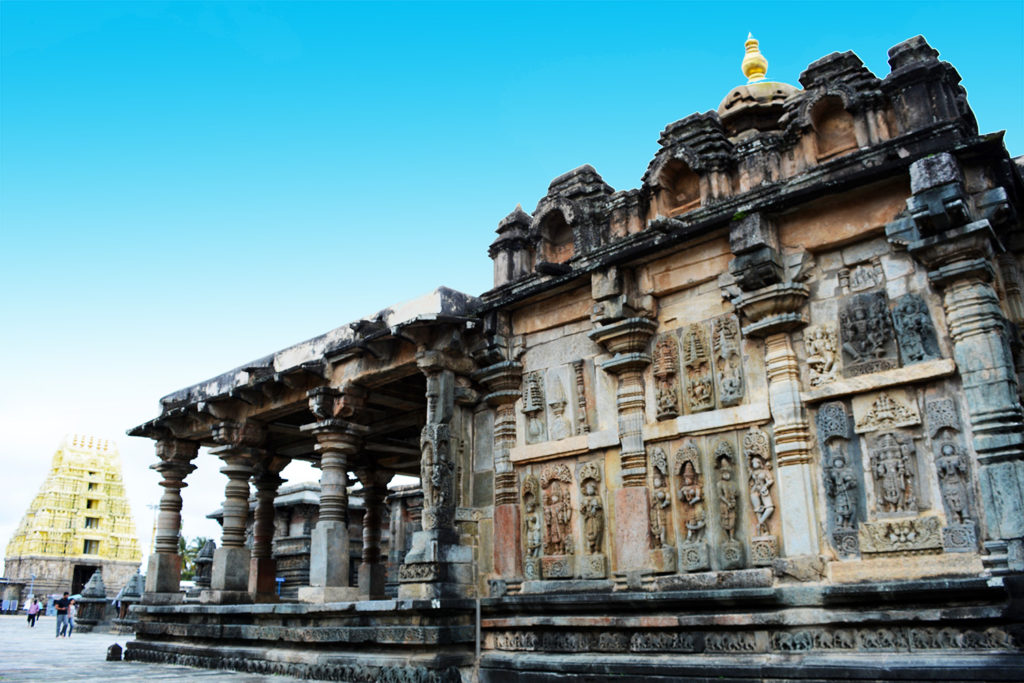
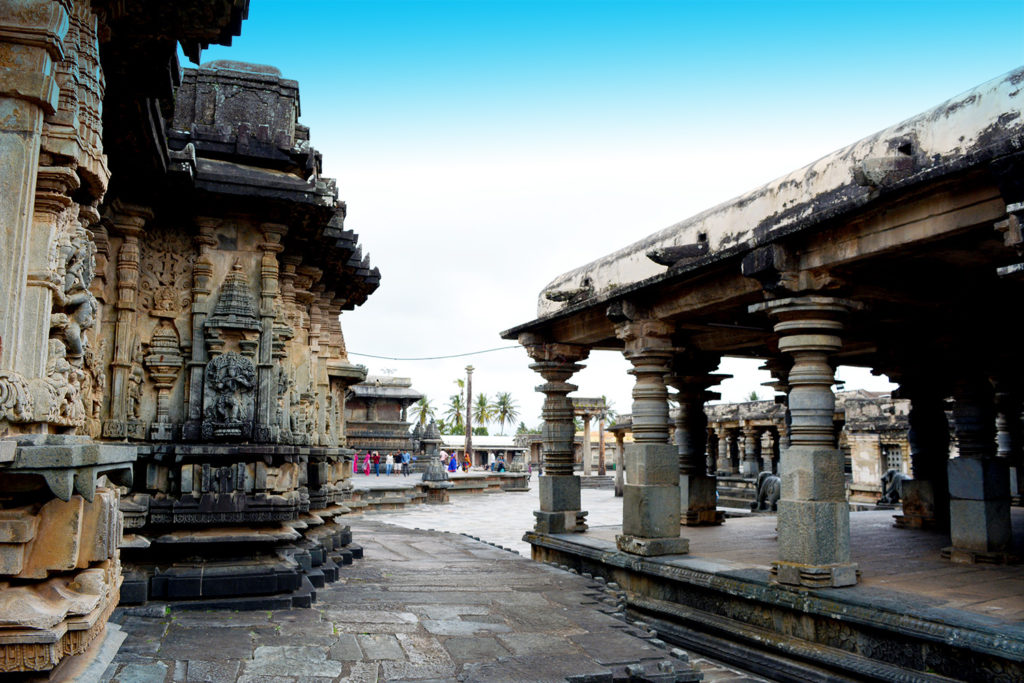
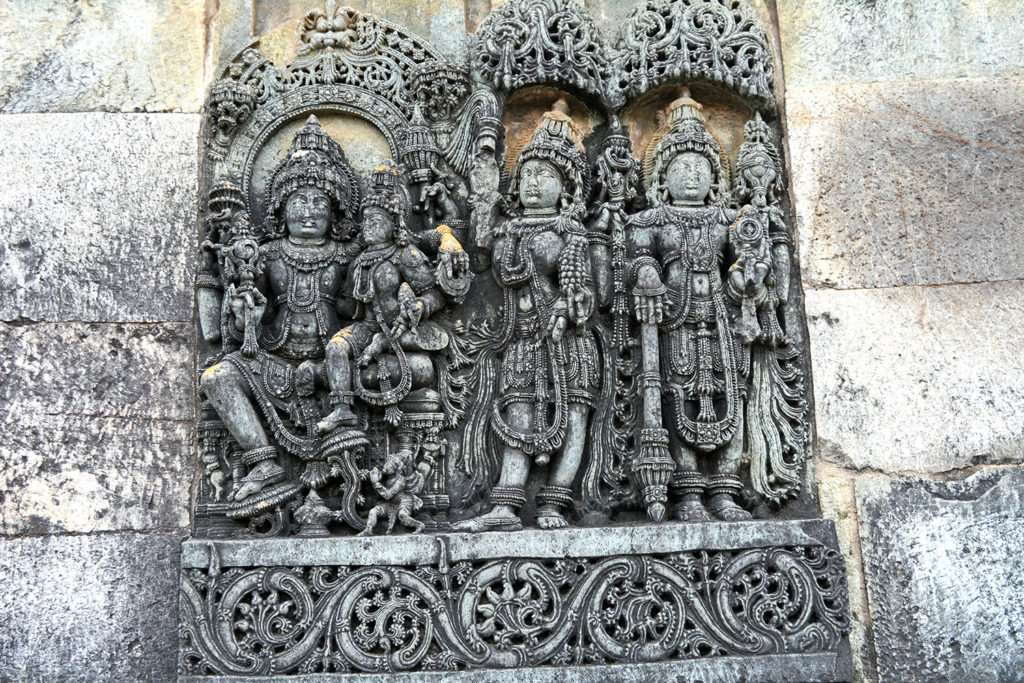
Located in the northwest direction of Kesava temple, Ranganayaki temple is one of the less explored buildings in the Belur courtyard. Unlike Chennakesava, it has a square-shaped platform on which tall walls have been giving support to many interesting sculptures for the last 800 years. This temple wall belongs to every sect of Vedas. Here, you can find sculptures related to Vaishnavism, Shaivism, Jainism, and the artwork belonging to Shaktism as well.
Contribution of temples in Indian Civilization
Even though only Hindu temples pay Taxes in India, many people say,
why build temples? why not build schools or hospitals? These questions
ignited the curiosity within me, that why these wise and just Kings kept
on building larger and larger temples? What was the contribution of
these places of worship in past society?
The answer is obvious. They
were much more than just places of worship. These temples were symbols
of victory, a pride place of the entire village to gather and reunion.
It was a source of spirituality.
Often, temples were built during
the days of draught and economical depression, to help citizens to earn
some food. They were the center of projects like irrigation, land
reclamation, and disaster relief, funded by the Kings, queens,
merchants, and politicians.
Bruhadeshwar temple in Tanjore has an
inscription, dating 1101, that there were about six hundred full-time
workers, apart from the priests, working in the temple.
In ancient
India, they were the safe-deposit boxes of the royal treasuries. Even,
some temples use to function as Banks, lending money to the needy, with
very nominal interest. That is one of the reasons, why, Islamic invaders
use to plunder temples again and again.
Many schools of many Hindu
sects were supported by these temples. A countless number of traditions
were kept alive for thousands of years by these schools. Royal patronage
would be given to such traditions, through temples.
It was the most sacred podium to present arts and literature, that
one has mastered, studying throughout his life. In ancient times,
markets were erected, surrounding temples. It uses to be a sanctuary for
sages, providing shelters to the travelers passing by. Even now,
innumerable temples feed the poor and the homeless.
Temples used to
be a place of justice, where village elders use to resolve legal matters
in front of the entire village. Even, it uses to be a lace of refuge,
during natural disasters or during political turmoil.
Each new
temple I see now, I have started to compare it with the Belur temple. To
compare it with the outer walls of Belur, only to be disappointed with
modern architects. Without having huge machinery, cement concrete,
electricity, or programmed computers, we created a masterpiece centuries
ago. All we can do is to preserve them.
First, I went there with the KSTDC tour and since then, I have been there at least four times, but yet, I have not seen the entire temple complex with satisfaction. Each time, I will find some intriguing detail, some info, some minute thing I have missed last time and the location keeps attracting me again and again, to mesmerize me, to awe me, to surprise me and to educate me. And I am pretty sure, Belur is not done with me either, it shall call me again, hopefully, sooner.
How to reach Belur?
🚗 Belur is 221 kilometers from Bangalore by road. Drive 200 KMs
towards Hassan, on MH75, and then take the right turn to reach Belur.
From Bangalore, you can reach Belur in about 3 hours on a good highway.
🚌 Frequent KSRTC buses are available from the Majestic bus stand, Bangalore to Belur Bus stand.
🚉 The nearest Railway station is Hassan, 20 KMs from Belur. From
Hassan, you can get plenty of local buses as well as private vehicles.
🚀 Nearest Airport is Bangalore Airport, 222 kilometers from Belur.
🚙 KSTDC arranges one-day tour buses from Bangalore, covering Shravan Belgol, Belur and Halebeedu, and Back to Bangalore. You can book these tours here.
Places to Stay in Belur
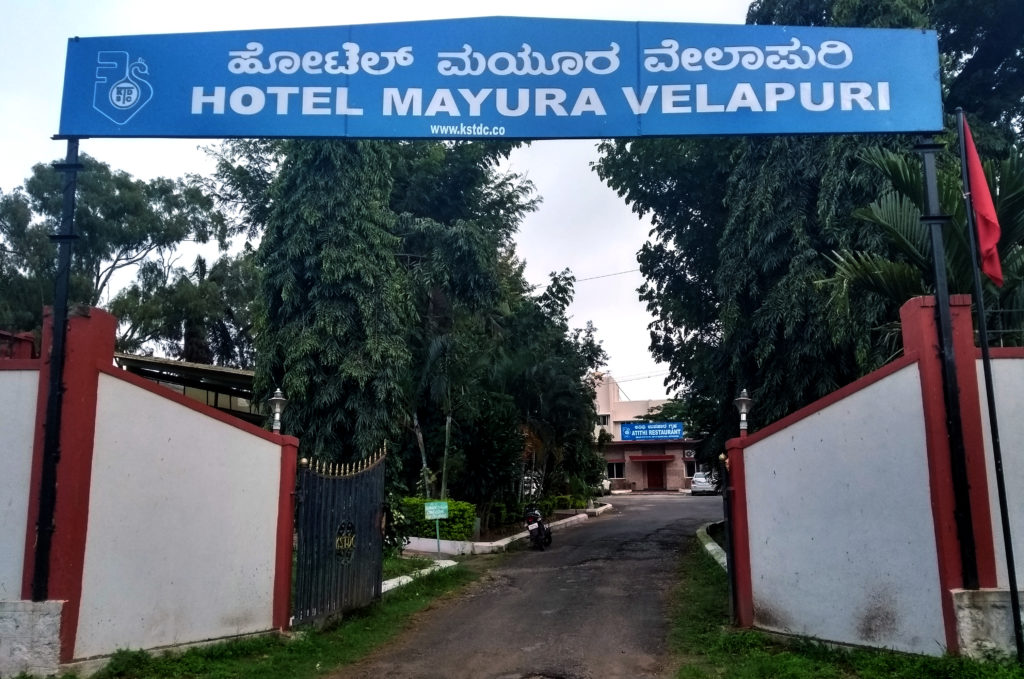
🏨 There are several hotels nearby to stay in Belur, but the first
choice is KSTDC Belur (Hotel Mayura Velapuri). The room charges range
from 1599 to 3099 per night. They provide decent food options for
breakfast, Lunch, and Dinner.
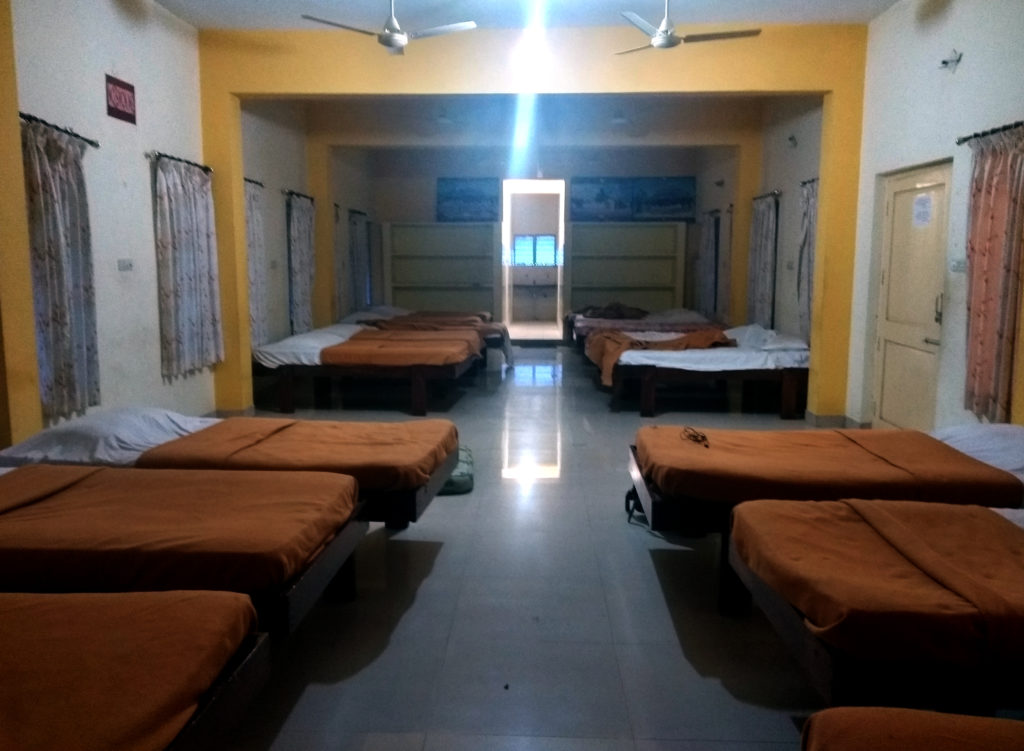
🛌 They also have decent dormitories,
Rs.250 per bed per night, which is a fun idea for a large family or solo
travelers on a tight budget.
Book Belur KSTDC hotel here.
References:
1. History of Karnataka (History, Administration & Culture), by I. M. Muthanna, Published by Usha Press, Mysore City, 1962
2. Glories of Beluru and Halebeedu, by Dr. Neelkanth
Kote, Published by Dr. Neelkanth Kote.
3.
Epigraphica Carnatica, by Benjamin Lewis Rice, Director of the Mysore
Archaeological Department, 1894 to 1905, published by Rice, R.
Narsimhachar.

.JPG)

.jpg)

No comments:
Post a Comment
Note: Only a member of this blog may post a comment.