Welcome, time-travelers! It’s your friendly neighborhood history nerd, Adwait, here to take you on a humorous journey through the centuries-old Hoysaleshwara Temple in Halebidu.
Prepare to be awestruck by the intricate Hoysala Vesara architecture, and stunning black stone sculptures that adorn this magnificent temple. It’s so beautiful, it’ll make your heart skip a beat and your selfie game go through the roof!
Not to brag, but this temple has been standing for eight centuries and still looks as stunning as ever. I mean, I can’t even keep a houseplant alive for eight days, let alone a whole temple! And the carvings? They’re so detailed and intricate, they’ll make you question whether ancient artisans were actually wizards in disguise. So, let’s buckle up and take a ride through history to explore the beauty of Hoysaleshwara Temple, the jewel of Halebidu! (Disclaimer: No actual time travel involved. Sorry, Doc Brown.)
1940 France. Dependable Maginot line was wrecked by brutal German
Blitzkrieg. Juggernaut of Nazi Germany had reached Paris. But before the
Louvre gets destroyed by Luftwaffe bombings, the museum staff had
already shifted more than four thousand artifacts to secret places.
14th-century Dwarsamudra was not so fortunate. Later generations would
call it as Halebidu-The Destroyed city.
Hoysala Empire History:
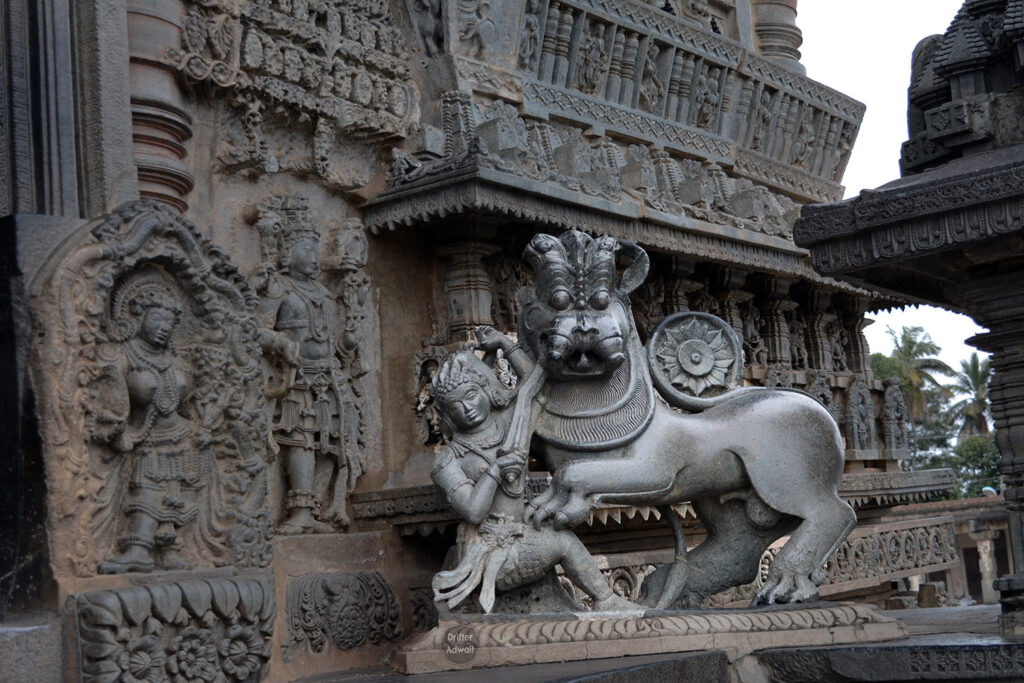
Hoysalas were Kannada Dynasties, who ruled southern India from the 10th to 14th centuries. They were the prominent family in Southern Karnataka, Gradually rose to power in 1116 AD. They claimed to be Chandravanshi Yadavas. A young man named Sala killed a lion with a sword and became the mighty Hoysala King, the founder of the dynasty. Later, by taking advantage of the ongoing clashes between Cholas and Chalukyas, he rose to power quickly, under the supremacy of western Chalukyas, in initial days.
Many inscriptions have been found from Solapur, to Tanjaore, and from Kodagu to Arcot, praising the Hoysalas. While collaborating with Seunas and Yadavas, they brought down the Chalukya empire to its knees. Later Hoysala Kings collaborated treaty with Cholas. While Cholas were busy expanding their territories, Hoysala concentrated on ruling the fertile Karnataka, prospering it.
Many legendary Kings ruled during the Hoysala dynasties, such as
Sala, Ballala, Narsimha, and Vishnuvardhana. In the beginnings, Hoysalas
were Jain, later, they acquired Shaivism. VishnuVardhana king carried
military expansions, defeating Pandyas and Cholas on Various fronts. He
reduced the Islamic devastation by freeing Mangalore from the grasps of
Arabs.
By overpowering Kadambas from Goa, they tried to resist the
Muslim Invasion as well. In Vishnuvardhana’s time, the capital was
shifted from Belapura (Belur) to Dwarasamudra (Halebeedu). Later
additions were made by the followers such as Ballala II and VeerBallala,
expanding the Kingdom. Many temples with marvelous architecture were
built as a celebration of the Victory in battlefields. During the rule
of Ballala III succeeded King Ramanatha Malik Kafur, commander in chief
of Allaudin Khalji, attacked and plunder the entire city, twice, and
decimated it to the grounds. He plundered all the wealth from prosperous
Hoysala empire and sent it to Delhi. Due to the defeat, Hoysala empire
now constrained to few districts accepting the suzerainty of Delhi
throne/
Hoysaleshwara Temple:
James Fergusson was a well known Architectural historian in the 19th century. He sums up the temple very astutely. He says, “There are many buildings in India which are unsurpassed for delicacy and detail, but the temples at Belur and Halebeedu surpass even these. For freedom of handling and richness of fancy. The amount of labor, which each facet of this porch displays is such, as I believe never was bestowed on any surface of equal extent in any building of the world”.
Hoysaleshwara Temple History:
This amazing architecture, a house of Mahadev was built by the master
architect Kedaraja, under the rule of Narsimha I. Construction started
in 1121 and finished in 1160. Sculptures describe this house of the lord
as “All that is wild in human faith or warm in human feeling is found
portrayed on these walls”. Even though temple is dedicated to Lord
Shiva, Vaishnavism and Jainism also have been given a place here,
erasing the theory of the clashes between these sects of Hinduism, often
portrayed by leftist historians.
Halebeedu Temple Architecture:
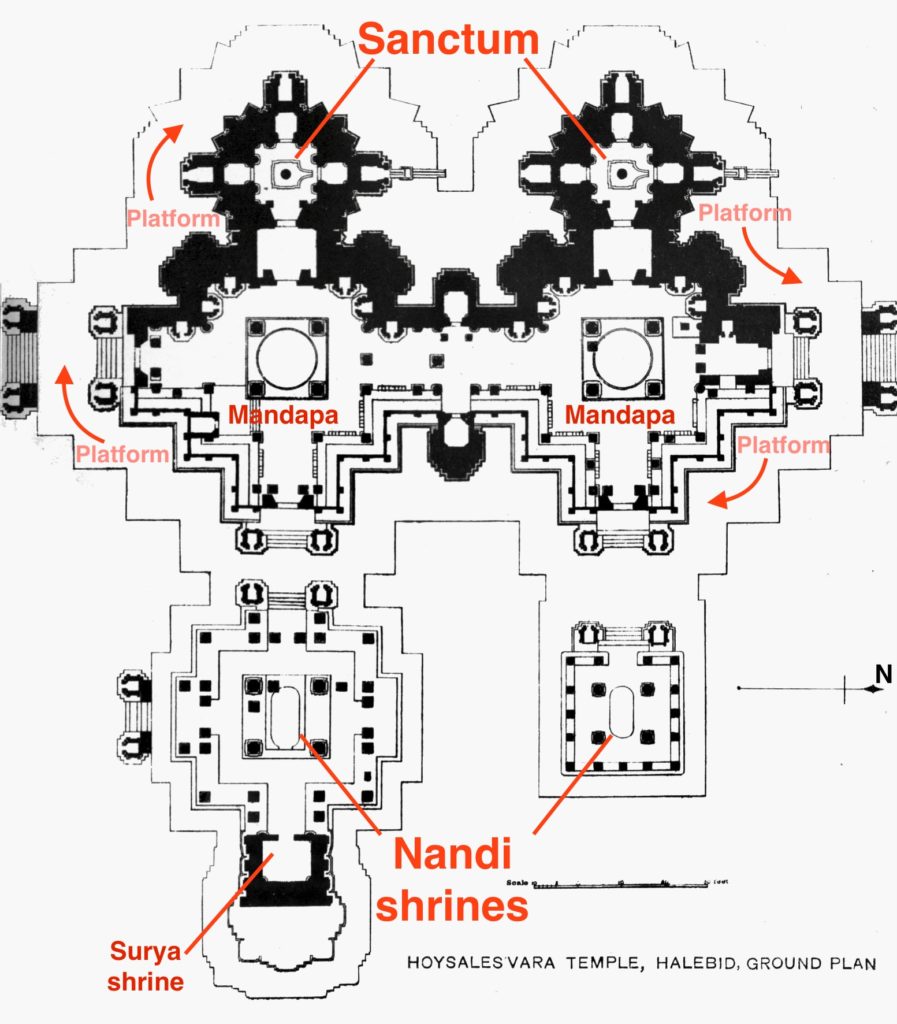
Halebidu temple is actually twin temple connected with a corridor, where both sanctum sanatoriums have shiv lingams with Huge Bull (Nandi) shrines in front of each. One temple is for Hoysaleshwar King, and the other is for Queen-Shantala Devi, both being passionate devotees of Lord Shiva. The entire structure is elevated on the platform and carved out of Soapstone or, Chloritic Schist. Towers on the temples have been destroyed. But whatever is left, is enough to blow your mind…
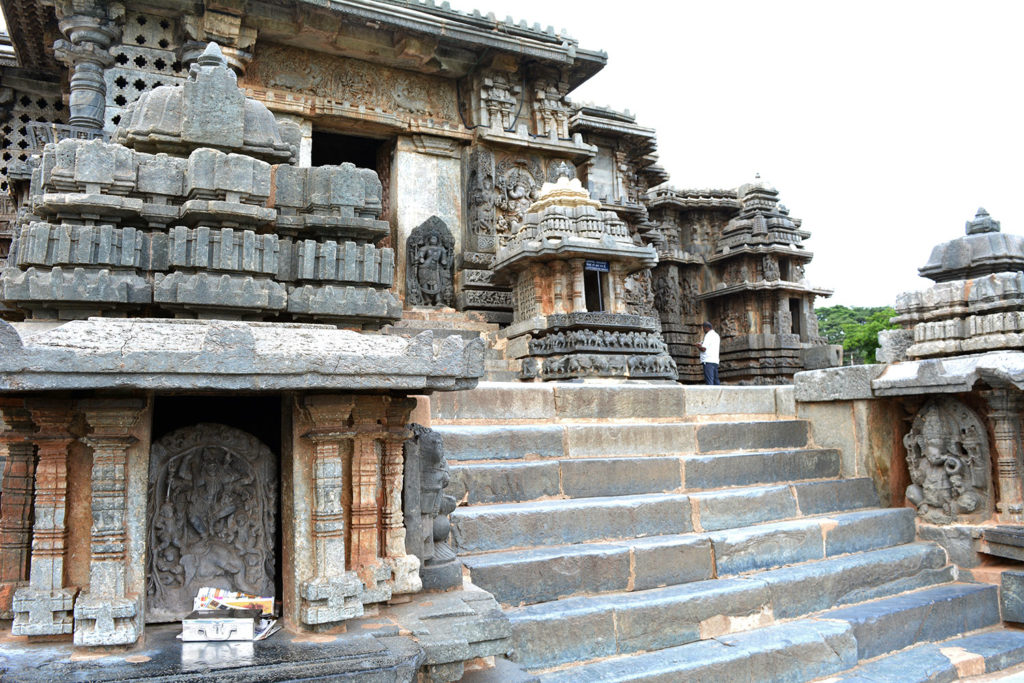
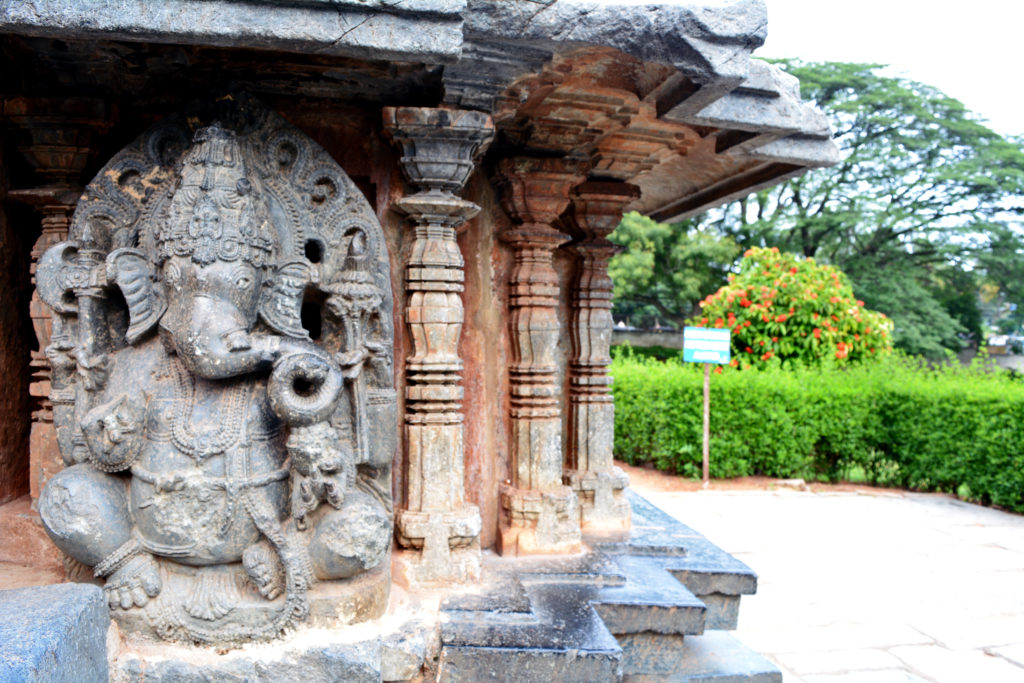
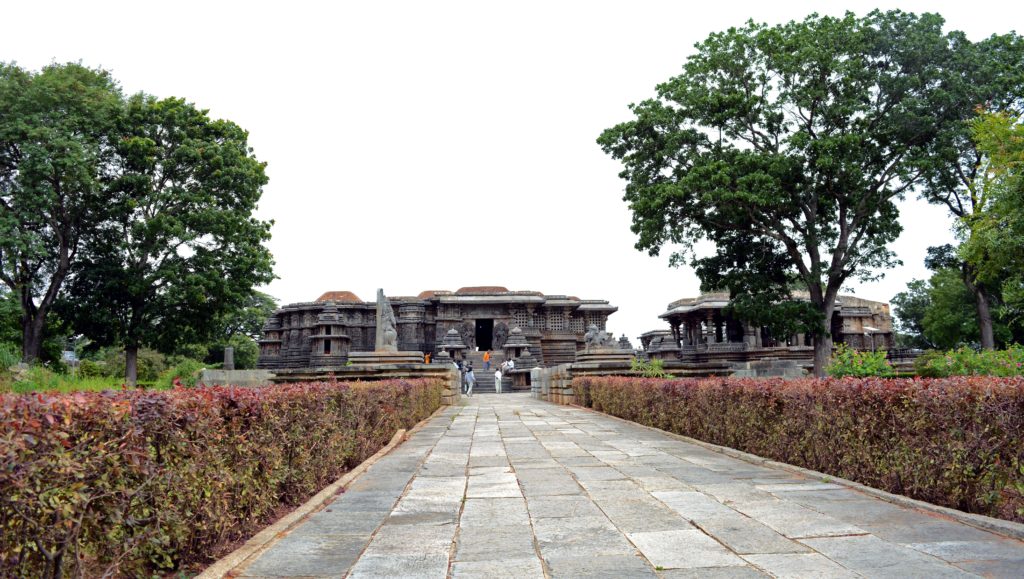
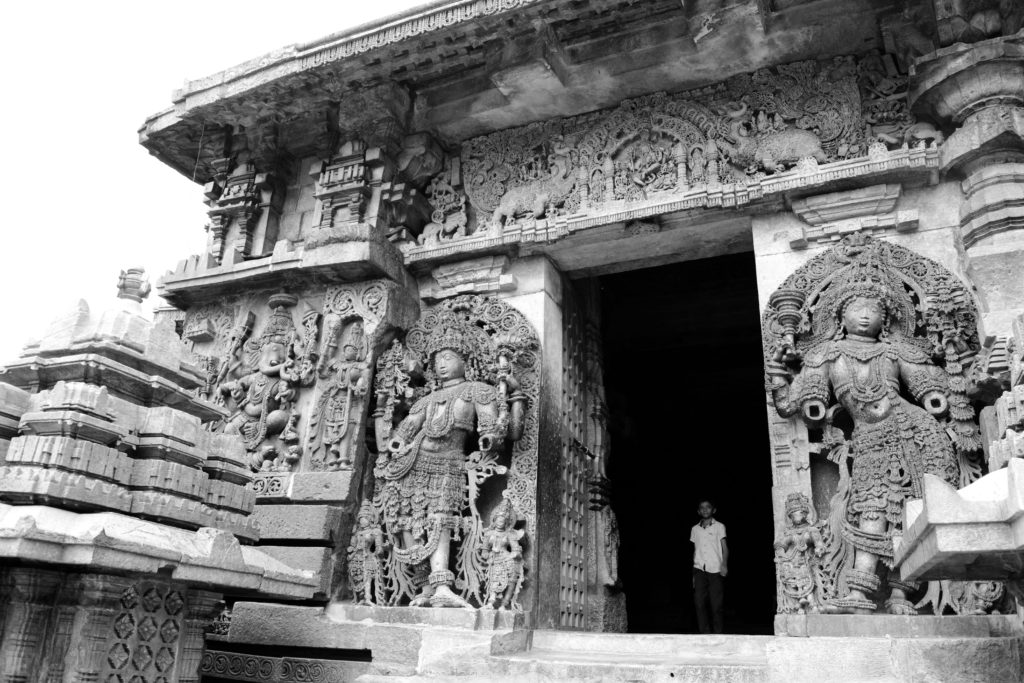
After you walk the path along with green lawns, you will reach the temple building. Approach the temple, keeping the shoes outside. Ganesha will greet you from your right hand and Bhairava on your left. Usually, Veer and Bhadra will be guarding the Mahadev Shrine door as per the tradition goes. But here, as they have been vandalized, some other broken idols have been kept here to fill their places. Keep the four small shrines on steps behind, you will find yourself inside the hall.
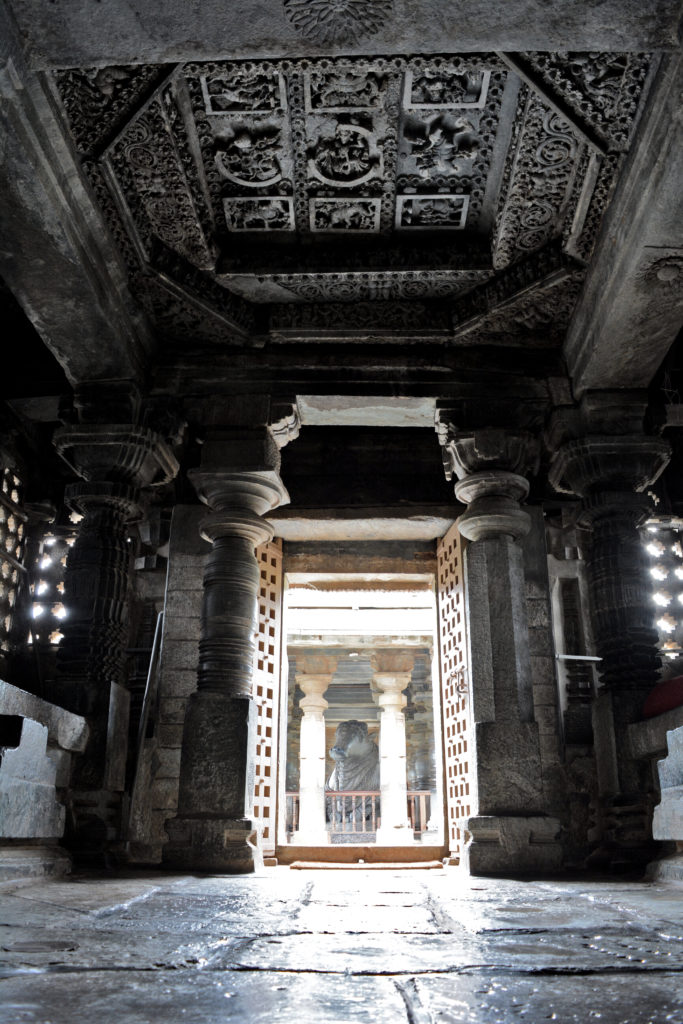
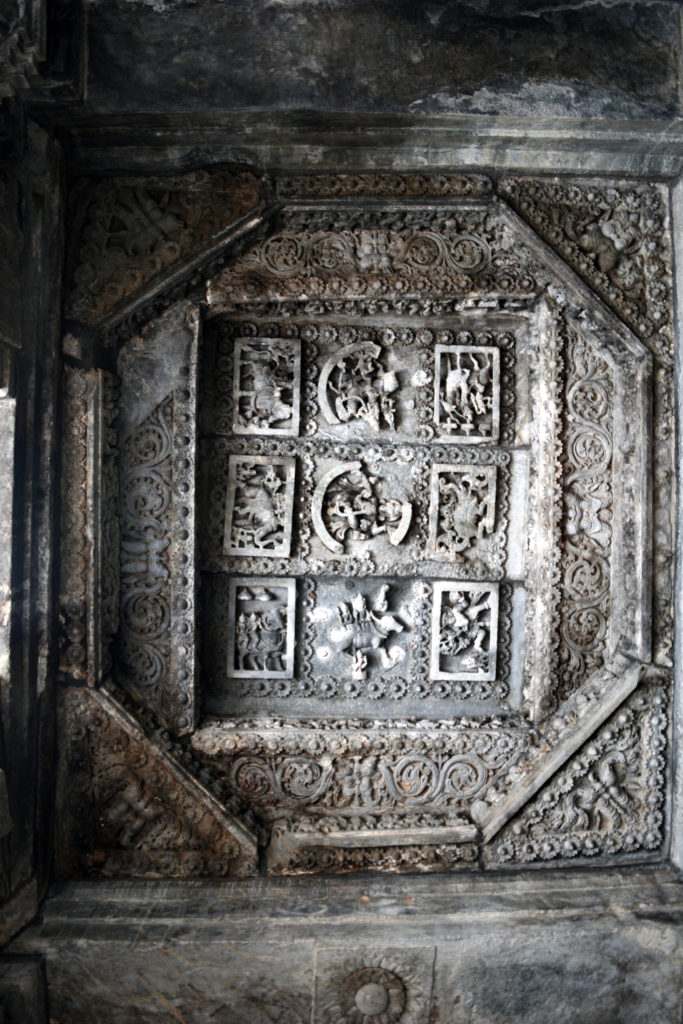
The entire temple has been held aloof for generations by lathe operated pillars. They are so smooth and so sharp, that your fingers can get a nasty cut. Windows with stone mesh allow enough sunlight to roam inside, just enough so that you can see your reflection in those smooth black pillars. The roof has some ridiculous sculpting and carvings, that your neck starts to sore after a while. Not an inch of the roof has been left blank without carvings. Shantaleshwara roof has Ashta Digpalas, or, Gods of eight directions engraved on the fall ceiling and Mahadev in Dancing pose in the middle of them. Each and every inch of the wall is so much heavily packed with Vedic knowledge, that you start to feel like one day is not enough to explore this temple.
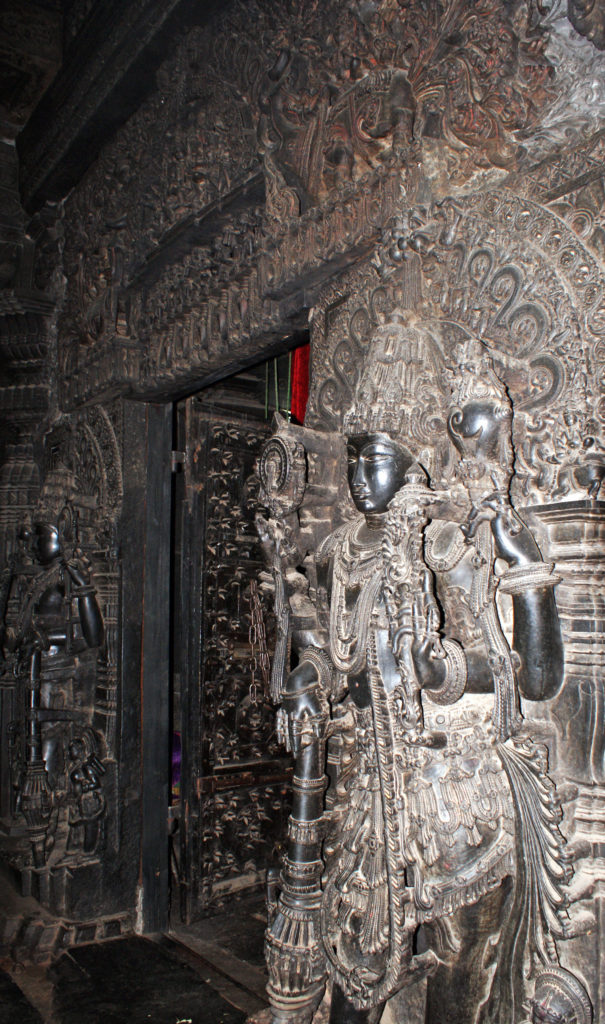
Where pillars meet the roof, celestial Nymphs are hidden, teasing you
as they are out of your reach. Shiva Lingam is guarded by life-sized,
scary-looking Veer and Bhadra statues. Veer-Bhadra duo is brilliantly
decorated with laser-cut detailed ornaments. The details are so minute,
that they are wearing a necklace containing hundreds of small human
skulls, these skulls are like real skulls-empty from inside. A small
straw inserted into its eye will come out from its mouth. Both sanctum
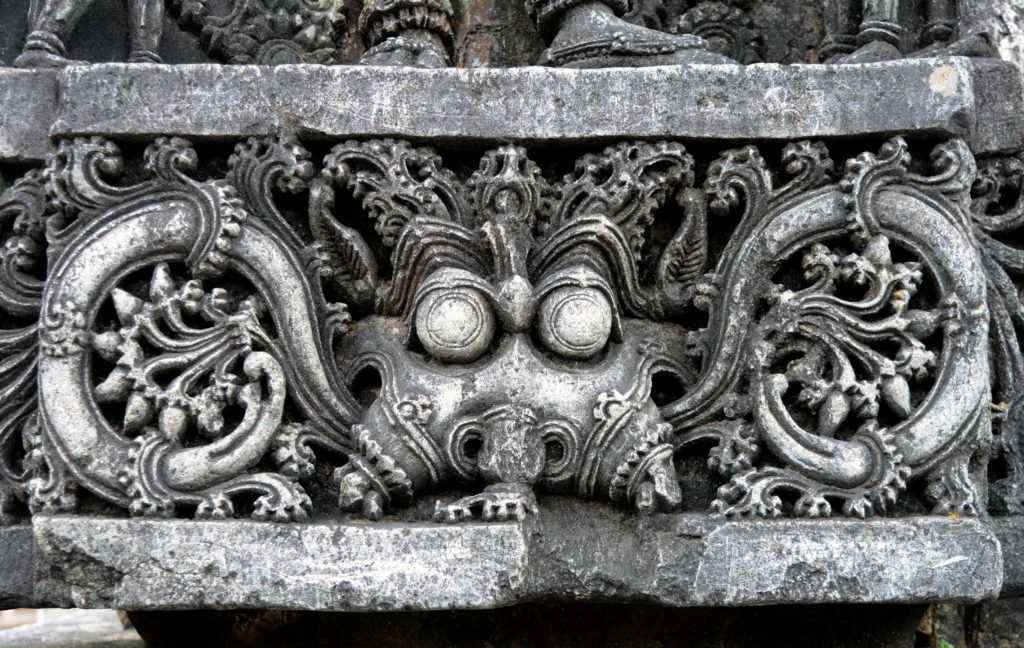
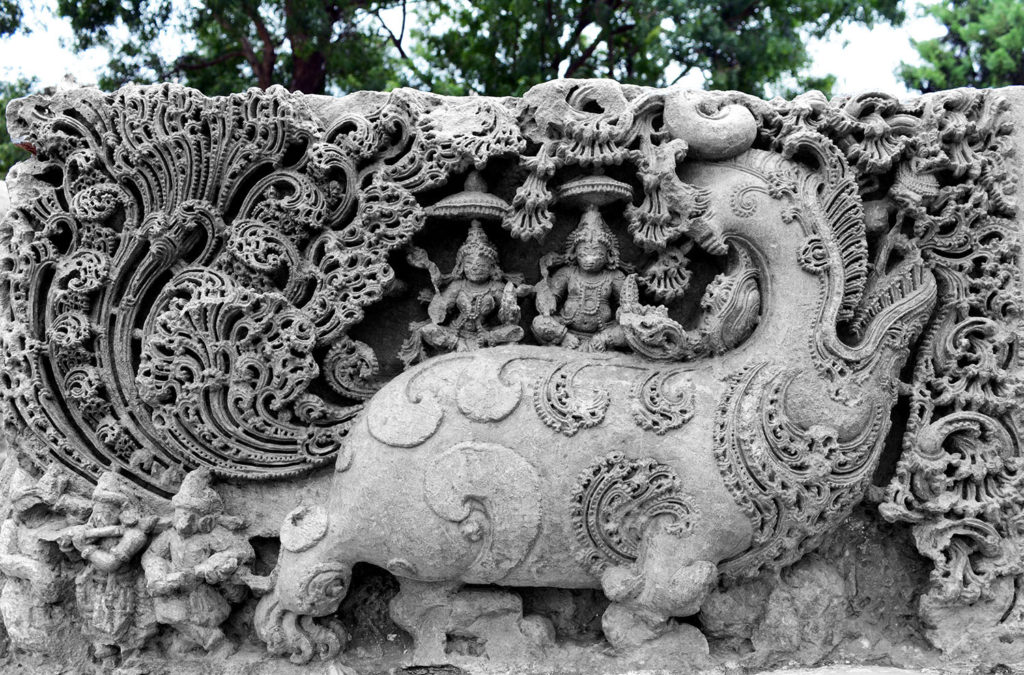
are decorated with marvelous Toranas or door brackets. Looking
carefully, you can see animals like Makara, Shardula, Nandi, and
Kirtimukha adding beauty to the Garbha Torana.
Bow in front of twin sanatoriums submerged in dark halls and get out of the temple.
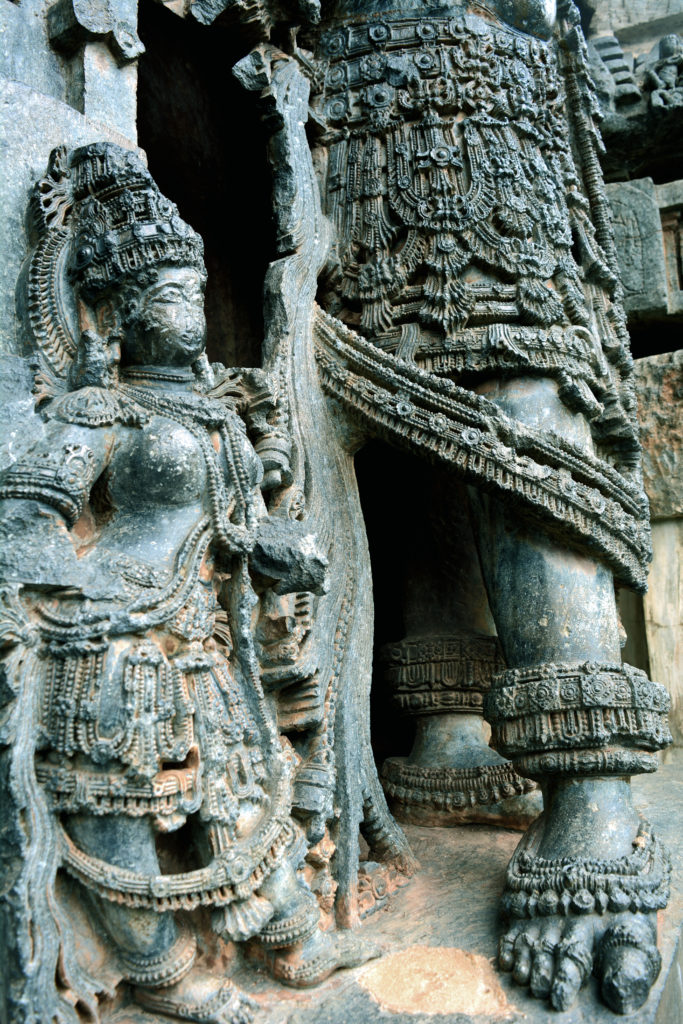
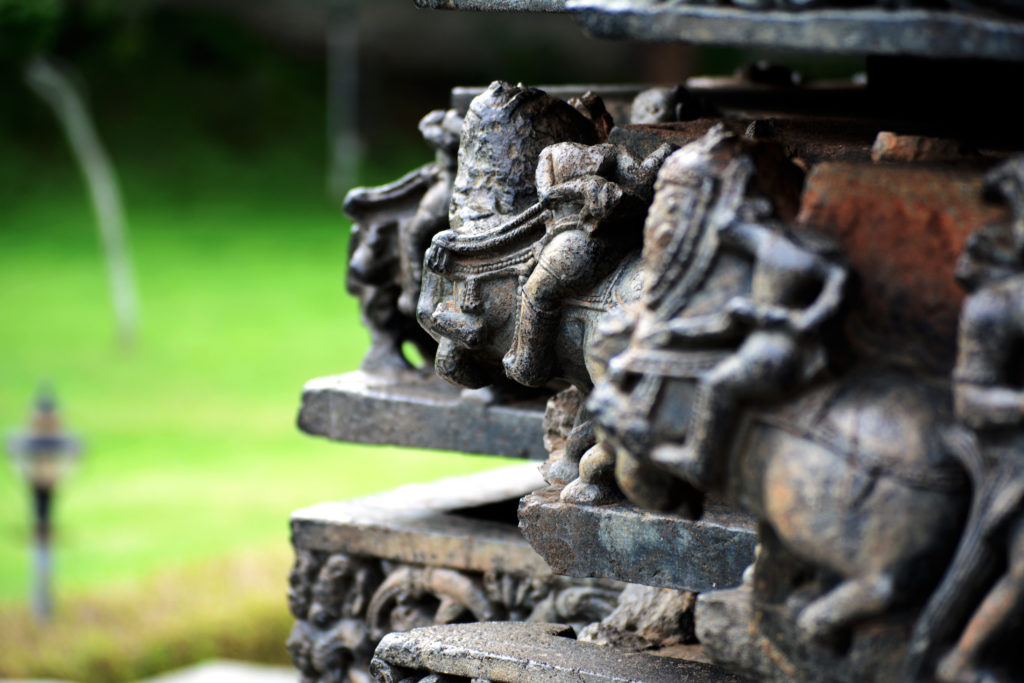
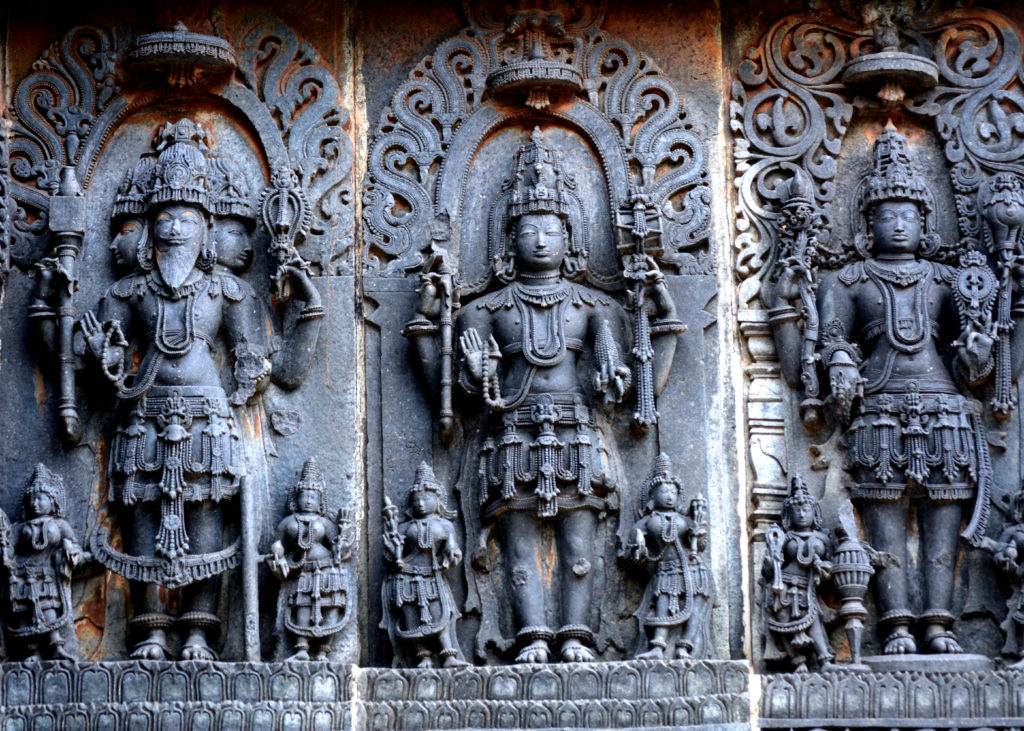
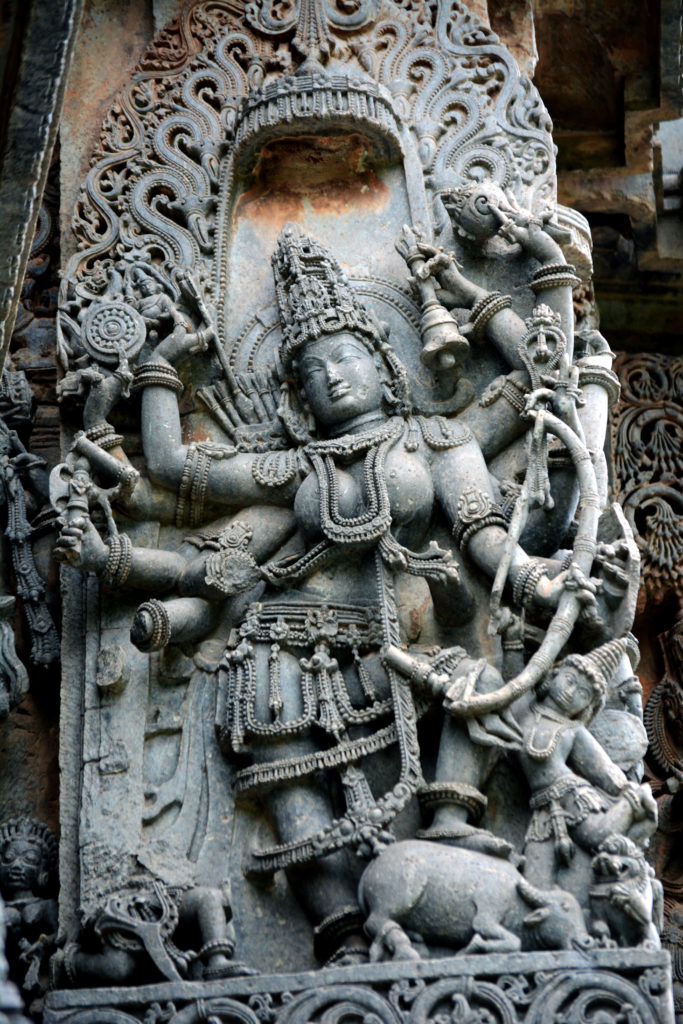
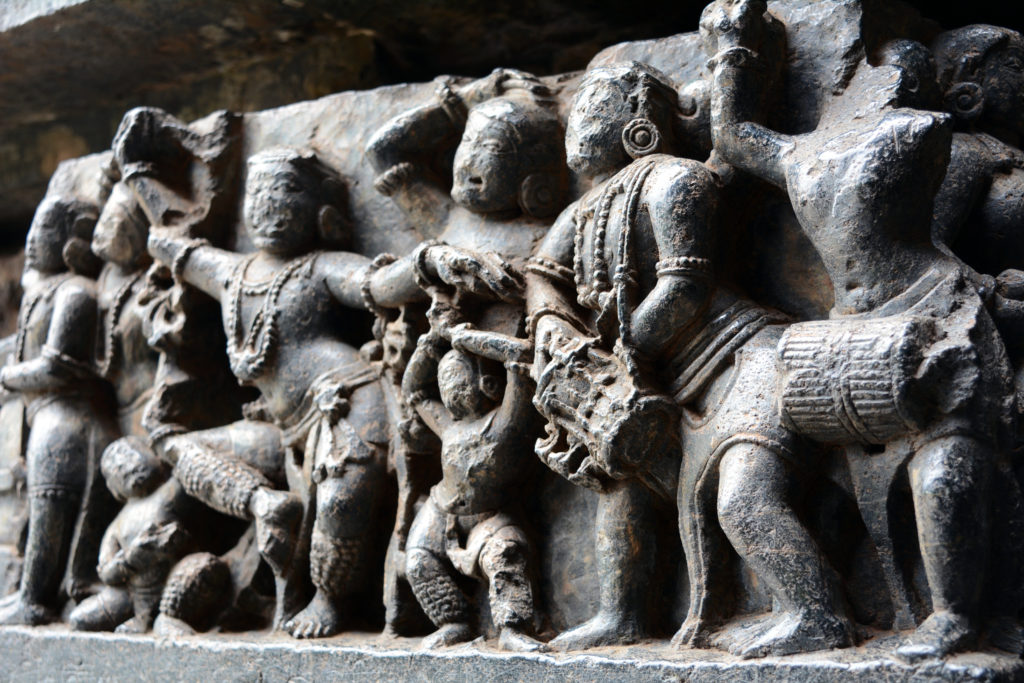
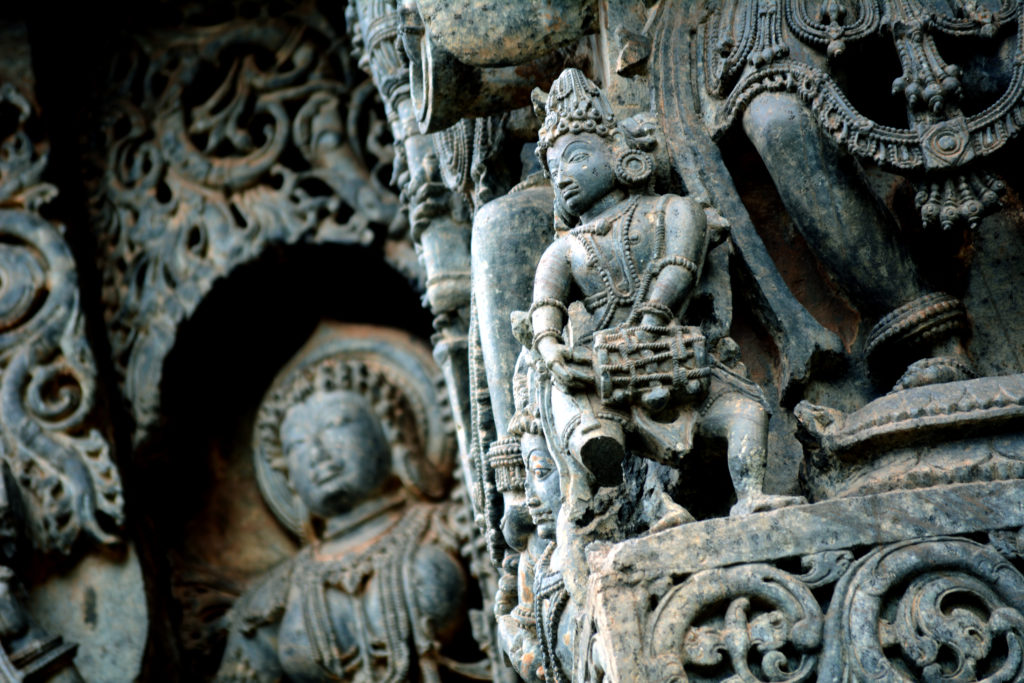
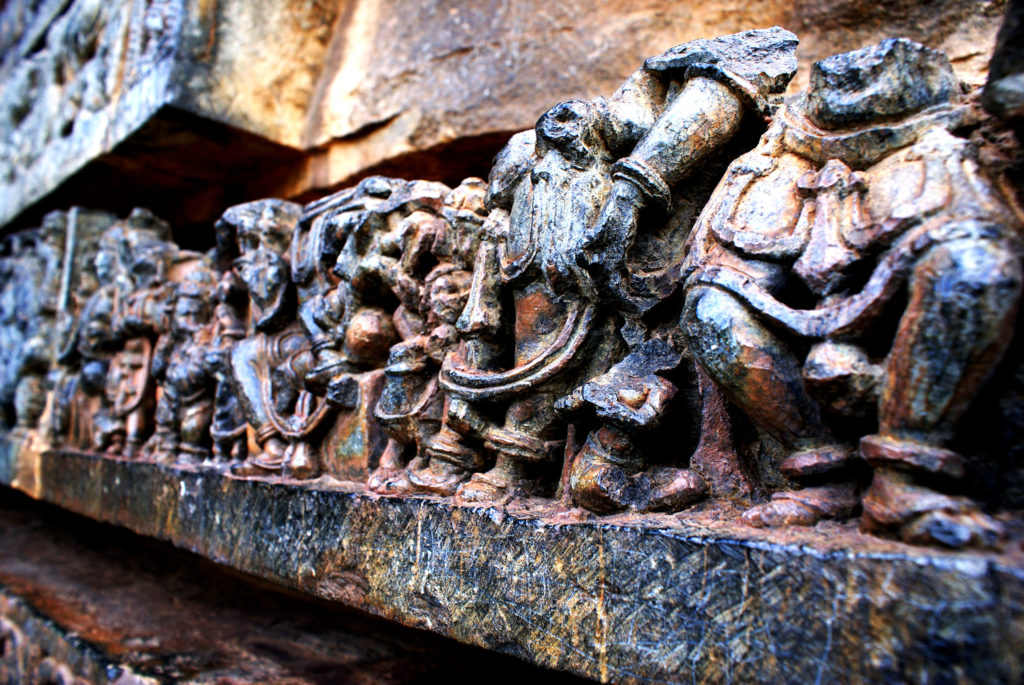
Outer walls are ridiculously decorated with animals, gods, and epics.
The base layer is made up of one feet elephants, above that is a lion
layer, then horse rider layer, then dancing men layer and then Makara
layer. Elephants represent the stability and strength of the empire.
While lions represent valor, Horses represent agility. Makara is an
animal from Purana, representing the characteristics of the ideal
soldier.
Even though each bottom layer contains thousands of the
same animals, not a single animal is repeated elsewhere. There will be
some tiny difference between two elephants or two lions if you can find
them.
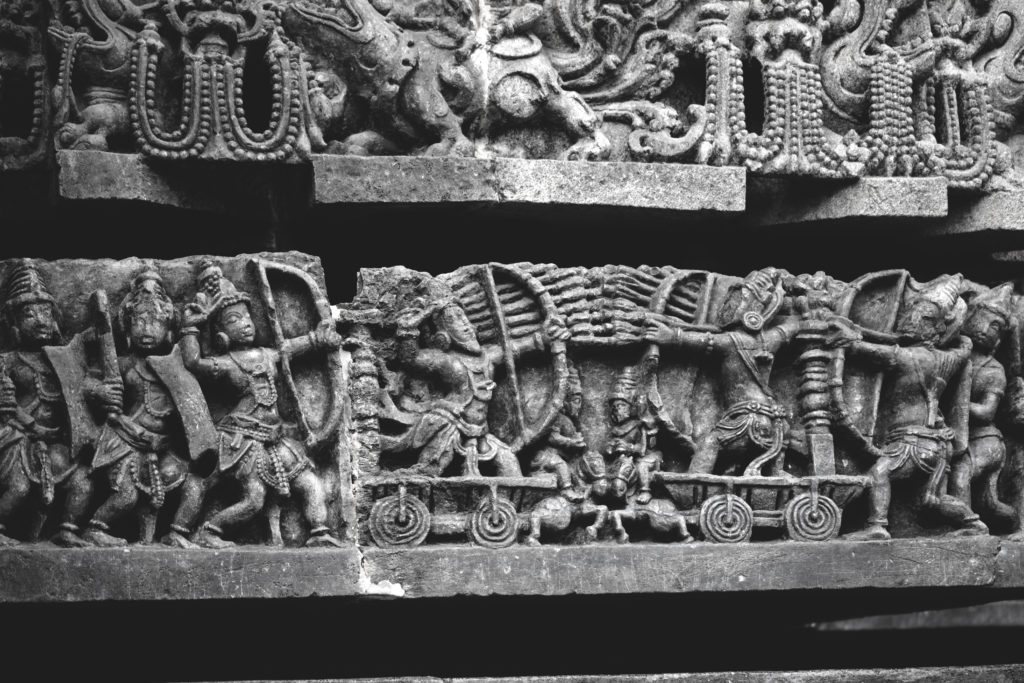
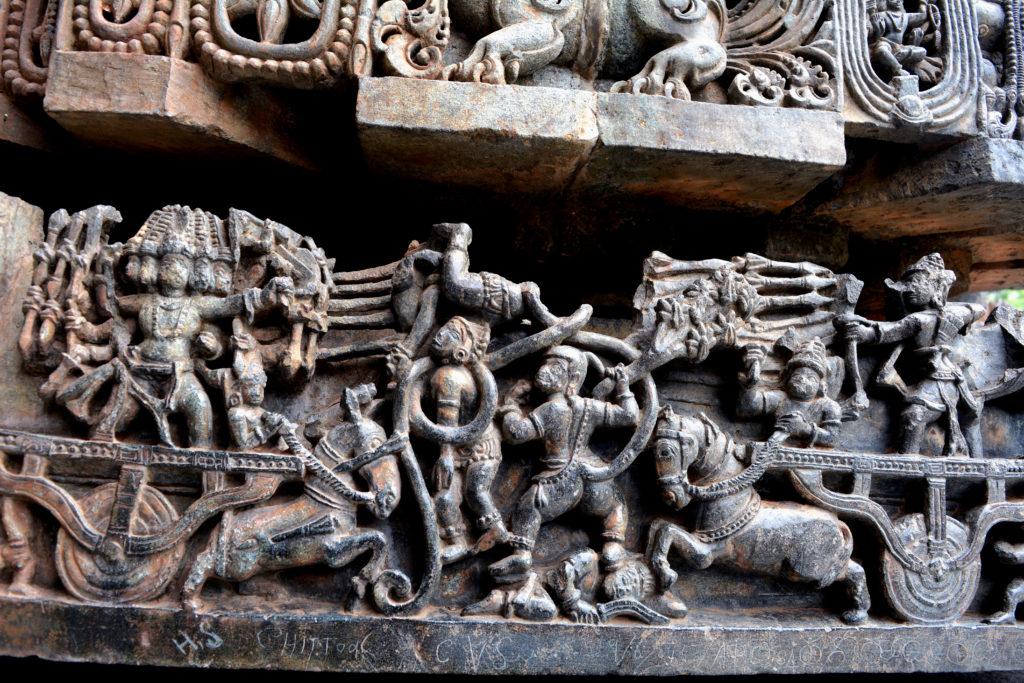
The top layer is dedicated to the gods. Roaming around these walls, I realized, how little I know about my culture. Different sculptures from different avatars, from epics like Ramayan and Mahabharat, Puranas are brought here to live. The artistry is so flawless and intense that you have to take your sweet time to observe these each and every sculpture. Each and every stroke of the chisel asks for our well-deserved homage. For each extra second you linger in front, this chisel symphonies sings to you something extraordinary.
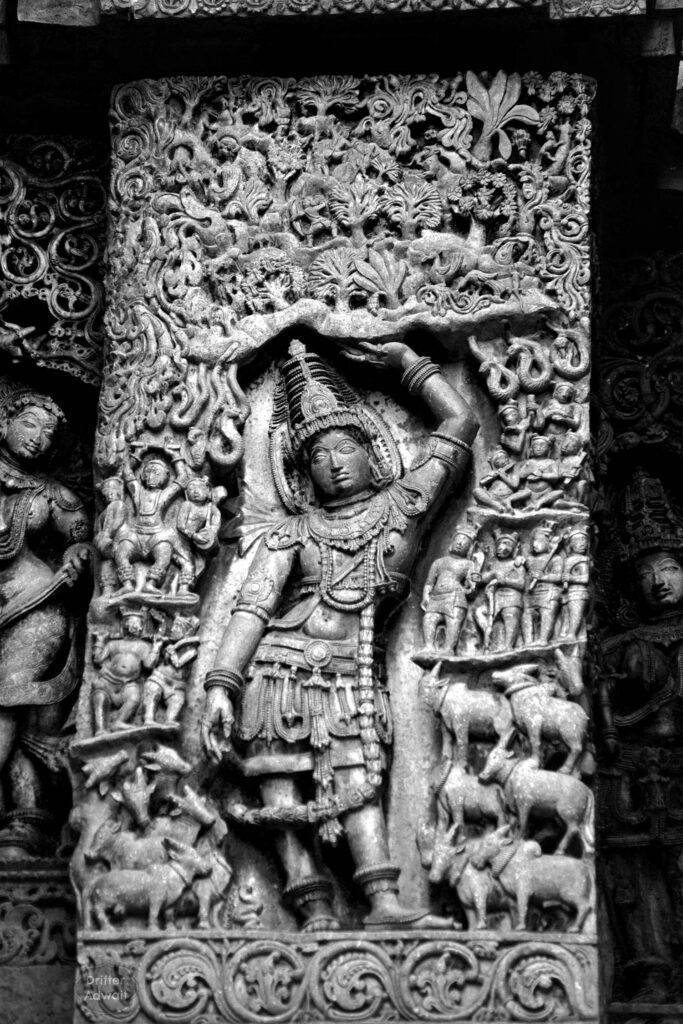
Krishna lifting the Gowardhan mountain: Look carefully, you will see cows and cow hoarders under the mountain. Now, observe a jungle on a mountain. You will see trees, the hunter with bow and arrow, snakes, flowers, a banana tree with bananas and monkey trying to grab them. This is the level of detailing is there for each and every sculpture…
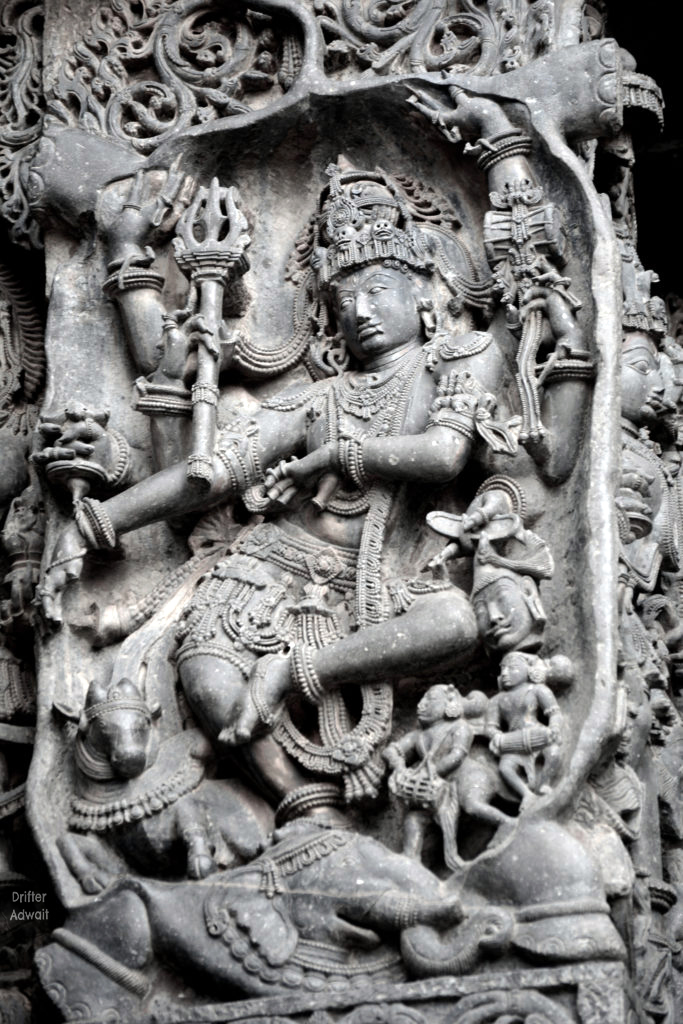
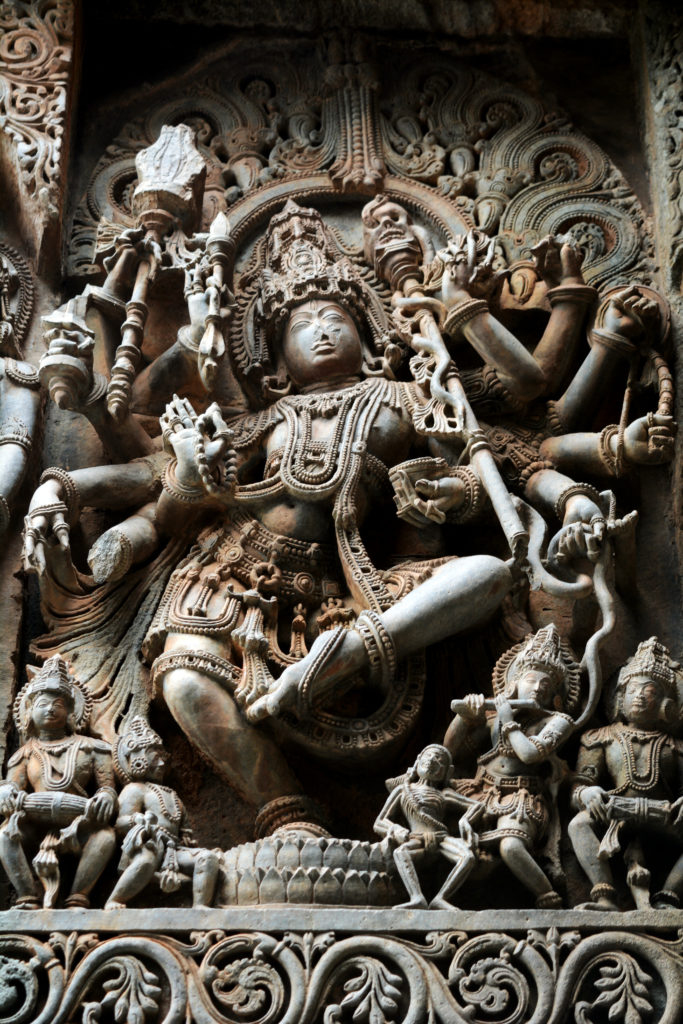
Gajasur Samhara- The elephant slayer
Once, a
demon named Gajasura started torturing nice folks. Shiva’s third eye
falls on him as he crosses the path with Shiva’s devotees. During the
fight, Gajasura swallows Mahadev. Mahadev starts dancing (Tandav) inside
him, and after some horrific torture, he opens the Gajasura from
inside, wearing his skin like a cape. You are seeing this brilliant work
of sculpting where you can see two elephant feet on Shiva’s head as he
dances on the head of Rakshasa. A closer look will reveal that during
the fight, Shiva’s fingernail is caught in Asura’s skin piercing it…
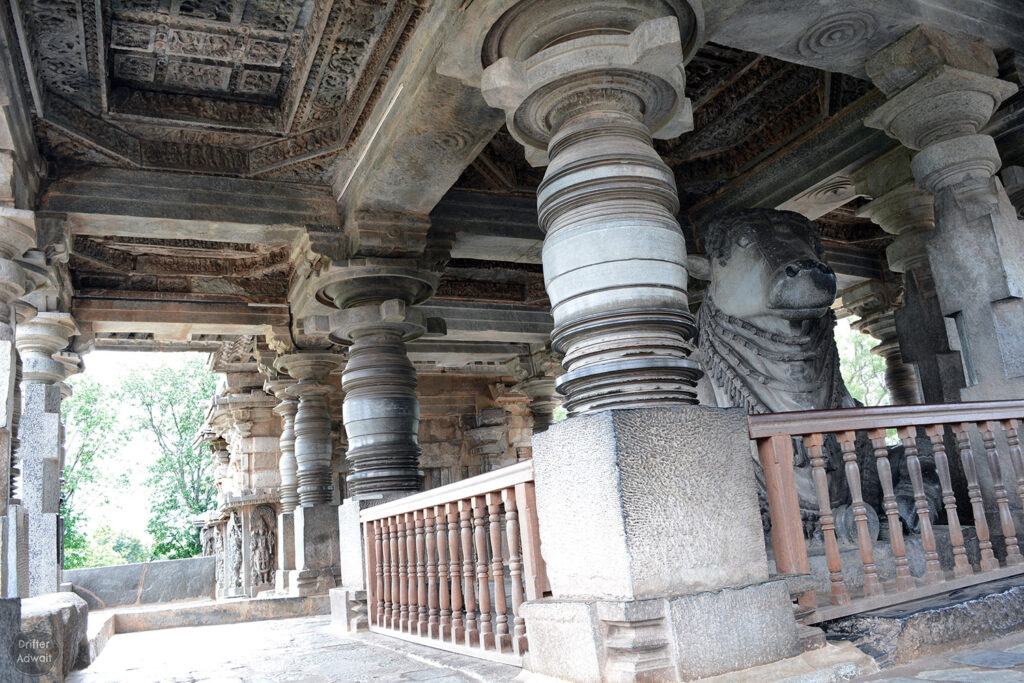
As we saw earlier, Halebidu temple is actually twin temple connected with a corridor, where both sanctum sanatoriums have Shiv lingams with Huge Bull (Nandi) shrines in front of each. One temple is for Hoysaleshwar King, and the other is for Queen-Shantala Devi, both being passionate devotees of Lord Shiva. The entire structure is elevated on the platform and carved out of Soapstone or, Chloritic Schist. Towers on the temples have been destroyed. But whatever is left, is enough to blow your mind. Here, each Nandi has been awarded a separate sanctum. These two Nandis are two of the largest Monolith Nandi Idols in the world. Pillers with brilliant symmetry and alluringly decorated sealing makes these Nandi shrines, two of a kind in the world.
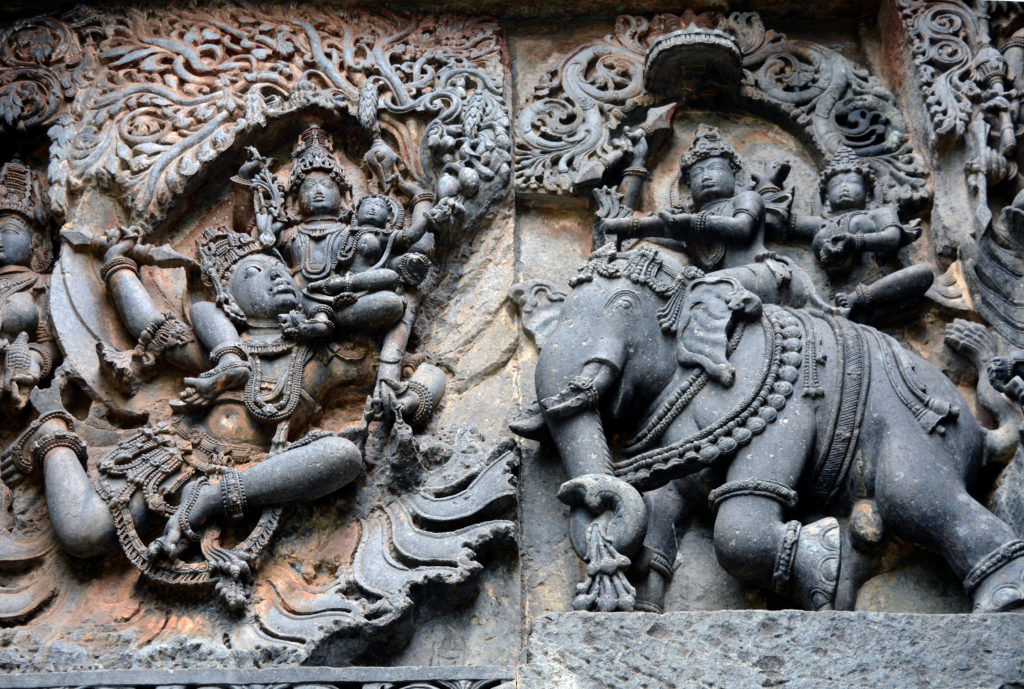
War of God’s
Lord Krishna here is flying on
Garuda with Satyabhama. Indra is riding on Airavat with Sachi. They are
in a fight for the Parijataka tree, which Garuda is carrying to earth
after Sachi insults Satyabhama.
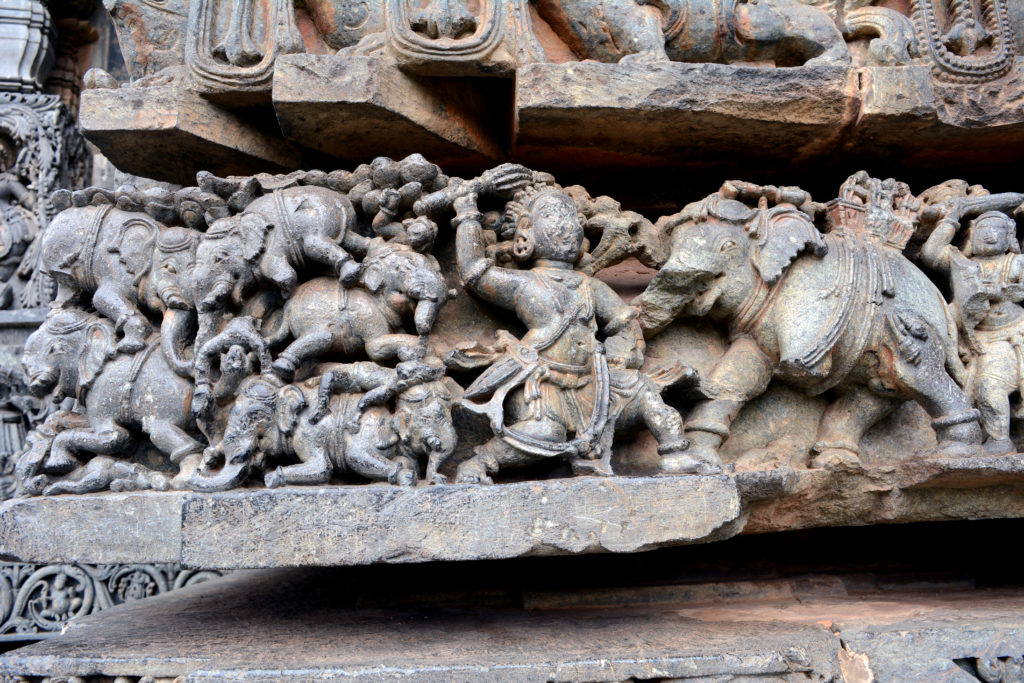
Bhima’s Elephantine massacre: Bhima is on a killing spree in Kurukshetra. You can see the pile of the elephant he has killed, behind him. Elephant riders (Mahuts) are trapped in between them.
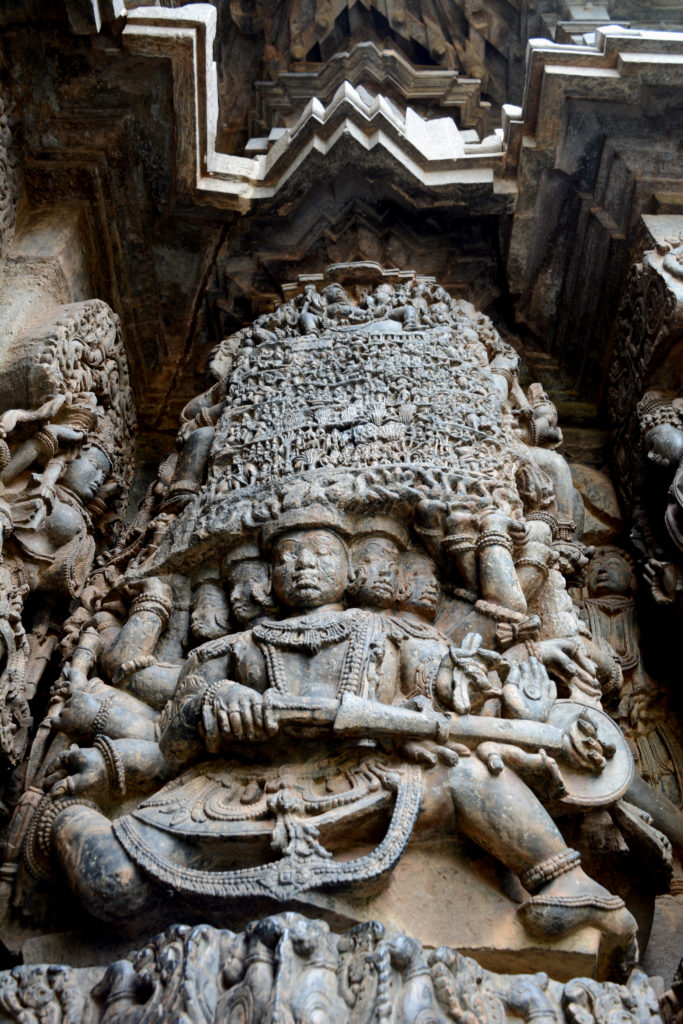
Ravana lifting Kailasa
After defeating his
brother Kuber, looting his capital, Ravana was coming back to Lanka on a
stolen Pushpak Aircraft. While coming back, he came across a mountain,
over which his carrier could not fly, even after trying multiple times.
He realized that the mountain is Kailasa, belonging to Lord Mahadev.
Already drunk with power and Victory, Ravana started to lift Kailasa on
which Lord Mahadev was meditating. As he lifted the mountain, Mahadev
woke up and immediately knew what Ravana was up to. Pressing just his
pinkie toe, Mahadev started pressuring the Mountain on Demon’s ten
heads. What you are seeing here is, Ravana lifting the Mount Kailash
with Mahadev and Parvati on top. Ravana’s one foot is bent and his eyes
are bulging out due to heavy burden. Demon king took out his sword, cut
himself, with his veins, he made a string instrument and started singing
famous Shiva Tandav Stotrum. Till now, it’s being sung by Indians,
thousands of years later to please Mahadev…
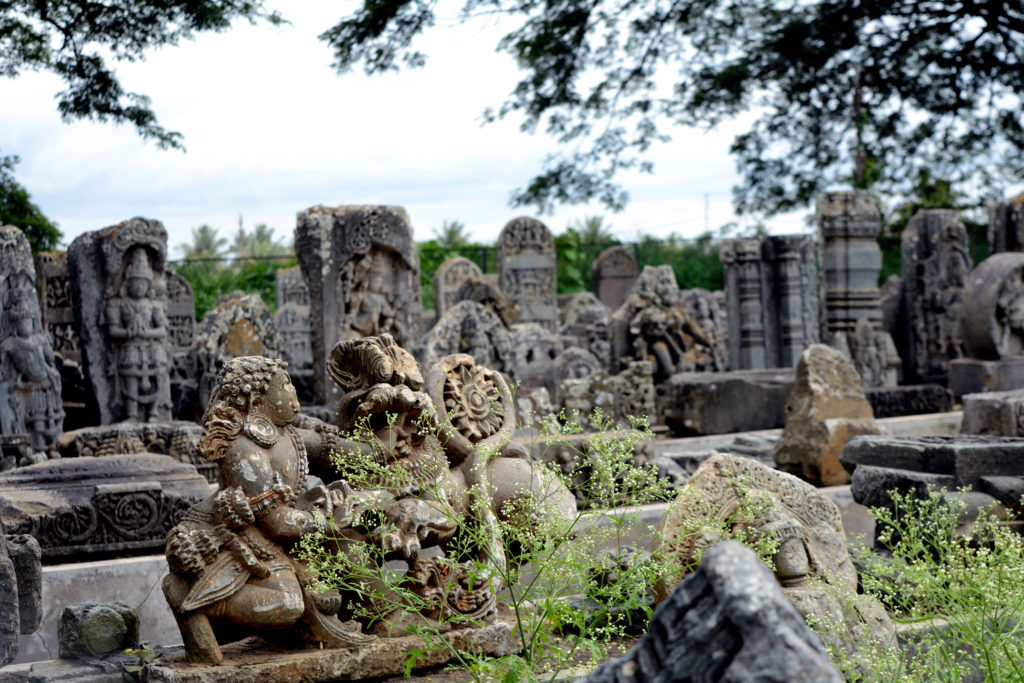
ASI has done a great job maintaining the temple and the surroundings. Huge maintained lush green lawns and neatly cut trees complement the building. ASI has a museum nearby. Minutely carved sculpture, abandoned by their original buildings are kept over here. You will find Hero stones, Kartikeya, Sapta Matrikas, and few more idols there. Books are also available there on the ticket counter for sale.
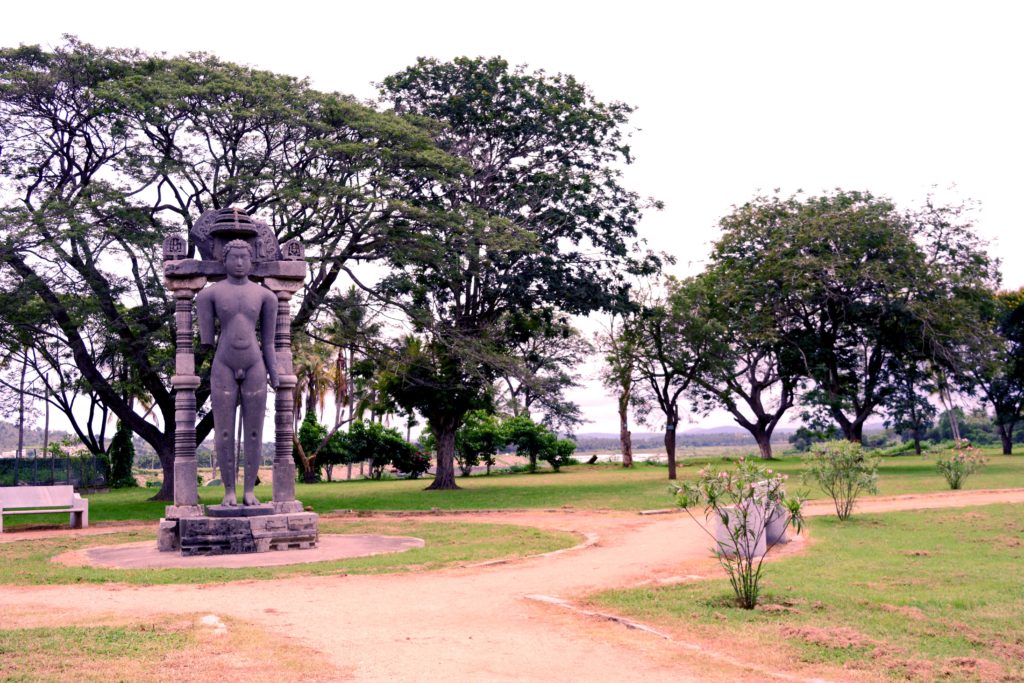
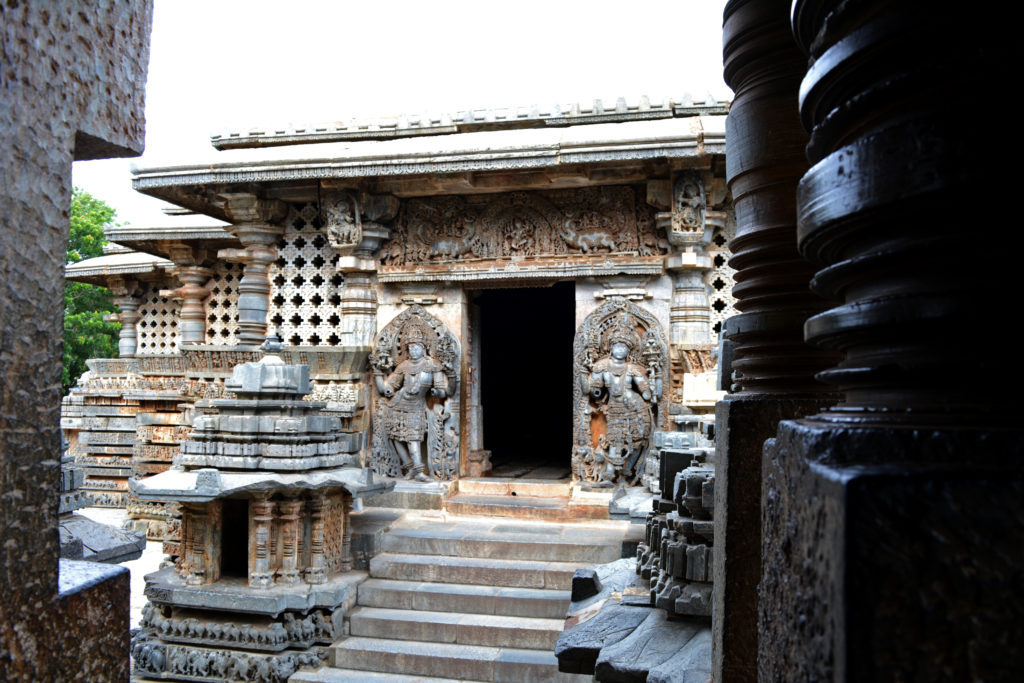
Many many broken sculptures, statues, Hero stones, and inscription tiles are locked in the compound, besides the museum. Twenty feet tall Mahaveera statue with decorative border stands here with the lake in the background. Due to the invasion of Malik Kafur, this temple has no Turrets. Otherwise, it would have been a complete masterpiece.
As I was roaming around, simply dumbstruck by the beauty, one school trip arrived there to view the temple, making temple surroundings lively. The guide was trying his best to generate interest in children while teachers were trying hopelessly to control the flock. I sat down near one of the Nandi domes, observing the tourists.
These Hoysalas have created the generation-defining structures which will last for centuries, igniting the curiosity within future generations about the Hoysalas. Unknowingly, I started comparing the achievements of past generations with us. Six thousand years ago, Ayurveda, the holistic healing system was invented and served to the world by our ancestors. Five thousand years ago, Yog was developed as a way to live life, being one of the oldest things to be practiced by future generations worldwide. Four thousand years ago, rulers and weighing scales were invented here which would measure and shape the future world. Incense clock was found in China dated 2400 years back, had Devnagari markings on it, underlining the place of origin. It was the earliest design created by man to measure time. Two thousand-year-old Indians have known to create Crucible and Wootz steel which would shape the weapons in upcoming wars. The sixth century was defined by the first attempt to use zero as an individual number by Brahmagupta. The complete binary and now, our entire life is defined by it.
I could not help myself
but wonder, how our future Indian generations will remember us? What
mark our current Indian civilization is leaving on history, which will
be helpful, awe, and mesmerize the future world? Shopping malls? Tik-Tok
videos? Indian Premier League? Deforested subcontinent? or
westernization of entire civilization?
Megasthenes, Marco Polo,
Al-Biruni, and many more came here and left India amazed by its
progress, values, and culture. Till now, the tourist attractions have
not been changed, or, we are not able to create something new which will
attract world travelers, just like ancient times.
Playing with these thoughts, I started walking towards the Halebeedu KSRTC bus stand to catch a bus going towards Belur.
How To Reach Halebeedu?
Situated on the banks of Dwarsamudra lake, surrounded by coconut
plantations and lush green rice paddy fields, Halebidu is a small-sized
town. 25 km away from Belur.
Halebeedu is 210 km away from Bangalore, can be reached by Mysuru road, within 3.5 hours on a super smooth highway.
Frequent KSRTC buses are operated from Bangalore to Hassan every half hour.
Hassan
(27 KMS) is the nearest railway station to Halebeedu. You can get
government buses or private vehicles to reach there from Hassan.
Nearest Airport to Halebeedu is Mangalore airport which is 168 KMS away.
Where to Stay at Halebeedu?
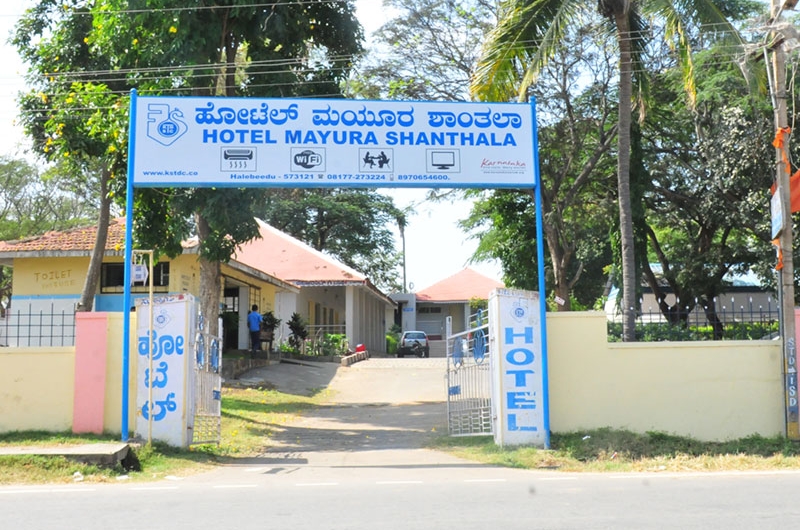
🛏️ KSTDC has a budget hotel named Mayura Shantala, just beside the
Hoysaleshwara temple. You can stay there if you wish to explore this
town some more.
The tariff is ranging from Rs.1099 to Rs.2099 as per your choice.
Also, it has a kitchen with decent food options for lunch and dinner.
You can book the hotel here.
References:
1. By Ms. Sarah Welch – Own work, CC BY-SA 4.0, https://commons.wikimedia.org/w/index.php?curid=63263095
2. History of Karnataka (History, Administration & Culture), by I. M. Muthanna, Published by Usha Press, Mysore City, 1962
3. Karnataka State Tourism Development Corporation

.JPG)

.jpg)

No comments:
Post a Comment
Note: Only a member of this blog may post a comment.