You know you are going to not so commonplace when government bus drivers haven’t heard of it.
After
45 minutes of delay, I was on the ksrtc airavat bus at six o clock in
the morning, heading towards Chickmanglur. For those who travel by bus,
there is no need of reservation as plenty of state transport buses
heading towards Belur and
Chickmanglur are available. The driver never heard of the name
Doddagaddavalli, so had to depend upon Google maps entirely. Some 20
kilometers from Hassan on Belur road, I got down in a village named
Kalkere. Google map does not show this area as a town but as a lake.
When I stepped out of the bus, there were a couple of Paan shops with
exactly three people hanging around. After asking around, I started
walking on the small road cutting through farmlands and occasional tini
tiny villages in between.
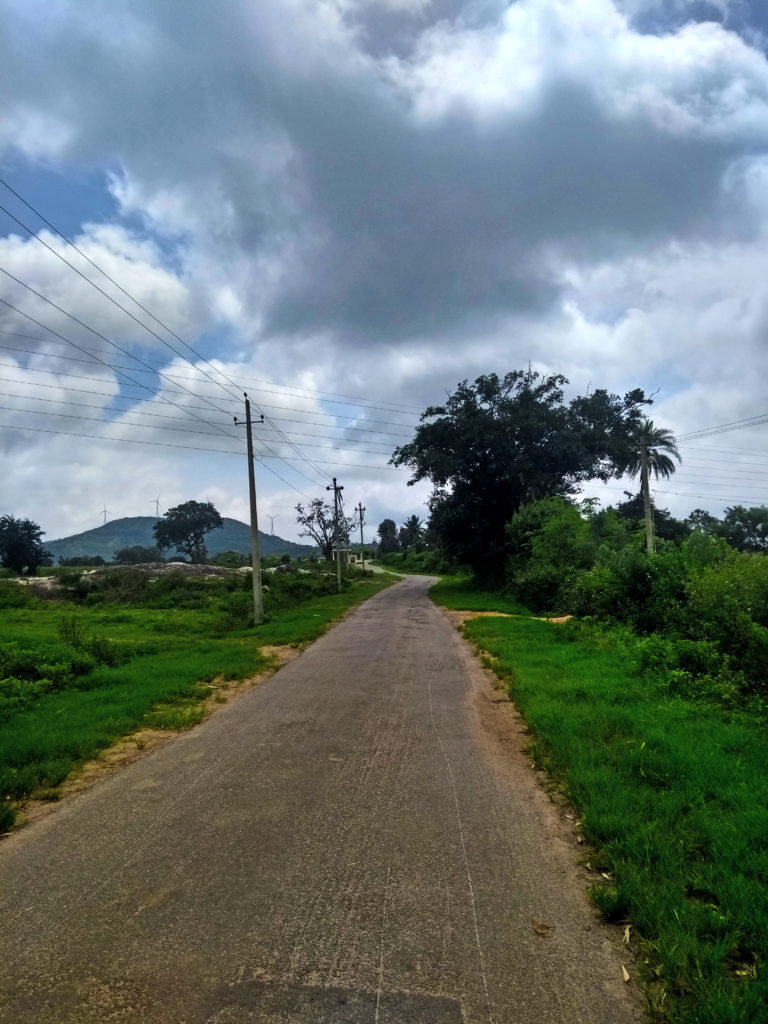
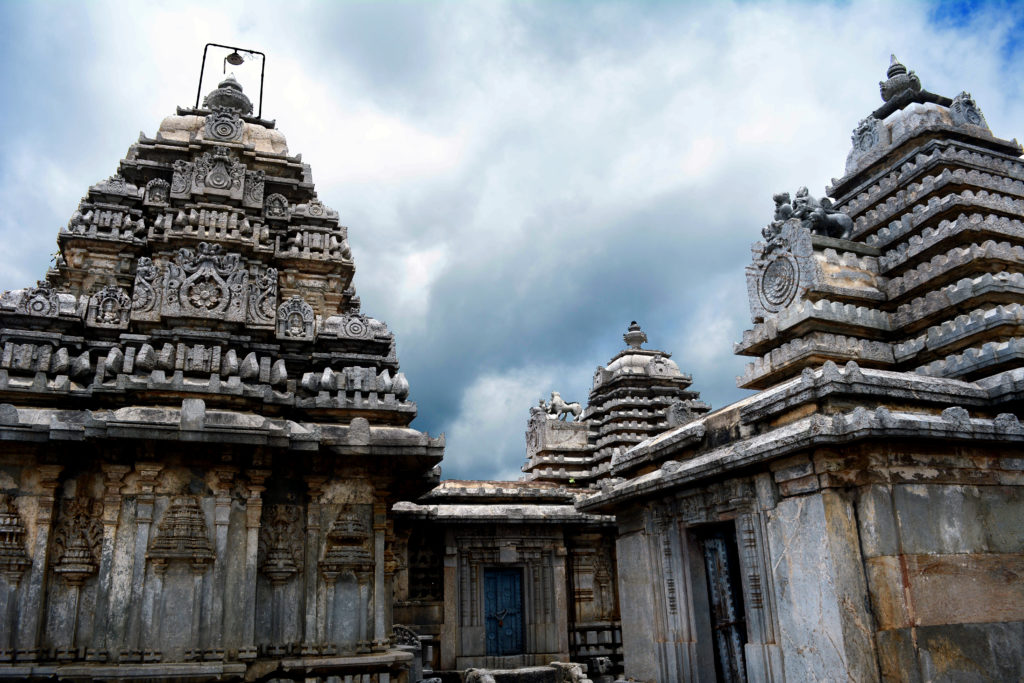
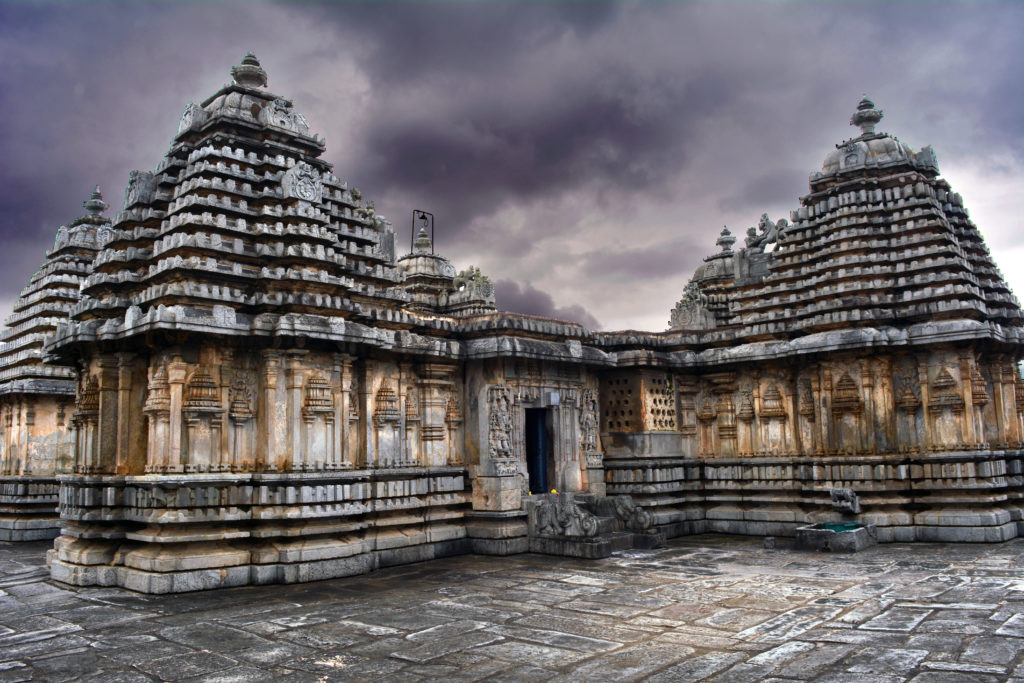
It was a great morning, backed by the chirping of colorful birds and breeze carrying the aroma of wildflowers, grass, and occasional cow droppings. It was just after a rainfall, so everything was shining in the sun. Within thirty-five minutes, I was beside a lake on the banks of which the Laxmi Narayan temple stands. Lakshmi Narayan temple is built by Merchant named Kallan Raut for he had a great profit that year, a thousand years ago. Usually, Hoysala temples are built on a platform- like ChennaKeshawa, or Hoyasaleshwar temple. Being one of the earliest constructs, this temple was not one of them. It’s really interesting to compare the temples and get the idea of how a particular architectural style must have been evolved.
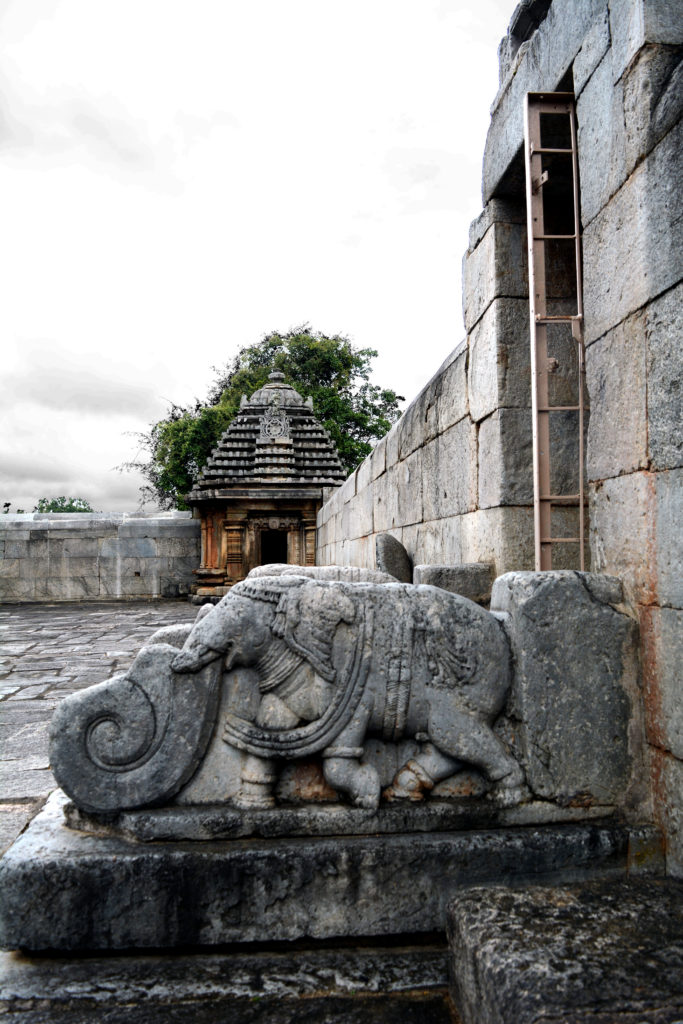
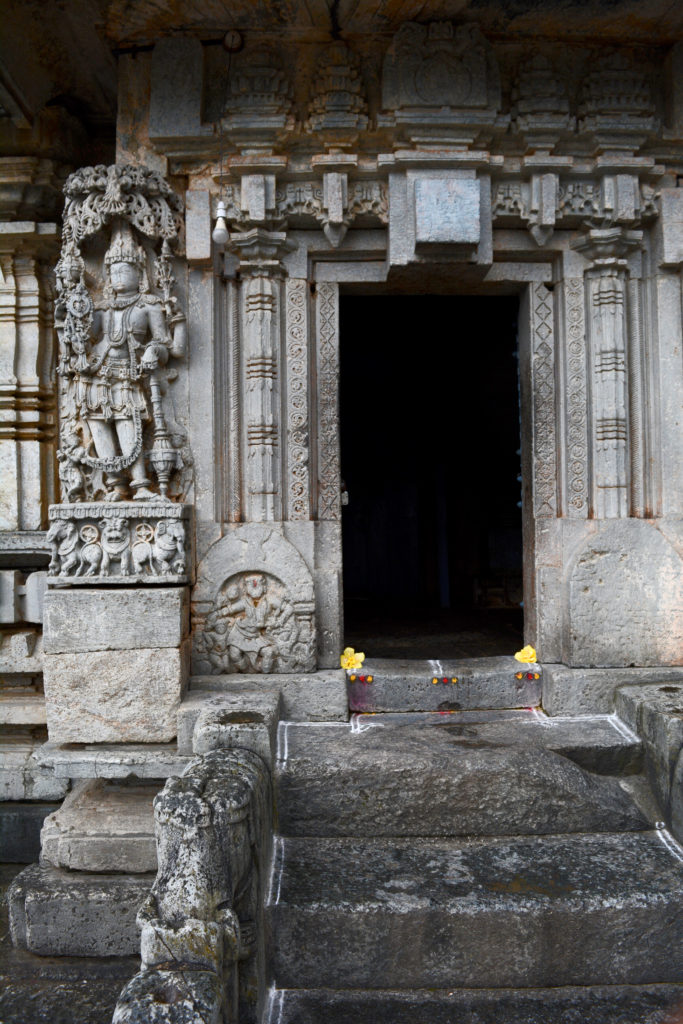
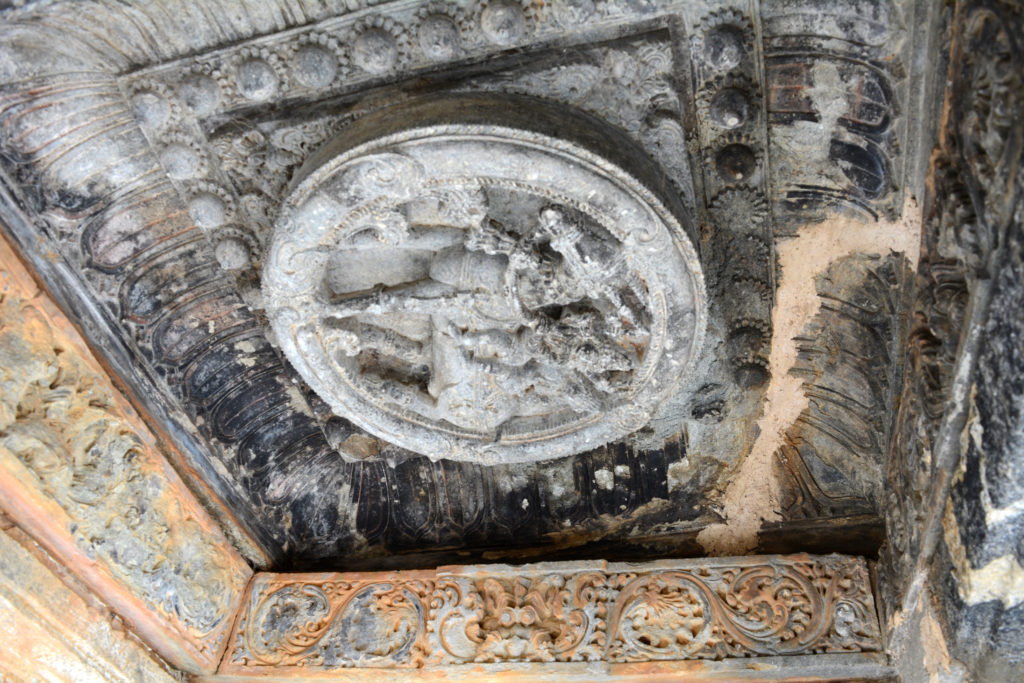
Two ASI workers were watering the plants, as soon as I entered the premises, one of them, Chandu, started walking with me. The temple has a roofed entrance, held up by lathe operated soapstone pillars. The entrance roof has Ashta digigpal deities (Protectors of eight directions) engraved as a fall ceiling. After crossing an entrance, you step into the main temple courtyard.
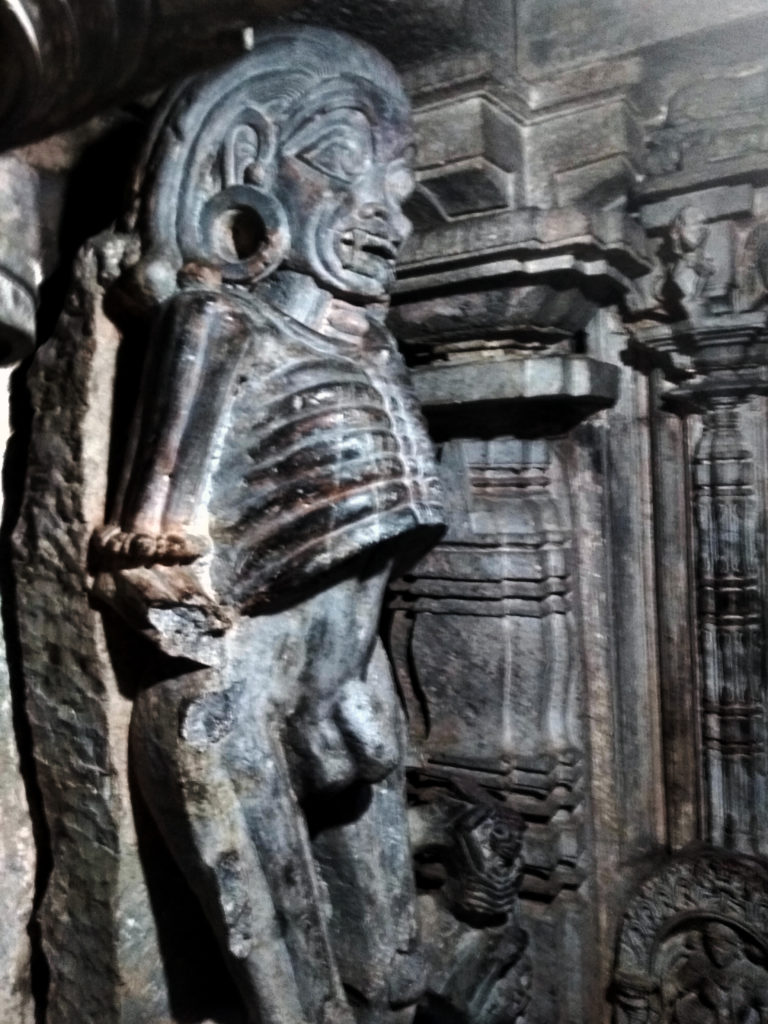
Chandu unlocked the temple and we walked in. As soon as we enter the
Sanctorum, we were greeted by scarifying Vetalas on our left. These
armed guys are the guards of Shanta Kali. Eight feet tall, thin to bones
and a foot of their tongue out, they try to scare us with their bulging
eyes and a teething wicked smile. My kind of warriors. The door frame
of the sanctum sanctorum is decorated with seven avatars of Parvati.
They are- Kali, Tara, Chandi, Tripur Sundari, Bhairavi, Lalita and
Katyayani.
Eight handed Shanta Kali is resting here after slashing
the demons. The arch surrounding her (Mahirap) is ornate with miniature
skinless Vetalas. On her right-hand side, there is a shrine to Mahadeva ,
in front of her is Laksmhi and to her right is Shree Vishnu.
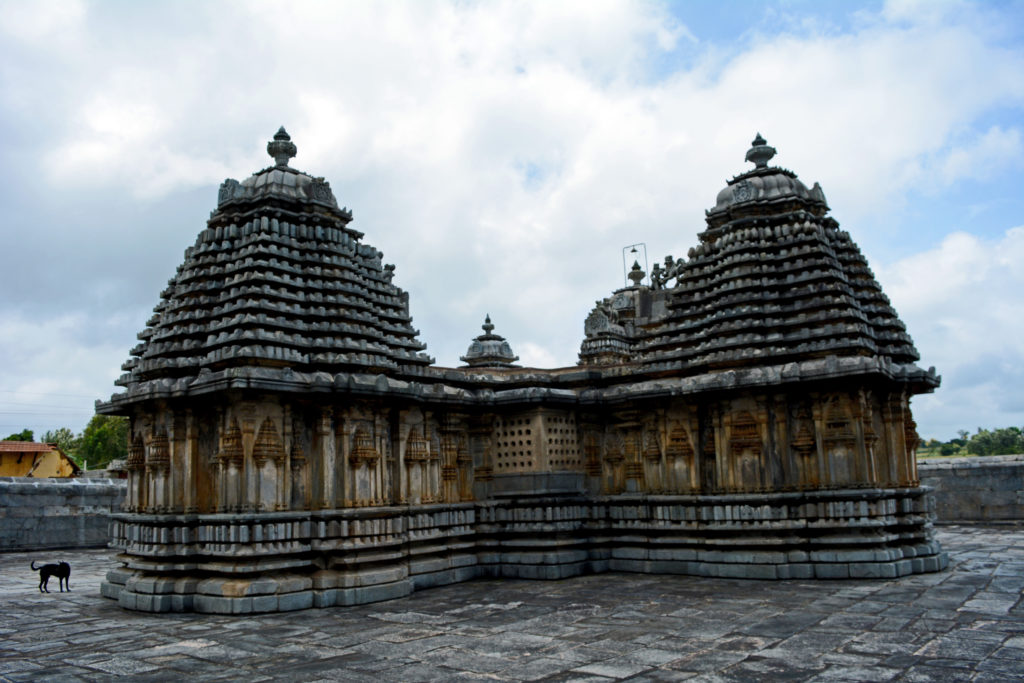
The main temple has unique four Kutas called a Chatush Kuta style.
(Sanctums with 4 towers). Three shrines are connected with a common
bay.
Shanta Kali shrine is connected with rest of the three with few more bays.
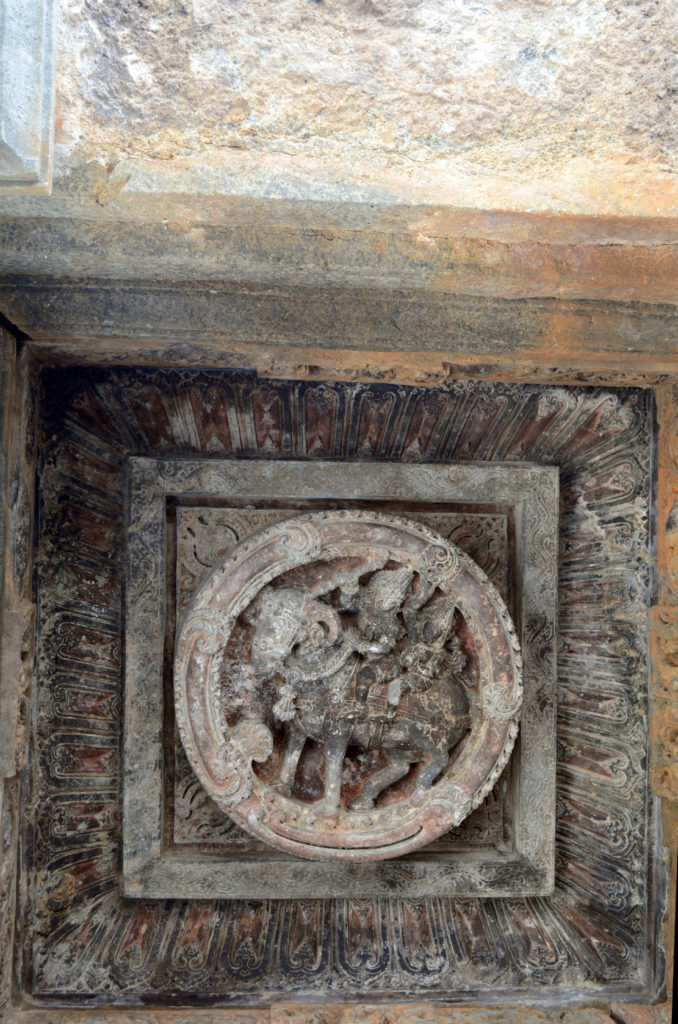
But the main showstopper is the temple ceiling. The roof is divided into eight sections with ridiculous carvings. Apart from mother goddesses, there are ashta digpal, the protectors of the eight directions, carved on the fall ceiling. There is Kubera, the protector of North, wielding his mace, riding on a giant with Kuberi.
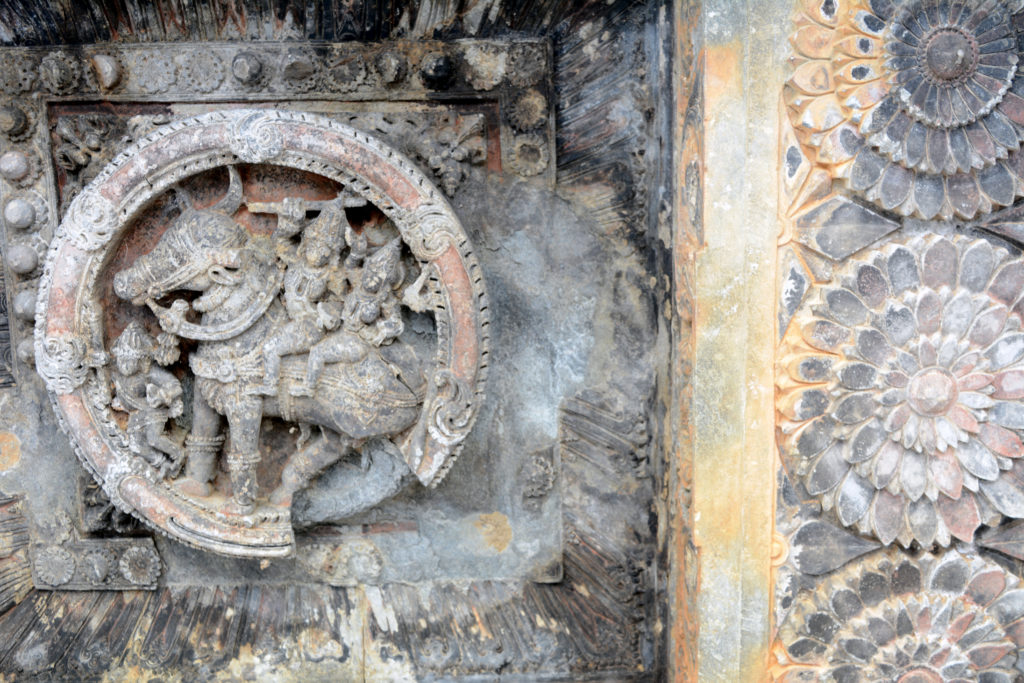
There is Yama with Yami, protecting south with his Lasso. He rides on a buffalo. On east, Indra is protecting with Vajra along with his wife Sachi. He rides on four tusker Airavat. Varuna along with his wife Varuni protect west while riding wired looking Makara. His favorite weapon is Noose. And then there is Agni, riding on a Ram protecting North East.
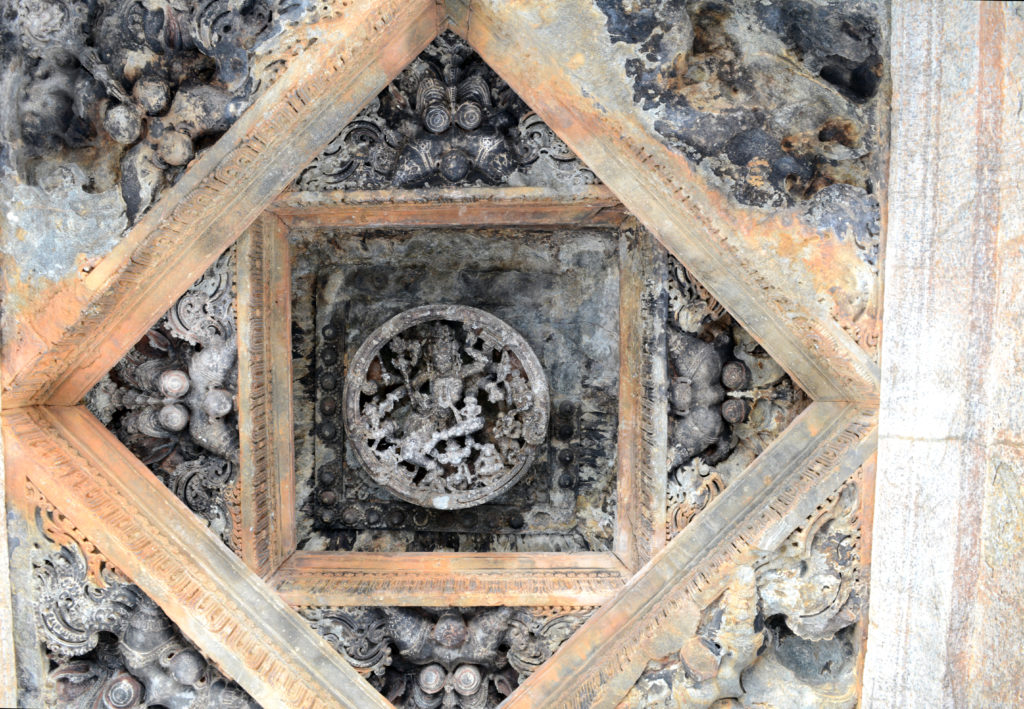
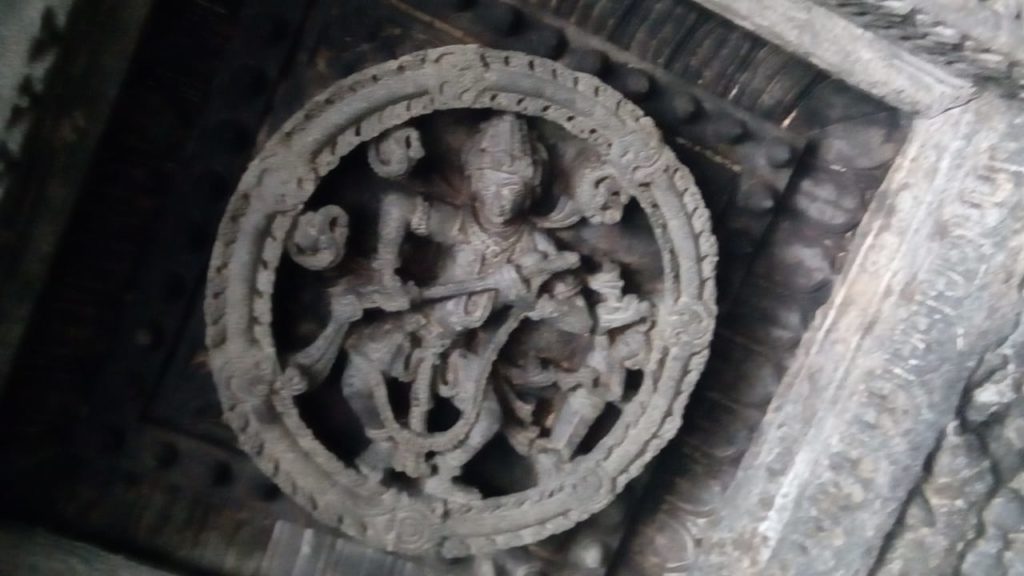
Center ceiling panel is ornate with dancing Shiva, under which is a
smooth platform, on which, Hoysala queen use to perform classical dance
as a tribute to the goddess. Gajalakshmi and Yoganarsimha add beauty to
the already ornate temple ceiling.
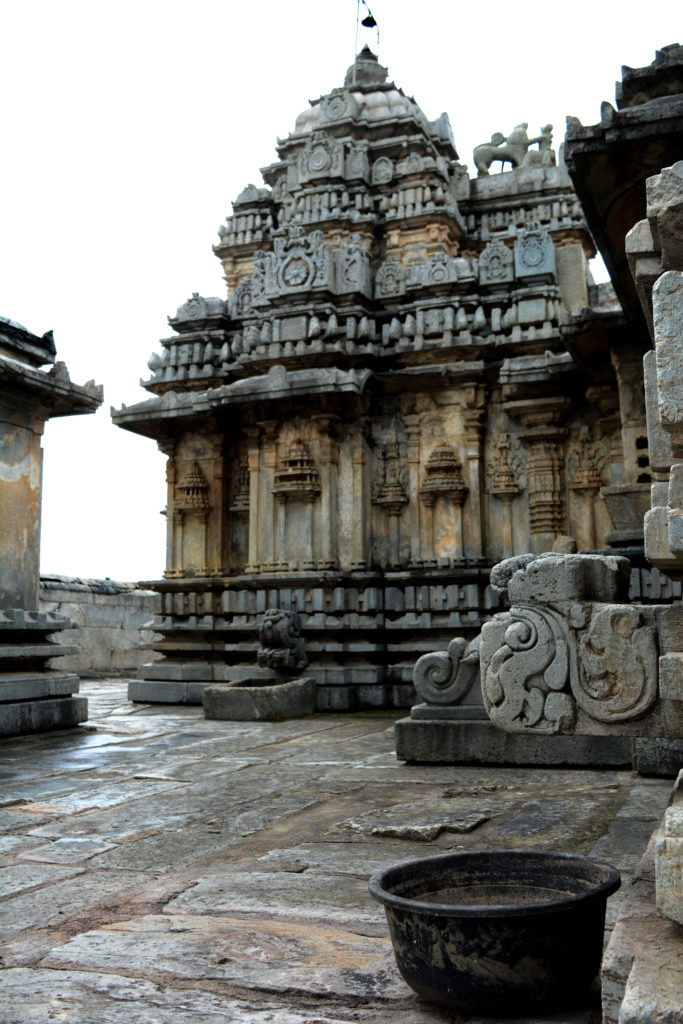
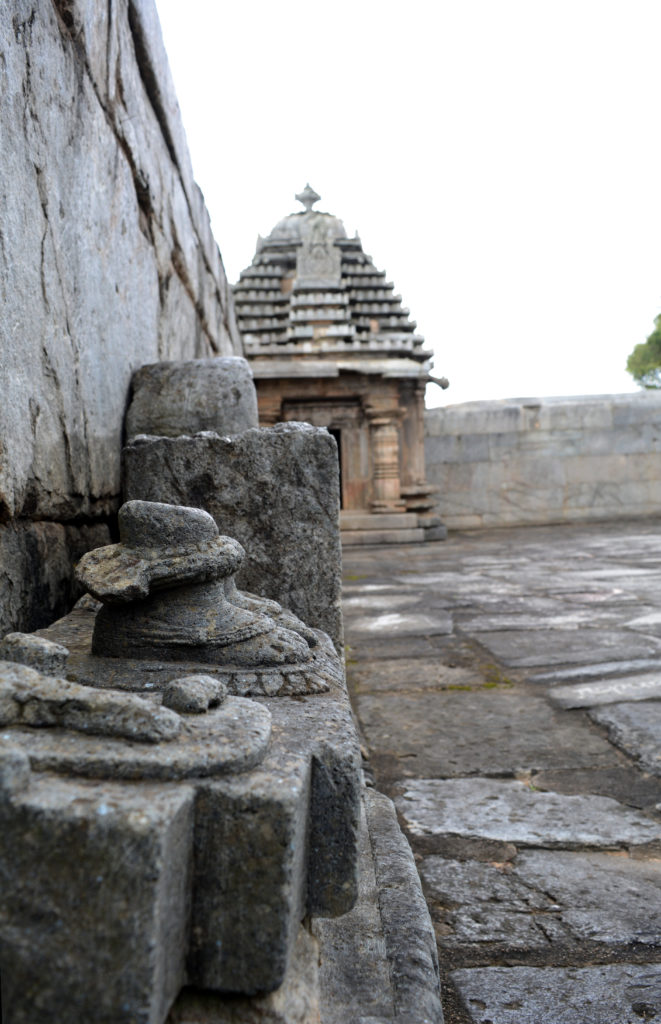
Outer wall is decorated with small pillars and turret designs. Usually, Hoysala temple outer walls are treat to eyes, never the less, Lakshmi Narayana temple has an intact roof, decorated with minute and complex sculpting. Four turrets are made up of many layers, narrowing towards the sky. These shrines reflect Kadamba style architecture. Vijay Pataka, Narsimha, Makara can be seen on each turret. Large Hoysala emblems adds to the beauty of Turrets .
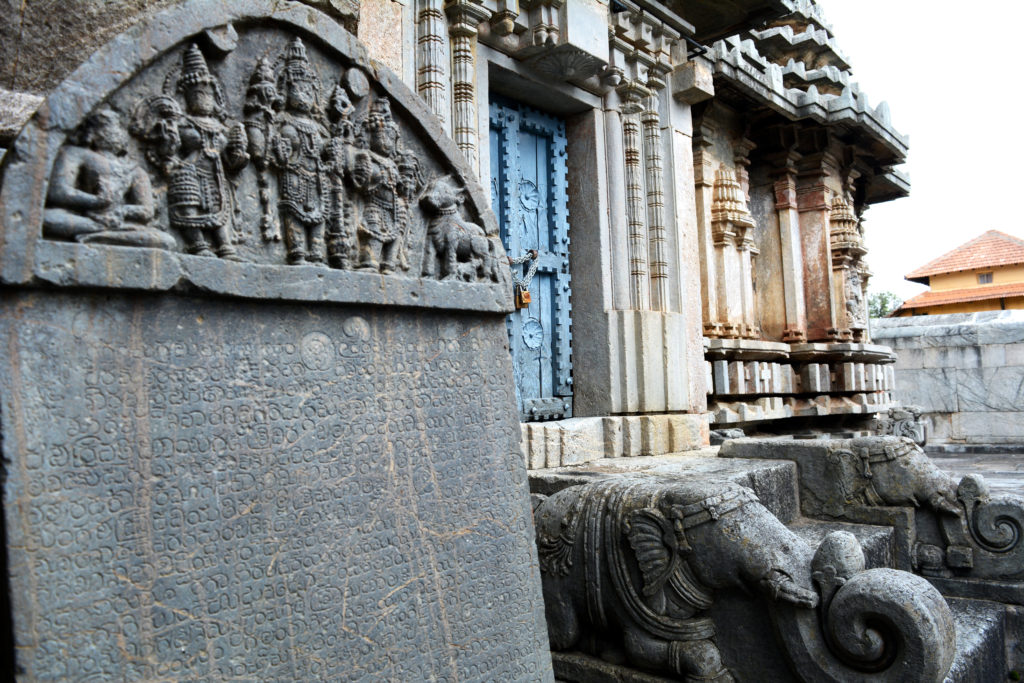
The temple has square courtyard, with four shrines on each corner.
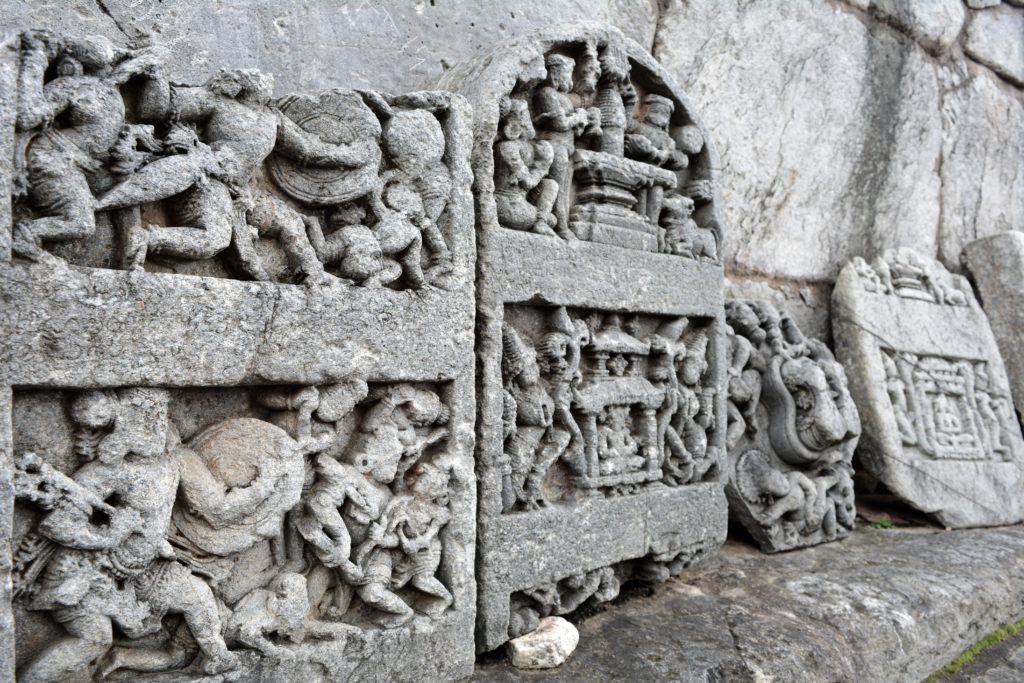
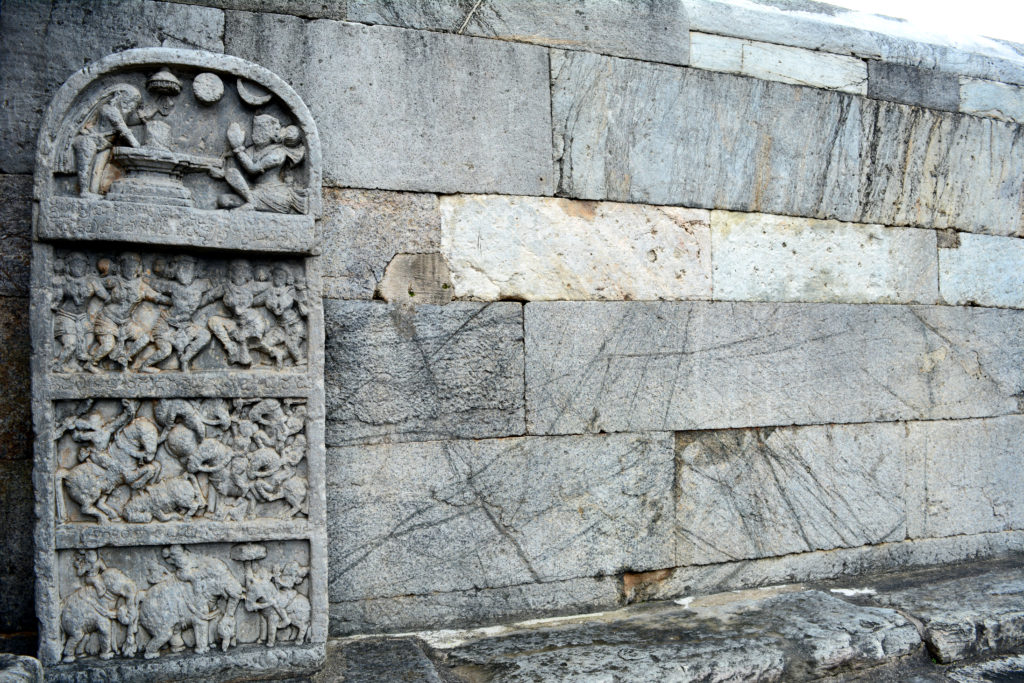
Thanks to Vandals, inner deities are either broken or stolen.. There are
many hero stones kept in line, most of them are broken. Inscription
stones are also kept at the backside of the temple. Some inscriptions in
old Kannada can be found in outer walls of the temple walls.
As I
was photographing the temple, priest entered and started his daily
rituals. I sat under the feet of beautiful Vetalas observing the Pooja
and occasionally, chatting with him. Daily, he travels from Hassan to
the temple to worship goddesses. This place is truly lost in modern
world. Economy is solely depending upon farming. Once, it must have been
a place of worship, trade and politics. The streets must have been
filled with devotees centuries ago. On auspicious days, the commoners
must have lined up impatiently, to meet their gods, outside these walls.
King and his noble men must have prayed there for good fortune in
upcoming wars or crop cycles. Now, all that remains is cold damp walls,
dark corners trying to consume entire structure and some bats flying
around.
After a while, I collected my things and thoughts and was ready to
walk back to highway, Chandu offered me ride on his bike. In five
minutes, I was on highway. Not just he politely refused to take money
from me for a lift, he stopped a share Rickshaw going towards Halebidu
for me. What a guy. After shaking his hand with gratitude, I continued
my journey towards Halebidu.
Chandu (9620848758)

.JPG)

.jpg)

No comments:
Post a Comment
Note: Only a member of this blog may post a comment.