Welcome to my blog, where I delve into the intricate and fascinating world of temple architecture, and today I will be focusing on the beautiful Lakshmi Narsimha Temple in Nuggehalli, Karnataka, India. This stunning temple, dedicated to Lord Vishnu, is a prime example of the unique and elaborate Hoysala style of temple architecture, which flourished in Karnataka during the 11th to 14th centuries.
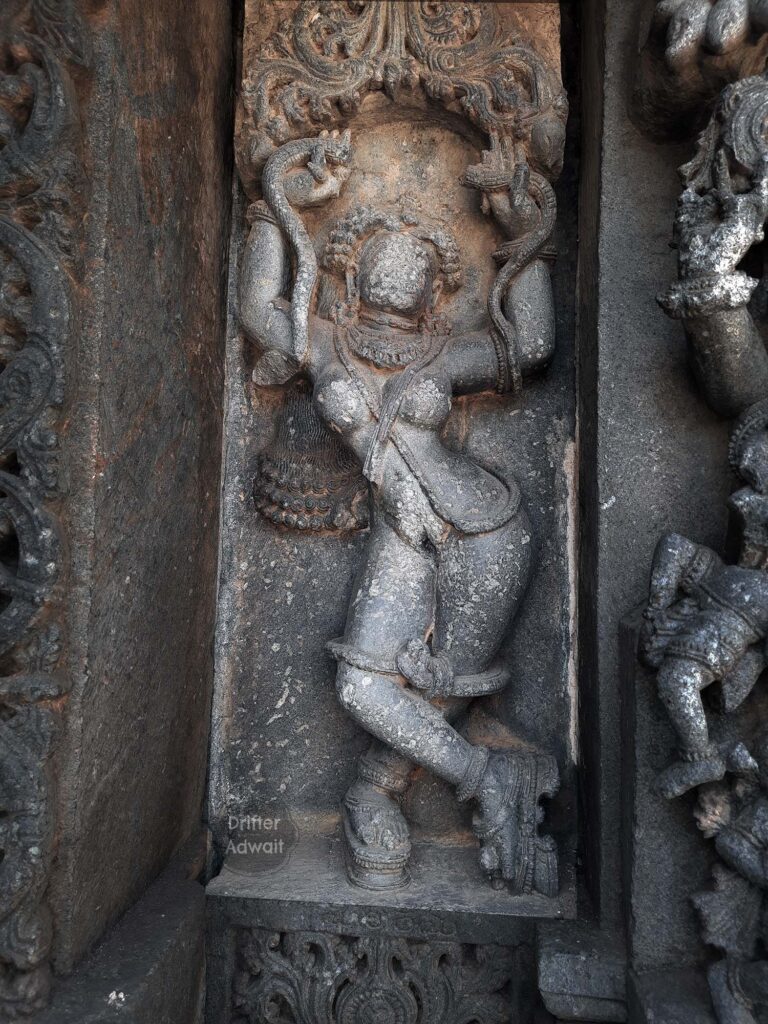
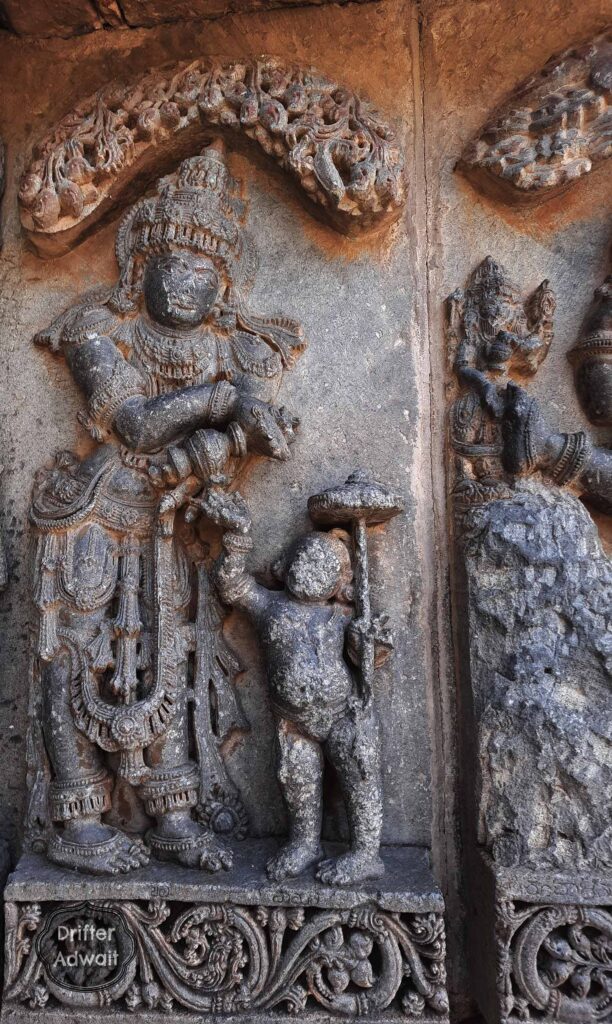
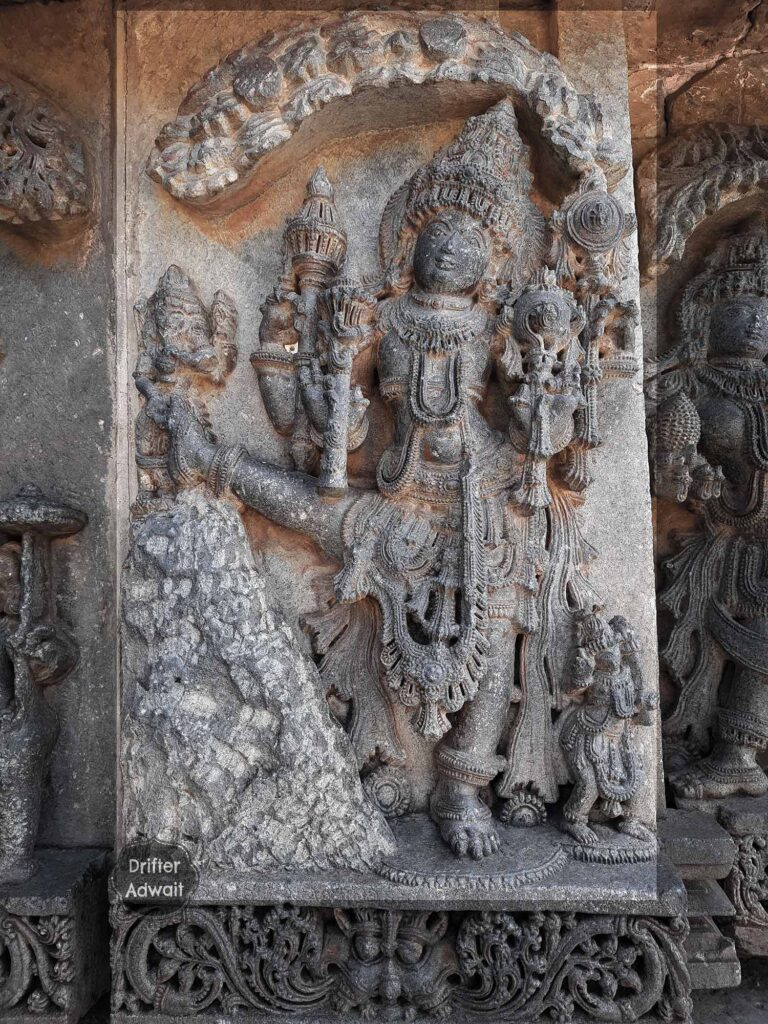
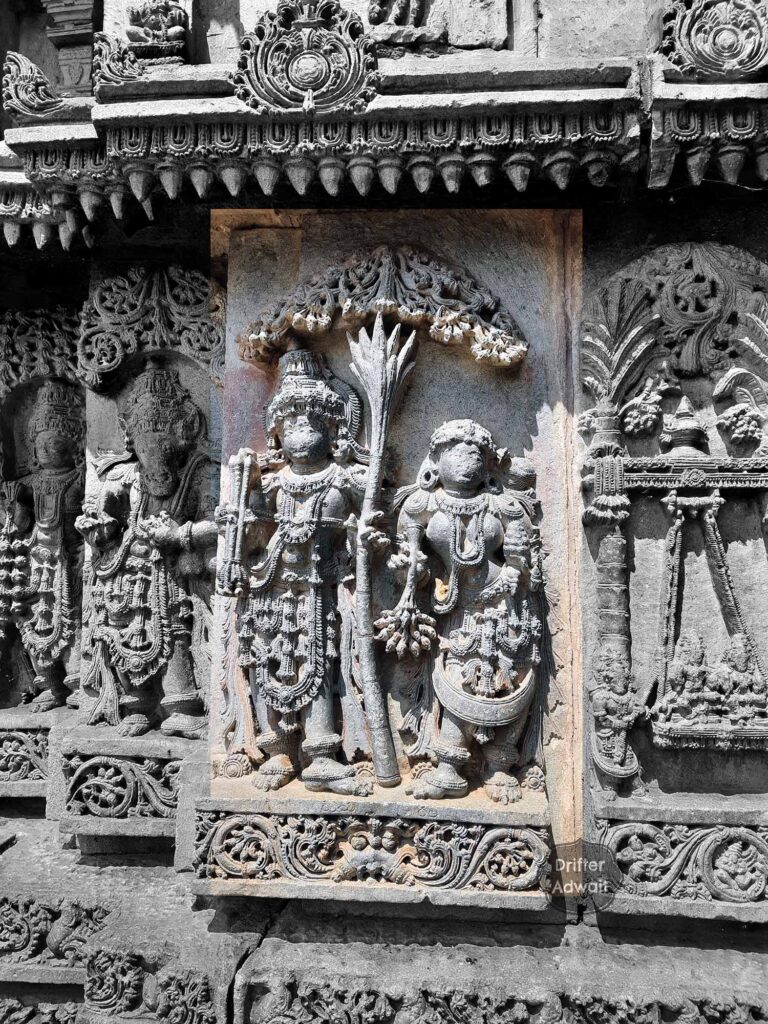
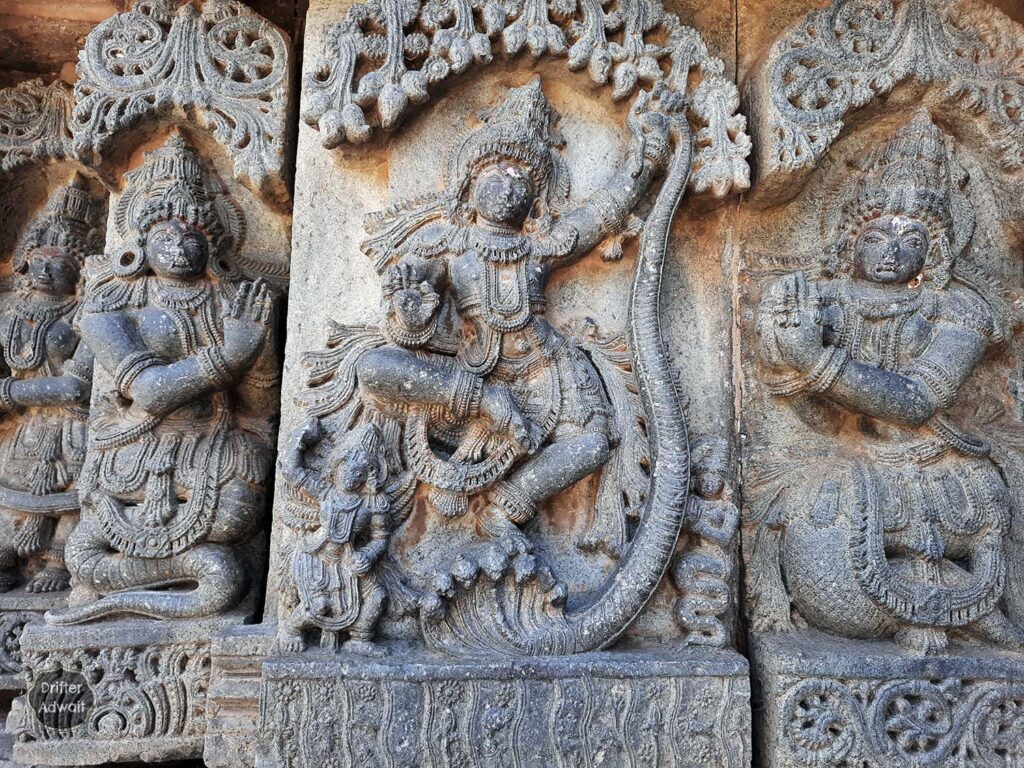
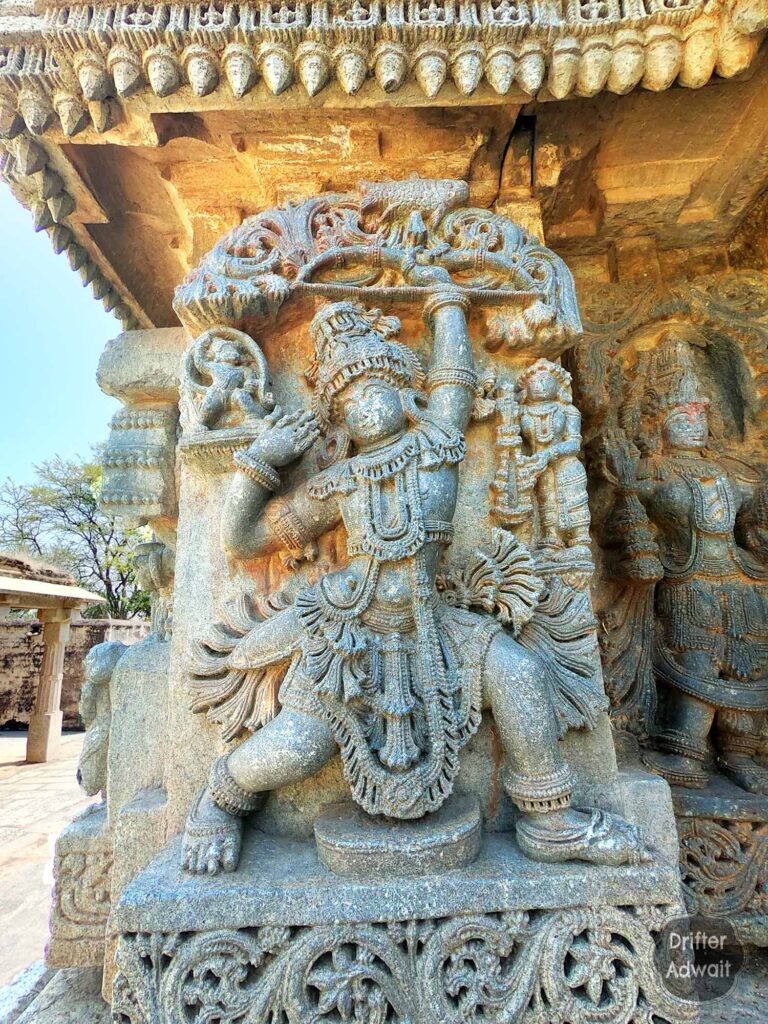
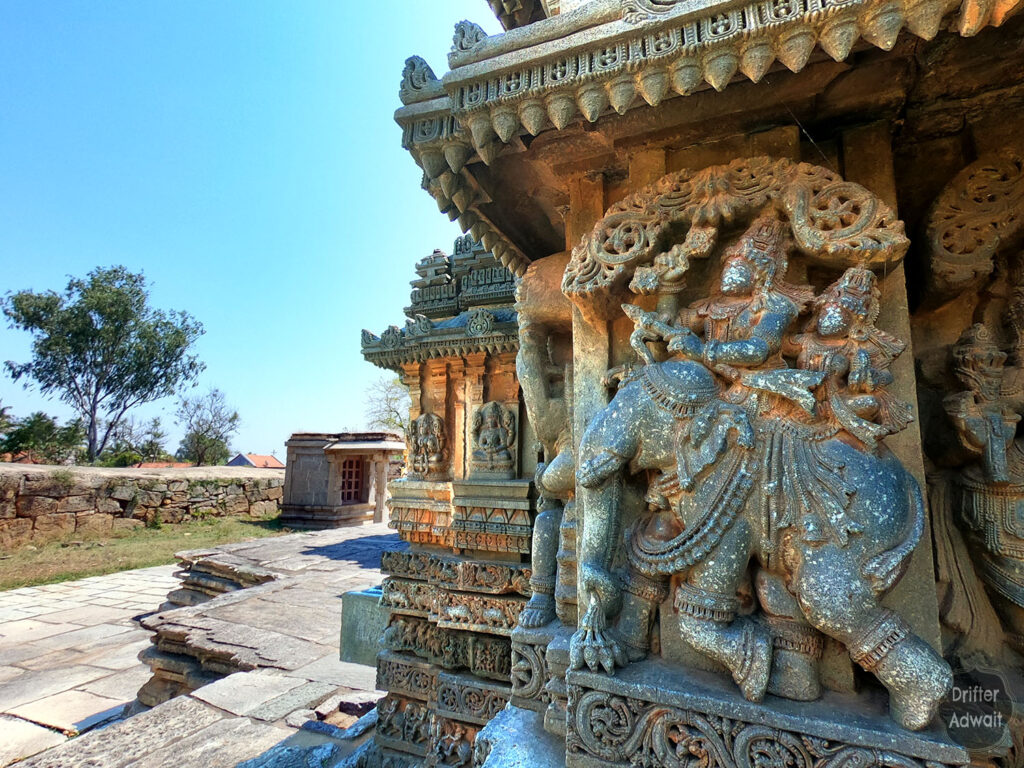
As I visited this beautiful temple, I was struck by the intricate carvings and sculptures on the walls and pillars, which depicted scenes from Sanatana epics and showcased the exceptional skill and craftsmanship of the local artisans. The temple’s distinct architectural features, such as the ornate ceiling, intricate cornices, and elaborately carved pillars, are all hallmarks of the Hoysala style of temple architecture, which is renowned for its intricate details and grandeur.
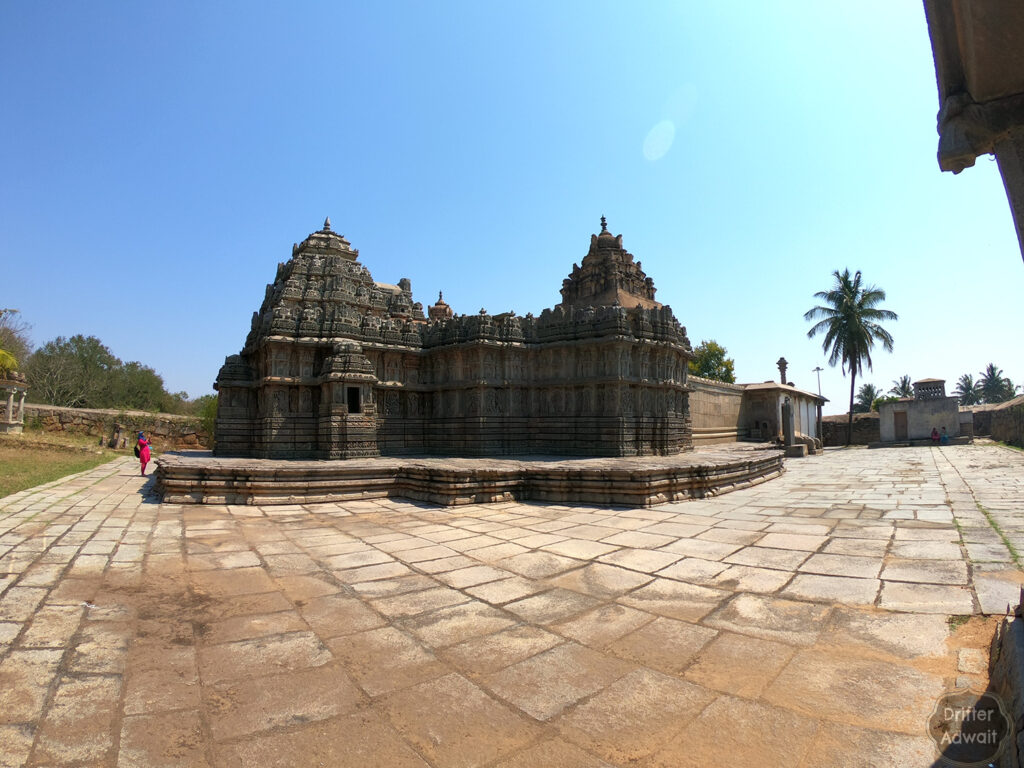
It is said that Hoysalas built more than 1000 temples all around
Karnataka. Very few of them are still intact. Most of us (especially
North Indians) have not even heard the name Hoysalas, and the fault
primarily lies within our education system. Few among us, who know the
name Hoysala, have very little or no information about them. And very
few amongst them are lucky enough to visit the temples of Belur and
Halebeedu. The rest of the temples are deserted. Apart from the local
villagers and ASI-appointed guardians, no one wonders here. Today, we
are visiting one such temple which will remind you about the legendary
artisanship of our ancestors.
When you start traveling from Bangalore
towards Mangalore, the small city of Chennarayapattana lies precisely
in the middle of your journey. Leaving the Mangalore highway, the
scenery changes drastically when you turn your car right and start
driving to the North. Traveling about 16 kilometers, crossing tiny
beautiful south Indian villages, you reach Nuggehalli. There lies this
architectural gem Lakshmi Narsimha temple built during the rule of Hoysala King Someshwara.
Nuggehalli
Nugehhalli is a quiet village located in Hassan district of South Karnataka. Nuggehalli is the home of 5 ancient temples built in the 11th century. There are innumerous temples in India, which are well maintained by ASI, but very few amongst them are considered Live temples. Live temples are the ancient temples that ASI maintains, but Puja has been performed there for hundreds of generations. Nuggehalli Lakshmi Narsimha temple is one of such living 50 temples in India. Nuggehalli was part of Hoysala empire, and Vir Narayana was Agrahara. Agrahara means, income of that village is diverted towards the temple, and the educatonal systems ran by the temple.
Lakshmi Narsimha Temple
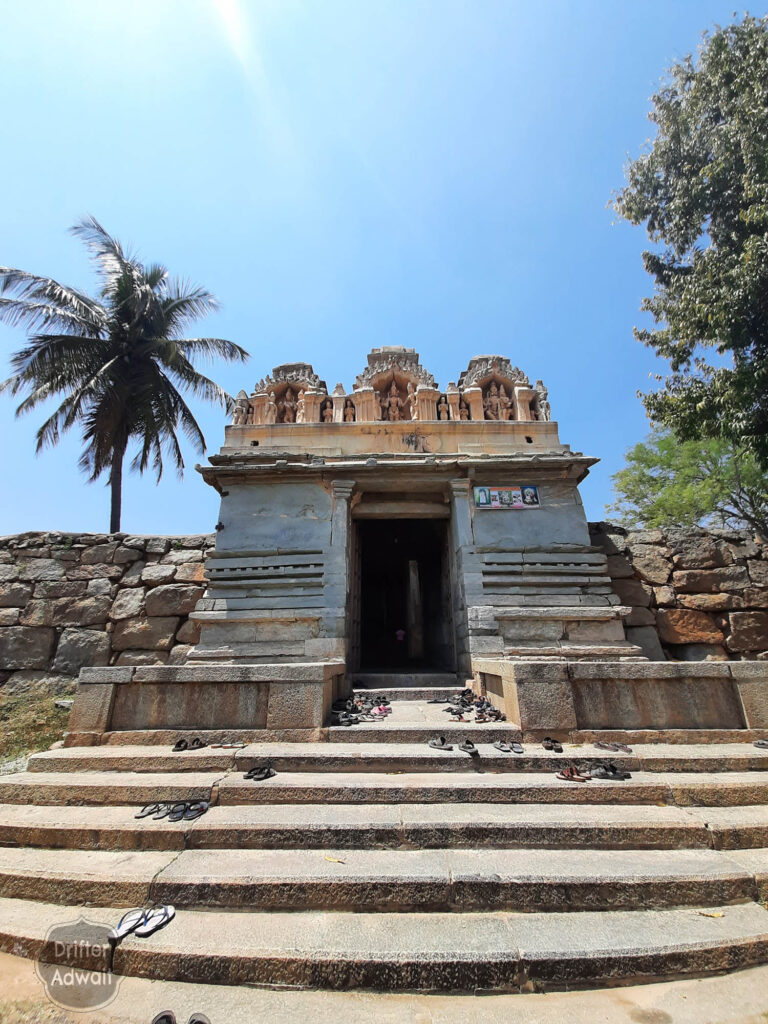
Bommanna Dandanayaka was Hoysala commander during the rein of King
Vira Someshwara. The temple has a typical Vijaynagara styled entrance,
with a granite structure and later-period brick-style roof. Temple is
surrounded by a wall made up of granite, which will also remind you of
Vijaynagara times.
Leave your footwear here, and walk inside the
premises. You will be standing in front of a copper-made Vishnustambha,
piercing through the roof made up with granite slabs. This granite roof
is held aloof by Vijaynagara timed pillars. This construction depicts
that the renovation of this temple must be done during the Vijaynagara
kings.
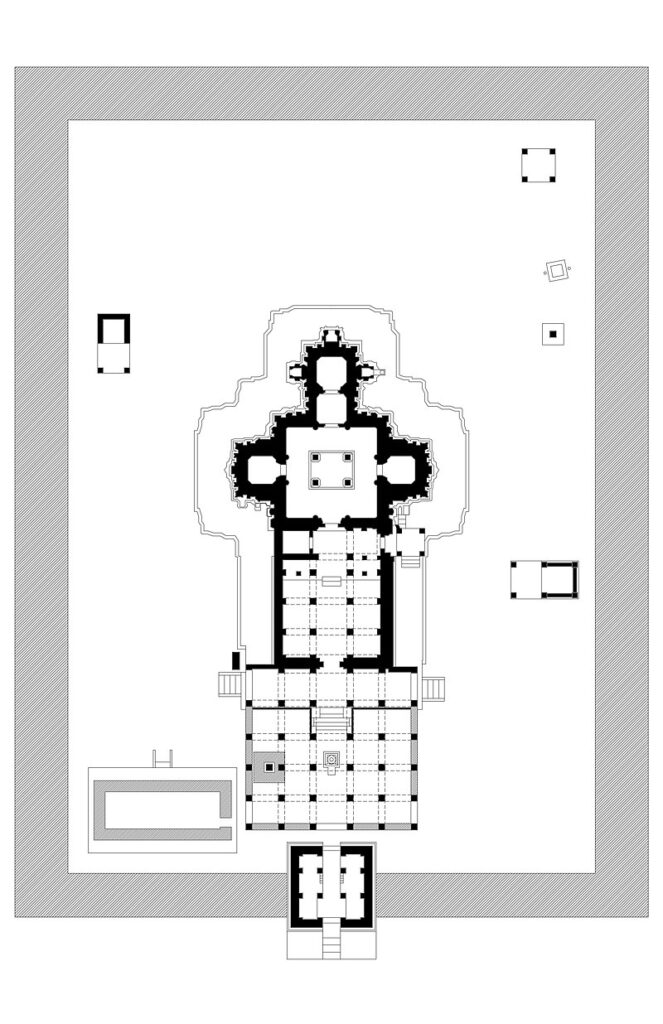
This temple is a classic example of Trikutachala, a temple
with three towers. One of which is built with the same soapstone by
which the remaining temple has been created. Rest two smaller Vimanas
are built during the Vijaynagara period, and hence clear difference can
be seen here. It also said that this temple was a Keshava temple at
first, and later, two other Sanctum Sanctorum were added, extending the
temple by both sides. You will find a temple kitchen, a well, and two
smaller shrines on the premises.
Leaving two elephants on each side,
as you climb the stairs, you enter the actual temple. From here, you can
see the Hoysala architecture.
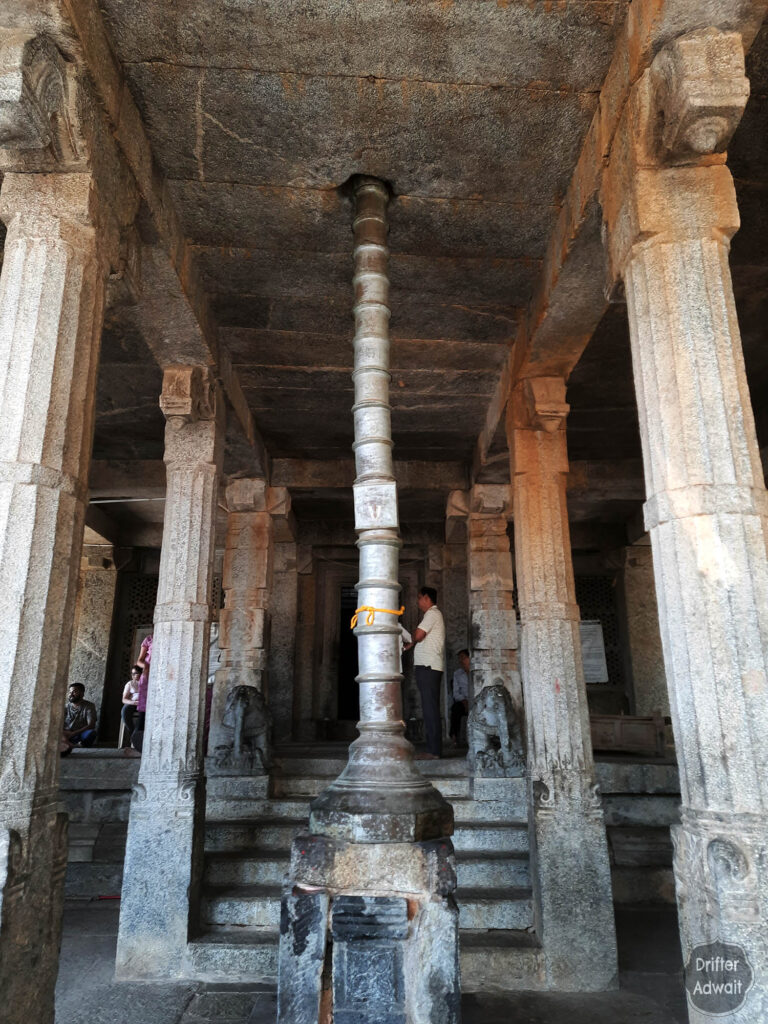
Inside the Nuggehalli Lakshmi Narsimha Temple:
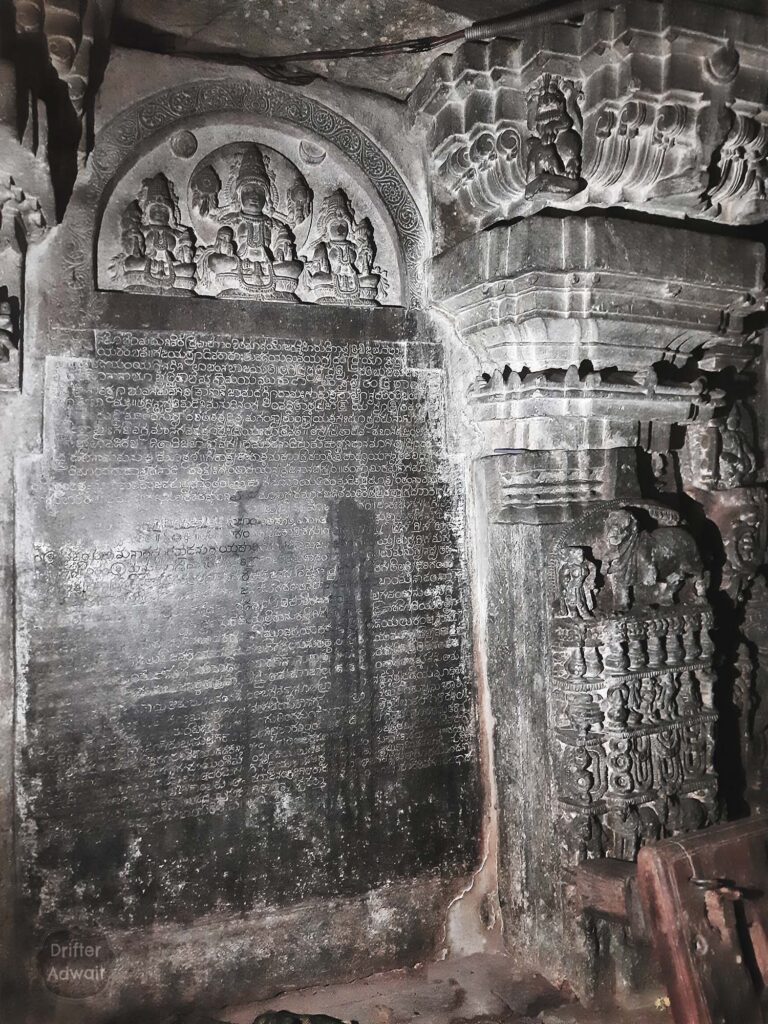
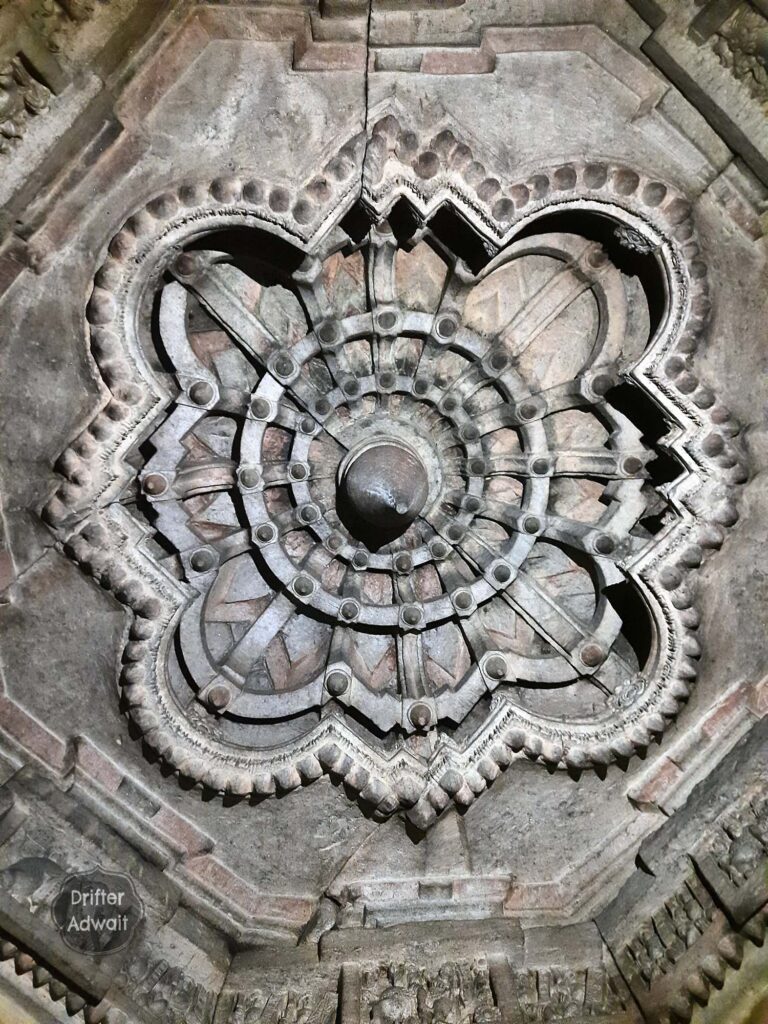
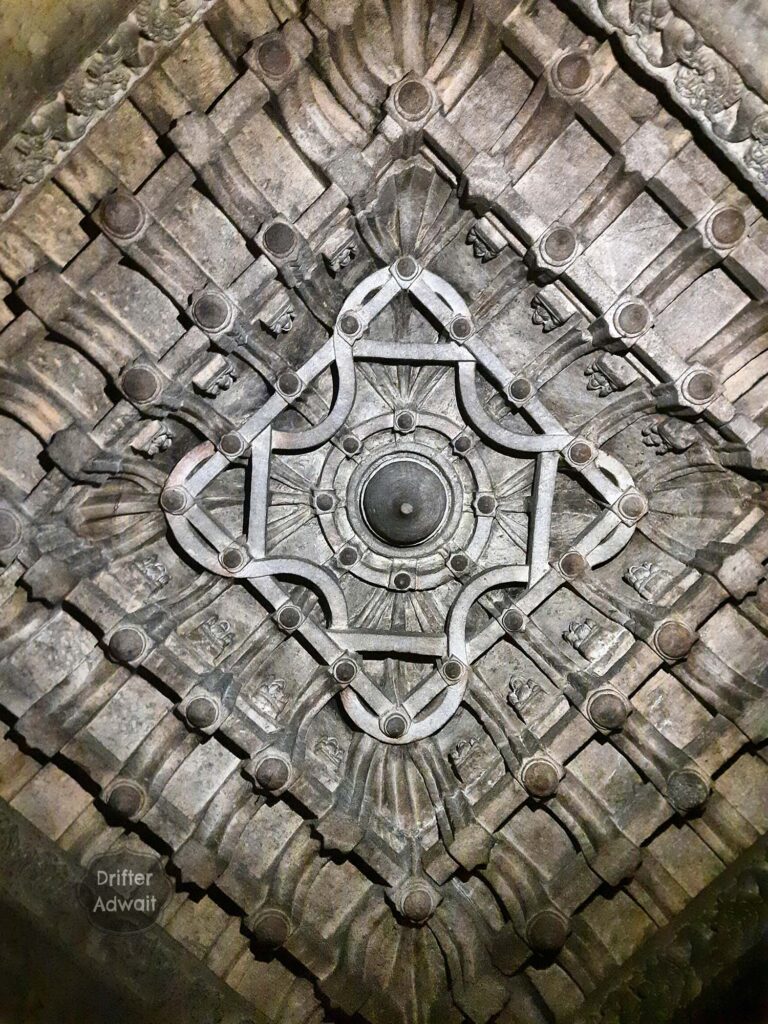
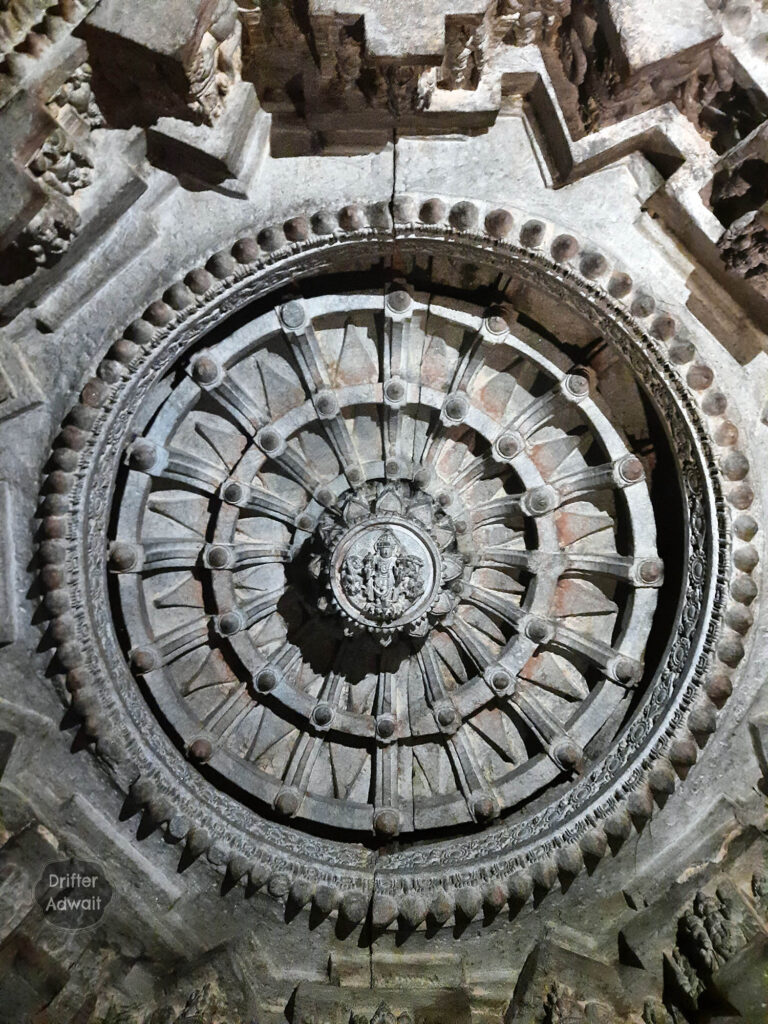
Just before the main sanctum sanctorum, you will find Hoysala era
stone inscription stone and a beautifully ornate roof over your head. If
you look closely, you will see Sun with his two powers Usha and
Pratyusha, holding bow and arrow. Looking more carefully, you will even
be able to see the seven horses of Surya deva with his chariot driver
Aruna guiding the horses.
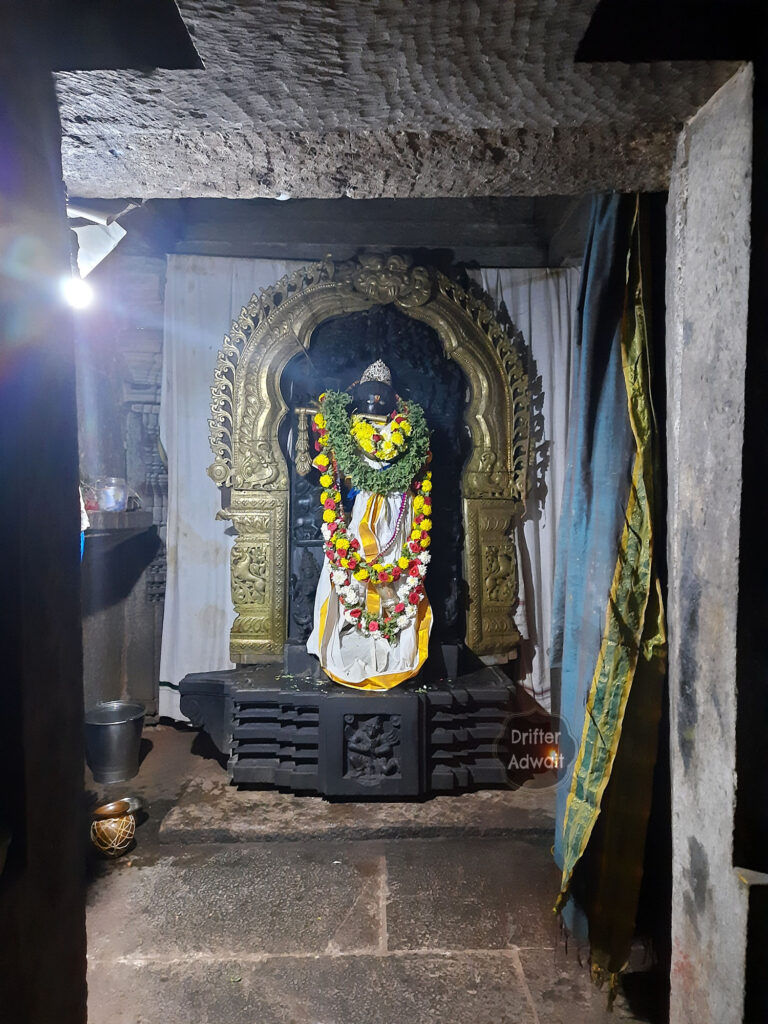
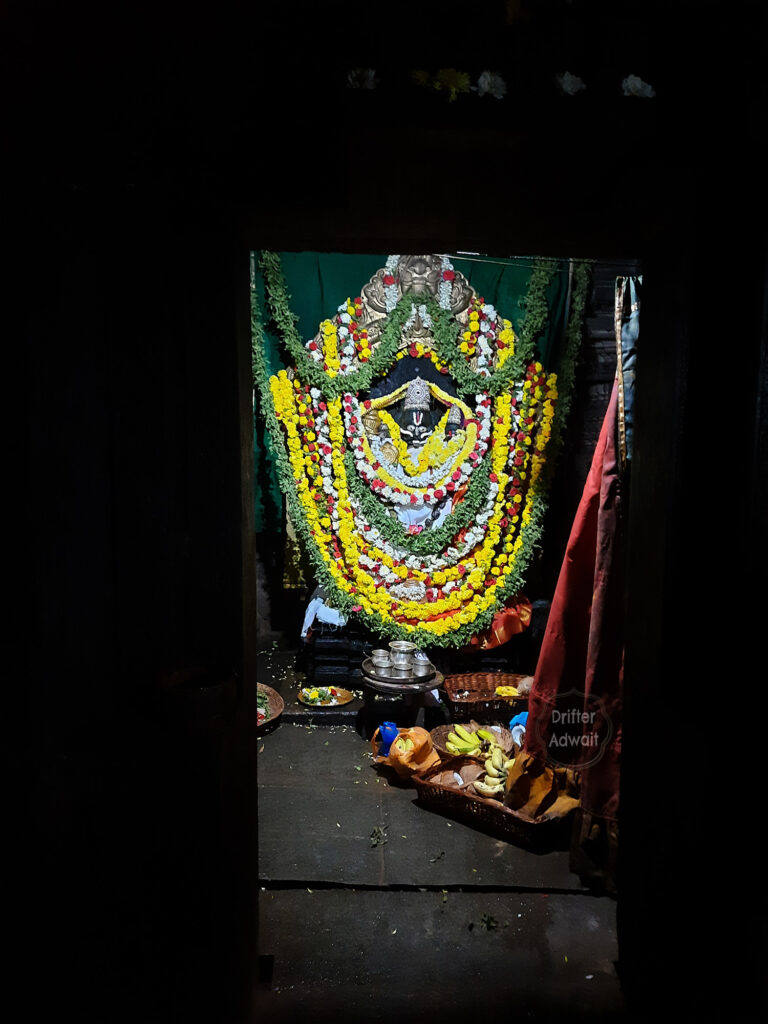
This temple is home to three main deities related to Vaishnavism.
Apart from Lakshmi Narsimha, Lord Keshava and Venugopala stand here,
blessing the devotees. This sanctorum roof is divided into equal parts,
with each part decorated more beautifully than the other. Devotees have
covered the Vigrahas completely with beautiful colorful flowers, just
enough to show their faces to us. Nevertheless, the environment, the
mixed fragrance of Panchamrit, essence, and coconut carried us to when
this temple used to be a center for Dharma and education. A dark yet
peaceful environment will make you sit there, railing on one of the
ornate pillars carved out of the black soapstone, enjoying the calmness
around you. It will soothe your mind. After sitting there for a while,
bow to playful yet mischievous Venugopala, bow down to the wise Lord
Keshava, salute to the ferocious Lakshmi Narasimha, and get out of the
Sanctorum.
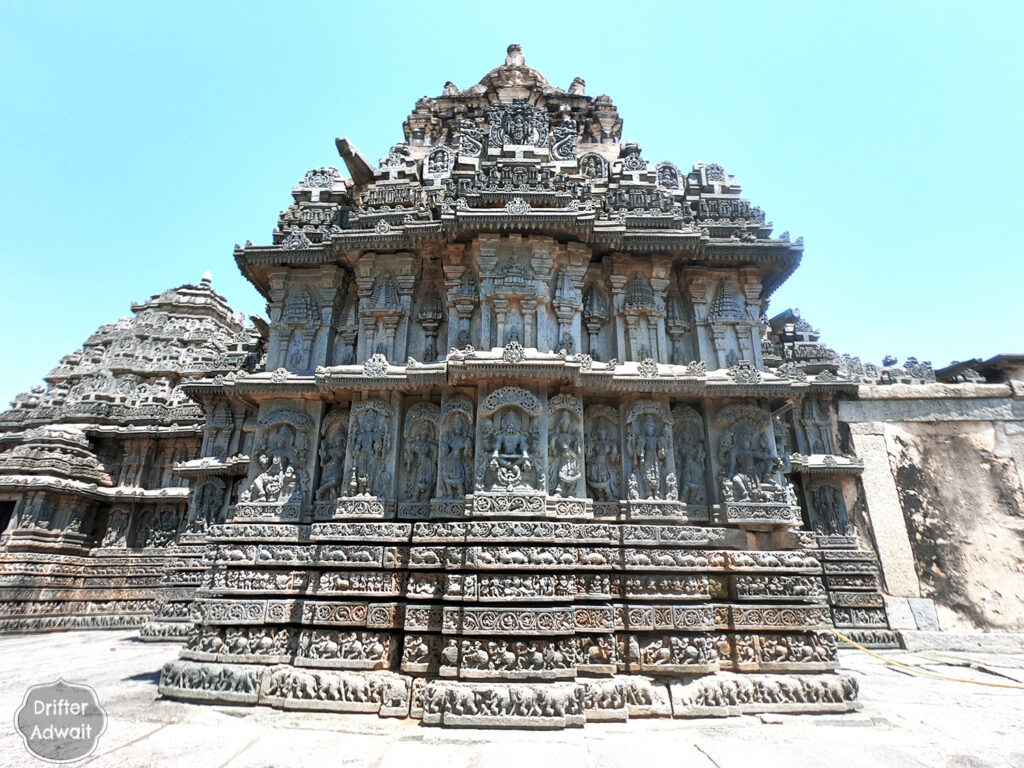
Outer walls of Nuggehalli Lakshmi Narsimha Temple:
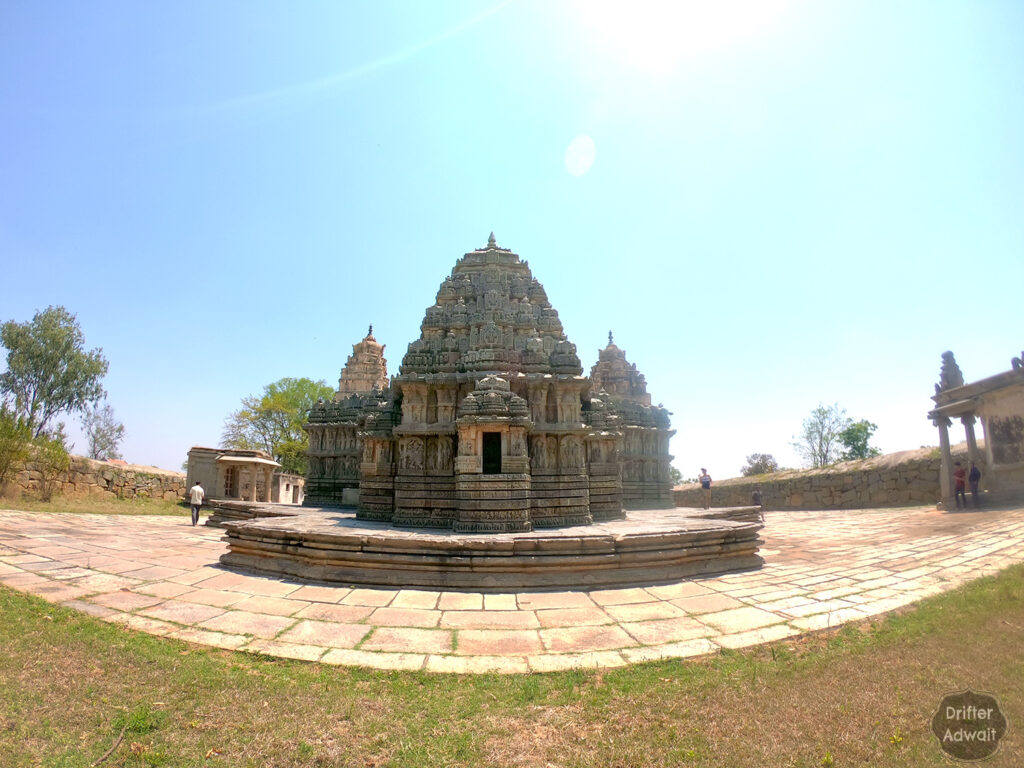
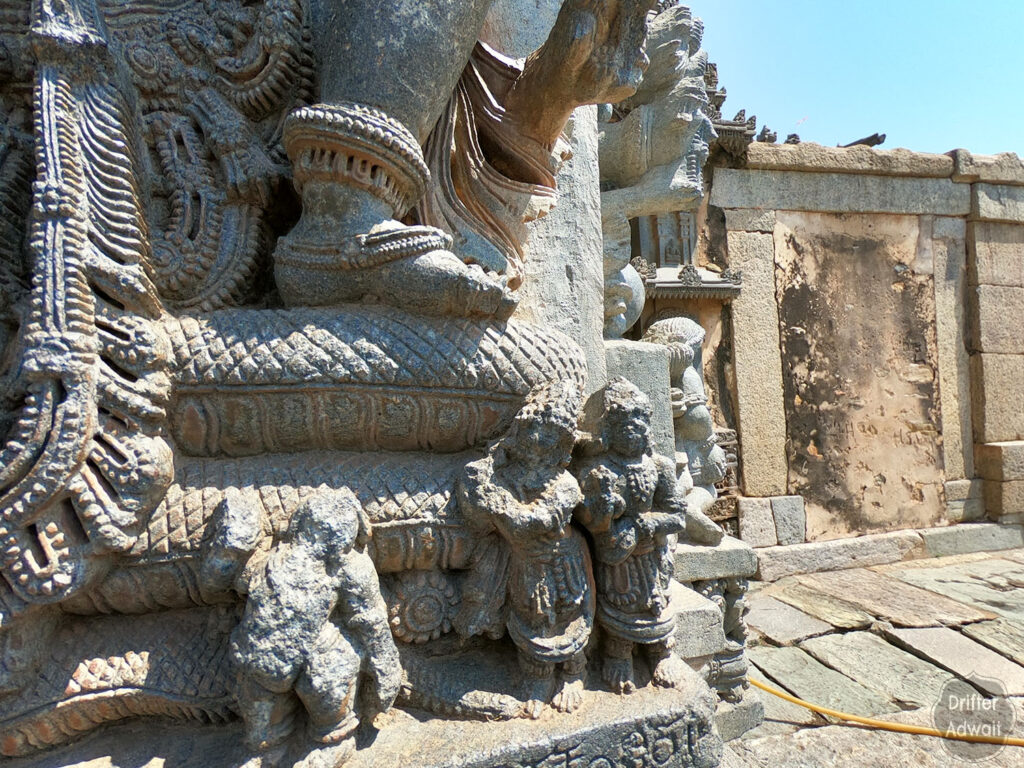
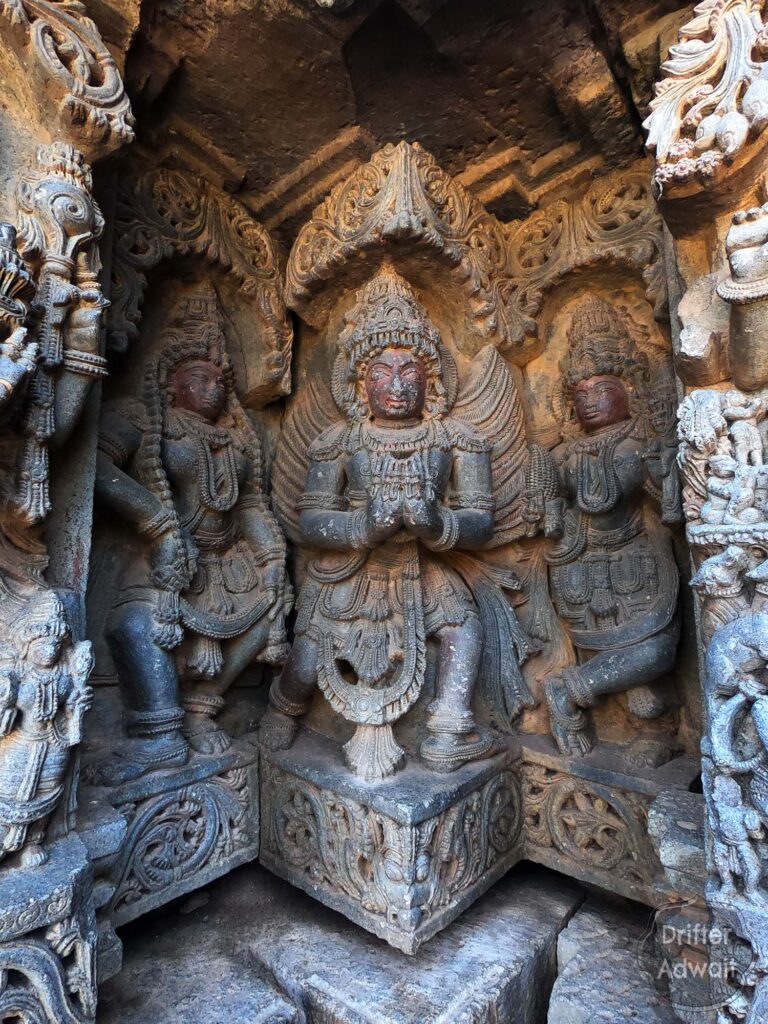
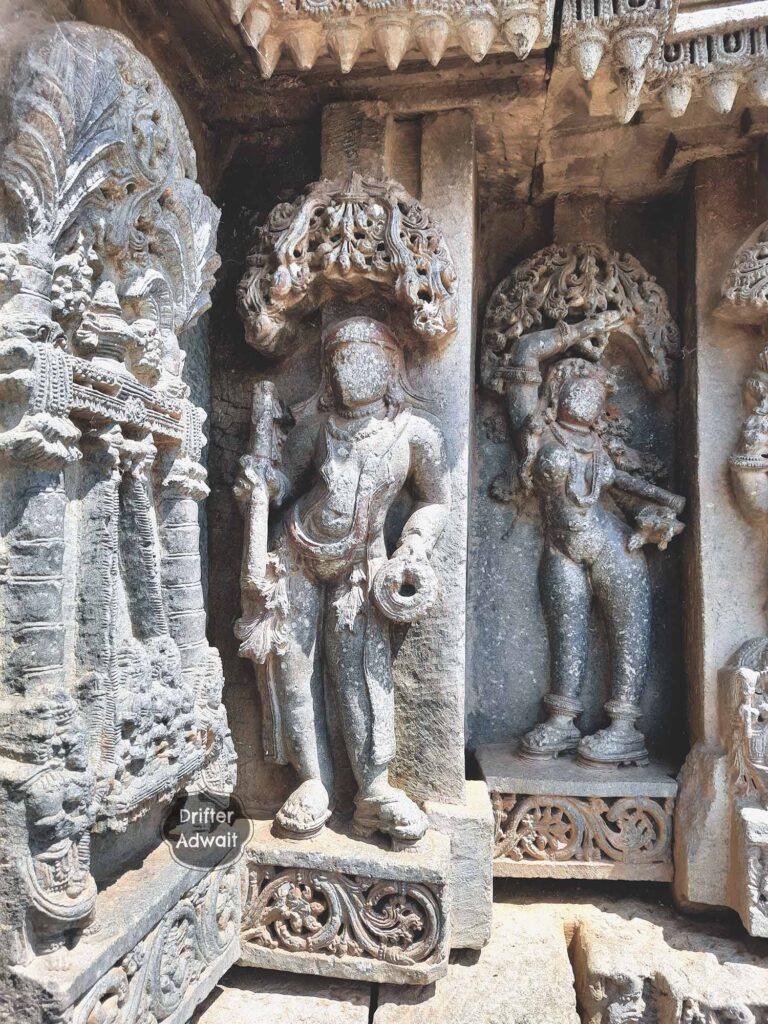
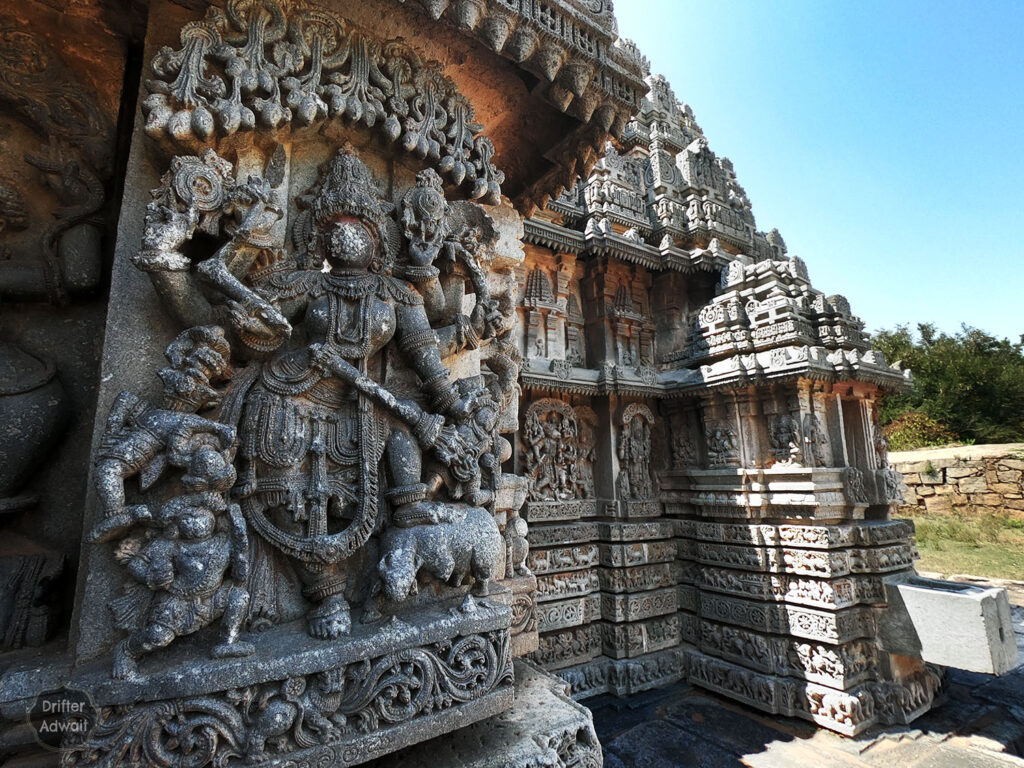
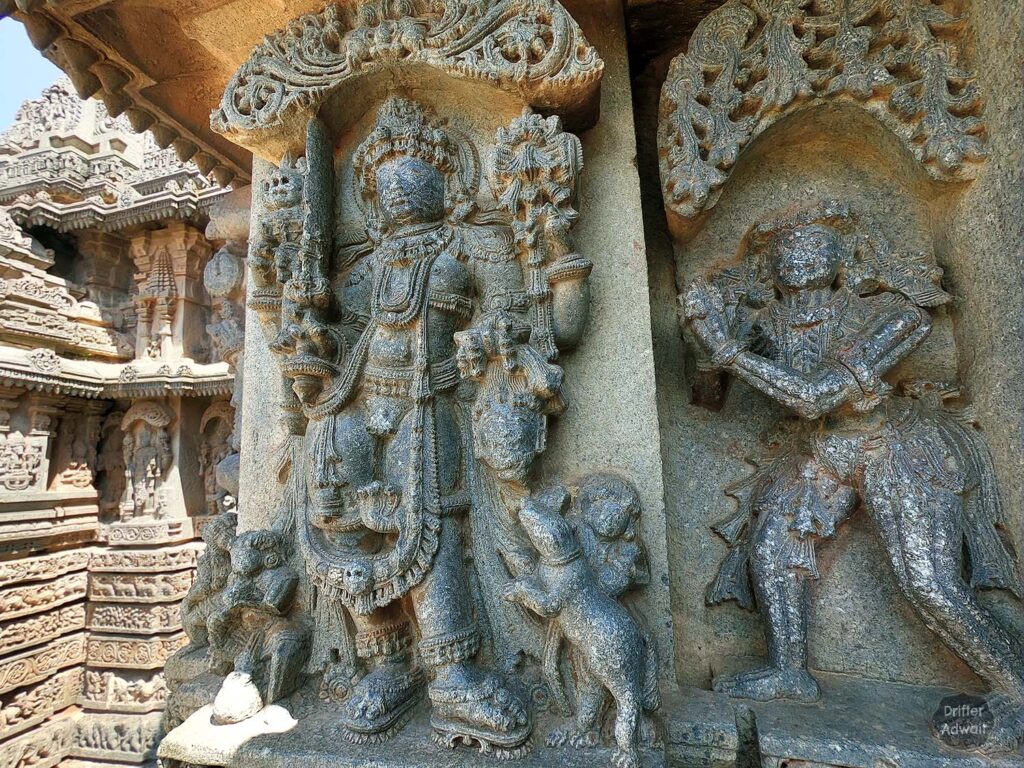
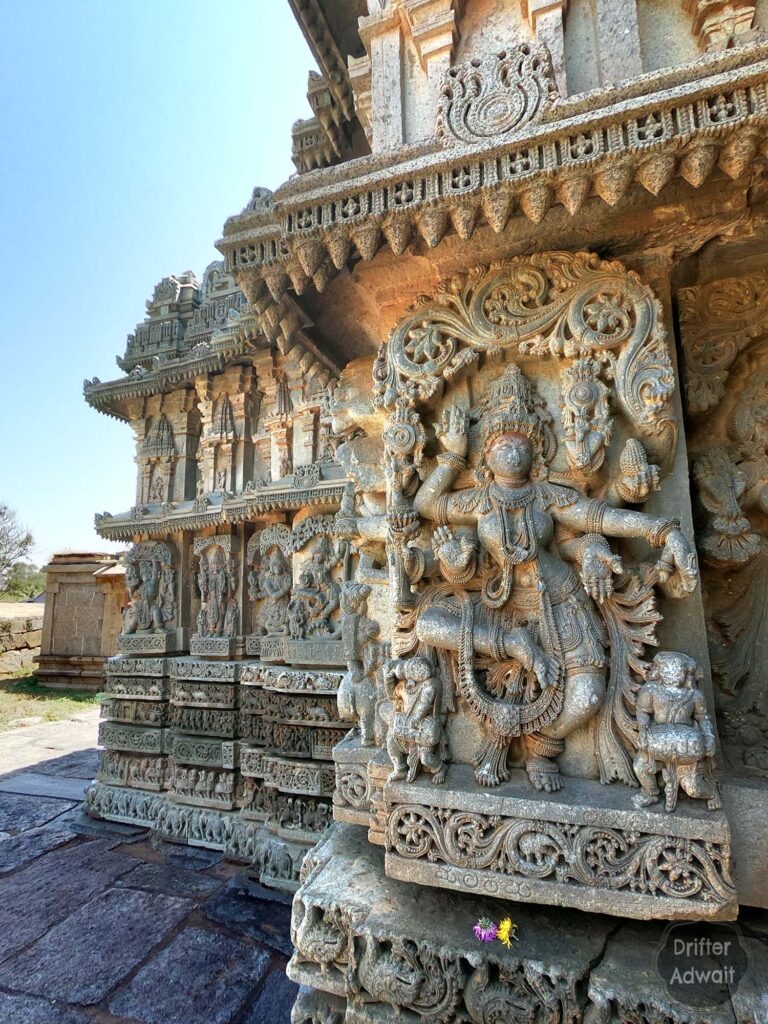
Hoysalas were expert craftsmen known for their sculptures on the
outer walls of the temple. Standing on a Jagati, or platform, this
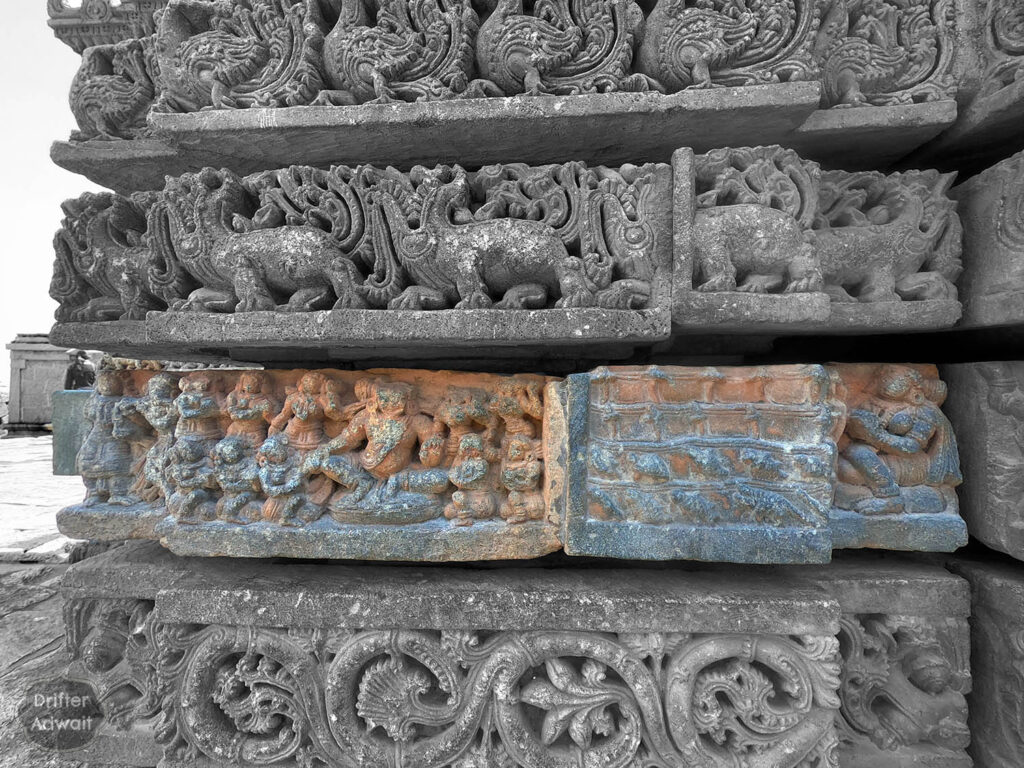
temple has one of the most beautiful exterior walls, divided into
several layers. The first layer is decorated with almost a feet tall
elephants. These half feet tall elephants represent the stability of the
Hoysala empire. Even though there are hundreds of elephants at the
lower layer, it is said that no one elephant matches the other.
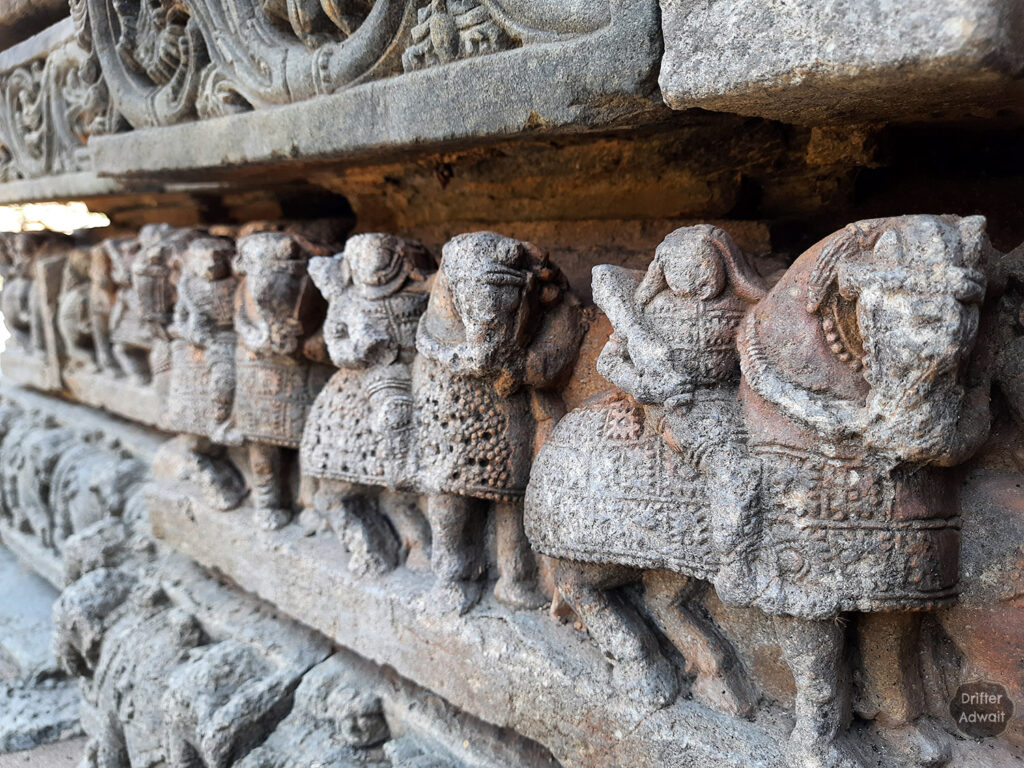
The
second layer is decorated with horse riders, representing speed and
courage. Same as the elephants, even not a single horse has repeated
anywhere on this layer. You will find some minor differences between the
two horses. The third layer is made up of vines and foliage, showing
the prosperity of the temple.
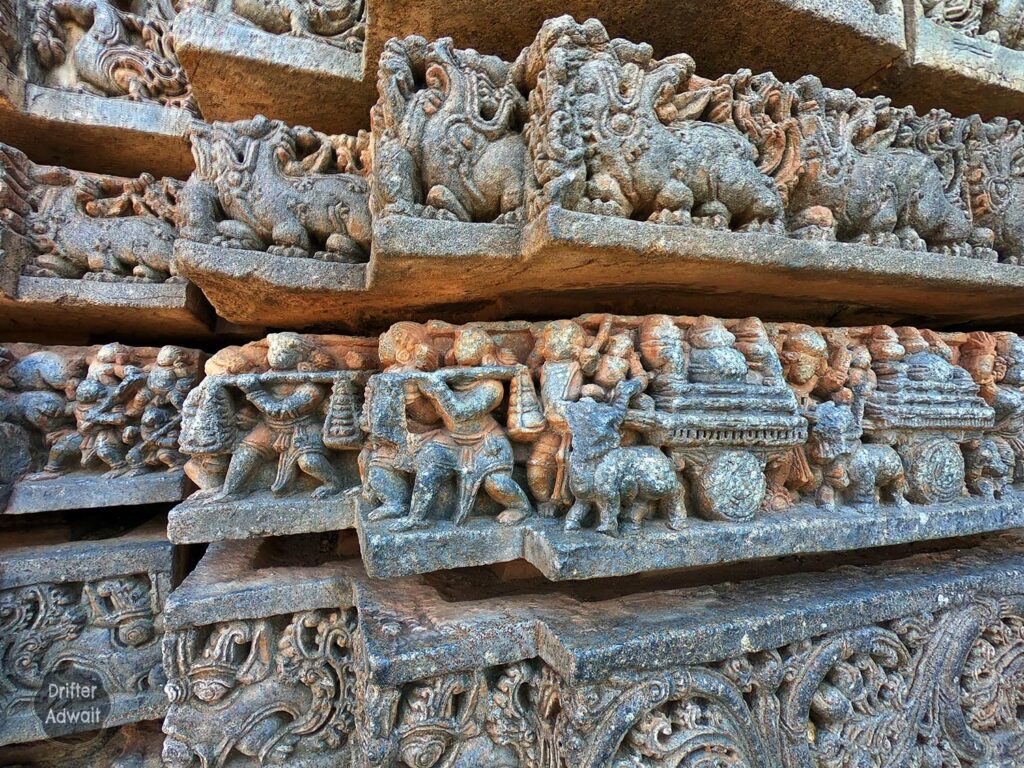
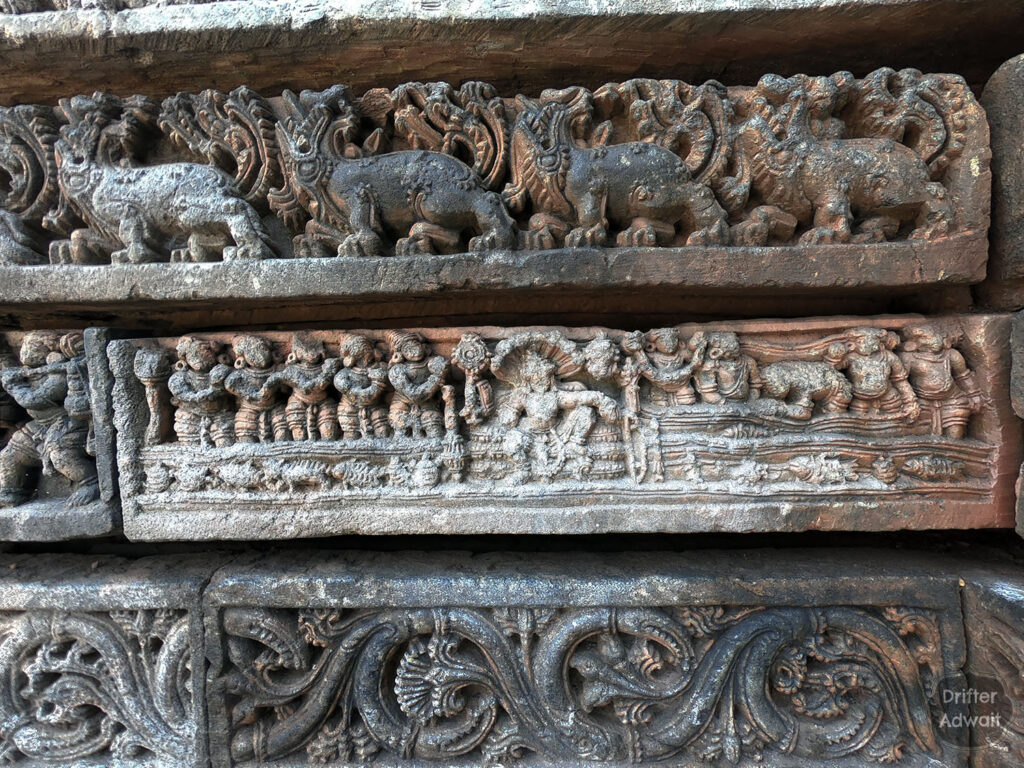
The fourth smaller layer is decorated with various incidences
from epics like Mahabharata, Ramayana, and Puranas. We have to take our
sweet time here to identify the incidence which is shown in this strip.
Most of them are either damaged by the invaders or by the natural
elements. We have stopped reading our ancient scriptures as well, and
these three factors contribute to our failure to recognize most of the
incidences from this layer. The fifth layer of the temple is decorated
with the Makara. Makara represents the ideal soldier. The small layer
above that is crowded with Hamsa birds with their magnificent beauty.
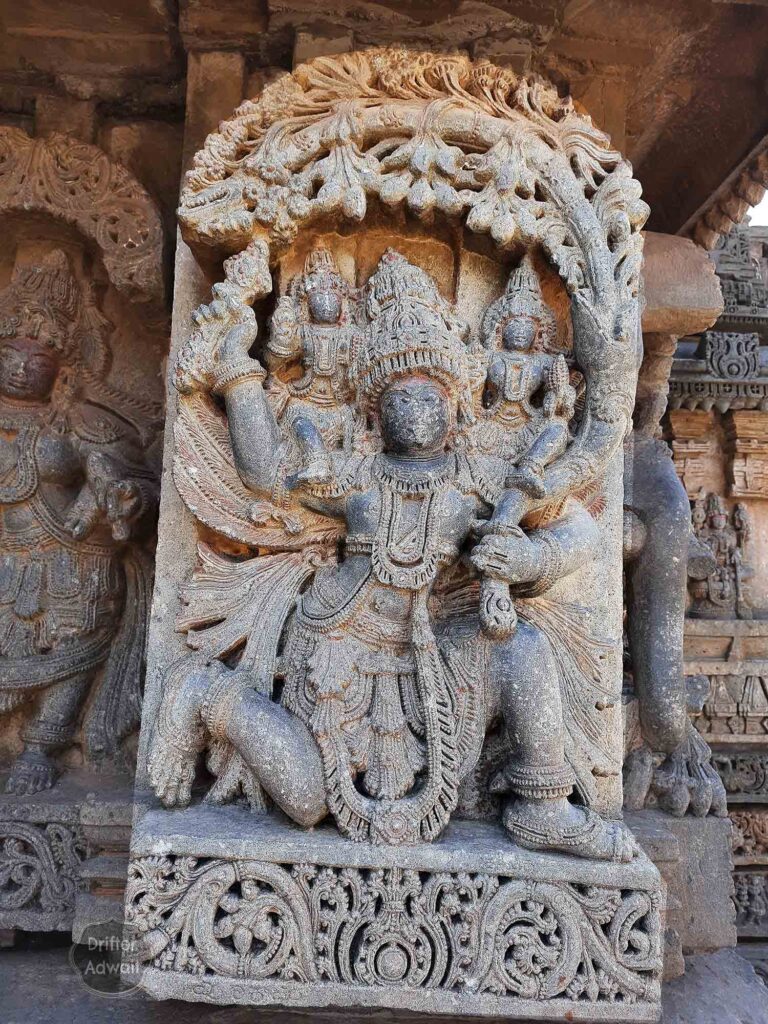
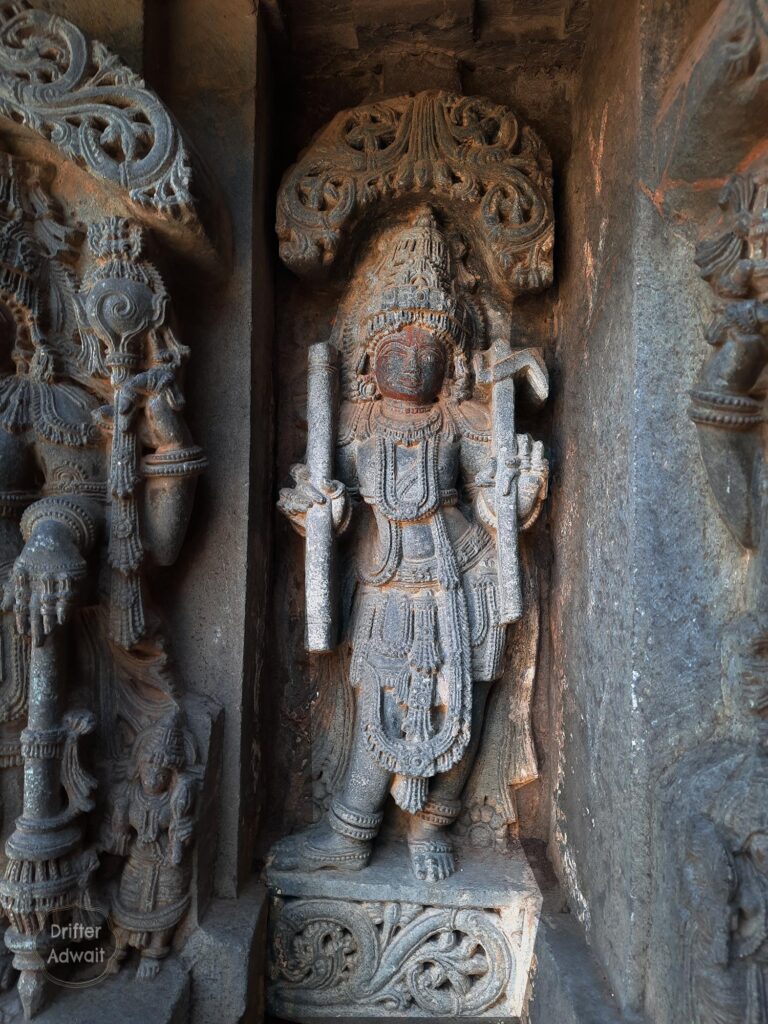
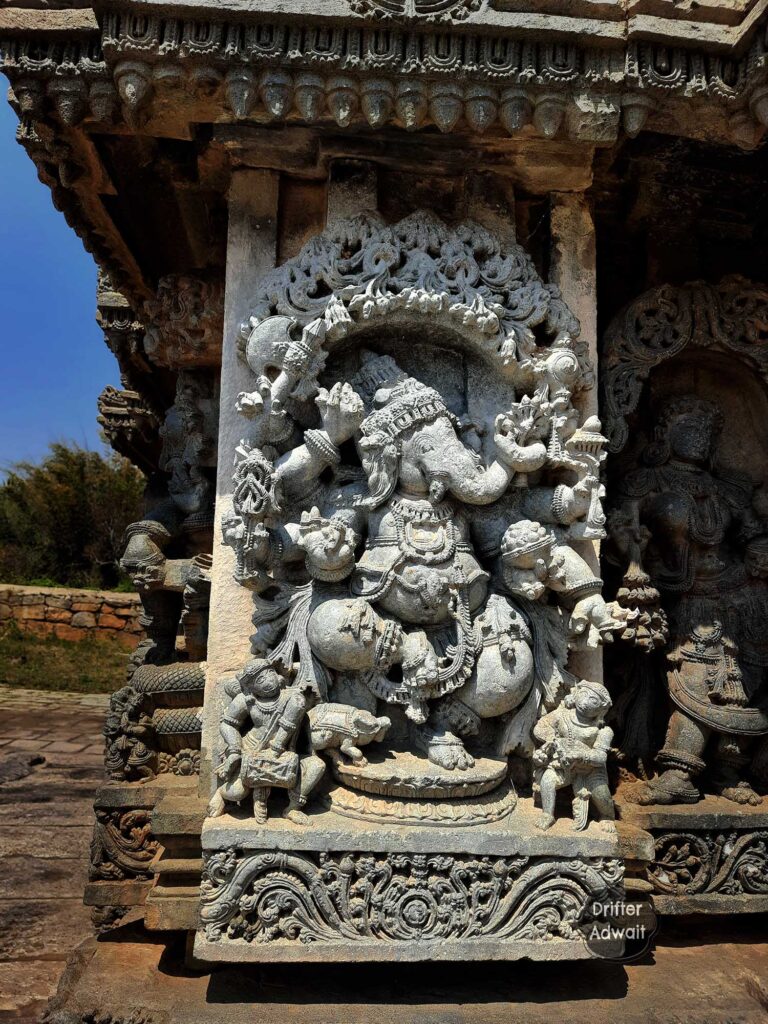
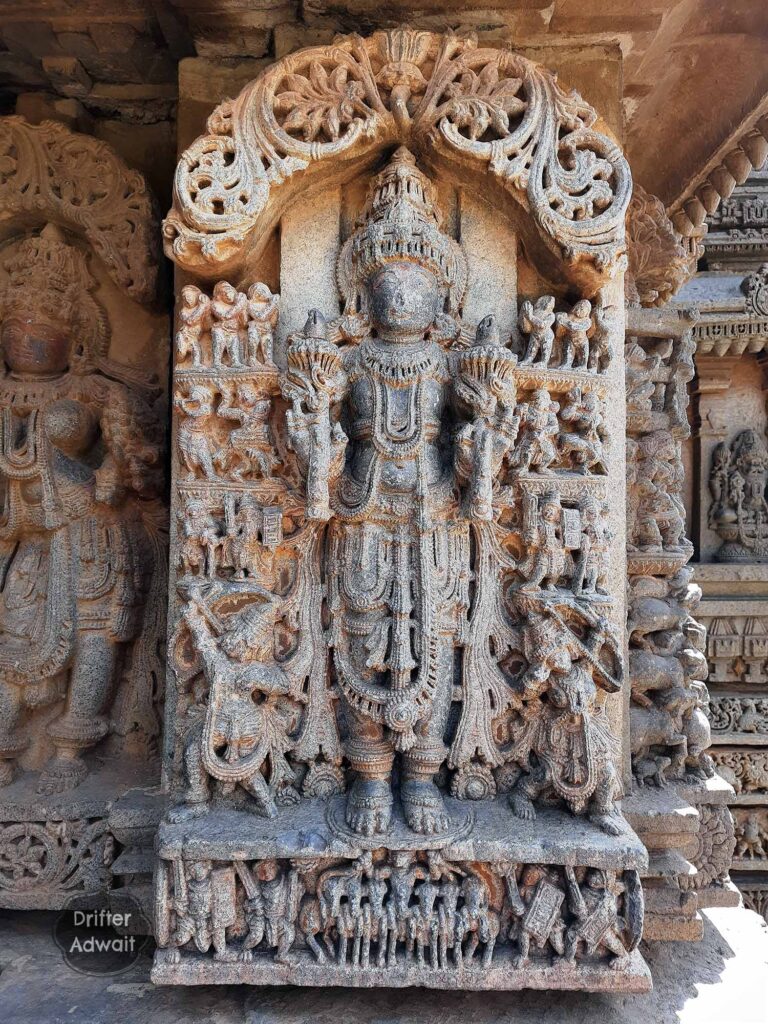
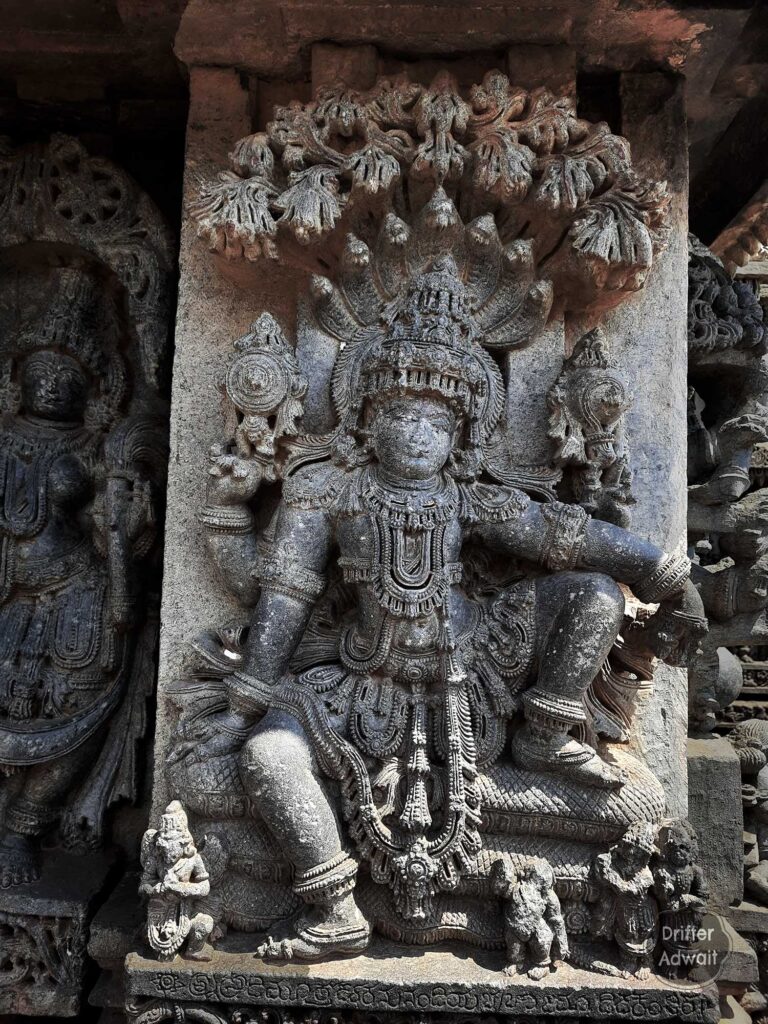
Then
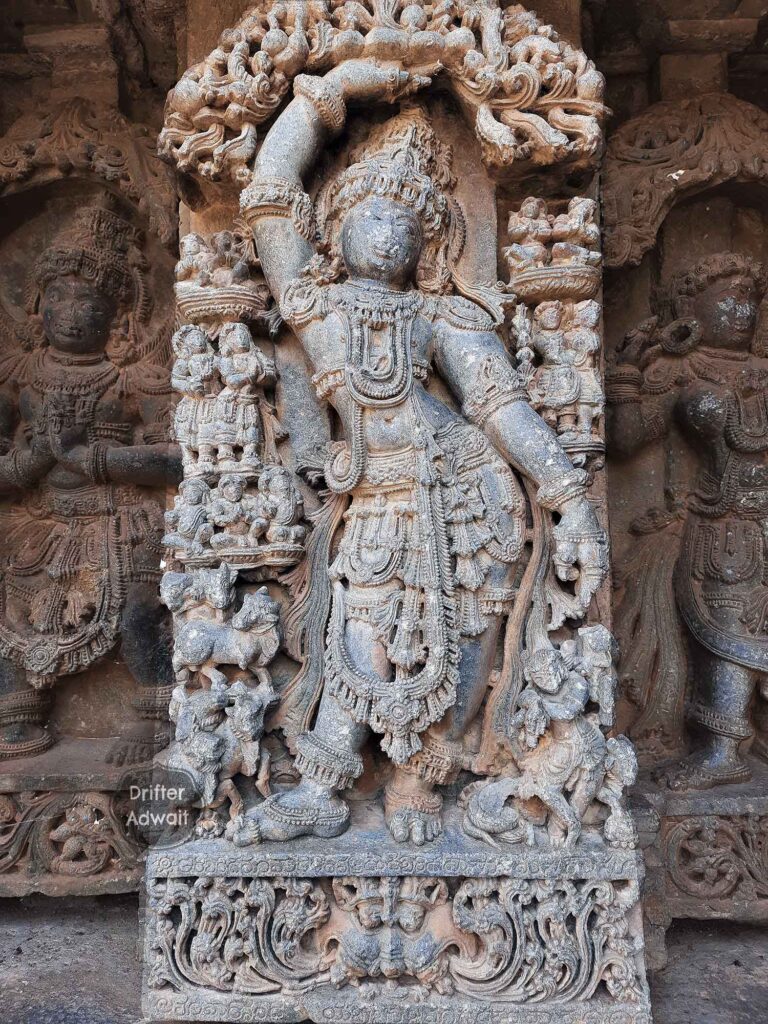
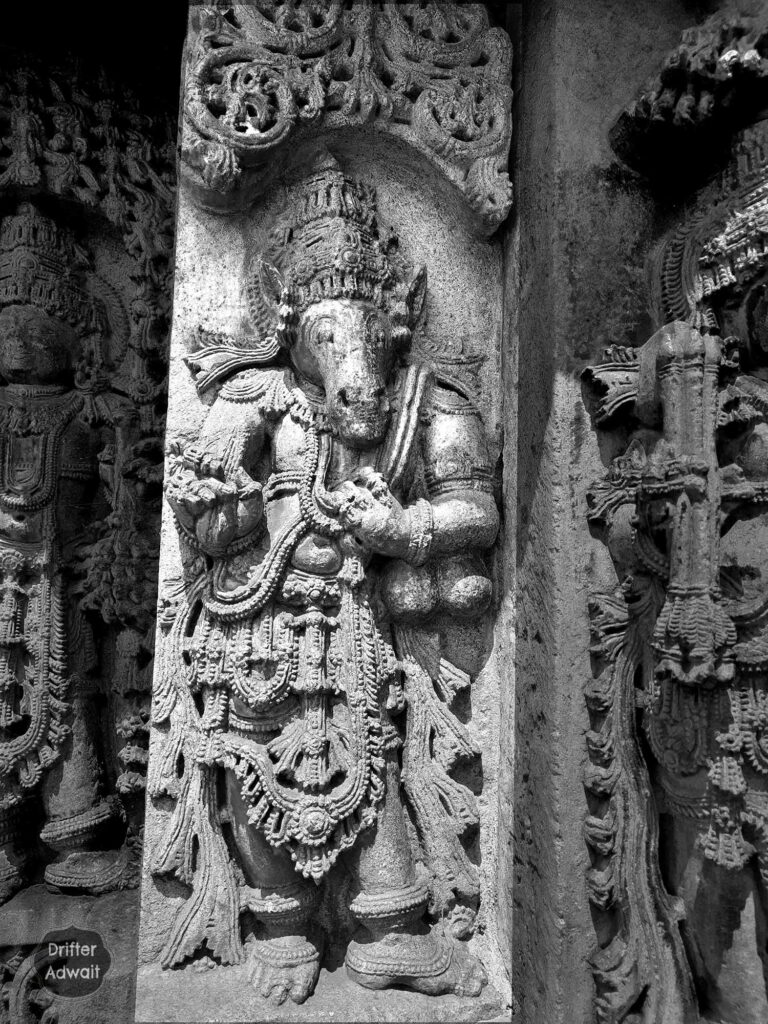
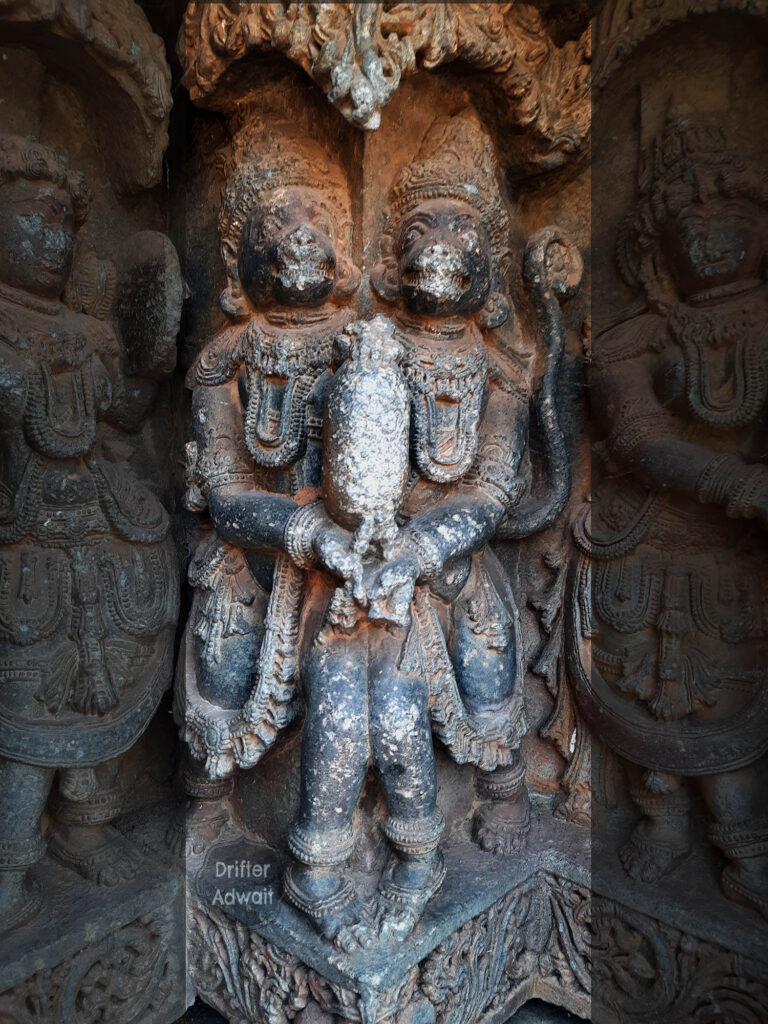
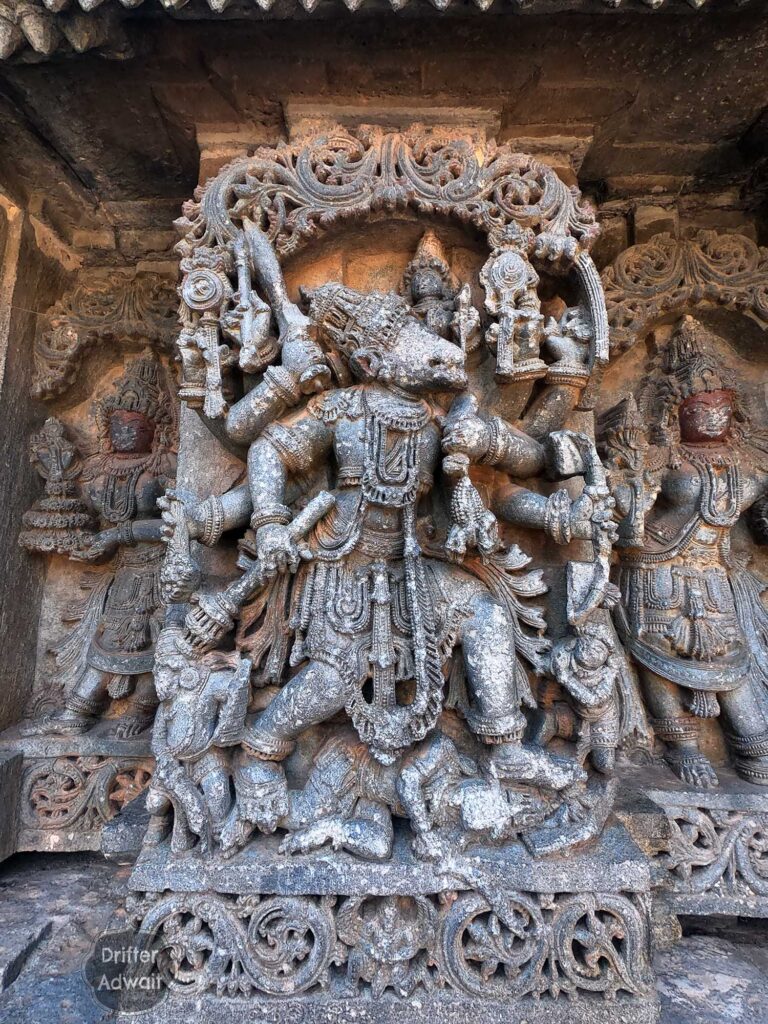
comes the three feet tall panel strip surrounding the entire temple.
This could be the main attraction of the temple. This layer has been
ornate by rectangular panels of various deities.
How to reach Nuggehalli?
🚗 By Car: Nuggehalli is about 140 Kilometers from Bengaluru. Driving
on state highway 75, take a right turn at village Hirisave. Nuggehalli
will be 25 Kms.
🚌 Bus: Get a bus for Hassan or Chennarayapattana. From there, you can book a private auto or cab to reach Nuggehalli.
🚂 Train: Nearest railway station to Nuggehalli is Chennarayapattana, which is about 19 km from the temple.
✈️ Air: The nearest airport is Bengaluru, which is approximately 170 km from the Nuggehalli temple.
Where to stay at Nuggehalli?
🛏️ Nuggehalli is a small village. You won’t find any hotels here. There will be plenty of options available at Chennarayapattana or in Hassan city.

.JPG)

.jpg)

No comments:
Post a Comment
Note: Only a member of this blog may post a comment.